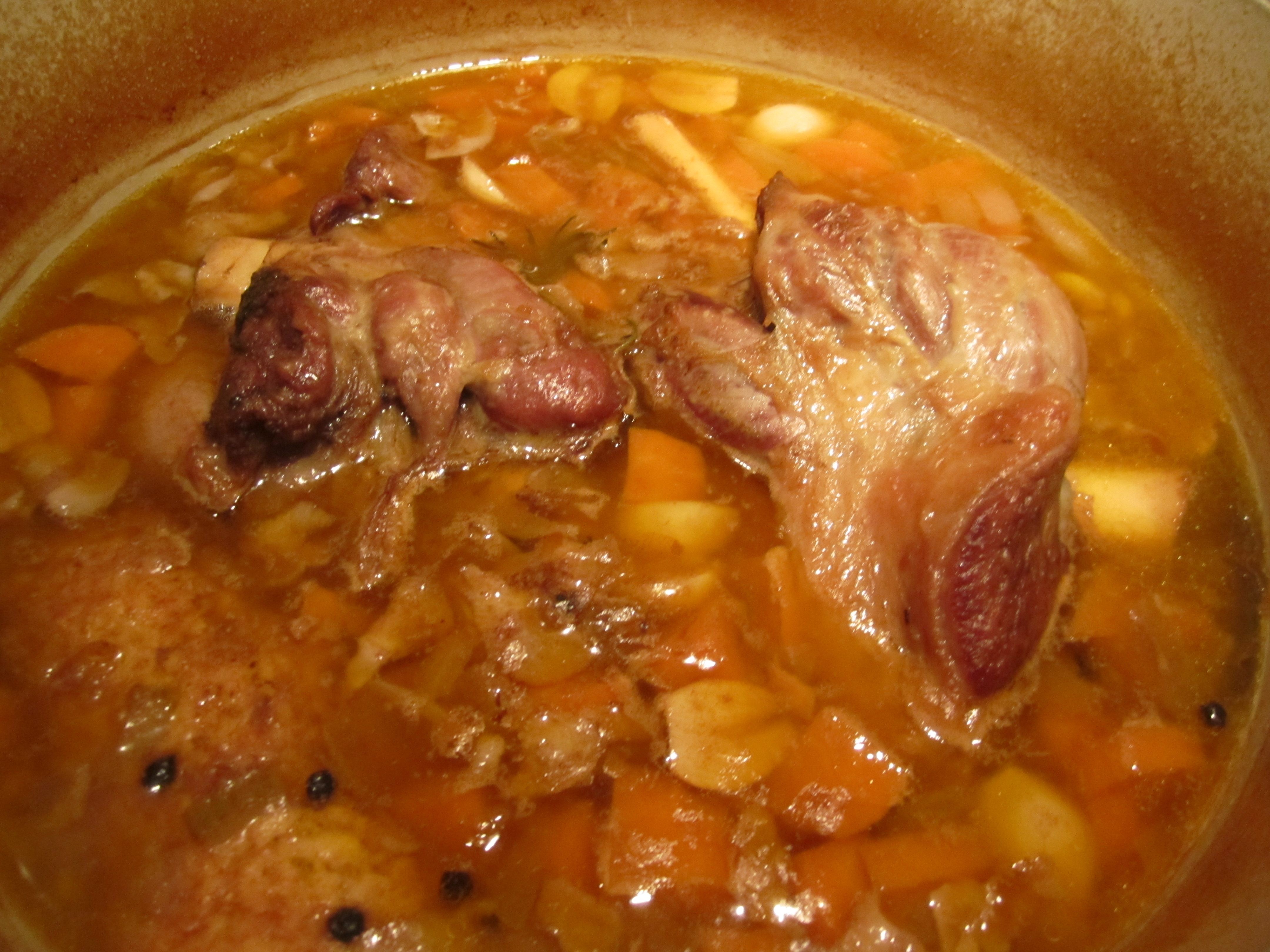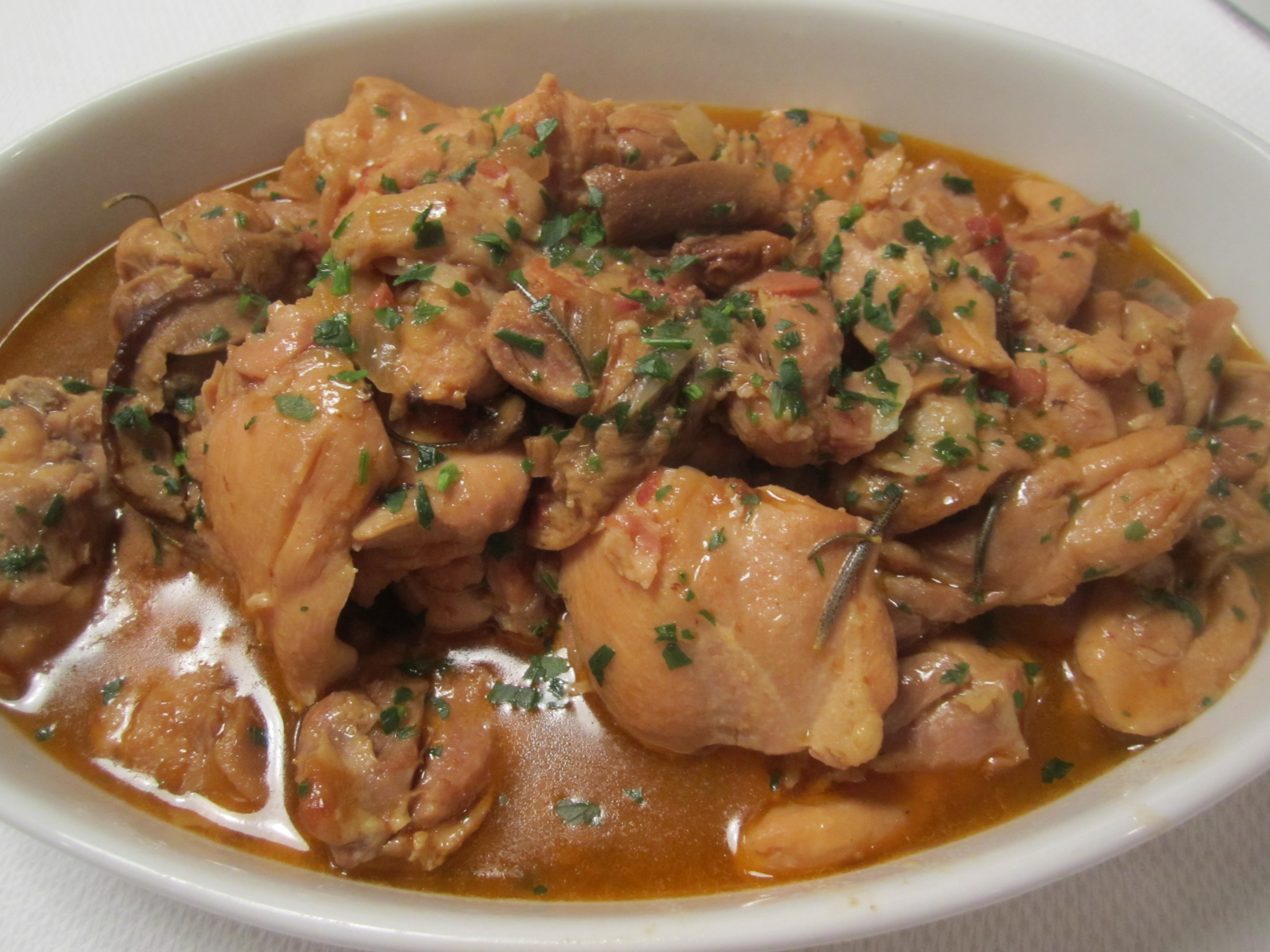
Chicken Stew with Marsala and Porcini

I realize I’ve posted a fair number of brown stews that may all look alike, but believe me, the flavors are subtly but distinctly different in each of them.  This stew was meant to use up some very old dried porcini that I had in my pantry.  Dried porcini keep indefinitely, but get drier with age, so eventually, you’ll be able to just pulverize them and use them for porcini dust (which has its merits as well). 

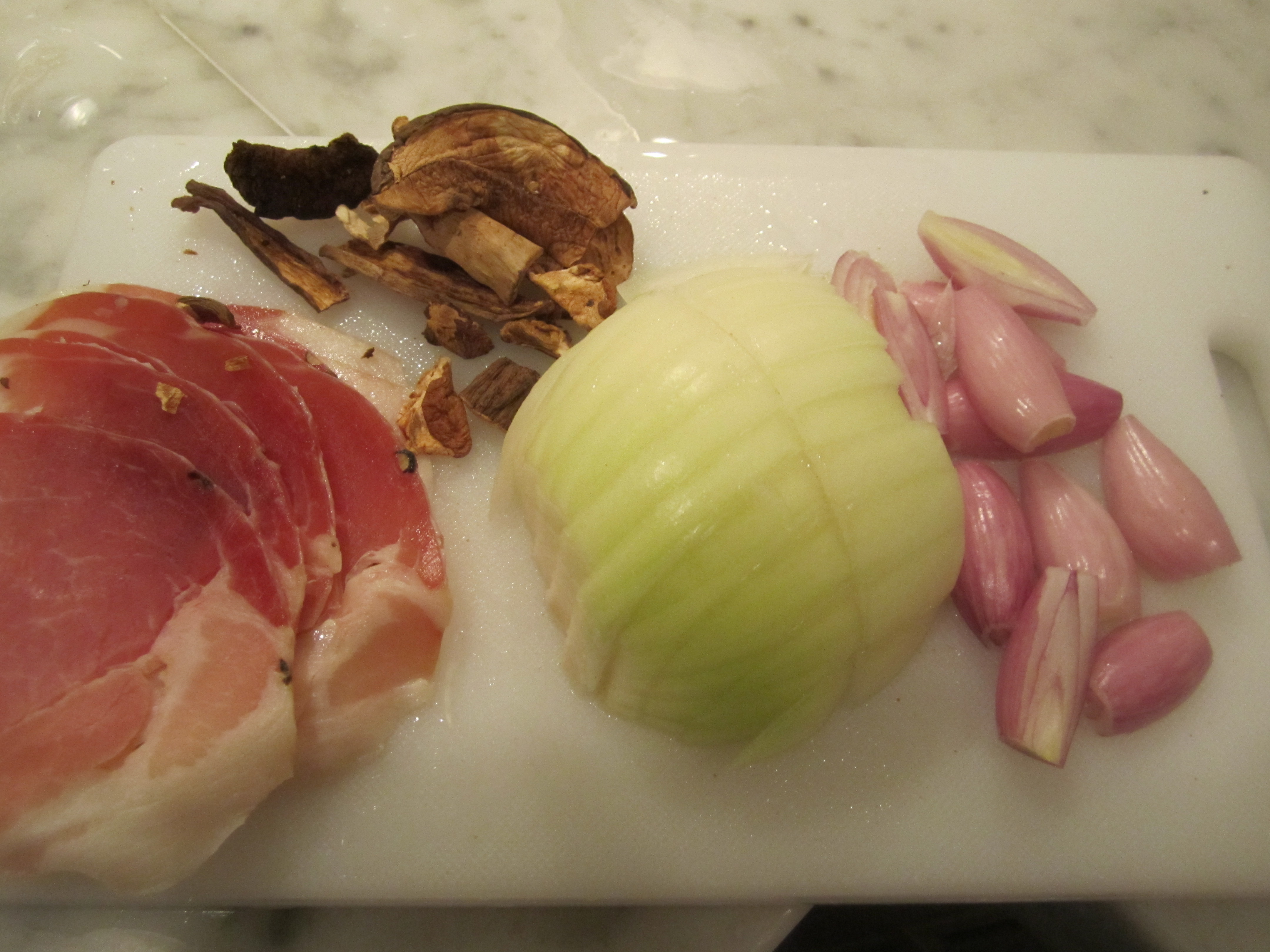
This is a similar preparation as my neighbor Beppi’s Spezzatino di Pollo,  which I made a couple of weeks ago.  There are key differences, however . . . Instead of sherry, I’ve used dry Marsala, which goes wonderfully with mushrooms of all kinds.  I’ve also added bay leaves for their deep, floral flavor and aroma.  In addition, I’ve added a touch of tomato paste for sweetness and color, and diced pancetta, to add salty, porky flavor to the chicken and to heighten the general gaminess of the stew.  And of course, the dried porcini–which lend their inimitable woodsy flavor everywhere they go. 

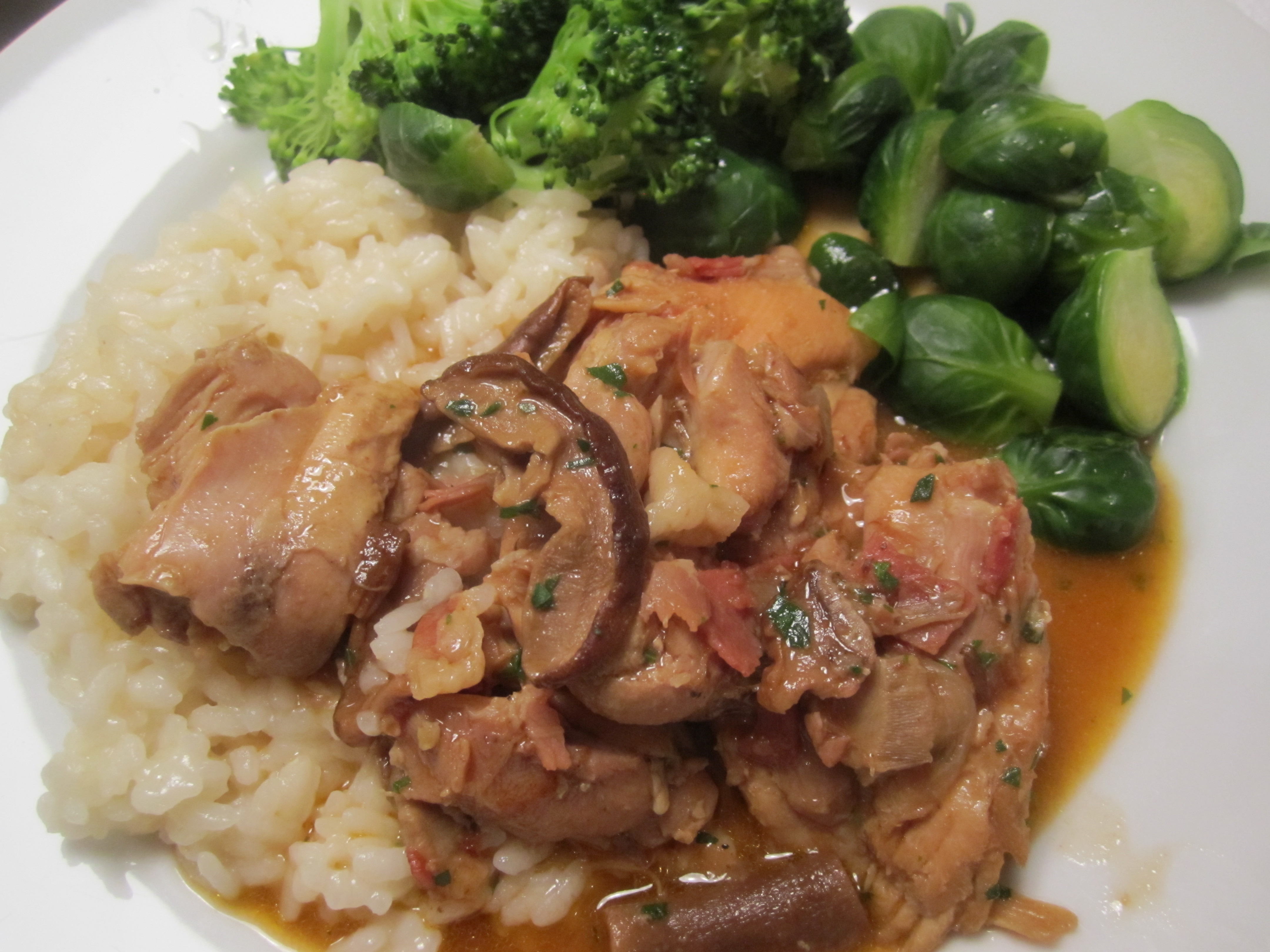
To accompany the stew tonight, I’ve made some boiled arborio rice with a touch of butter, along with some boiled brussels sprouts and broccoli. 
 

The beauty of a moist stew is that leftovers lend themselves well to reheating or freezing.  It also keeps well in the refrigerator for at least five days. (There’s enough wine and salt in my stews to preserve just about anything!) 

Chicken Stew with Marsala and Porcini
serves 6, with leftovers

3 lbs boneless, skinless chicken thighs

1 oz. dried porcini, soaked in warm water for about 15 minutes, then removed and chopped coarsely

half a large onion, finely diced

6 shallots, cut in halves or quarters

1/4 c olive oil

2 oz. pancetta, diced

2 bay leaves

1 sprig rosemary

2 tbls flour

1 c dry marsala

1 c white wine

3 c chicken broth (bouillon is fine)

2 tbls tomato paste

salt and pepper to taste

1 tbl fresh chopped parsley

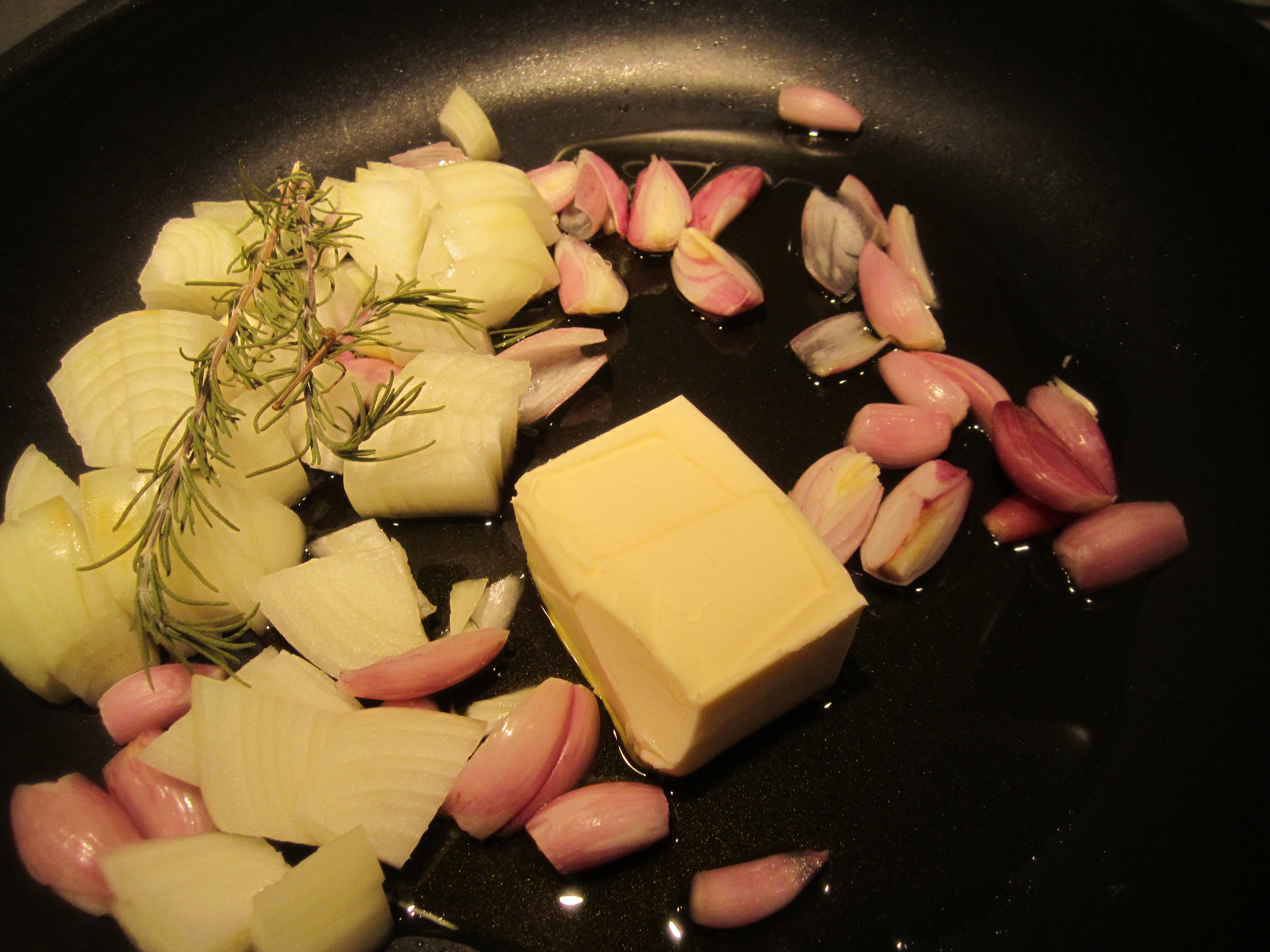
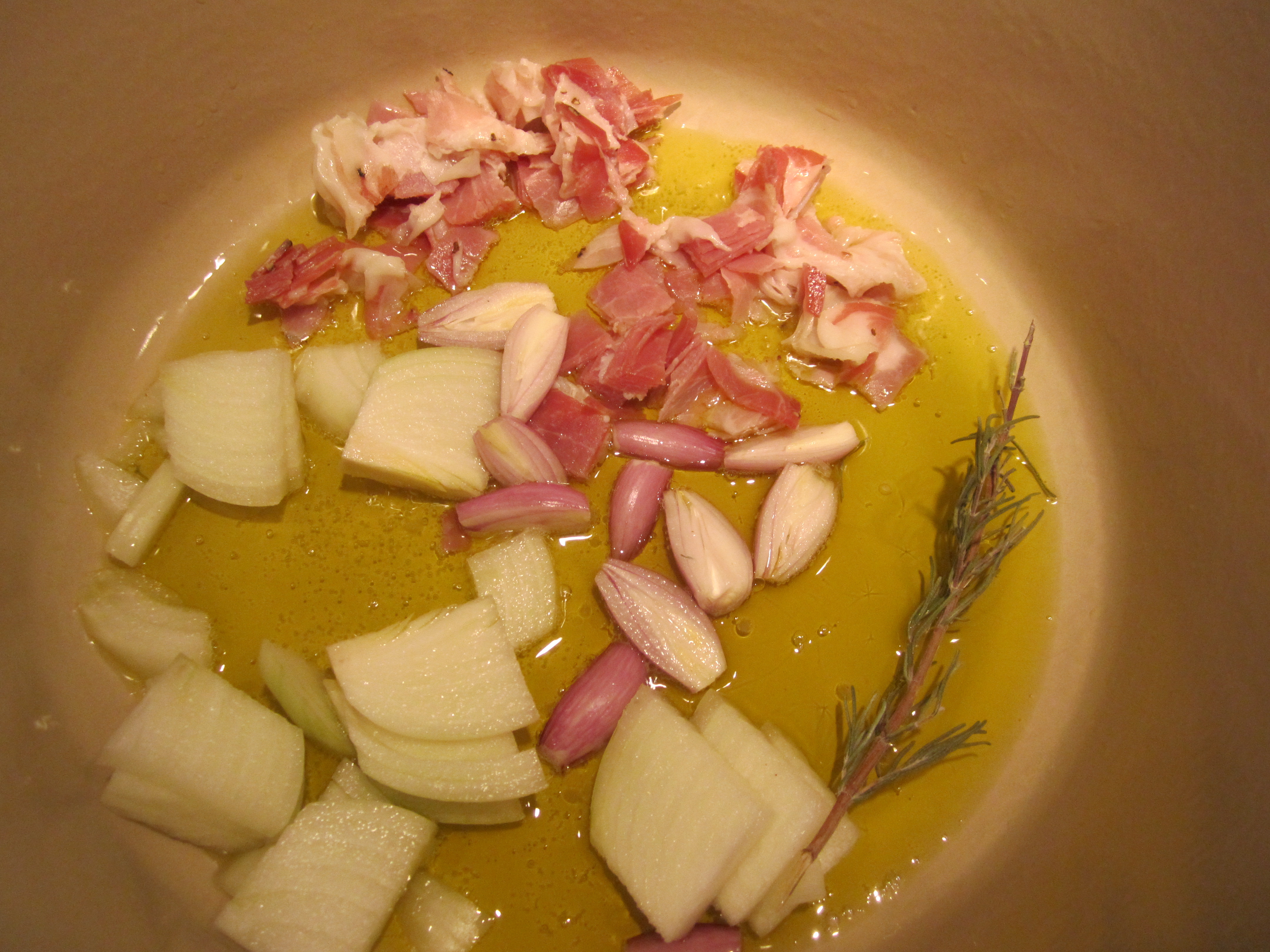
In a heavy-bottomed dutch oven, place onions, shallots, rosemary, pancetta and oil.  Turn heat to low and saute for about 3 minutes. 
 

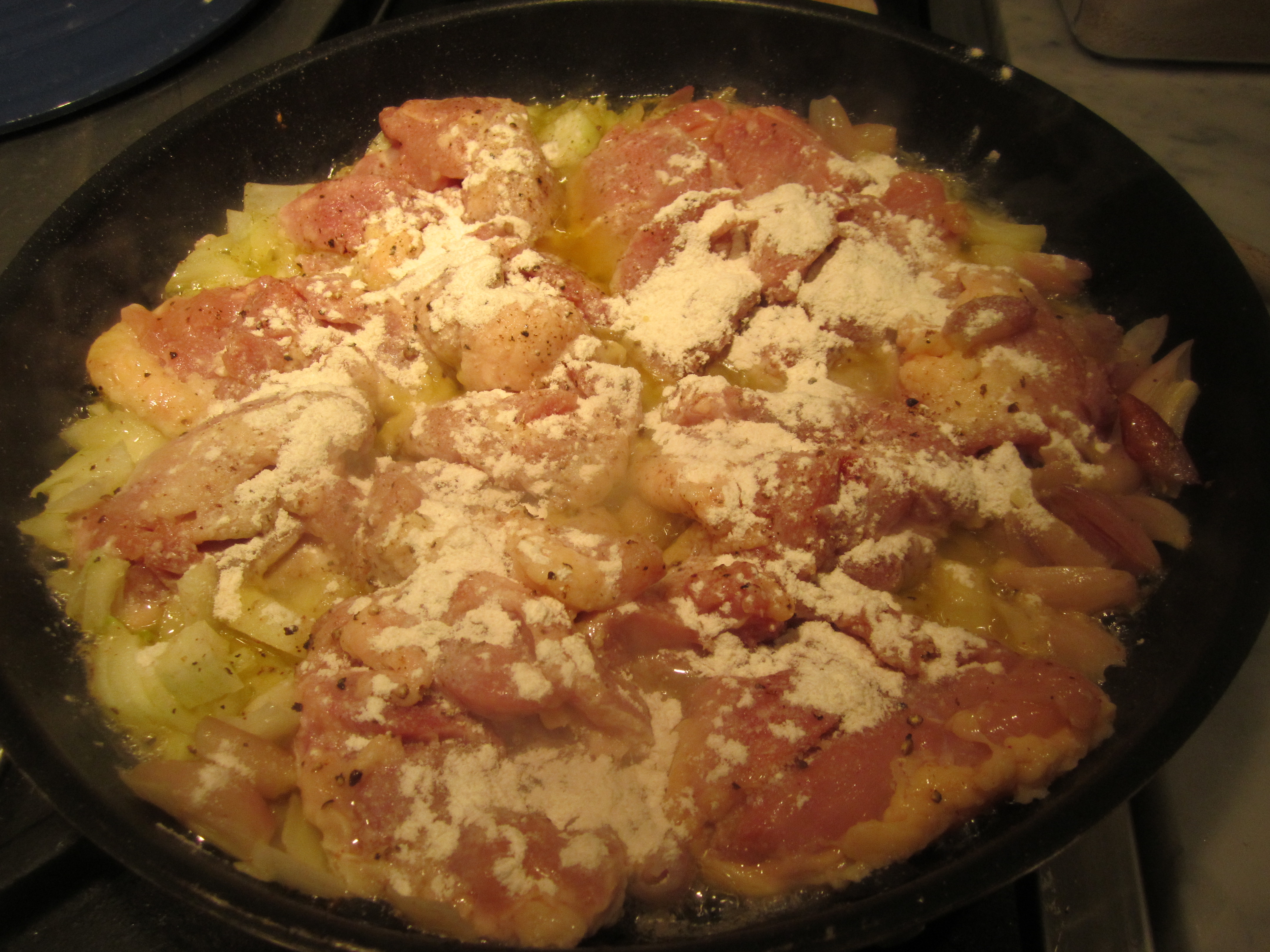
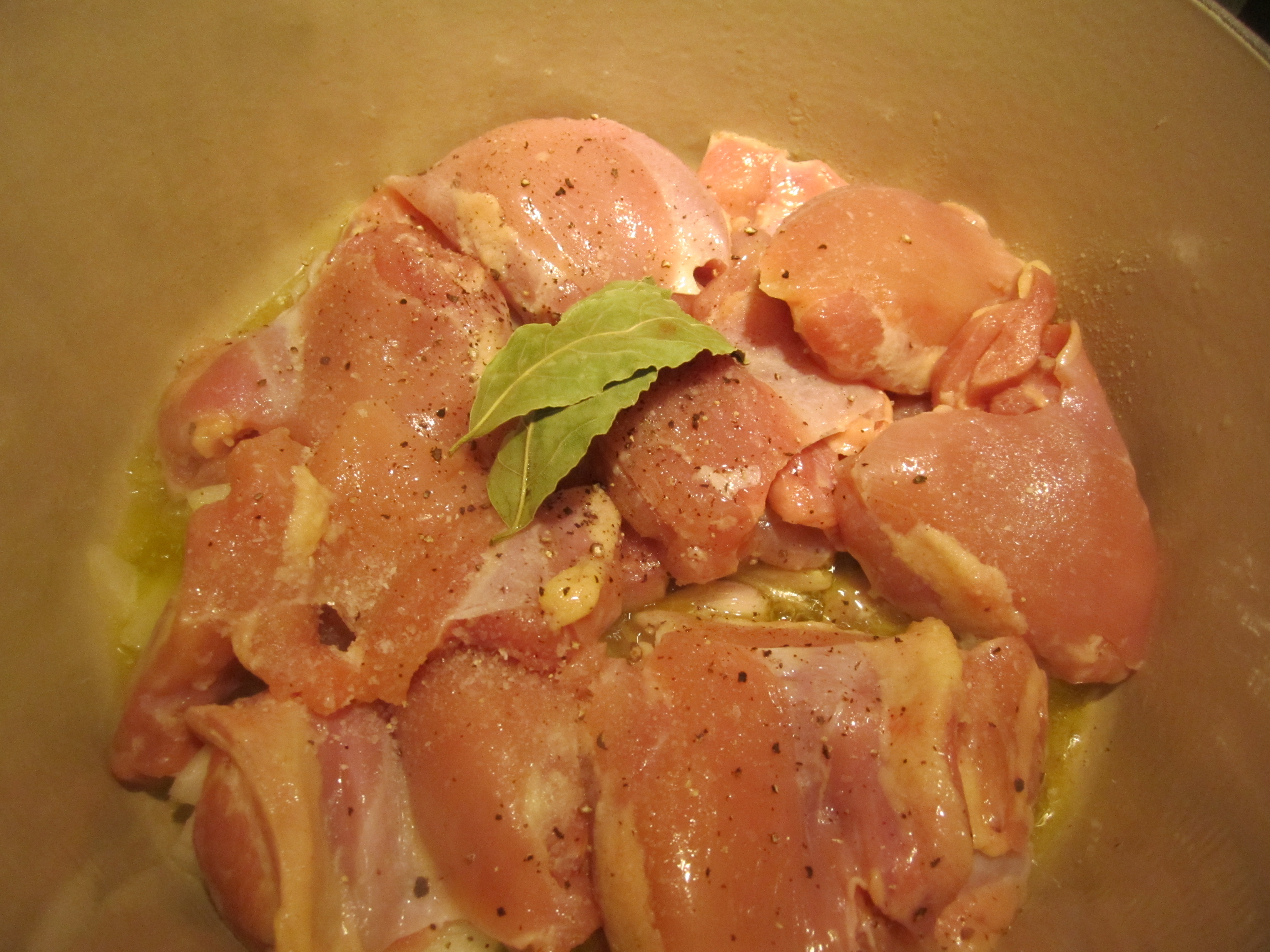
Add chicken pieces and bay leaves and sprinkle with salt and pepper.  Saute for another 5 minutes on medium-high heat, being careful not to burn the onions. 
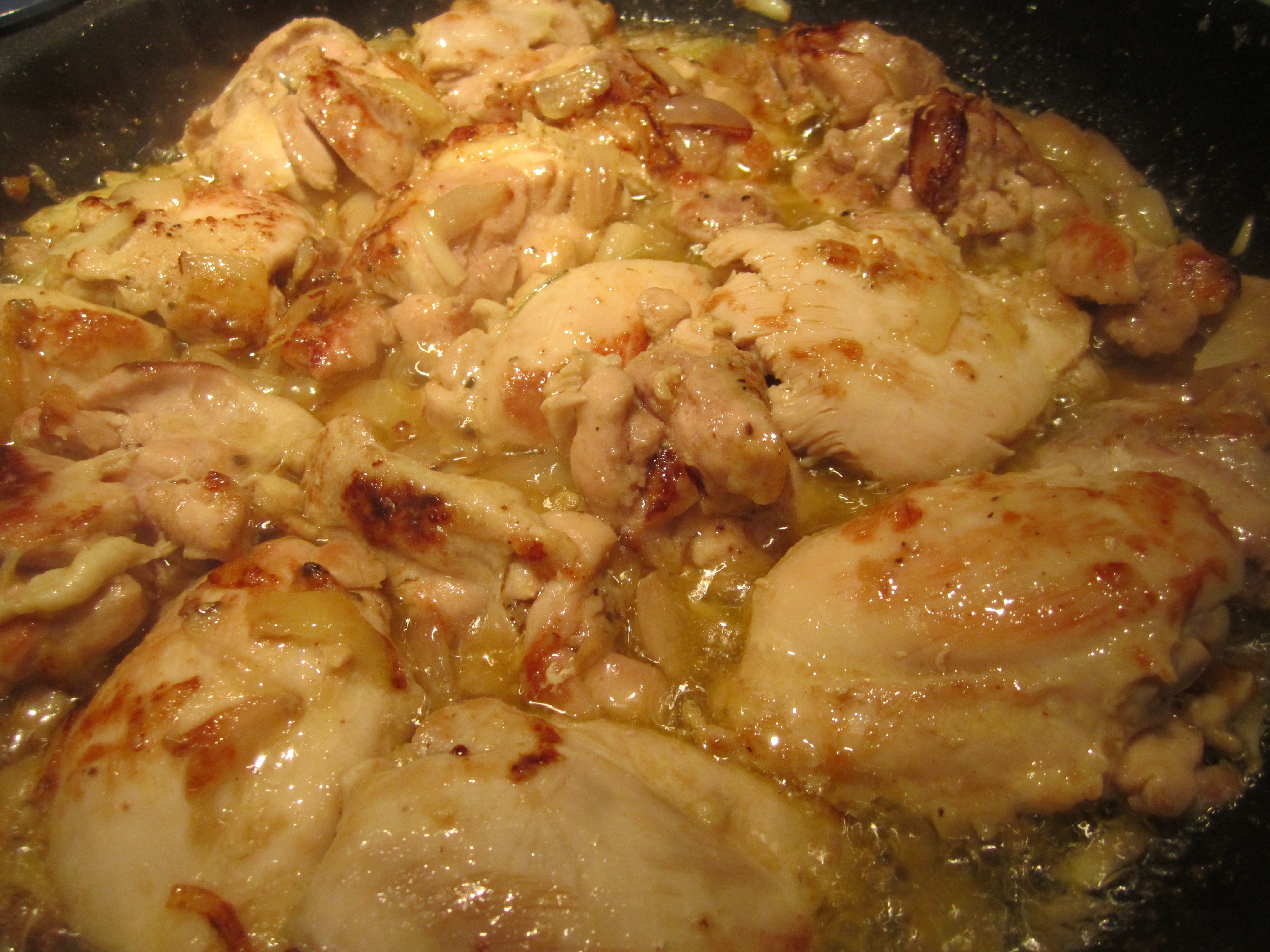
Sprinkle on flour and continue sauteing for another 3 – 4 minutes, scraping the bottom and sides of pot constantly.

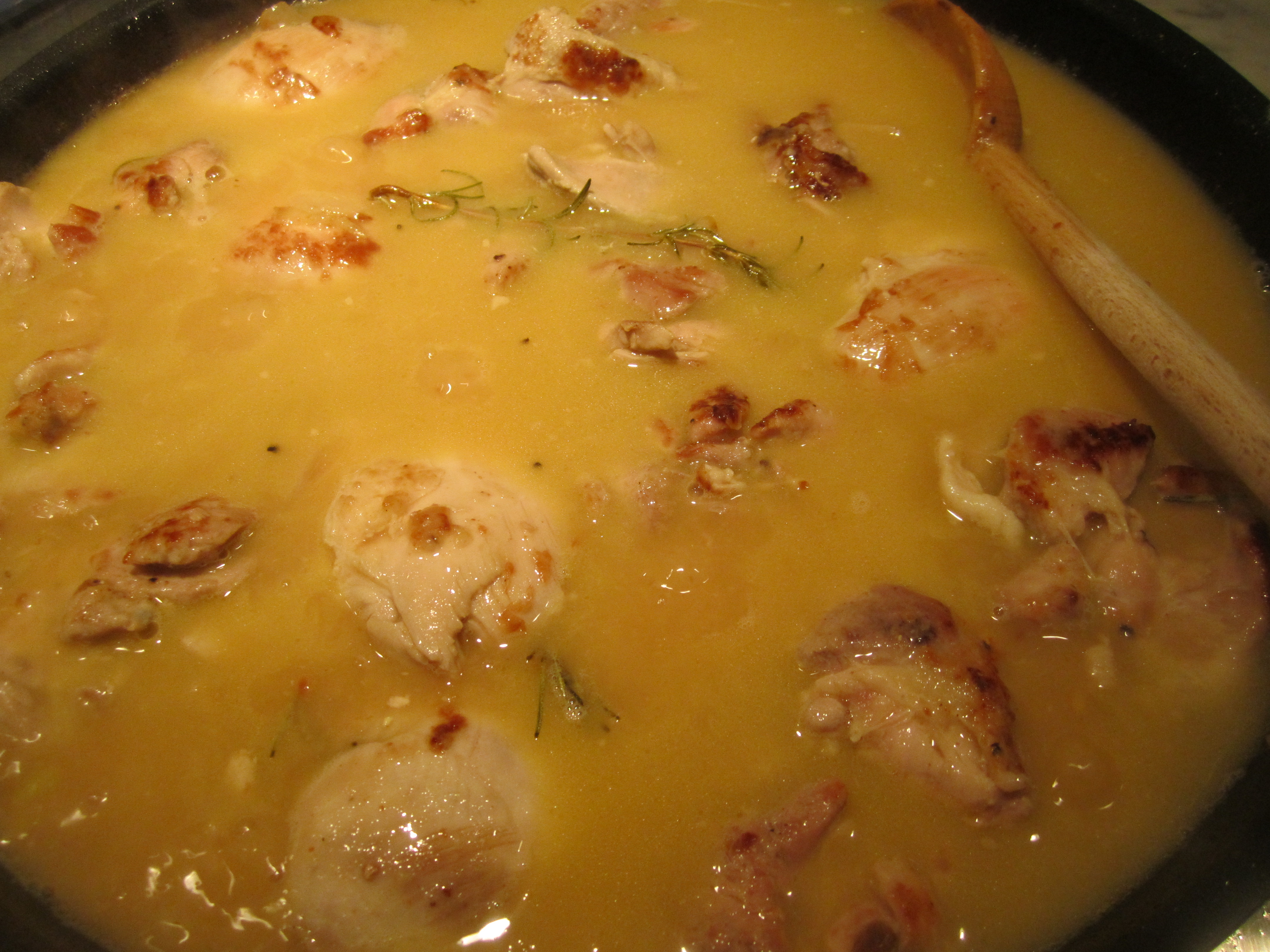
Add marsala and wine and turn heat to high.  Reduce for about 2 minutes (the flour will turn it into a thick sauce instantly.   Add the porcini,  broth and tomato paste and cover partially. 
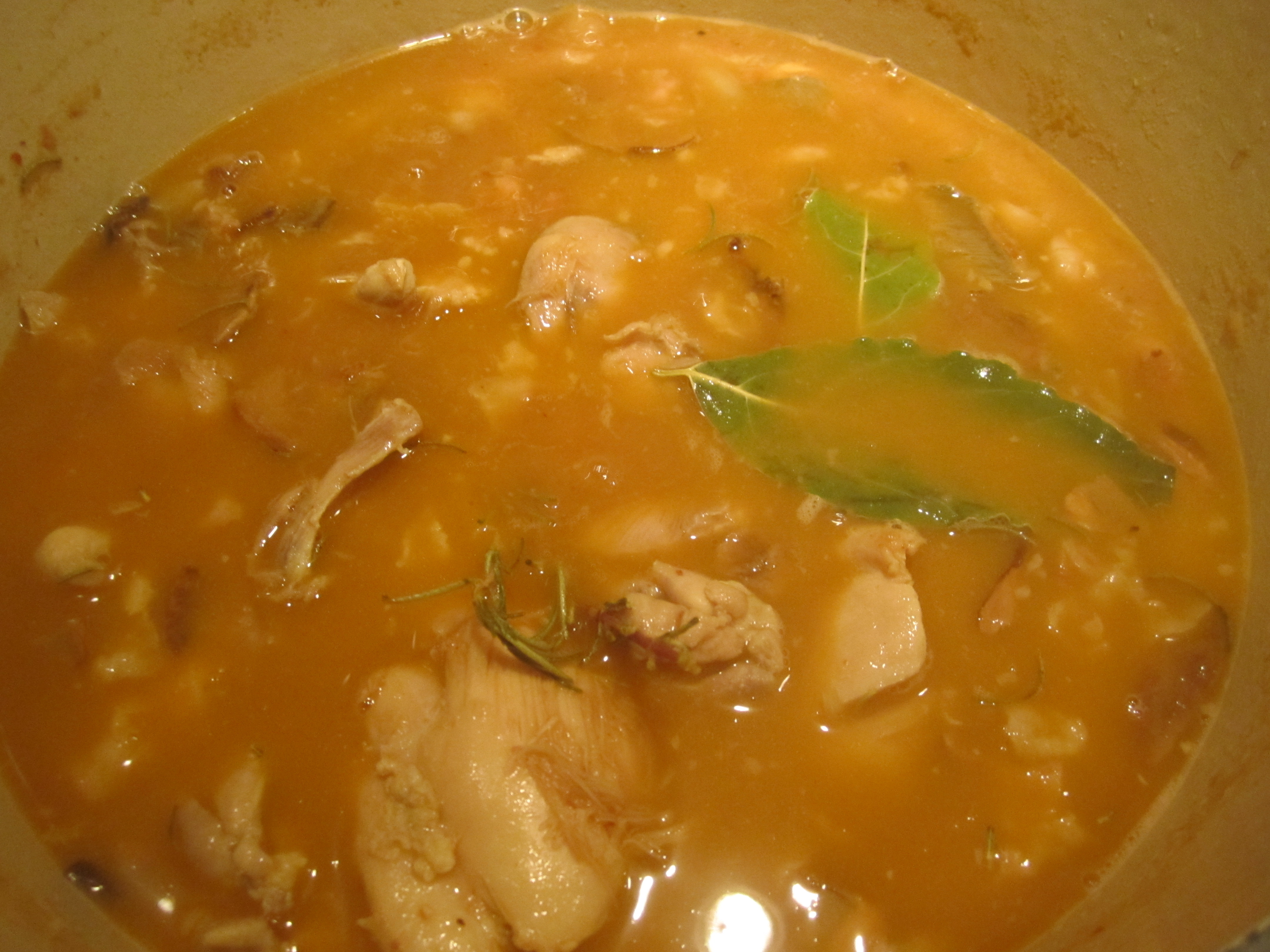
 

 Simmer for about 45 minutes, stirriing from time to time.  Taste for salt and pepper.  Simmer uncovered for about 5 minutes, to thicken, if necessary. 

 Remove bay leaves and rosemary and sprinkle with parsley.
Posted in Soup/Stew | Leave a comment

Whole Wheat Pappardelle with Savoy Cabbage and Sausage

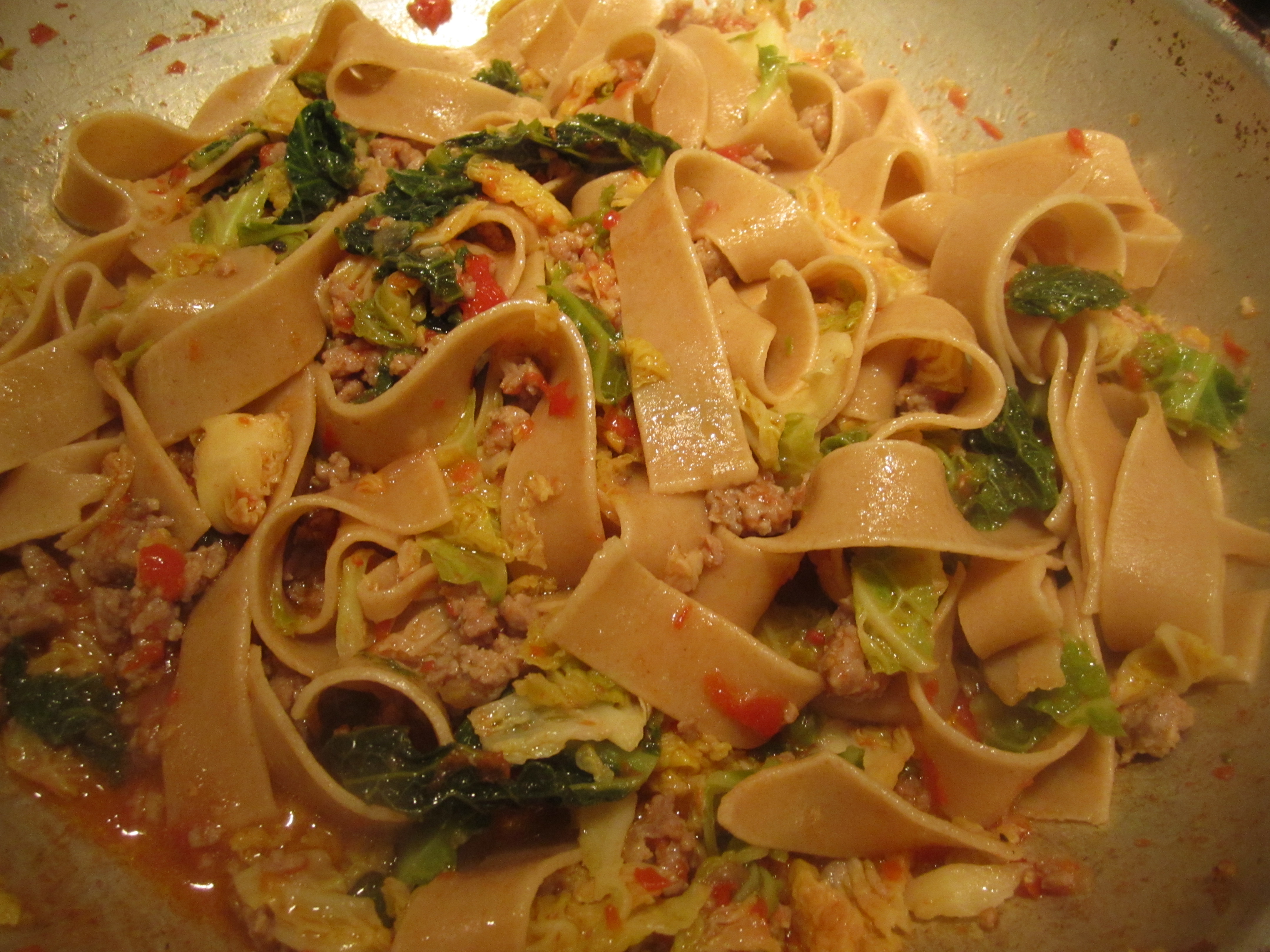
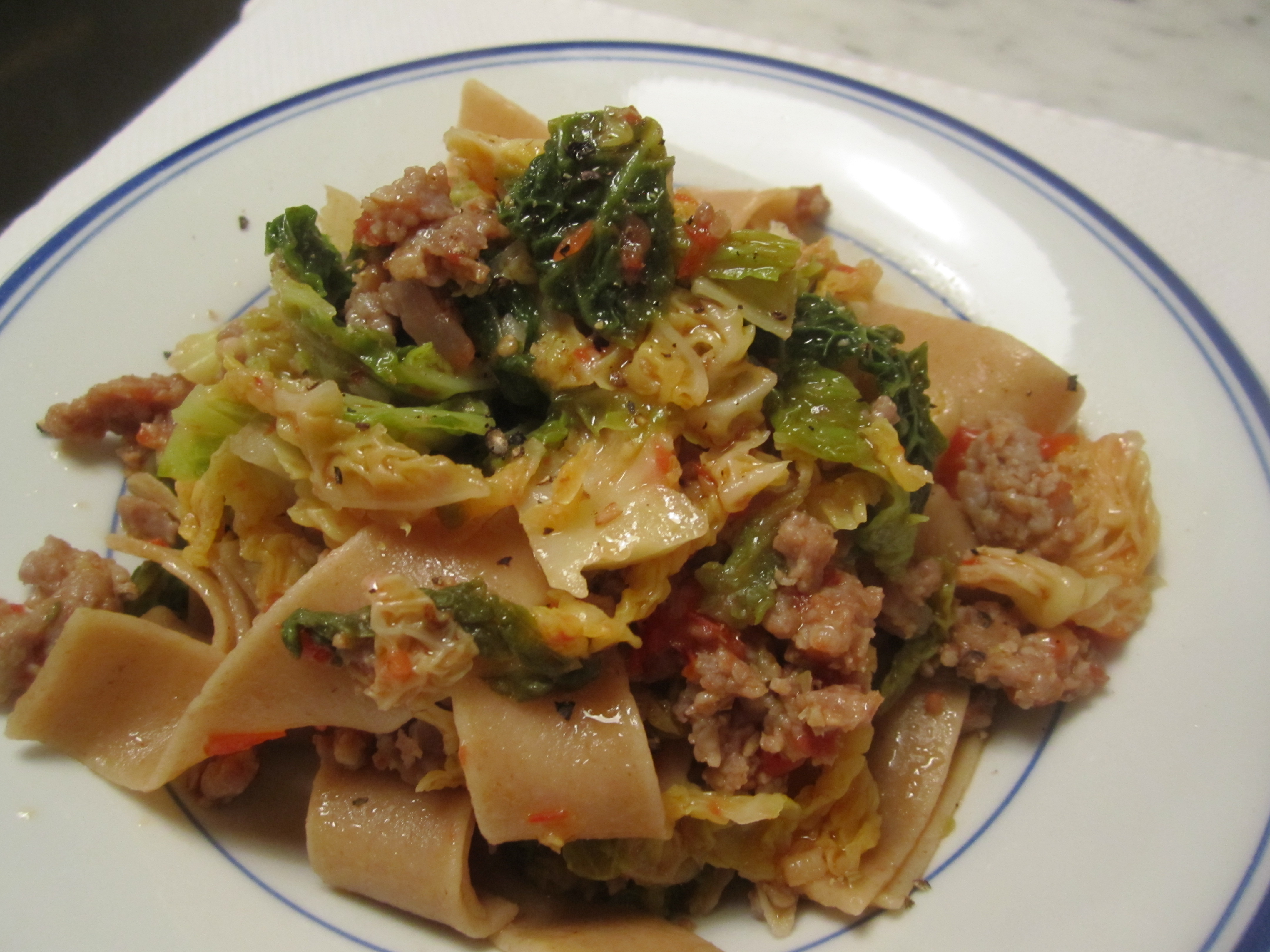
This a simple, satisfying pasta to make in fall or winter, when savoy cabbages are at their peak.  The cabbage gets sliced into ribbons, the sausage removed from its casing and sauteed, and some chopped tomato and broth pull all the flavors together.

Whole wheat pappardelle are ideal for this dish because of their sturdiness and earthiness, but if you can’t find whole wheat, white will do.   The ratio of pasta to cabbage is extremely flexible–you can make it more of a vegetable dish or more of a pasta dish.  Tonight, I used a whole head of cabbage with a pound of pasta–there was just as much cabbage as noodles, which was exactly what I wanted.

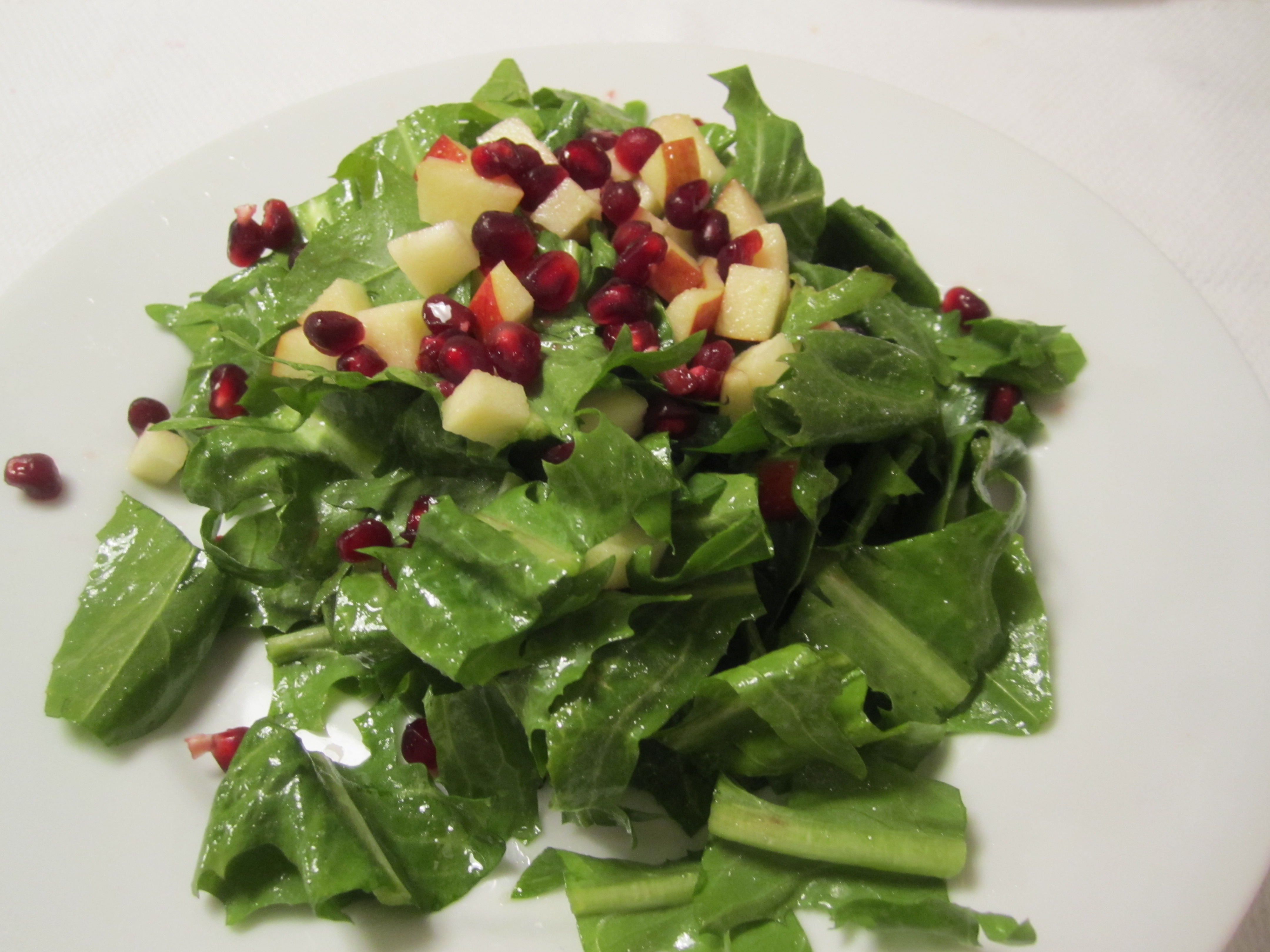
After our pasta, we had a wonderfully sweet/astringent salad of dandelion greens, apples and pomegranate seeds, in a red wine and agave vinaigrette.  This was the perfect palatte cleanser after the deep, rich flavors of the pasta.

Whole Wheat Pappardelle with Savoy Cabbage and Sausage

serves 4

1 small head savoy cabbage, quartered, cored and sliced into 1/2″ wide ribbons

1 lb whole wheat pappardelle

1 lb Italian sausage, removed from its casing

1/2 a medium onion, diced finely

1/4 c olive oil

1/2 cup tomato pulp, made from pureeing 2 ripe plum tomatoes in the blender.

1 c chicken broth

salt and pepper to taste

grated pecorino romano for sprinking

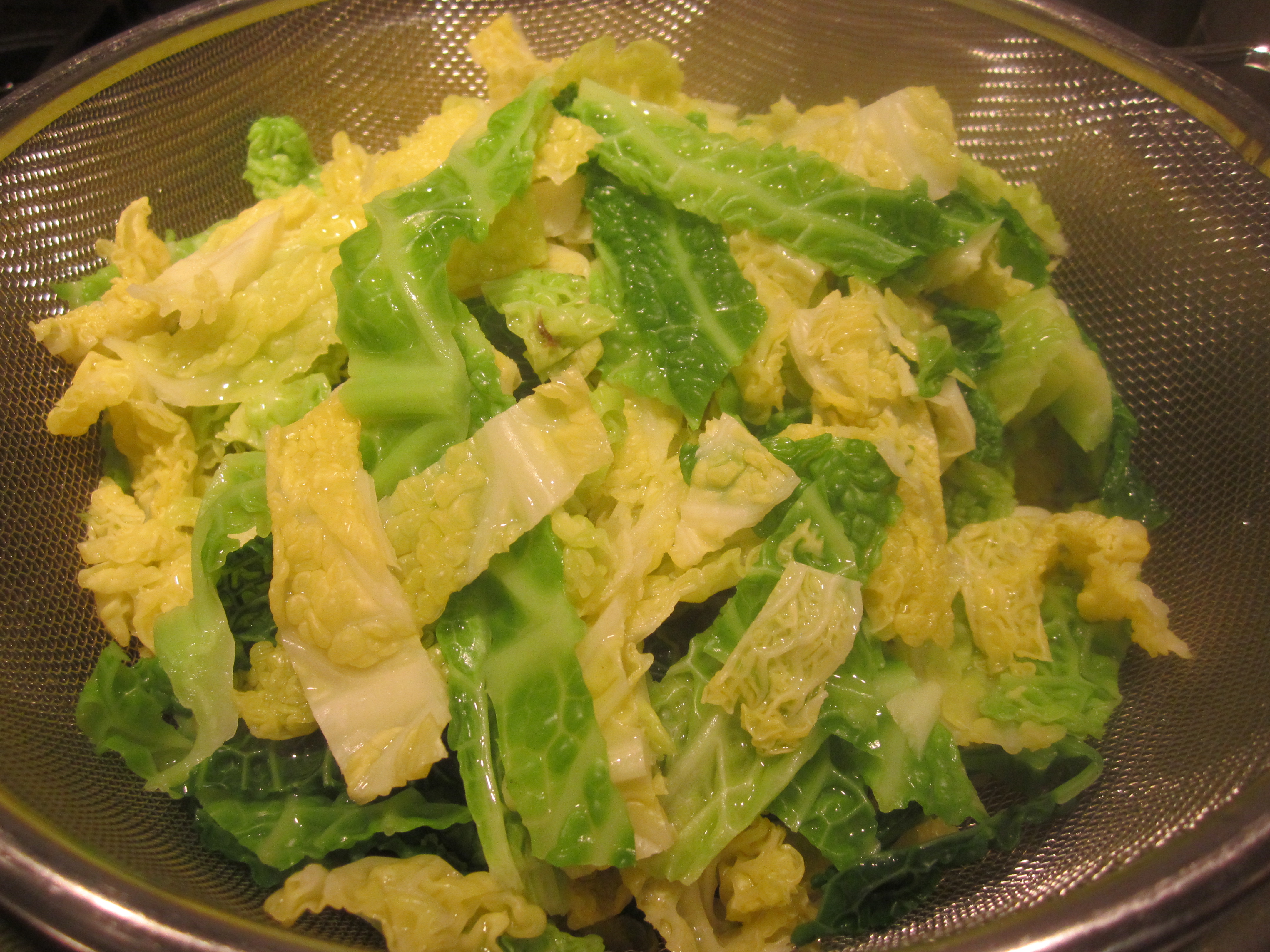
Bring a pot of salted water to a boil.  Drop in savoy cabbage and blanch for about 5 to 7 minutes.  Drain and set aside.

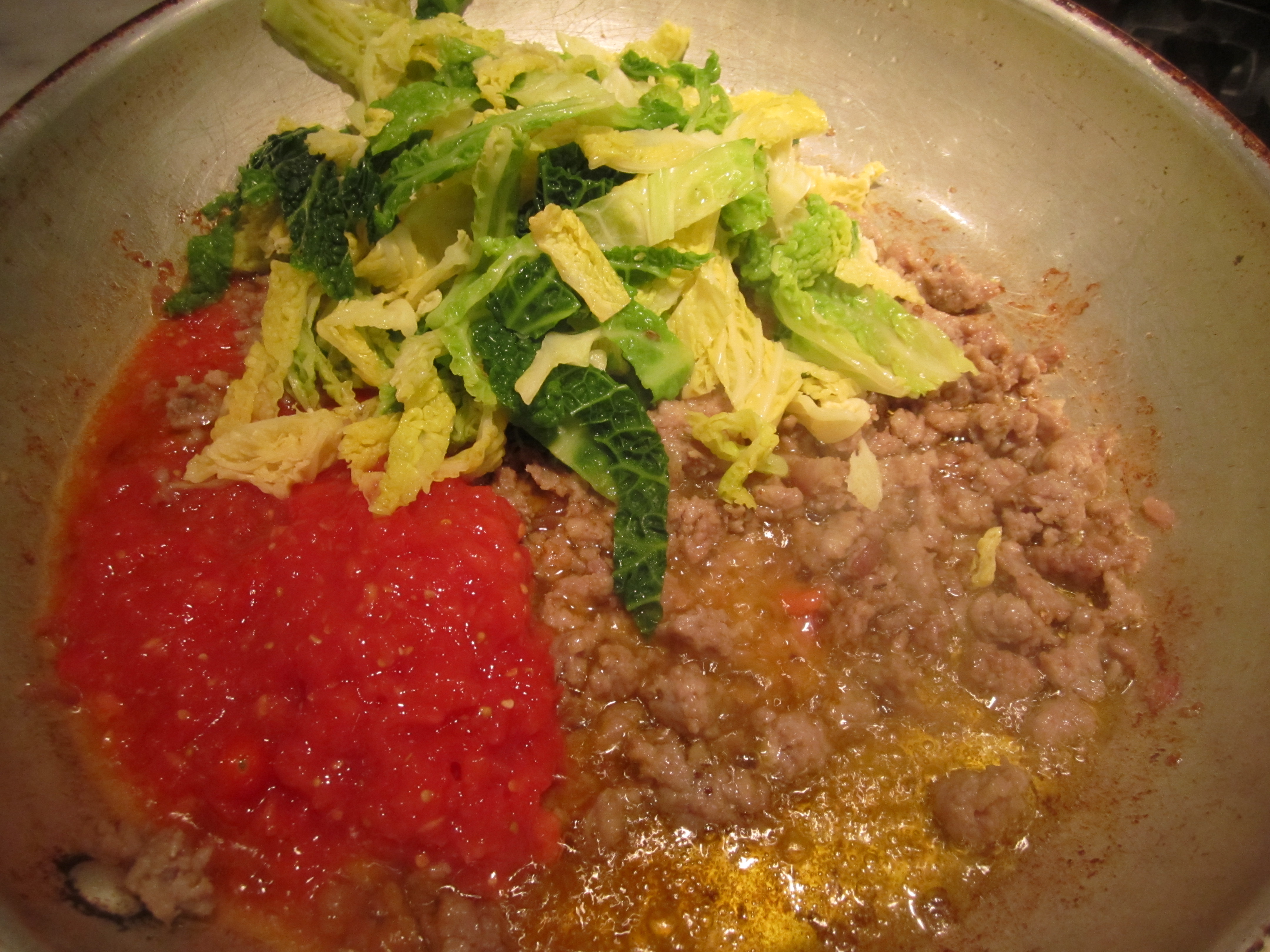
On medium heat, in a broad skillet,  saute the sausage and onion in 2 tablespoons of olive oil, while constantly chopping the sausage with a spatula as it browns.

 Cook until sausage has lost all its pink color and onions have begun to caramelize–about 10  minutes.

Turn heat to high and add tomato pulp, broth and cabbage to skillet and saute together for about 10 minutes, while pasta cooks.

 Add pasta to skillet, along with the remainder of olive oil and a half-cup of the pasta cooking liquid.

Taste for salt and pepper, drizzle with remainder of olive oil, and serve, with grated pecorino romano.  Saute for a minute to combine, then serve.

Posted in Pasta | Leave a comment

Deconstructed Stuffed Chicken

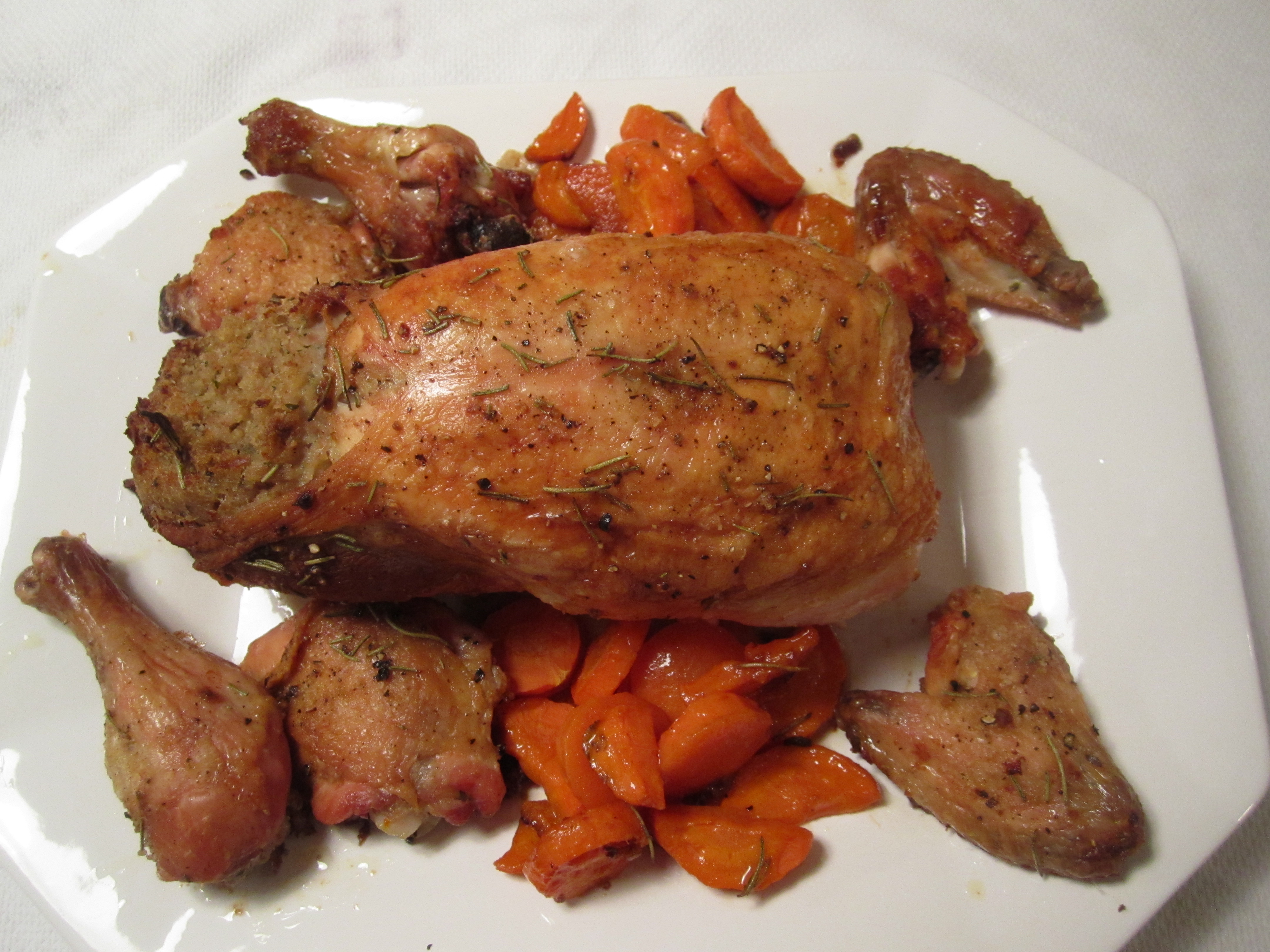
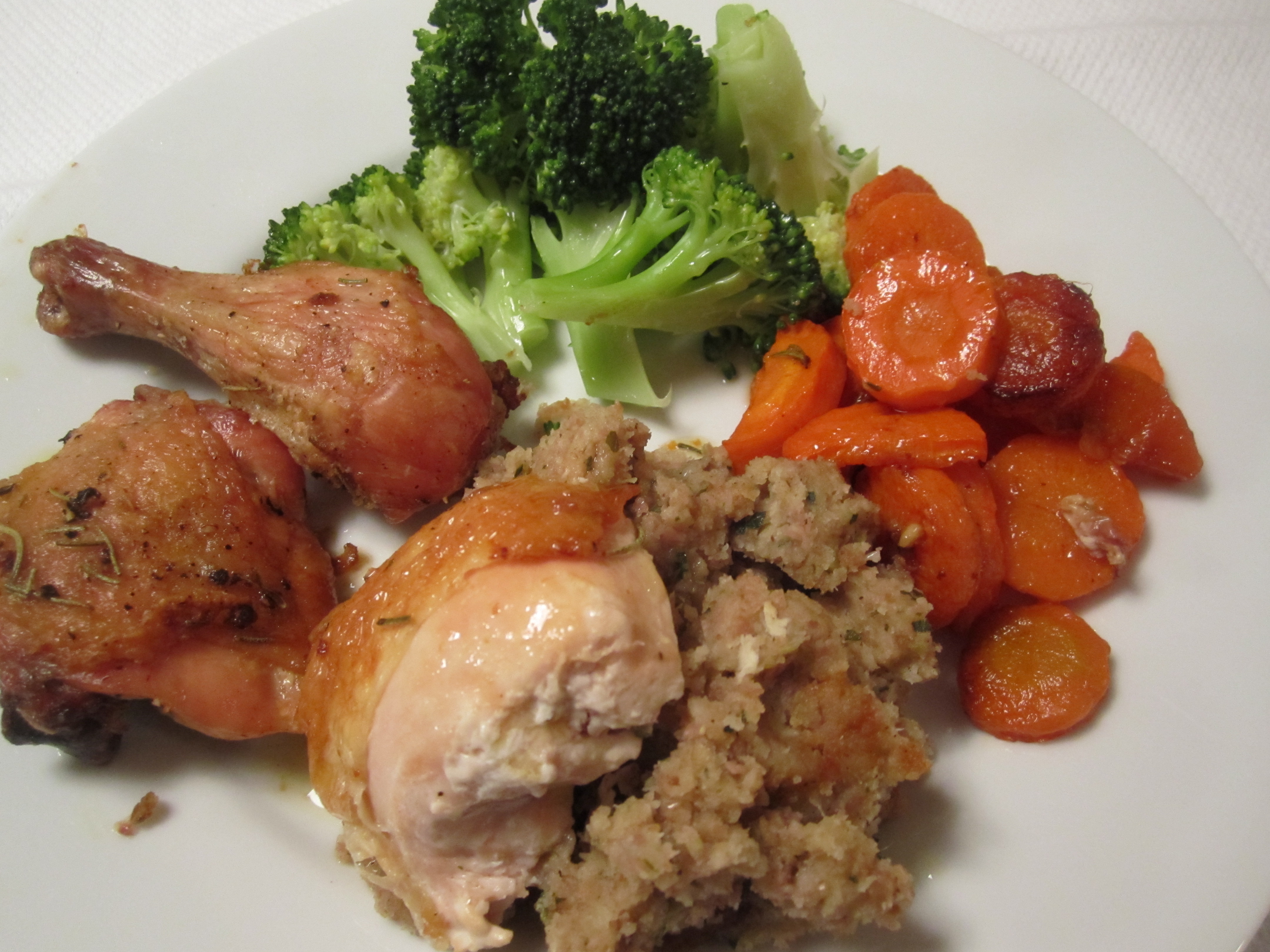
Since I didn’t cook Thanksgiving dinner this year, I miss the leftovers that come with it–mainly stuffing–so I decided to make a chicken, and stuff it.  I always vary my stuffing, and this time, I’m using my neighbor Beppi’s recipe as the basis of my stuffing.  Beppi, you may recall, puts sausage and mortadella in his stuffing–which is wonderful.   Today, however, I eliminated the sausage and only used aromatics, bread and mortadella.

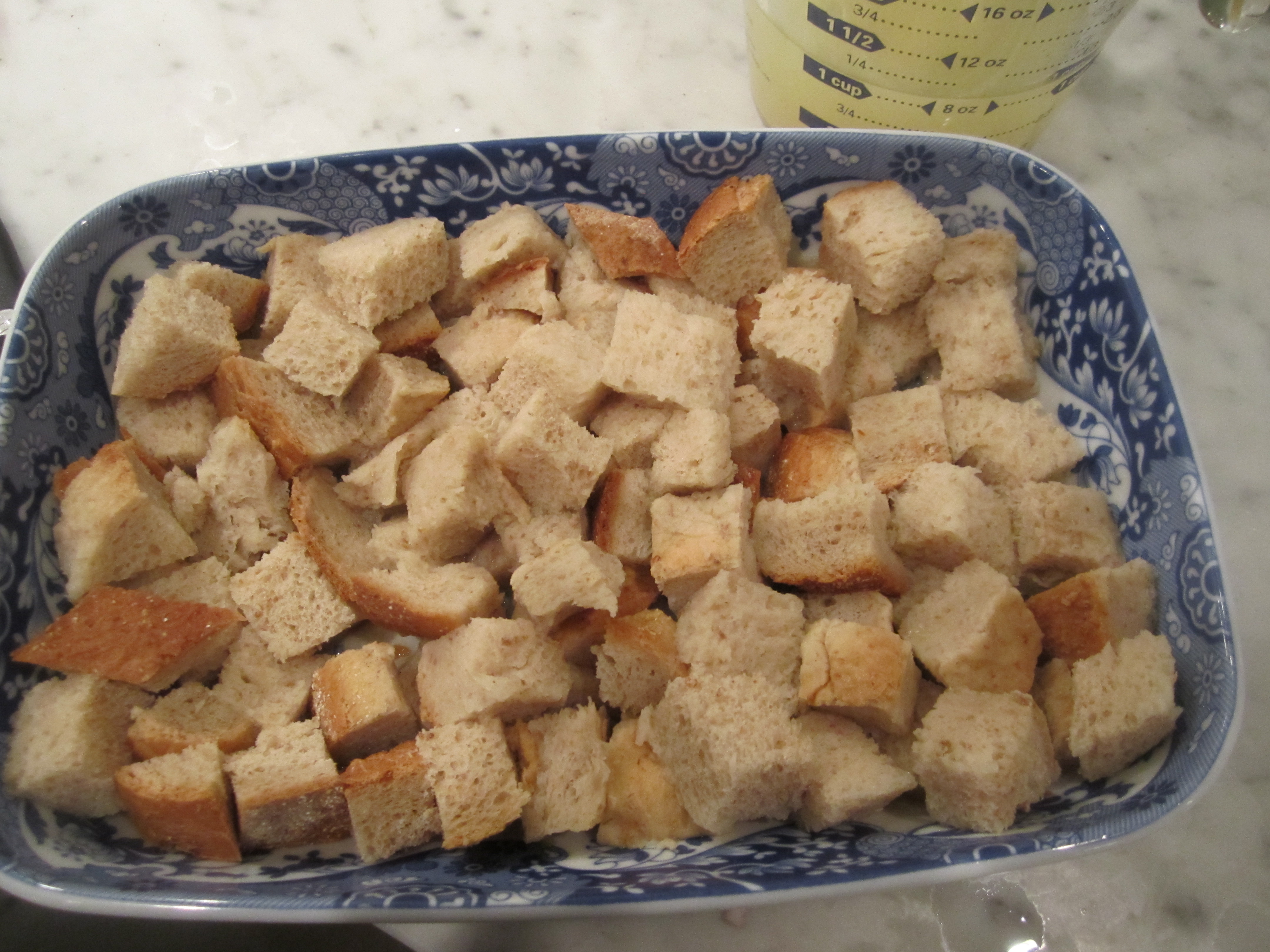
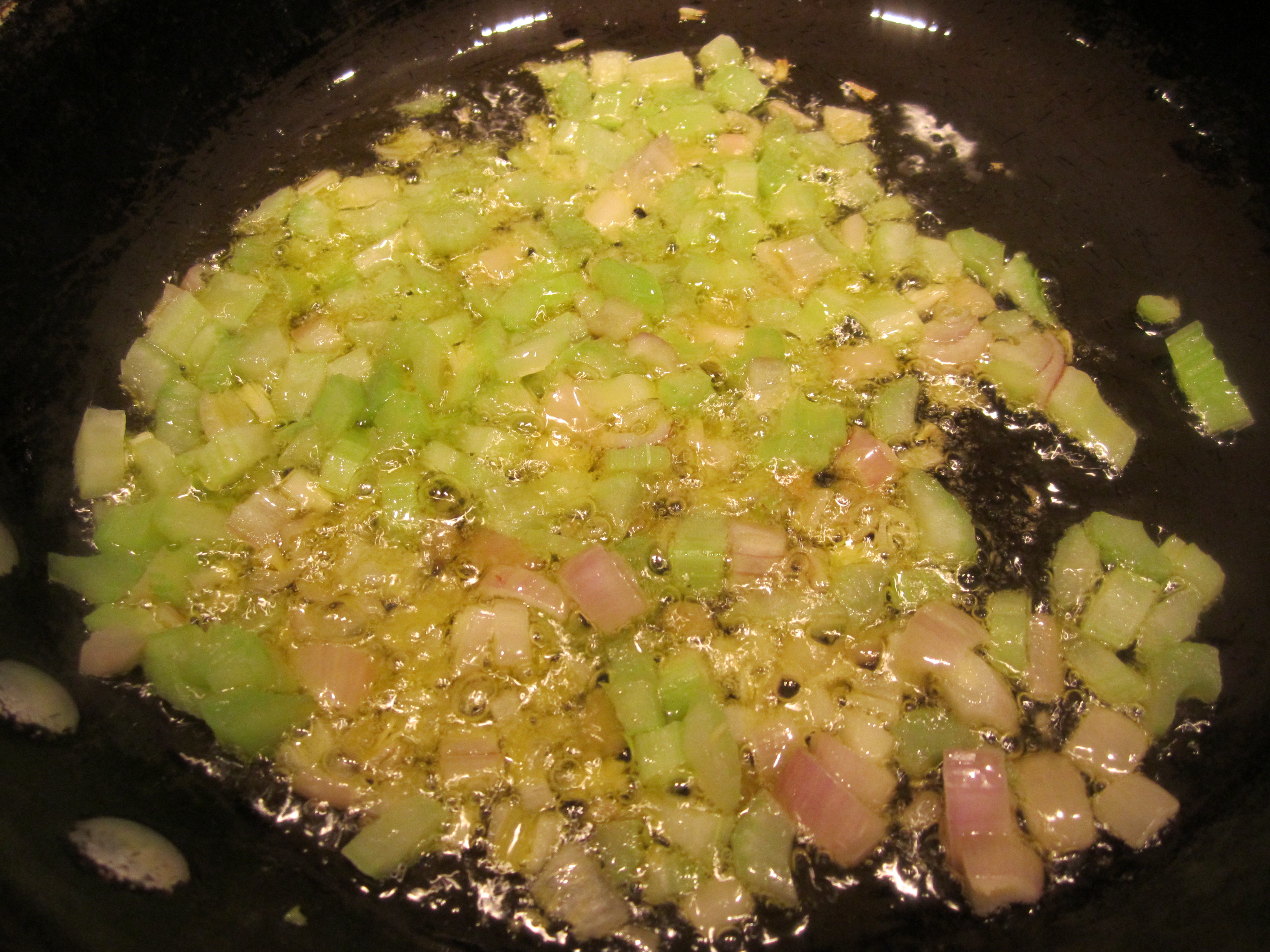
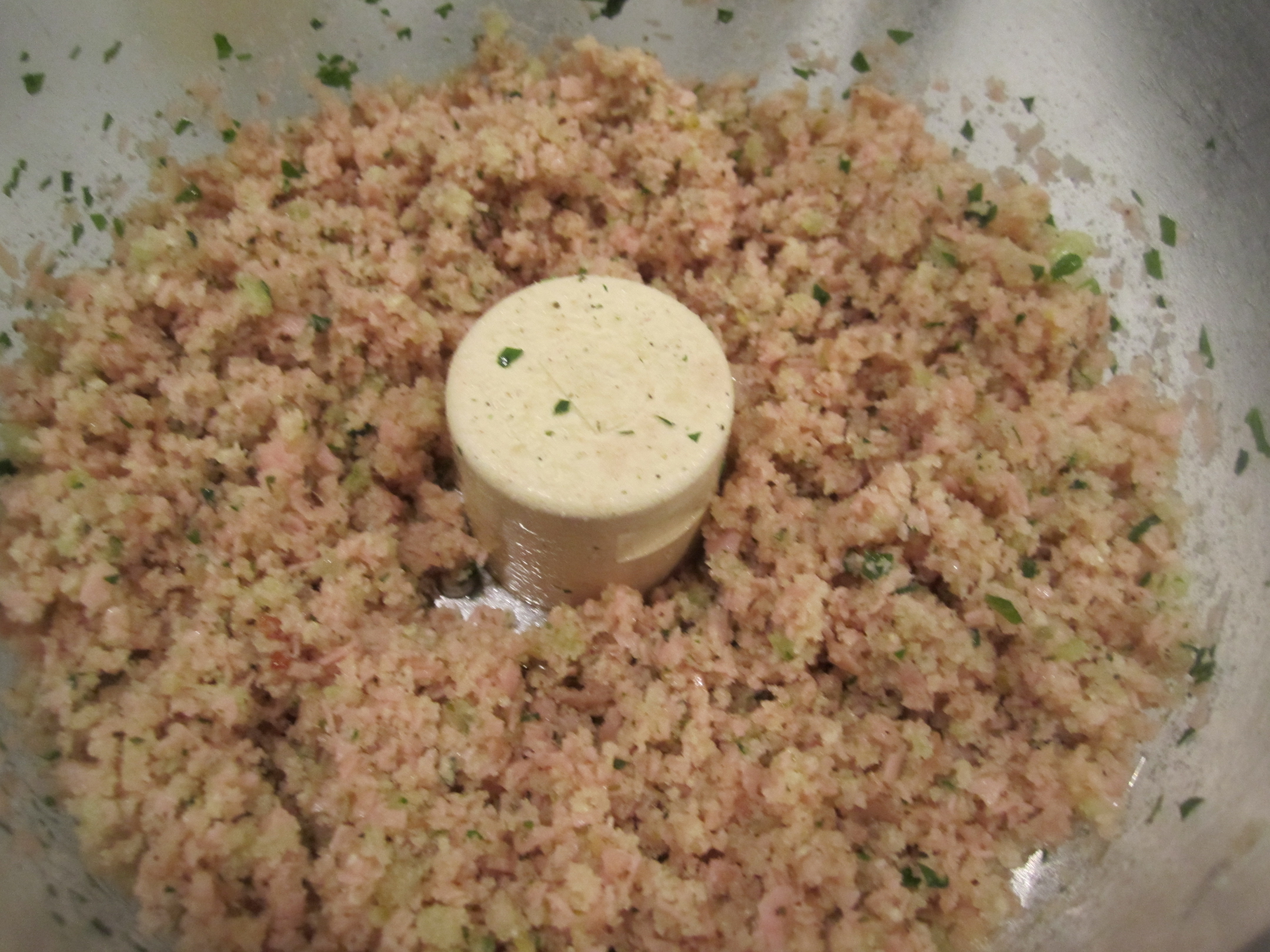
The stuffing begins with whole wheat (not multigrain) bread cut into cubes.  I like whole wheat because it’s denser and nuttier than white.   The bread gets soaked in chicken broth, then processed in the food processor to form a mush.  The mortadella also gets processed to a fine puree–almost a mousse.  Shallots and celery get sauteed and processed as well, along with a handful of chopped parsley, and a a dusting of nutmeg.  A cup of seasoned breadcrumbs are added to the mixture.

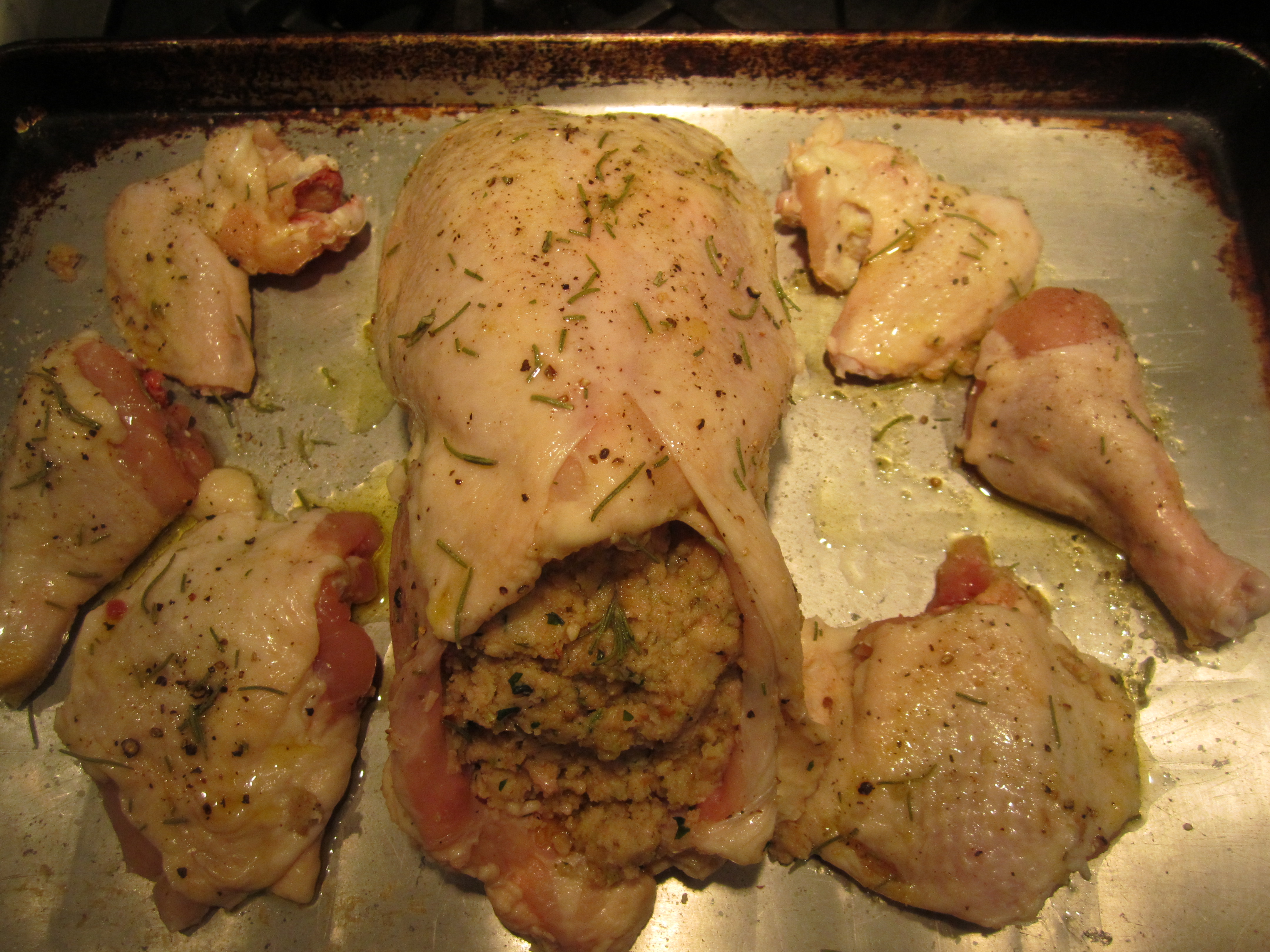
You may or may not recall my Deconstructed Roast Chicken.  This is probably my favorite way to roast a chicken, for several reasons.  First and foremost, it allows you to remove the breast from the oven as soon as it’s cooked, while allowing the thighs, legs and wings to continue roasting to crispy, juicy perfection (much crispier than if they had stayed attached to the chicken).

The next reason I love this method is that it involves limited carving after it’s cooked–just remove the breast from the bones and serve all the parts on one plate.  This means that the parts can all be eaten right out of the oven without allowing the bird time to rest, and without allowing any heat to escape while you spend 10 minutes carving the entire bird.

Normally, I would bake my stuffing outside the bird, in a casserole.  Tonight, however, I wanted to experiment and bake some in the bird, and some separately.  I must say, they were both great–it all depends on whether you like your stuffing moist or crispy.  It’s actually nice to have a bit of each on the plate.

Since I baked the breast stuffed, the breast took longer than usual to cook, which meant that it was ready at about the same time as the other parts–a huge bonus–all the parts were able to be eaten piping hot out of the oven. The dark parts were irresistably crispy, while the breast and stuffing remained moist.  All of this from a mere hour and twenty minutes total roasting time.

During the last half-hour of roasting, I added some blanched carrot slices to absorb some of those wonderful chicken drippings.

With this technique, any night of the week can taste like Thanksgiving.

Deconstructed Stuffed Chicken

serves 2

a 2 1/2 lb chicken, legs, thighs and wings removed; breast and back left whole (if you’re shopping at a butcher, the butcher can do this for you).

7 slices of whole wheat bread

1 1/2 c chicken broth

2 tbls olive oil

4 shallots

1 rib celery

1/4 lb mortadella, sliced then diced into squares

2 tbls fresh chopped parsley

1/2  tsp dried rosemary

1/8 tsp nutmeg

1 c seasoned bread crumbs

salt and pepper to taste

Preheat oven to 375 degrees.

Slice bread into 3/4″ cubes and soak with 1 cup warm broth for about 10 minutes.

On low heat, saute the celery and shallots in 1 tablespoon of olive oil for about 5 minutes until tender and lightly caramelized.

Place in food processor.  Add bread to processor and pulse until a coarse mush forms.

Set aside.  Add mortadella, seasoned crumbs and parsley to the processor.  Pulse until a coarse puree forms.

Combine the ingredients and add more broth if the mixture is too firm.

Rub chicken parts with salt, pepper, rosemary, and drizzle with the remainder of the oil.  Stuff cavity of breast with stuffing and arrange parts on shallow baking sheet.

Place remaining stuffing in an oiled casserole dish, cover with foil, and set aside.

Roast chicken parts for approximately 1 hour and 20 minutes, basting every 15 minutes or so.  Internal temperature of the breast and stuffing should reach around 165 degrees.  During the last half-hour, add some sliced, blanched carrots to the pan and allow to lightly caramelize in the chicken fat and drippings.

Also, during the last half-hour of roasting, add the casserole of stuffing to the oven.  Bake, covered, for 15 minutes, uncovered for 15 minutes.

Posted in Poultry | Leave a comment

Butternut Squash and Leek Soup

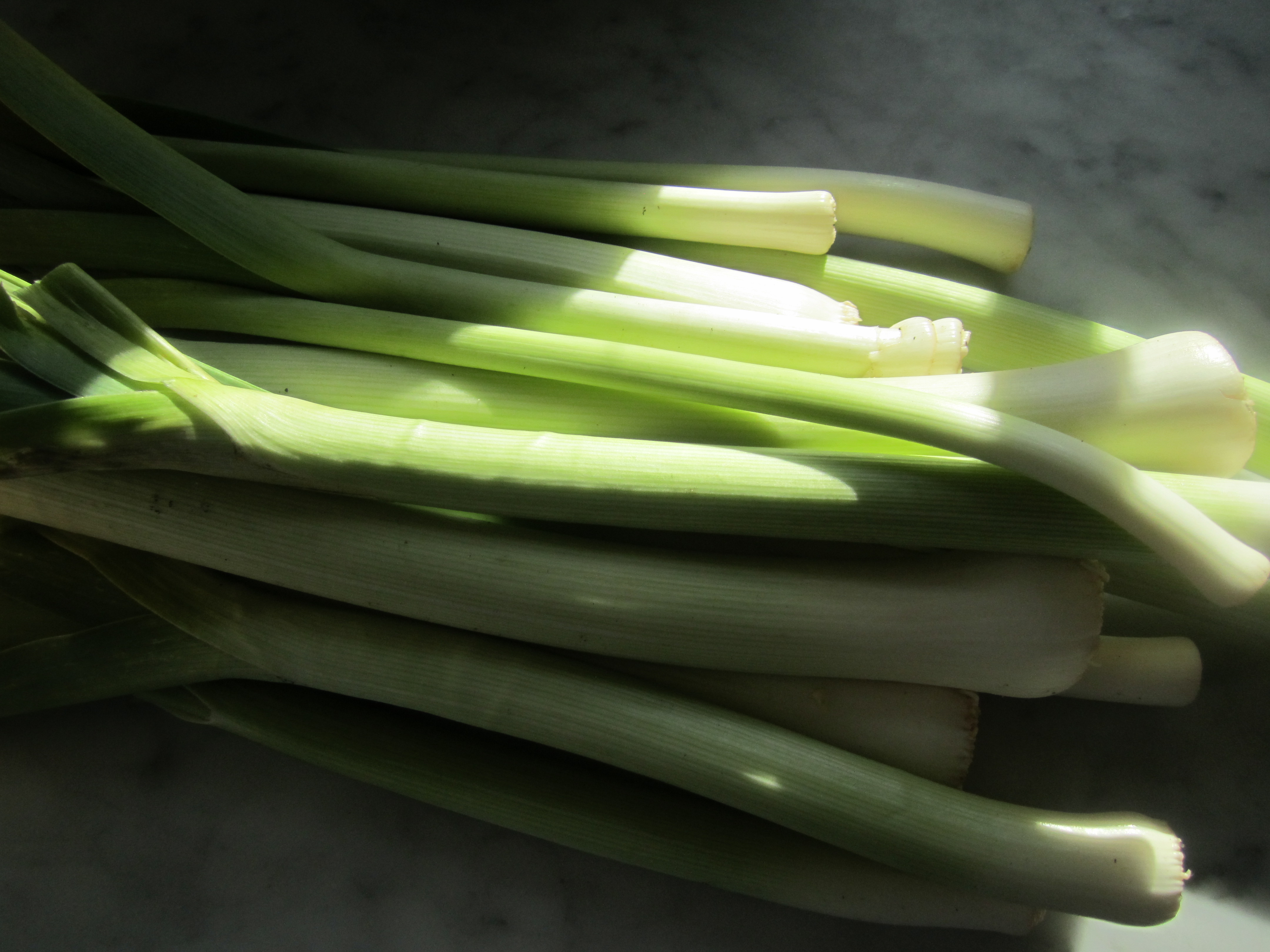
These leeks are truly the last hurrah from my  neighbor Beppi’s vegetable garden.

I’ve also stocked up on winter squashes from one of the local farm stands before it closes.  But not to despair–there is another farm stand which will stay open, on the honor system, until Christmas–that means you go in, shop for produce and leave your cash in a locked metal box.  It’s a wonderful system that I dare say no one abuses, because of how much we all value the trust that the farmers place in us.

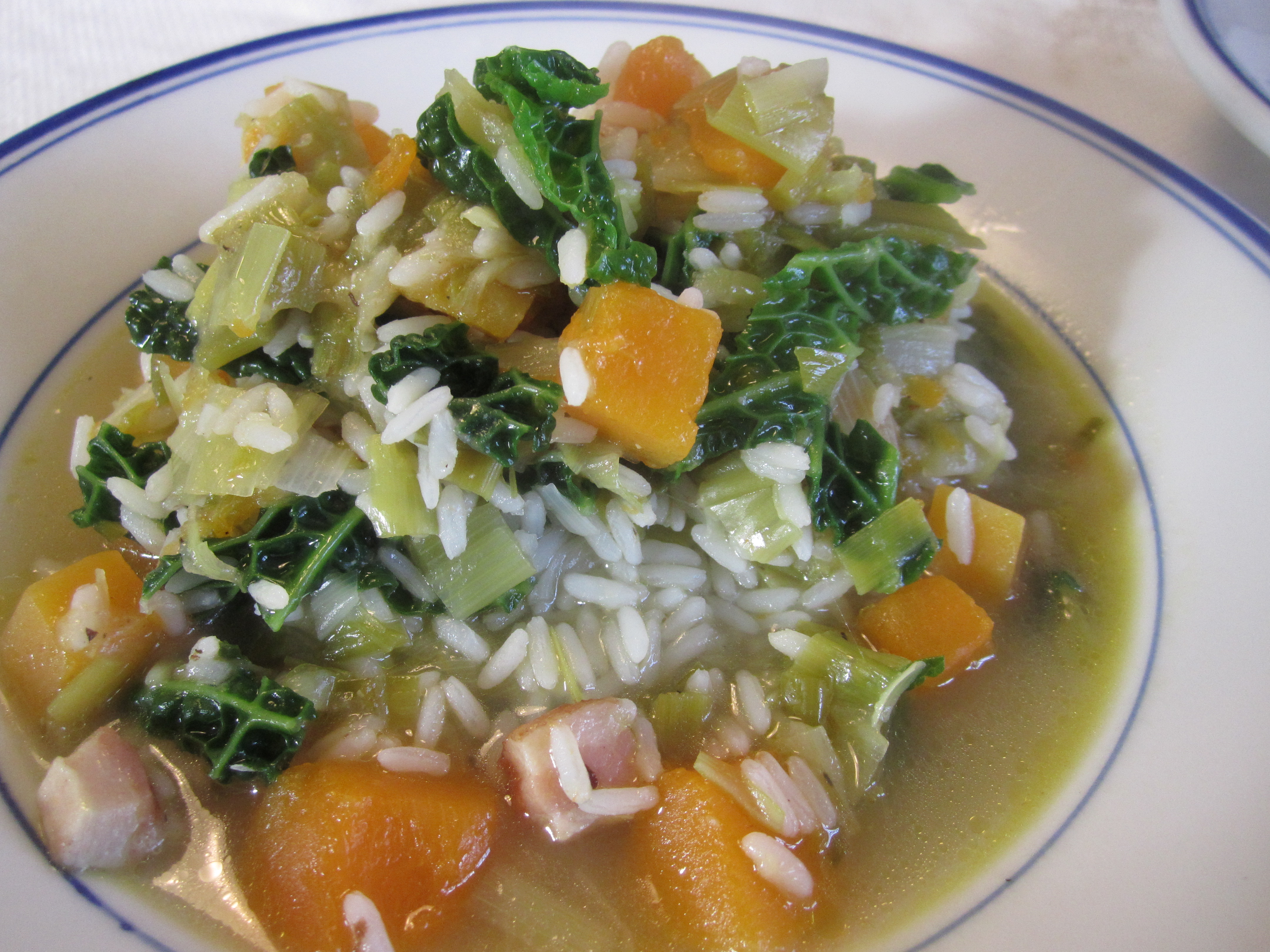
This soup is almost identical in preparation to Beppi’s Leek and Potato Soup, but with butternut squash standing in for potatoes.  In addition, I’ve added some nutmeg, which goes exceptionally well with the sweet, buttery flavor of the squash.

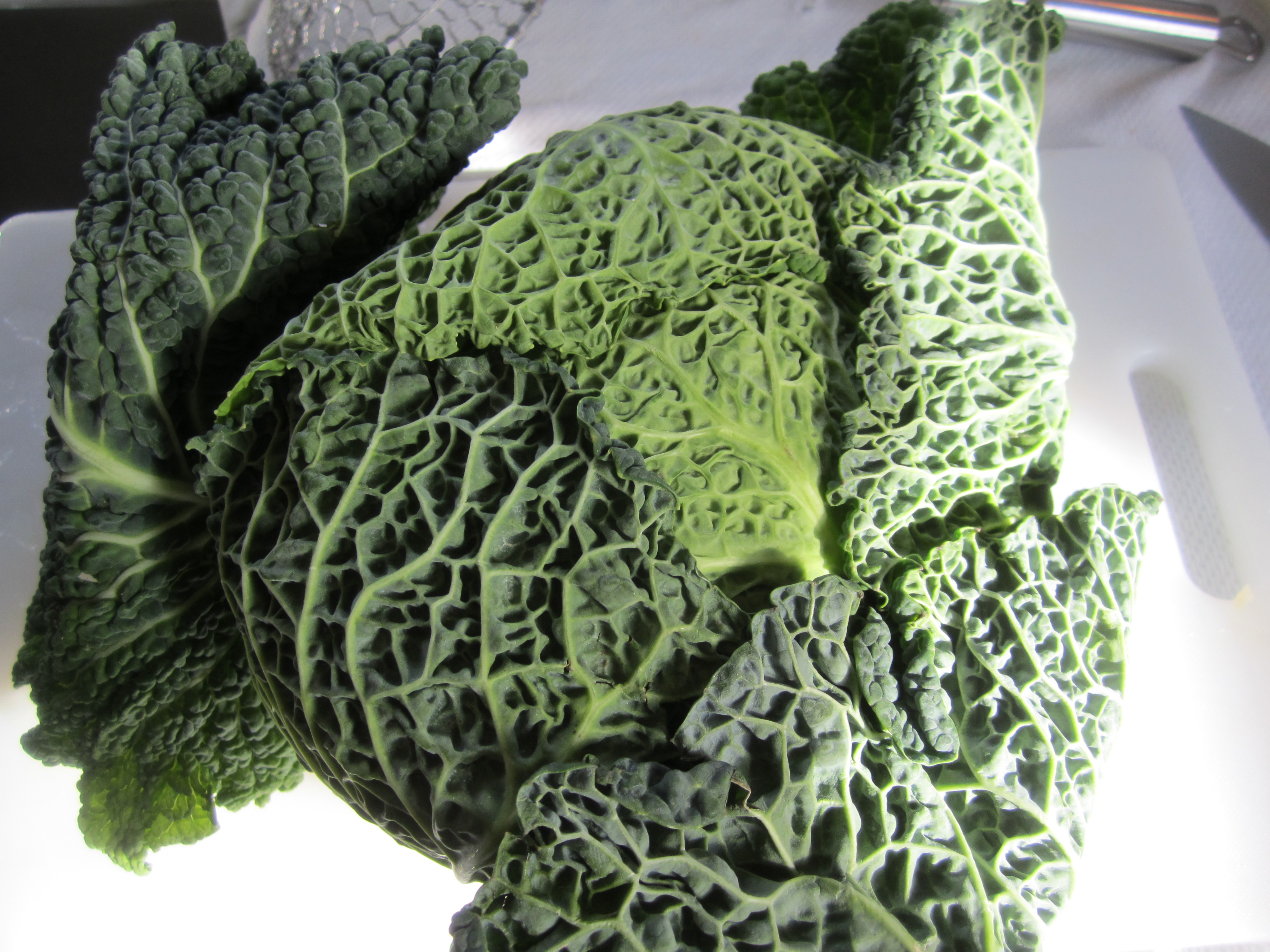
In addition to the leek and squash, I’ve just bought some beautiful, deep green savoy cabbage, which is also a nice addition–particularly the exterior leaves–they make the ideal addition to almost any soup.

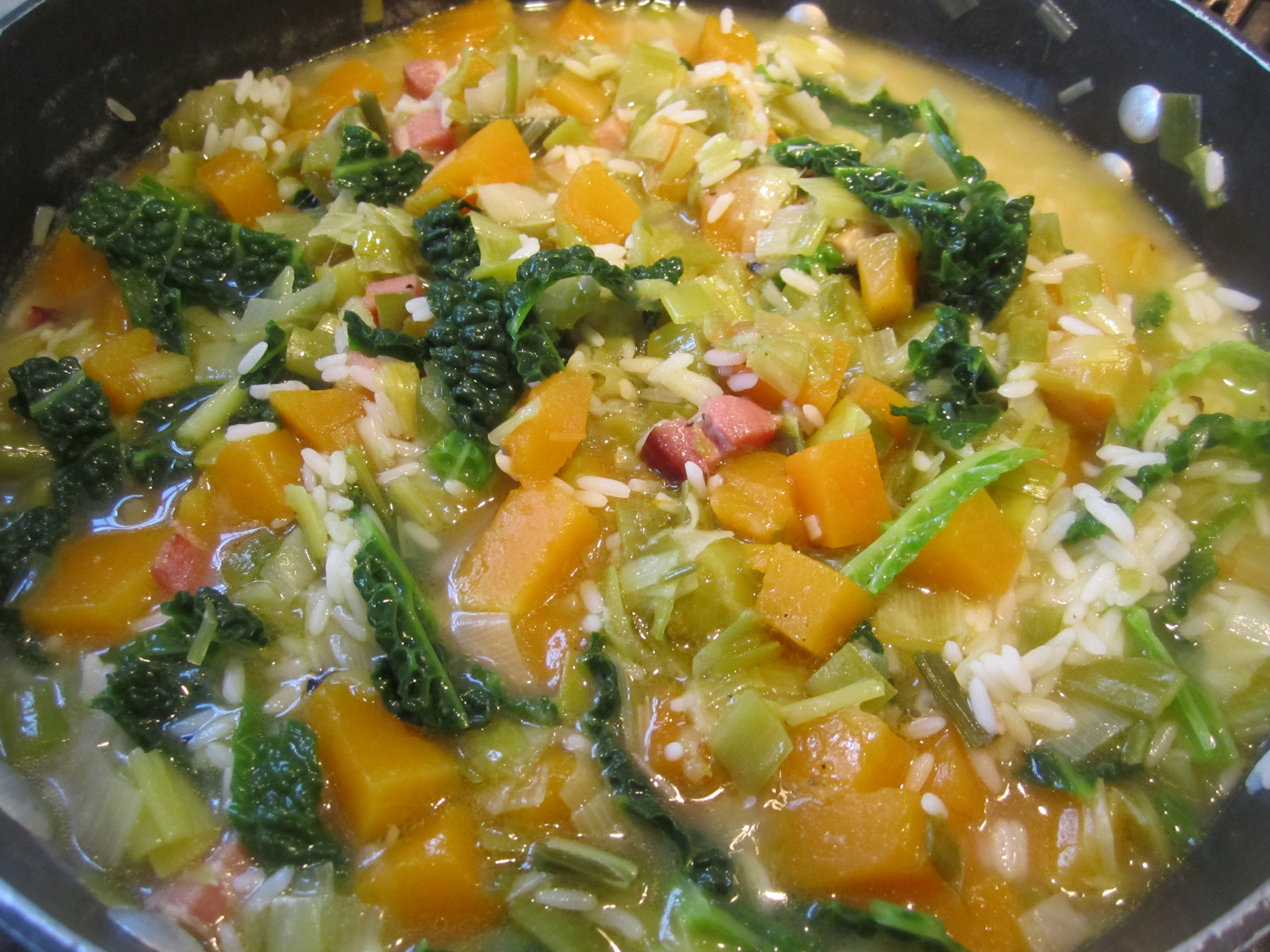
To fortify the soup a bit, I cooked some rice at the last minute (Uncle Ben’s).  In fact, the soup can be frozen (without rice), then reheated.  At the time of reheating, you can add cooked rice, orzo, or ditalini to it to fortify it.

This soup only takes about 45 minutes from start to finish, so you can make it at the last minute for lunch, and serve as many unexpected guests as you need to by simply adding rice or pasta, plus additional broth.

Butternut Squash and Leek Soup

serves 6 – 8

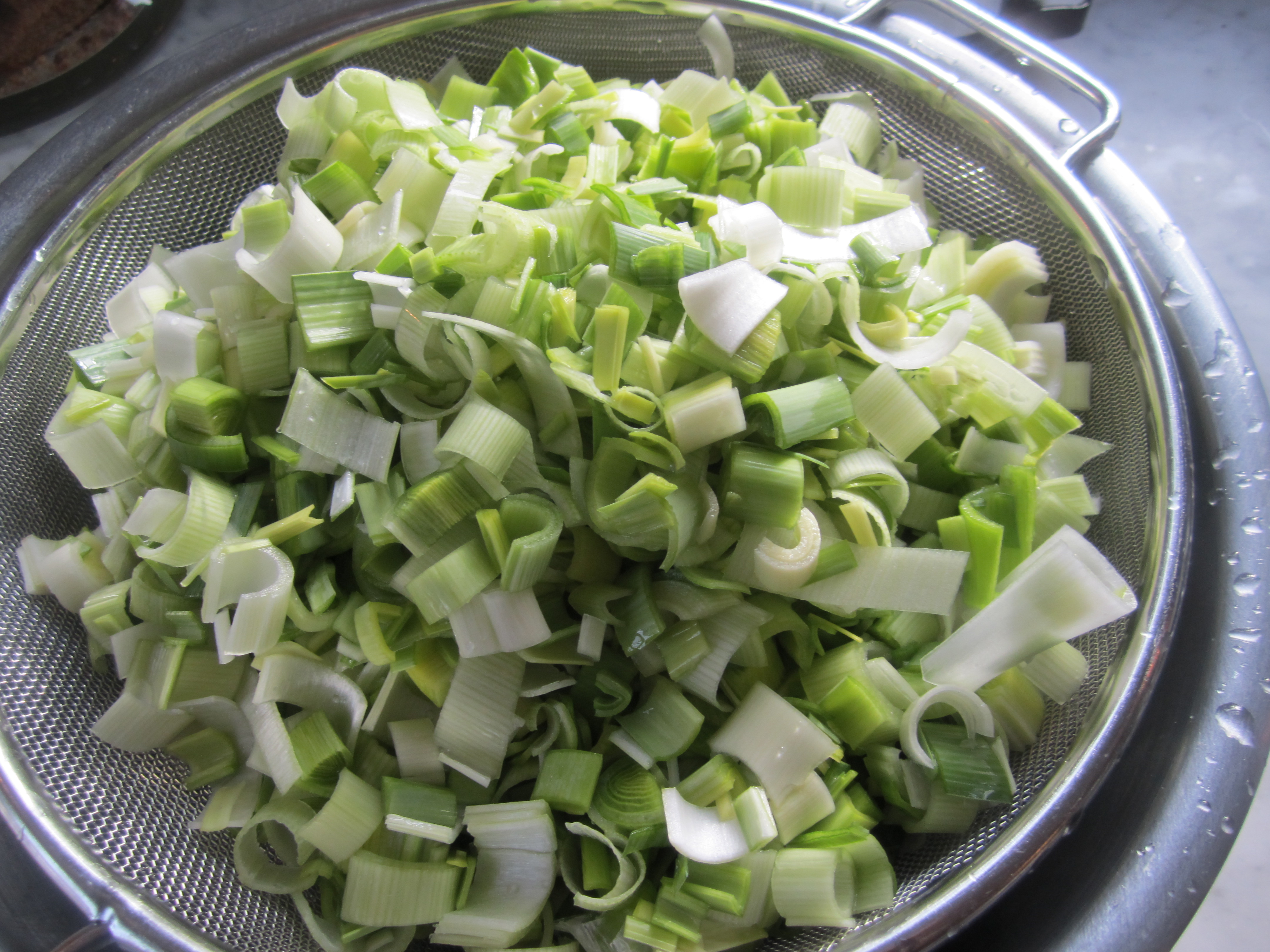
3 bunches leeks (to yield about 12 cups of slices–use the entire leek-dark green and all)

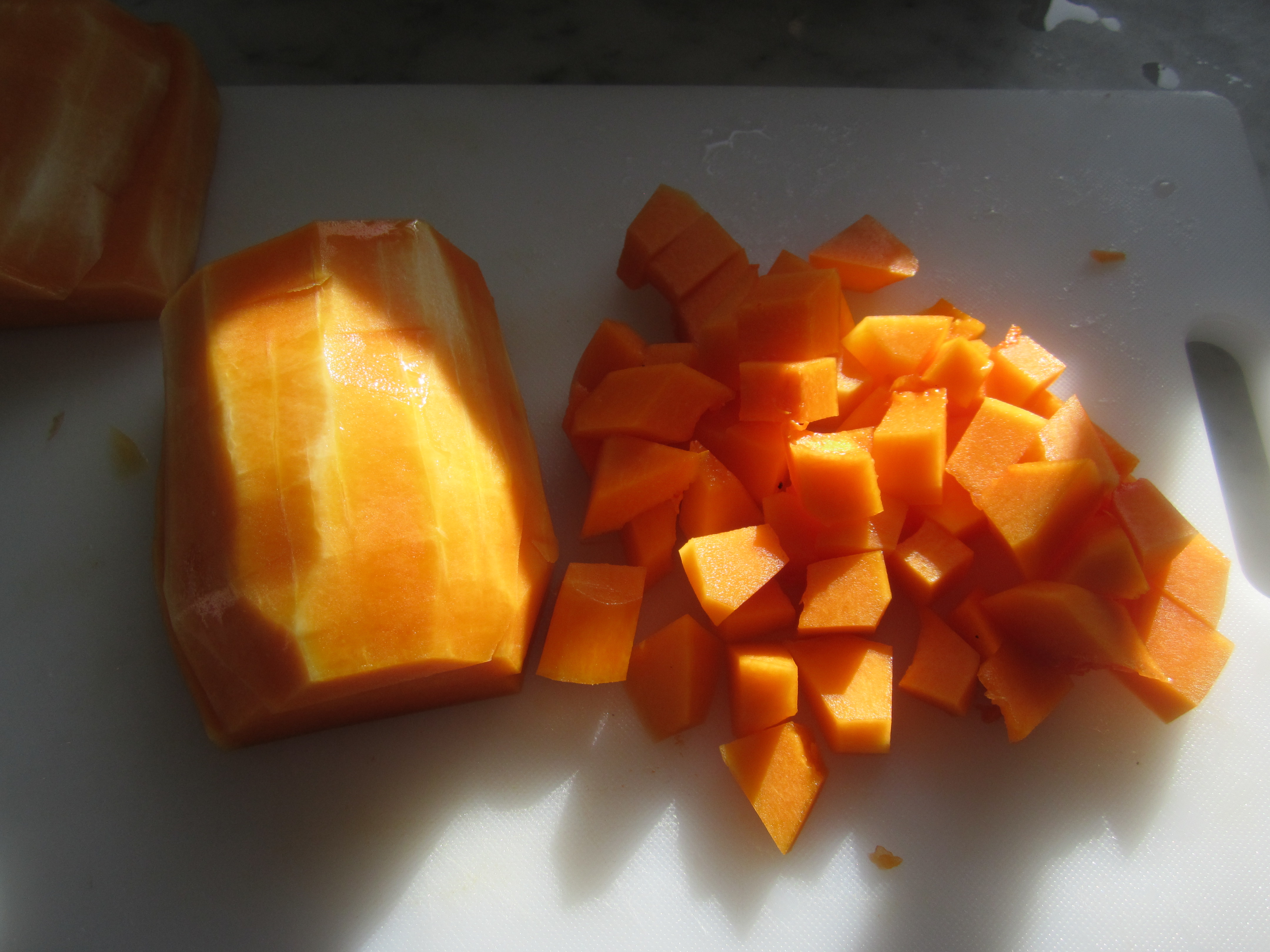
1 small butternut squash

1/4 c olive oil

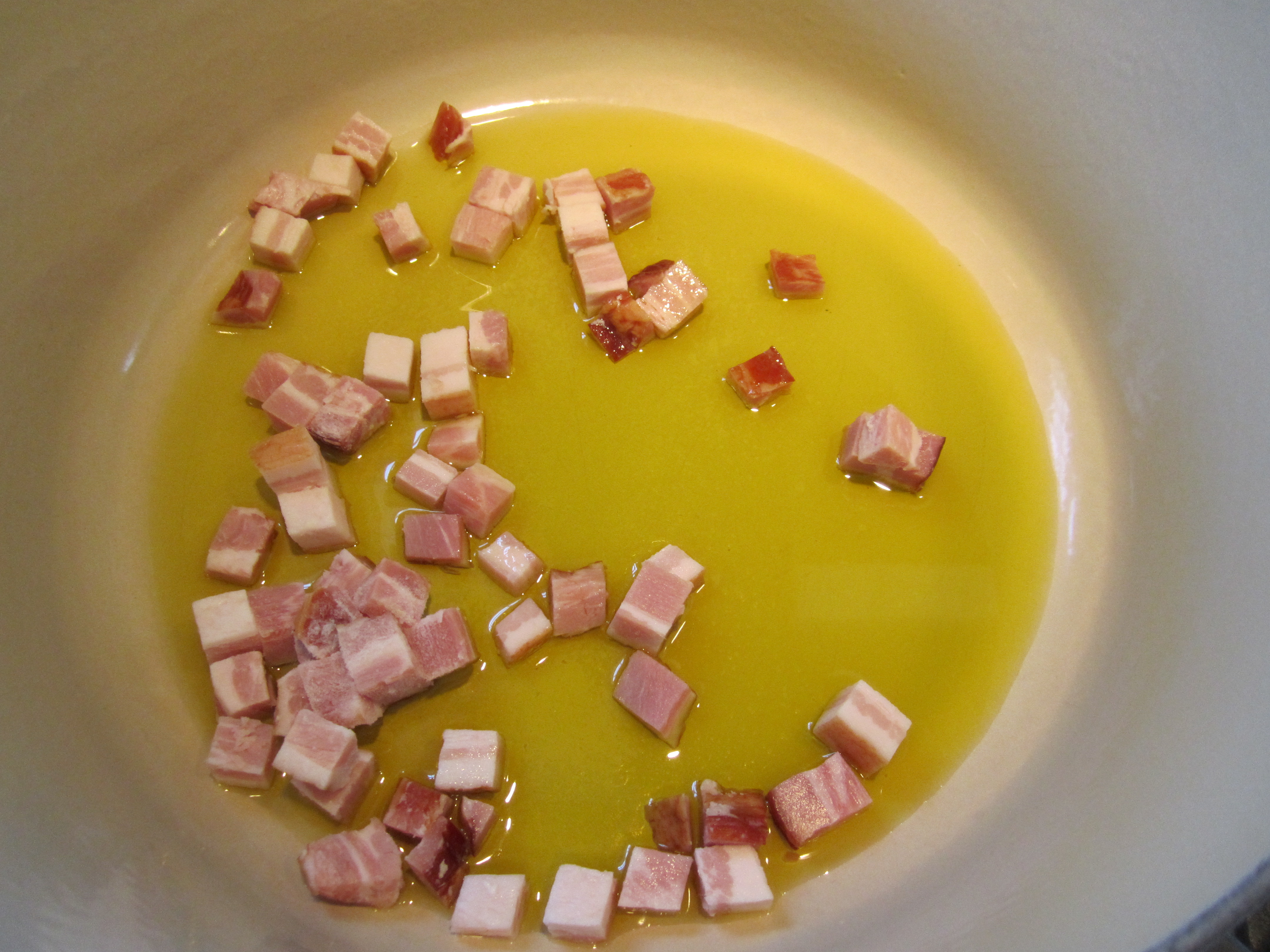
1/4 lb slab bacon, cut into 1/2″ cubes

1/8 tsp nutmeg

1/4 tsp black pepper

salt to taste

2 qts chicken broth (bouillon is fine)

exterior leaves, from savoy cabbage, tough center rib removed, sliced into 1/2″ ribbons

rice or pasta (optional)

grated parmigiano for sprinkling

Cut leeks in half lengthwise and wash well.  Dice into 1/4″ half-moon slices.

Peel and dice butternut squash into 3/4″ cubes.

In a heavy-bottomed dutch oven, on low heat, render the bacon for about 5 minutes, until it sheds some of its fat.

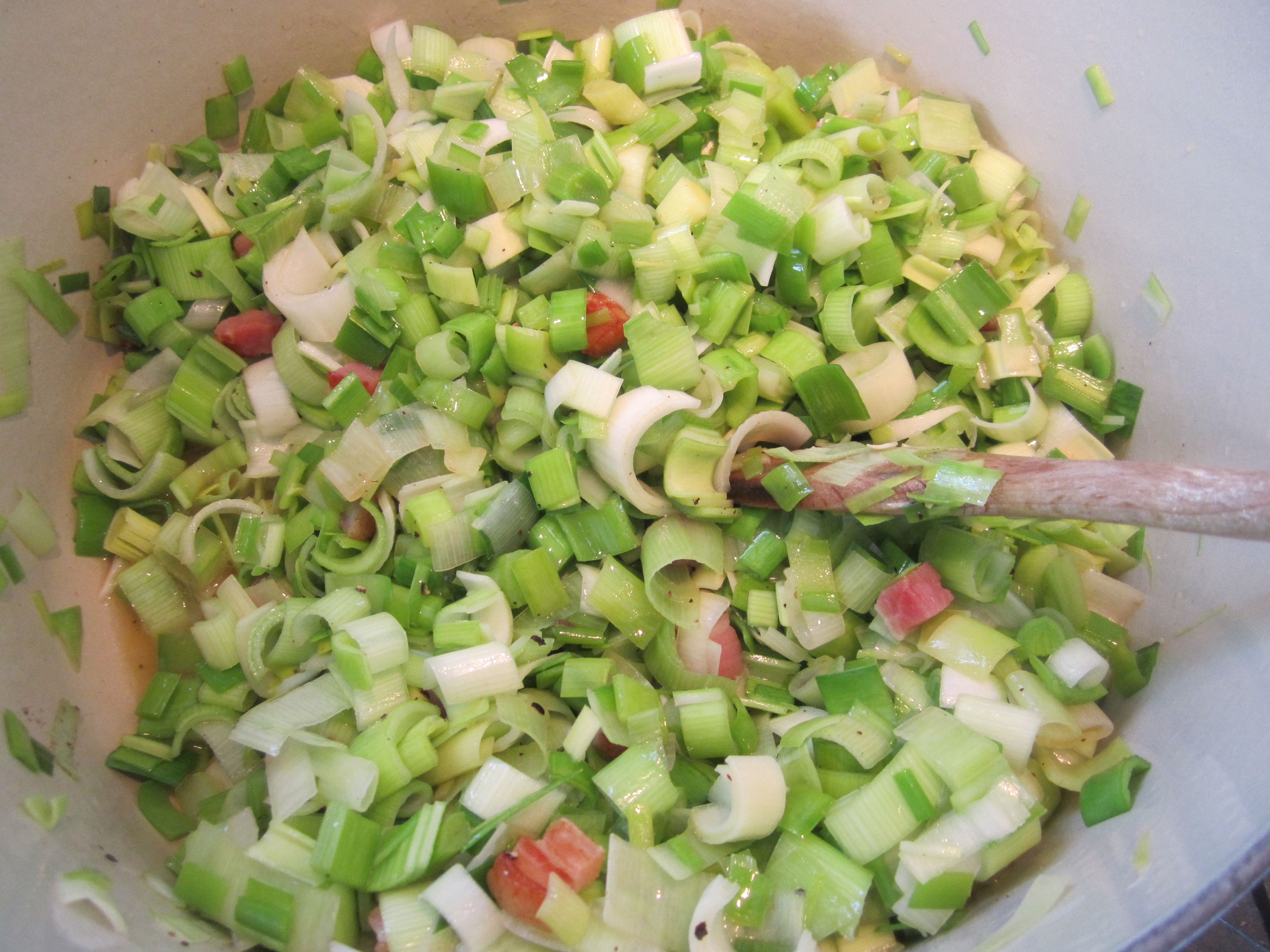
Add leeks and saute for about 8 to 10 minutes, or until they turn translucent and shrink in bulk slightly.

Turn up the heat and add the butternut squash cubes and continue sauteing for 5 more minutes.  Add nutmeg, a sprinkle of salt, and the pepper.

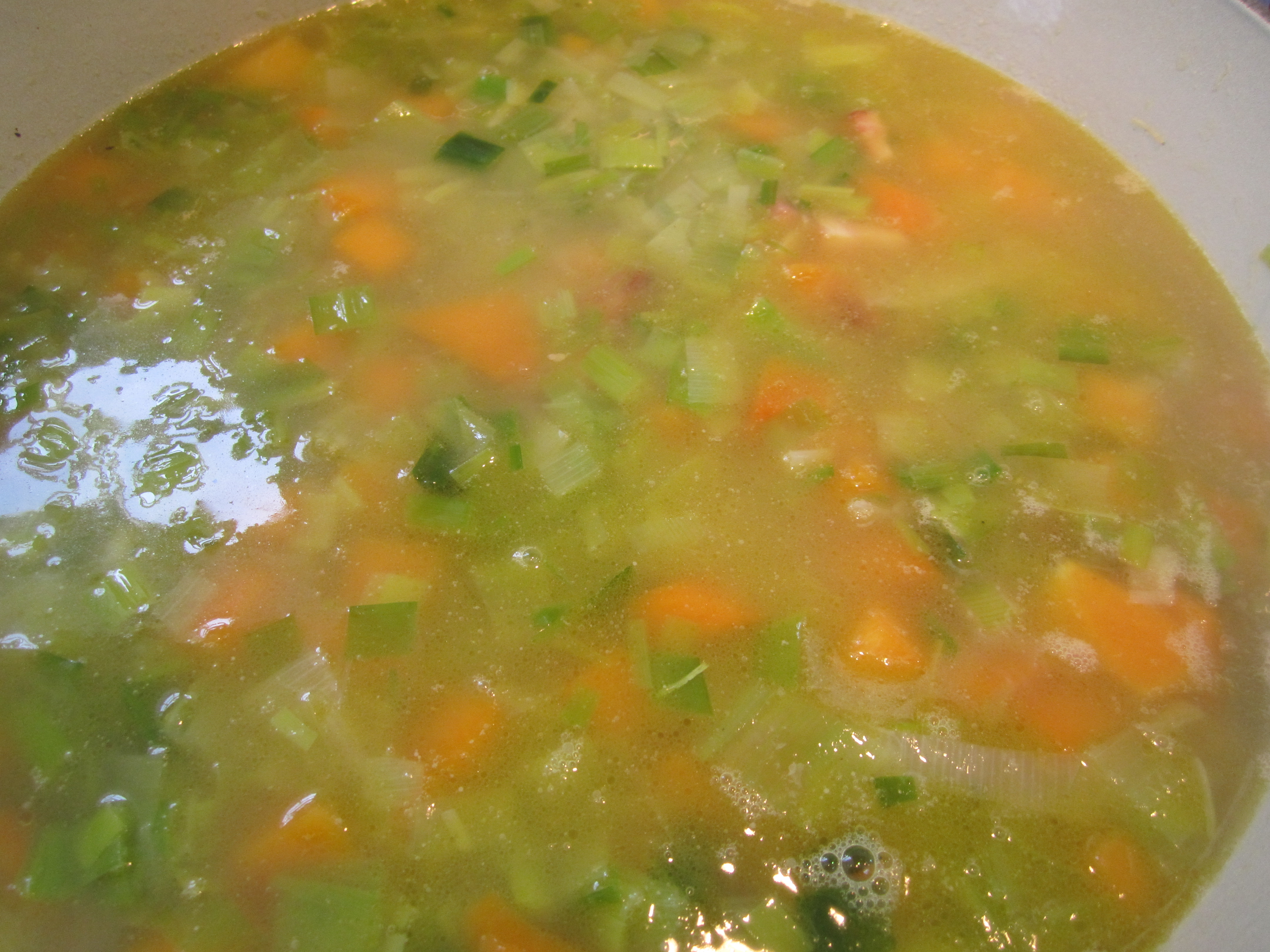
Add broth and bring to a simmer.

Simmer for 30  minutes or so, or until squash is tender.  If adding rice and cabbage, blanch the cabbage leaves in boiling salted water for about 5 minutes, then remove and set aside.

Boil rice for 15 minutes, then drain and add soup to rice in whatever proportion you desire.

Sprinkle soup with plenty of grated parmigiano.

Leftover soup (without rice) may be frozen.

Posted in Soup/Stew | Leave a comment

Whole Wheat Pappardelle with Duck Ragu and Shiitakes

Since I was fortunate enough to have been invited to dine at the home of a family member for Thanksgiving, I didn’t make Thanksgiving dinner.   Therefore, no leftovers to recycle or write about.  Instead, we’re having pasta for dinner tonight.

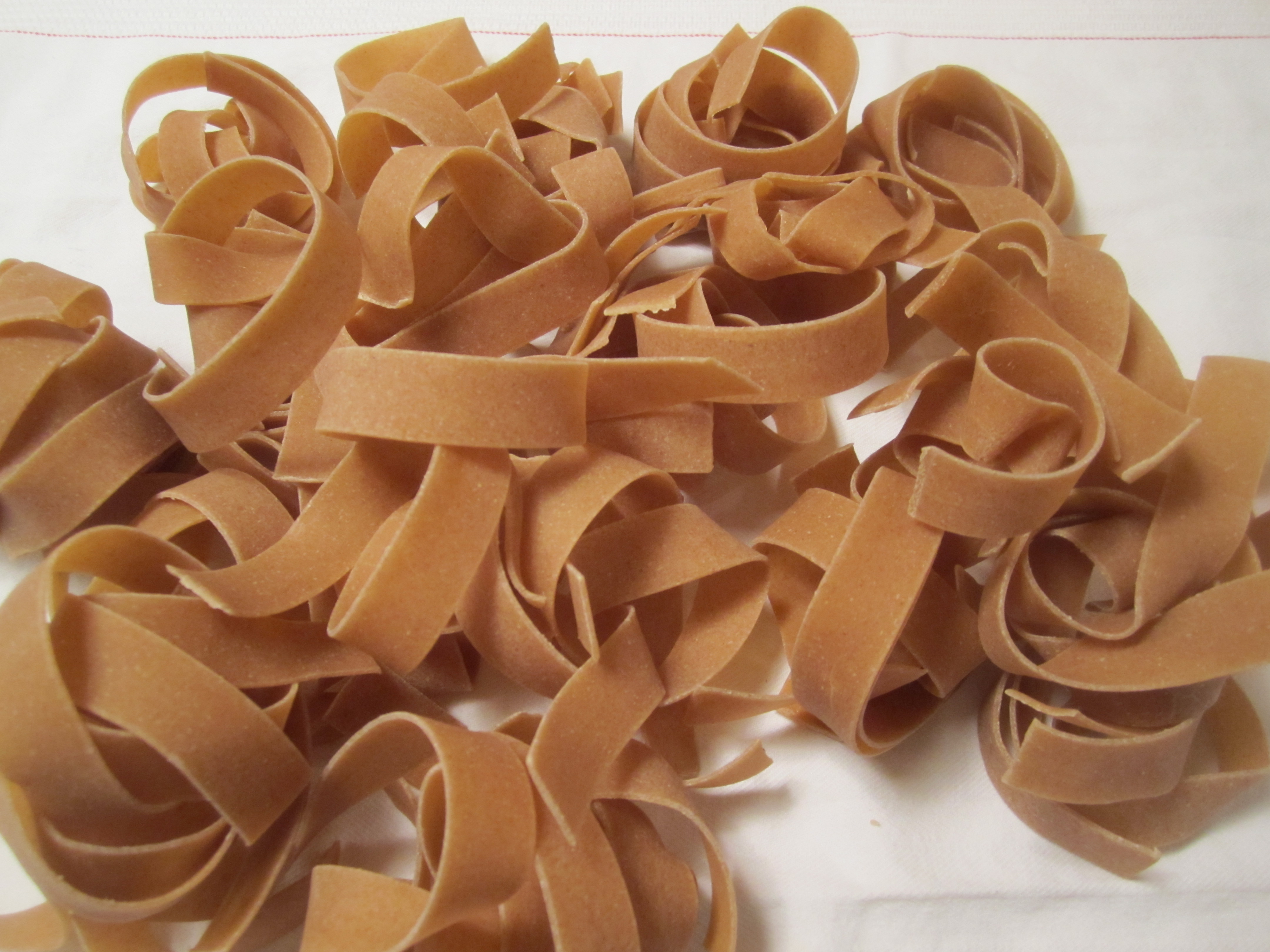
Whole wheat pasta is very much in demand right now, and I’m finding it in a greater variety of shapes at my local markets.

I found the pappardelle that I’m using today at a Food Emporium in Manhattan (brand name: “Garofalo”).  They looked so thick and substantial, I knew they’d be great with some sort of game and wild mushrooms.

I considered buying a whole duck, but for ragu, the legs are all that are needed.  The sauce is simmered for a couple of hours, therefore breasts get too dry and stringy.  Since my butcher doesn’t sell duck legs by themselves, I decided on duck confit.   Duck confit is sold as a salty, spicy fully cooked duck leg which has been slow-cooked with herbs in duck fat.  Each leg is vacuum-packed and sold with a small amount of skin and fat still attached.

This, in itself, is a wonderful dinner, simply crisped in the oven with some potatoes or other root vegetables.  But since the meat is so flavorful and redolent of salt and spices, it is equally wonderful as a base for a pasta sauce.

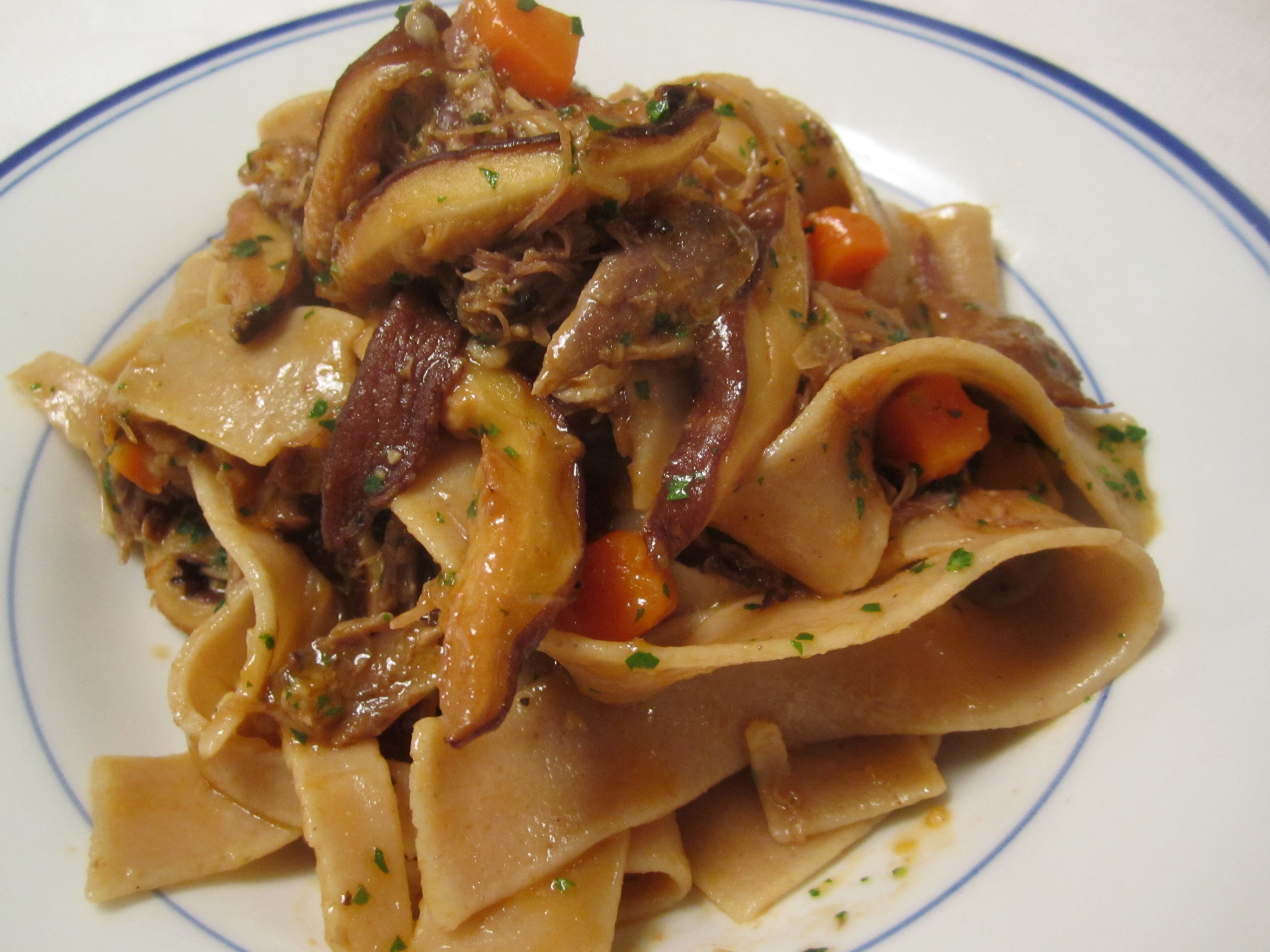
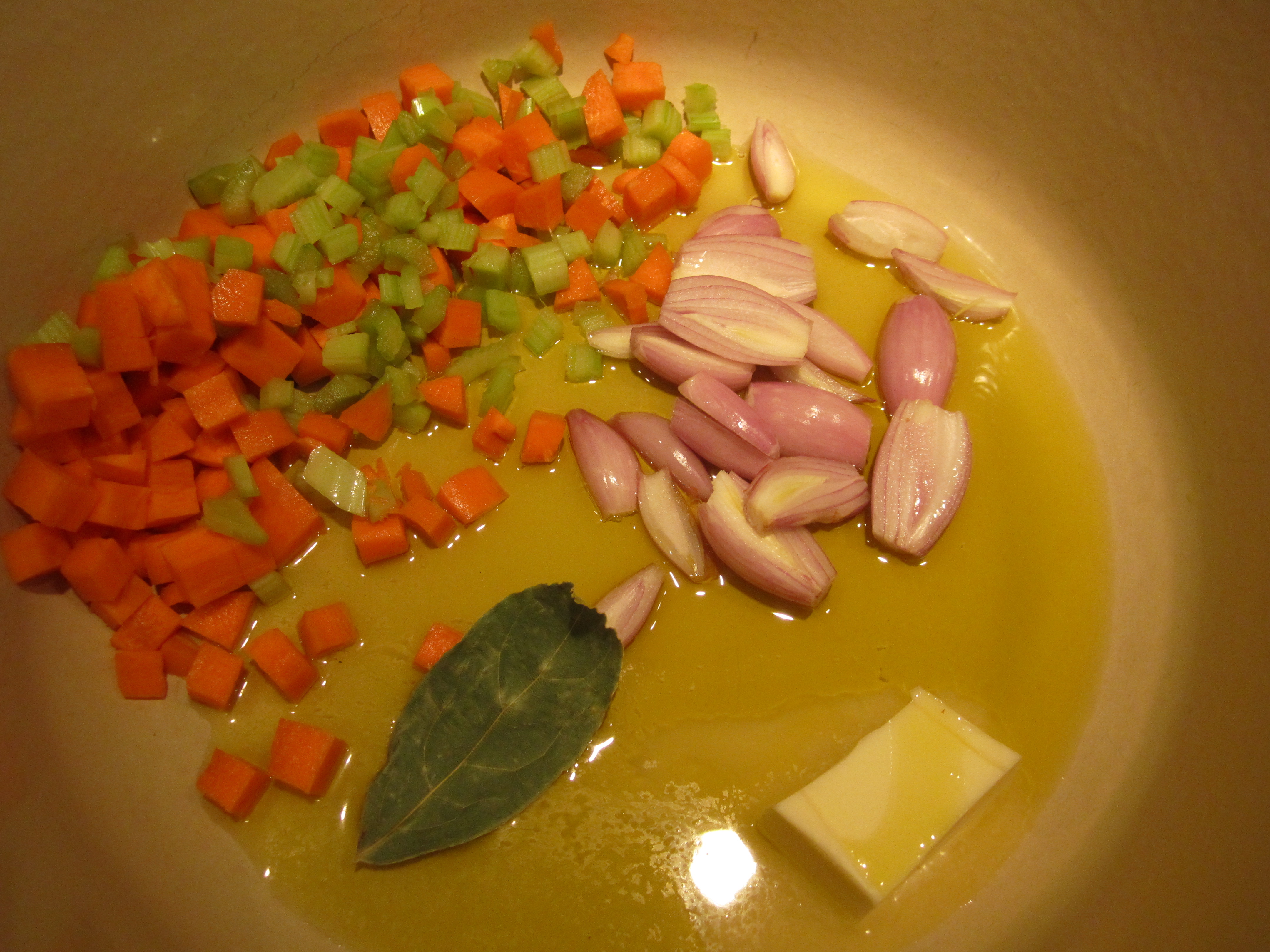
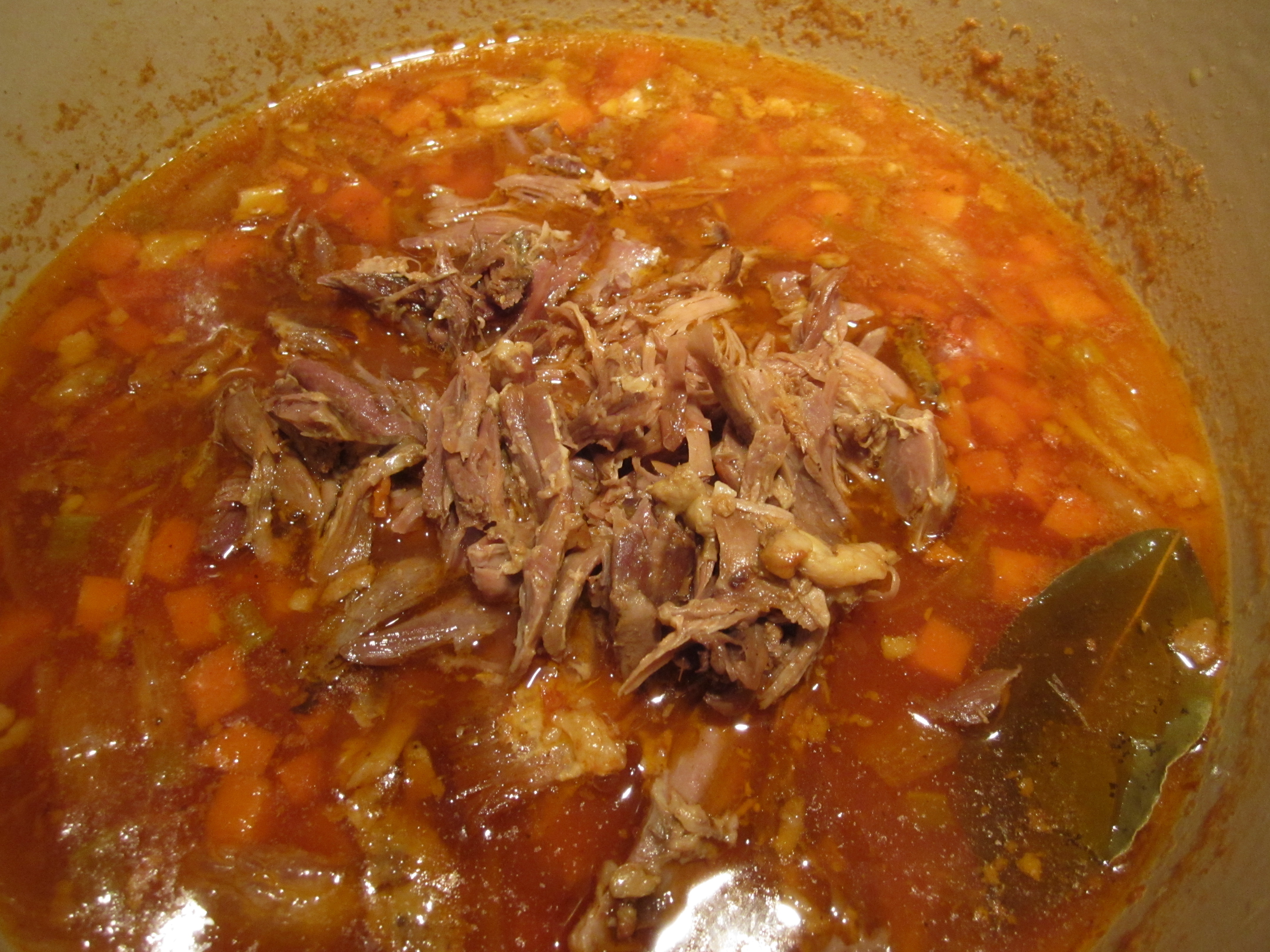
For my ragu, I sauteed carrots, celery and shallots in olive oil, butter and bay leaf. The duck legs were added and browned a bit.  White wine, broth and a touch of tomato paste were added as well.  The whole sauce was simmered for about an hour-and-a-half.  The duck meat was then removed from the bone, shredded, and returned to the sauce, to simmer for an additional half-hour.

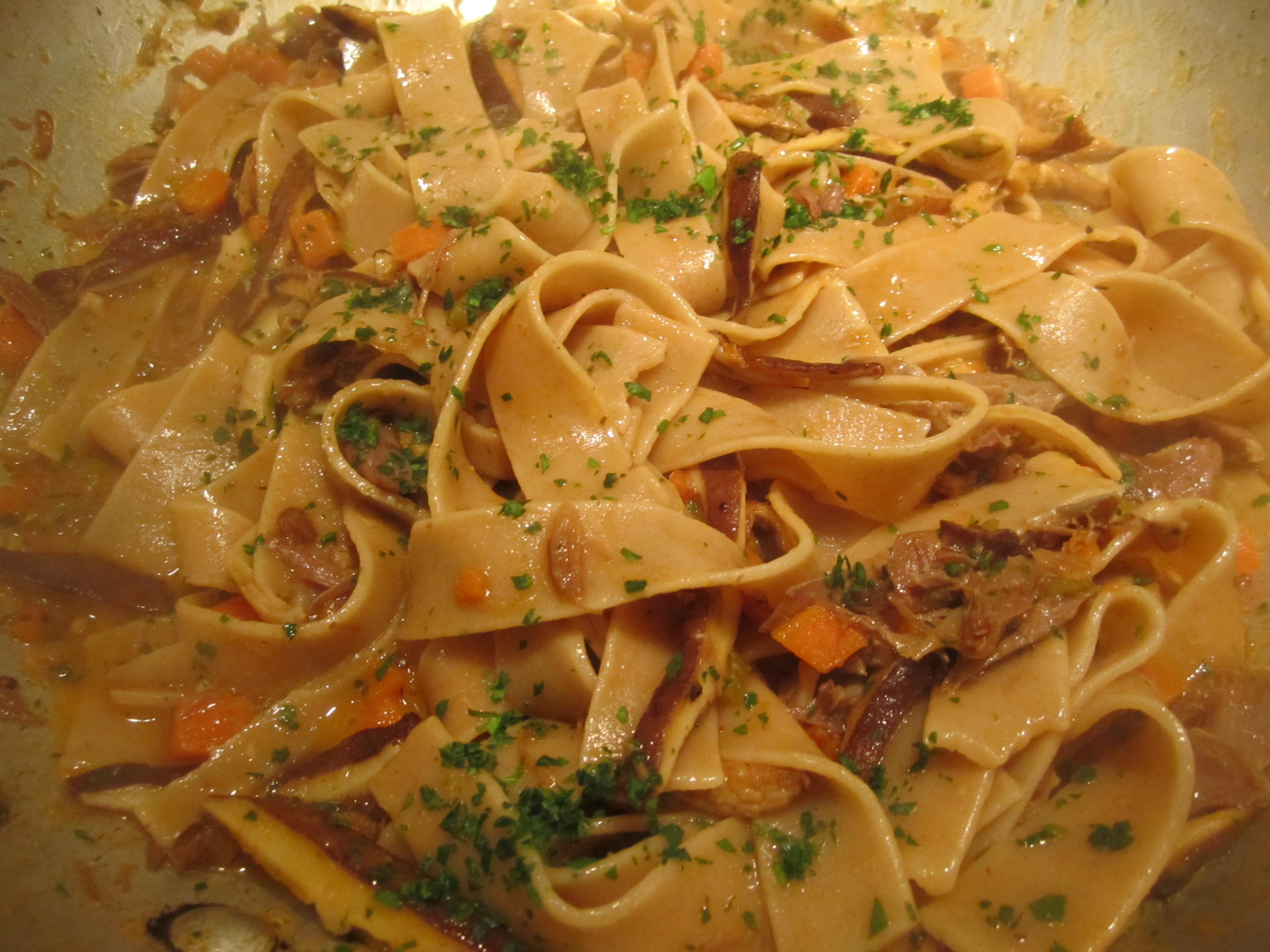
Meanwhile, as the pasta cooked, (these noodles take much longer than the recommended cooking time of 8 minutes), I sauteed some shiitake mushrooms in oil until golden and slightly crispy.  The mushroms got tossed with the duck ragu and pasta at the last moment.

The reason for cooking the mushrooms separately from the sauce, was to preserve their moisture and freshly-cooked flavor.  The longer mushrooms are cooked, the more they shrink, lose moisture, and harden.  They also intensify in flavor, so the delicacy of the duck sauce would have been overtaken by the mushrooms if I had simmered them in the ragu for two hours.  Today, I wanted the two distinctly separate but compatible earthy flavors to marry at the last moment–the moist, crispy mushroom-and the slow-cooked duck sauce.

This ragu would be excellent over white pappardelle as well, but the whole wheat adds an even deeper dimension of texture and flavor.

Whole Wheat Pappardelle with Duck Ragu and Shiitakes

serves 4

1 lb whole wheat (or white) pappardelle

2 duck confit legs

6 shallots

1 carrot

1 stalk celery

1 large bay leaf

4 tbls butter

2 tbls olive oil

1 c white wine

3 c chicken broth

1 tbl + 1 tsp tomato paste

1 lb fresh shiitake mushrooms, stems removed, wiped clean with damp paper towel, sliced into 1/2″ wide strips

1 tbl fresh chopped parsley

salt and pepper to taste

grated parmigiano for serving

In a dutch oven, combine 2 tablespoons of the butter, plus the oil, carrots, shallot, celery and bay leaf.  Saute on medium-low heat for about 10 minutes.

Add duck legs and continue browning lightly on both sides for another 8 minutes.

Turn up heat and add wine.  Reduce for about 2 minutes.  Add broth and tomato paste and lower heat to a bare simmer.  Cover, with lid slighty askew for an hour-and-a-half.

Remove duck legs, shred meat, and discard any skin.  Return the duck meat to the ragu;  simmer, uncovered for the last half-hour.

While the pasta cooks, heat a broad skillet with 2 tablespoons of olive oil until oil is hot.  Add mushrooms and sprinkle with salt and pepper.  Saute mushrooms for about 5 to 7 minutes, or until golden  and slightly crispy.  Sprinkle with half the parsley.  Taste and add more salt, if necessary.
In a large skillet, combine ragu, mushrooms and cooked pasta.  Sprinkle with remaining parsley and add the last 2 tablespoons of butter.  Stir and toss to combine, adding a half-cup of pasta water if the sauce has gotten too tight.  Serve with plenty of grated parmigiano cheese on top.
Posted in Pasta, Sauces | Leave a comment

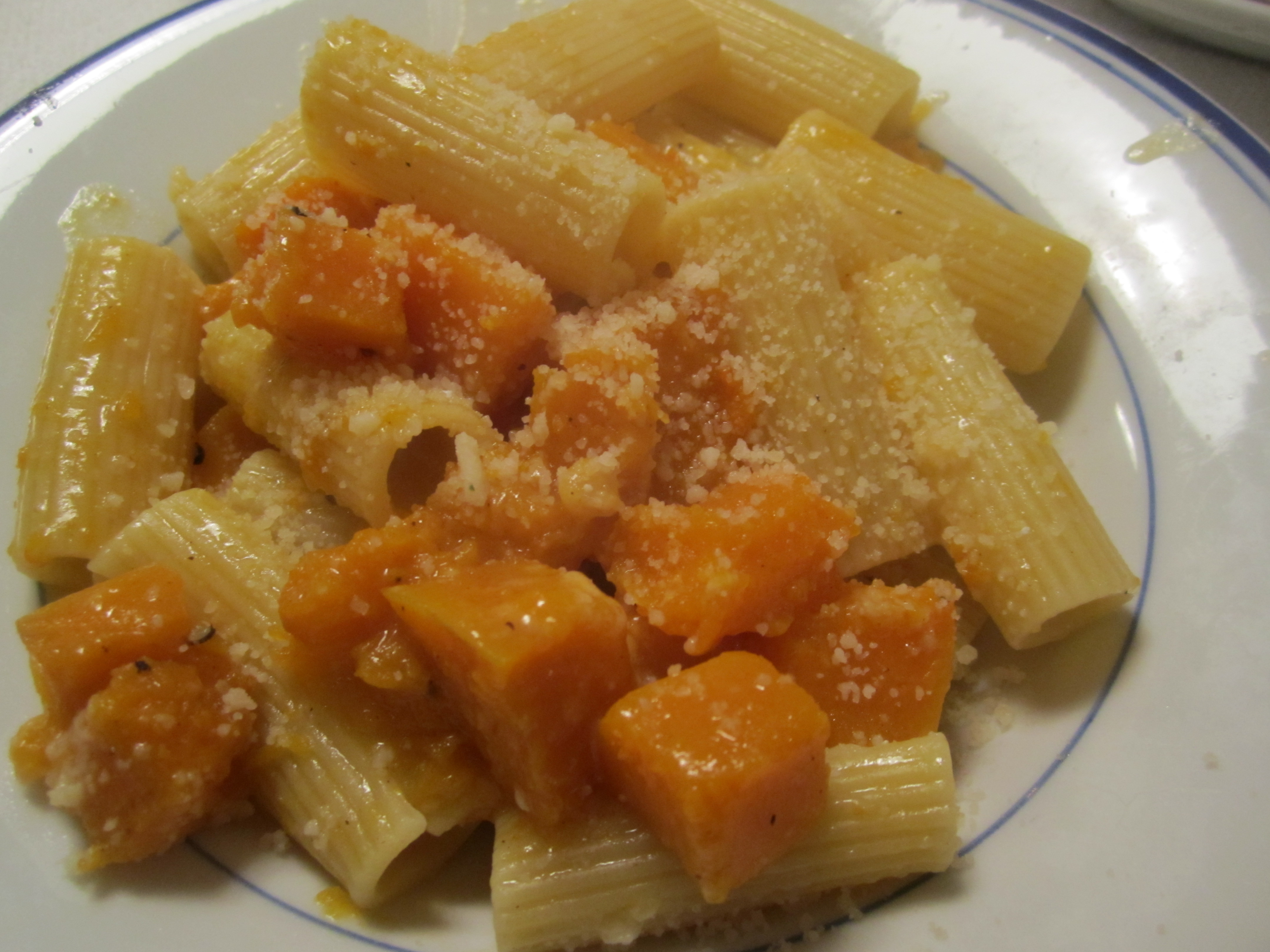
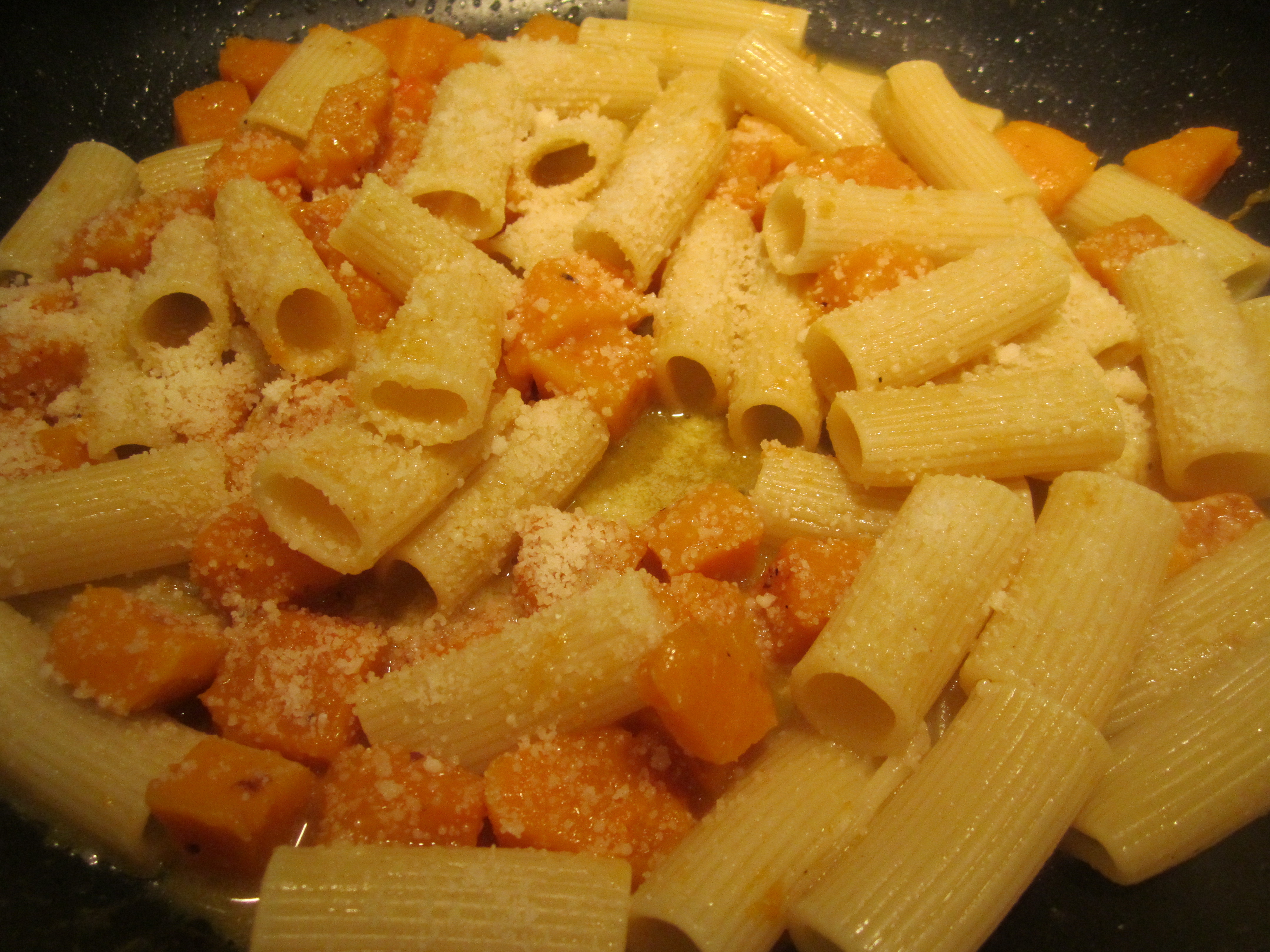
Pasta with Butternut Squash

This time of year (through the winter), butternut squash is at its peak.  I like to use it as a side dish, or as a component of risotto, or–tonight–as a pasta main course.

This dish is buttery, sweet and subtly spicy, due to the addition of a touch of cinammon and nutmeg.  Mainly, the rich flavor comes from the sweet, nutty squash.  

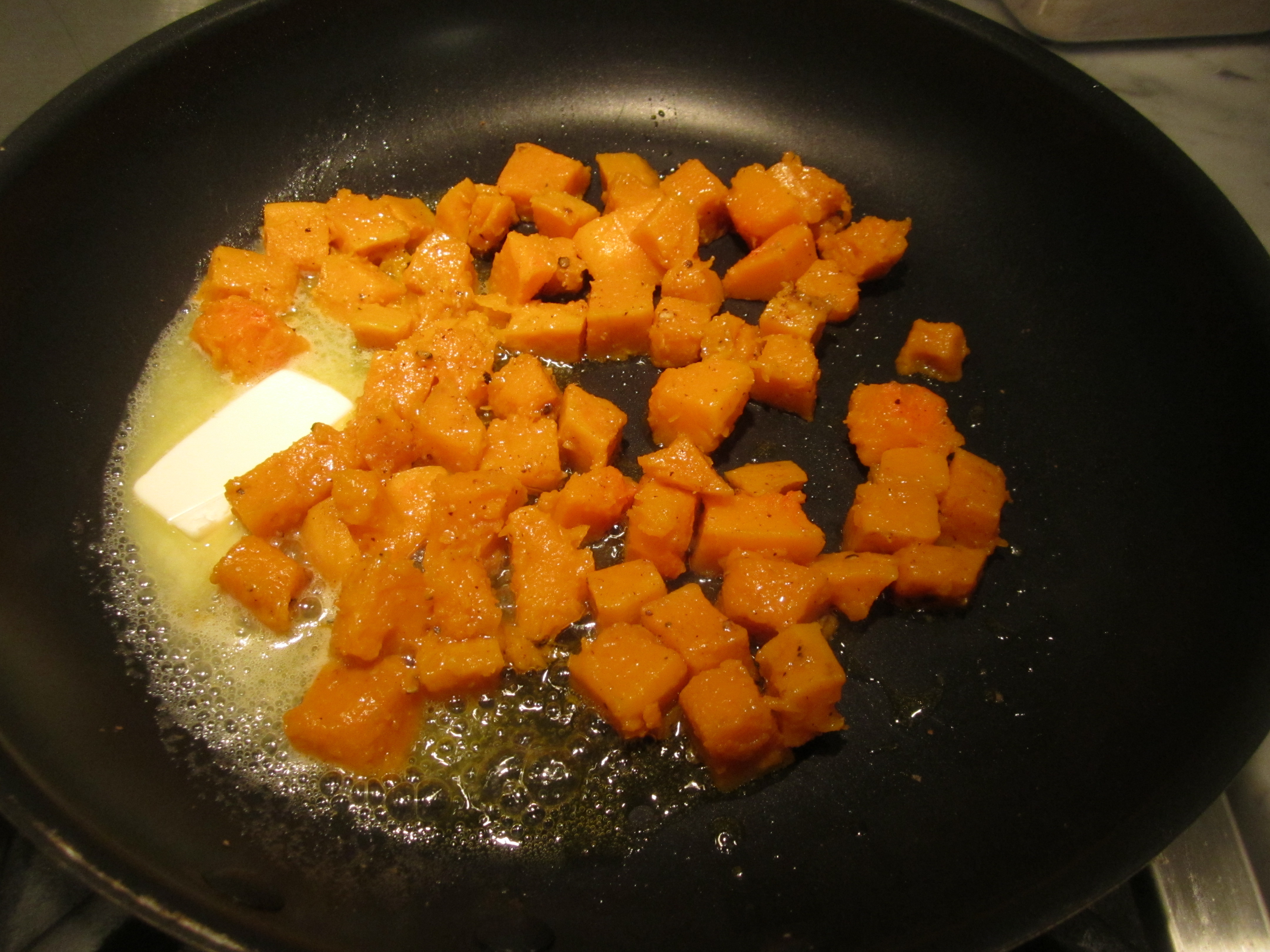
The squash gets peeled, cubed and sauteed with olive oil and water until tender.  A pinch of cinammon and nutmeg are added, as well as some broth.   The pasta gets added, along with pasta water.  The starch from the pasta, combined with the butter and spices, make for a complex, smooth and luxurious sauce. 

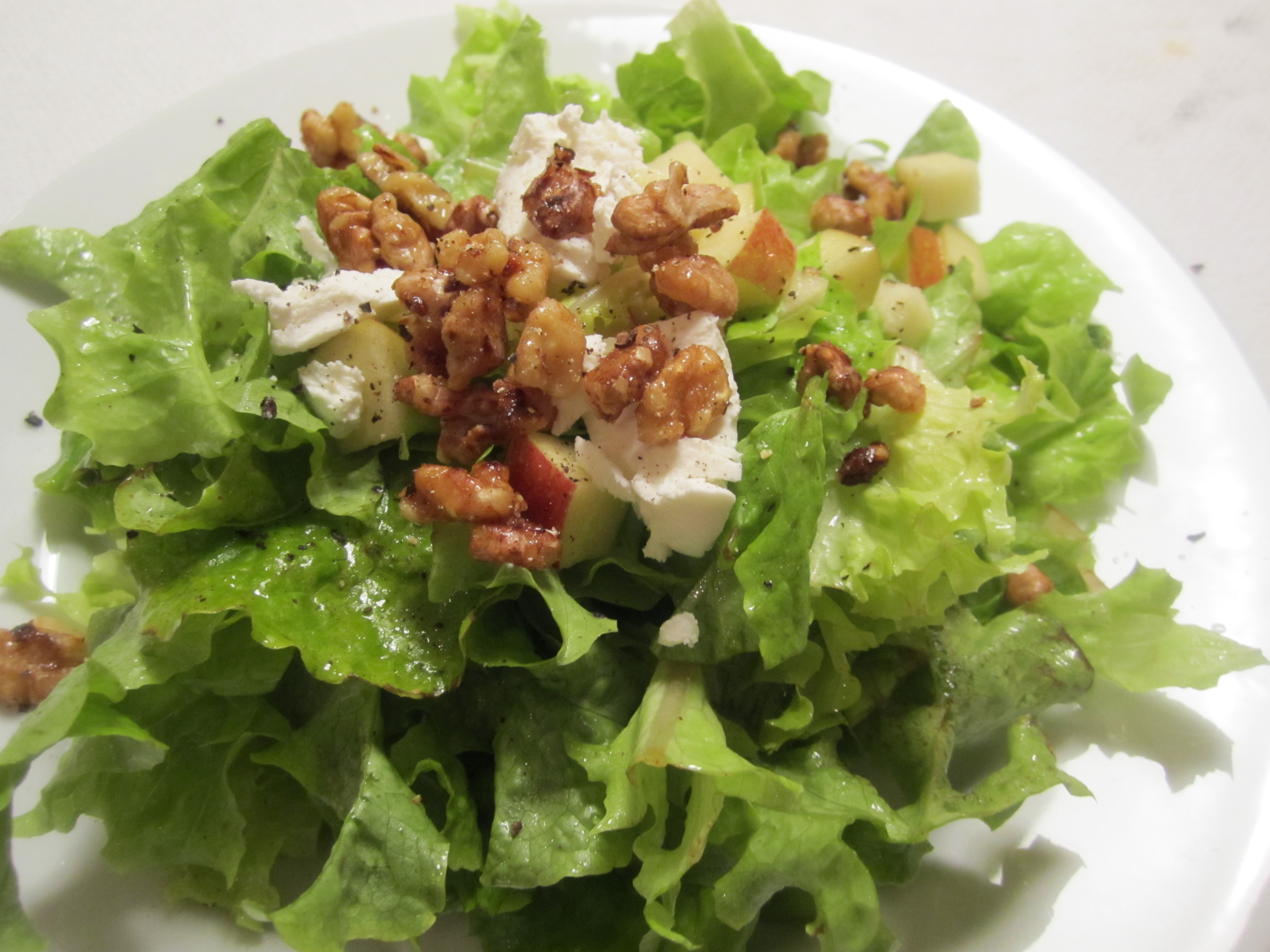
Tonight, we had a very simple salad of delicate “salad bowl” lettuce, diced apples, goat cheese and candied walnuts–the perfect light, pre-thanksgiving meal.

Pasta with Butternut Squash

serves 4

1 lb. rigatoni

3 cups butternut squash, peeled, seeded and diced into 1″ cubes

1 tbl olive oil

3 tbls water

1/8 tsp cinammon

1/8 tsp nutmeg

salt and pepper to taste

3/4 c chicken broth

4 tbls butter

grated parmigiano for sprinkling

In a broad nonstick skillet, add squash, oil, water and a touch of salt and pepper.  Turn heat to medium and cover.  Saute for approximately 10 minutes or until tender, tossing and stirring every couple of minutes.  Add butter, cinammon and nutmeg and taste for salt.  Add broth and lower heat to a simmer, until pasta is cooked.

Add pasta and a 1/2 cup of pasta cooking liquid to the skillet with the squash.  Saute bor approximately a minute, then toss with lots of grated cheese and serve.

Posted in Pasta | Leave a comment

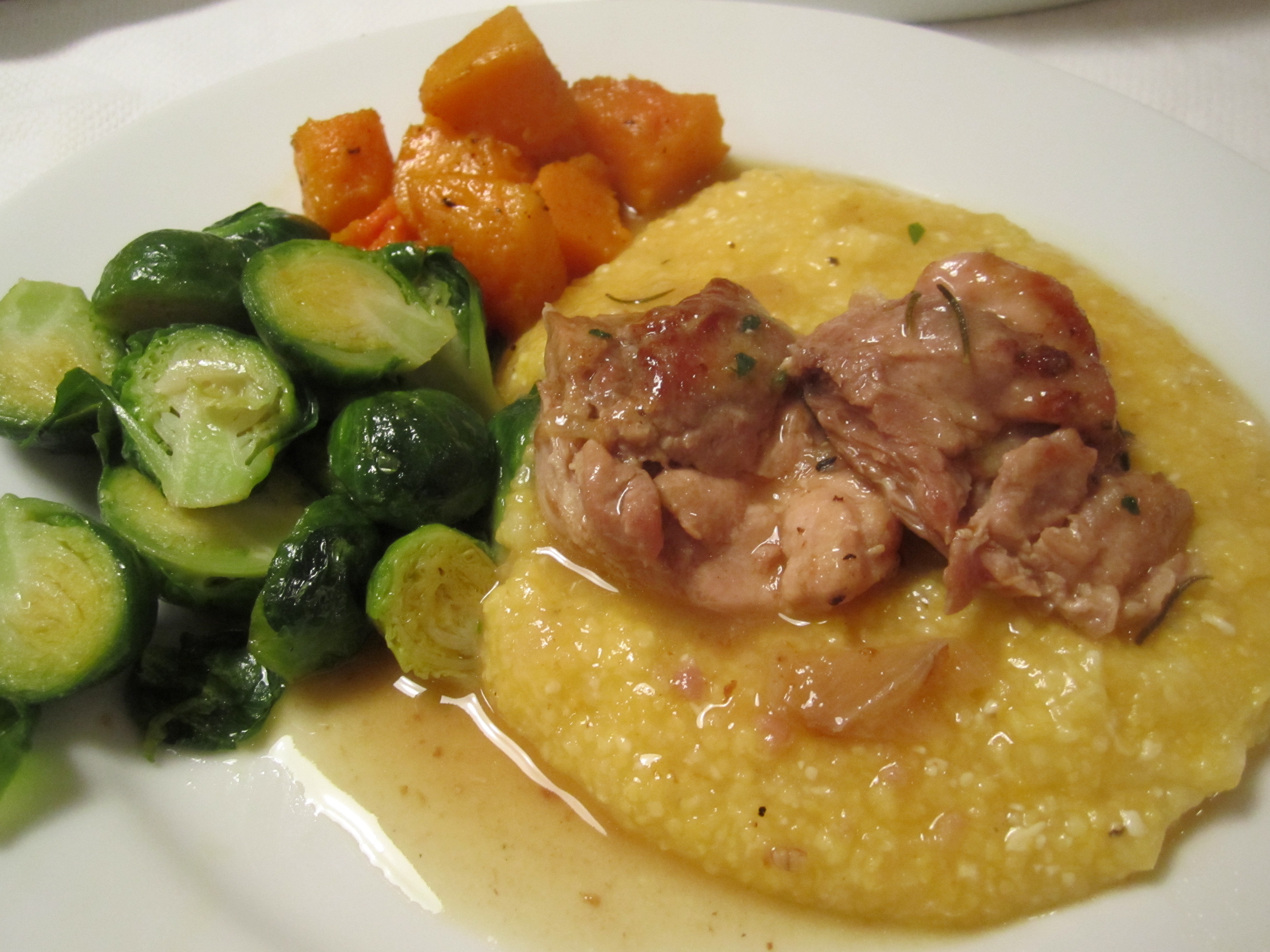
Beppi’s Spezzatino di Pollo

My neighbor Beppi’s chicken stew is one of the most aromatic, elegant chicken stews you will ever taste.  With its northern Italian combination of sherry, white wine, rosemary and shallots, it will perfume your kitchen and instantly warm you on a chilly fall day–like today.

I first tried this stew in Beppi’s kitchen about a year ago, and I immediately asked him to let me know when he’d be making it again so I could watch.   I’ve found that it’s imperative to watch certain dishes being made–no recipe does them justice–especially when it comes to dishes made by an old master, like Beppi.  There are certain subtleties that don’t necessarily appear a recipe, but I can usually watch a dish being made and duplicate it pretty faithfully.  I’ll  give you my version of the recipe as accurately as possible.

Chicken thighs are essential for this recipe.  Legs are fine as well, but thighs are meatier.  If you buy your thighs on the bone, you have the added bonus of having the bones to use for stock. Tonight, however, I’m using boneless, skinless thighs and I have some chicken stock already made in my freezer.

Beppi starts out with a curious technique that I’ve seen a lot of older Italian cooks use.  He begins browning the shallots/onions first, then adds the chicken thighs to brown at the same time, rather than browning the chicken, removing it, then browning the aromatics.  As the onions caramelize, the chicken turns slighlty golden, and that’s all the browning you need–no need to brown too deeply–the thighs will turn leathery and stringy.  A light browning, followed by a simmering for an hour, will produce moist, tender chicken that cuts with a fork.

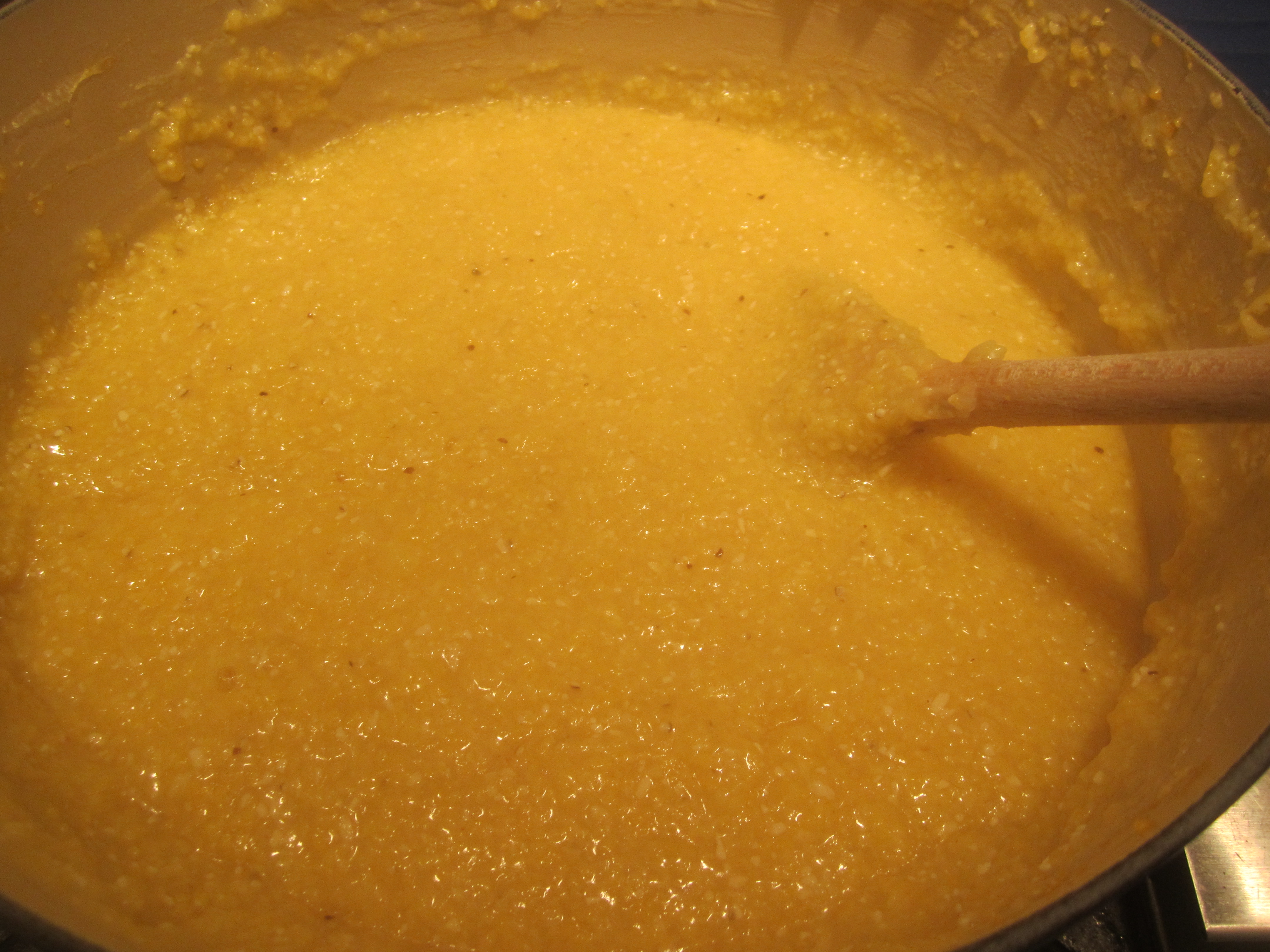
The stew produces a sauce that goes brilliantly over polenta, so that’s what I’ve made this evening–not instant polenta, but long-cooked polenta that perks away for about 2 hours, with frequent stirring.

You could skip the polenta and make rice or pasta, or you can use instant polenta.

This stew is one of those ideal dishes to make for guests, since it reheats beautifully, and is arguably more flavorful the second night than on the night it’s made.  Also if you serve it the second night, you have the added advantage of being able to remove a good deal of the layer of solid fat on top prior to reheating (but don’t remove too much).  To reheat, simply place the stew in a baking dish and warm uncovered at 300 degrees until it’s bubbling and slightly reduced (maybe around a half-hour).

Beppi’s Spezzatino di Pollo

serves 8 persons

4 lbs boneless, skinless thighs

8 shallots, peeled and quartered

1/2 an onion, diced coarsely

4 tbls butter

2 tbls olive oil

2 c white wine

1 c dry sherry

2 sprigs of rosemary

2 c chicken broth

3 tbls flour

1/4 tsp nutmeg

salt and pepper to taste

In a heavy-bottomed dutch oven or skillet, on medium heat, begin browning the shallots and onions with the rosemary sprigs in the butter and oil.

After about 5 minutes, raise heat to high and add chicken pieces.  Sprinkle with salt and pepper and the flour.

 Add the nutmeg and continue sauteing the chicken and shallots/onions until the mixture begins to brown and turn golden.

Add the wine and sherry and reduce for about 3 minutes.  Add the broth and simmer for about 45 minutes, partially covered.

Serve over polenta, pasta or rice.  May be reheated in a 300-degree oven the next day.

Posted in Poultry | Leave a comment

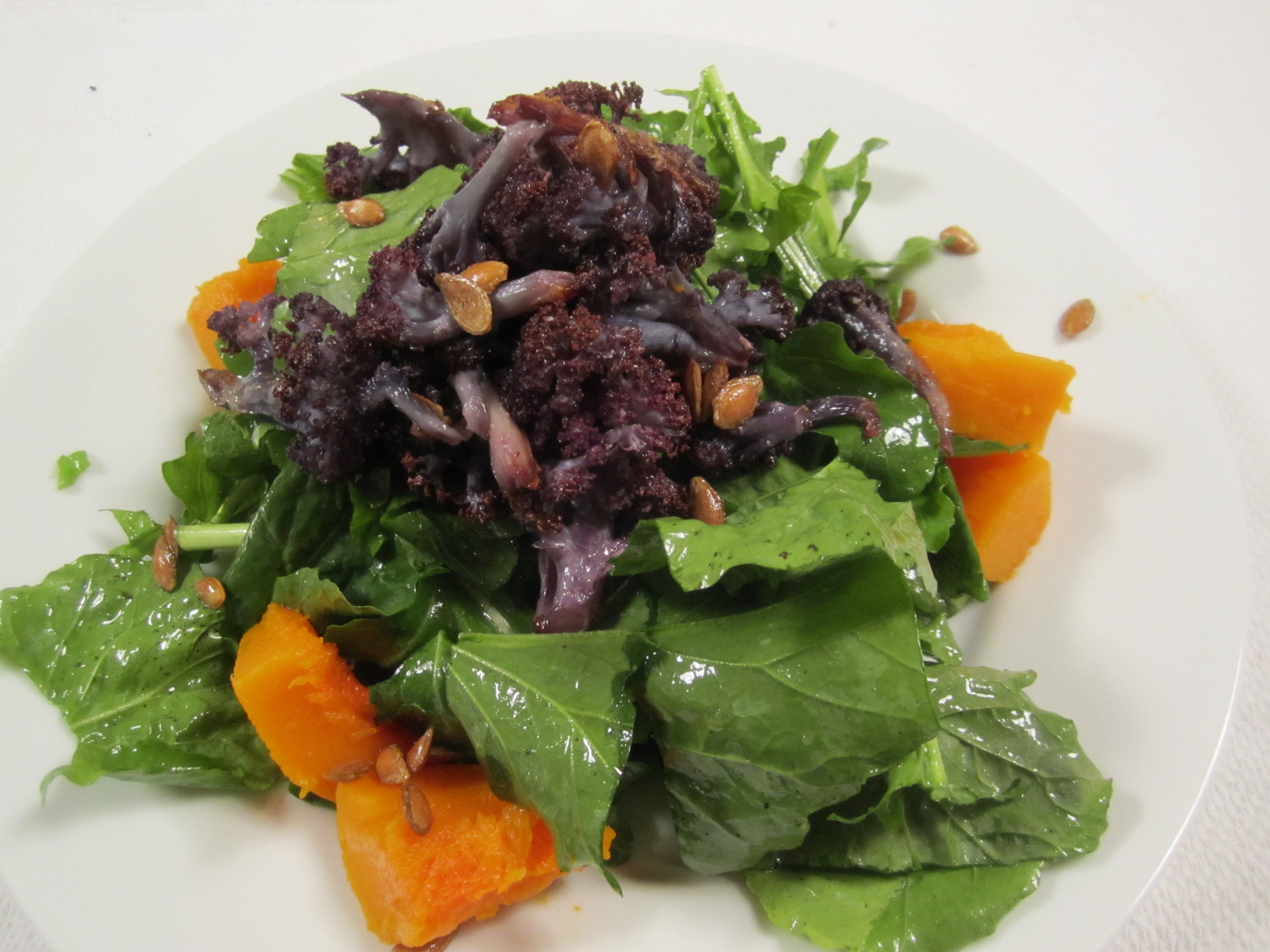
Salad of Arugula, Purple Cauliflower and Butternut Squash

This salad could really be called “fall harvest” salad, because it takes full advantage of ingredients that are currently at their peak.  This arugula is bigger, heartier and fuller-flavored than in the summer.  All of the crucifers are bigger, greener and sweeter now, after we’ve had a few frosts.   Winter squashes, which, for the most part, were harvested in the middle of summer, have aged and grown more orange and sweeter.

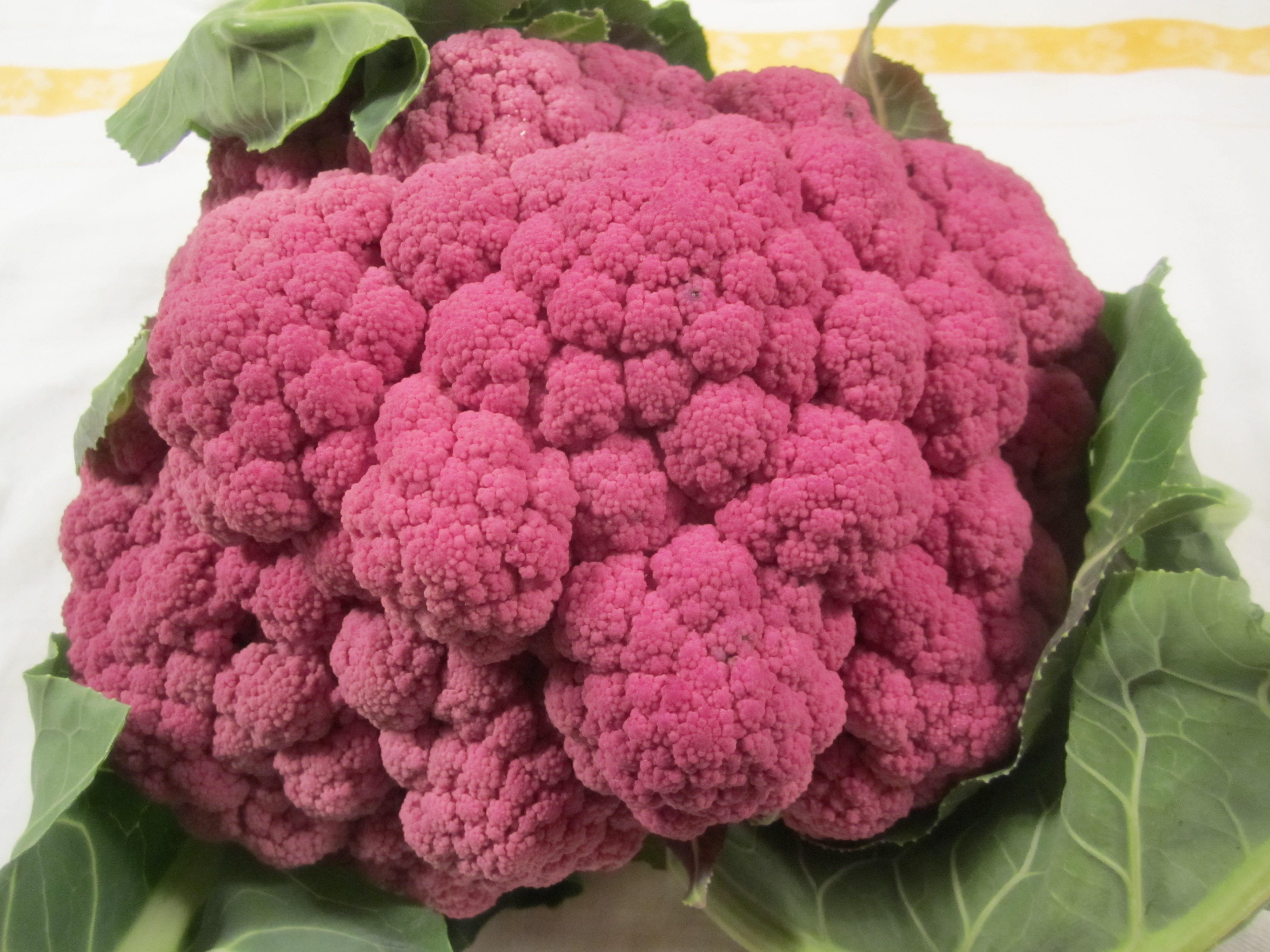
The inspiration for this salad was the seductive purple cauliflower that caught my eye as I began shopping this afternoon.

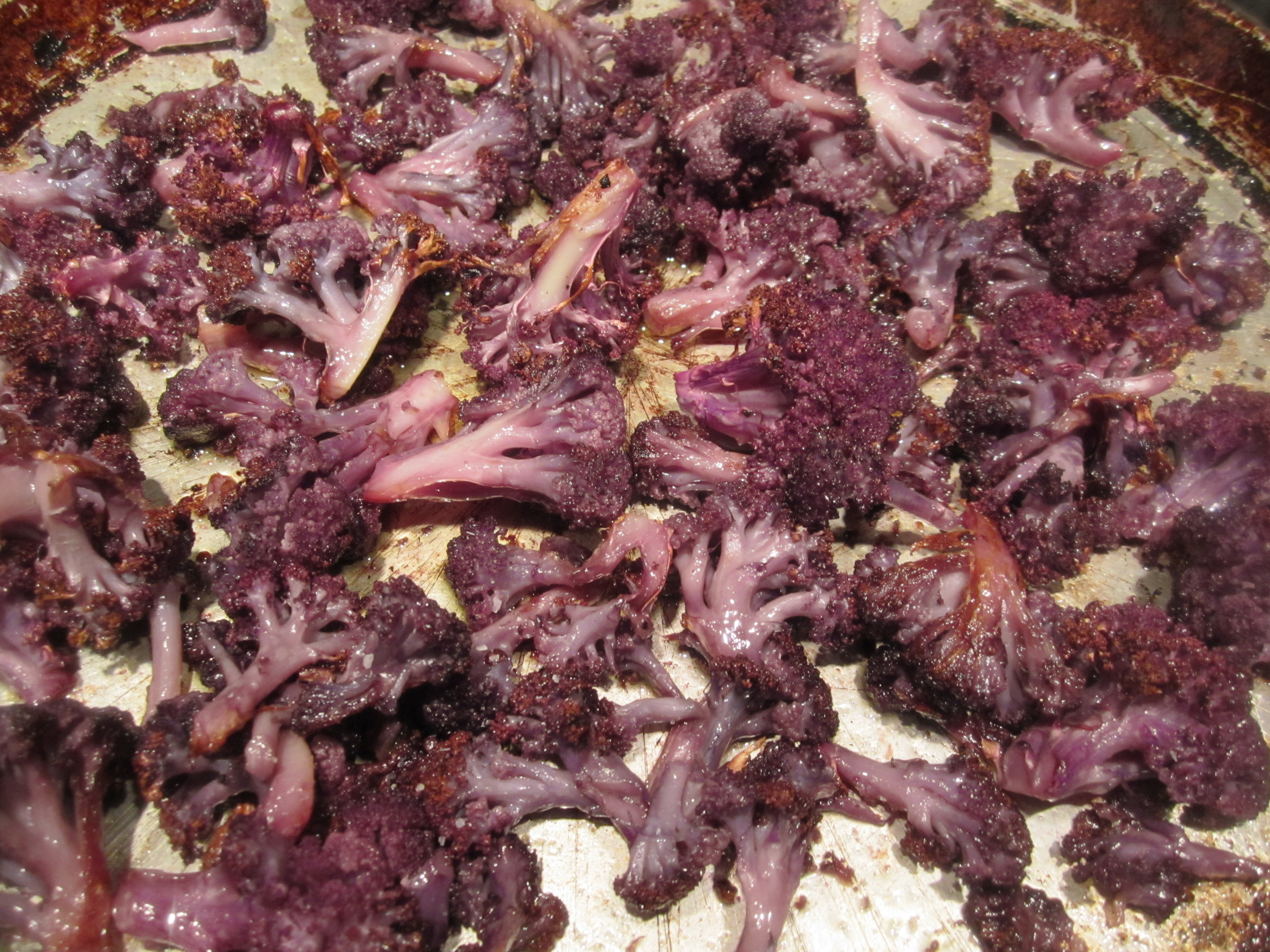
When this variety of cauliflower is roasted, the color actually deepens, and the florets become caramelized and crispy.  This is the perfect, deep flavor with which to top some sturdy, bitter fall arugula.

For some sweetness, butternut squash is the perfect component.   Today, rather than roasting the squash (as I usually do), I decided to boil it instead.  Boiling it produces a moister, brighter, more delicate texture and flavor–better suited to a salad, in my opinion.

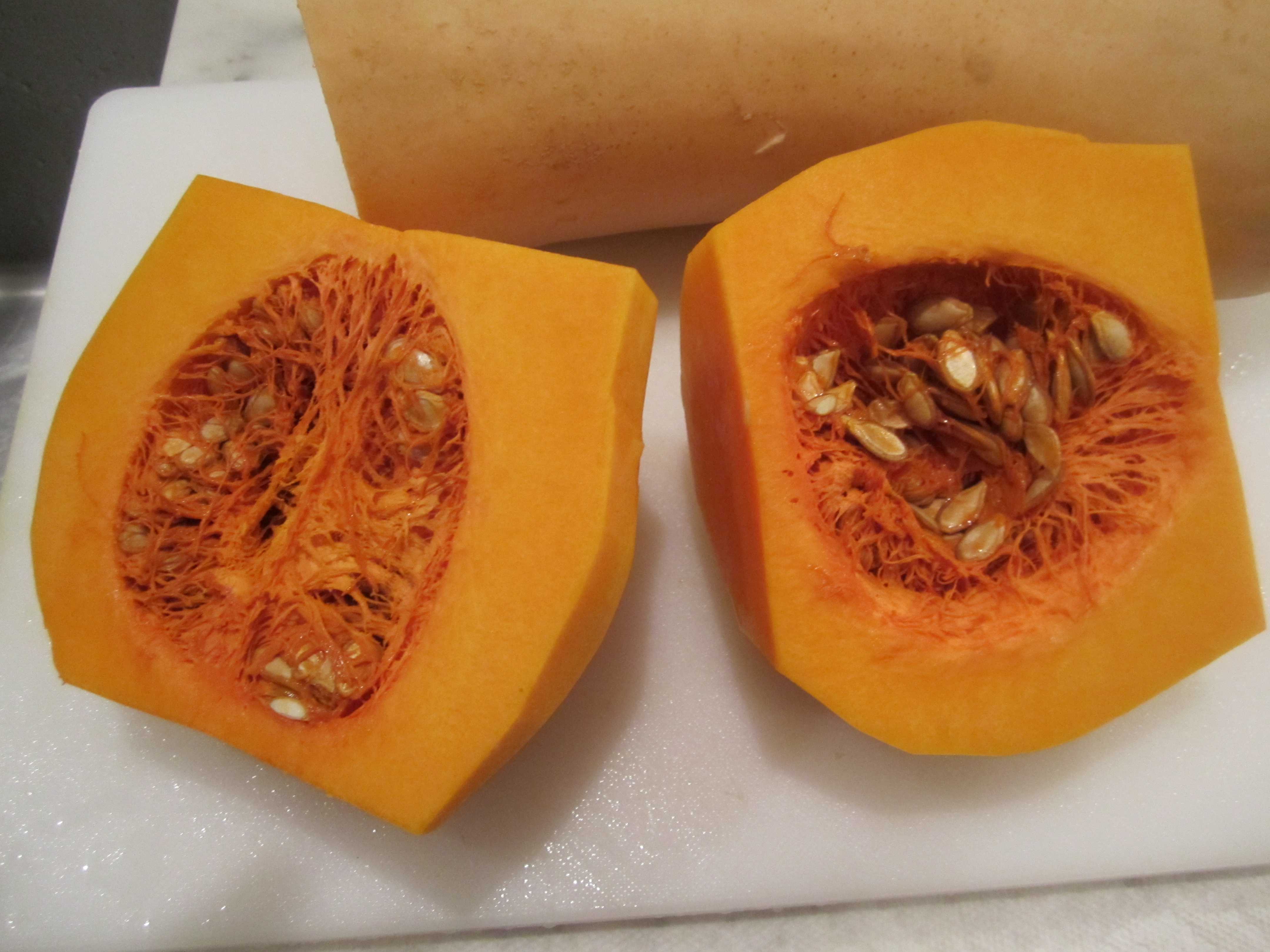
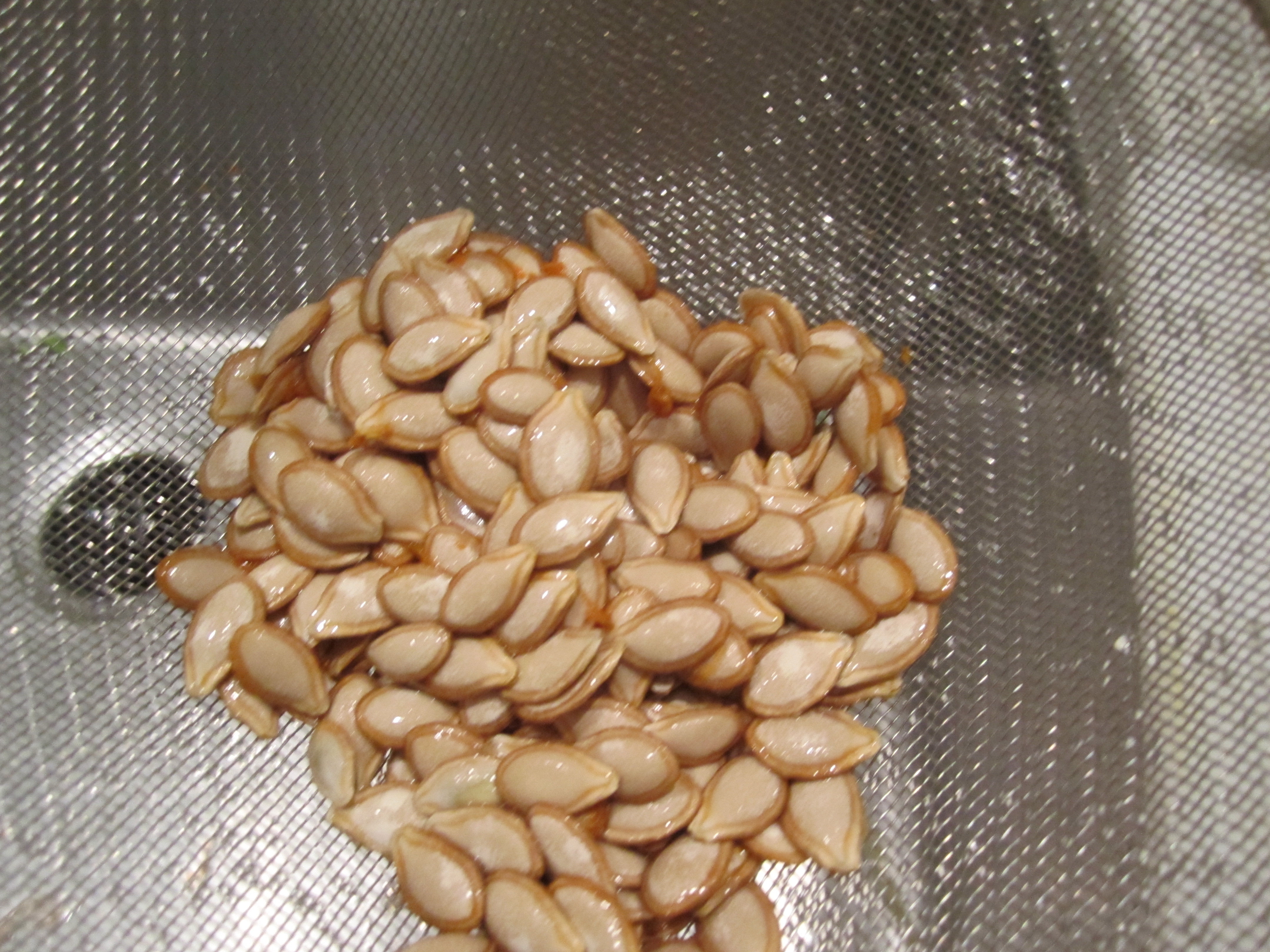
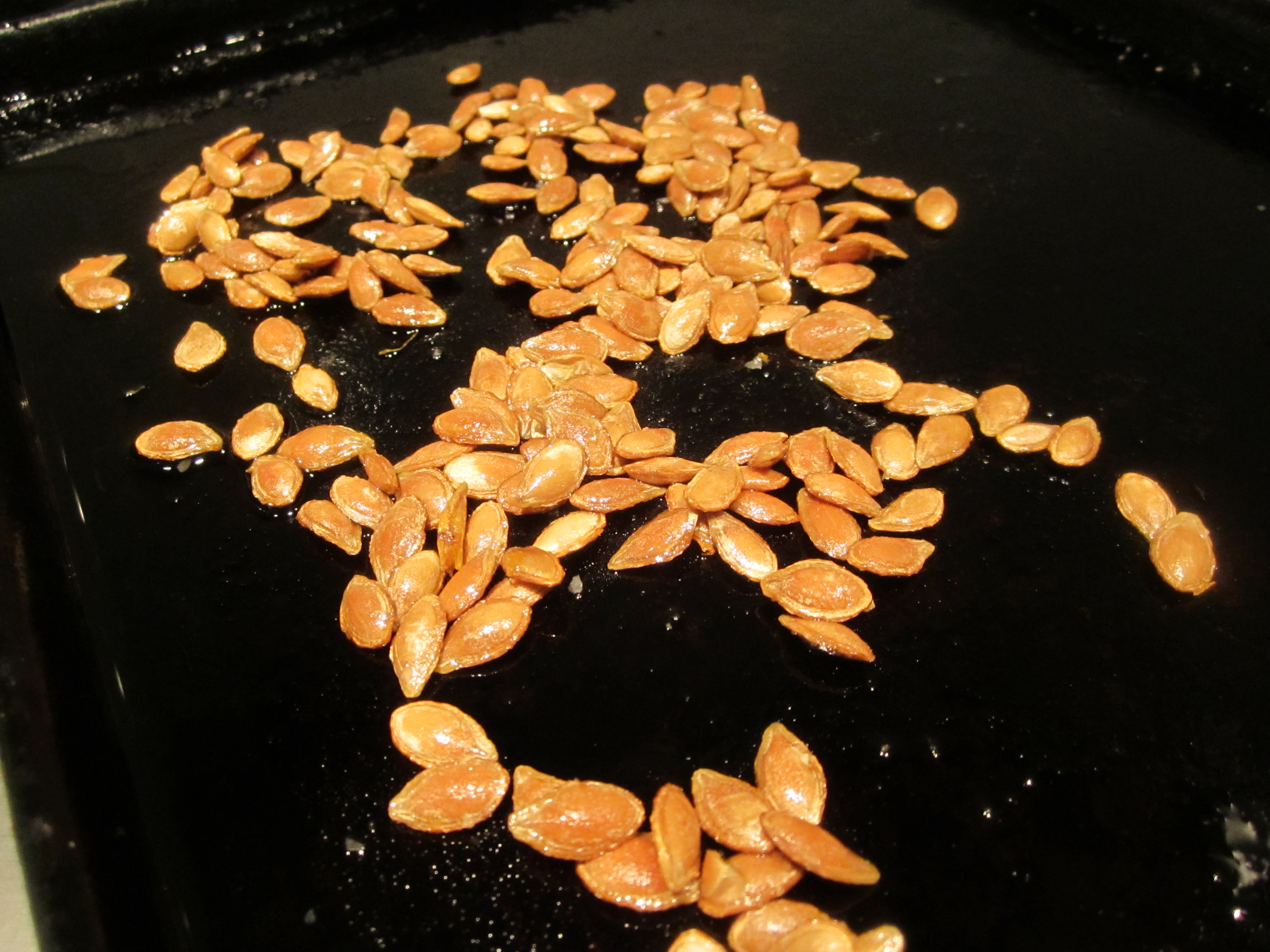
The added bonus of butternut squash is its seeds–a seldom-recognized treat.  The seeds of the butternut squash, with a little extra effort, can be cleaned and roasted to make a great nutty, salty topping to any salad (or just eaten as a snack).

Tonight, for our main course, we had more of those delicate, irresistable Sauteed Peconic Bay Scallops over fettucine.

Salad of Arugula, Cauliflower and Butternut Squash

serves 4 generously

1 head purple cauliflower (white is fine)

1 butternut squash

1 lb arugula, washed and coarsely chopped

3 tbls olive oil

1 tbl red wine vinegar

2 tsps agave nectar

salt and pepper to taste

Preheat oven to 400 degrees.

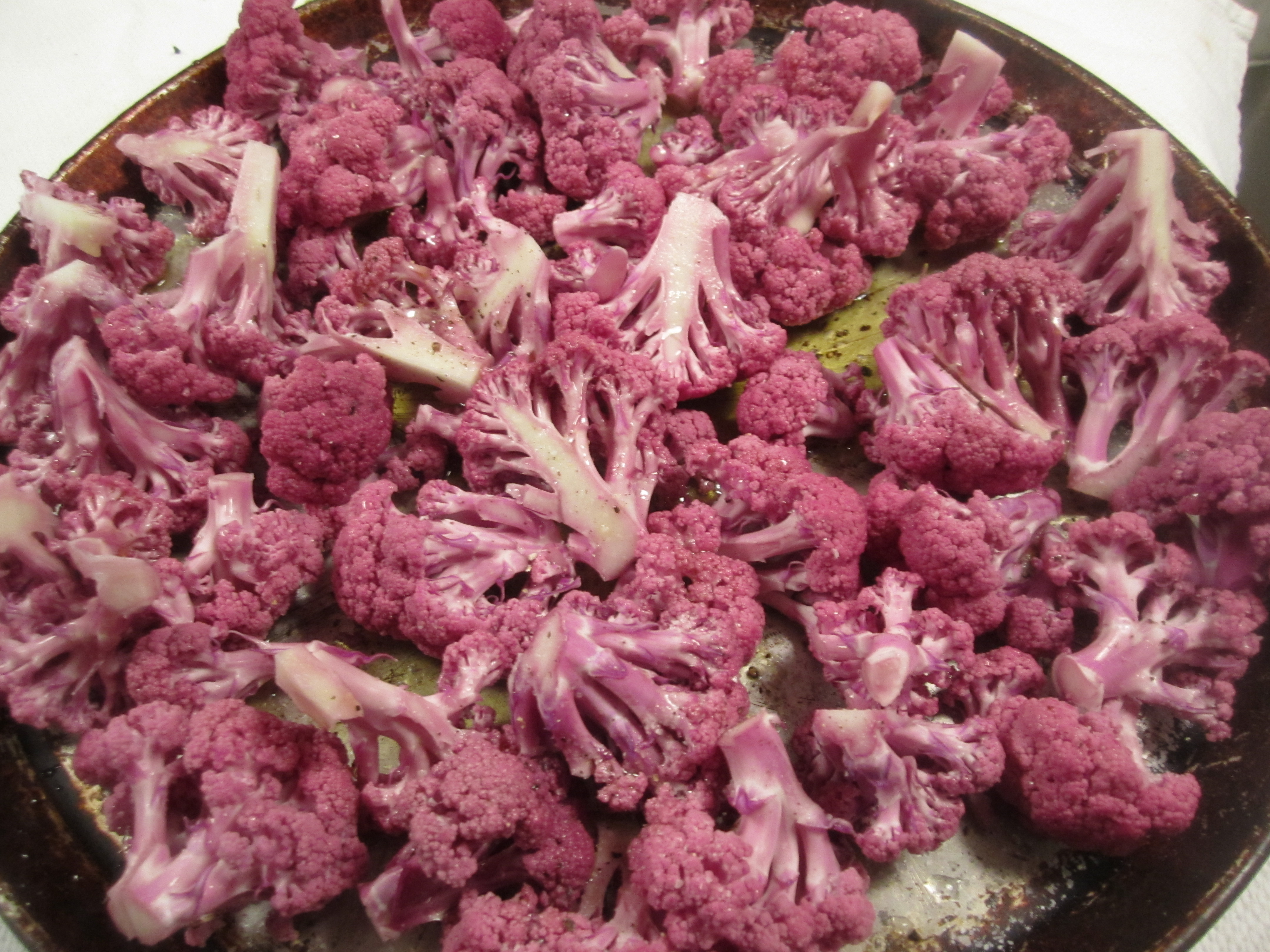
Cut cauliflower into bite-size chunks.  Place on roasting pan and drizzle with 2 tablespoons olive oil and a generous sprinkle of salt (a half-teaspoon) and some black pepper.

 Toss and roast in the oven, uncovered for about an hour, turning from time-to-time., until crispy on the outside and tender on the inside.

Taste for salt and add, if necessary. Set aside.

Peel and dice the butternut squash into 1″ cubes.  Place the cubes in cold, salted water and bring to a boil.  Boil for about 15 minutes, or until squash is tender, drain.   Place butternut squash cubes in a mixing bowl and drizzle with a teaspoon each of red wine vinegar and agave.  Taste and add salt, if necessary.

With a spoon, scoop out the seeds from the stringy center of the squash.

Wash seeds and dry well. 

 Place on sheet pan and toss with a teaspoon of oil and a sprinkle of salt.  Roast at 400 degrees for about twenty minutes, turning from time to time  (they’ll pop and begin toasting very quickly–do not be alarmed and do not burn).   

In a large mixing bowl, drizzle arugula with remaining vinegar, agave, and oil.  Taste and add salt, if necessary.

Arrange greens on plate, surround with squash and top wth cauliflower.  Sprinkle squash seeds over all.

Posted in Salads | Leave a comment

Pasta with Kabocha Squash and Kale Two Ways

Both kale and kabocha squash are plentiful now through December, so I’ve been buying them regularly and freezing them for the winter.  The kale gets blanched and frozen in ziploc bags and the squash gets peeled and cubed, then frozen in ziploc bags. These are the perfect soup or stew ingredients to have on hand for one of those winter blizzards that we seemed to have had so many of last winter.

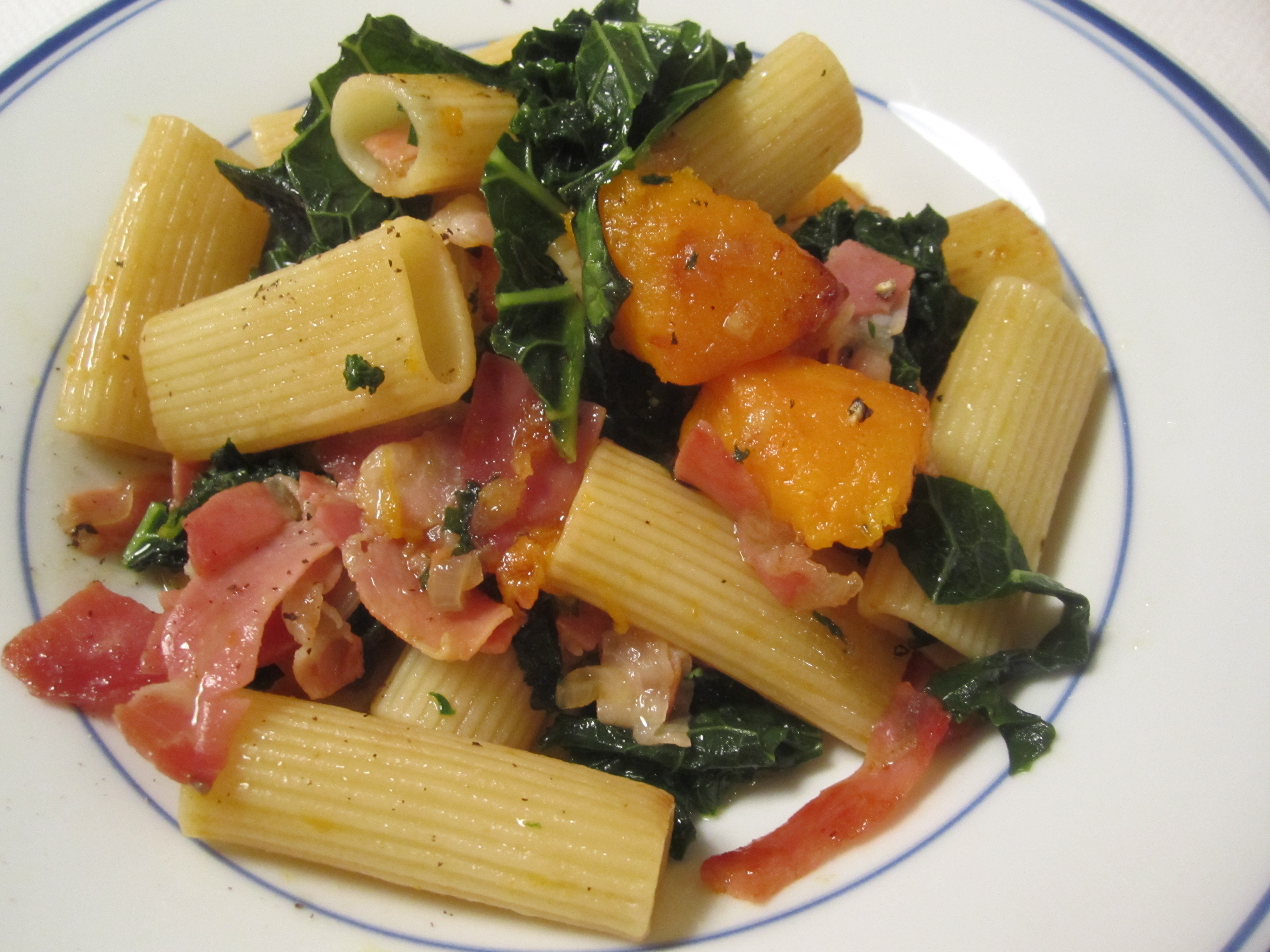
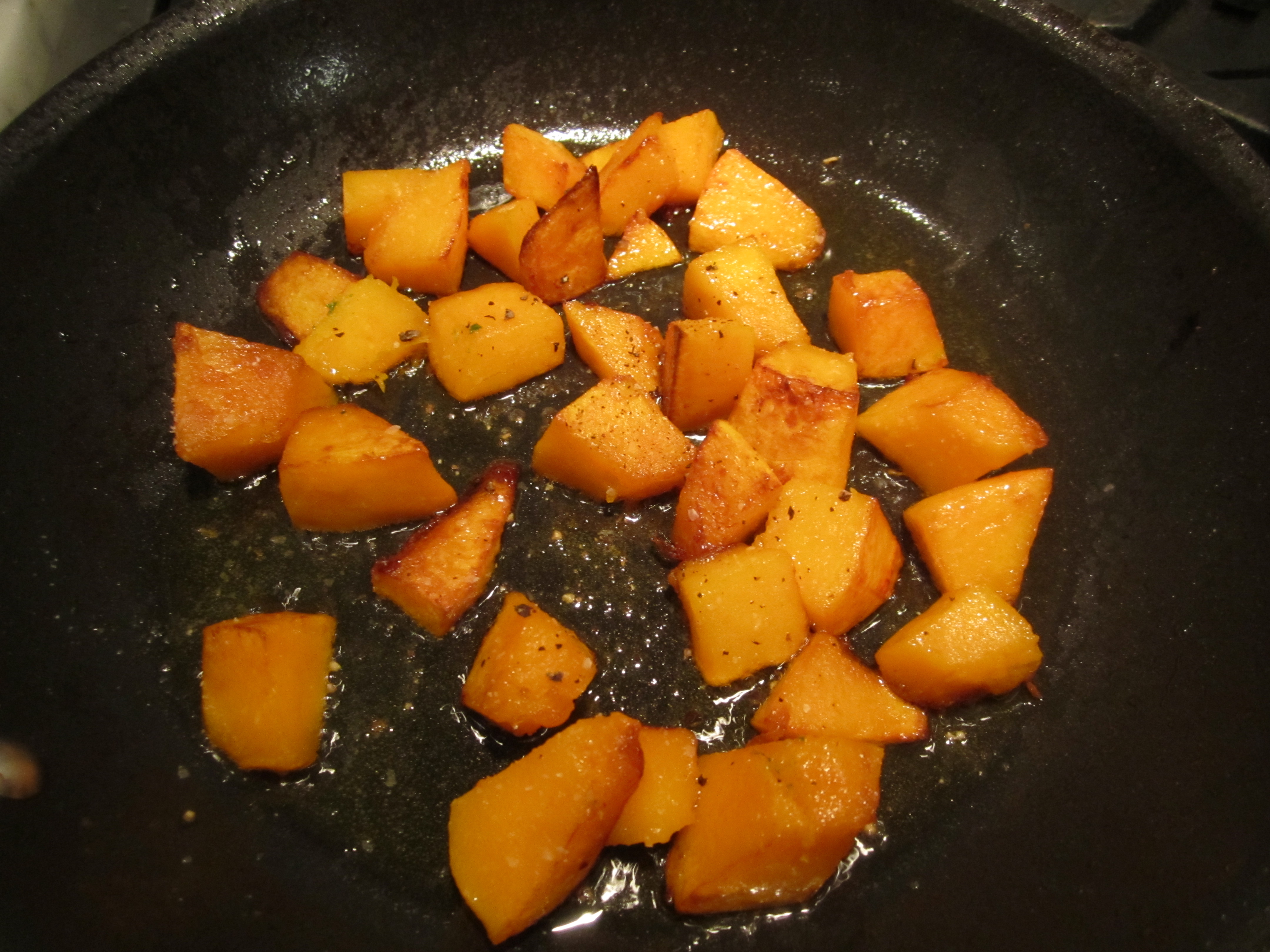
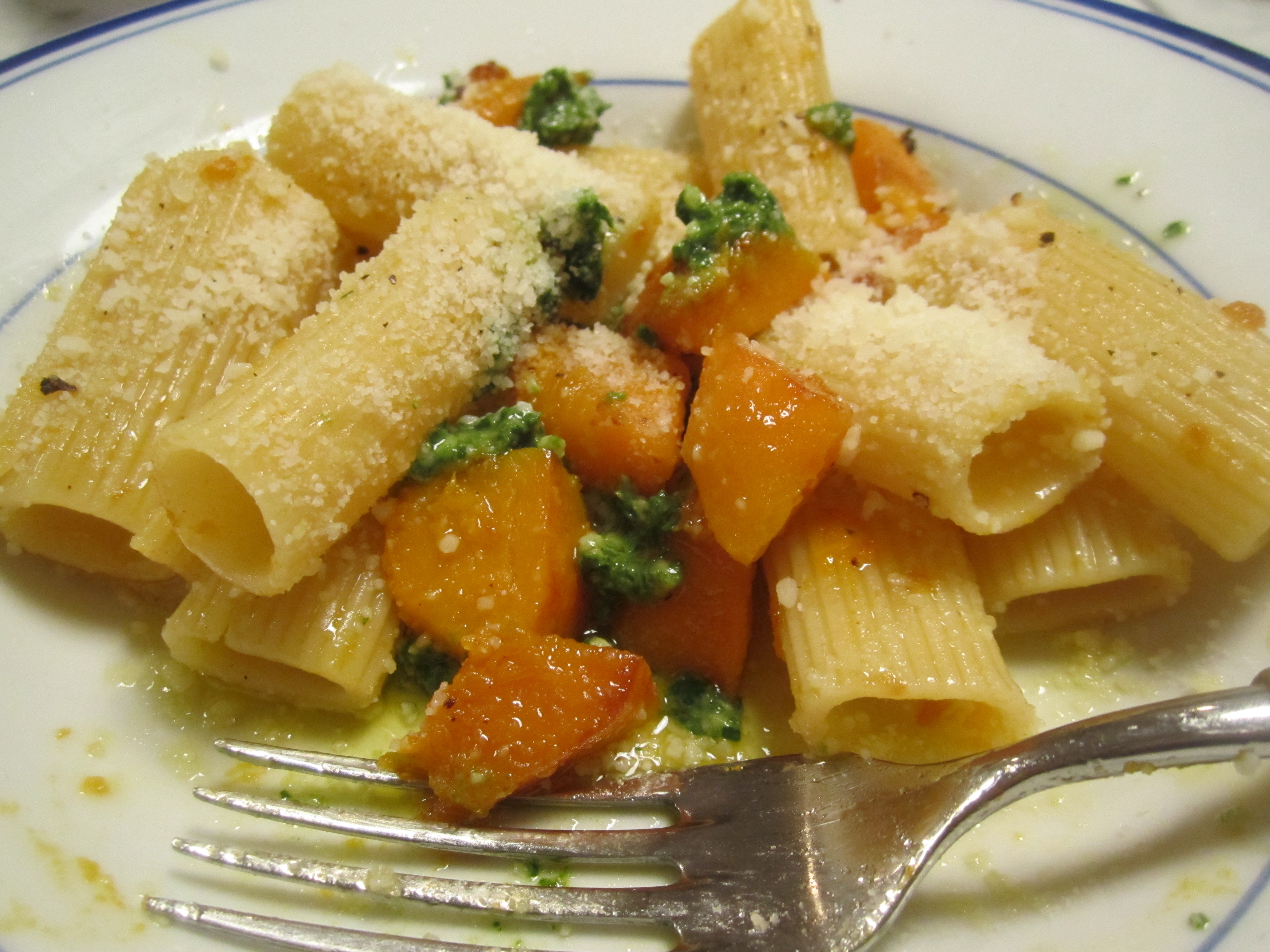
Before I froze the latest round of squash and kale, I wanted to use a bit of them for our pasta this evening.  I decided to make the pasta two ways to see which I liked better.The first way involved sauteed pancetta and shallots, with cubes of squash and ribbons of kale (see opening photo).

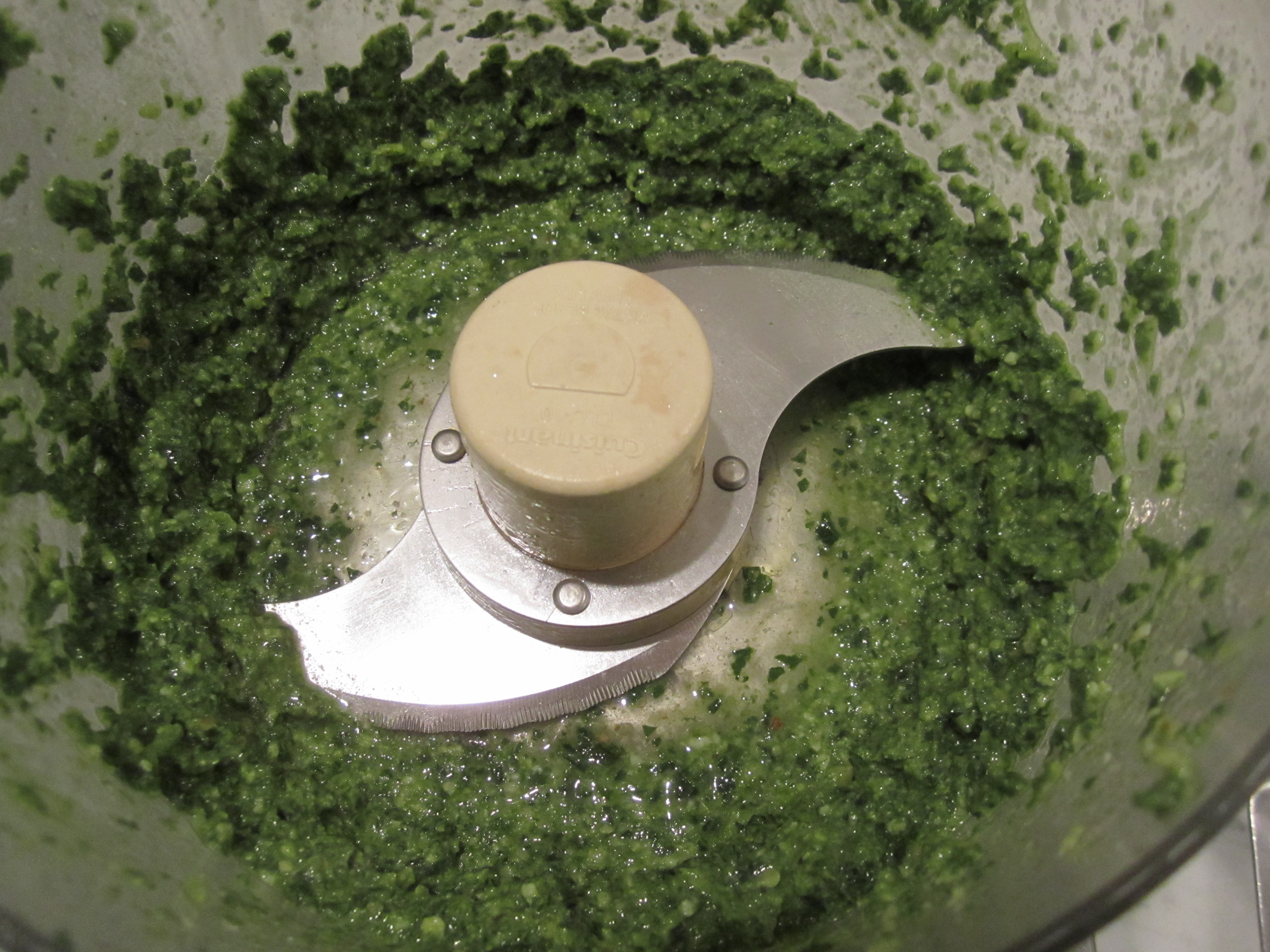
The second way was entirely vegetarian–cubes of squash sauteed in olive oil, then combined with pasta and topped with a dollop of kale and walnut pesto.

In my opinion, both dishes were excellent, and I urge you to try them both while these ingredients shine.

Pasta with Kabocha Squash, Kale and Pancetta

serves 4

1 lb rigatoni

3 c kabocha squash cubes (approx. 3/4″)

2 shallots, peeled and finely diced

2 oz. pancetta, thinly sliced, then diced

2 tbls olive oil

2 c cooked kale leaves (tightly packed), drained and cut into 1/2″ ribbons

While you’re waiting for the pasta water to boil, place squash cubes in a skillet with the olive oil and saute, covered on medium heat, flipping and turning from time to time until they are tender (about 8 minutes).

Remove and set aside.

While pasta is cooking, in a broad skillet on low heat, begin browning the shallots and rendering the pancetta, for about 7 minutes.

Add the squash cubes and kale leaves and continue sauteing on low heat until the pasta is cooked.  Toss in the cooked pasta plus a half-cup of pasta cooking liquid and saute until combined, about 30 seconds.

Serve with a combination of grated pecorino and parmigiano cheese.

Pasta with Kabocha Squash and Kale Pesto (Vegetarian)

serves 4

1 lb rigatoni

3 c kabocha squash cubes

2 c cooked kale leaves

1/2 c walnuts

1/2 c grated pecorino

1/4 c plus 2 tbls olive oil

combination of grated parmigiano and pecorino

Over medium heat, saute squash cubes in 2 tablespoons of olive oil while waiting for pasta water to boil.

Drop pasta into boiling salted water and make pesto while pasta cooks.

To make pesto, place kale leaves, walnuts, cheese and 1/4 c oil in food processor.

Pulse until a coarse puree forms.

Add some pasta water 1 tablespoon at a time, to thin the mixture to your liking (it may take up to a quarter cup of water).

When pasta is cooked, add to skillet with squash, along with some pasta cooking liquid.  Saute for about 30 seconds until combined.  Serve with a dollop of pesto on each portion, along with a generous sprinkling grated cheese.

Posted in Pasta | Leave a comment

Braised Lamb Shanks with Flageolets

This is the perfect dish to make on a Sunday afternoon when you have time to wait patiently, anticipate, and revel in the aromas that gradually fill your house over the course of the three hours it takes to cook.

Lamb shanks are, in my opinion, the deepest, gamiest expression of lamb there is–gamier than the chops or the leg–even more so than shoulder. They are fatty, gelatinous and meaty.  They can be braised and eaten as a main course, or shredded over pasta as a ragu.

Beans are especially wonderful with lamb–white beans are nice, but I find that nothing is as good with lamb as flageolet beans.  These beans belong more to French cuisine than Italian, and are worth seeking out.  Like most beans, they require the forethought to soak overnight before cooking.

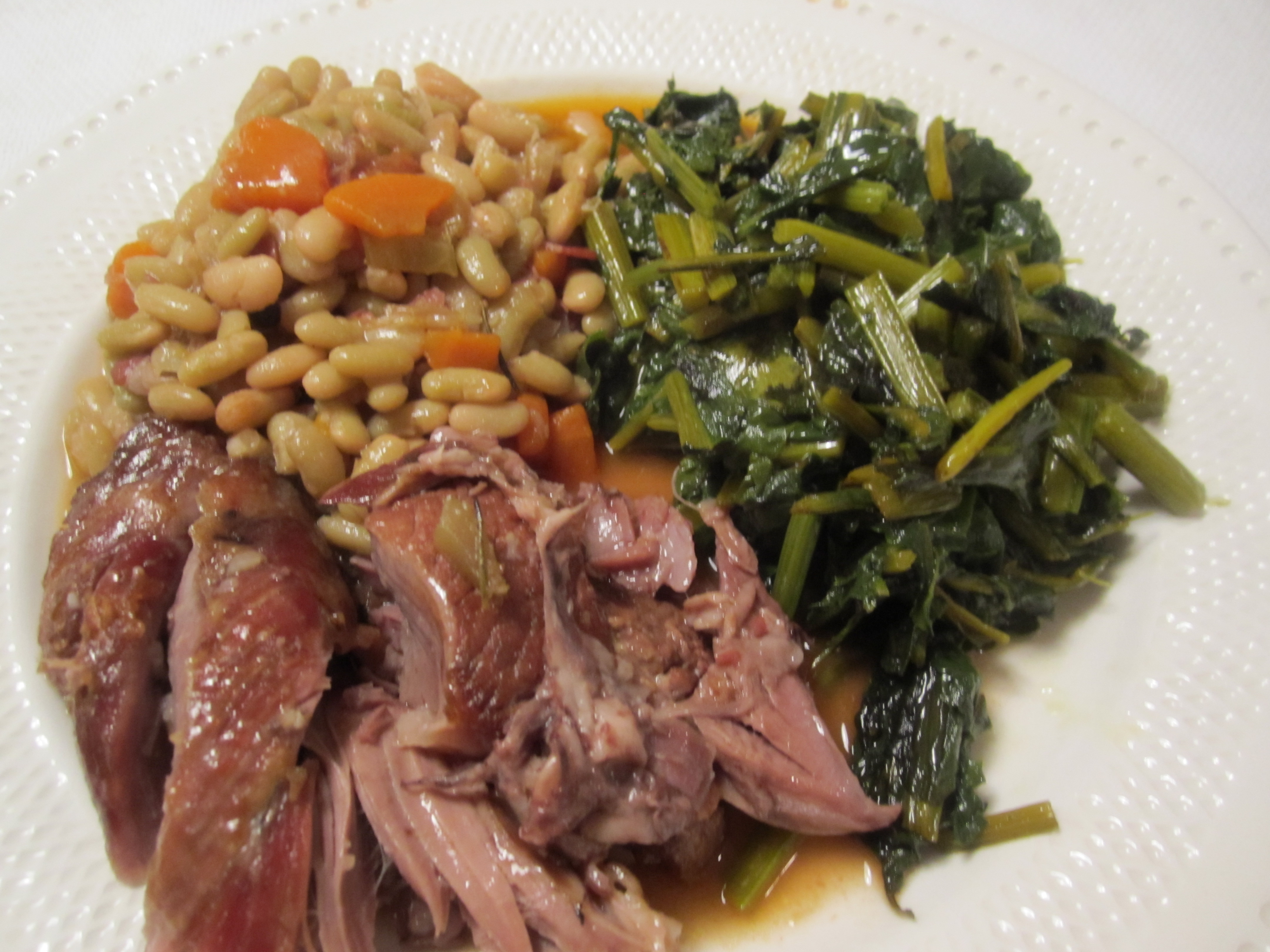
The beauty of flageolet beans with lamb shanks, is that they both cook at relatively the same rate.  Therefore, it’s possible to braise the shanks right in the pot with the beans and their liquid, and both are perfectly cooked in about 3 hours.

I bought the last two shanks that my butcher had today, but this recipe is for four shanks, which will generously feed 4 persons, almost certainly with leftovers.  This dish tastes even better the next day, so don’t hesitate to make it even if you are only cooking for two–you can reheat the leftovers the next day, or freeze them and reheat at a later time.

Tonight, along with the lamb and beans, I sauteed the beet greens from last night’s beets.  Plenty of bread was necessary as well!

Braised Lamb Shanks with Flageolets

serves 4

1 lb flageolet beans, soaked overnight, then drained

1/8 lb. pancetta, thinly sliced, then diced

4 shallots, peeled and cut in half

4 cloves of garlic, cut in half

1 carrot, peeled and diced

1 stalk celery, diced

1/2 onion, finely diced

1 sprig rosemary

1 or 2 bay leaves

1/4 c olive oil

1 qt chicken broth

1 c red wine

2 tbls tomato paste

1 tsp whole black peppercorns

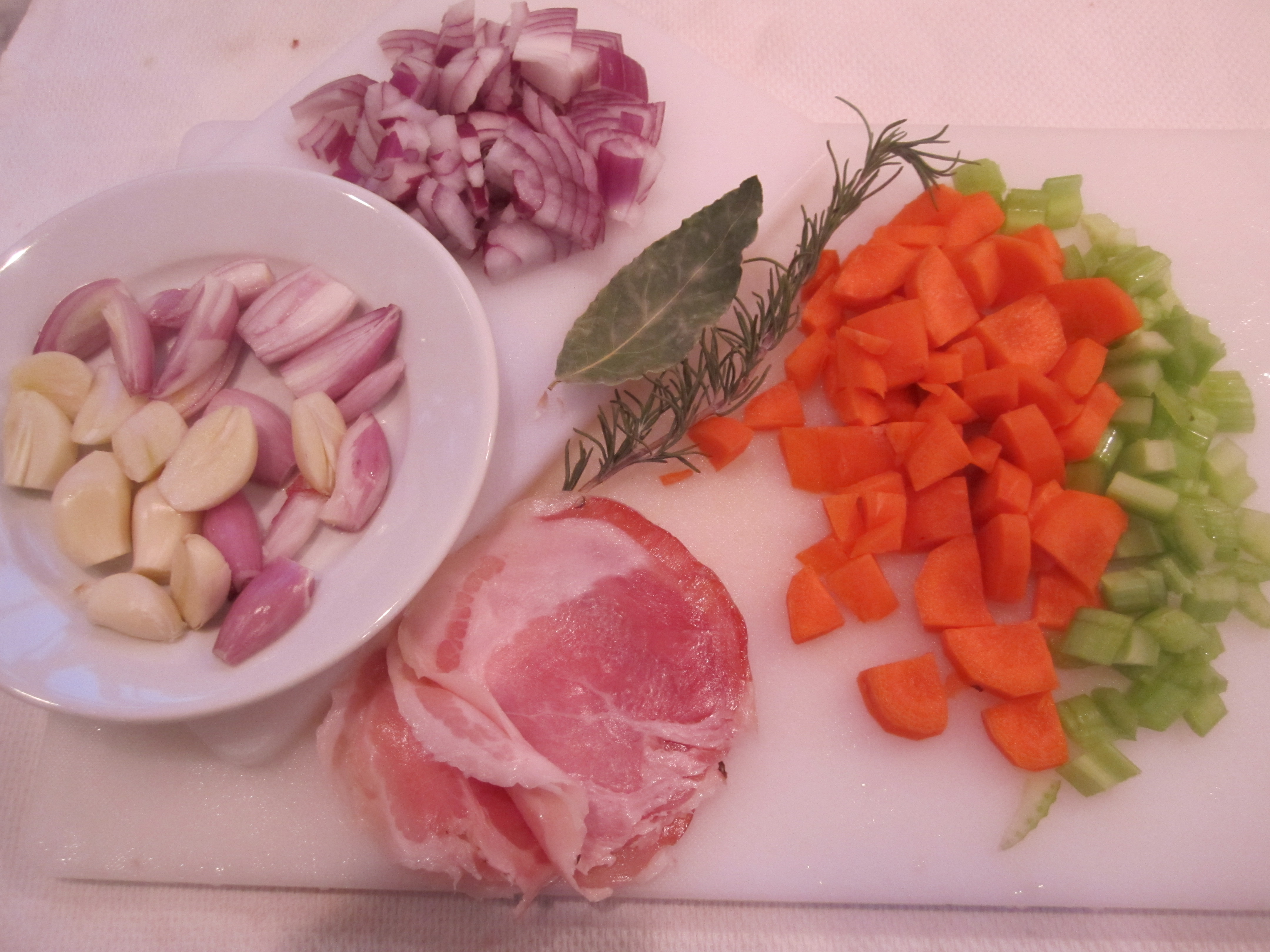
4 lamb shanks

flour for dredging

salt to taste

Preheat oven to 325 degrees.

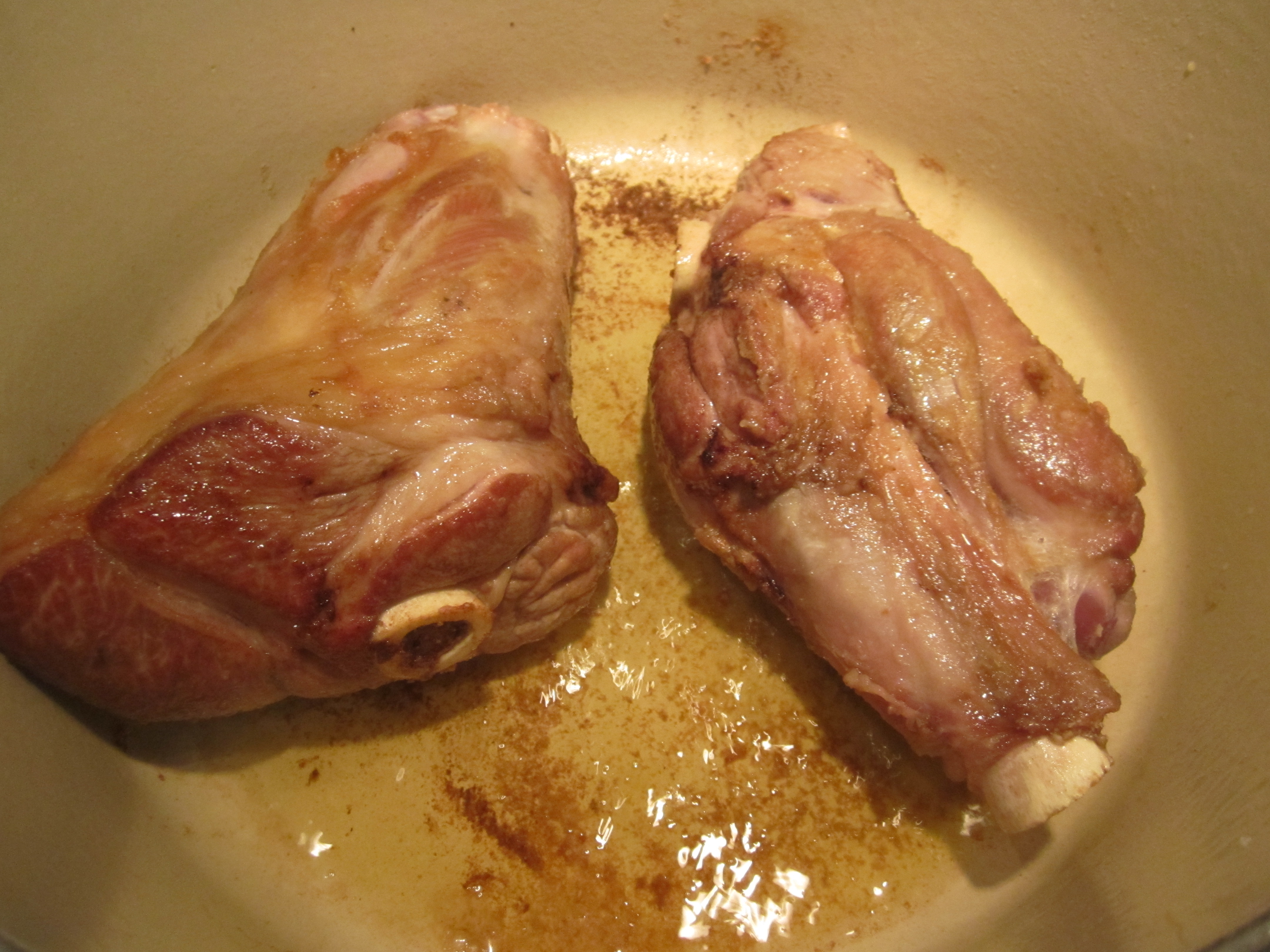
Preheat half the oil in a heavy-bottomed dutch oven.  Sprinkle shanks generously with salt, then dredge in flour and shake off excess. Gently place them in the hot oil and brown on all sides on high heat for about 8 minutes.

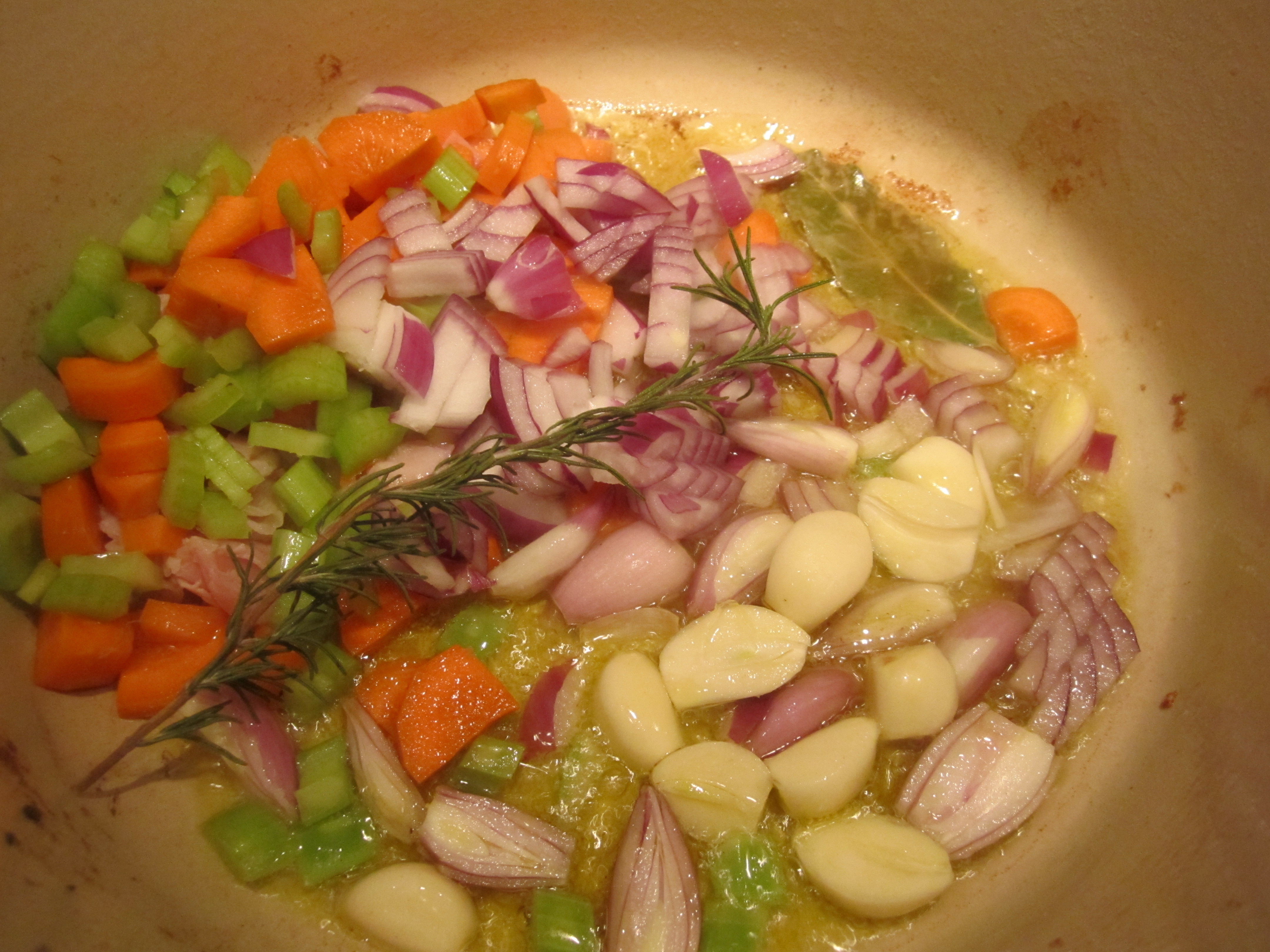
Remove shanks and set aside.  Pour off the oil and keep the brown bits clinging to the pot.  Add the other half the oil and add the pancetta, vegetables, bay leaves and rosemary sprig. Cook on medium heat for about 5 minutes, until vegetables begin to turn golden and pancetta renders some of its fat.

Add broth, wine, tomato paste and beans.

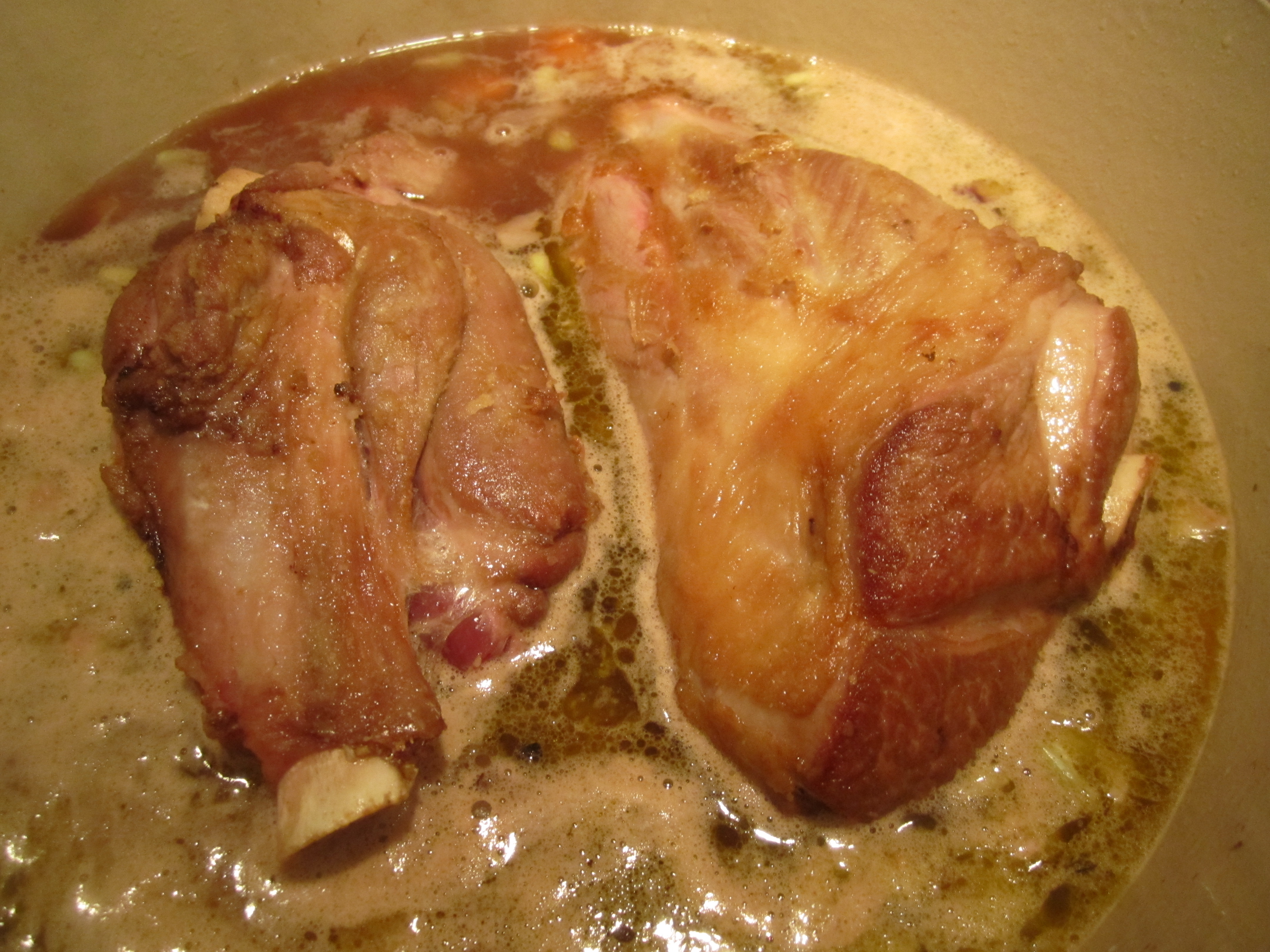
Bring to a boil and add lamb shanks.  Simply nestle them in the beans, while making sure that they are only about half submerged–it’s important that they are not totally submerged, or they’ll boil instead of braise.

Cover partially with lid and place in oven for about 3 hours total.

After 1 hour:

After 3 hours:

There’s no rushing this dish, but like all good things, it’s worth the wait!

Posted in Meat, Vegetables | Leave a comment