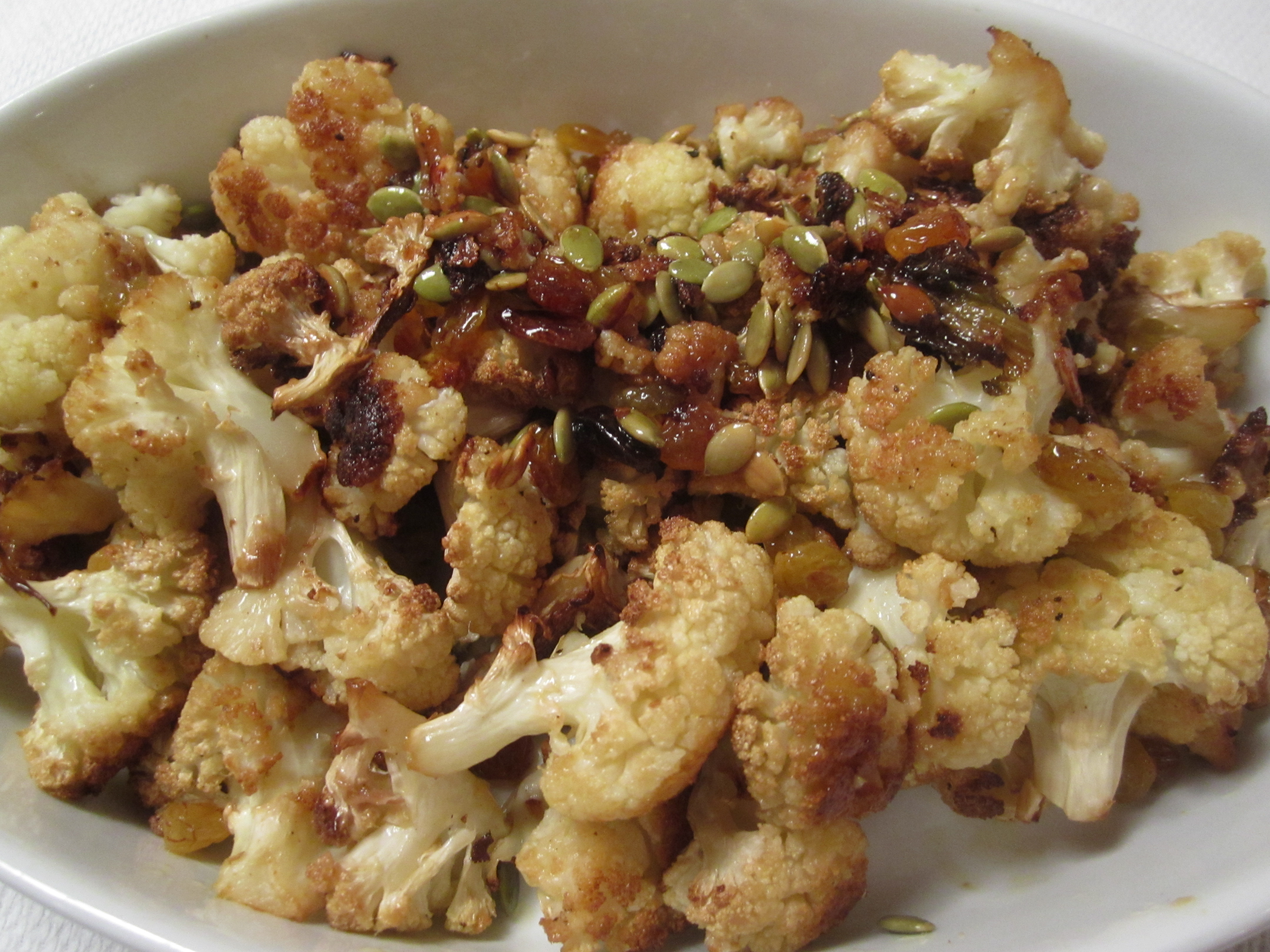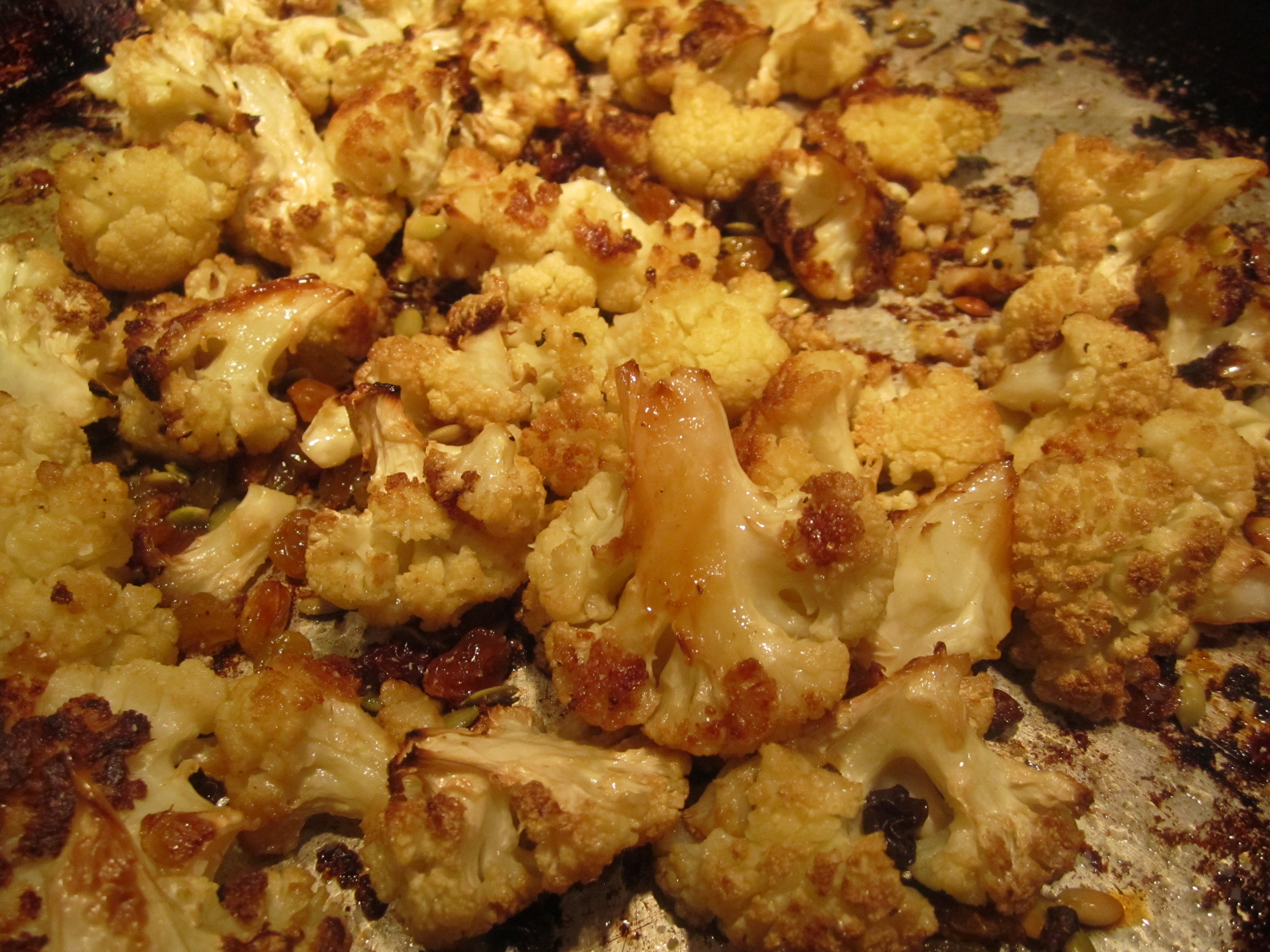
Roasted Cauliflower with Pumpkin Seeds and Raisins

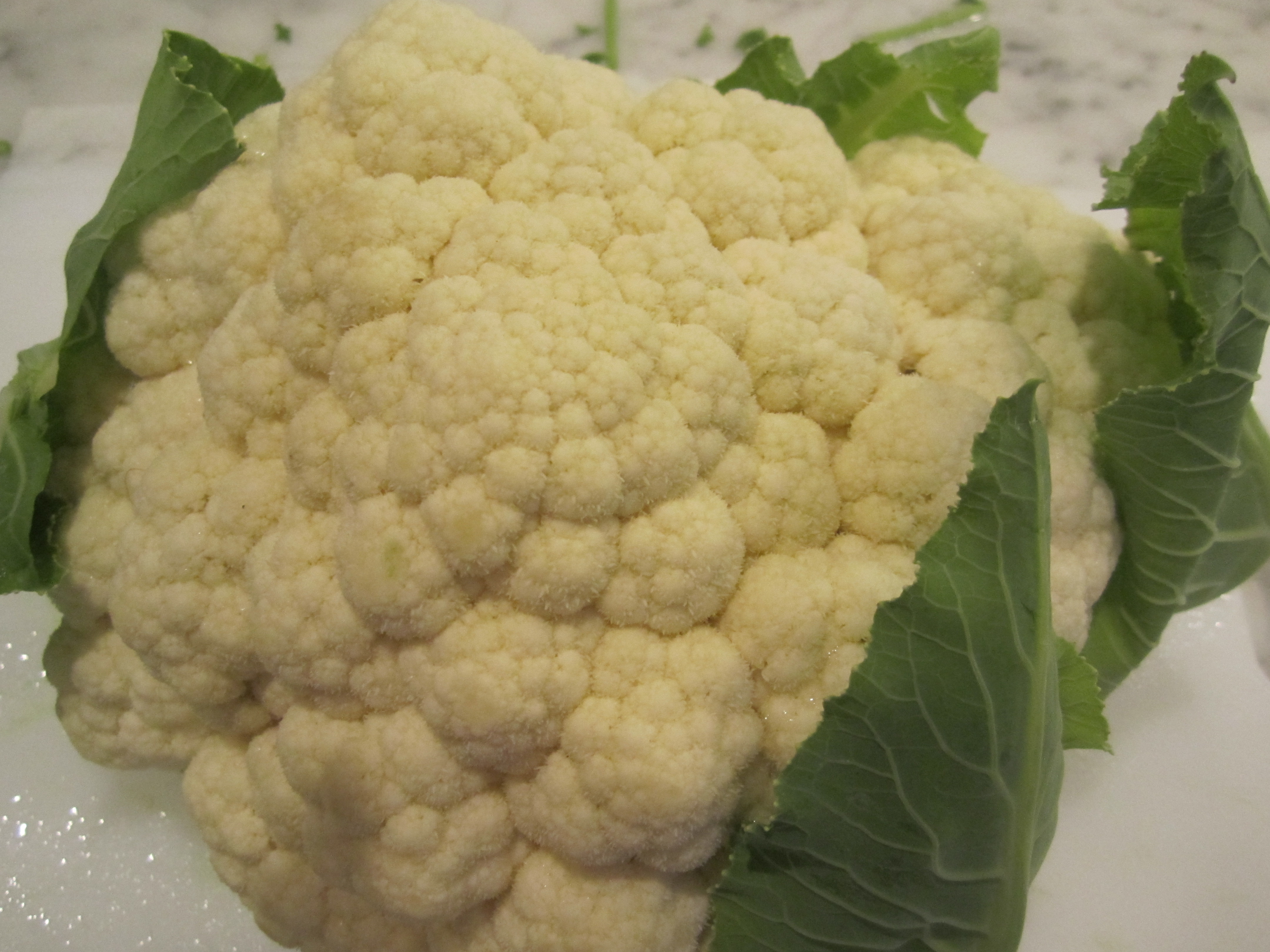
The local cauliflower is getting bigger and more beautiful every time I go to the farm stand, so I couldn’t resist making this dish.

I’ve always loved using pine nuts and raisins with green vegetables, such as swiss chard and spinach.  Cauliflower easily lends itself to this combination as well, only tonight, I’ve decided to celebrate the fall with pumpkin seeds instead of pine nuts.  They have an even nuttier bite and when toasted, they’re irresistable.

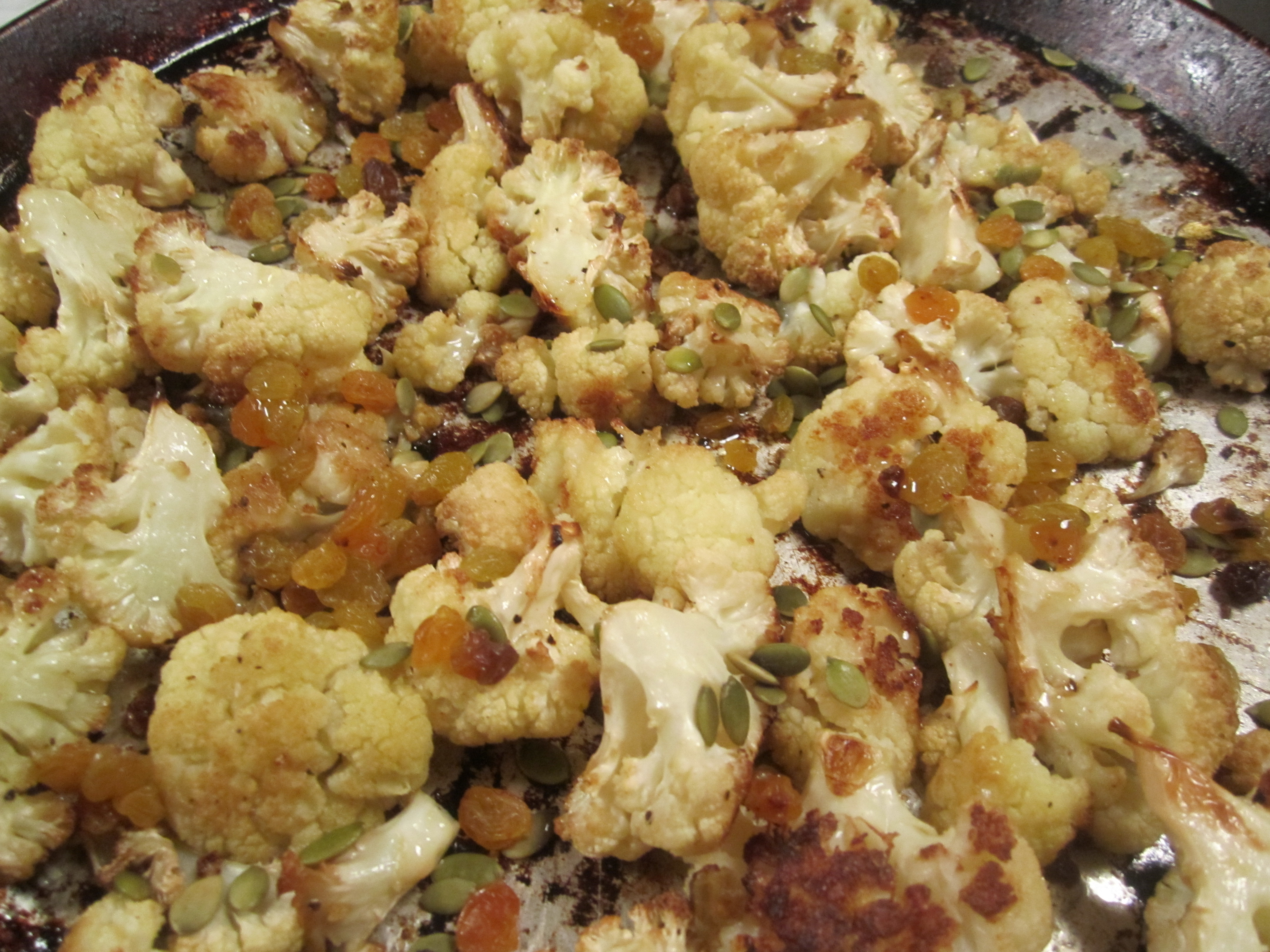
The cauliflower simply gets cut into bite-size pieces, then roasted in a 400 degree oven for at least an hour until golden brown and soft.  The seeds and raisins, along with a touch of agave nectar, are added in the last 10 minutes of roasting to caramelize the raisins and toast the seeds.

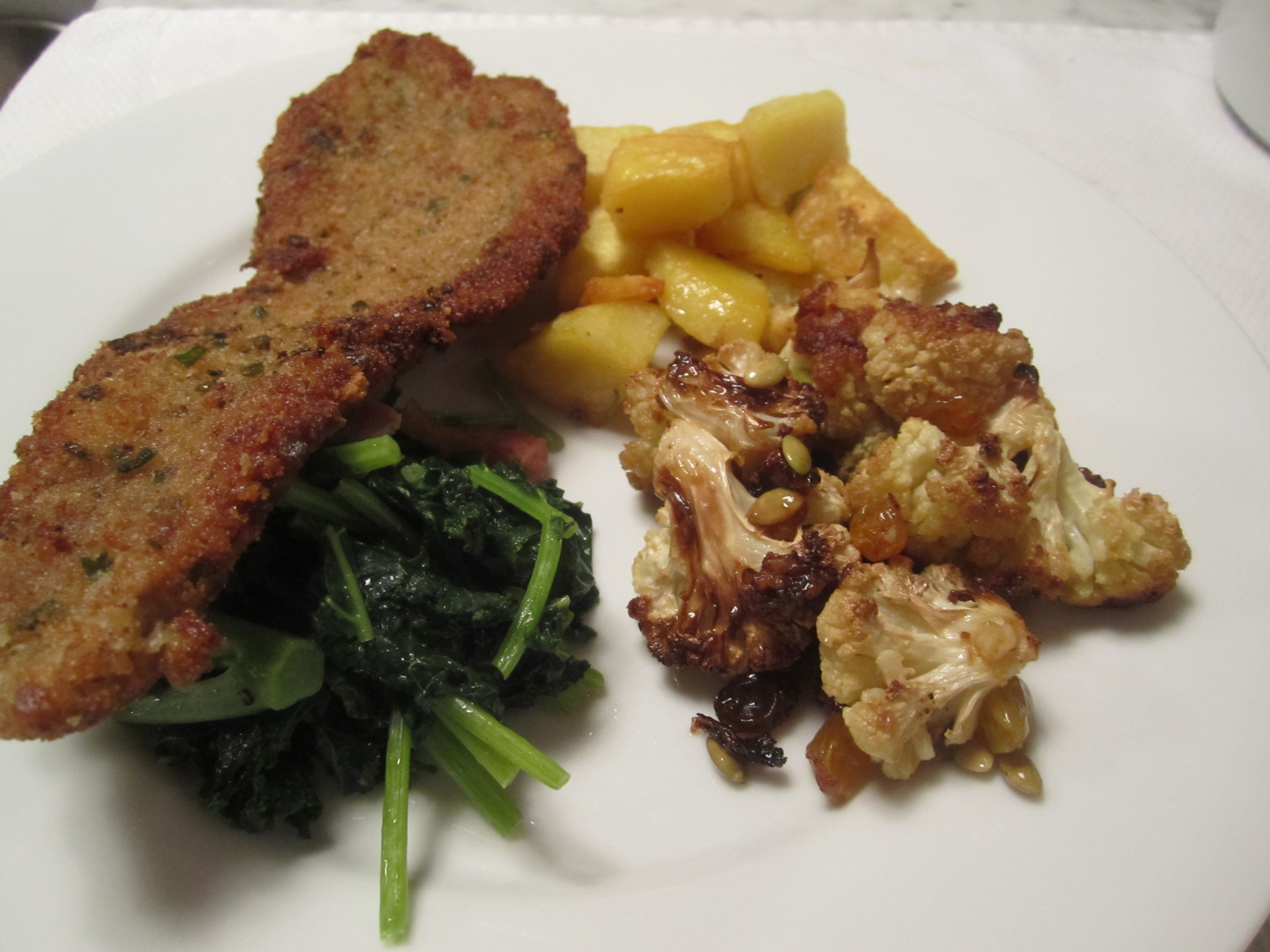
Tonight, our main course was veal cutlet, along with kale, skillet potatoes, and of course, the cauliflower.

Roasted Cauliflower with Pumpkin Seeds and Raisins

serves 4

1 large head cauliflower

1/4 c olive oil

1/4 c raisins

1/4 c pumpkin seeds

2 tsps agave

salt and pepper to taste

Preheat oven to 400 degrees.

Cut cauliflower into bite-size pieces and arrange in one layer in a baking pan.

Toss with olive oil and at least 1 teaspoon salt.  Roast for about 45 minutes, turning pieces occasionally for even browning.
Taste and add salt and pepper.

When cauliflower is golden brown, (at about 45 minutes) add seeds, raisins and agave, and continue roasting until raisins turn brown and plump.

Posted in Vegetables | Leave a comment

Applesauce

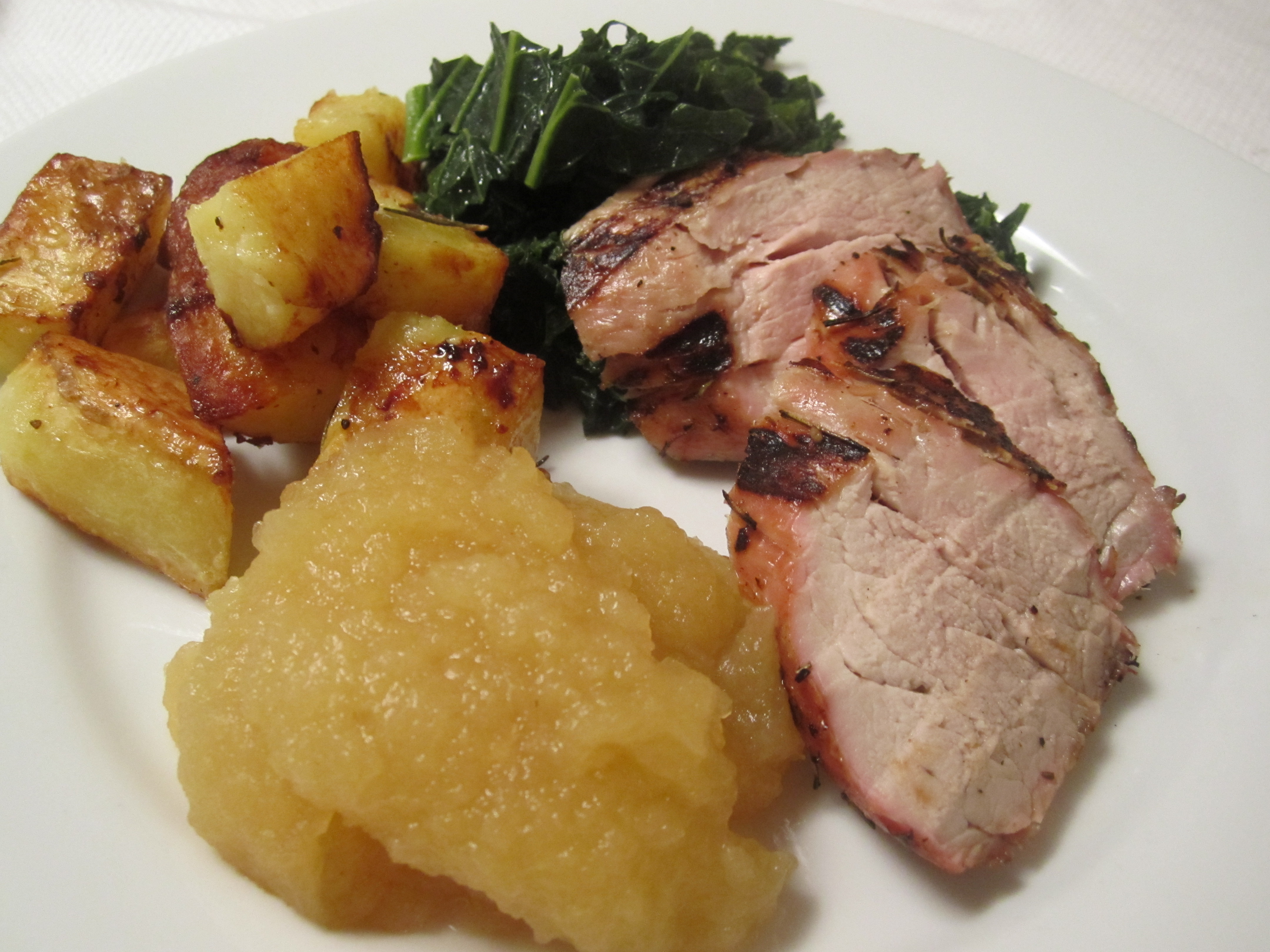
There’s nothing innovative about my applesauce but I thought I’d share the technique and the menu for tonight’s dinner with you.

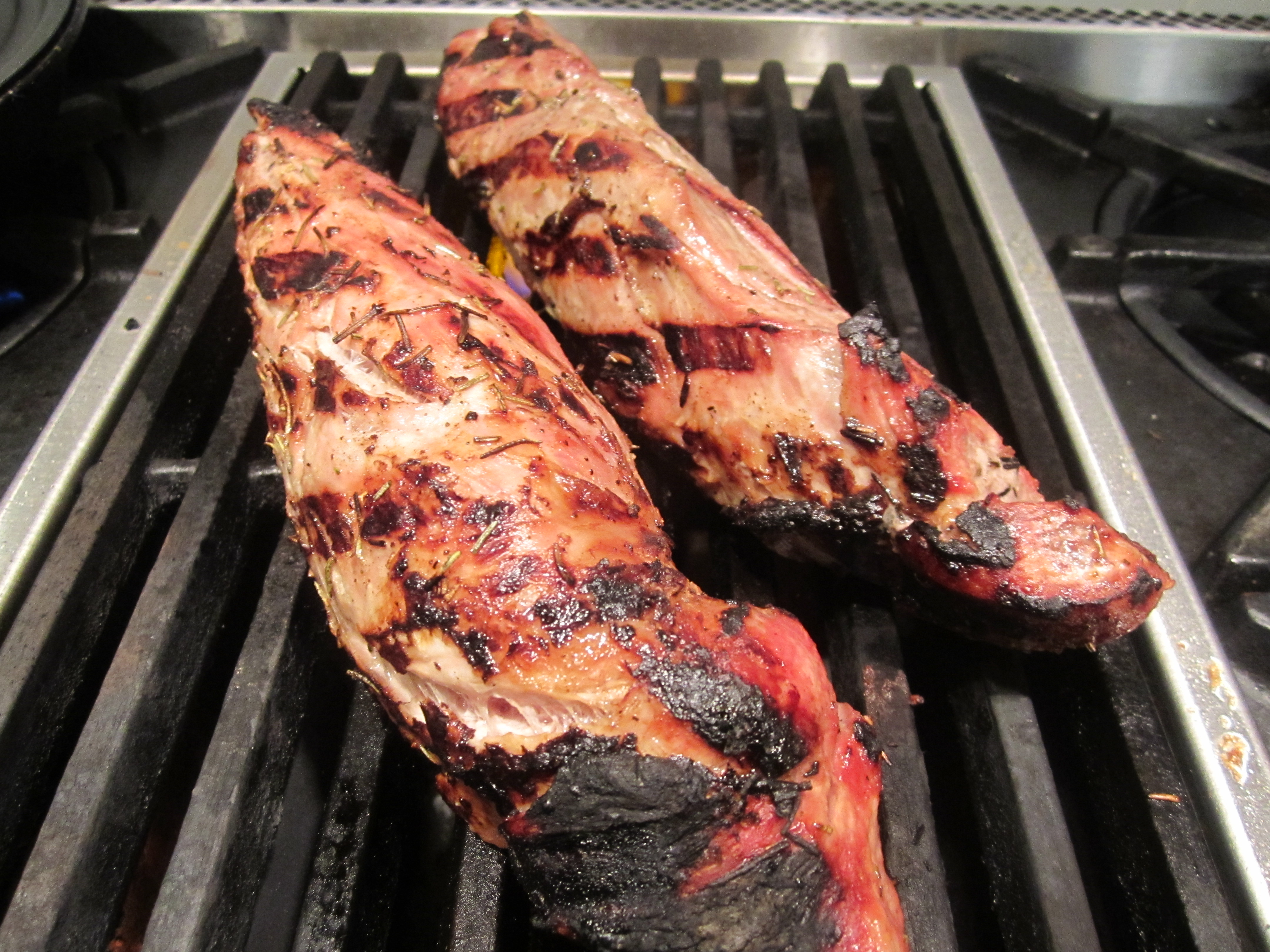
I love applesauce and I really only make it in  fall and winter.  The dry-rubbed pork tenderloin I posted several months ago is the perfect main course for applesauce. 

The salty smokiness of the pork only accentuates the sweetness of the applesauce. 

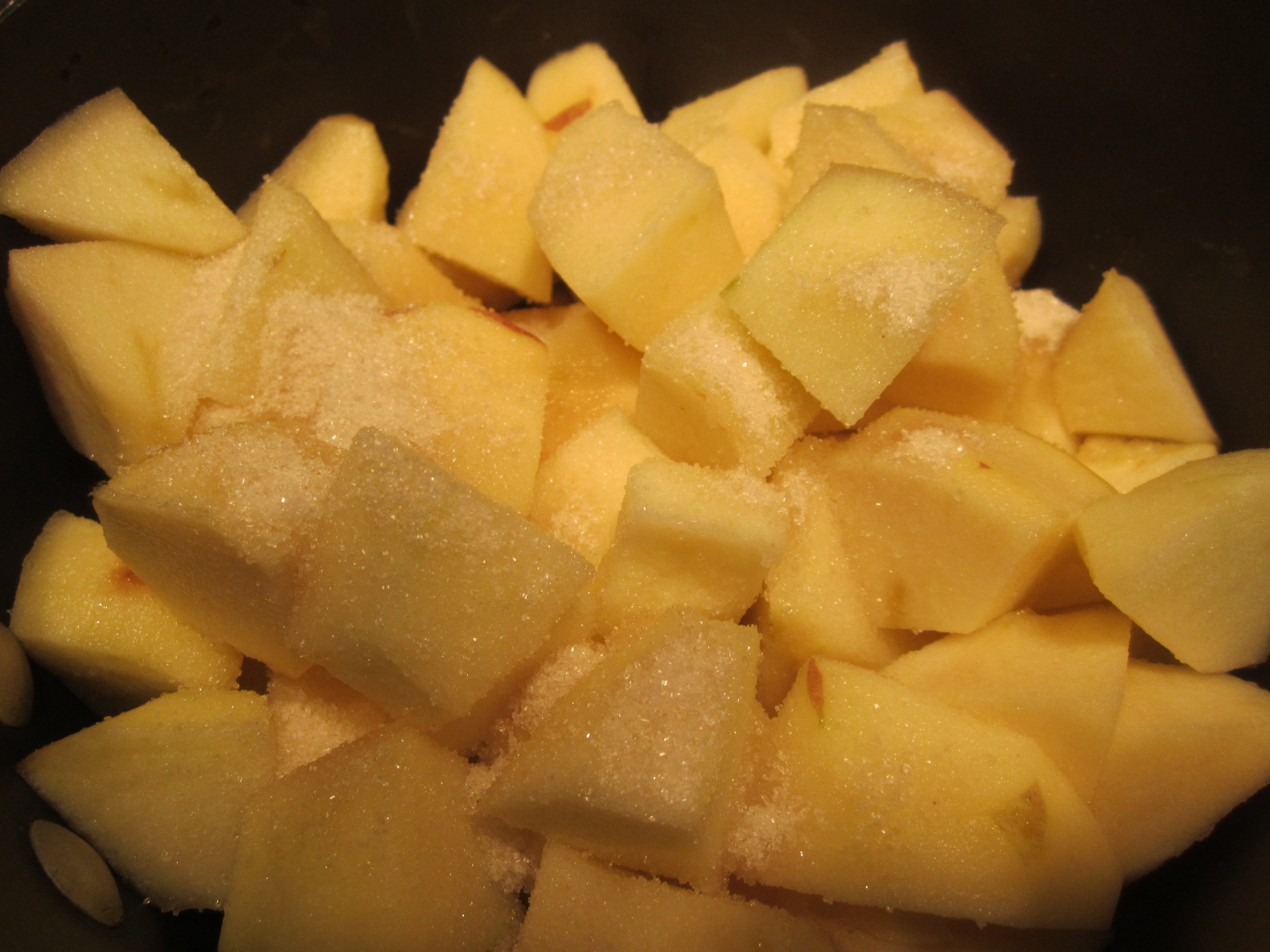
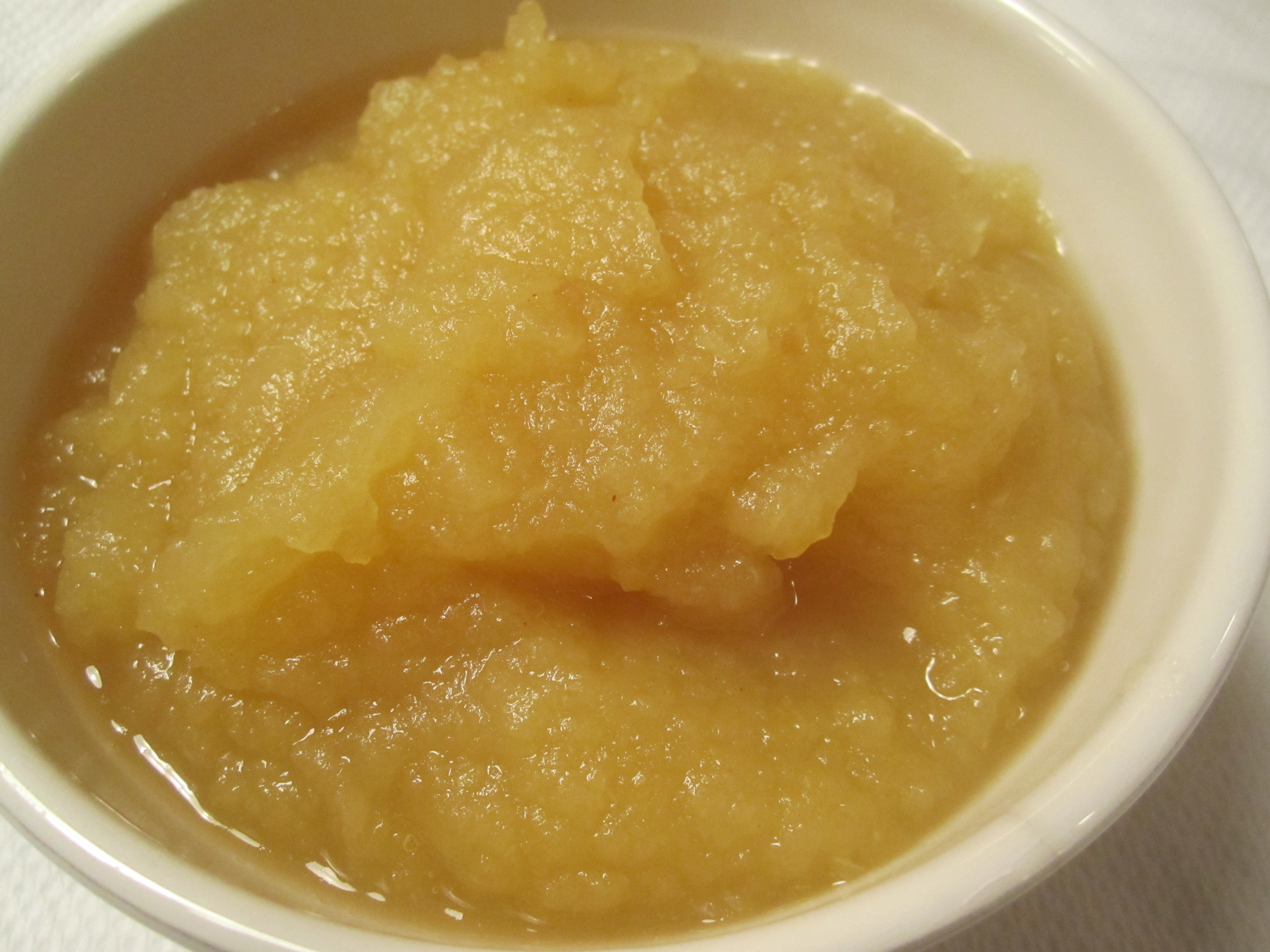
For the applesauce, I start by peeling some crispy fresh apples–any variety or a mixture.  These apples were fuji. 

To make applesauce for two, with some leftover, use four apples.  Quarter them, remove the cores and dice them into 1″ chunks.  Place in a saucepot with 2 – 3 tablespoons of water, a tablespoon of sugar, and the juice of half a lemon.

Bring to a simmer on low heat and cook, covered for about a half-hour.   Stir and mash apples from time to time.  After a half-hour, check for sweetness and add sugar if necessary.

Place in food processor and process to a puree, as fine or chunky as you like–I like mine slightly chunky.

In addition to the pork and applesauce, I made skillet potatoes and buttered kale.

This meal is just as good at room temperature for lunch the next day (or several days).


Posted in Uncategorized | Leave a comment

Zia Lucia’s Potato Souffle


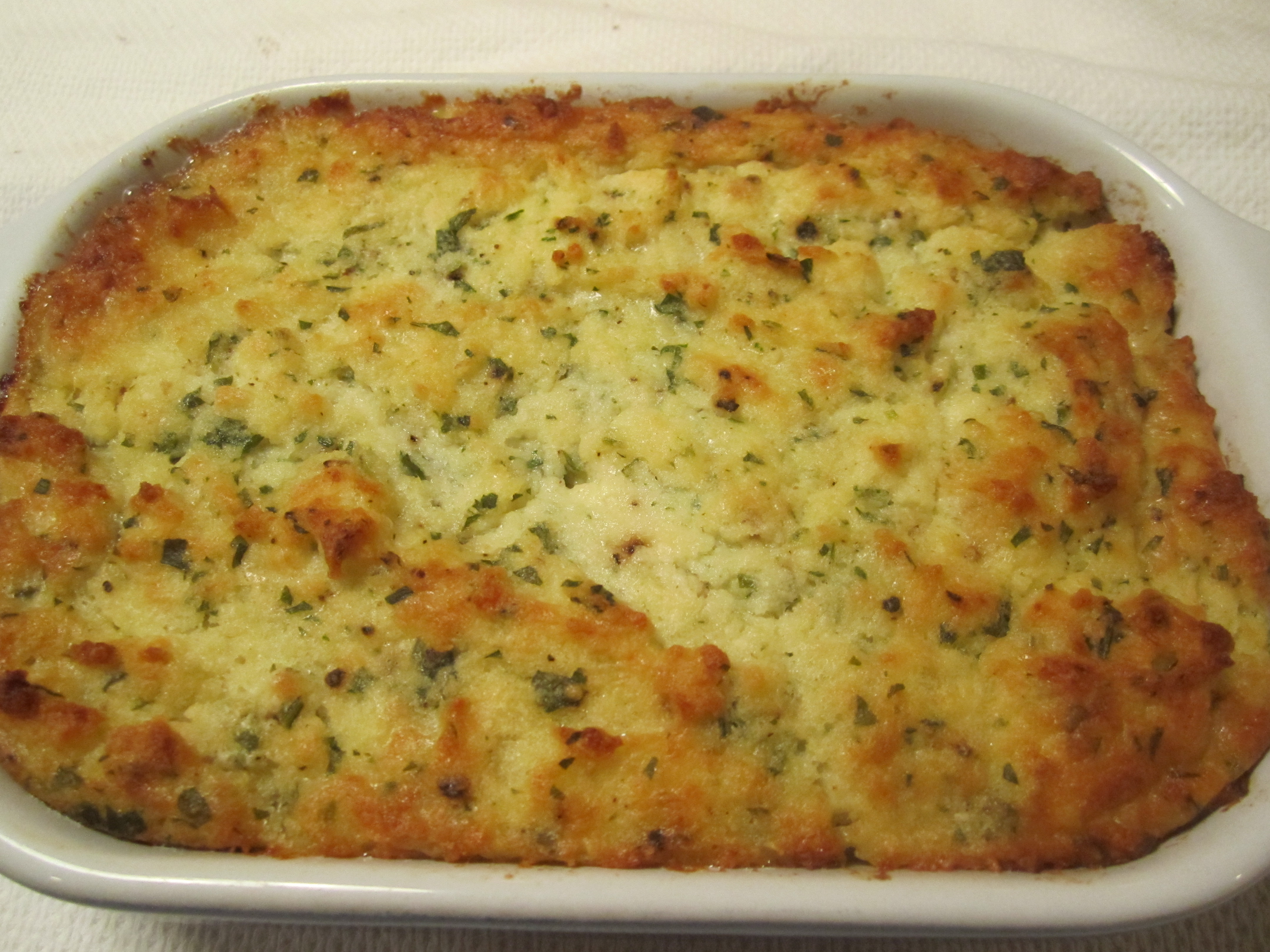
This is a dish that my Aunt Lucia made for us when she visited my family many years ago.  It left a lasting sense impression on me and I’ve made it many times as an adult.  The simple combination of ingredients–potatoes, eggs, butter, parsley, parmigiano and black pepper produce a more delicate, ethereal result than the ingredients might suggest. 

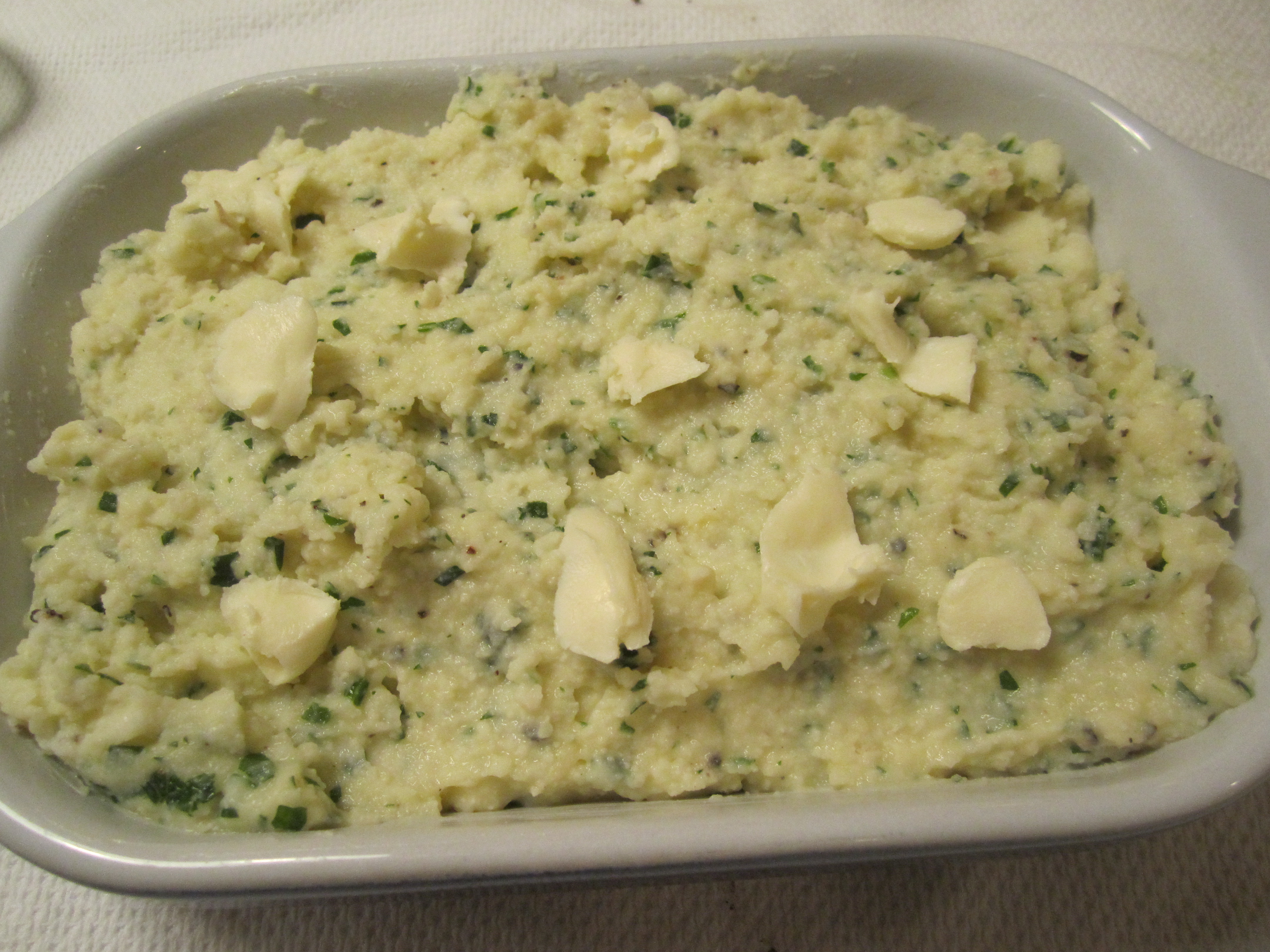
Essentially, potatoes are peeled, boiled and pureed in a ricer or food mill (never a food processor for mashed potatoes).   The additional ingredients are blended and folded into a buttered baking dish.  The whole thing bakes in the oven for about half an hour and can be served either piping hot or warm. 

It’s a great dish to make for guests since it can come out of the oven and rest for up to 20 minutes while you have an antipasto or first course.  It’s also great as a main course dish for brunch instead of a quiche or frittata.  A green salad is the only that’s necessary for a spectacular late night supper as well.

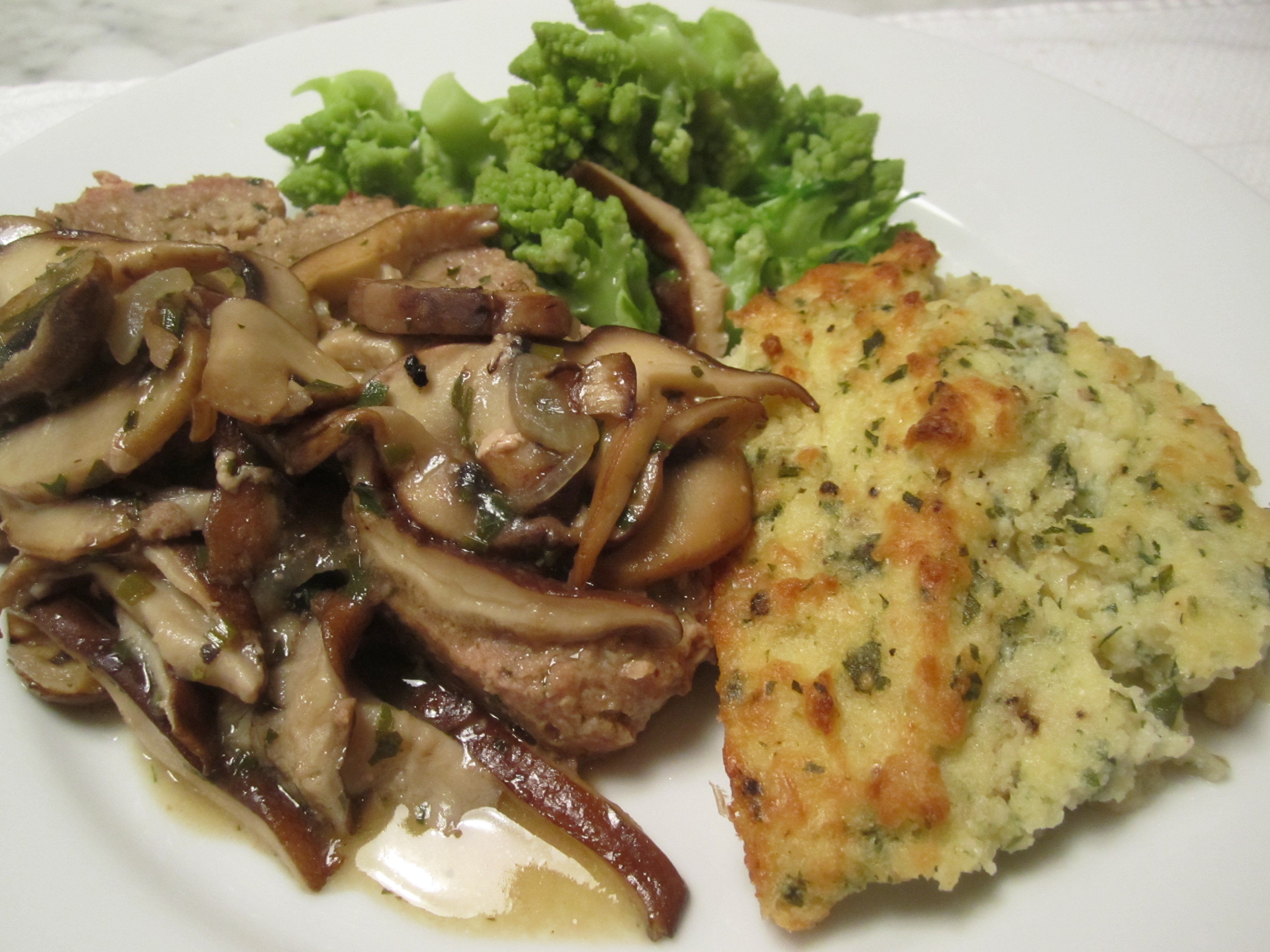
Tonight, we had leftovers from our turkey meatloaf the other evening, so I decided to make a mushroom sauce (salsa di funghi) in which to reheat the leftover slices of meatloaf.  In addition to the meatloaf and potato souffle, I boiled another head of romanesco broccoli (can’t get enough). 

Zia Lucia’s Potato Souffle

serves 4

2 lbs. yukon gold potatoes, peeled and diced into 1″ cubes

6 tbls butter

2 eggs

1/4 c fresh chopped parsley

1 tsp black pepper

3/4 c grated parmigiano

salt to taste

Preheat oven to 400 degrees.

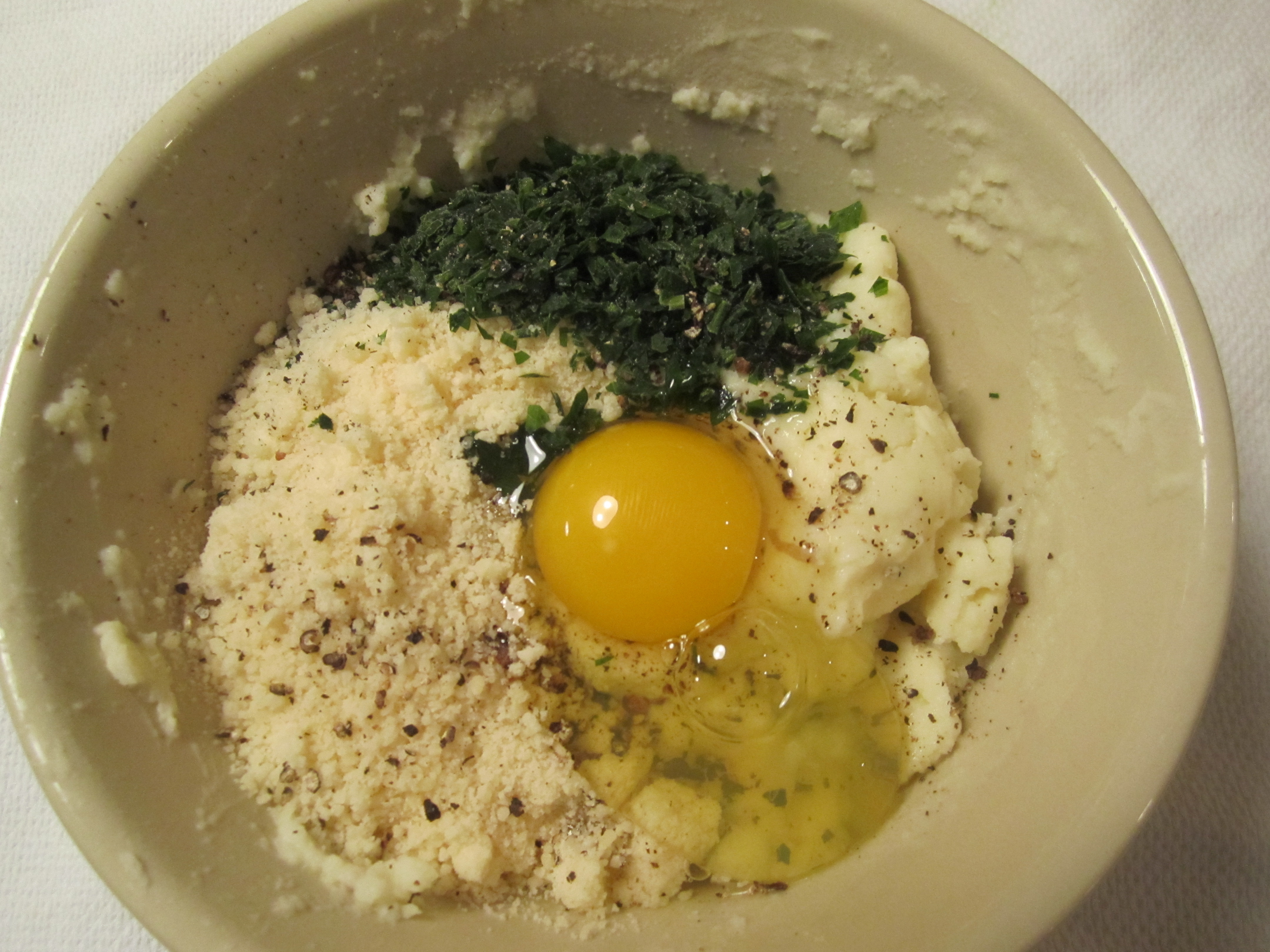
Boil potatoes and puree in a ricer or food mill.  While potatoes are still hot, add in 5 tablespoons butter, and the remaining ingredients.  Stir to blend. 

Pour into buttered baking dish and dot top with remaining tablespoon of butter.

Bake, uncovered for a half-hour to 40 minutes, or until golden and puffy on top.


Posted in Vegetables | Leave a comment

Italian-Ate Pasta al Forno

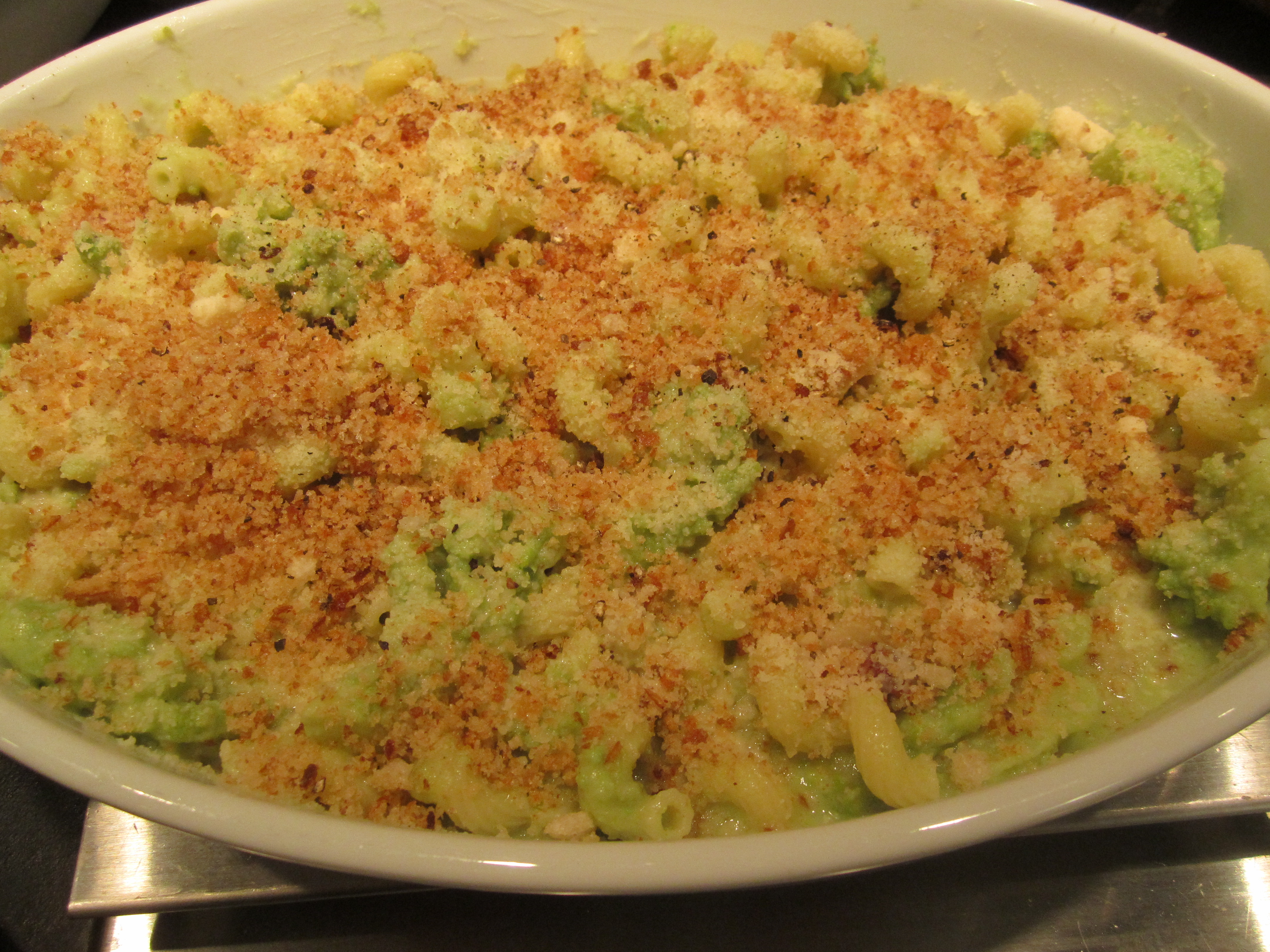
I love the idea of baked pasta dishes–especially when the weather turns cooler.  We might call it macaroni and cheese in this country, but in Italy every region has its own local version of pasta al forno.  I’m always looking for interesting ways to do baked pasta apart from the usual leaden bechamel and multi-cheese versions that most people associate with the dish (not that there’s anything wrong with that!).

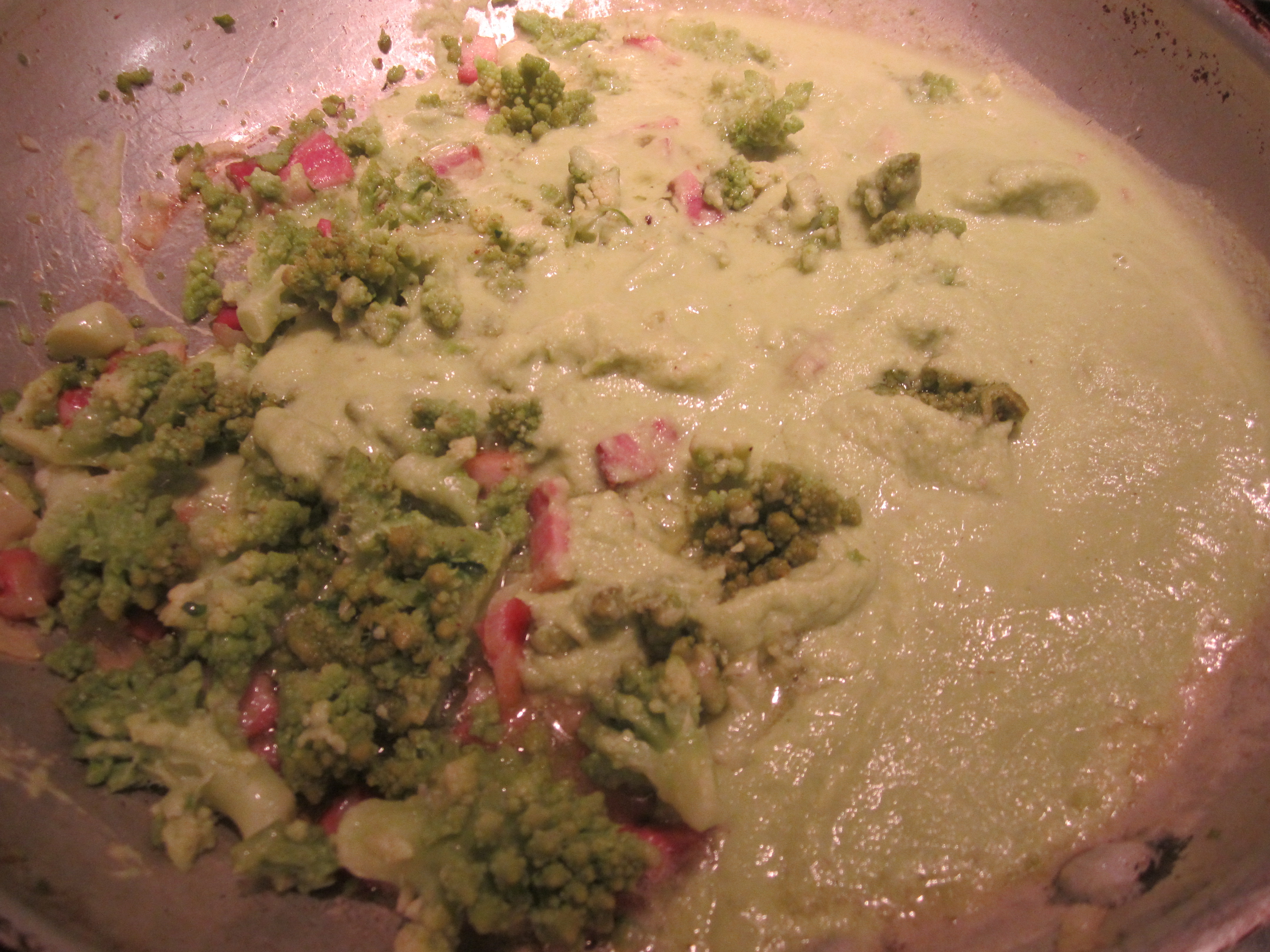
This version is a spinoff of my recipe for cavatelli with creamy broccoli.  The sauce is actually a puree of vegetables (with a little bacon for deep, smokey flavor).  I’ve added just a tablespoon each of of flour and butter to add body to the sauce, but no cream or milk.  To thin the sauce, I used a good amount of the well-salted vegetable cooking water.

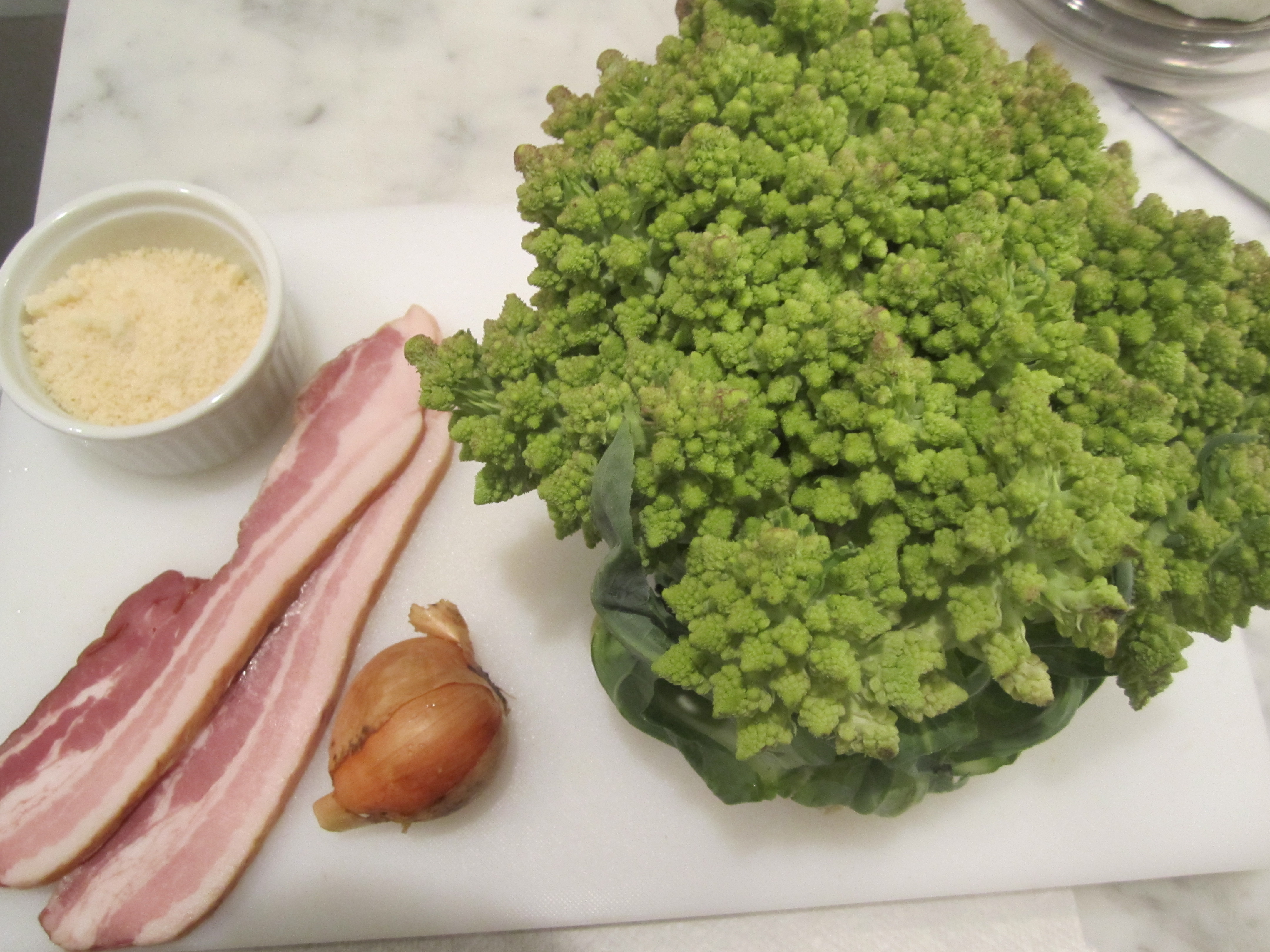
I’ve opted for romanesco broccoli, since my market has continued to grow it into the fall–it’s the perfect combination of starchy and green.  Admittedly, romanesco is difficult to find, so as a substitute, I would recommend cauliflower or broccoli, or a combination of the two.  Caulflower is the closest thing to romanesco, with the same ratio of thick, edible stems to florets.

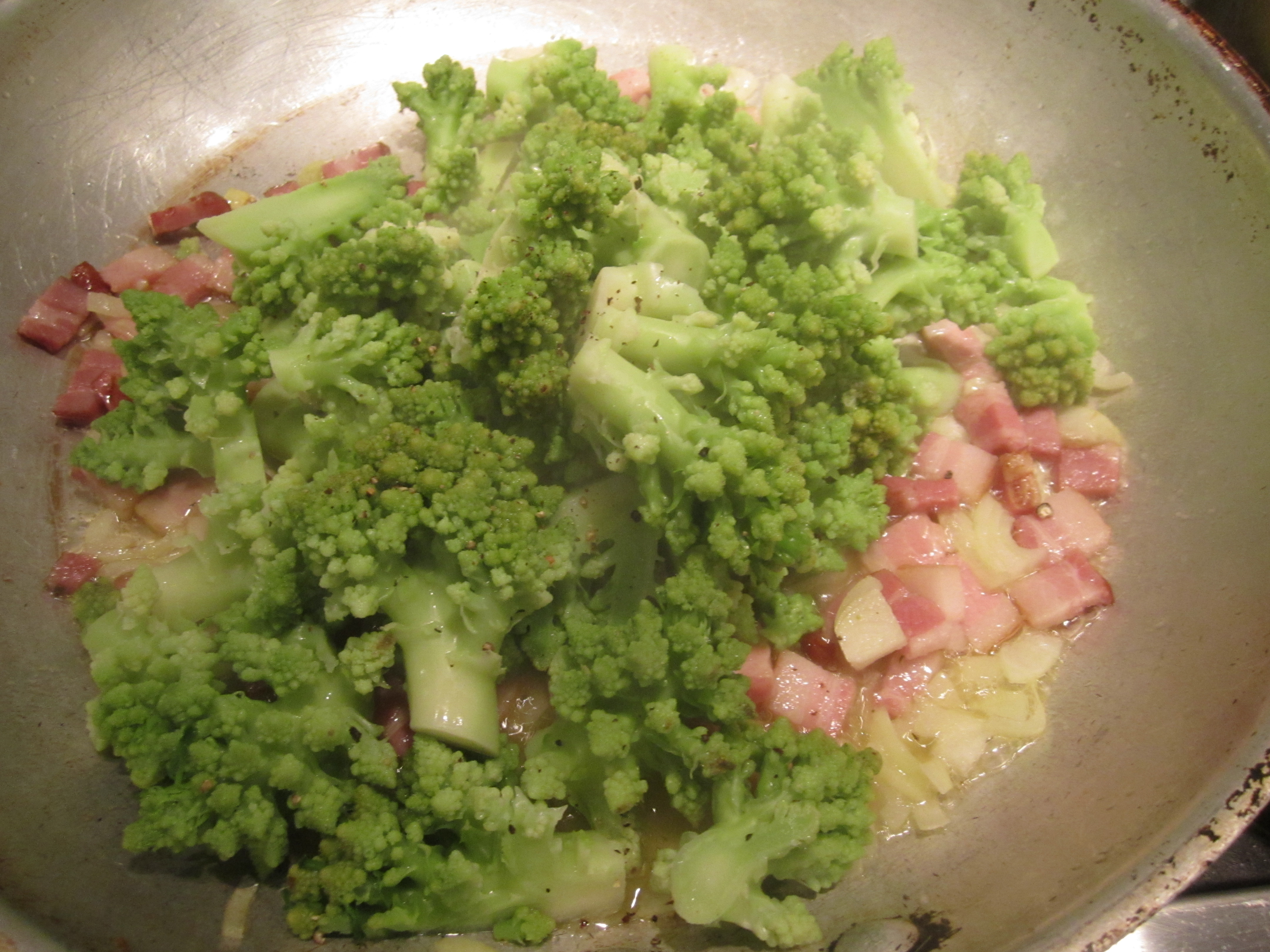
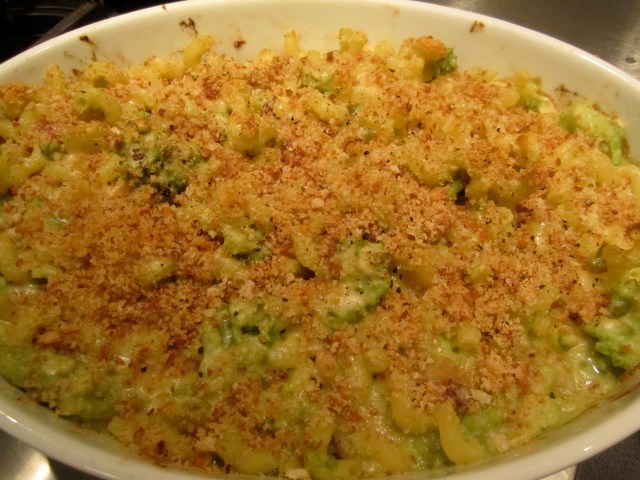
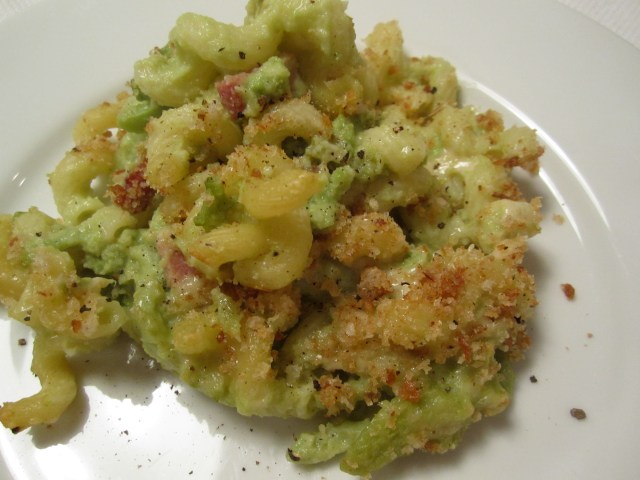
After the broccoli have been blanched and sauteed with bacon and shallots, part of the mixture is pureed, while leaving some of it whole.  The partially cooked pasta is added to the skillet containing the sauce, then the whole mixture is folded into a baking dish and scattered with toasted breadcrumbs (for the breadcrumb recipe, see my romanesco broccoli with toasted breadcrumbs, although any plain toasted bread crumbs will do),  along with a generous half-cup of grated parmigiano cheese.  The dish gets baked at 400 degrees until toasty and bubbling.

You will love the lightness of this dish compared with traditional baked pasta.  I promise you this dish will make a vegetable eater out of just about anyone!

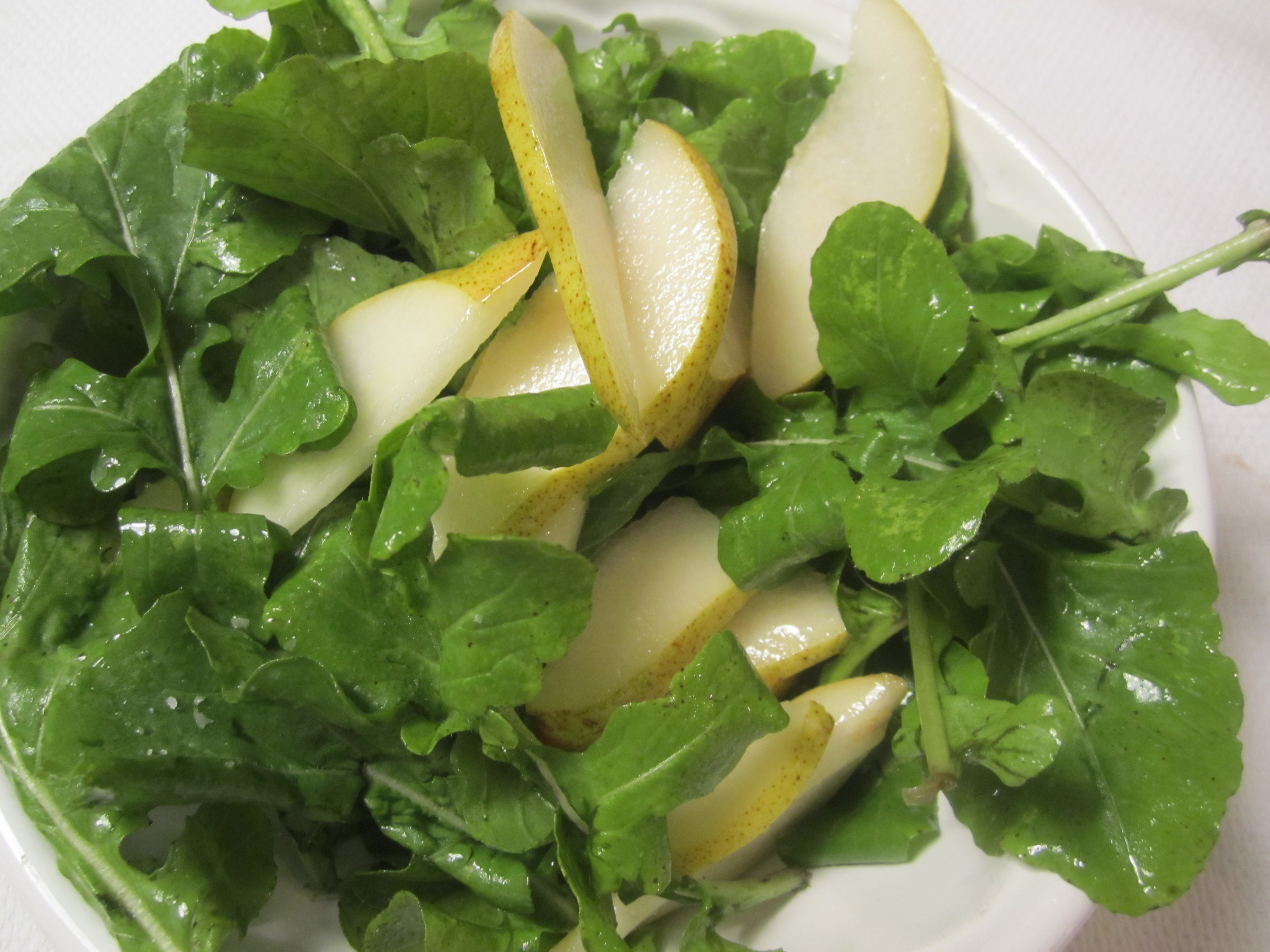
Like most baked pasta dishes, this is substantial enough to be the main course.  Tonight, the only thing necessary to round out this meal was a refreshing salad of local arugula and pears, dressed with olive oil and lemon–the perfect raw, crunchy/sweet palette cleanser, served after the pasta.

Italian-Ate Pasta al Forno

serves 4

8 oz. cavatappi pasta (or any short, fat pasta)

1 head of romanesco broccoli (or cauliflower)

1 shallot, peeled and sliced

1/4 lb slab bacon, sliced thick and cut into lardons

1/4 c olive oil

1 tbl butter

1 tbl flour

1 c grated parmigiano

1 c toasted breadcrumbs

1/8 tsp nutmeg

salt and pepper to taste

Cut broccoli into bite-size pieces and drop into well-salted boiling water (I mean well-salted–like ocean water–you’re going to use quite a bit of this water for the sauce). Boil for about 6 – 8 minutes or until crisp-tender.  Drain and set aside.

In a large skillet on low heat, place bacon and shallots.
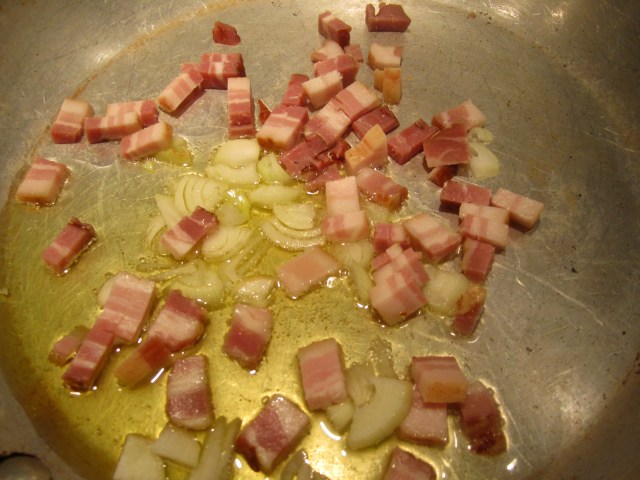
Cook on low until bacon has begun to render and shallots have begun to turn golden.  Add broccoli to the skillet and saute for about 3 – 4 minutes on medium heat.
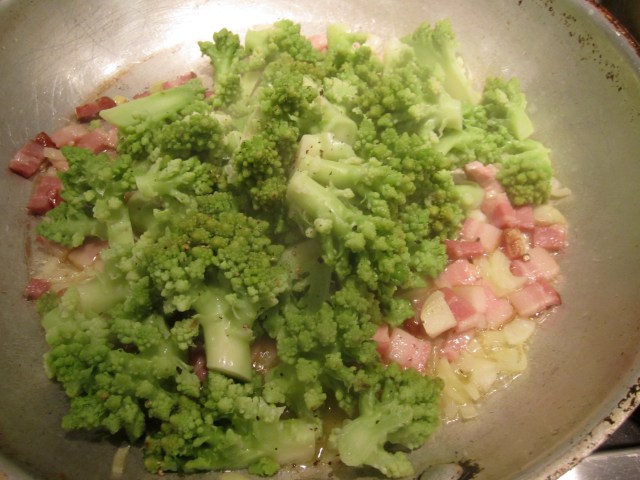
Drop pasta into the boiling salted water from the broccoli and cook until a couple minutes shy of done (it should still be quite al-dente).

Remove about two-thirds of the broccoli, shallot and bacon mixture from the skillet and place in a blender, along with 1 1/2 cups pasta cooking liquid and the nutmeg. Puree until smooth, adding more pasta water if necessary to get it to a saucy consistency (this will vary depending on how watery your vegetables are).  I ended up using about 2 1/2 cups pasta water to make my sauce.

In the skillet with the remaining vegetable mixture, add the butter and flour and stir to incorporate flour–it will disappear and any remaining liquid in the skillet will tighten up.

Add back the pureed sauce to the skillet and stir, adding more water if the sauce is too thick.
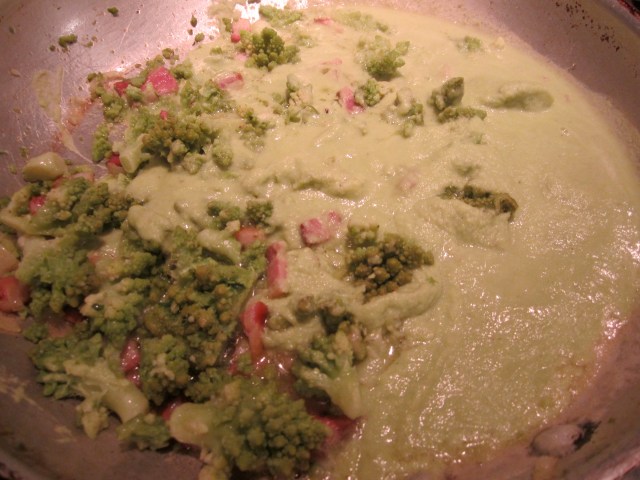
Add the cooked pasta, along with 1/2 cup grated cheese to the sauce and vegetables gently stir to combine.

Pour the contents of the skillet into a buttered baking dish and sprinkle with the remaining cheese, toasted breadcrumbs and black pepper.

Bake at 400 degrees for about a half-hour, or until toasty and bubbling.
Posted in Pasta | Leave a comment

Carrots with Fennel

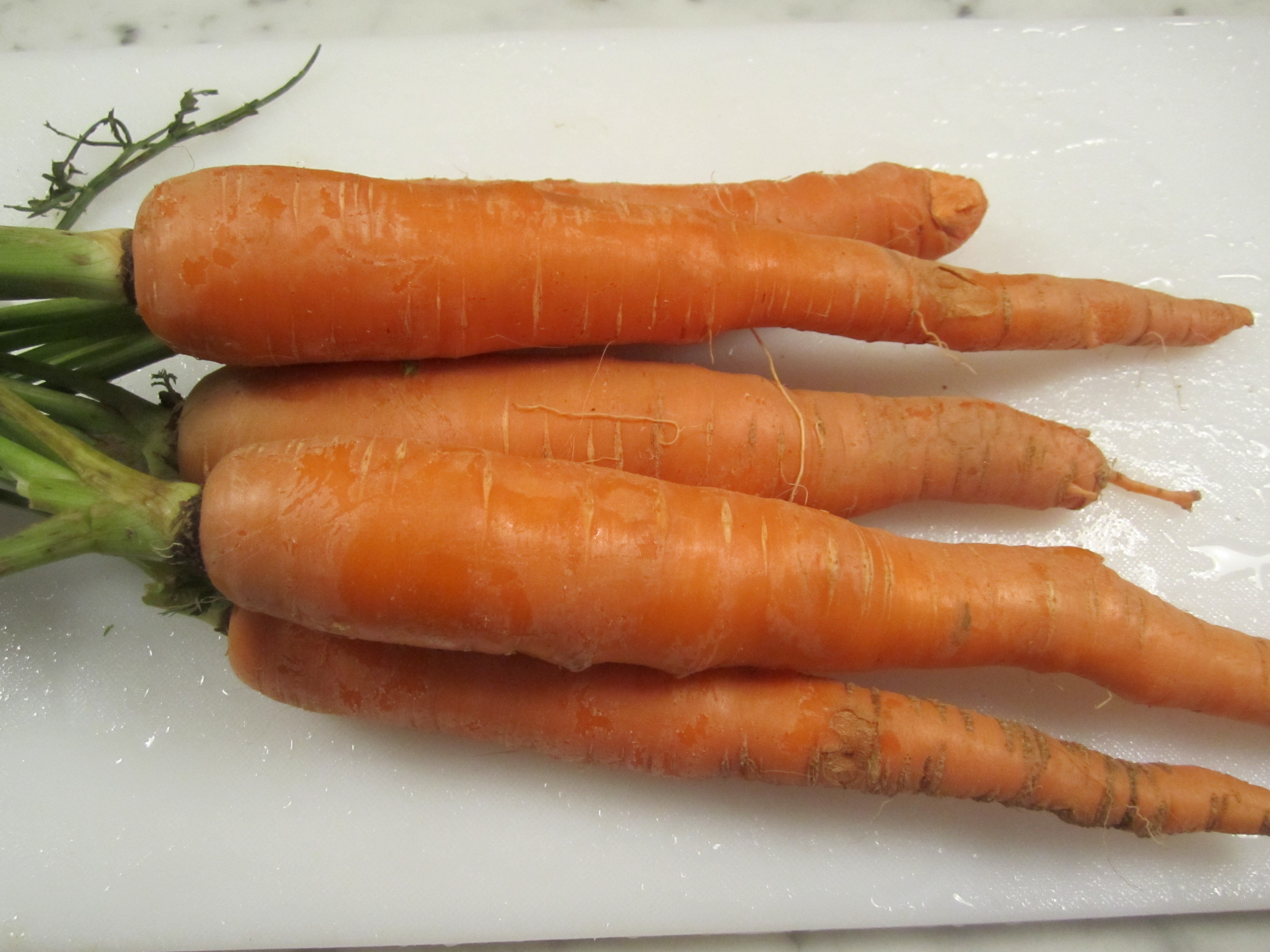
Today my farm stand had carrots that were so plump and fresh that I decided to feature them on their own as a side dish, rather than as a mere background element of another dish. 

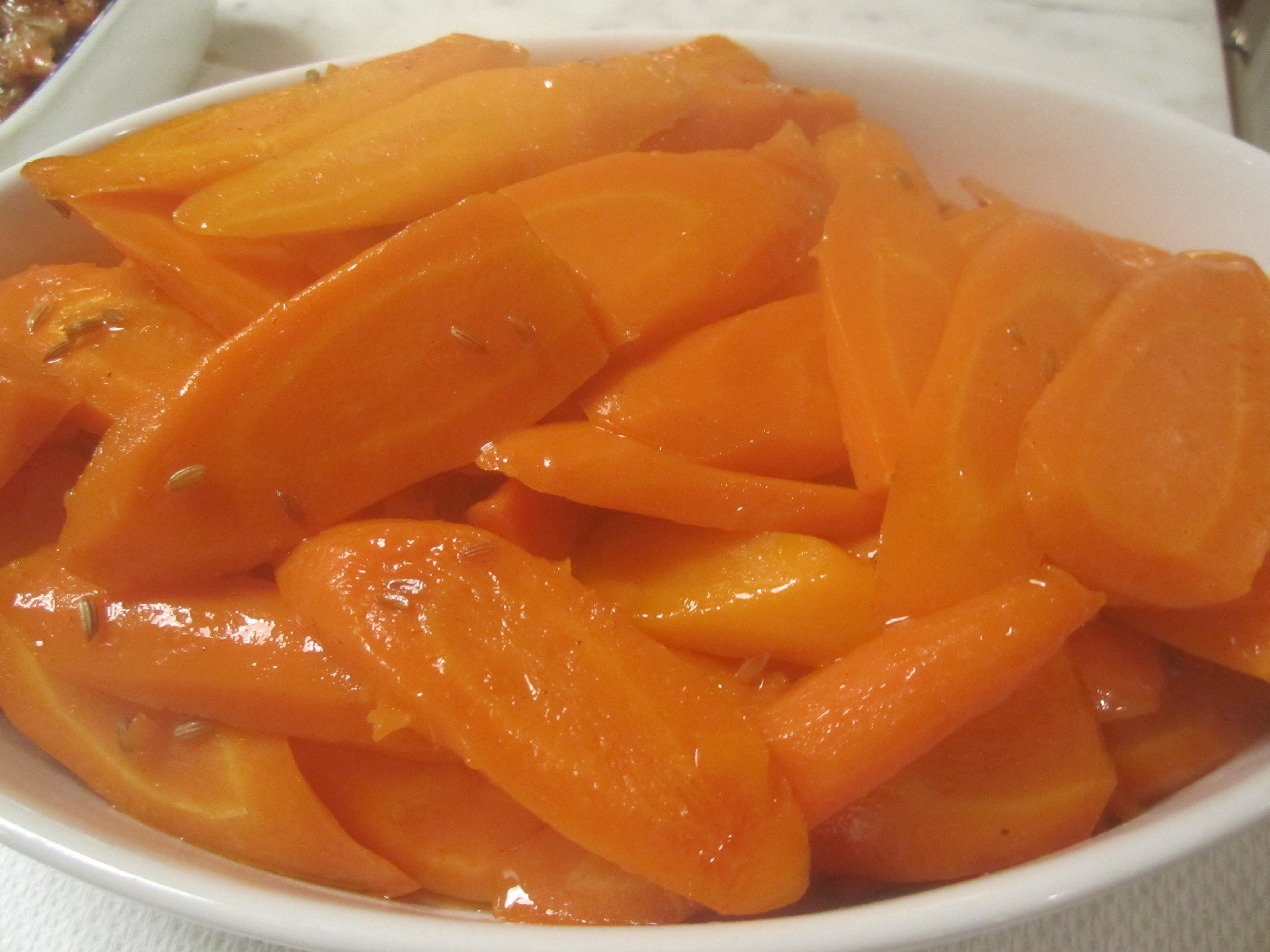
Fennel seeds have a strong, perfumey flavor that is perhaps best known as the predominant flavor in Italian sausage.  I like to use them in sweet dishes as well as savory ones.  The fennel seeds in this dish transform the sweet carrots into something exotic and complex.  I also add a pinch of nutmeg for additional aroma.

Carrots can be roasted to sweet, wrinkly softness, but tonight I wanted them to be moist and delicate, rather than smokey and dessicated from roasting. 
They always seem to disappear from the table no matter how many I make, therefore I usually figure on 2 bunches of carrots per 3 persons.  This dish can be started about an hour ahead, partially cooked, then caramelized at the last minute prior to serving. 

The cooking method is simple–carrots, oil, water and fennel are placed in a cold skillet, then brought up to temperature on low heat, covered.  There is just enough water to steam the carrots, then evaporate.  The remaining oil becomes sweet and orange and creates a natural caramelization medium without any sugar necessary.

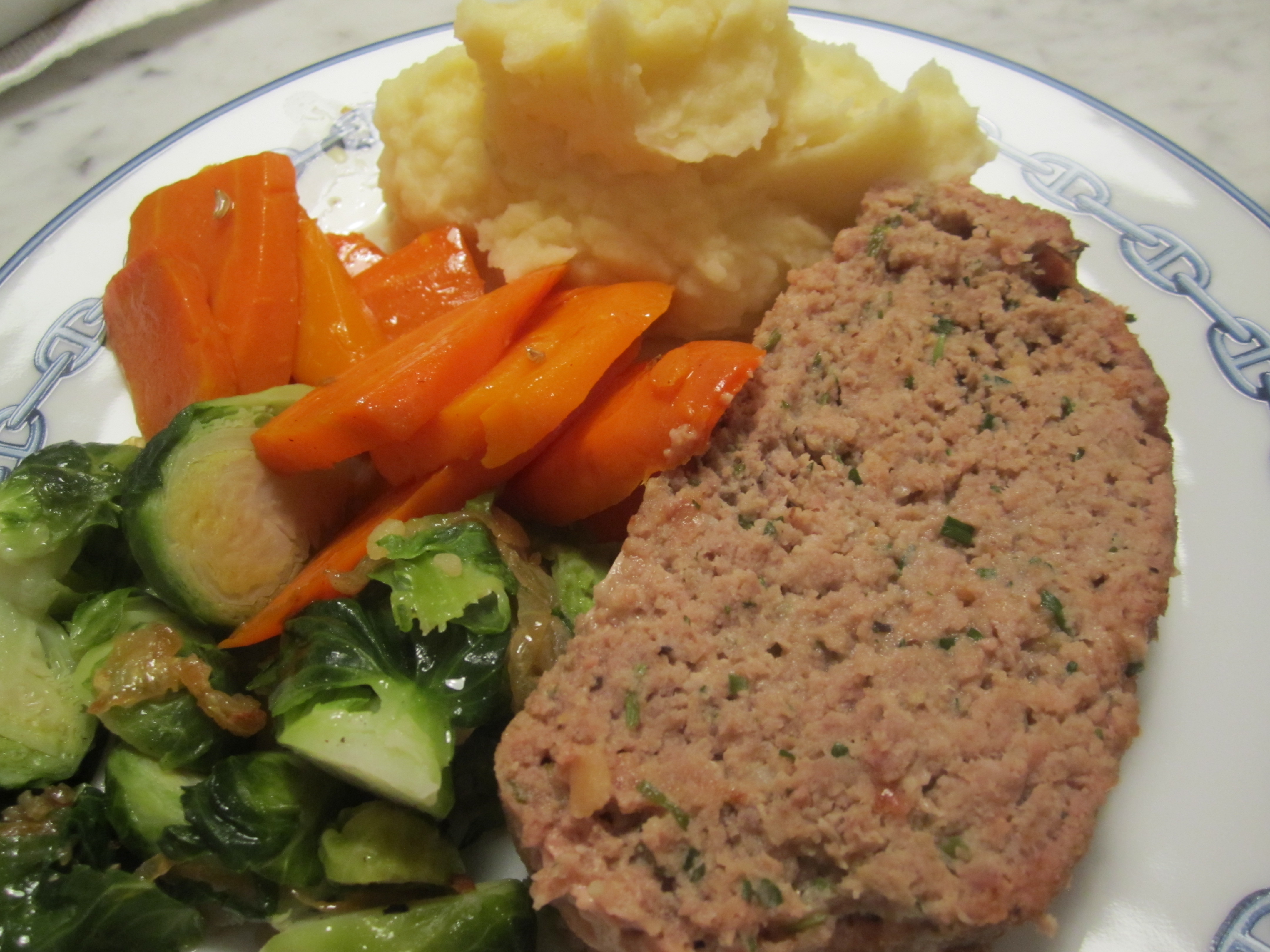
Our meal tonight is turkey meatloaf, mashed potatoes (always a good idea with meatloaf), carrots with fennel, and brussels sprouts with caramized shallots (see below).

Carrots with Fennel

serves 4

3 bunches carrots, peeled and cut on the diagonal

3 tbls olive oil

1/4 c water

1 tsp fennel seeds

1 tsp salt (maybe more)

1/2 tsp black pepper

1/8 tsp nutmeg

Place all ingredients in an unheated, broad skillet.

Cover and place on low heat for about 10 minutes, until carrots have begun to soften and water is almost evaporated.  Carrots may be set aside at this point and held for about a half-hour prior to serving.  Simply turn off heat.  When ready to serve, uncover, raise heat to medium-high and saute until carrots are tender and lightly golden.
Posted in Vegetables | Leave a comment

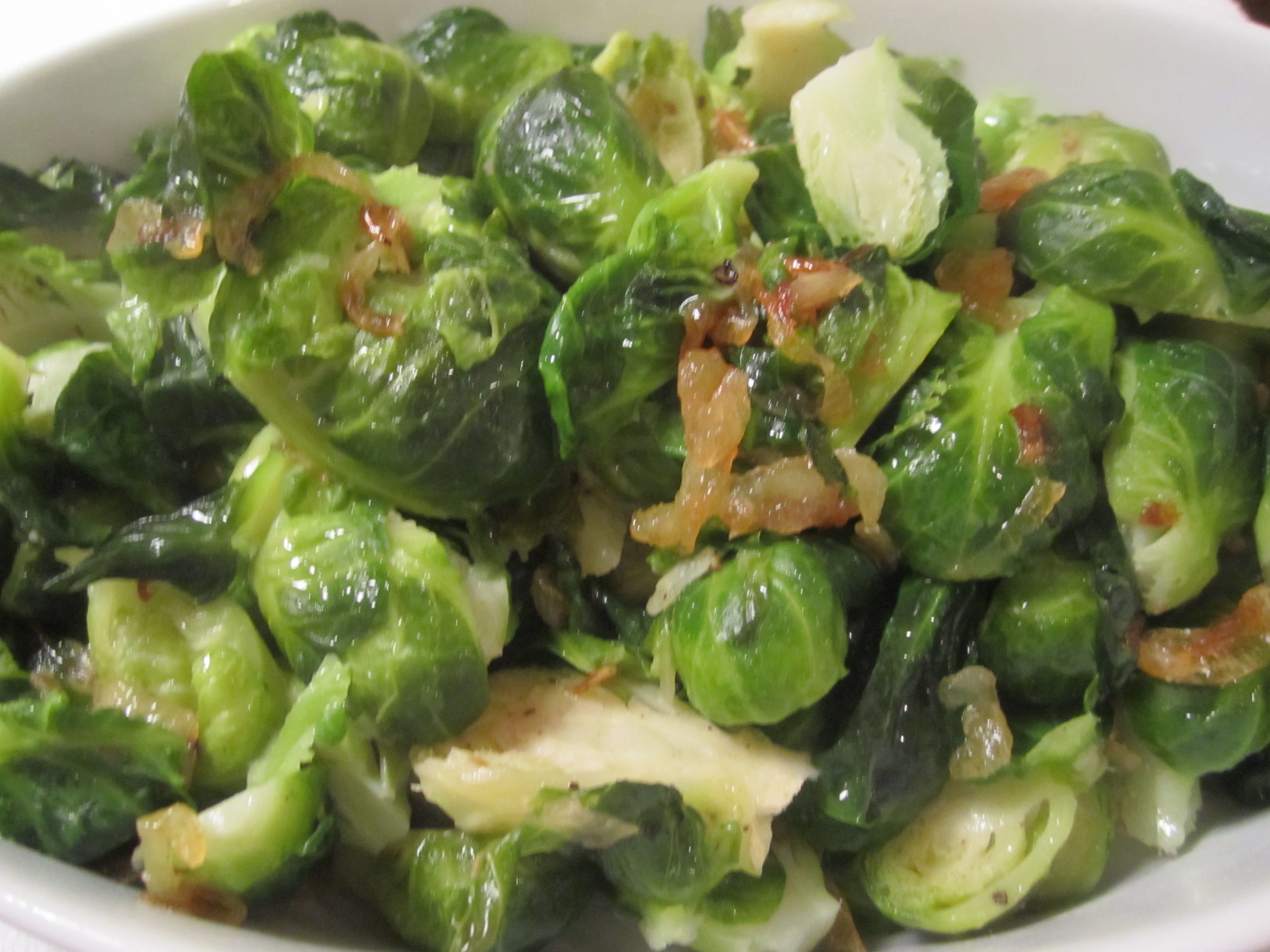
Brussels Sprouts with Caramelized Shallots

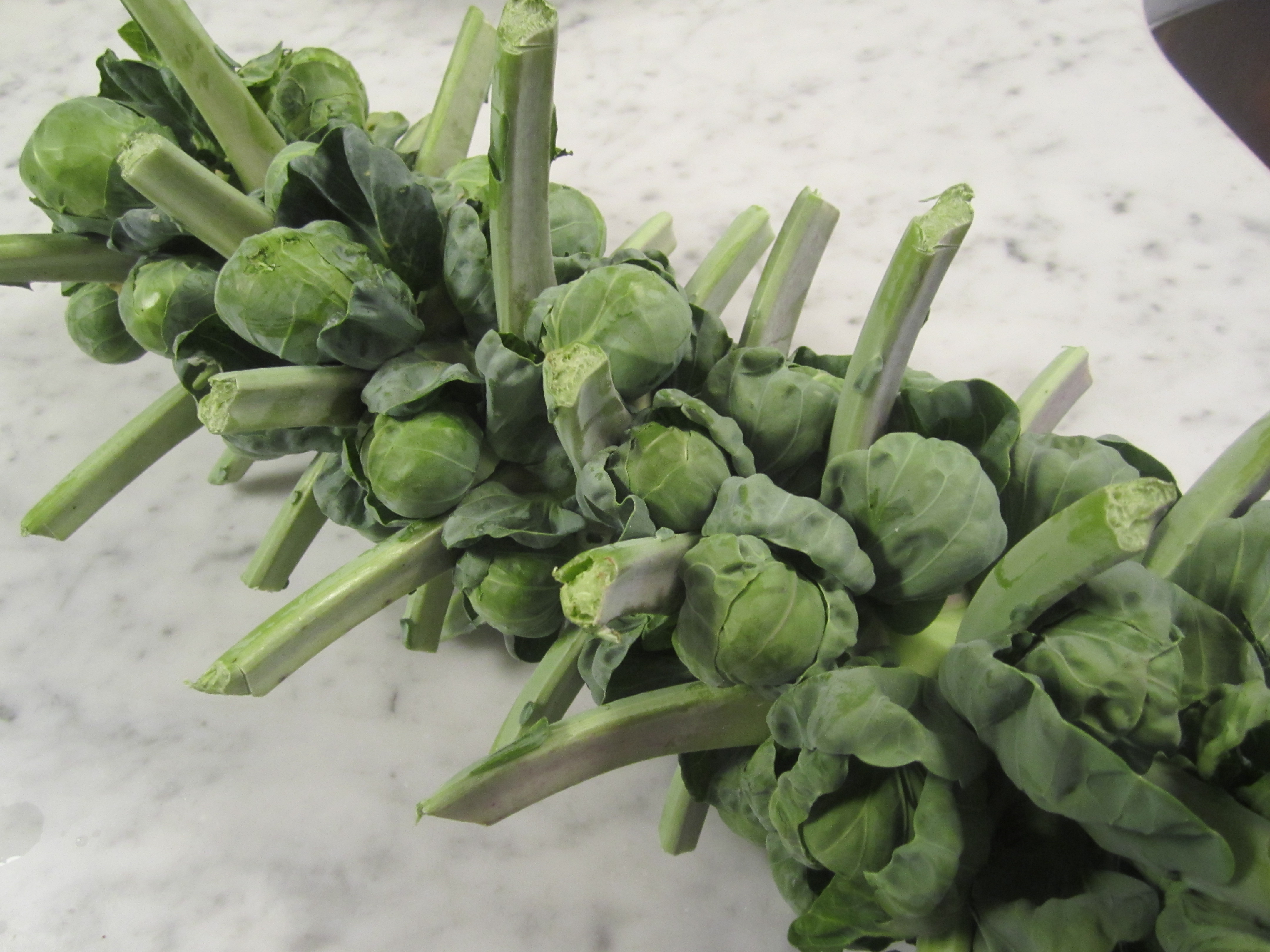
This is a great fall side dish for a variety of meats and poultry.  When I see brussels sprouts on the stalk at my local farm stand, I immediately think of Thanksgiving and turkey. 

Tonight, I’ve decided to make these as a side dish for my turkey meatloaf

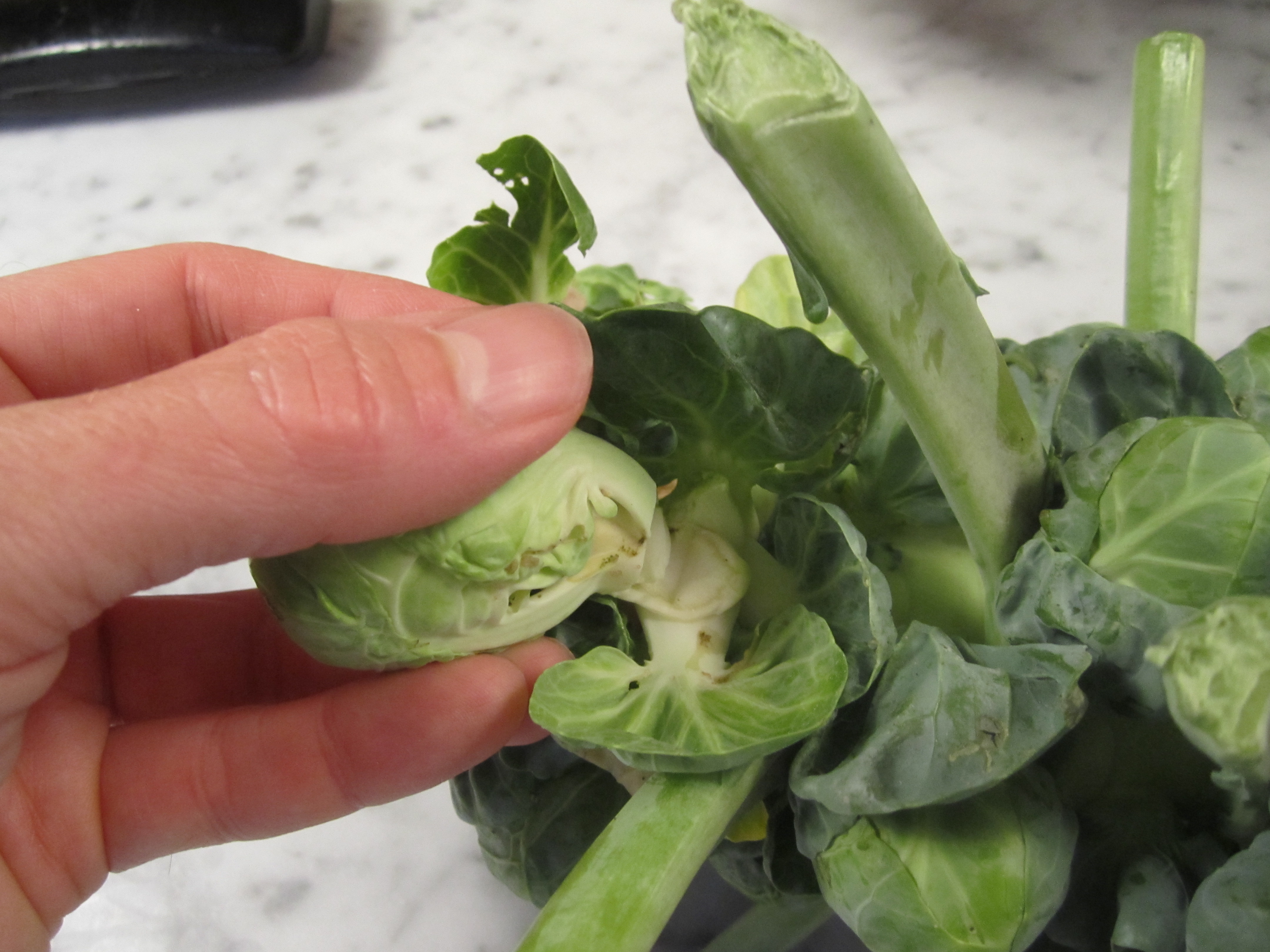
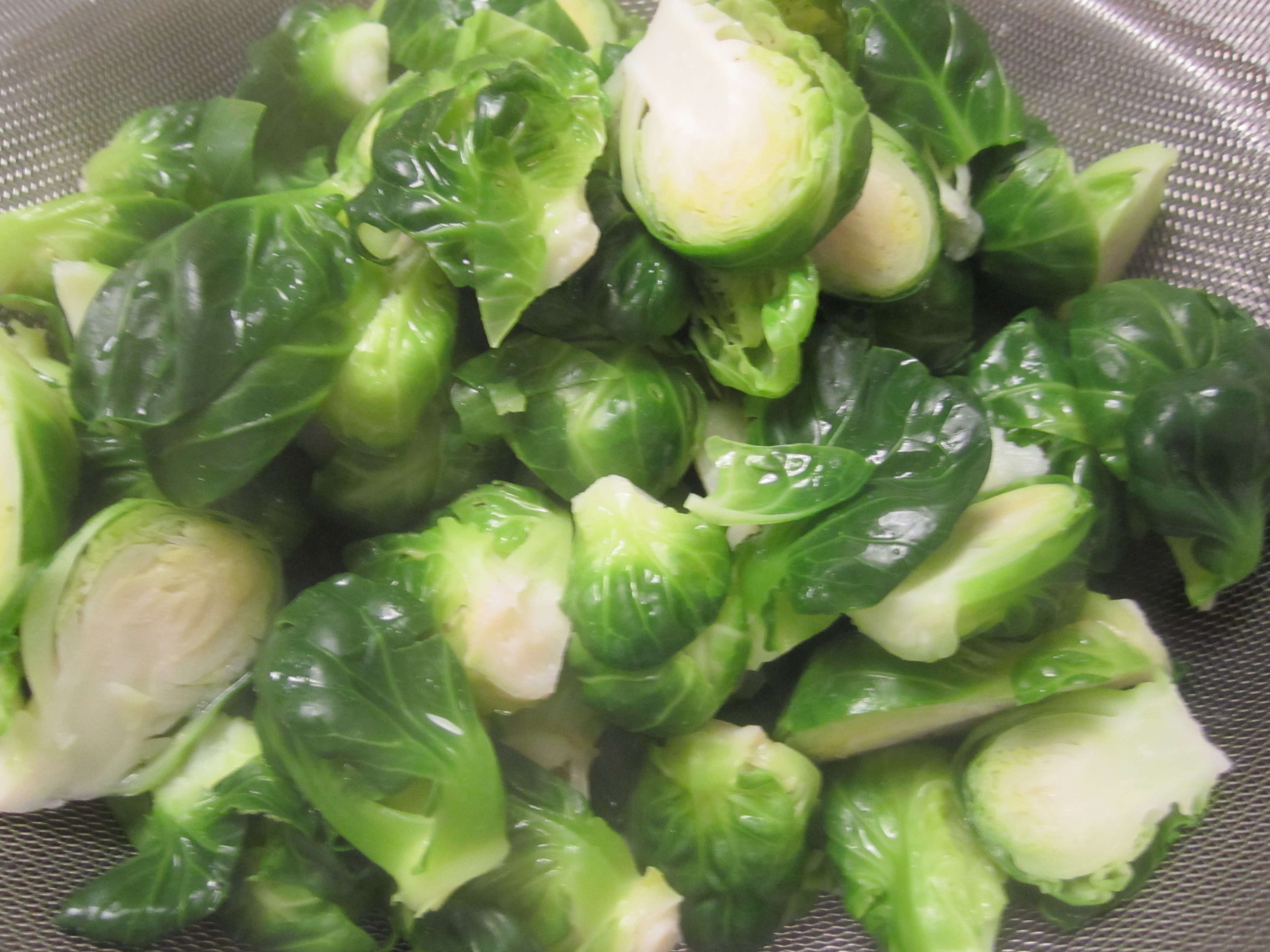
To begin, snap each sprout off the stalk one by one. 

Cut in half lengthwise (I keep all the leaves as well), drop into salted boiling water for about 5 minutes, then drain.

Peel and cut shallots into rings, then saute in olive oil for about 5 minutes or until beginning to turn golden.

Brussels sprouts are added to the skillet and sauteed for about 3 – 4 minutes, salt and pepper are added prior to serving.

Posted in Vegetables | Leave a comment

Beppi’s Crocchette di Riso

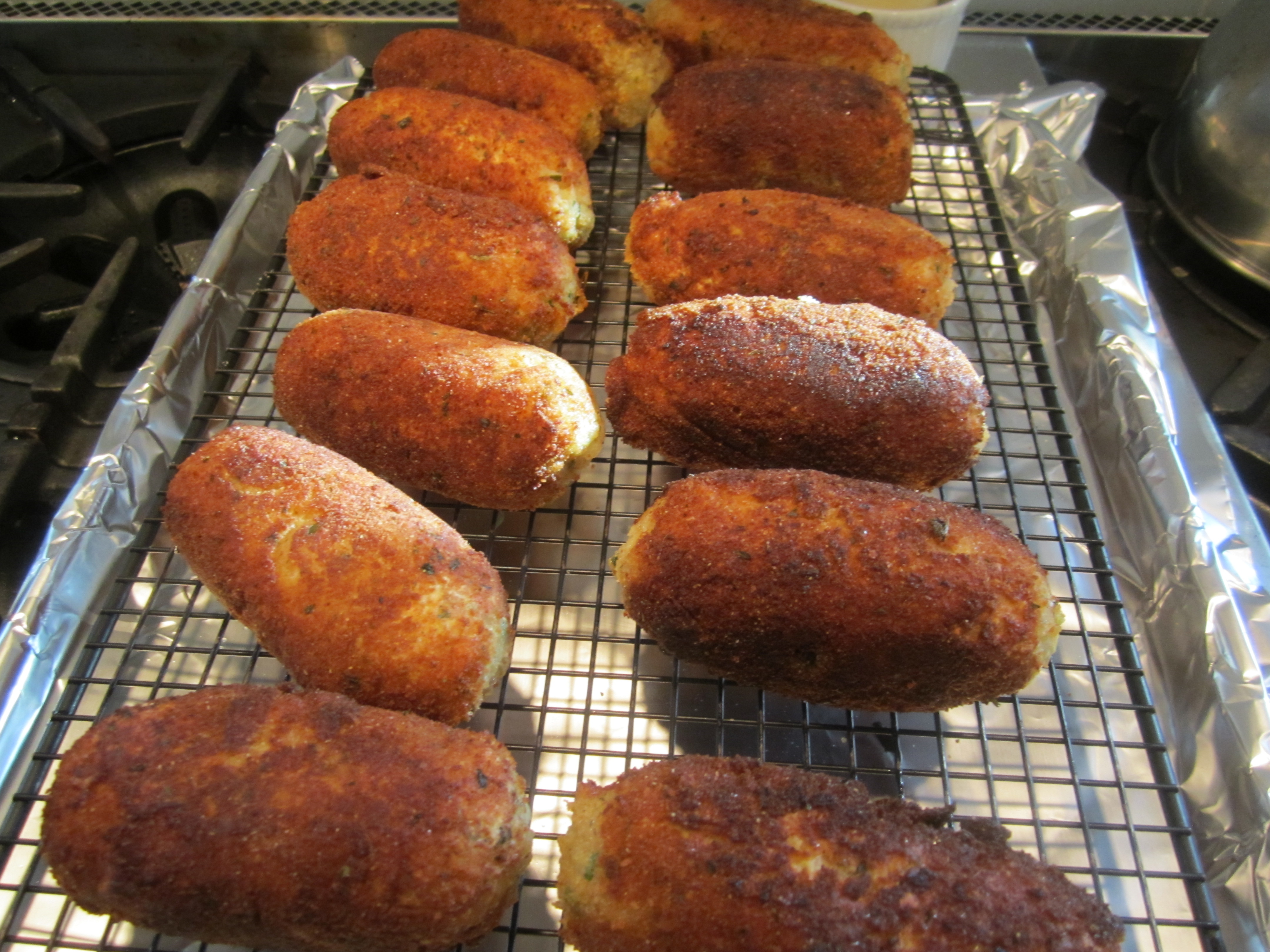
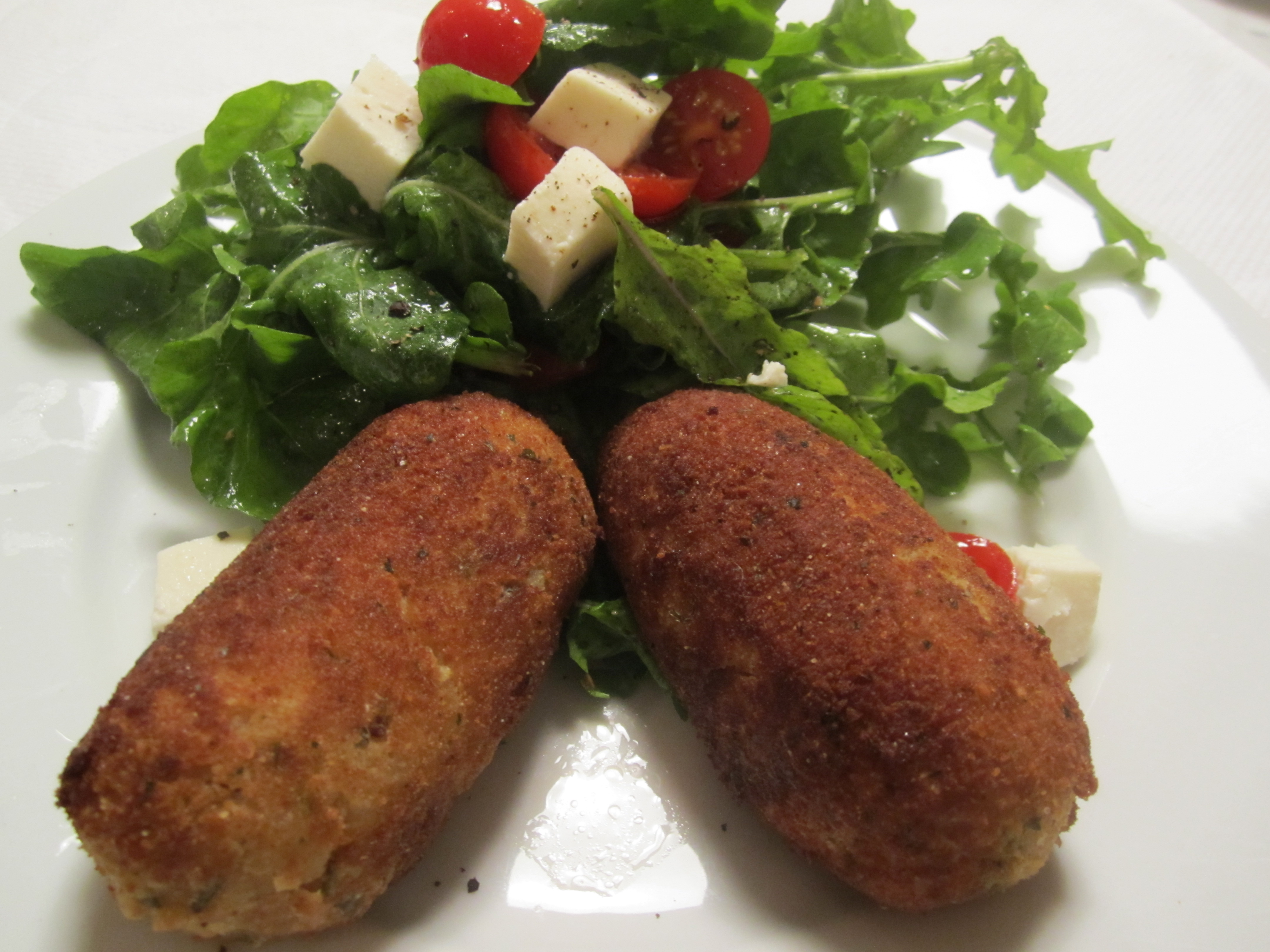
I’ve begun making extra-large batches of risotto just so that I can make these croquettes the next day.  The first time my neighbor Beppi made me risotto, I noticed he made a huge batch–then these croquettes showed up at my door the following day.  They are absolutely irresistable!

Using my risotto with luganiga sausage as the base, I know these will be extra flavorful, although you can just as well use plain risotto as the base if you’re not interested in having sausage in your croquettes.

I was fortunate enough to have Beppi come over this afternoon to give me a one-on-one lesson in making these.  Although he certainly never measures anything, today, I was determined to get a handle on the quantities involved in this preparation so I (and you) can recreate it any day of the week with consistent results.

Having said that, bear in mind that the risotto you use as your base might be more or less liquidy, depending on how much broth you added.   Last night’s  risotto was definitely moist but not too soupy.  When risotto cools in the fridge, it always turns into a solid mass, so it’s important to remember how runny it was when you served it–that will dictate how much breadcrumbs you’ll need to give the croquettes the proper consistency.

The whole process is a bit of a production in that way that deep frying anything is.  You’ll make a mess, but (as usual) I promise you–this mess is worth it.

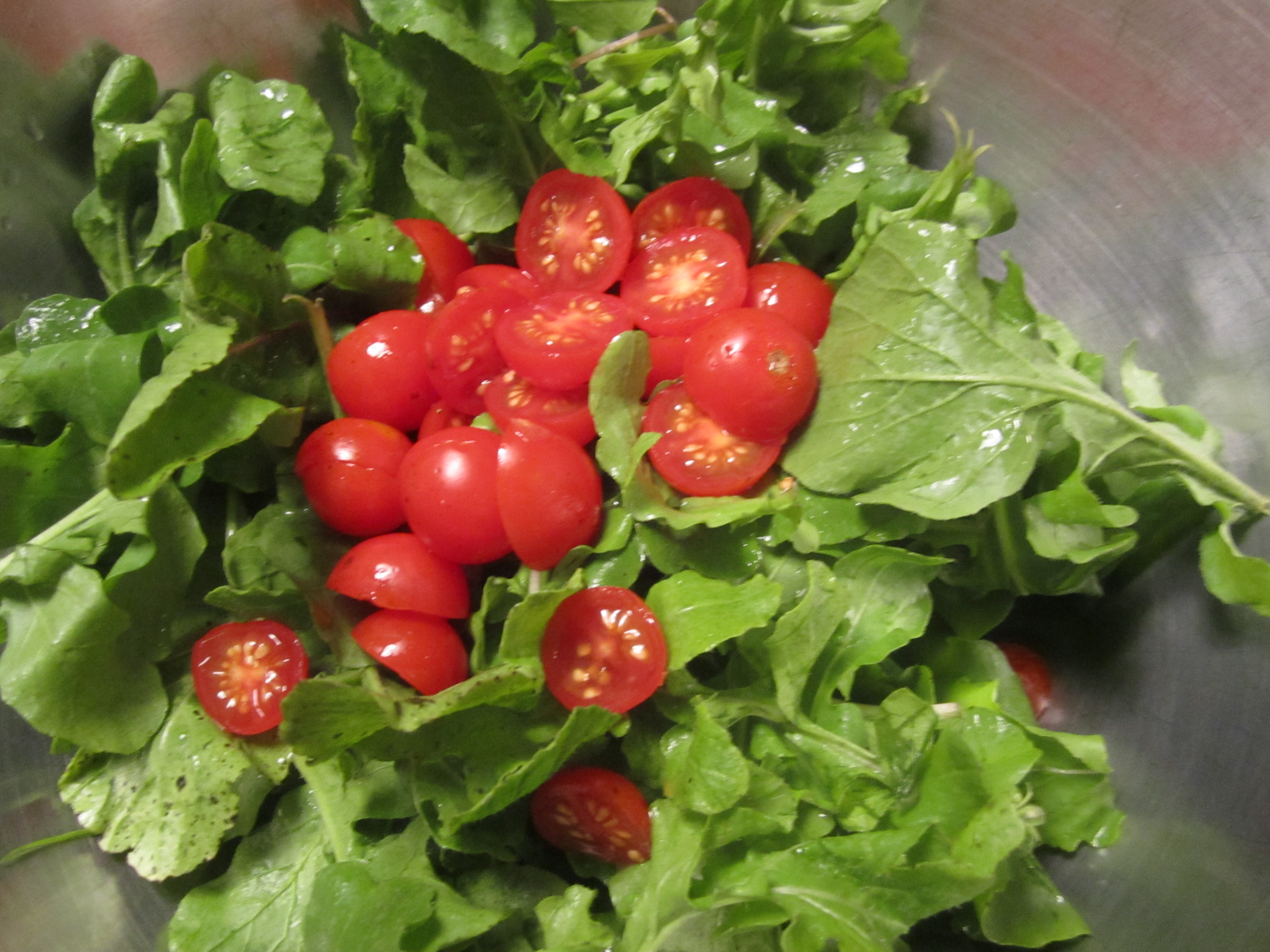
Tonight, we’re having the croquettes with a salad of arugula and the last of the cherry tomatoes from Beppi’s garden.  Fall arugula is extra-peppery and is a wonderful counterpoint to the rich croquettes.

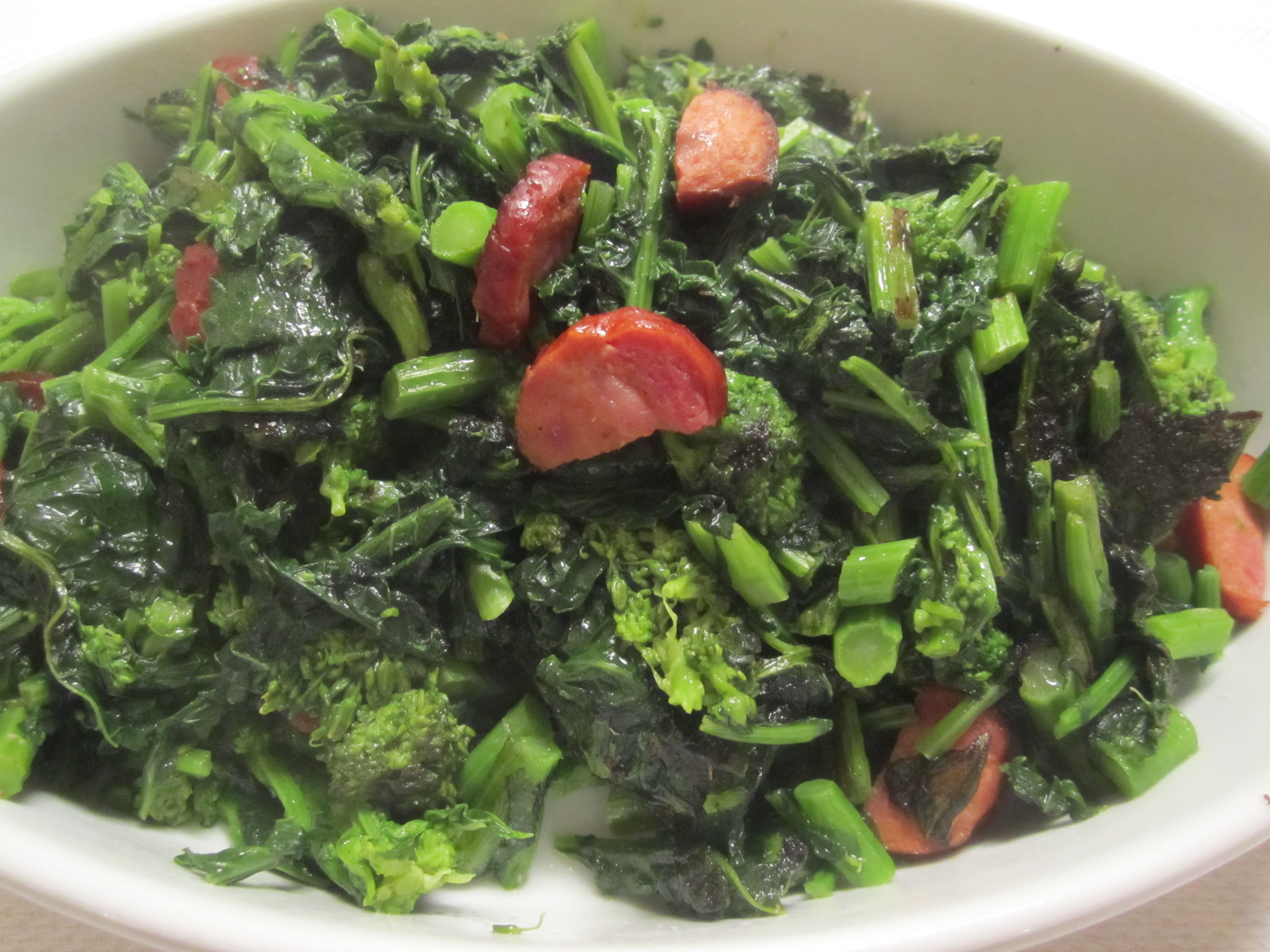
In addition, I’ve made some broccoli di rapa with andouille sausage.

Beppi’s Crocchette di Riso

makes about 12 – 14 croquettes

4 c cooled risotto

2 c seasoned breadcrumbs (Beppi uses Progresso Italian-Style) + additional crumbs for dredging

5 large eggs

1 1/2 c grated parmigiano

1 c chopped fresh chives

1/8 tsp nutmeg

1/4 tsp black pepper

1/2 tsp salt

flour for dredging

1 c olive oil for frying

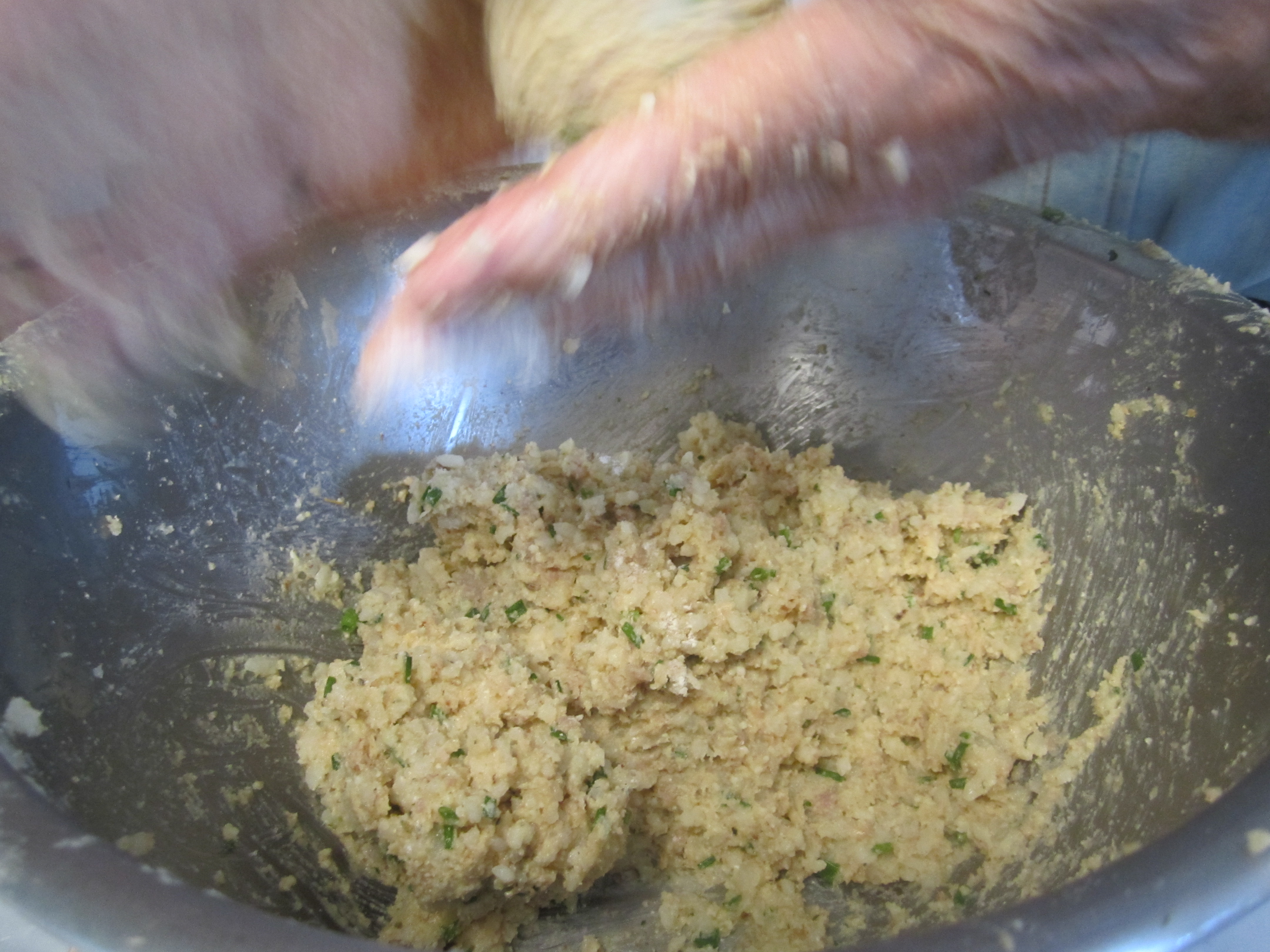
In a mixing bowl, with hands, combine risotto, cheese, 2 eggs, chives, nutmeg and 2 cups breadcrumbs (add an extra quarter to half-cup if your risotto was very liquidy).  The croquettes should be firmer than meatballs.

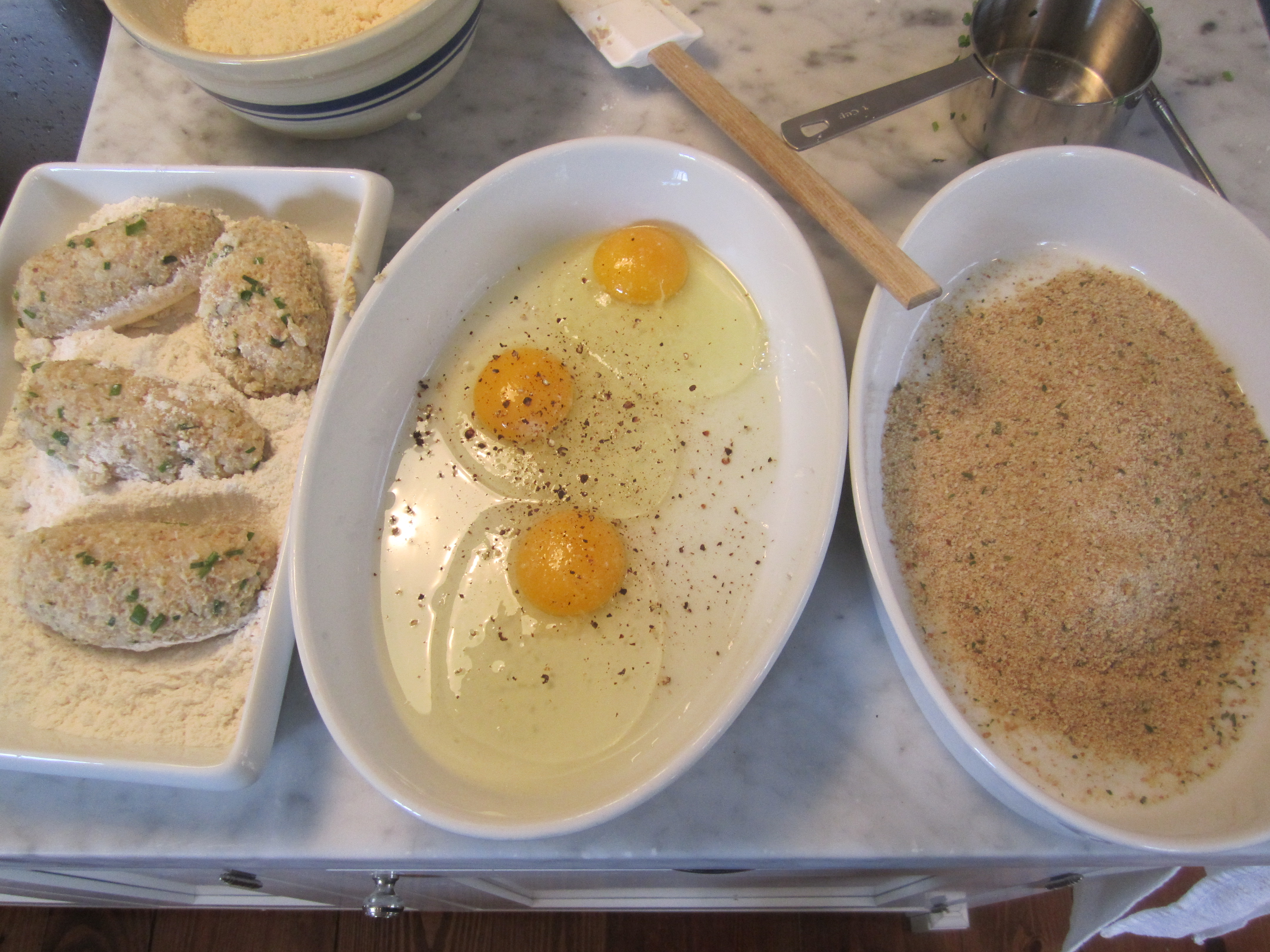
Form into logs approximately 4″ long and 1 1/2″ thick.  Dredge in flour, 3 beaten eggs seasoned with salt and pepper, and crumbs.

Preheat oil in a nonstick skillet large enough to hold only about 6 at at a time (10″).  Gently slip croquettes into hot oil, then lower the flame.  Test the oil with the tip of one before slipping it in–it should begin to sizzle immediately–if not, continue heating oil before adding croquettes.

Once croquettes are in, lower heat to medium and brown well on all sides until golden brown–about 2 to 3 minutes per side.  It’s not imperative to cook these too long since all the primary ingredients are pre-cooked.  They should remain moist inside.

Drain on a wire rack and serve warm.  May be frozen, then thawed and reheated, uncovered in a 375 degree oven for about 15 minutes.

Posted in Uncategorized | Leave a comment

Risotto with Luganiga Sausage

There’s a risotto in the Veneto region of Italy that’s made with Luganiga sausage.   Butchers in that region sell Luganiga loose (without the casing) precisely for making this dish.

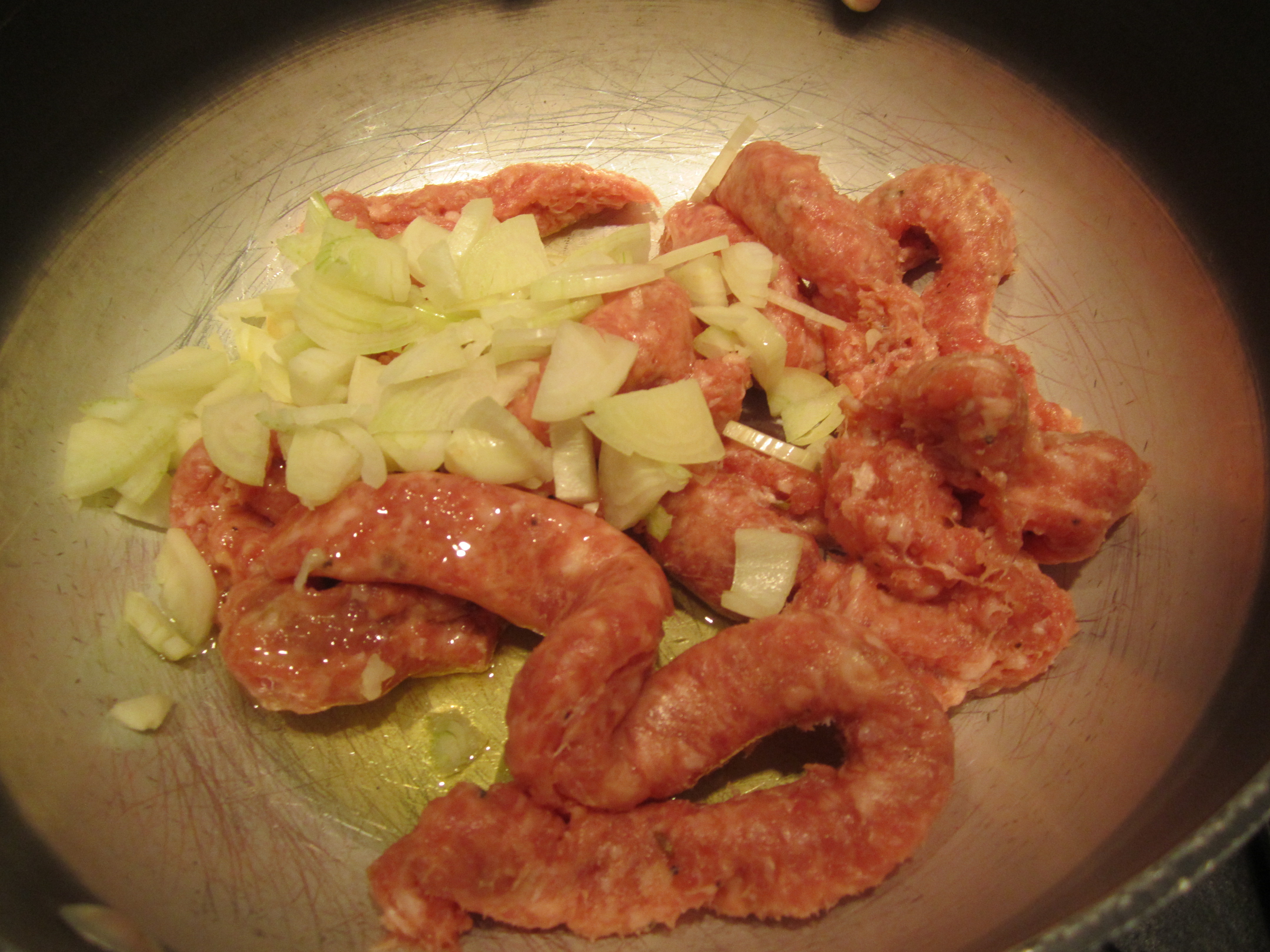
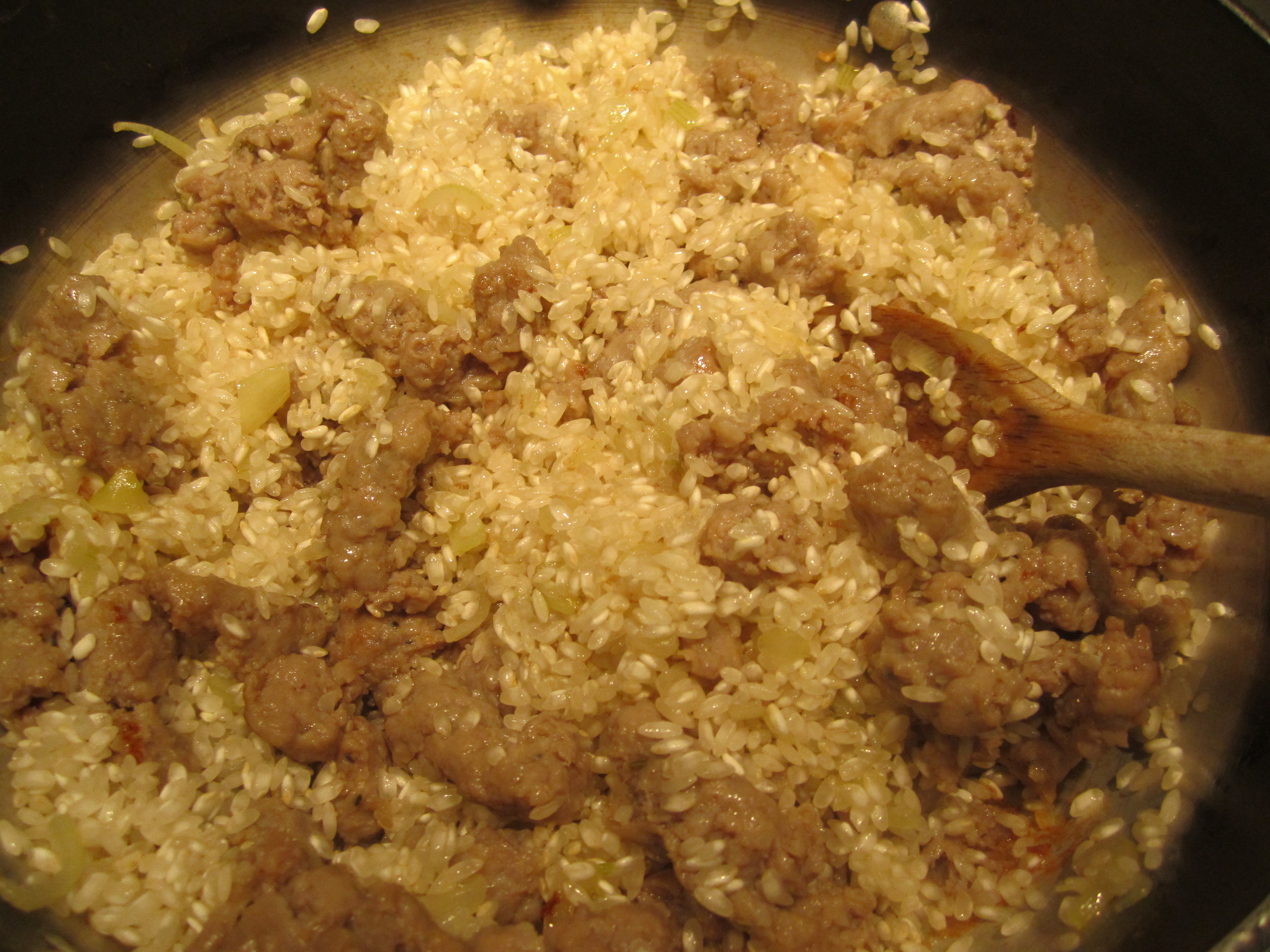
Beppi was describing it to me the other day and I thought I’d try my hand at it.   It’s the same basic preparation as plain risotto, only with the addition of loose raw sausage along with the shallot or onion. The sausage is allowed to brown lightly, then the rice is added.

The delicate, slightly sweet flavor of the sausage is wonderful with the rice, and the dish is substantial enough to be the main course, which it was for us this evening.

We began with a simple salad of local lettuce and tomatoes with a bit of goat’s milk feta sprinkled on top.

As a vegetable, we had some of Beppi’s long beans, simply dressed with olive oil, salt and pepper.

Risotto with Luganiga Sausage

serves 6

3 c arborio rice

1 lb luganiga sausage, removed from its casing

4 large shallots or 1 medium onion, finely diced

6 tbls butter

2 tbls olive oil

1 c white wine

3 qts good chicken broth

lots of grated parmigiano for sprinkling

In a heavy saucepan with curved sides, begin sauteing sausage, shallots, 4 tablespoons butter and the oil on low heat.  Chop and break up the sausage as you saute it.  Bring the broth to a simmer in a separate pot on the side.

After the sausage and shallots have begun browning (about 7 minutes), add the rice and saute the rice for another 3 – 4 minutes.

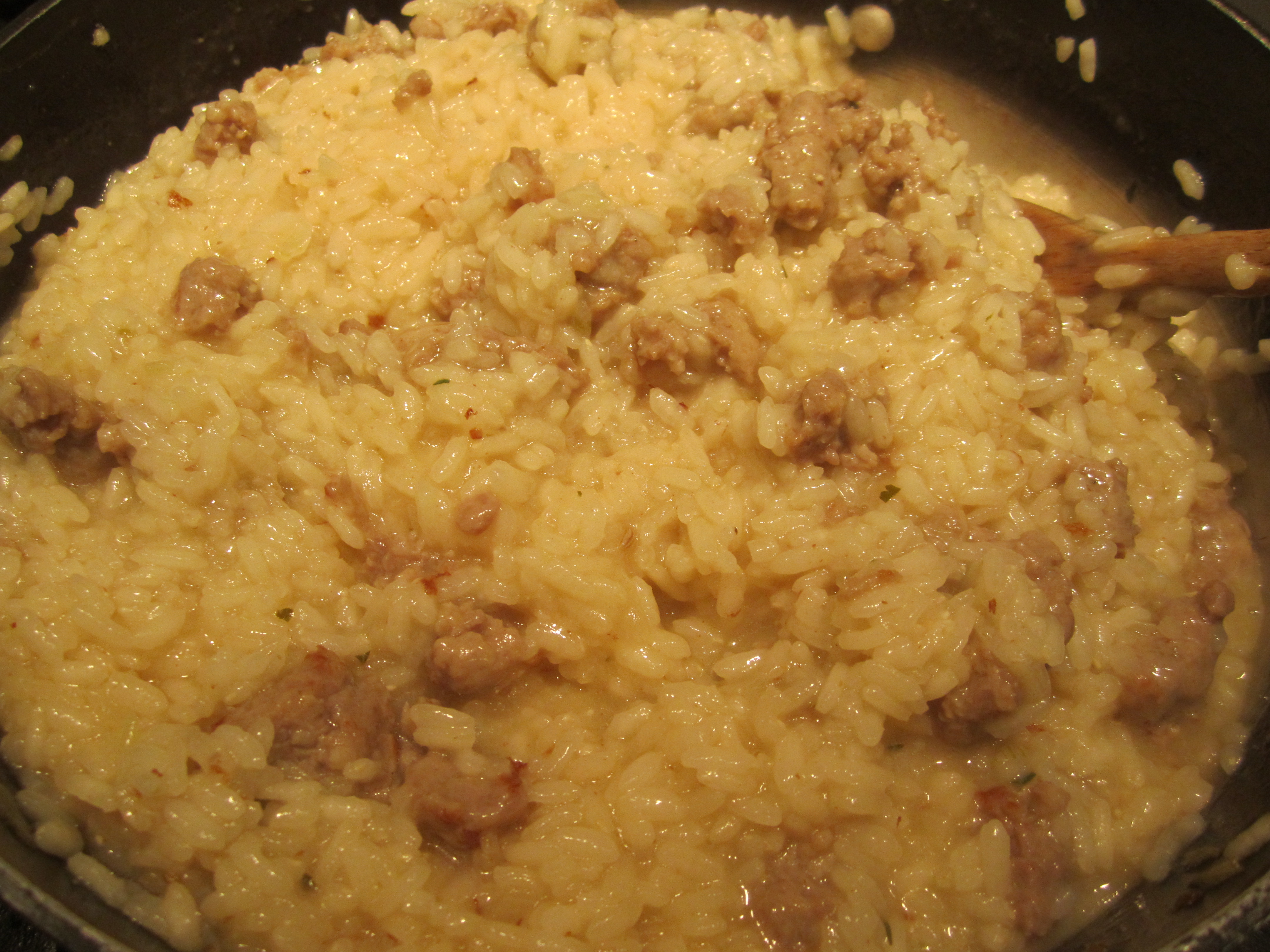
Turn heat to high and add in the wine.  Reduce for a minute (it will sizzle and reduce very quickly) and continue stirring.  Reduce heat to medium and begin adding simmering broth, 1 cup at a time until each addition is absorbed.  Continue stirring almost constantly (the sausage will stick if you don’t stir continuously) for exactly 15 minutes.

Turn off heat and cover for 5 minutes.  There should be some broth remaining–if there’s no more broth, heat a little water with a pinch of salt.  After the 5 minute rest, add remaining butter, a handful of grated cheese and more broth (or salted water) to bring to bring to a slightly soupy consistency.  Serve immediately in warm bowls with lots of grated cheese.

Posted in Risotti | Leave a comment

Beet Vinaigrette

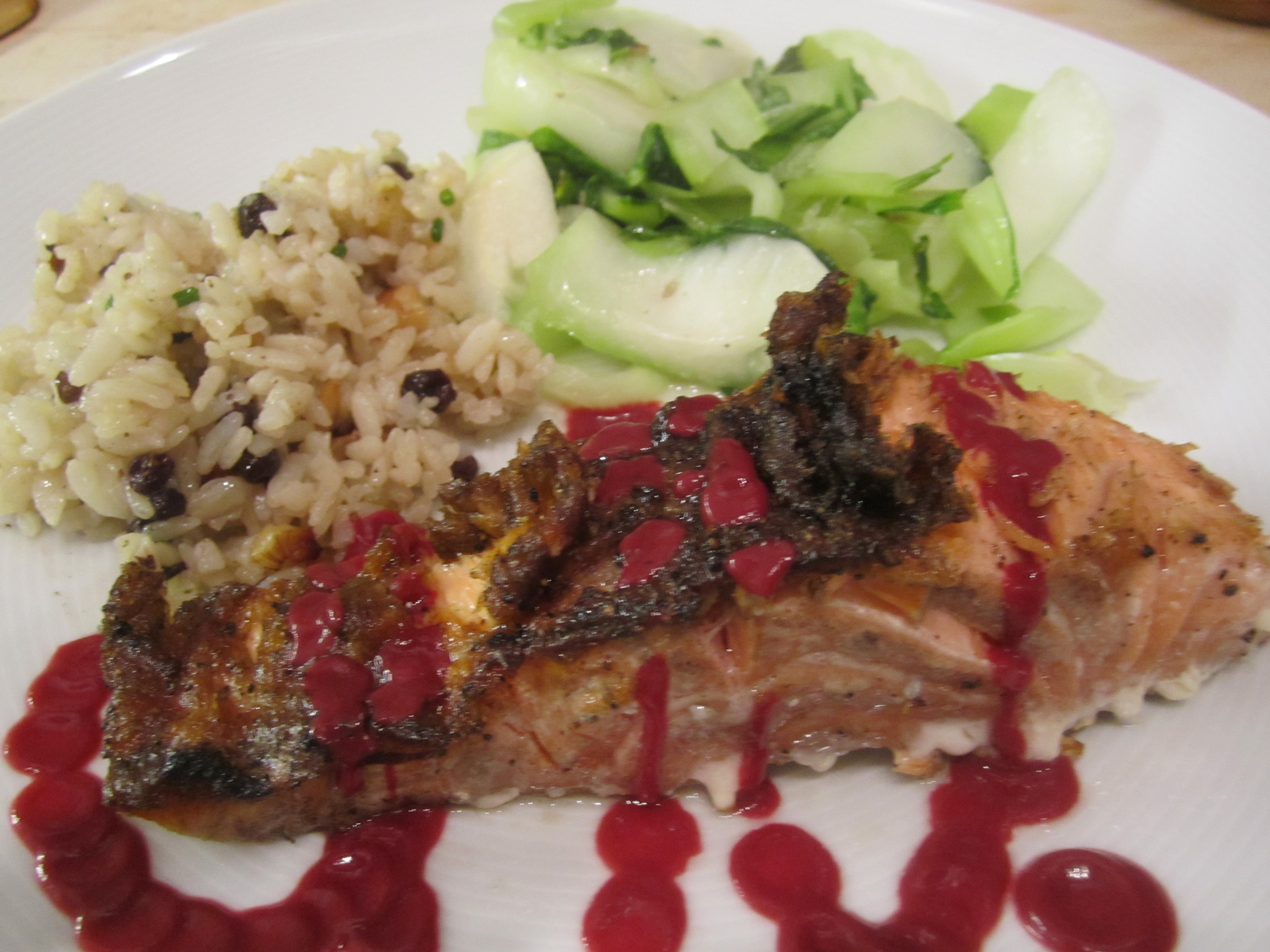
Since I’ve been invited to dine with friends this evening, I’m not cooking.  My host is making grilled salmon and I’ve been trying to figure out what to bring all day long.

When I worked at Po with Mario, we used to make a beet vinaigrette that was a beautiful sauce for salmon.  It was simply beets, vinegar, mustard and oil.  I have some beets from my neighbor Beppi’s garden, so I’ve decided to roast them, cool them and make the vinaigrette.

It’s been many years since I’ve made this sauce and I’ve only made it in restaurant-size quantities, so today’s sauce took some trial and error until I got the proportions correct.

I’ve used a combination of red wine vinegar and balsamic vinegar–both are necessary to balance the sweetness and acidity.  The mustard I used was creamy dijon mustard, and the oil was extra-virgin olive oil.  A good amount of water was necessary to thin the sauce to a pourable consistency (but not too watery).

The beets simply get roasted until soft (tonight’s batch took a solid 2 hours wrapped in foil in a 375 degree oven).  Sometimes they soften after an hour–it all depends on the beets.

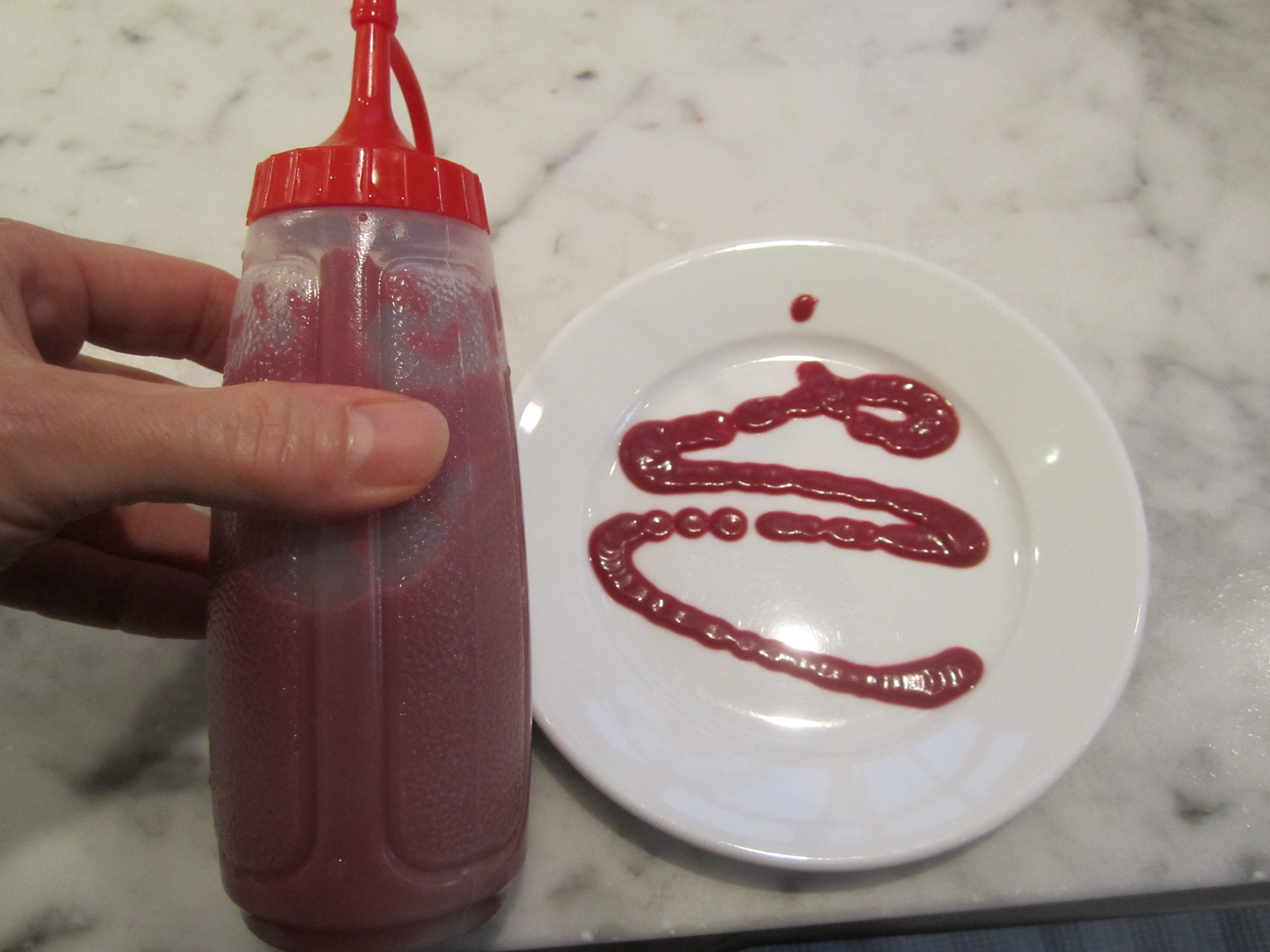
The beets and other ingredients get combined in the blender, then poured into a squeeze bottle (for that professional touch) and drizzled over the fish.  Test its pourability on a plate prior to serving–it might need thinning out (more water) or thickening–more oil and/or mustard.

Beet Vinaigrette

2 cups cooked, diced beets (1/2″ dice)

1/4 c balsamic vinegar

2 tbls creamy dijon mustard

3 tbls red wine vinegar

2 tbls olive oil

3 tbls (or more) water

3/4 tsp salt

Place all ingredients in blender and puree.  If your sauce is not pourable, add more water (and possibly more salt to correct the additional water).  Pour into squeeze bottle and drizzle over fish.

Keeps well in the fridge for 2 days.

Posted in Sauces | Leave a comment

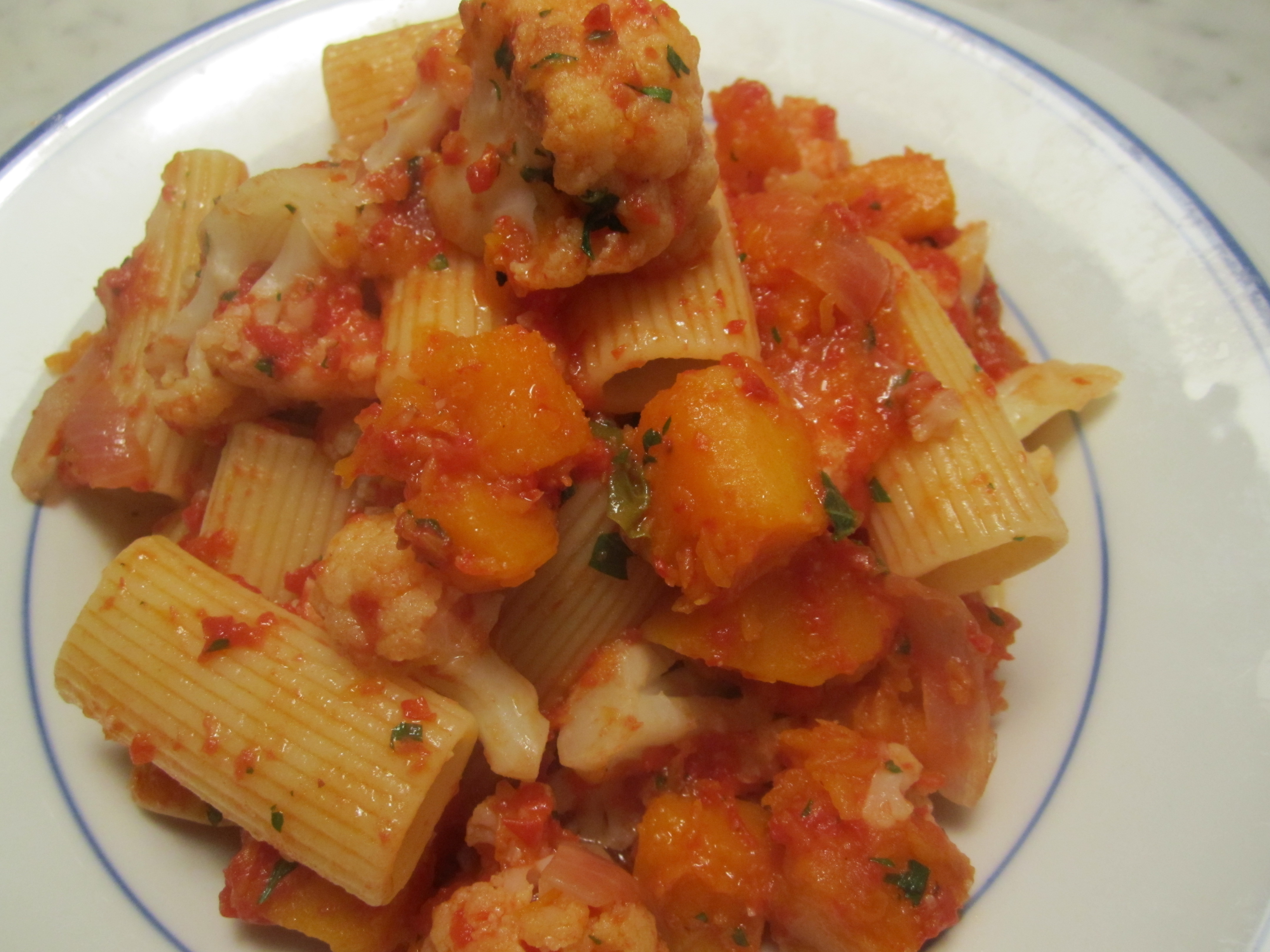
Pasta with Cauliflower and Butternut Squash

This dish is a great combination of earthy and sweet.  Since cauliflower and butternut squash are available for the next few months, I’ll make it often.  You can use this sauce to dress any of a number of pasta shapes, including whole wheat or farro.

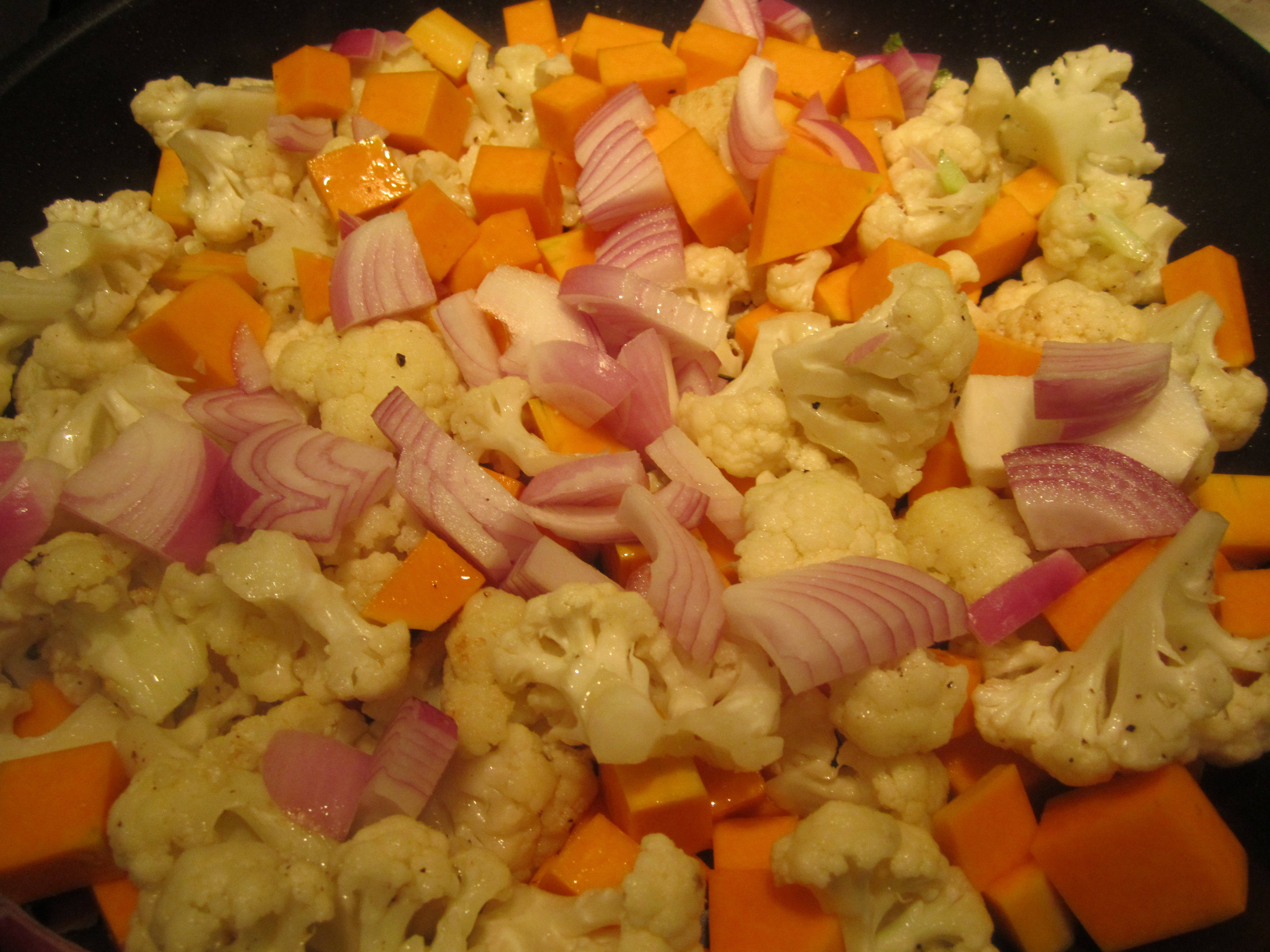
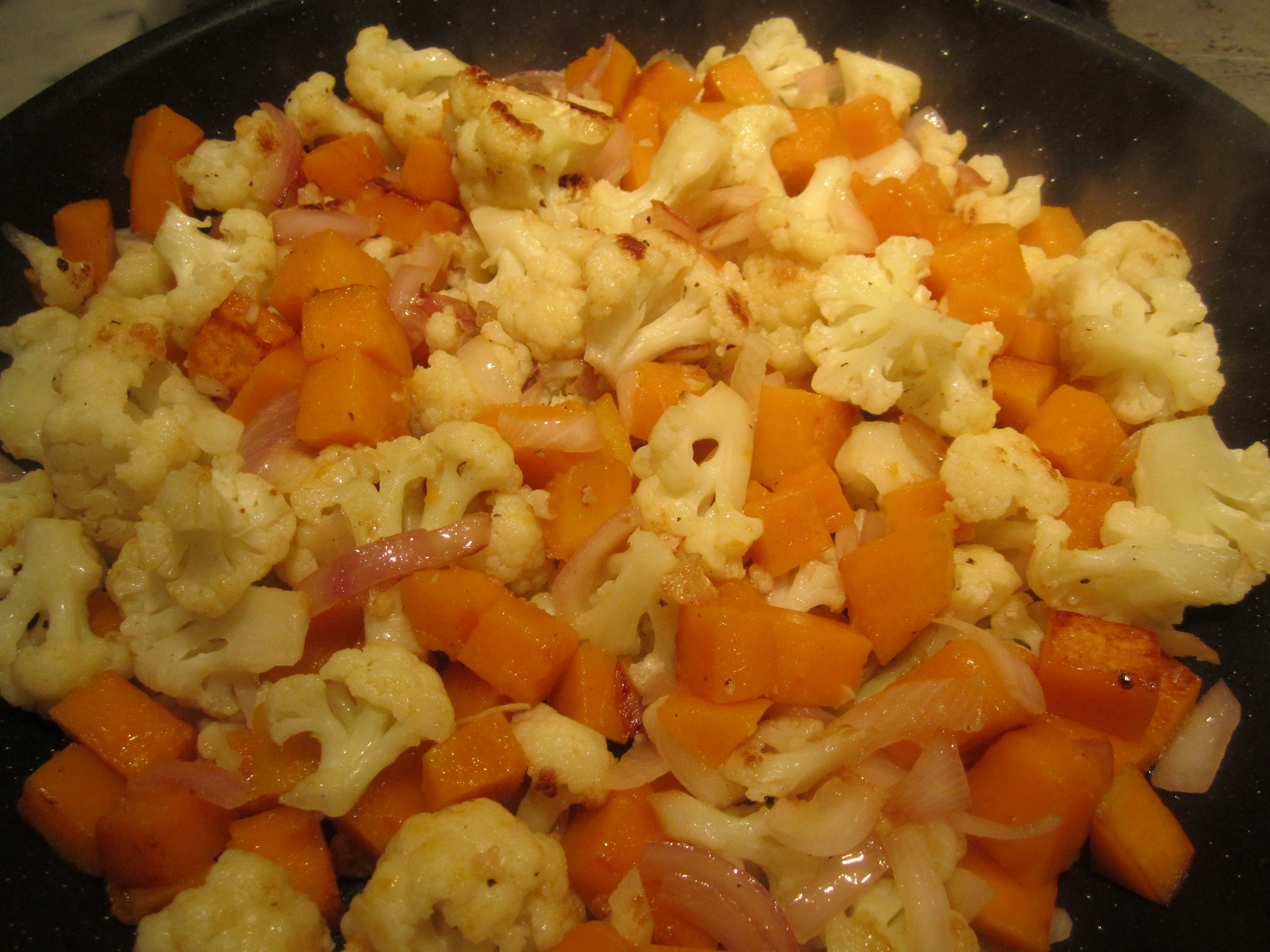
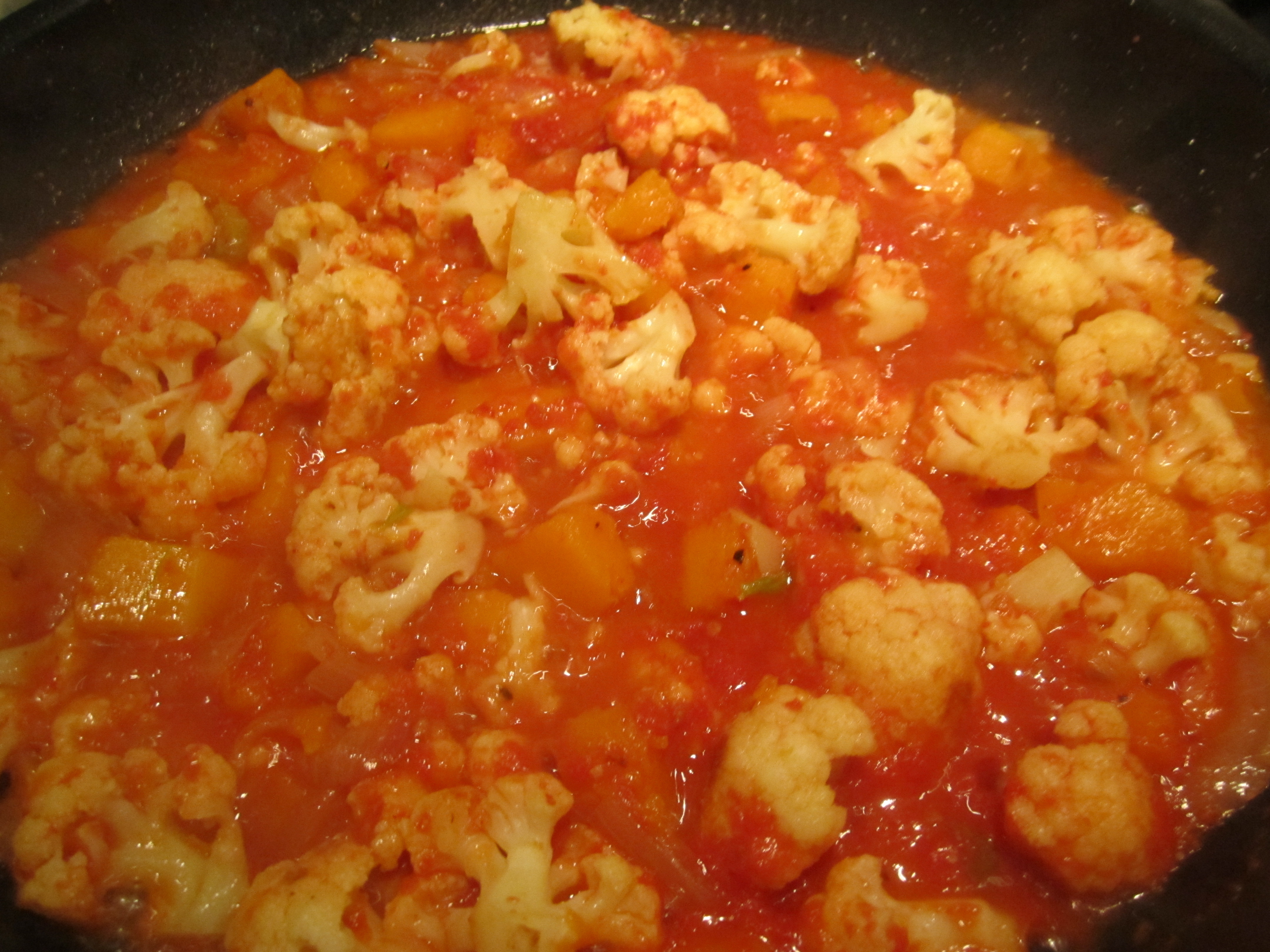
The sauce is made by sauteing bite-sized pieces of cauliflower, butternut squash and onion until tender and lightly caramelized. Pureed tomatoes are added and the sauce is simmered until the pasta is cooked and added.  The vegetables should be tender and melting.

The combination produces a very well-balanced harmony of flavors and textures.   It’s perfect as a first course to a pork roast, or on its own as a vegetarian one-pot main dish.

Pasta with Cauliflower and Butternut Squash

serves 4

1 lb short fat pasta, such as rigatoni

1 small butternut squash, peeled, seeded and cut into 3/4″ cubes

1 head cauliflower, cut into 1″ pieces

1 medium onion, coarsely diced

2 cups fresh tomato puree (or canned whole peeled tomatoes)

1/4 c olive oil

salt and pepper to taste

fresh chopped parsley

grated parmigiano for sprinkling at the table

In a broad skillet on high heat, combine the oil, onion, cauliflower and squash.

Cover skillet to create a bit of steam, while tossing and stirring the vegetables often, for about 10 minutes, or until the pieces begin to become golden and caramelized.

Drop pasta into boiling salted water.

Add the tomato puree to the skillet of vegetables and simmer, uncovered while the pasta cooks.

When pasta is cooked, sprinkle parsley over sauce and add pasta.  Toss with 1 cup of pasta cooking liquid and saute for about a minute.

Drizzle with a bit of extra-virgin olive oil and sprinkle with plenty of grated parmigiano at the table.

Posted in Pasta | 2 Comments