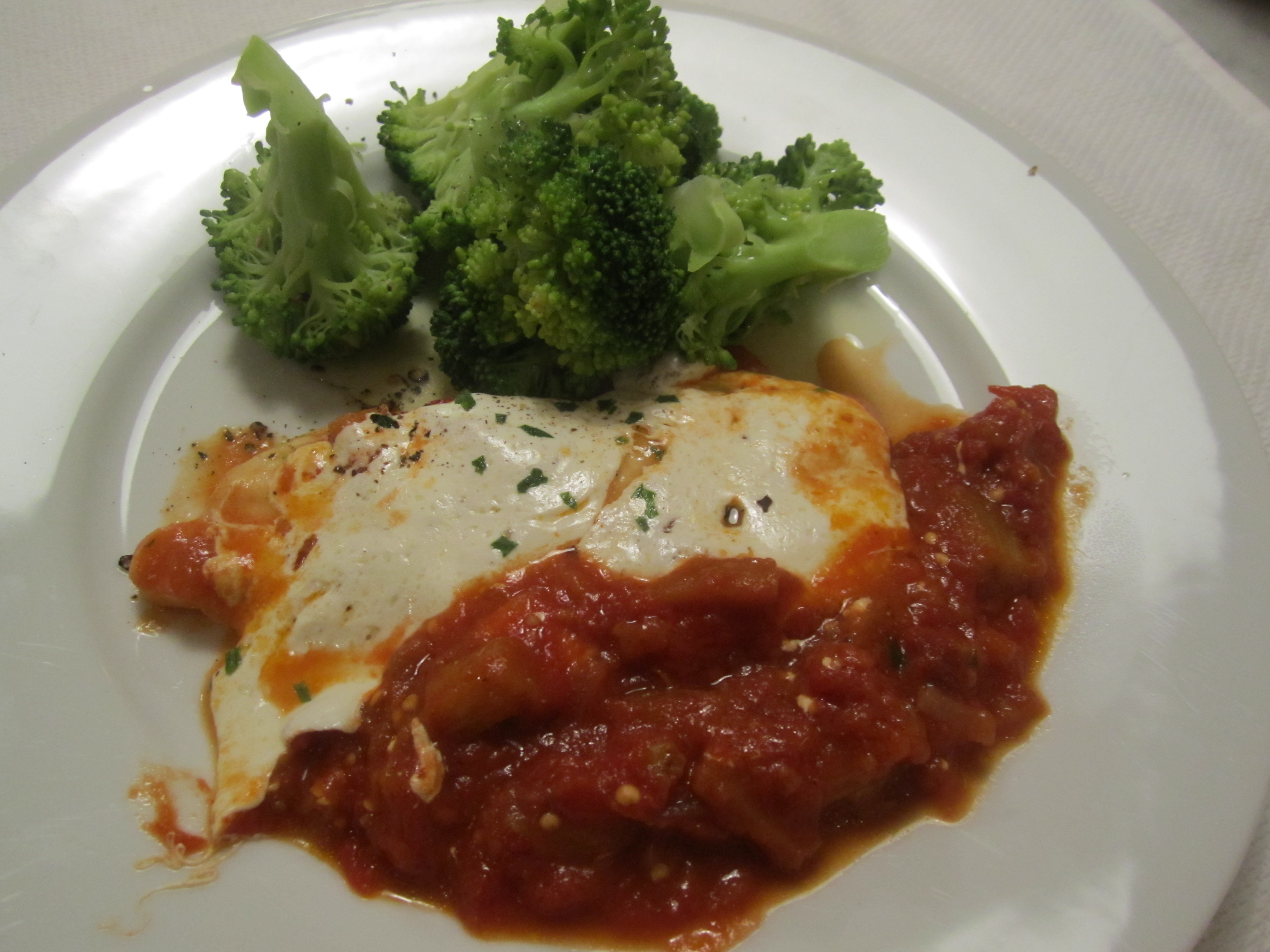
Scalloppine with Eggplant Sauce

Before I freeze the remainder of my Two Hour Eggplant Sauce, I’ve decided to make a quick dinner featuring it.   Eggplant and chicken are great together and this dish highlights their subtle combination.

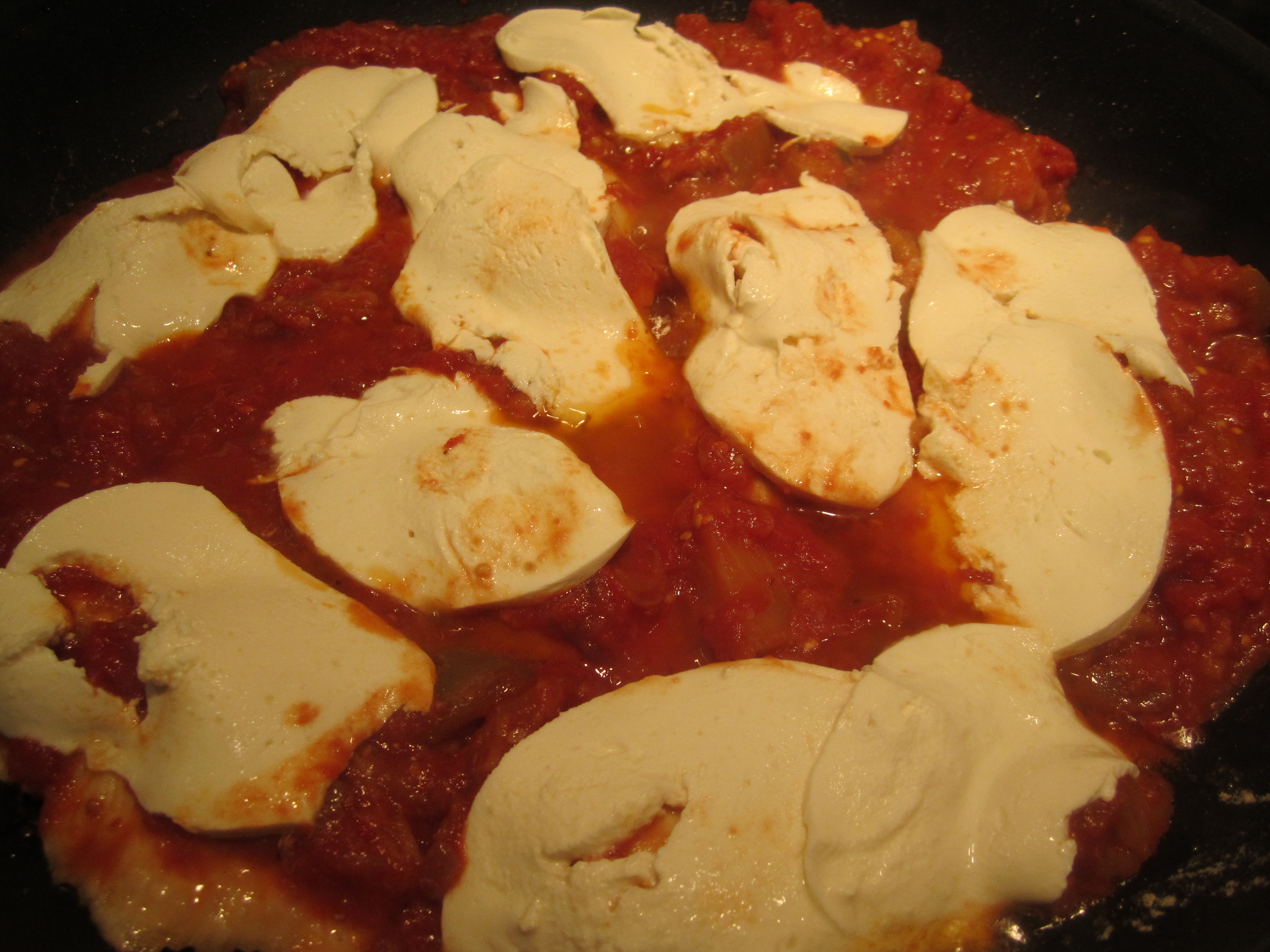
Scalloppine refers to thin cutlets (I’m using chicken tonight, but you could just as easily use veal).  The cutlets are dredged in flour, then lightly browned in olive oil. Slices of fresh mozzarella are draped over the chicken, then the sauce is gently ladled in and around the chicken.  The skillet is covered and allowed to gently simmer about 10 minutes.  There is no recipe per se, simply an illustration of technique.

Place a broad skillet with 2 tablespoons of olive oil on high heat. Season cutlets well on both sides with salt and pepper.  Dredge in flour, shaking off any excess.  Gently lay cutlets in the hot oil and allow to turn lightly golden on one side.  In this instance, crowding the skillet is fine–we’re not looking for a deep golden color–just a light browning.

After about 3 minutes, turn and cook on the other side for 2 additional minutes.

Lay slices of mozzarella over each cutlet and gently ladle sauce around them.

Cover and simmer on low heat for about 10 minutes.

Add some chopped parsley or basil and serve each cutlet with a generous amount of eggplant-laden sauce.

Posted in Meat, Poultry | Leave a comment

Italian-Ate Tabbouleh

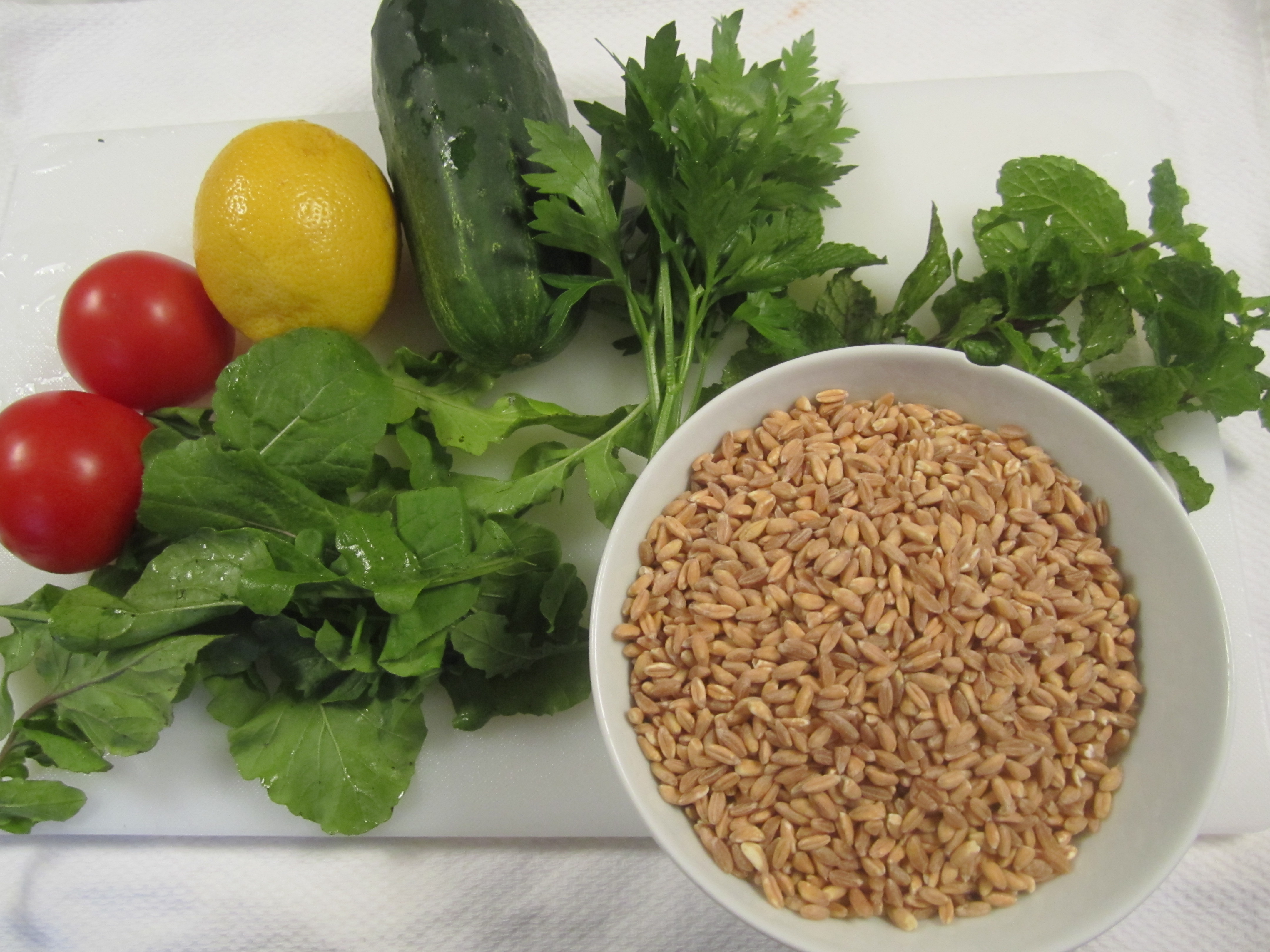
We’ve had a little snap of Indian summer this weekend and I still have lots of tomatoes ripening on my window sill.  I’ve discovered that this middle-eastern dish works just as well with farro as it does with bulghur wheat. 

I like to make my tabbouleh extra-green–as much a salad as a grain dish.  I have some great local arugula, which is the predominant green in the salad.  In addition, I use lots of coarsely chopped parsley and mint.  The entire dish is dressed with lots of lemon juice and olive oil. 

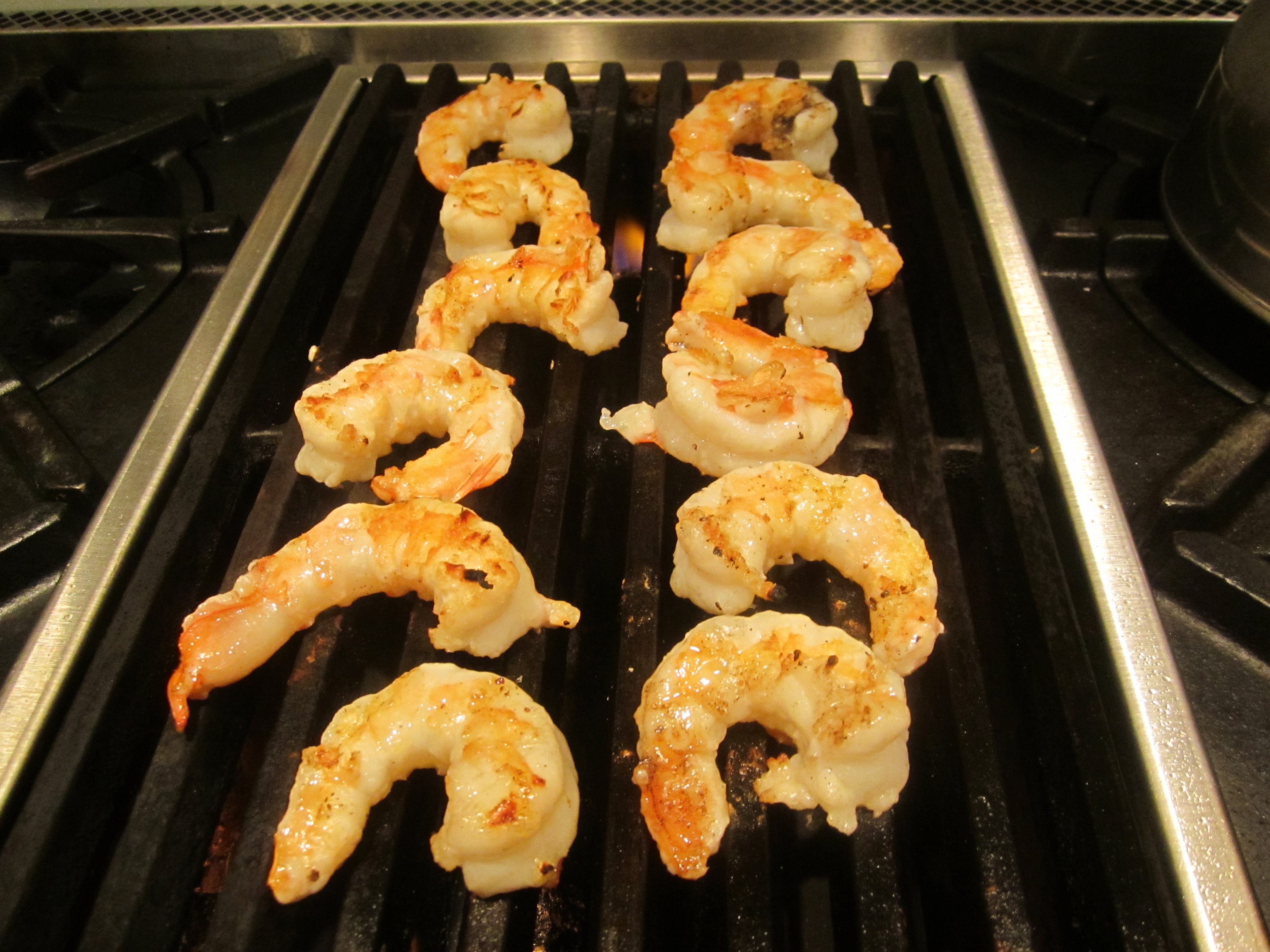
Tonight, we have leftover salsa verde from the other evening.  I’ve decided to grill some nice plump shrimp and use the salsa verde as a sauce for the shrimp. 

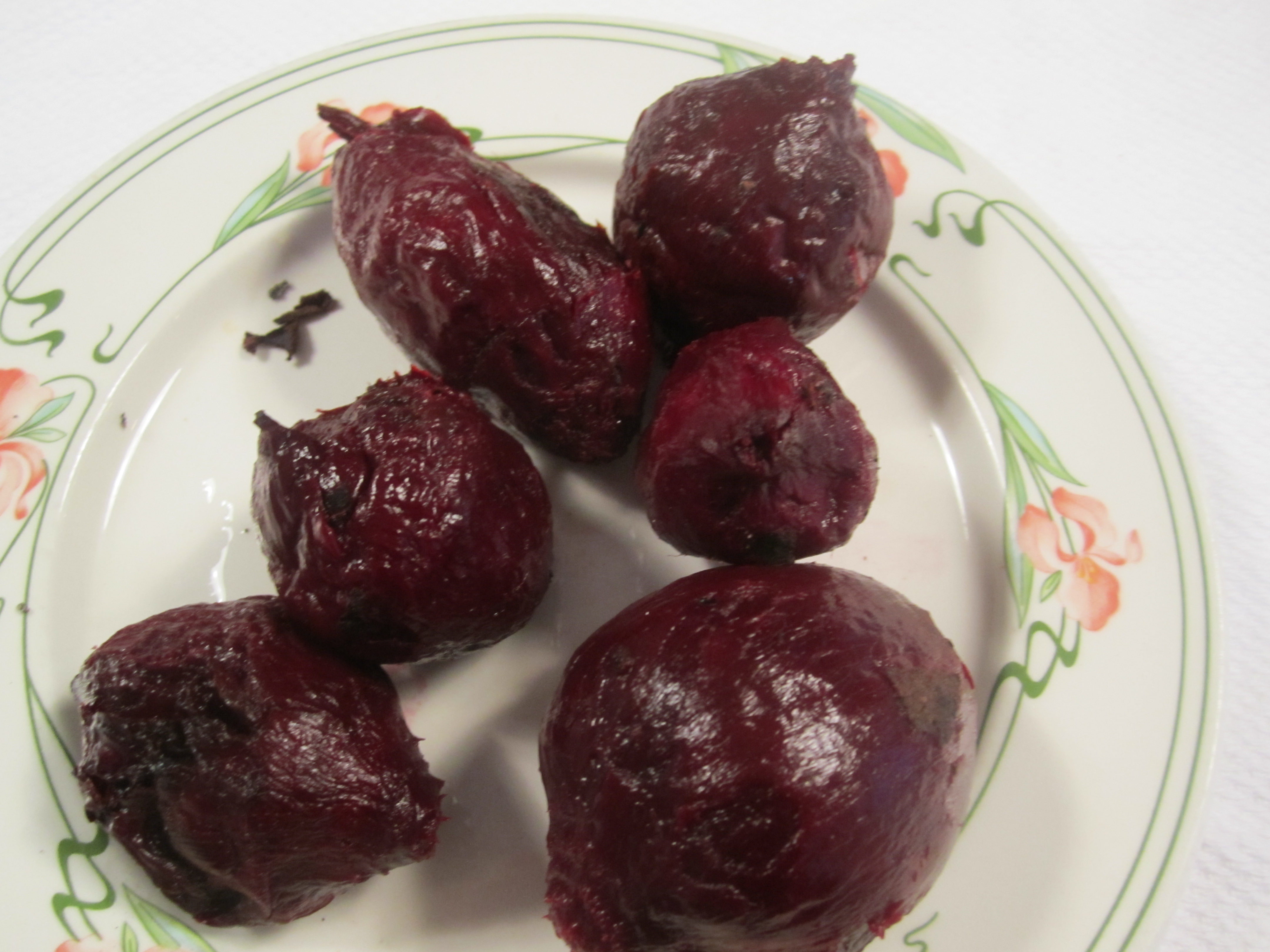
An additional side dish this evening was provided by my neighbor Beppi.  He’s just harvested the last of the beets from his garden and brought them to me already roasted. 

 These will be perfect on the plate with the tabbouleh and salsa verde. 

This dinner is the perfect light summer meal which will make excellent use of my leftover salsa verde.


Italian-Ate Tabbouleh

serves 4

12 oz. farro, boiled in salted water for 20 minutes, then drained and rinsed

4 medium sized ripe tomatoes

1 cucumber, peeled

1 c coarsely chopped parsley

1/2 c coarsely chopped mint

2 c tightly packed arugula, coarsely chopped

zest and juice of 1 lemon

1/4 c olive oil

salt and pepper to taste

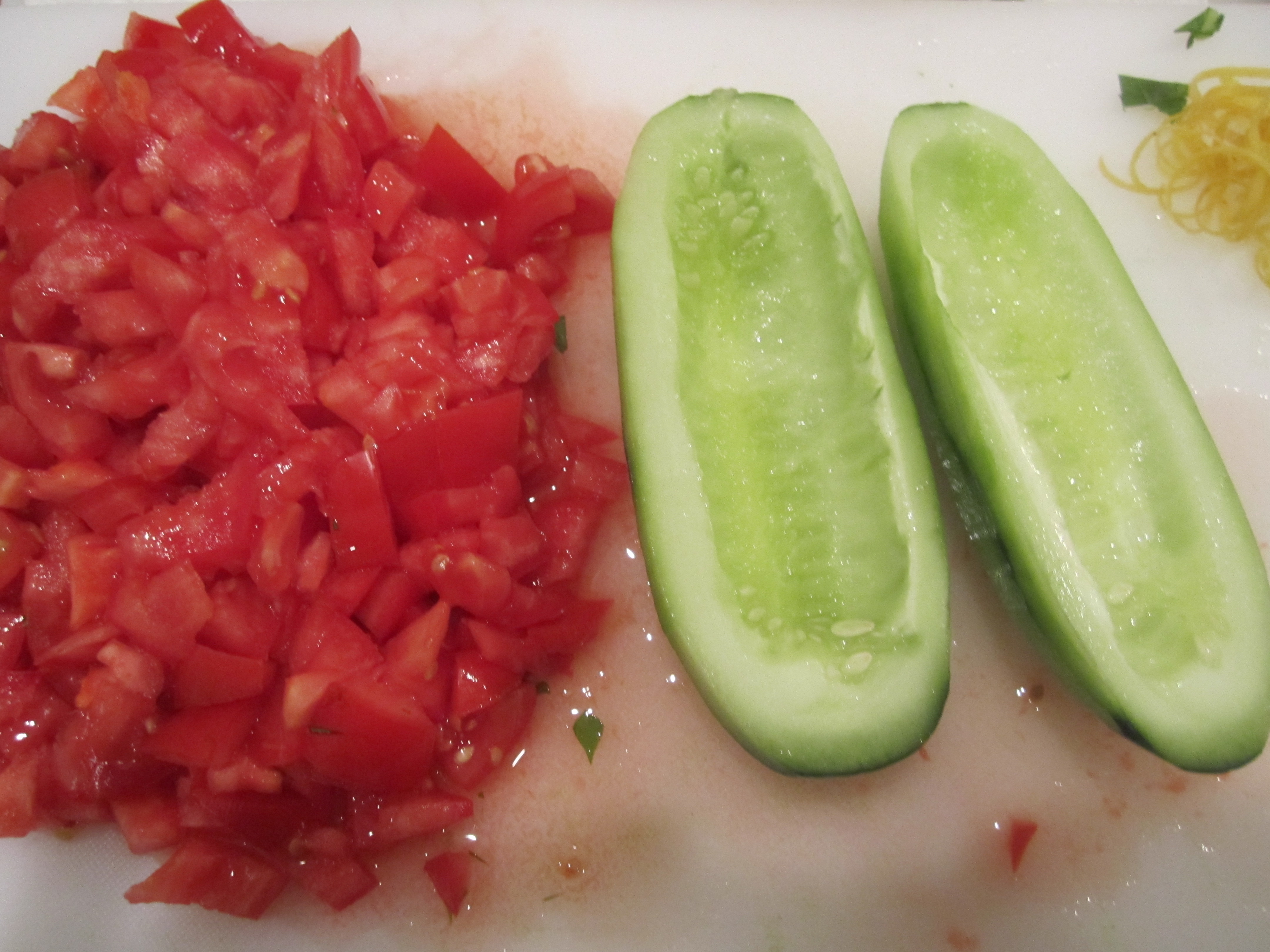
Chop the tomatoes and remove seeds from cucumber by slicing in half lengthwise and scooping out seeds with a spoon.  Chop cucumber into 1/2″ dice.

Combine all ingredients in mixing bowl

Stir to combine. 

Keeps well for a few days in the fridge (although the mint will blacken).

Posted in Salads | Leave a comment

Two-Hour Eggplant Sauce

I’ve referred to this sauce in several prior posts.  I got it from an episode of Lidia Bastianich’s PBS series “Lidia’s Italy” several years ago and it peaked my curiosity.  I’ve adapted it to my own taste and proportions and have been making it ever since.  I usually make a batch of it at the end of summer and freeze it in ziploc bags to use throughout the year.

The long, slow cooking of the eggplant and tomatoes results in a very complex flavor and texture–not instantly identifiable as eggplant. It’s an excellent sauce for pasta–I especially like it over whole wheat pasta.  The earthiness of the whole wheat pasta is well-suited to the deep rich flavor of the melted eggplant.

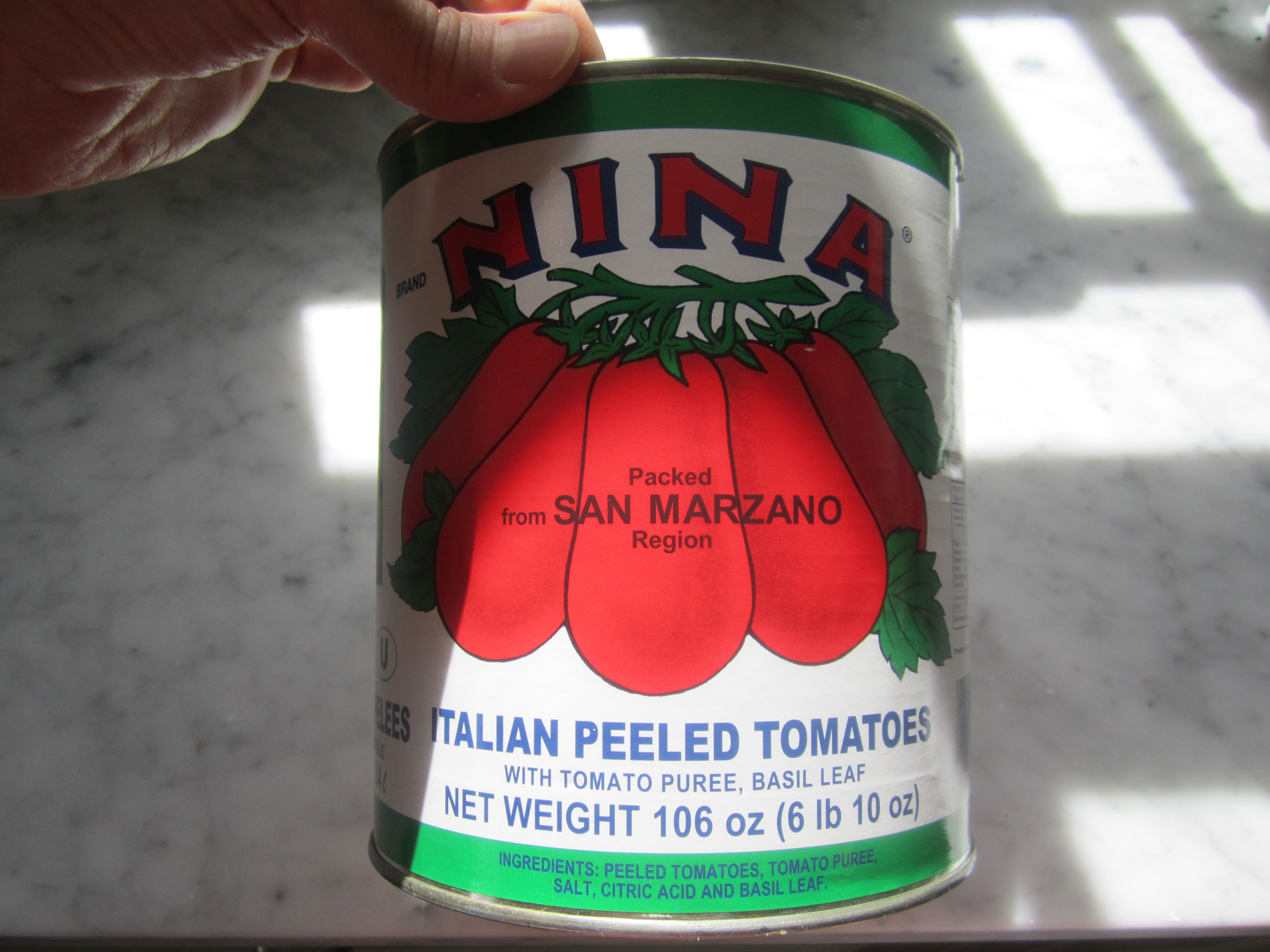
The eggplants in tonight’s sauce are from my neighbor Beppi’s garden, as is the basil.  The tomatoes are imported whole peeled tomatoes, which I buy in the 106-oz. industrial-size can (Costco) just for making a large batch of this sauce.

As our first course tonight, I’ve made a salad of arugula, shaved fennel and parmigiano dressed with lemon and olive oil.

The sauce freezes flawlessly, so don’t hesitate to make a batch of it before local eggplants are a distant memory!

Two-Hour Eggplant Sauce

3 large eggplants

106 oz. canned Italian whole peeled tomatoes, crushed and squeezed by hand in a mixing bowl

2 small red onions, peeled and coarsely diced

1/4 c olive oil

3 sprigs of fresh basil

salt and pepper to taste

Peel eggplants and dice into 1″ cubes.

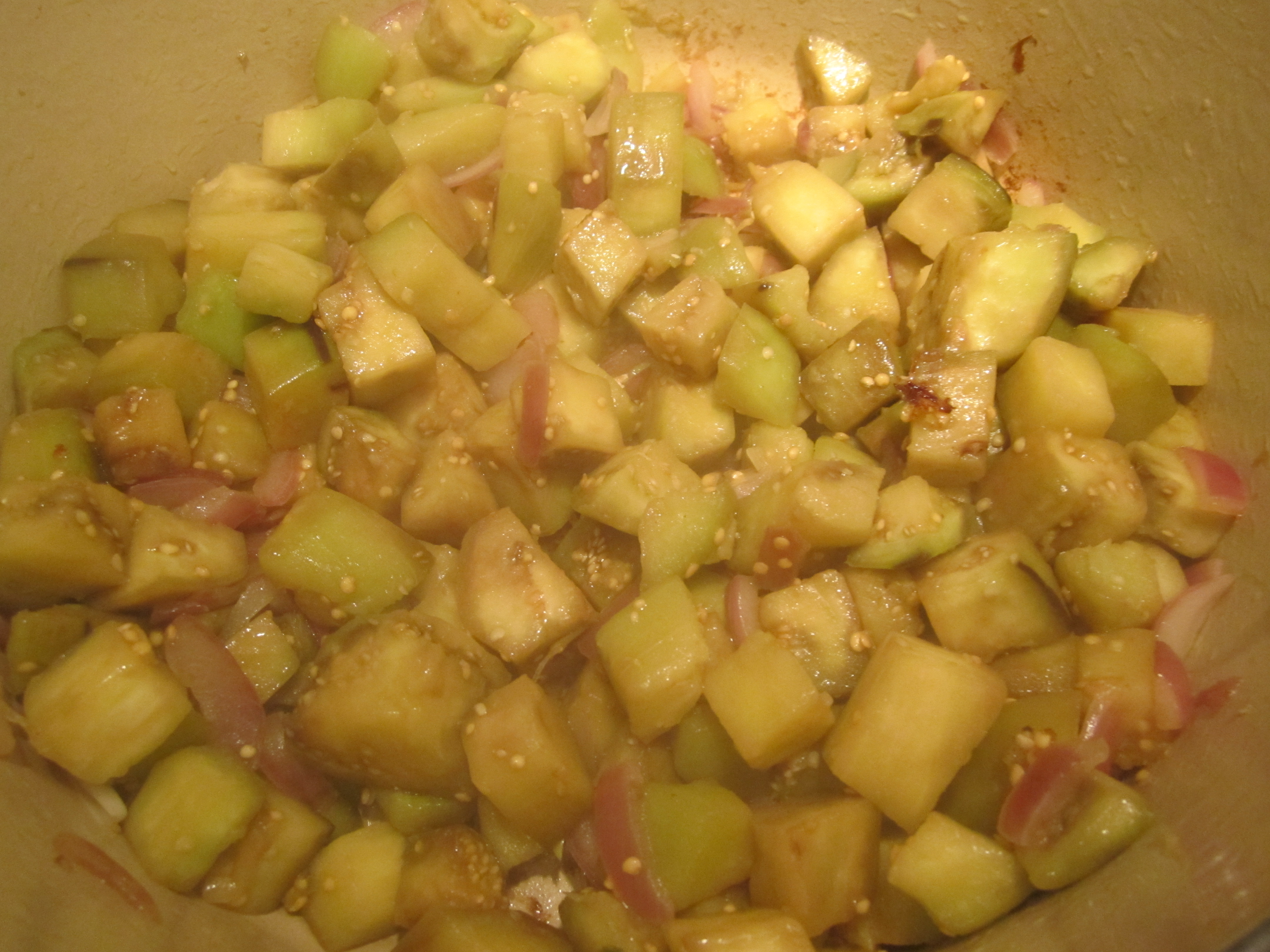
In a heavy-bottomed dutch oven (this is important–otherwise, the sauce will stick and scorch) place onions, oil and eggplant cubes.  Sprinkle with 1 teaspoon of salt.

Saute for about 10 minutes, stirring often to prevent onion from browning too much.

Add tomatoes (rinse can with water and add the water as well) and 2 basil sprigs.

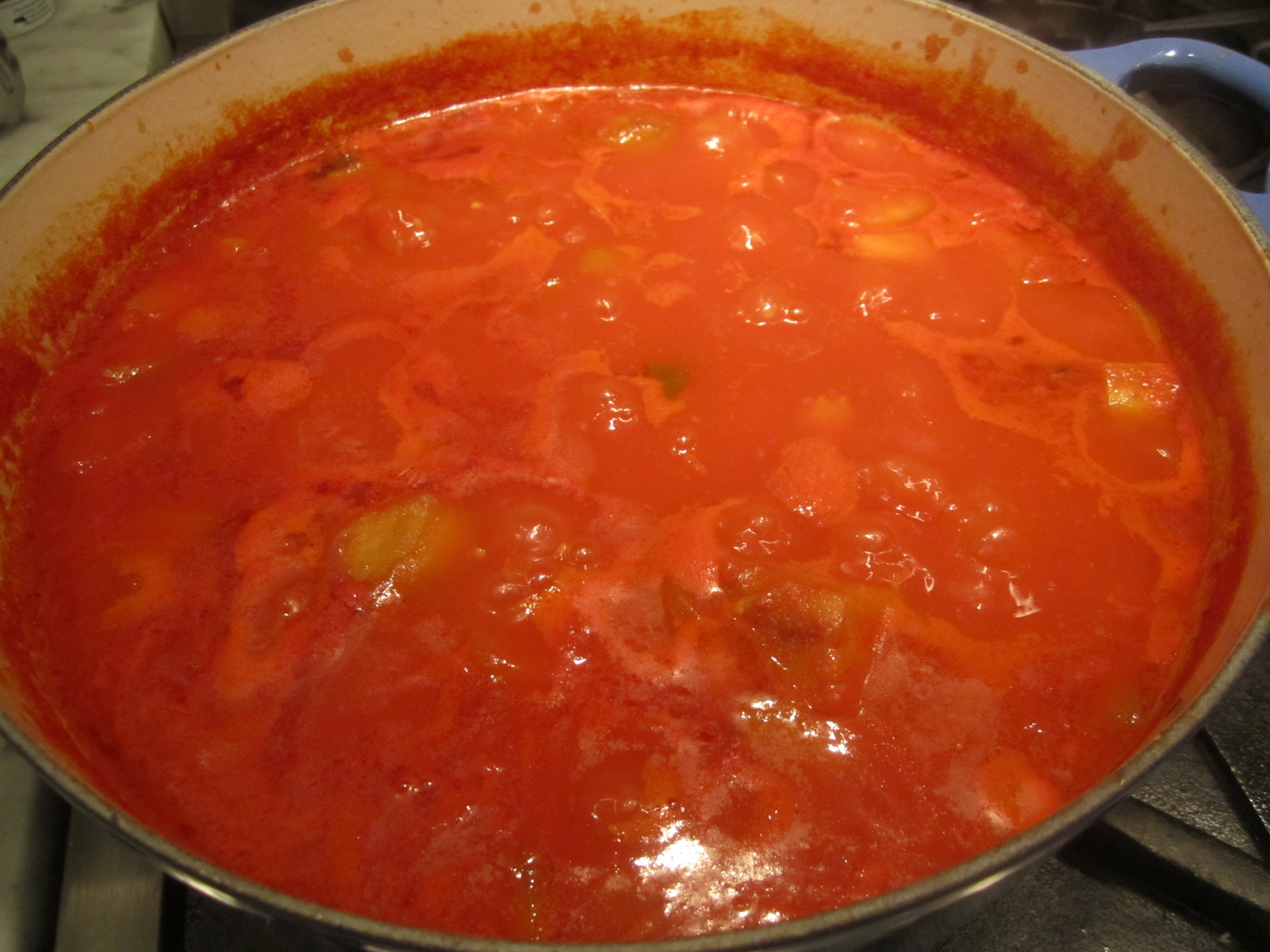
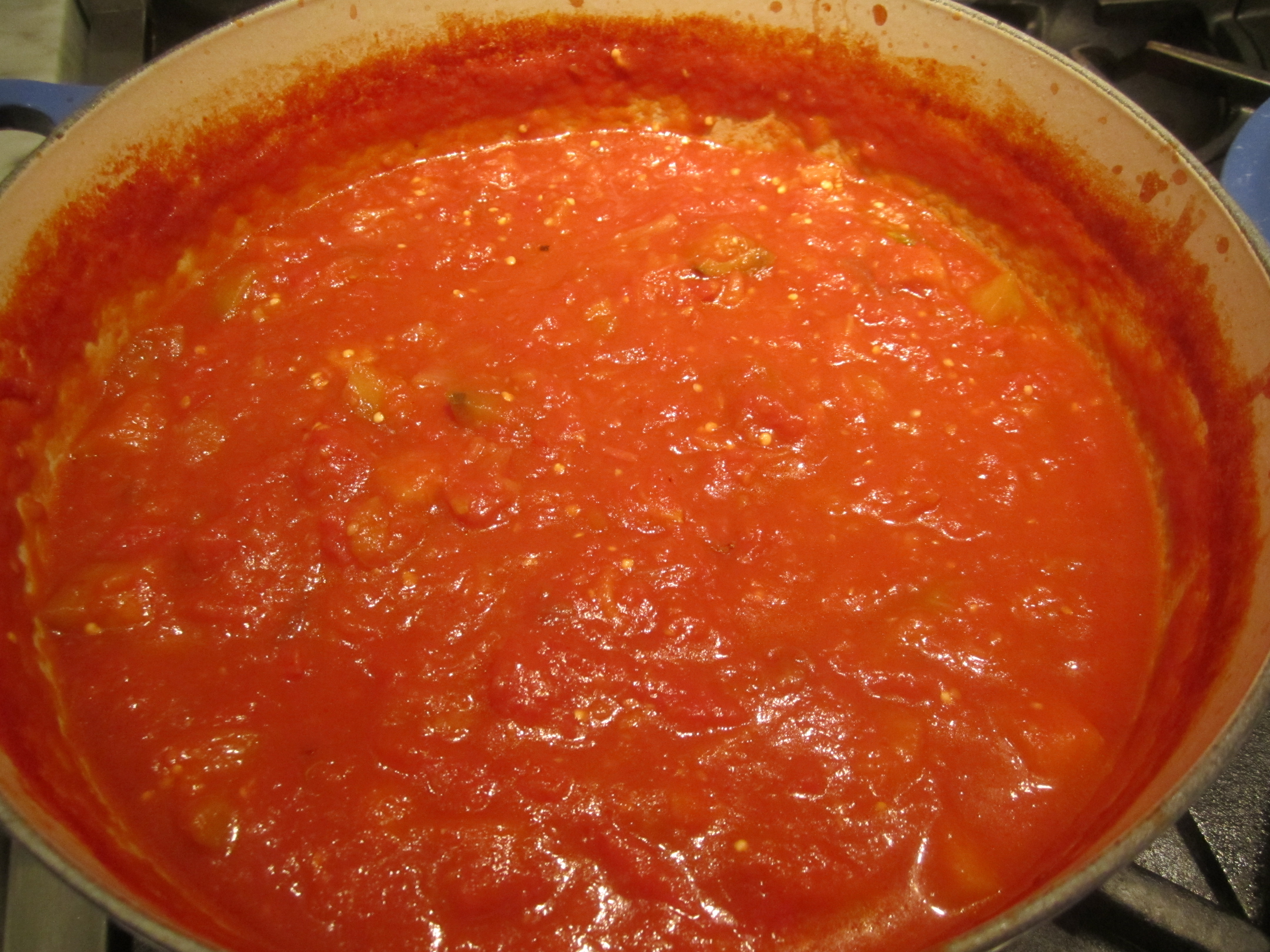
Bring to a boil, then reduce heat and partially cover (leaving lid askew).  Simmer on low heat for 2 hours, stirring often to prevent sticking.

After 1 hour:

After 2 hours:

The eggplant should be meltingly tender, and when you stir the sauce vigorously, the eggplant will all but dissolve and the sauce will have evolved into a nice chunky, velvety puree.  Taste and add salt–you will need at least 2 more teaspoons of salt–maybe more.

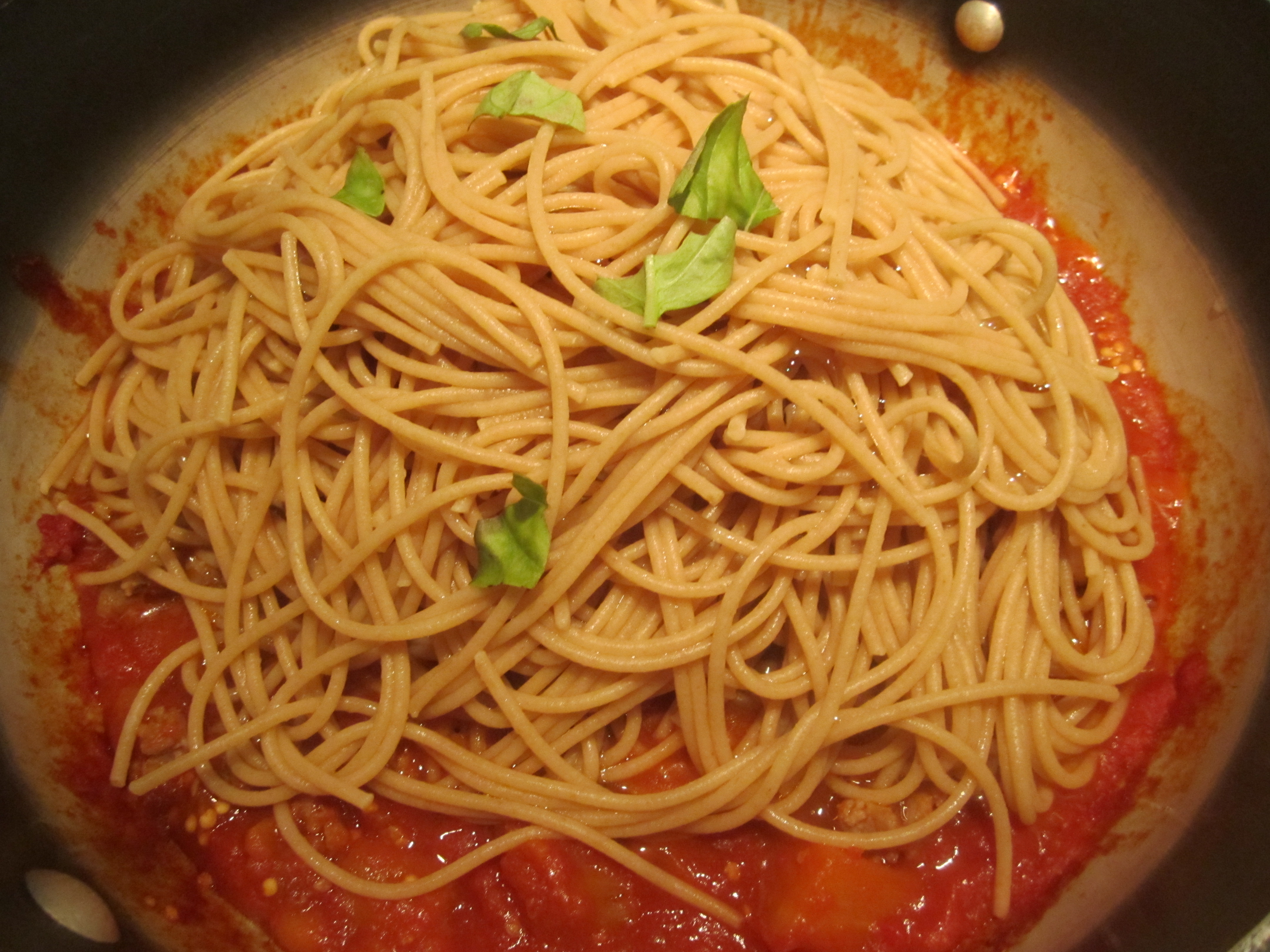
Tonight, after making the large batch of sauce and setting it aside to cool, I’ve decided to take a portion of it and add some fully cooked, chopped sweet Italian sausage (left over in my freezer from my pasta with cauliflower and sausage).

The sausage is a beautiful complement to the eggplant.  The whole wheat spaghetti (a half-pound for 2 portions) get tossed into the sauce and all is topped with fresh basil leaves.

I serve this dish with plenty of pecorino romano and black pepper on top.

Posted in Pasta, Sauces | Leave a comment

Salsa Verde with Pan-Roasted Salmon

I’ve mentioned my neighbor Beppi’s salsa verde before, and I’ve been experimenting with my own.  Here is a version that I’m proud to call my own.  This sauce can go on a variety of grilled fish and meats, as well as boiled meats (it’s traditionally used to dress mixed boiled meats in the region of Emilia Romagna).  It’s also great as a dip for vegetables. Tonight, we’re having the sauce on my pan roasted salmon.

Professional chefs have a method of cooking fish in a skillet that produces the most sensational golden crusty exterior while keeping the interior moist and tender.  This method is one of the few professional techniques that can be adapted to the home kitchen without any special equipment.   I like to use this method for salmon, although it would work equally well for other thick firm-fleshed fish, like Chilean sea bass or striped bass.  No recipe is required for the fish, simply a discussion of technique.

To begin, preheat the oven to 425 degrees.   The fish begins on the stovetop, then gets transferred to the oven.  Season the non skin side of the fish well with salt and pepper.

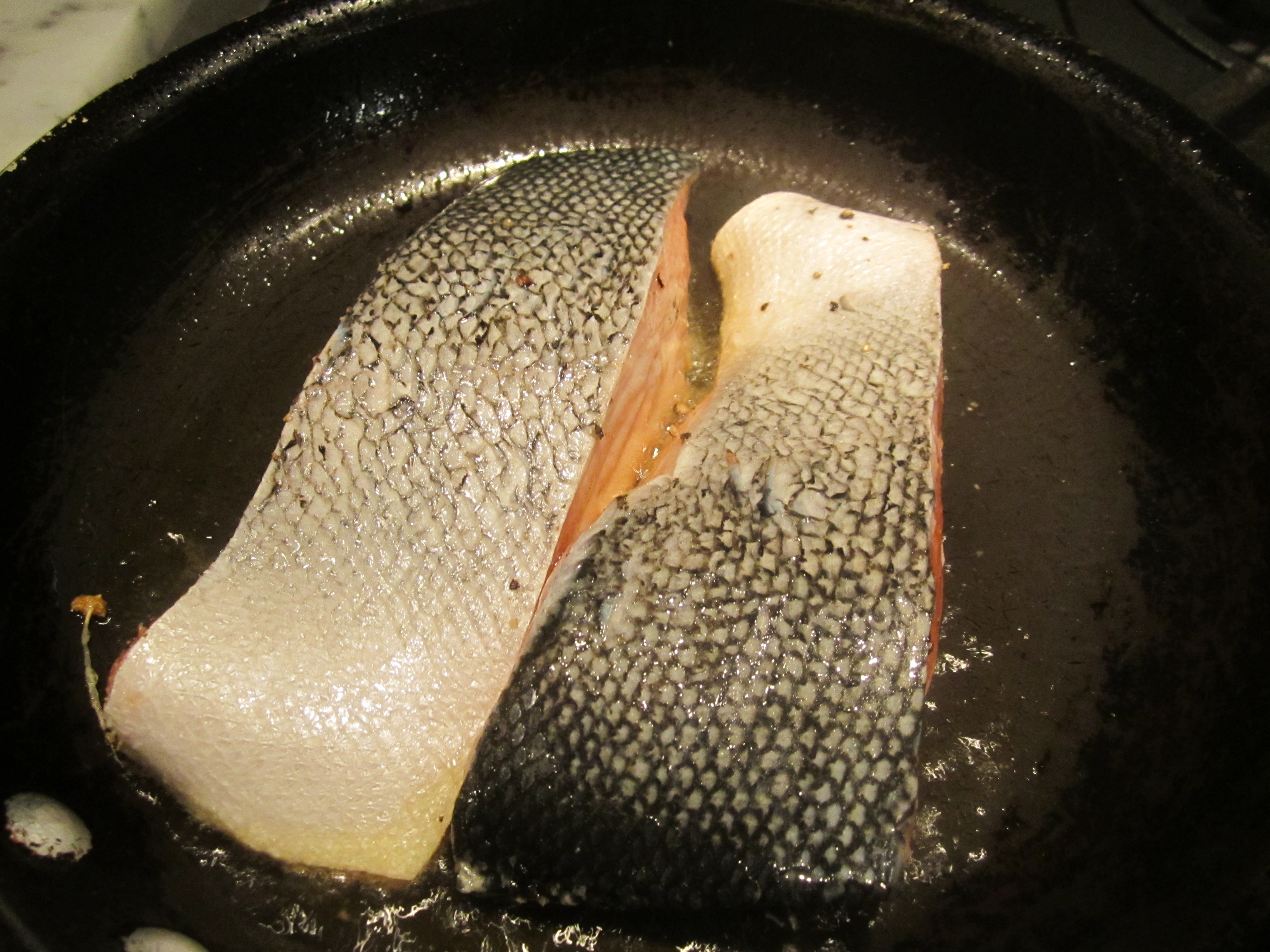
Preheat ovenproof skillet on high until smoking hot.  Pour in 1 tablespoon olive oil and immediately lay in the fish, skin side up.

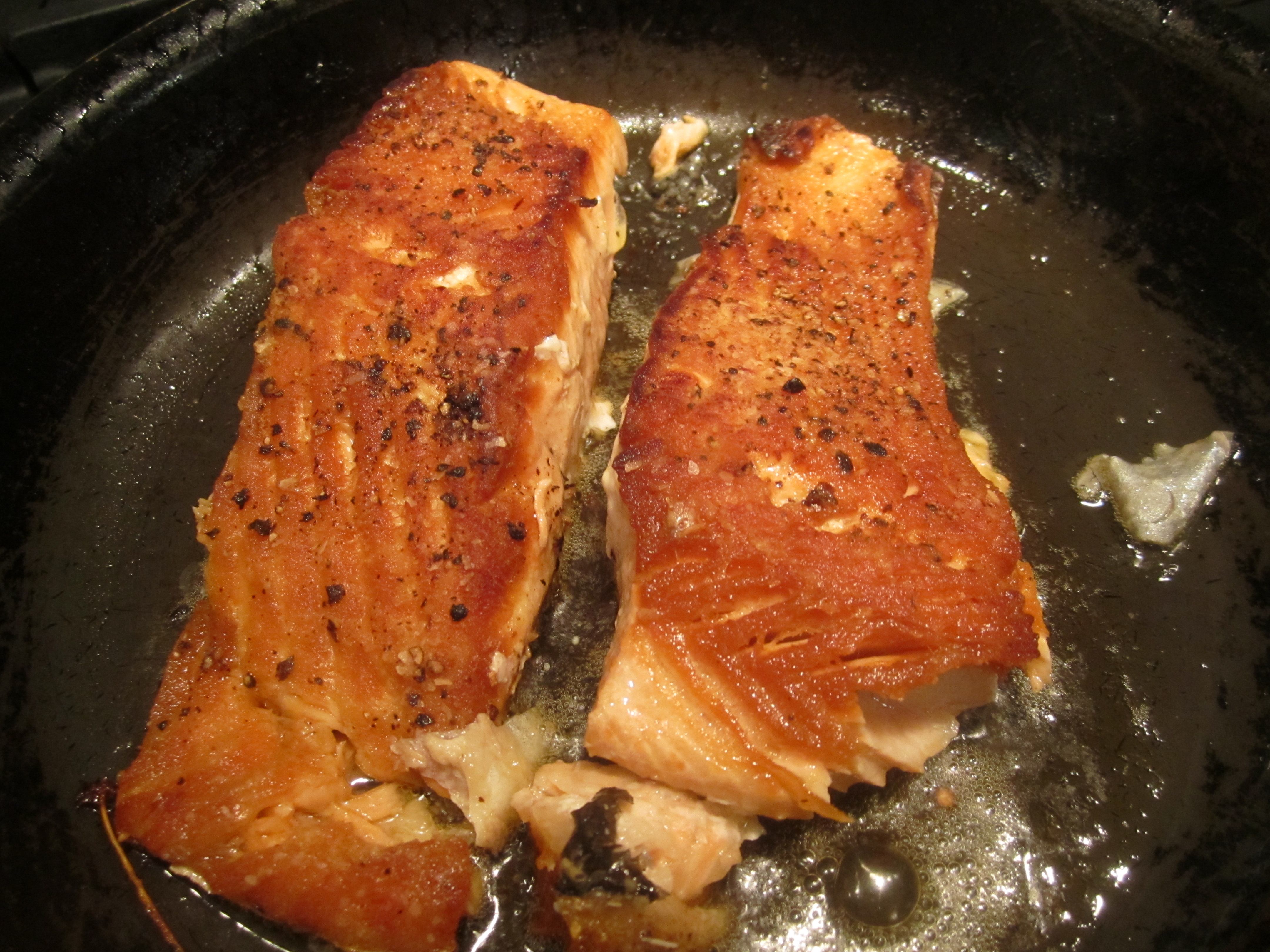
Set timer to 4 minutes and allow to sear undisturbed on high heat.  NOTE:  you may need a spatter screen (and a good exhaust fan helps), since the fish will sputter and smoke as it browns.  After 4 minutes, simply move the skillet to the oven without turning the fish or touching it in any way.

Set timer to 6 minutes and allow to finish cooking in the oven. Obviously, the flame power varies depending on your range, so these times may need to be adjusted in your kitchen.  If you see that your fish is looking exceptionally brown around the edges prior to the completion of the 4 minutes on the stovetop, by all means, move it to the oven earlier.  The important thing is to not flip the fish or disturb it in any way until it’s developed a crust on the bottom.

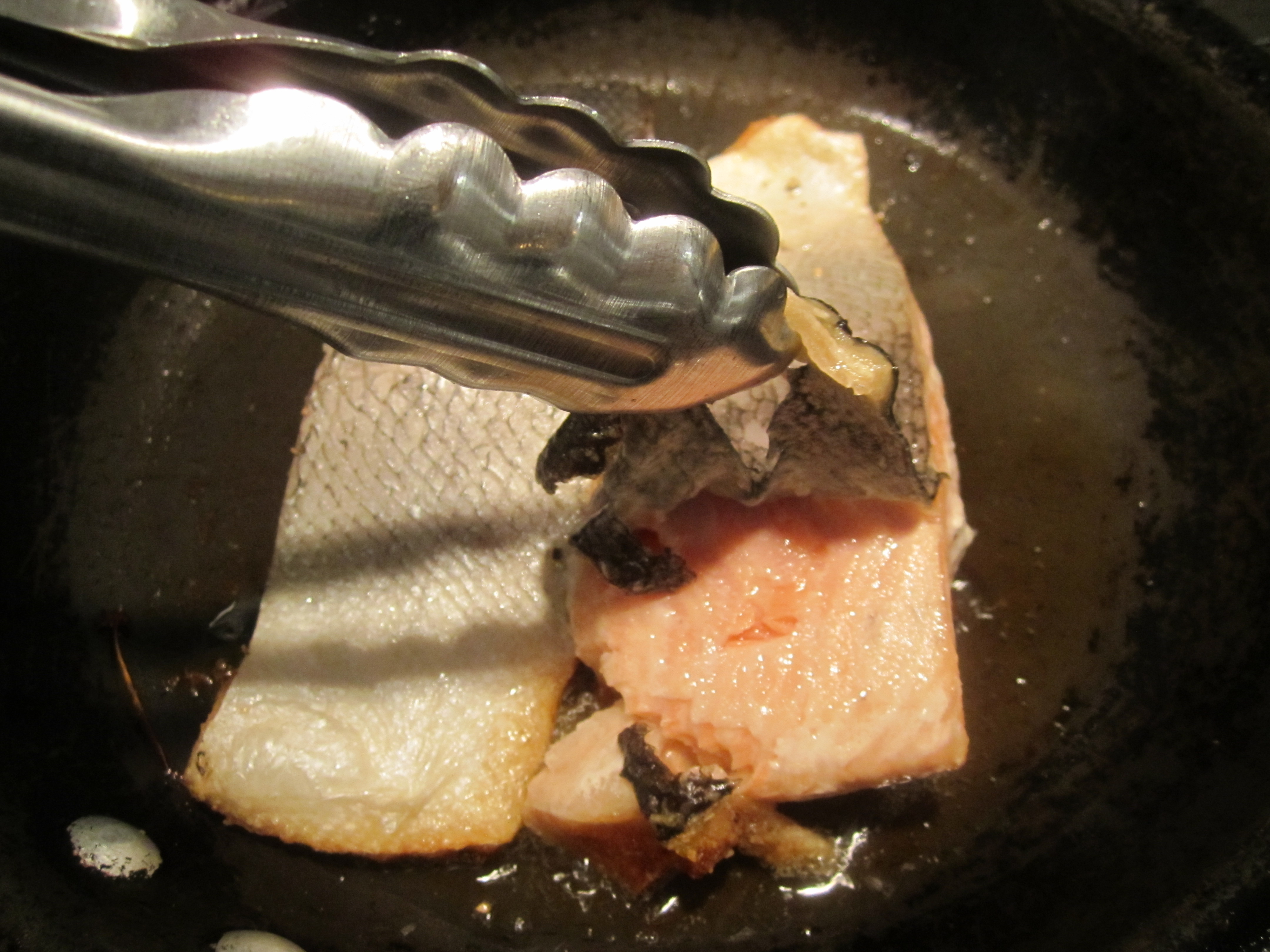
After the fish comes out of the oven, you can gently remove the skin with tongs.

After removing skin, season the skin side of the flesh with salt and pepper and gently flip the fish to serve.

You’ll have a fantastically golden, crispy fish that you’ll swear was cooked in a professional kitchen!

Tonight, along with the fish, I decided to make skillet potatoes, sauteed zucchini and boiled green beans–all perfect accompaniments to my green sauce.

Salsa Verde (My Way)

serves 4 generously

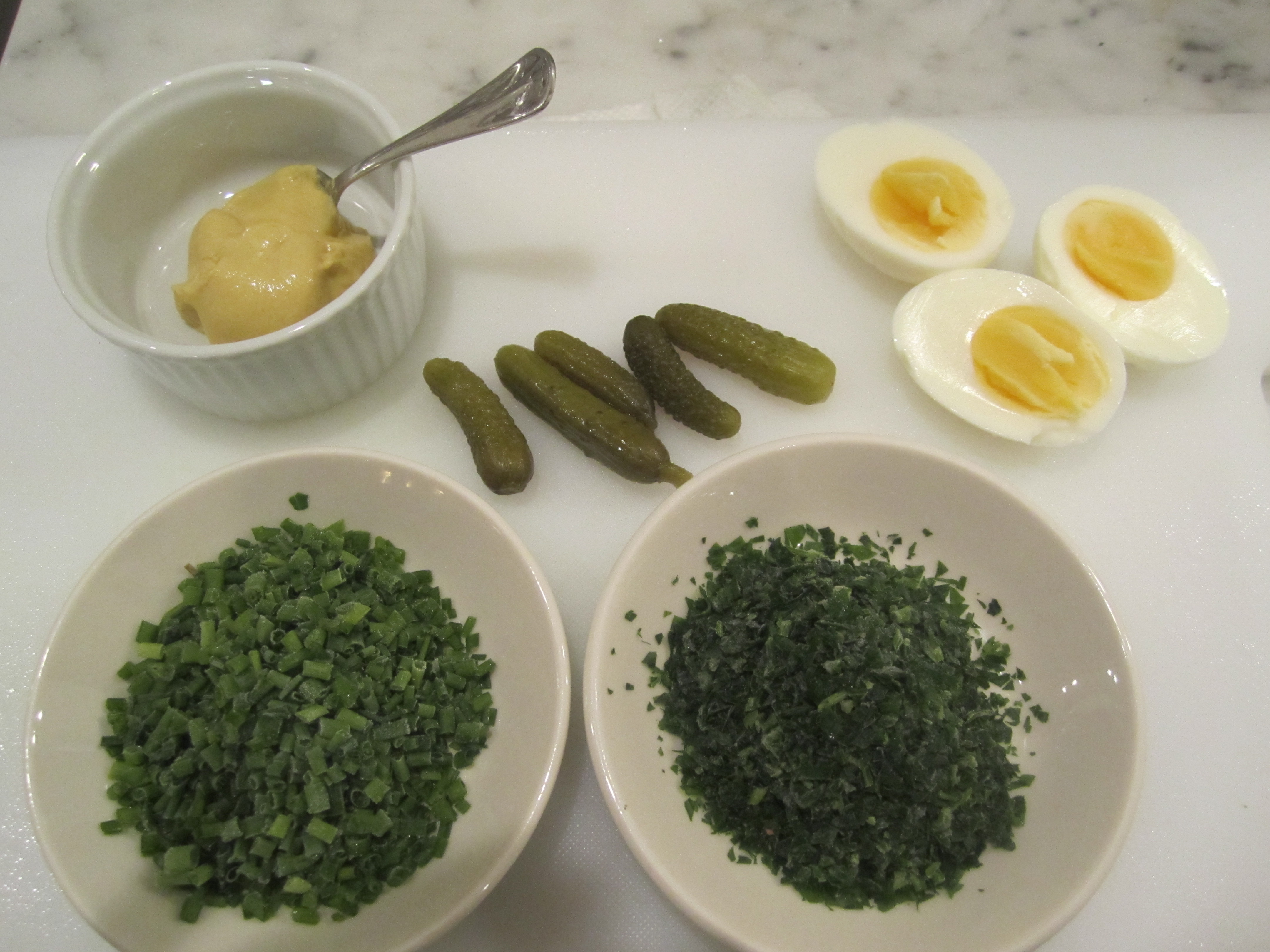
2 hard-boiled eggs

1/4 c fresh chopped chives

1/4 c  + 2 tbls fresh chopped parsley

6 cornichons

2 tbls dijon mustard (creamy)

6 pitted green olives

zest of 1 lemon + juice of half a lemon

1/2 c extra-virgin olive oil

3/4 tsp salt

Combine all ingredients in food processor and process to a smooth puree.

If using as a dip, serve as is.  If using as a sauce, thin with a couple tablespoons of water.

Serve with all manner of grilled meats, seafood, boiled meats, as well as boiled or raw vegetables.

Posted in Sauces, Seafood | Leave a comment

Pasta with Broccoli di Rapa, Sausage and Black Olives

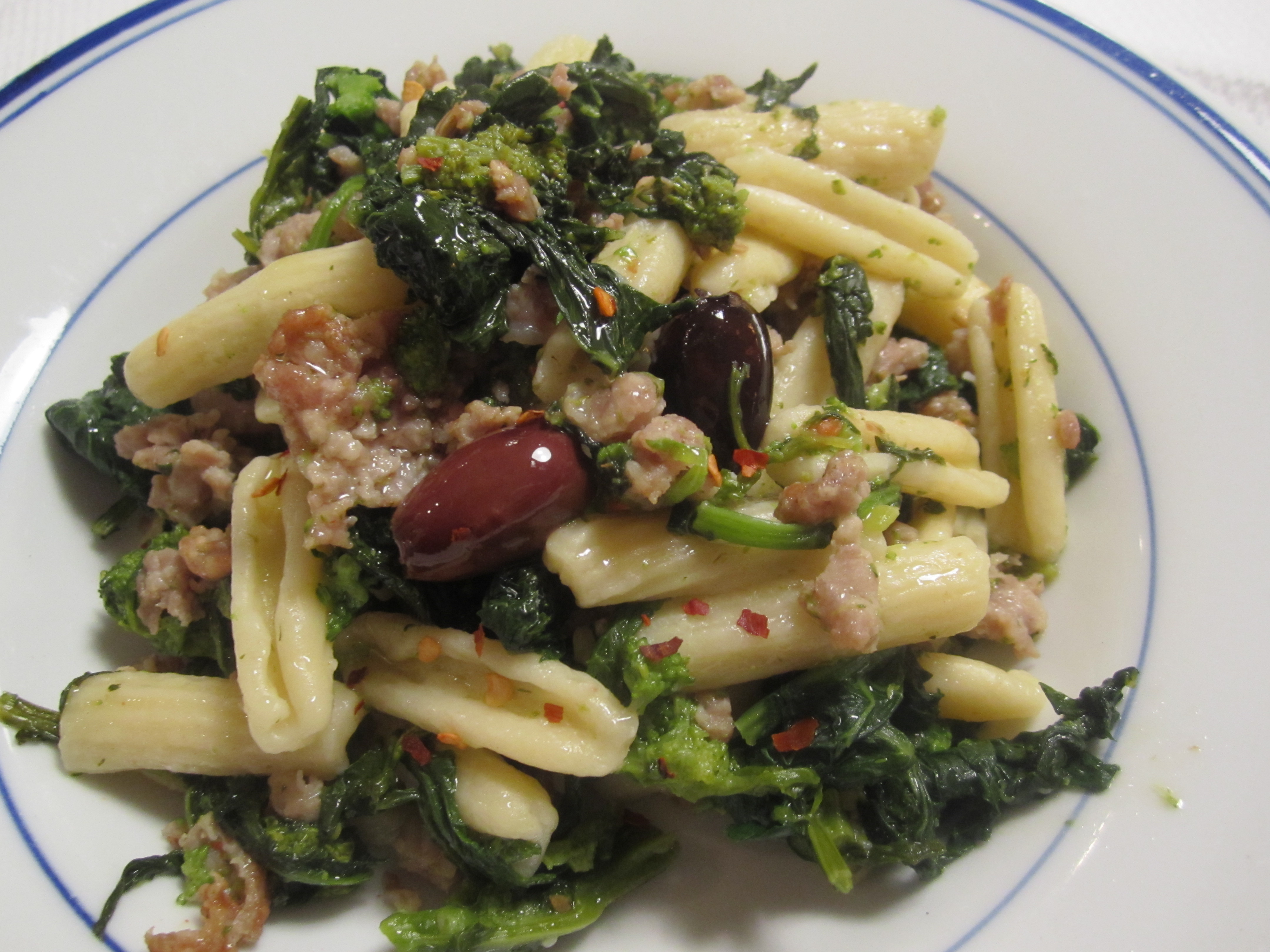
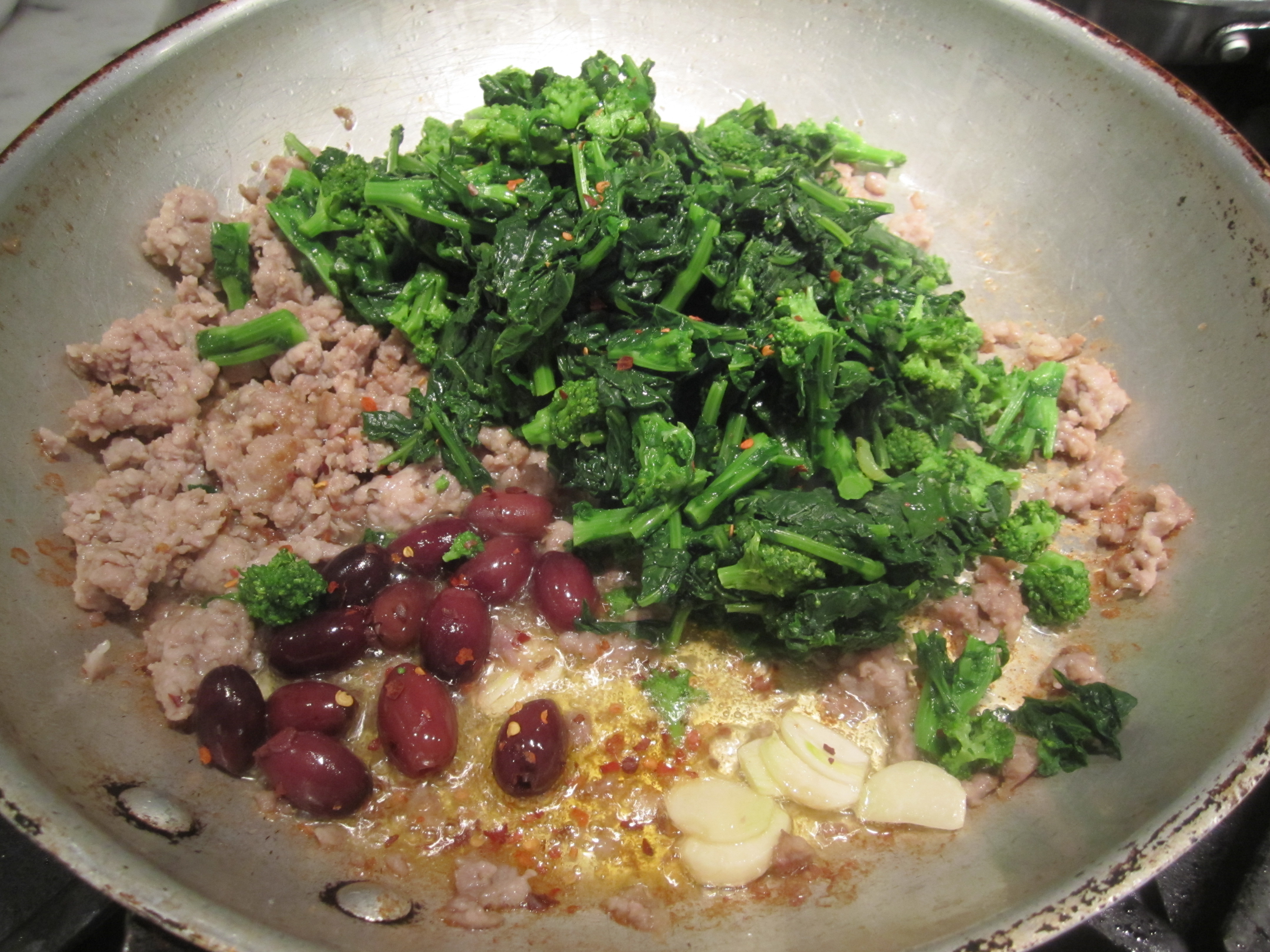
Pasta with broccoli di rapa and sausage is one of my favorite pasta dishes, and one that I make often–especially in the colder months.  I vary the dish from time-to-time in different ways.  Sometimes  I boil the sausage first, then slice it into thin rounds.  Sometimes I use fresh Italian sausage, removed from its casing and chopped finely as I saute it (no pre-boiling necessary).  Sometimes, I substitute a cured sausage, like andouille or chorizo, for fresh sausage.  Sometimes I eliminate the sausage entirely.  Tonight, I’m using fresh sweet Italian sausage.

In addition to the sausage, I’ve added olives–pitted kalamata olives.   Olives deepen in flavor and take on an entirely different character when they’re fried or roasted in the oven.  Their normally high acidic notes are greatly tempered and they become rich and unctuous.  When fried, they retain just enough of a salty bite to punctuate the bitterness of the broccoli and the richness of the sausage. 

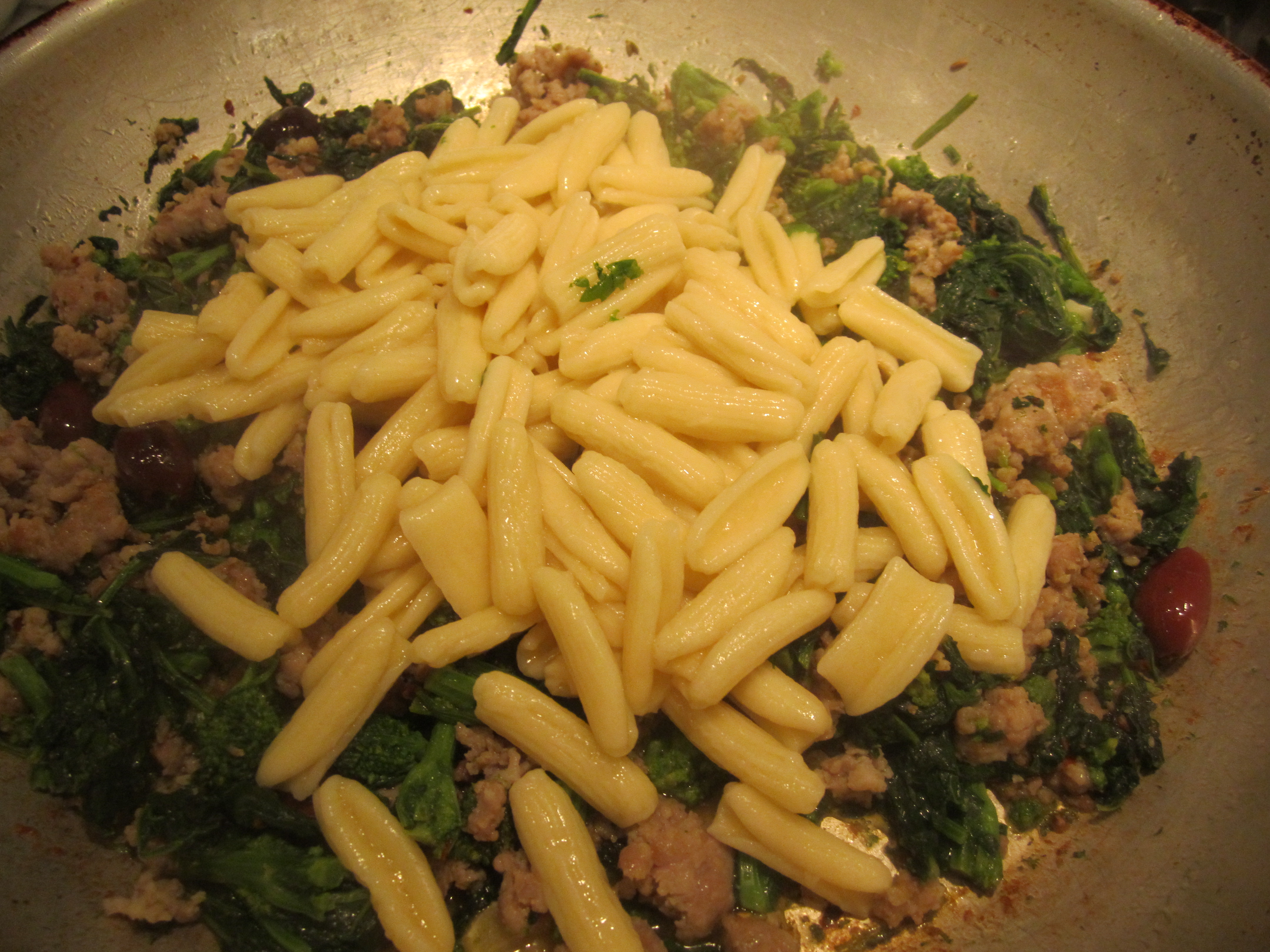
Tonight, as our pasta, we’re having cavatelli.  Cavatelli are found in the freezer of most supermarkets.  They’re a great pasta to make for guests–they can actually be fully boiled ahead of time (unlike most other pastas which should be boiled and served only at the last minute lest they overcook).  Cavatelli are sturdier and more forgiving–they can be boiled, drained, placed atop the sauce or condiment, let sit undisturbed while you have a first course or antipasto.  When you’re ready to serve, simply turn the burner under the skillet of pasta to high, toss pasta and sauce together with a couple of ladles of pasta cooking water, drizzle with oil and serve.   

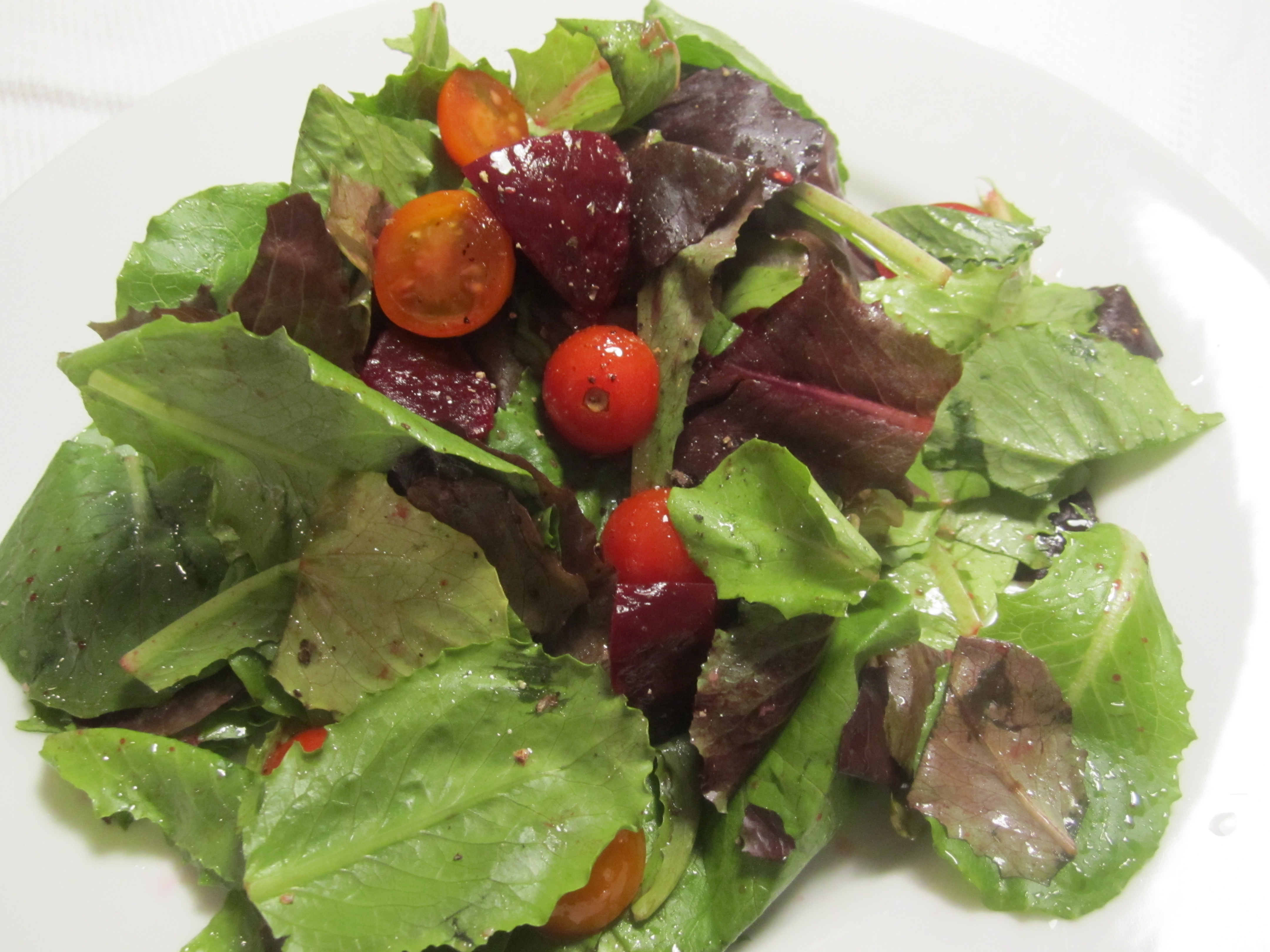
Although I’m not serving guests tonight, I appreciate the ability to completely cook the pasta prior to sitting down at the table.  We’re starting with a salad of baby romaine lettuce, beets and cherry tomatoes (from my neighbor Beppi’s garden), then going on the pasta as our main course.


 Pasta with Broccoli di Rapa, Sausage and Black Olives

serves 3 as a main course or 4 as a first course

2  13-oz. pkgs cavatelli

2 bunches broccoli di rapa

1 lb Italian sausage (either sweet or hot) removed from its casing

2 cloves of garlic, sliced

1/3 c pitted black olives, such as kalamata 

1/4 c olive oil

salt and pepper to taste

chili flakes for sprinkling

grated pecorino for sprinkling

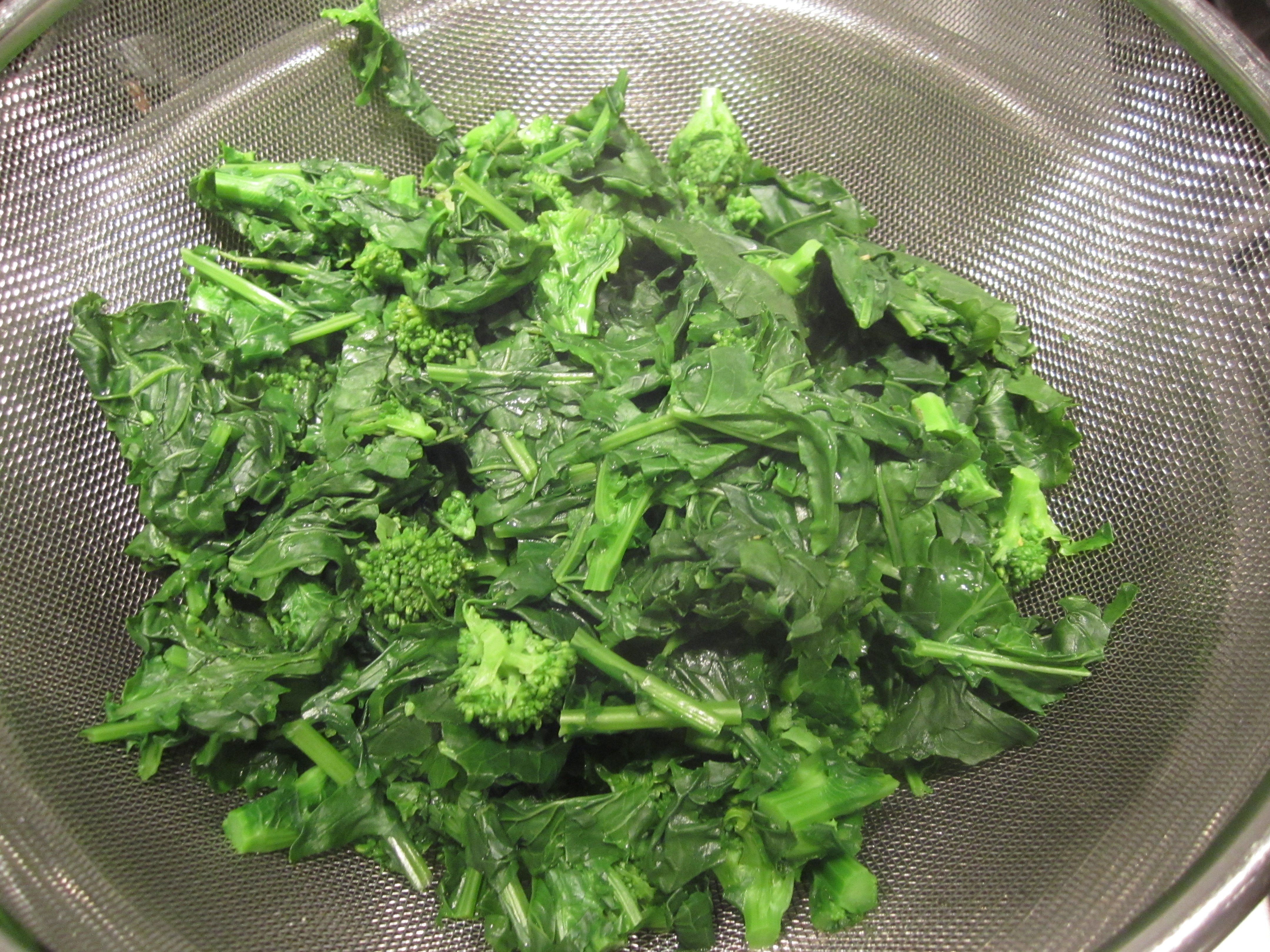
Chop broccoli crosswise into 1″ pieces, eliminating the bottom inch of stem.  Drop into boiling sated water for 3 minutes or until crisp-tender.  Drain and set aside.

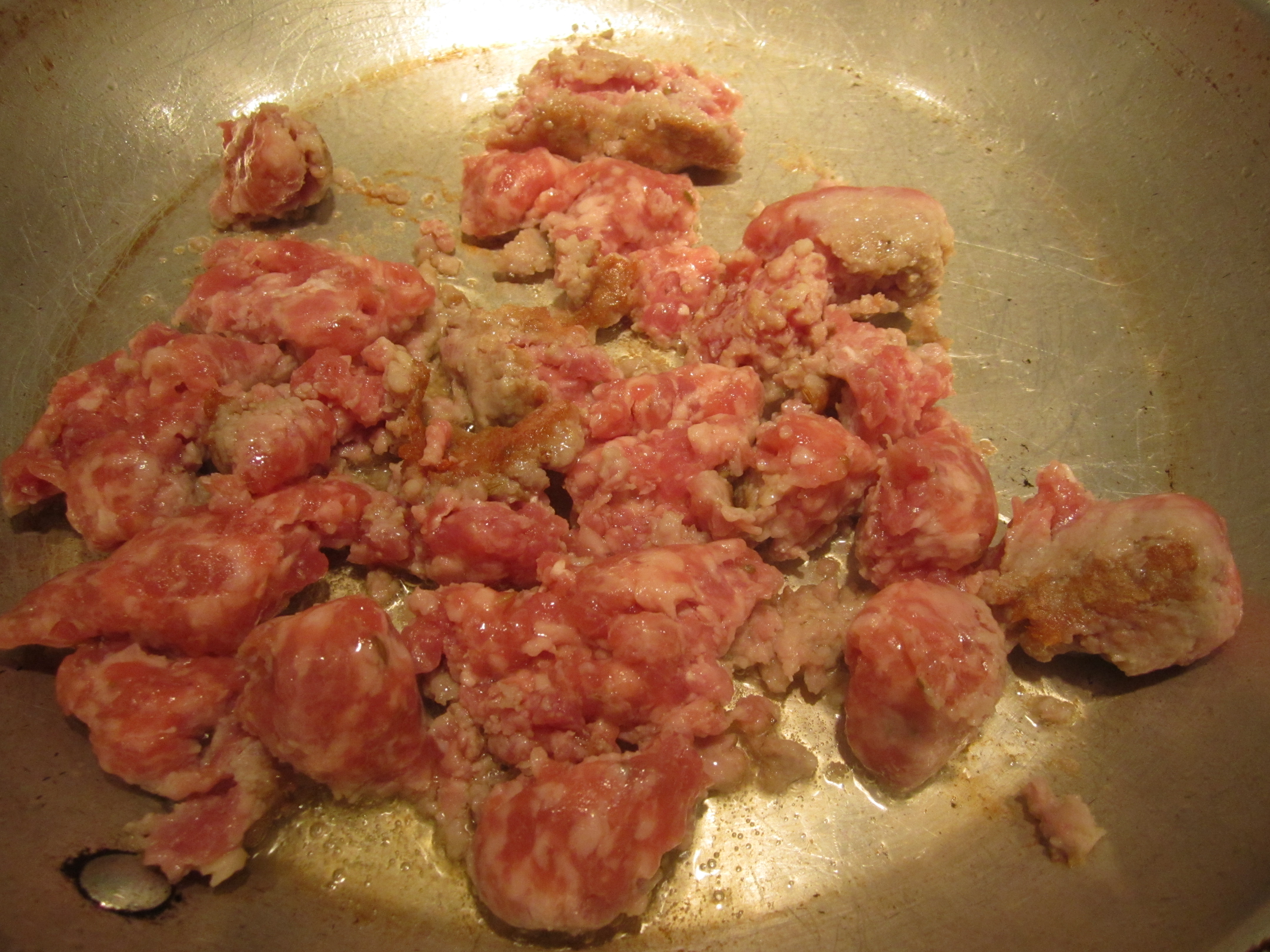
In a broad skillet on high heat, pour 2 tablespoons olive oil on high heat and add sausage.  Saute while chopping with spatula, until sausage has lost all pink color and just begun to brown.

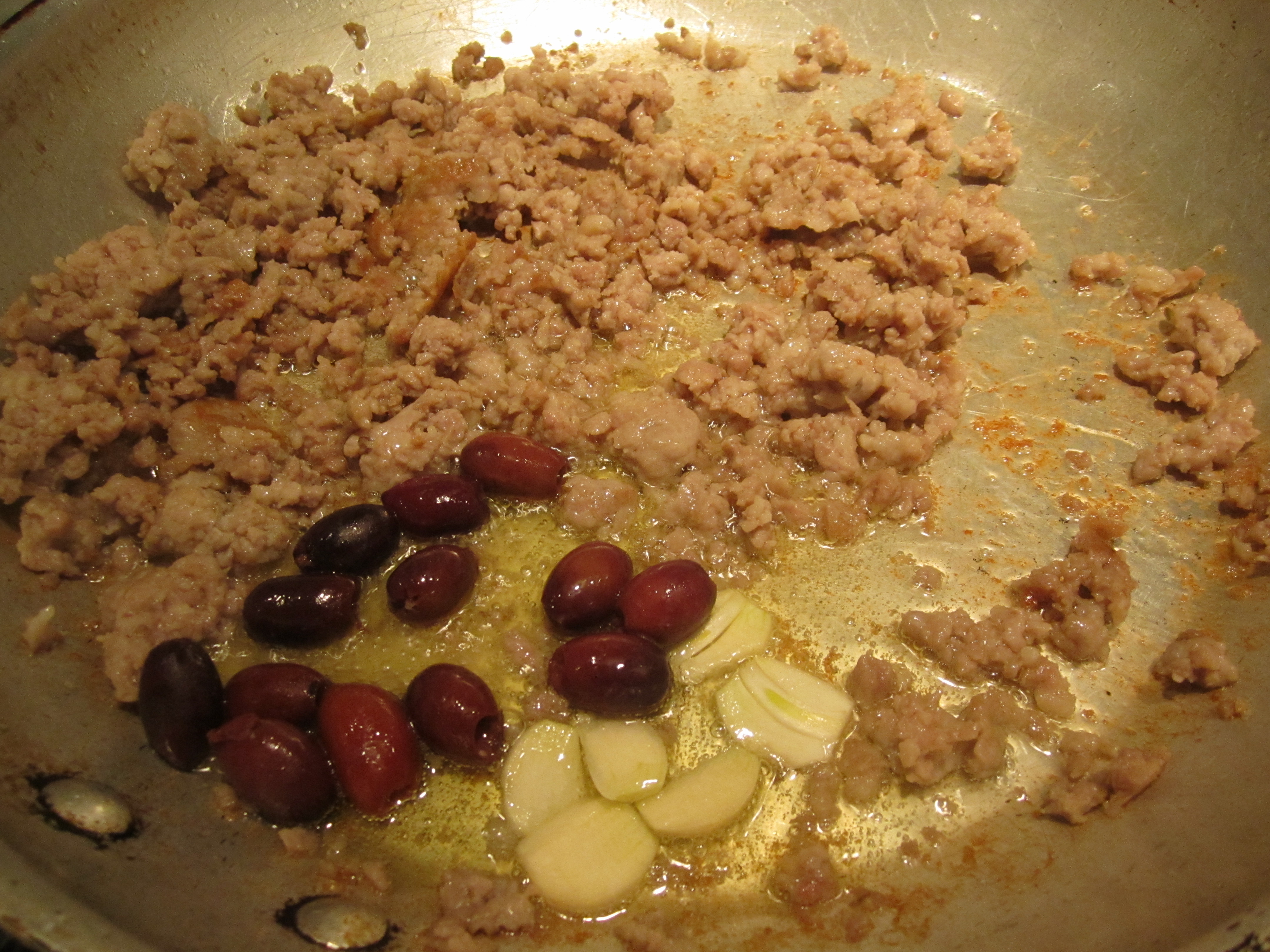
Add garlic and olives, saute for about 4 – 5 minutes.

Add broccoli and chili flakes and continue sauteing for another 2 minutes or until pasta is ready.

Boil pasta in plenty of salted water until done.  Add drained pasta to skillet of sauce.  If not serving immediately, allow pasta to sit atop the condiment until ready to finish the dish. 


If serving immediately, stir pasta into sauce, adding a cup of pasta water and the remaining olive oil. 


Posted in Pasta | 1 Comment

Pappardelle with Wild Mushrooms

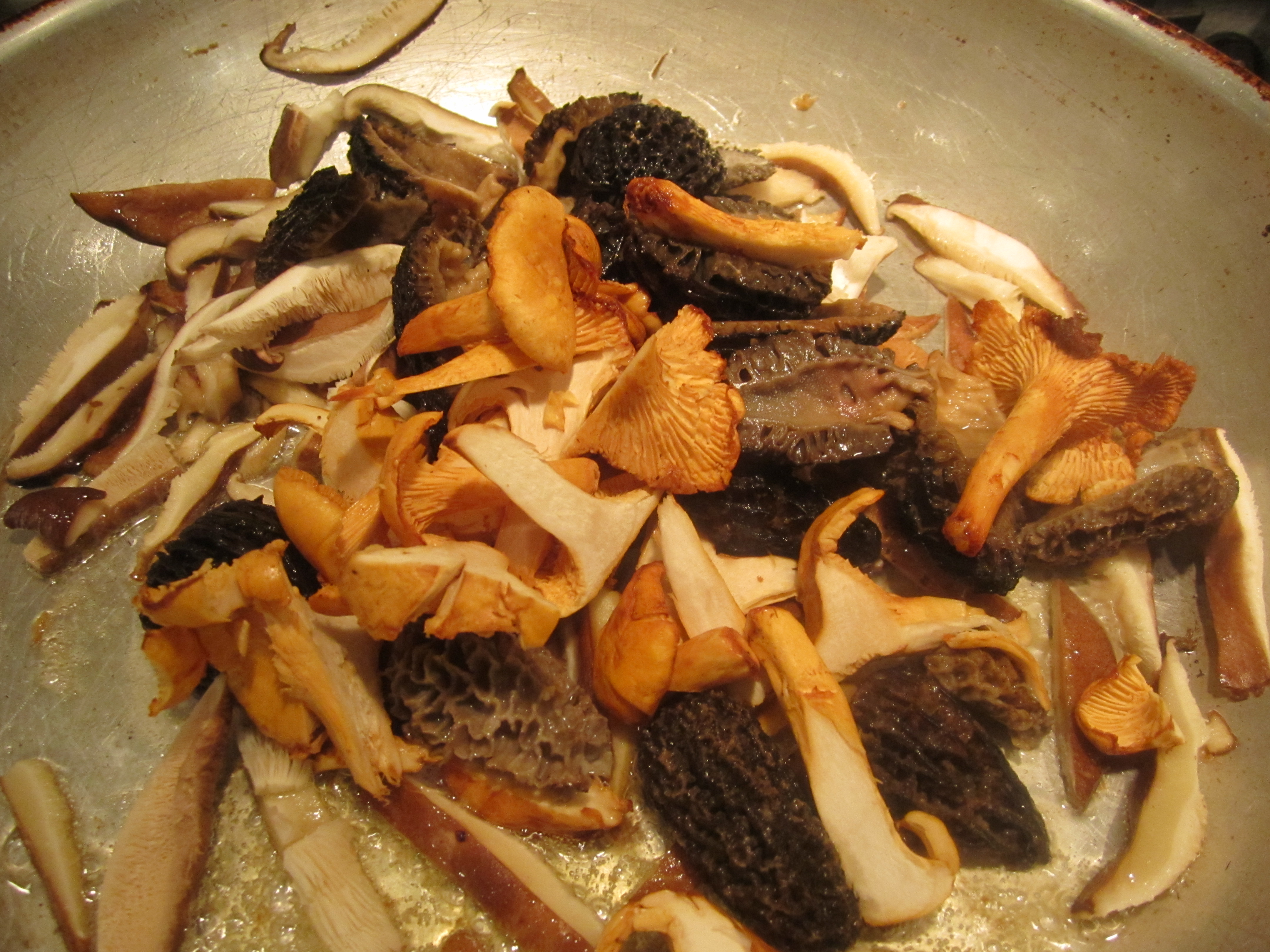
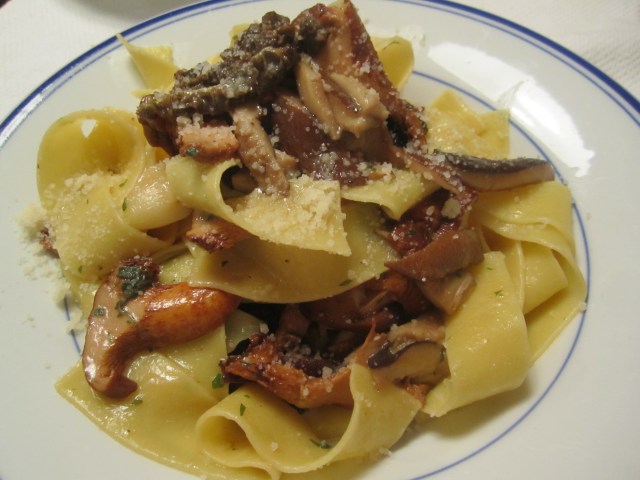
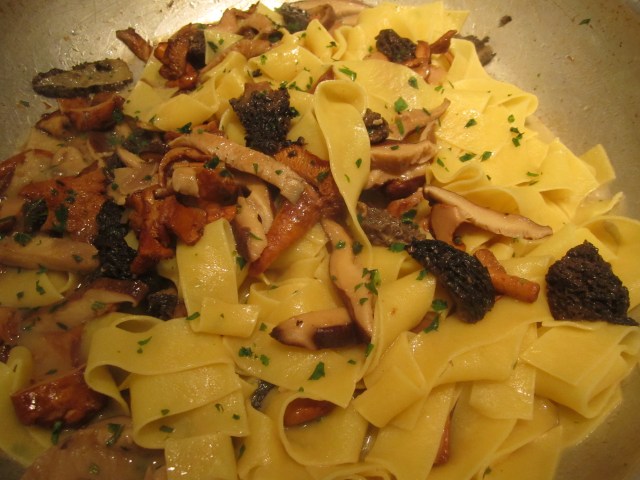
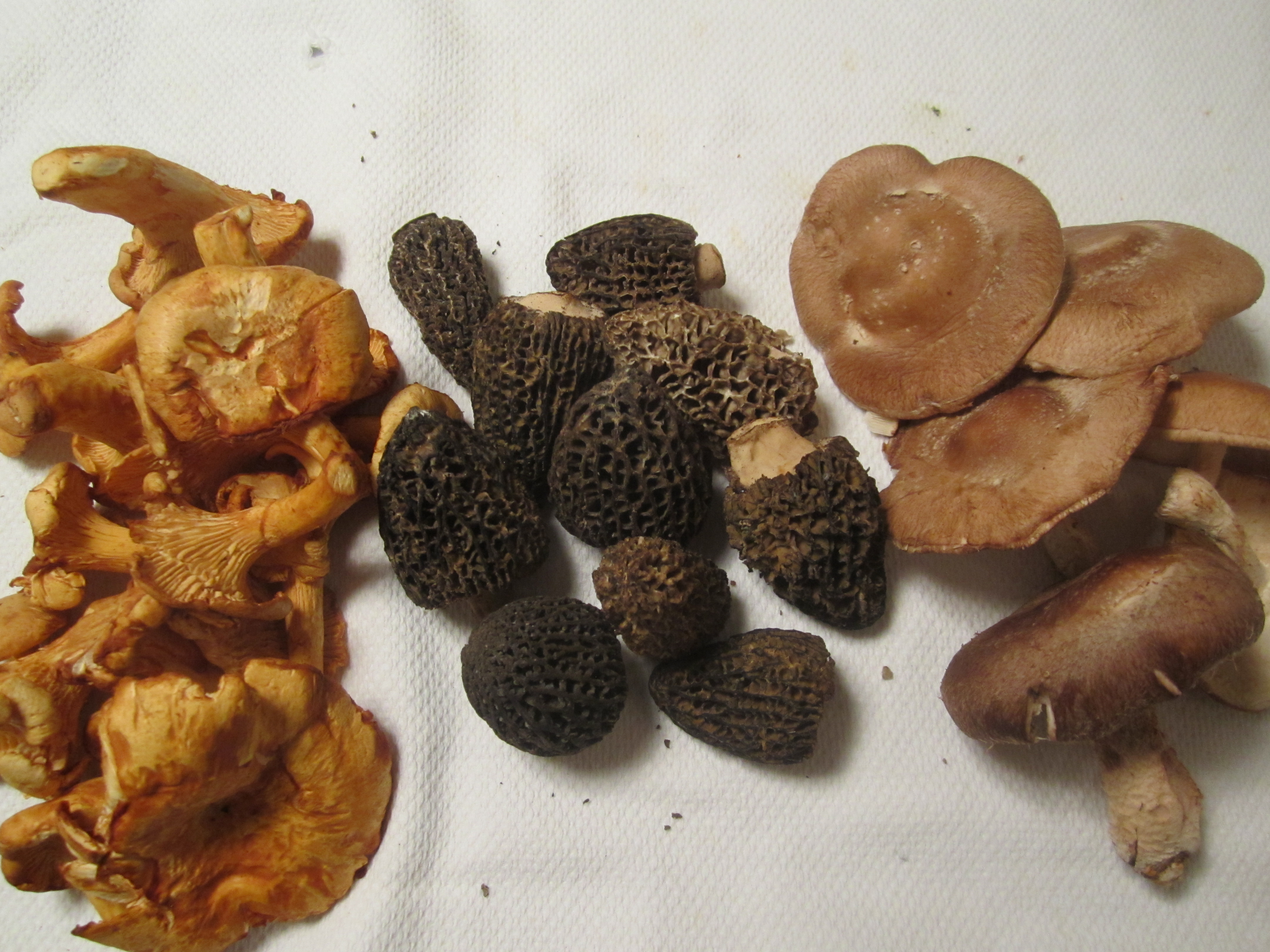
Tonight I’m making an intimate birthday dinner for two.  For this special occasion, I’m seizing on the bounty of beautiful (and expensive) wild mushrooms that I’ve been coveting for weeks at my produce market.  I’ve been noticing morels ($49/lb), chanterelles ($29/lb), and lobster mushrooms ($49/lb), as well as less rare varieties, like shiitakes and oysters.  For the past couple of weeks, however, I’ve been cooking for larger groups, and not inclined to make such a lavish dish for a large group.  Tonight, however, is the perfect occasion to buy a little assortment of these wild mushrooms, since I’m only cooking for two.   I’ve selected chanterelles, morels and shiitakes (left to right, below).
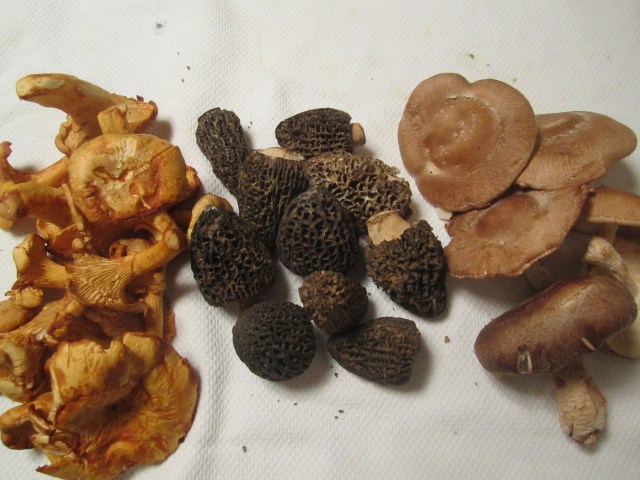
 

There are so few ingredients in this dish, its’ outcome is totally dependent on the quality of those ingredients:  mushrooms, garlic, chicken stock, butter and white wine.  There are no herbs to mask or intensify the flavor of the mushrooms (just a sprinkle of parsley at the end to brighten the dish). 

The chicken stock should be good, intense homemade stock.   One of the most valued flavoring agents in my freezer is an assortment of unassuming little ziploc bags which contain the drippings from various roast chickens and turkeys.  These drippings get frozen with their layer of fat, then the fat is easily scraped off once they’re frozen.  They get diluted with water (or tossed into a soup or stew) and provide the richest little bursts of flavor you’ll ever taste in a kitchen! One of these packets will be the chicken stock in my pasta tonight.

This dish should be made and eaten at the last minute, although you can make the sauce and let it rest for about 20 minutes if you’re having an antipasto before the pasta.  In that case, simply wait to boil the pasta until after the first course is eaten, then reheat the sauce briefly, toss in the pasta and serve immediately.

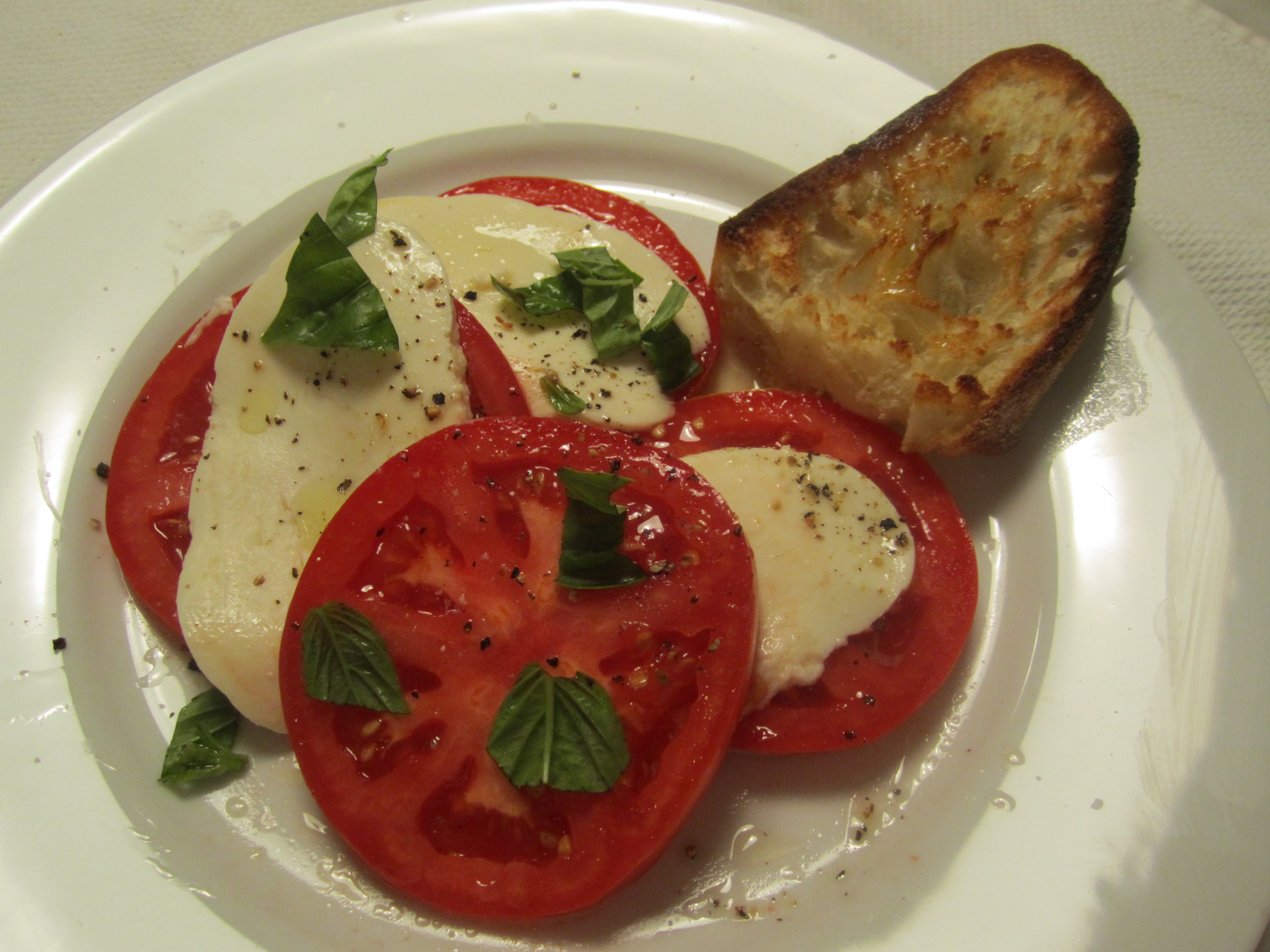
Tonight we’re having a beautiful caprese salad as a first course (maybe the last one of the season) with some tomatoes I’ve had ripening for a week on my window sill.
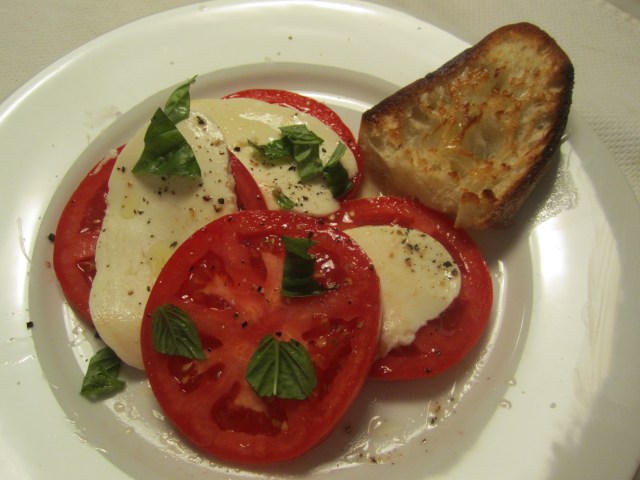
 

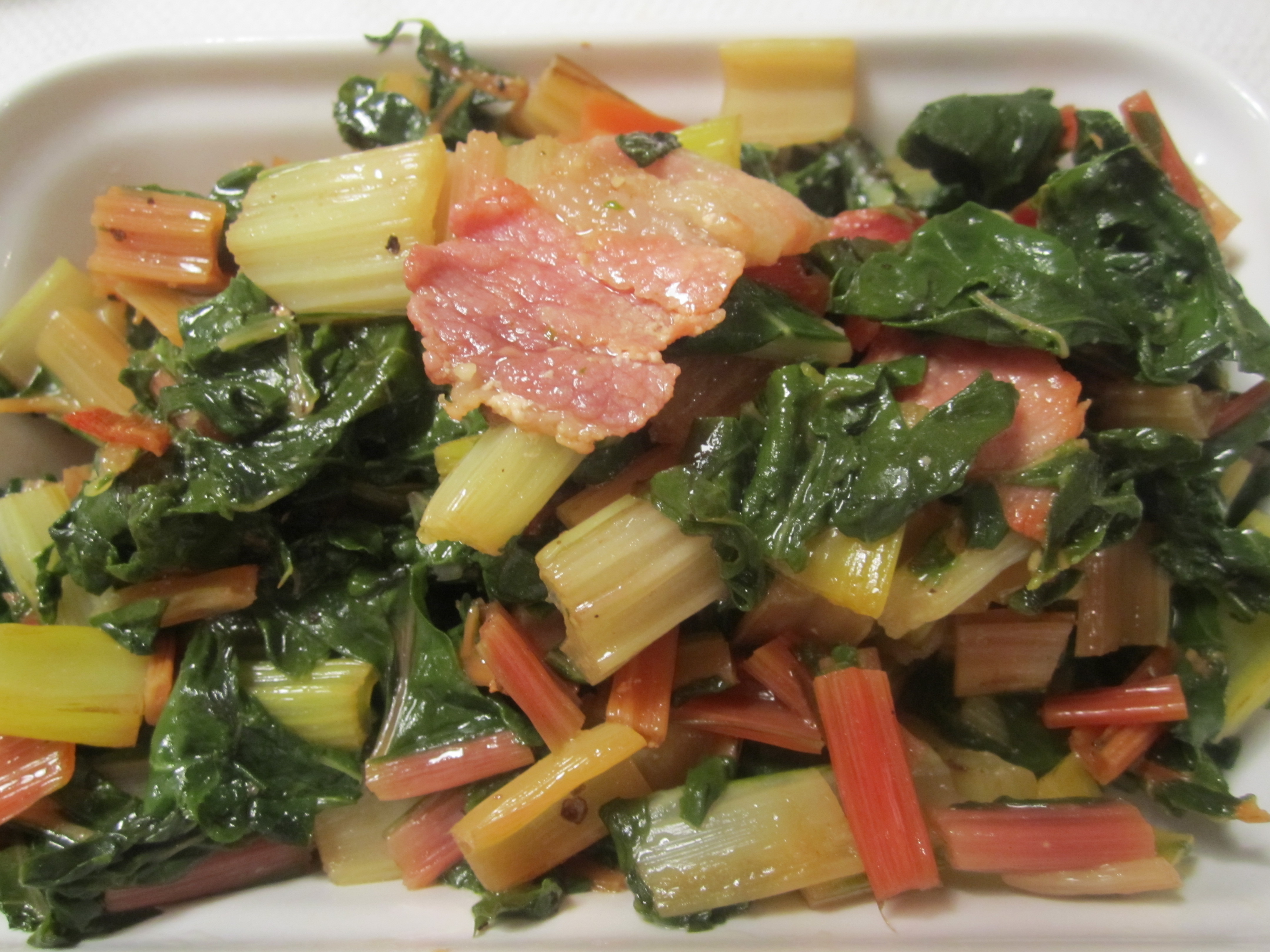
After the salad, we’ll have the pasta plus a vegetable on the side–swiss chard–boiled, then sauteed with olive oil and salt pork.

Pappardelle with Wild Mushrooms

serves 2

8 oz. egg pappardelle

1 lb assorted wild mushrooms (I used 1/3 lb chanterelles, 1/3 lb shiitakes, 1/3 lb morels)

3 cloves garlic, split

1/2 c white wine

1 c homemade chicken stock (or drippings from a roast chicken)

2 tbls fresh chopped parsley

6 tbls butter

2 tbls olive oil

salt and pepper to taste

grated parmigiano for sprinkling

Prepare mushrooms at the last moment prior to cooking:

For shiitakes:  remove stems from and discard.  Wipe any loose soil from their surfaces with a damp paper towel.  Slice tops into 1/2″ lengths.

For chanterelles, rinse quickly under running water and dry with paper towels.  Slice larger ones into bite-size pieces. 

For morels, slice in half lengthwise and rinse with sprayer to dislodge any particles of dirt from their honecomb exteriors.  Place in a deep bowl of water to allow any remaining soil to dislodge.  Repeat once or twice more if there is still a lot of dirt in the water.  Drain in strainer and set aside.  

In a broad skillet with olive oil and 3 tbls butter, saute garlic until just golden.  Add mushrooms and saute on medium heat.
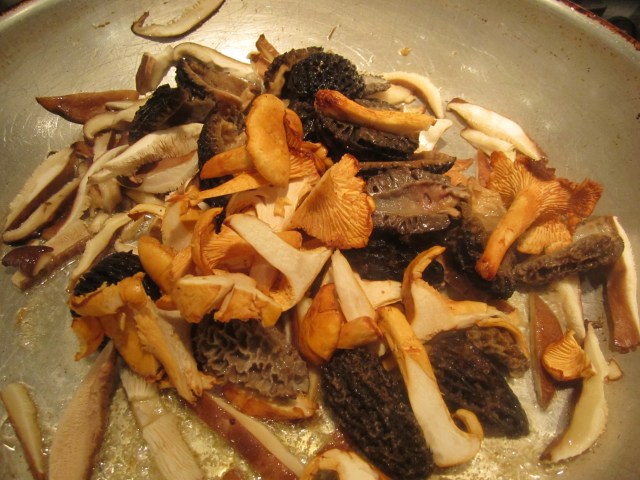
 

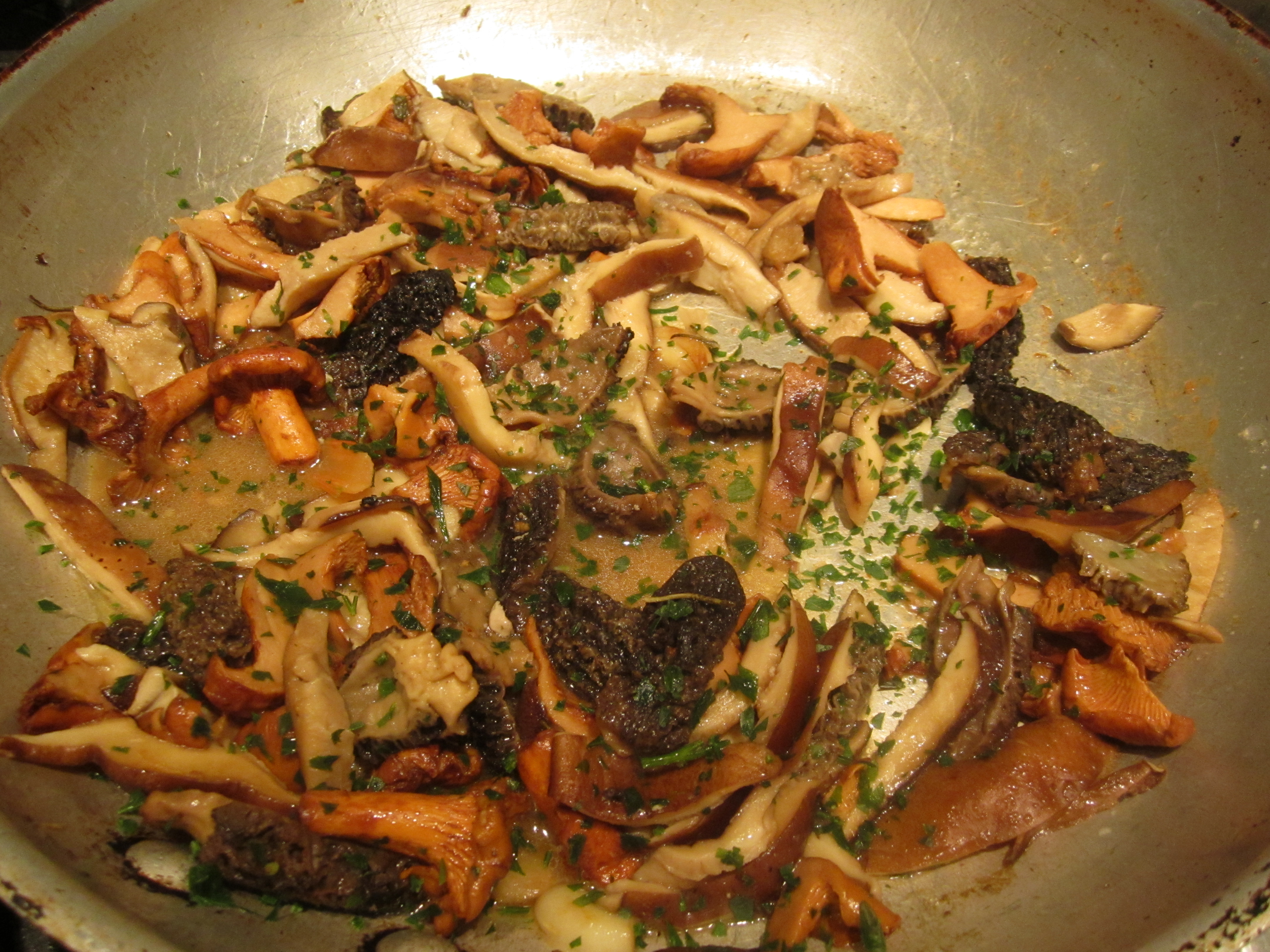
 Continue sauteing for about 3 minutes, then sprinkle with salt and pepper (about a half-teaspoon of salt and a quarter teaspoon of black pepper).  Raise heat and add wine.  Reduce wine until there is only a glaze remaining in the pan.  Add stock and half the parsley.  Lower heat to simmer.
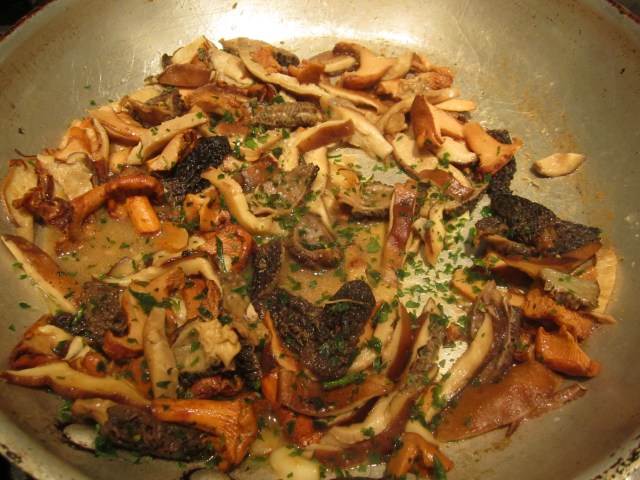
Drop pasta in boiling salted water.  When pasta is cooked, add to skillet, along with a half-cup of pasta cooking liquid, the remainder of the butter, and the parsley.  Toss and serve immediately with plenty of grated parmigiano.
 

Posted in Pasta | Leave a comment

Rolled Turkey Breast with Pears and Spinach

This dish represents a nice transition from late summer to early fall.  I hate to let go of summer, but I do love the bounty of vegetables in the fall.  Today, I saw perfectly ripe pears at one of our local orchards and decided to build my meal around them.

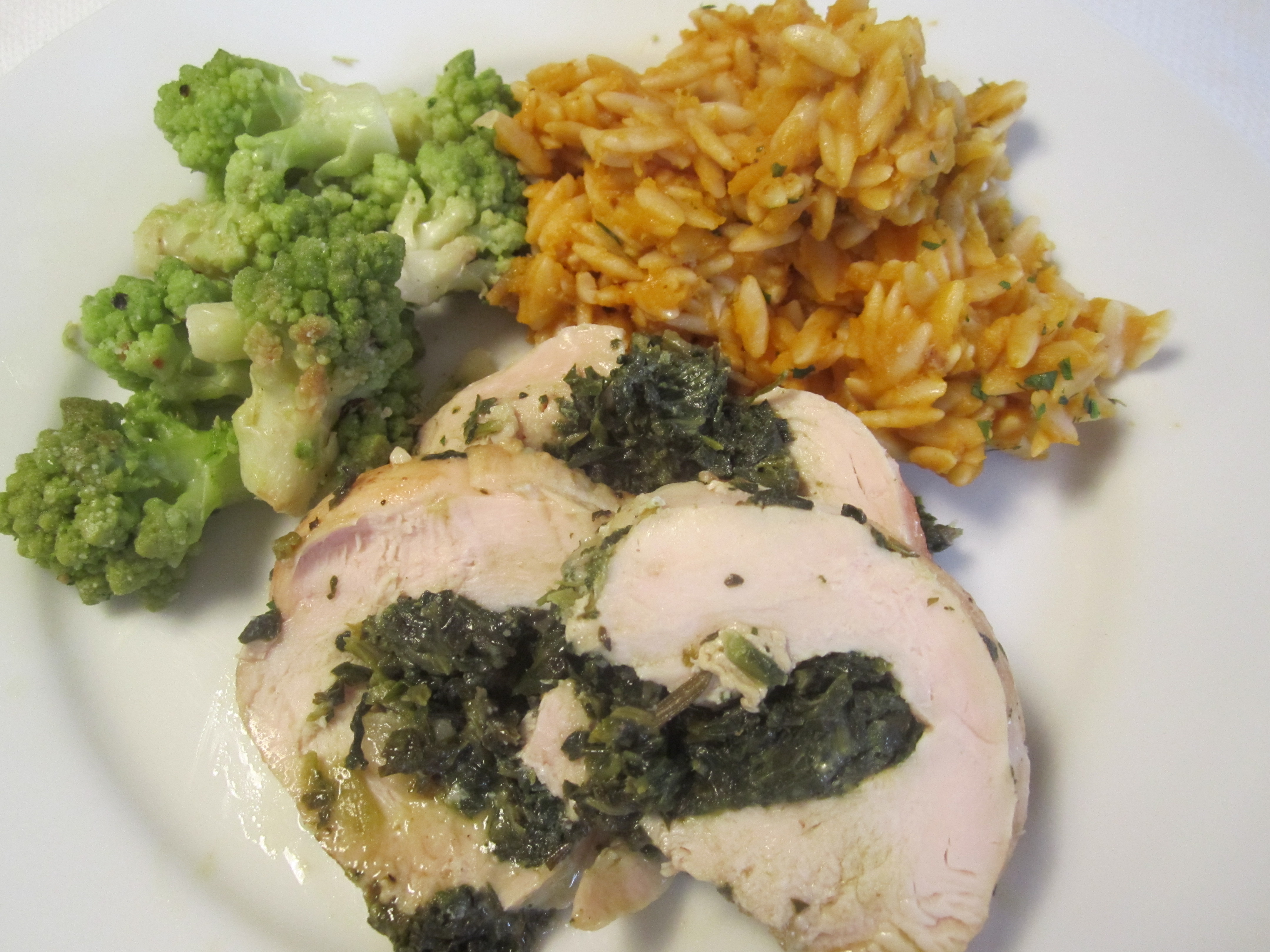
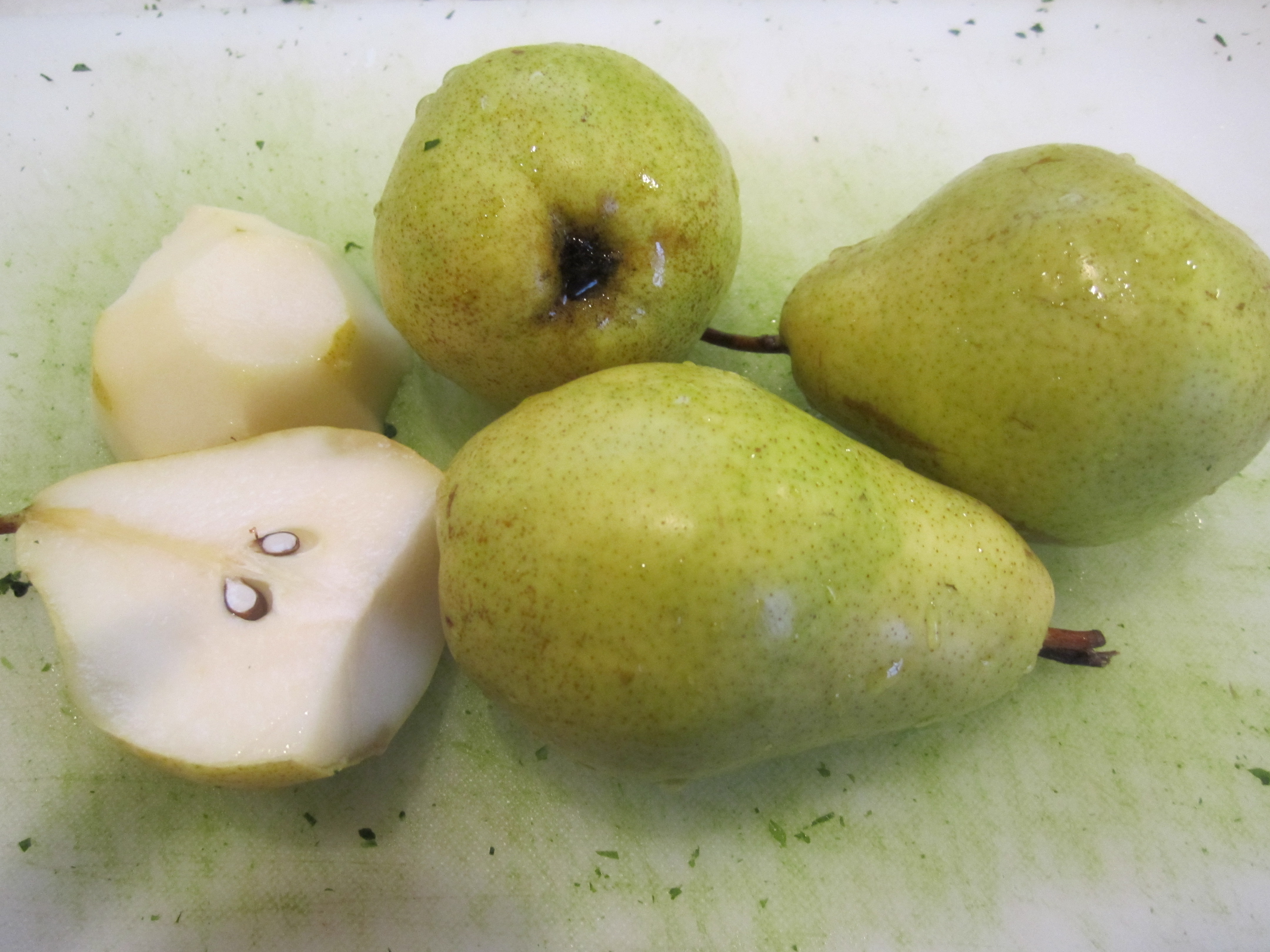
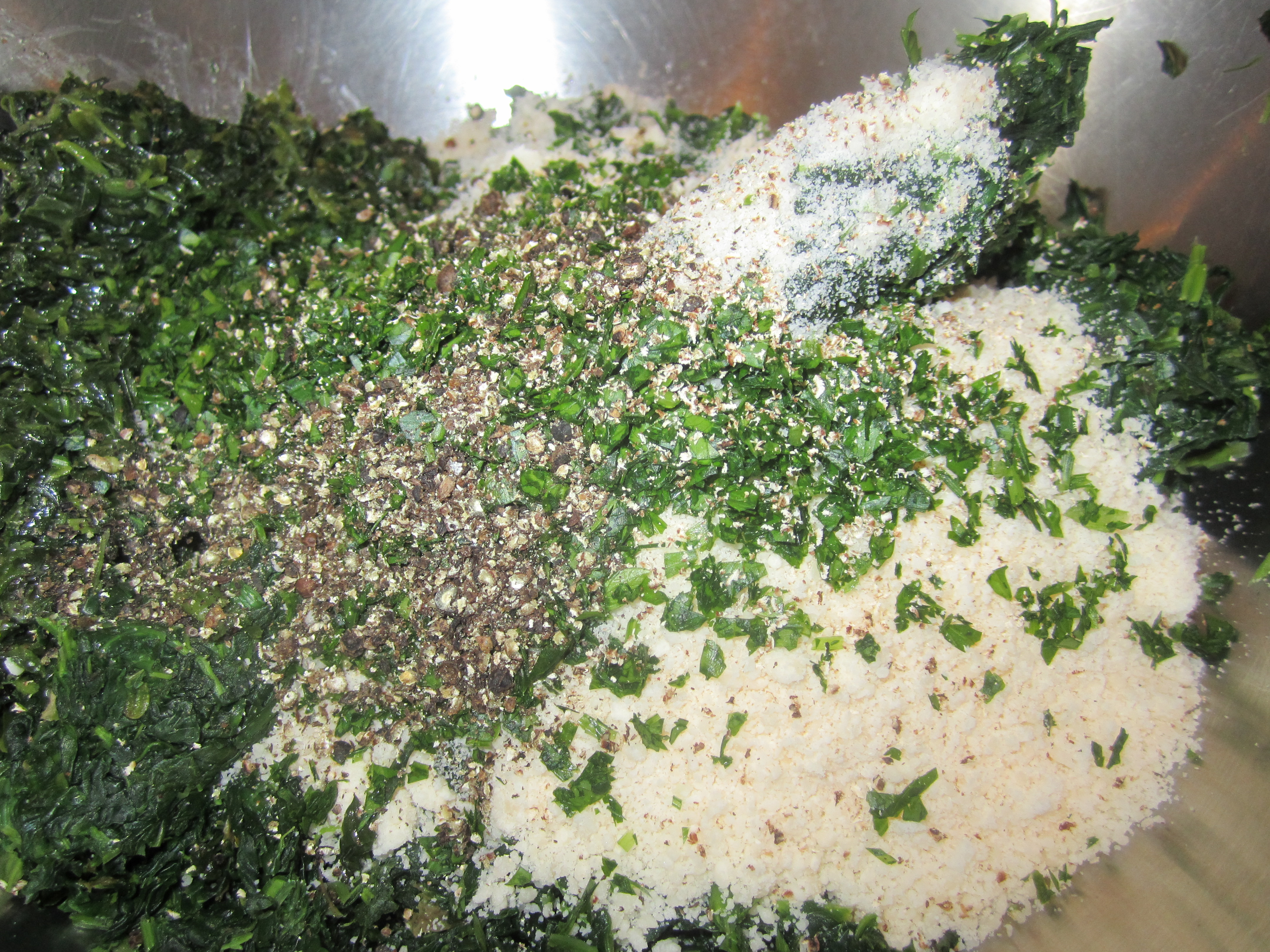
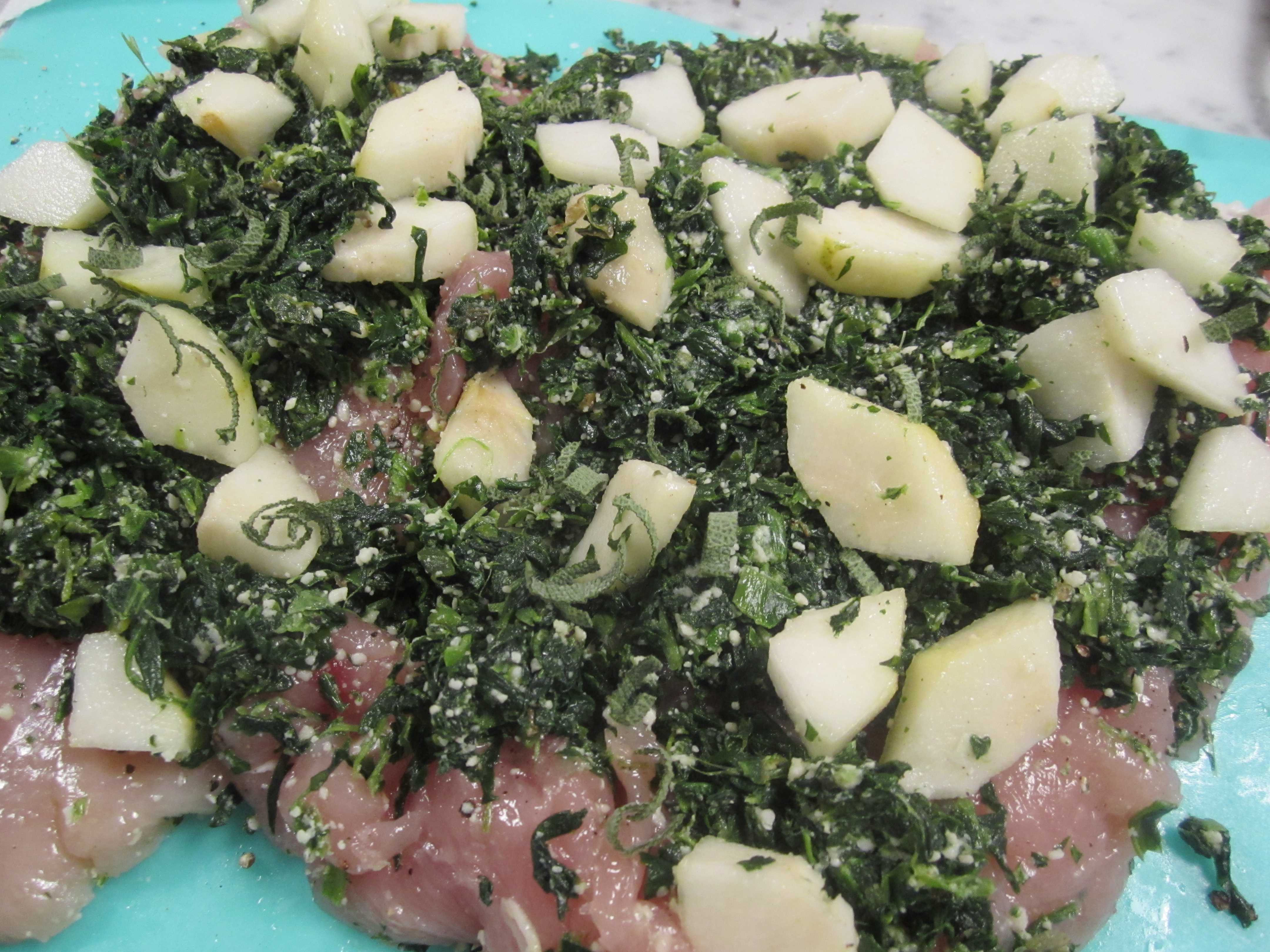
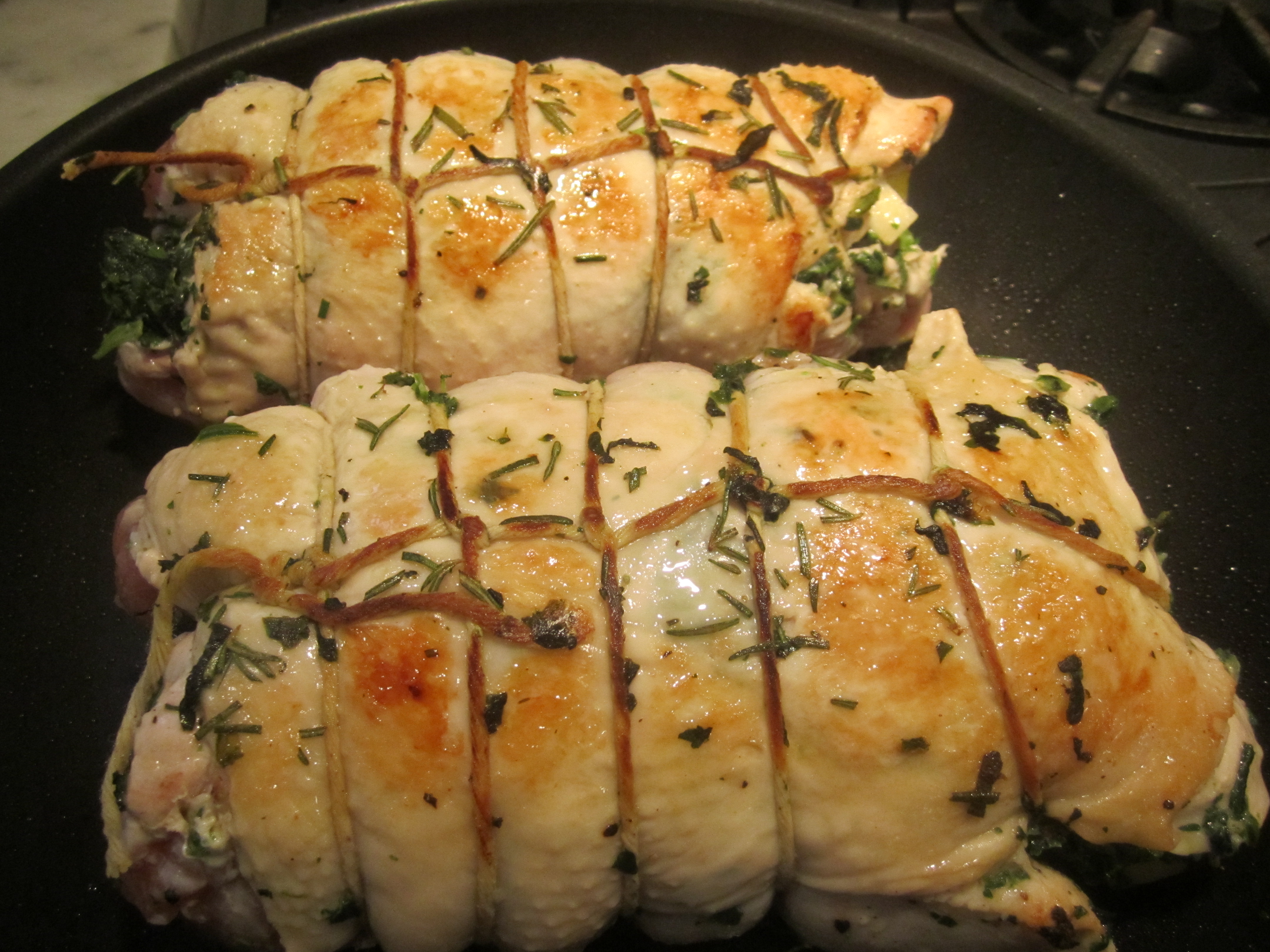
The stuffing for my turkey breast celebrates the combination of ripe pears and parmigiano cheese.  Chopped spinach is used as the binding agent between the pears and cheese.  I used frozen chopped spinach, blended with some some parsley and a pinch of nutmeg.  The mixture gets spread over the non skin side of a butterflied turkey breast, then pears (peeled and diced) are laid across the top and the whole thing is rolled and roasted.  I like to drape the skin over the whole roast before tying it.

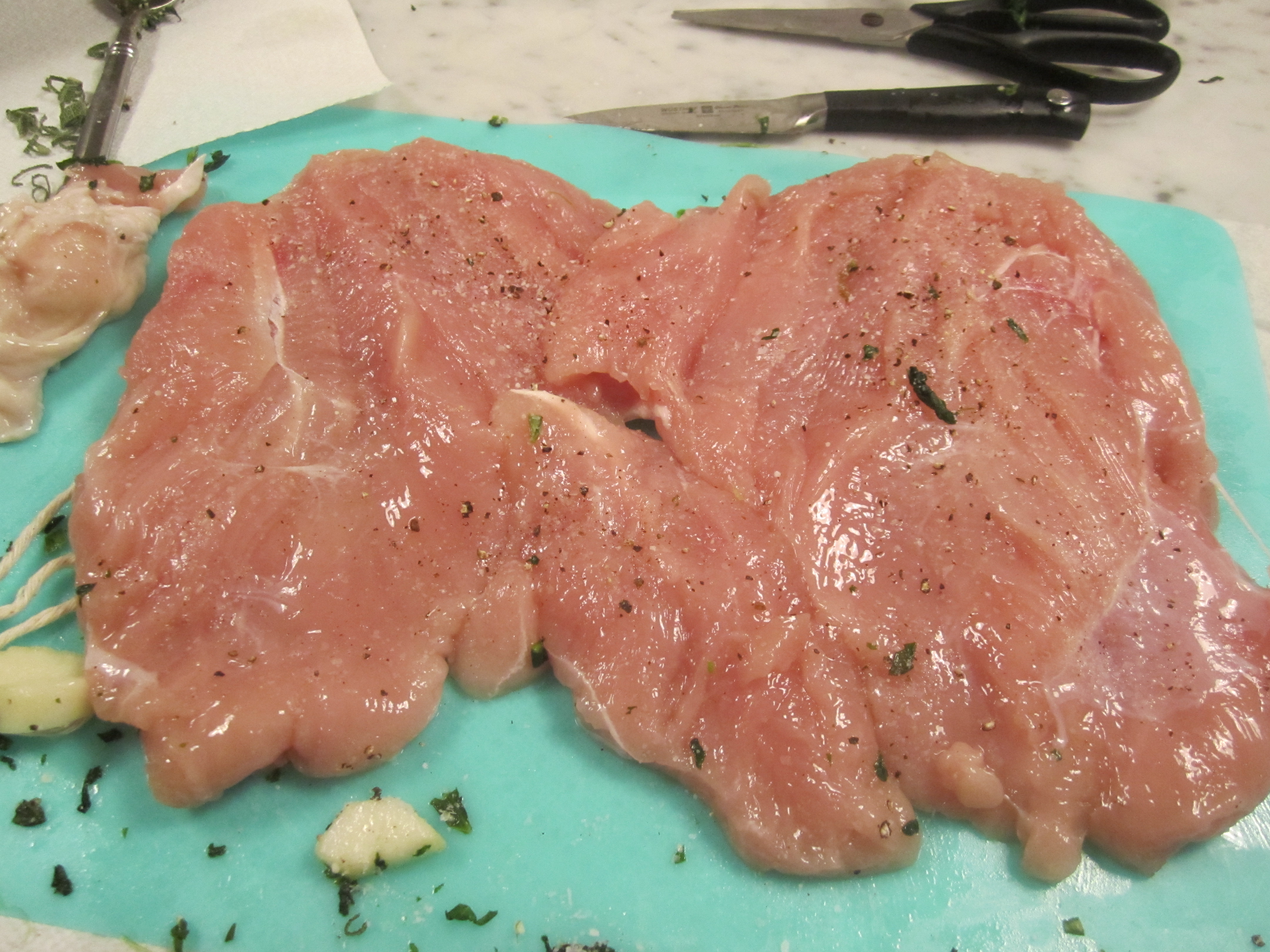
This may seem like a daunting butchering process, but I’ll give you some photos of the technique and you should be able to duplicate it in your kitchen.

I like to brown the breasts on the stovetop before placing in the oven to roast.  This is a sputtery, messy step, and one that can be omitted, but I think it’s necessary to give the browning process a head-start before roasting in the oven.  It’s difficult to achieve the golden brown skin but perfectly cooked meat without first browning on the stovetop.

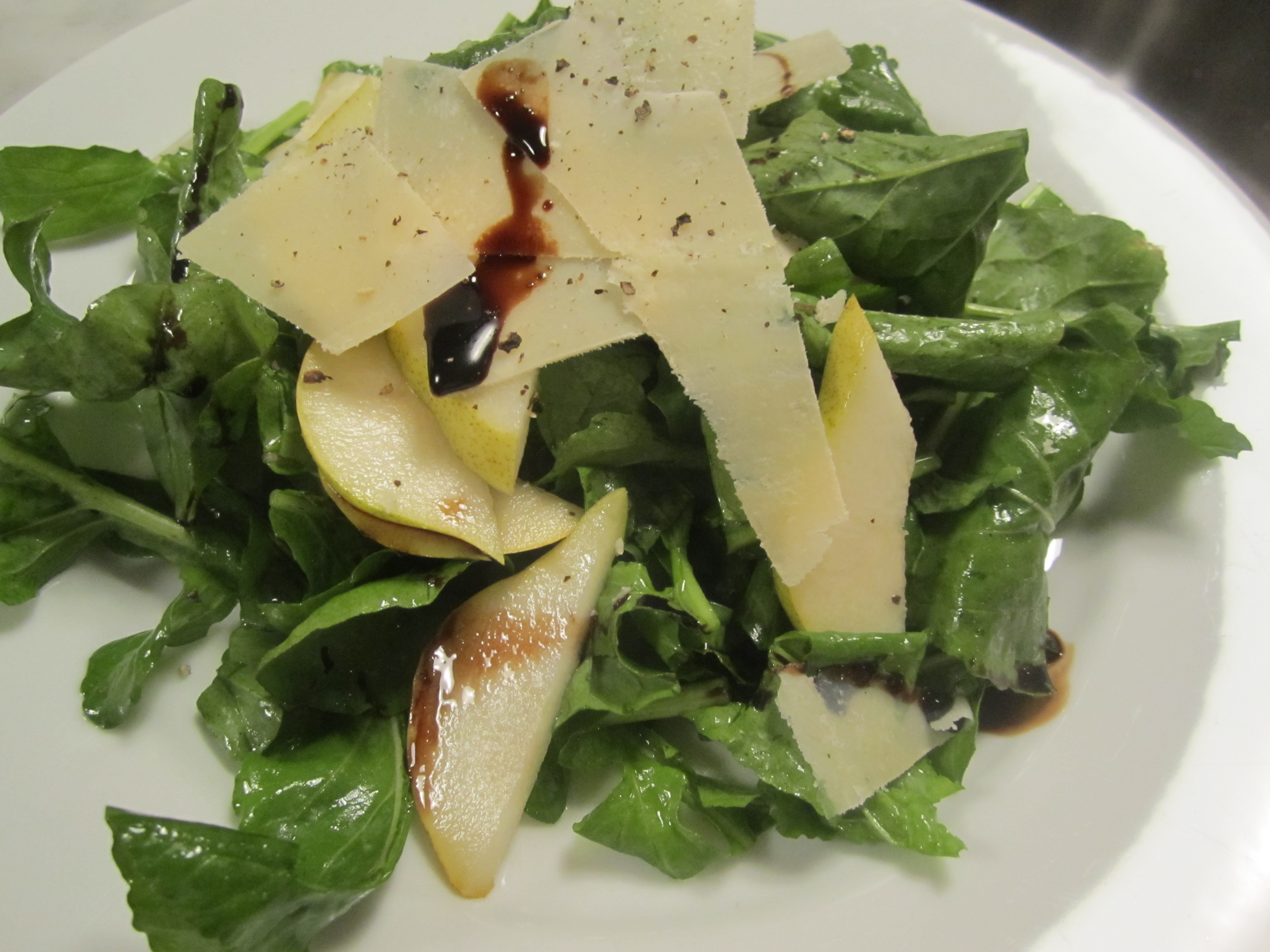
Our first course tonight is an arugula and pear salad with slivers of parmigiano, dressed with olive oil and lemon juice.  Over the top of the salad, I drizzled a touch of aged balsamic vinegar.  The balsamic vinegar is an exotic touch that pairs extremely well with both the pears and parmigiano.

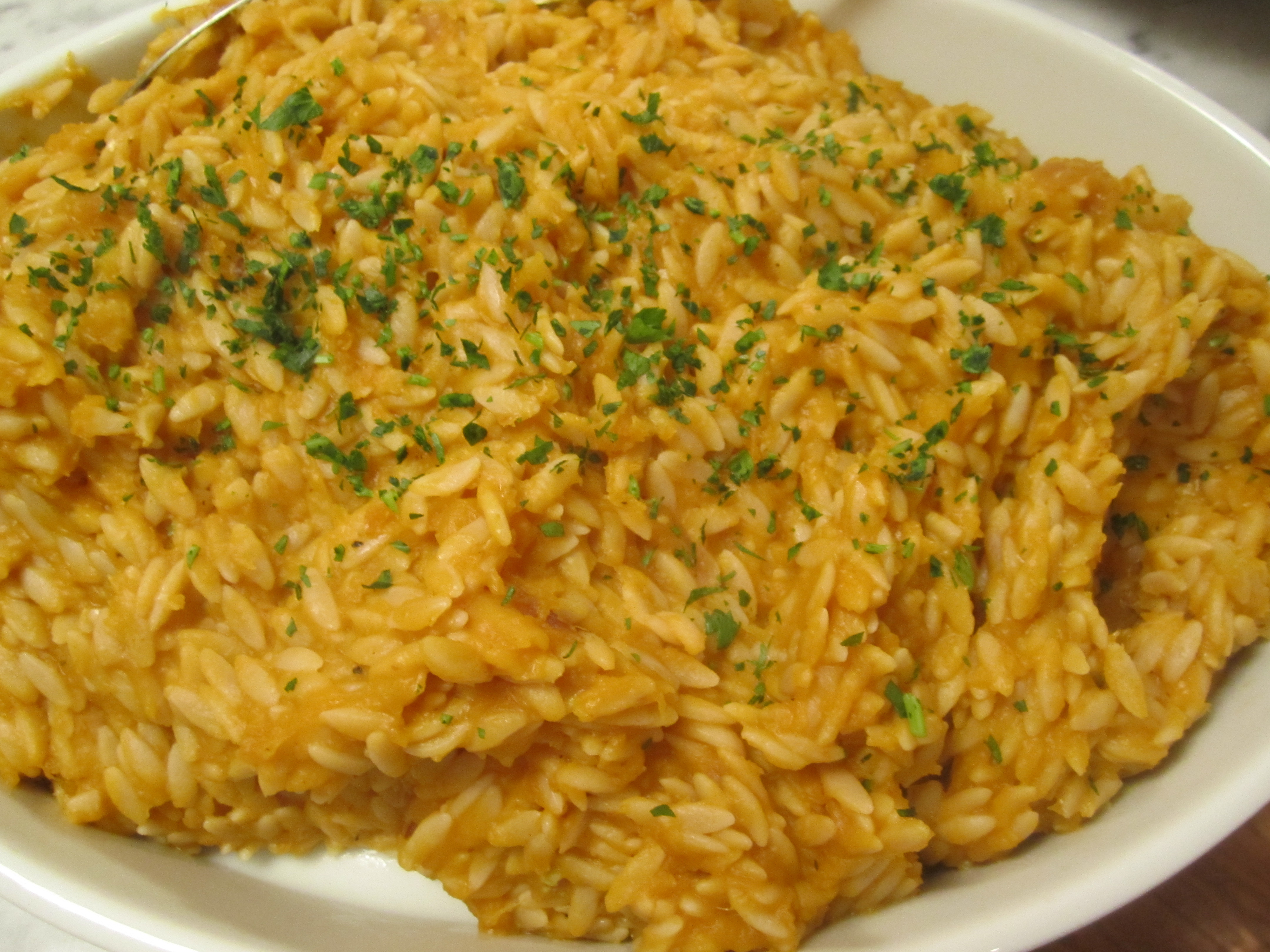
As accompaniments to the turkey breast, I made orzo with butternut squash and sauteed romanesco broccoli with butter and sage.

Rolled Turkey Breast with Pears and Spinach

Serves 10 – 12

2 Boneless Turkey Breasts with Skin (approximately 3 lbs each)

3 10-oz. packages frozen spinach

2 tbls fresh chopped parsley

6 small ripe pears

1 c grated parmigiano

2 sprigs rosemary

1/8 tsp nutmeg

salt and pepper to taste

2 tbls olive oil

1 cup chicken broth

1/2 c white wine

1/4 c dry sherry

Thaw and squeeze frozen spinach and place in a mixing bowl with the cheese, nutmeg, parsley, salt and pepper to taste.

Peel and cube pears and set aside.

Remove the skin from the turkey breasts and set aside.  Lay the meat skin-side down and open up the 2 halves of the breast, slitting and “opening” any thicker sections of the meat to make one large piece of meat of even thickness (as even as possible).

Season each breast on both sides generously with salt and black pepper.

Lay spinach mixture evenly across the breasts and top with peeled, diced pears.

Roll (as best as possible) into a roast and genlty drape with reserved skin.  Tie with kitchen string at evenly-spaced distances across the roast.

Preheat oven to 375 degrees (with convection, if you have it).

In a nonstick skillet (or flameproof oven casserole), brown the roasts in olive oil on high heat for about a minute per side.

Transfer to roasting pan or place flameproof casserole in oven.  After it roasts for about 15 minutes, add broth, wine and sherry.  Continue roasting uncovered and basting for another hour or so, or until internal temperature reaches 165 degrees.  Let rest at least 10 minutes before removing string and carving.  Serve with pan juices.

Posted in Poultry | Leave a comment

Orzo with Butternut Squash

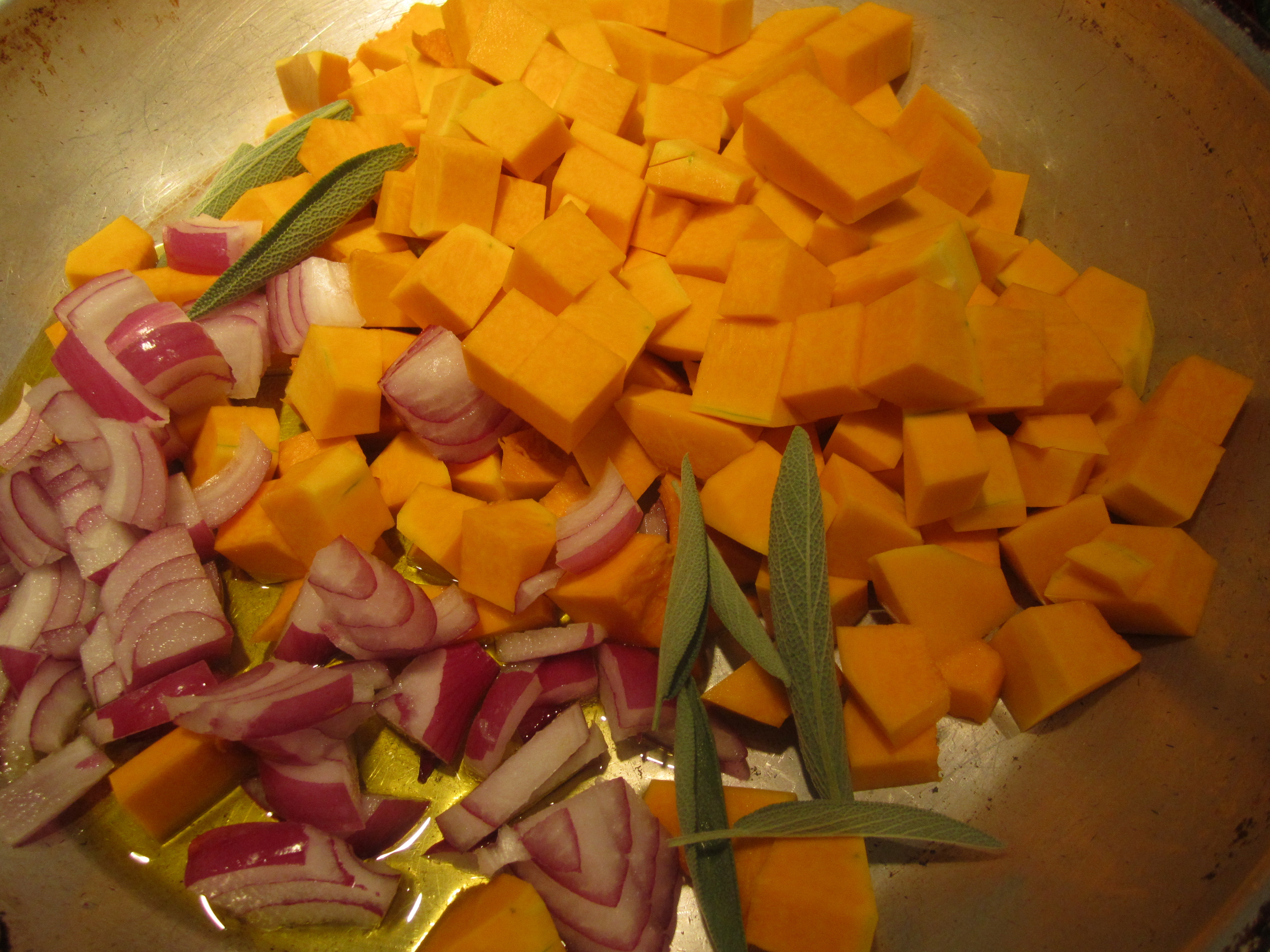
This is essentially the same technique as cooking pasta.  The butternut squash gets peeled, diced in cubes, sauteed with onion and a touch of nutmeg, sauteed, then covered and simmered until soft and well-cooked.

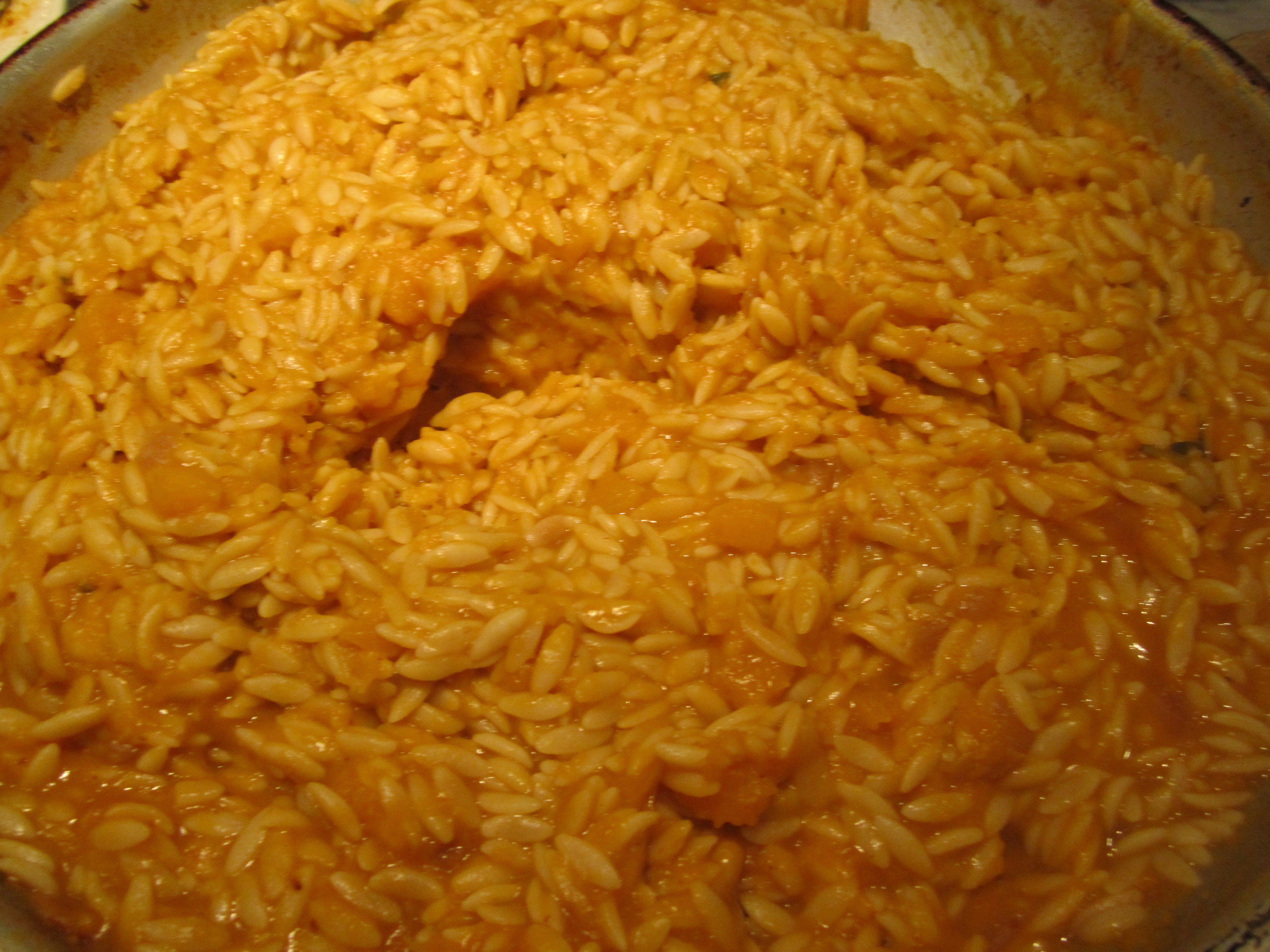
The orzo is boiled in plenty of salted water, then drained and added to the squash, along with pasta cooking liquid and some fresh chopped parsley.  Plenty of grated parmigiano gets sprinkled on the top at the table.

Orzo with Butternut Squash

serves 10 -12

1 large butternut squash

32 oz. of orzo

1 medium onion, peeled and coarsely diced

10 sage leaves

1/4 c olive oil

1/8 tsp nutmeg

salt and pepper to taste

2 tbls fresh chopped parsley

1 c grated parmigiano for sprinkling

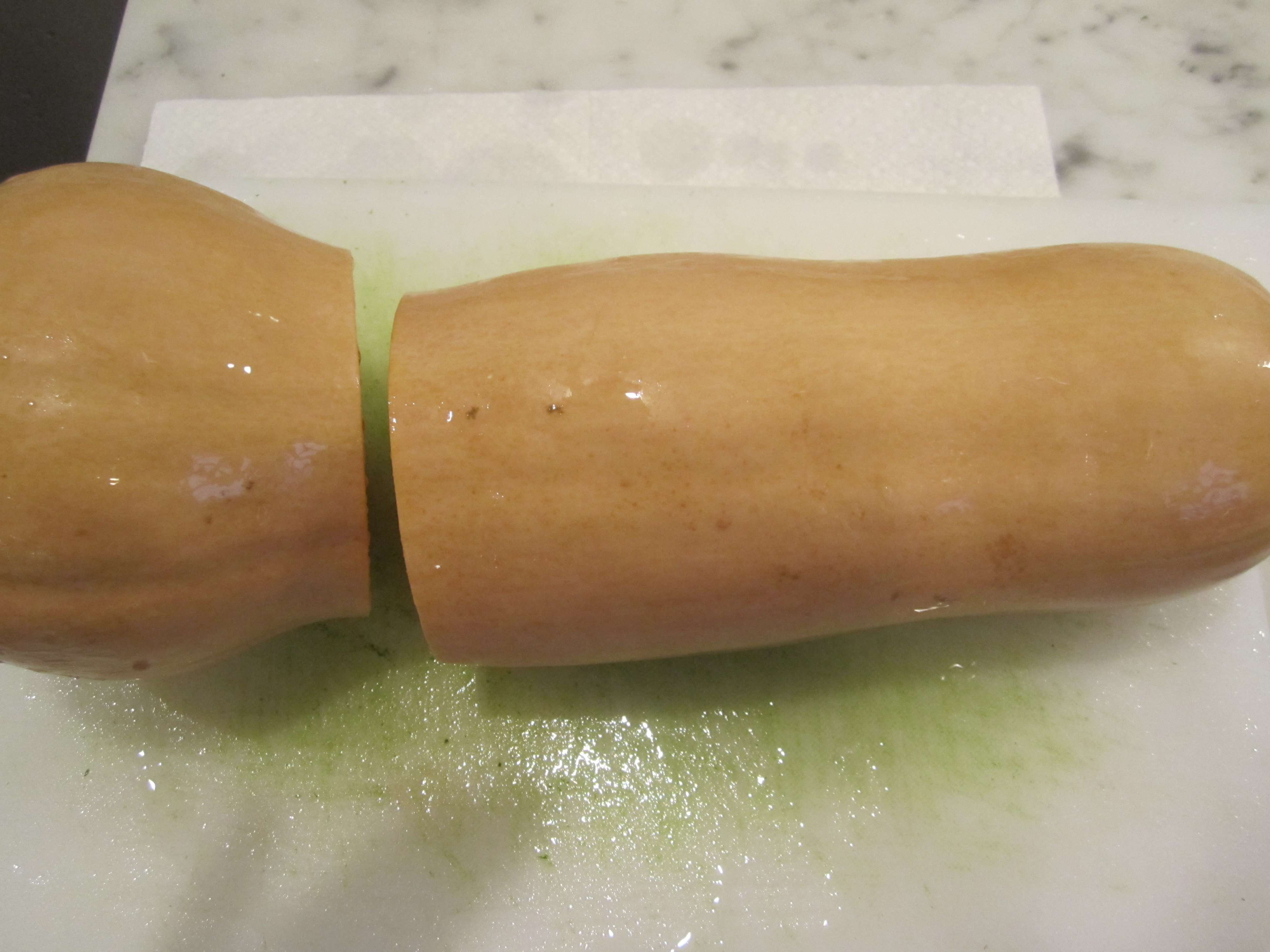
Peel the squash by removing stem and bottom 1/2″.  Slice crosswise into 2 pieces–the long straight piece and the squat bulbous piece.

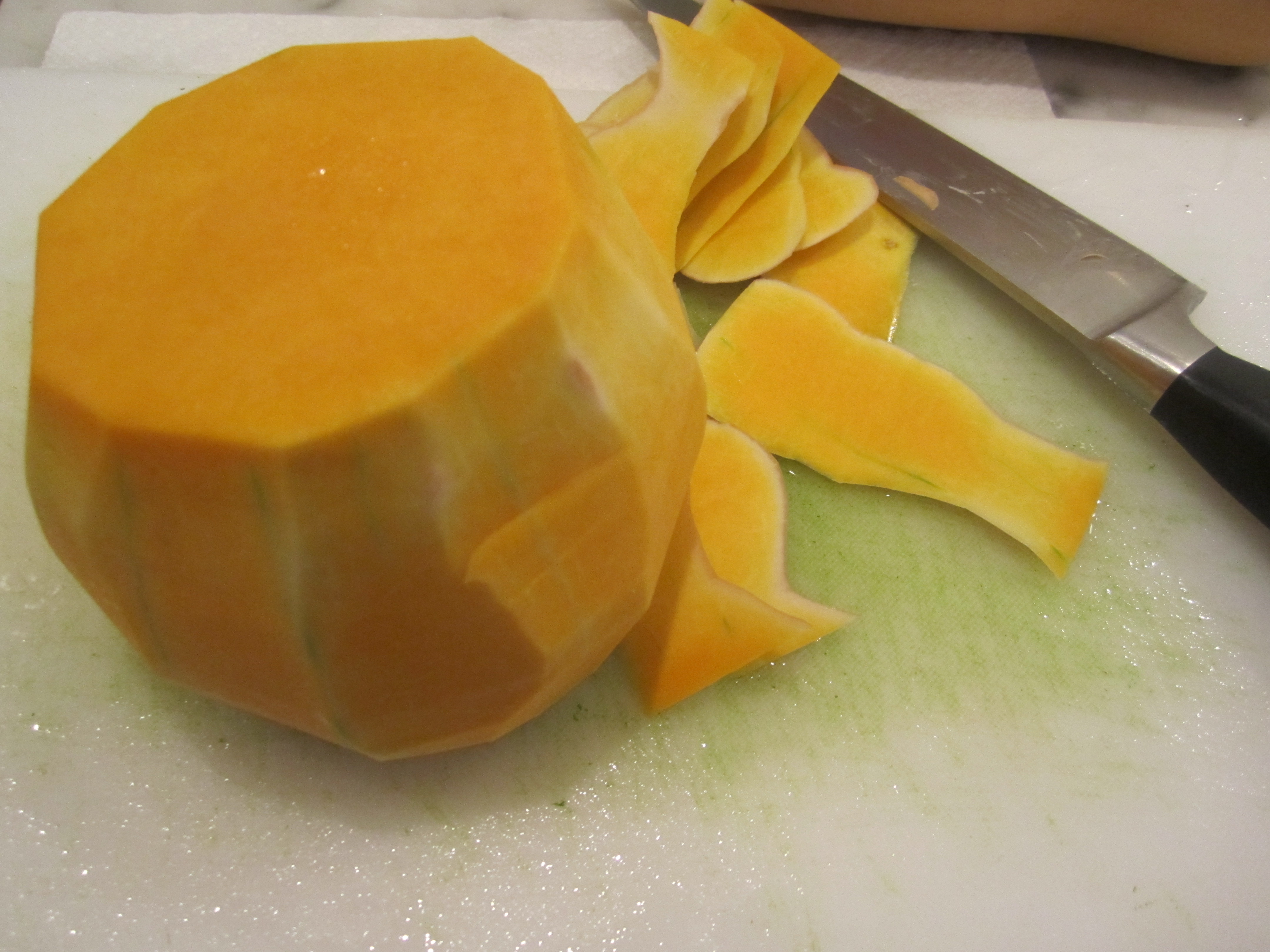
Peel by running a large chef’s knife along the shape of the squash and slicing off as much peel and as little flesh as possible.  Split the bulbous piece lengthwise and scrape out the seed with a spoon.  Dice both the long piece and the bulbous piece into 3/4″ cubes.

Place squash, olive oil, sage and onions in large skillet and saute over low heat for about 5 minutes.

Cover and continue sauteing for another 10 minutes, turning often to prevent scorching and sticking.   Turn heat to lowest simmer while orzo cooks.

In salted boiling water, cook orzo for about 10 minutes, then add to skillet of squash, along with 1 1/2 cups orzo cooking liquid (or more, if it’s still too tight).  Stir and top with parsley, black pepper and a sprinkle of parmigiano.

Posted in Pasta, Vegetables | Leave a comment

Beppi’s Broiled Chicken Thighs with Rosemary

This dish is so simple, in my opinion, it requires no recipe–only technique and photos.  I found my neighbor Beppi making this dish one evening when I stopped by to visit.  It looked and smelled so good, I watched him make it, then made it myself.

The dish makes use of the broiler, which I rarely use.  Although the dish is made under the broiler, it takes about 45 minutes from start to finish, since it requires you to cook at a distance of at least 12″ from the flame.  It’s a good dish to make for company, because it requires little supervision–simply reach in and turn pieces from time-to-time until all is golden.  Then reduce oven temperature to 350 degrees and finish baking for about 15 minutes.

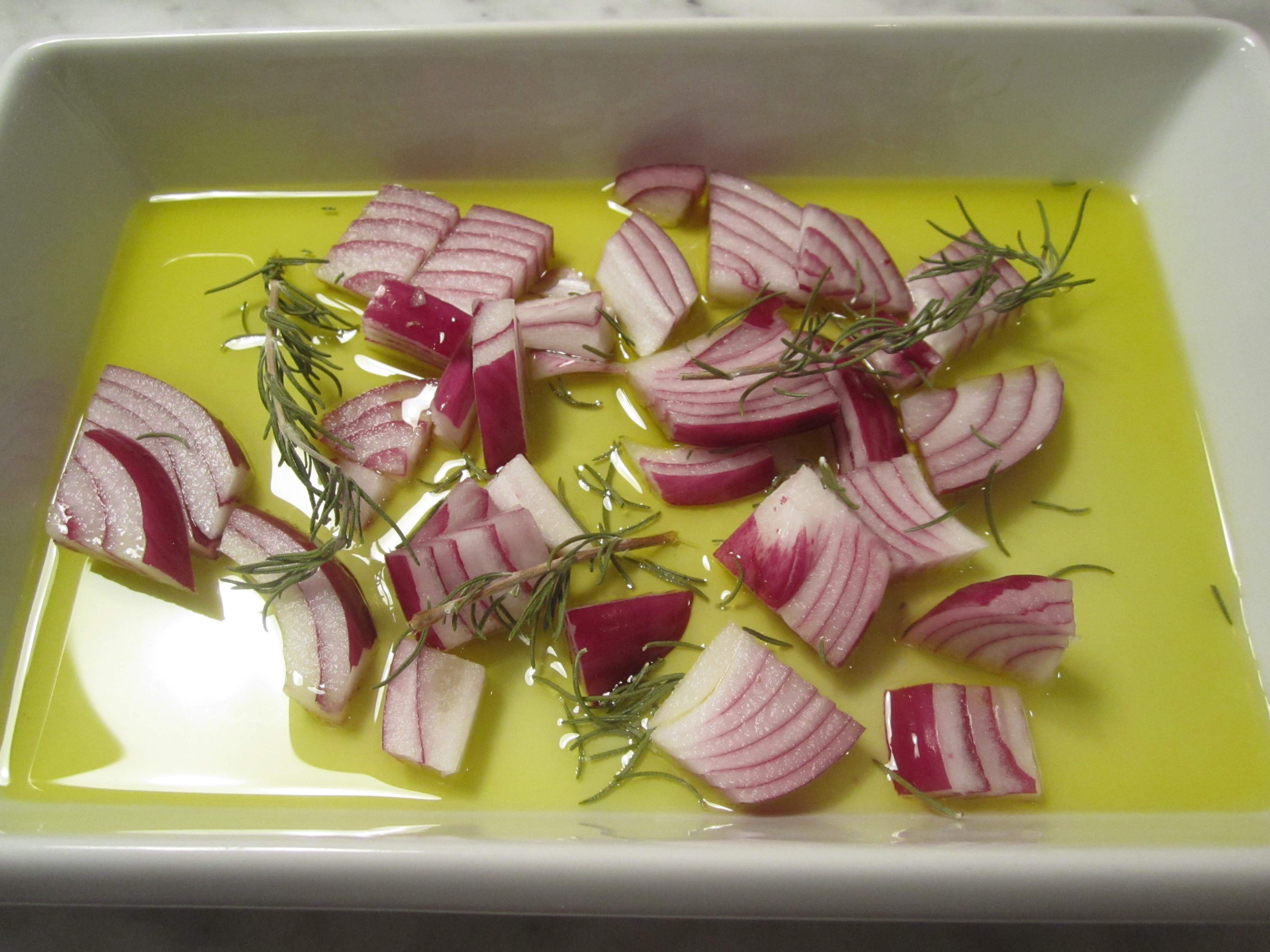
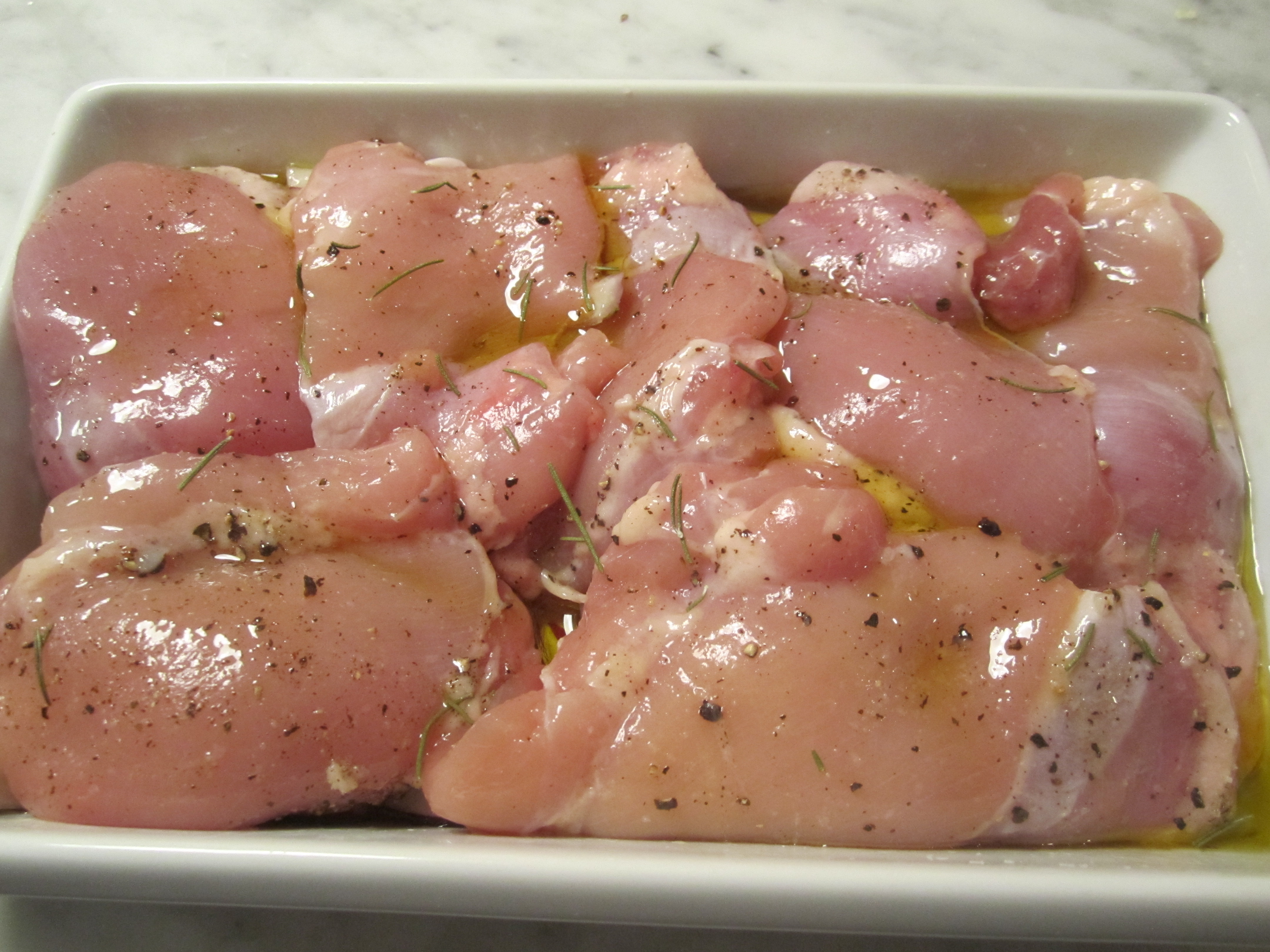
In a baking dish with low sides, scatter a coarsely diced onion, along with a couple of sprigs of rosemary in a quarter cup of olive oil.

Sprinkle a generous amount of salt and pepper over both sides of boneless, skinless chicken thighs.  Lay the seasoned thighs on top of the onion.  They can overlap slightly as they will shrink a bit from cooking.

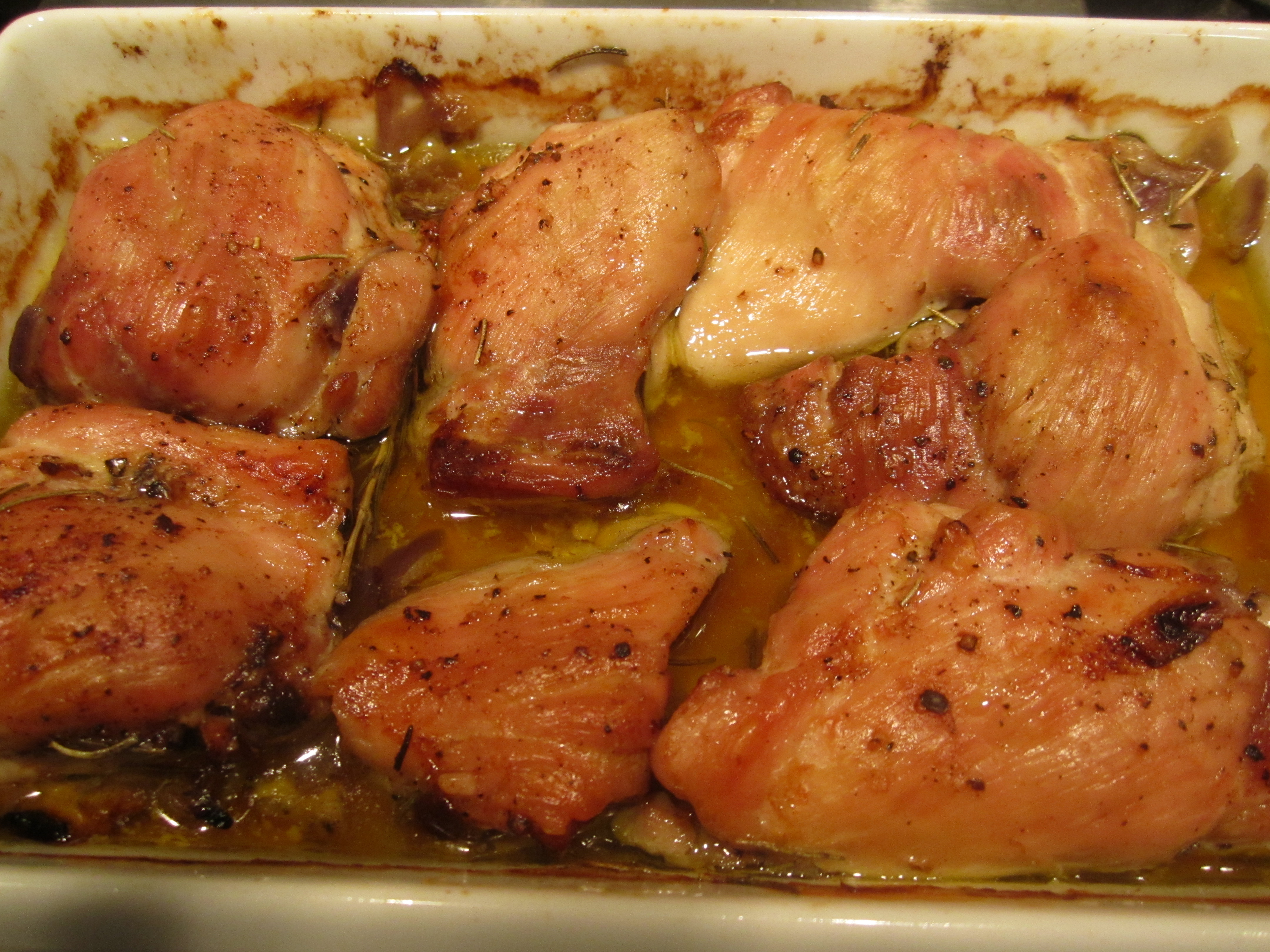
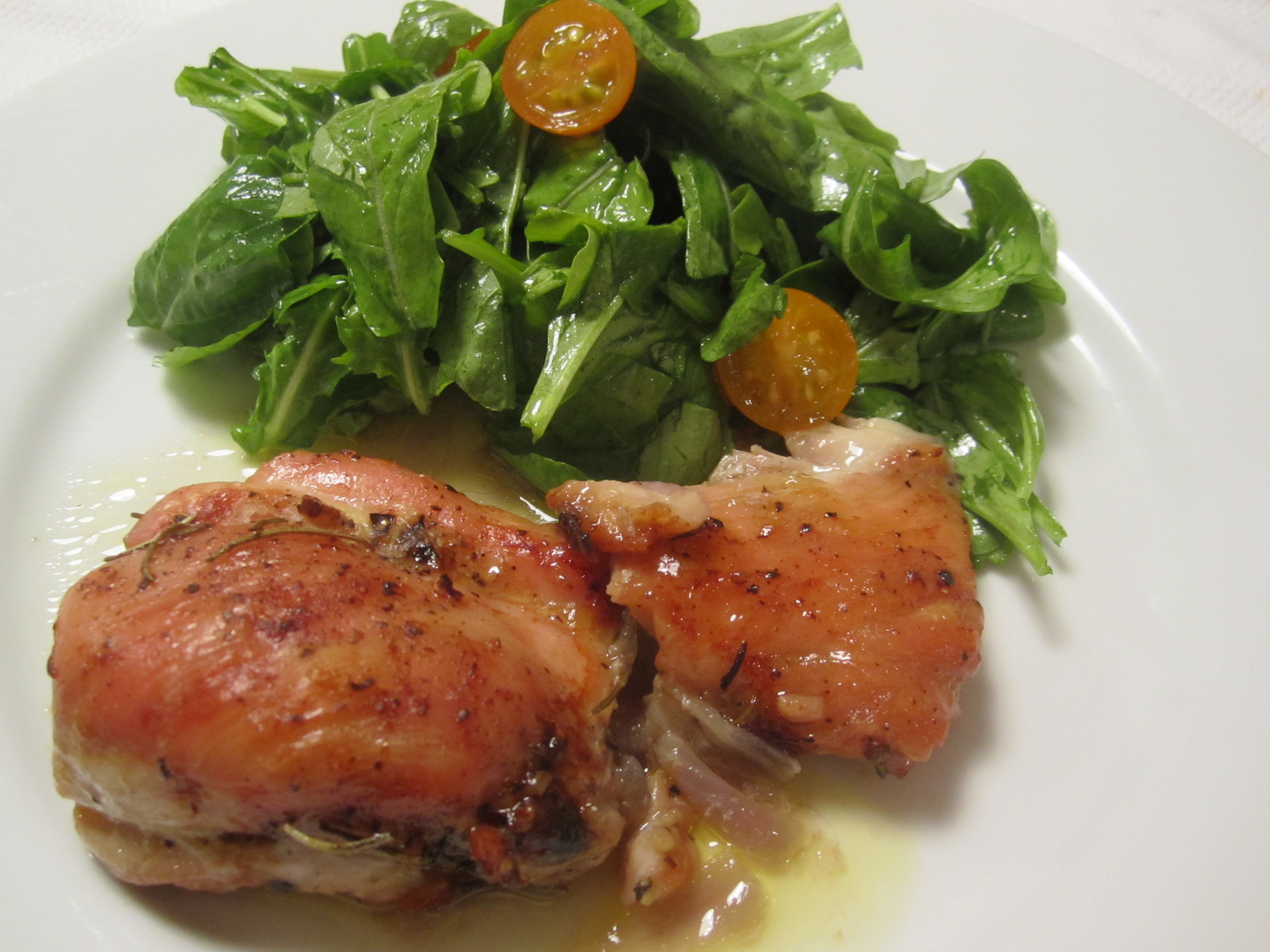
Broil at least 12″ from the heat source for about 40 minutes, turning every 10 minutes or so.  Lower the oven to 350 and continue roasting for another 10 minutes or so or until all is golden around the edges.  Use the oil and onions as a sauce.
Posted in Poultry | 1 Comment

Cavatelli with Creamy Broccoli

My inspiration for this brilliant recipe came from perusing an old cookbook, “Red, White and Greens,” by Faith Willinger.  I met Faith Willinger while I was apprenticing at Po Restaurant.  She was a good friend of Mario’s and when the cookbook came out, Mario gave her a reception at the restaurant.  She was a spirited and passionate person, earthy, warm and inspiring.  Although American born, she’d lived in Tuscany for many years by the time she wrote this cookbook.  It’s a great read and I recommend it for lovers of simple, yet innovative vegetable dishes of all kinds.

Anyway, since it’s broccoli season, I decided to try my version of this dish.  It can be made with broccoli, cauliflower, or romanesco broccoli. The basic methodology is often seen in bean soup recipes, where the soup is made, then part of it is pureed and part is left un-pureed. This results in a creamy base which retains its texture from the un-pureed ingredients.

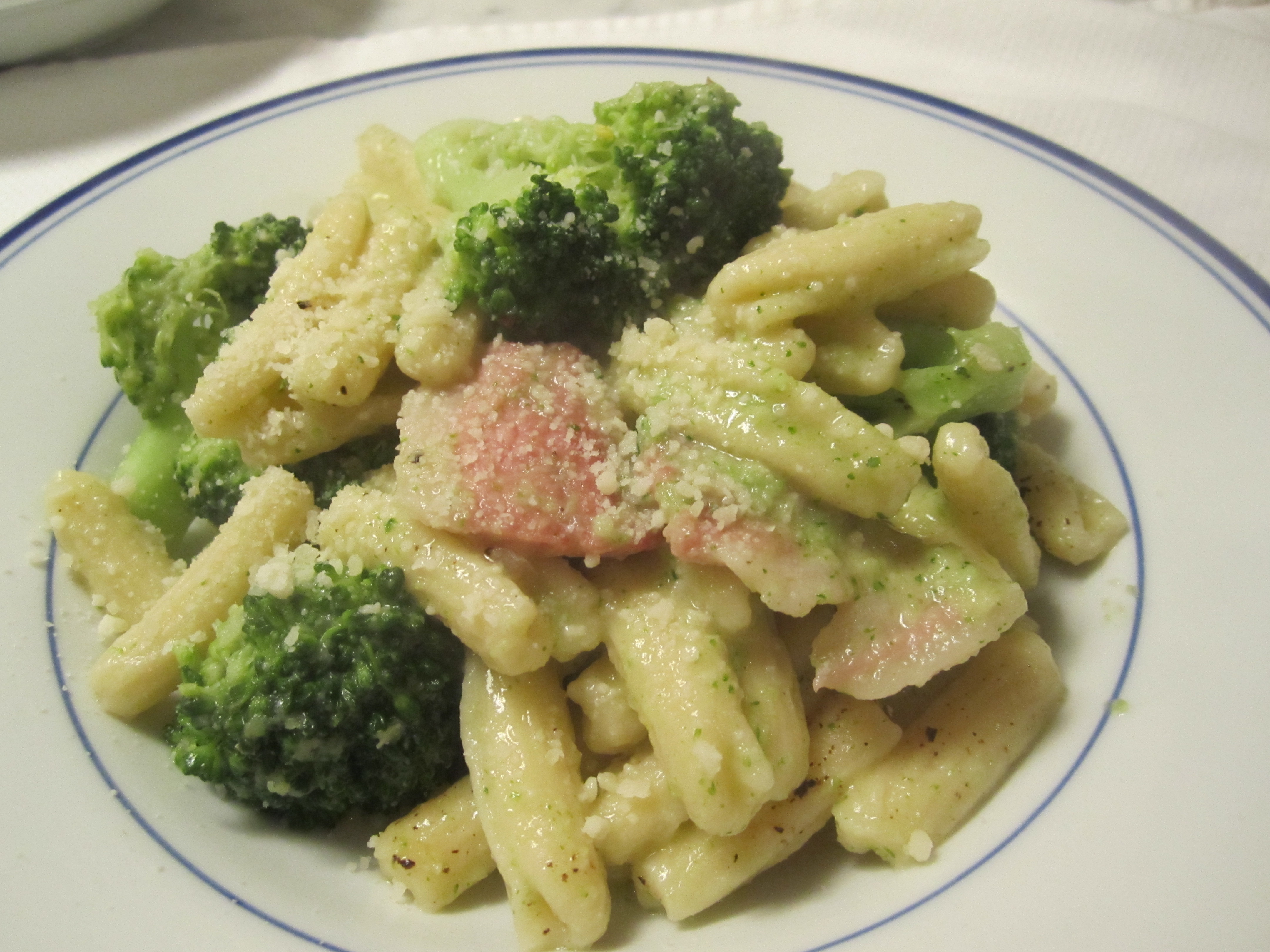
The thing I love about this technique is that it uses the entire stalk of broccoli–stem and all.  Simply peel and dice the stem, boil and saute with salt pork and onions.  Boil the florets separately and set aside. Make a puree of the stems, some of the florets, and half the salt pork and onion mixture.  The remaining broccoli florets and pieces of salt pork remain whole.

My pasta of choice for this dish is cavatelli.  These sturdy little pillows of pasta, made with ricotta, are brilliant in all kinds of preparations.  The beauty of cavatelli is that they can be boiled ahead, held in a strainer, then tossed into sauce at the last minute, making this an ideal dish to serve to guests.

Tonight, we had this pasta as our first course.  Our main course was Beppi’s Broiled Chicken Thighs with Rosemary, and a salad of arugula and cherry tomatoes, dressed with lemon and olive oil.

Cavatelli with Creamy Broccoli

serves 4

2 packages frozen cavatelli

1/4 lb salt pork, sliced thin

1 small red onion, diced

1 large head of broccoli

1/4 c olive oil

salt and pepper to taste

pecorino romano for sprinkling

Remove broccoli florets from stem, and peel stem mercilessly with a paring knife–remove all fibrous outer layers.  Dice into 1/2″ cubes.

Drop stems into boiling salted water and cook for 8 minutes on high heat.  Remove and drain.  Boil florets in same pot for about 5 minutes.  Remove and drain in strainer.

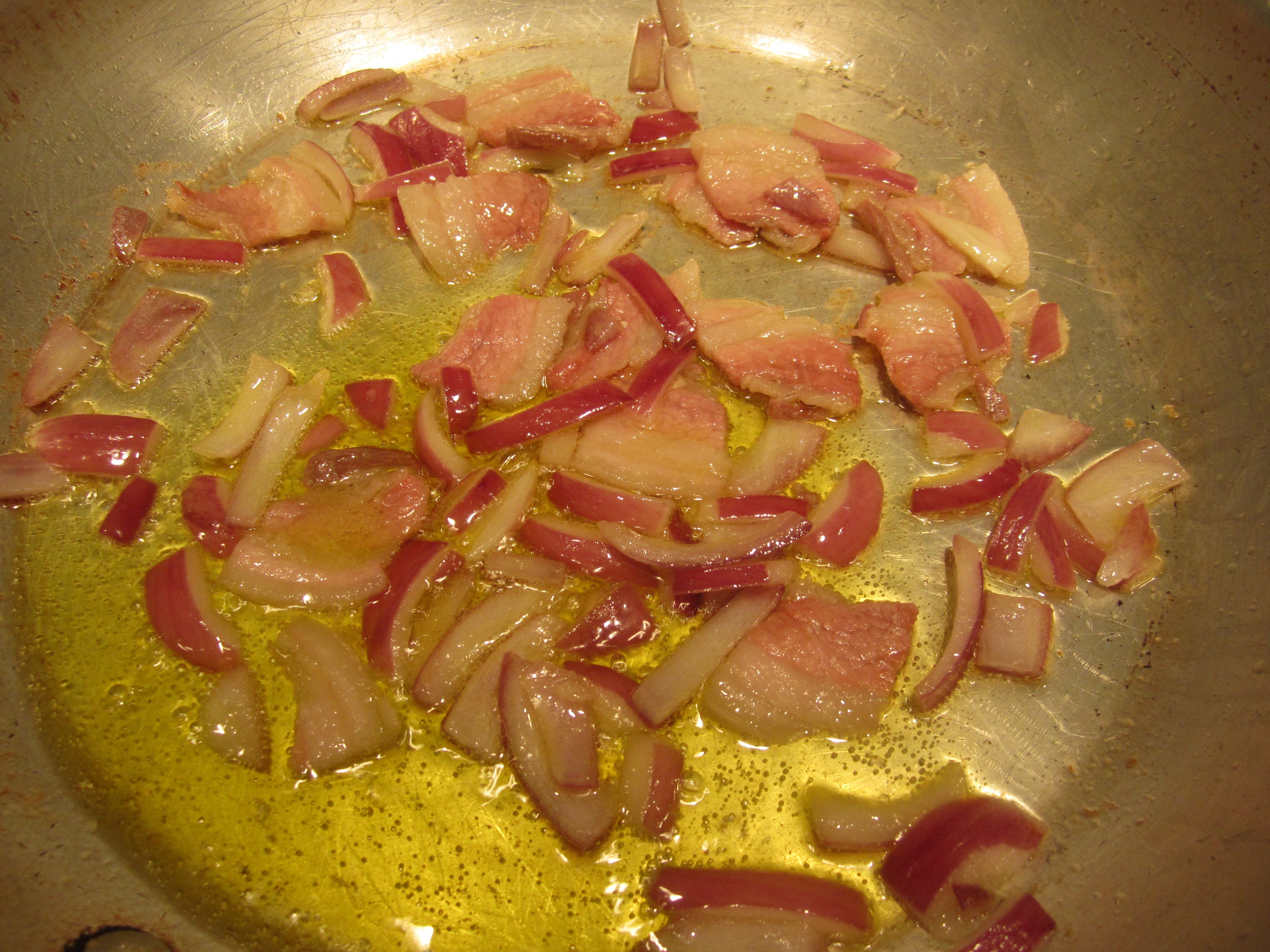
In a broad skillet over low heat, pour half the olive oil and render the salt pork for about 5 minutes, then add onions and continue sauteing on low heat for another 5 minutes.

Add in diced broccoli stems and saute another 3 minutes.

Remove half the salt pork slices from the skillet and set aside.

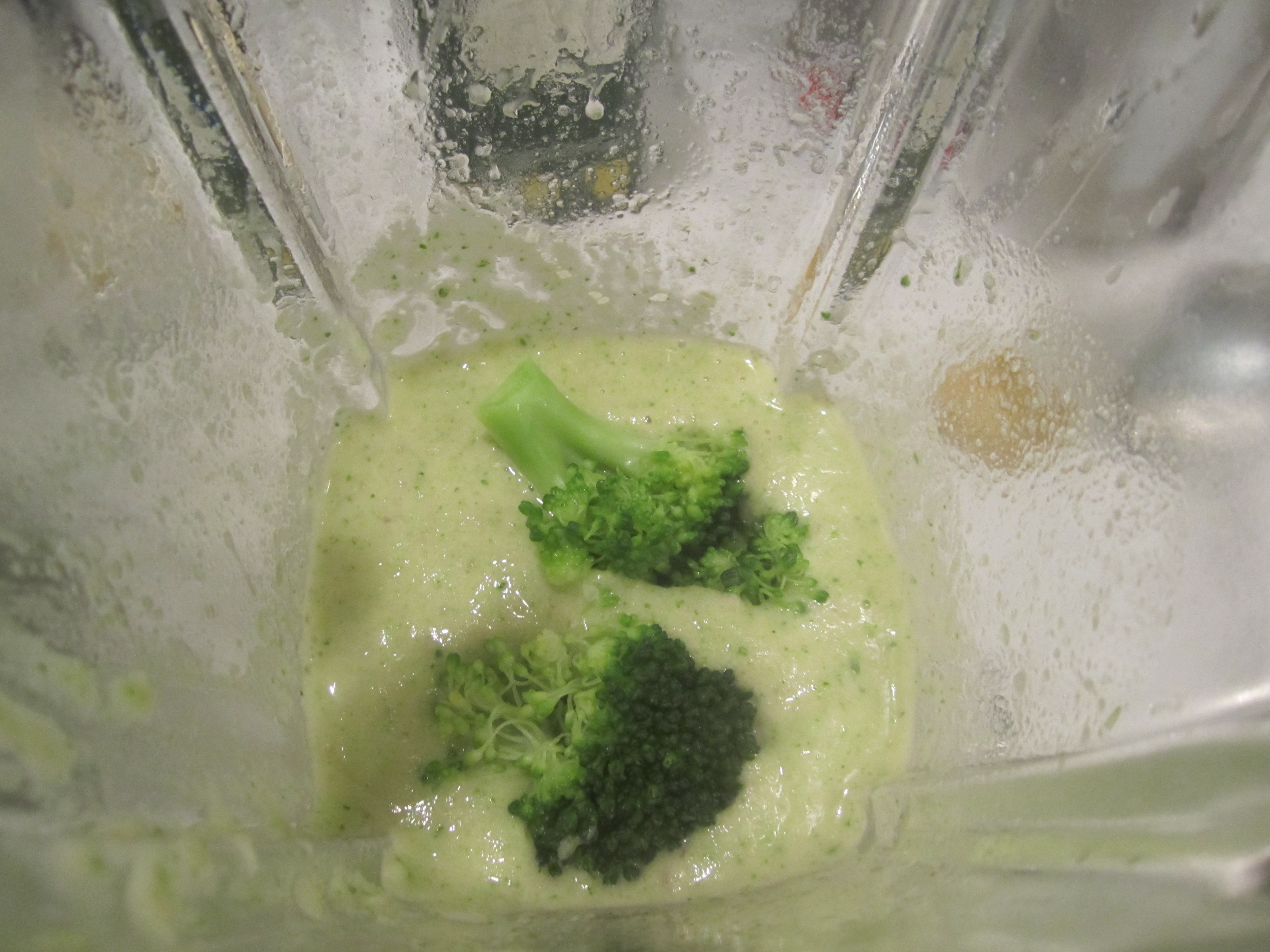
Pour the rest of the mixture from the saute pan into blender, along with a cup of broccoli cooking liquid.  Process until a smooth puree results.  Add 3 or 4 florets of broccoli to the blender and continue to process to a puree.

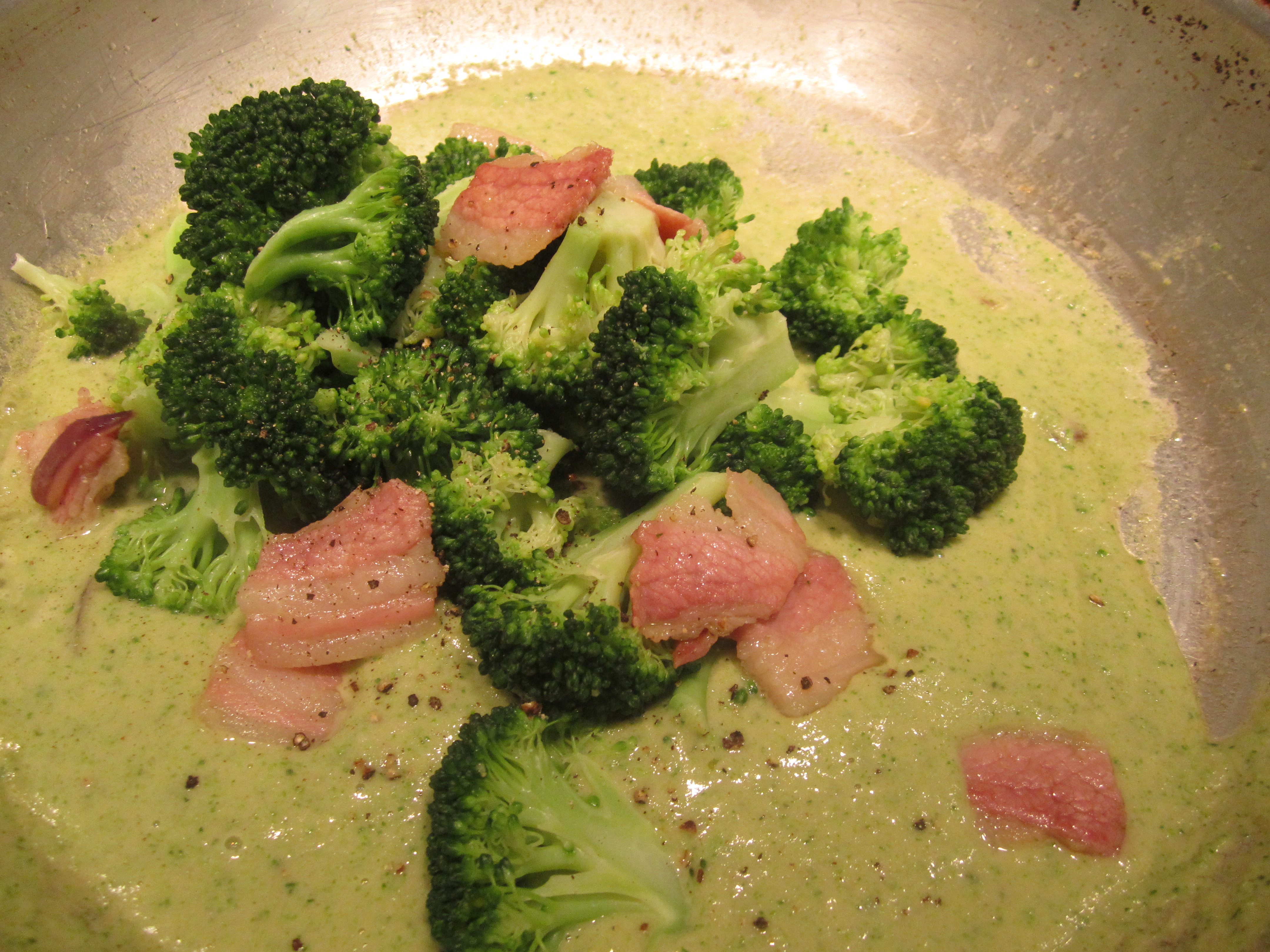
Return the puree to the saute pan, along with the florets and slices of salt pork.  Simmer on lowest heat while cavatelli cook.  Drop cavatelli inro the boiling broccoli cooking liquid (add some water if too much has evaporated), and cook until done.

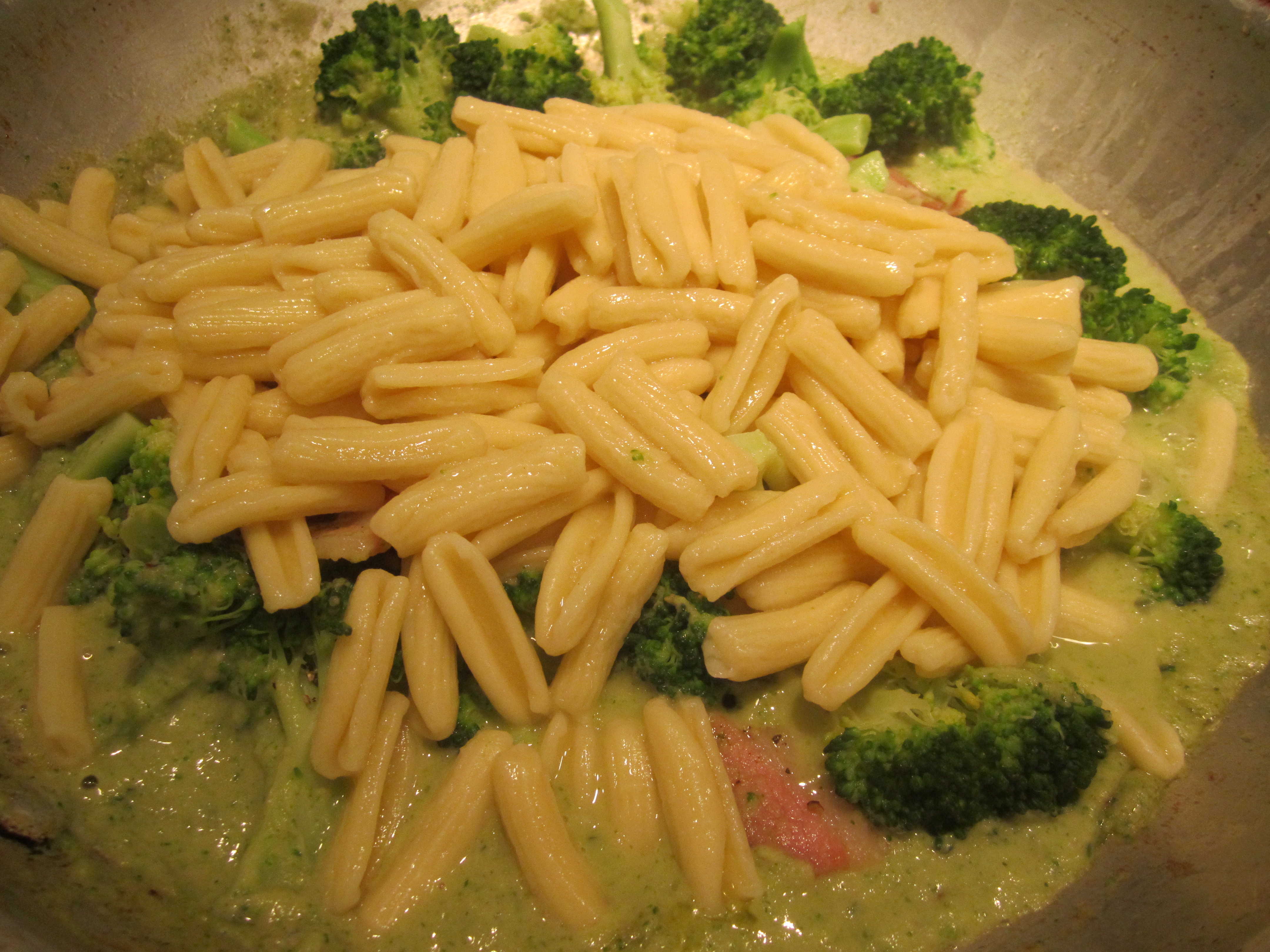
When cavatelli are cooked, place in skillet of sauce, along with a cup of pasta cooking water.  Saute together for a minute, then drizzle with the remaining extra-virgin olive oil and top with plenty of black pepper.  Serve plenty of grated pecorino romano at the table.

Posted in Pasta | Leave a comment