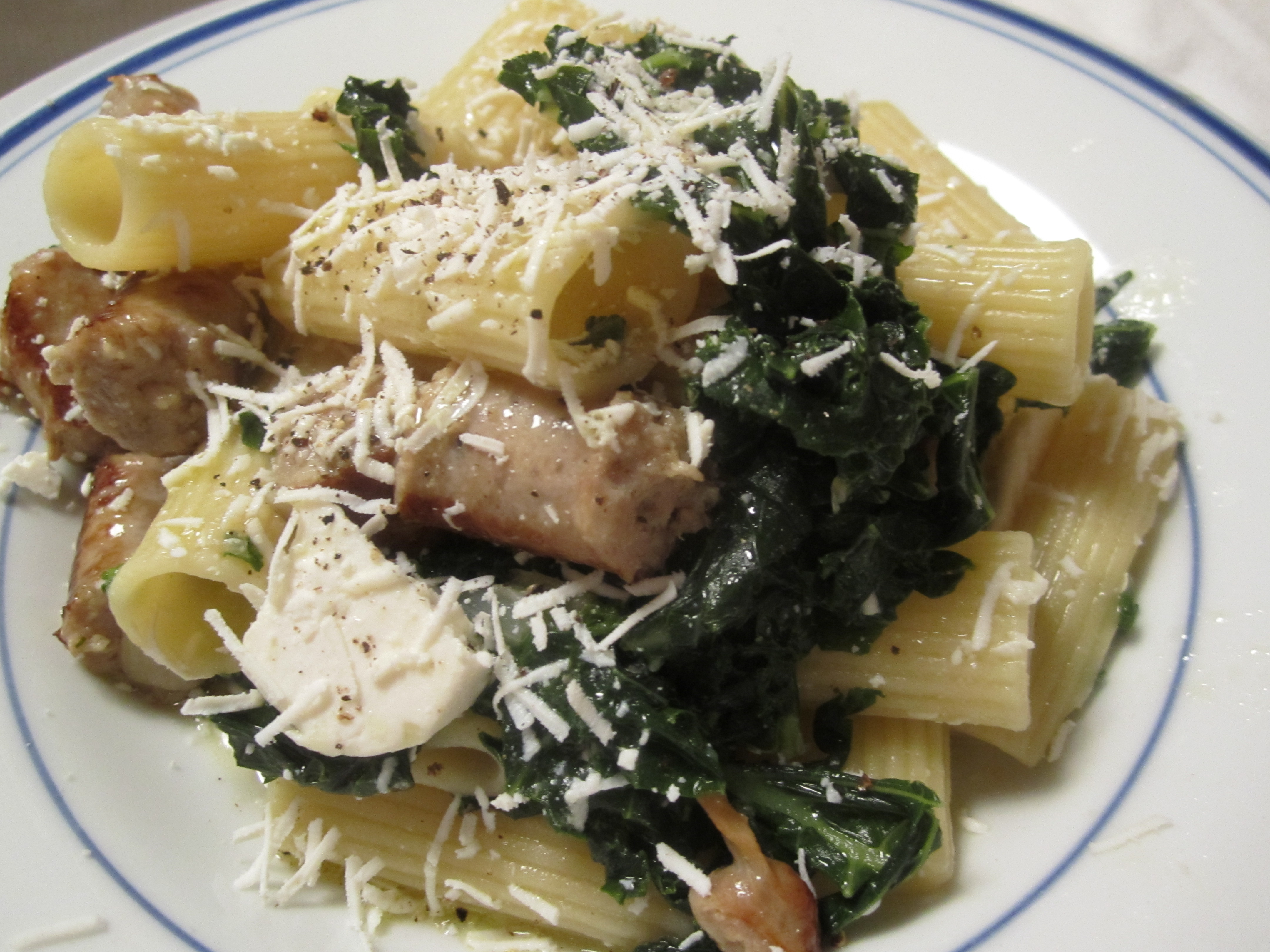
Rigatoni with Luganiga Sausage and Kale

I’ve posted other versions of pasta with kale for you but this version is slightly different.  I’m using Luganiga sausage instead of regular pork sausage.  It’s sweeter and more delicate than regular Italian sausage.  Because of its sweetness I used shallots, rather than garlic to add some aromatic flavor to it.

Also, I’ve grated ricotta salata over the finished dish (because I have it), which gives a wonderful dairy richness to the flavors of the pasta and the greens.  It’s a wonderful cheese to use as a grating cheese on many different varieties of pasta. 

Rigatoni with Luganiga Sausage and Kale

serves 4

1 lb luganiga sausage, lightly browned and cut into 1″ links

1 bunch kale (about 1 1/2 lbs), cleaned, cut into 1″ ribbons, blanched for 5 minutes in salted boiling water, then drained

1 shallot finely diced

1 cup chicken broth

6 tbls olive oil

salt and pepper to taste

ricotta salata for grating

While rigatoni are boiling, place shallots and 2 tbls olive oil in saute pan large enough to hold pasta and slowly brown for about 3 minutes.  Add sausage pieces and continue sauteing for a few minutes.  Add chicken broth and cooked kale and continue to simmer uncovered until the pasta is cooked.

Toss cooked pasta to sausage mixture and drizzle with 2 more tablespoons olive oil.  Taste and adjust for salt and pepper.  Saute for a minute or so, then turn into heated bowl and drizzle with 2 additional tablespoons olive oil.  Grate ricotta salata over the top and serve.

Posted in Pasta | Leave a comment

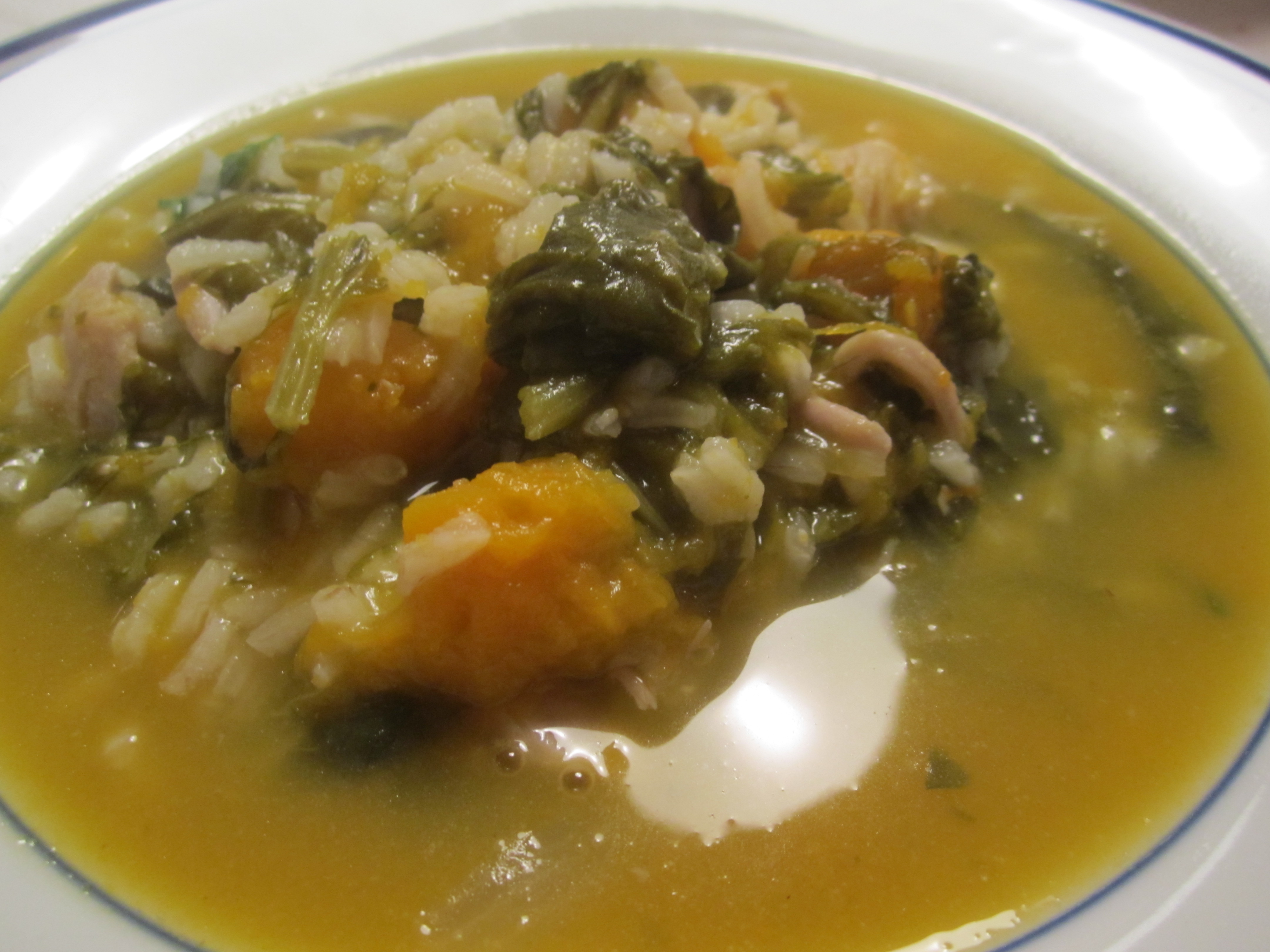
Spring Chicken Soup with Sorrel

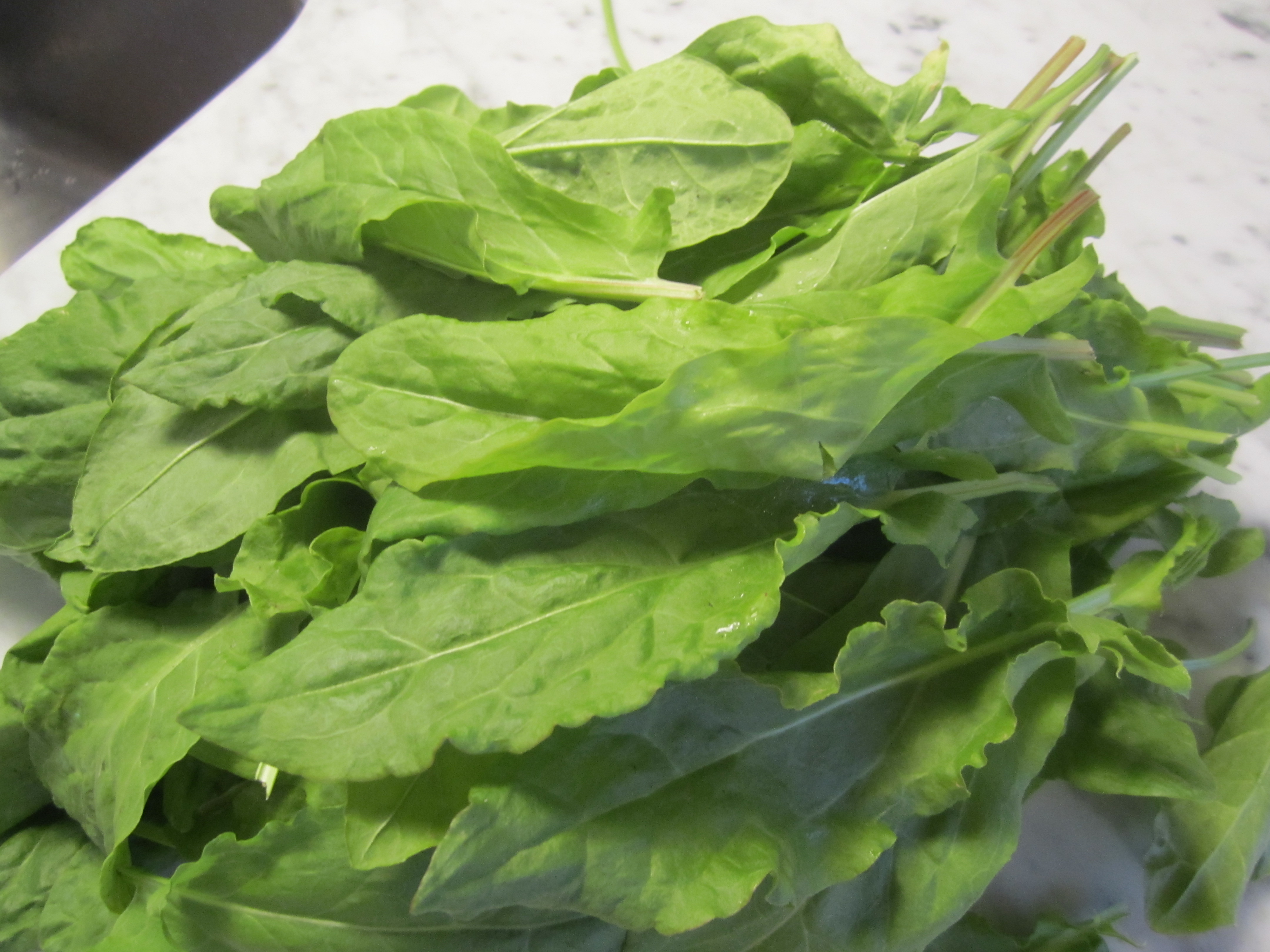
Sorrel is truly a fleeting spring treat.  It’s at its peak in early spring, but then goes to seed (and becomes tough and overly assertive).  I never see it in my market, but I’m fortunate enough to have friends who are extraordinary gardeners, who have invited me to raid their sorrel patch. 

This is an occasion for a sweet-tart soup that I love to make in spring.  It’s actually a combination of spring and fall flavors, because the sweet component is butternut squash–from our local crop last fall–from my freezer.   The butternut squash gets a bit waterlogged once it’s frozen and defrosted, but it’s perfect for a soup because it all but dissolves, leaving its sweet nutty flavor, as well as some body and thickness in the soup.

The tart lemony flavor of the sorrel punctuates the sweetness of the squash and the richness of the chicken–it’s comforting, but bright and sharp.  To make this a one-dish meal, I’m adding rice–the perfect light, neutral counterpoint for the sorrel and the sweet butternut squash. 

If you’re lucky enough to find sorrel in your market, (or a friend’s garden) you can  simply add it to your chicken soup (with or without squash), for a wonderful and complex flavor.

Spring Chicken Soup with Sorrel

serves 6

12 chicken drumsticks (or thighs)

2 carrots, peeled and sliced

3 stalks celery with leaves

1 medium onion

6 parsley stems, tied with string (for easy removal)

4 c butternut squash cubes

1 c arborio rice

salt and/or bouillon cubes

1/8 tsp nutmeg

5 – 6 cups sorrel, cut into 1″ ribbons, washed and drained.

Place chicken in stockpot and add water to cover by about 4 inches or so.  Bring to boil and lower heat to bare simmer, skimming any froth that accumulates.  Allow the chicken to simmer for an hour before adding vegetables.   Add vegetables and simmer for another hour.

Taste and add salt, pepper, nutmeg and/or boullion.  Simmer another 15 minutes. 

Remove skin and bones from chicken and set aside.

In blender or food processor, puree about 2 cups of the soup and return the puree to the larger pot.  

In a separate pot, bring 2 c water to a boil and add 1/2 tsp salt.  Add rice, lower heat and cook for approximately 10 minutes.  

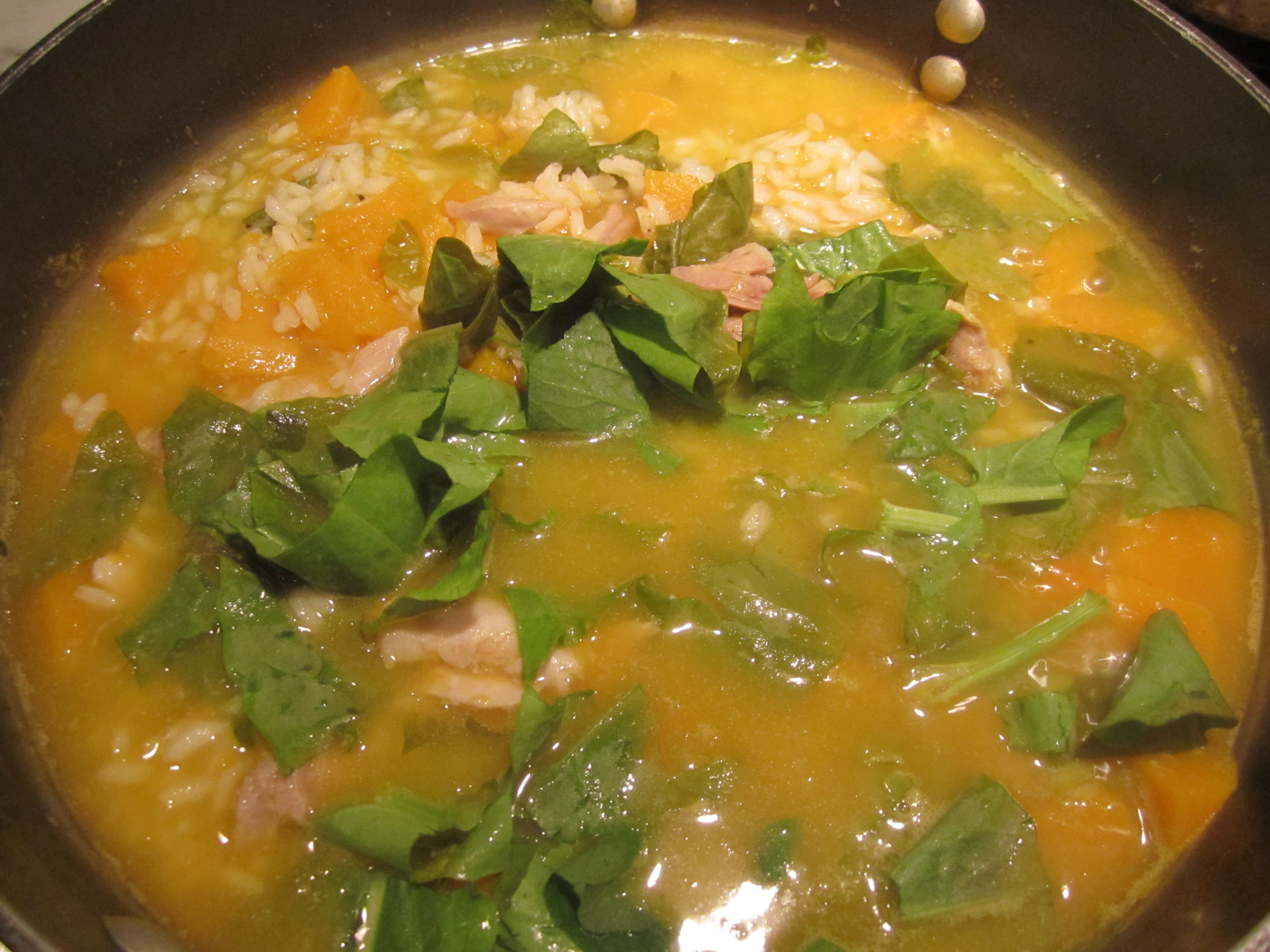
Drain rice and add to broth, along with chicken meat.  At the very last moment, stir in sorrel leaves and serve immediately.  NOTE:  the leaves will turn brown as soon as they hit the simmering soup, but it’s to be expected and has no impact on the flavor of the sorrel. 

This is great with warm bread and butter–it’s a very light soup and the butter is nice on the palette alongside the soup.

Posted in Soup/Stew | Leave a comment

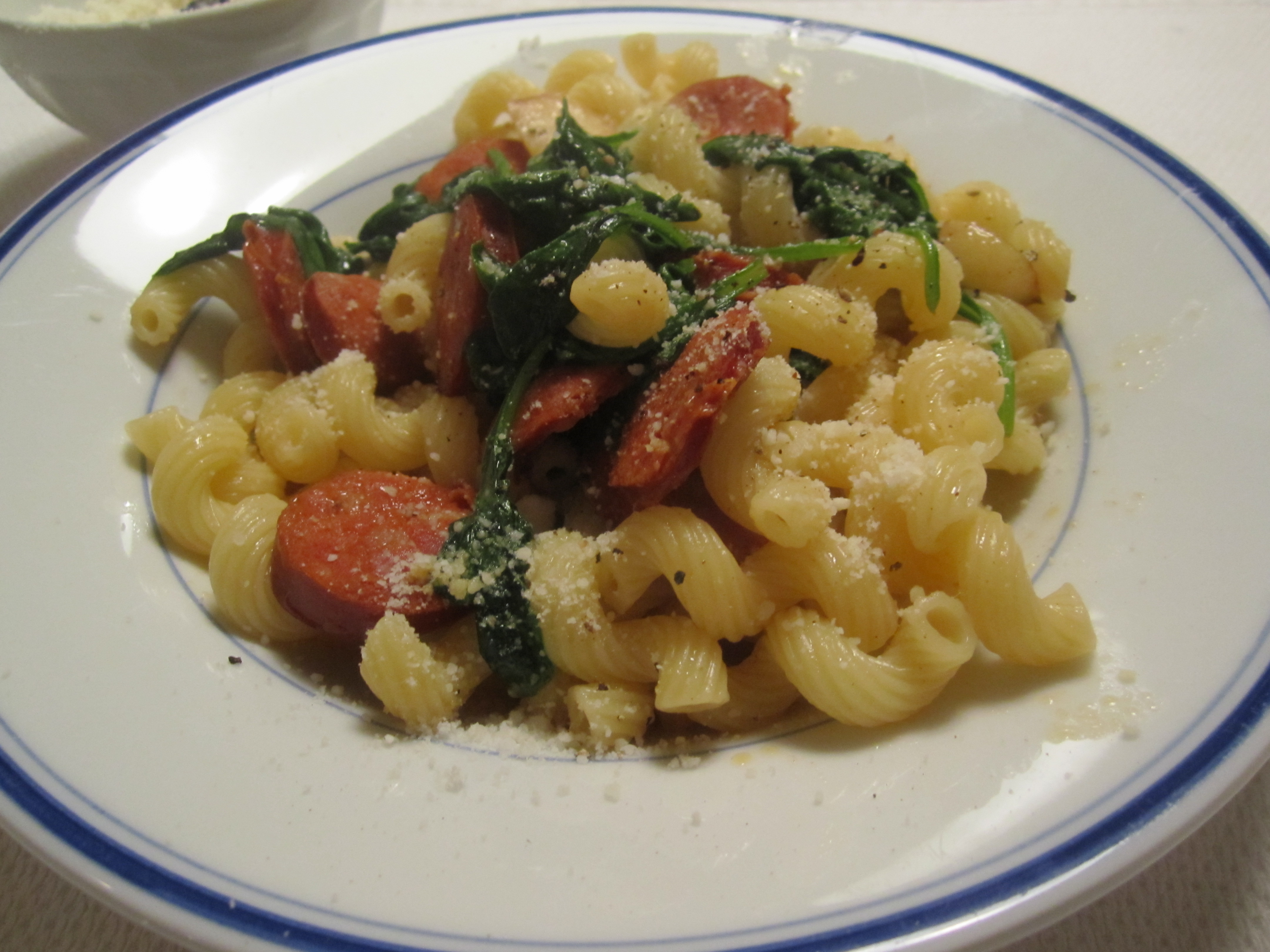
Pasta with Chorizo and Baby Spinach

This is a dish we used to serve at Po sometimes.  The hallmark of Mario’s cooking is big assertive flavor, and chorizo definitely fits that bill.  Chorizo is a cured Spanish sausage made with pork and lots of fragrant deep red Spanish paprika.  Whenever you saute chorizo in oil, your oil will become tinted a wonderful red–a sign that the flavors of the chorizo are permeating your entire dish.

The simplicity of this dish is remarkable.  It consists of garlic, browned in olive oil with slices of chorizo.  At the last moment, baby spinach leaves are added just before tossing in the cooked pasta.  A touch of chicken broth is added to round out the flavor of the dish, and the dish is served with lots of pecorino romano sprinkled on top (parmiggiano is not assertive enough for this dish). 

You’ll be surprised at how the spinach helps the pasta diffuse the strong flavors and adds its own subtle green flavor to every mouthful.  This is a dish that can cook in the amount of time it takes to boil the pasta.

Pasta with Chorizo and Spinach

serves 4

1 lb gemelli or fusilli

4 cloves garlic, peeled and sliced

4 links of cured chorizo sausage, sliced into 1/4″ disks

10 oz baby spinach leaves

4 tbls olive oil

1/2 c chicken broth

grated pecorino romano for sprinkling

Drop pasta into boiling salted water.  In a broad skillet, large enough to hold the pasta, slowly brown the sliced garlic for about 3 minutes.  Add the chorizo and continue to slowly brown the garlic and render the sausage.  When pasta is a minute shy of done, toss in the spinach leaves and stir into oil.  Add chicken broth and pasta and a couple of tablespoons of pasta cooking liquid.  Toss over high heat for 10 seconds or so.  Top with plenty of grated pecorino at the table.

Posted in Pasta | 3 Comments

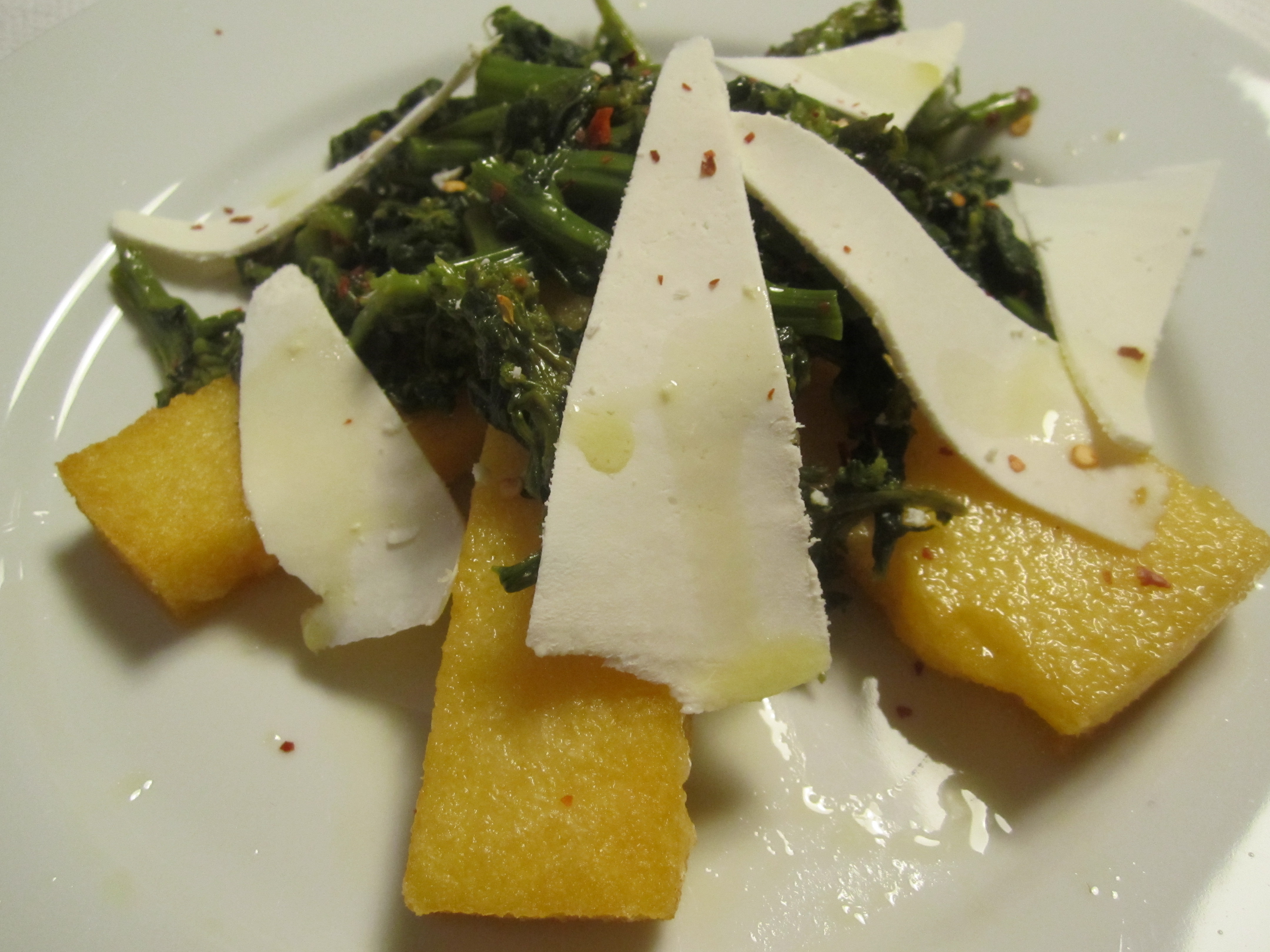
Bitter Greens and Crispy Polenta

The greens I’m using here are broccoli di rapa, but you could use any bitter greens, such as dandelion or escarole.  In order to heighten the bitterness of the greens, I’ve sauteed the broccoli raw, the way my mother does it–no pre-blanching.  This accentuates the bitterness of the greens and actually makes them taste like an entirely different vegetable than when they’re blanched then sauteed. 

The reason I want the greens to be extra-bitter is because the polenta is so luscious and neutral that it acts as a wonderful foil for the greens–much like a piece of bruschetta. 

The polenta has been cooked, then allowed to solidify (which it does very quickly as soon as it begins to cool down), then sliced and fried.  Therefore, you could make a batch of polenta days ahead and leave it in the fridge as a solid block.   Use much like bread–cut a few slices at a time and toast under the broiler or pan-fry in olive oil, then top with just about anything moist or melty (gorgonzola is especially decadent).

Finally, ricotta salata is the perfect complement to the bitter greens and polenta.  If you’ve never tried ricotta salata, it’s got a wonderful salty but mild and milky flavor.  It’s great over pasta or salad as well. 

The greens and ricotta salata would go equally well over a piece of bruschetta  or a bowl of pasta, for that matter, but try the crispy fried polenta sometime–this is a great antipasto–you can make the polenta ahead, cook the greens ahead and serve them at room temperature.  the only last-minute thing to do is fry the polenta.

Bitter Greens and Crispy Polenta

serves 4 – 6 as an antipasto

1 batch cooked and cooled polenta made from 1 1/2 c of cornmeal (instant is fine–just follow the instructions on the box, then let it cool in a square loaf pan or baking dish–can be made ahead a day or two and refrigerated, but don’t slice until ready to use.)

2 lbs broccoli di rapa, washed and cut into 1″ pieces and drained in a colander

4 cloves garlic, split

1 tsp chili flakes

8 tbls extra-virgin olive oil

salt to taste

ricotta salata for shaving

additional olive oil for frying polenta

In a broad skillet over low heat, saute garlic in 6 tablespoons olive oil until golden.  Turn up heat and add broccoli, then cover.  Cook broccoli over medium heat, stirring from time to time for about 8 to 10 minutes.  Uncover and cook on high heat for another 3 or 4 minutes to allow remaining water to evaporate (add remaining 2 tablespoons olive oil at this time).  Set aside.

In a nonstick skillet heat 1/4″ of olive oil on medium heat.  Brown the polenta until slightly golden on both sides.

With a vegetable peeler, shave the ricotta over the entire dish and sprinkle with black pepper or chili flakes.  Eat while hot.

Posted in Vegetables | Leave a comment

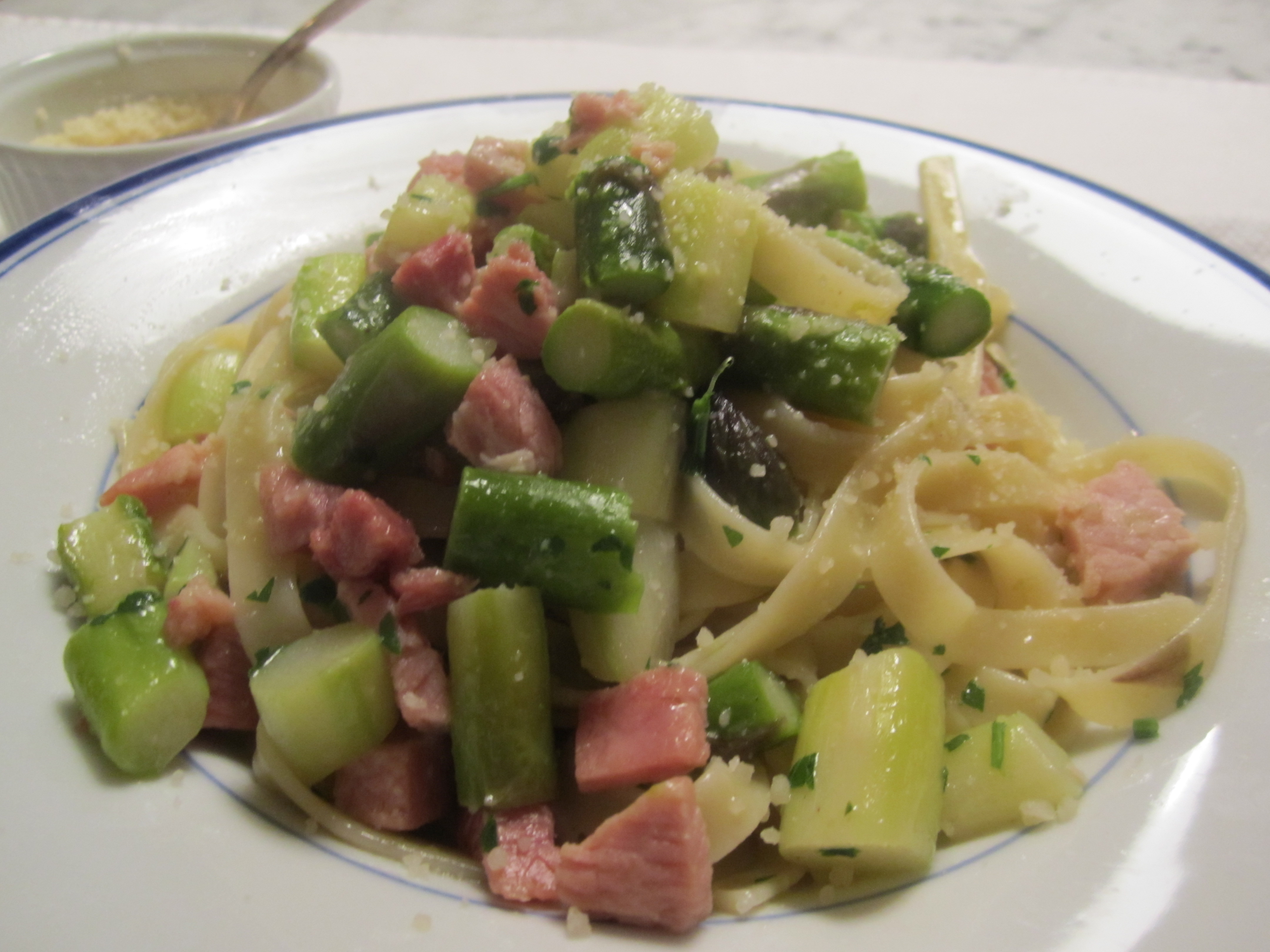
Pasta with Ham and Asparagus

Generally, the fewer the ingredients in a dish, the more crucial the quality of those ingredients.  When asparagus is picked the same day it’s cooked, it’s a totally different vegetable than the asparagus most of us are accustomed to eating year-round.  This asparagus is downright sweet and mild. 

The ham I’m using is from my local Italian gourmet market (Citarella) where there is always a ham on the bone, that is freshly carved to order.  It too is sweet and mild–not too salty or porky (not that there’s anything wrong with either of those things).

Together, the ham and asparagus make a wonderful pair, and what better to marry them than butter.  Tossed over dried or fresh fettucine, this dish is luxurious yet very simple and quick to make.  Lots of grated  parmiggiano is necessary to sprinkle on top.

I served this with the wonderful salad below.

Pasta with Ham and Asparagus

serves 4

1 lb dried fettucine (or fresh)

1/2 lb ham cubes

1 1/2 lbs fresh asparagus, peeled and cut into small pieces

6 tbls butter

1/4 c chicken broth

1/4 c fresh parsley, chopped

salt and pepper to taste

In salted boiling water, blanch asparagus for 4 – 6 minutes, depending on thickness.   Remove and add pasta to boiling water.

In a skillet large enough to hold pasta, melt butter and simmer cubes of ham on low heat for about 5 minutes.  Add asparagus and continue simmering until pasta is almost cooked.  Add broth, then toss in cooked pasta, along with 1/4 cup  cooking liquid.  Stir and combine for a minute.  Serve topped with lots of grated parmiggiano.

Posted in Pasta | Leave a comment

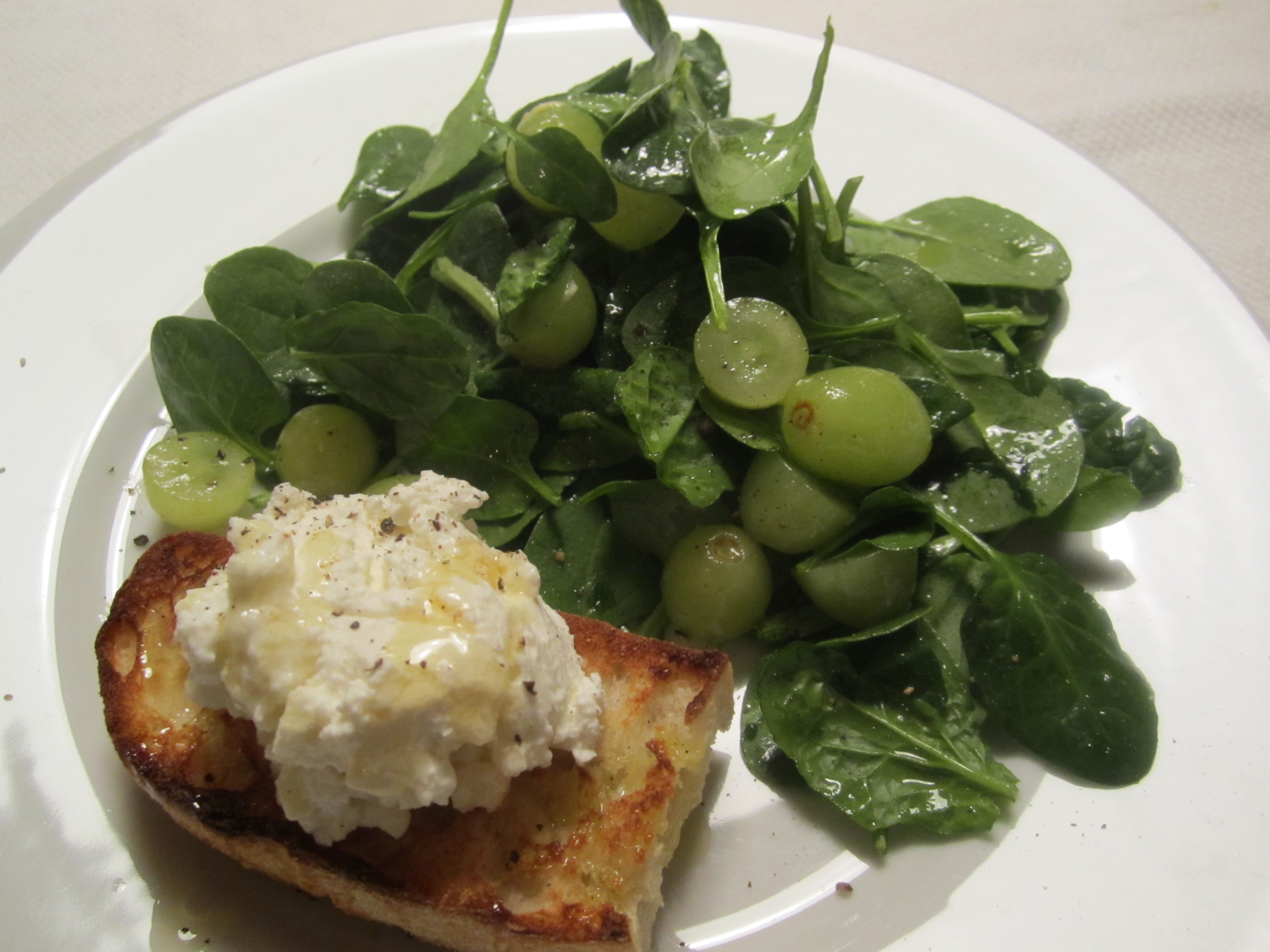
Spinach and Grapes with Ricotta Bruschetta

This is another dish which has so few ingredients, they must all be impeccable–particularly the ricotta.  The fresher and creamier the ricotta, the more you will be seduced by this dish.  It’s a wonderful appetizer, but it’s also so sweet and comforting, it can be a great dessert or palette cleanser on your way to dessert.

The dressing on the spinach and grapes is olive oil, lemon juice and a touch of agave nectar.  The light citrus and sweet agave make the entire salad taste like dessert–I think I could make a spinach eater out of anyone who tried this salad.

The bruschetta must be great country bread, toasted with slightly burned edges and it must be hot.  The bread gets a drizzle of extra-virgin olive oil, then the ricotta gets a drizzle of honey.  I first tried this dish made with truffle honey, but the truth is, any honey will do just fine.  If you want to substitute agave for honey, that’s fine as well, although honey’s assertive flavor goes well here.

Spinach and Grapes with Ricotta Bruschetta

serves 4

10-oz. pkg baby spinach

juice of 1 1/2 lemons

2 tsp agave nectar

3 tbls extra-virgin olive oil

1/2 lb grapes, sliced in half

1 c fresh ricotta

4 – 8 slices country bread (depending on whether you serve 1 or 2 bruschette per person)

In a mixing bowl, combine sprinkle spinach and grapes and drizzle with lemon juice and agave.  Add 2 tbls olive oil and salt to taste.  Pile on plates.

Toast bread and immediately drizzle remaining tablespoon olive oil over bread.  Sprinkle with a touch of salt.  Top with ricotta, then drizzle with honey.

Top entire plate with some freshly ground pepper.  Eat while bread is hot.


Posted in Salads | Leave a comment

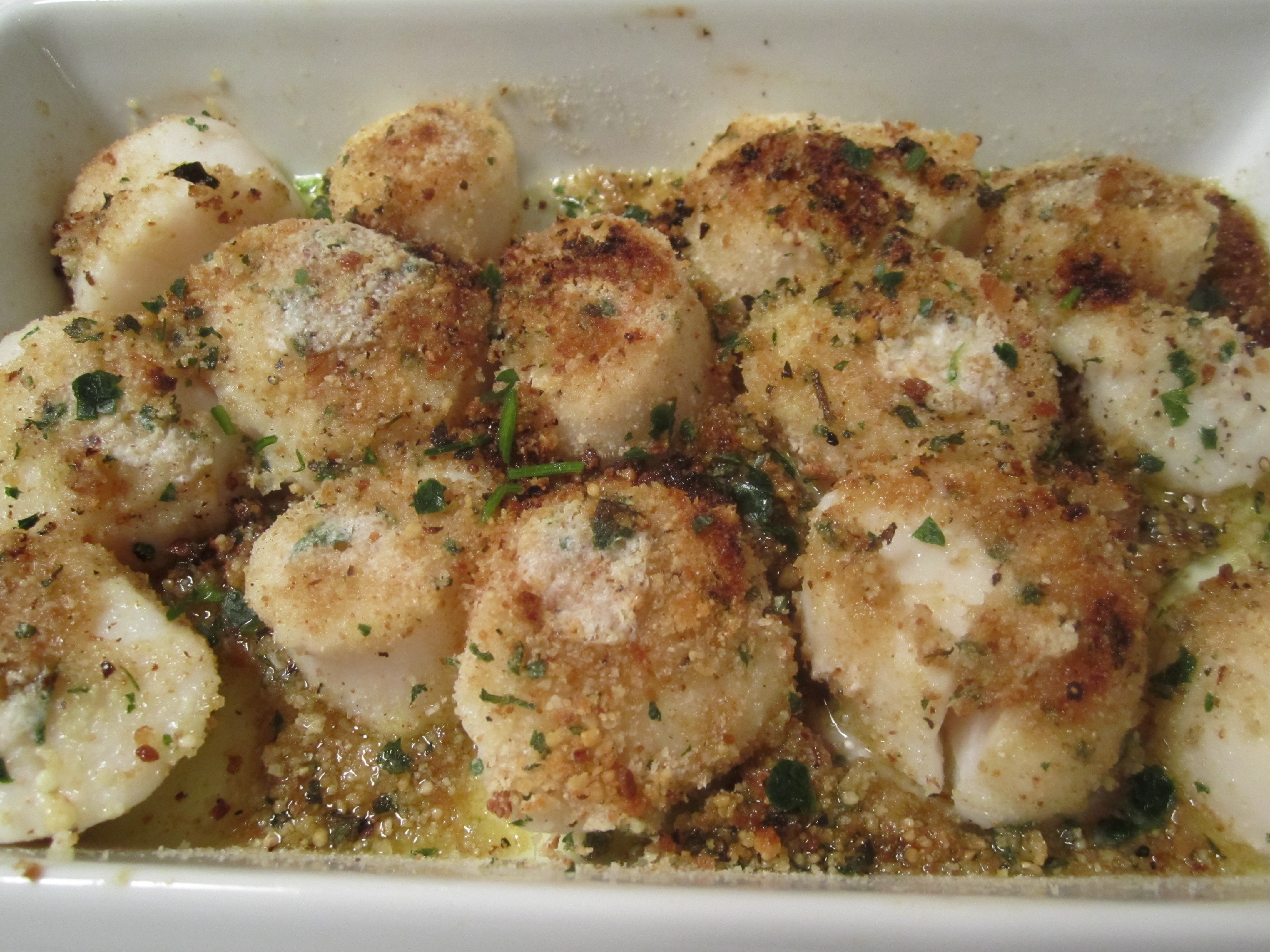
Gratinata of Scallops

I was inspired by Beppi’s gratinata of asparagus the other night, and it reminded me how good most things are when smothered in toasted bread crumbs, butter and cheese.  Scallops are particularly good in this preparation because they are light and clean tasting on their own, so the rich crumb topping enhances their natural sweetness.

Although we on the east end of Long Island get local scallops 12 months a year, my fish monger reminded me today how sweet they’ve been lately (sometimes they’re sweeter than others). They looked and smelled great, so they’re our main course tonight.

A couple of posts ago, I gave you my method of making seasoned bread crumbs, which I’m using tonight.  Once the crumbs are made (use Progresso if you must), the dish is extremely simple and quick.

Butter the baking dish, lay out the scallops in one layer, then sprinkle with crumbs, some grated parmiggiano and dot with butter.  Bake at high heat, then broil until golden and blistering.

I’m serving mine tonight with kale and bacon  and some asparagus.  There is a spring crop of organic kale at my local farm stand (thank God they’re open again!) that I couldn’t resist. 

Gratinata of Scallops

serves 2

1 lb sea scallops

1/2 c seasoned bread crumbs

1/4 c grated parmiggiano

2 tbls butter, cut into tiny pieces

2 tbls extra-virgin olive oil

salt and black pepper

2 tbls chopped parsley

Preheat oven to 450 degrees.  In a shallow buttered baking dish, arrange scallops in one layer.  Sprinkle lightly with salt and black pepper.  Top with bread crumbs and cheese.  Dot with butter and drizzle with oil.

 Bake for about 10 minutes, then place under the broiler for about 3 – 4 minutes, or until golden and bubbling.

Posted in Seafood | Leave a comment

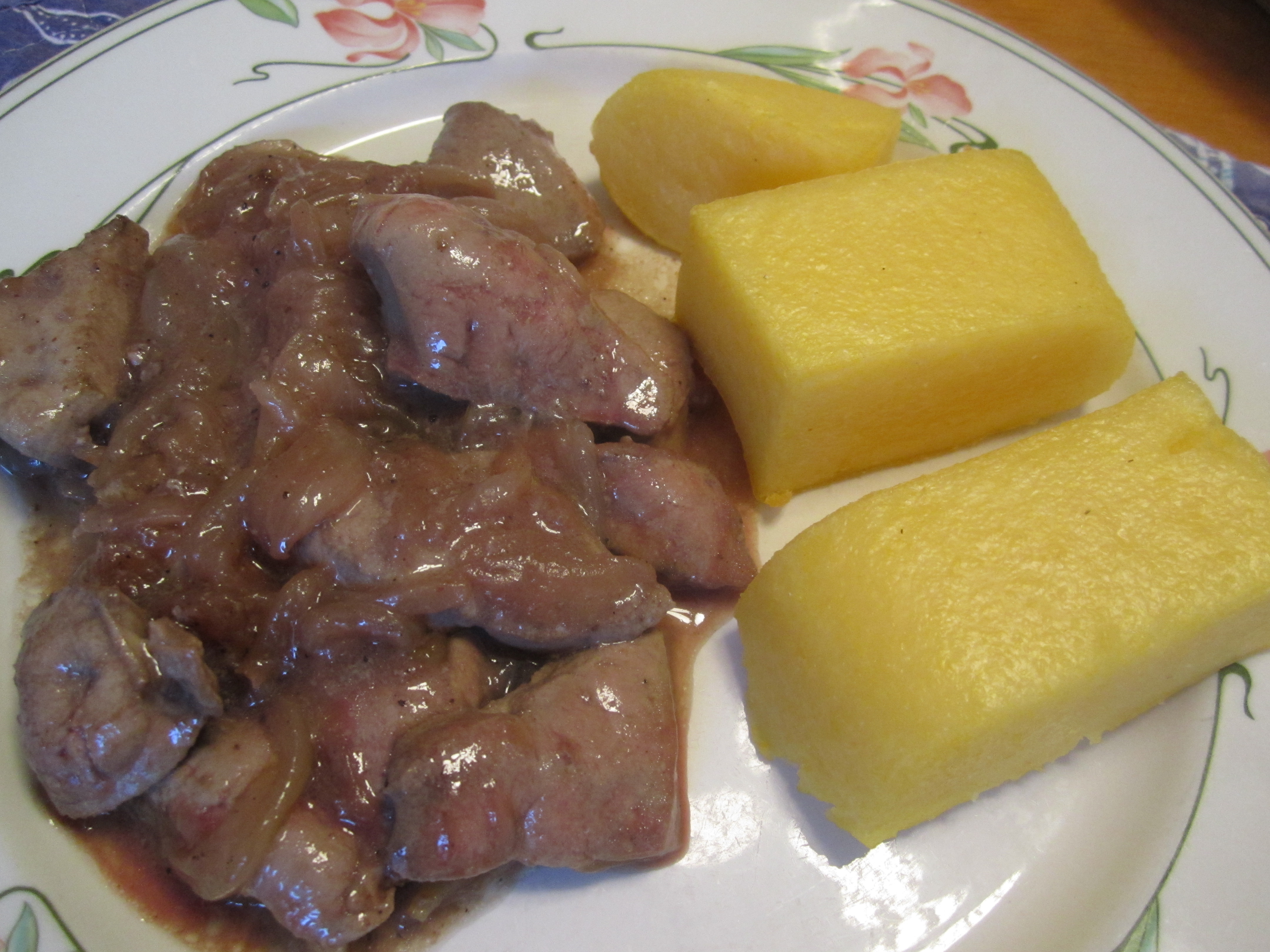
Beppi’s Fegato alla Veneziana

A dinner invitation from my neighbor, Beppi, is always a special and cherished occasion.  I look forward to watching Beppi work in the kitchen, still spry and masterful at the stove at 89 years-old.  His cooking is refined and elegant, and in his meals, I can taste the culinary wisdom of the ages (without exaggeration).  As the former owner of “San Marco”, a highly acclaimed Italian restaurant in Manhattan, Beppi was well-known as one of the most dapper and charming restaurateurs in New York in his day. 

Beppi was practically raised in a restaurant–his mother ran a local restaurant in their home town in Verona, and at the age of 13, Beppi set out for the big city (Venice) to learn his trade from the masters.  He worked at the fabled Danieli Hotel as a busboy and soon graduated to waiter, then to captain.  During this time, one of the dishes for which the Danieli was famous, was its calves liver alla veneziana.   Beppi learned this dish directly from the chefs at the Danieli and is probably one of the few remaining people who can recall it perfectly and execute it exactly as it was made at the Danieli in the 1940s.

I’ve had this dish in Beppi’s kitchen before, so I already knew the treat I was in for.  When I arrived, he was in the final stages of preparation of the dish and I was lucky enough to snap a few photos while he was sauteing and serving.  Although he’s always amused by people photographing food, he simply ignores my camera and goes about the serious business of cooking and serving.  He still prepares his meals as if he’ll be judged by the New York Times restaurant critic–everything served formally and impeccably.  Nothing puts a smile on his face more readily than a happy eater at his table (lucky me).

I’ll give you this recipe exactly as he makes it.

Calves Liver alla Veneziana

serves 2 – 3

1 lb calves liver, thinly sliced

2 large onions, thinly sliced

3 tbls olive oil

2 teaspoons red wine vinegar

1/2 c red wine

salt and pepper to taste

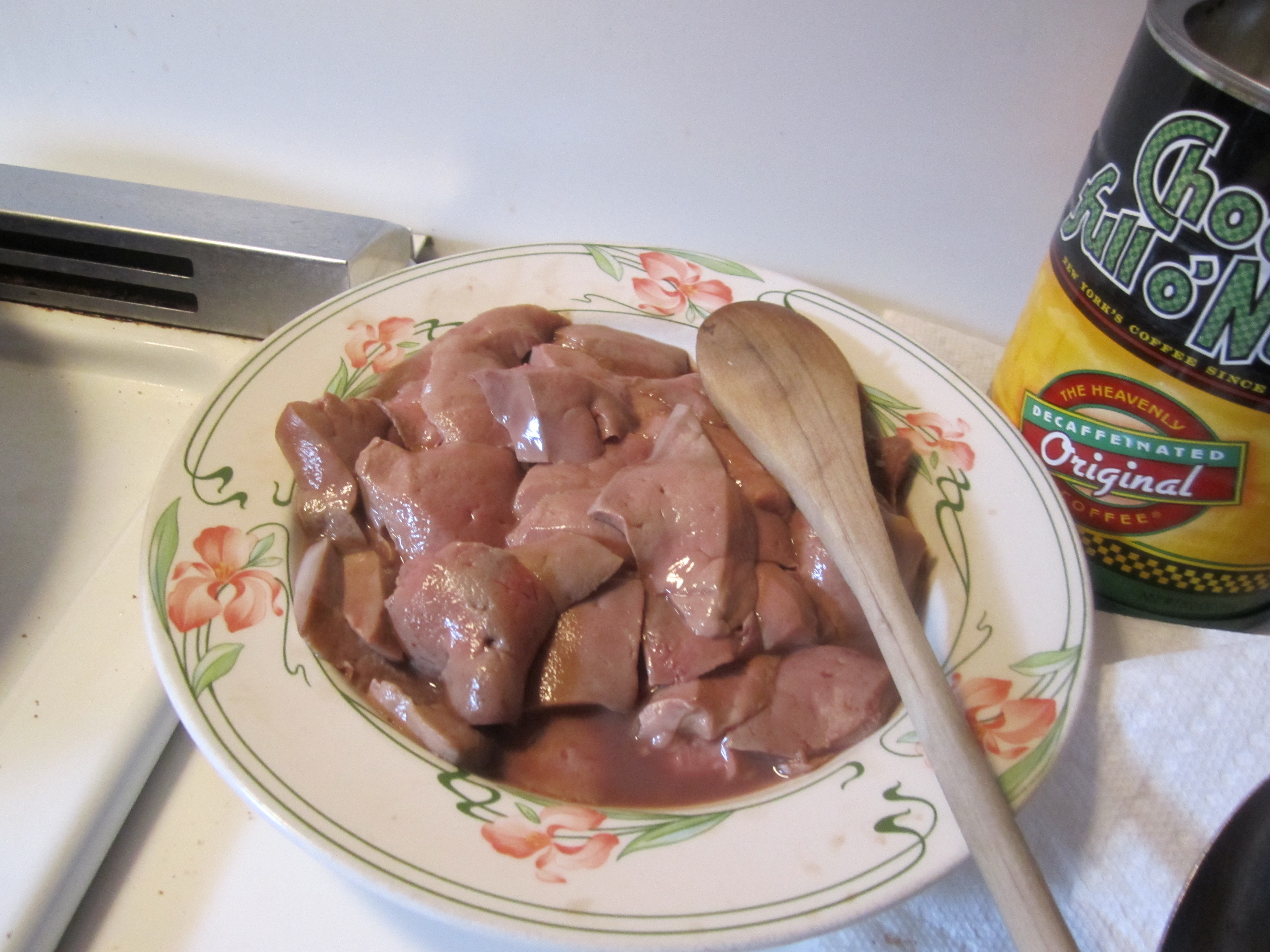
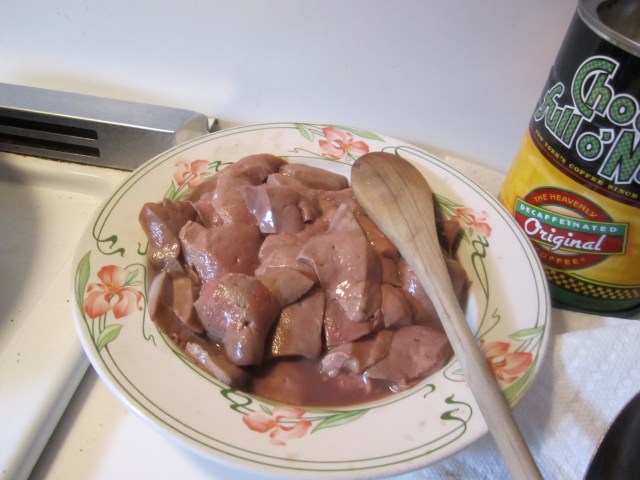
Begin by trimming and cutting liver–this is perhaps the most crucial step of the recipe, for the liver must be thinly sliced and trimmed of all skin, sinew and connective tissue.  The the liver is then cut into small pieces (about 2″ x 1″).  Drizzle the liver with red wine vinegar and proceed with the preparation.
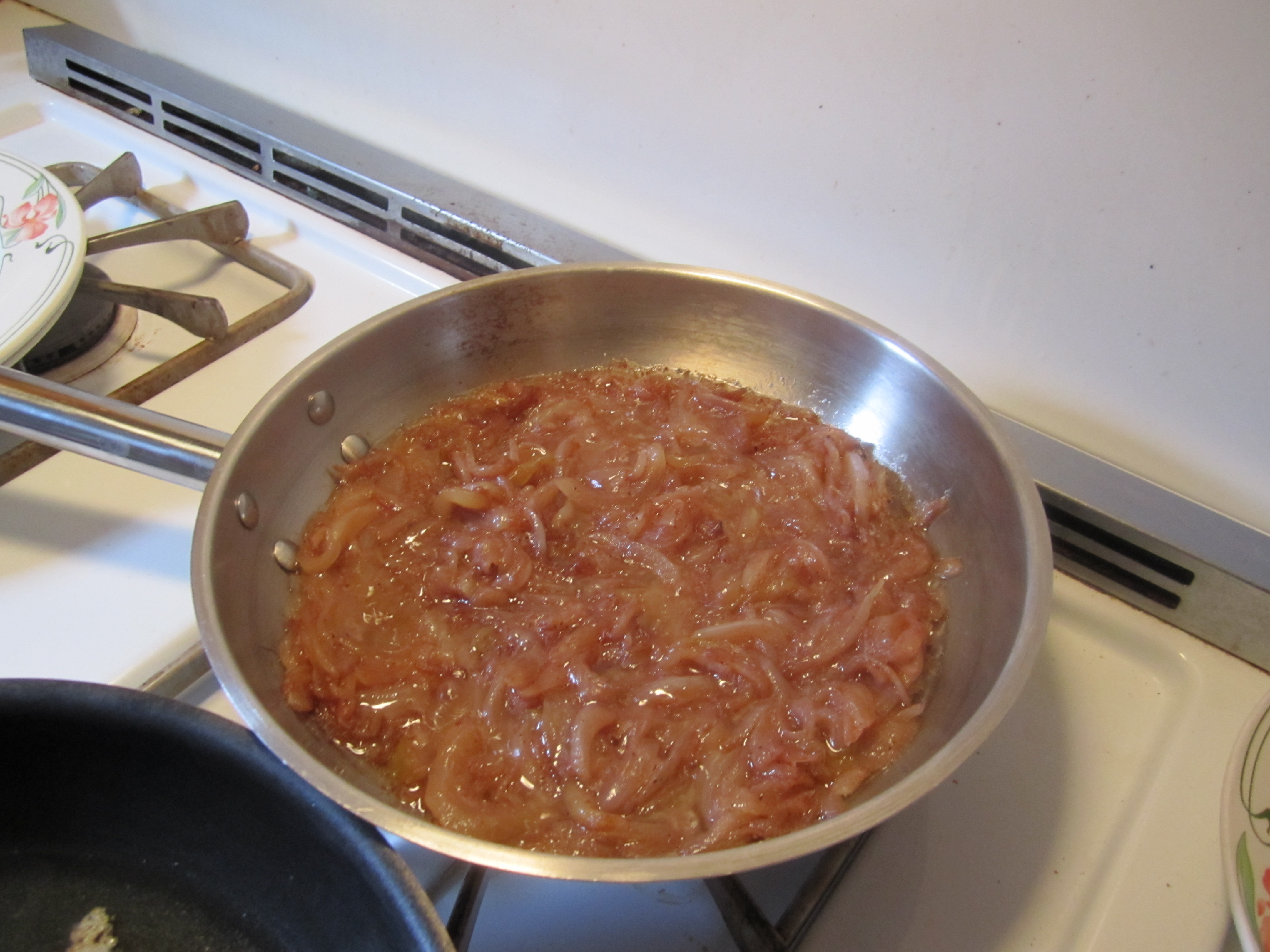
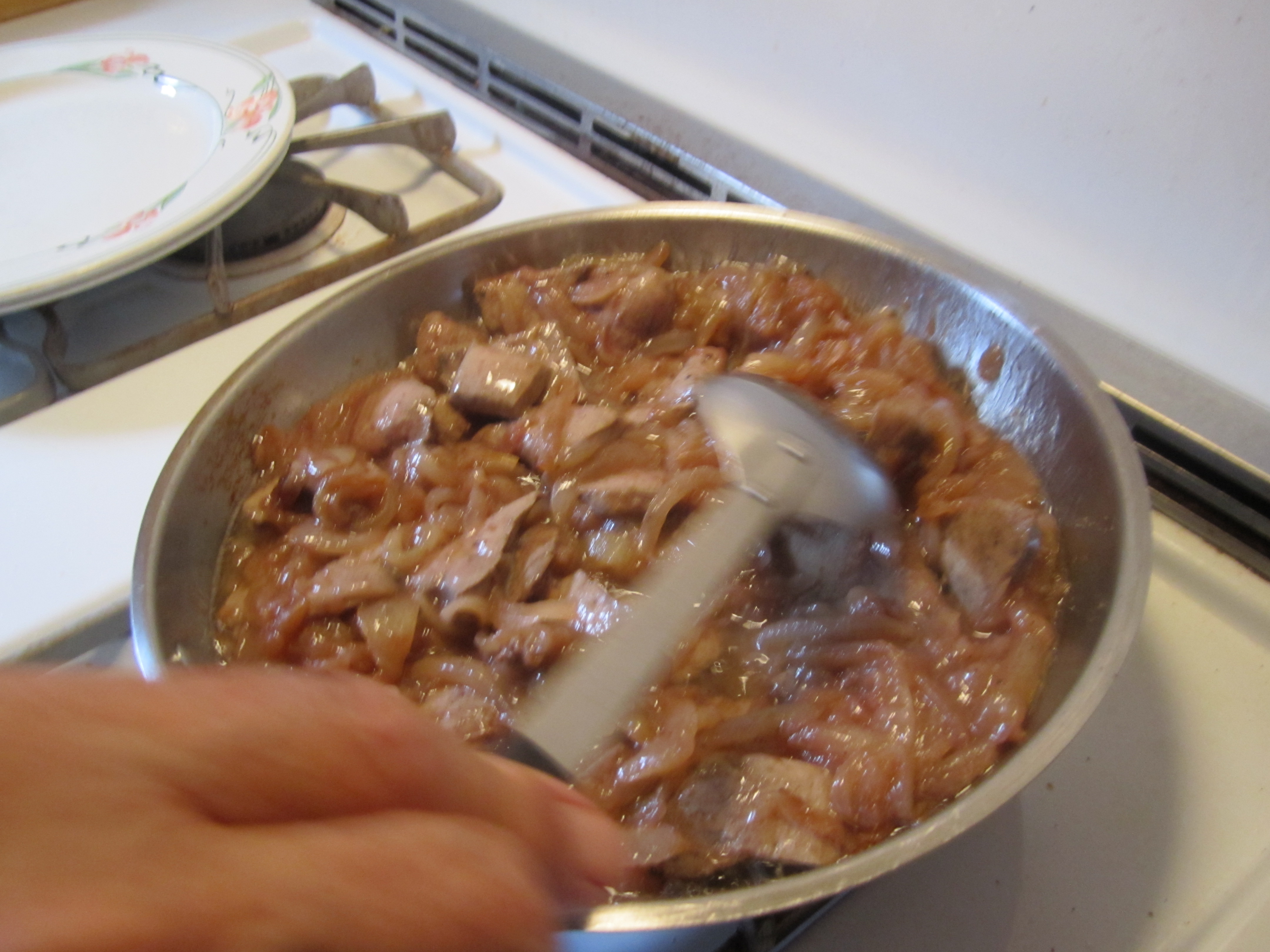
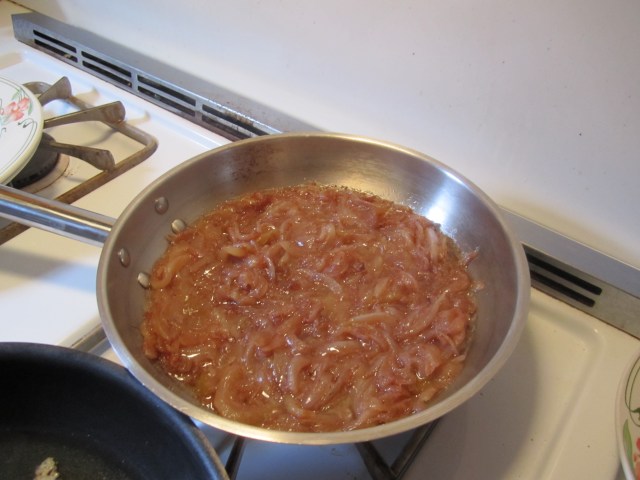
In a nonstick skillet, heat 2 tablespoons of olive oil and saute the onions on low heat for about 15 minutes.  Add red wine and continue cooking very slowly for about a half hour, partially covered, stirring from time to time.  By then, the onions should have reduced and become deeply sweet and scented with wine.
When ready to serve, heat 2 tbls olive oil on high heat in a broad skillet until smoking.  Quickly slide in the liver (vinegar and all)–it will sputter and make a mess of the surrounding area, but don’t worry–this step goes quickly.  Saute on high heat for about a minute, tossing and turning. 
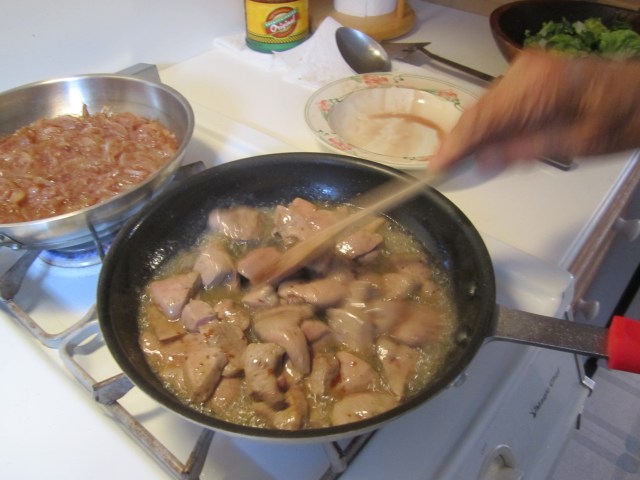
Then with a slotted spatula, remove the liver and place it in the skillet with the onions.  On low heat, stir the liver into the onions and simmer for about a minute. 
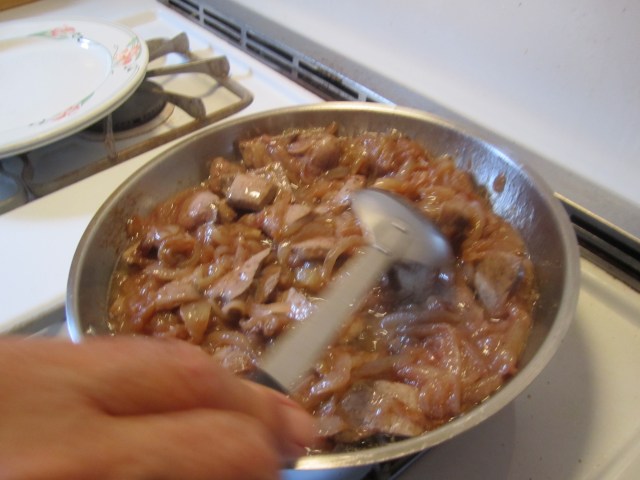
That’s it–it’s very quick.  If you overcook the liver it will be tough–you want it medium rare.  That’s why the size of the pieces of liver is critical–if the pieces are too large, it will take too long to cook them properly and the liver will toughen and dry.        

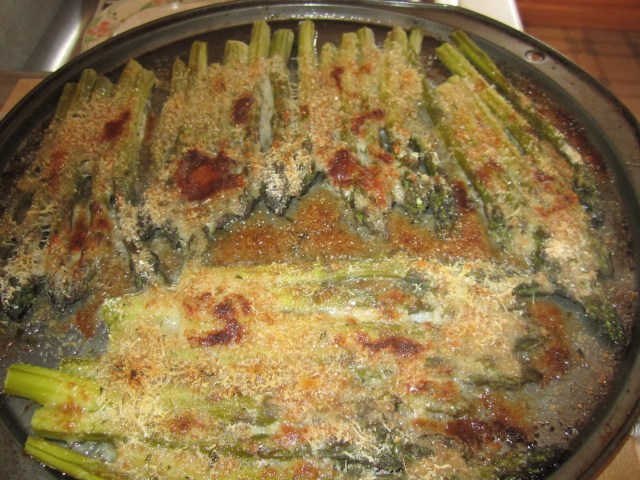
In addition to liver and polenta, Beppi has made a special spring side dish–asparagus gratinate.  The asparagus are peeled, boiled, sprinkled with breadcrumbs and grated  parmiggiano, then dotted with butter and broiled.  This is a wonderful side dish with just about anything!
Posted in Meat | Leave a comment

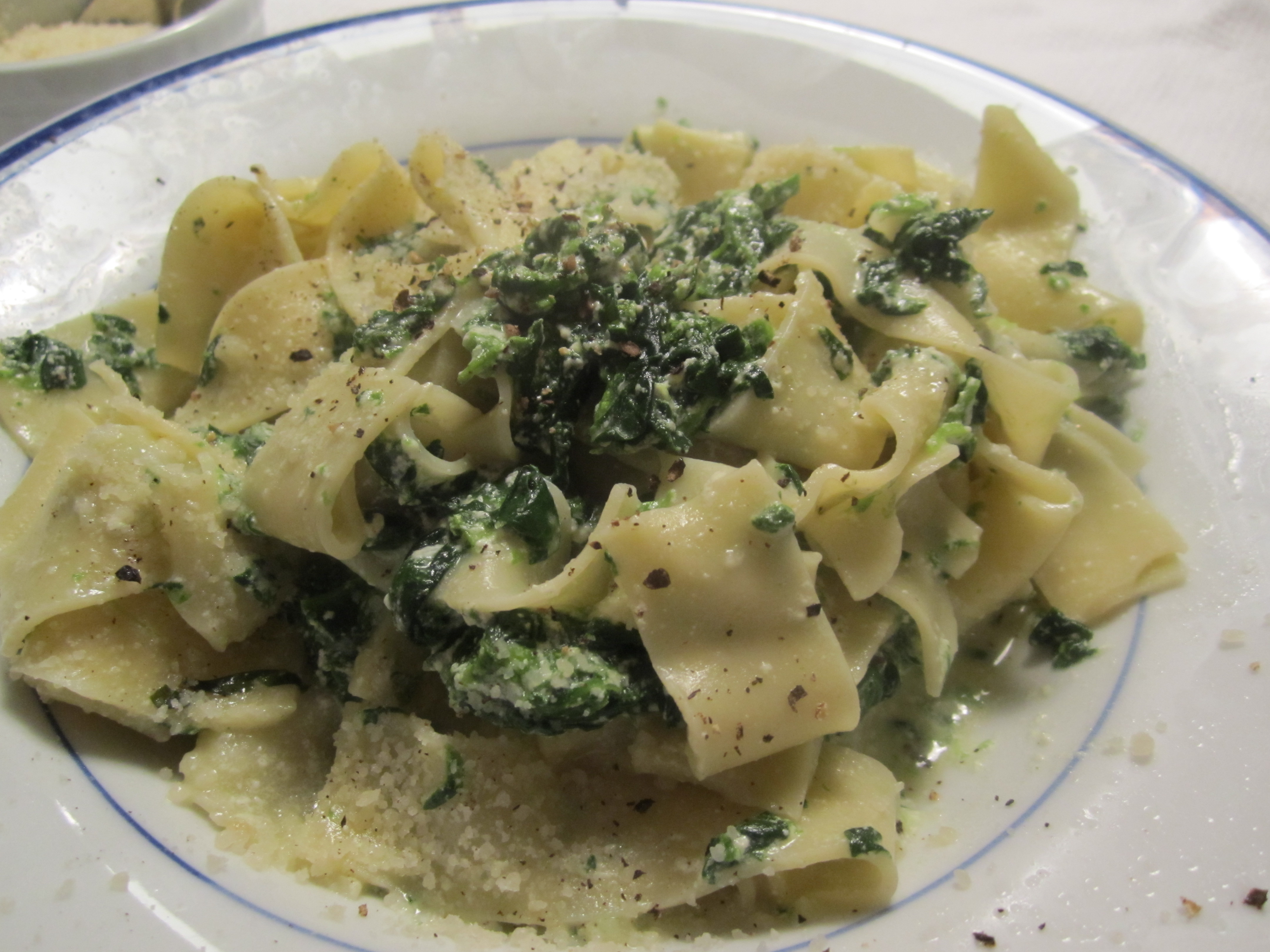
Papardelle with Spinach and Ricotta

This is a similar set of ingredients to an earlier post of mine (“pasta with spinach, ricotta and mint”) but with some key differences.  This is a butter-based sauce used to dress  fresh egg pasta, with spinach chopped finely and incoporated into the sauce.   The prior post was spinach sauteed in garlic and olive oil, over dried pasta, topped with a dollop of ricotta laced with mint.

This is a  very luxurious-tasting pasta due to the fresh egg pasta and the butter in the sauce.  The sauce is basically my mother’s filling for lasagna, but when lasagna is too much of a production, and you want that same rich cheesiness, try this dish. 

Although I used fresh spinach–blanched, shocked squeezed and chopped–you can use frozen–thawed and squeezed dry.  While the pasta is boiling (egg pasta cooks quickly) combine the butter, spinach, grated cheese, ricotta, nutmeg and mint in a skillet large enough to hold the pasta and warm on low heat.

Toss in the cooked pasta, some pasta cooking water and serve with more grated cheese at the table.  The spinach can be cooked and squeezed in advance, the entire sauce assembled, then heated with butter and served at the last minute.

Pappardelle with Spinach and Ricotta

serves 4

1 lb fresh egg pappardelle

10-oz spinach, boiled for 3 minutes, shocked in cold water, squeezed dry and chopped (frozen spinach is fine)

1 cup fresh ricotta

1/2 c grated parmiggiano

1/8 tsp nutmeg

12 mint leaves, sliced into ribbons

2 tbls butter

salt and pepper to taste

While pasta is boiling in salted water, combine the remaining ingredients in a skillet broad enough to hold the pasta, on low heat.  Bring to simmer and add the cooked pasta, along with some cooking liquid.  Toss and serve in heated bowls with additional grated cheese.

Posted in Pasta | Leave a comment

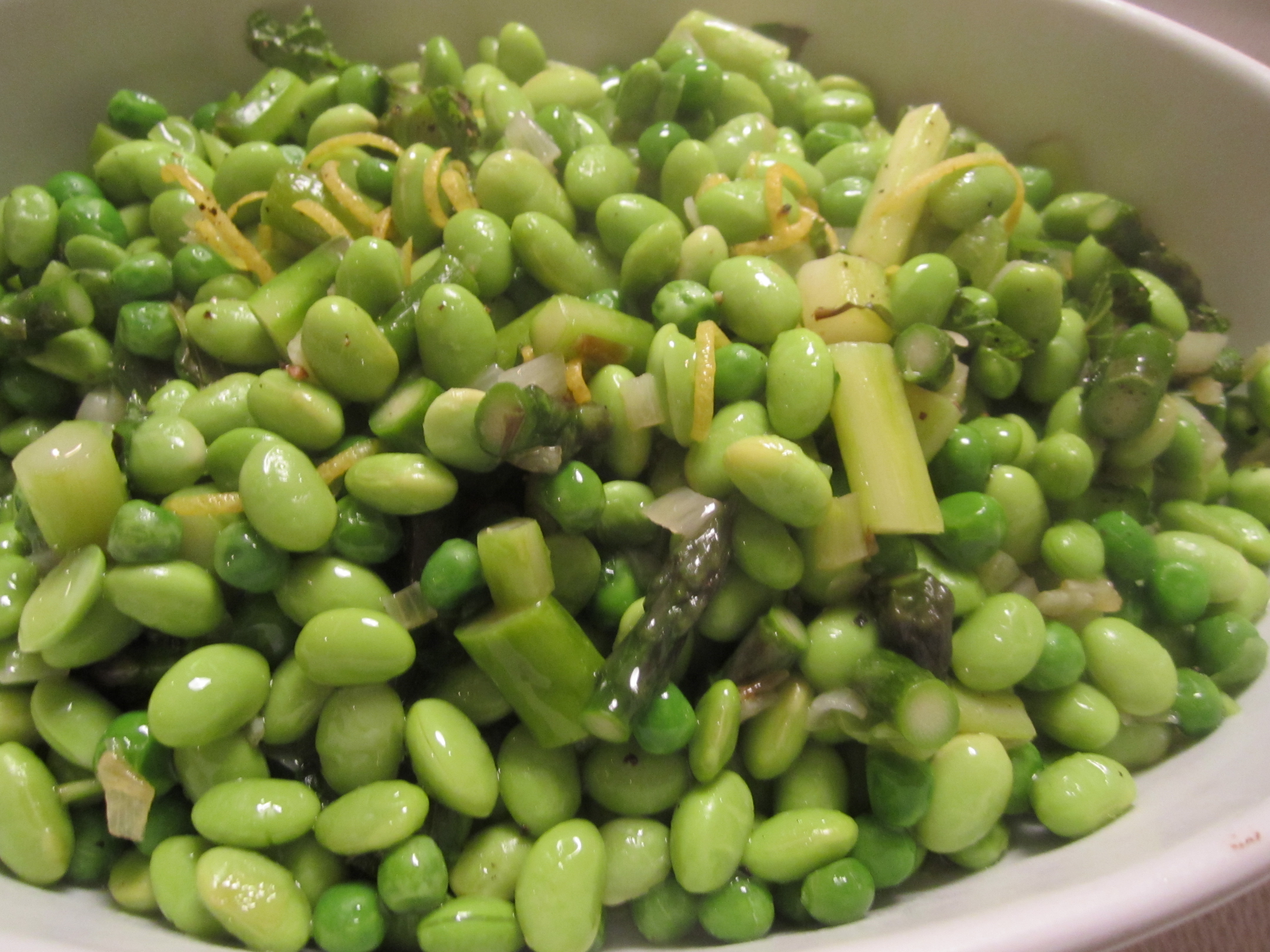
Mock Spring Vegetables

Although these are all genuine vegetables, they are not exactly all spring vegetables.  The beans are not fava beans, they’re soybeans (edamame) and they are found in my supermarket freezer.  The peas are also frozen, although I use fresh peas when I can find them.  This is a wonderful side dish to make for a large party because for the amount of time and effort it takes to clean and cook asparagus, you can have a spring-tasting combination of vegetables that pleases everyone–including the cook.   Despite the predominance of frozen vegetables in this dish, the finishing flavors (mint and lemon zest) are bright and not un-springlike.

Mock Spring Vegetables

serves 6

2 lbs asparagus, bottom portions of stems peeled or snapped off

2 small shallots, peeled and finely diced

1-lb bag frozen edamame

10-oz. box of frozen peas

1/4 c mint leaves

zest of 1 lemon

4 tbls olive oil

salt and peppet to taste

In boiling salted water, blanch asparagus for about 4 minutes (working in small bunches, if necessary).  Shock in cold water if not using immediately.  In the same boiling salted water, add the soybeans and boil for 5 minutes.  Drain.  In the same water, blanch the peas for 1 minute and drain.

Saute shallots on low heat in 3 tbls olive oil until translucent and wilted.  Add asparagus and continue sauteing until slightly golden, about 3 minutes.   Add peas and edamame and taste and add salt and pepper.  Drizzle with remaining tablespoon of olive oil,  sprinkle with lemon zest and mint leaves and serve at once (mint leaves blacken immediately).   Can be served later at room temperature but add a few more bright green mint leaves right before serving.

Posted in Vegetables | Leave a comment