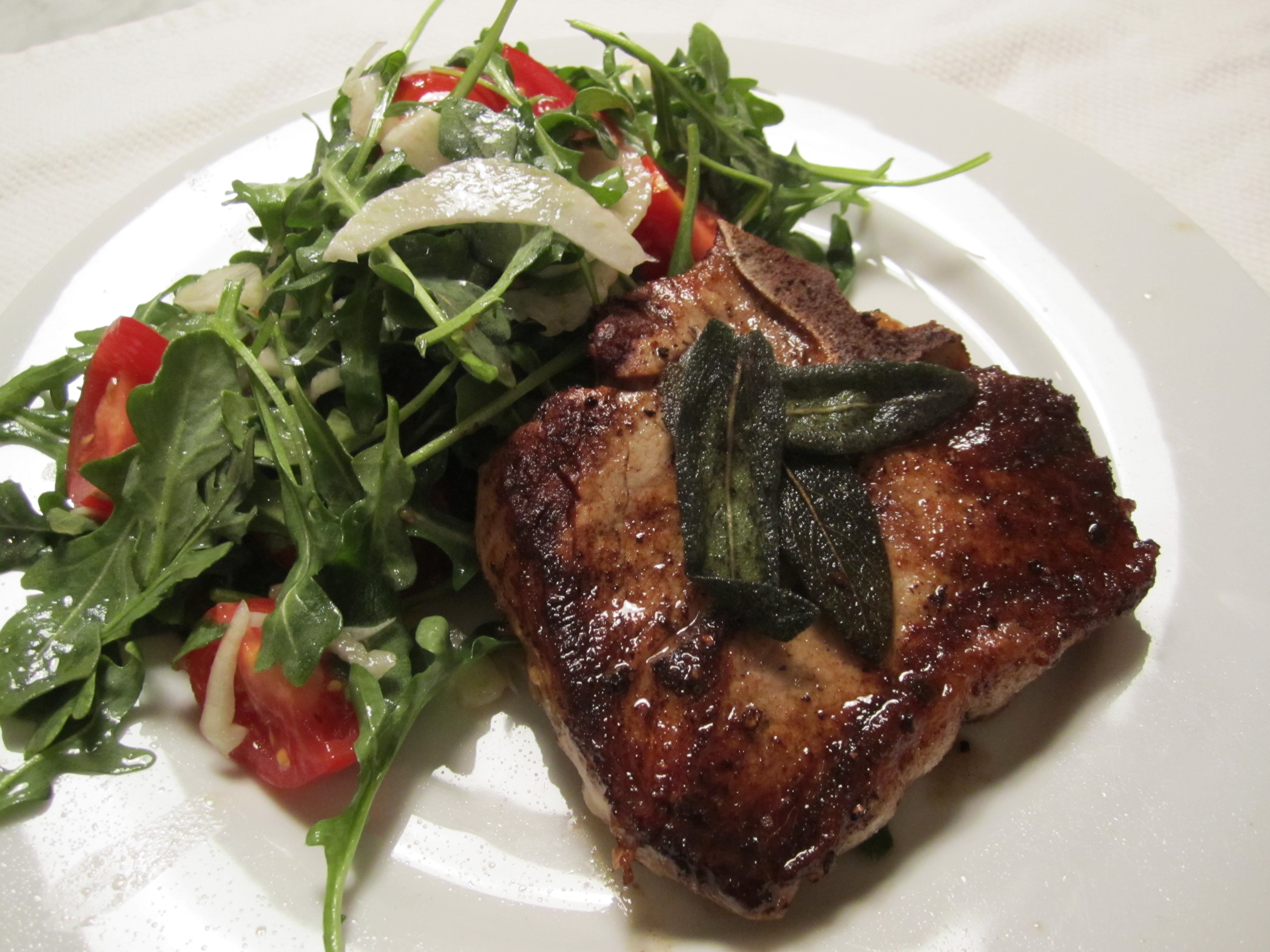
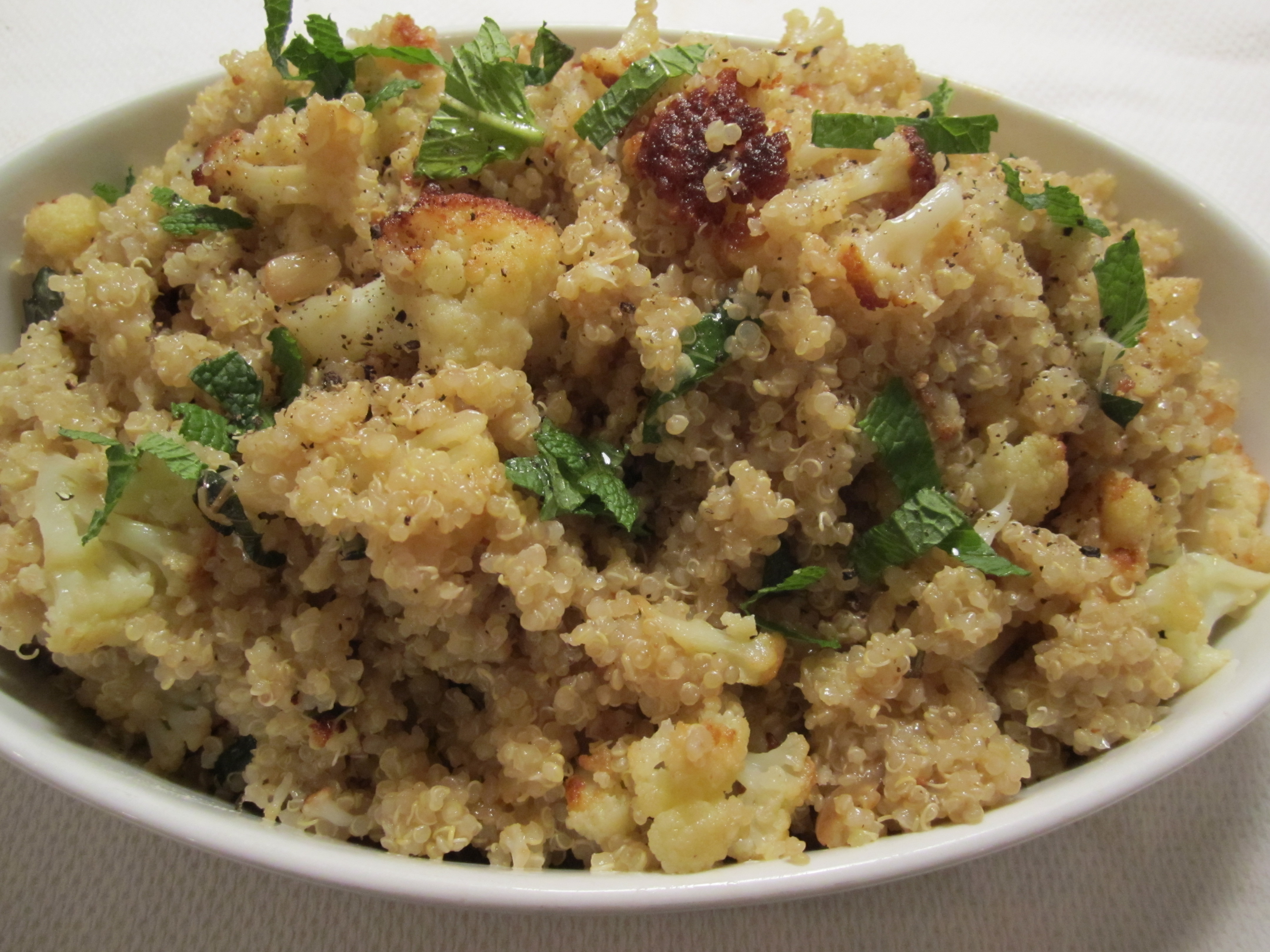
Turkey Meatloaf


I like to make either a roast chicken or turkey breast on Sunday evenings.  There’s something comforting and homey about a roast in the oven, and they also yield great leftovers for lunches the following week.

Even homier, although maybe less festive, is a meatloaf.  This meatloaf has a very similar foundation as my turkey meatballs (see prior post “polpettine di tacchino”), only it’s even easier (obviously no rolling into balls or sauteing in a skillet). 

The recipe is based on my neighbor Beppi’s recipe for stuffing, with ground mortadella, shallots, seasoned breadcrumbs and bread soaked in broth.  This is an extremely easy meatloaf because there’s minimal chopping (it’s all done in the food processor) and there’s no pre-sauteing of aromatics. 

The truth is, it’s sinfully easy to make this meatloaf–you can assemble it early in the day and store it in the fridge, in a baking dish covered with foil.  Pop it into the oven an hour-and-a-half prior to when you want to serve it.  It will give you time to enjoy your entire Sunday without thinking about what’s for dinner (although that’s exactly the kind of thing I enjoy spending my Sunday thinking about).

I’m accompanying it with some brussels sprouts, simply boiled in salted water for 5 minutes and dressed with salt and raw olive oil. 

 In addition, I’m making some quinoa with butternut squash. 
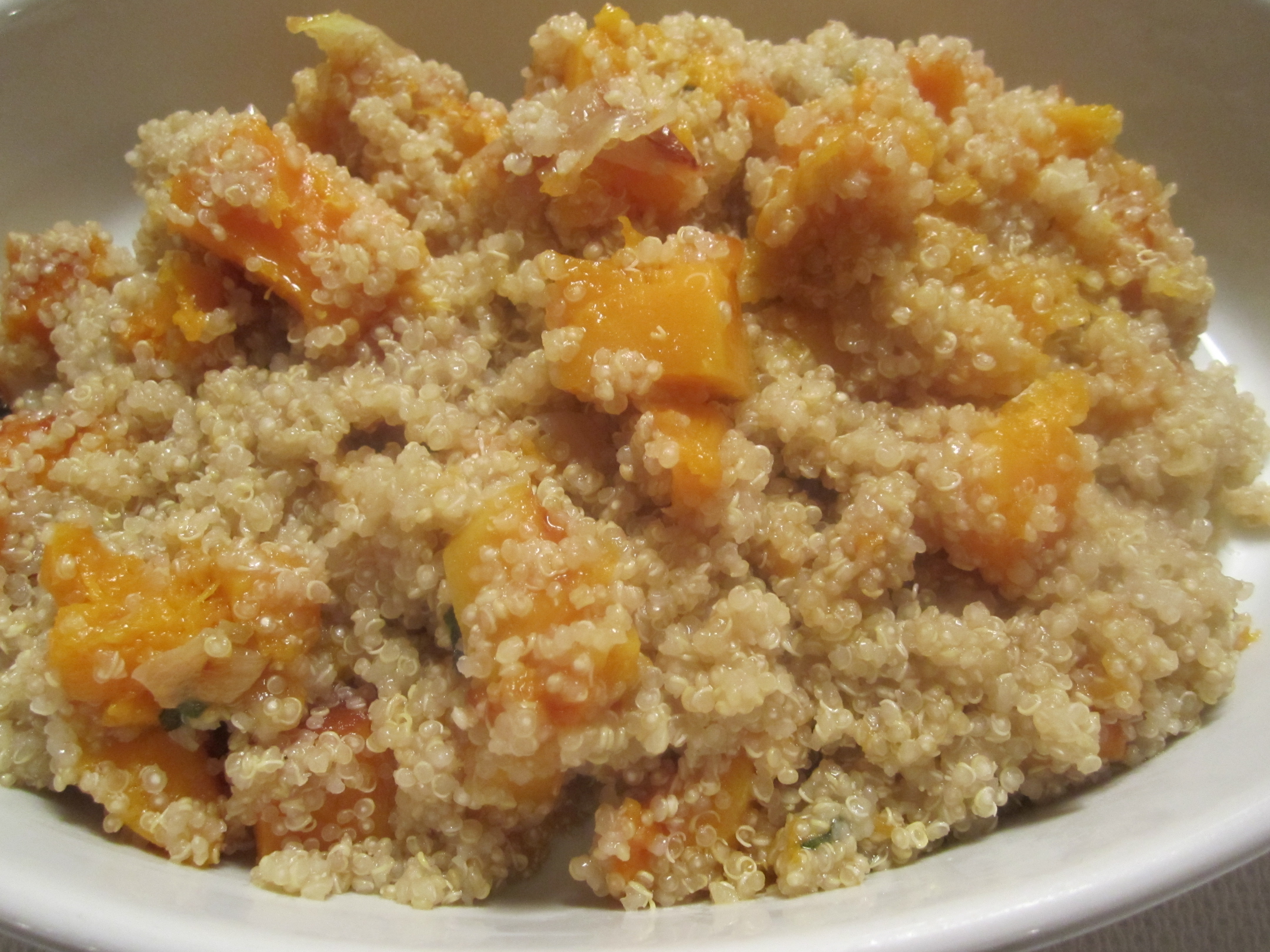
This dish is essentially exactly the same as my prior post (“butternut squash with farro”), only substituting quinoa for farro.  You’ll see me using quinoa quite a bit in the coming months, not just because it’s so good for you and delicious, but because I enthusiastically bought a 4-lb. bag of it at Costco.

 Turkey Meatloaf

1 1/4 lbs ground turkey

1/4 lb mortadella

1/2 cup seasoned breadcrumbs

2 slices white bread

1 shallot, peeled

1/2 cup chicken broth

1/4 c chopped parsley

1- 1/2 tsp salt

1/2 tsp black pepper

1/8 tsp nutmeg

2 eggs

Preheat oven to 375 degrees.

Soak bread with broth and let it absorb for about 10 minutes or so.  Place mortadella  and shallot in food processor and pulse until it becomes a fine dice.  Add soaked bread and process until mixture achieves the consistency of a porridge.  In a mixing bowl, combine the mortadella and soaked bread with the ground turkey, eggs, nutmeg, seasoned crumbs, salt and pepper. 
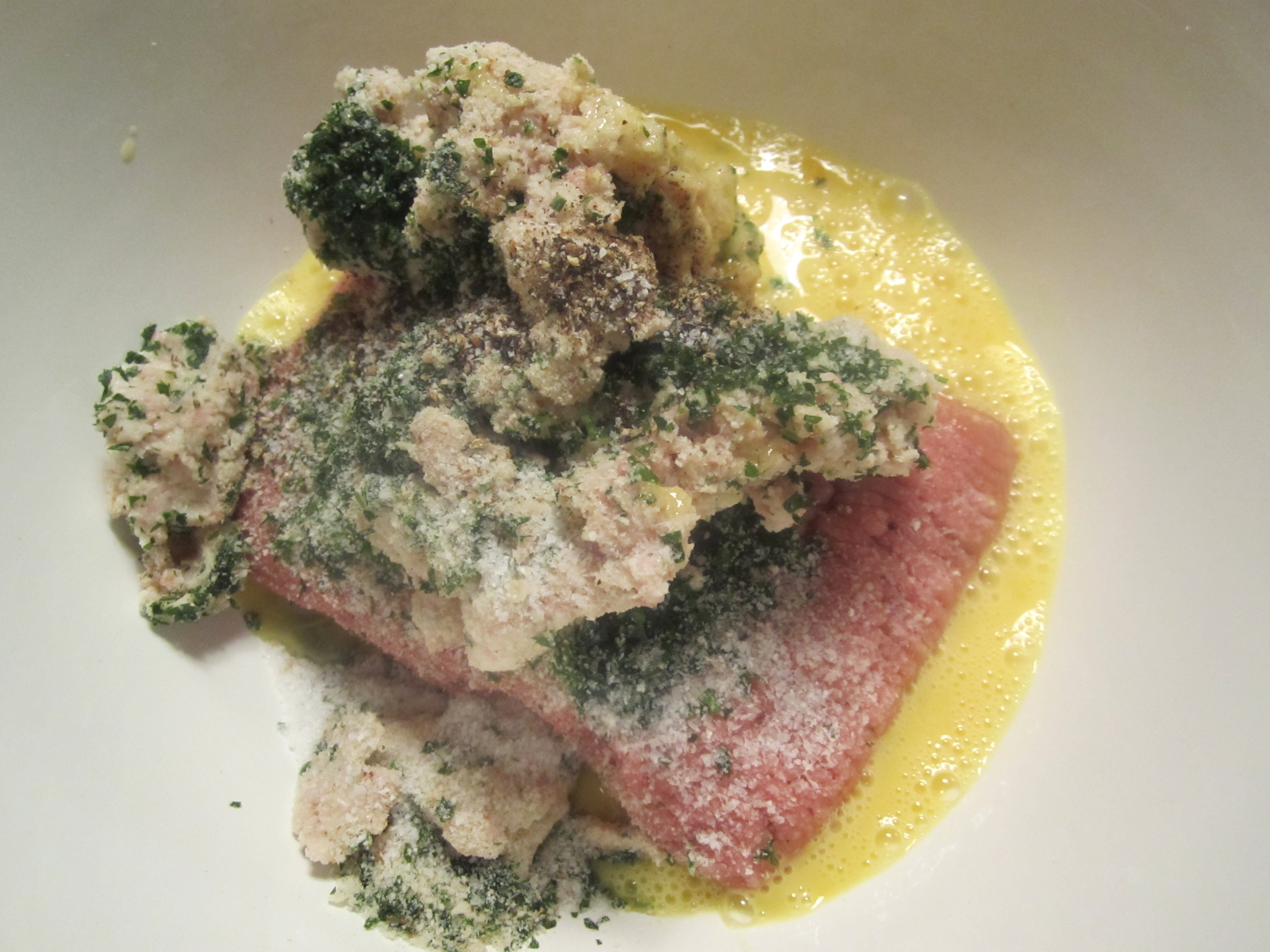
Form into a loaf and  let rest for 15 minutes. Bake for 45  minutes, covered with foil.  Uncover and roast for another 30 minutes or so, until the internal temperature is at least 165 degrees.  Let rest for 15 minutes before slicing.

Posted in Poultry | Leave a comment

Rigatoni with Cauliflower and Sausage

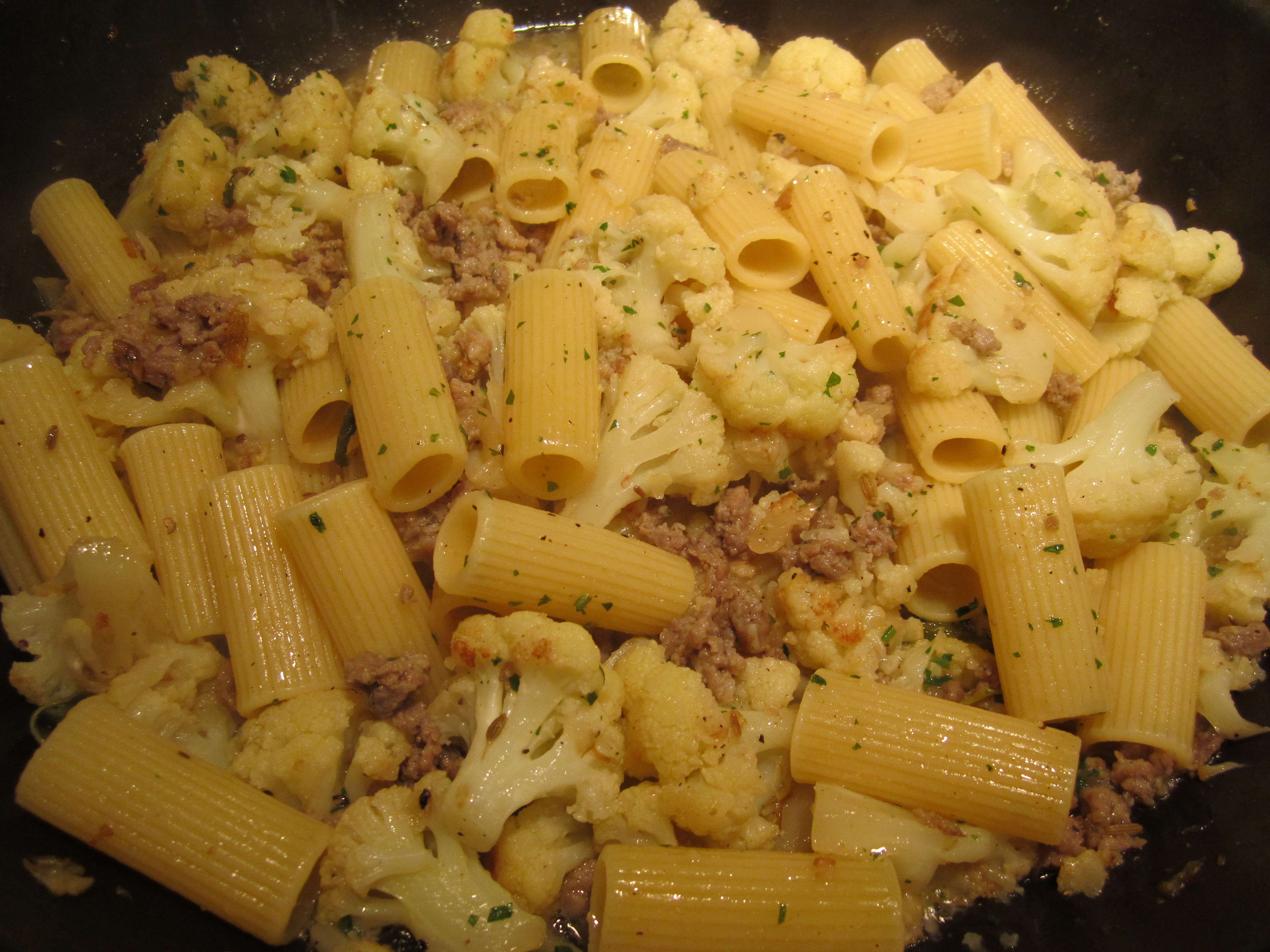
Cauliflower makes a wonderful sauce for pasta–either with tomato or without.  Tonight, I’m in the mood for it cooked “in bianco,” as Italians would refer to the non-tomato version of a dish.  Instead of tomato sauce for moisture,  I’m using a touch of white wine, and chicken broth.  Sage is also wonderful with cauliflower, and I happen to have some in the fridge from my pasta with sage and butter about a week ago (sage keeps its flavor well even if it starts to dry and wilt).  The sausage is removed from its casing and chopped finely as it’s sauteed.  This will disburse the flavors in the sausage throughout the sauce. 

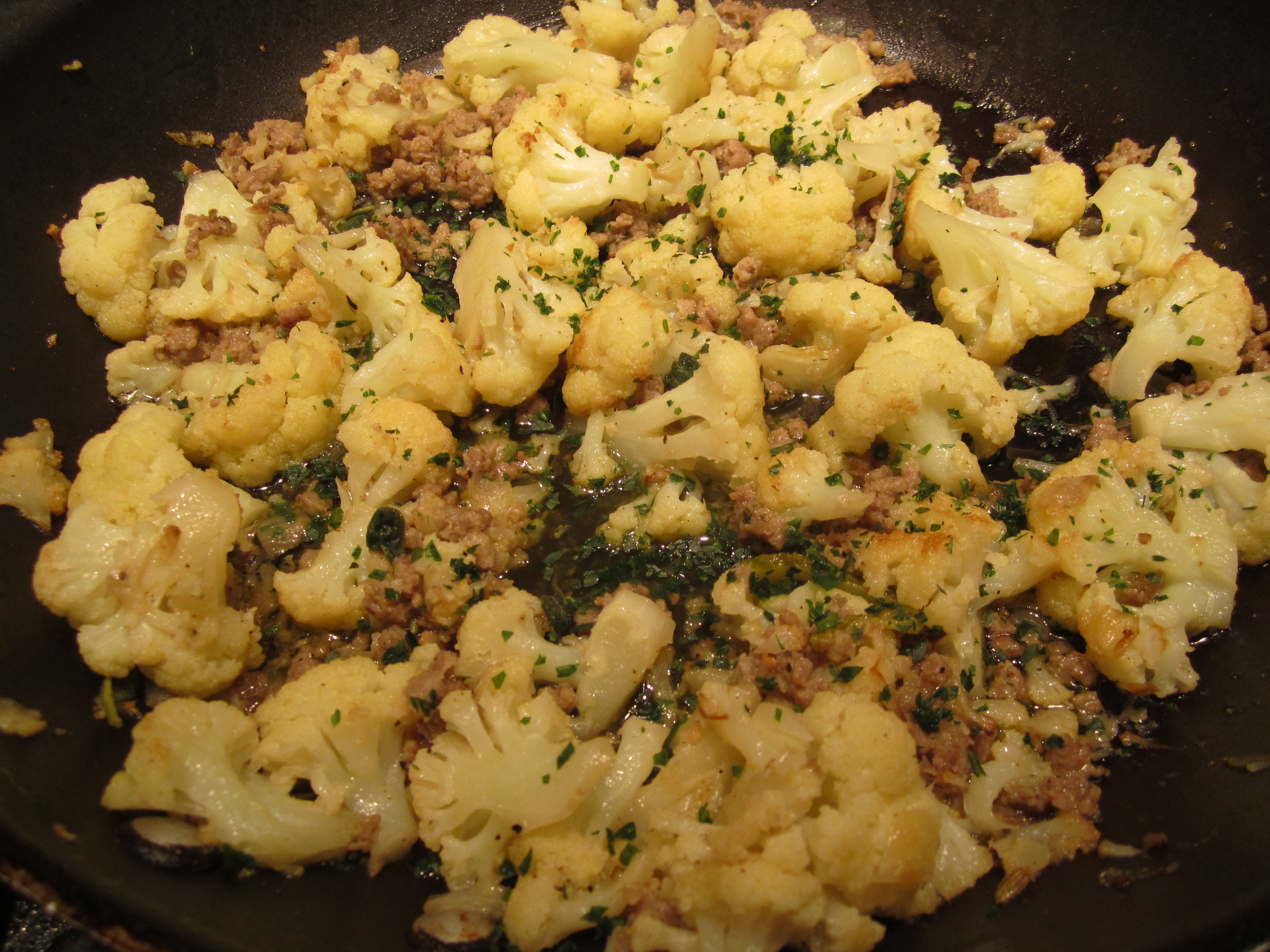
No bre-boiling of the cauliflower is necessary–I simply cut it up into small pieces and saute it in olive oil with some sage leaves.  I brown the sausage in a separate skillet, then combine it with the cauliflower when they are each cooked.  Then comes the addition of white wine and broth. 

Once the pasta is cooked, it’s added to the skillet with the cauliflower, along with some of its cooking liquid, then all is sauteed for a minute.  More olive oil is drizzled over the top, as well as parsley, lots of parmiggiano cheese and black pepper. 

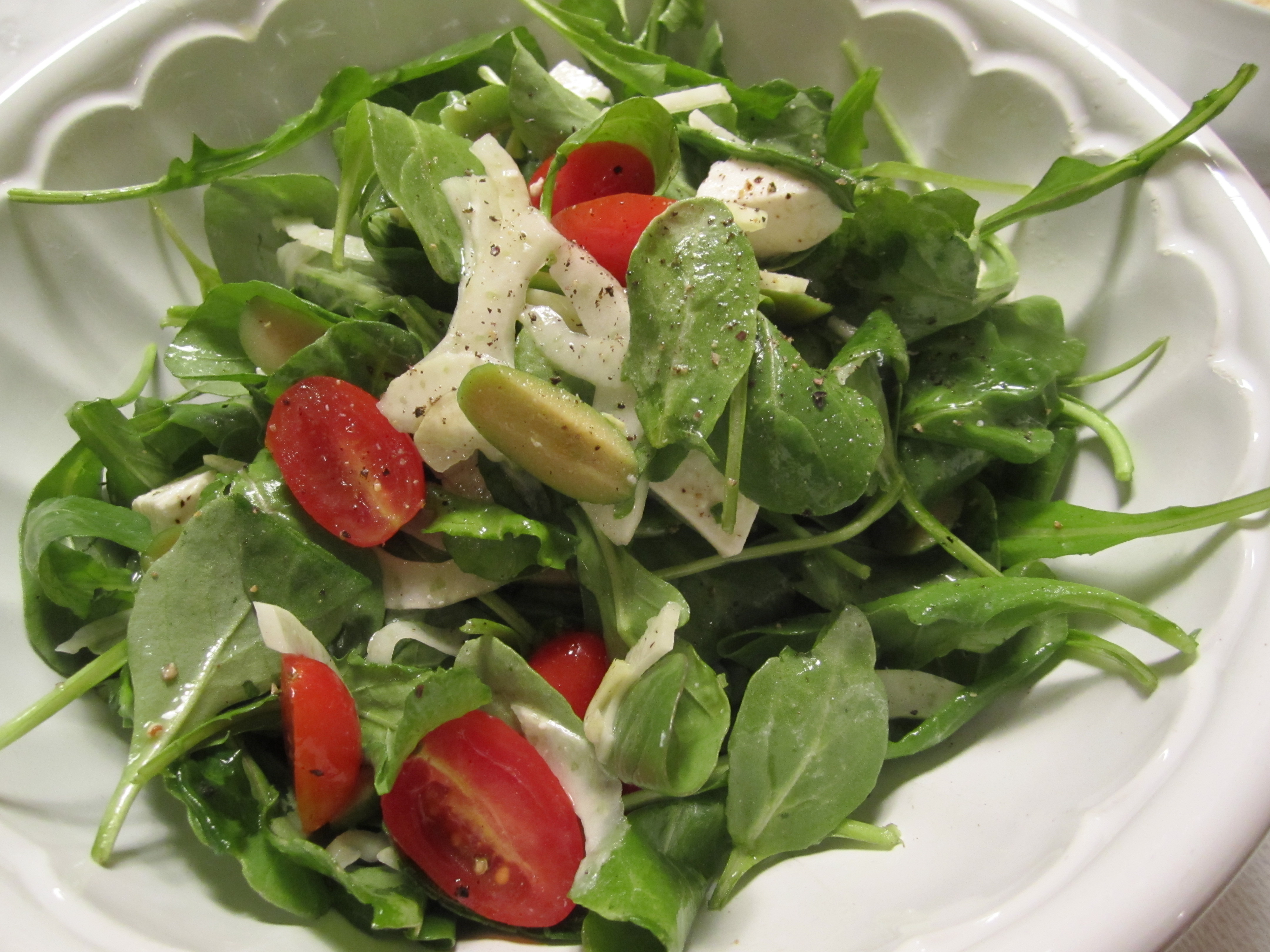
Tonight I’m serving this pasta with a simple salad of baby arugula, shaved fennel, grape tomatoes, cubes of fresh mozzarella and slices of green olives, dressed with olive oil and lemon–the perfect bright, light counterpoint to the earthy sausage and cauliflower.


Pasta with Cauliflower and Sausage

serves 4

1 head cauliflower, cut into 1″ pieces

8 sage leaves

1 lb sweet Italian sausage, removed from its casing

1/3 c white wine

1 cup chicken broth

1/4 c olive oil

2 tbls chopped fresh parsley

1/2 c grated parmiggiano

salt and pepper to taste

Saute sausage in a skillet, while breaking it up with the spatula until it just begins to brown and there is no more pink left.  Set aside. 

In a large skillet, saute cauliflower in 3 tablespoons of the olive oil with the sage leaves–partially covered. Remove cover and stir or shake every couple of minutes, until it begins to turn golden.  Boil pasta.

When pasta is about 5 minutes away from being done, raise heat under the cauliflower and add white wine.  Cook until wine has evaporated (about 3 minutes).  Add broth and let simmer, uncovered until pasta is cooked.  Add rigatoni to the skillet with the cauliflower, along with about 1/2 cup of pasta cooking liquid.  Saute on high heat for a minute or so. 

Off the heat, drizzle with oil and sprinkle with grated cheese and black pepper.

Posted in Pasta | Leave a comment

Dinner in the City–Roast Chicken Breast

I’m not in the city that often these days, but when I am, occasionally I’ll cook in my city kitchen.  This is one of my “city” meals.  It was made in my tiny NYC kitchen, on a tiny stove and with only one baking dish–no searing or frying on the stovetop.   Cleanup and ingredients are minimal–I don’t keep my city kitchen stocked as well as my Southampton kitchen, but I do keep certain staples–good olive oil, salt, pepper and some dried herbs. 

Tonight the seasoning is herbs de provence–not very Italian but excellent with all things roasted.  It’s got thyme, tarragon, fennel seeds, and it keeps for a very long time.  I know that most food purists say that herbs should be thrown away after a year, lest they lose potency, but it all depends on how freshly dried they were when you bought them.  My dried rosemary from Beppi’s garden is still going strong after 2 years.

Anyway, for tonight’s meal, the chicken breast halves (with skin and on the bone) get seasoned, placed on a pizza pan (low sides, maximal browning) and allowed to roast uncovered for about forty minutes.  Because there’s room around the chicken, I’m roasting potatoes and carrots in small pieces (they don’t take too much longer to cook than the chicken breast).  Once the chicken breast comes out to rest, the potatoes and carrots finish cooking.  If you’ve timed it right, they should take another ten  minutes or so to finish browning while the chicken rests, then the meal is ready. 

As a green vegetable I’m serving sauteed broccolini.  The broccolini can be made all in one skillet without any prior blanching.  Just place one bunch of washed, chopped broccolini in a hot skillet with 1 tablespoon olive oil and 2 tablespoons water, some salt and pepper.  Cover and simmer over medium-high heat.  The water will steam the broccolini, then evaporate, while the oil that remains will caramelize them just a bit.  A little lemon zest at the end is nice, as well.

Although I dislike food smells in my little apartment, the aroma of chicken with  herbs de provence is one that I’ll tolerate any night of the week!

Roast Chicken Breast with Carrots and Potatoes

serves 2

1 split chicken breast, skin-on, bone-in

2 yukon gold potatoes, cut into 1″ cubes

2 fat carrots, peeled and sliced thinly on the diagonal

2 tsps dried herbs de provence

2 tbls olive oil

salt and pepper to taste

Preheat oven to 425

On a pizza or sheet pan, season chicken and vegetables generously with salt, pepper and herbs.  Rub with oil and roast for about 40 minutes, basting once or twice.

 Remove chicken breasts after 4 minutes and allow potatoes and carrots to brown a bit more for about 10 – 15 minutes (unless they’re already browned–different ovens brown differently).

Posted in Poultry, Vegetables | Leave a comment

Crispy Skate Wing with Caramelized Lemon

On the East End of Long Island we’re lucky enough to have skate caught locally.  For those of you unfamiliar with skate, it’s a winged fish–a member of the stingray family.  The wings are delicate and light–I would characterize their flavor as very similar to crab.   

The French prepare this fish simply by searing in brown butter.  Sometimes, capers or lemon are added to cut the richness of the butter. 

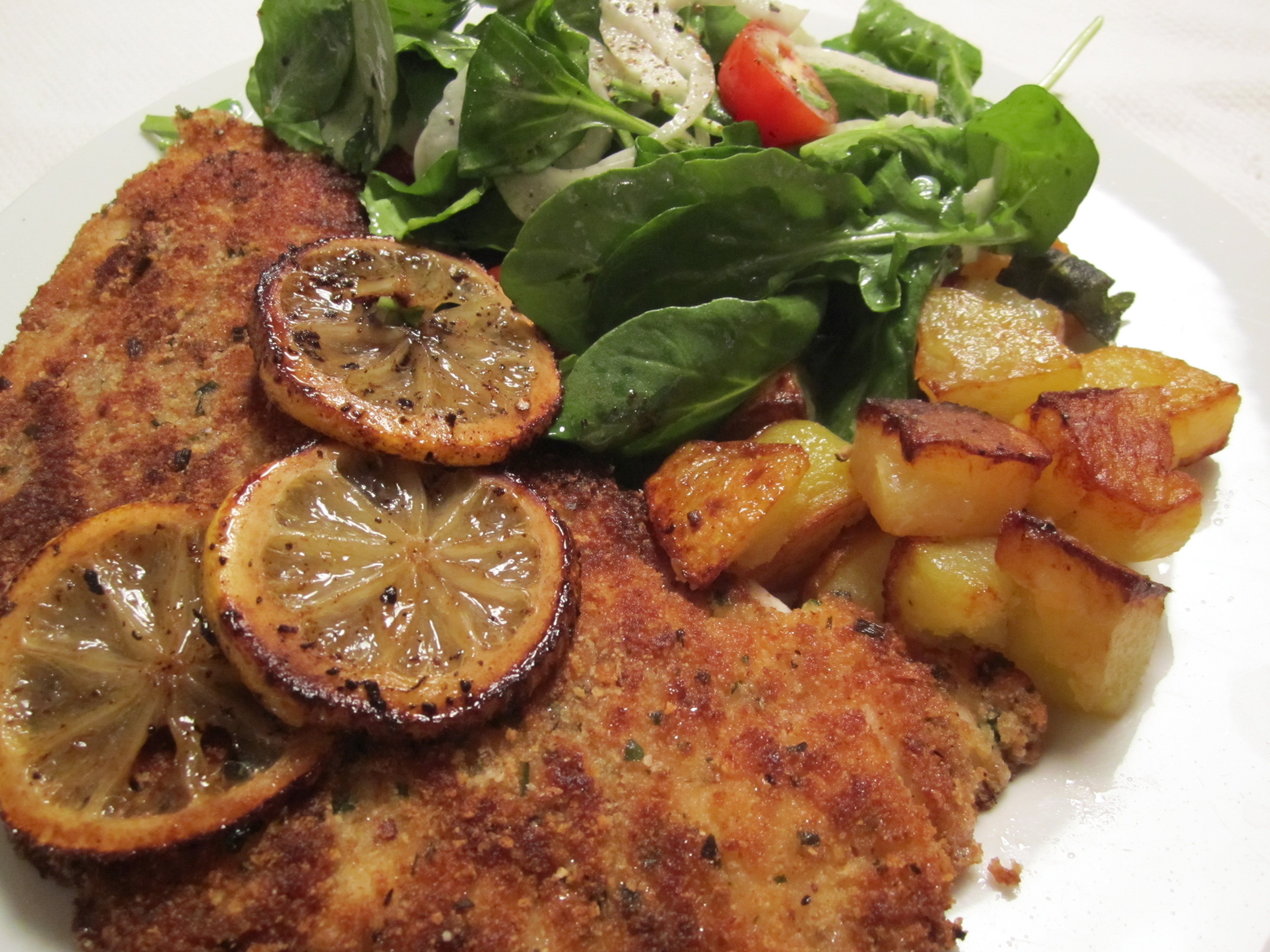
Tonight,  I’m in the mood for something crispy on the outside/tender on the inside.  I’m going to do my standard breading operation–flour, then egg, then seasoned bread crumbs (my homemade crumbs–seasoned with salt, pepper, nutmeg and fresh parsley).  Then into a skillet of hot olive oil.   The fish is done within about 3 minutes total. 

To add a little acidity to the dish, I’ve sauteed a couple of slices of lemon in olive oil until they’re golden brown.  It might seem like lemon has too assertive a flavor to actually eat it in slices, but the sauteing mellows and sweetens the lemon and the result is very fish-friendly. 

Crispy skillet potatoes with sage and garlic will accompany my fish (you can find the recipe in my prior “dinner for one” post, only substituting sage for rosemary), along with a salad of baby arugula, fennel and grape tomatoes, dressed with olive oil and lemon (predictable but I never get tired of it).

Crispy Skate with Sauteed Lemon

serves 2

2 skate wings, off the bone

flour for dredging

1 egg

seasoned bread crumbs for dredging

1/4 c olive oil

1/2 a lemon, sliced paper thin

Salt and pepper to taste

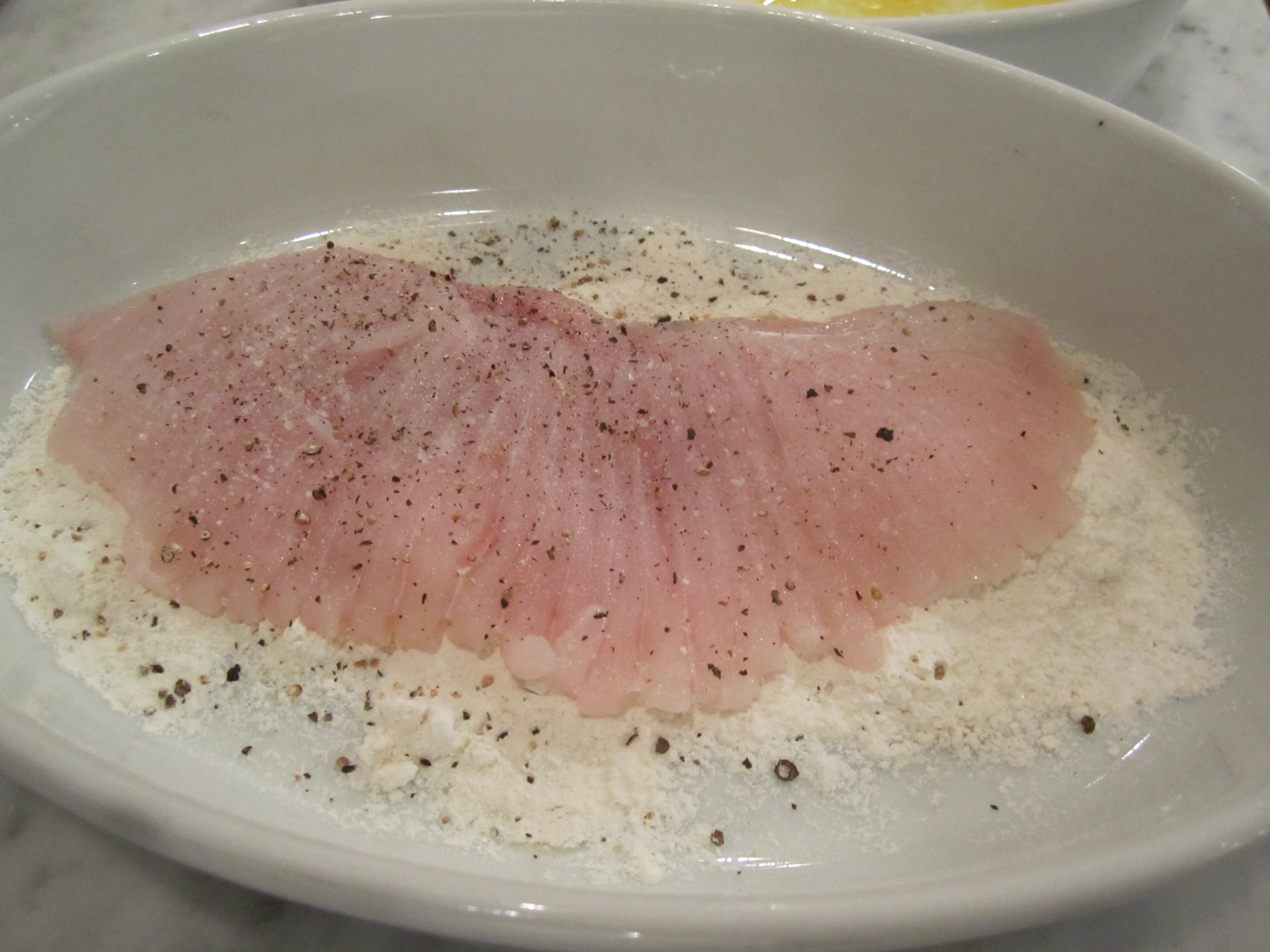
Season skate with salt and pepper, then dredge skate in flour, shaking off excess. Then dip in beaten egg. 

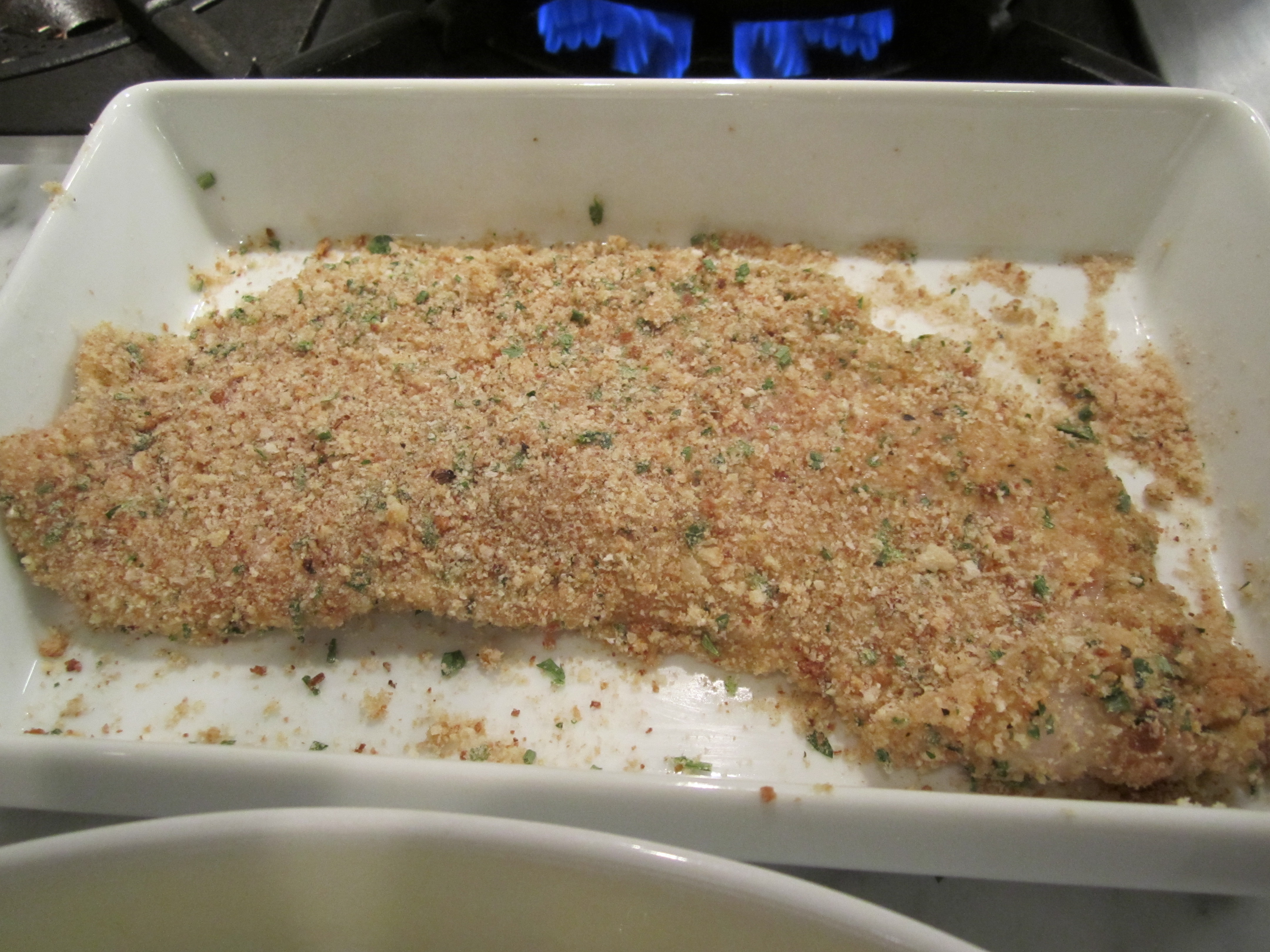
Shake off any excess egg, then dip in crumbs. 


Gently slip into hot olive oil and on high heat, brown for 2 minutes per side. 

In the same skillet, saute lemon slices (make sure they’re paper thin) until theyre golden brown (about a minute per side).  Serve a couple of lemon slices over each wing.

Depending on what your seasoned crumbs taste like, this ends up tasting a bit like a crab cake.

Posted in Seafood | 4 Comments

Rolatini di Pollo


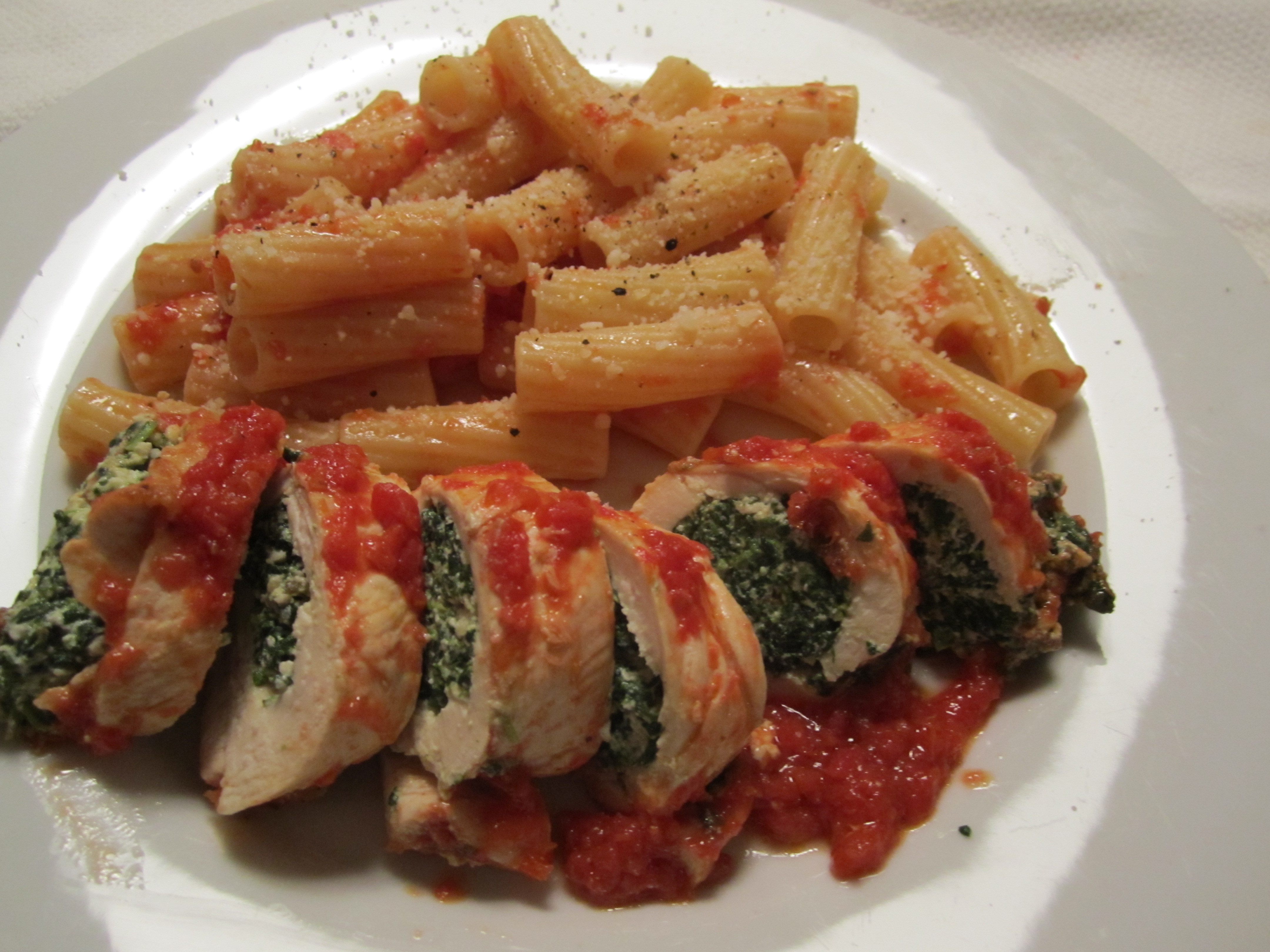
Rolled chicken breast stuffed with ricotta and spinach is the perfect way in which to use up some fresh ricotta that I bought the other day–it’s very perishable and I can’t bear to ever throw it away.   Fresh ricotta imparts a luxurious creaminess wherever it goes. 

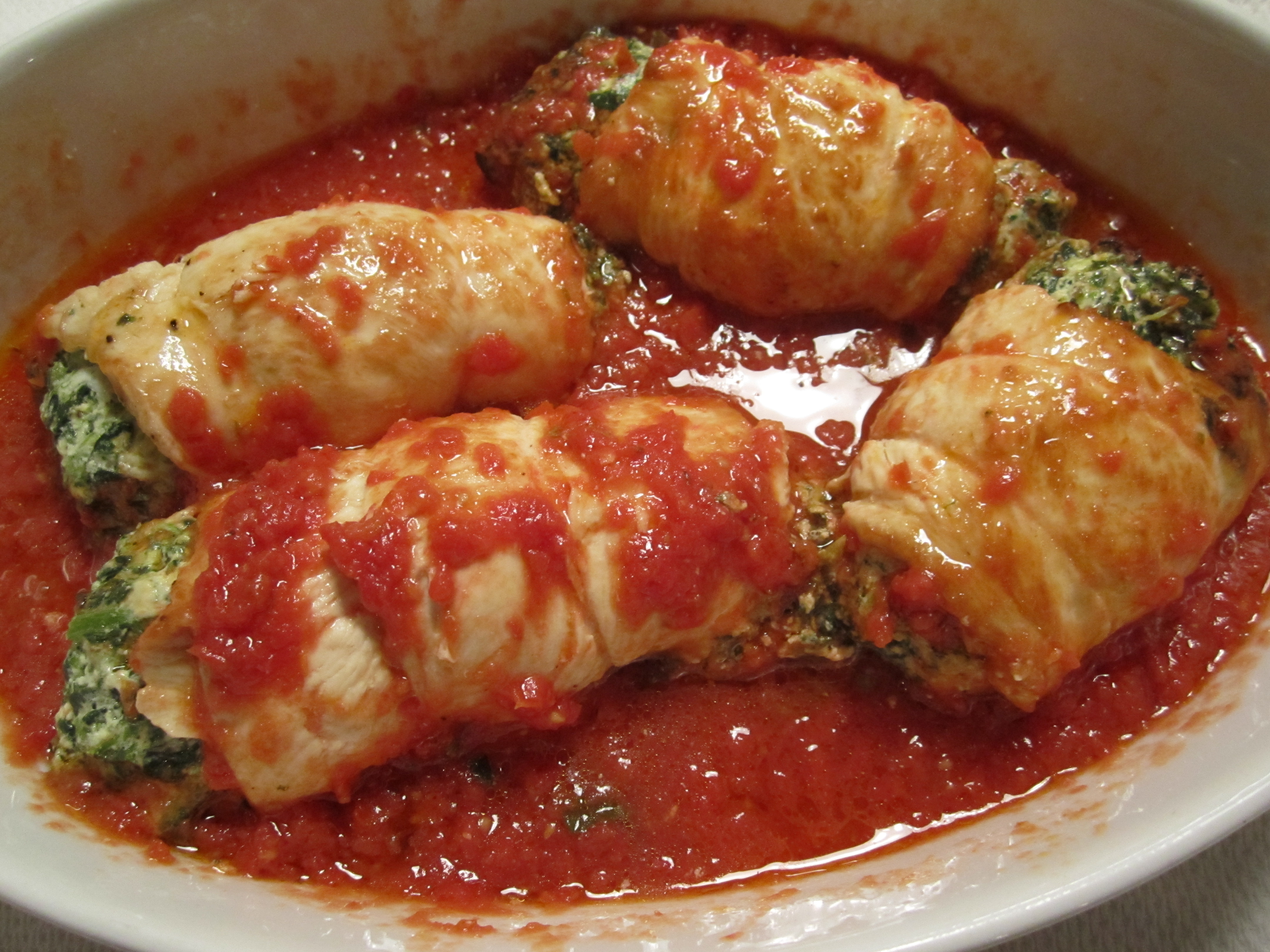
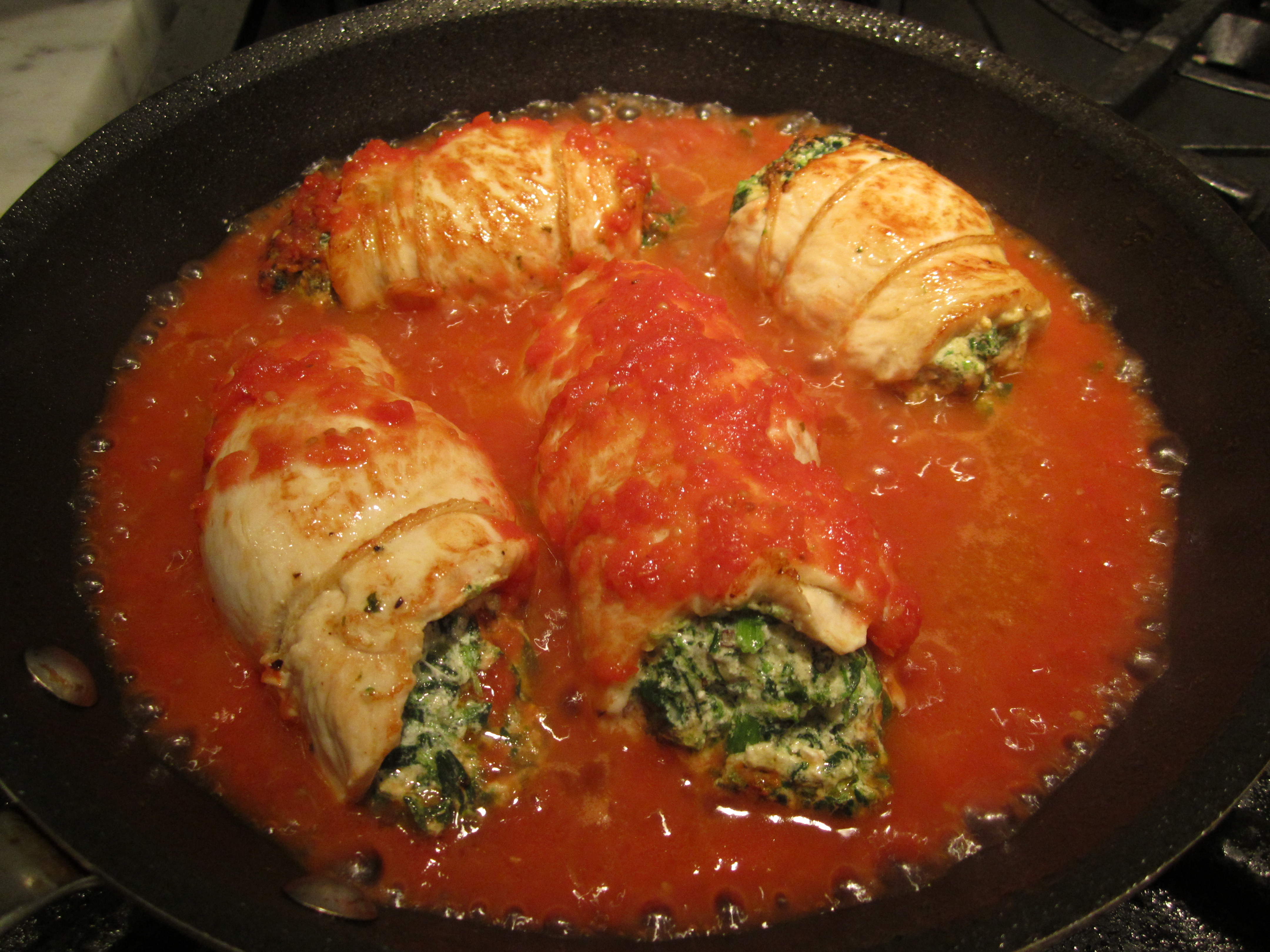
Tonight, I’ve used fresh spinach to make this stuffing, but you can absolutely use frozen spinach–thawed and squeezed dry.  This stuffing is basically the filling for spinach ravioli or cannelloni.  Instead, I’m using thinly pounded chicken breasts to encase the filling.  The rolled breasts then get lightly browned and poached in a little tomato sauce.   Some of the cheese and spinach oozes into the tomato sauce, therefore,  it’s imperative that you make a little pasta to serve alongside the chicken  (or at least have some fresh hot bread handy to mop up that sauce!

Rolatini di Pollo

serves 4, with leftovers

6 thinly pounded chicken breast halves

8 oz. ricotta

10-oz. spinach, blanched, squeezed and chopped or a box of frozen spinach, thawed, squeezed dry, and chopped

6 fresh mint leaves (optional)

1/4 c grated parmiggiano

1/8 tsp nutmeg

1/2 tsp salt

1/4 tsp black pepper

1 cup tomato sauce

To make the stuffing, combine the spinach, mint, ricotta, parmesan, egg, salt, pepper and nutmeg. 

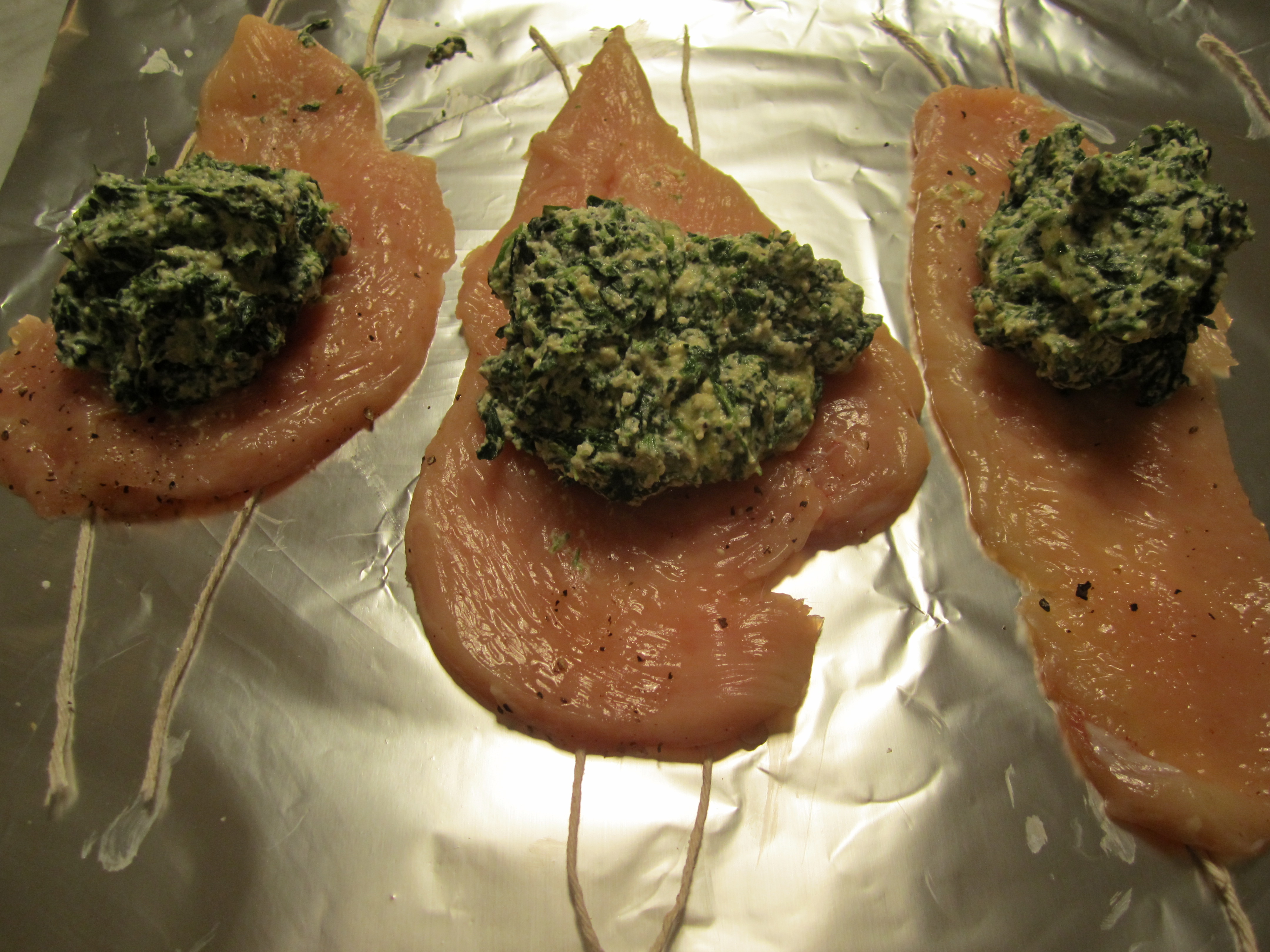
Pound chicken breast halves to about 1/2″ thinness or less.  Spread out on foil and sprinkle lightly with salt and pepper.  Place 2 lengths of kitchen string crosswise under each piece of breast.  Place a dollop of stuffing on each piece.

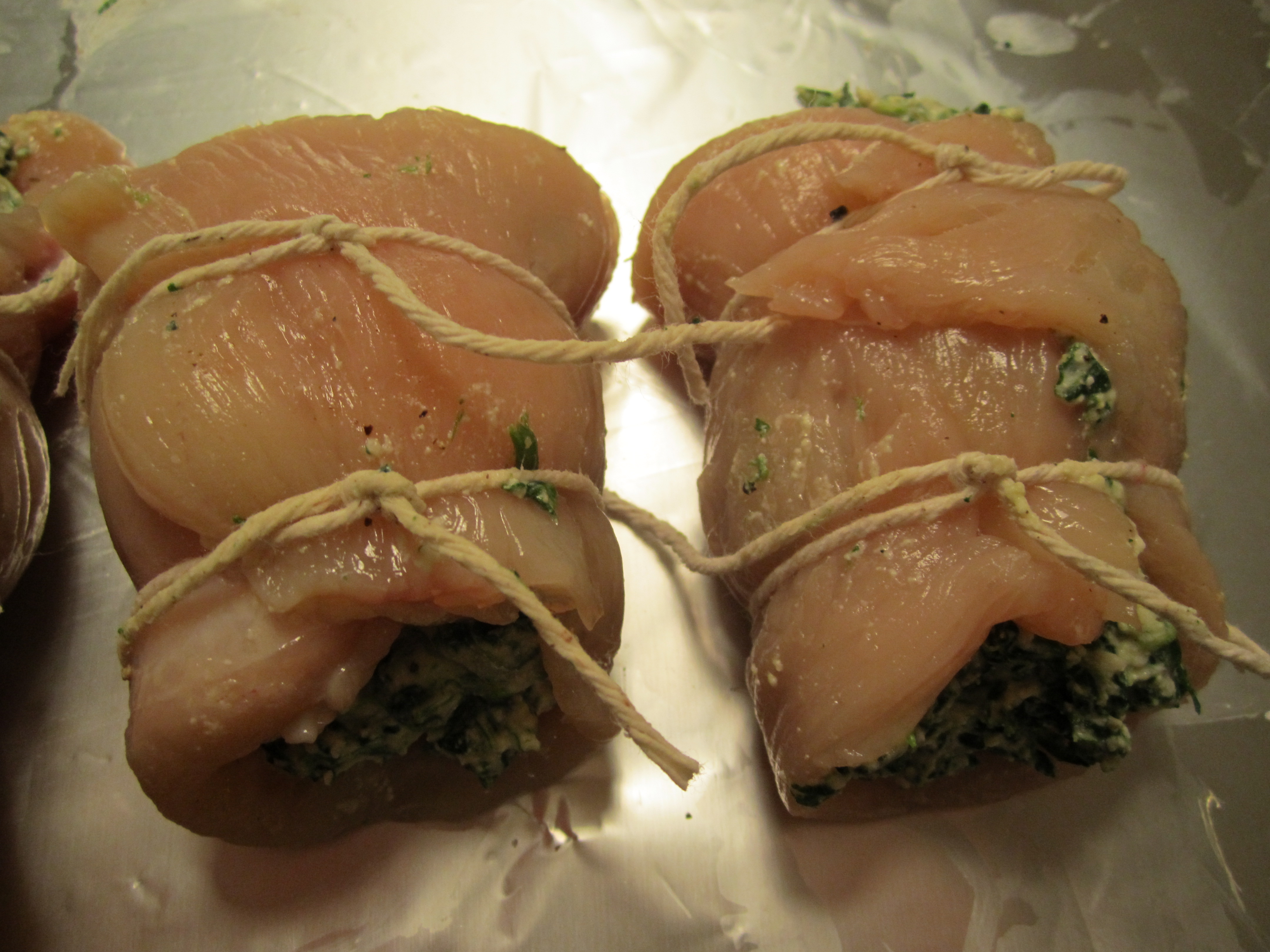
Roll and tie breasts into nice little bundles but don’t tie too tightly or you’ll squeeze out the stuffing.

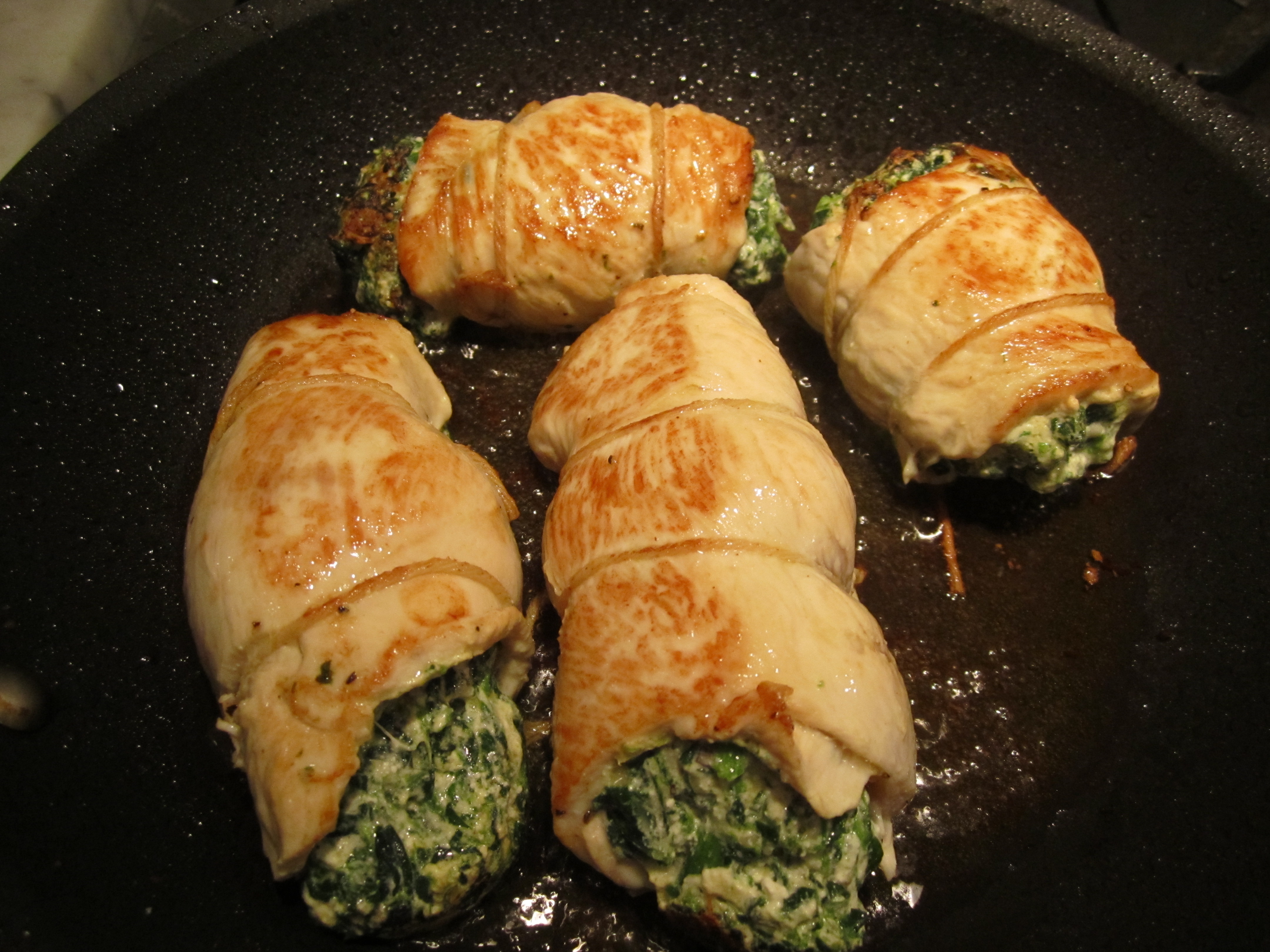
Brown lightly in olive oil for about a minute, handling very gently with tongs.

Add sauce, cover and simmer for about 15 minutes. 

May be made a few hours ahead, then gently reheated.  Excellent cold for lunch as well!

Posted in Poultry | Leave a comment

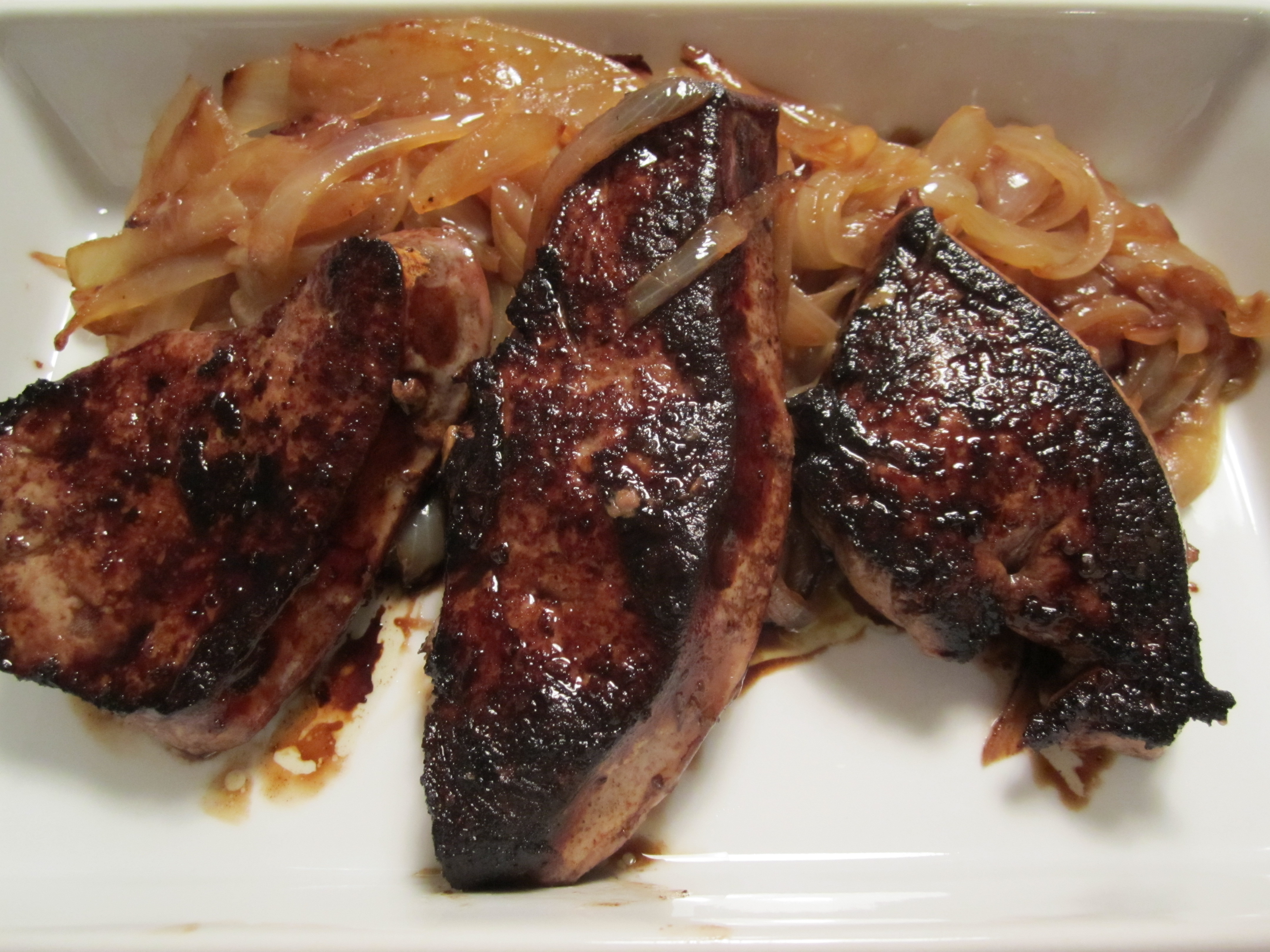
Calves Liver (My Way)

I learned to make authentic Venetian-style calves liver from my neighbor Beppi, a couple of years ago–it was one of the first dishes of his region (the Veneto) that he taught me.  He learned this dish in the 1940’s as a waiter at the fabled Hotel Danieli.  There are probably not many people around from that period who can teach this dish with such perfect recall as Beppi can.

Fegato alla Veneziana begins with lots of sliced onions, sauteed in butter, oil and red wine.  After about twenty minutes, the onions are caramelized and meltingly sweet, with the exotic undertone of the wine.

Once the onions are ready, the dish is very quick–the liver, having been meticulously trimmed of any muscle or sinew, is sliced into very small pieces.  The pieces are lightly drizzled with red wine vinegar and left to sit for about fifteen minutes.  At the last minute, on very high heat, the liver is sauteed quickly, then tossed with the onions and simmered for a few minutes.  That’s the dish–it results in something that I’d describe, for lack of better words, as a liver stew.  Beppi likes to serve it beside polenta and it’s great that way.

My mother, on the other hand, always made her liver differently–in larger pieces, more like steaks.  She dredged them lightly in flour and pan roasted them in oil.  She cooked them until they were well-done on the inside.  As a standard accompaniment to her liver, she always served piselli e riso (rice and peas). 

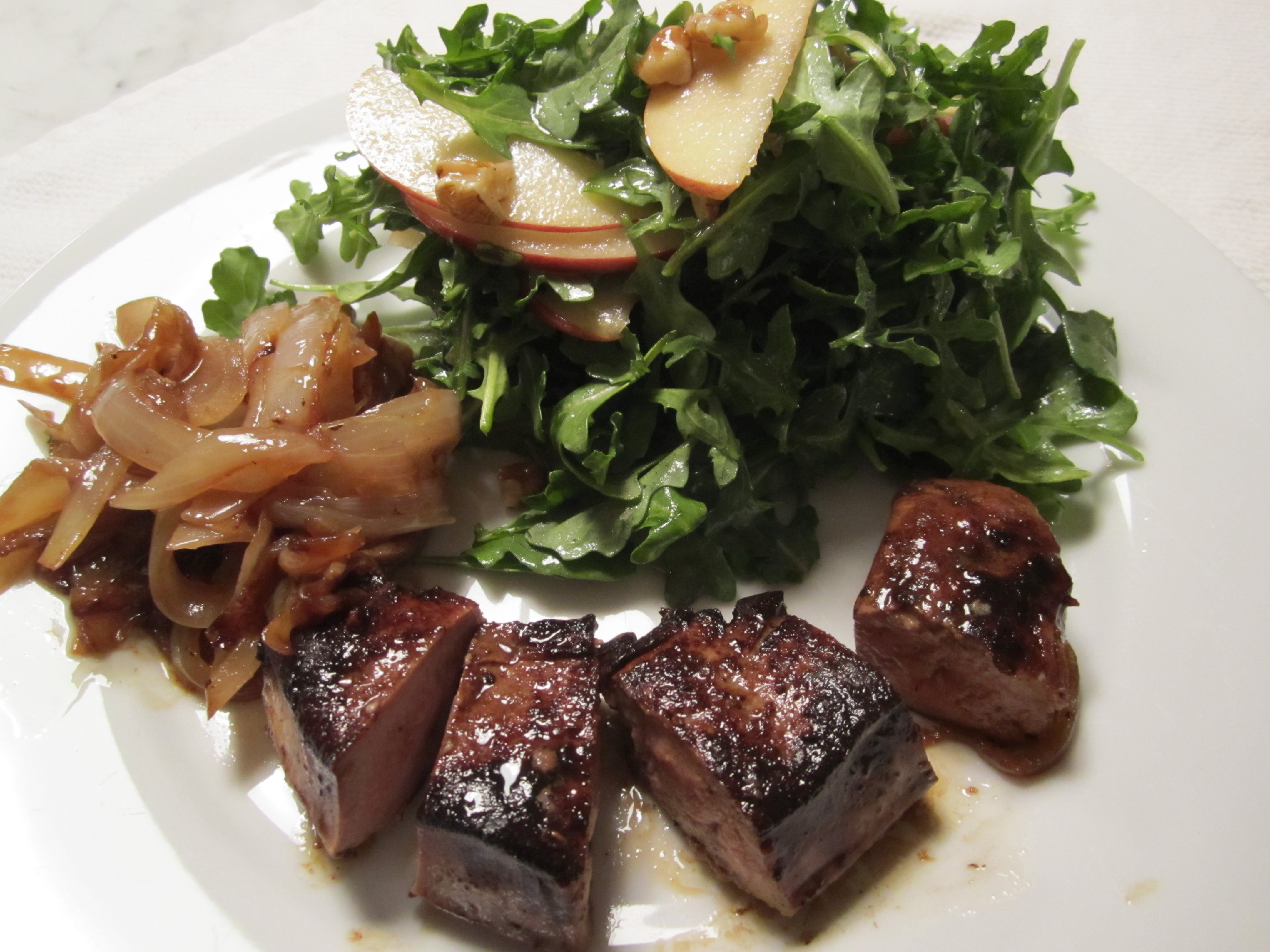
I’ve adopted my mother’s method of leaving the liver in large steaks, but I’ve kept Beppi’s meltingly sweet onions stewed in red wine.  Unlike my mother, I cook the liver to only medium-rare inside.  I don’t dredge in flour–I find that the liver makes its own deeply caramelized exterior without any help.  At the end of the searing, I like to add a dash of balsamic vinegar to the skillet, which instantly glazes the liver and gives the dish an irresistable sweetness. 

Instead of serving rice or polenta, I like to serve my liver with a salad, incorporating a sweet/tart dressing.  The salad is a combination of baby arugula, sliced apples and walnuts.  It’s dressed with red wine vinegar, agave, and extra-virgin olive oil.  This is truly a bright, exciting and light way to serve liver–it’s reminiscent of the way the french sometimes serve foie gras as an appetizer with salad.  If you like foie gras, you will love this dish (it’s a bit lighter as well)!

Calves Liver My Way

Serves 2

3/4 lb calves liver, trimmed of all white membranes and visible sinew.

3 medium onions

4 tbls olive oil

1/2 c red wine

salt and pepper

4 tbls balsamic vinegar

On low heat, simmer onions (covered) in 2 tbls oil until golden, about 10 minutes, stirring every so often.  Turn up heat, add wine and reduce, uncovered for another 5 minutes or so.  Set aside.

In a nonstick skillet, heat the remainin oil and season the liver well on both sides with salt and pepper and place in hot oil.  Turn heat to medium and sear for about 3 minutes on the first side.  Turn and let sear for another 4 – 5 minutes.  Add balsamic vinegar and cook until the vinegar coats the liver with a rich dark glaze.  Remove from heat and allow liver to rest 5 minutes before serving.

Salad of Baby Arugula, Apples and Walnuts

serves 2

2.5 oz. of arugula (half a plastic container)

1/2 fuji apple, sliced thin

2 tbls coarsely chopped walnuts

1 tbl extra-virgin olive oil

1 tsp red wine vinegar

a splash of agave (about a tsp)

salt and pepper to taste

Toss all and serve alongside just about anything!

Posted in Meat, Salads | Leave a comment

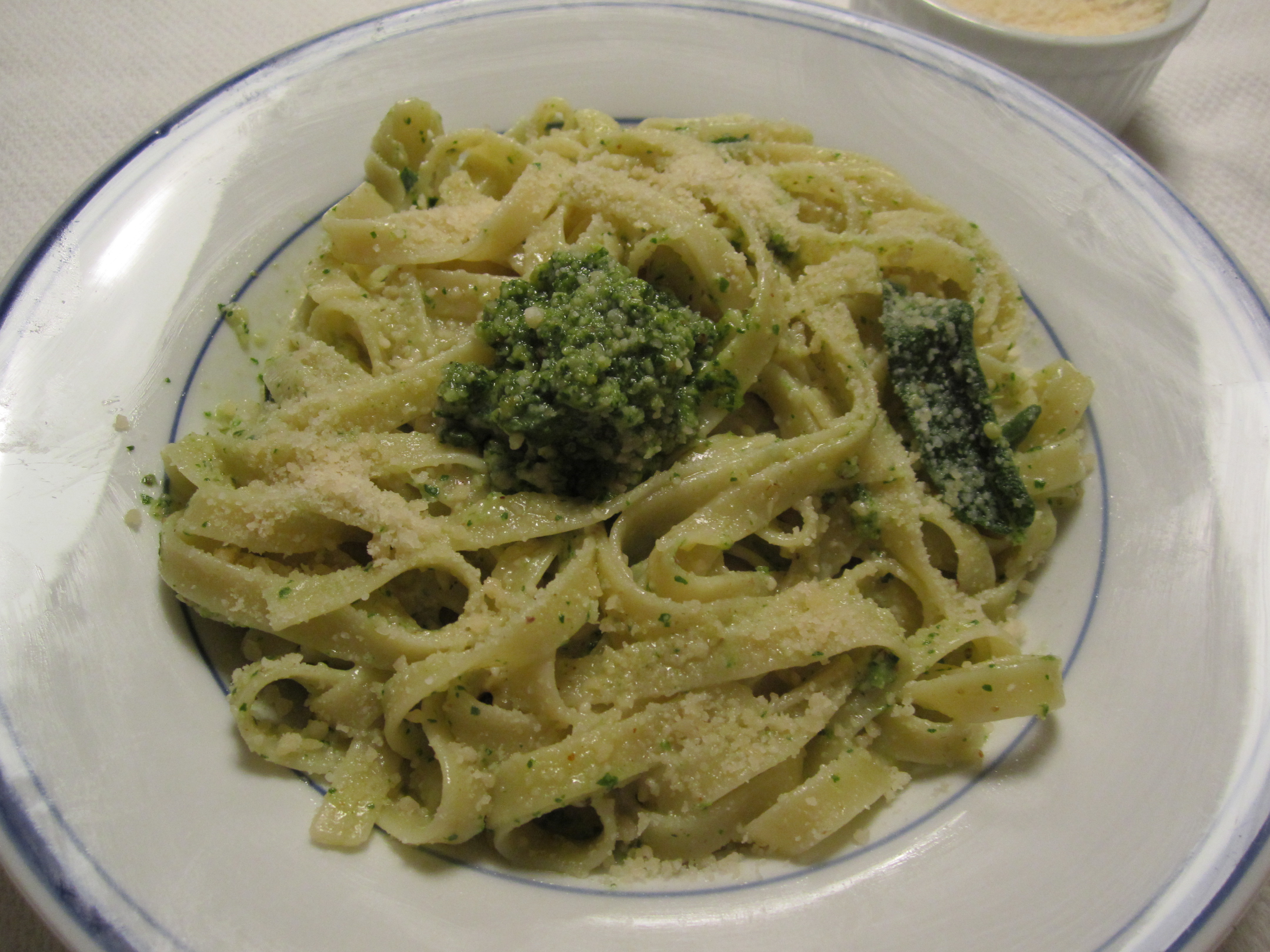
Pasta with Butter, Sage and Walnut Pesto

Butter and sage (and parmiggiano) are a wonderful combination as a dressing for pasta.  Traditionally, in Italy, stuffed pastas are dressed this way–ravioli, tortelli, tortelloni–depending on which region you’re in.   But plain fettucine happen to be delicious dressed simply with butter and sage.   In addition, chopped walnuts are very good with  butter and sage.  They can be sauteed in the butter with the sage, and this is yet a richer  dressing for pasta.  

I love the combination of butter, sage and walnuts, but I feel the dish needs something to lighten the richness of the butter and nuts.  Therefore, instead of adding walnuts to the butter with sage, I’ve decided to make a pesto with walnuts and arugula to top the dish. 

Arugula has a wonderful bright flavor that pairs well with nuts and cheese, therefore this pesto makes the ultimate use of that combination.  Walnuts, arugula, and grated parmiggiano are a bright yet rich topping for an already deeply luxurious pasta. 

Because the main “sauce” for this pasta is the butter and sage, I use this pesto as a garnish, more than a sauce.  I add a bit to the skillet with the butter and sage, but the rest goes on top of each serving of pasta. 

Incidentally, this pesto has a couple of beautiful qualities that traditional basil pesto does not.  It can be heated in a skillet without losing its delicate flavor–this is huge because you can blend the piping hot pasta with piping hot sauce, rather than adding cold sauce to hot pasta and serving a lukewarm dish of pasta (Italians are fanatical about serving pasta hot!).  The other beautiful quality of this pesto is that it doesn’t discolor–also huge in my book–I hate brown pesto.

This pesto is  meant to be a flavor-enhancer and brightener for the butter and sage, but after you taste it, you may want it to be the entire pasta sauce by itself!

Pasta with Butter, Sage and Walnut Pesto

serves 4

1 lb dried fettucine

12 sage leaves

8 tbls unsalted butter

walnut pesto (see below)

Boil pasta in plenty of salted water.  When pasta is about 4 minutes shy of being done, melt butter with sage leaves in skillet large enough to hold pasta.  When pasta is just about cooked, add a couple of tablespoons of the pesto to the skillet with the butter and sage.  When pasta is cooked, fish it out of the pot and toss it into skillet with butter and sage (with the cooking liquid clinging to it).  Add enough pasta water to loosen the sauce a bit.  Serve in heated pasta bowls and top each with a dollop of pesto. (approximately a tablespoon)   Serve plenty of grated parmiggiano at the table. 

Walnut Pesto:

2 c tightly packed baby arugula leaves, washed and dried

1 cup walnuts

1/4 c grated parmiggiano

1/4 c + 2 tbls extra-virgin olive oil

1/4 tsp salt

Place arugula and walnuts in food processor and pulse until walnuts are coarsely ground.  Add remaining ingredients and process to a paste.  Set aside and serve at room temperature.

Posted in Pasta, Sauces | Leave a comment

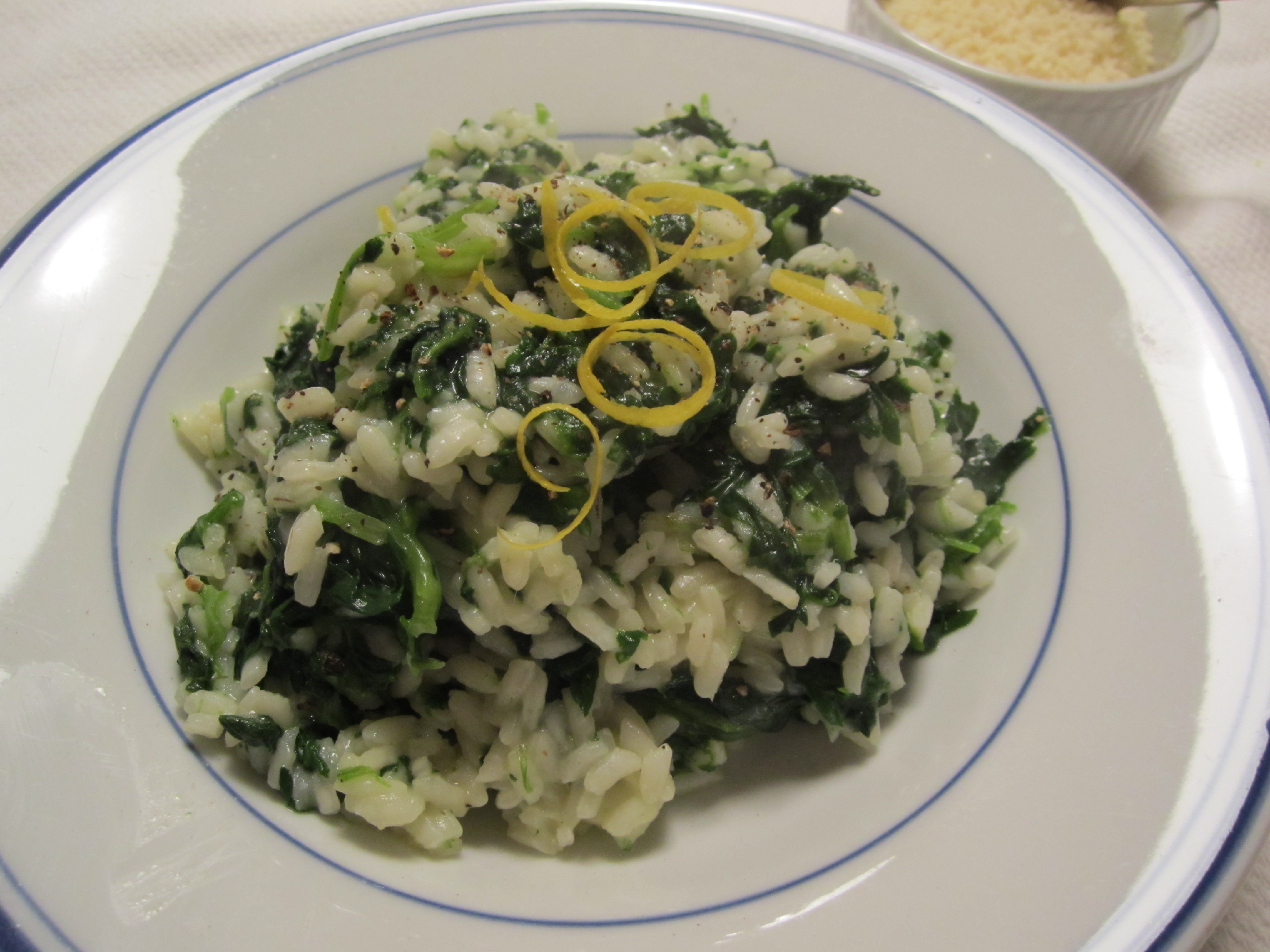
Spinaci e Riso

Spinaci e riso (rice and spinach) is a great first course or side dish and is much simpler to make than risotto.  It requires only simmering–no sauteing of onions or of rice.

There is no wine required–only butter, broth, spinach and a touch of lemon zest.  The spinach may be blanched, squeezed and chopped ahead of time.   In that case, the final dish only takes about 20 minutes to assemble.  The rice cannot be made ahead, and therefore requires last minute timing to be at its peek.

This is a good accompaniment or first course to almost any meat or poultry.  Without the parmiggiano, it’s also a great accompaniment to fish.

Spinaci e Riso

serves 4, with leftovers

2 cups rice

4 cups chicken broth

3 tbls butter

20 oz. fresh spinach

grated parmiggiano for sprinkling

zest of half a lemon

In a large pot of boiling salted water, place spinach (in 2 batches, if necessary).  Boil for approximately 5 minutes and place in ice water for a minute or two. 

In small bundles, squeeze thoroughly and set aside.  Chop spinach coarsely in both directions.

In 3 1/2 cups boiling chicken broth, place rice and butter, and cover.  Let simmer on low heat for fifteen minutes, then check for doneness.  After 15 minutes, it should be al-dente.  Stir in chopped spinach and cook for about 2 minutes longer.  Cover and allow to rest for 5 minutes.   Add more broth, if needed, to thin the dish. 

Also top with lemon zest and plenty of grated parmiggiano.

Posted in Risotti, Vegetables | Leave a comment

Veal Chops with Butter and Sage

There is no meat as delicate as a veal chop.  They are usually tender, and very clean and neutral-flavored–not gamey or rich the way pork or lamb can be (not that there’s anything wrong with that).   Here, I’m using loin chops, which are a fraction as expensive as rib chops, but potentially much more tender and interesting.

Veal chops can be grilled, but a more delicate way to prepare them is to pan roast them with sage with butter.  Believe it or not, this calls for medium to medium-low heat.  The only ingredients besides the veal, are sage leaves, butter, olive oil, salt and pepper.

Place butter, oil and sage leaves in a broad skillet with flared sides.  Turn heat to medium and let butter melt and sage leaves begin to sizzle. Season the chops heavily with salt and pepper on both sides, then slip into the sizzling butter/oil.  Keep turning every 2 minutes or so, until they are only slightly springy to the touch–about 10 – 12 minutes.  If you want to take their internal  temperature, it should be about 140 for medium.  Do not cover.   Let them rest for 5 minutes prior to serving. 

The sage leaves become brown and crispy–use as many as you like–they are excellent in every biteful.  If you keep a nice even heat in the skillet, they will not burn.  I’m serving the chops with a salad of arugula, fennel and tomatoes dressed with lemon and olive oil (one part lemon to two parts oil).  The lemon and veal juices combine on the plate and you’ll want to use a spoon (or piece of bread) to eat whatever liquid remains!

As a first course for this meal, try rice and spinach (spinaci e riso)–tune in tomorrow for that recipe!

Veal Chops with Butter and Sage

serves 2

2 veal loin chops approx. 1″ thick

2 tbls butter

1 tbl olive oil

12 – 15 sage leaves

Melt butter in skillet with oil and sage leaves on medium heat.  Add in chops and turn every 2 minutes for about 10 minutes.  Remove and let rest 5 minutes.  If you have additional sage leaves, slip them into the hot butter/oil after you remove the chops.  Let them sizzle for about 30 seconds, them place them on the chops as a garnish. 

Posted in Meat | Leave a comment

Quinoa with Cauliflower and Mint

This is a terrific and healthy dish that can accompany a variety of things (meats, poultry, fish) and makes a great leftover.  Although it’s not native to Italy, it can be accompanied by some very Italian flavors–like cauliflower and mint. 

Quinoa functions like many grains, in that it is boiled in water or broth, then combined with something that complements its nutty pearly flavor.  It doesn’t need any pre-soaking and it has enough flavor on its own to simply simmer in water and serve like rice.

In this preparation, the cauliflower is cut into small pieces, sauteed in olive oil with onions and a touch of water and covered, stirred periodically until the water evaporates and the cauliflower and onions are soft and golden brown.  Then the mint is chopped and mixed in.  A little raw olive oil is drizzled on at the end to add additional moisture and richness.

Quinoa is great as a lunch as well, accompanied by a green salad with perhaps some feta cheese crumbled over the top.

Quinoa with Cauliflower and Mint 

serves 4

2 cups uncooked quinoa

2 cups chicken or turkey broth

2 cups water

1 tsp salt

1 head cauliflower, cut into 1″ chunks

1 small onion, peeled and sliced into 1/2″ slices

4 tbls extra-virgin olive oil

16 mint leaves

In a broad skillet with flared sides, heat olive oil, then add onions.  Saute over high heat for one minute.  Add cauliflower and 3 tablespoons water.  Cover and reduce heat to medium.  Let cook for about 10 minutes, then uncover and saute until water is gone and all is golden brown and soft.

Place quinoa in water/broth and bring to a boil.  Reduce heat, cover and simmer for about 15 to 20 minutes, or until quinoa is tender and liquid is gone.  Check every 5 minutes to make sure there is still liquid in the pot (add some water if the liquid cooks off too quickly).  Taste and add salt and pepper.

Combine cauliflower mixture with quinoa and add mint.  Drizzle on the remaining olive oil and serve. 

Posted in Vegetables | Leave a comment