Brined Turkey Breast

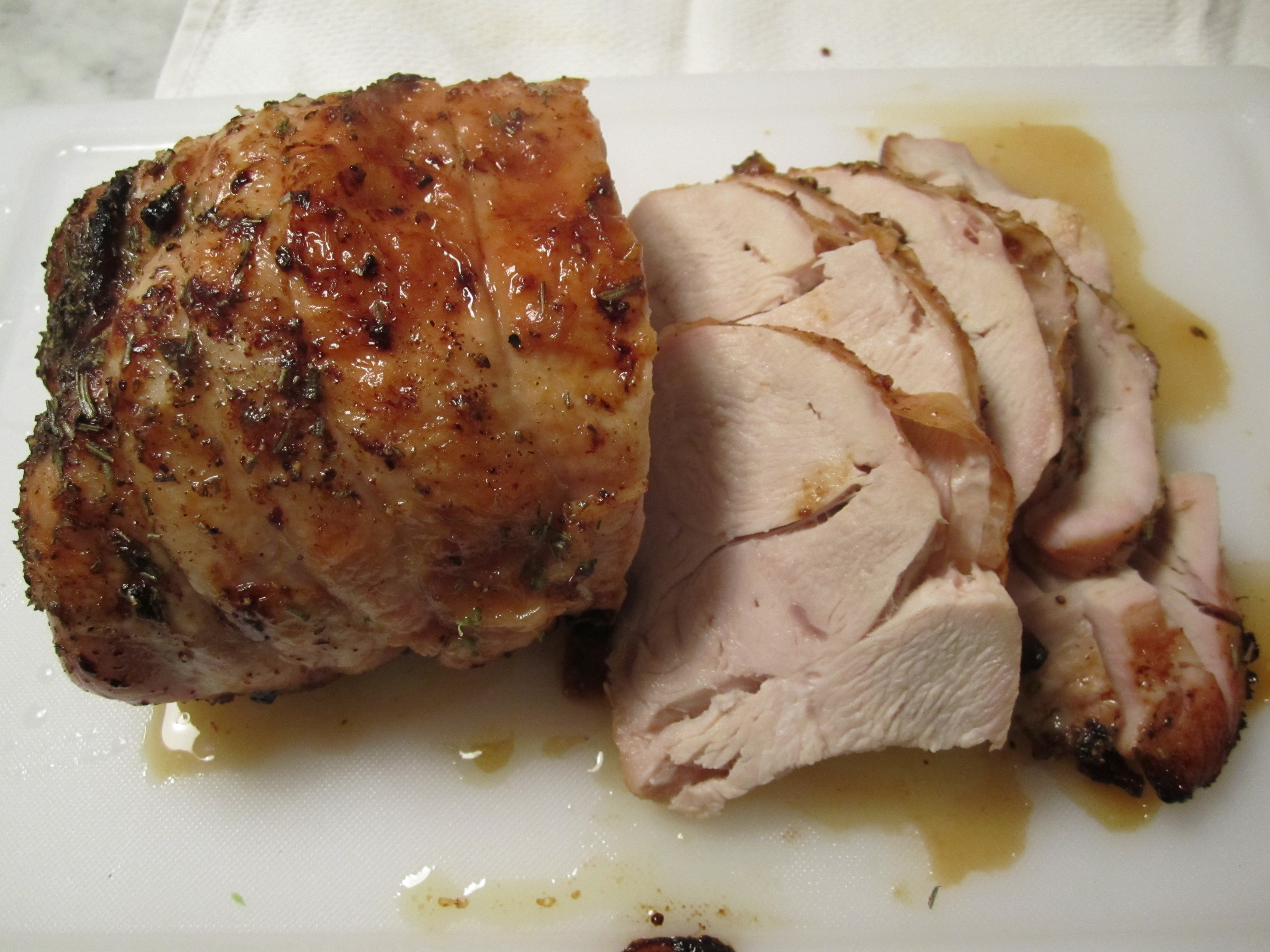
This simple turkey breast is dripping with flavor and moisture from the simple act of placing it in salt water about 8 hours prior to cooking.  The brine penetrates the entire roast and seasons the meat from the inside.  It also makes the meat more forigiving if you cook it a few minutes too long.

There are a few things to know about brining a boneless turkey breast.  if you don’t have 6 or  7 hours in which to brine, use a little more salt.  Do not, however, brine this breast overnight–it will get too salty.  If you have a couple of additional hours after the breast has brined, a useful step is to wipe it dry, place it on a rack over a baking sheet and let it dry  thoroughly, uncovered in the fridge for a few more hours–this will help it brown better once it goes into the oven.  If you don’t have that additional couple of hours, simply dry it well with paper towels right before roasting.

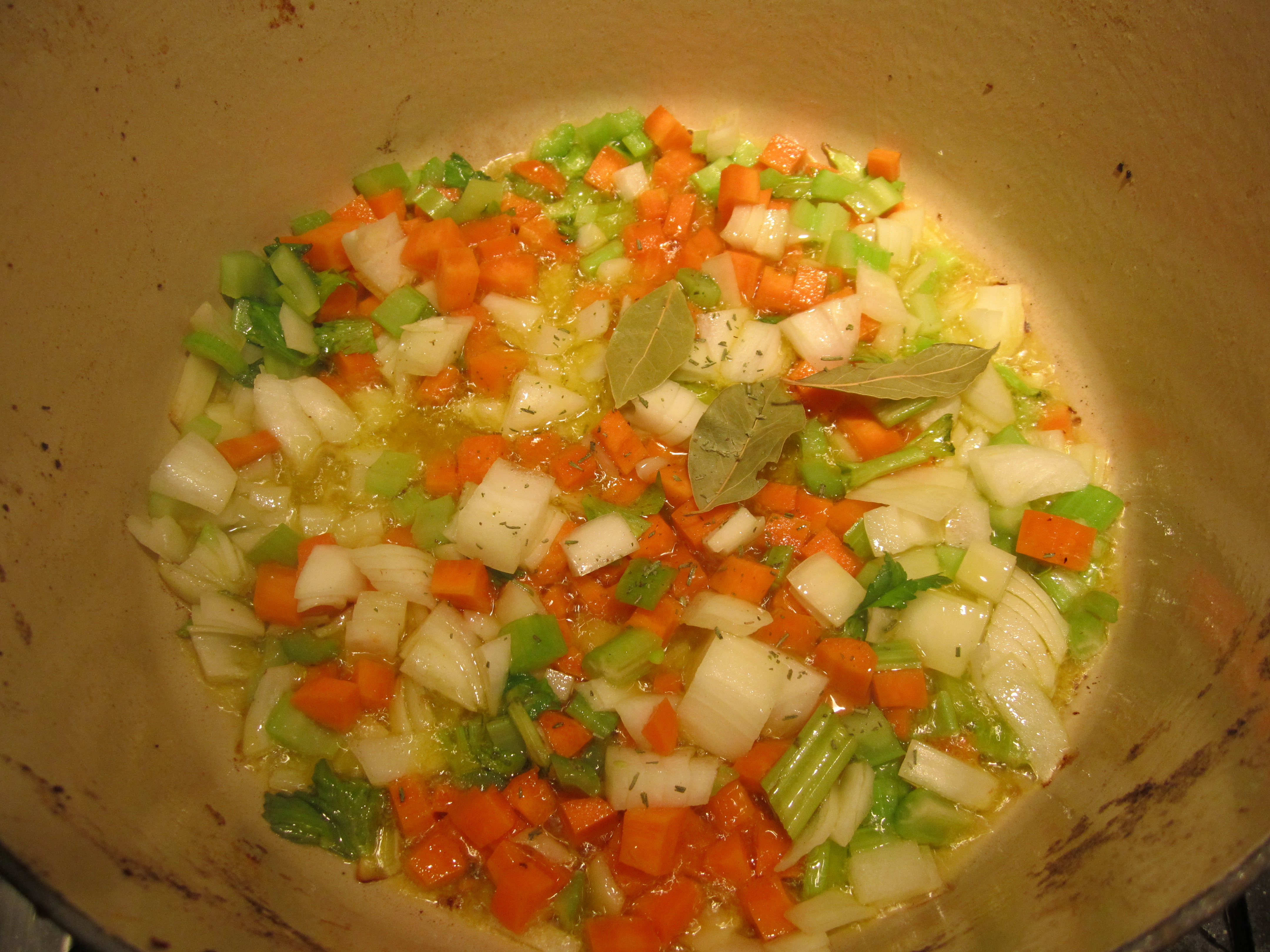
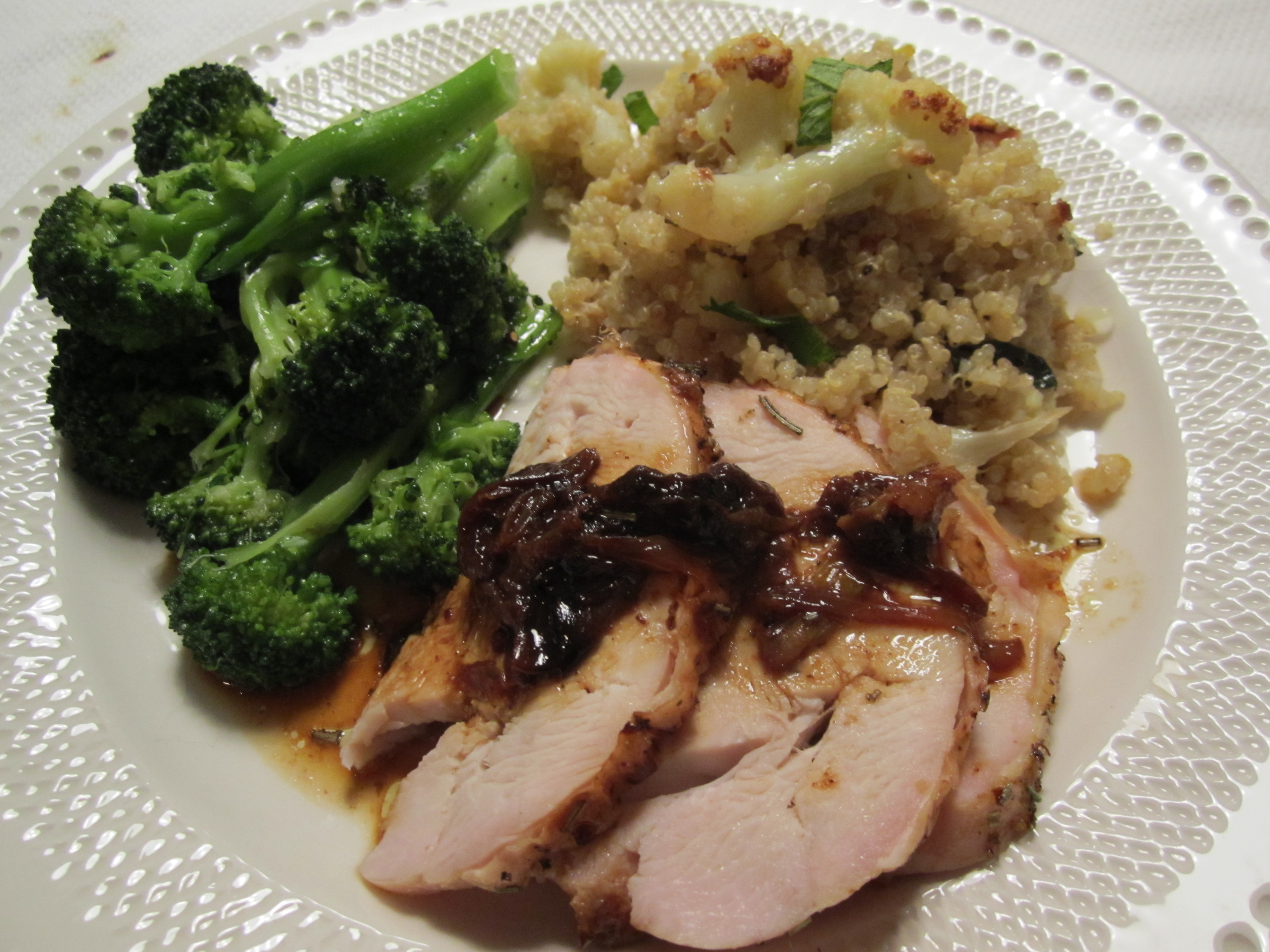
The only additional step is to saute 3 or 4 onions in olive oil about an hour before you’re ready to roast.  Add marsala and reduce, then allow the onions to cool.  Place the roast on top of the onions, season with pepper, rosemary and rub with olive oil.  These onions will get darker and darker (and sweeter and sweeter) as the breast roasts.  Keep adding a bit of water to the pan if they begin burning at any point.  What these onions provide is a ready-made sauce for the meat that’s absolutely complex and delicious.

After the roast is finished, allow it to rest about 10 minutes before carving.  It makes terrific leftovers or sandwiches for lunch, therefore, don’t carve more than you need to serve at any one time–it stays much moister if any leftovers are left unsliced (then sliced when you are about to use them the next day).

To accompany the turkey, I’m serving quinoa with cauliflower and mint.  Tune in tomorrow for that recipe!
Brined Boneless Turkey Breast

serves 4 with leftovers

4-5 lb boneless turkey breast, tied into a roast (your butcher can do this for you)

1/2  c salt

1/4 c sugar

1 tsp dried rosemary

2 tbls olive oil

1 tsp black pepper

3 -4 small onions, peeled and sliced into 1/2″ slices

1/4 c dry marsala

In a large mixing bowl (small enough to fit in the fridge), melt sugar and salt in a small amount of hot water from the tap.  Stir the paste until it’s melted, then add cold water to fill the bowl, leaving room for the meat.   Add the turkey breast and cover; refrigerate for 6 – 7 hours.

Remove from water and dry with paper towels.  Place on rack over sheet pan and return to fridge for 2 hours (up to 4 hours).  If you don’t have time for this step–omit and just remove from brine and dry well with paper towels.

In an ovenproof skillet large enough to eventually hold the turkey breast, heat 2 tablespoons of the oil , then add onions.  Saute for about 10 minutes on low heat until onions have begun to caramelize.   Add marsala and reduce until wine has evaporated (maybe 3 – 4 minutes).  Set aside and cool.

Preheat oven to 400 degrees.

Place turkey breast on top of onions and rub with rosemary, black pepper and remainder of olive oil.  Place skillet in the oven and roast, uncovered, for about an hour, or until internal temperature is about 160 – 165 degrees.  Baste every 10 minutes or so, then add a couple of tablespoons of water from time to time, to prevent onions from burning and to keep some moisture in the pan.

Let rest for 10 minutes before carving, and try not to carve more than you’re serving at any one time–it will stay moister for leftovers if it’s freshly sliced to order.
Posted in Poultry | Leave a comment

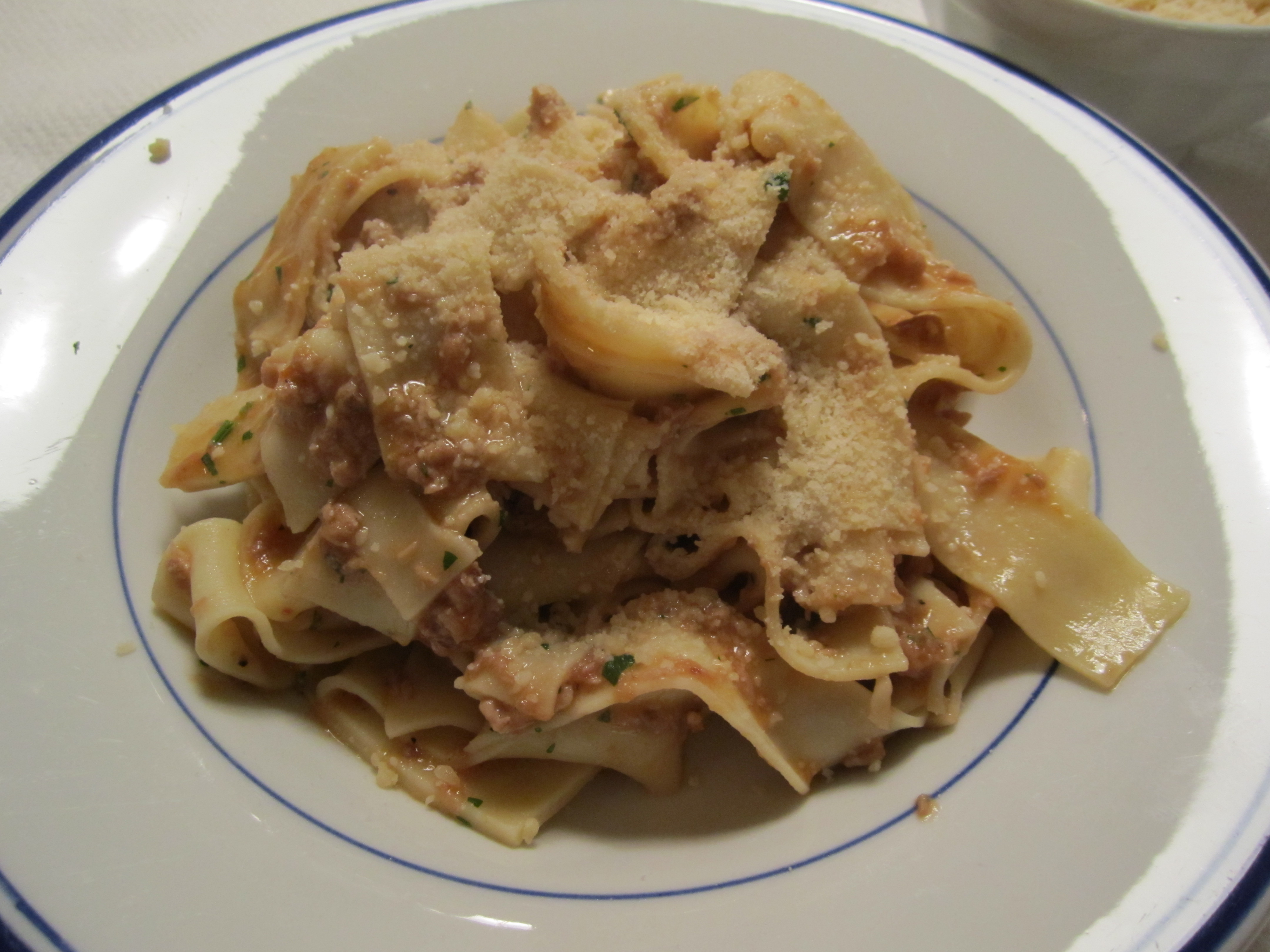
Pappardelle with Pork Shoulder Ragu

For anyone who’s read about my pork shoulder from the other evening, it should come as no surprise that I’m recycling leftovers (happily) tonight.   I have a large amount of roast in braising liquid left, and all weekend long,  I’ve been looking forward to a bowl of pasta dressed with it.

To make a sauce out of the roast, the meat gets shredded in its braising liquid–either pulled apart with 2 forks when the meat is hot, or simply passed through the food processor and pulsed a bit to form a chunky sauce.   I have some pappardelle in the freezer, which are the perfect noodles on which to serve this sauce.  

People often overestimate the amount of sauce it takes to properly dress pasta.  It takes very little sauce to coat the pasta but not weigh it down.  A well-dressed dish of pasta should strike a balance between sauce and pasta.  In this case, for a pound of pasta (to serve 4), use only about a cup of sauce.

Another necessary step in turning this roast into a sauce is to reduce the ragu a bit and add some fat to it, to turn it from a watery stew into a rich sauce.  Therefore, while the pasta is cooking, place the shredded meat sauce in a broad skillet and let it simmer uncovered and reduce for about 5 to 8 minutes.  Add some olive oil or butter (or both) to it while it’s reducing. 

When the pasta is cooked, simply toss it into the skillet with the sauce and add a bit of pasta cooking liquid and toss for a minute over the flame to incorporate.  At the table, add lots of grated cheese (a combination of parmiggiano and pecorino would be nice).

I’ve made a salad of arugula, shaved fennel and tomatoes, and dressed it with olive oil and red wine vinegar.  That’s all that’s necessary to turn some leftover roast into a  truly phenomenal meal.

Posted in Pasta, Sauces | Leave a comment

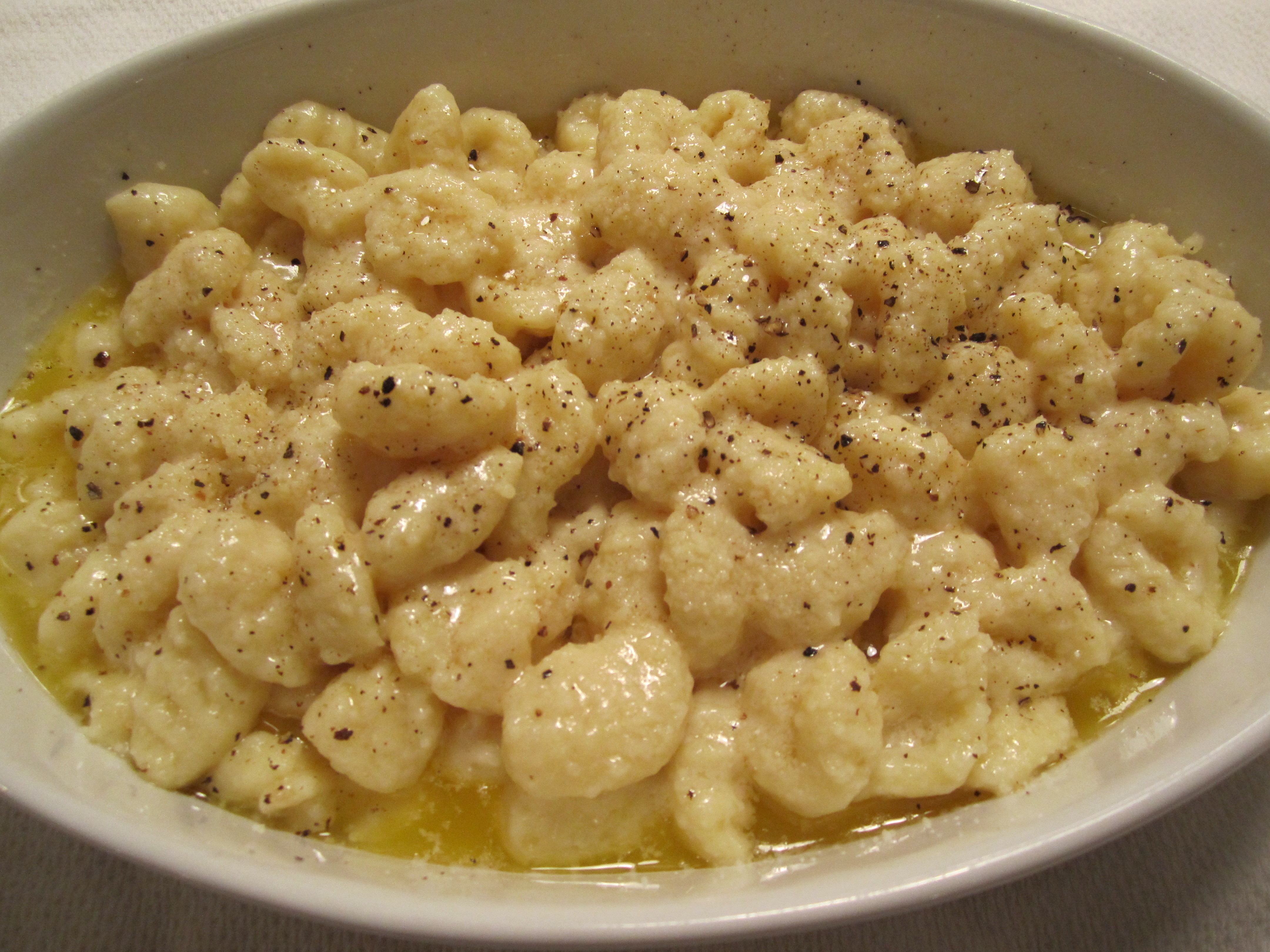
Gnocchi

The whole purpose for the pork sauce from last night was to dress my homemade gnocchi.  But tonight, we’ve decided to dress the gnocchi simply with butter and parmigiano

The trick to making good gnocchi is to begin with baked, rather than boiled  potatoes.  They remain dry, which means they require less flour to form a firm dough.  The less flour you add to them, the more potato-y the flavor (but if you don’t add enough, they fall apart).

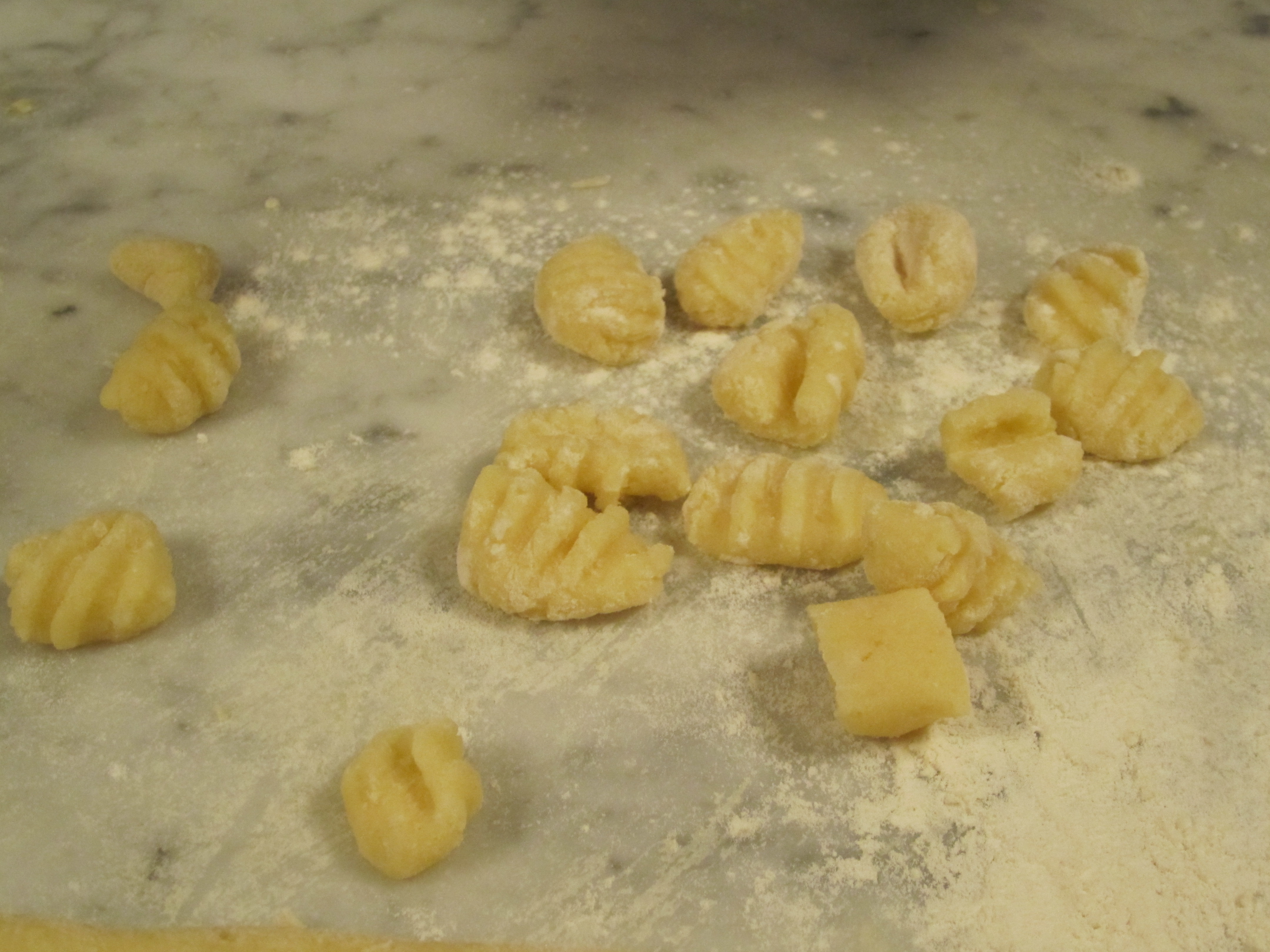
The potatoes get baked and scooped out, riced, then spread out on a counter, sprinkled with flour and beaten egg.  There is minimal kneeding, then the dough is cut in pieces and formed into little logs.  The logs are then sliced into little pillows and the pillows are each run across the back of a fork to make ridges in them.  The ridges and the corresponding cleft on the underside of the gnocchi allow the sauce to cling to them and permeate them better.

When I worked with Mario, he taught me that the gnocchi can be blanched (pre-cooked)and stored in a container with a good deal of oil for lubrication.  They can then be dropped in boiling water at a later time and sauced at the last minute.  Thus, they can be made earlier in the day and stored in the fridge for a dinner party.

They can also be formed, then frozen, uncooked, on  a sheet pan with semolina or cornmeal to keep them from sticking to the pan and each other.  After they are frozen solid, they can be dropped into plastic bags and stored in the freezer for a couple of months.

They are just as good dressed pesto or a hearty meat sauce.

Gnocchi

serves 6 – 8

4 lbs idaho potatoes, baked until soft and cooled (I like to sprinkle mine with kosher salt before baking)

2 eggs

3 c flour or more as needed

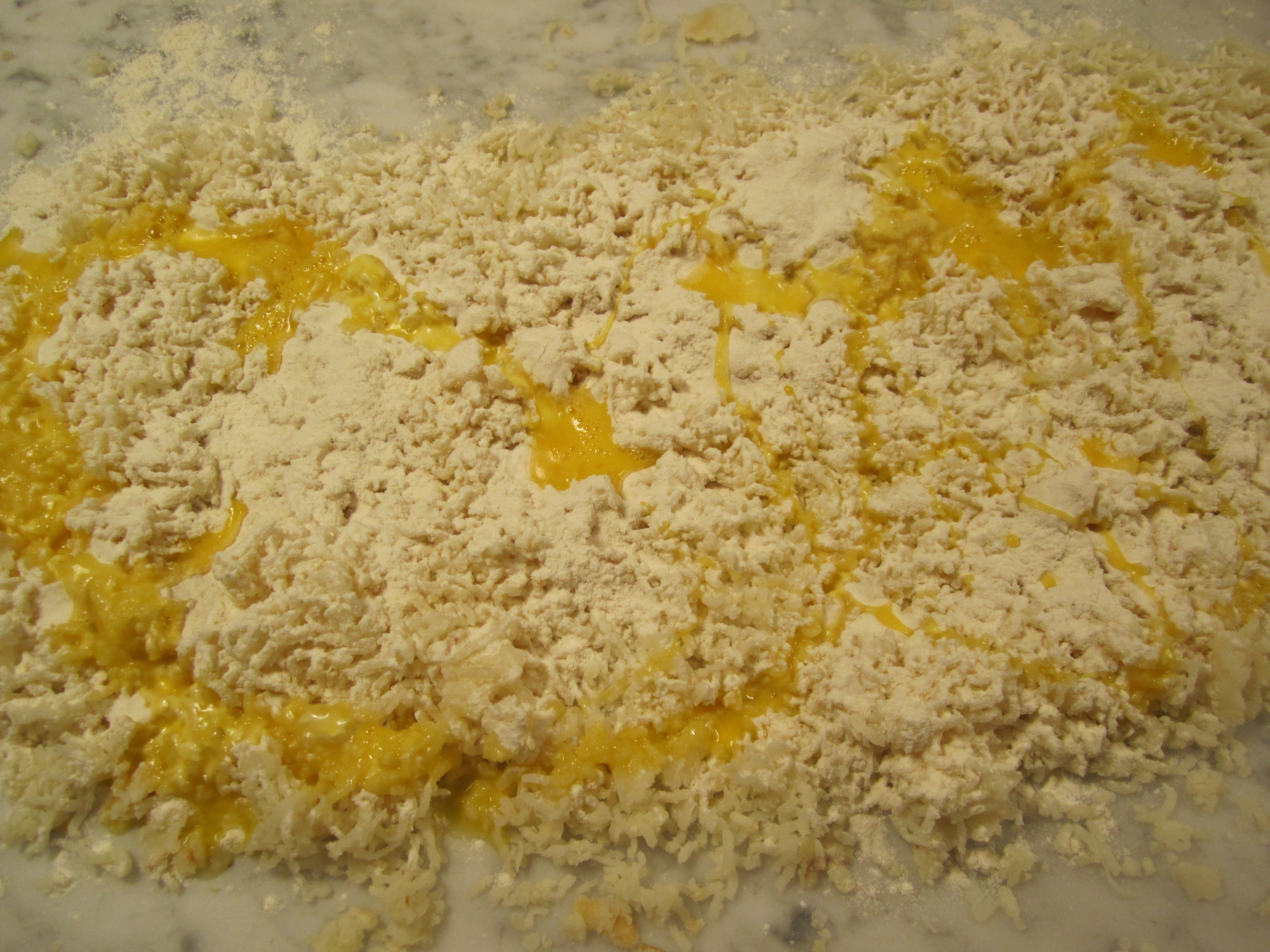
peel potatoes and pass through ricer.  Spread out on countertop.  beat egg and sprinkle the potatoes with egg.

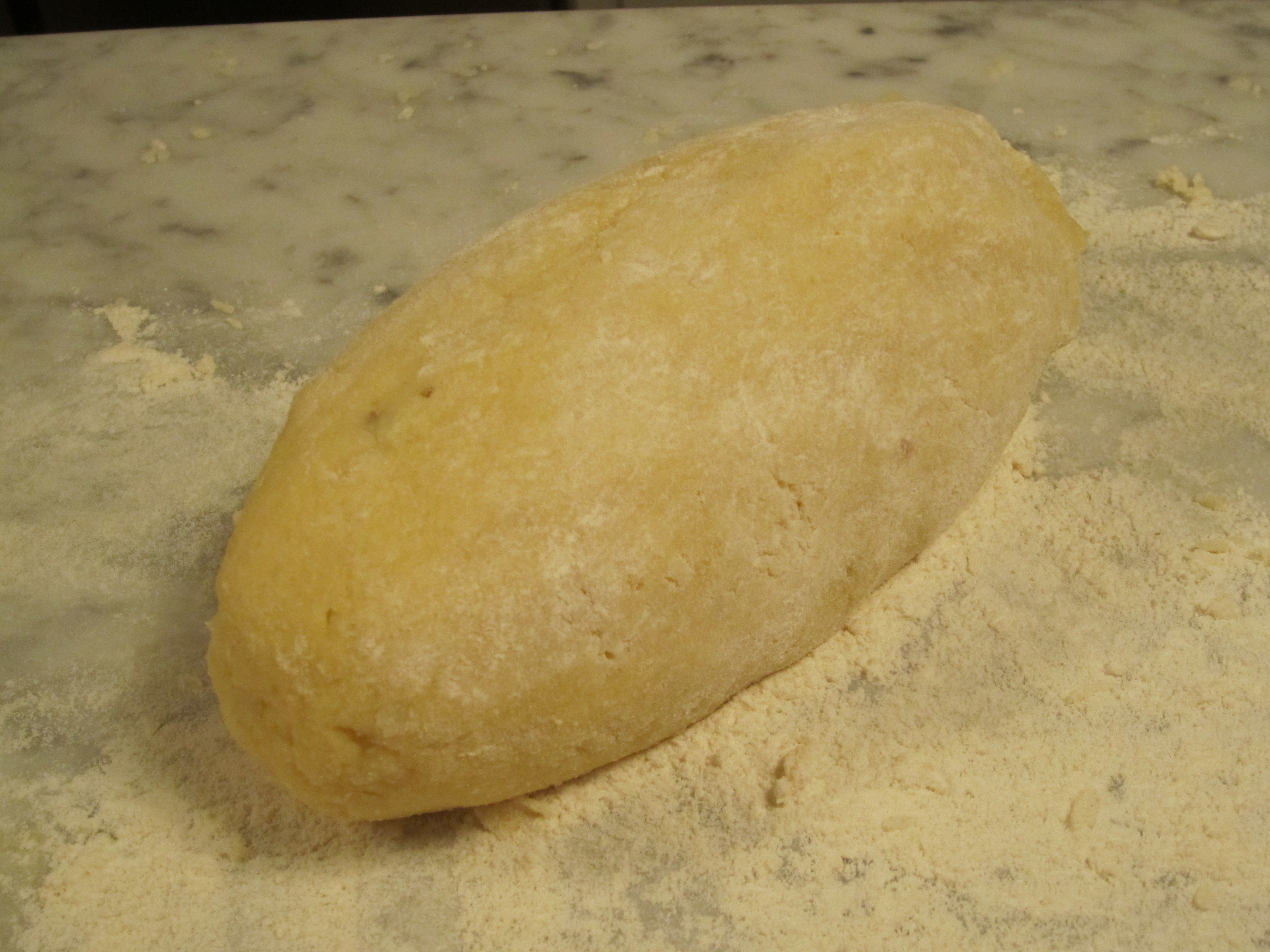
Sprinkle flour over the potatoes a little at a time, while lightly kneeding into a solid mass.  Use only enough flour to make the dough hold together.

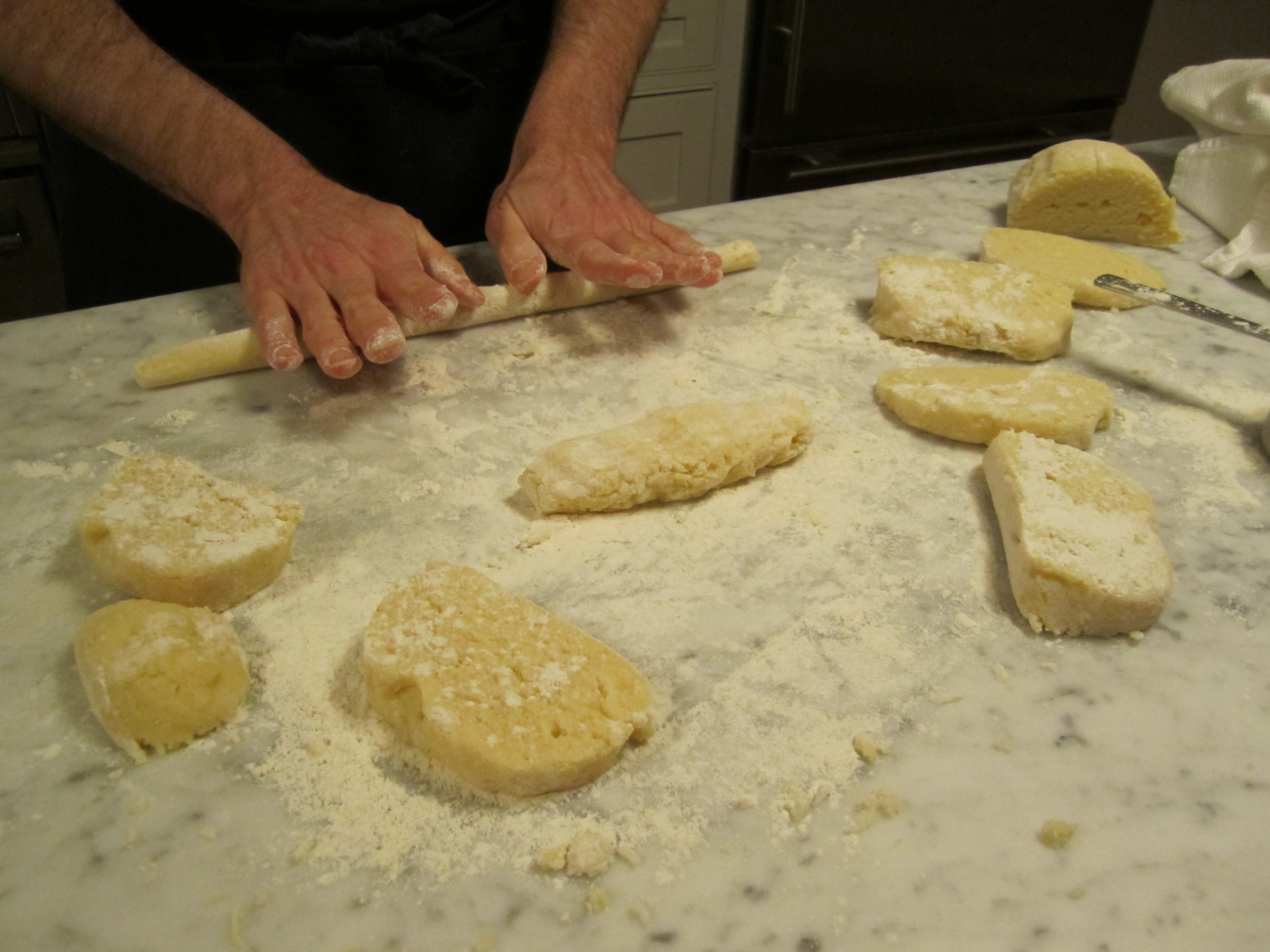
Cut dough into small pieces and roll into dowels about 3/4″ in diameter.

Cut dowels into squares.

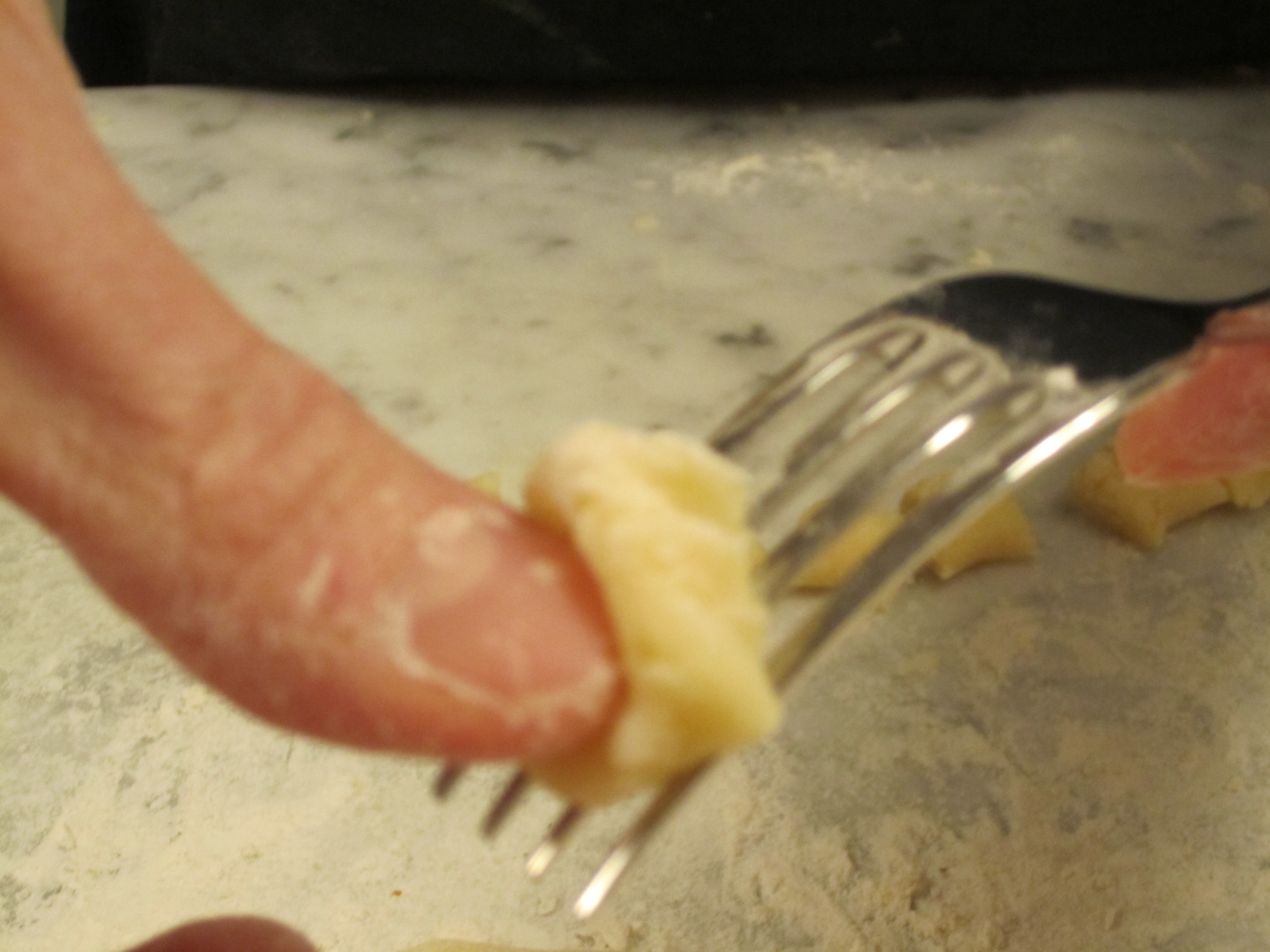
Run each square along the back  of the tines of a fork while allowing them to partially wrap around your finger as you form a cleft on the inside of the gnocchi.

Boil in salted water until they float.  Either pre-boil them and remove and shock in cold water, drain and store in a container with lots of oil, or serve them right away.

Dress them with butter + cheese or pesto or tomato sauce.

Posted in Pasta | Leave a comment

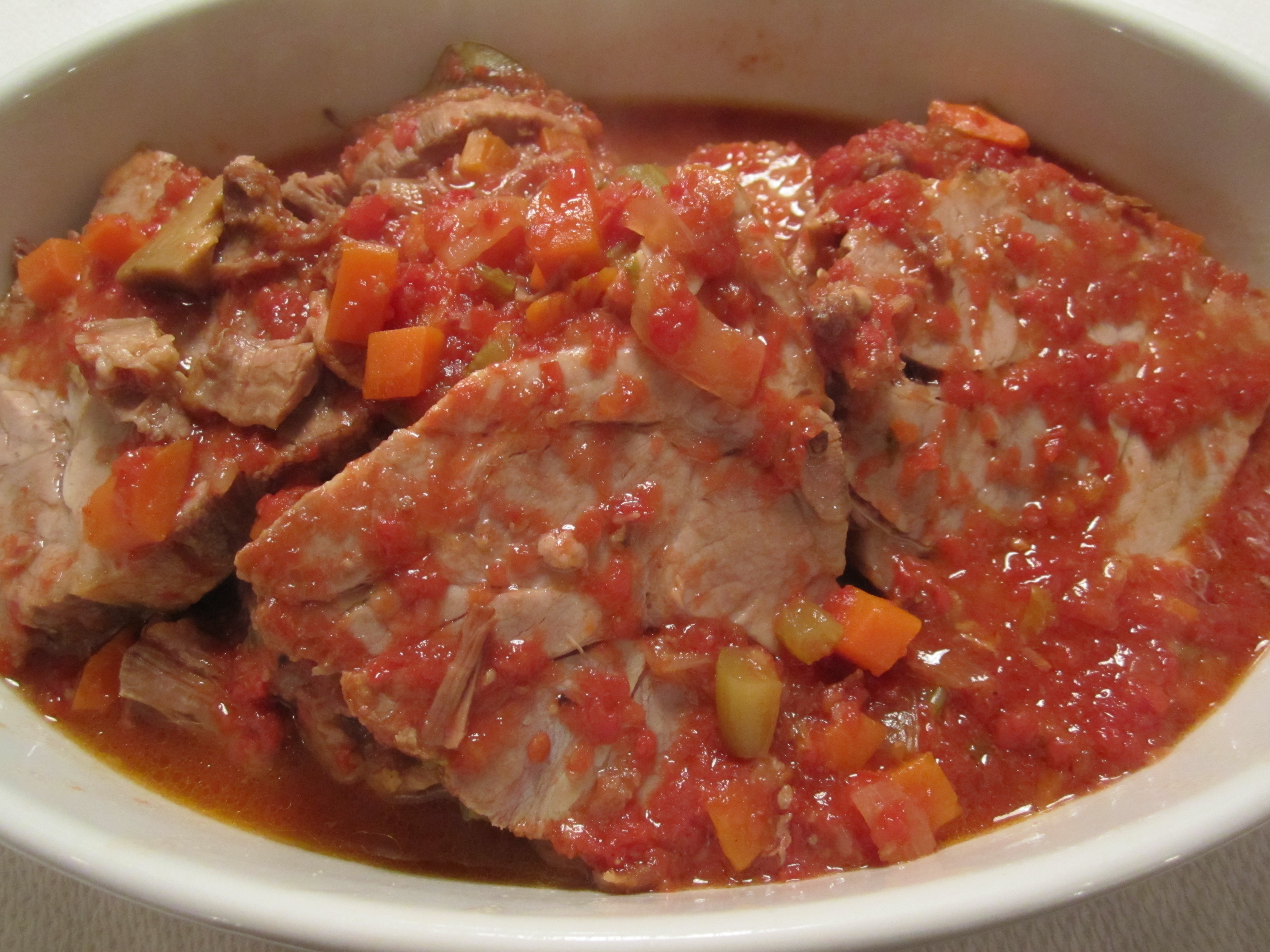
Braised Pork Shoulder


I’m expecting one of my oldest friends and partners in food crime this weekend.  It’s the perfect opportunity to make a 7 pound pork roast, dripping with fat and flavor! 

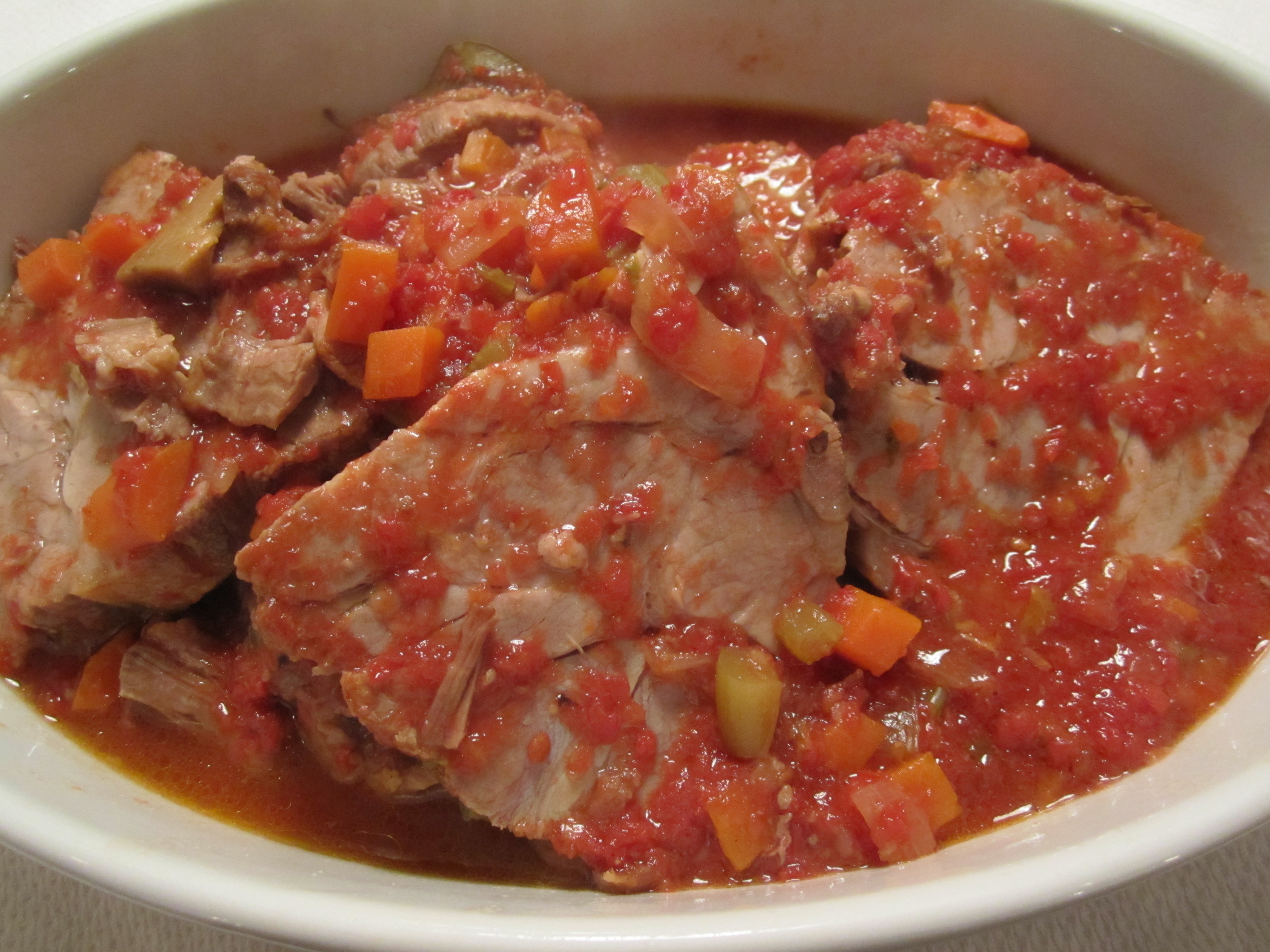
Unlike the relatively austere veal roast I made for my New Year’s Eve post, this is a heartier and more tomato-based preparation.  There is rosemary, bay, white wine, and some dried porcini.  There is celery, onion and carrot, as well as some homemade chicken broth and a jar of my mother’s home-canned Jersey tomatoes from the fall (a roast like this is worthy of those tomatoes!)

Like many roasts and stews, this dish is better prepared the day before, then allowed to rest overnight before serving.  The meat will keep for a week in its braising liquid, but if I have some left after the weekend, I’ll probably freeze it in small bags and use it to dress pasta in the coming months.

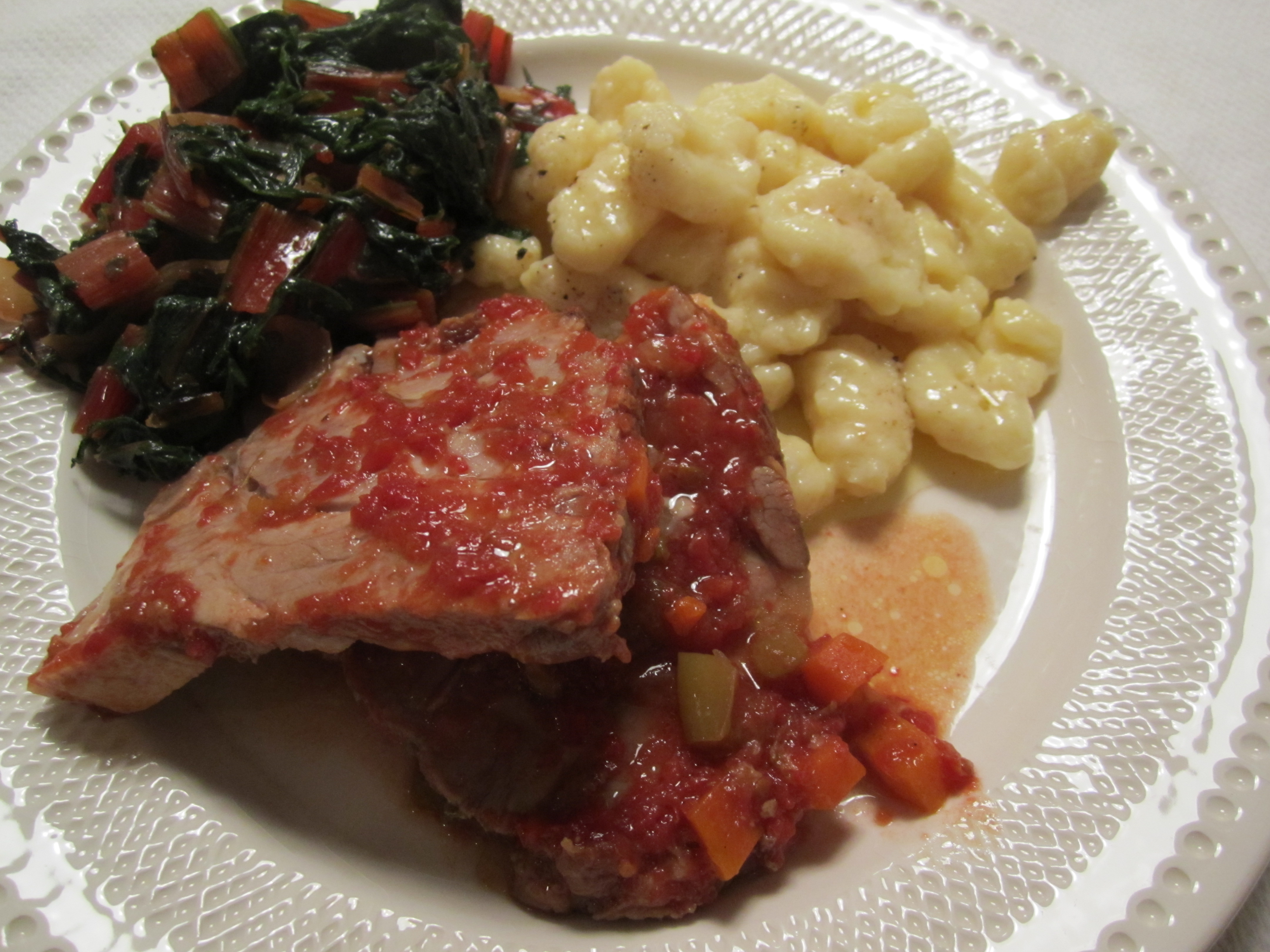
Tonight I’m serving the pork with sauteed swiss chard and homemade gnocchi (tune in tomorrow for that lesson).

Braised Pork Shoulder

serves 8

7 lb boneless pork shoulder, tied into a roast

flour for dredging

1 onion

2 ribs celery

1 carrot

6 or 7 pieces of dried porcini

1 c white wine

1 qt chicken broth

1 qt whole peeled tomatoes, crushed by hand or in blender

8 tbls olive oil

2 or 3 bay leaves

1/2 tsp dried rosemary or a sprig of fresh

salt and pepper

Preheat oven to325 degrees.

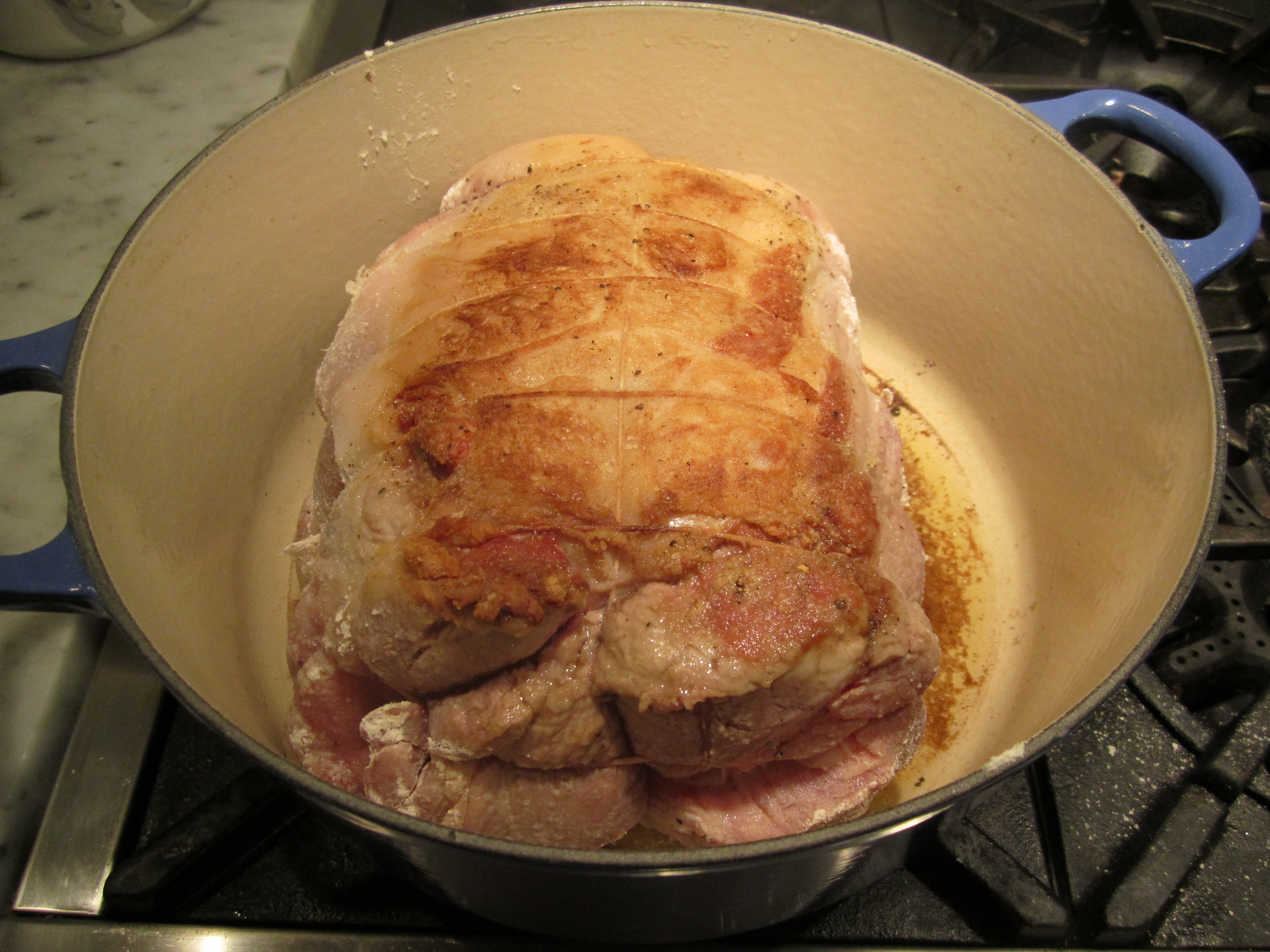
Season roast all around with lots of salt and pepper.  Dredge in flour, then shake off excess.  Heat half the oil in a dutch oven until smoking.  On high heat, brown the roast for about a minute on each side.  Remove roast and discard oil.  If there is a lot of black sediment, wipe out pot, otherwise, leave brown bits on bottom. 

Add new oil to the pot and throw in onion, celery, carrot, bay leaves, rosemary. 

Saute for about 10 minutes on medium heat.  Throw in porcini mushrooms, turn up heat and add wine.  Reduce until wine has evaporated. Add chicken broth and tomato and cover.

Place in oven, covered for about 2 hours.  Remove lid and return to oven for another hour.   Cool and refrigerate overnight.

Can be served as a sliced roast or shredded as a pasta sauce.

Posted in Meat | 2 Comments

Spinaci col Burro e Parmiggiano

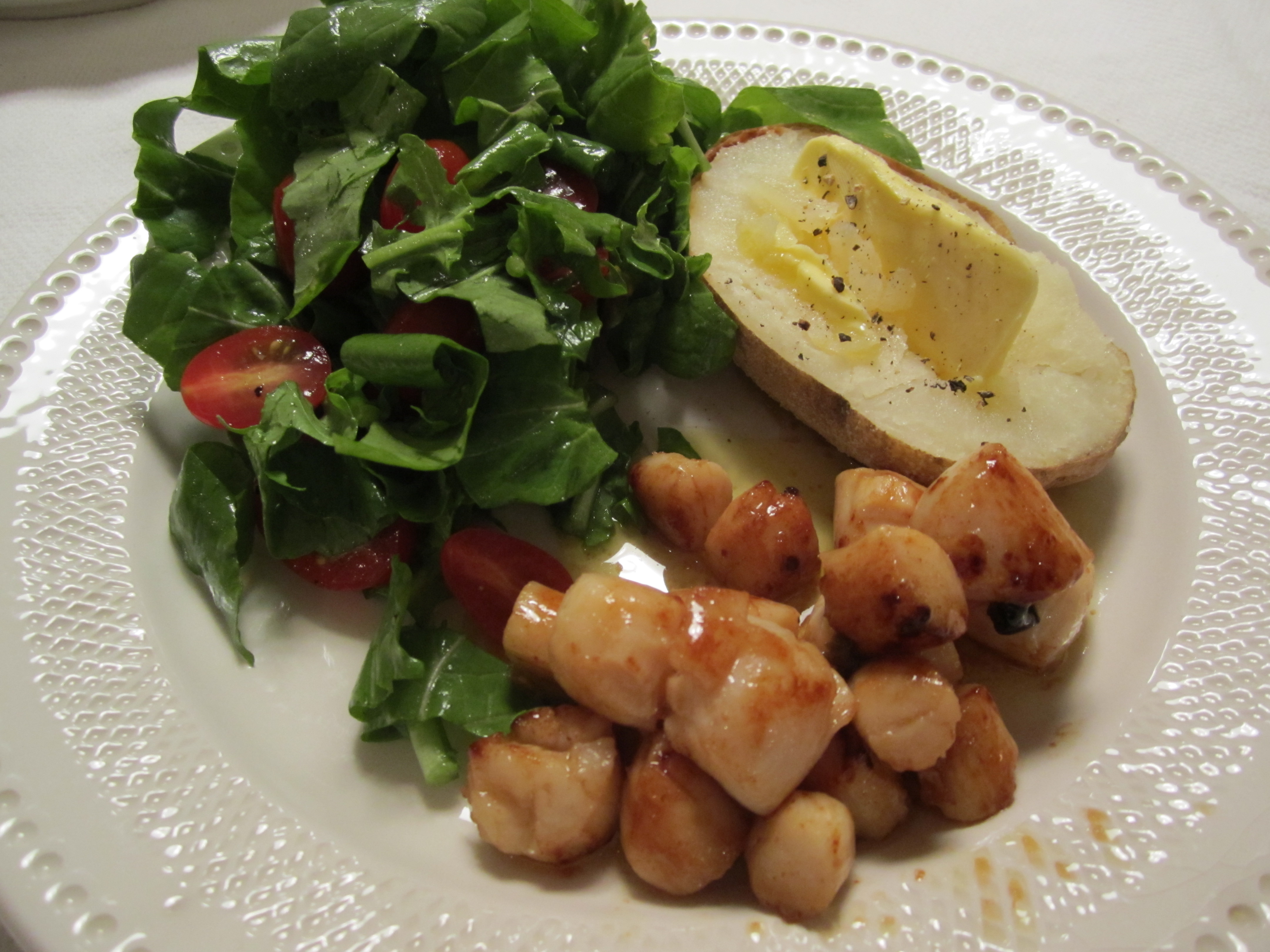
 Tonight’s meal is a “clean” meal–no sauces, no pasta, just some seared local bay scallops, a baked potato and a salad.  That is, until I added a first course of spinach sauteed in butter with parmiggiano

Butter and parmiggiano is one of two very common vegetable preparations in Rome–the other is garlic, olive oil and chili flakes.  I make the latter much more often, since my mother always made our vegetables in this manner.  Therefore, for me, the butter and cheese preparation is for special occasions–like a Friday night in February. 

This preparation is very simple.  The spinach is washed, boiled for five minutes, squeezed dry in little bundles, then sauteed in butter, with a touch of nutmeg.  At the table, the dish is sprinked with parmiggiano.  I like to eat this dish as a first course by itself because it feels decadent and luxurious and it deserves its own plate. 

Tonight, we’ll save the light fare for our main course.


Spinaci col Burro e Parmiggiano

serves 4 as an ample appetizer

2.5 lbs spinach, washed, squeezed in little bundles and coarsely chopped

1 stick unsalted butter

1/8 tsp nutmeg

salt and pepper to taste

1/2 c chicken broth

Melt butter on medium heat.  Turn up heat and add spinach and nutmeg.  Saute for 1 minute.  Add broth, salt and pepper and saute for another minute or 2.  Serve on warmed plates and sprinkle with cheese and black pepper.

Posted in Vegetables | Leave a comment

Rigatoni with Kale Pesto and Sausage

Every so often, I find Tuscan Kale in my produce market and I make this pesto.  Tonight however, I was in the mood for this dish and there was no Tuscan Kale at my market, only regular kale.  I decided to try the dish with regular kale, and the results were great!  The beauty of this pesto is that since the greens are cooked, the sauce will not blacken once exposed to the air, therefore it need not be submerged in oil.  This means you’ll need less oil with which to make the pesto and less oil in which to store it.  I treat this pesto more as a vegetable than a sauce, so I’ve piled on a lot of it onto the pasta–much more than I would with basil pesto.

In addition, I’m adding some pork sausages to the dish–cooked in a bit of tomato sauce.  I’m only adding a touch of the sauce to the dish (a couple of tablespoons).  It’s not meant to be a tomato-based sauce, but rather, a green sauce with just a kiss of tomato.  It’s  a meal all by itself.

Rigatoni with Kale Pesto and Sausage

serves 4

3 pieces of Italian Sausage, boiled for 15 minutes

4 tbls tomato sauce

1 bunch kale, center stems removed and washed

2 cloves garlic, sliced thinly

1/4 c grated pecorino romano + more for sprinkling at the table

1/4 c extra-virgin olive oil

1 lb rigatoni

salt and pepper to taste.

Plunge kale into boiling salted water and boil for 5 minutes.  Drain, cool and squeeze dry in small bunches.

On low heat, saute garlic in 1 tbl olive oil just until golden.

In food processor, put kale, garlic (and its oil) plus 2 tablespoons additional oil and pulse until kale is chopped fine.  Add the remainder of oil and the pecorino cheese and process until a green sauce forms (not too finely).

Slice sausages into disks and simmer in the tomato while pasta boils.  Toss cooked pasta with sausage and kale.  Thin with a bit of pasta water if it’s too tight. 

Serve with extra cheese and black pepper.

Posted in Pasta, Sauces | Leave a comment

Filet and Wild Mushrooms


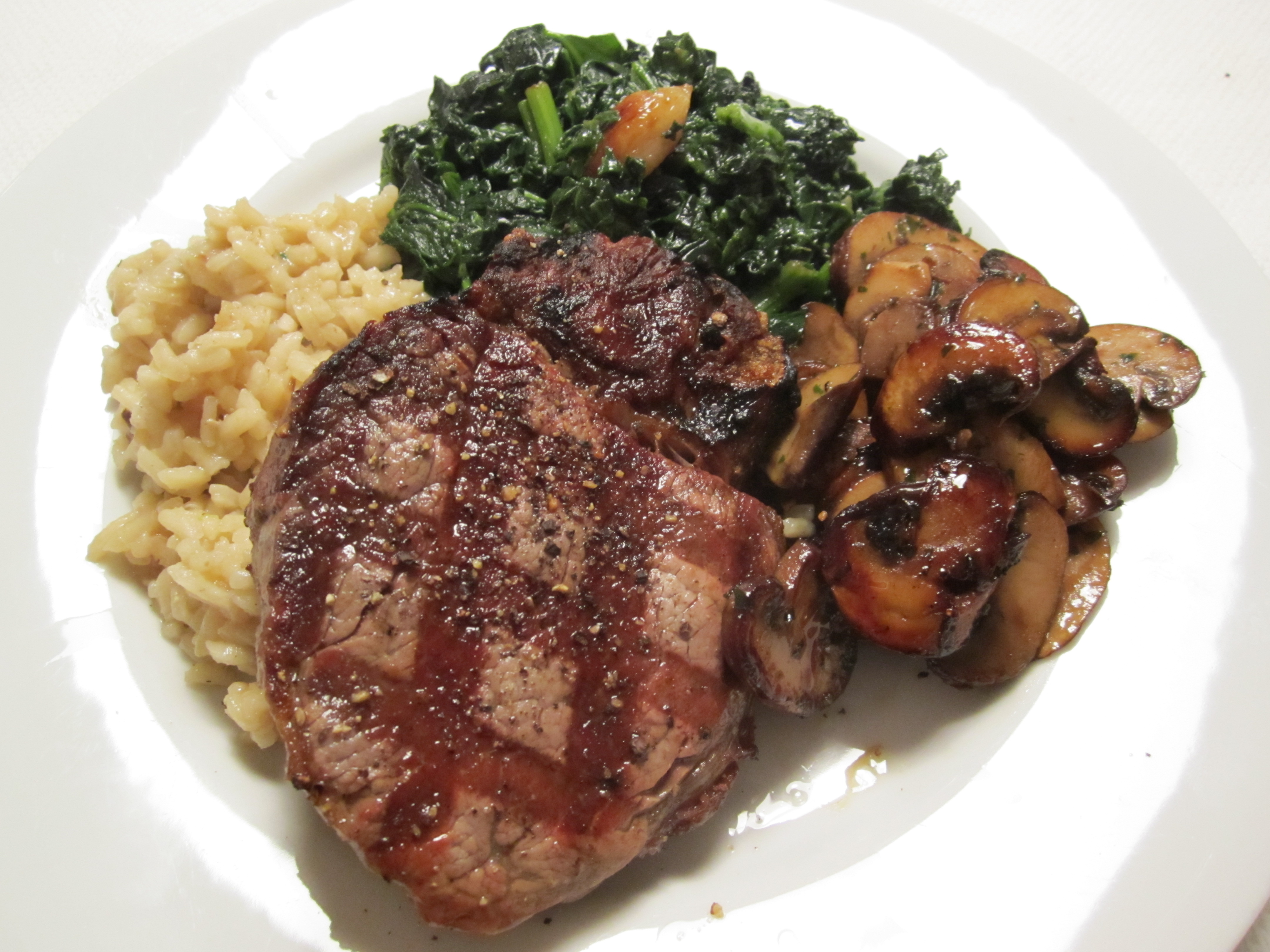
Since I have leftover risotto with porcini from the other night, I’m building tonight’s meal around it–a grilled filet, sauteed cremini mushrooms and sauteed spinach. 

The recipe for the mushrooms was taught to me by my neighbor, Beppi.  After having these at his house, I asked him if he would someday show me how to make them.  This past holiday season when his family was visiting, he was kind enough to not only invite me for dinner, but invite me to take part in the preparation.  I’ve been making these mushrooms since then.

Besides Marsala, the other alcohol that Beppi always keeps in his pantry, and encourages me to keep in mine, is dry sherry.  Like Marsala, it doesn’t spoil, and it lends food a very complex flavor that’s difficult to duplicate with wine.   Sherry is the distinctive ingredient in these mushrooms. 

There are several tips to preparing mushrooms.  First of all, try not to wash them–they get instantly waterlogged.  This is easier with some mushrooms than with others.  Some varieties of wild mushrooms are nothing but nooks and crevices  which are filled with soil (morels, for example).  With those varieties, it’s important to rinse, but dry as quickly as possible.  The mushrooms for this dish (cremini), do not carry a lot of soil, so it’s adequate to simply wipe them with a damp paper towel to remove any loose soil. 

The next tip is one that I use in most places I use garlic–brown it in large pieces, then remove it at the end.  You’re after the flavor it imparts to the dish–not a big bite of garlic (although I understand if you choose to eat it anyway!)

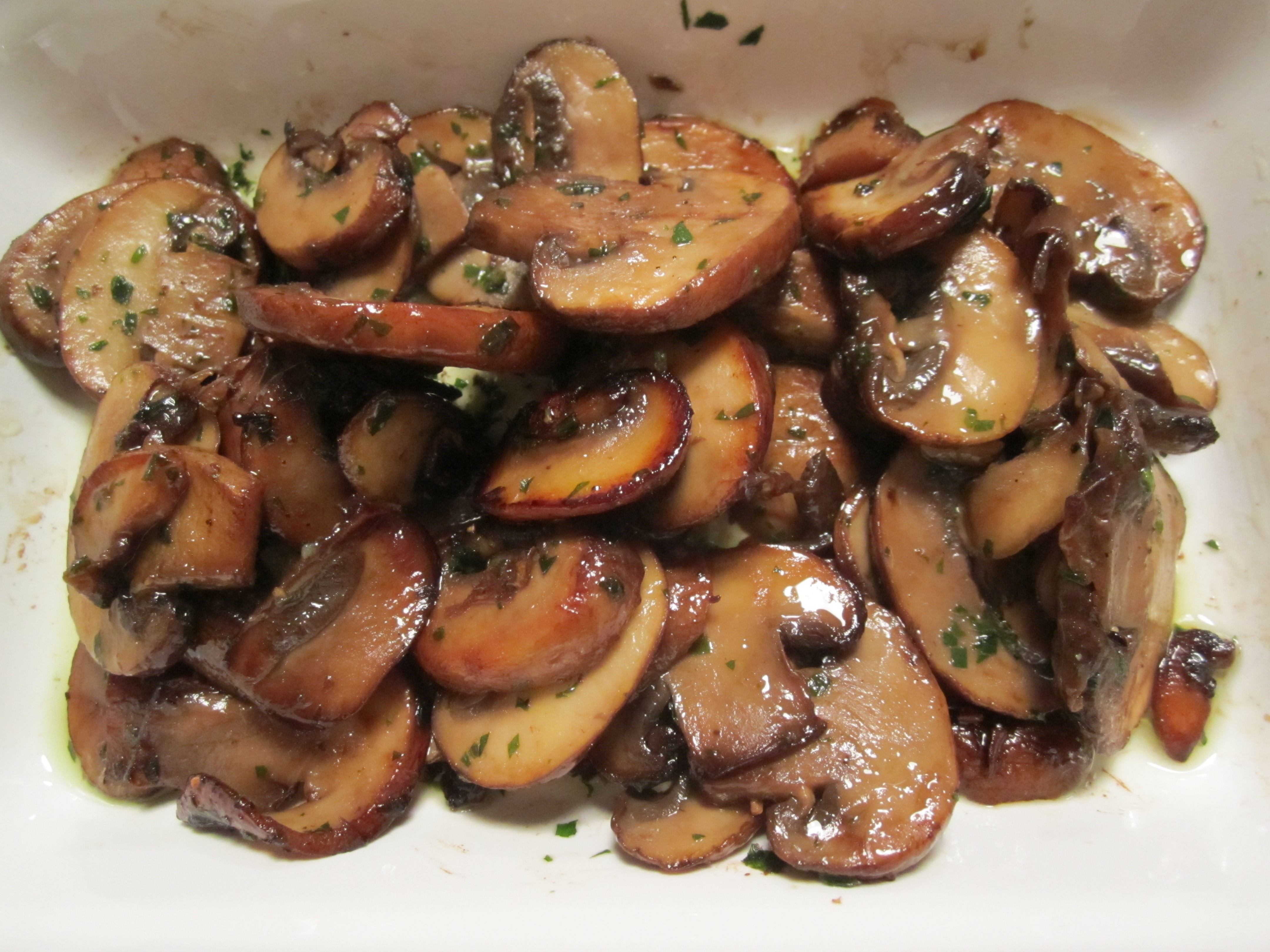
The mushrooms need to go into a hot skillet in hot oil and begin sizzling immediately–no salt until they begin to brown. They need to brown quickly, then get seasoned with salt, then get doused with sherry and cooked until the sherry evaporates and leaves its essence.  Then a bunch of chopped parsley gets thrown in at the end.  These mushrooms are deep and woodsy, yet exotic from the sherry, and green-tasting from the parsley.

The other components of this meal do not require a recipe–the filet is simply coated with salt, pepper and oil and grilled on my stovetop charbroiler for about 5 minutes per side and allowed to rest for 5 minutes before serving.

The risotto from the other evening gets reheated in a skillet with some chicken broth around it (for the risotto technique, see my prior post “Risotto with Chicken and Peas”).  The sauteed spinach also makes use of the bit of leftover chicken broth I have from making the risotto the other night (see my recipe for sauteed spinach in my “New Years’ Eve Dinner” post). 

P.S.  I can’t tell you how delicious this meal was!


Sauteed Cremini

serves 2

10 oz. cremini mushrooms, wiped clean of loose soil and sliced thinly

3 tbls olive oil

1 tbl butter

2 cloves garlic, peeled and split in half 

1/2 tsp salt and 1/4 tsp pepper

1/4 c dry sherry

2 tbls fresh chopped parsley

In a broad skillet with flared sides, brown the garlic in oil on low heat until it’s golden on all sides.  Turn up heat and add butter and mushrooms and saute until mushrooms begin to become golden (maybe 5 minutes).  Add salt and pepper to taste, then add sherry and continue cooking on high heat until sherry has evaporated and mushrooms begin to become glazed with the sherry essence (maybe another 5 to 8 minutes).  Toss in chopped parsley and serve. 

Posted in Meat, Vegetables | Leave a comment

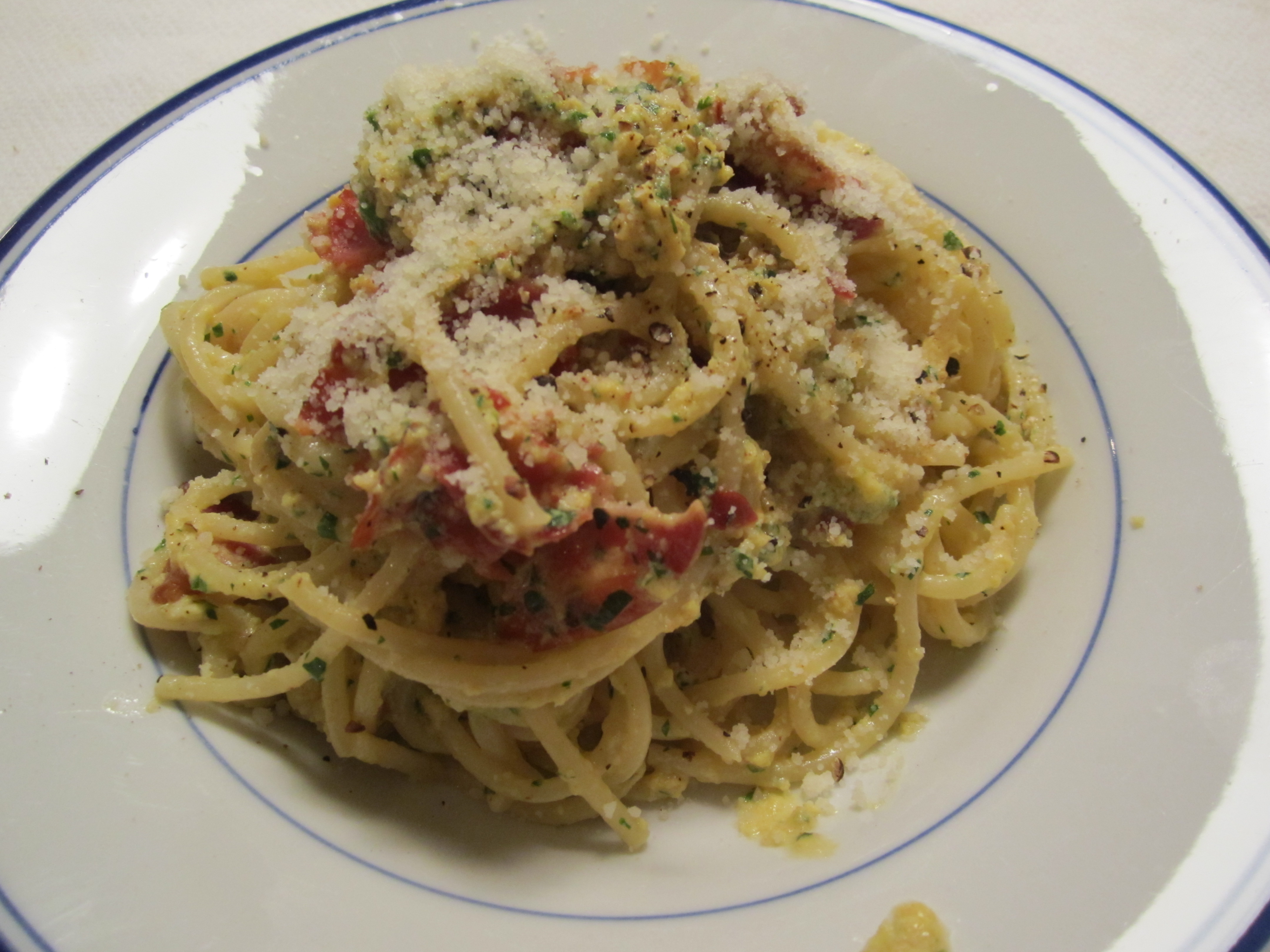
Pasta alla Carbonara


Dinner is later than usual tonight due to an evening meeting, so I’m using it as an excuse to make one of my favorite late-night dishes–pasta alla carbonara.

I’ve made this dish many different ways but my favorite version of it was taught to me by my neighbor, Beppi.  Last summer, he invited my family over for dinner to join his family and served this dish.  It was a marvel, and I couldn’t figure out what made it so great.  Like most dishes made by experienced hands, I had to actually watch it being made.  One evening a couple of months later, I invited him to my house for dinner and I jumped when he offered to show me how to make the dish for my guests.

I was surprised by a couple of things–butter (lots of it) and chicken broth (a good amount).  The eggs in the dish were fully cooked, but the dish still retained its creamy quality.  The reason was the copious amount  of pecorino romano cheese and also chicken broth.

The other element of the dish that was markedly different from all versions that I’d learned before it was that the pancetta was sliced very thinly (not in little cubes, the way I’d always used it).  The thin slices were further diced by hand, and by the time the pancetta was browned in the skillet, it practically melted away.  All that was left was its salty porky essence with some tiny crunchy bits–no meaty cubes of bacon.

The only change I’ll make to Beppi’s carbonara is inspired by the carbonara that I had in Rome recently.  Rome is the birthplace of this dish, so I took the Roman method of making it very seriously.  At the restaurant where I had this in Rome (San Eustacchio) they used both bacon and pancetta.  This gave the dish some salt from the pancetta, but also a bit of smokiness from the bacon. 

Pasta alla Carbonara

serves 4

1/4 lb pancetta, sliced thinly and diced into 1″ pieces

4 slices bacon, diced into 1″ pieces

6 tbls butter

1/4  c fresh chopped parsley

1 tsp black pepper

3/4 c grated pecorino romano

5 large eggs

1 1/2 cups good chicken broth

1 lb spaghetti

While the pasta water is coming to a boil, saute pancetta, bacon and butter over low heat, until the meats start to melt and caramelize and the butter just begins to color.  Turn off heat and set aside. 

Boil the spaghetti in salted water.  In a mixing bowl, combine eggs, 1/2 c of the pecorino, all of the parsley and black pepper and whisk. 

In a small pot on low heat, bring chicken broth to a simmer.  

Right as the pasta nears completion (about a minute shy), turn on heat again under the pancetta mixture until it reaches a sizzle, then turn off. 

Add the hot pasta into the mixing bowl with the egg mixture and toss.  Immediately dump the pasta and egg mixture into the skillet with the bacon and pancetta and toss vigorously (it will sizzle and basically cook the eggs), while adding hot broth a ladle at a time. Toss with tongs until all the elements of the sauce are blended and the sauce is creamy.  Sprinkle on the remainder of the grated cheese and immediately serve in heated shallow bowls. 


Posted in Pasta | Leave a comment

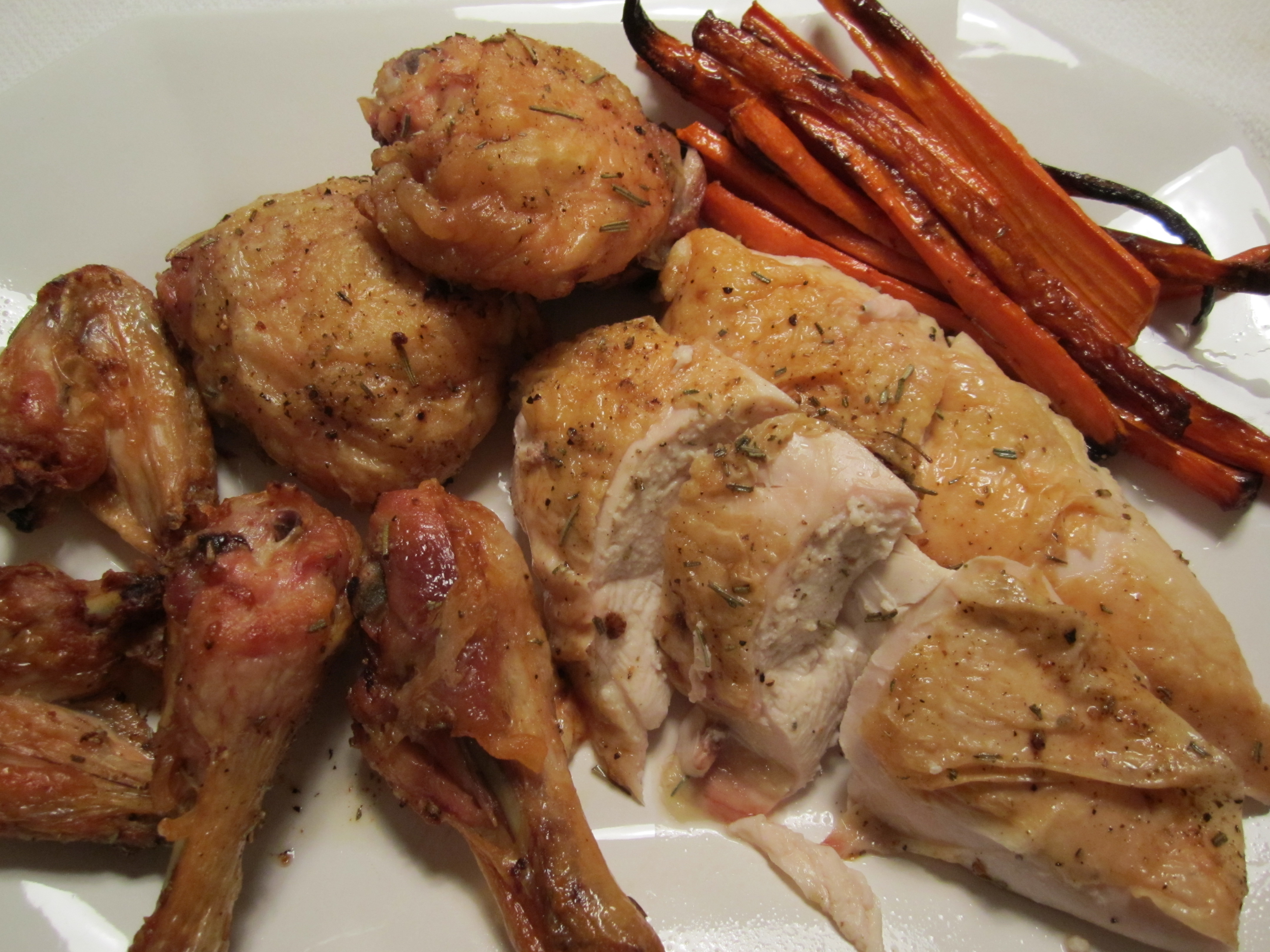
Deconstructed Roast Chicken


There are many ways in which I enjoy preparing a roast chicken.  There’s high heat/uncovered; medium heat covered then uncovered; brined; dry-brined; on the grill; under a brick, to name but a few. 

However, of all the ways, this is the one of which I’m the most proud.   It is a method which addresses the breast and dark meat separately, and which allows some spare parts with which to make stock (and thereby, risotto).  It may seem a little laborious but just bear with me–the results are worth it.

I start out by cutting out the backbone of a whole chicken, then the wing tips.  Throw them into a pot, along with the neck, a stalk of celery and an onion cut in quarters and fill with water.  Simmer this broth while you’re doing everything else.  If you really don’t feel like making broth tonight, just save the backbone and wing tips, put them in a ziploc and toss into the freezer.  You can accumulate chicken parts and make broth some other time.

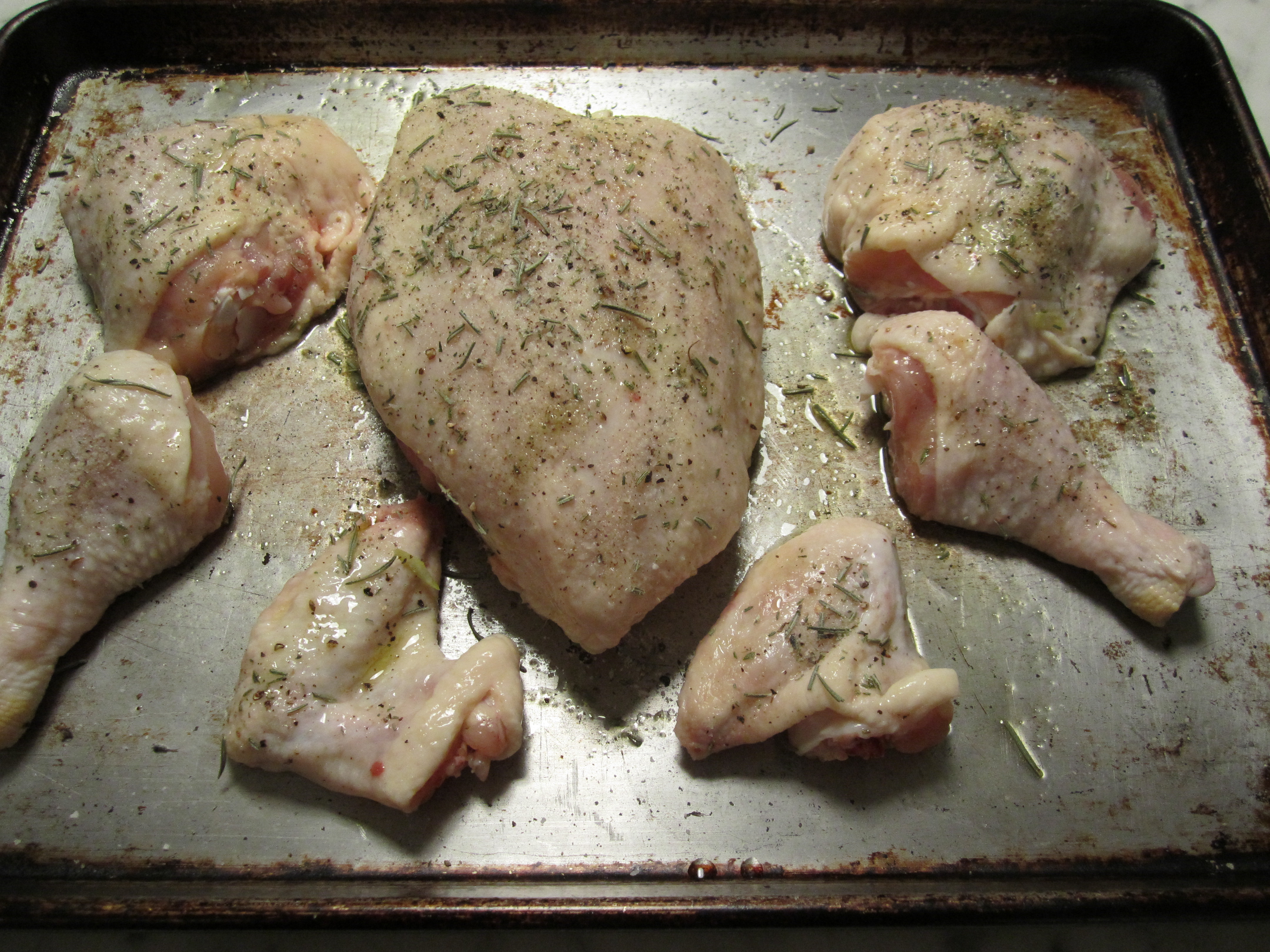
Then proceed with the butchering.  The breast remains whole (not split) on the bone.  I divide the thighs and drumsticks and place all on a roasting pan with the breast in the middle. Drizzle generously with olive oil and rub on lots of salt, pepper and dried rosemary.

Place in a 425 degree oven and begin roasting.   Baste with the oil in the pan every 15 minutes or so.  After 40 minutes, remove the breast–you can take its temperature, which should be around 160-165 degrees.  The temperature will go up a bit as it rests.  It can rest at room temperature until the rest of the parts are golden brown and it will stay hot–trust me.

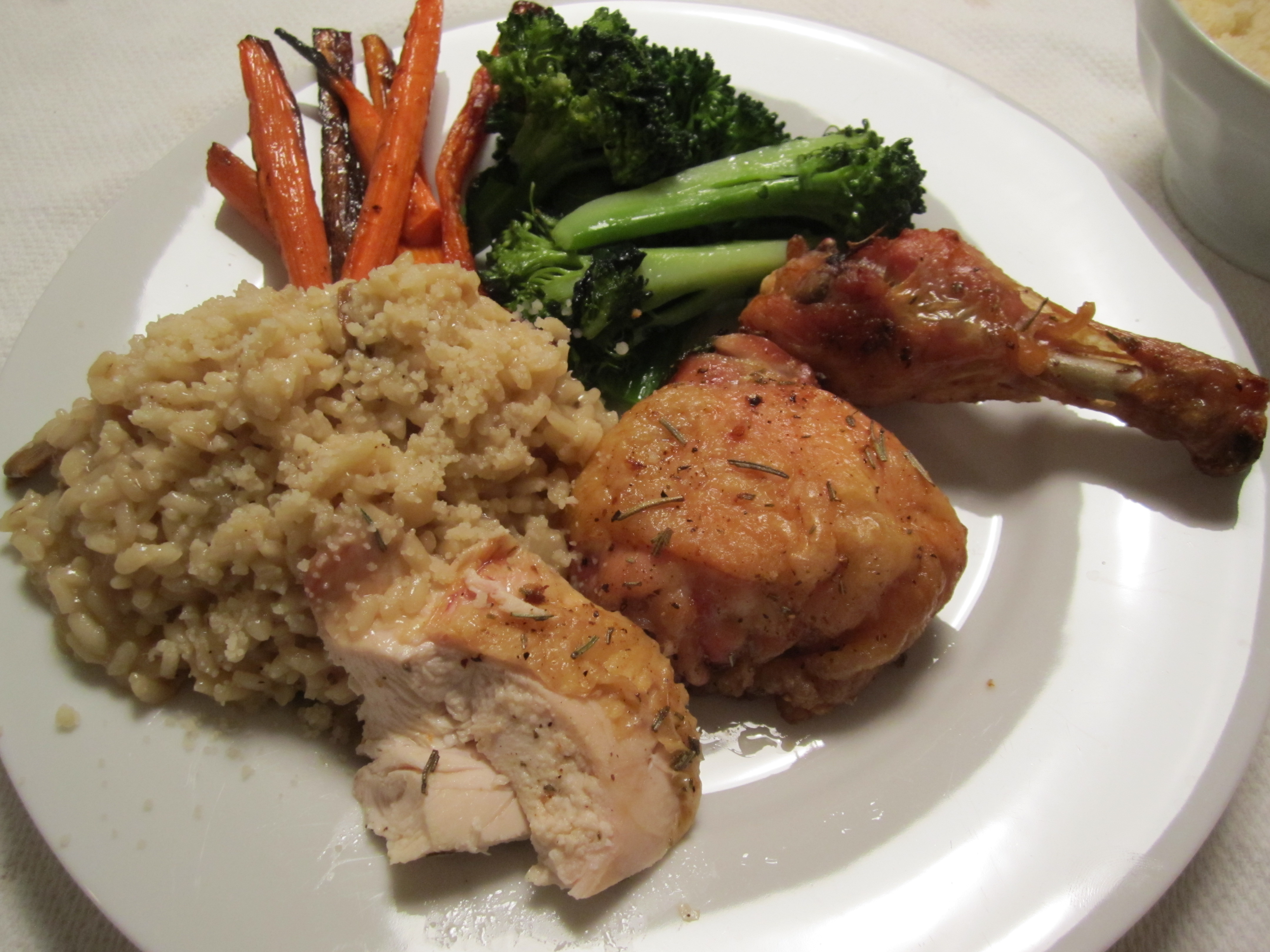
When I remove the breast, I start the risotto.  (for risotto technique, see my prior post “Risotto with Chicken and Peas”).  In this risotto, instead of chicken,  I’ve added a handful of dried porcini that have soaked in warm water for 20 minutes.  They are then chopped finely and get thrown into the risotto, with their  soaking liquid (be careful not to pour in the soil at the bottom).

The risotto takes 15 – 20 minutes to make.  In that time, the rest of the chicken parts will have gotten brown and crispy in the oven.  Remove them, and while the risotto is “resting” for its last 5 minutes,  carve the breast, then serve everything together.  You’ll have a small mountain of pots to clean up but I promise you it will be worth it!

Deconstructed Roast Chicken

serves 3 – 4

a 3 1/2 to 4-lb chicken

3 tbls olive oil

2 tsp salt

1 tsp black pepper

1 tsp dried rosemary

Preheat oven to 425 degrees.  Cut chicken as follows (or ask your butcher to):  Remove backbone, remove legs and thighs and separate them.  Remove wings and cut off tips.

Roast together for 40 minutes, while basting once or twice.  Remove breast and take temperature (should be about 165).  Let it rest at room temperature.

Continue roasting the other pieces for 15 – 20 minutes longer, until they’re golden and crispy.

Remove breast from bone, slice and serve.

Posted in Poultry | 2 Comments

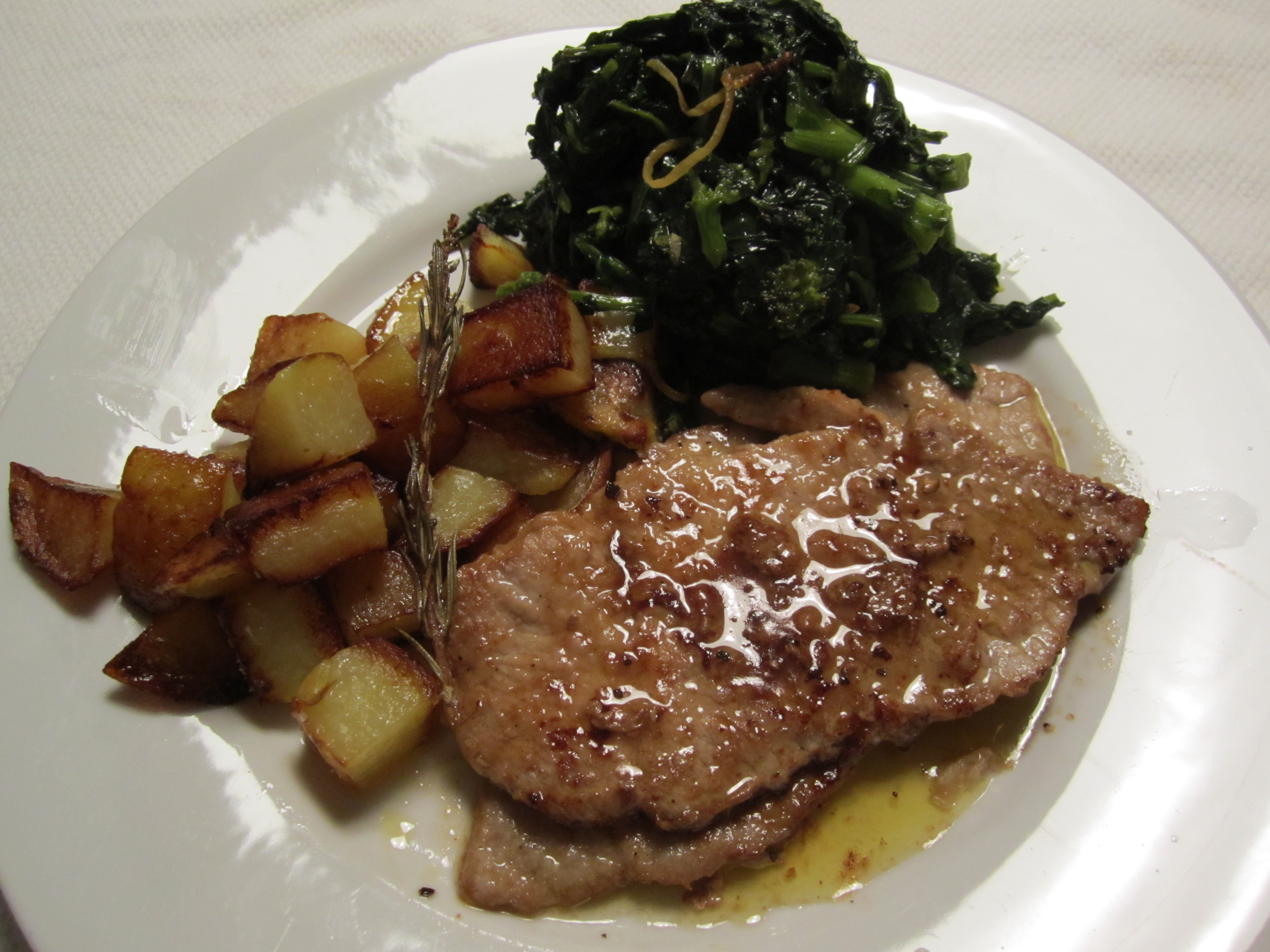
Dinner for One – Veal Marsala


The veal cutlets at the butcher today were irresistable–paper thin and no visible muscle or sinew.  This looked like the perfect dinner for one.

The dish requires only a couple of pieces of thinly sliced veal, some flour, some butter and a touch of marsala.  My neighbor Beppi told me that I should always have a bottle of Marsala in my pantry.   It doesn’t spoil, so it can come in handy when you’re cooking a simple chicken breast or veal cutlet and you don’t want to open a bottle of wine but you want a little added flavor.  The Marsala lends the veal a much more rich and complex flavor than wine. 

This is the simplest and quickest of dishes to prepare and hardly requires a recipe  Since my butcher has already pounded these cutlets thin for me, there is nothing to do except season them with salt and pepper, dredge lightly in flour and lightly sear them, then splash with Marsala and reduce a couple of minutes.  That’s it!

I used to think that high heat was the way to go on this dish, but Beppi showed me his version using chicken breasts and they barely even turned golden.  He actually started the cutlets in a cold skillet, then turned on the heat.  By the time the cutlets had begun to brown, it was time to flip them.  Then they cooked briefly on the other side.  The upside of this gentle cooking was that the meat stayed moist and tender–not an easy feat with a chicken breast.   Therefore, for my veal cutlet, I’ve opted for cold pan-medium heat method. 

To accompany the veal, I’ve made two of my favorite side dishes–skillet potatoes (see prior “dinner for one” post) and sauteed broccoli di rapa (see “fritto di mare” post ).

Veal Marsala

serves 1

2 thinly pounded veal cutlets (about 1/3 lb total)

1 tbl flour

1 tbl olive oil

2 tsps butter

1/4 c  dry Marsala

Salt and Pepper to taste

Season the cutlets with salt and pepper on both sides, then dredge in flour and shake off excess.  Spread the oil in a cold skillet, then lay in the cutlets.  Top each cutlet with half a teaspoon of butter.  Turn heat to medium and cook for about 2 minutes or until they just begin to color.

Turn cutlets over and cook for another minute.  Remove the cutlets from the skillet and turn up the heat.  Pour off the fat from the pan, leaving any brown bits.  Add the remaining teaspoon of butter and the Marsala and reduce until the wine has just about evaporated and there is a bit of glaze in the pan.  Return the cutlets to the skillet for a few seconds to coat with sauce, then serve.

Posted in Dinner for One, Meat | 2 Comments