Spaghetti with Fennel, Leeks and Mint


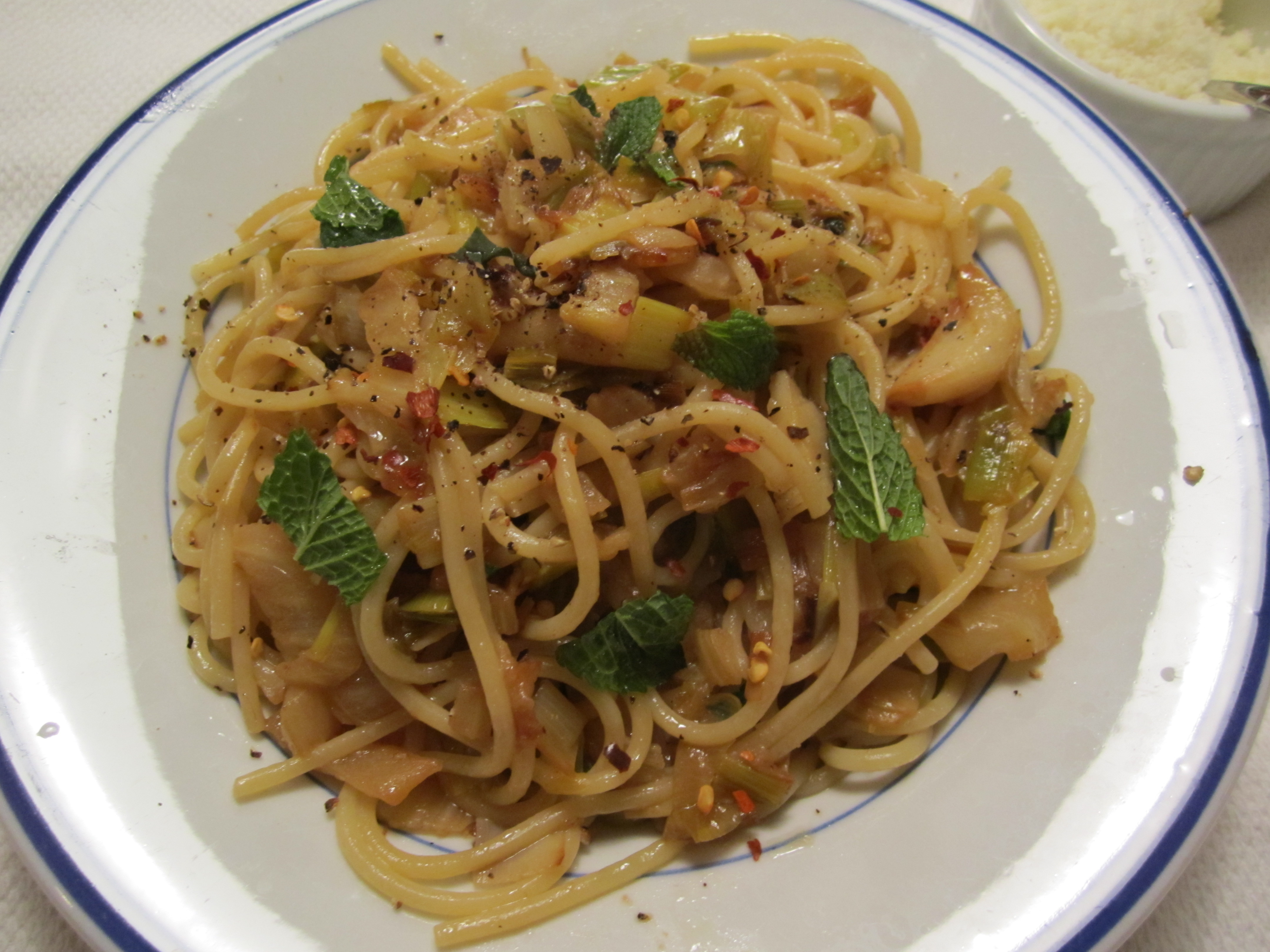
While I’m on the subject of fennel (see yesterday’s post), I wanted to make this pasta dish.  It’s spaghetti tossed with caramelized fennel, leeks, garlic, chili flakes and mint.  You can make the same dish as a vegetable, omitting the spaghetti, but tonight, it’s my main course and I’m in the mood for pasta.

The fennel is slivered and sauteed until golden brown, then the leeks and garlic are added and caramelized as well.  A splash of white wine adds a little acidity, the chili flakes add heat and the mint cools it down.  It’s a hearty but light dish. 

The question of whether or not to top with grated cheese is always a serious one . . . Since this dish is of my own creation, I can’t say for sure whether Italians would top it with cheese or not, but if I had to guess, I’d say not. 

But, by the same token, since the dish is of my own creation, I choose to top it with some sharp pecorino romano, which is a natural with olive oil, garlic and mint.  The truly Italian thing to do might be to top with some toasted breadcrumbs.  My mother makes a beautiful simple dish of cavatelli  topped with toasted breadcrumbs, garlic and olive oil that would serve as my model.  But since I had fennel gratinata last night,  I’m not in the mood for toasted crumbs tonight–I’ll save the crumbs for some other time.

Spaghetti with Fennel, Leeks and Mint

serves 4

2 medium bulbs of fennel

1 bunch leeks, white part only, cleaned, sliced lengthwise, and cut into half-moons

2 cloves garlic, sliced in half

4 tbls olive oil

1/2 c white wine

12 mint leaves

pinch of chili flakes

1 lb spaghetti

salt and pepper to taste

Remove fennel tops and slice bulbs in half lengthwise.  Cut out the core from each half.  Slice accross the bulbs to create half-moon slices of fennel.  In 2 tablespoons of olive oil, saute the fennel over medium high heat for about 10 minutes or until golden, stirring often.  Add leeks, garlic, and chili flakes and cook for another 5 minutes.  turn up heat and add white wine and continue cooking until wine is reduced by half (about 5 minutes). 

Cook spaghetti until a minute shy of done, then toss into the skillet with the fennel mixture.  Add about a half-cup of pasta cooking water, the mint and toss together for about a minute to combine.  Off the heat, drizzle olive oil on top.
Posted in Pasta, Vegetables | 1 Comment

Gratinata di Finocchio


Fennel is a very versatile vegetable.  It can be eaten raw–it’s wonderful simply shaved over a mixed green salad.  It can be diced and put in a stew or soup–I love to put it in my zuppa di pesce, which I make with mixed seafood during the summer (don’t know why I make it only in summer).   My mom would always serve it raw after dinner as a digestive.   It can also be used as the basis of a pasta sauce–more on that tomorrow . . .

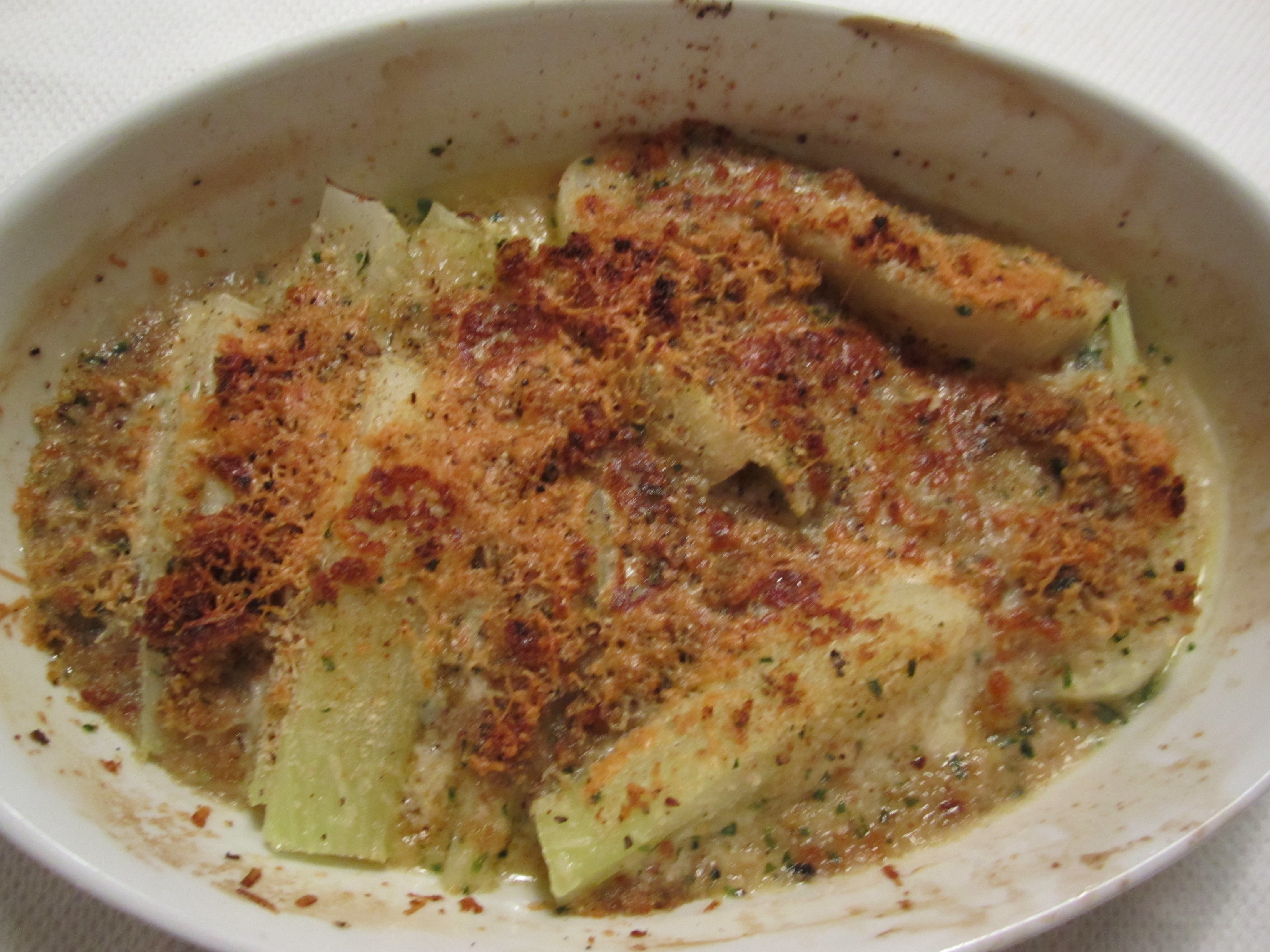
Tonight, I’m enjoying the last of my beef stew from my dinner with friends the other evening, so my main course is taken care of.  On the side, though, I’m making a gratinata of fennel.  It’s the perfect side dish–light (until I get through with it), sweet and also crispy. 

If you look back a couple of posts, you’ll see my recipe for gratinate of broccoli and cauliflower.  This dish is similar but there are a couple of key differences.  The fennel needs to cook through completely in broth prior to baking with breadcrumbs.  It needs to be very soft–not al-dente.  Also, I’m using a little butter in this one and a little grated parmiggiano cheese as well as the seasoned breadcrumbs (I’m making my own).

After the fennel is simmered in chicken broth on the stovetop, you keep a little bath of the broth around it, then sprinkle the crumbs, cheese and butter on top of it.  The broth partially evaporates in the oven and the stray breadcrumbs thicken what little broth is left once it finishes baking. 

This is a good accompaniment to a stew because the stew is moist and liquidy, and the fennel is crispy and luxurious.   Believe me, wherever they meet on the plate, they are very happy together. 


Gratinata di Finocchio

serves 4 as a side dish

2 heads fennel, chopped off at the tops of the bulbs, outer layer peeled (sometimes the outer layer is quite thick and when you’re finished peeling, sometimes you feel you’ve discarded half the bulb, but the outer layer is too fibrous to use, so discard it) 

2 cups chicken broth

3/4 cup homemade seasoned breadcrumbs (see gratinate of broccoli post for seasoning)

1/4 c grated parmiggiano

4 tbls olive oil

1 tbl butter

salt and pepper to taste

Preheat oven to 425 degrees

Cut off a tiny bit (a quarter inch) of the bottom of the fennel bulbs, being careful not to remove too much. Slice fennel wedges in half lengthwise, then in quarters, keeping a bit of the core on each wedge to hold it together.  Cut again into eighths if the bulbs are very large, all along making sure that the wedges are bound by a little bit of the base of the bulb.  If any of the wedges separate, it’s OK.

Place the wedges (and any loose pieces) of fennel in a skillet of chicken broth and simmer, covered, for about 15-18 minutes on low heat or until fennel is soft.  When fennel is soft, place it in a buttered baking dish and pour a little of the broth around it (a quarter-inch).  

Add olive oil to the breadcrumb mixture and mix with fingers to incorporate.  Pile the breadcrumbs on the fennel wedges.  sprinkle with parmiggiano, dot with little bits of butter throughout, and grind black pepper over the top.

Bake until it begins to bubble–about 10 minutes, then broil until golden. 

Posted in Vegetables | 1 Comment

Rutabaga Puree with Pecorino and Olive Oil


A friend brought over a wonderful beef bourguignon for dinner the other evening and I am still savoring the leftovers, therefore tonight’s post consists of two great side dishes to accompany a hearty beef stew.   

I don’t know whether rutabaga is used in Italy, but it lends itself to some very Italian flavors–namely, pecorino, black pepper and olive oil.

I’ve tried various different combinations with rutabaga . . .  cream and butter (very nice, but not tonight); I’ve tried cooking the rutabaga cubes in milk, then pureeing (they have to cook for too long to soften, so the milk scorches).  I’ve tried boiling the cubes in chicken broth and pureeing without adding any fat (not bad but not rich enough for me).  I’ve tried using butter and parmiggiano (too delicate for the assertive rutabaga flavor).

Pecorino and olive oil are the perfect strong counterpoints to the earthy sweetness of rutabaga.   Simply peel, cube and boil the rutabaga, then puree in a food processor.  It purees beautifully in the processor, (unlike potatoes, which must not be run through the food-processor, lest they turn to glue).  Drizzle in oil and cheese, then grind the black pepper over the dish once it’s on the plate.

This dish is the perfect winter accompaniment to a variety of main courses–most meats; game, stews, poultry.  It can go most places that mashed potatoes go, but with a more earthy flavor and a more interesting bite. 

 It’s a great dish to make for guests because the puree can be made ahead, then sit in a saucepan with some of the rutabaga cooking liquid around it to use for re-heating. 

Tonight I’m topping it with some crispy shallots for added sweetness.  With a salad and cheese, this could be a meal.

Rutabaga with Pecorino and Black Pepper

serves 4  as a side dish

1 medium rutabaga (about 5″ in diameter)

2 tbls extra-virgin olive oil

1 tbl agave nectar or honey

1/4 c grated pecorino romano

1 tsp. freshly ground black pepper

salt to taste

2 shallots, sliced

oil for frying

Peel the rutabaga and cut into 1″ cubes.  Place in well-salted cold water and bring to boil.  Cover and simmer for about 45 minutes.  Strain and place cubes in food processor,  reserving  some of the cooking liquid for reheating.  Pulse in the processor while adding oil, agave and cheese.  Taste and adjust salt. 

In a separate skillet, fry the shallots until crispy and add salt.  Top the rutabaga with shallots and black pepper.

Posted in Vegetables | 2 Comments

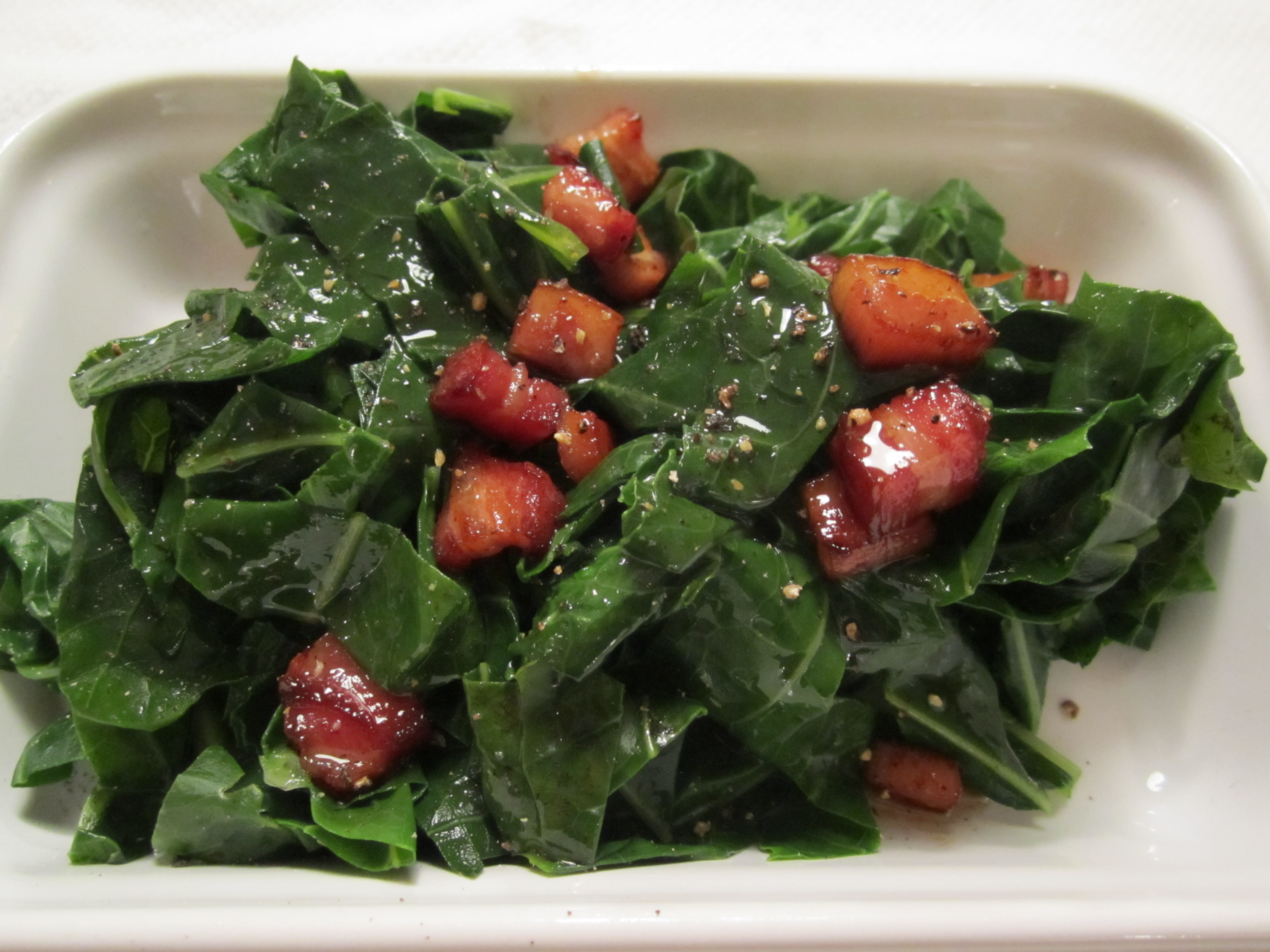
Collard Greens with Bacon


Collards are one of the few native vegetables for which Italians should envy Americans.  Although a southerner might argue that my greens bear no resemblance to the true  southern way of cooking them, they are great nonetheless.

I start by stripping the leaves from the stems and discarding the stems.  If you use the stems, you need to cook the greens for an hour, rather than the five or ten minutes that I prefer. 

After they’re stripped, I slice them into 1/2″ ribbons and boil for about 5 to 8 minutes, then drain.   In a skillet, render some cubes of bacon, then add a splash of red wine vinegar and agave nectar (or honey) right to the skillet with the bacon and drippings, and pour over greens and toss like a salad dressing. 

Can be boiled ahead, then dressed at the last minute.  Note:  the vinegar will discolor the leaves, so I like to dress them with the bacon and vinegar right before they go on the table.  Although the leaves discolor a bit, they’re perfectly fine to keep and eat as leftovers.

Collard Greens with Bacon

serves 4

2 bunches collards (these can vary a great deal in size, so if they’re freakishly large, use only one bunch–they’ll cook down a great deal)

1/4 lb bacon cubes

1 tbl olive oil

1 tsp red wine vinegar

1/2 tsp agave nectar or honey

Strip leaves from the stems and discard stems.  Julienne the leaves into 1/2″ strips and wash in a deep bowl of water (big enought to let the sand fall to the bottom).  Fish out, leaving soil on bottom.  Repeat if there’s still soil on the bottom of bowl.  Drain.

Plunge leaves into salted boiling water and boil for 5 – 8 minutes, until leaves are fairly tender.  Drain.

In a skillet slowly render the bacon in oil for about 5 – 8 minutes on low heat.  Add oil and agave and mix.  Toss over greens in a bowl like a salad.  Can be eaten warm or at room temperature.

Posted in Vegetables | 2 Comments

Dinner for One–Eggs and Spinach


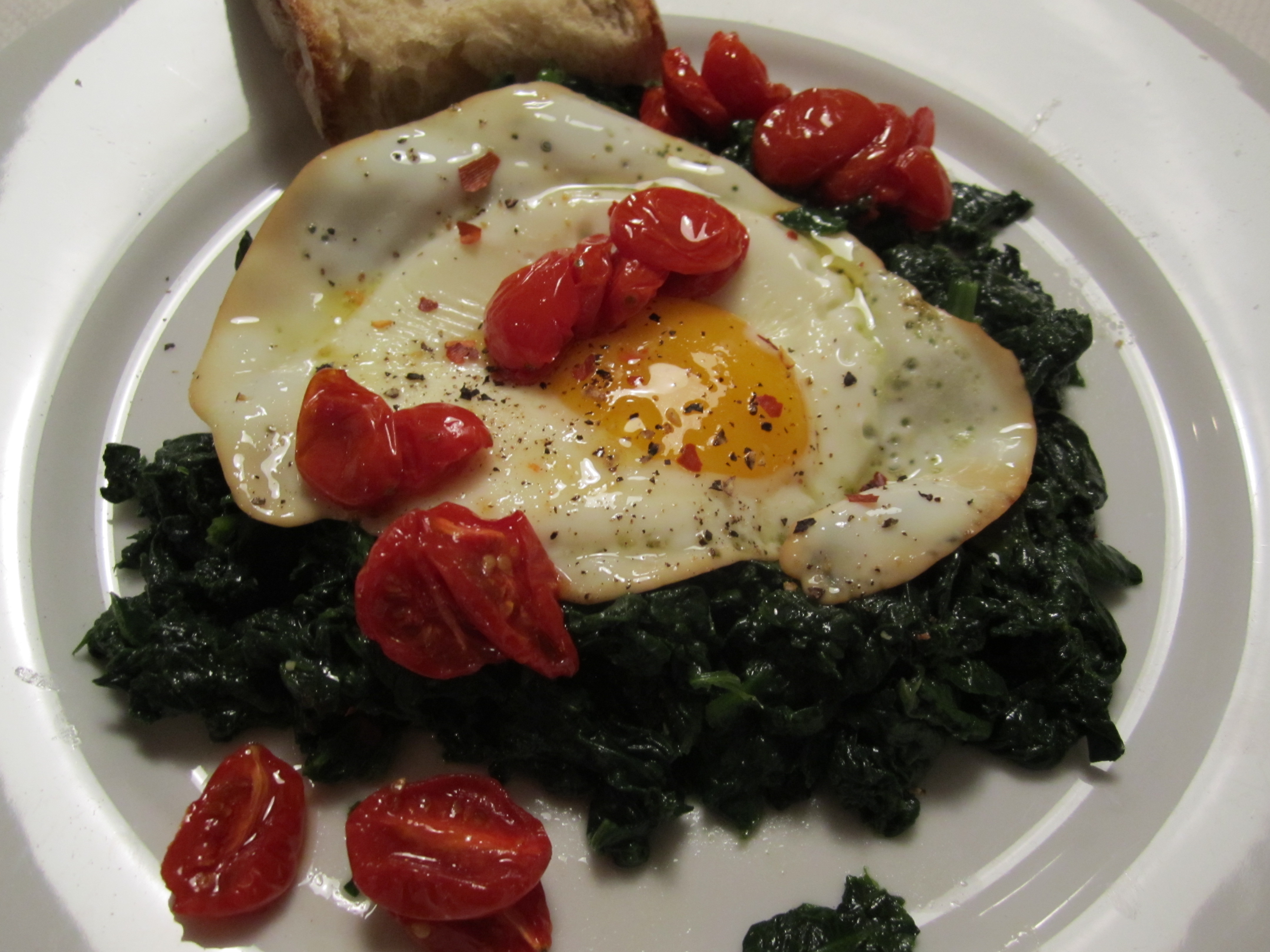
Italians rarely eat eggs for breakfast–they’re more for the evening meal (just as pasta is more for the midday meal).  I happen to prefer eggs in the evening as well, so since I have some sauteed spinach left from my steak dinner the other evening, I’ve been looking forward to one of my favorite eggs preparations.  Fried eggs nestled in sauteed spinach and topped with grated cheese and some chili flakes (the way my mom used to serve eggs). 

Adding some slow-roasted tomatoes brings incredible depth to the dish.  By roasting those already-sweet grape tomatoes, you are concentrating and amplifying their flavor.  They’re great on a salad, or tossed with pasta (boy, are they good that way!)  or simply eaten with some bread.  They’re as simple as can be to make, but  you have to think about them in advance–1 to 1 1/2  hours in a 275 degree oven is what they require for maximum sweetness.  Slice the the tomatoes in half lengthwise, lay them cut side up, sprinkle them liberally with salt and a touch of sugar, then drizzle with extra-virgin olive oil.   After they’re roasted, they can be stored in the fridge for a couple of weeks this way.

Once the tomatoes are done and the spinach is sauteed (see prior post “New Year’s Eve Dinner” for the spinach recipe), simply fry an egg in olive oil  til the yolks have reached your desired level of firmness, then place eggs on top of spinach and sprinkle with grated parmiggiano, chili flakes and black pepper.  Great for brunch as well.

Posted in Dinner for One, Eggs | Leave a comment

Rib Eye alla Fiorentina


I have a charbroiler on top of my stove that all my friends swore I’d never use because it’s too difficult to clean and makes too much smoke while grilling.  

First of all, I use it often.  Secondly, I clean it only every so often, but don’t keep it squeaky clean.  I treat it like the outdoor grill–a regular cleaning a couple of times a year, and it’s fine.   As for the smoke, I have a powerful exhaust fan and hood which make quick work of disposing of the smoke from even the fiercest flare-ups.  Therefore, I use my grill often and the results are about the same as cooking on a gas grill outside. 

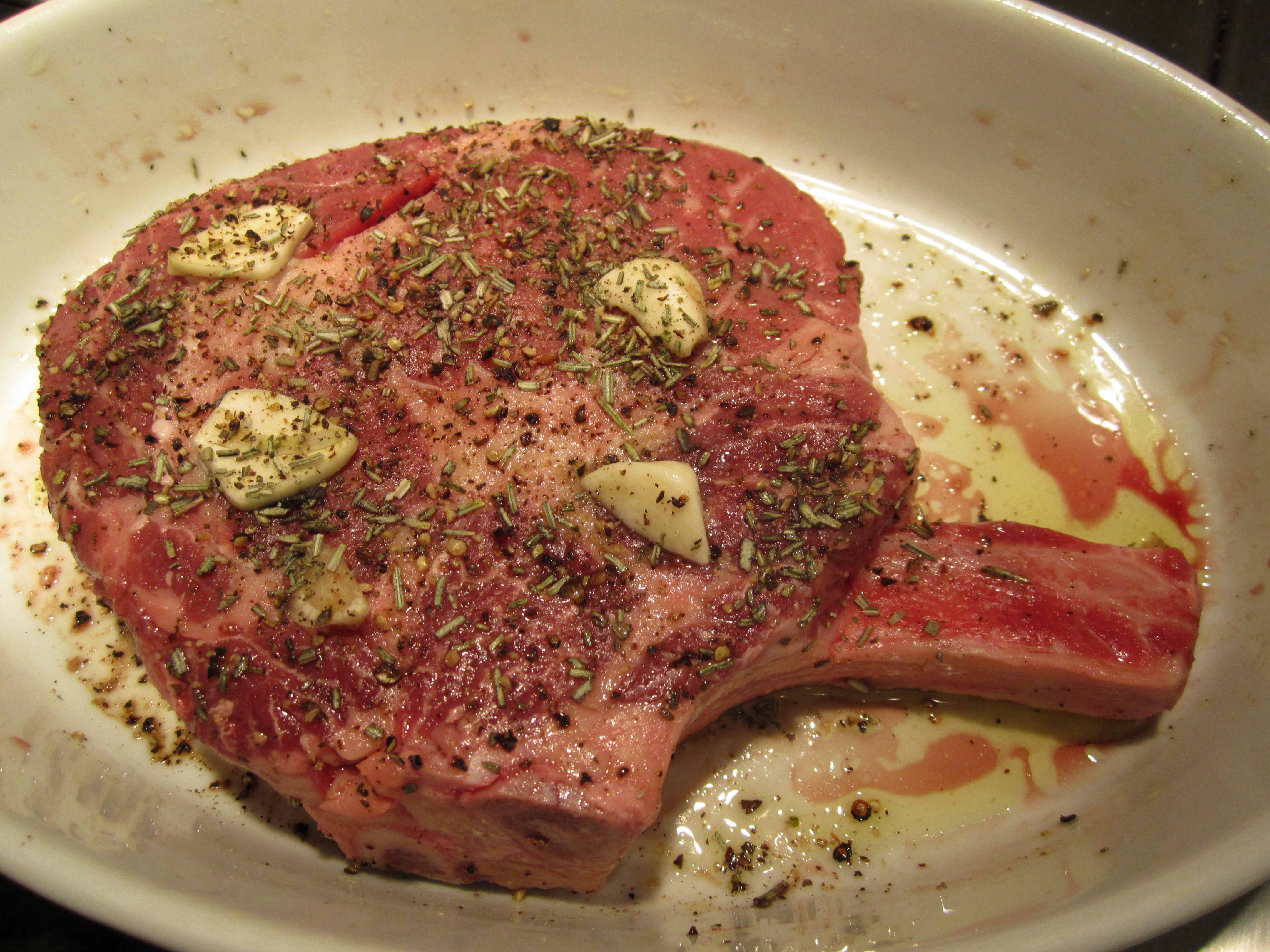
Tonight I’m grilling a beautiful organic rib-eye steak that I couldn’t resist at the butcher.  As I stated previously, I rarely serve beef, but this steak looked too good to pass up and it’s been awhile since I was drawn to a steak.  I’ve smeared it with oil, sliced garlic, dried rosemary and black pepper and left it in the fridge all day–no salt in advance of grilling.  I’ve removed it and let it come to room temperature about 2 hours prior to grilling.


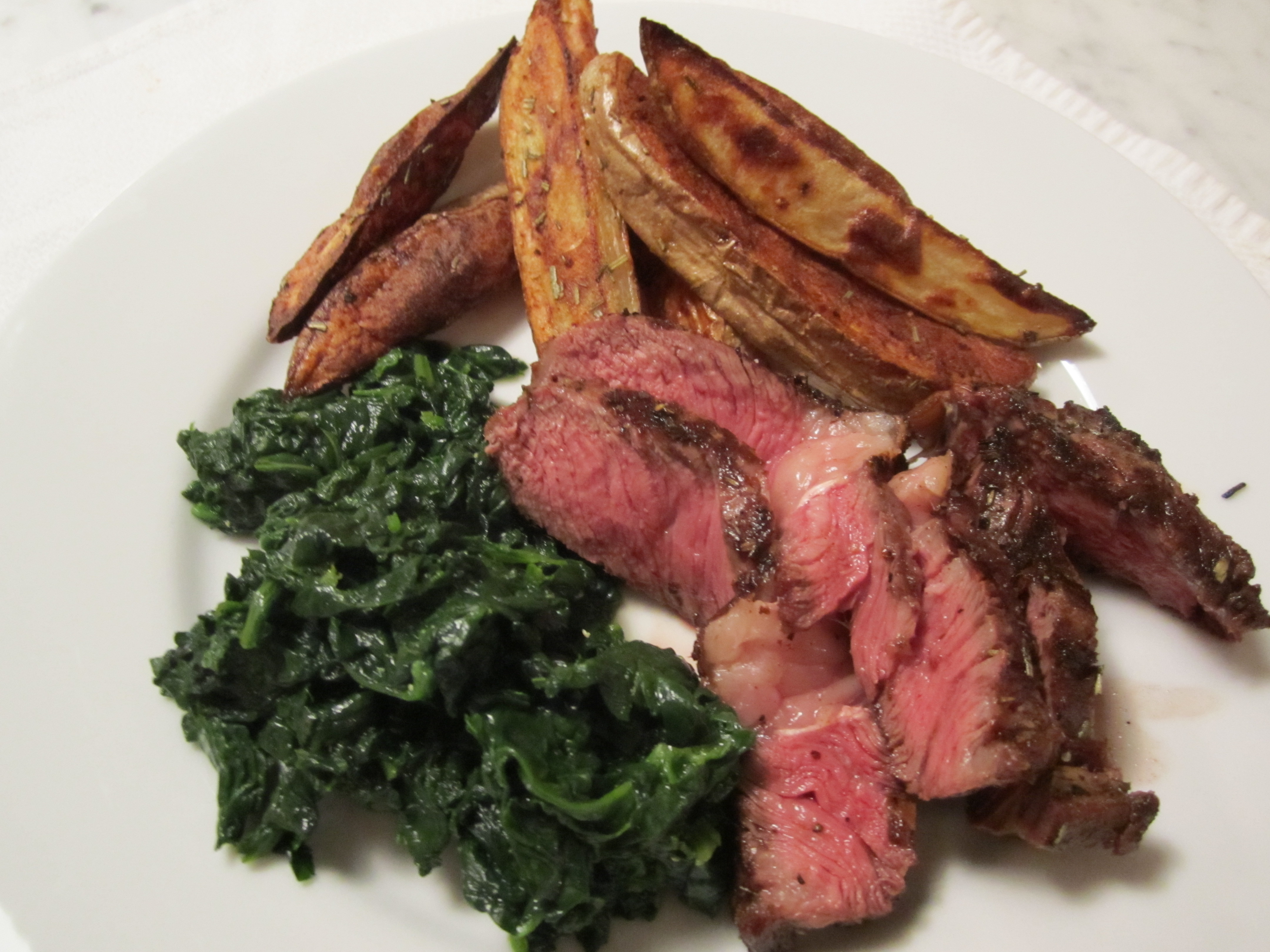
With it, I am serving roasted potatoes (yukon golds–my favorite all-purpose potatoes) cut in wedges to resemble steak fries.  These are also rubbed with dried rosemary, olive oil and salt, then tossed into a 425 degree oven for 45 minutes.  No garlic on the potatoes because it would burn before the potatoes would be cooked.  If you want garlic on your potatoes, toss in some split garlic cloves about 15 minutes before the potatoes are done (or, if you want a stronger garlic flavor, dice the garlic fine and sprinkle it over the potatoes 5 minutes prior to their completion).

The steak goes onto the grill about 20 minutes before the potatoes are cooked. Preheat the grill on high.  Once the grill is hot, (in my case, after about 20 minutes), remove the garlic cloves and sprinkle the steak heavily with salt, then grill for about 4 minutes per side.  At the end of the 8 minutes,  throw the steak into the oven right in the middle of the roasting pan with the potatoes and let it roast for about 5 minutes.  Remove the steak from the oven and let it rest for 5 minutes at room temperature.  Finish roasting the potatoes, if necessary then serve together.

On the side, I’m serving sauteed spinach (see my prior post “New Year’s Eve Dinner” for the recipe).


Posted in Meat | Leave a comment

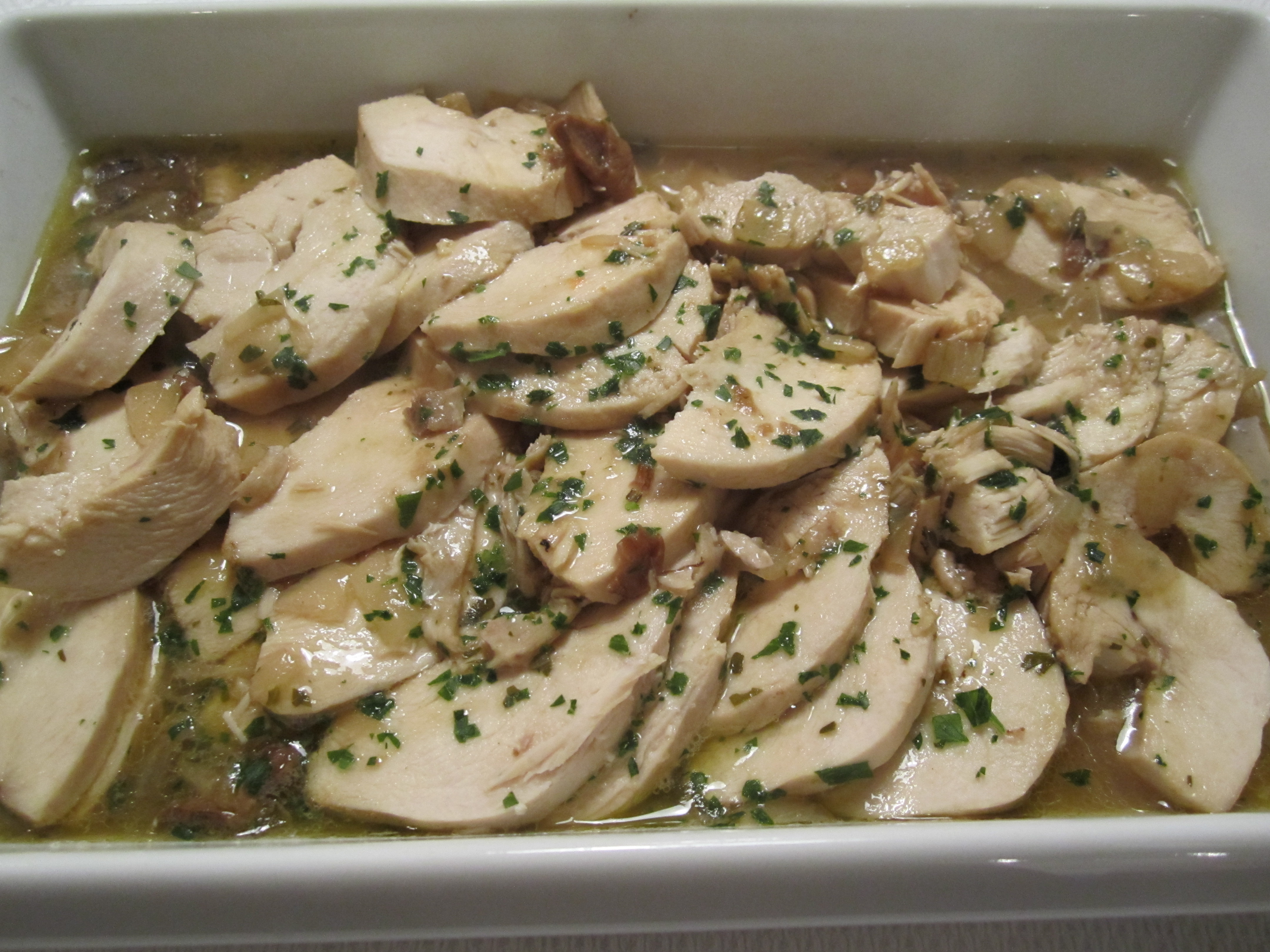
Pollo in Umido


As you may recall, I made chicken soup several days ago.  I served the dark meat in my initial meal, then I had broth and white meat left over.  Recycling the white meat always presents me with more of a challenge than the dark meat.  The dark meat reheats so much better than the white meat and stays moister in general. 

I usually re-cycle the breast on a salad for lunch.  But this time of year, I am more in the mood for something hot than a salad.  The breast, if it is to be reheated at all, must be reheated very gently and in some sort of liquid medium.  It’s fine, of course, to simply assemble more broth and boiled vegetables to make more soup out of the remaining breast meat.   I’m in the mood, however, to do something more creative than that.

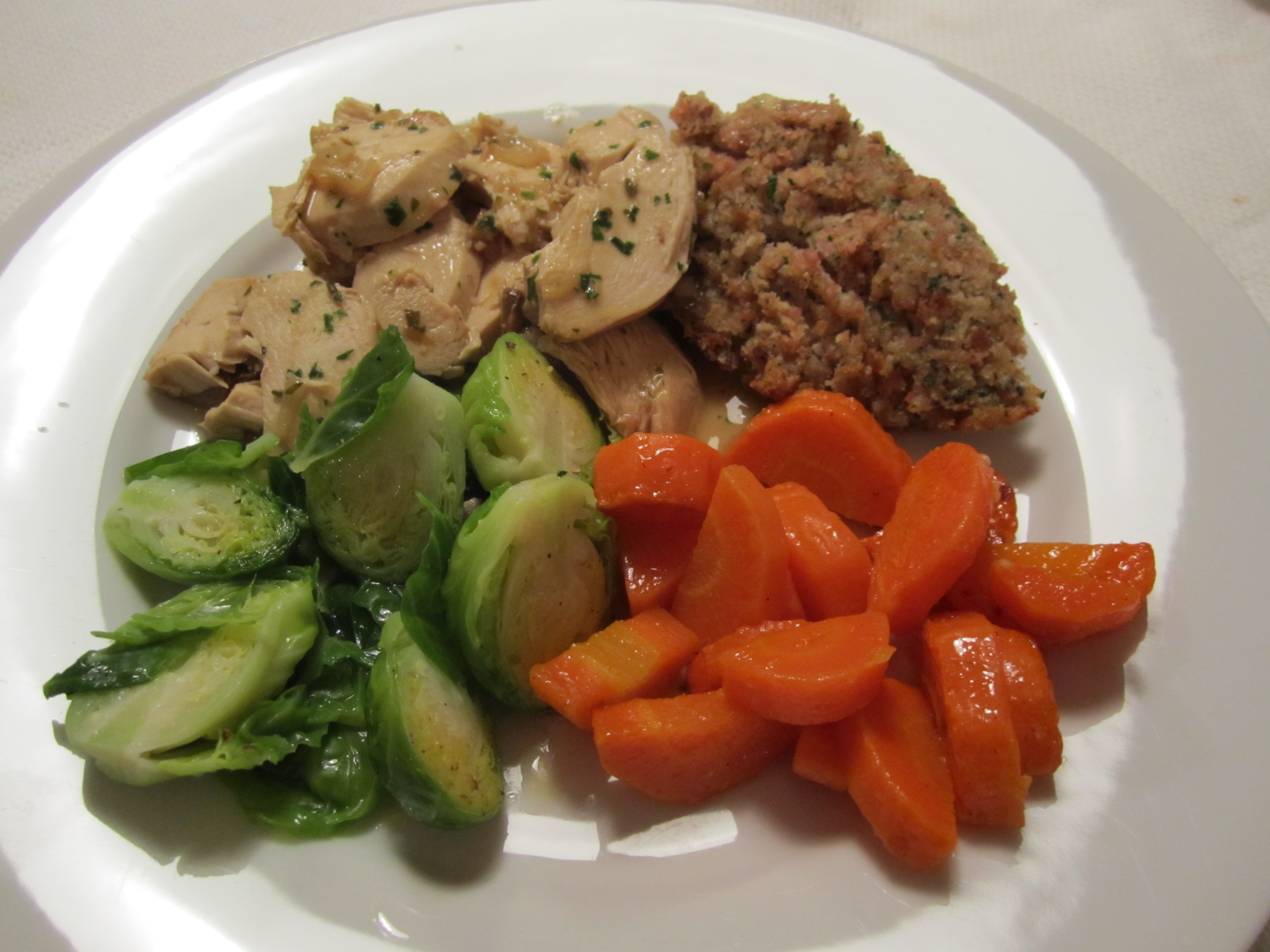
That is where the concept of “in umido” comes in.  All it means is a “wet” dish.  In this case, I’ve made a refined little sauce in which to reheat my sliced chicken breasts.  Along with the sauce, I will make some stuffing in the style of my neighbor Beppi (see my prior post “Rotolo di Tacchino”).  Instead of stuffing a turkey breast, I’ll simply prepare the stuffing and bake, uncovered in a casserole at 375 degrees for a half-hour.

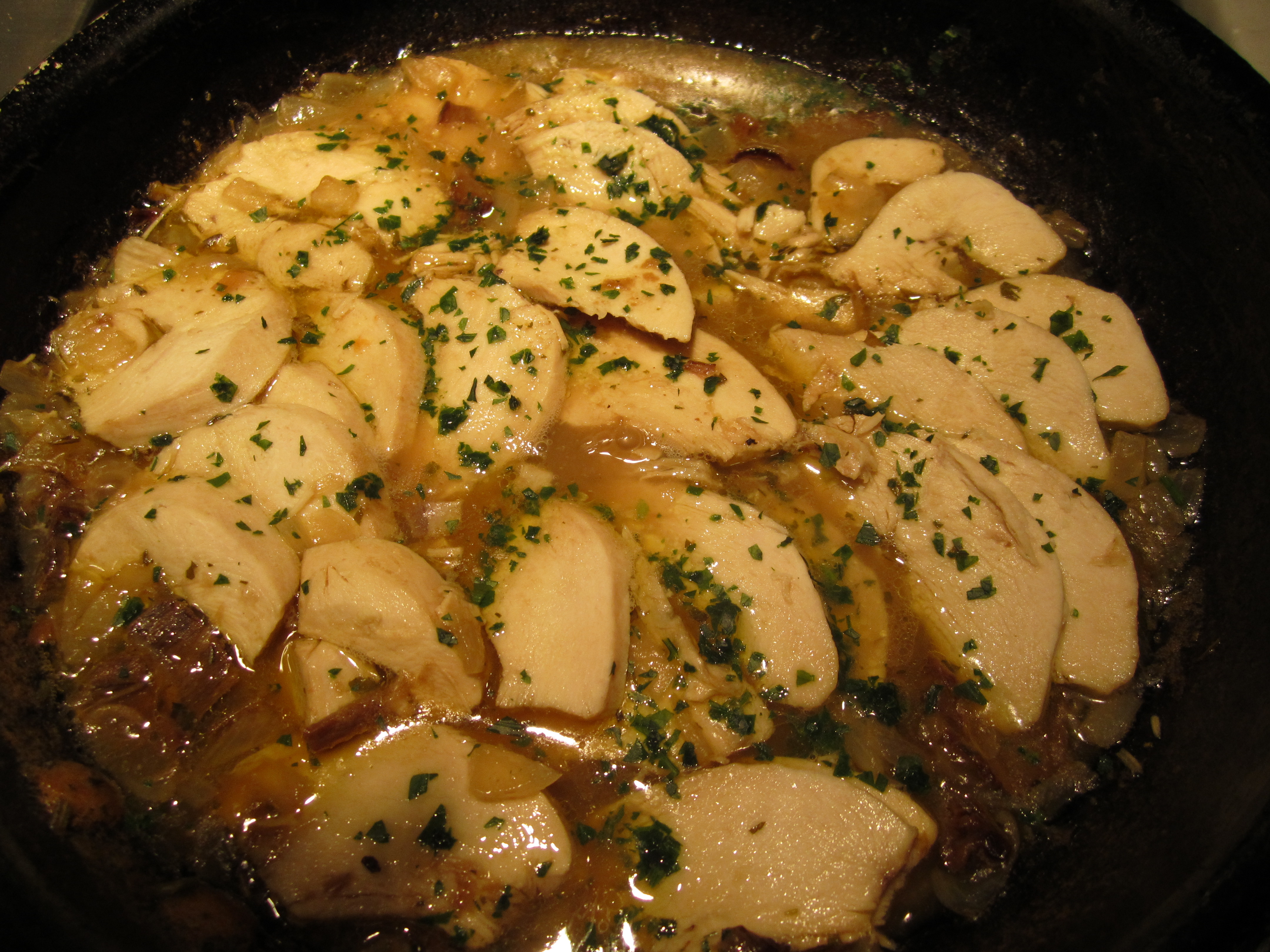
The main lesson in this post is how to improvise an elegant, easy  sauce in which to reheat any kind of poultry.  The sauce begins with some onions and reconstituted dried porcini sauteed in oil and butter, along with a rosemary sprig.  When the vegetables begin to sweat and soften, add a touch of flour and saute until the flour is no longer raw.  Then add some white wine and reduce.  Then add broth and some of the mushroom soaking liquid and simmer for a short while to allow the flavors to meld.  

At this point, the sauce is done and can wait for you to add the breast meat (already sliced) and simmer on low heat briefly until it’s heated through.  

It’s nice to have some mashed potatoes or other mashed root vegetables on the side to soak up the sauce, but in my meal tonight, I’m in the mood for stuffing.  On the side, I’m serving some simple boiled brussels sprouts and carrots.   


Pollo in Umido

serves 4

1/2 medium onion, diced finely

1/2 oz. dried porcini, soaked in hot water for about 15 minutes, then removed and squeezed dry, soaking water reserved and strained through a coffee filter.

1 tbl butter

1 tbl olive oil

1 sprig rosemary

1 tbl flour

1/2 c white wine

2 c chicken broth or stock

1 tbl chopped fresh parsley

2 large halves of a poached chicken breast (or 4 small ones), sliced thinly

Melt butter in oil and on low heat, saute onion until soft and beginning to turn golden (about 10 minutes).   Add rosemary sprig and porcini and continue sauteing for about 2 – 3 minutes.  Add flour and  stir to incorporate over low heat for about 5 minutes.  Turn up the flame, pour in wine and reduce by half (about 5 minutes).  Add broth and about a 1/2 cup of porcini soaking liquid and simmer for about 10 – 12 minutes or until slightly thickened. 

Place sliced breasts in sauce and simmer on very low heat for about 5 minutes.  Sprinkle with fresh chopped parsley and serve.

Posted in Poultry, Sauces | Leave a comment

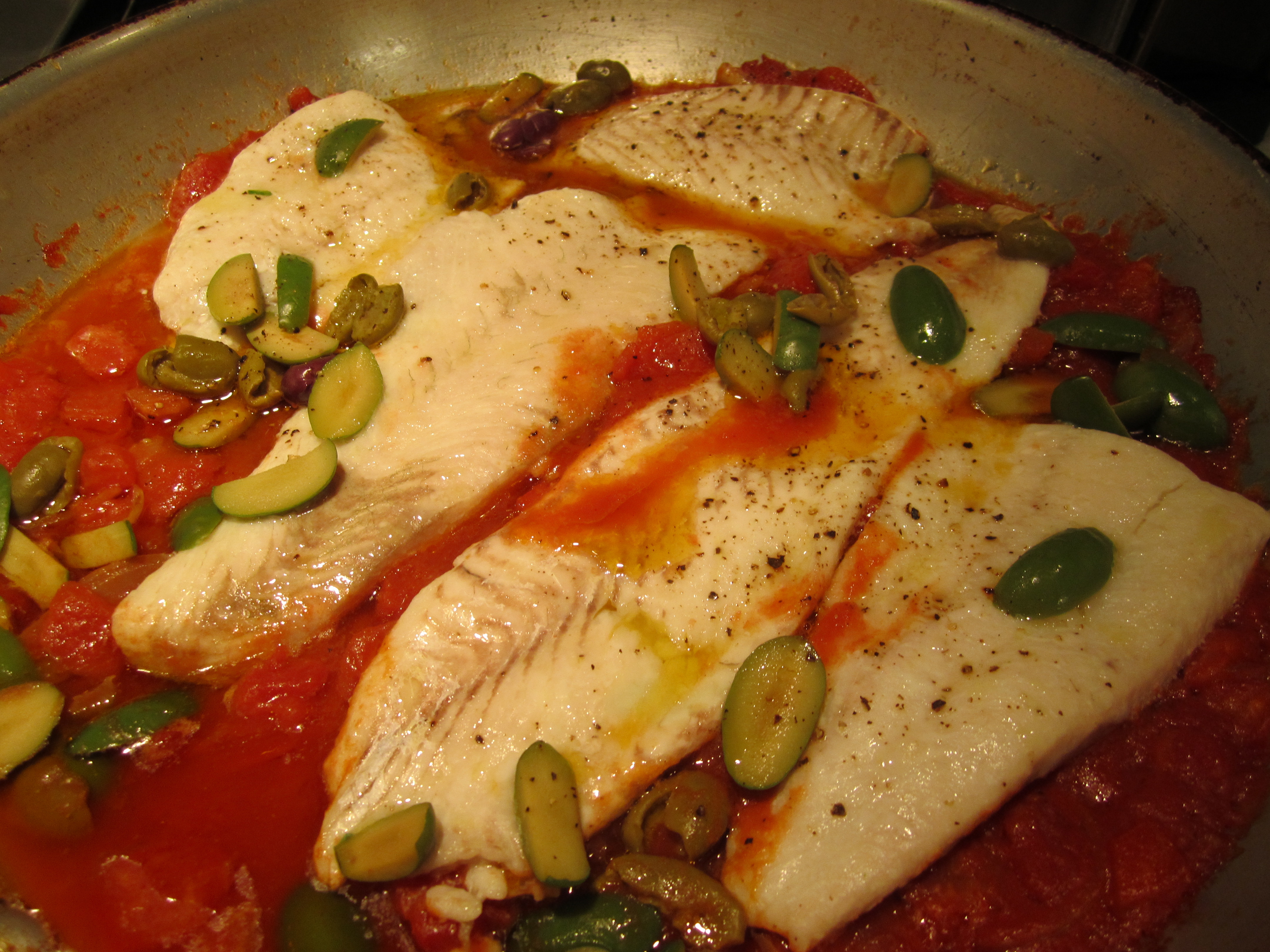
Fluke alla Livornese


This dish can be made with any white fish, but today I chose Fluke (Flounder) because it’s local and because it looked great–pink and plumper than usual.  Usually it comes in very thin filets that I like to coat and fry (see my post “Fritto di Mare“) but today, the pieces were nice and thick.

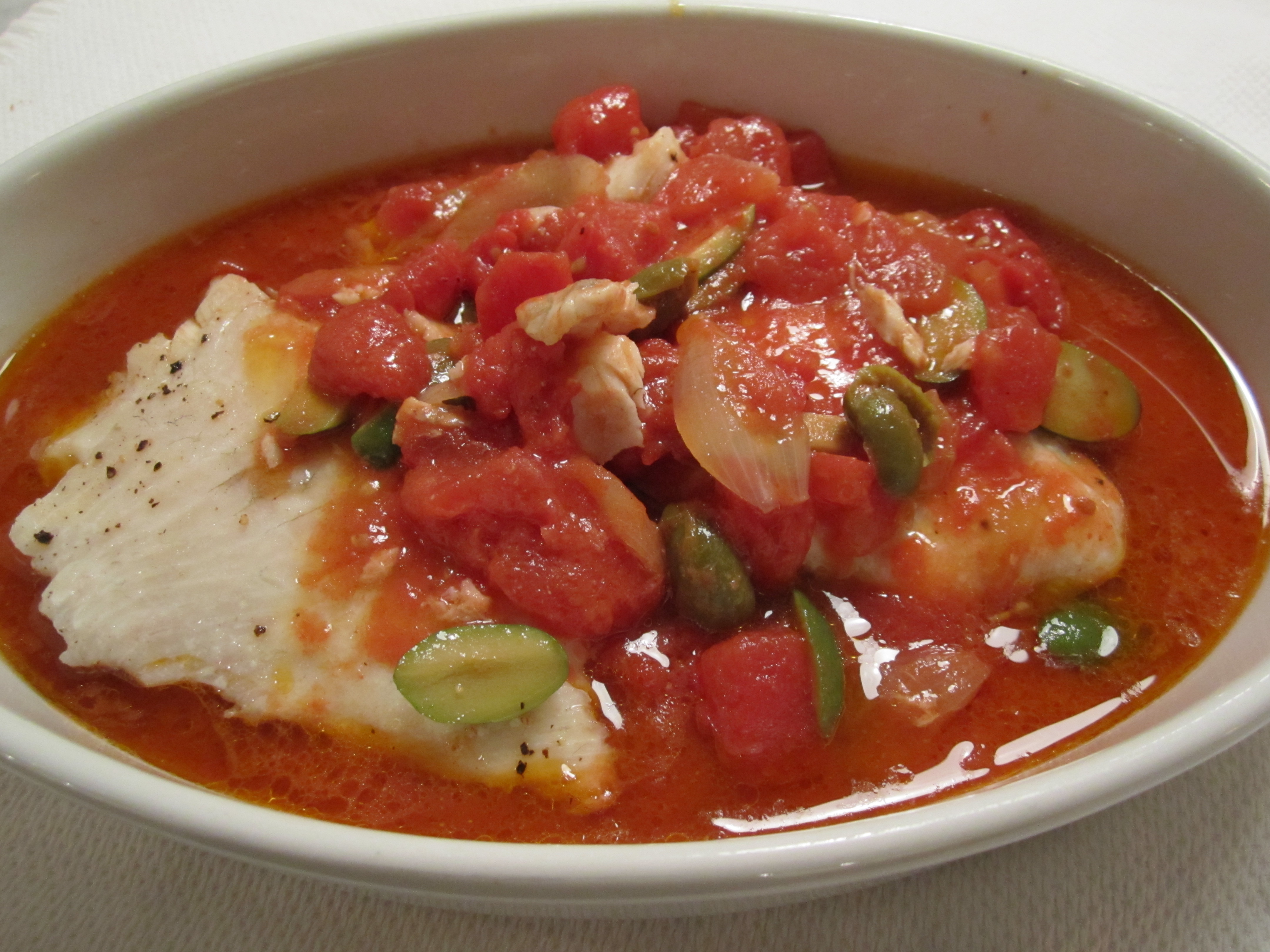
The dish starts with a tomato sauce, simply made by sauteing a bit of onion, a slice or two of green pepper (my mother adds it to her tomato sauce), then adding a can of whole peeled tomatoes that have been coarsely pureed in the blender.  The mixture simmers for about ten minutes, then it’s ready for the fish.

Livornese” usually implies tomatoes, capers and olives.  I’m not a big fan of capers, so I’m using a couple of different kinds of olives to vary the high and low notes of acidity.  I have fresh green cerignola olives that I’ve pitted; I have small picholine and nicoise olives as well. 

I make the tomato sauce in a broad ovenproof skillet, then after it has simmered for about ten minutes, I add the fish filets on top and nestle them in the sauce.  Toss in some olives and place the whole skillet uncovered in a hot oven.  The sauce reduces slightly as the fish bakes.  When the dish is done, the fish is moist and delicate–essentially poached, and the sauce around it has tightened up a bit. 

This is a great dish to make for guests for a couple of reasons.  First of all, the sauce can be prepared and set aside until it’s time for dinner–then throw in the fish and bake for 10 – 15 minutes.   The oven can then be turned off and you can cover the pan with foil and leave in the hot oven for a few more minutes if you’re not yet ready to gather around the table.

The other appealing aspect of this dish is that it won’t make a mess of your kitchen (no frying or splattering) and it won’t give your house the fishy odor that people associate with cooking fish.  I like to make this in my city apartment for that reason.

It’s good with rice or mashed potatoes, which can soak up some of the wonderful tomato sauce scented with olives.  Tonight I’m serving it alongside boiled potatoes with parsley and olive oil.  Also on the side, I’m making broccoli di rapa with garlic and lemon zest (see my prior post “Fritto di Mare“). 


Fluke alla Livornese

serves 4

2 lbs fluke (or cod, halibut, sea bass, swordfish)

28-oz. can whole peeled tomatoes, lightly pureed in the blender

1 small onion, quartered and sliced

2 strips of a green pepper

6 tbls olive oil

1/2 cup assorted pitted olives (mix green and black)

Preheat oven to 425 degrees

In a broad ovenproof skillet on low heat, saute the onion and green pepper in olive oil for about 5 minutes or until it softens and begins to turn golden.   Add tomatoes and simmer for about 5 more minutes.

On a board, season the fish filets with salt and pepper and rub with oil on both sides.  Place the filets in the sauce and sprinkle olives around fish.  Place skillet uncovered in the oven for about 10 to  12 minutes (depending on how thick the filets are–they should be cooked through).  Remove and let stand for a few minutes at room temperature before serving.  Drizzle with more olive oil at the table.

Can be served cold from the fridge the next day with a salad.

Posted in Seafood | Leave a comment

Seared Scallops with Gratinate of Broccoli and Cauliflower


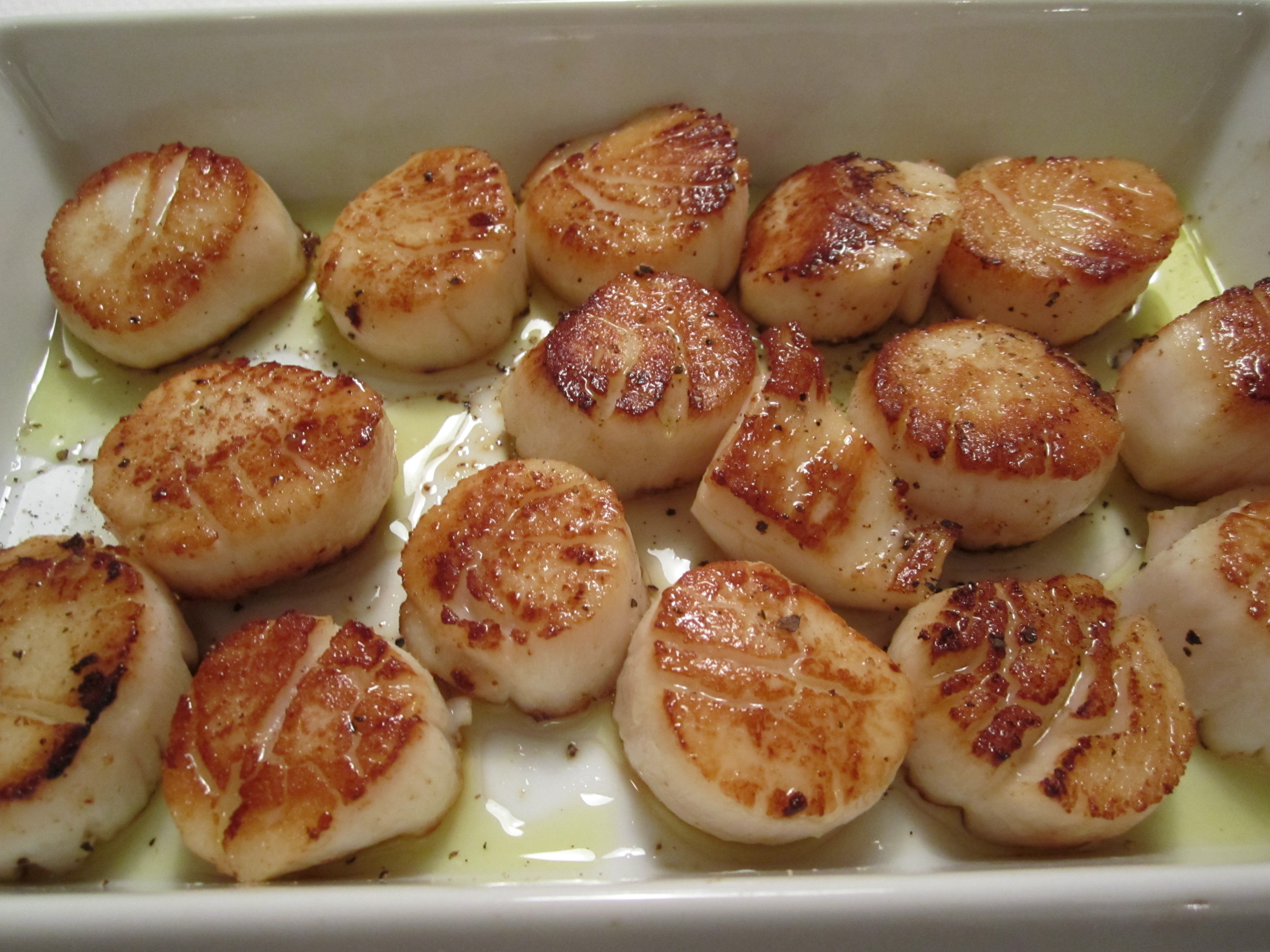
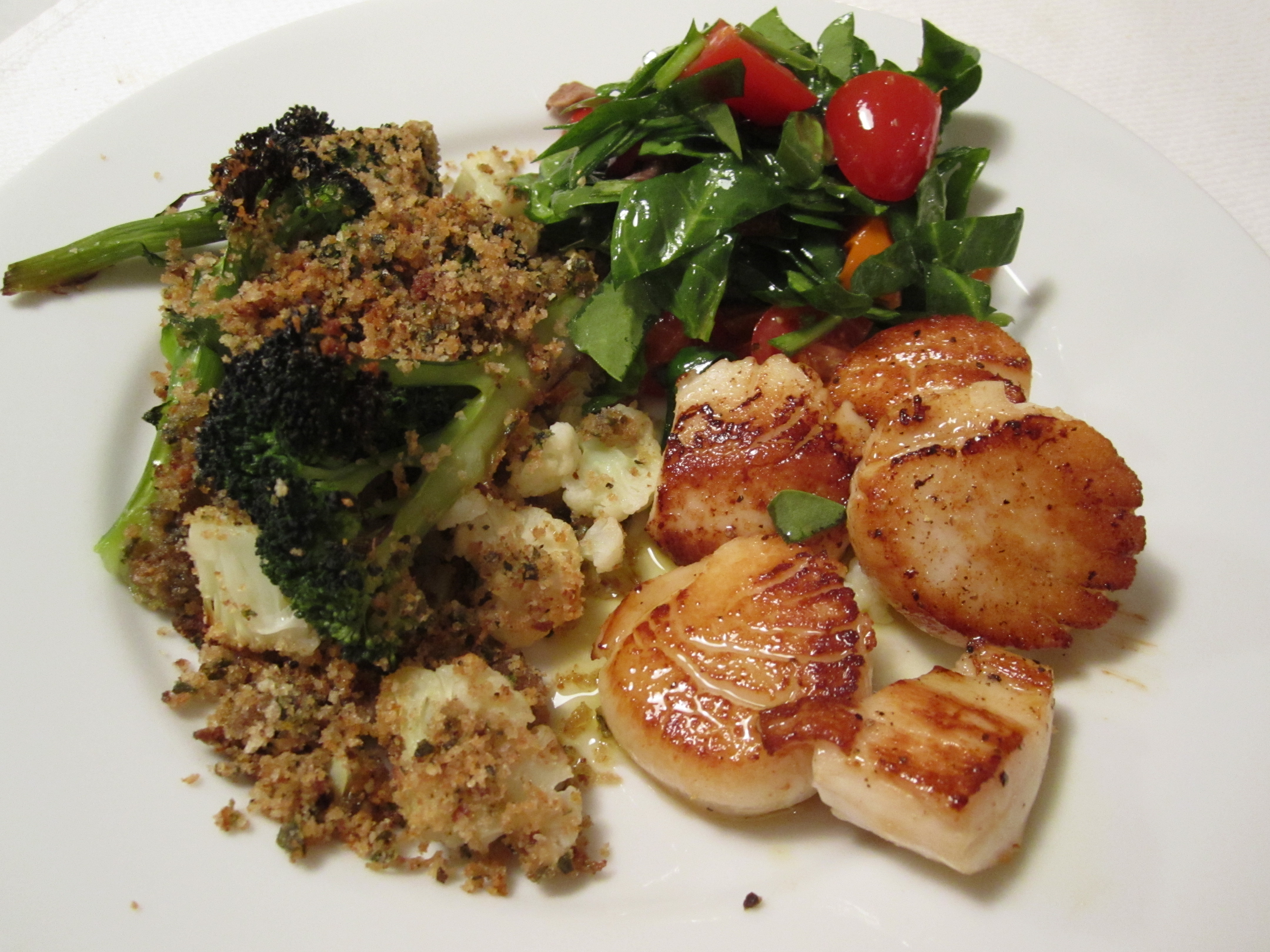
The main course in this meal hardly needs a recipe, so much as an explanation of technique.  Sea scallops are as sweet as candy when they’re fresh and briefly cooked over high heat. 

Begin by drying the scallops between paper towels.  They will shed water as you place them in hot oil so the drier you get them before they hit the oil, the less spattering you’ll have.  But you’ll have spattering nonetheless–a splatter guard helps. 

After the scallops have been dried, place a large skillet with flared sides on high heat and add a tablespoon of olive oil.  Cast iron works well or any seasoned heavyweight frypan is fine.  When the oil is smoking, add in the scallops–quickly and gingerly–use tongs or you’ll burn your forearms.  They will begin sputtering immediately.  Sprinkle generously with salt and immediately place splatter-guard (if using) over the top of the skillet (but don’t cover them with a lid).  Although you’ll be tempted to, don’t turn down the heat–it’s supposed to be a short, intense sear (and make a mess of your stove).

After a minute, lift a scallop and see if the underside is golden brown.  If not, let them sear for another half-minute and check again.  They should be brown and caramelized.  Turn and sear on the other side. 

Pull the scallops out of the skillet and lay on a serving platter, discarding the cooking oil completely.  Once on the serving platter, drizzle the scallops with extra-virgin olive oil and grind fresh black pepper over them.  Add a squeeze of lemon, if you like.  Serve immediately or eat cold from the fridge the next day.

I’m serving the scallops with the broccoli and cauliflower gratinate below, as well as a chopped salad (see my post on olive oil-poached tuna for the recipe).  The breadcrumb mixture from the vegetables gets all over and under the scallops and salad and it all tastes wonderful together.


Gratinate of Broccoli and Cauliflower

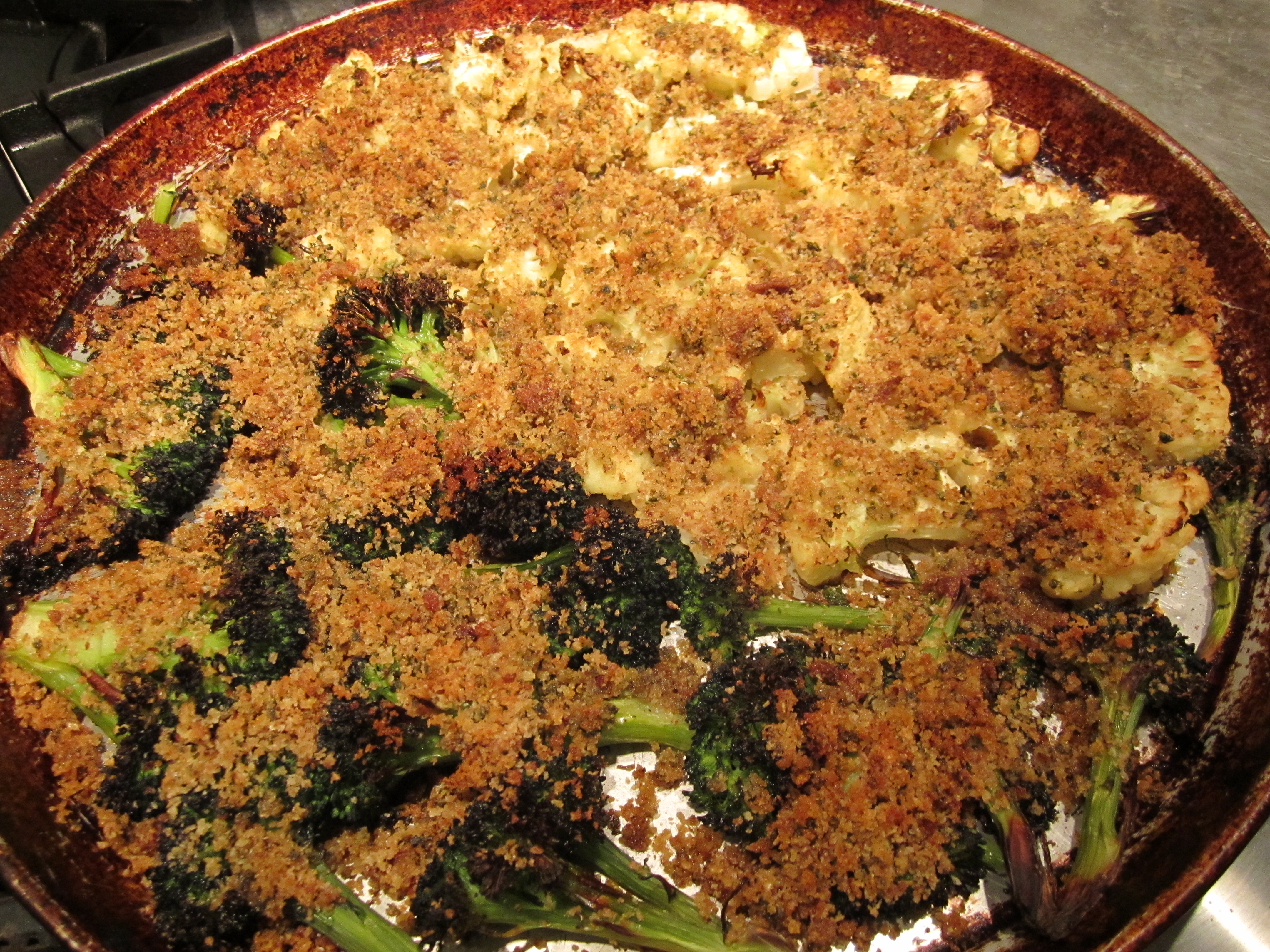
This gratinate is, perhaps a good way to get kids to eat their vegetables.  It features broccoli and cauliflower, topped with a crisp and briny breadcrumb topping that would make anything taste appealing.

I start by slicing the vegetables so that they have a flat side.  Then blanch briefly in boiling salted water. 

I then make a topping of breadcrumbs that I’ve made from stale bread.  I always have some odd uneaten pieces of bread leftover from meals and I always save them.  I accumulate them on a sheetpan that I just leave in the oven (and remove when I need to bake something).  I let them become good and stale–devoid of moisture.  Sometimes I have bits and pieces of bread sitting around for a month or longer, and they always make a nice fine breadcrumb in the food processor.   Whole wheat is fine, but multigrain is not–too many seeds and other extraneous flavors.

These crumbs go into the freezer, then I use them directly from the freezer when I need them.  Sometimes I take them out and season them with herbs and salt and pepper, sometimes grated cheese. 

Tonight, I’m seasoning the crumbs with parsley, chives (both of which I have chopped up in the freezer), a bit of nutmeg, salt and pepper.  Then I’m chopping up a couple of anchovy filets and mashing them into the crumbs.  This will give the crumbs a distinctive brininess that works beautifully on these vegetables. 

Gratinate of Broccoli and Cauliflower

serves 4

1 head broccoli, cut into large pieces

1 head cauliflower, cut into large slices

1/4 c olive oil

1  cup dry breadcrumbs

1/4 c chopped parsley

1/4 c chopped chives

1/8 tsp nutmeg

1/2 tsp salt

1/4 tsp black pepper

6 anchovy fillets

Preheat oven to 425 degrees.

Drop vegetables in boiling salted water for about 5 minutes (do in small batches so as not to prevent the water from returning to a boil for too long).   Drain and set aside (can be done ahead).

Make seasoned crumbs by combining crumbs, parsley, chives, nutmeg, salt and pepper.  Add oil gradually, reserving a tablespoon for drizzling.

Dice anchovies and mash into seasoned crumbs.

On an oiled baking sheet with low sides, lay vegetables and top with crumbs evenly.  Drizzle with a bit of oil all over.

Roast for about 45 minutes or until crumbs turn golden.

Posted in Seafood, Vegetables | Leave a comment

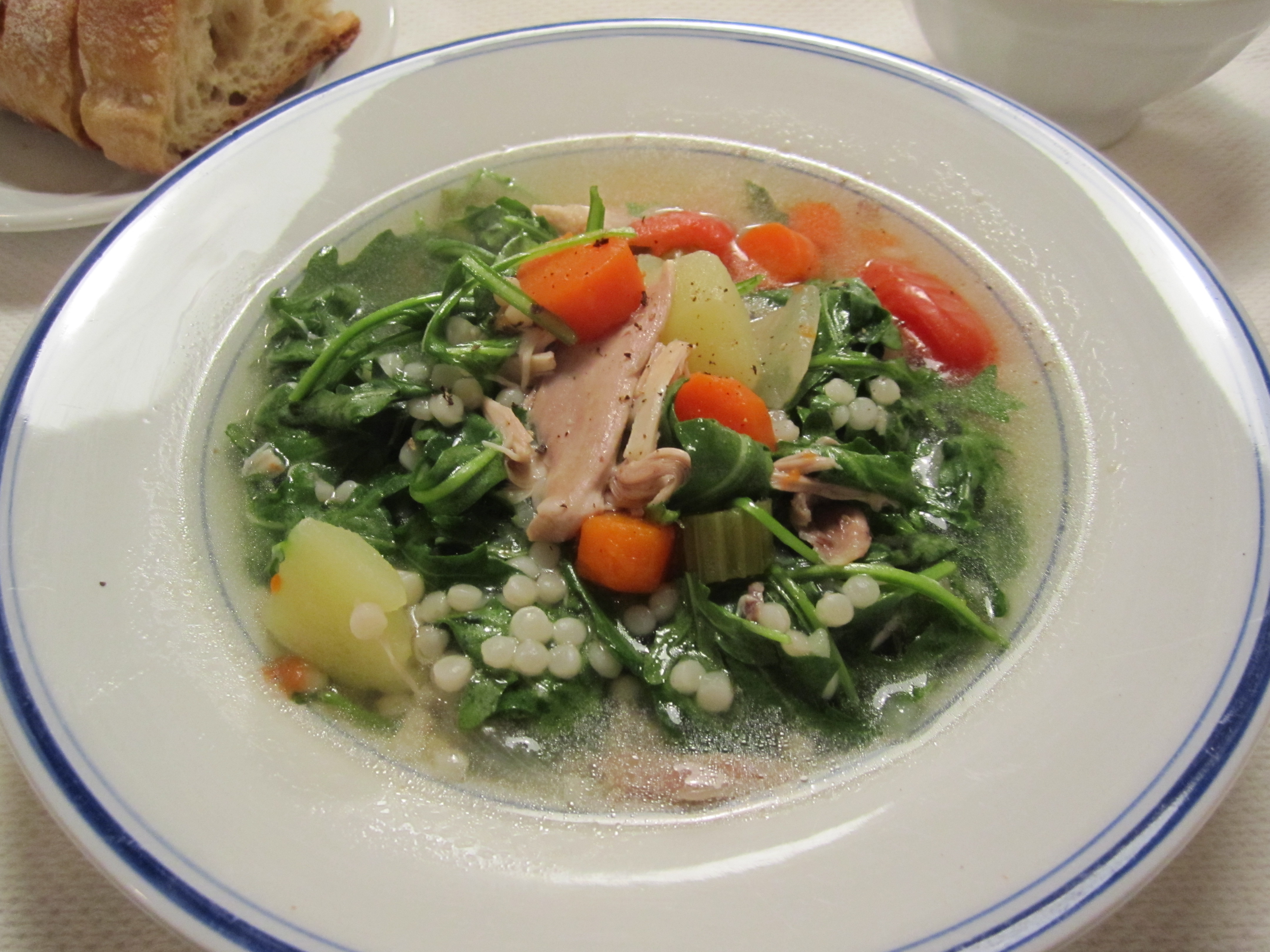
Mom’s Chicken Soup


There are some days on which nothing but a pot of chicken soup will satisfy.   Despite the many subtly different ways I’ve learned to make chicken soup, this is the one that I always go back to–the one my mother made.

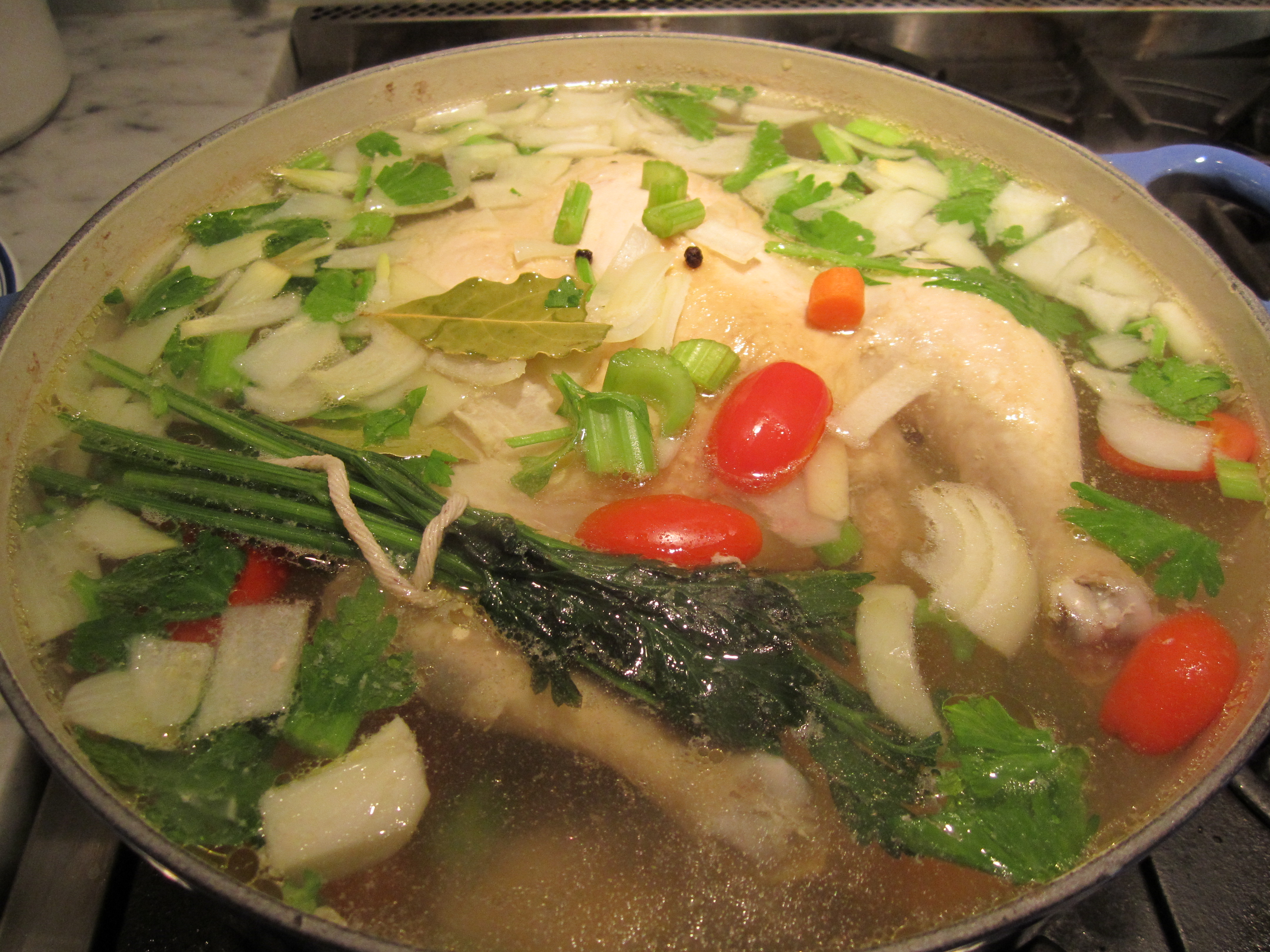
This soup is made with a whole chicken, onion, celery, carrot, potato, tomato, bay leaves, parsley stems and whole black peppercorns.   I’ve tried adding ingredients (parsnip, turnip, dill, leek or scallion) or taking away ingredients (the tomato, the bay leaves, the carrots) but my mother’s combination is still the one that resonates with me.

As I pointed out in an earlier post, it’s very easy and economical to make a broth with chicken or turkey parts (wings, legs, thighs), celery, onions, and a bouillon cube.  For that broth I don’t peel the vegetables, then I discard them at the end. 

For this soup, however,  I clean and peel the vegetables, cut them into bite-size pieces, and make an entire meal of the soup.  I sometimes serve the broth with some pasta as a first course, then the chicken meat and vegetables as a second course.

Alternatively, I like to serve this soup as a one-pot meal, which is what I’m doing tonight.  I’m adding some nice pearls of Israeli couscous, which are similar to Italian Acini di Peppe, but larger and with more bite.  Rather than making a salad on the side, I’m adding baby arugula right to the broth at the last minute–it gives the soup a wonderful green color and a bright lemony flavor.  You could substitute baby spinach, but you should blanch it in water and squeeze it before adding to the broth, lest you get that aftertaste of iron in your broth.

At the end of the evening, I store the meat, broth and vegetables all separately, so I can assemble more of the same soup tomorrow, or use the broth  or meat as a component of another dish in a couple of days (or freeze it).

It takes about 2 hours from start to finish, but in those two hours, your house will be filled with an aroma that’s a worthwhile reminder of mom.


Mom’s Chicken Soup

1 3-5 lb chicken

1 small onion

3 carrots

1 potato, peeled and diced inro 1″ cubes

1 plum tomato (or 4 grape tomatoes)

3 ribs of celery with leaves

6 parsley stems, tied in a bundle for easy removal

2 bay leaves

12 whole black peppercorns

salt to taste (about 2 tablespoons, maybe more)

1 1/2  cups Israeli couscous or acini di pepe

Put chicken in a stockpot or dutch oven and cover with water.  Use an 8 or 10-quart stockpot for this–any larger and you run the risk of making a weak broth from too much water and not enough chicken. 

Bring to simmer and lower the heat to low.  Simmer uncovered and skim and discard the froth that surfaces during the first half-hour of simmering.  Let the chicken simmer by itself for an hour. 

Add the remainder of the ingredients and bring back to simmer.  After about 10 mintues, check for salt and begin adding salt a teaspoon at a time. 

Let the soup cook for another hour, then let rest.

Remove meat from the chicken and set aside. 

Boil pasta in water for the recommended period on the box, then add to the broth and let simmer for a few minutes with the vegetables.  Add the baby arugula and serve within a few minutes.

We always sprinkled on grated pecorino romano at the table.

Broth can keep in the fridge for 5 days or frozen indefinitely.

Posted in Soup/Stew | 1 Comment