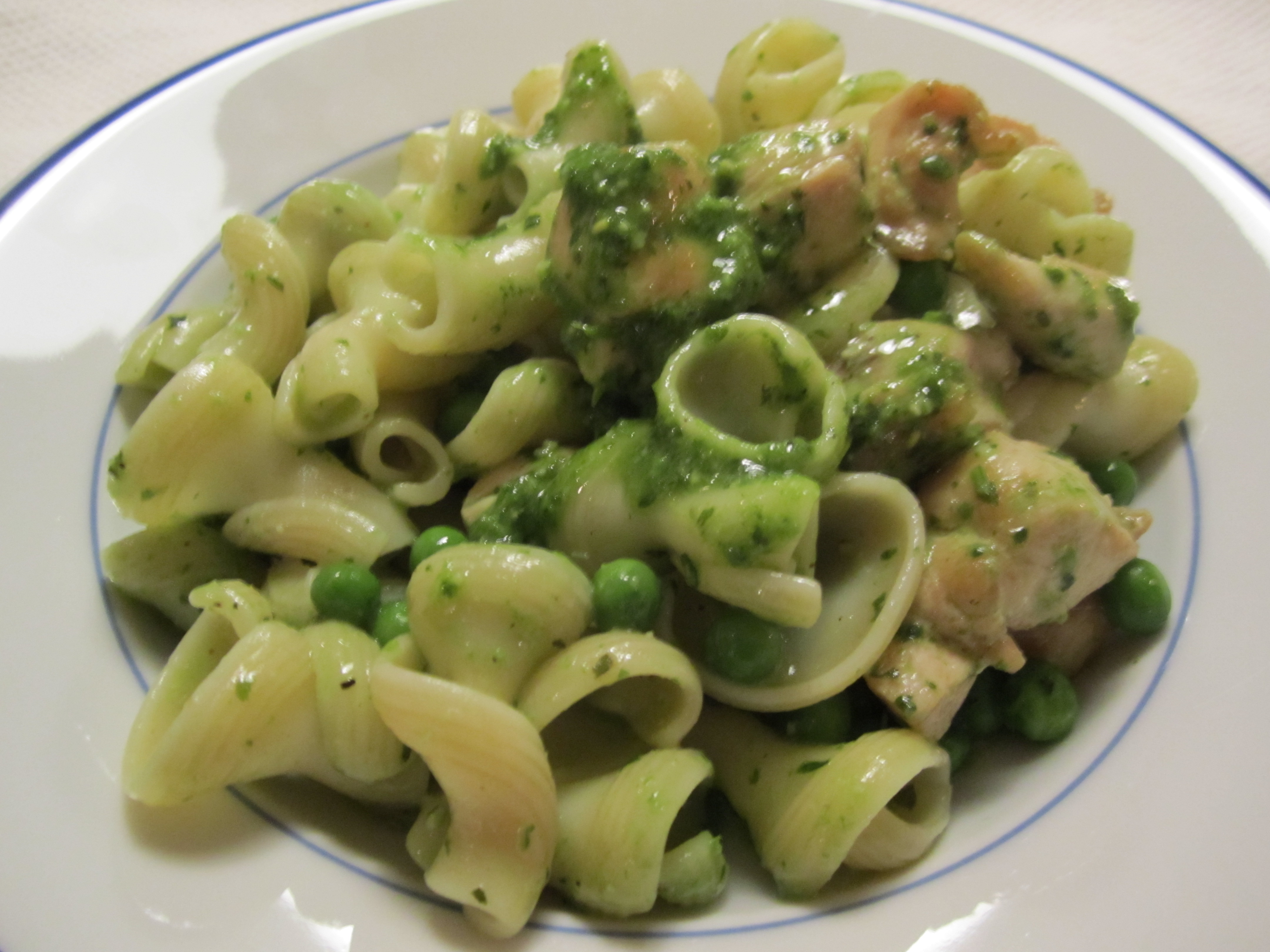
Pasta with Pesto, Chicken and Peas


Admittedly, nothing about this dish is seasonally correct–pesto is a summer dish and peas are a spring vegetable.  However I spotted some beautiful tender young basil at my produce market today and it made me feel like I could conjure a taste of summer.

Pesto is native to the town of Genoa, where my neighbor Beppi’s late wife was born.  Although she took no part in the operation of Beppi’s restaurant, she made the pesto that was served (see “About” section of this blog for more background on Beppi).   Beppi makes pesto a couple of times a summer and freezes it in individual plastic containers which he uses throughout the year.  His pesto is a labor of love which starts out with him picking the smallest leaves from his basil plants, while sitting on a little wooden stool in the middle of his garden.  The leaves are washed, then left to dry in layers of paper towels for a couple of days.  He makes his pesto with the standard basil, pine nuts, parmiggiano and pecorino cheeses, olive oil, pine nuts, and the tiniest touch of garlic.

My pesto is not quite as laborious (I use a salad spinner) and at different times of the year, I might add slightly different ingredients.  In the winter I add some parsley to the basil and tonight, I’m substituting walnuts for pine nuts.  The parlsey adds its own hearty fresh flavor to the sauce and also keeps it from turning brown as readily.  The walnuts have a heartier flavor than pine nuts and I think the added combination of parlsey and walnuts give the pesto  a slightly deeper woodsier character than my summer pesto.

I don’t use garlic (at all) in my pesto.  I never serve raw garlic in anything–although I like the initial heat and taste of it, I find that it really overtakes my palette and obscures every flavor that comes after it (for about two days).

I’m adding chicken breast to this dish because it’s a nice bland complement to the rich pesto.  I cut the chicken tenders into small chunks and brown them in olive oil, then toss the cooked cubes in with the pasta.  It’s one of the few uses I have for white meat chicken and it really works well with pesto.  It also makes the dish a hearty balanced main course.

Pasta with Chicken, Pesto and Peas

serves 4

1 lb short pasta such as “maccheroni” (pictured) or ziti or cavatelli

1/2 lb chicken “tenders” (or breast) cut into 1″ cubes

1 c.  frozen peas

2 tbls olive oil

1/4 cup fresh pesto (see below)

Heat the olive oil in a broad skillet and saute the chicken tenders until they’re golden and cooked (about 8 -10 minutes) then taste and add salt. 

In plenty of salted water, boil the pasta.  When the pasta is a minute shy of being done, add the frozen peas to the pasta water.  When the pasta is done, place pesto in the bottom of a large mixing bowl and stir in 2 tablespoons of pasta water to thin the sauce.   Add the pasta, peas and chicken.  Sprinkle with a combination of grated parmiggiano and pecorino.

Winter Pesto

2 c. basil leaves, tightly packed

1/2 c. parsley leaves, tightly packed

1/4 c walnuts

1/4 c. grated parmiggiano

1/4 c. grated pecorino

1/2 c. extra-virgin olive oil

salt to taste

Place walnuts in food processor and pulse several times to begin pulverizing.  Add basil and parsley and pulse a few more times.  Add cheeses, then, with the motor running, drizzle in the olive oil until a nice paste forms.  It should be liquid enough to pour but not runny.  Taste and add salt if necessary.  

Store in something tall with minimal exposed surface area–a mug or measuring cup.  Always make sure the exposed top surface of the pesto is totally submerged in olive oil or it will blacken.  When you remove some pesto from its container, immediately re-cover the remaining pesto with oil.  In this way, it will keep for at least 10 days in the fridge with minimal blackening.
Posted in Pasta | Leave a comment

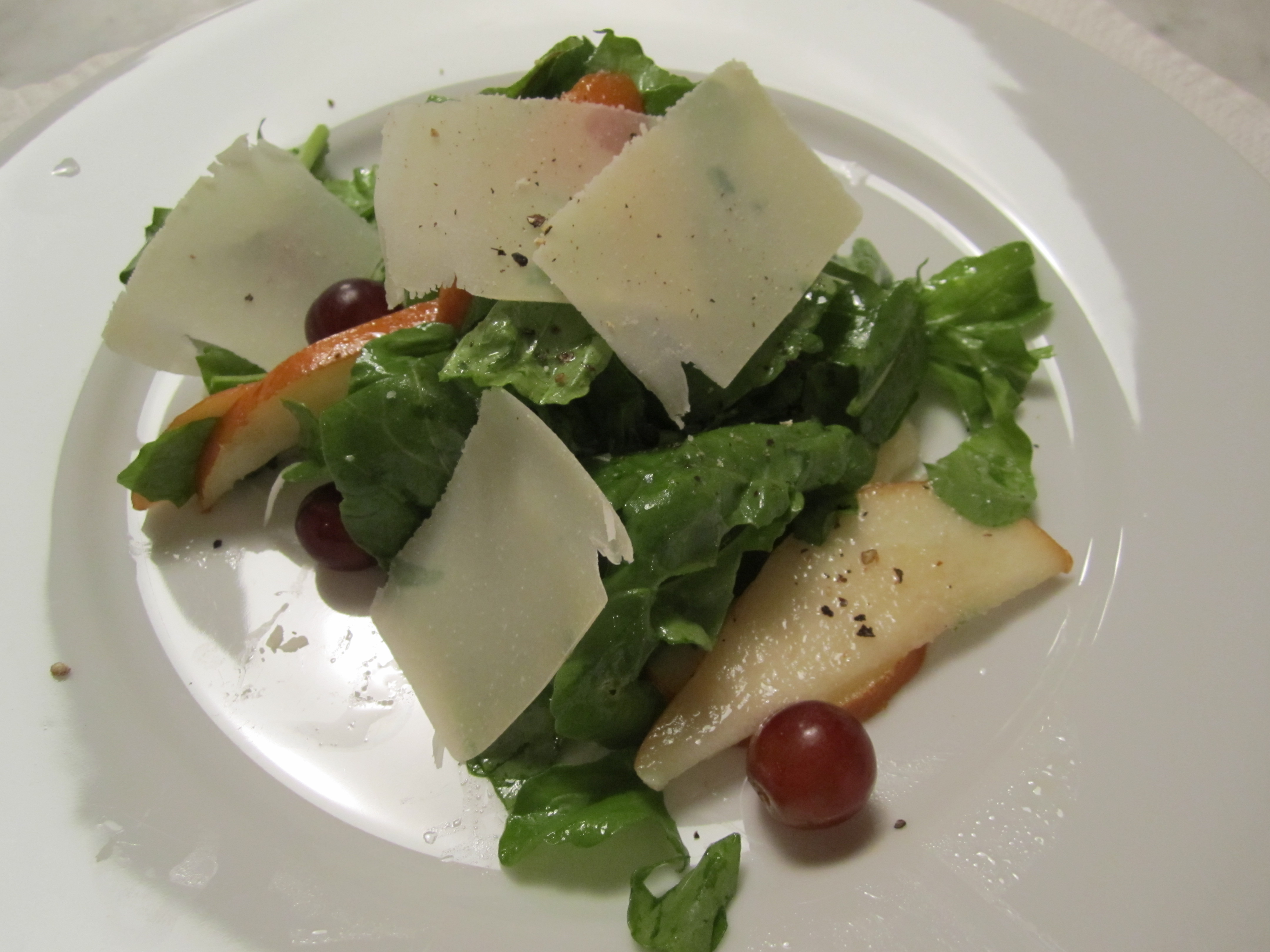
Arugula and Pear Salad with Pecorino


This salad is a simple wintery mix of arugula, bosc pears, grapes and shaved pecorino sardo. The sardo is an aged sheep’s milk cheese that can actually be grated over pasta as well, but has a much more complex yet milder flavor than traditional pecorino romano

The dressing is lemon and olive oil with lots of cracked pepper. The winter arugula is strong and peppery and the pears and cheese really tame it.  The combination is so pleasant–especially if you have some juicy pears that have ripened for a few days.

I like to serve this salad after the main course as a palette cleanser and refresher before dessert (some people would say instead of dessert, but I would never say that!)

Arugula and Pear Salad with Pecorino

serves 4

2 medium bunches of arugula, Chopped coarsely, washed and dried

2 ripe juicy pears

small bunch of grapes

2 tlbs extra-virgin olive oil

juice of half a lemon

4 oz. pecorino sardo (or any aged pecorino)

salt and pepper to taste

Squeeze lemon and olive oil over arugula and pears, toss and taste for salt.   Scatter grapes over salad.

With a vegetable peeler, shave pecorino cheese over each plate and top with freshly ground black pepper.

Posted in Salads | 1 Comment

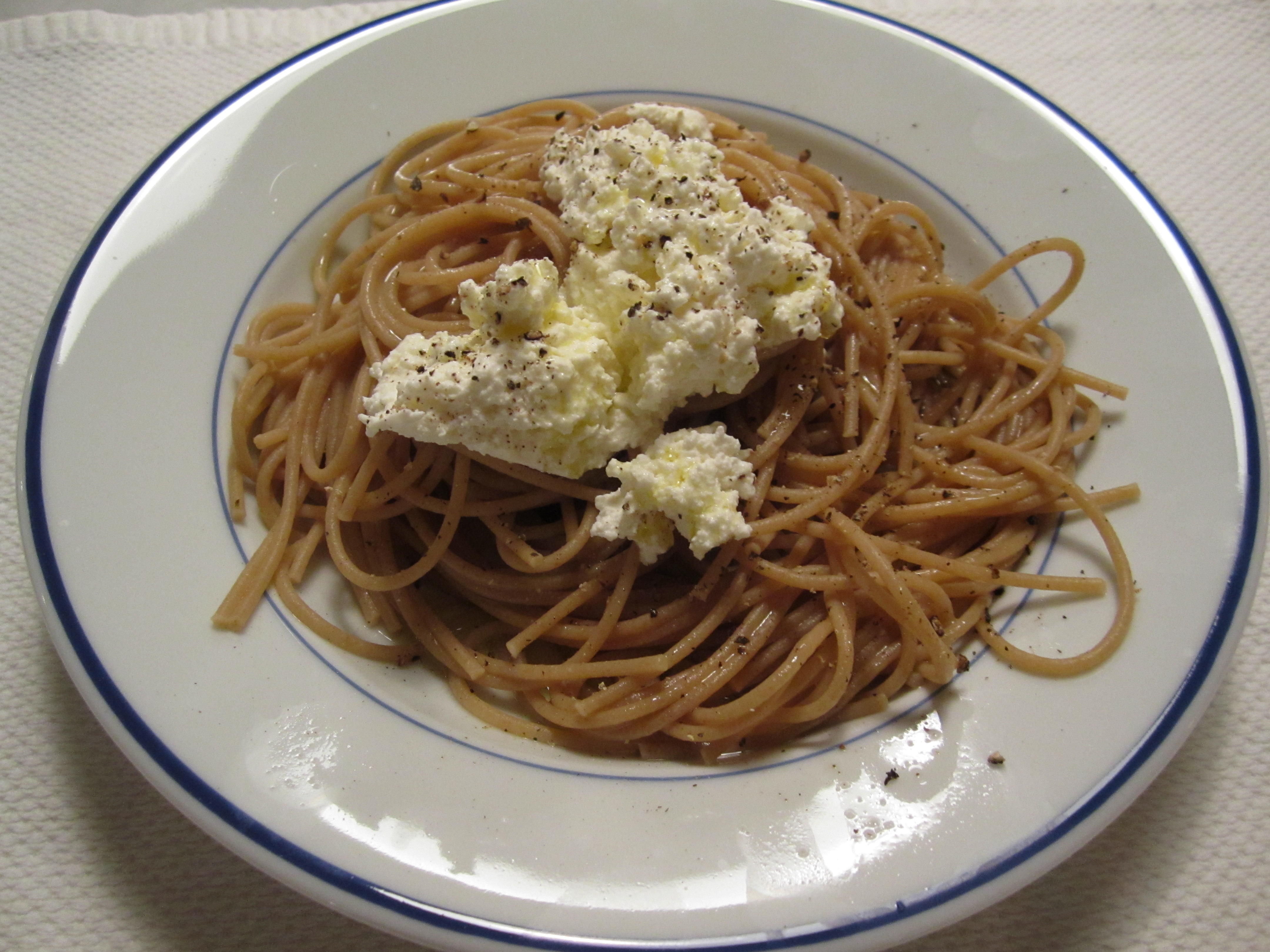
Whole Wheat Pasta with Ricotta


After the meaty meals of the past few evenings, I’m ready to eat meatless tonight.  I’m in the mood for whole wheat spaghetti with ricotta. 

This is a simple, luxurious dish that also packs a nice little protein punch if you’re not in the mood for a second course.  The pasta is dressed with a little extra-virgin olive oil, then topped with a dollop of fresh ricotta, and some black pepper. 

I don’t say this often, but in this dish, there’s no need for any grated cheese, as it obscures the subtle lactic delicacy of the ricotta.  Make sure you serve the pasta piping hot so that the ricotta melts into it as you mix it together on the plate.

Of course you could use regular white spaghetti instead of whole wheat, but I’ve found that whole wheat works nicely in this dish because of its nutty flavor.  

Pasta with ricotta and a nice salad–it doesn’t get any simpler or better!

Pasta with Ricotta 

serves 1

1/4 lb whole wheat spaghetti

1/4 c fresh ricotta

1 tbl + 1 tsp extra-virgin olive oil

salt and pepper

boil the pasta and place in heated bowl.  Immediately top with 1 tablespoon of olive oil and toss briefly.  Top with ricotta, the teaspoon of olive oil and black pepper.


Posted in Pasta | 1 Comment

Sugo Calabrese


This dish is straight from my mother’s home town in Calabria.  Even in the summertime, the sauce is a staple which is served on pasta several days a week.  When my mother and I spent three months in Calabria many years ago, my aunt showed me how to make the sauce and we had it almost daily.  My aunt always used pork spareribs to flavor the sugo, so that’s what I’m doing tonight. In addition, I’ve added some pork sausage.

In most of Italy, pasta is served every day at lunch.  In my mother’s region, the predominant pasta is pasta asciutta, or dried pasta.  This can take any of a variety of shapes–rigatoni, fusilli, spaghetti, etc.–but always dried semolina pasta.

Because Italians are very dogmatic when it comes to which sauce goes on which pasta, the pasta asciutta generally gets either a red sauce or an oil and garlic-based sauce. 

Meat is not usually the main attraction at a Calabrese lunch, but they love to put a little bit of meat (usually pork) in the red sauce and simmer it until it’s falling off the bone.  The sauce is used to dress the pasta, and the meat is eaten as the second course, or secondo.  With the second course there is usually a vegetable or salad.  Tonight, we’ll eat this meal Italian-style.  For our first course, we’re having bucatini dressed with the sauce, then for our second course we’ll have spareribs, sausage, and some of last night’s meatballs, with some soft sauteed broccoli (see yesterday’s post for recipe) on the side.

The sauce needs to perk on low heat for about two hours, and the aroma alone is reason enough to make it–it reminds me of my childhood and my mother’s cooking. 


Sugo Calabrese

Serves 4 -6

1 rack baby back ribs, divided into 4 pieces

8 pieces of sweet Italian sausage

3 28-0z cans whole peeled tomatoes, pureed in the blender (do not use tomato puree–it’s an entirely different flavor from whole peeled tomatoes, even though you have to puree them!)

1 small onion, peeled and diced

1/4 of a green pepper, cut into 4 large pieces

6 tbls olive oil

2 bay leaves

salt and pepper to taste

Place whole sausages in boiling water and simmer for about 15 minutes.  Remove and set aside.

Heat half the olive oil in a heavy dutch oven and, on high heat,  brown the spareribs on both sides.  Remove and set aside.  Add the sausages and brown briefly on all sides, then remove and set aside. 

Pour off all of the oil in the pot but do not wipe out the brown bits.  Add the remainder of the fresh oil and onions and green pepper.  Lower flame and saute for about 10 minutes.

Add the tomatoes and bring to a simmer.  Add back the spareribs and simmer, partially covered for 2 hours.  Add the sausage and simmer another 20 minutes.

Keeps in the refrigerator a week and can be frozen indefinitely.

Posted in Sauces | Leave a comment

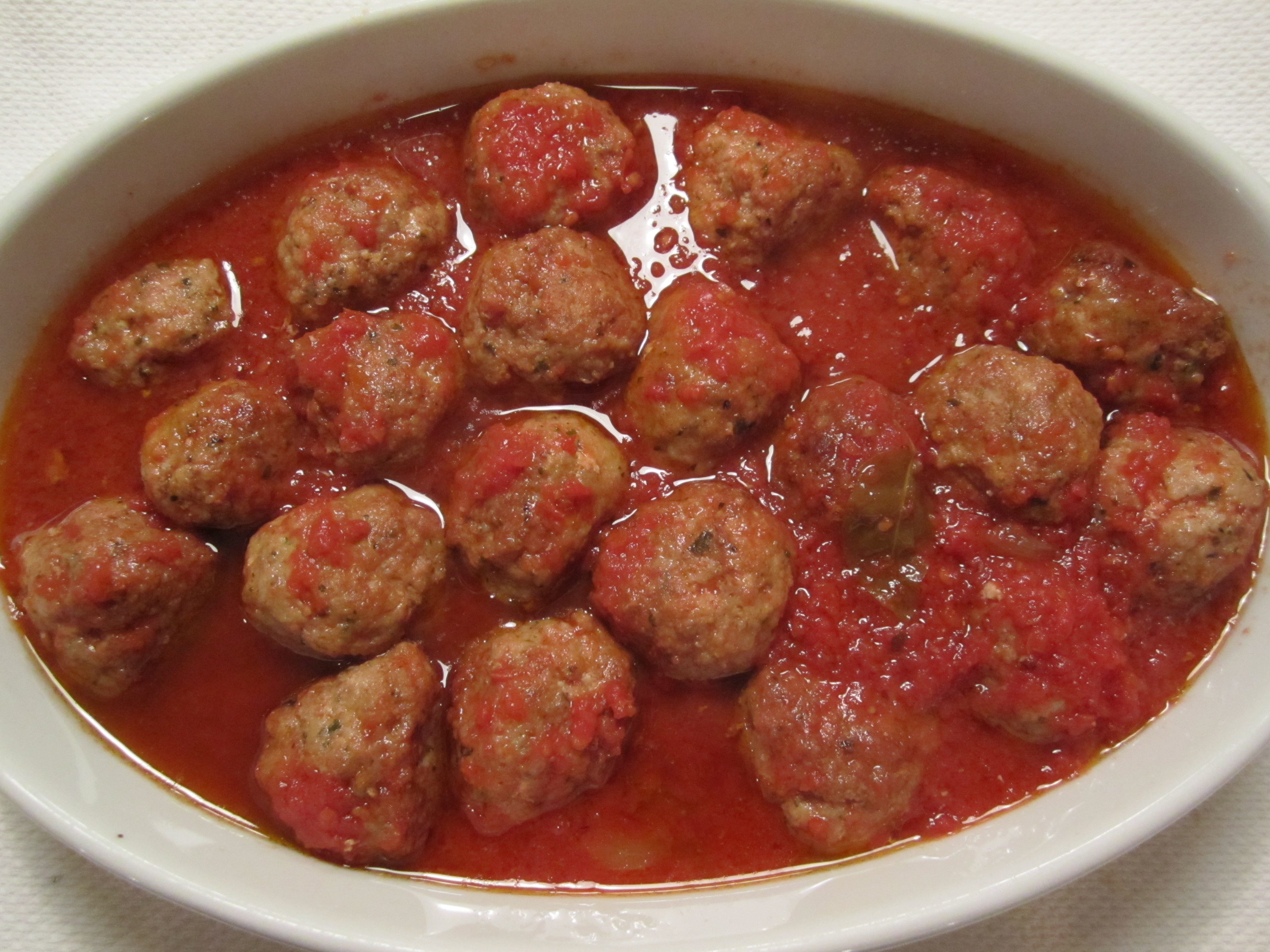
Polpettine di Tacchino


As I stated in my first blog, I love meatloaf (any kind) and the same goes for meatballs. I am constantly re-inventing my meatball recipes and I like to experiment with all manner of ground meat and poultry. 

Turkey is my favorite base for meatballs because it’s light and has an interesting flavor of its own–slightly gamey so it can stand up to strong seasonings.  It’s also the most challenging to work with because it’s so lean.  I try not to buy the extra-lean or 100% breast meat, but even the regular “lean” ground turkey can be dry and firm if not handled properly.

Tonight’s meatball’s are a spinoff of my neighbor Beppi’s poultry stuffing (see my prior post: “Rotolo di Tacchino”).  Because I made this stuffing for a turkey breast a couple of weeks ago, I still have all the ingredients in my pantry and freezer–the seasoned bread crumbs, mortadella, fresh parsley, etc.  So rather than stuff a bird with the ingredients, I’ve simply combined it with ground turkey.  The only addition to the stuffing recipe is grated cheese–some parmiggiano–I always love some cheese in my meatballs (as opposed to meatloaf, in which I don’t usually put cheese).

The results are amazing–moist and flavorful–you must try these meatballs. 

Italians wouldn’t  serve meatballs together with pasta, but instead they would use the sauce from the meatballs to dress the pasta as a first course, then serve the meatballs for the second course wth a vegetable or salad. 

Polpettine di Tacchino

1 1/4 lbs ground turkey

1/4 lb mortadella

1/2 cup seasoned breadcrumbs

2 slices white bread

1/2 cup chicken broth

1/4 c chopped parsley

1- 1/2 tsp salt

1/2 tsp black pepper

1/8 tsp nutmeg

2 eggs

olive oil for frying

Soak bread with broth and let it absorb for about 10 minutes or so.  Place mortadella in food processor and pulse until it becomes a fine dice.  Add soaked bread and pulse a few times until mixture achieves the consistency of a porridge.  In a mixing bowl, combine the mortadella and soaked bread with the ground turkey, eggs, nutmeg, seasoned crumbs, salt and pepper.  Let rest for 15 minutes.

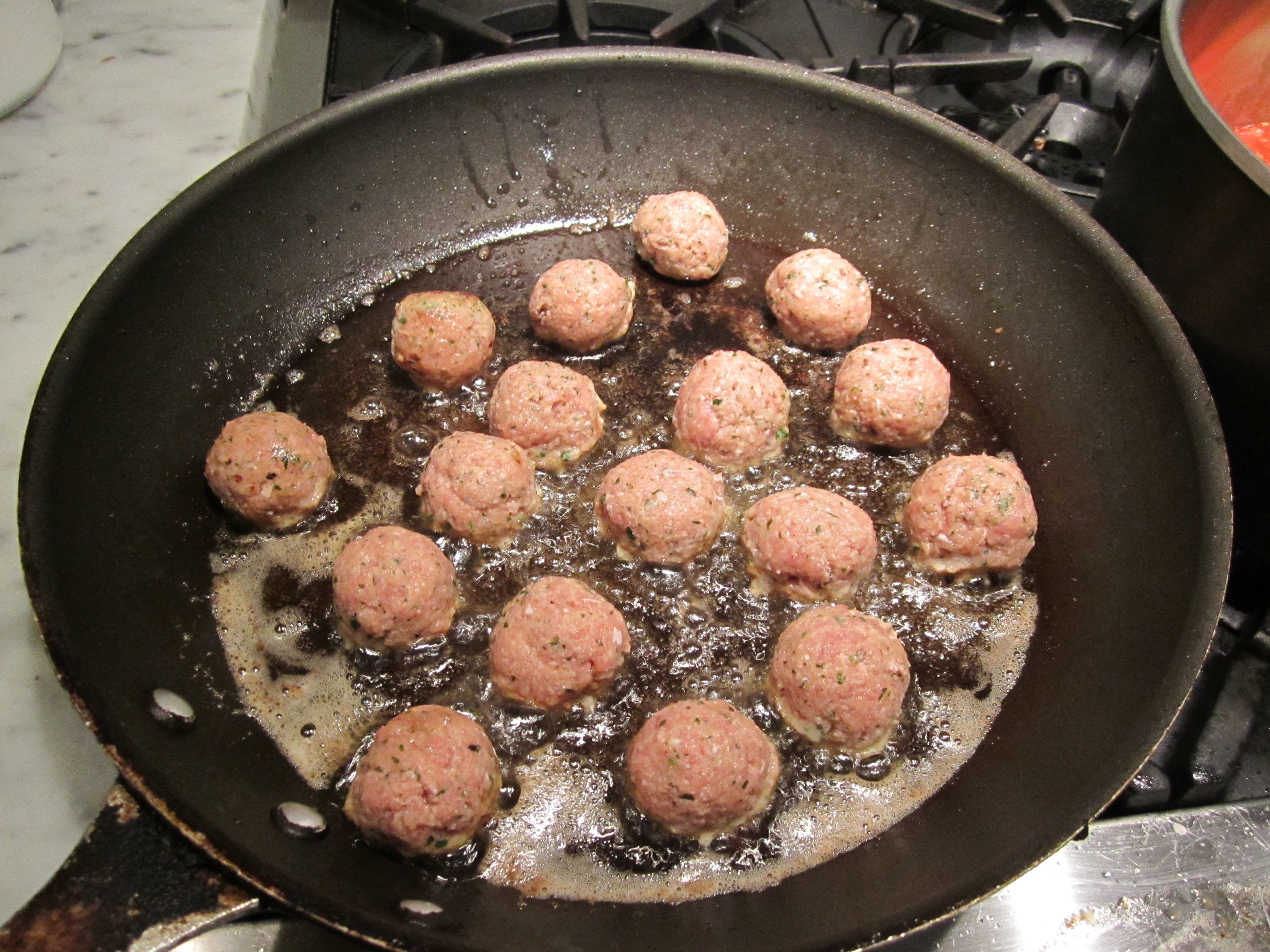
Form into balls about 1- 1/2″ in diameter.


In a broad nonstick skillet, heat a quarter cup of olive oil on high heat and add meatballs, making sure there is a bit of room around them in the skillet (do them in 2 batches if necessary). 


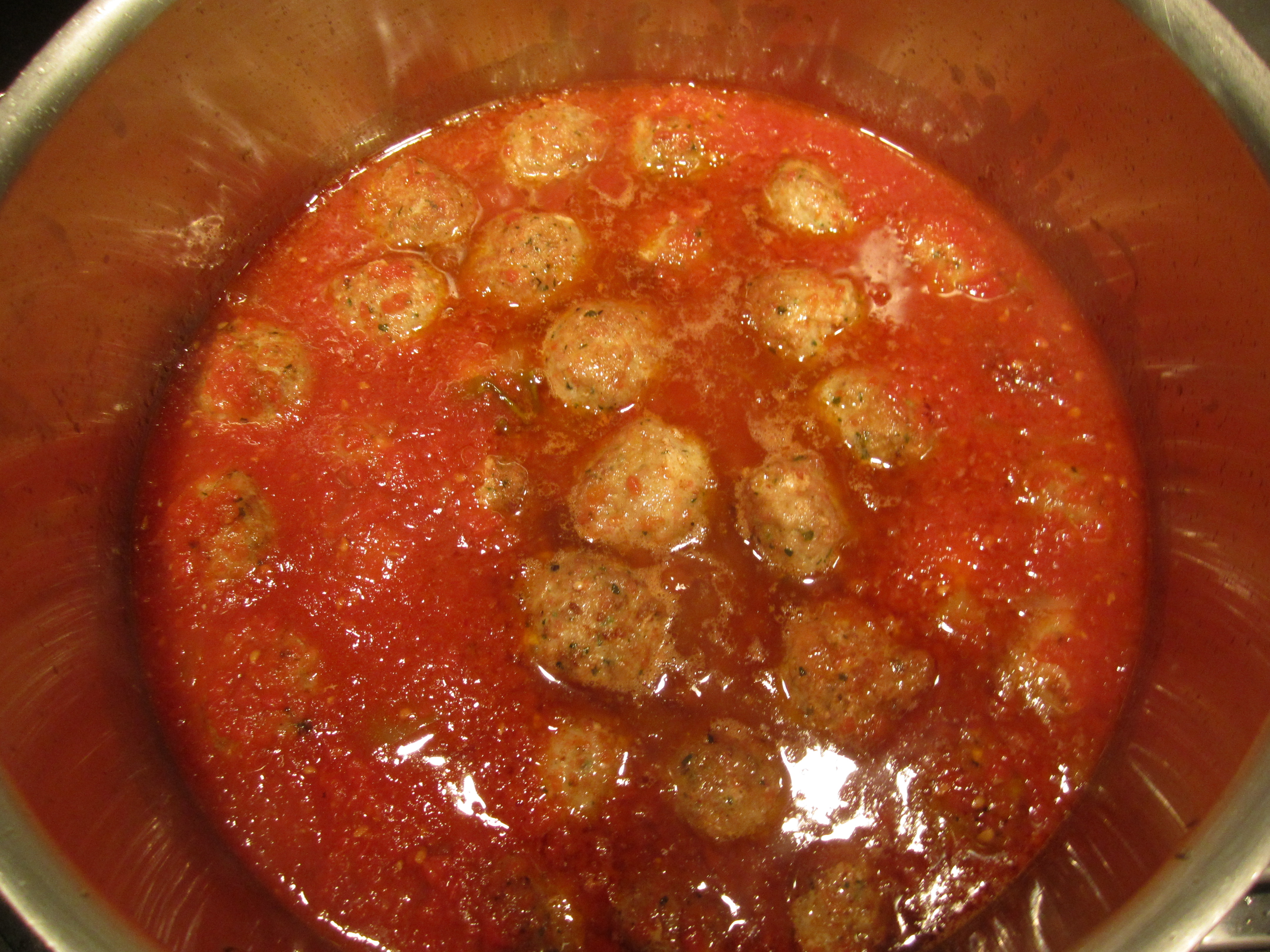
Brown on all sides, then poach in basic tomato sauce (a quarter of an onion sauteed in 3 tablespoons of olive oil, with a 28-ounce can of whole peeled tomatoes added and simmered for 15 minutes).

Can be refrigerated for up to 5 days and frozen indefinitely.


Posted in Poultry | Leave a comment

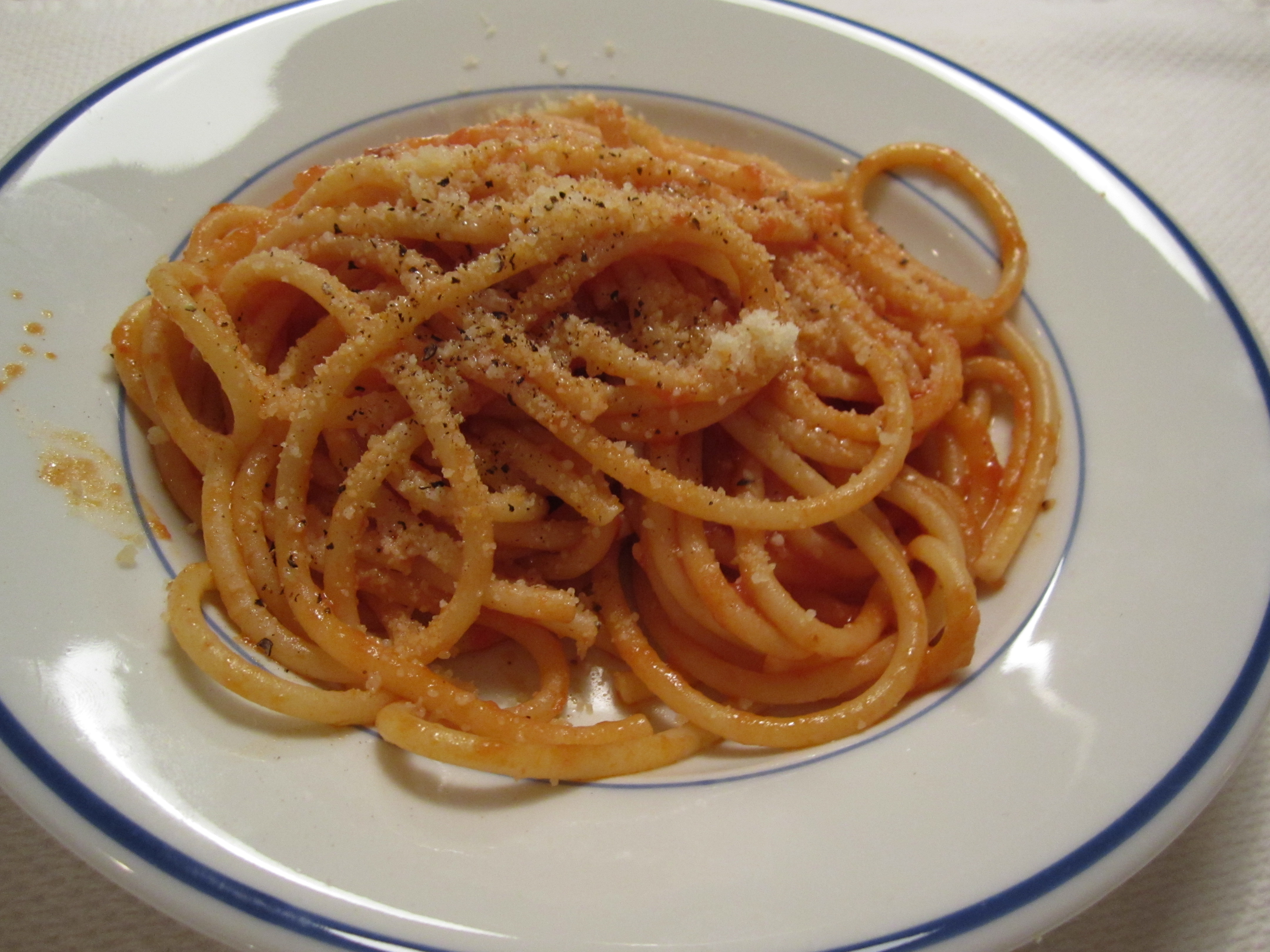
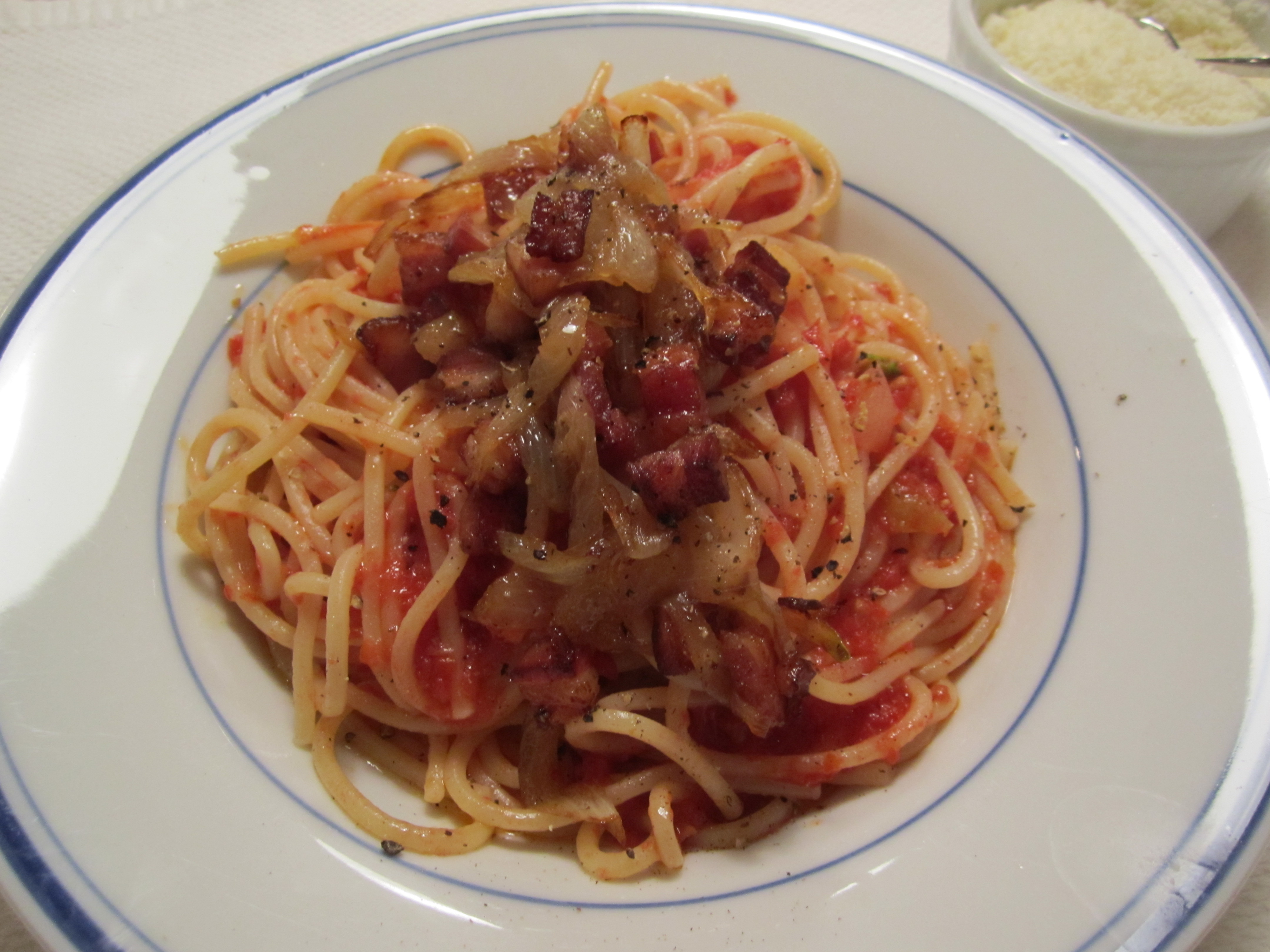
Deconstructed Pasta Al’Amatriciana and Broccoli with Onions


I learned to make pasta al’amatriciana from my neighbor, Beppi.  He sautes pancetta, lots of sliced onion, then adds canned tomatoes and simmers for about 20 minutes.   He adds a bit of parsley and basil at the end.   The way Beppi  makes it, the tomato sauce becomes very sweet from all the onions,  punctuated by the salty, porky undertone of the pancetta.  He slices the pancetta very thinly, then dices it so that it practically melts into the sauce. 

Sometimes I like to use bacon instead of pancetta–I love the smokey flavor and it’s not as salty as pancetta (depending on what type of bacon you’re using).  The other variation between my recipe and Beppi’s is that I like to make the tomato sauce and the bacon/onion mixture separately.  I dress the pasta with a bit of tomato sauce, then I top it with the bacon and onions.   It’s a nice effect–the sweetness of the onions is more front and center, while the tomato sauce is more of a background flavor.  Some bites are sweet and some are smokey.  It’s the same idea as sprinkling chili flakes on pasta at the table, rather than during cooking–some bites are hotter than others.

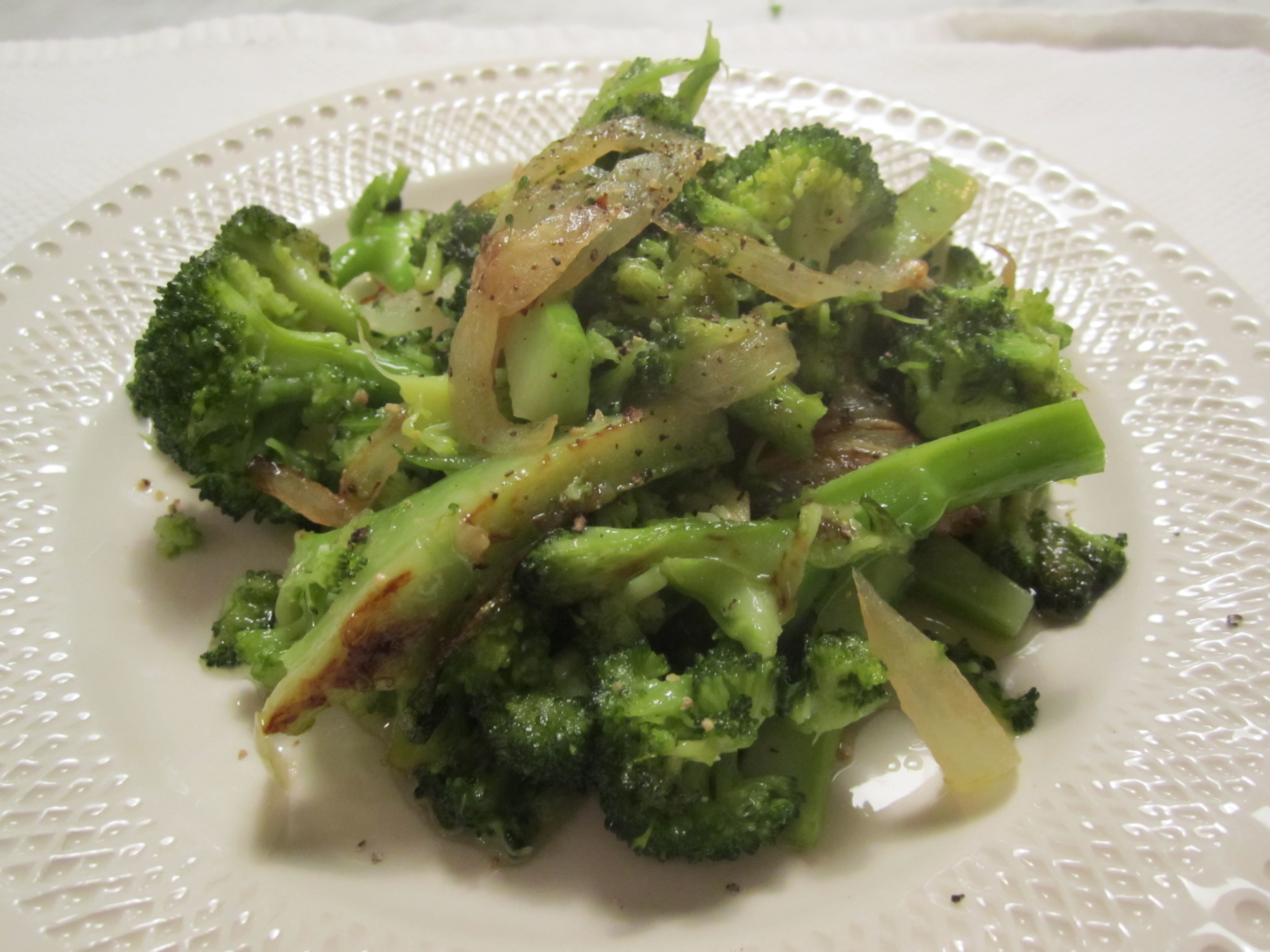
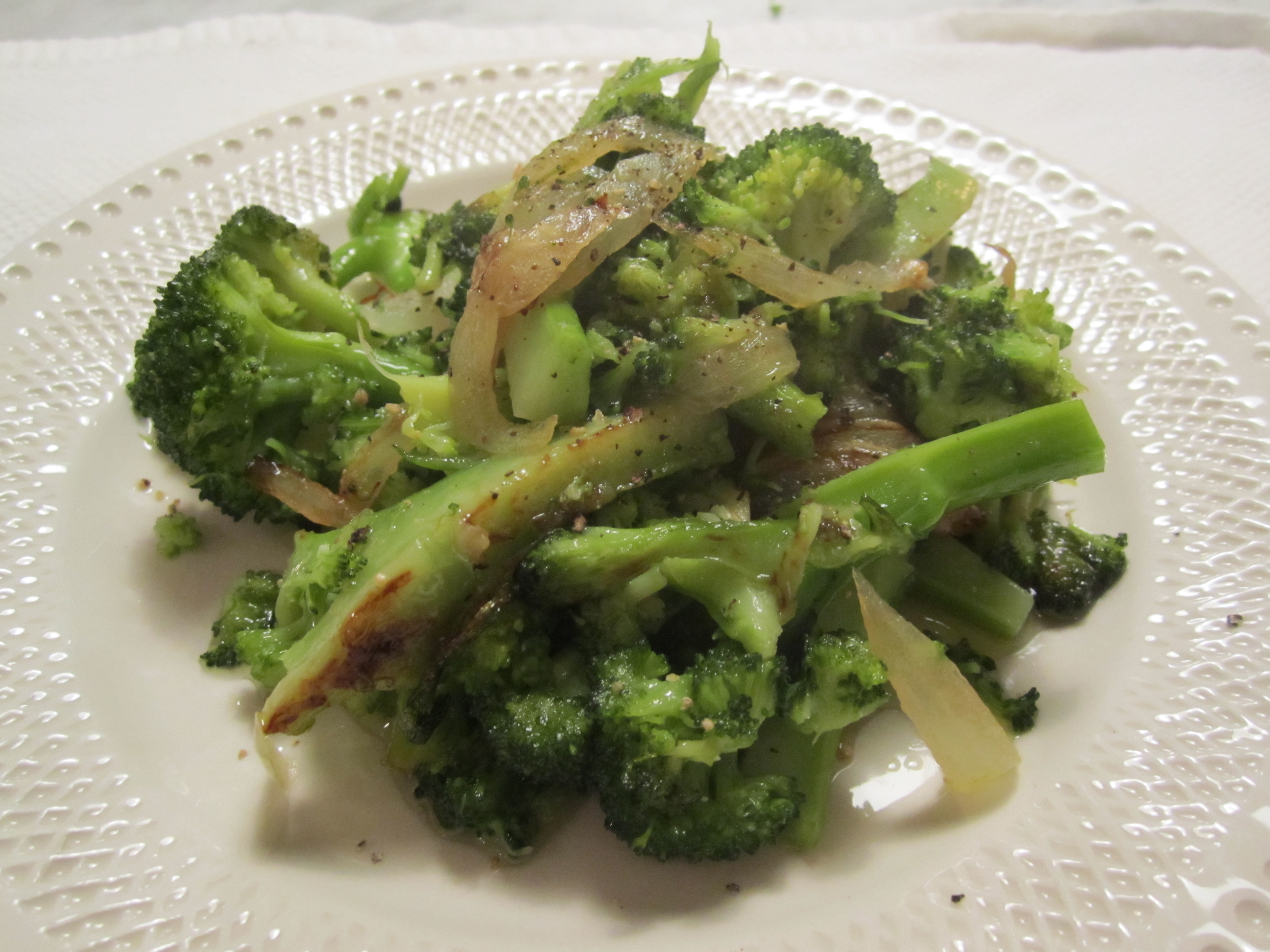
Along with the pasta, I’m making broccoli with onions.  Most of us are familiar with broccoli with garlic, but onions are, once again, a sweet counterpoint to broccoli.  This is an easy dish, as the broccoli do not need to be boiled before sauteing.  Just cook both broccoli and onions together with a splash of water, covered, for about 15 minutes.  The broccoli become meltingly tender and the onions give it a great sweetness. 


Deconstructed Pasta Amatriciana

Serves 4

1/4 lb smoked bacon, cut into small cubes

2 medium onions, sliced

6 tbls olive oil

1 lb spaghetti or bucatini

1 28-oz can of whole peeled tomatoes, pureed in blender or squashed with hands (you’ll have extra to keep for another use–it freezes beautifully).

salt and pepper

grated pecorino romano for sprinkling

In a skillet, heat 2 tablespoons of olive oil, then add plum tomatoes and simmer until reduced by half (about 10 minutes).  Add salt and pepper and set aside.

In a separate skillet, place remaining 4 tablespoons olive oil and begin slowly sauteing the bacon for about 5 minutes, or until it renders some of its fat into the oil.  Add the onions and cook slowly for about 10 -15 minutes or until golden and caramelized.

While the onions are caramelizing, boil the pasta in salted water. 

When pasta is about a minute shy of done,  toss into a skillet containing about a cup of tomato sauce and add a half-cup of pasta cooking liquid and saute for a minute or so until the pasta and sauce are incorporated.  Turn into heated shallow serving bowl and top with bacon/onion mixture, as well as a generous sprinkling of pecorino and black pepper.

Broccoli with Onions


serves 4

2 bunches broccoli, trimmed and left in rather large pieces

1 medium onion, sliced

4 tbls olive oil

salt and pepper

Wash broccoli and leave some water clinging to them.

Un a broad skillet, saute onions for about 5 minutes or until they are slightly golden.

Add the broccoli and 2 tablespoons water and cover.  Cook for 10 minutes on medium heat, stirring from time to time. Taste and add salt and pepper.

Uncover and saute until broccoli and onions are tender and slightly golden (another minute or 2).

Posted in Pasta, Vegetables | Leave a comment

White Bean and Broccoli Stem Soup


As we get pounded by blizzard after blizzard, I’ll keep making soups and stews–there’s just nothing I’d rather eat after shoveling snow for two hours!

This soup makes use of a vastly underutilized vegetable–or I should say an underutilized part of a vegetable–the stem of the broccoli.  Most people discard the stems and cook only the florets.  Although you may already know that the stems can be eaten once they’re peeled, most people don’t go through the extra step of actually doing it.  Not only can the stems be eaten, but they’re truly the most delicate part of the plant.  I usually boil them and saute them alongside the florets, but in this case, I’m using the stems in my soup all by themselves.

Because I still have some luganiga sausage in the freezer, I’m going to add it to my soup as well.  Sausage and white beans are a wonderful combination, but you can omit the sausage and make the soup meatless.

Although I’m using chicken broth as the base for my soup, you can just as easily use vegetable broth or the cooking liquid from a batch of boiled kale. 

Tomato is always a big question when making a soup or a stew.  Tomato adds its own strong flavor to most sauces or stews, so if I were using a vegetable broth as the base of the soup, I might add some tomato–just a small amount (like a half-cup of chopped tomato). 

Or if I were using plain water as the base for the soup, I might add a lot of tomato and and let the tomato be the base of the soup.  But in my soup tonight, I’m using homemade chicken broth as the base, therefore I don’t want to eclipse the delicate flavor of the broth with tomato. 

The other ingredients are pretty flexible–I like a bit of carrots for sweetness; a bit of onion for sweetness and roundness of flavor, and a bit of fresh chopped parsley at the end to brighten the flavors. 

I’ll also put a touch of that rosemary from Beppi’s garden–a sprig or two (removed before serving) will impart that wonderful woodsy flavor to the beans. 

Whether to add pasta or not is also a big decision–usually I make the soup without pasta and if I have some leftover, I’ll make it the next day with pasta.  But tonight I couldn’t resist adding some orrechiette and cooking them right in the broth.

White Bean and Broccoli Stem Soup


Serves 4

1/2 lb dried white beans, soaked and boiled until tender (or  2 15-oz. cans  of beans with half their liquid)

4 links of cooked sausage, cut into small disks

1 small onion, quartered, then diced into 1/2″ pieces

3 carrots, cut into half-moon slices about 1/2″ thick

1 small potato, cut into 1/2″ dice

2 cups peeled chopped broccoli stems, boiled until soft

1 1/2 qts chicken broth

2 sprigs rosemary

2 dried bay leaves (if using fresh, only use 1)

1 1/3  cup orrechiette

2 tbls chopped fresh parsley

salt and pepper

extra-virgin olive oil for drizzling

grated pecorino romano for sprinkling

Place potates, onion, carrot, rosemary and bay leaves and chicken broth in a saucepot or dutch oven.  Simmer for about 15 minutes or until potatoes and carrots are tender.  Add beans, sausage and broccoli stems and simmer for 5 minutes. 

Add pasta (if using) and cook for 10 – 12 minutes.

Sprinkle with parsley, grated pecorino romano, and drizzle with some extra-virgin olive oil.

Posted in Soup/Stew | Leave a comment

Butternut Squash Risotto

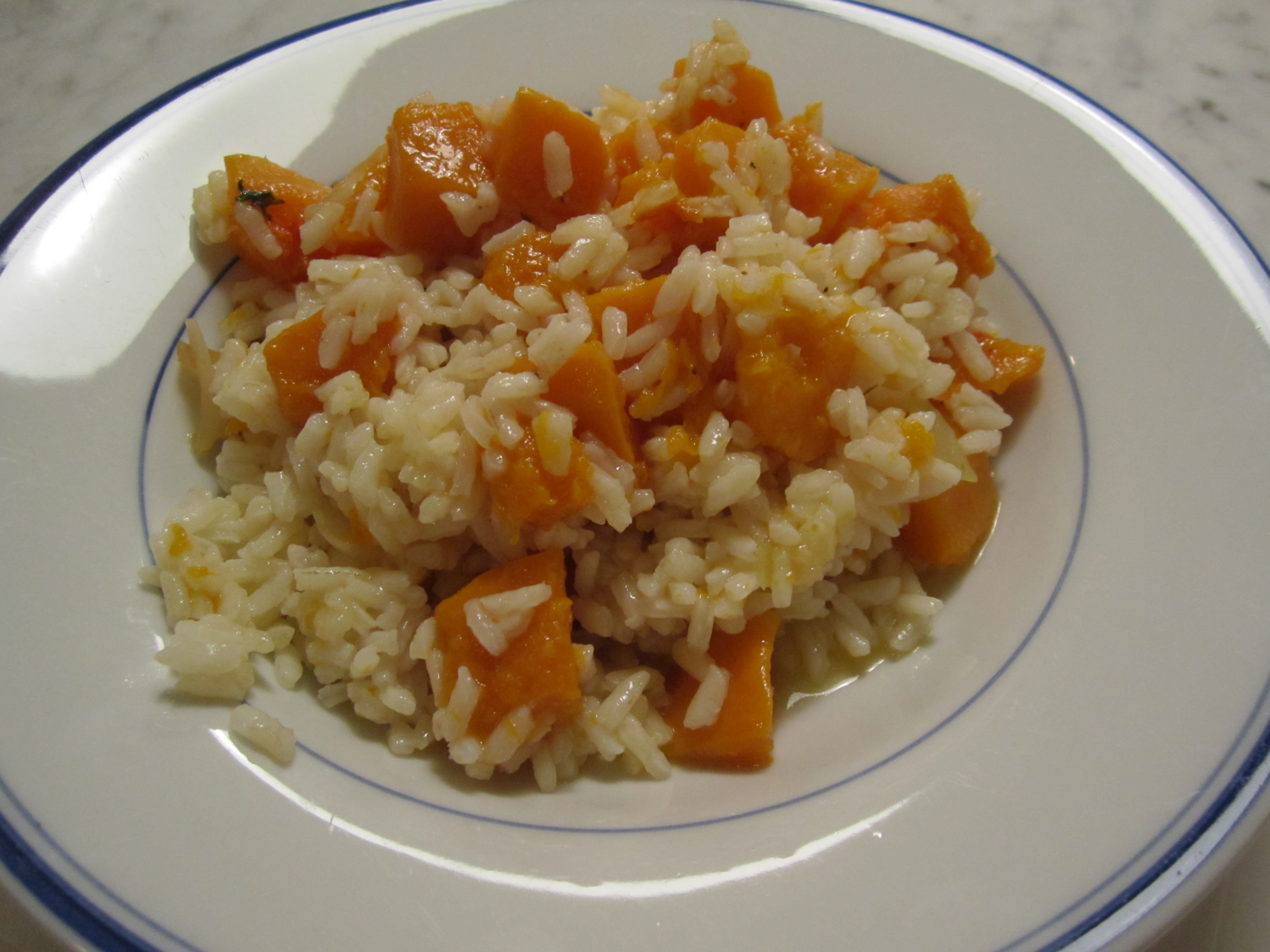
I’m still eating local butternut squash from the fall (not frozen–just kept in a cold basement).  It seems to get sweeter as it sits and the flavor concentrates.  I know it will not keep indefinitely, so one of these days, I’ll peel, cut and freeze the remaining heads.  But right now, it’s still in fine condition.

The main labor in this dish is peeling and seeding the squash.  My method is to first slice off the stem and a 1/4″ of the bottom.  Then, with a large sharp knife, cut the squash in half crosswise where the bulbous portion meets the tall straight portion.  Stand each piece upright and, while holding secure with one hand, slice down the sides and  angle the knife around the curves of the squash–it takes brute force to guide the knife around the curved shape, but its possible to do.  Then split the bulbous portion in half lengthwise and scoop out the seeds with a teaspoon and discard (they are edible but more on that in a later post).  Cut the flesh into 3/4″ chunks and saute, roast, or freeze for later use.  Once the squash is cut into manageable cubes, you can begin making the risotto.   

This would be great with pear and pomegranate salad (see “butternut farro” post).

Butternut Squash Risotto

Serves 4 – 6

3 cups of butternut squash, cut into 1/2″ cubes

6 tbls butter

3 shallots or one medium onion

1/8 tsp nutmeg

1/2 cup white wine

2 cups arborio rice

10 cups chicken or vegetable broth, simmering

1/2 cup grated parmiggiano plus additional for sprinkling at the table

On medium heat, in 4 tbls butter, saute butternut squash cubes until they begin to color (about 10 minutes).  Add shallots and nutmeg, and saute until golden (about 7 – 8 minutes).   Add rice and saute for about 3 minutes.  Add wine and saute for 2 minutes or until it evaporates.

Set your timer to 15 minutes.

Begin adding hot broth 1/2 cup at a time until it’s almost evaporated, then adding more until only a 1/2 cup or so of broth remains.  If you run out of broth, don’t panic–just begin adding water.

At fifteen minutes, shut the flame, cover and let rest for 5 minutes.  Add remaining butter and 1/2 cup grated parmiggiano.

Serve with additional grated cheese at the table.


Posted in Risotti | Leave a comment

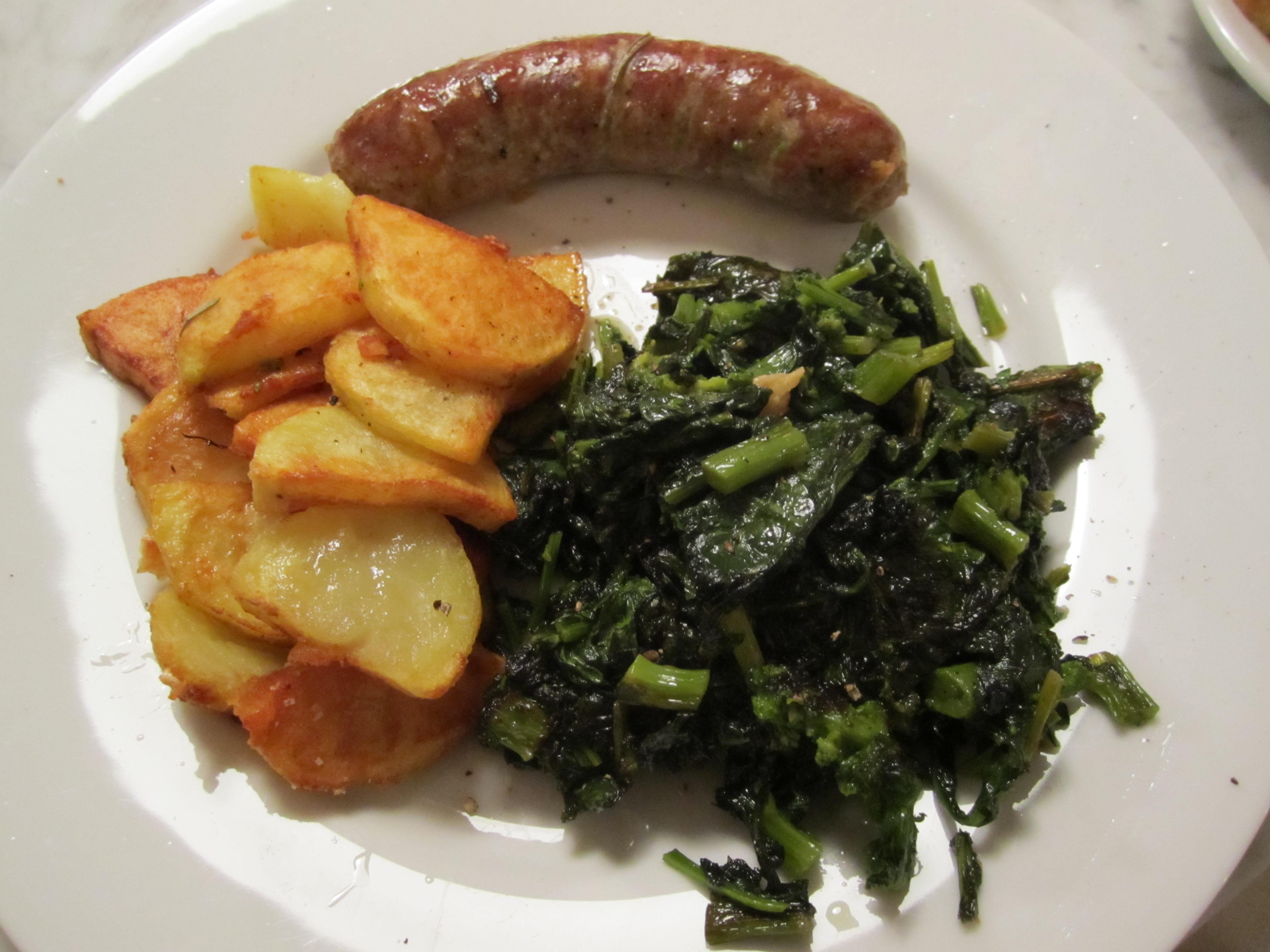
Dinner for One – Skillet Potatoes and Sausage


There are many times when I make dinner for one (me)  and I always look forward to them.  Because I try never to throw food away, I usually have several little baggies of this or that in my freezer which can be combined and augmented to make a nice dinner that might not be enough for two, but is perfect for one. 

One thing that I seem to make more readily for myself than for company is fried potatoes.  I’m not quite sure of the reason for this, except that these potatoes really take a bit of tending to, and to be enjoyed at their peak of flavor, they must be eaten as soon as they are ready.  Unlike the myriad of things which I can start, hold, then finish for company, fried potatoes must be cooked and eaten as soon as they are ready.  Therefore, when I’m cooking for guests and juggling a main course and several other things to serve, I don’t want a side dish that needs a lot of last-minute attention.

Although I consider the potatoes the centerpiece of this meal, the main course is a simply piece of pan-roasted sausage that I had in the freezer and threw in with the potatoes to brown.   Because I like to boil Italian sausage before using it as a component in other dishes, I can always boil more than I need at one time, then throw a couple of extra links into a ziploc bag and use them straight from the freezer whenever I want.  I can pull one out, slice and throw into a dish of pasta with sausage and broccoli di rapa, or one can be thrown into a white bean soup or stew.  Tonight, I’m simply going to toss the whole thawed link of pork sausage into the skillet with my potatoes as they fry and the sausage will reheat and become golden along with the potatoes.

The broccoli di rapa have been washed, chopped and sauteed with garlic and olive oil, and they can be made first (even an hour ahead) and left to be eaten room temperature.  They taste as good (if not better) lukewarm than piping hot.  For the recipe for broccoli di rapa, refer to my prior post (“Fritto di Mare”).

This leaves all of my attention for the potatoes (and sausage).  Not that they need that  much attention, but they do need to be looked in on and turned and shaken so that the slices cook evenly to a nice golden color on the outside, but remain soft and tender on the inside. 

Skillet potatoes can be augmented and seasoned in a variety of ways.  My neighbor Beppi always par-boils them whole, then peels them, then cuts them into large chunks and sautees them in oil and butter with a little onion.  My mother, on the other hand, always cut them into thin slices and sauteed them raw with slivers of garlic and sometimes a bit of tomato. 

Tonight I’ve chosen my mother’s method, with the exception of the tomato.  Also, I’ve chosen to cook my garlic in large pieces and remove it prior to serving the dish (to myself).  Also, I’ve thrown in a sprig of rosemary because I have a basketful of dried rosemary branches from Beppi’s garden that I love to use all winter.

The following recipe assumes you have a piece of already cooked sausage to use, but otherwise, eliminate the sausage and eat the potatoes by themselves or with a salad and some cheese–you won’t notice anything missing.

Skillet Potatoes and Sausage

Serves 1

One large or 2 small yukon gold potatoes, peeled and sliced in 1/4″ slices

2 cloves garlic, cut in half

2 tbls olive oil

1 small sprig rosemary

1 piece of boiled sausage (or cured sausage like chorizo or chicken-apple sausage)

salt and pepper to taste

In an 8″ nonstick skillet, begin browning the garlic slowly in the oil for about 5 minutes.  Add rosemary, potatoes and cover, keeping heat on low.  Stir and shake every 5 minutes or so, until the potatoes are light golden brown and tender 9about 25 minutes).   Move the potatoes aside a bit and add sausage (if using) and continue browning potatoes and sausage for another 5 to 8 minutes.

Uncover and saute for a minute or two until all looks crispy and irresistable.

Make sure they’re salty enough!


Posted in Dinner for One | Leave a comment

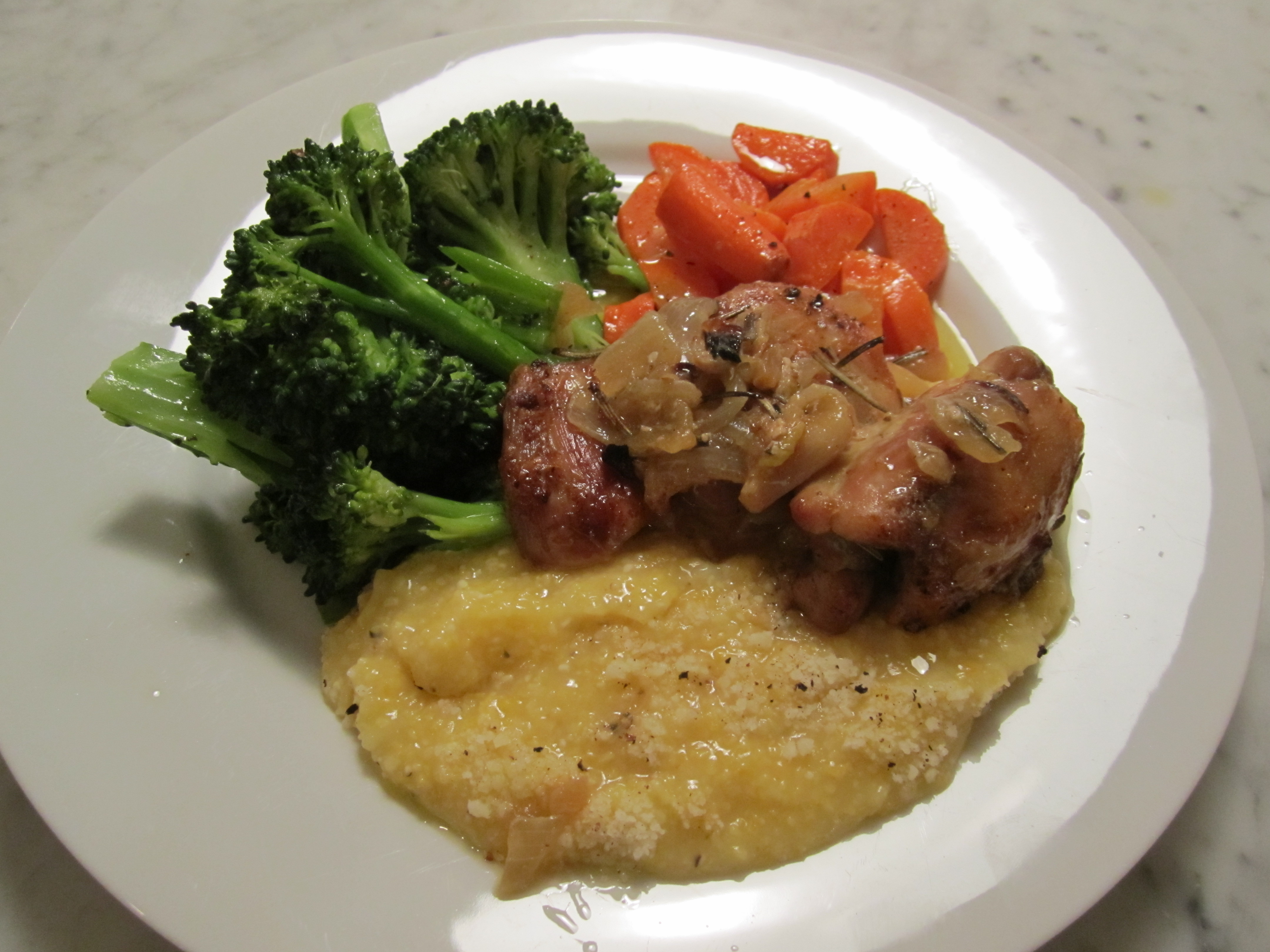
Pollo col Polenta


Polenta is the ultimate Italian comfort food–creamy and soft.  It can be served with a variety of accompaniments:  some sausages in red wine sauce (my mother’s way of serving it); alongside calves liver alla Veneziana (one of my neighbor Beppi’s ways of serving it).  It goes best with something moist and saucy, although it’s great simply with some gorgonzola cheese melting onto it.  It’s also great for breakfast with butter and honey drizzled on top.

The task of making polenta might seem daunting because traditionally, it took a lot of stirring to make a smooth perfect porridge.  Many people (as well as restaurants) use intant polenta, which, in my opinion lacks the texture and full cornmeal flavor of the long-cooking variety.  Beppi makes instant polenta, but he cooks and stirs it for about twenty minutes.  He usually makes it ahead of time and cuts off slices of it and broils them ’til their golden and blistering on top.

My mother always made the polenta and served it immediately as a porridge and I must say, I’m partial to the porridge experience, rather than the broiled slab experience.  She also spent about forty minutes stirring the polenta constantly before pronouncing it done.

My mother figured out a long time ago, that starting the polenta in cold water and bringing the mixture to a boil was good method of insuring that there would be no lumps in the finished dish.  Most Italians wouldn’t approve of starting polenta in cold water–the traditional way to begin the dish is to slowly drizzle a fine stream of polenta into boiling water.  No one can tell me exactly why this is so important, and I’ve had it both ways many times and can’t tell the difference between the two.

Therefore, my polenta begins in cold water with a bit of salt.  The proportion of water to cornmeal is 5 to 1.  Usually I like to make 2 cups of cornmeal (and 10 cups of water), because I like to have it leftover the next day.  I’ve devised a great no-fuss method of starting the polenta on the stove, then moving it to the oven to bake at 300 degrees for about an hour with minimal fussing.  Just look in on it 2 or 3 times during that period and give it a stir (some of it will stick to the bottom of the pot, but that’s normal–just keep stirring it and try to loosen as much off the bottom as possible every time.

The amount of time it takes depends on what kind of cornmeal you’re using.  It’s best to use a coarse cornmeal–it need not be labeled “polenta“–you can use Quaker cornmeal just as well as imported cornmeal.  The coarser the meal, the longer you’ll have to cook it.  You’ll know when it’s cooked by its texture and appearance.  It will begin to pull away from the sides of the pot as you stir it.  It will no longer have that raw cornmeal flavor.  I always allow an hour from start to finish, and insist on serving it as soon as it’s cooked.  It can be reheated, but once it cools, it’s difficult to bring it back to the porridge state.

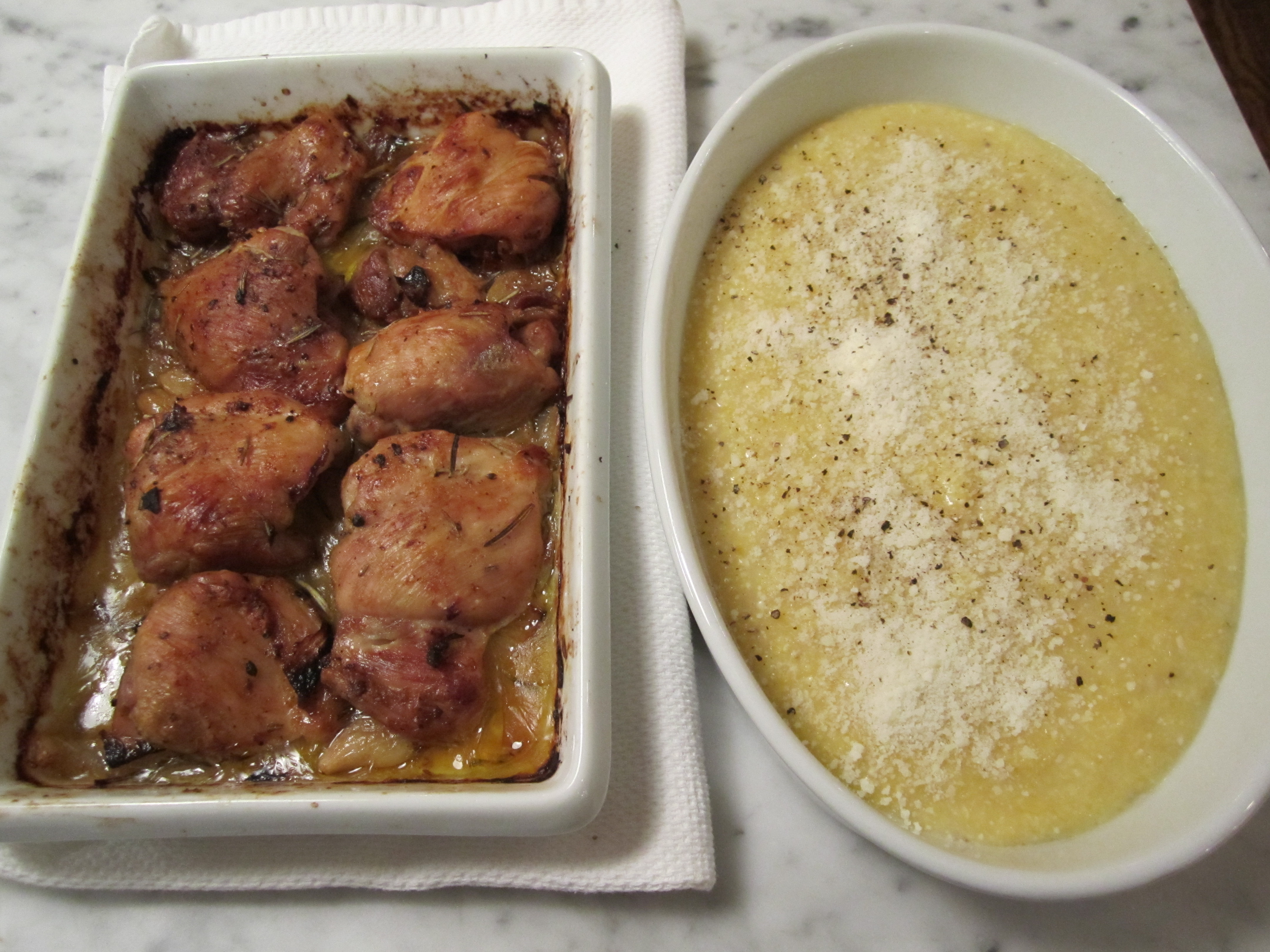
The pollo part of this dish is a simple oven roast of chicken thighs, which I learned from Beppi.  It’s simpler than a stew because it makes its own sauce without adding any liquids.  Early in the day, I seasoned the thighs with salt, pepper, rosemary and olive oil, then placed them in a baking dish over some sliced onions and garlic.  They marinate in the fridge until I’m ready to cook them.  When I’m ready, the baking dish goes right into the oven from the fridge.  The dish should be small enough to hold the thighs snugly without any space around them.  The reason for this is that the thighs will form a bit of juice on their own and bake right in their own juice.  If the baking dish is too broad or low, you’ll lose the juice.

They start out under the broiler and then finish baking after they’ve begun to brown.  This gives them a golden exterior first, then cooks them through, along with the garlic and onions underneath them–it’s a brilliant dish that can be entirely prepared ahead, then thrown in the oven at the last minute.  There is just enough juice in the pan to keep them moist while they bake and to spoon onto the polenta at the table.

Tonight, I’m serving the dish with plain boiled broccoli and carrots, all the more to soak up the wonderful juices from the chicken and the velvetiness of the polenta.

Polenta

Serves 4 – 6 with leftovers

2 cups coarse cornmeal

8 cups water

2 teaspoons salt

2 tbl olive oil

pecorino cheese and black pepper for sprinkling

Preheat oven to 300 degrees

Place all ingredients in an ovenproof heavy sauce pot (preferably one with a curved bottom).  Bring to a boil, stirring with a whisk.  Lower the heat and continue stirring for about 5 minutes.

Cover the pot and place in the oven.  Stir every 20 minutes or so.  After one hour, remove the pot and finish cooking and stirring on the stovetop (uncovered) until the polenta begins to pull away from the side of the pot.  Taste for doneness–it should no longer taste like cornmeal and water–it should taste like a creamy porridge.

Pollo

Serves 3 – 4

8 skinless, boneless chicken thighs

1 small onion, quartered and sliced

3 cloves of garlic, lightly smashed.

2 sprigs of fresh rosemary or 1 tsp dried

1 1/2 tsp salt

1 tsp black pepper

6 tbls olive oil

Season the chicken pieces with salt and pepper.  Place in a small baking dish with sides, large enough to hold the pieces without extra space (they can be cramped in).  Add the olive oil and scatter rosemary in and around chicken.  Let sit in the fridge for the day, if possible.  If not, a few hours is fine.

Place the dish under the broiler (but far away from the flame–at least 10″) and broil for about 30 minutes, turning often, until the pieces begin to turn golden brown and the onion and garlic begins to soften and brown.

Reduce oven to 400 degrees and let bake for another 1o- 15 minutes or until the pieces are cooked through (this might only take 5 or 10  minutes), during which time, you can boil the vegetables.

Posted in Poultry | Leave a comment