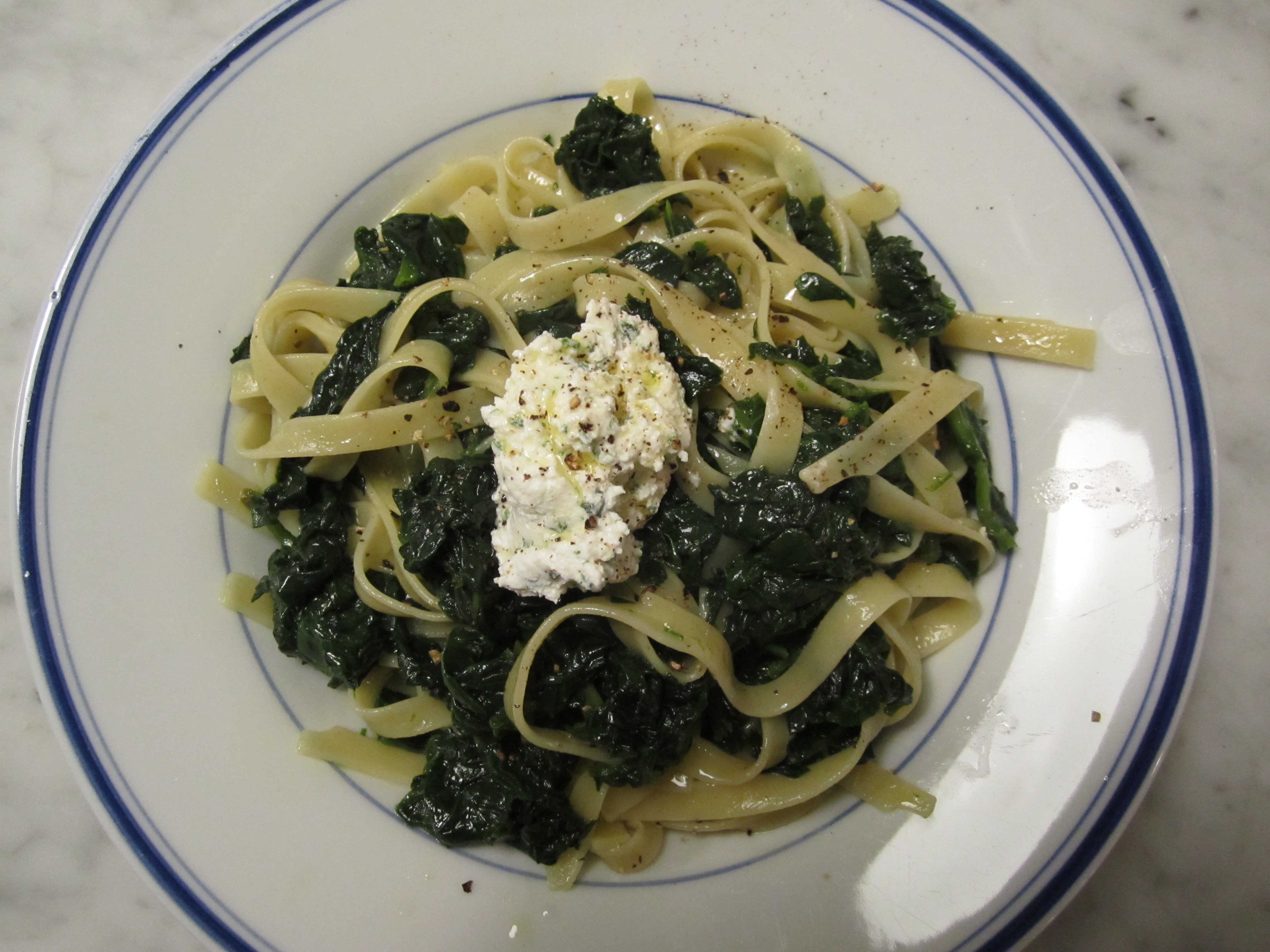
Pasta with Spinach, Ricotta and Mint


Because I have some fresh mint left from the lamb meatloaf several days ago and because I don’t like to throw things away, I’m making a pasta dish featuring mint. 

When my mother made lasagne, she layered ricotta, grated pecorino and tiny meatballs between the layers of homemade pasta sheets.  To the ricotta, she always added a pinch of mint and black pepper.  The mint (used judiciously) gave the ricotta a wonderful subtle green flavor that I always loved.

Pasta with spinach, garlic and olive oil is also an old favorite of dish of mine.  I like to add a dollop of ricotta on top for some protein and richness (since spinach and ricotta are a famous match made in heaven).  Adding a touch of chopped mint to that dollop of ricotta is a natural and gives the dish a bright freshness you will love.  To complete the happy combination, add a generous amount of grated pecorino and black pepper.

If there’s any mint left, brew some tea.

Pasta with Spinach Ricotta and Mint

Serves 4

2 bags fresh spinach, rinsed (even if it’s pre-washed–there’s always some sand)

4 cloves garlic, split in half

6 tbl extra virgin olive oil

1/2 cup chicken broth

1 lb fettucine or other ribbon-shaped pasta (you can use short fat pasta like rigatoni or ziti)

1/2 cup fresh ricotta

1 tbl fresh mint leaves

salt and pepper

grated pecorino

plunge spinach into boiling salted water for 2 to 3 minutes.  Drain and shock with cold water.  Squeeze dry in small batches. 

Chop mint leaves and fold into ricotta (or blend in food processor).  

Boil pasta in salted water.

While pasta is boiling, brown the garlic cloves in 5 tablespoons of the oil slowly over low heat  in a broad skillet large enough to hold the pasta.  Raise heat and add spinach.  Saute for a minute.  Add broth and saute for another couple of minutes.  Check for salt and pepper, then set aside.

When pasta is cooked, toss into spinach and saute while adding a ladle of pasta water to the skillet.  Saute for a minute or so to combine.

While pasta is steaming hot, top with dollops of the mint ricotta, pecorino and black pepper.  Serve immediately. 

Posted in Pasta | Leave a comment

Fettucine with Chicken

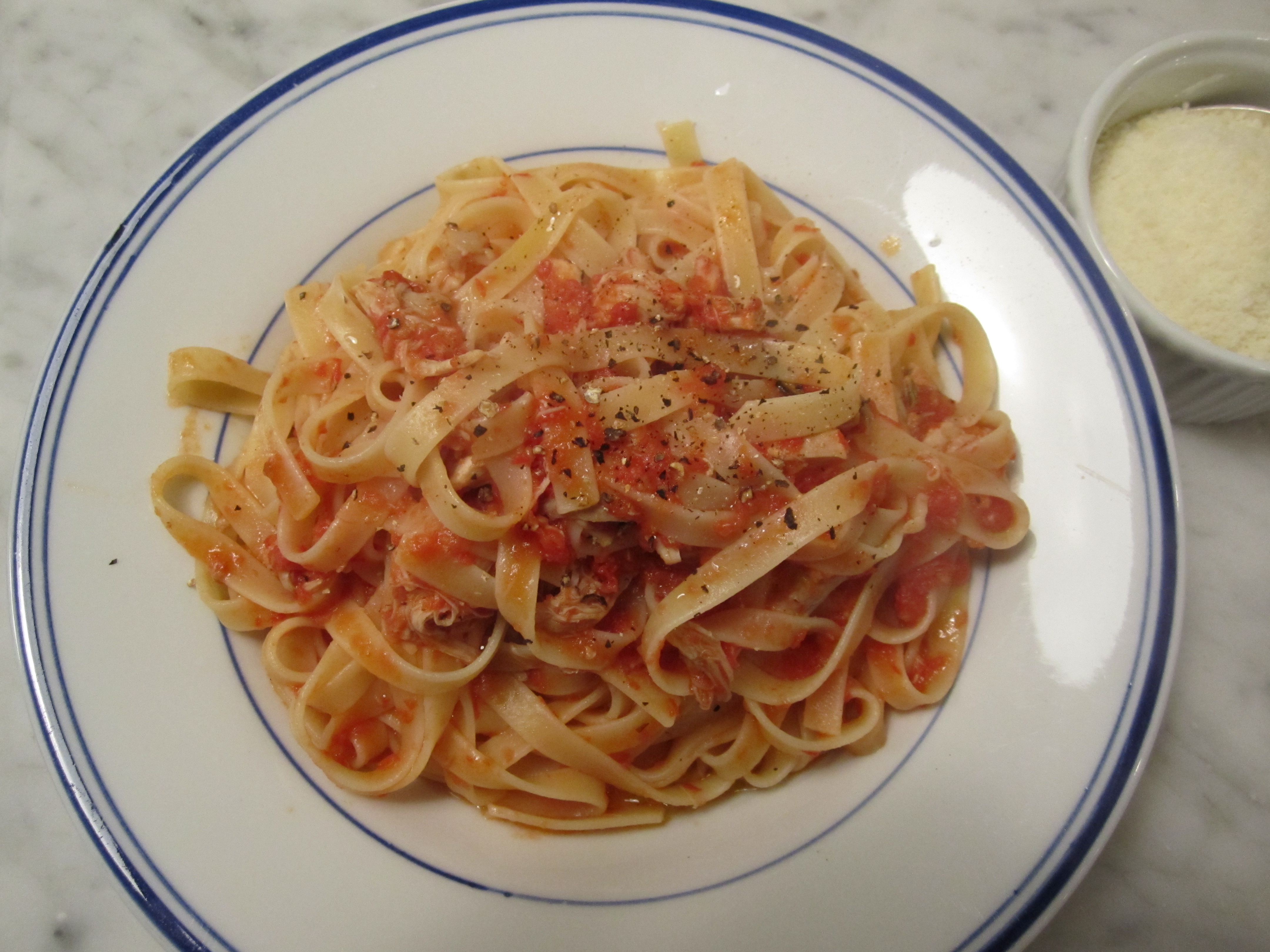
With the leftover chicken from my broth (see my last post), I decided to make a tomato sauce to put over pasta.    Although any tomato sauce will work, this particular sauce is a technique I developed last winter.

In the past several years, I’ve been constantly amazed at how sweet and delicious those ubiquitous grape tomatoes have been, in stark contrast to the watery, flavorless other varieties of winter tomatoes.  Even the ones “on the vine” are bland weak facsimiles of real summer tomatoes.  Before grape tomatoes appeared in every market, I would make my tomato sauce with canned san marzano  tomatoes (which I still do, often).  Or on special occasions, I’ll use my mother’s home-canned Jersey tomatoes from the fall (the gold standard of tomatoes). 

But when the grape tomatoes are a nice deep red color (they can even be shriveling a bit), they make a sauce that rivals summer tomatoes.  It’s the simplest thing–take a couple of pints of them, rinse them and remove any rotten ones–then simply run them through the food processor until they’re a coarse puree.  Saute a bit of onion in some olive oil until it’s translucent, pour in the tomatoes and simmer for twenty minutes on low.  Add a couple of basil leaves, or in the case of my chicken sauce, I like a sprig of rosemary, which I pull out before serving.

A lot of olive oil is required for this sauce since the pureed tomatoes can be on the watery side.  They need the body of the oil to become a sauce–not a soup.  The flavor of this sauce will definitely bring you back to summertime.

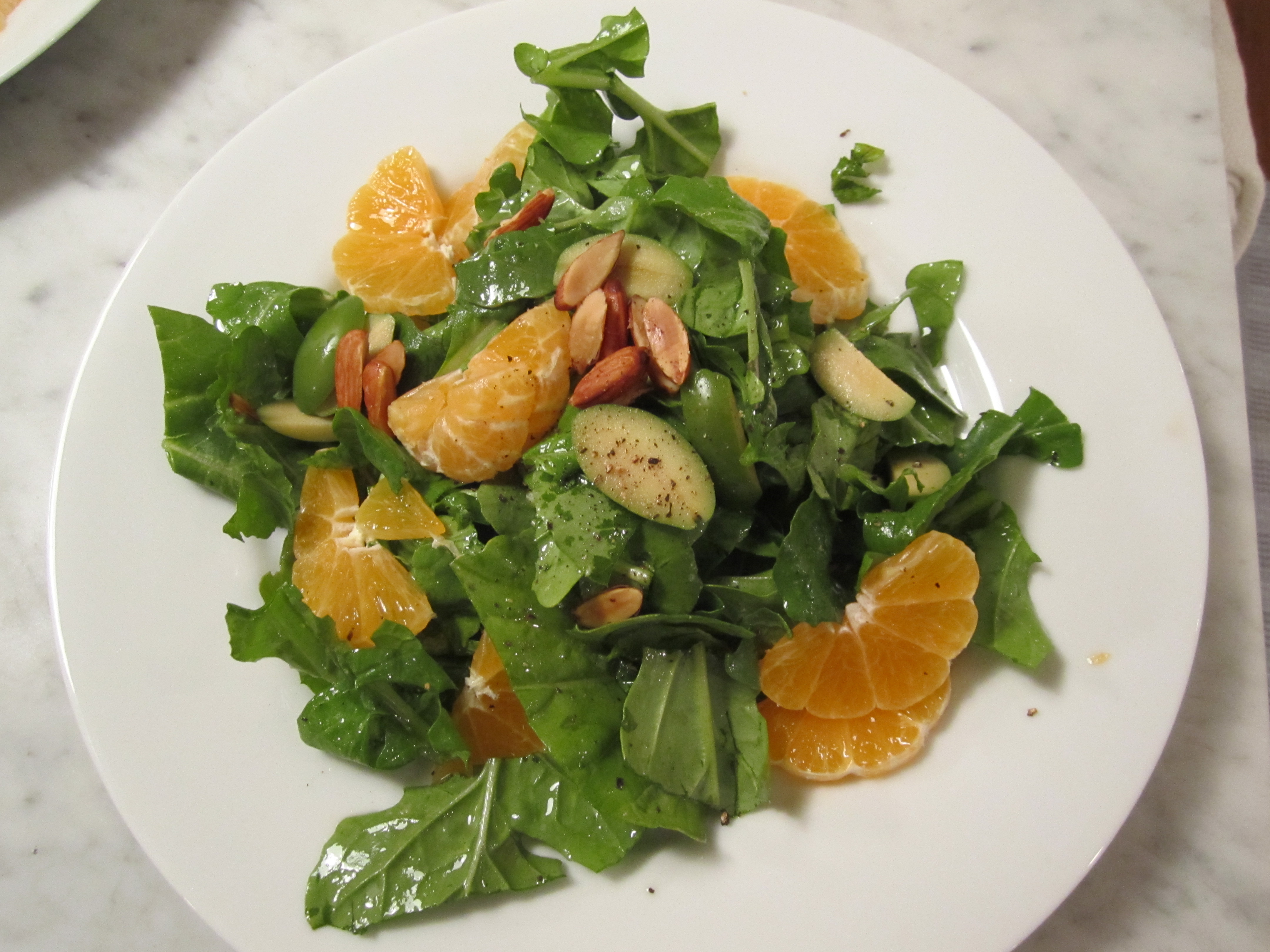
The perfect accompaniment for pasta, in my opinion, is always salad.  For this meal, I made another of my winter salads, using arugula, clementines, green olives (they keep appearing because I bought a large container) and almonds.  Clementines and oranges are two of the things I absolutely look forward to about winter–I eat them every day.

Enjoy.


Tomato Sauce with Chicken 

2 pints ripe grape tomatoes, rinsed

6 tbl extra virgin olive oil

2 tbl finely chopped onion or shallot

1 1/2 tsp salt

1/4 tsp black pepper

1 rosemary sprig or 6 basil leaves, torn in half

1 to 1 1/2  cups shredded dark meat chicken

Heat onion in oil on low heat in wide-sided sauce pot until onion just begins to turn golden.  Pour in tomatoes and add salt and rosemary sprig (if using) and simmer on low for about 20 to 25 minutes.  Add shredded dark meat from chicken and simmer 5 minutes longer.  Toss with fettucine (or short, fat pasta like rigatoni).  Toss in basil at the end (if using).

Serve with more oil drizzled on top and lots of grated pecorino romano and black pepper.

Makes enough sauce to dress 1 lb of pasta

Arugula and Clementine Salad

2 Bunches of arugula, washed, dried and sliced crosswise into wide ribbons

4 clementines, peeled and sliced crosswise into thin slices

8 large cerignola olives, pitted

1/2 cup slivered or coarsely sliced almonds

1 tbl red wine vinegar

2 tbl extra virgin olive oil

1 tsp agave or honey

salt and pepper to taste.

In a large salad bowl or mixing bowl, drizzle the vinegar over the greens first, then the agave or honey, then the oil and some salt and pepper.  Toss, taste, and add more salt if necessary.

Arrange clementines on top among the greens and sprinkle with olives and almonds.

Posted in Pasta | 2 Comments

Risotto with Chicken and Peas

Risotto with Chicken and Peas

Maybe because there’s snow on the ground and more coming, the aroma of simmering chicken broth seems very inviting. This is really to show you that making your own chicken broth is very practical–it provides you with a couple of meals and then a couple of bags of frozen broth to add to other dishes in the future to increase their flavor exponentially.

Some recipes call for using several whole chickens, then discarding the meat and vegetables.  I hate discarding anything in the kitchen, so I use a minimum of vegetables in my broth and I only use the dark meat to make broth (thighs, legs or wings).  I use dark meat because it holds up to long-simmering, then simmering again in some other use.  The breast dries out with long-simmering, I find.

I love risotto and I only make it with homemade broth, so the first day of making broth, I’m always inclined to use the occasion to make risotto.  Because I love risotto as a main course, the easiest way to introduce some protein into it is to add back some of the chicken meat as it simmers. 

To make the broth, simply place a bunch of thighs/legs/wings in a stockpot or dutch oven.  The amount of water depends on how much of the pot is taken up by the chicken–about fifty percent chicken parts/fifty percent water is a nice ratio for a nice flavorful broth–but you can get by with a little more water/less chicken by adding a bit more salt.

Add a couple of ribs of celery, cut into thirds or quarters and a large onion, cut in quarters (not peeled–the peel has flavor).  These will be discarded at the end, unless you like eating them as you’re straining the broth, as I do.

The crucial ingredient in broth is salt.  If you’ve done everything the way you think you’re supposed to and it still tastes flavorless, chances are you haven’t added enough salt.  It’s tricky. You can throw in a bouillon cube or two, let them dissolve, and then start tasting and adding salt.  After you add some salt, simmer for a little while (ten minutes or so) before tasting and adding more. 

The broth develops flavor from resting in the fridge overnight as well–it always tastes much rounder and fuller the next day.  But don’t let that prevent you from making risotto the day you make it . . .

The risotto begins with shallots or onions simmering in butter in a curved-bottom saucepan  for about five minutes.  Raise the heat to medium-high and add the rice and saute it with the onion for another five minutes or so.  Next, pour in some white wine and it will sizzle and evaporate very quickly.  Next, set the timer to fifteen minutes . . . Begin adding broth to the rice about a cup at a time, stirring often.  Stir it often enough to not let the rice begin sticking to the bottom of the pot.  You’ll need about four or five cups of broth to one cup of rice (this is good for a hearty main course for two people).

After about ten minutes, add some shredded chicken meat and continue stirring.  At fifteen minutes, add some frozen peas and cover and let sit for five minutes.  Before serving, stir in some more butter and a good amount of grated parmiggiano cheese.  Add a bit more broth to make it as soupy as you want.  Always serve in a warm bowl with more cheese.

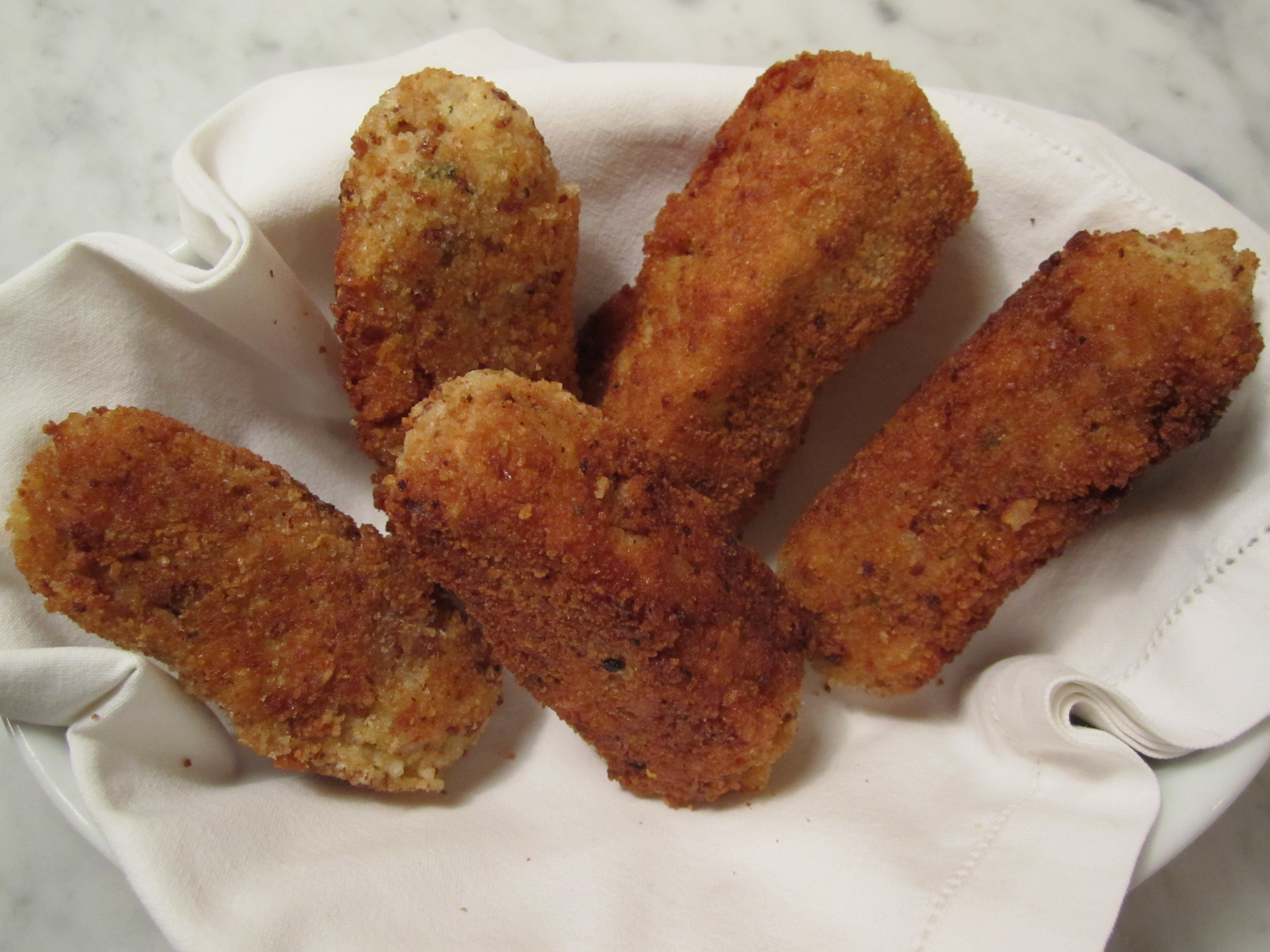
If you decide to make an extra-large batch of risotto, you can make croquette di riso or rice croquettes the following day or a couple days later.  I learned these from my neighbor Beppi.  They’re a labor of love and I’ll try to explain them in the recipe that follows. 

If there’s still some chicken left from the broth, I love to poach it in a simple tomato sauce to have over fettucine.  The chicken imparts a very delicate flavor to the tomato sauce and in no way feels like the recycling of a leftover.

Finally, take the remaining broth and freeze it in quart-size ziplocs for later use.

Enjoy.

Simple Chicken Broth

8 to 10 chicken thighs, legs or wings (or combination)

3 ribs of celery cut into fourths

2 small onions or 1 large, unpeeled, cut into quarters

water

salt

Place chicken in stockpot or dutch oven and cover with water by a couple of inches.  Add vegetables and bring to a simmer.  Partially covered, simmer for about an hour.  From time to time, skim froth from top and discard. 

After one hour, add some salt and/or a bouillon cube.  Let simmer ten more minutes, then taste.  Add salt until it tastes good.

Let rest in fridge overnight and skim solid fat from top the next day.

If using for risotto the same day, don’t worry about dipping into the fat on top–it only makes the risotto taste better.

Risotto with Chicken and Peas

Large batch–Serves 6 or use leftovers for rice croquettes (recipe follows)

1 stick of butter

8 small shallots or 2 large onions, dice fine

1 lb arborio rice (or other risotto varieties, like carnaroli or vialone nano)

1 cup white wine

Shredded chicken meat from broth

10 cups of chicken broth (and maybe more)

1 cup frozen peas

1 cup grated parmiggiano

Melt 6 tablespoons of butter in curved sided saucepan (enameled cast iron works best–otherwise any heavyweight pot).  Slowly saute shallots until they just begin to turn golden.  Raise heat to medium-high and add rice and saute for about five minutes.  Add wine and let evaporate for a couple of minutes.  Add a cup of the stock and reduce the heat to medium.  Set the timer for fifteen minutes and keep stirring from time to time to prevent the rice from sticking to the bottom of the pan.  Continue adding stock a cup at a time or enough to keep it creamy-looking.  If it’s going too fast and it looks dry, immediately add broth. Better to keep it too moist than too dry.

At ten minutes, add the chicken meat and continue adding broth as needed.  At fifteen minutes, add the remaining butter, 1 cup of parmiggiano and the peas.  Cover and let rest for five minutes.  It should be creamy with a little bit of bite left in the rice.  Add a little broth at the last second if you want a soupier consistency–sometimes I do, sometimes not.

Beppi’s Croqette di Riso

3 cups Leftover Risotto (could be a little more, just adjust breadcrumbs–see below)

1 cup flour

4 eggs

3 cups seasoned breadcrumbs

1 cup parmiggiano

1 cup chopped parsley

1 teaspoon black pepper

1/8 tsp freshly grated nutmeg

Olive Oil for frying

Use risotto while it is still cold from the refrigerator.  If there are any chicken pieces, dice them into small dice and add back to risotto.  Add 2 eggs plus all of the parmiggiano, parsley, black pepper and nutmeg.  Add about a cup of the breadcrumbs or enough to make the mixture feel fairly stiff.  Refrigerate again for fifteen minutes.

Line up three pie plates or shallow baking dishes next to each other and in the first one, place the flour, spread out in an even layer.  In the second, crack and beat the remaining 2 eggs.  In the third, spread out the remaining seasoned bread crumbs (add more, if necessary).

Make little torpedoes of the risotto about 4 or 5 inches long and about 2 inches wide and dip each first in flour (gently knock off the extra flour from each after dredging) then in beaten egg, then roll in crumbs.  Place all on a platter and regrigerate again for at least 15 minutes. 

Heat an inch of oil in a dutch oven until a cube of bread sizzles when you place it in.  Gently fry the croquettes, gently turning until golden brown.  They should take about ten minutes to fry.  If they’re browning too quickly, lower temperature of the burner. 

Can be eaten at any temperature.


Posted in Risotti | 2 Comments

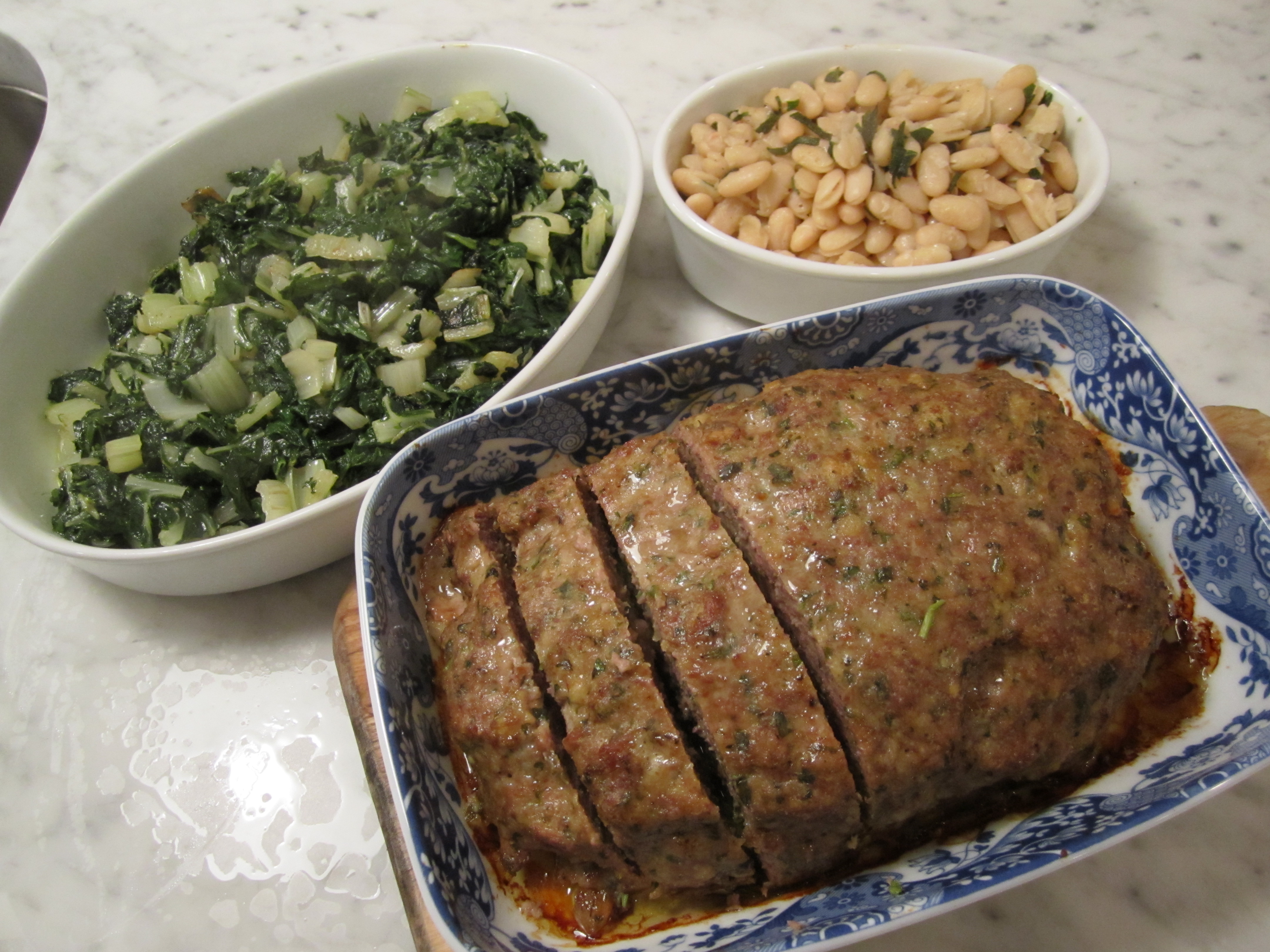
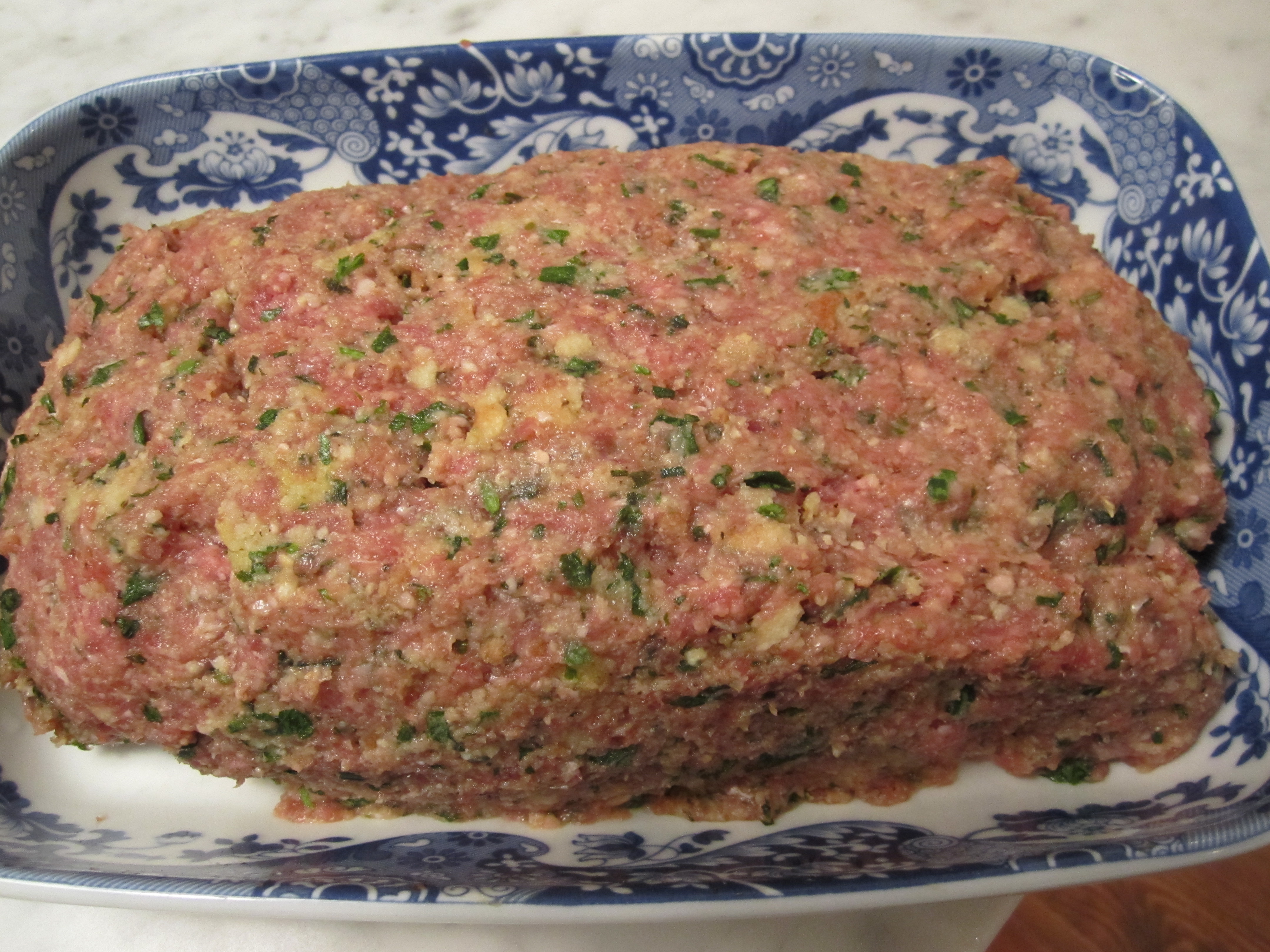
Lamb Meatloaf with White Beans and Sage + Swiss Chard

I’m not a huge red meat eater and beef is always the last thing I’ll order or make, however, I do love lamb.  It’s more interesting than beef, slightly gamey and has a nice rich texture.  My favorite way to enjoy lamb is in a meatloaf (my favorite way to enjoy anything is in a meatloaf).

This meatloaf is on the easy side as meatloaves go, because there is no sauteing of aromatics beforehand.  The ingredients are simply chopped or pulsed raw in the food processor, then assembled.  It can be assembled a couple of hours ahead, held in the fridge, then popped in the oven an hour-and-a-half prior to dinner.

A key element of this dish was inspired by my neighbor Beppi. (see “Why this blog” post).  He makes a stuffing for turkey in which he soaks some white bread cubes in broth, then places the other ingredients in a food processor to combine.  The soaked bread adds just the right amount of moisture to the stuffing, as it does for this meatloaf. 

Another ingredient in this stuffing which is derived from Beppi (as well as my mother, in her meatballs) is seasoned commercial breadcrumbs (they use “Progresso Italian Seasoned” breadcrumbs).  I use seasoned breadcrumbs made by my local gourmet market, “Citarella”. 

Whether to bake covered or uncovered is another variable with which I’ve experimented.  I find that my mother’s technique of covered, then uncovered-near-the-end works well to keep a little moisture in the loaf and a little juice in the pan.

I like to serve the meatloaf cold the next day, but if I want to re-heat it for dinner the next night, I make a simple tomato sauce in which to gently simmer the slices of cold meatloaf. To reheat two slices of meatloaf, place a cup of tomato sauce on the bottom of an eight-inch skillet, then the slices on top, then simmer , covered, on low heat for about ten minutes until the sauce bubbles.  Serve with gnocchi.

The meatloaf keeps for at least four days and makes a great sandwich as well.

Along with the meatloaf, I served white beans with sage and sauteed swiss chard  (from my freezer already cooked from the fall crop).

Enjoy.


Lamb Meatloaf

Serves 6

2 lbs ground lamb

1/2 c fresh mint leaves

1/2 c fresh parsley leaves

1/2 c fresh chives, chopped into 1″ batons

2 large eggs

4 slices white bread (can be stale)

1 c chicken broth (can be bouillon)

1/2 c seasoned breadcrumbs

1 1/2 tsp salt

1 tsp freshly ground black pepper

1/8 tsp freshly grated nutmeg

Soak bread in broth for at least ten minutes. 

In  food processor, chop mint, parsley, chives (pulse until they are coarsely chopped).  Add bread/broth and process into a coarse mush (about fifteen seconds or so). 

In a large mixing bowl, place the lamb, eggs, seasoned crumbs, salt, pepper and nutmeg.  Add bread and herb mush and mix with hands until well combined.

Turn into a rectangular baking dish and shape into a loaf.

Cover and bake for an hour, then uncover for about fifteen minutes. 

It’s done when a meat thermometer reads 165 degrees.

Let rest at least ten minutes before slicing.


Lamb Meatloaf

White Beans with Sage

1 lb canellini beans, soaked overnight

1 small bunch sage

4 tbl extra-virgin olive oil

salt and pepper to taste (lots of both)

Place soaked and drained beans in dutch oven and cover with cold water by a couple of inches.  Cover and bring to simmer slowly–try not to let it come to a rolling boil or the beans will not hold their shape.  Simmer until beans are tender (about an hour–maybe more).  Add salt about half-way through the cooking process and taste the beans and the cooking water until the water is salty enough.

Drain beans but keep the liquid for future reheating.

Place sage leaves (torn in half) in skillet of cold olive oil.  Turn heat on low until leaves begin to simmer (about ten minutes).  Add beans (half the batch–keep the rest in a bag in the freezer until next time) and simmer for about ten minutes in the sage and oil.


Swiss Chard

2 bunches swiss chard

4 tbl extra-virgin olive oil

2 cloves garlic cut in half

salt and pepper

Cut bottom 1″ off the swiss chard stems and discard.  Slice the remaining stalks crosswise into 1/2″ to 1″ pieces from the bottom up.  When you get to the leafy parts, keep slicing into 1″ ribbons so that there is a pile of stem pieces and a pile of leaf pieces.  Soak in a deep mixing bowl of cold water so that the sand falls to the bottom.  Gently lift the pieces out of the water and discard the water and repeat until there is no more sand remaining (usually twice but sometimes three times if the chard is really sandy).

Plunge leaves and stems all together in boiling salted water and boil for approximately 12 to 15 minutes, until the fattest stems are on the tender side of crisp.  Drain in colander.

When ready to serve, brown the garlic in olive oil on low heat until golden.  Add the swiss chard and saute for about 10 minutes.  Taste and add salt and pepper (lots).


Posted in Meat | Leave a comment

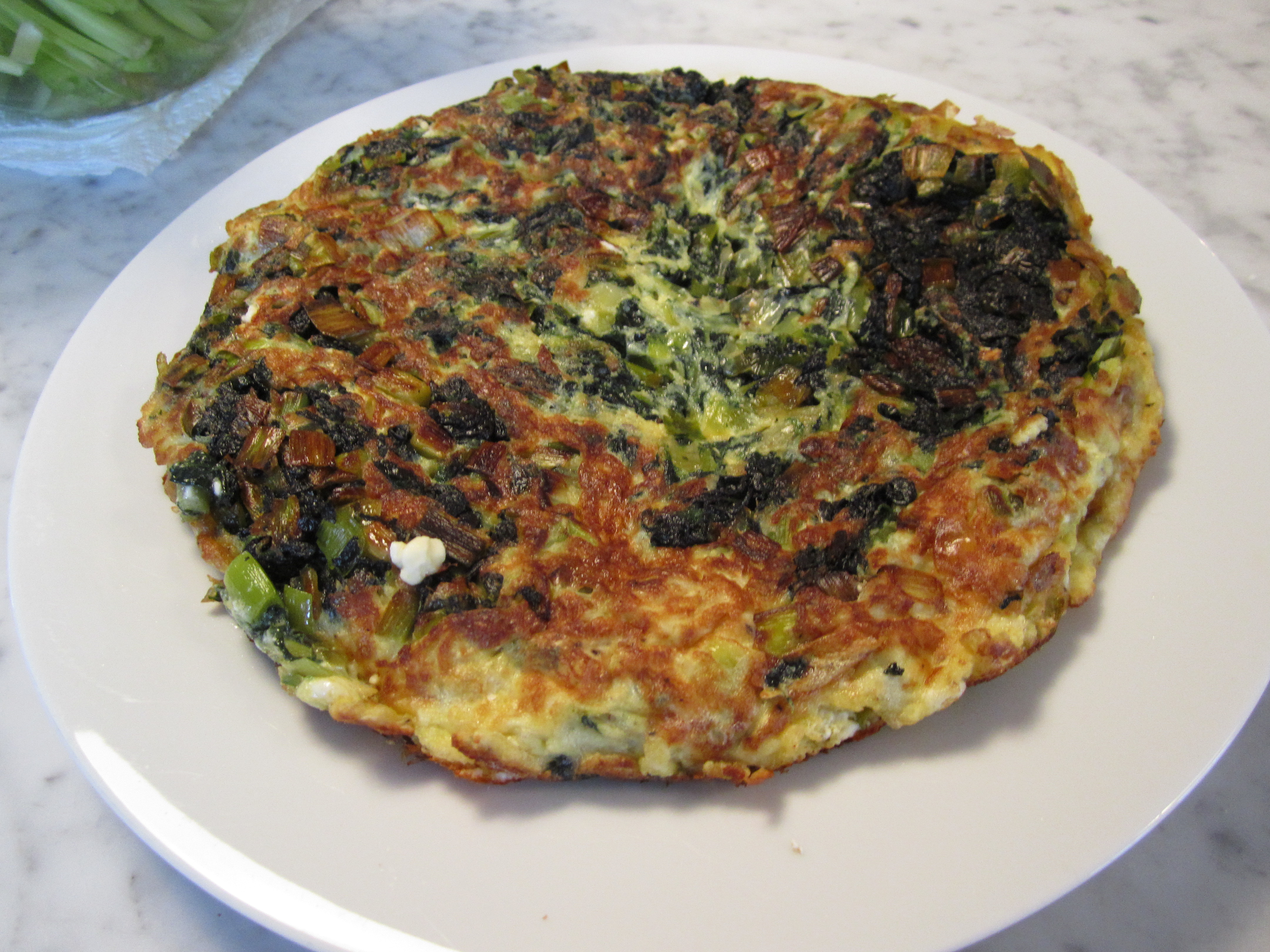
Spinach and Feta Frittata

Left over from the New Year’s Eve dinner, I had some sauteed spinach and feta and decided to make a frittata for brunch the following day.  I also had some leftover watercress, so I made a salad, same as the night before, only omitting the feta, which was now in the frittata.

The technique of making the frittata is simple.  Heat whatever vegetable(s) you’re using in the same skillet in which you’ll make the frittata any green vegetable–zucchini and onion in summer, spinach or swiss chard in winter, asparagus in spring, then fold in the eggs and cook. 

In this case, the spinach had already been sauteed the evening before, so i just put the cold spinach in a cold skillet (8″ diameter) with a bit of butter and gently warmed it.  I like to use a small skillet to make frittata in because the smaller the skillet, the higher (and potentially fluffier) the fritatta.  I usually use some butter because eggs pair well with butter, but sometimes I use only olive oil. 

When the spinach begins to sizzle I add the egg mixture with the heat at medium and start stirring immediately.  Stir the whole thing around for about thirty seconds and then let it begin to set.  Turn the heat down to low.  Without stirring, gently lift each side of the frittata with a heatproof rubber spatula and let any loose egg from the top run down to the underside and lower.  This will insure that once the frittata is brown on the outside, it’s cooked through to the inside (the taller the frittata, the more important to make sure it’s cooked all the way through). 

The only tricky part of the frittata is flipping it.  (Some people recommend simply putting the uncooked side under the broiler, in which no flipping is required but I prefer to flip).  Simply take a large plate (larger than the skillet) and invert the plate on top of the skillet and with the palm of your hand on the plate, take the skillet and plate and flip, then gently slide the frittata back into the skillet to brown on the other side.  Gently lift the frittata to check on the underside, which should become as golden as the first side.  Then slide onto a clean plate.

Let the frittata rest for at least ten or fifteen minutes (or it can come to room temperature) before serving.  It’s also great straight from the fridge on a buttered heated soft and dough-y roll the next day (like a portuguese roll or even a good kaiser roll or burger bun).   

Use the freshest, finest quality eggs you can find (I use either “Country Hen” organic eggs or eggs from “North Sea Farms,” our local poultry farm in Southampton). 

I add a little half-and-half (or even heavy cream if I happen to have some) because I find it adds a creaminess to the finished dish, whereas eggs alone make for a more rubbery frittata.  A touch of ricotta is also nice to add for a neutral creaminess (with no saltiness).

You can vary the filling-to-egg ratio–if I have a lot of vegetables to use up, I use more vegetables and less egg (if I really have a lot of vegetables or am serving a large group, of course, I use a larger skillet and many more eggs). 

Lastly, the salt content of a well-made frittata can vary widely.  If you’re starting out with an already cooked and seasoned vegetable, like I did with my leftover spinach, you’ll need less salt.  If you’re adding a salty cheese like parmiggiano, or in this case, feta, you’ll need less salt as well.  Although I usually don’t give salt quantities in my recipes, I’ll give one here, but ultimately the amount of salt you use will depend on the salinitiy of your other ingredients. The quantity I’ve provided here allows for the already-salty spinach and the already-salty feta.

This frittata, however is for two or three people.

Enjoy.


Spinach and Feta Frittata

12 oz sauteed spinach (or a box of frozen spinach, thawed and squeezed)

2 tbl butter (less if the spinach has already been cooked with oil or butter)

1 tbl olive oil

4 large eggs

2 oz. feta, crumbled

2 tbl fresh ricotta

3 tbl half-and-half or heavy cream

1 1/4 tsp salt

1/2 tsp black pepper

pinch of nutmeg


In an 8″ nonstick skillet, melt butter in oil and add spinach.  Note:  if you’re using an already pre-cooked vegetable, use less butter and oil.  Bring to a simmer on medium heat.

In a mixing bowl, add the remaining ingredients and whisk to combine.  When the spinach is sizzling, pour in the egg mixture and gently stir for about thirty seconds.  Let set for about a minute, then lift each side to let any runny eggs run down to the underside.

After about eight to ten minutes, check the underside by gently lifting with spatula–it should be golden.

Invert a large plate over the skillet and, while securing the plate with the palm of your hand, flip the frittata onto the plate, then slide back into the skillet and let brown on the other side. 

The whole process should take about fifteen minutes, depending on the strength of your flame.

Let rest for at least fifteen minutes. 


Posted in Eggs | Leave a comment

New Year’s Eve Dinner

Braised Veal Shoulder with Sauteed Wild Mushrooms

NEW YEARS EVE DINNER

Menu 

Salad of Watercress, Green Olive, Feta and Grapes 

Braised Shoulder of Veal 

Sauteed Wild Mushrooms 

Sauteed Spinach

Pappardelle with Parmiggiano and Butter


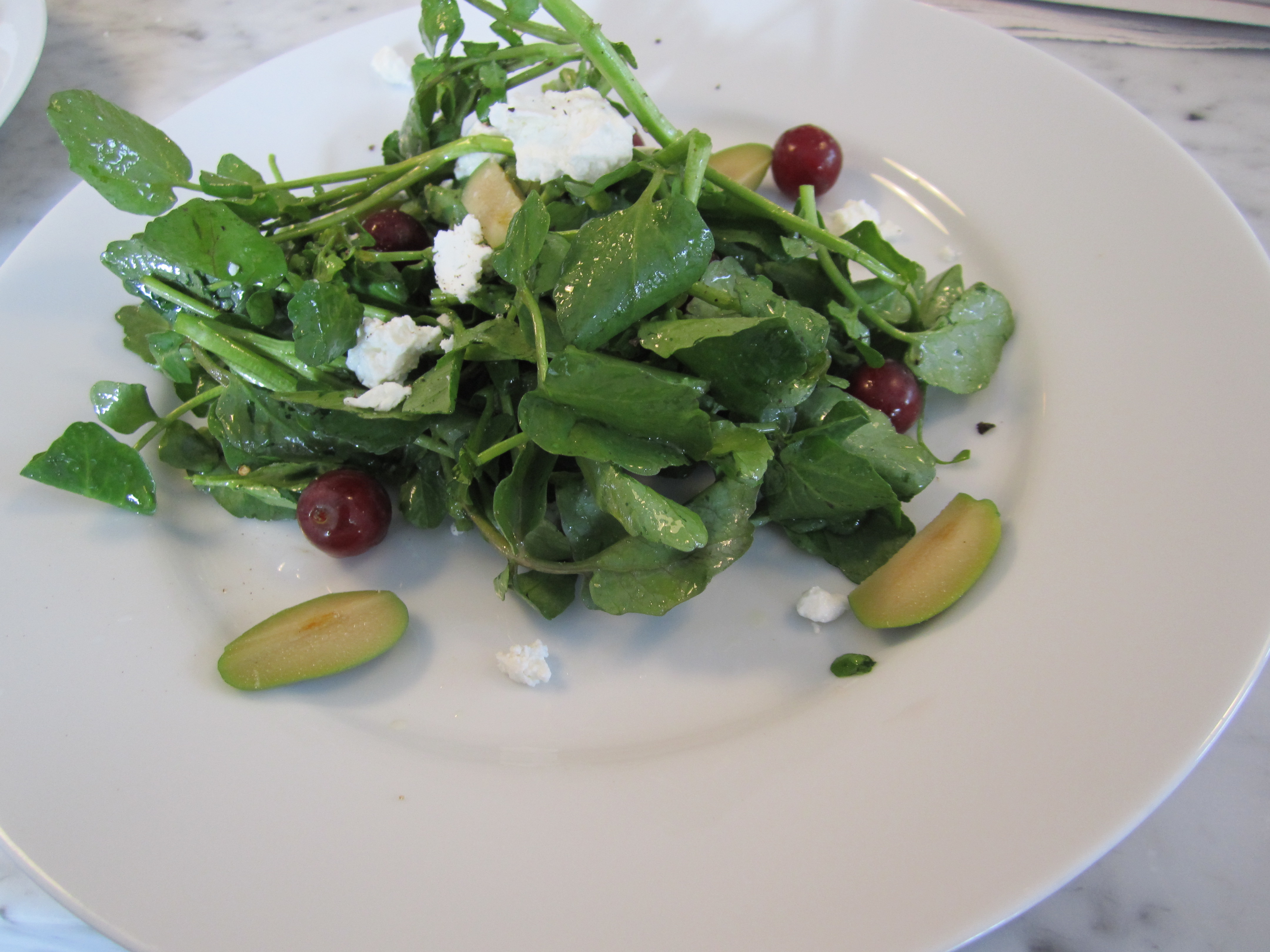
Watercress Salad with Green Olives, Red Grapes and Feta

I was introduced to this dish by my eighty-nine year-old neighbor, Beppi, who always makes it for his son and grandchildren when they visit.  I was invited to join them for this meal and the main course was so meltingly tender and flavorful that I asked Beppi for therecipe and I made it for my New Year’s Eve dinner for six. 

This is a perfect dish to make for entertaining because it can (and must, in my opinion) be made at least one day before serving.  It can even be made weeks ahead, frozen, then thawed and heated in its braising liquid (as Beppi did). 

Because it’s a braised dish, there is a liquid medium in which it can be easily and flawlessly reheated.  Because the shoulder is a cut of meat with a lot of connective tissue, it’s made for stewing and braising and therefore very forgiving if it’s cooked too long or even reheated more than once. 

The braising liquid is a simple combination of chicken broth and white wine.  I made my own broth with chicken leg/thighs and a couple of ribs of celery and two small onions cut in four.  Simply combine all the ingredients, cover with cold water and simmer for about an hour-and-a-half.  Don’t boil too hard or it will turn cloudy (not the end of the world), and skim it occasionally if there’s a lot of froth forming on top.  Salt it well but don’t over-salt (Beppi uses a bouillon cube in place of some salt—it adds a nice rounded flavor). 

Since the main course was made ahead, I could concentrate on the salad and side dishes on the day of the dinner.  I picked a combination of flavors that I knew would work well on the plate and on the palette. 

First we began with a salad of watercress, green olives, feta, and red grapes.  This is a great winter salad and a great appetite-opener because it has a nice balance of sweet and acidic (depending on how fresh your olives are).  I like bright green Cerignola olives when I can find them (the longer they sit in their brine, the more olive-y green they become; when they’re freshly brined, they’re bright green and nice and light and vegetal-tasting. The feta must not be too salty, either—I’ve found French Feta to be nice and mildly salty.

Watercress is an under-served salad green and is always a welcome bright flavor in the middle of winter.  It’s simple to clean—I just chop off an inch or so off the bottoms and  take out any extra-woody stems.  Put in a large deep bowl of cold water and let the sand fall to the bottom, then spin in salad spinner.  Unlike arugula and other greens, it’s never too sandy and doesn’t require more than one soak in water. 

For the main course, I committed a sacrilege in the eyes of most Italians—I didn’t serve the pasta as a separate course by itself, but rather alongside the veal (noodles, American-style).  I thought long and hard about this and the reason was that the veal, with it’s light juicy sauce, really cried out for something bland and starchy on the same plate—pappardelle with butter and parmiggiano (who can resist that, whether it’s on its own plate or not).  

My criterion for the other accompaniments was their compatibility with the veal jus.  Sauteed spinach and sautéed wild mushroom not only speak to the season, but are also irresistible with meat as well as pasta.  

A word on the spinach.  For years, I’ve been somewhat dissatisfied with my sautéed spinach.  I’ve made it with olive oil, butter, cream, béchamel (always good, but very heavy).  My spinach was never as good as my gold standard for sautéed spinach—“Bar  Pitti” in Manhattan.  For years I’ve been ordering the sautéed spinach at Bar Pitti and it’s always perfect—salty, moist and without a trace of that iron-y aftertaste that often accompanies spinach. 

I’ve tried more oil (too rich), more squeezing (you  can’t really over-squeeze spinach but then it’s bone-dry), longer pre-boiling before sautéing (too mushy), longer sautéing (scorched flavor).  Instead of  blanching before sautéing, I’ve tried simmering the raw spinach in a skillet with only the water that remains on the leaves from washing (too much irony flavor remains in the leaves). 

Nothing gave me that “Bar Pitti” spinach.  Until . . . I tried a very simple technique.  After boiling the spinach in salted water, shocking it and squeezing it dry, I sauté it in a generous amount of extra-virgin olive oil (with a split garlic clove that’s been browned in the oil).  After sautéing for about a minute (in a very broad skillet on very high heat), I added some chicken broth to the skillet and sauté for another minute or so.  It’s a common thing that chefs do without even thinking about it—splash some chicken stock into a dish for a little added flavor and moisture.  It replaced all the moisture that the spinach needed (since it had been squeezed dry of all it’s iron-y liquid), without having to add ridiculous amounts of oil.  It also added a bit more salt and that certain rounded flavor that restaurants give us and that seems to elude us at home.  (Having cooked in restaurants, I should have figured it out long ago).  

Another word on the mushrooms.  I used three varieties of wild mushrooms that looked beautiful at the market—shiitakes, chanterelles, and cremini.  These each have different amounts of soil on them.  I know that the soil that clings to mushrooms is not harmful if eaten, but who wants a bite of soil?  There are cooks that wash mushrooms and those who consider it a sin.  I’m somewhere in the middle.  I try to only wipe mushrooms with a damp cloth unless they have too many crevices and a lot of visible dirt—in  that case, I rinse them and immediately dry them.  The chanterelles needed a rinse and I must admit they did become a little water-logged but I simply sautéed them a bit longer (very high heat in a very broad skillet) to get that golden color on them before splashing them with sherry (another tip from Beppi).  

The last bit of technique and maybe the most valuable thing I can share with you is how to put it all on the table in perfect condition and perfectly hot. . . Working with Mario gave me all the tools needed to prepare almost any meal for guests.  Restaurant technique involves assembling (prepping) dishes ahead, then “holding”them until you’re ready to put them on the table, then “finishing” them (and putting them on the table) very quickly without sacrificing any quality or texture. 

For this meal, I assembled the meal in the following way:  the veal was, of course, done the day before.  To serve it, I put some of the braising liquid (which will have turned to gelatin when refrigerated) into a large skillet, then added the ½” thick slices of cold veal (slicing meat straight out of the fridge will give you nice clean slices, rather than the stringy slices you get when you slice it hot—another reason to make it the day before). 

The mushrooms, I made completely, and held them in a smaller skillet than the one in which I had sautéed them (they shrink).  Since they had already been browned, I didn’t need that large a skillet in which to reheat them.  They simply sat on the stove off the heat. 

The spinach I prepared a few hours before my guests arrived as follows:  I boiled, shocked, and squeezed it in little fistfuls and left the dry little green balls in a shallow serving bowl at room temperature.  In a broad skillet, I browned the split cloves of garlic in olive oil, then turned the heat off and left the skillet with just garlic and oil on the burner until the last minute. 

The only actual cooking I did at the last minute was to boil the pasta, so I had a large pot of salted simmering water ready.  

I assembled the salad and we ate our first course (the only heat on the stove was the burner under the pasta water and the empty oven in which to warm the plates).  

When we were ready for our main course, I turned the flame on under the skillet of veal  and allowed it to come to a simmer quickly;  put the pasta in the water to cook;  turned the heat on low under the mushrooms, then quickly prepared the spinach as the pasta cooked.  By the time the spinach was finished, the pasta was ready to be pulled out of the water, tossed into a skillet of butter (and a little broth) and all was ready to be plated.  One last tip—putting the plates in the oven for thirty seconds goes a long way toward getting everything to the table steaming hot. 

The rest of the steps in the recipes are self-explanatory. 

Enjoy.  

WATERCRESS SALAD 

Serves 6 

3 Heads Watercress, Washed, Dried and Cut into Bite-size Sprigs

6 Ounces Feta 

1 Cup Red Grapes 

1 Tbl Red Wine Vinegar 

4 Tbl Extra Virgin Olive Oil 

1 Teaspoon Agave or Sugar 

10 Bright Green Cerignola Olives (or other green olive) 

Salt and Pepper 

Mix Oil, Vinegar and Agave and add salt and pepper to taste.  Depending on the brand of vinegar, it may need more or less vinegar—they vary greatly in acidity and strength. 

Remove pits from olives (slice aroung the pit with a sharp knife). 

Toss watercress with dressing in large mixing bowl.  

Place a pile of watercress in the center of large plate.  Scatter grapes, olives and feta on top and around.  Dust with additional black pepper.

 BRAISED VEAL SHOULDER 

6-Lb Shoulder of Veal, tied into a roast 

2 Tablespoons Olive Oil 

6 Tablespoons Butter 

2 Onions or 6 Shallots, or a combination of both 

3 Sprigs Rosemary 

2 Cups White Wine 

2 Cups Chicken Stock 

Flour for Dredging 

Salt and Pepper 

Preheat oven to 350 

Coat veal heavily with salt and pepper.  Heat oil and 3 Tablespoons Butter in heatproof roasting pan or dutch oven.  Dredge roast in flour and Sear in oil and butter on high heat—approximately 2 minutes per side or until golden.  Set aside. 

Discard butter and oil and add 3 Tablespoons of fresh butter to pan.  Add onions and rosemary and sauté for about five minutes or until they just begin to color.  Add wine and reduce about five minutes.  Add broth and bring to simmer.  Add veal to the simmering sauce (there should be about an inch or two of liquid surrounding the veal—it should only be partially submerged.  

Cover with lid or foil and place in oven for two hours.  

Let cool and refrigerate in its sauce, overnight. 

Slice the next day right from the fridge—it should be cold when sliced for nice clean slices.  

To serve, gently reheat slices in sauce (either on stovetop or in oven).

 SAUTEED WILD MUSHROOMS 

2 Lbs Assorted Wild Mushrooms* wiped clean with damp cloth and sliced thin 

4 Cloves of Garlic, Peeled and Split in Half 

3 Tablespoons Olive Oil 

1 Sprig Thyme 

1 ½ Cups Dry Sherry 

¼ Cup Chopped Chives 

¼ Cup Chopped Parsley  

In a broad skillet, brown garlic cloves in oil over low heat until golden (about fifteen minutes).  Raise heat to high and add mushrooms and thyme.  Saute until they begin to turn golden brown (about ten minutes).  Add salt and pepper to taste.  Add sherry and continue sautéing until no more liquid is present and mushrooms begin to crackle and become glazed and golden (can take from five to fifteen minutes, depending on the size of the skillet and the strength of the burner). 

 Sprinkle with chives and parsley and add more salt and pepper if necessary. 

*I used chanterelles, shiitakes and cremini, but you can use all cremini or all shiitake.  If it seems that there is too much soil on the mushrooms, rinse and dry them quickly, or they’ll become waterlogged instantly and won’t brown as well.

SAUTEED SPINACH

 4 10-Oz. Bags of Fresh Spinach 

4 Tablespoons Olive Oil 

4 Cloves Garlic 

¾ Cup Chicken Broth 

Wash the spinach (one bag at a time) in a large mixing bowl filled with cold water (let sand fall to bottom of water and gently lift out spinach).   Although the label might say it’s washed, it’s still better to rinse in this way because there’s always a bit of sand left in the leaves. 

In a pot of boiling, heavily salted water, boil each batch of spinach for about one minute (after the water has returned to the boil).  Drain and shock in ice water. Take fist-size bundles of cooked spinach and squeeze them tightly until there is minimal water left and then with fingers, try to pull apart the tight little balls of spinach so that they’re not so compacted.  

In a broad skillet over low heat, brown garlic cloves in oil for about fifteen minutes.  Turn up heat and add spinach. Saute for a couple of minutes, stirring so as not to burn any leaves.  Add chicken broth and heat through another minute.  

The chicken broth is essential for re-introducing moisture back into the spinach after it’s been squeezed so dry—it adds a layer of complexity (without richness) to the spinach.  

PAPPARDELLE WITH PARMIGGIANO AND BUTTER

 1 ½ Lbs Fresh Pappardelle 

1 Stick Butter 

½ Cup Chicken Broth 

1 Cup Grated Parmiggiano 

Boil pasta and then toss in large skillet with melted butter and broth and sprinkle with ample Parmiggiano, salt and pepper.

Posted in Meat, Pasta, Salads, Vegetables | 2 Comments

Why this blog?

This site is for those who love to cook and want Italian-inspired ideas for daily meals.  My inspiration is drawn from a variety of sources. . .I was raised by a Southern Italian mother who kept her childhood traditions alive in our home through the cooking of our daily meals.  Tomatoes and vegetables were prominent ingredients in my mother’s cooking and she always had a decidedly light and delicate way of preparing her native dishes.

In the 1990’s, I worked for a year as apprentice to Mario Batali at Po restaurant in Greenwich Village (when Mario swore he’d never have another Po).  Mario’s cooking was an innovative take on all manner of regional Italian cooking and was bold, fresh and exciting.  Through him, I learned a variety of techniques and innovations that have remained in my cooking ever since.

In recent years, I’ve been lucky enough to have an equally compelling influence on my cooking.  He is my eighty-nine year-old neighbor, Giuseppe Girardi (known as ‘Beppi’ to his friends).  Beppi was the founder of “San Marco” restaurant, located in Rockefeller Center, circa 1960’s through 1990.  San Marco earned three-stars from Craig Claiborne of the New York Times and was a forerunner of the more elegant, refined Italian restaurants that have come since (many of which are now owned by chefs like Mario Batali).

Beppi is a native of Verona, Italy and his restaurant was a marked departure from the inexpensive red-and-white checkered-tablecloth Italian-American cooking of the 1950’s and ‘60’s.  His cooking has added another unique dimension to my own cooking.  It’s old-world Northern Italian cooking that is refined, elegant, and steeped in tradition.  He’s a vital and witty instructor and master in the kitchen.

My goal in posting this blog is to help provide ideas to cooks who love to prepare Italian-inspired dishes for their day-to-day meals.  I won’t purport to be a ‘30-minute meal’ cook, although many of my meals might easily be prepared in thirty minutes.  I won’t contend that you can make any of my meals with $25 or less, or ‘using only what’s local and seasonal (although I try to adhere to what’s local as much as humanly possible in the 21st century).  In short, I won’t purport to adhere to any format other than cooking the things that I’m most inspired to cook and eat every day.

I live in Eastern Long Island, admittedly an area where there happens to be great local produce (seven months a year), dairy , eggs, and seafood, so I use these local products when they’re available simply because they taste better, not because they bear the stamp ‘organic’.

I shop for food every day because I prefer to plan my meals daily and think about them one at a time.  But everything I make can be made from supermarket ingredients found virtually anywhere.

I will try to make each recipe as precise as possible, but I assume a basic understanding of cooking terminology and a feel for cooking in general.  Salt and pepper are very personal , so most of the recipes will leave that commodity ‘to taste.’

Hope you appreciate the simple and straightforward approach.

Posted in Uncategorized | 2 Comments