Tuscan Kale Three Ways

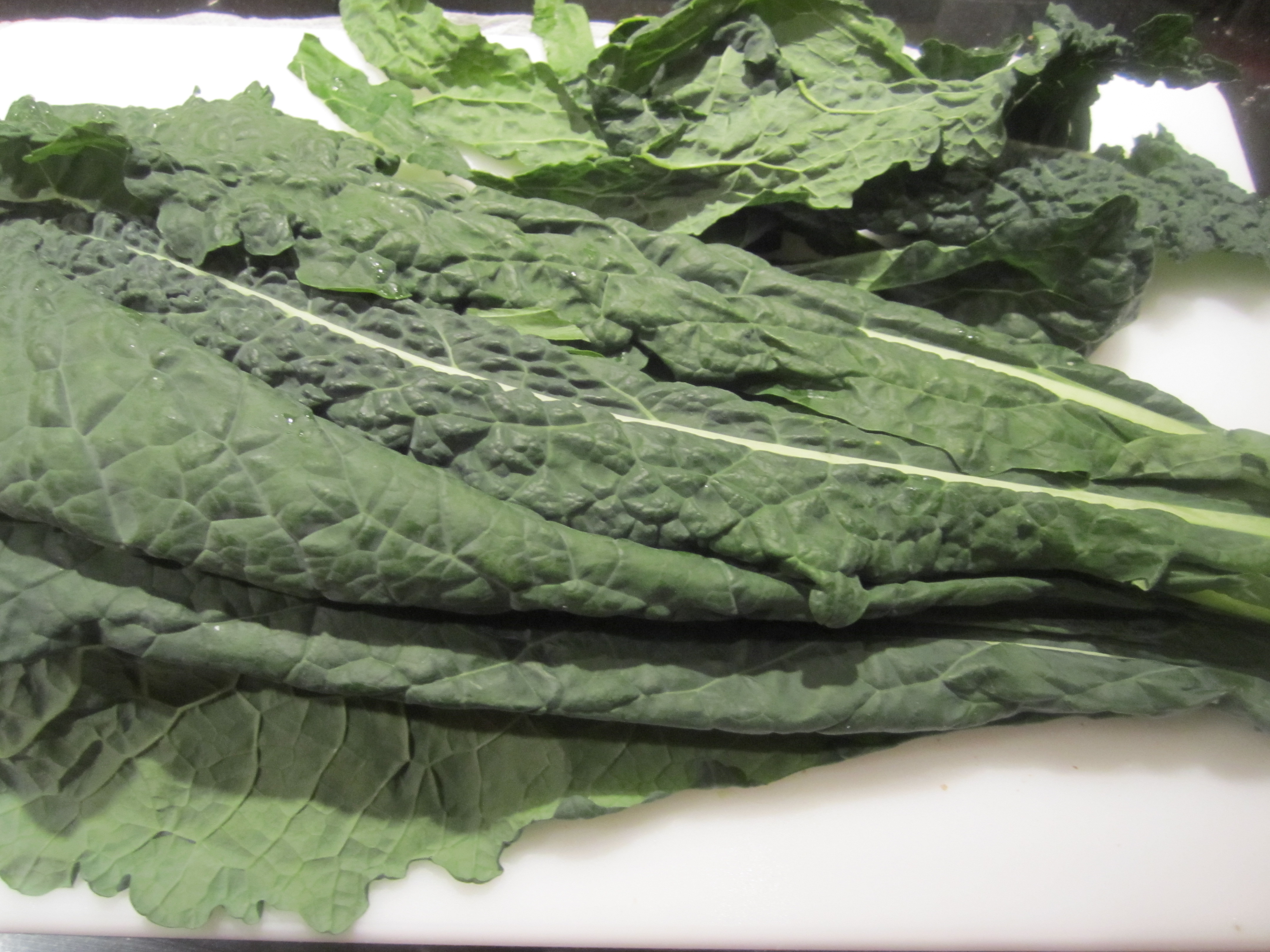
I’ve been thrilled to find tuscan kale at my farmers’ market every week and I never tire of it or run out of ways to make it.  As soon as I get it home, I clean it, blanch it, then figure out what to do with it later.

Hummus with Tuscan Kale
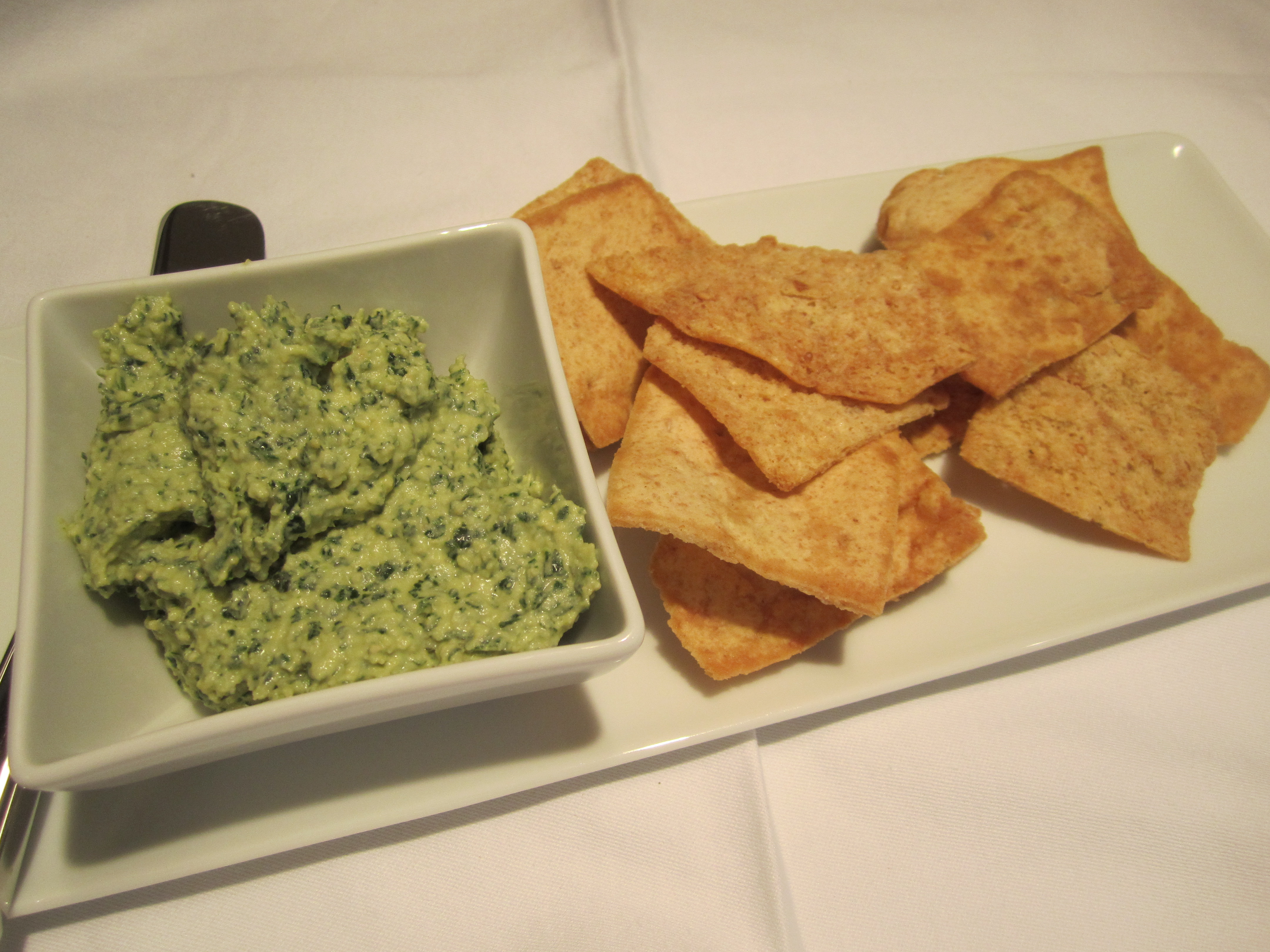
Although hummus is very easy to find at most fine food markets, I always prefer make my own, for the simple reason that most brands of hummus contain raw garlic, which I don’t care for in any recipe.  Making hummus is as easy as pressing the button of the food processor–just combine canned chickpeas, tahini (sesame paste), lemon juice, salt and a touch of water, and process to a smooth paste.  Add to this a couple of handfuls of cooked tuscan kale, and you have the perfect light(er), green dip to serve with pita chips.

The next two recipes call for Tuscan Kale Pesto.  I’ve already gone on about the virtues of this pesto that stays green, can be heated without worry of damaging its delicate flavor, and can be eaten more like a vegetable (think creamed spinach) than a sauce–I use it much more liberally than traditional basil pesto, since it’s much more delicate and less peppery.  I made an extra-large batch this weekend, since I was expecting ten guests for dinner.  I knew that this would be a treat for them and likely something they’d never tried before.

Farro with Tuscan Kale Pesto
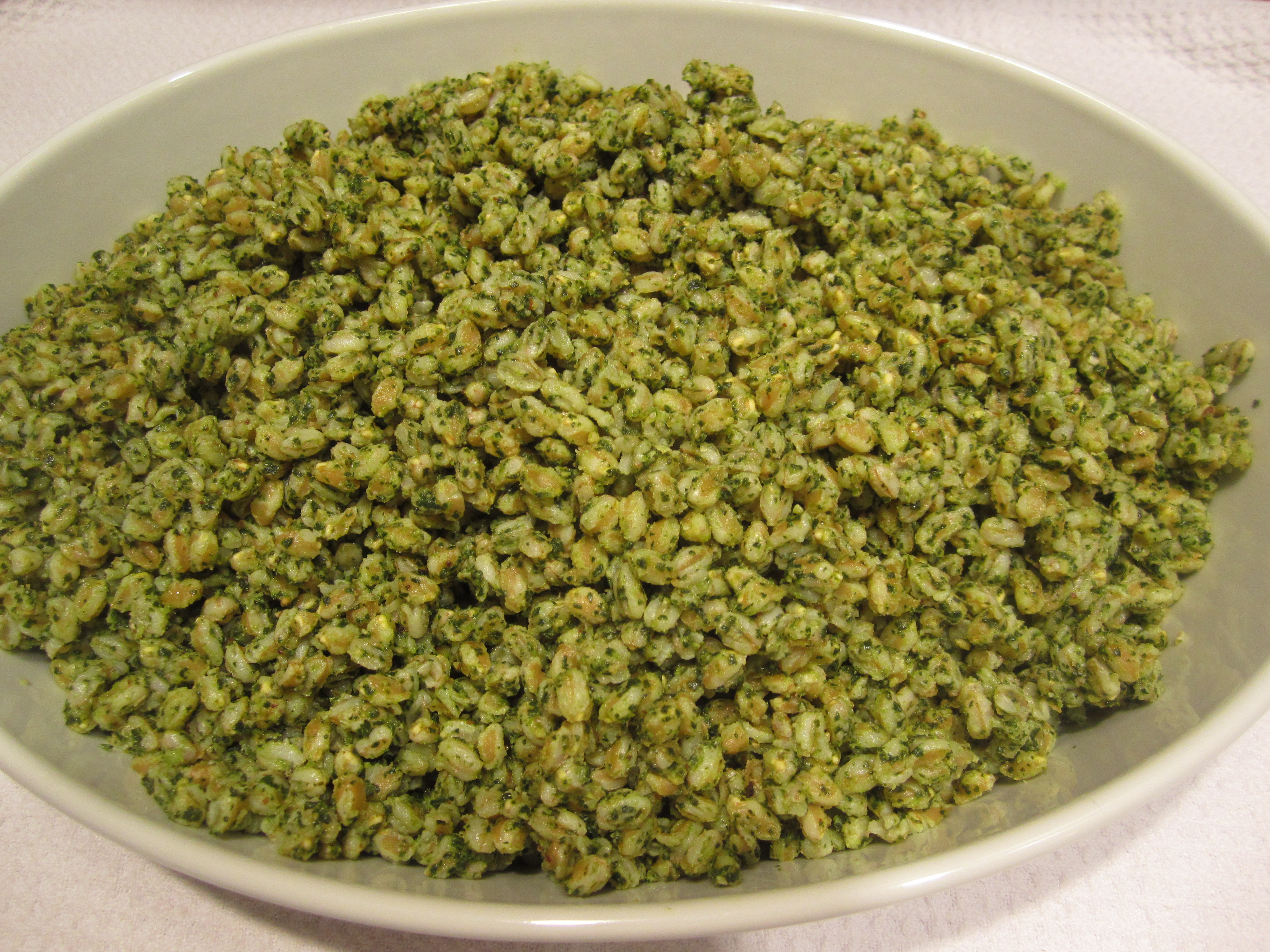
Farro ( a.k.a. emmer, spelt or triticum, depending on whom you ask) is that wonderful, nutty grain that can go almost anywhere that pasta does, but stays firm and can be reheated freely–perfect for a party.  I combined the cooked farro with the pesto and some butter and gently heated the two in a large skillet.  I had so wonderful much farro left over, I came up with a third dish.

Farro and Tuscan Kale Pesto Fritters

These fritters were very easy for a couple of reasons.  First, the farro was already so nicely seasoned from the kale pesto, it needed little other than binder (some eggs, cheese and breadcrumbs).  Second, the fritters need not be dredged in flour/egg/breadcrumbs.  They can simply be formed into patties and fried with no dredging.  The farro itself becomes the brown, crispy and exterior, without the need for an extra layer of breadcrumbs.

Make sure your fritters are well-seasoned with plenty of salt and pepper.  You can mix all the ingredients and taste, prior adding the eggs–it should be aggressively salty.   Then proceed to add the eggs and fry.  Taste the first  batch as it comes out of the skillet–it may still need more salt, which is best sprinkled on while the fritters are still sizzling hot from the skillet.  You’ll have to stop yourself from doing more than just tasting!

Italian-Ate Hummus with Tuscan Kale

serves 4 as an appetizer

15-oz. can of chick peas

3 tbls tahini

juice of half a lemon

3 tbls water

1/2 tsp salt

1 c tightly packed, pre-boiled (for about 5 minutes) tuscan kale leaves

pita chips, for dipping

In the bowl of a food processor, combine drained chickpeas, tahini, lemon juice, salt and water.  Process to a smooth paste.  Set aside.

Place cooked kale leaves in the processor and pulse to chop coarsely, then add the hummus and continue processing to a coarse paste.
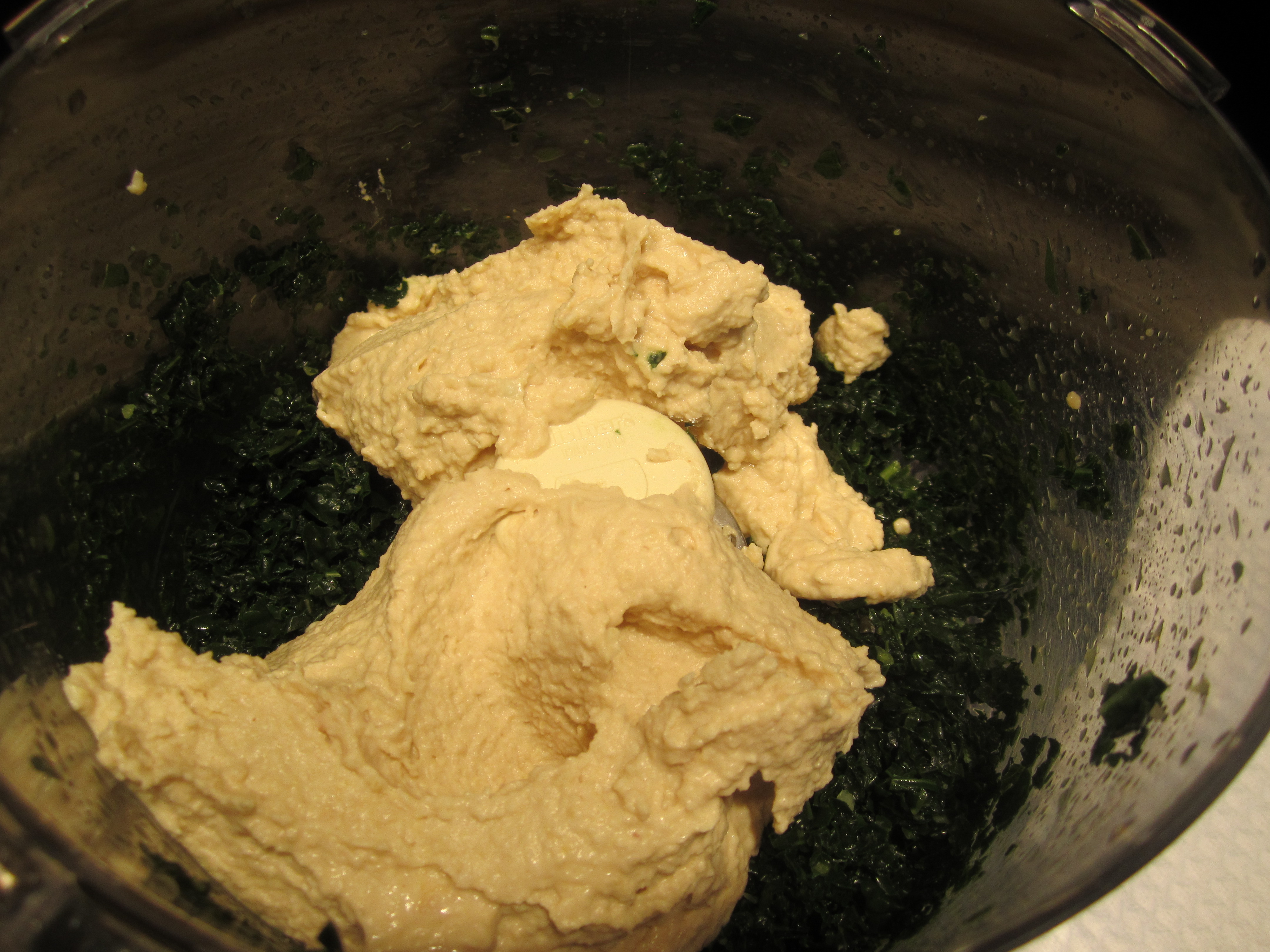
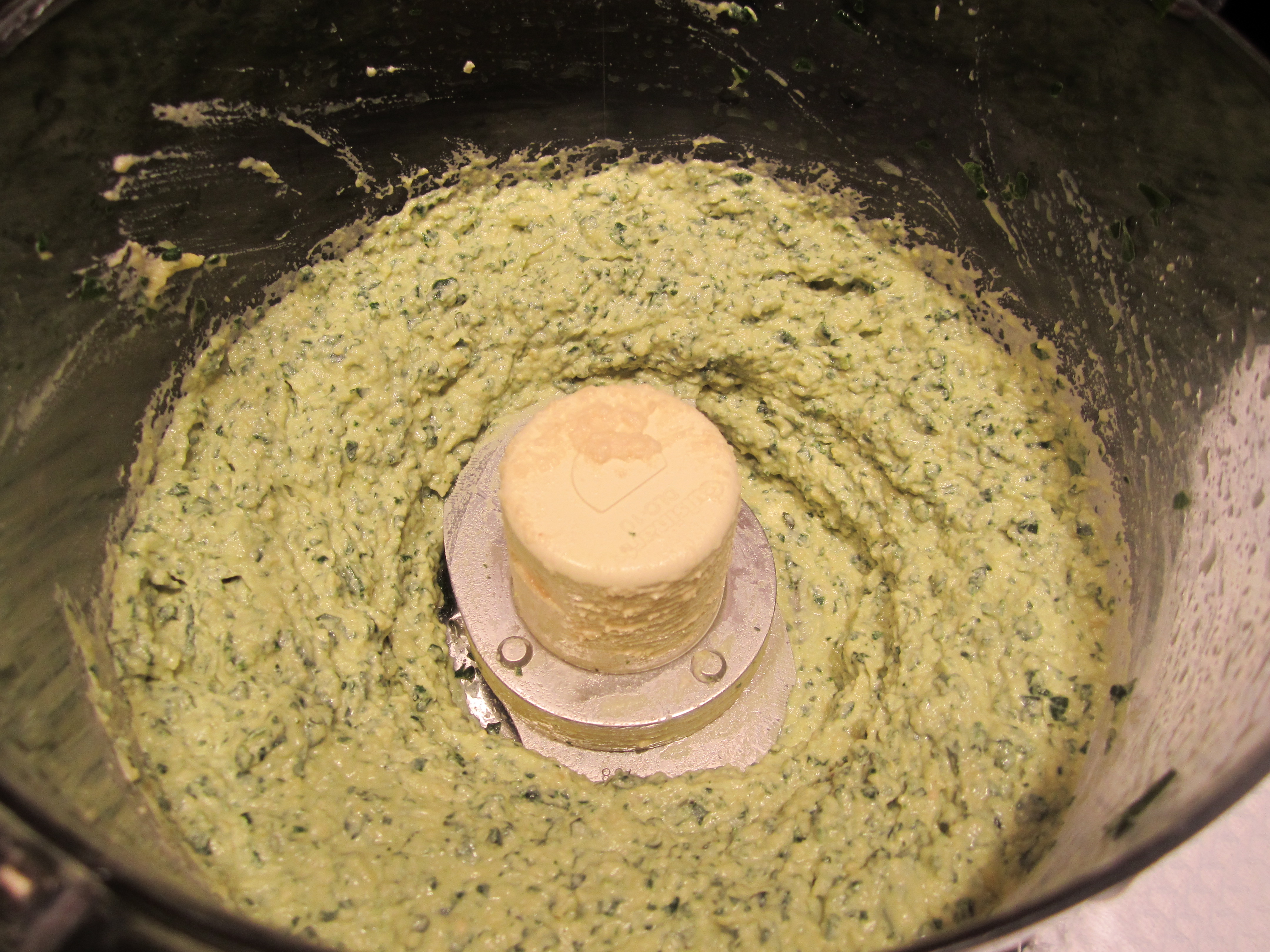
Combine hummus with chopped kale and serve with pita chips.

Farro with Tuscan Kale Pesto

serves 12 with leftovers for making fritters

2 lbs farro 

3 batches of tuscan kale pesto  (approximately 2 bunches of kale)

6 tbls butter

2 c chicken broth

In a pot of cold water, combine farro with water to cover by 3 inches.  Bring to a boil and add a tablespoon of salt.  Simmer uncovered for approximately 45 – 50 minutes.  Drain and set aside.

In a skillet, combine pesto, butter, kale and half the chicken broth.

Stir over low heat and add more broth as necessary to keep the farro moist.  May be made ahead and reheated at the last moment with more broth.

Farro and Tuscan Kale Fritters

approximately 8 – 10 cups cooked Farro with Tuscan Kale Pesto (packed fairly tightly)

1 c grated parmigiano

1 c grated pecorino romano

1/4 c fresh chopped parsley

1/2 tsp nutmeg

7 large eggs

salt and pepper to taste

In a large mixing bowl, combine all ingredients except eggs.  Taste and add salt and pepper.

Add eggs and blend with hands.  Form into patties about 2″ in diameter.
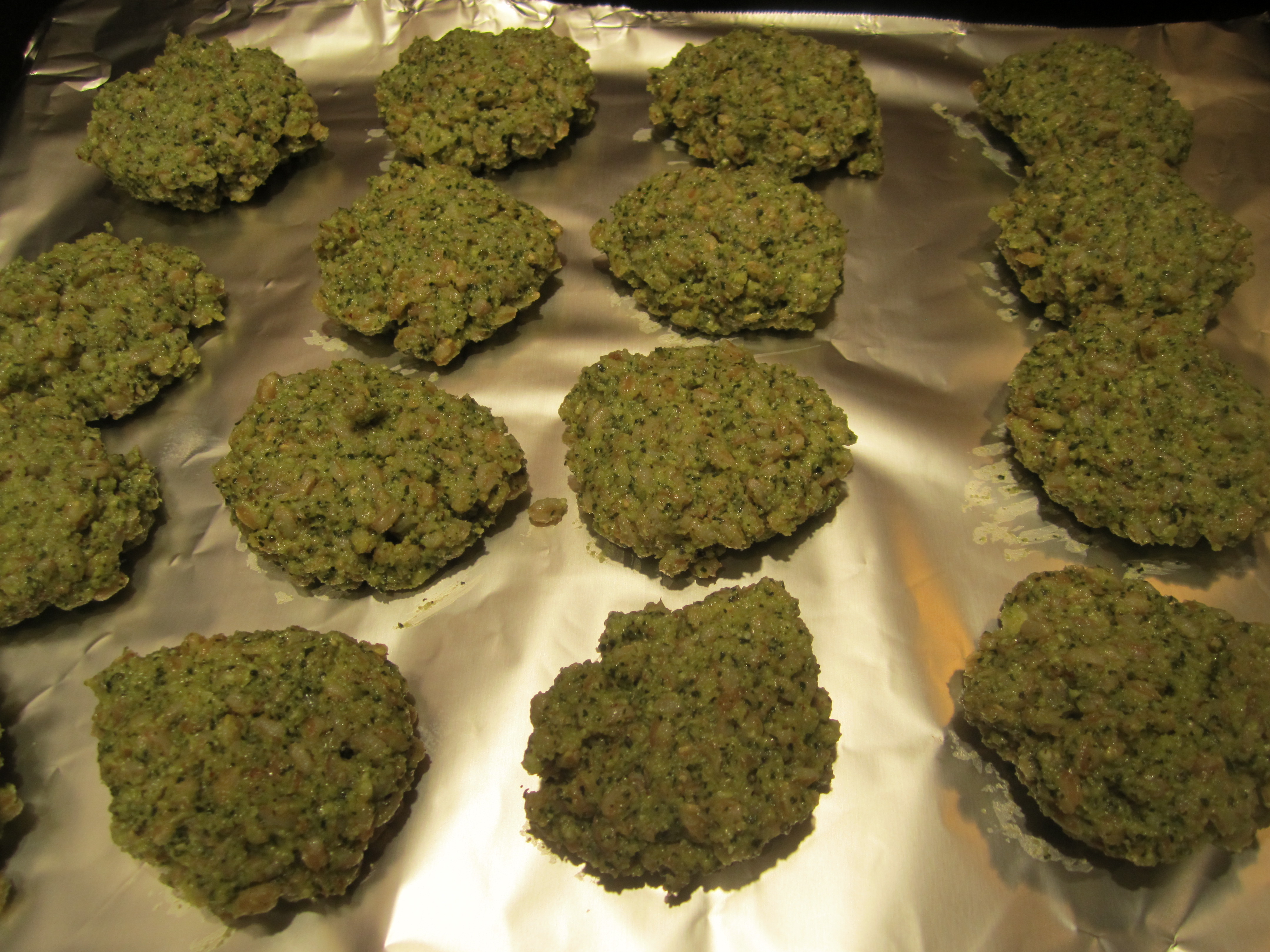
 Gently slide into a quarter-inch of hot olive oil.  Fry on medium heat until golden on both sides (approximatel 5 minutes per side).

Taste and sprinkle with salt if necessary while they’re still hot.

Posted in Risotti, Uncategorized | 1 Comment

Pasta with Sauteed Mushrooms, Peas and Prosciutto

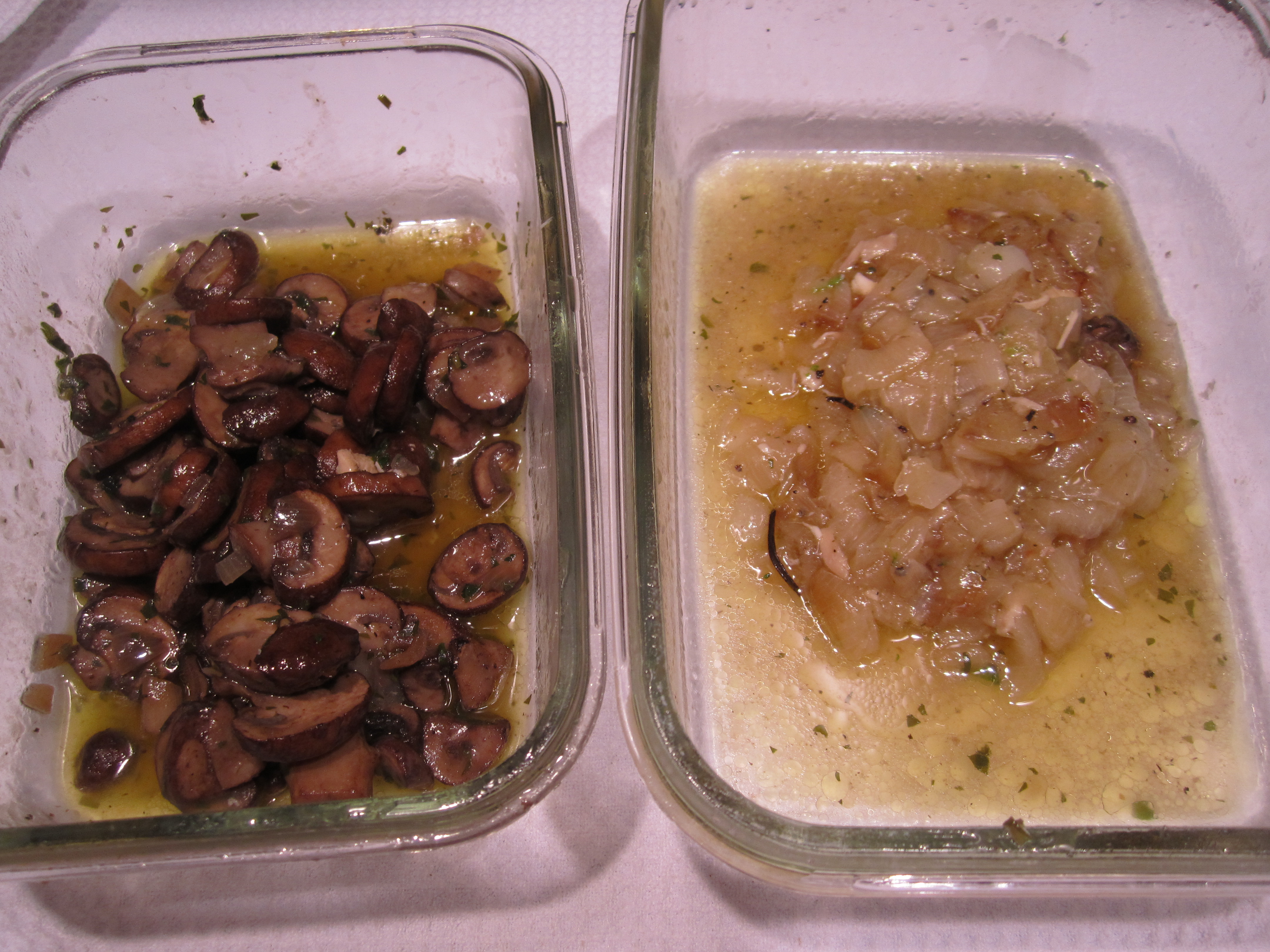
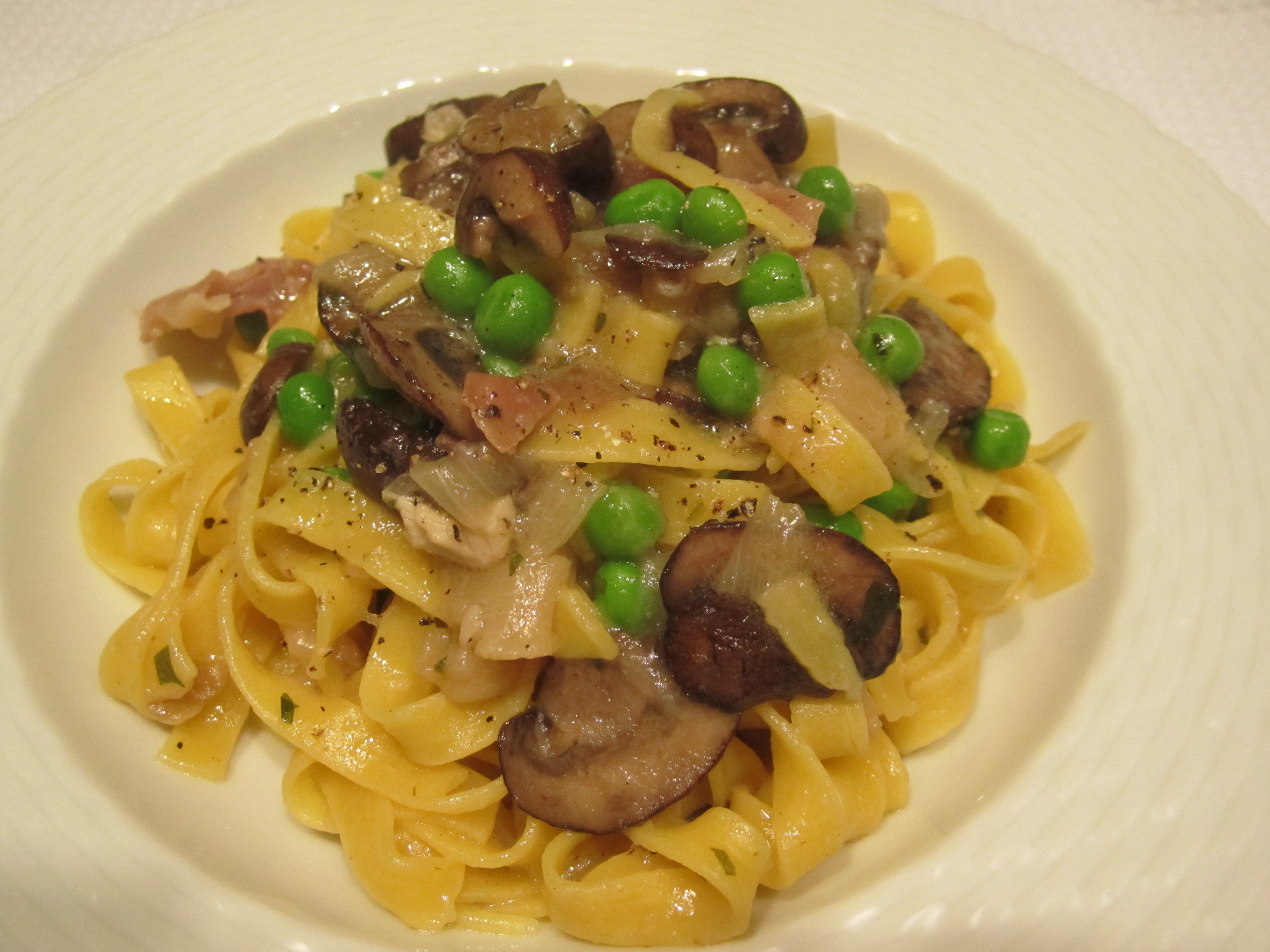
When I stated the other day, not to discard the pan drippings and onions from those chicken breasts–this is what I had in mind.  In addition to the chicken drippings, I had some leftover sauteed cremini mushrooms. 

This dish is testament to the fact that leftovers can create something entirely new and wonderful in its own right.  With the simple addition of prosciutto, frozen peas, and butter, these leftovers took on new life–and I’m not exaggerating.

In restaurants, mushrooms are often pre-sauteed before being added to other dishes.  The reason is that mushrooms take a little time to shed water and develop flavor (not much time–maybe about 10 minutes–but in a restaurant kitchen, seconds count).  By pre-sauteing them with aromatics and herbs, you are adding another layer of seasoning and complexity to whatever dish you add them to next.

In case you don’t have leftover cooked mushrooms, I’ll give you the recipe for the ones I made, then all you’ll need are some onion-laced drippings from a roast chicken (or from the roast chicken breasts featured in my post from the other day).

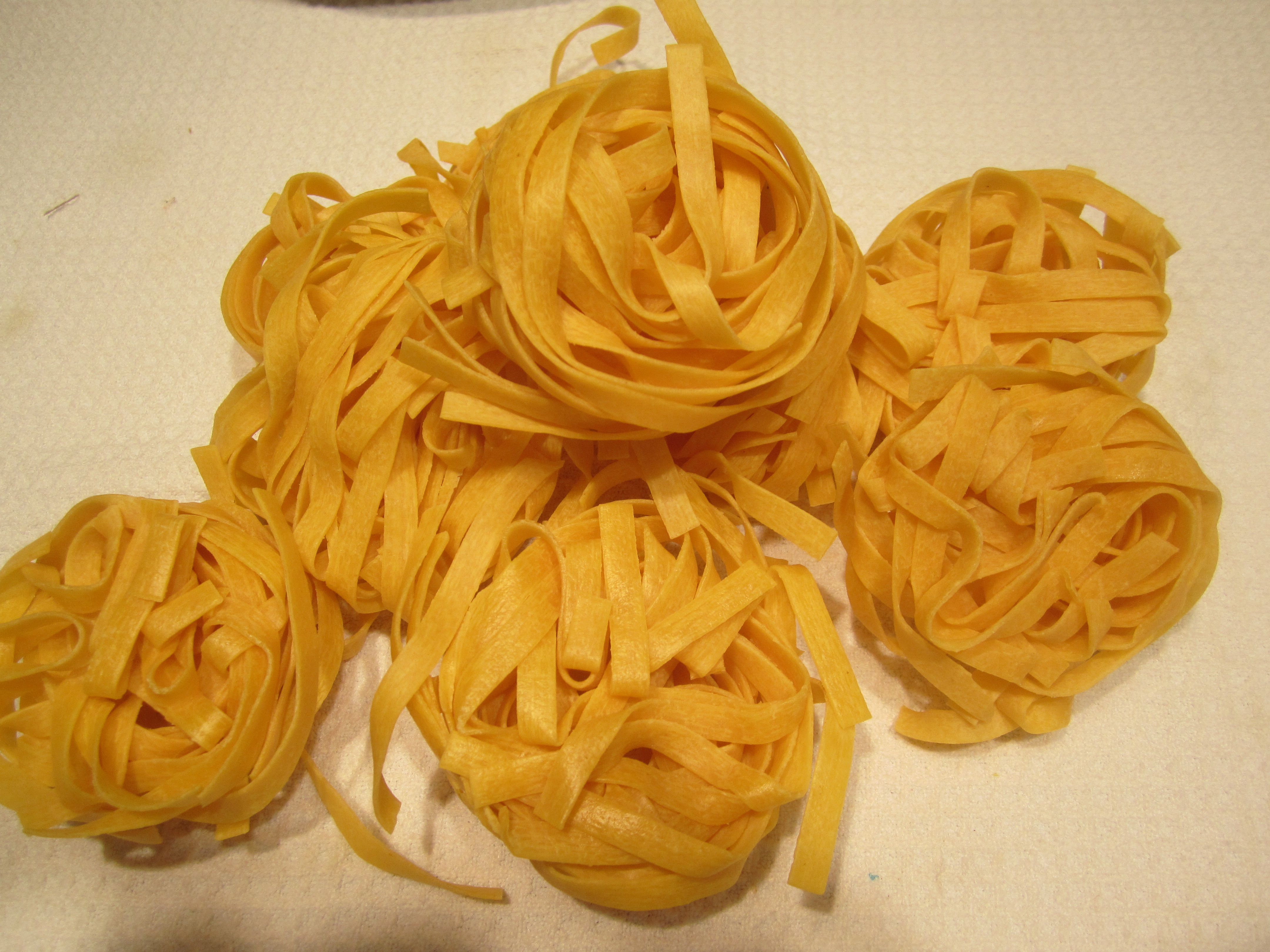
For this dish, I decided to use dried, imported egg fettucine,  because the beautiful yellow color of them reminded me of the those bright orange egg yolks in Italy.

Fresh pasta would be great here, as well.

Pasta with Sauteed Musrooms, Peas and Prosciutto

serves 4

1 lb. egg fettucine (dried or fresh)

1/2 c drippings, including onions, from roast chicken breasts

1 c sauteed mushrooms (see recipe below)

4 tbls butter

4 slices prosciutto, sliced crosswise into 1/2″ ribbons

1 c frozen peas

While the pasta is cooking, place prosciutto and butter in a broad skillet, large enough to hold the pasta.  Bring to medium-low heat and gently sweat for about 5 minutes.

Add in mushrooms and drippings and continue to simmer on low heat until pasta is cooked.

When pasta is a minute shy of done, pull it out and add to skillet, along with the cooking water that clings to it.  Drop peas into boiling pasta water for a couple of seconds, then drain and add them to the skillet as well.

Toss to combine, and serve with plenty of grated parmigiano.

Sauteed Mushrooms

1 lb cremini (baby portobello) mushrooms, wiped of any excess soil, sliced into 1/4″ slices

2 tbls butter

2 tbls olive oil

1 small shallot, finely diced

2 cloves garlic, split in half

1/2 c white wine

2 tbls fresh chopped parsley

salt and pepper to taste

In a broad skillet, place butter, oil, shallots and garlic.  Turn heat to high and saute for about a minute.  Add mushrooms and continue to saute  on high heat until they begin to turn golden.  Add salt and pepper to taste.  Add white wine and reduce for another 2 to 3 minutes. Reduce heat to medium and continue cooking for another 4 – 5 minutes, or until nicely browned and fairly dry.   Remove garlic cloves and discard.  Sprinkle with parsley and serve.

Posted in Pasta, Vegetables | 3 Comments

Roast Chicken Breasts with Rosemary and Lemon

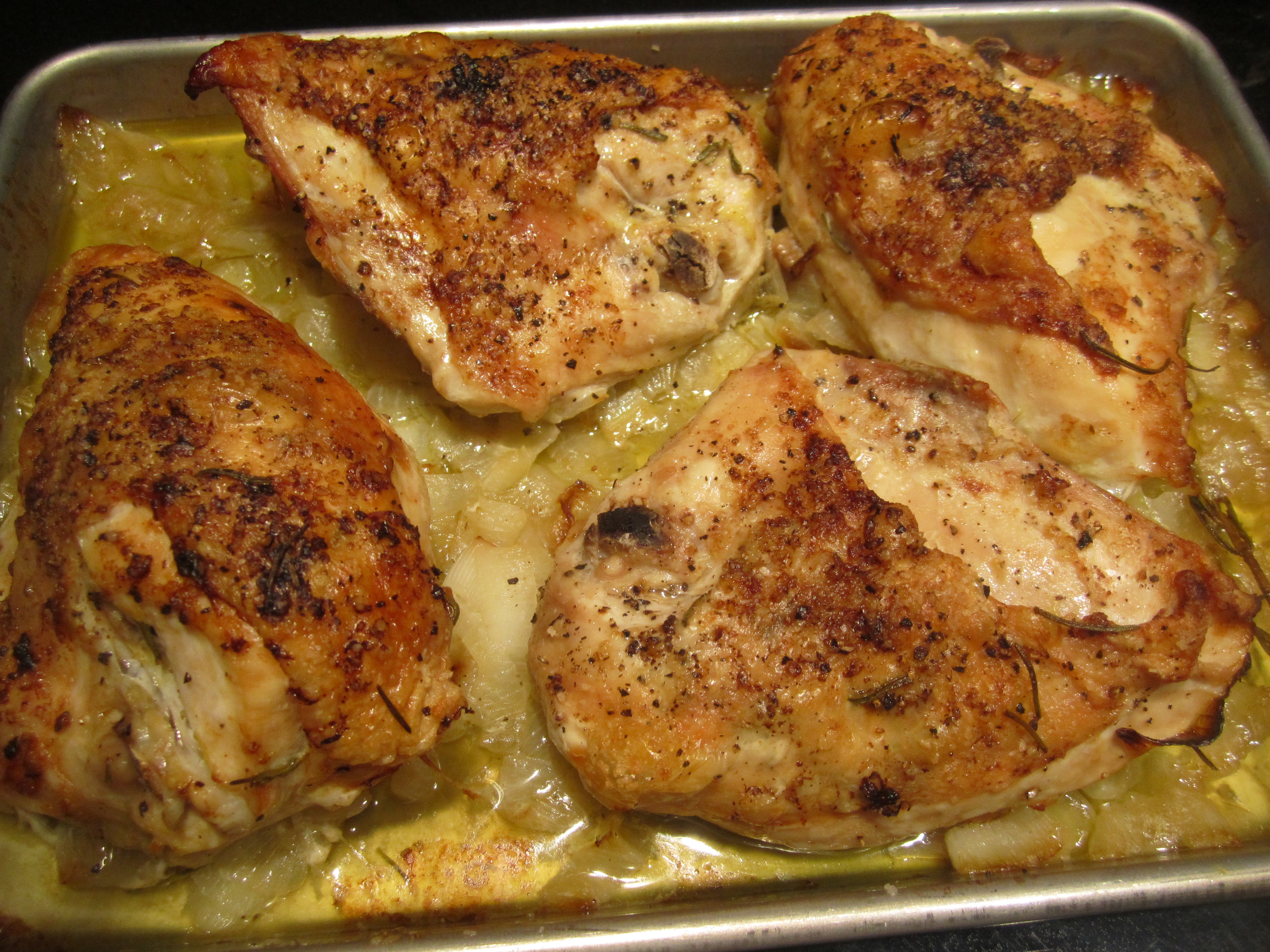
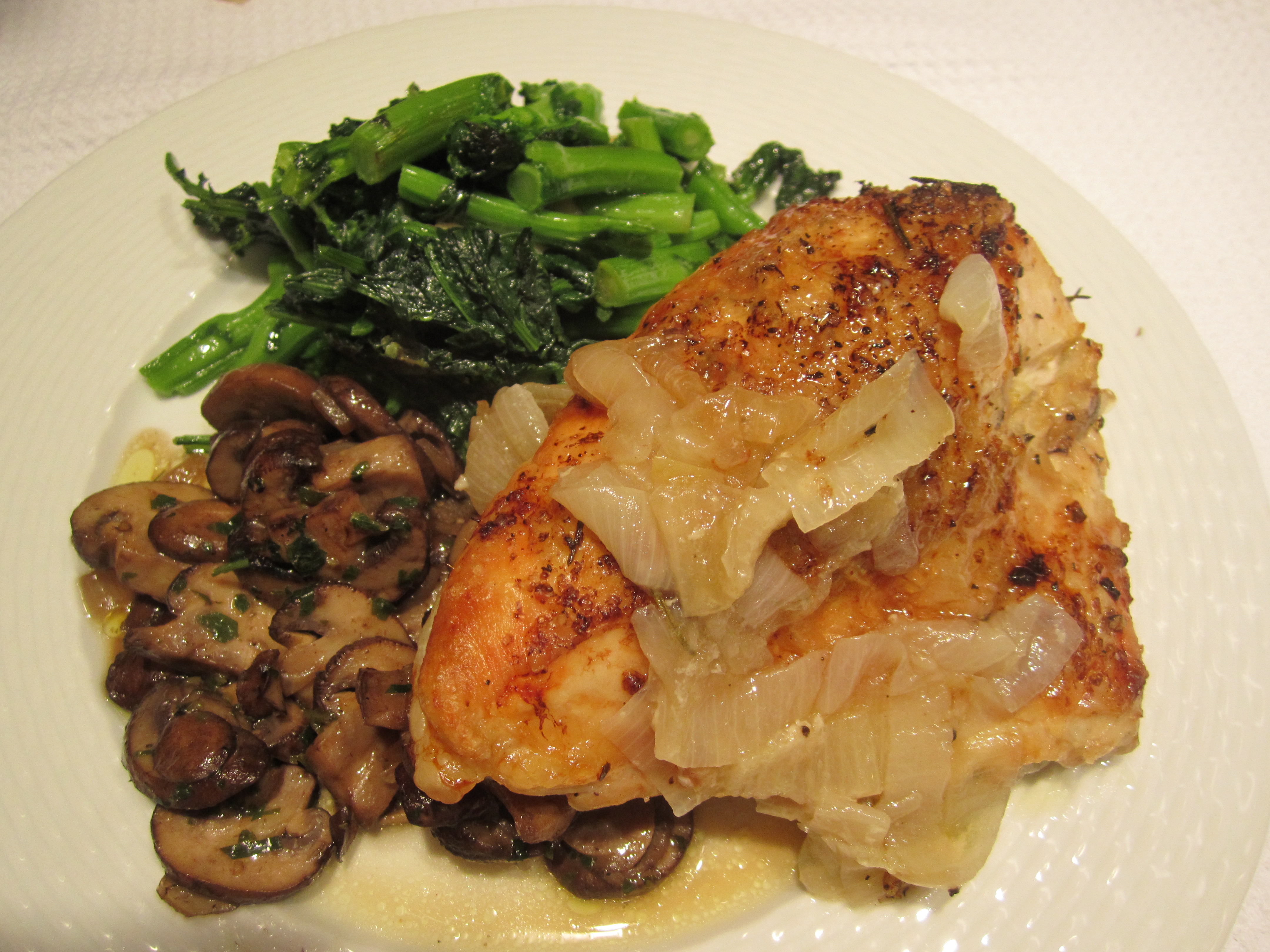
This is a great dish to make for a dinner party, since it cooks (reliably) in about 45 minutes and needs almost no attention, as it perfumes the house with the irresistable aroma of roast chicken and rosemary.  It can rest for 15 minutes while you’re sauteing a vegetable or tossing a salad to accompany it.  It’s also a pretty safe dish to serve to a varied group of people, unless of course, they’re vegetarian.  

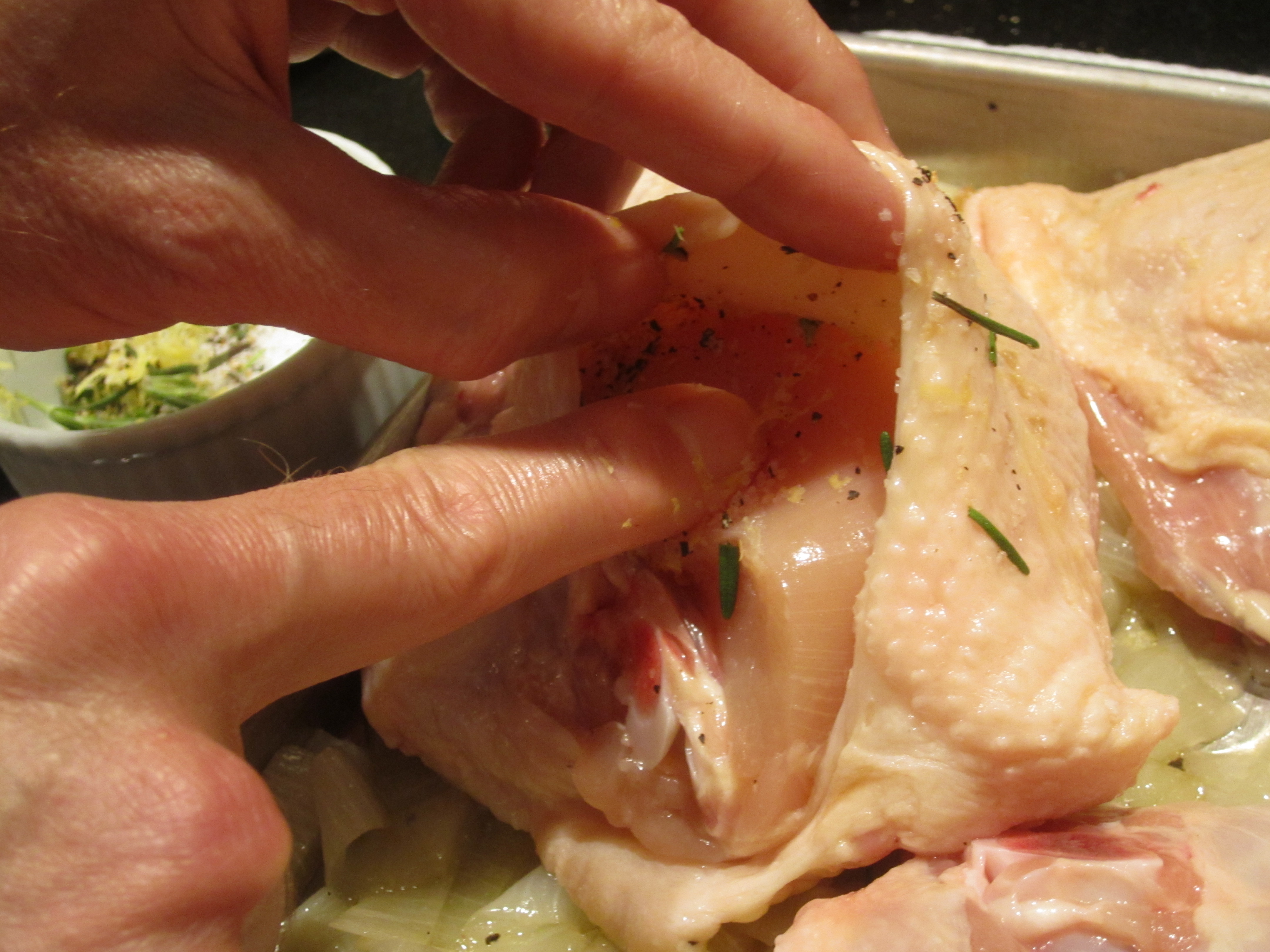
The thing to remember about chicken breasts on the bone is that they’re thick and meaty, so they need a good deal of salt to penetrate them and make them taste great.  To that end, I like to rub the salt underneath the skin, so the meat (not just the skin) takes in the salt.  While I’m at it, I rub a bit of lemon zest, black pepper and chopped fresh rosemary under the skin as well.  

If you think chicken breasts are bland, unimpressive and not a worthy dish for company, try this dish.  No searing or smoking up the house–just roast on high heat (450 degrees) and in forty-five minutes, you’ll be astounded at how much flavor and aroma a chicken breast can provide.   

Tonight, in addition to the chicken breasts, I decided to made broccoli di rapa, as well as sauteed cremini mushrooms with white wine, shallots and parsley.

Roast Chicken Breasts with Rosemary and Lemon

serves 4

2 chicken breasts with skin and bone, split

2 onions, peeled, quartered and sliced in 1/2″ thick quarter-moons

1 tsp freshly chopped rosemary

2 tbls olive oil

zest of 1 lemon

2 tsps salt + 1 tsp black pepper

Preheat oven to 450 degrees

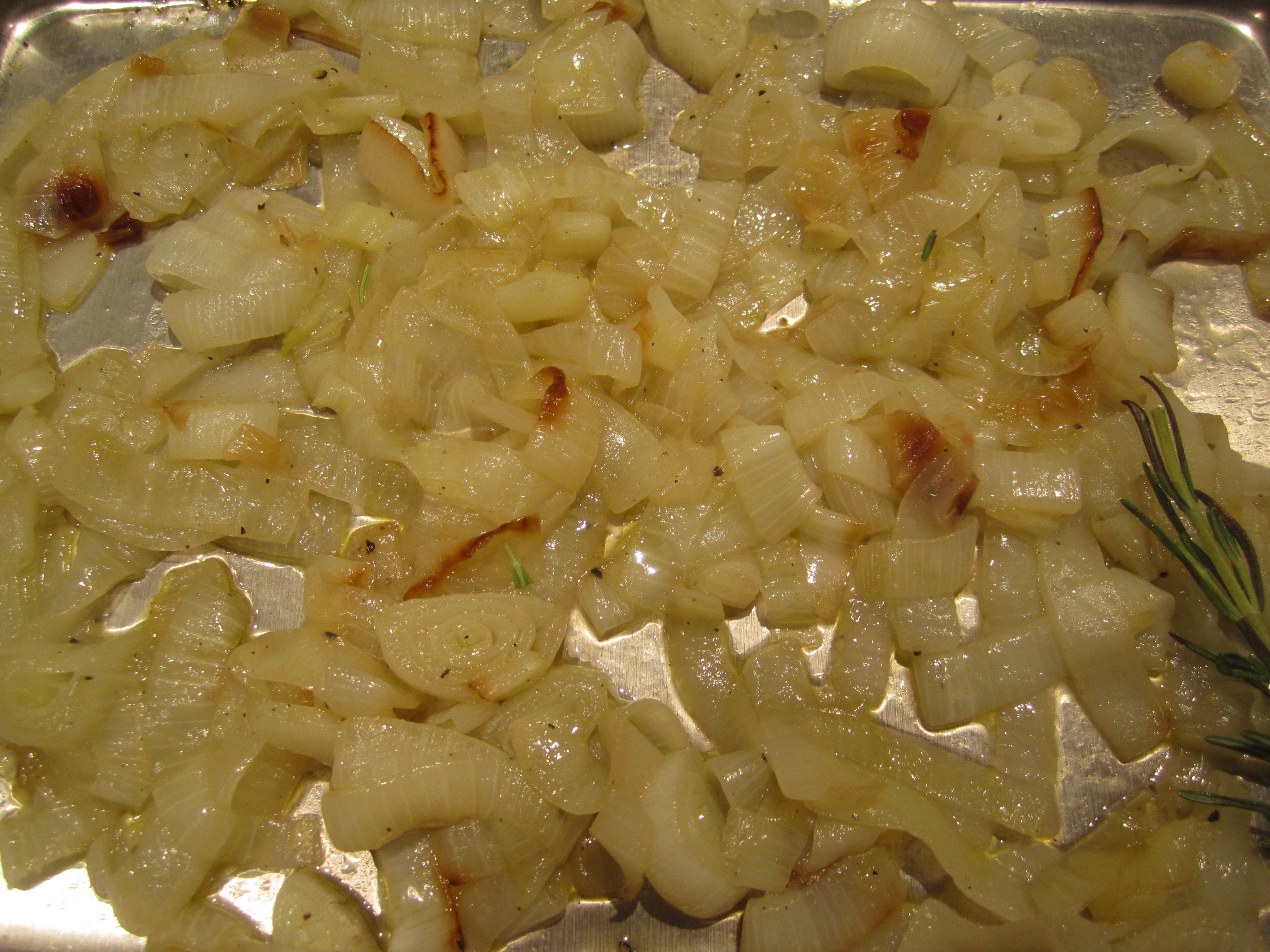
Place oil and onions in a skillet and bring up to moderate heat.  Saute the onions, covered, stirring often, for about 10 minutes, or until they wilt and begin to caramelize.  Remove cover and continue sauteing for another 5 minutes.  Spread onions on a sheet pan large enough to hold the chicken breasts with a little space around them.

Run your fingers between the skin and flesh of the chicken breasts to loosen the skin.  Spread salt, pepper, rosemary and lemon zest evenly under the skin and sprinkle a bit on top of the skin as well.

Place the chicken breasts on top of the bed of onions and roast for approximately 45 minutes, basting once or twice with the pan juices.

NOTE:  If you have any–even a couple of tablespoons of pan juices left from the roast chicken–keep and freeze them in a ziploc bag to add magic to future dishes.  More on that later . . .

Posted in Poultry | Leave a comment

Lasagnette with Spinach, Butter and Parmigiano

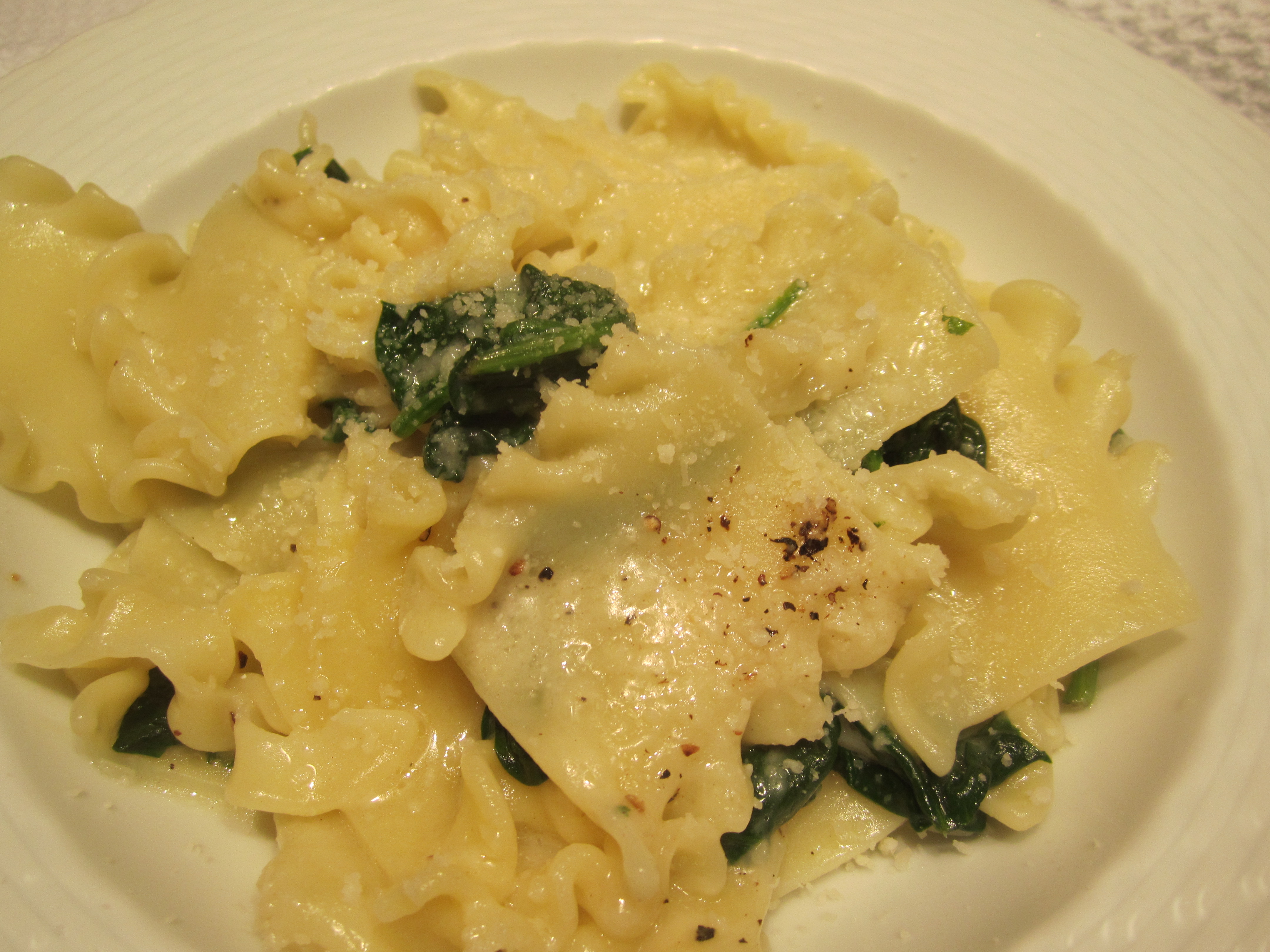
Lasagnette are little pasta squares with curly edges–just as the name suggests–little sheets of lasagna.  This was the first course that I served with my Roast Chicken Breasts with Rosemary and Lemon.  It was so good, I thought it deserved a post of its own.

This dish is a beautiful, refined, and simple to prepare first course.  It relies on the richness of butter and parmigiano cheese, and the flavor and texture of the pasta itself.  These ingredients, in the right proportion, provide all the complexity and delicacy of a stuffed pasta, such as spinach tortelli (ravioli), with none of the labor.

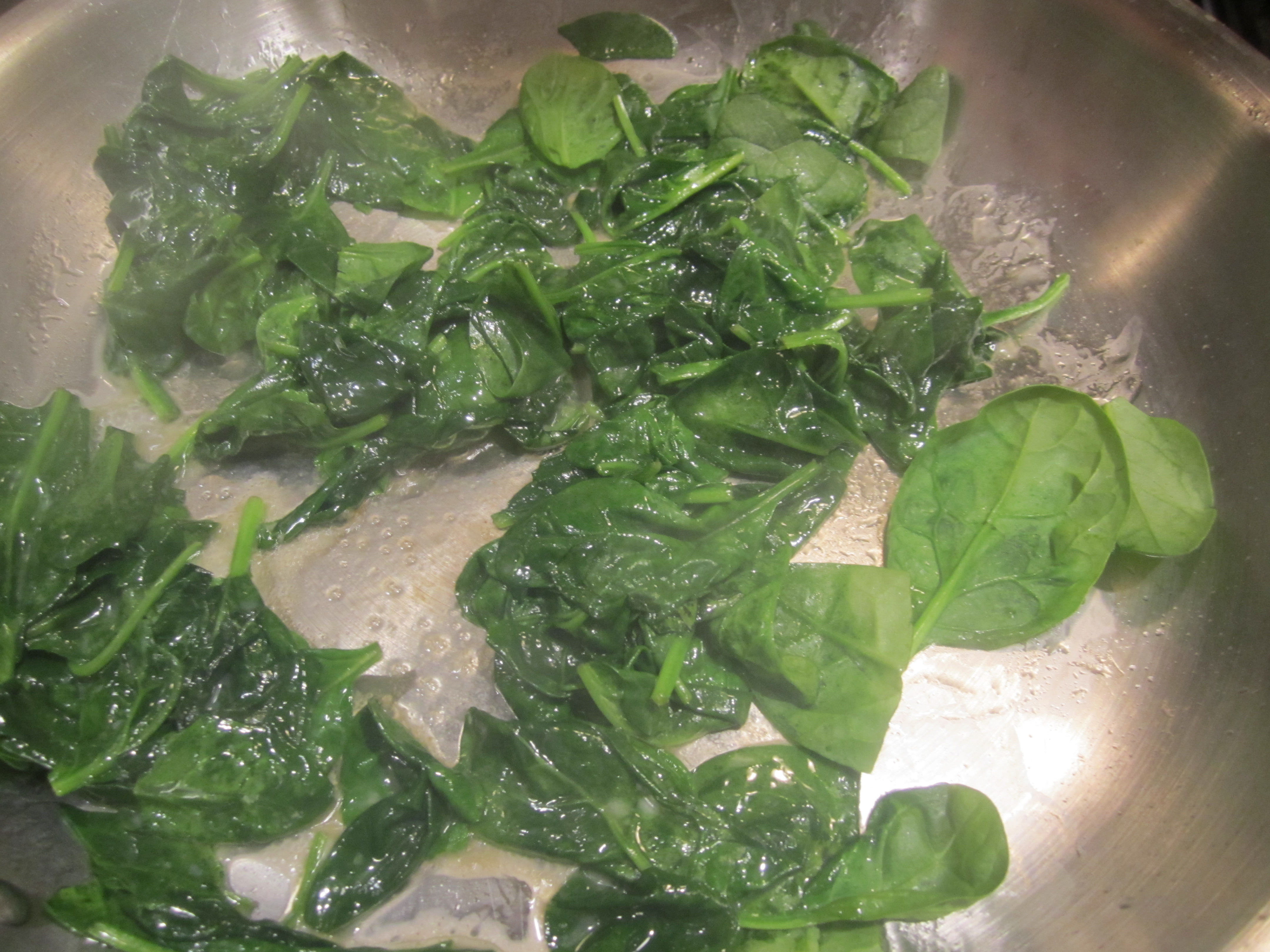
The dish can be done in the time it takes to cook the pasta.   As the pasta is a couple minutes shy of done, in a large skillet, saute a pile of washed baby spinach in butter.  When the spinach wilts (within a minute), add a splash of chicken broth, then top with the cooked pasta.  Stir in copious amounts of grated parmigiano and black pepper.

That’s the dish–no sauce to make, no aromatics to peel and chop–nothing except spinach to wilt.  You’ll want to repeat this dish over and over again.

Lasagnette with Spinach, Butter and Parmigiano 

serves 4

1 lb. lasagnette

10 oz. baby spinach leaves

6 tbls butter

1/2 c chicken broth

1 c grated parmigiano

salt and pepper to taste

While the pasta is boiling, in a large skillet, melt butter and wilt spinach.

when spinach has begun to wilt, add broth and set aside until pasta is cooked.

Add cooked pasta to the skillet, along with the water that clings to it and stir to combine for about 30 seconds.  If the mixture is too tight, add in a bit more pasta water.  Remove from heat, fold in half the grated cheese and gently stir.   Top with plenty of black pepper and additional grated cheese.

Posted in Pasta | Leave a comment

Swordfish Milanese

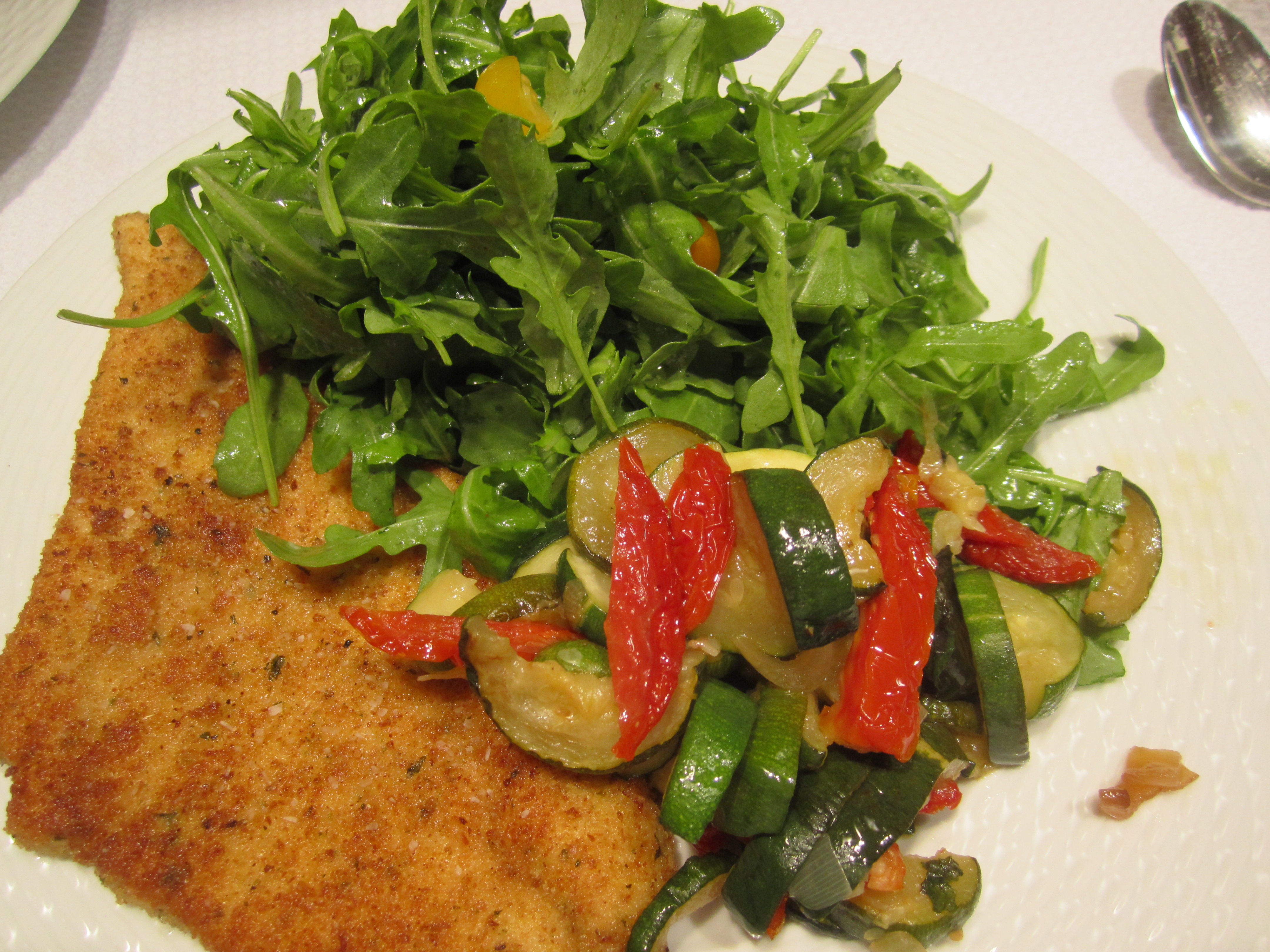
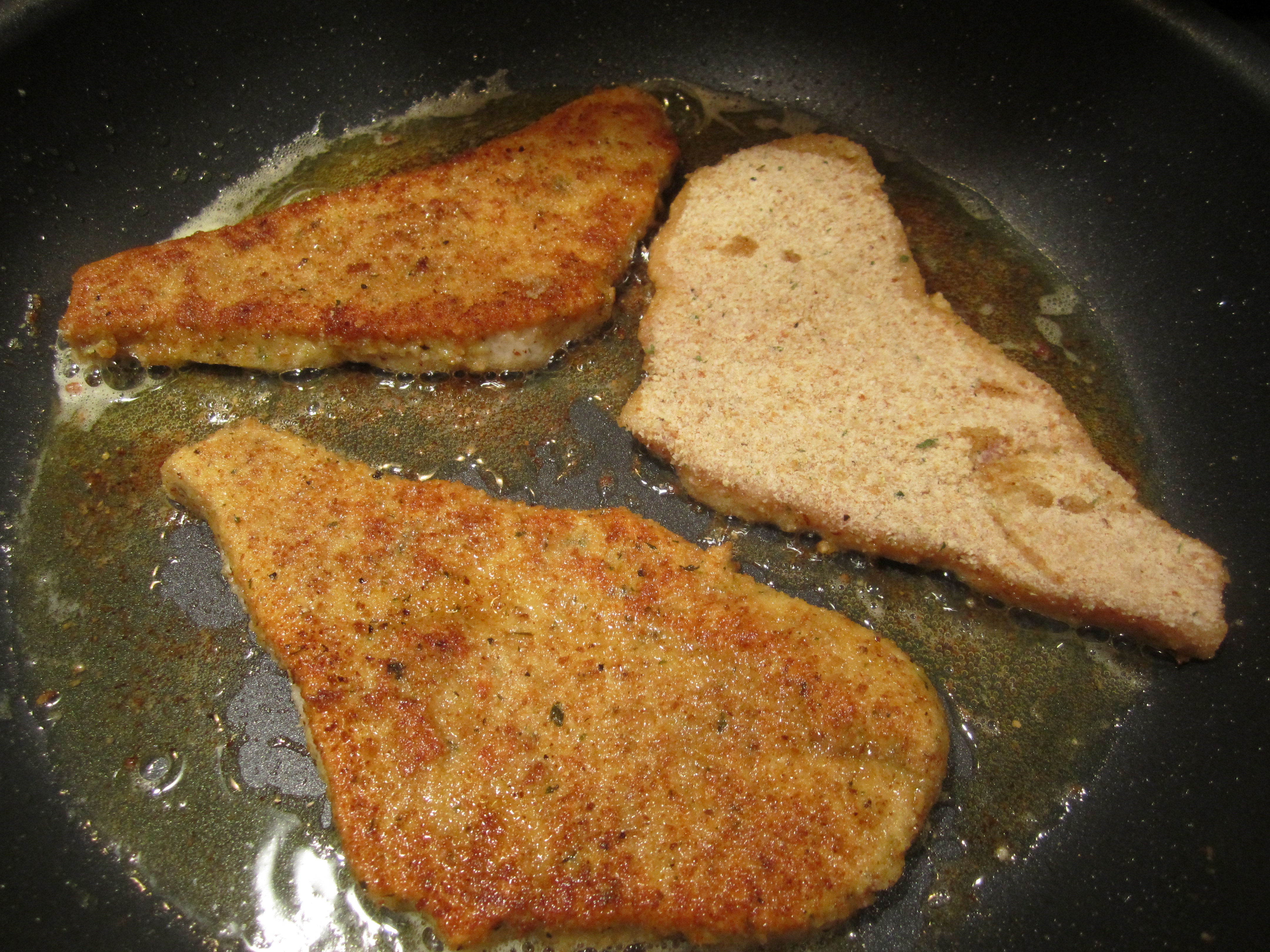
Although I’m not a big consumer of takeout, last week at my local gourmet market, I noticed ‘Swordfish Milanese,’ which peeked my interest–they were broad, breaded pounded paillards of swordfish that looked crispy and golden.   They turned out to be not only crispy on the outside, but extremely tender on the inside–much more tender than chicken, veal or pork.  And because the fish was so fresh, it had hardly a hint of fishy flavor.

After trying one, I decided to recreate the dish in my kitchen.  I used seasoned breadcrumbs, to which I added a bunch of freshly chopped parsley.  The rest of the preparation was the usual flour, egg, crumb sequence, then pan-fry in a combination of butter and olive oil.  I added the butter to accelerate the browning, since fish cooks much more quickly than meat, and butter browns (and burns) more quickly.

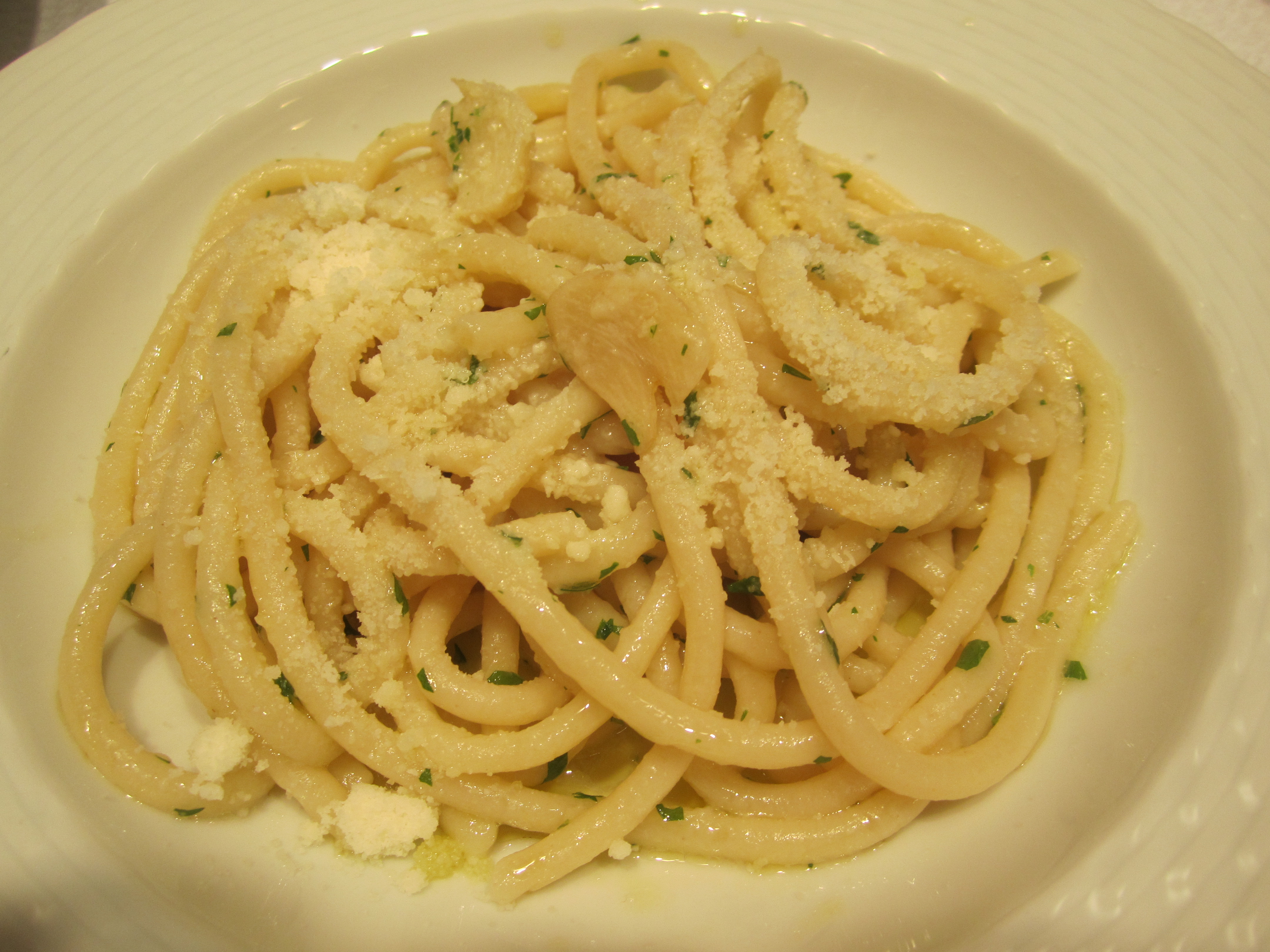
For a first course, we had pici (fat spaghetti) with garlic and olive oil.  I had garlic from the farmers’ market which was exceptionally fresh and sweet–critical to this dish.

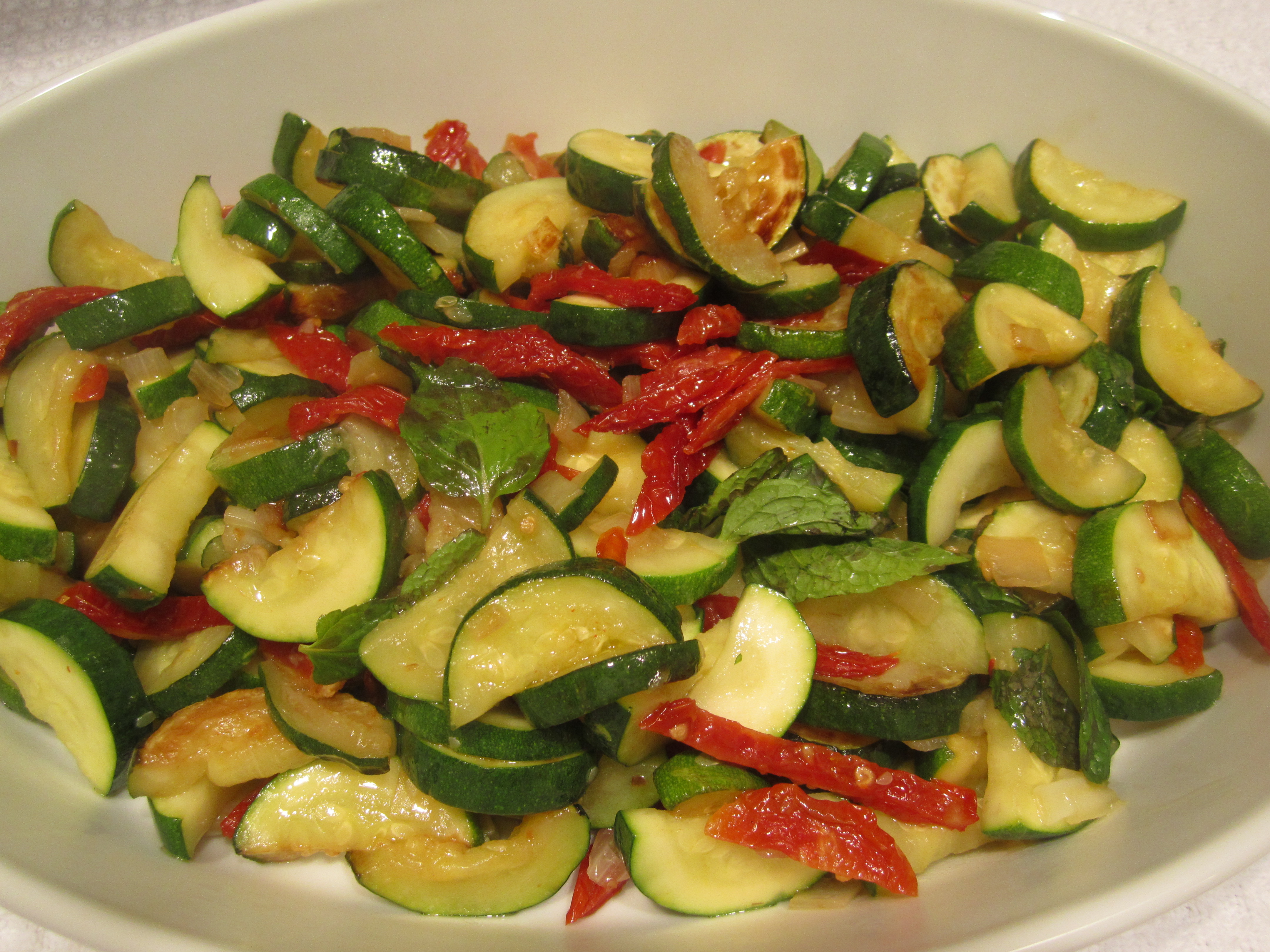
To go with the fish, along with a nice pile of arugula dressed with lemon and olive oil, I made sauteed zucchini with shallots, sundried tomatoes and mint.  I had bought the tomatoes several weeks ago at the farmers’ market and they were exceptionally moist and red–no need to re-hydrate them in warm water.

Swordfish Milanese

Serves 3

1 1/2 lbs swordish steaks

1/2 c flour

2 eggs

2 c seasoned breadcrumbs

2 tbls butter

2 tbls olive oil

salt and pepper to taste

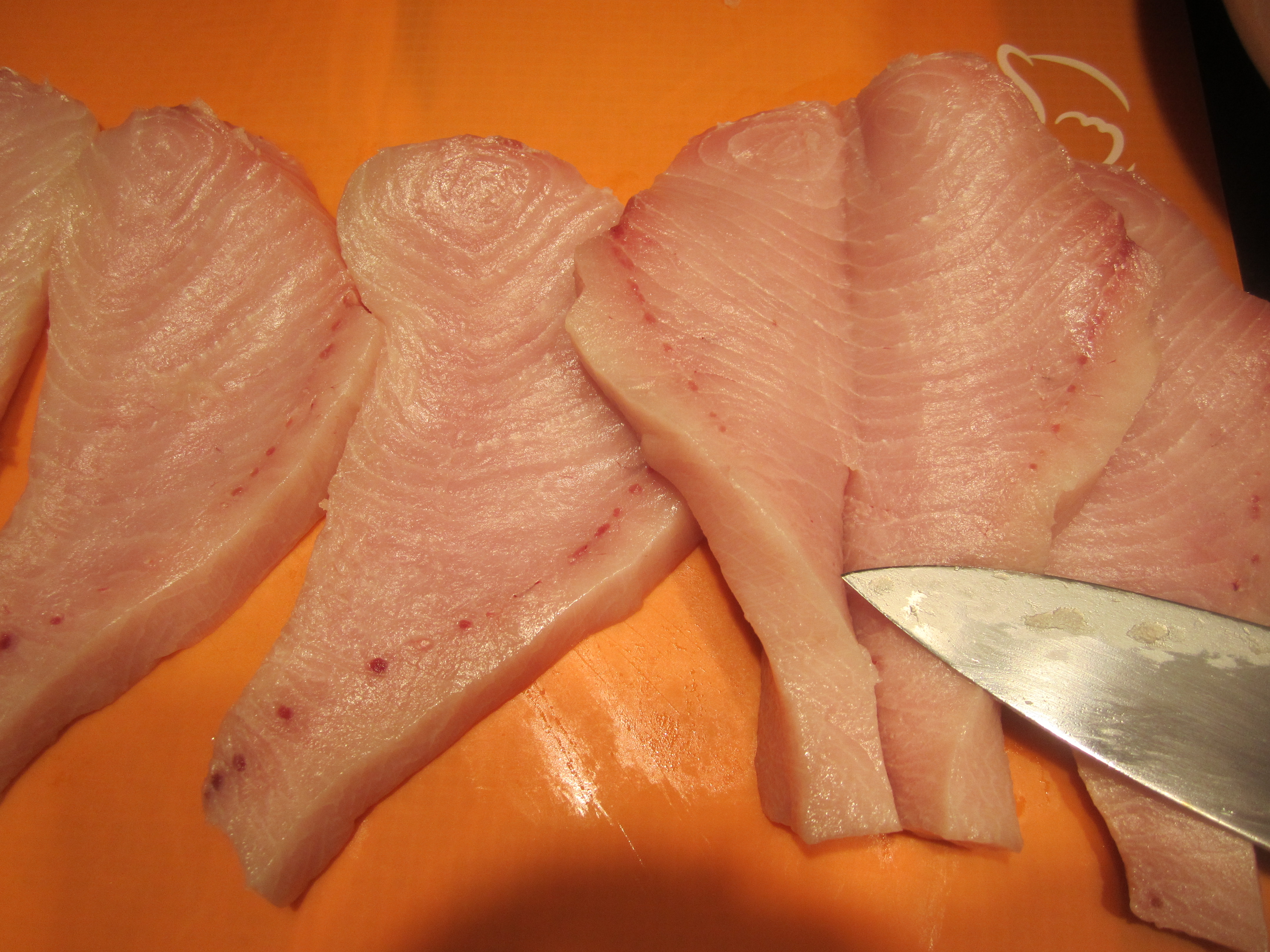
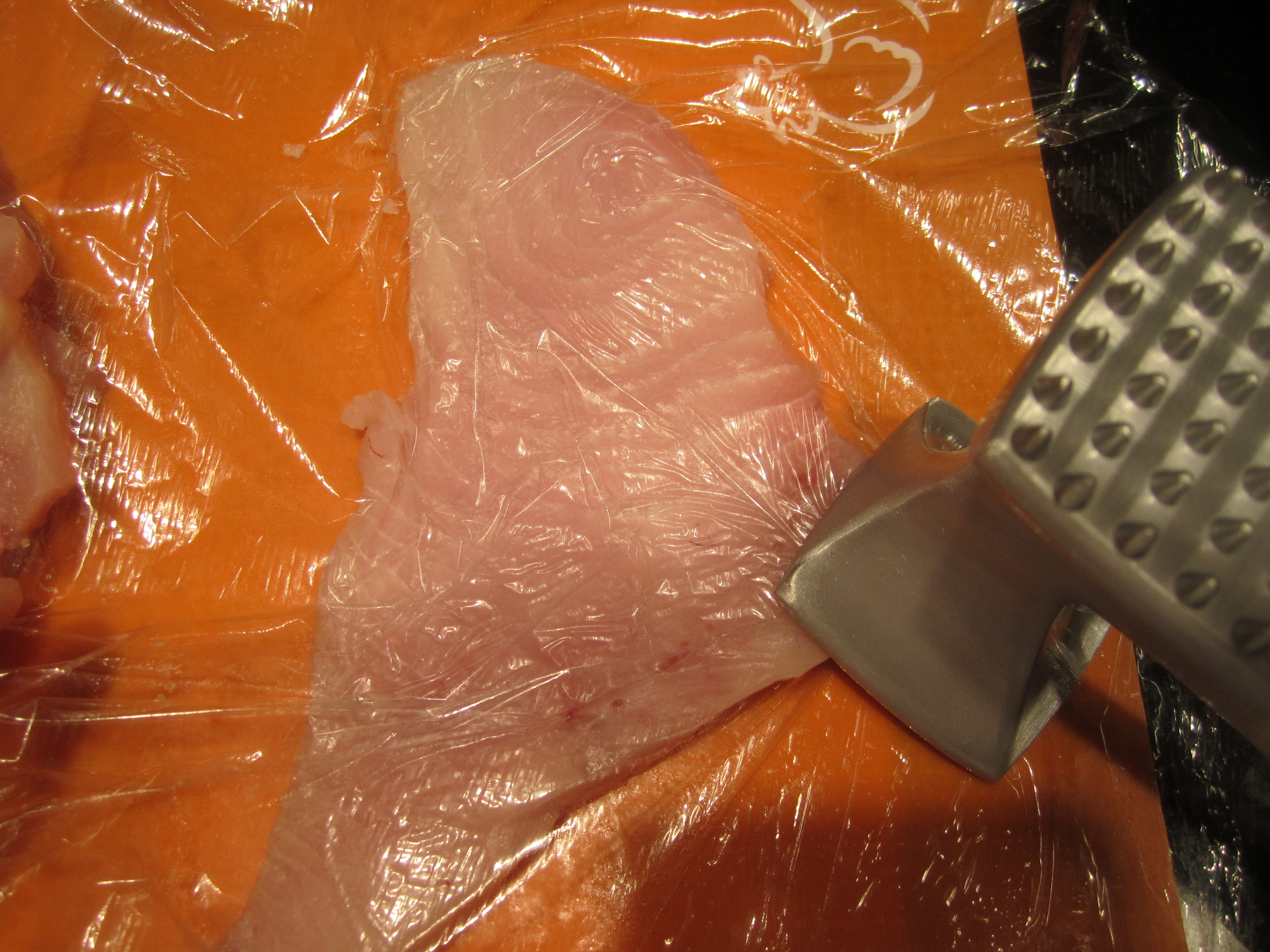
Butterfly the fish to make 1/2 thick slabs.

With a meat pounder, pound slightly to spread–not too forceful or they’ll shred.

Dip in flour, shake to remove excess; then beaten eggs, let excess egg drip off for a few seconds; then breadcrumbs, being careful to press the crumbs into the fish.  Set aside.

On high heat, in hot oil and butter, gently place the filets and allow to brown, undisturbed until golden brown on the bottom.  Flip and brown the other side for about 2 minutes, or until brown.

May be held at this point in a 250-degree oven until ready to serve.

Great leftovers, eaten cold from the fridge (never reheat–they become fishy).

Posted in Seafood | 1 Comment

Dinner for One–Sformato of Tuscan Kale

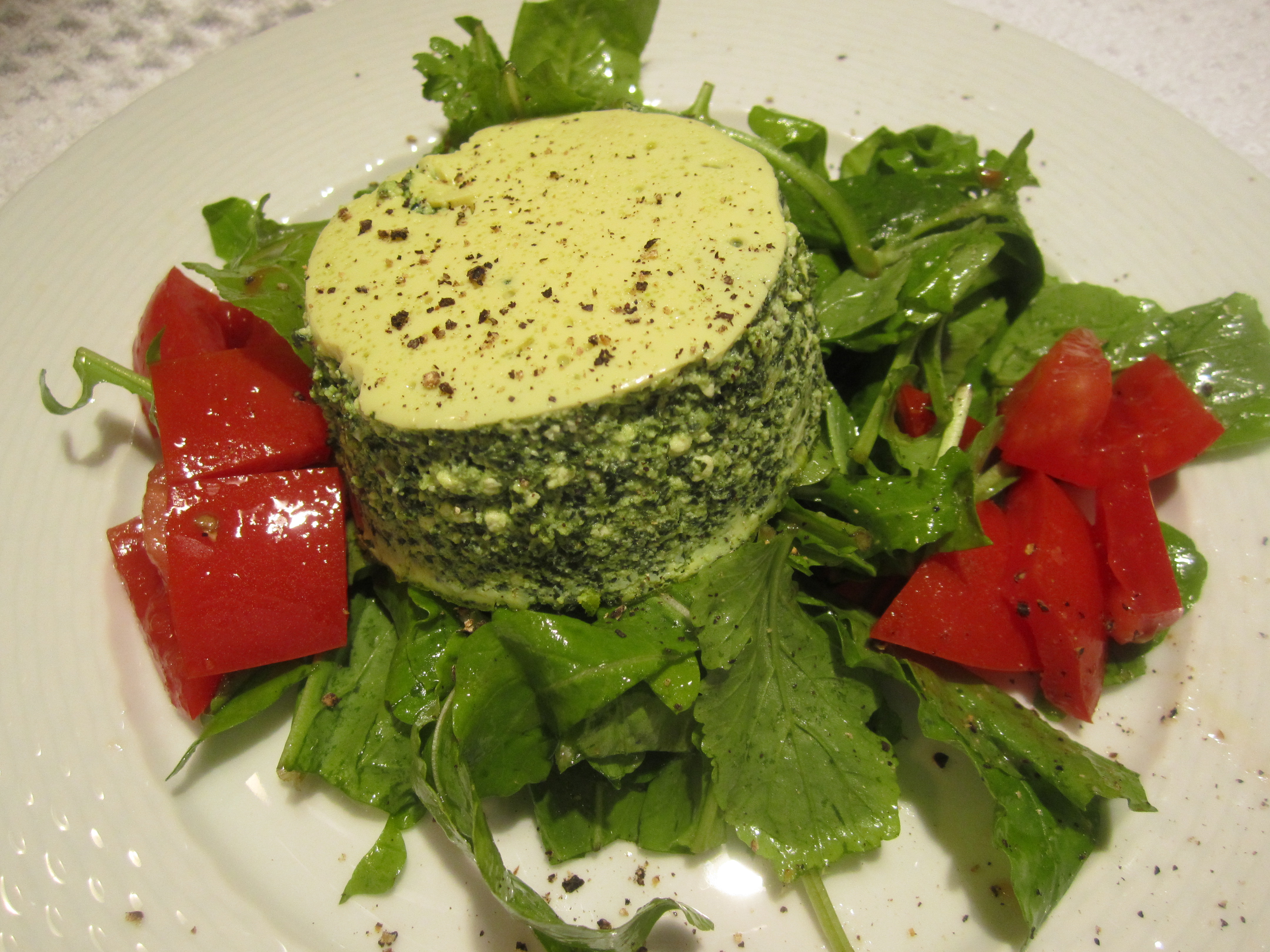
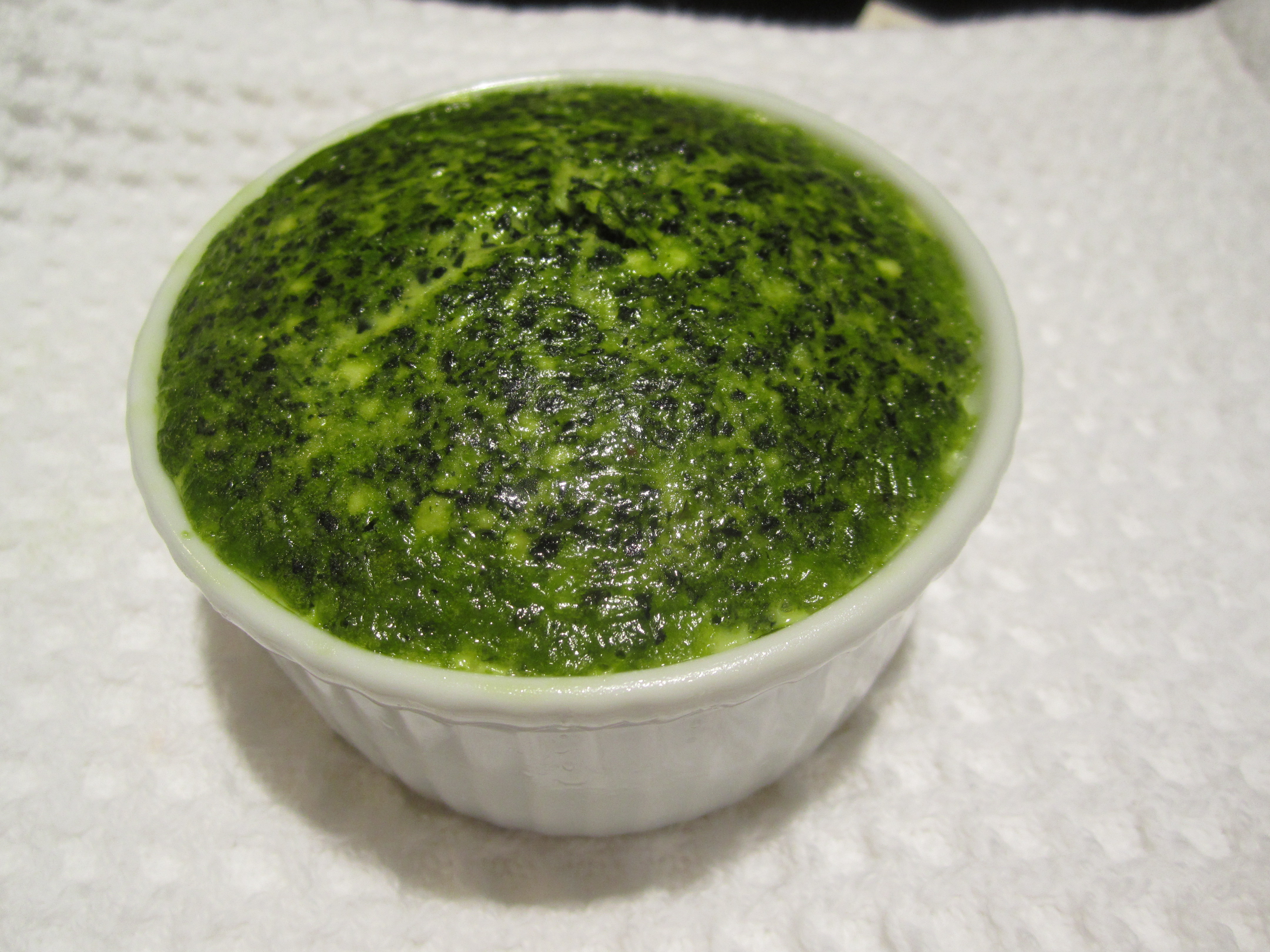
A sformato is basically a custard.  Different from a frittata, it isn’t fried, but gently baked in a water bath.  There is no golden-brown exterior–simply pale, rich softness, inside and out.  This is the perfect light supper or appetizer for guests, since the sformato simply bakes in a low oven for 45 minutes to 1 hour, then can rest for up to an hour prior to serving–it’s best luke-warm.  It requires no last-minute fussing, other than unmolding it prior to serving.

I happened to have a small container of tuscan kale pesto left from last week, which is the perfect base for a custard.  Since I’m dining alone this evening, this is the perfect individual serving–much more compact than a frittata, requiring only one egg.

I’ll give you the recipe based on one sformato, so you can easily multiply it to suit the number of guests at your table.  I like to serve it on a bed of arugula and tomatoes, tossed with lemon and olive oil.

Needless to say, it makes a great brunch or lunch dish as well.

Sformato of Tuscan Kale

serves 1

1/4 c Tuscan Kale Pesto

2 tbls fresh ricotta

2 tbls grated parmigiano

1 large egg

4 mint leaves, sliced into 1/4″ ribbons

salt and pepper to taste (if the pesto is adequately salted, you’ll need merely a pinch of salt to season the egg)

Preheat oven to 300 degrees.

In a bowl, combine the eggs, pesto, cheese, mint and pepper.

Mix with a fork and pour into buttered ramekin.

Fill a skillet with enough water to come three-quarters of the way up the sides of the ramekin and bring to a simmer.  Turn off heat and gently place the ramekin in the water.

Place skillet in oven for approximately 50 minutes to 1 hour, or until the tip of a paring knife inserted into the custard, comes out clean.

Remove from water bath, and allow to cool for about a half-hour (up to an hour) in its ramekin, then unmold and serve.

Posted in Eggs, Vegetables | Leave a comment

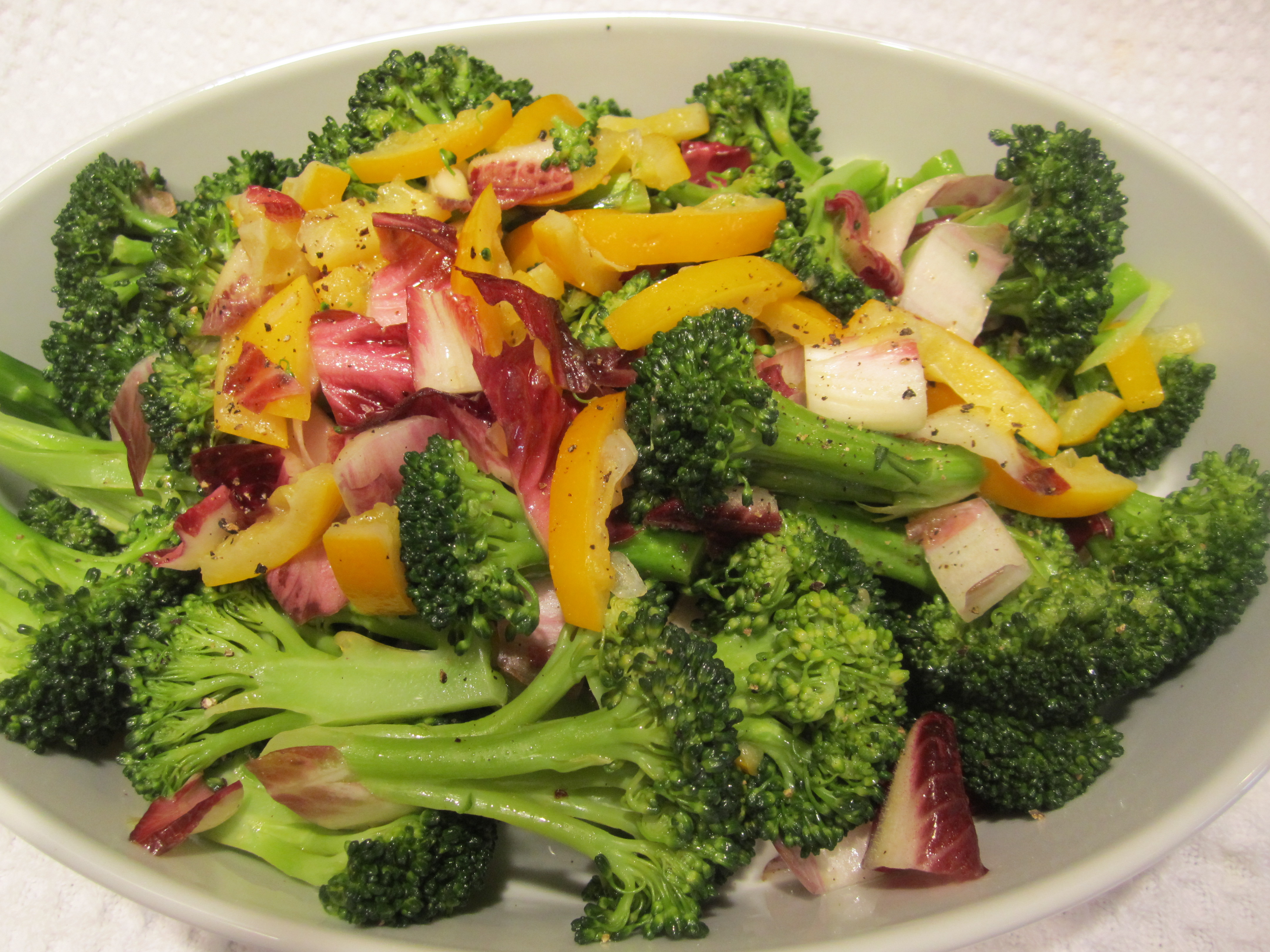
Broccoli with Radicchio and Preserved Meyer Lemons

Last week I was intrigued by an article in the NY Times which gave a technique for quick-curing lemons.  I love to use citrus zest in cooking (which I learned from Mario),  so the idea of using the whole fruit sounded great.   I was invited to a dinner party this evening, so I’m bringing a vegetable side dish (let the other guests bring the obligatory bottle of wine).   These preserved lemons will be the perfect topping for my broccoli and radicchio salad, which I normally top with zest.

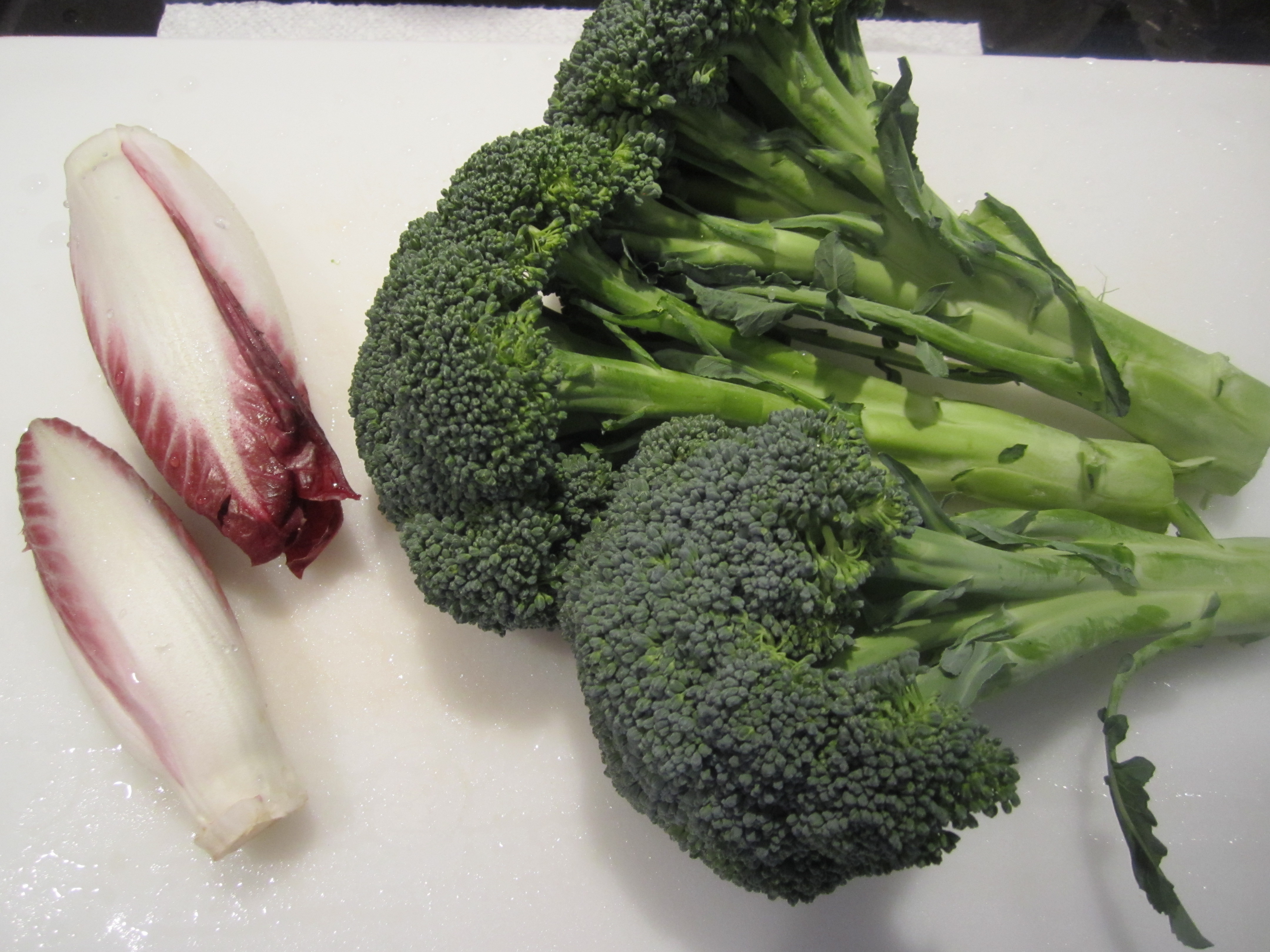
Over the weekend, I bought some beautiful Florida broccoli at the farmers’ market, and in addition, I found radicchio di treviso–that delicately bitter torpedo-shaped green that I love in salads. 

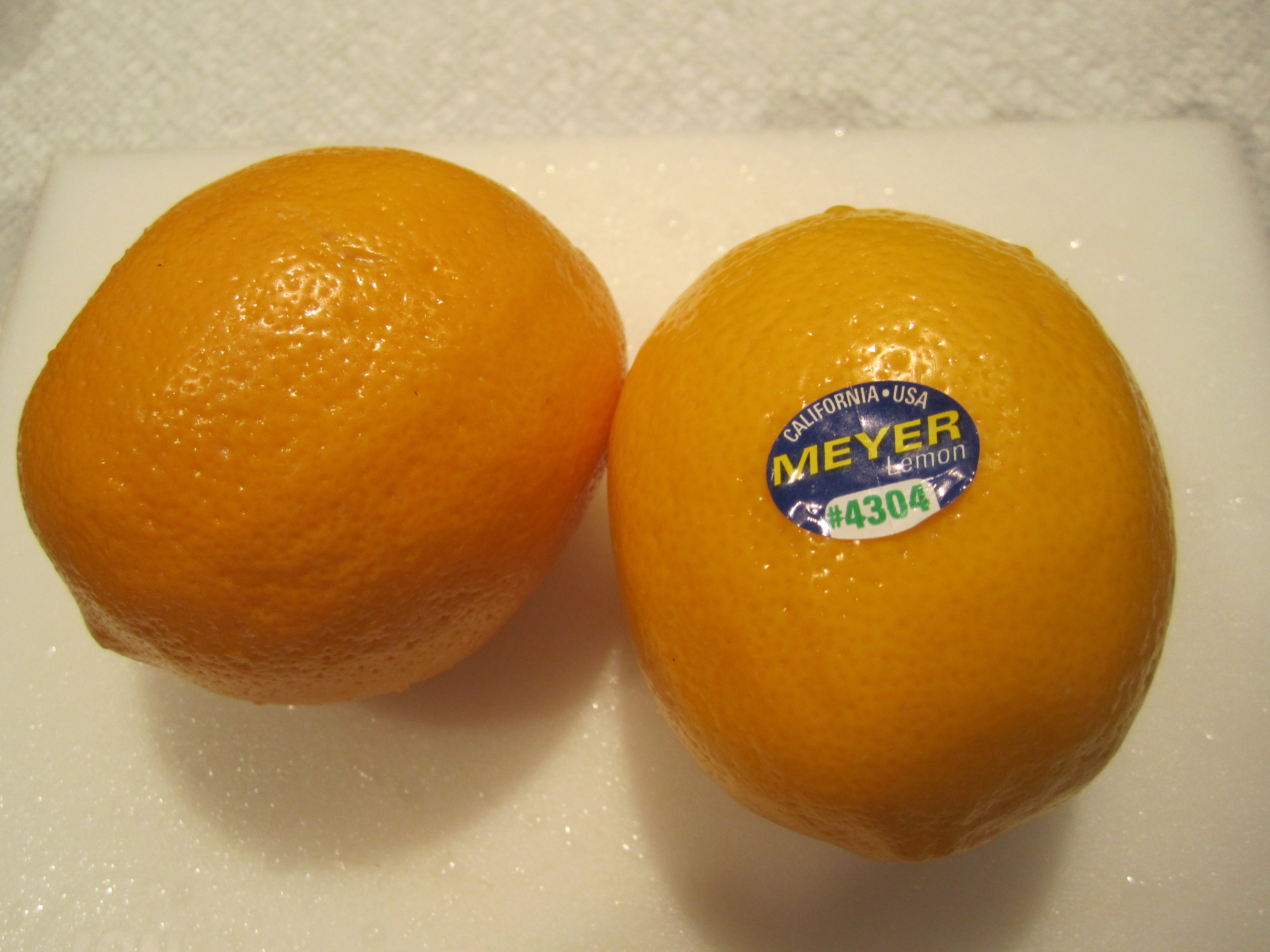
My most exciting find was Meyer lemons.  These lemons are the best, most fragrant lemons you can buy–and the perfect lemons with which to try the quick-cure recommended in the article. 

The lemons are simply blanched in water, rinsed, then simmered in a water/salt/sugar solution for 3 minutes, then rinsed.  the result is a beautifully perfumey, sweet mild lemon flavor. 

The results of this dish were excellent (of course, I wouldn’t publish the dish if they weren’t).  You can substitute regular lemons for Meyer lemons, but if you can find these lemons, the dish will be that much better.

Broccoli with Radicchio and Preserved Meyer Lemons

serves 6

bunches broccoli, washed and trimmed

2 meyer lemons

1 tbl salt for curing, plus more to taste for salad

2 tbls sugar

1/4 c extra-virgin olive oil

2 small heads radicchio di treviso (or regular round radicchio)

salt and pepper to taste

To cure lemons, slice into quarters, then de-seed.  Slice each quarter crosswise into 1/4″ slices, knocking out any remaining seeds as you slice.

Blanch in plain boiling water for 5 minutes.  Drain and rinse.

In a small pot, combine 1 c water with 1 tablespoon salt and 2 tablespoons sugar.  Bring to boil.  Drop in blanched lemon slices and simmer for 3 minutes. 

Rinse and drain.

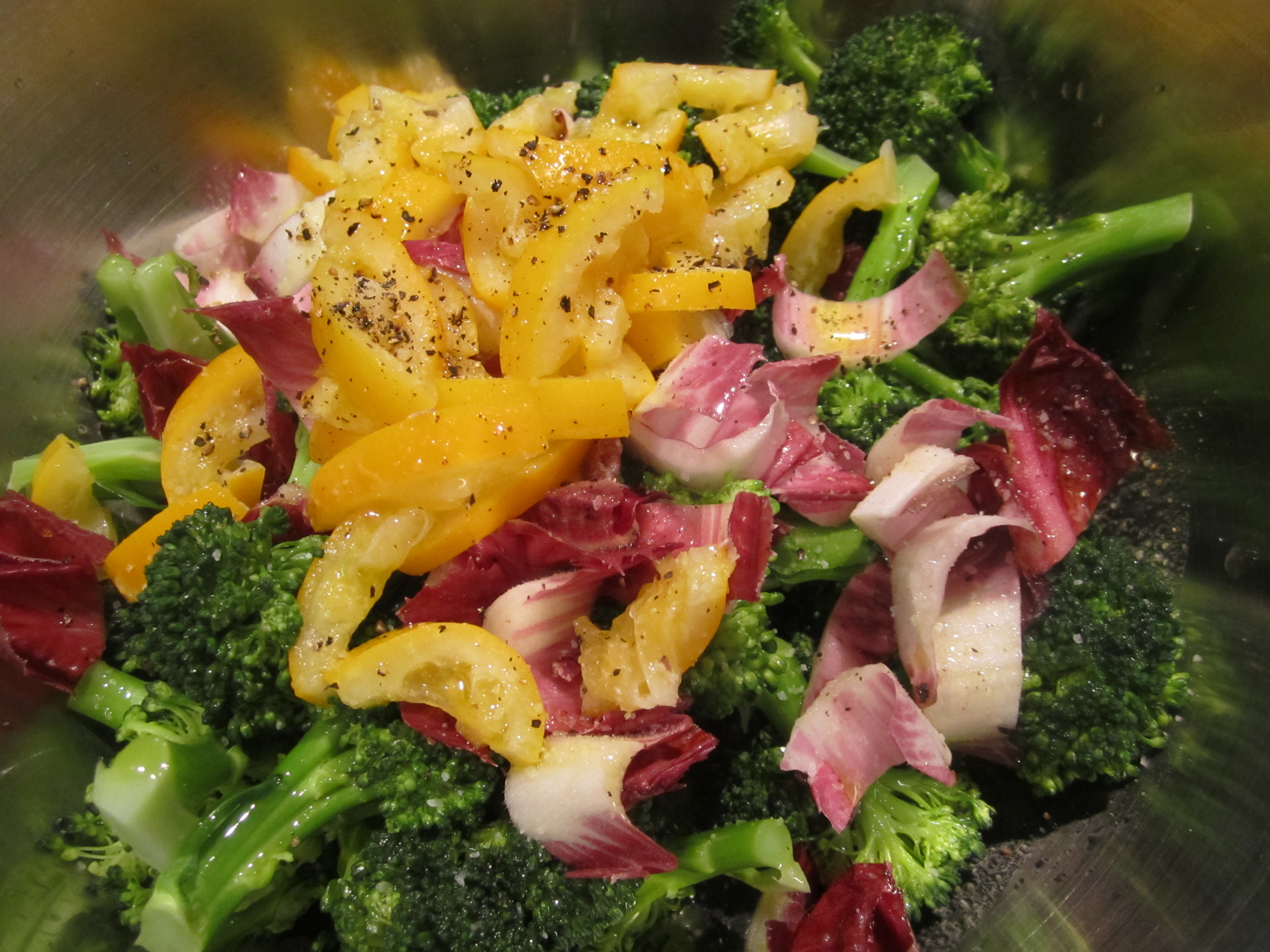
Blanch broccoli in well-salted boiling water for about 3 minutes, then drain.  Slice radicchio crosswise into 1/2″ slices and toss with broccoli.  Add lemons, oil and salt and pepper to taste. 

Toss and serve.

Posted in Vegetables | 1 Comment

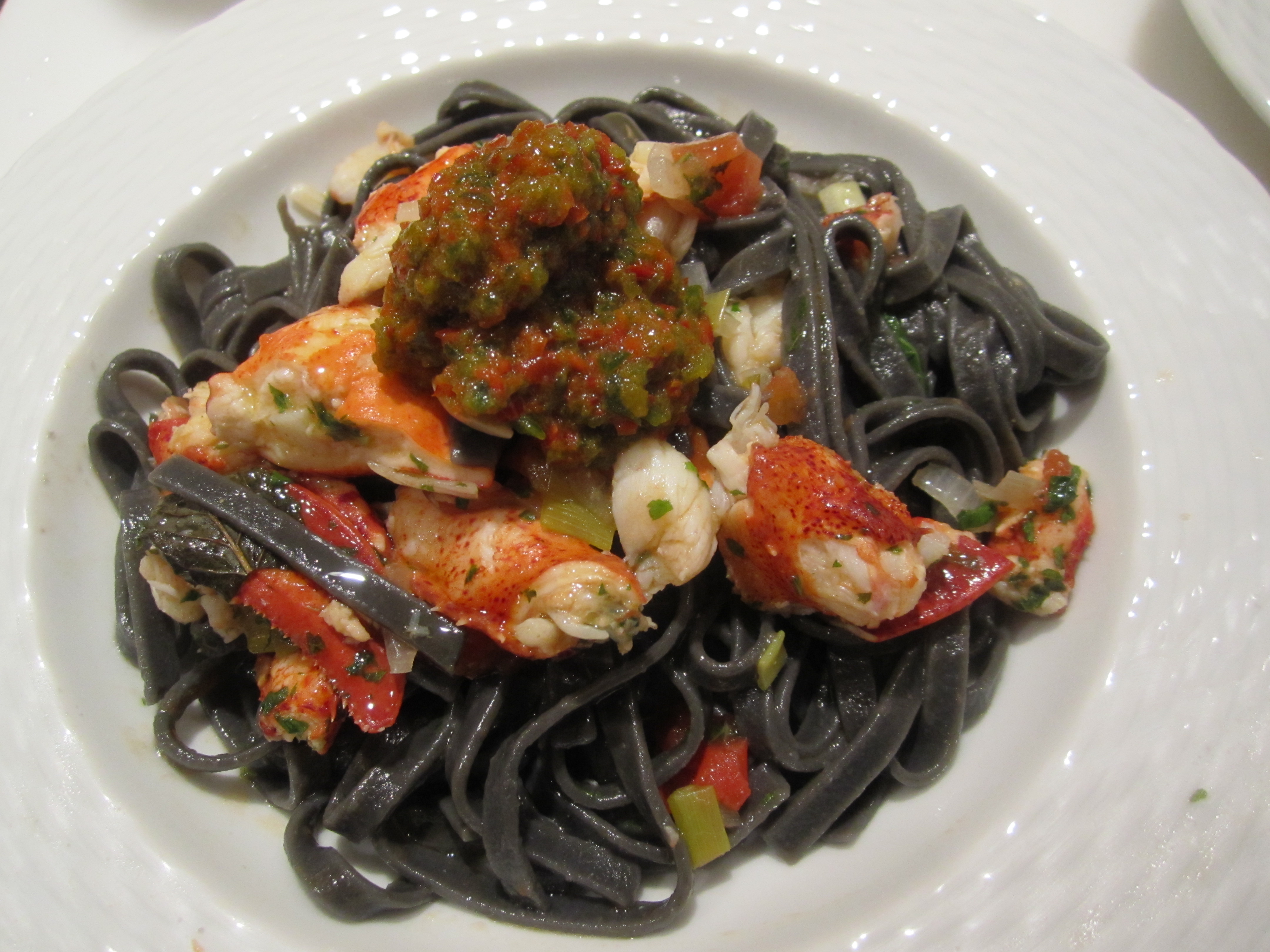
Spicy Squid Ink Linguini with Lobster and Jalapeno Pesto

I’ve had a request for a dish using squid ink linguini, so this morning I was on a mission as I browsed my local farmers’ market.  This one’s for you, Todd. 

Jalapeno pesto was one of Mario’s innovations when I worked at Po Restaurant in the 1990s.  We used a dollop of it in a spicy mussel dish with couscous.  It’s a very versatile condiment that adds a kick of heat to just about any dish in which you might otherwise use whole chili peppers or chili flakes.   The oil seems to mellow the peppers a bit and the result is a nice floral note of spiciness added to your finished dish.

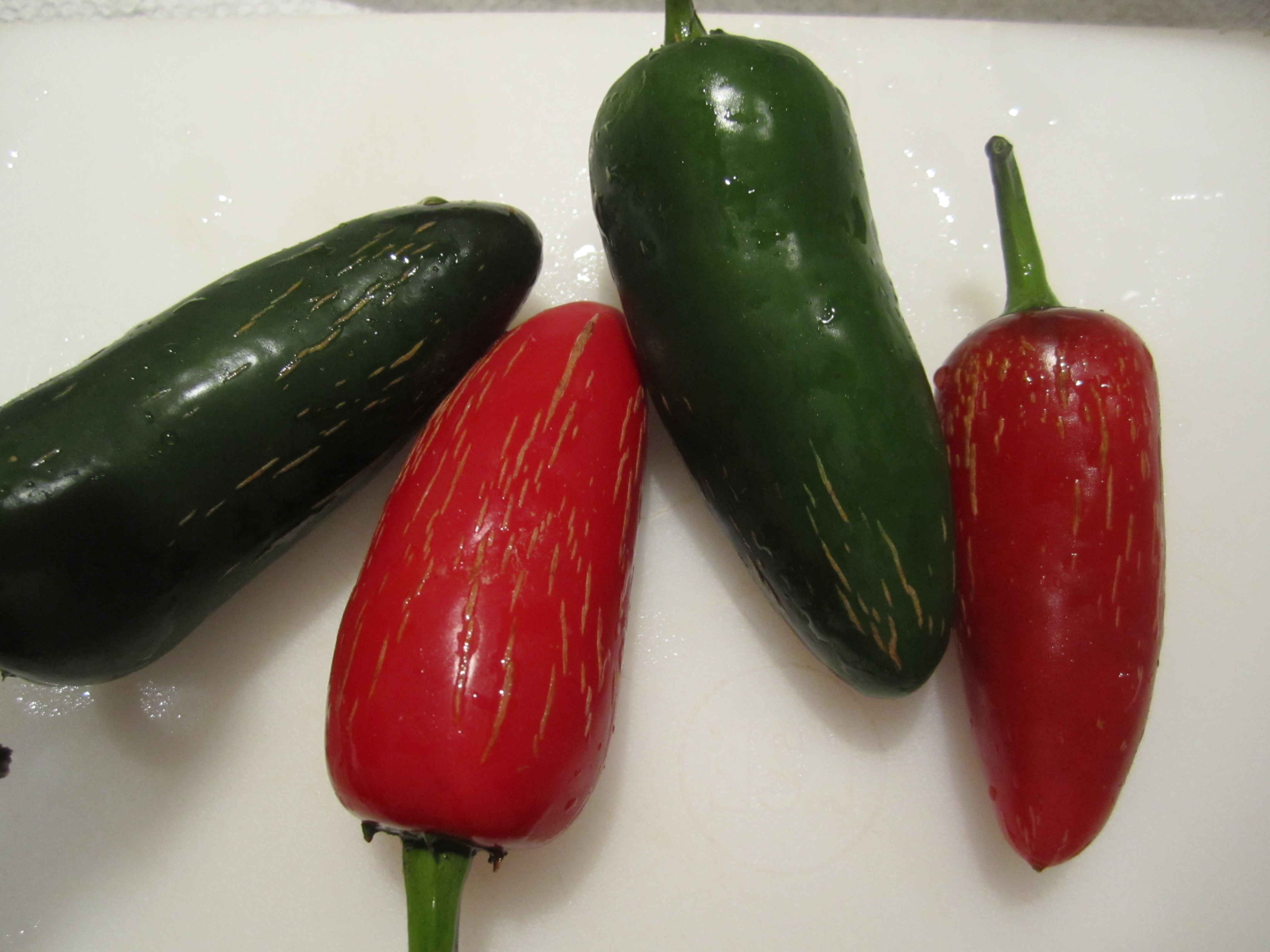
These jalapenos were grown by the vendor I bought them from, so he could attest to their heat. 

The black ink linguini were also bought from a local vendor who sells all manner of flavored and colored pastas. 

Although I must admit that the flavor of this particular black linguini isn’t markedly different from simple white pasta, it does have a certain distinctive gumminess, and makes for an impressive and festive presentation. 

This dish would work using any of a number shellfish or mollusks (mussels, scallops, shrimp or crab).  My seafood vendor had the most beautiful cooked, shelled Maine lobster meat this morning, and I am partial to lobster over those other shellfish.  I asked to smell it and taste it, and it tasted as good as it looked.

The other ingredients in this dish are a combination of aromatics I’ve used in many other recipes in the past–garlic, shallots, scallions (always good with seafood), basil, mint, chopped fresh tomatoes, white wine, and of course, jalapenos. 

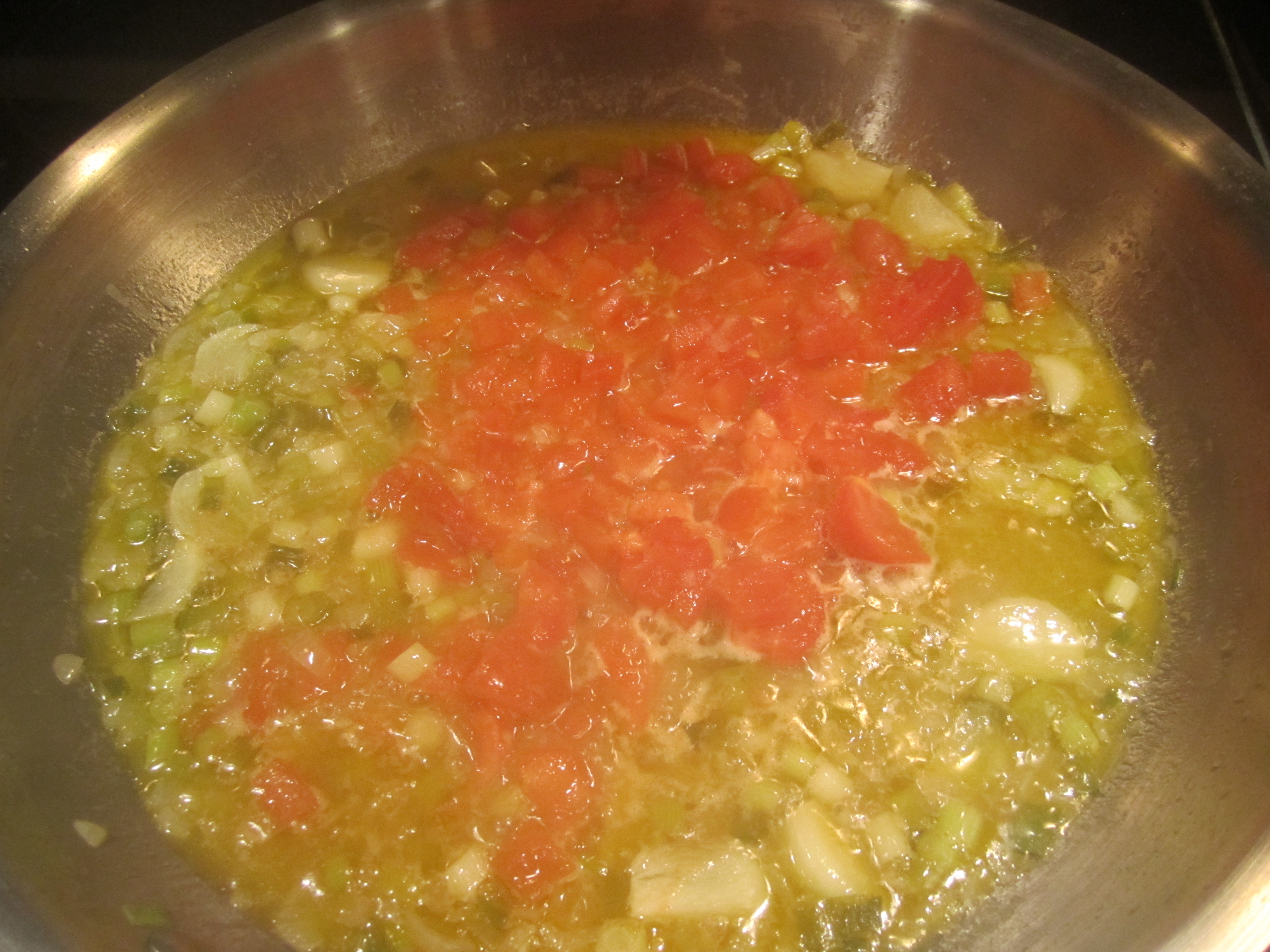
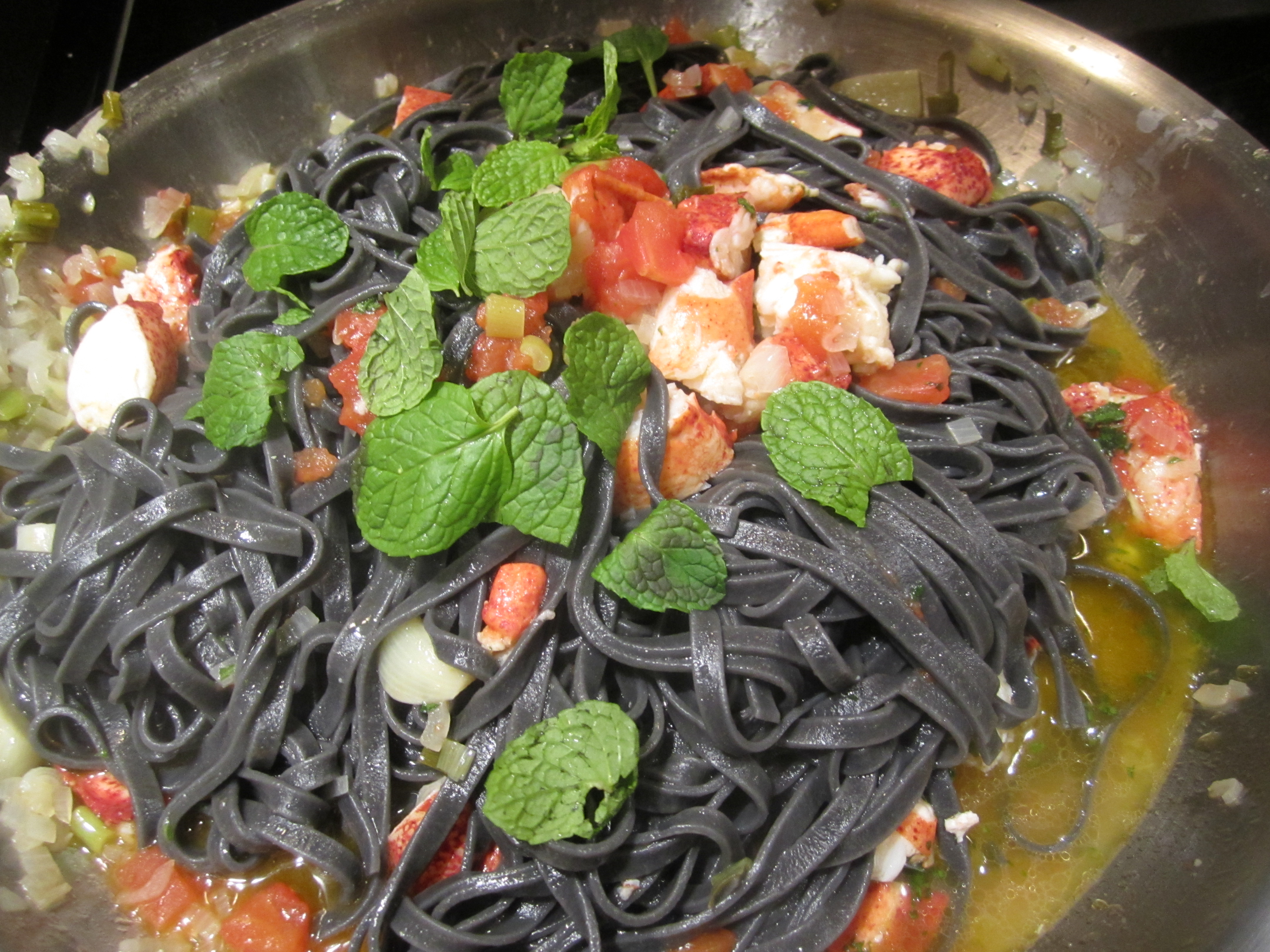
Having the lobster pre-cooked makes this dish quick enough to make from start to finish in the time it takes to boil the water and cook the pasta.  The jalapeno peppers are coarsely diced, placed in the food processor with salt and oil, then pulsed into a coarse paste, then set aside.  The aromatics are sauteed, wine is added then reduced a bit, tomatoes and herbs are added, then the lobster meat.  The hot pasta is added to the skillet and tossed with a touch of pasta cooking liquid.  The pesto is placed on top of each individual portion for that fresh and spicy kick in every bite. 

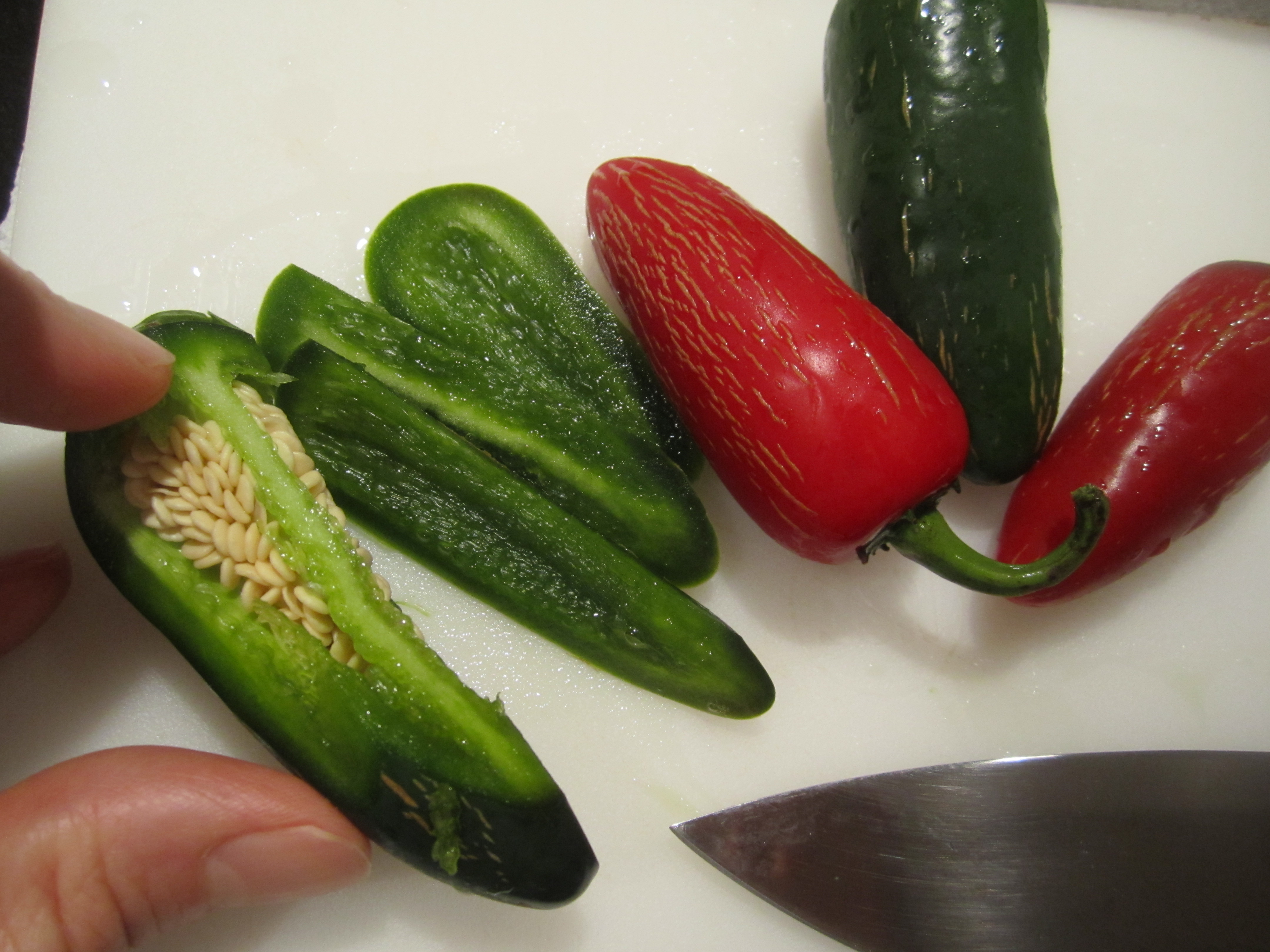
The heat of various “hot” peppers can vary widely.  My vendor told me that the red peppers were significantly hotter than the green ones, but I tried a sliver of each one before determining in what ratio to combine them.  It turned out that although the red ones were indeed stronger than the green ones, neither were too hot.  Therefore, I used an equal amount of red and green to make the paste without the worry of scorching anyone’s palettes.

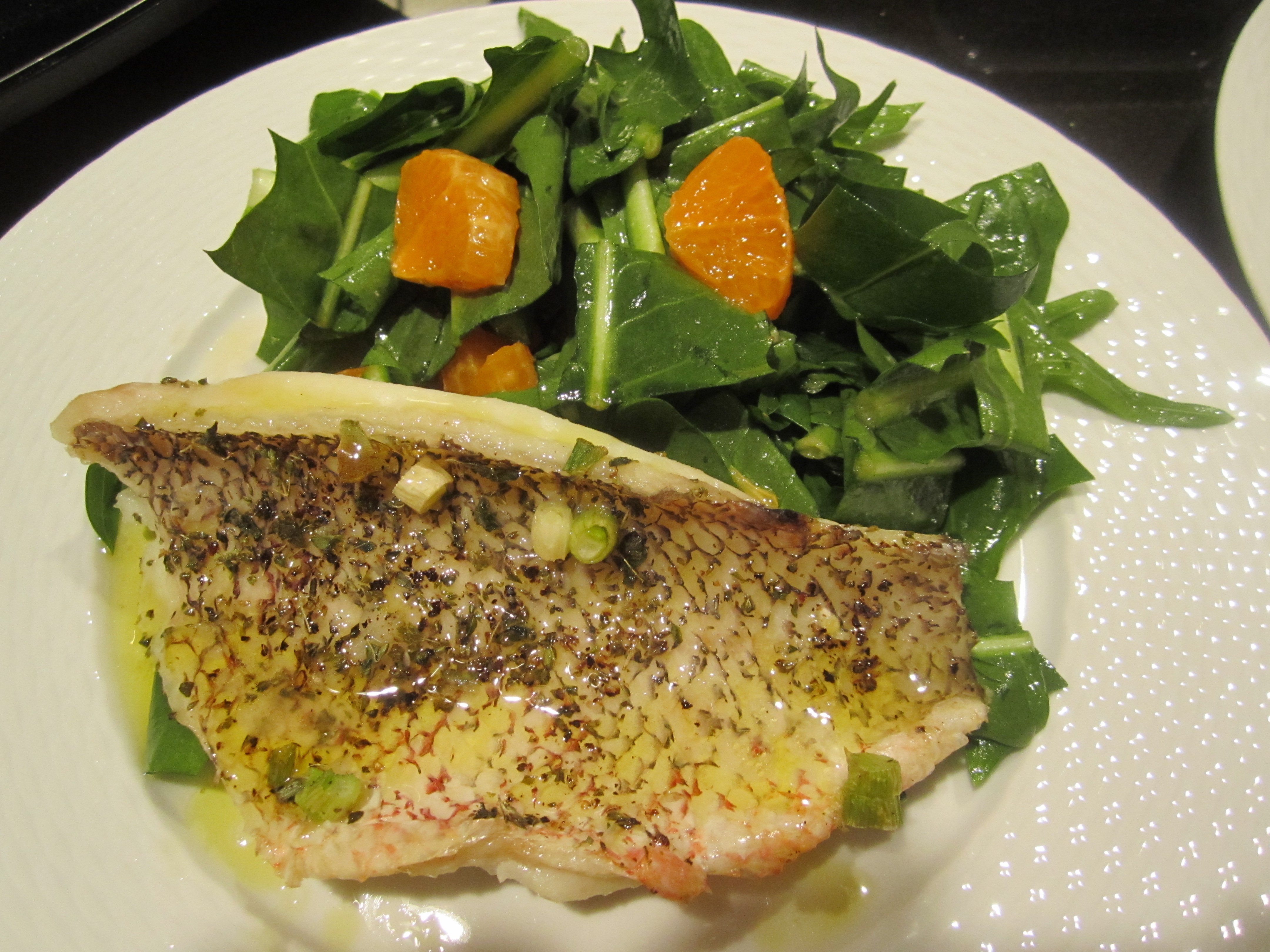
Although this dish is substantial enough to serve as a main course, today, I couldn’t resist the local hog snapper, so I made a main course of hog snapper (see my mother’s pesce in umido,  substituting scallions for onions).  Alongside the fish, I served a salad of local dandelion greens and Florida tangerines, dressed with red wine vinegar, agave and olive oil. 


Spicy Squid Ink Linguini with Lobster and Jalapeno Pesto

serves 4

1 lb black linguini

1 lb cooked lobster (or crab) meat

4 jalapeno (or other hot) chilis

2 cloves garlic, sliced

1 bunch scallions, whites and light green parts only, chopped into 1/4″ rounds

1 shallot, finely diced

1/4 c + 2 tbls olive oil

1/2 c white wine

1 large ripe tomato, peeled, seeded and diced into 1/2″ chunks (about 1/2 cup of chunks)

12 mint leaves

6 basil leaves

salt and pepper to taste

To make pesto, slice chili peppers into strips, discarding the seeds and slicing off any white ribs. 

Dice into 1″ pieces and place in the food processor with 2 tablespoons oil and 1 pinch of salt. 

Process into a paste, pulsing and stopping to check on consistency–not too finely.  Set aside.

While pasta water is coming to a boil, in a skillet, saute shallots, garlic, scallions in olive oil on medium heat for 5 minutes. 

Turn up heat and add wine.  Cook for a minute to reduce.  Add chopped tomatoes and continue cooking on low until pasta is almost cooked.

When pasta is a minute shy of done, add basil and mint leaves to skillet, as well as lobster meat.  Toss in pasta, along with a half-cup of cooking liquid. 

Turn heat to high and toss to combine.  Taste for salt and serve immediately.  Top each serving with a dollop of pesto. 

Posted in Pasta, Seafood | 1 Comment

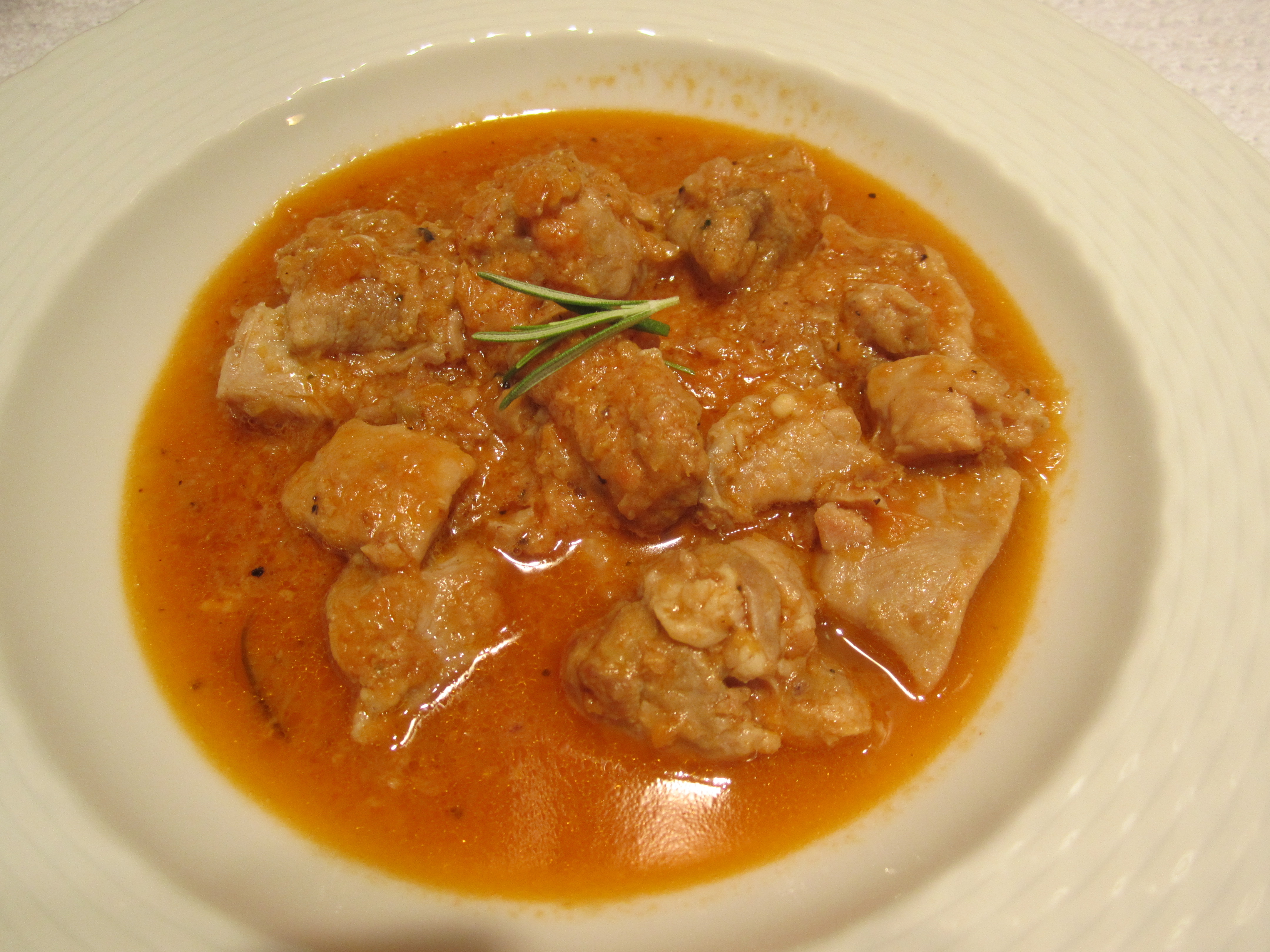
Spezzatino di Tachino

This turkey stew is a direct adaptation of my neighbor Beppi’s preparation for tripe.  I’m having guests for dinner tomorrow evening and I want to make a stew that can be made ahead, then reheated in the oven, leaving my stovetop clear for me to do risotto and a vegetable at the last minute (I know my electric cooktop’s limitations). 

My neighbor Beppi makes a stew of tripe (cow’s stomach) that I absolutely adore.  I must admit, it’s the flavor of the sauce (not necessarily the tripe) that I find so appealing.  Knowing that my guests might not necessarily appreciate innerds, I set out to duplicate this delicate stew using another gamey meat (but not as gamey as tripe)–turkey thighs. 

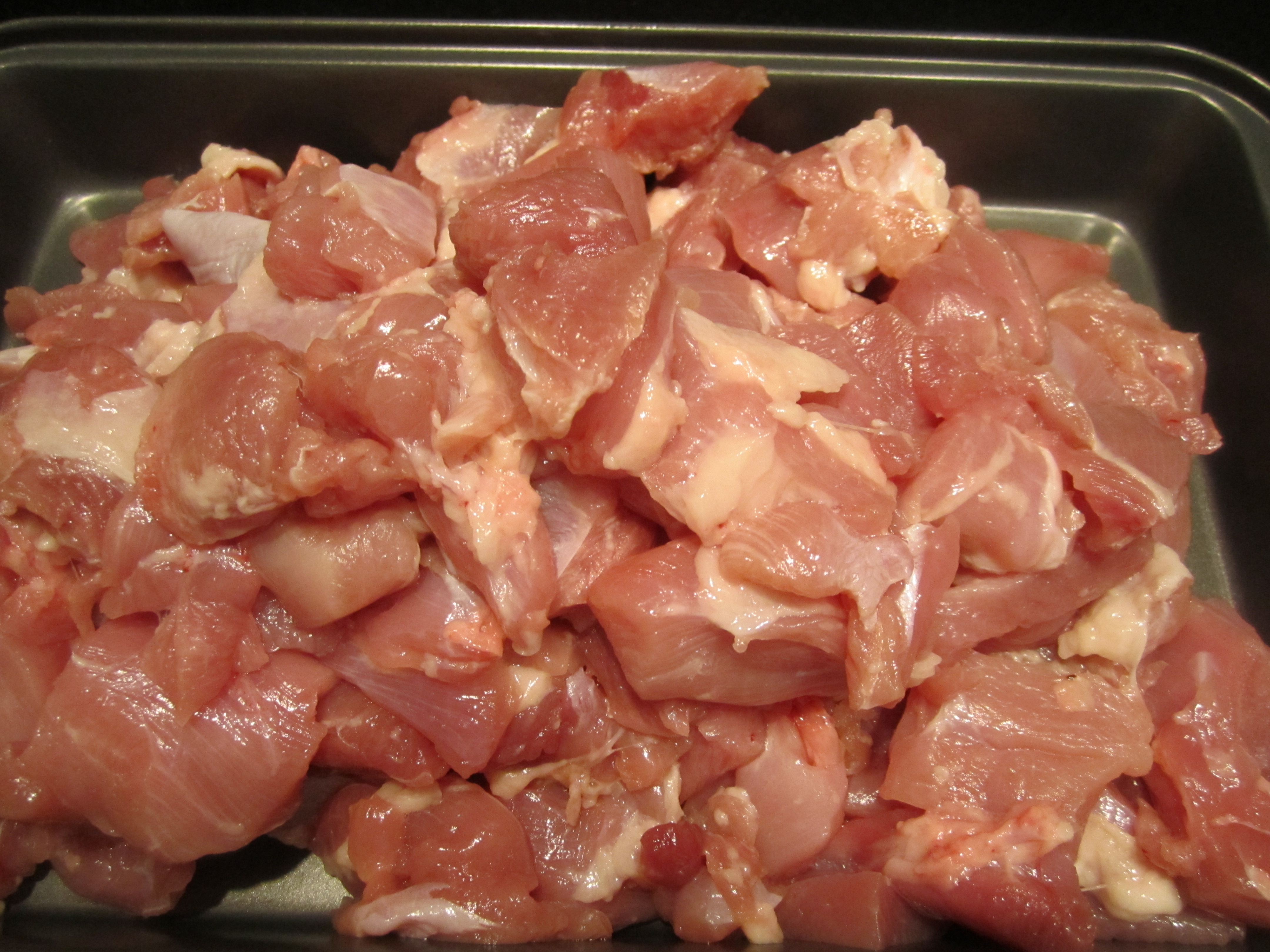
I had seen nice-looking turkey parts (“all-natural”, antibiotic-free) at my local Publix market and they inspired me to make Beppi’s tripe recipe.  Turkey thighs have a wonderfully meaty and rich texture and a slightly gamier flavor than chicken thighs (although chicken thighs would do fine in this recipe) and can be simmered and reheated, while remaining tender. 

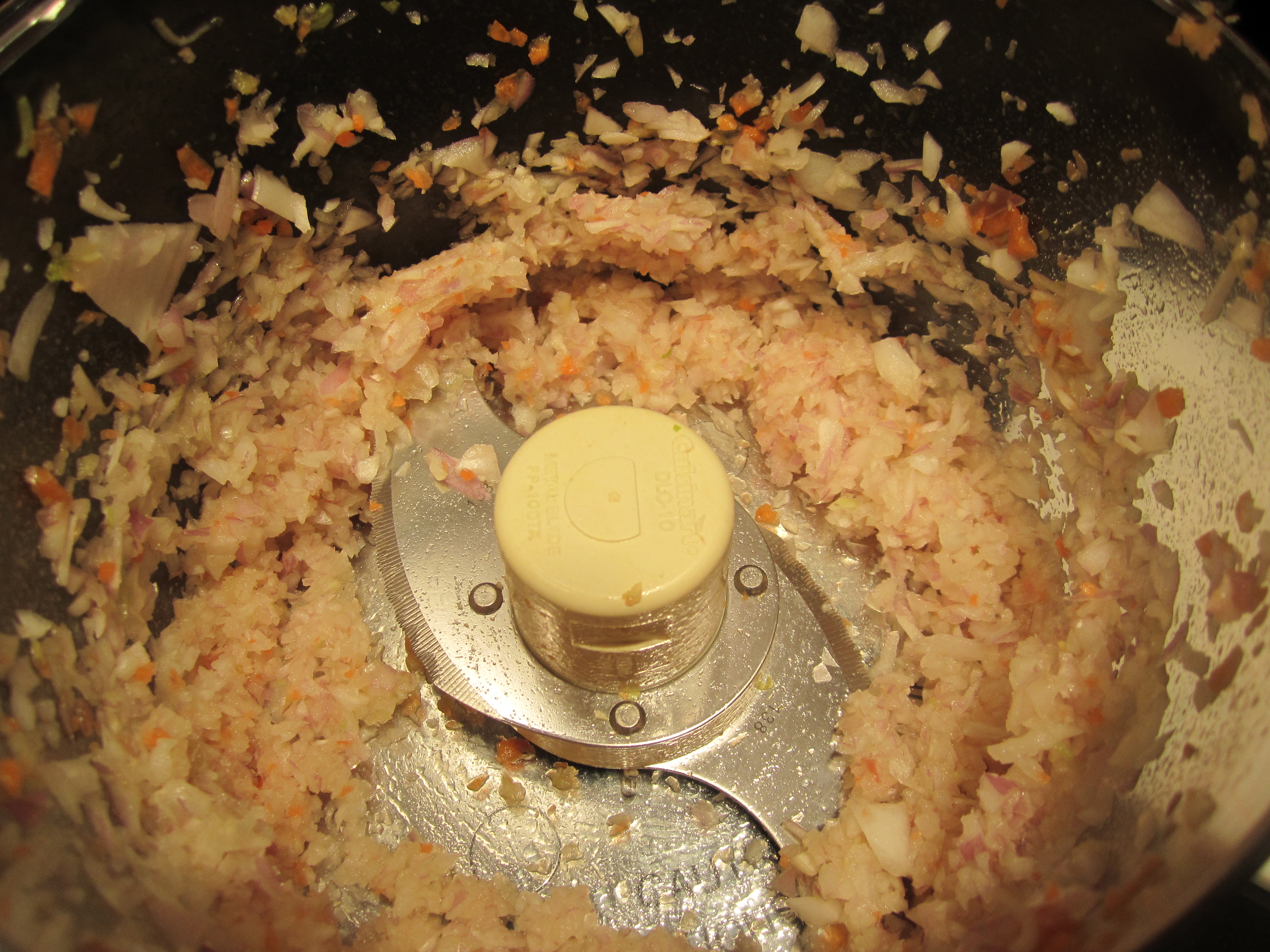
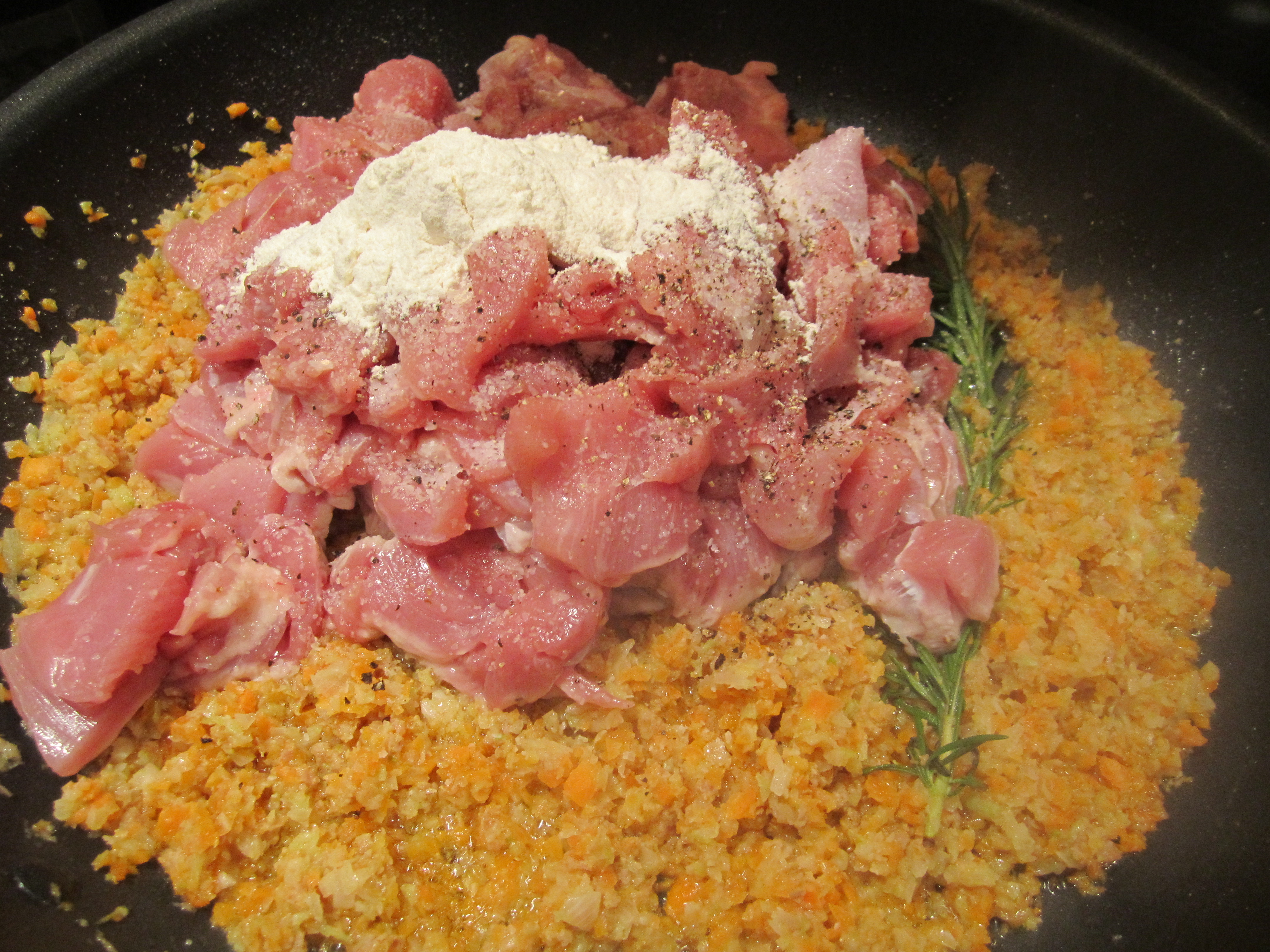
The dish begins with a pestata (paste) of aromatics–celery, carrots, onion, shallot.  In addition, Beppi adds some prosciutto to his pestata–brilliant–flavorful but delicate.  The finely diced prosciutto melts into the sauce and gives it a not-quite-smoked, but deeply porky flavor.  The pestata gets sauteed in butter, along with a sprig of rosemary for perfume. 
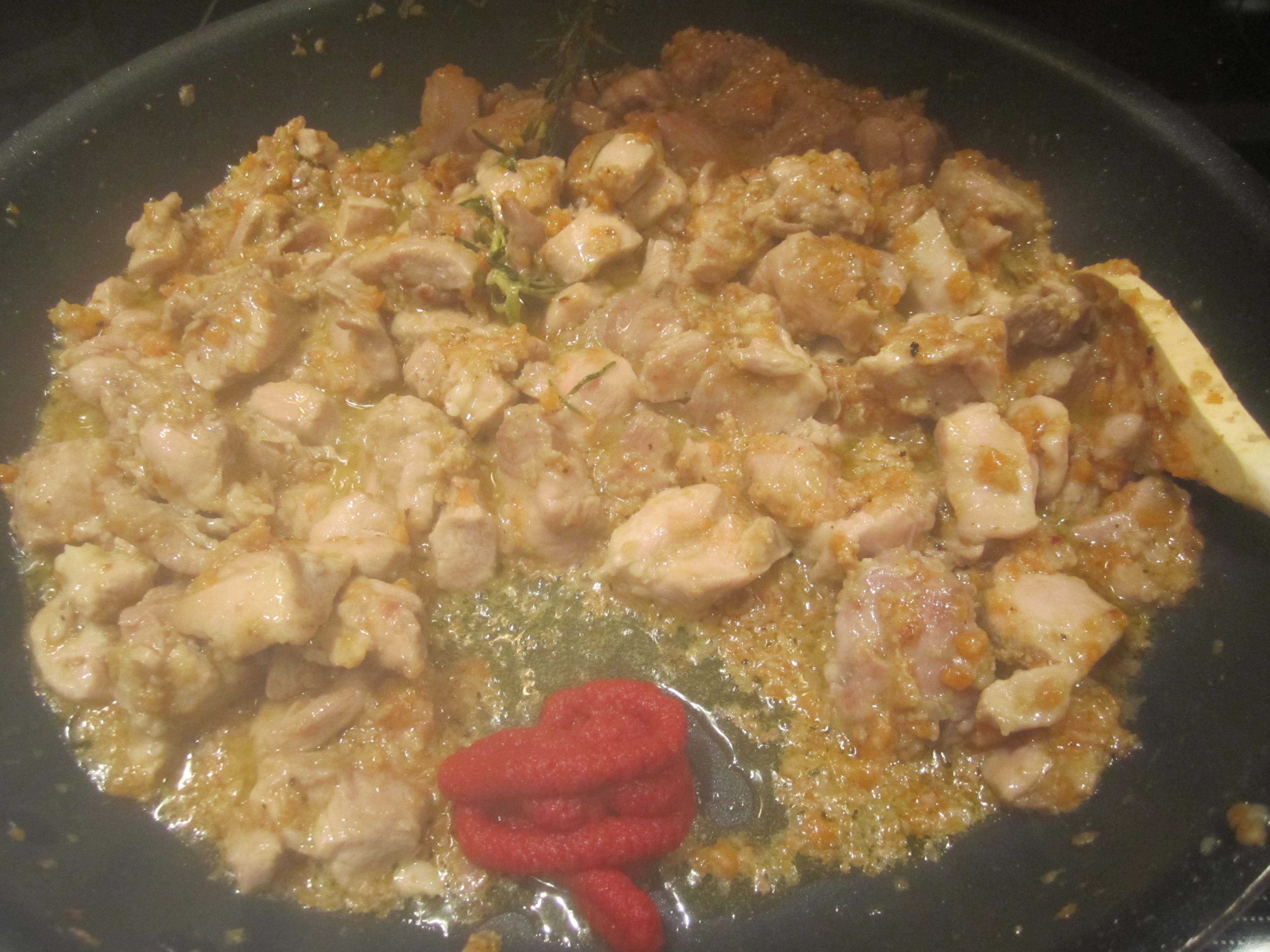
After the pestata has released most of its liquid and begun to caramelize (and your house is instantly filled with wonderful aromas), diced chunks of turkey thighs and some flour are added and continued to saute until the turkey has lost  all its pink color and the pestata has continued to caramelize and concentrate. 

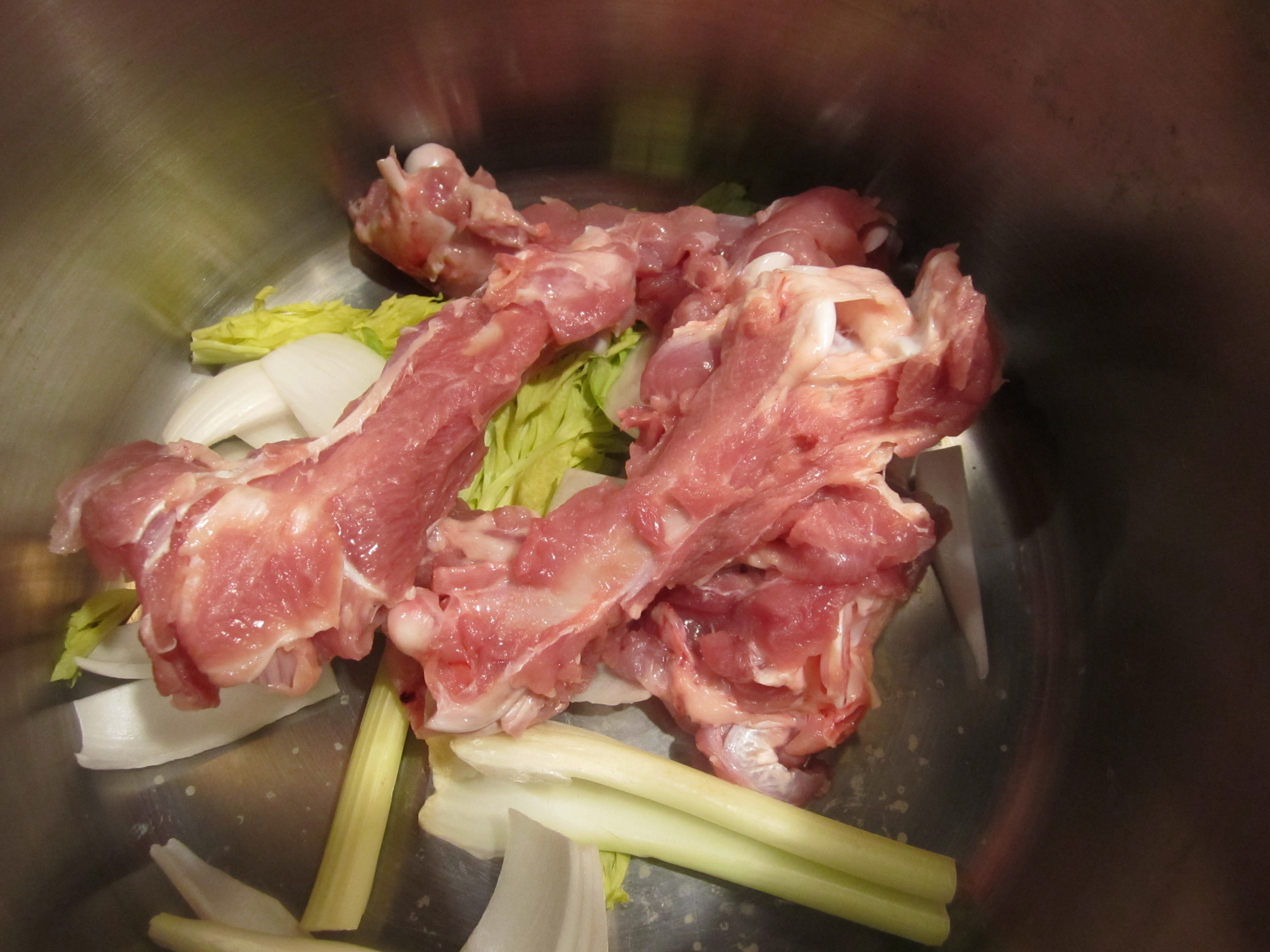
At this point, some tomato paste is added and sauteed, then wine is added and reduced, then a rich and flavorful broth is added to cover the turkey and amalgamate the sauce.  Since my thighs were on the bone, I was able to remove them from the bone, then boil the bones with some celery and onion, to form the broth. 

As accompaniments, I made plain risotto, plus sauteed zucchini and carrots.  The rice was the perfect neutral sponge to soak up the deep, rich sauce from the turkey. 

Spezzatino di Tachino

serves 4 – 6

4 turkey thighs, on the bone

1/4 onion, peeled and diced into 1″ chunks

2 ribs celery, some leaves included, if possible

2 carrots, peeled and diced into 1″ chunks

2 shallots, peeled and quartered

1 sprig fresh rosemary

2 oz. prosciutto, sliced thinly, then cut crosswise into 1/2″ ribbons

6 tbls butter

2 tbls tomato paste

3 tbls flour

1 c white wine

2 c chicken or turkey broth

salt and pepper to taste

To make the broth, remove the skin from the turkey thighs, then the meat from the bones and dice meat into 1 1/2″ cubes (discard skin).

Place bones, plus a rib of celery and half an onion in a small stockpot. 
Cover with water and let simmer for an hour.  Add salt and pepper to taste and set aside.

Combine carrots and celery in the food processor.

Process to a coarse paste. 

Remove and set aside.  Repeat procedure in the food processor with onions, shallots and prosciutto. 

In a large skillet or dutch oven, place butter, aromatics/prosciutto and rosemaryBring to a sizzle on high heat, stirring often.  Saute for about 7 to 10 minutes, or until vegetables have released most of their water and have begun to caramelize.

Add turkey meat, season liberally with salt and pepper, then and flour and continue to saute for another 8 – 10 minutes, until turkey meat has lost most of its pink color.

Add tomato paste and spread and press into the bottom of the skillet in the sizzling butter for about a minute. 

Add wine and let reduce for a minute or so. 

Add broth and turn heat to low.  Cover partially and simmer for 45 minutes, then set aside until ready to reheat and serve (may be done to this point, then refrigerated a day or two before serving).   To serve, place in preheated 300-degree oven, covered with foil for about a half-hour.

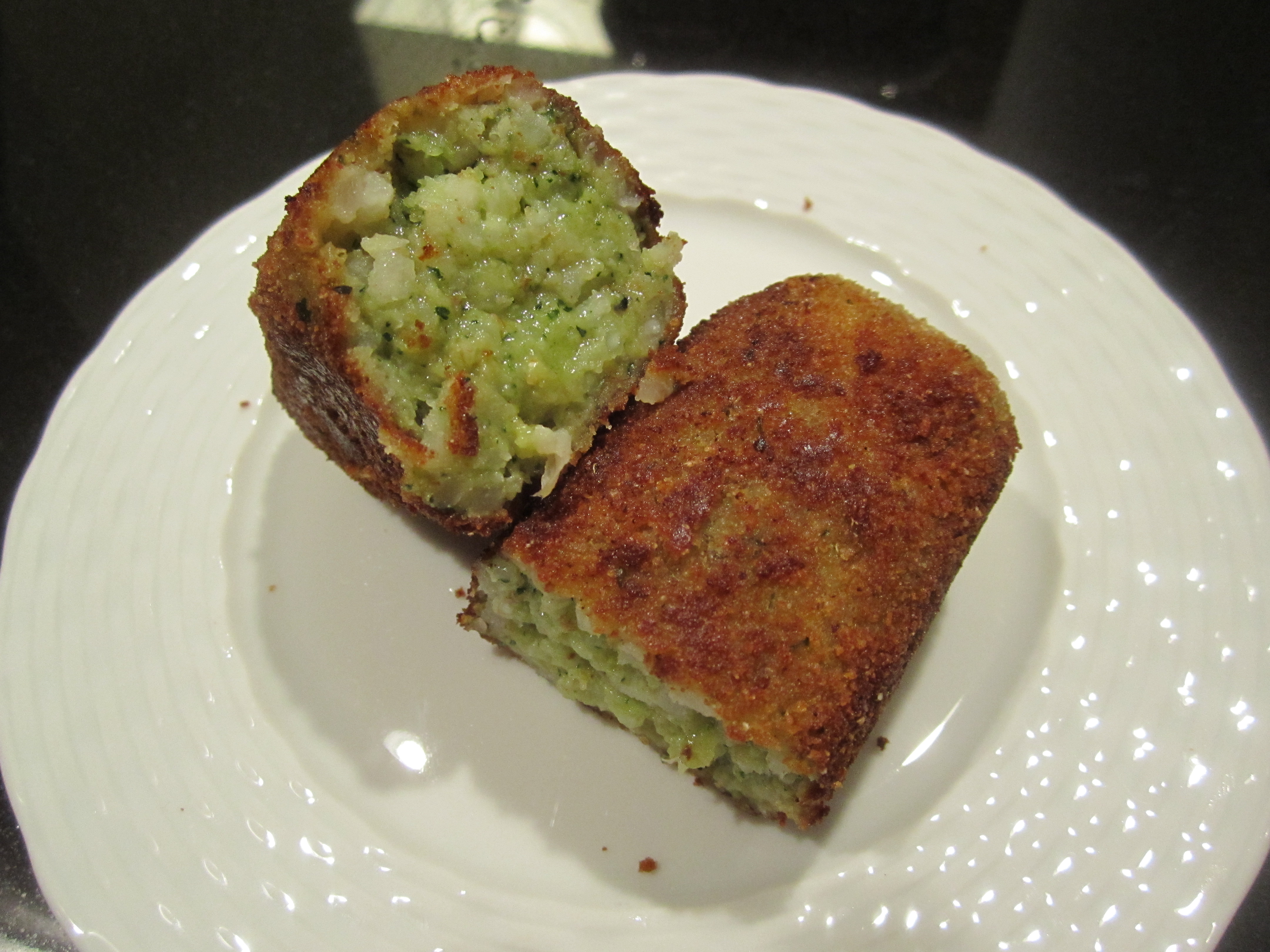
 P.S.  There was enough risotto left over to make some beautiful rice croquettes (see Beppi’s Crochette di Riso). 

The beautiful green color came from folding a quarter cup of my leftover tuscan kale pesto into the risotto before forming the croquettes.

Posted in Soup/Stew | Leave a comment

Tuscan Kale Pesto


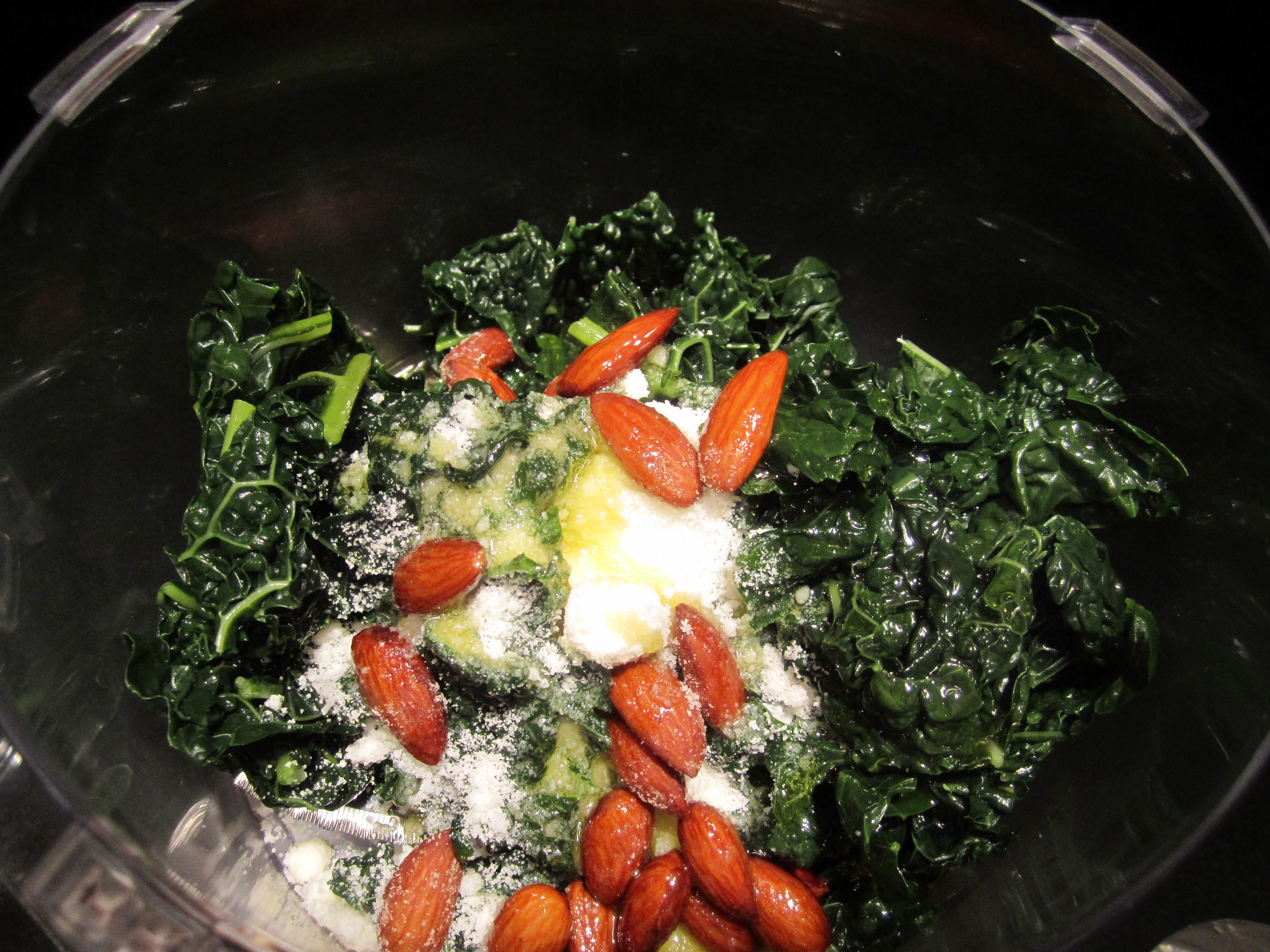
Outside of traditional basil pesto alla genovese, this is my favorite pesto.  There is something unique about the texture and mild flavor of tuscan kale that lends itself to pesto.  I’ve been buying it every week from my farmers’ market, and whevener I cook a bunch of it, I always hold some aside for making pesto. 

This pesto offers a couple of advantages over traditional basil pesto.  For one, it can be heated in a saucepan prior to serving.  Because of its sturdiness and the fact that it’s been blanched, it won’t blacken the way raw basil leaves do when ground and exposed to the air.  To me, these two factors make this pesto an ideal dish to serve to guests (no racing to dress the pasta and get it on the table before it turns luke-warm and the pesto turns brown). 

Because the cooked kale is much milder than raw basil, I like to use stronger ingredients to accompany it.  I use smoked almonds instead of pine nuts (although roasted salted almonds are fine as well) and grated pecorino only (no parmigiano necessary to temper the strength and saltiness of the pecorino).   I add black pepper to this pesto, whereas I do not add it to basil pesto. 

Garlic lovers may want to add a fraction of a clove of garlic, although I choose not to add garlic because I like the flavor of the sauce without it (much cleaner and no lingering pungency on the palette). 

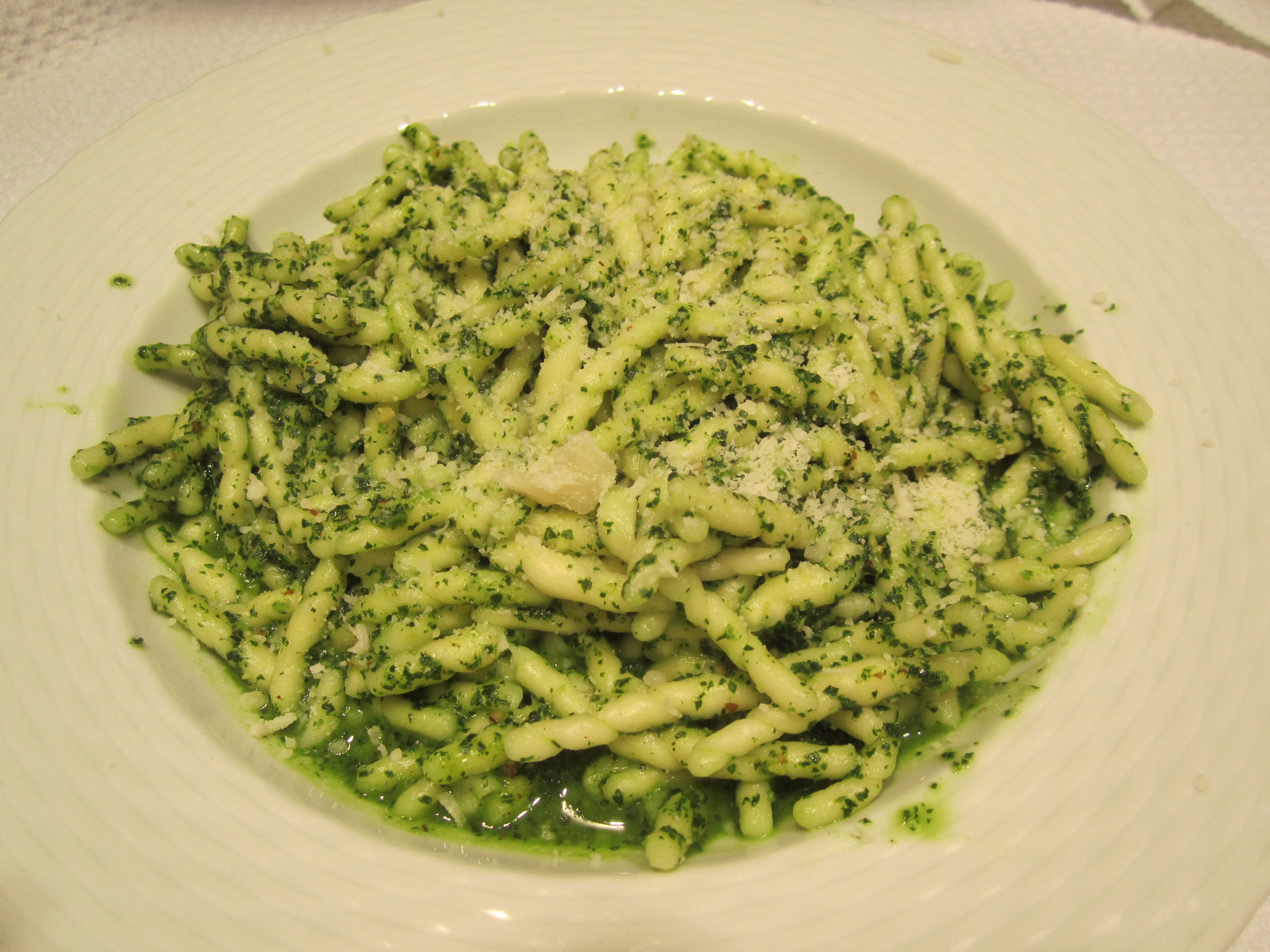
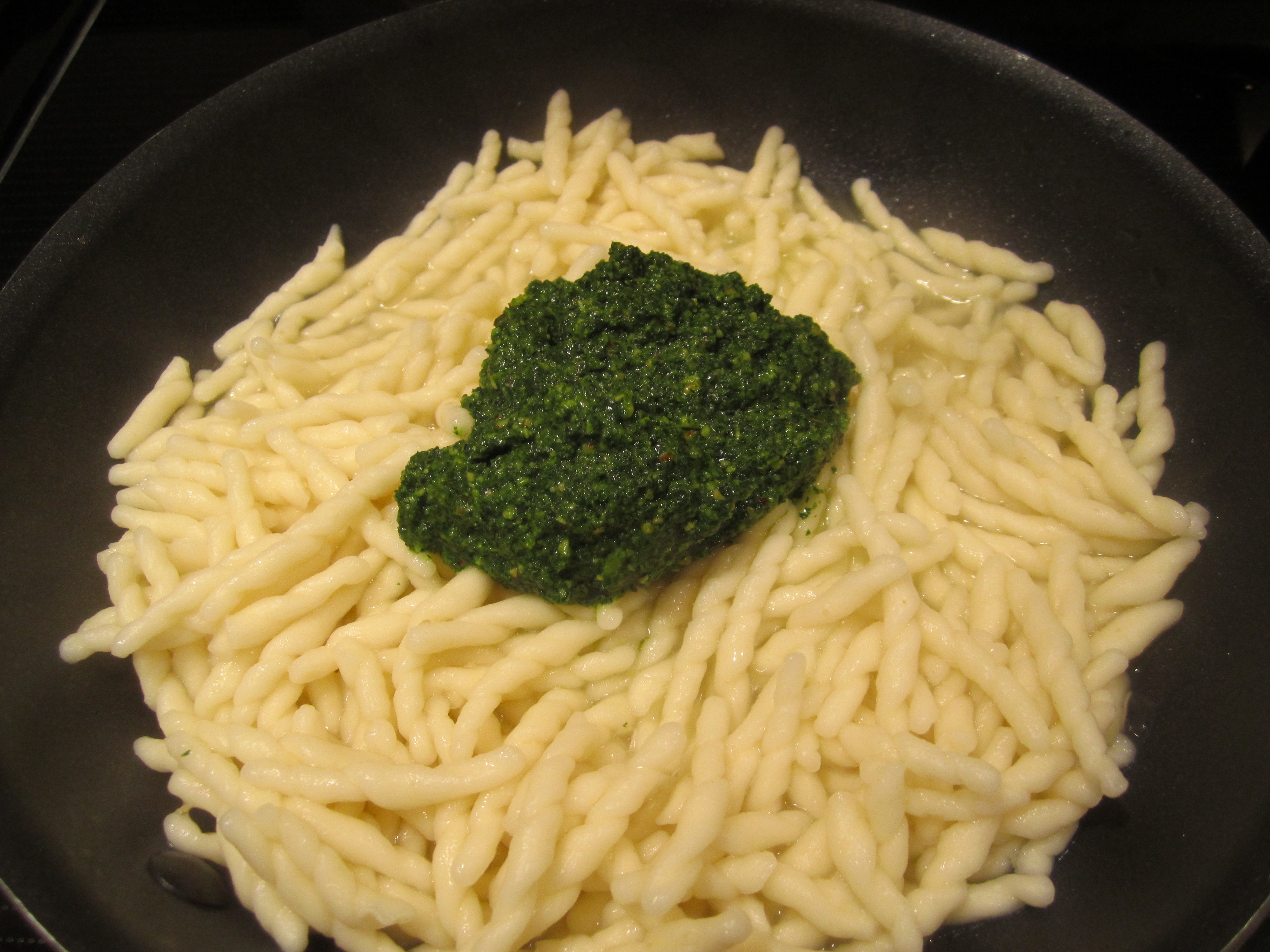
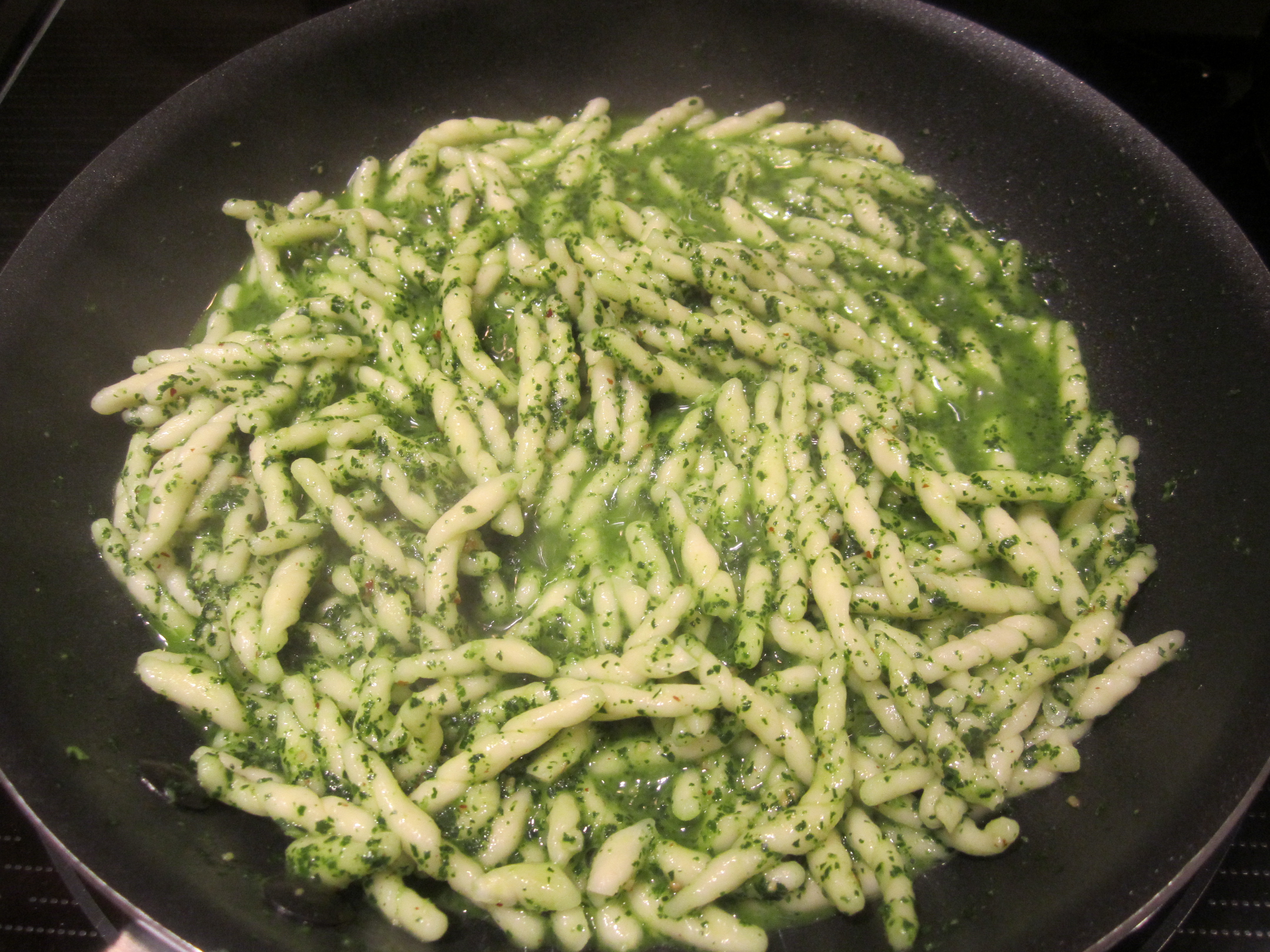
After the pasta is cooked, I transfer it to a skillet with a touch of broth and stir in the pesto–copious amounts of it.  I simmer for a minute on low heat to combine, then serve. 

As a first course, I served tomato, mozzarella and basil, with my beautiful Florida tomatoes. 

I’m not sure how many photos of caprese salad I’ve posted in the course of this journal, but I have one almost daily, and each day I think–this is the best thing I’ve ever eaten!

Tuscan Kale Pesto

serves 4–enough to dress 1 lb. pasta

2 c tightly packed blanched and drained tuscan kale leaves

1/4 c smoked almonds

1/4 c grated pecorino

1/4 c olive oil

1/4 tsp black pepper

Place all ingredients in the food processor.


Pulse and process to a coarse puree


To dress pasta, add cooked pasta to skillet containing a 1/2 cup of chicken broth and bring to a simmer.  Top with pesto.

Stir, simmer for a minute, then serve with plenty of grated pecorino.

Posted in Pasta, Sauces | Leave a comment