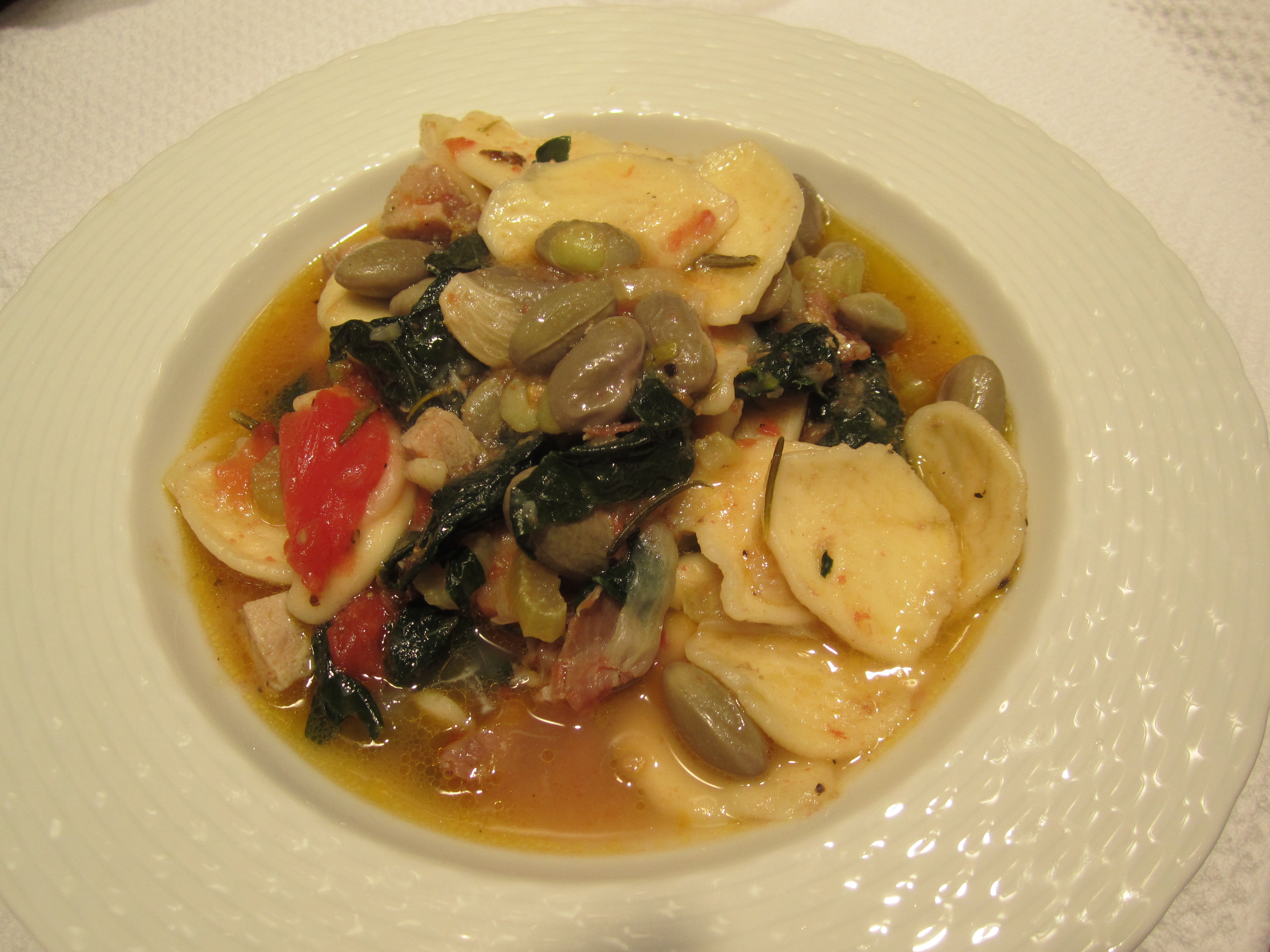
Pasta with Cranberry Beans and Tuscan Kale

The brief cold snap in South Florida this week happened to have coincided with the appearance of fresh cranberry beans in my local farmers’ market this past weekend.  A bean stew would be perfect for dinner in this weather.  I haven’t made beans in a while and there’s nothing like fresh ones–shorter cooking time than dried, and no soaking required.

Although the cooking time is greatlly reduced when working with fresh beans, they are perhaps a little more labor-intensive than dried ones.  When buying them, you need to select them pod-by-pod, to ensure that you’re buying pods with nice, plump beans in them.  There will be plenty of pods with few or no beans in them, so selection takes a littlle time and attention.  Then of course, they need to be shucked.  You’ll have approximately 1/2 – 3/4 cup yield of beans for every quart of pods, therefore, in order to make beans for four, you’ll need to shuck a couple of quarts of beans. 

To flavor beans, there’s nothing like a little cured or smoked meat of some kind.  In today’s dish, I’ve decided to use prosciutto.  I’ve found a a domestic brand (“Applegate Farms”) that is nitrate and nitrite-free (not the reason I use it–it just happens to be very delicate and good).  This is pre-sliced and vaccuum-packed in the bacon section of the supermarket.  It’s great for cooking, since it’s sliced rather thickly (considered indelicate for Italian prosciutto), has a nice fat to lean ratio and mellow flavor.

Tuscan kale is always a pleasant surprise at the farmers’ market here in Florida.  Because I rarely find this variety at my farm stands in New York, I buy it every chance I get. 
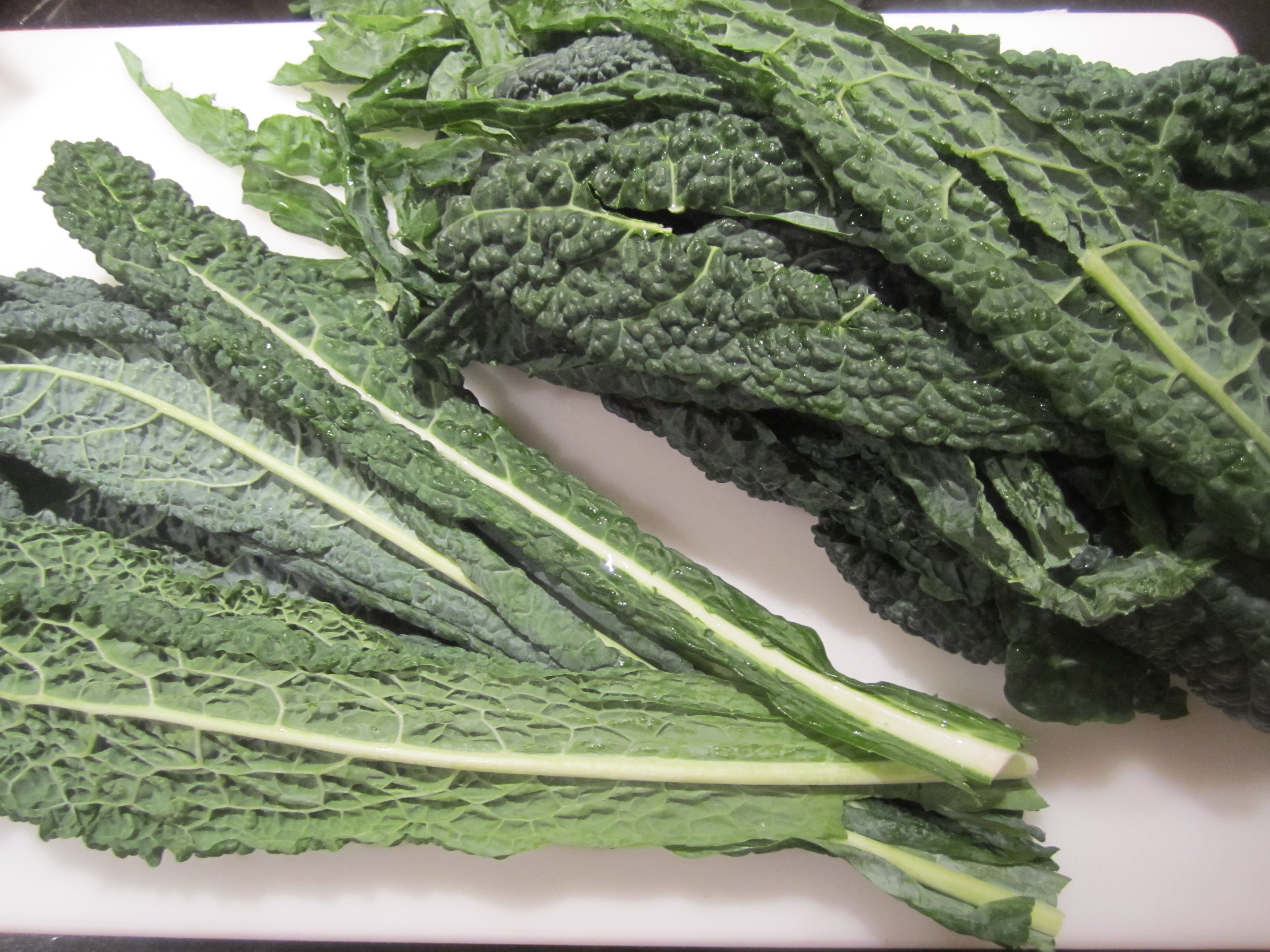
It’s sturdy, freezes well, and makes the greatest addition to a variety of soups, stews, and pasta dishes.  It even makes a great pesto (see my rigatoni with kale pesto and sausage). 

Today’s preparation begins with a saute of prosciutto and aromatics, then the beans are added, along with some broth, and all is simmered for about 45 minutes.  Tuscan kale is blanched separately, tomatoes are peeled and diced and both are added towards the end.  Pasta is cooked separately and added at the end.  A drizzle of olive oil and a sprinkle of pecorino make the dish irresistable (especially with a piece of bread). 

Pasta with Cranberry Beans and Tuscan Kale

serves 4

2 c freshly shucked cranberry beans (approximate yield from 2 1/2 qts whole pods)

1 small onion, finely diced

2 ribs celery, sliced finely

2 bay leaves

1 sprig fresh rosemary

2 cloves garlic, peeled and split

1/4 lb prosciutto, diced crosssise into 1/2″ ribbons

2 c chicken broth

1 whole tomato, peeled, seeded and diced

1 bunch Tuscan kale

1 lb orrecchiete or ditalini

1/4 c olive oil

salt and black pepper to taste

grated pecorino for sprinkling

Bring a large pot of salted water to the boil.  Strip leaves from stems of tuscan kale.  Slice leaves crosswise into 1″ ribbons.  Boil for about 5 minutes, then drain and set aside. 
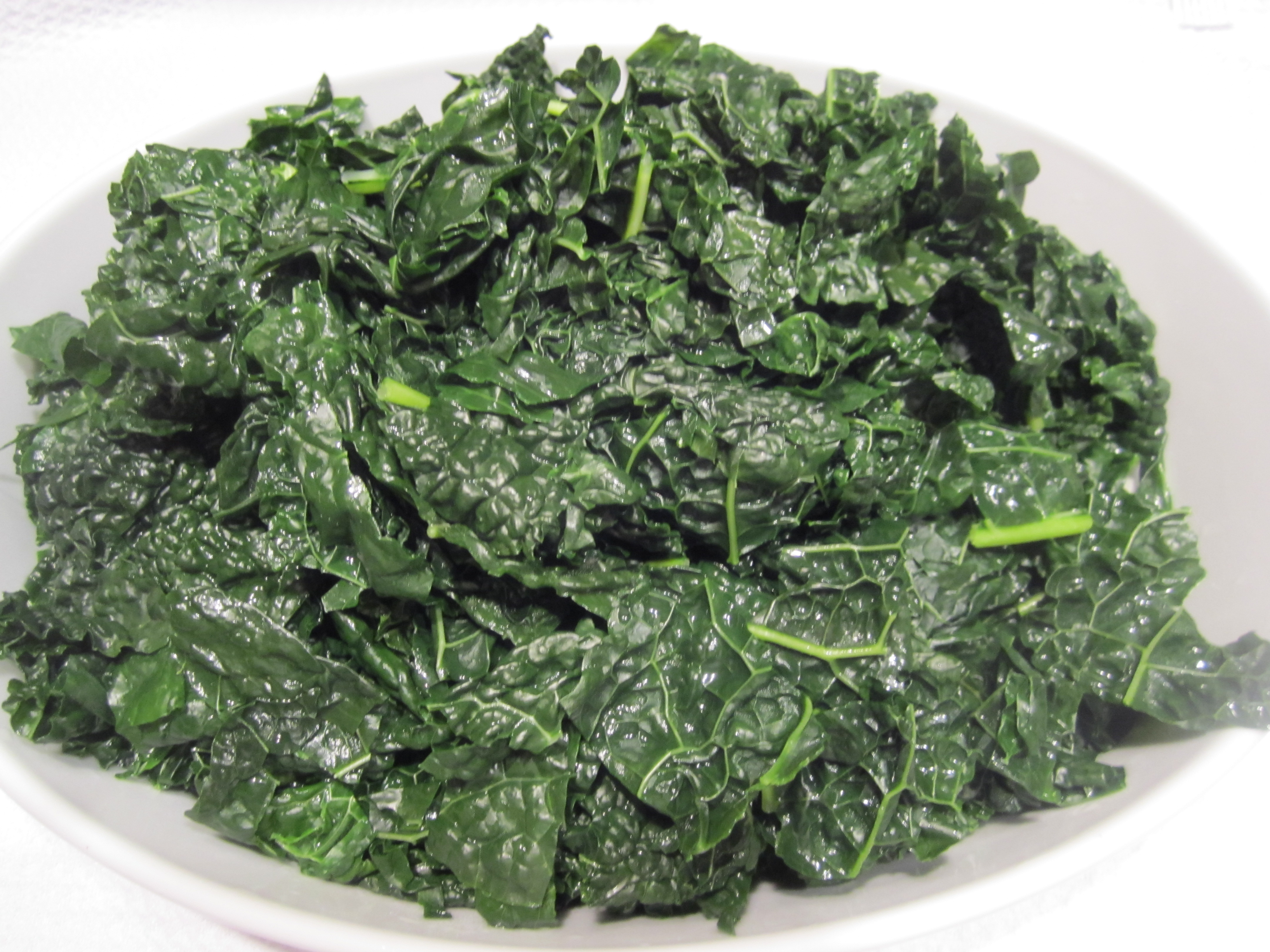
 Reserve the cooking liquid for boiling the pasta.

In a large skillet or dutch oven, place prosciutto, onion, celery, garlic, bay leaves and rosemary in olive oil.  Turn heat to medium and saute for about 10 minutes, or until softened and aromatic. 

Add chicken broth and beans.  Cover and simmer on low heat for about 45 minutes.

In the cooking liquid from the kale, boil the pasta until cooked, approximately 10 minutes.  While the pasta cooks, add the tuscan kale and chopped tomato to the bean mixture and continue simmering until pasta is cooked.

Add pasta to bean mixture, along with a half-cup of cooking liquid, drizzle with another tablespoon of olive oil and add salt and pepper, if necessary. 
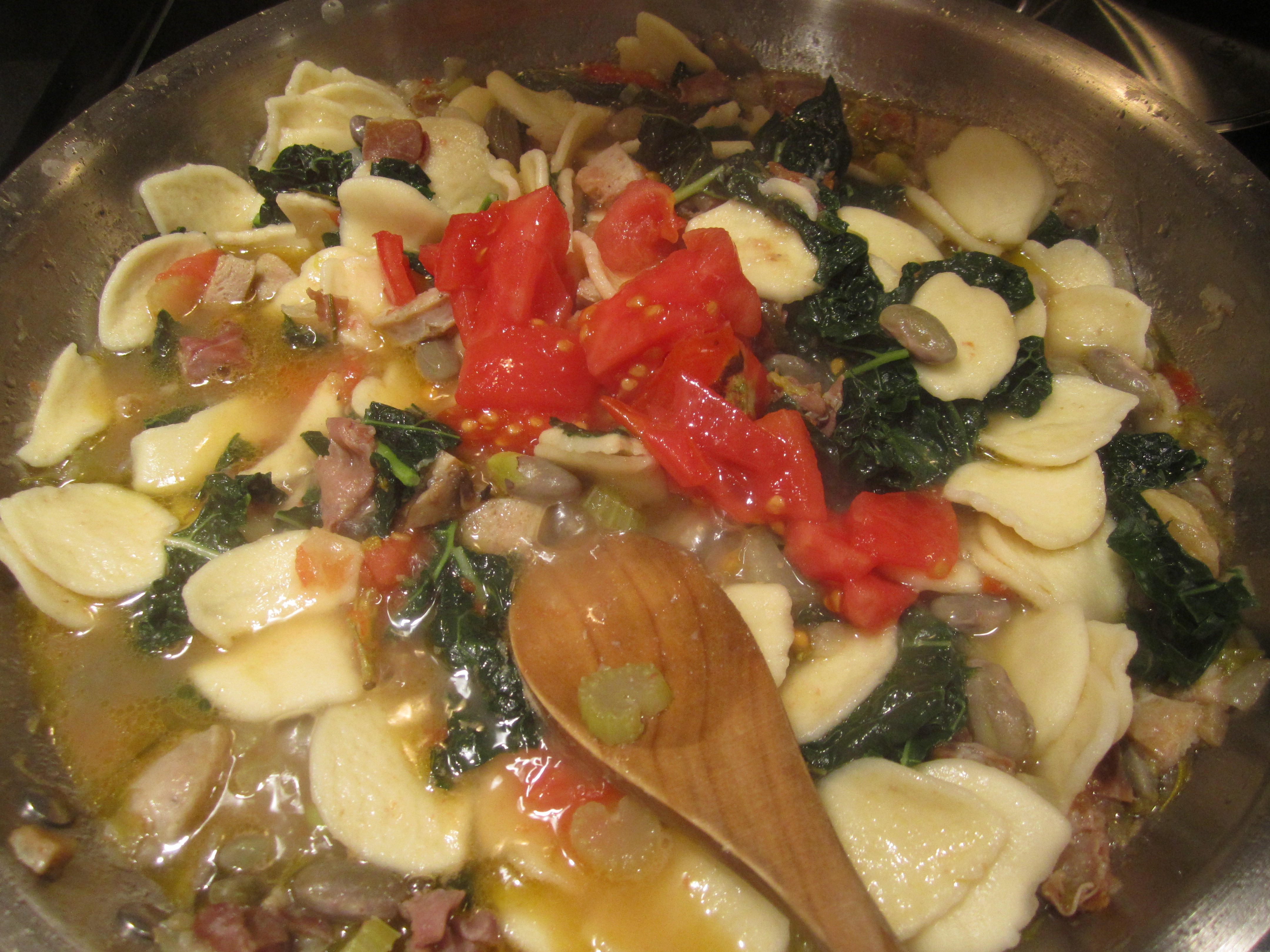
Serve with plenty of grated pecorino.  

Add
Posted in Pasta, Soup/Stew, Vegetables | Leave a comment

Pasta with Prosciutto, Mushrooms and Arugula

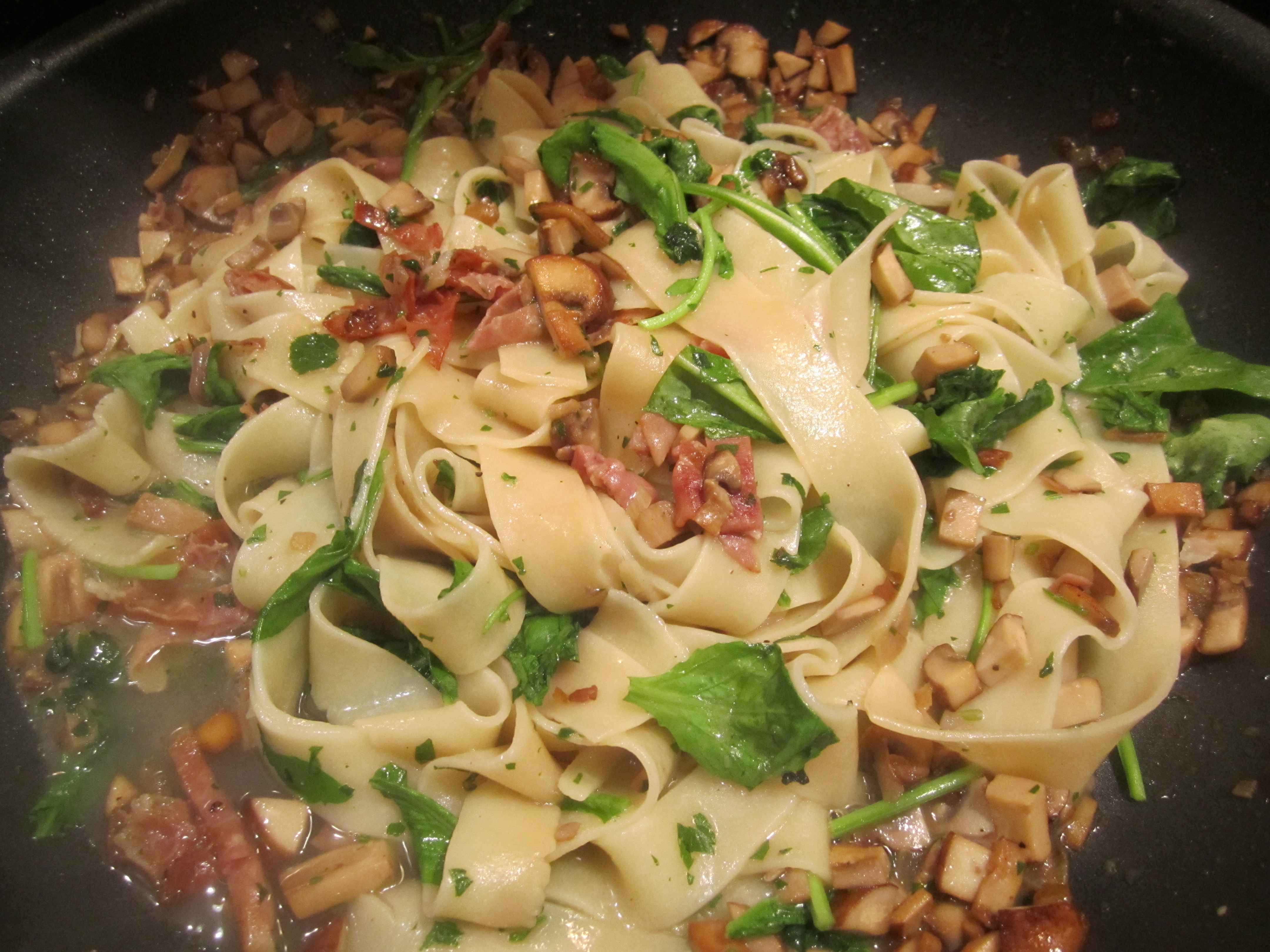
This is a greener, less luxurious version of my neighbor Beppi’s famous pasta with white truffles.  I’ve long discovered that adding a bit of chopped fresh greens like spinach or arugula to an otherwise deep and rich dish is a great way to lighten the dish, temper the richness, and make it brighter and prettier (presentation, after all, is important). 

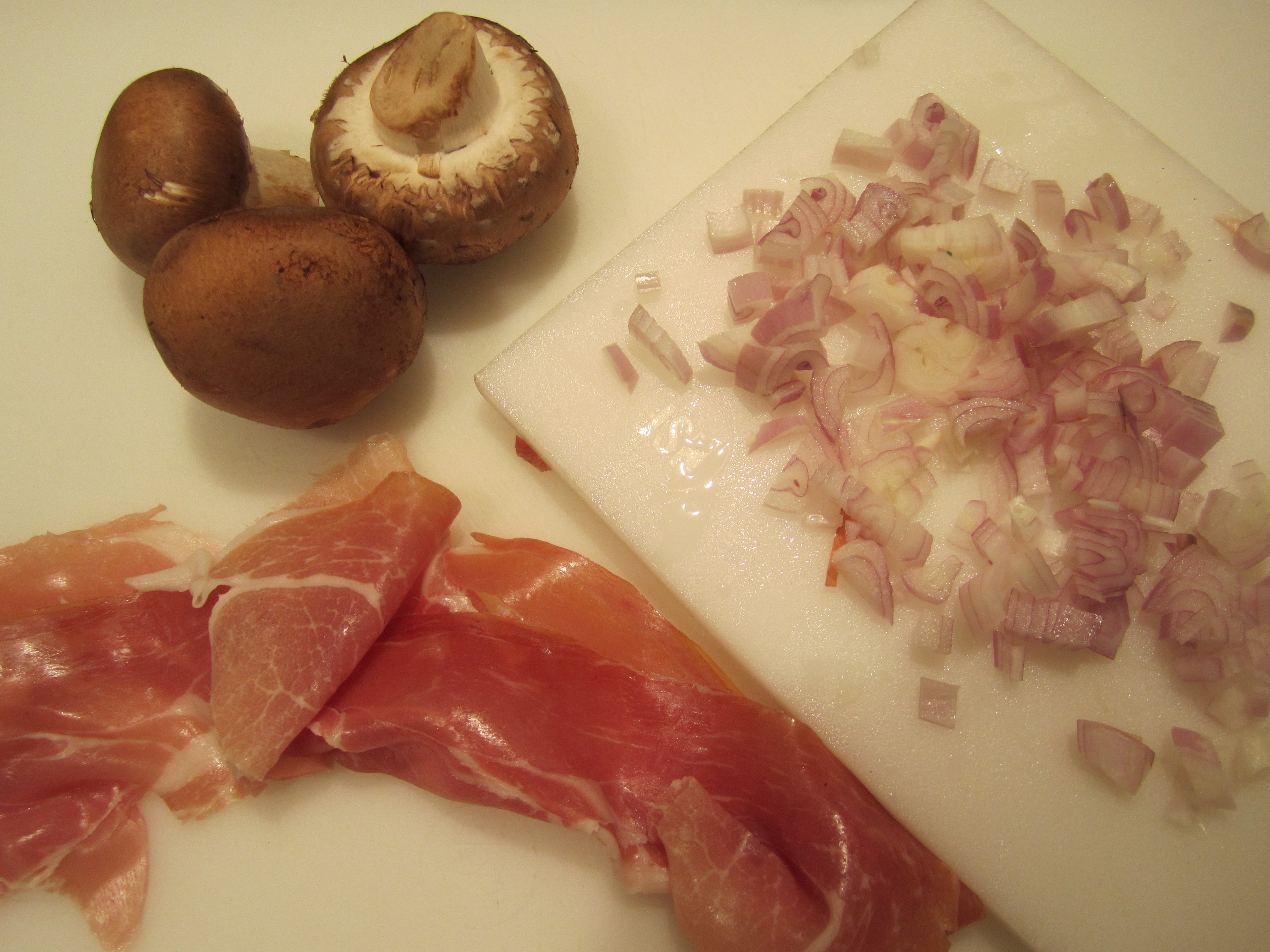
This dish is a perfect case in point.  The original, from Beppi’s world class San Marco restaurant (NYC, circa 1960’s through 1990) was prepared tableside, and consisted of prosciutto, shallots and chopped mushrooms, sauteed in butter.  Cooked pasta was added, and the dish was showered with a profusion of freshly shaved white truffles.

Although arugula is in no way a stand-in for truffles, it takes the dish in an entirely new direction–makes it bright and lemony, rather than deeper and earthier.  The addition of arugula was enough of a variation for me to want to share it with you.   

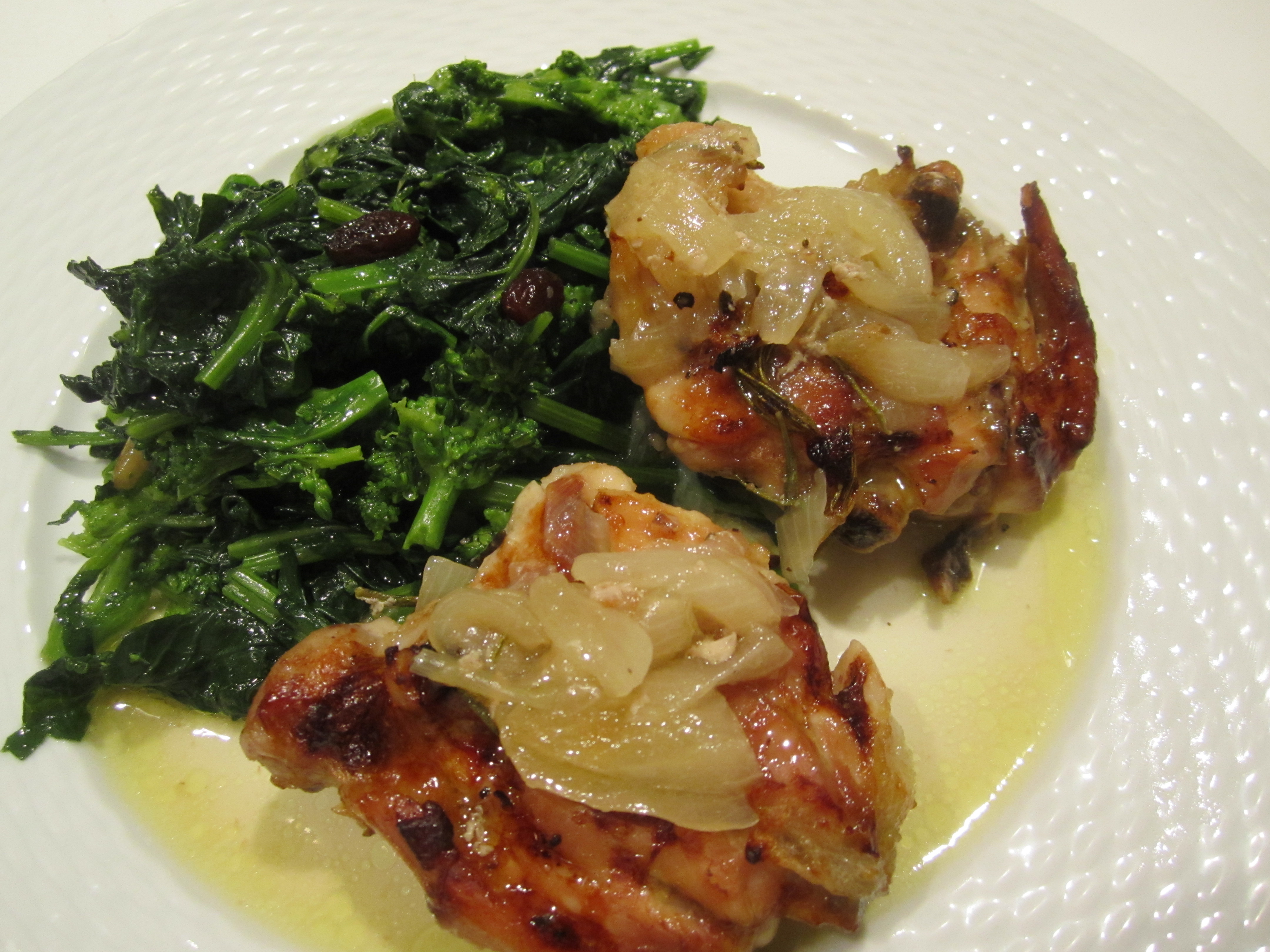
As a main course, I served Beppi’s Broiled Chicken Thighs with Rosemary and some sauteed broccoli di rapa with pine nuts and raisins.


Pasta with Prosciutto, Mushrooms and Arugula


serves 4

1 lb fettucine or pappardelle

1/2 lb cremini mushrooms, wiped and chopped into 1/2″ dice

1 large shallot, finely diced

4 oz. prosciutto, sliced thinly, then sliced crosswise into 1/2″ ribbons

1/2 stick (4 tbls) butter

1/2 c chicken broth

2 c arugula, chopped coarsely

2 tbls chopped fresh parsley

salt and pepper to taste

grated parmigiano for sprinkling

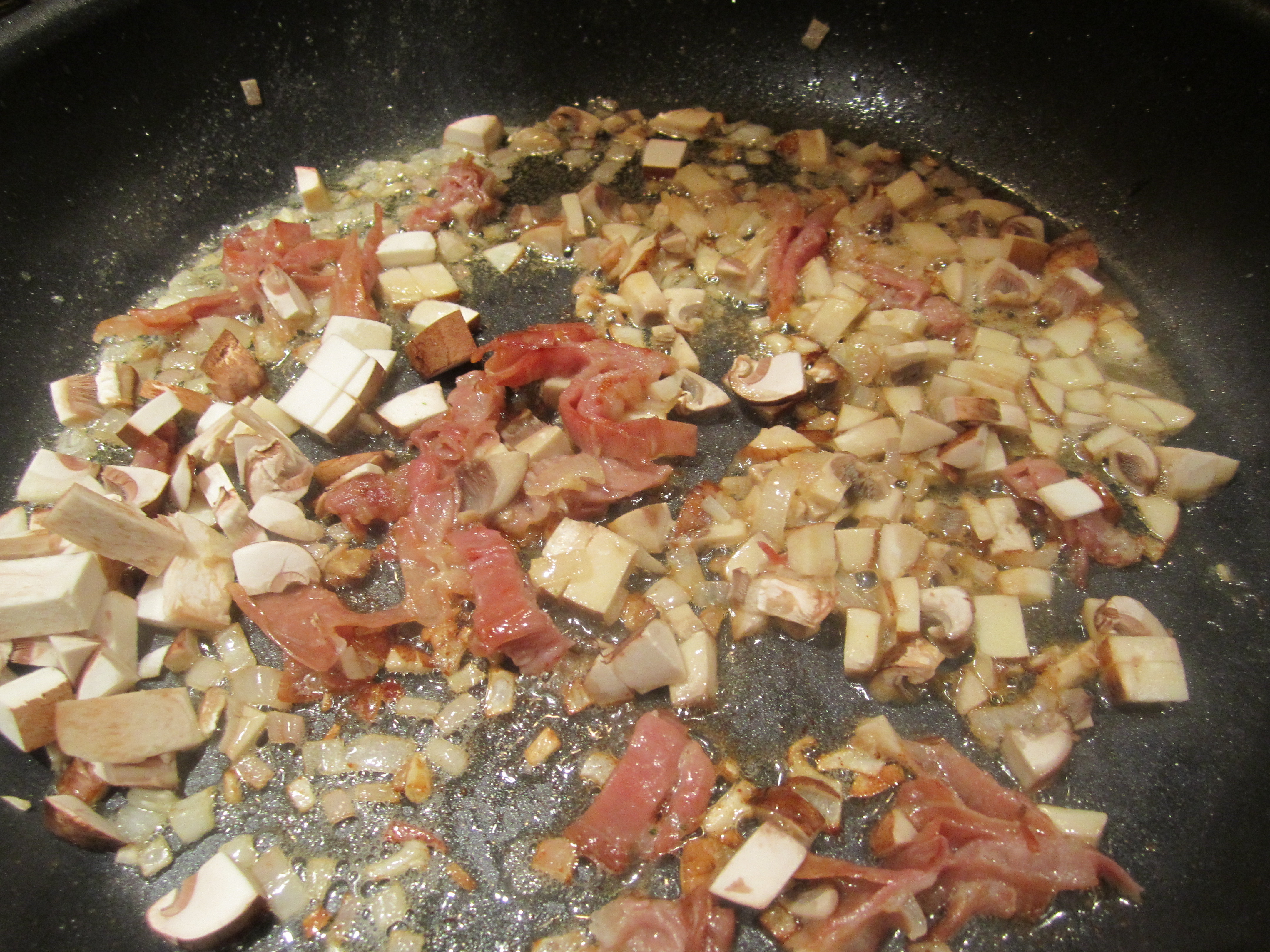
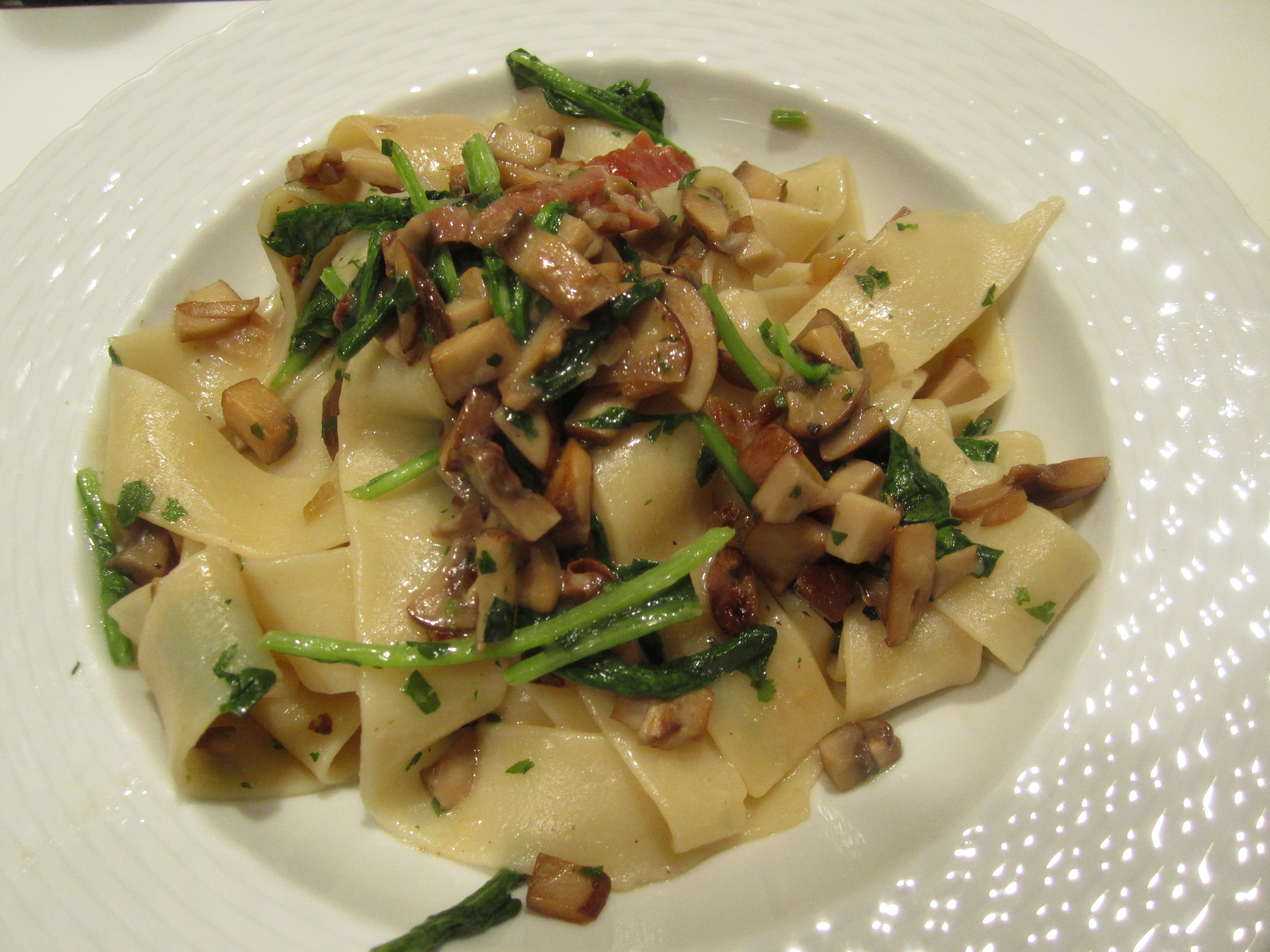
while the pasta boils, in a large skillet on medium heat, saute the prosciutto and shallots in butter for a minute.  Add mushrooms, and continue sauteing until the mushrooms have shed their liquid and have begun browning. 
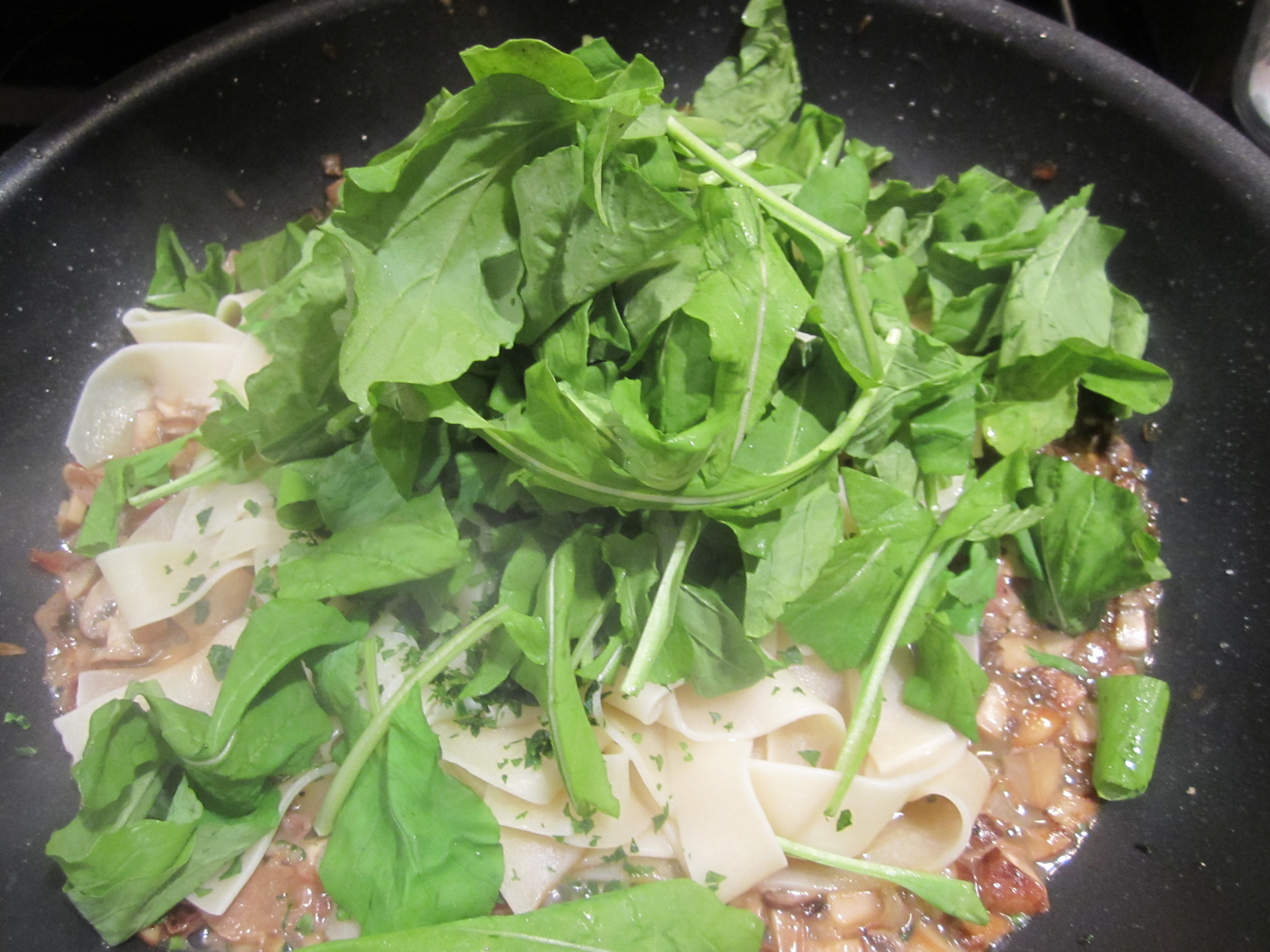
When pasta is about a minute shy of done, add broth to skillet and turn heat to high.  Add pasta, parsley and arugula  and toss for about a minute to combine. 
Add salt and pepper to taste. 
Serve with plenty of grated parmigiano.

Posted in Pasta | Leave a comment

Pasta with Zucchini Two Ways

To me, zucchini and tomatoes are the essence of summer.   Therefore, what a treat to be eating them locally grown in January!  I couldn’t resist posting these dishes, even though they may be similar to other dishes I’ve posted (during the summer).

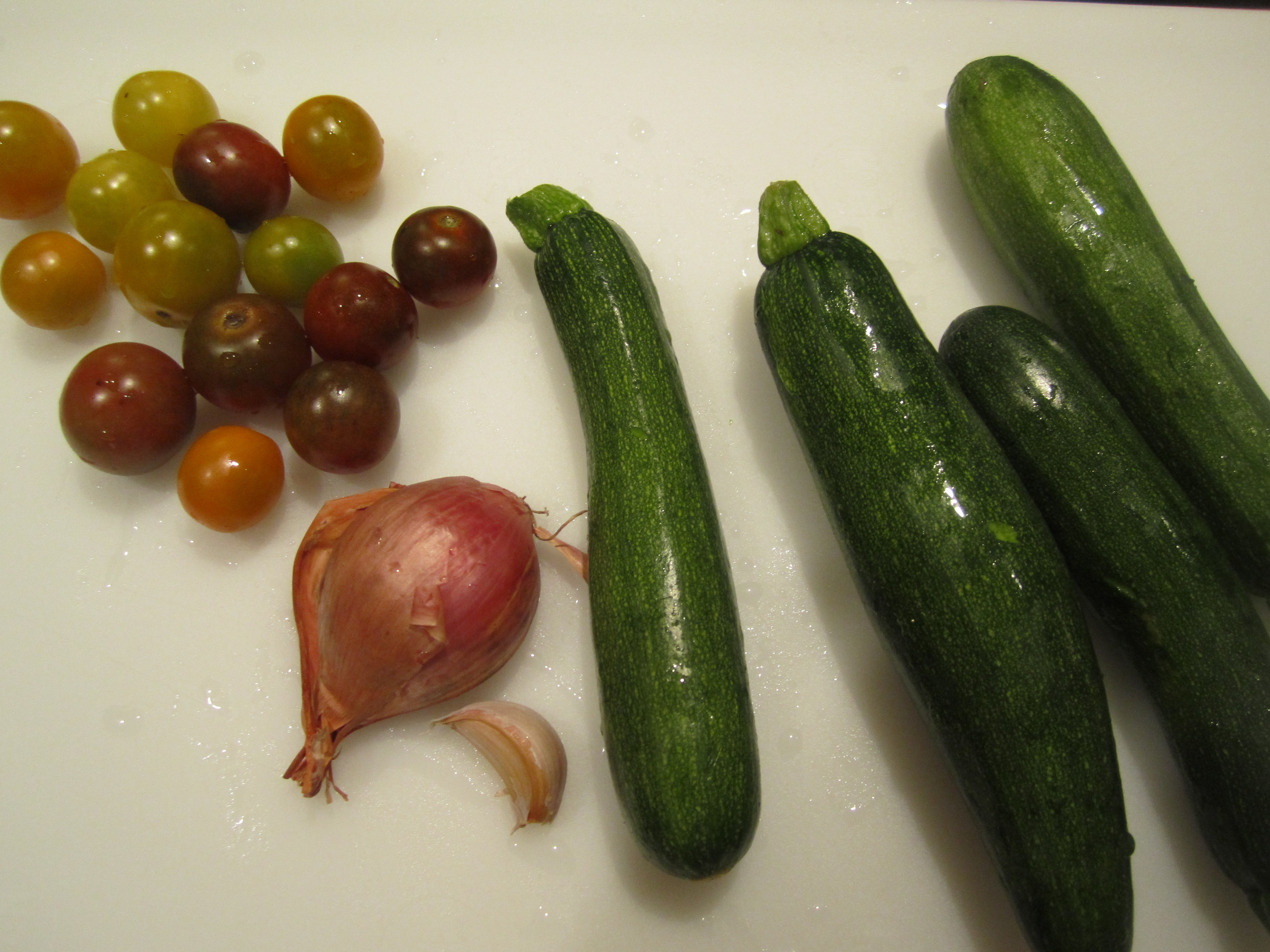
Saturday is always the best day for me to cook, since our local farmers’ market is in the morning, with supplies of vegetables dwindling by about 11 am.  Each week, I’m excited all over again about the kale, dandelion, spinach, swiss chard, not to mention zucchini and tomatoes. 

As I’ve said before, I like to buy zucchini that are small to medium sized (about 7″ to  8″ long).  These are the best-tasting with the best texture and no seeds.  Although zucchini don’t have a lot of intrinsic flavor, if eaten too large, they can be bitter.  The baby varieties which became popular in the 1980s on large empty white plates, don’t interest me much, either.

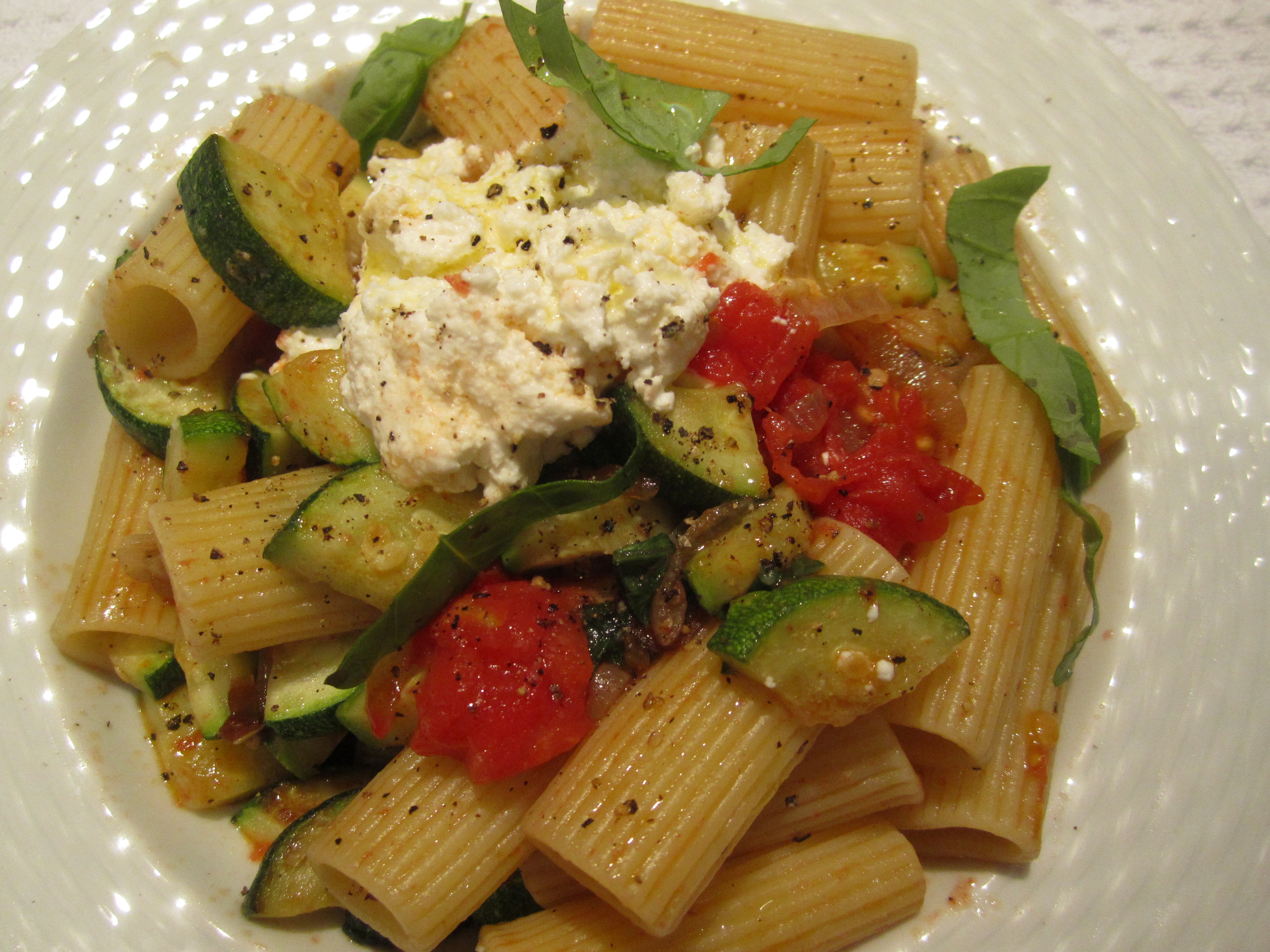
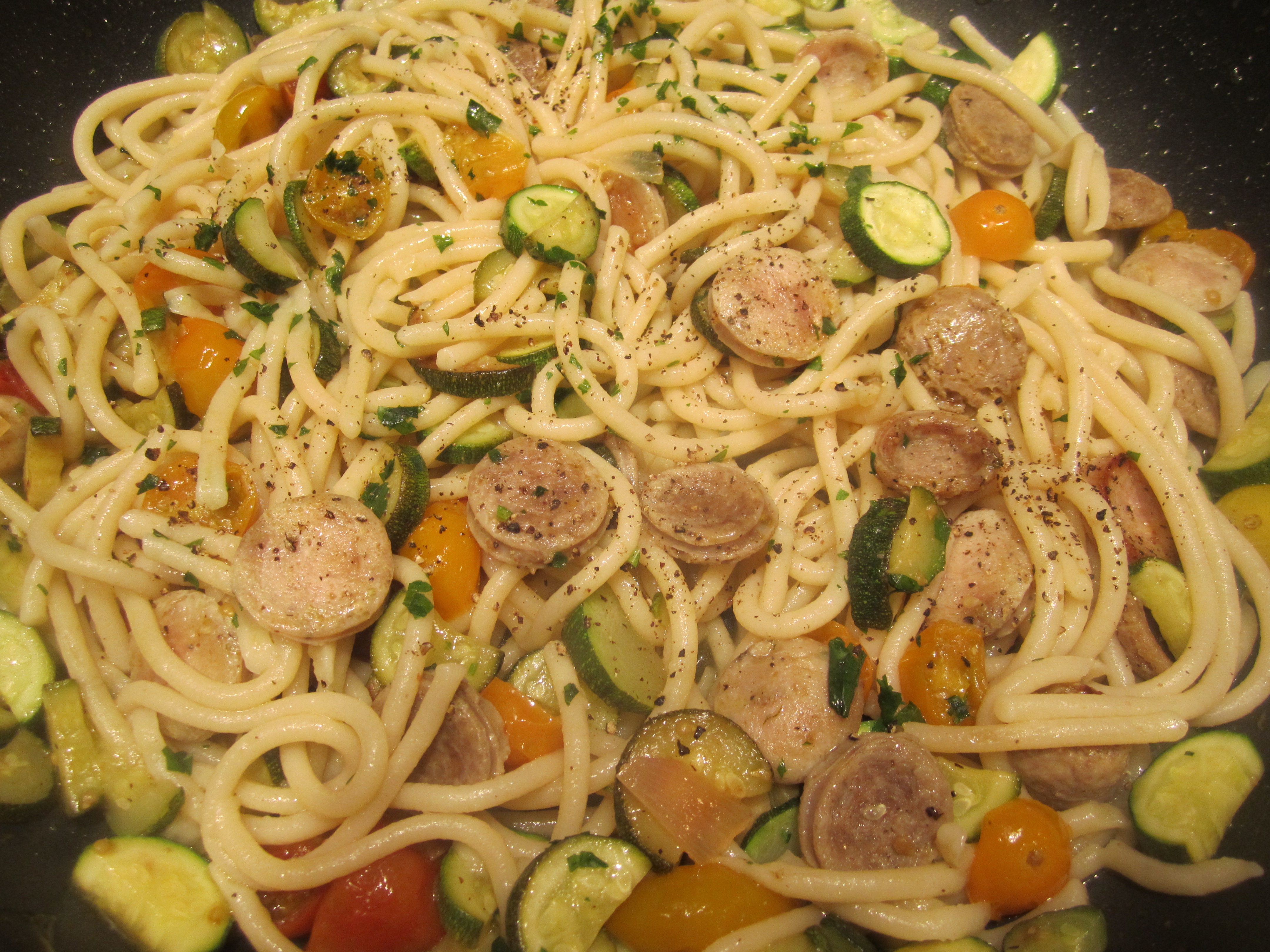
This week, there were so many zucchini of the perfect size, I decided to buy a bunch of them and use them for a couple of dishes–both pastas, of course.   The first dish is great for vegetarians (although not vegans), topped with a dollop of fresh ricotta. 

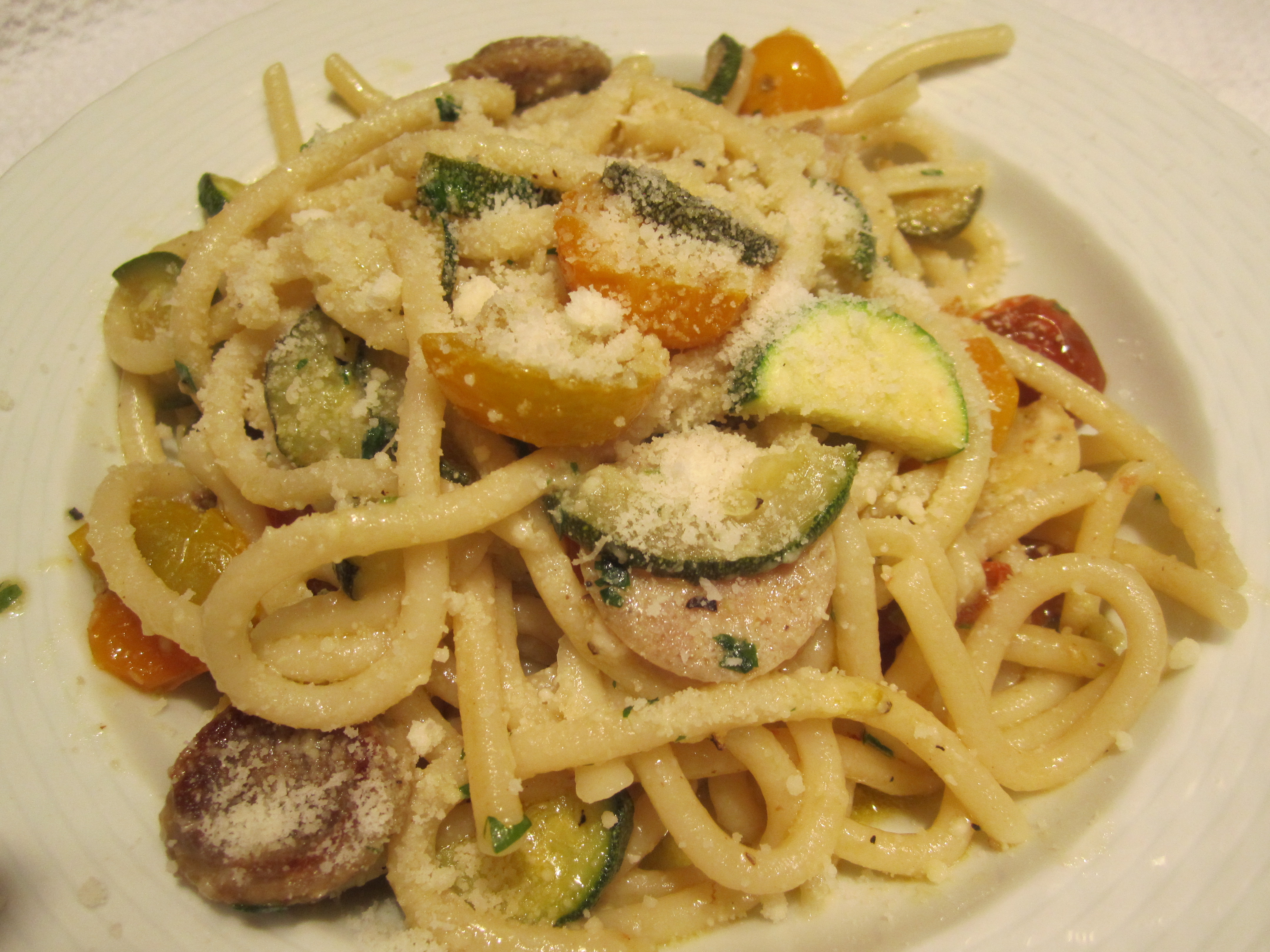
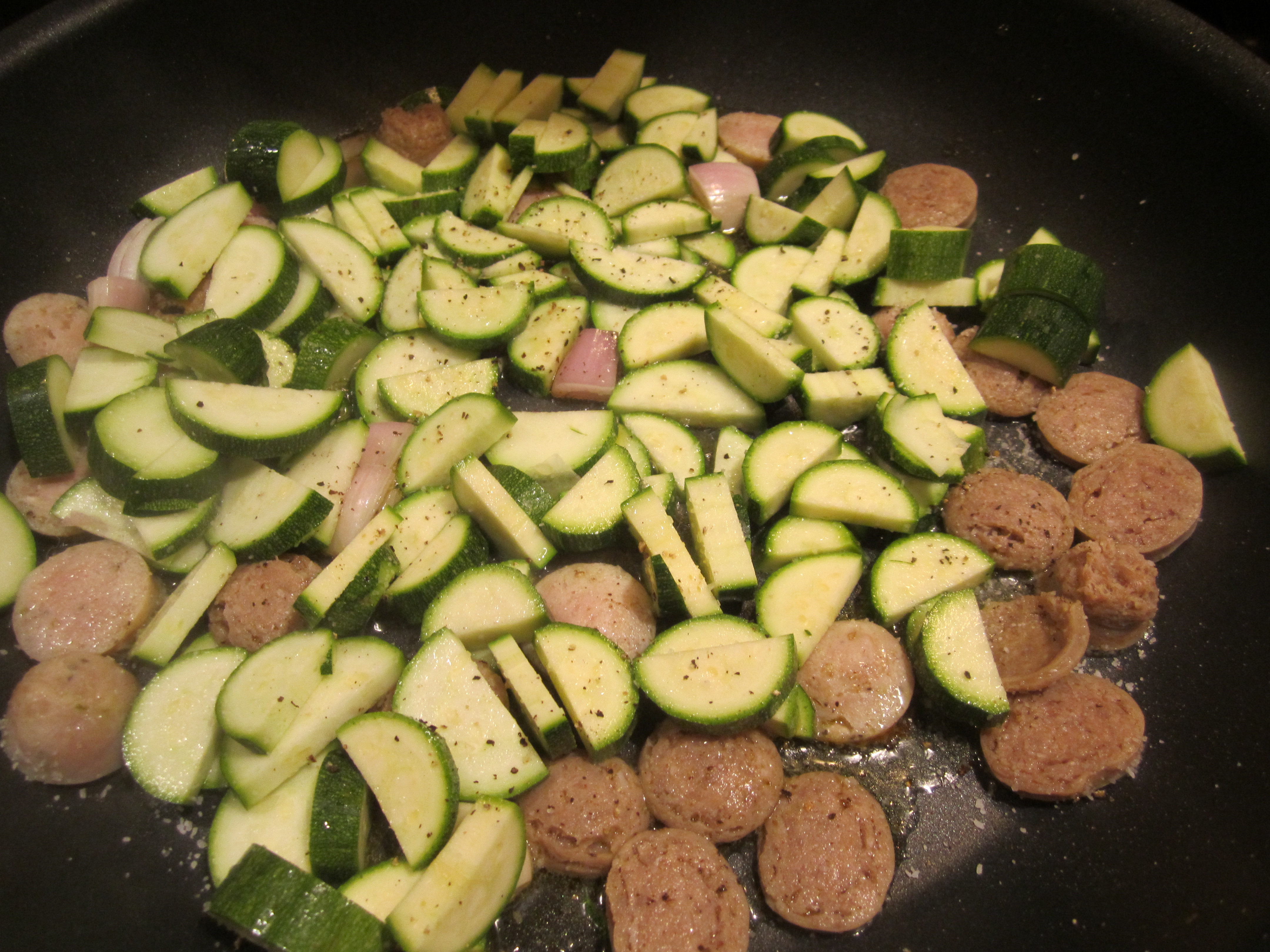
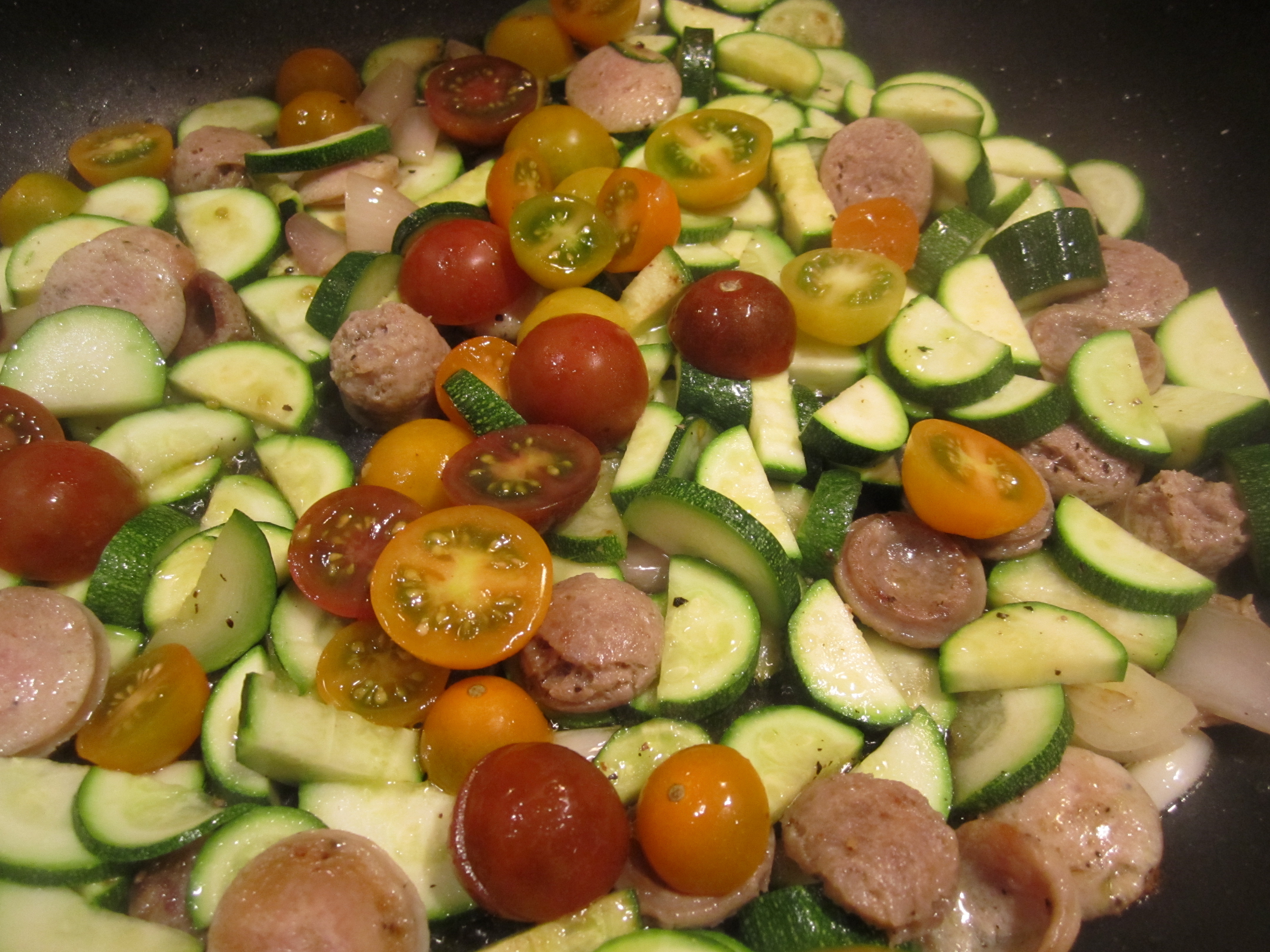
The second dish made use of some leftover cooked sausage I had in the freezer–zucchini with sausage and cherry tomatoes–hearty but summery.

Pasta with Zucchini, Fresh Tomatoes and Ricotta

Serves 4

1 lb Rigatoni

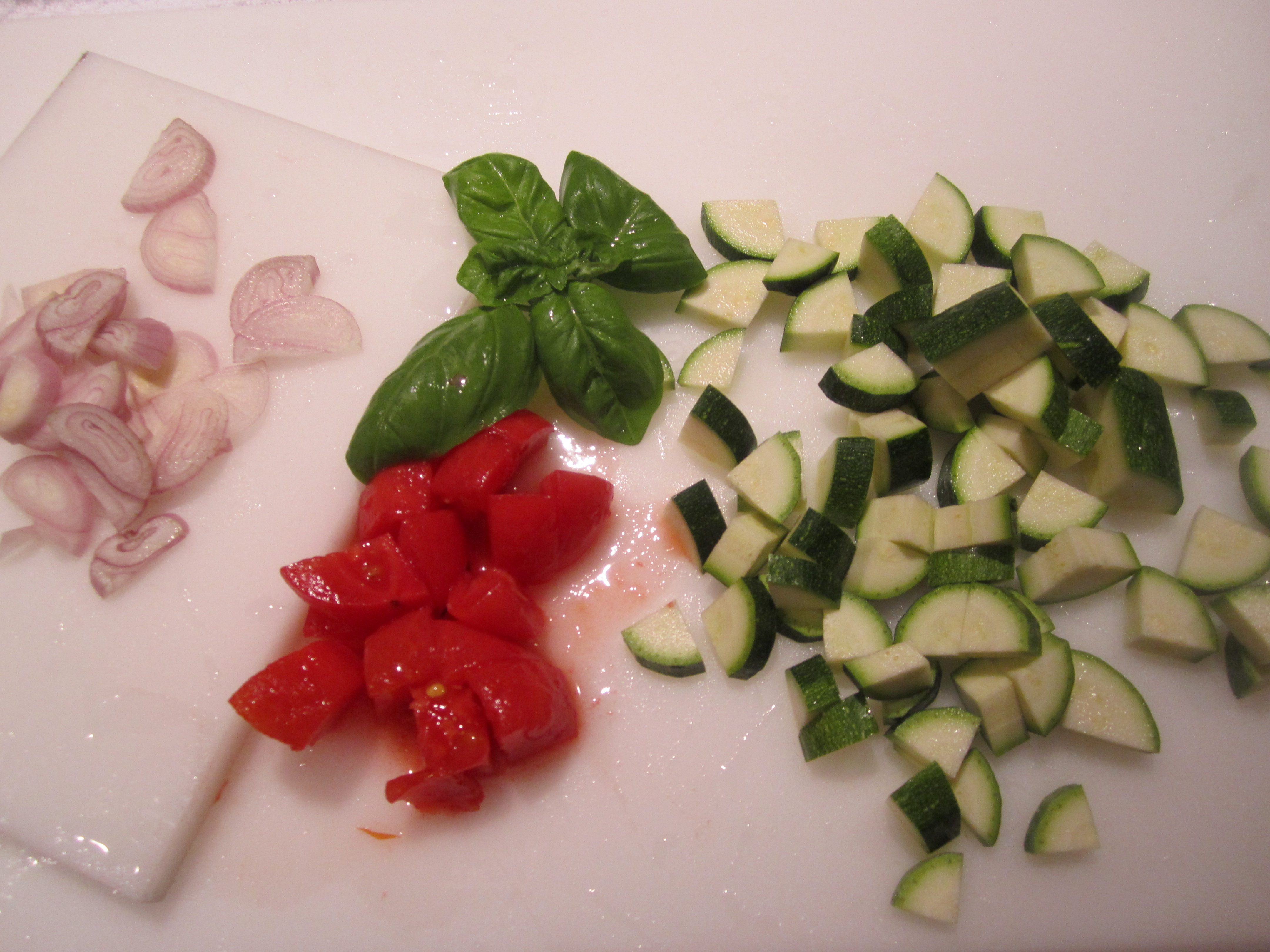
4 medium zucchini, quartered lengthwise, then sliced into 1/2″ pieces

2 shallots, finely sliced

1 c coarsely diced plum tomatoes or cherry tomatoes, halved

1/4 c olive oil + 2 tsps for drizzling

1 c fresh ricotta

2 tbls fresh basil leaves

salt and pepper to taste

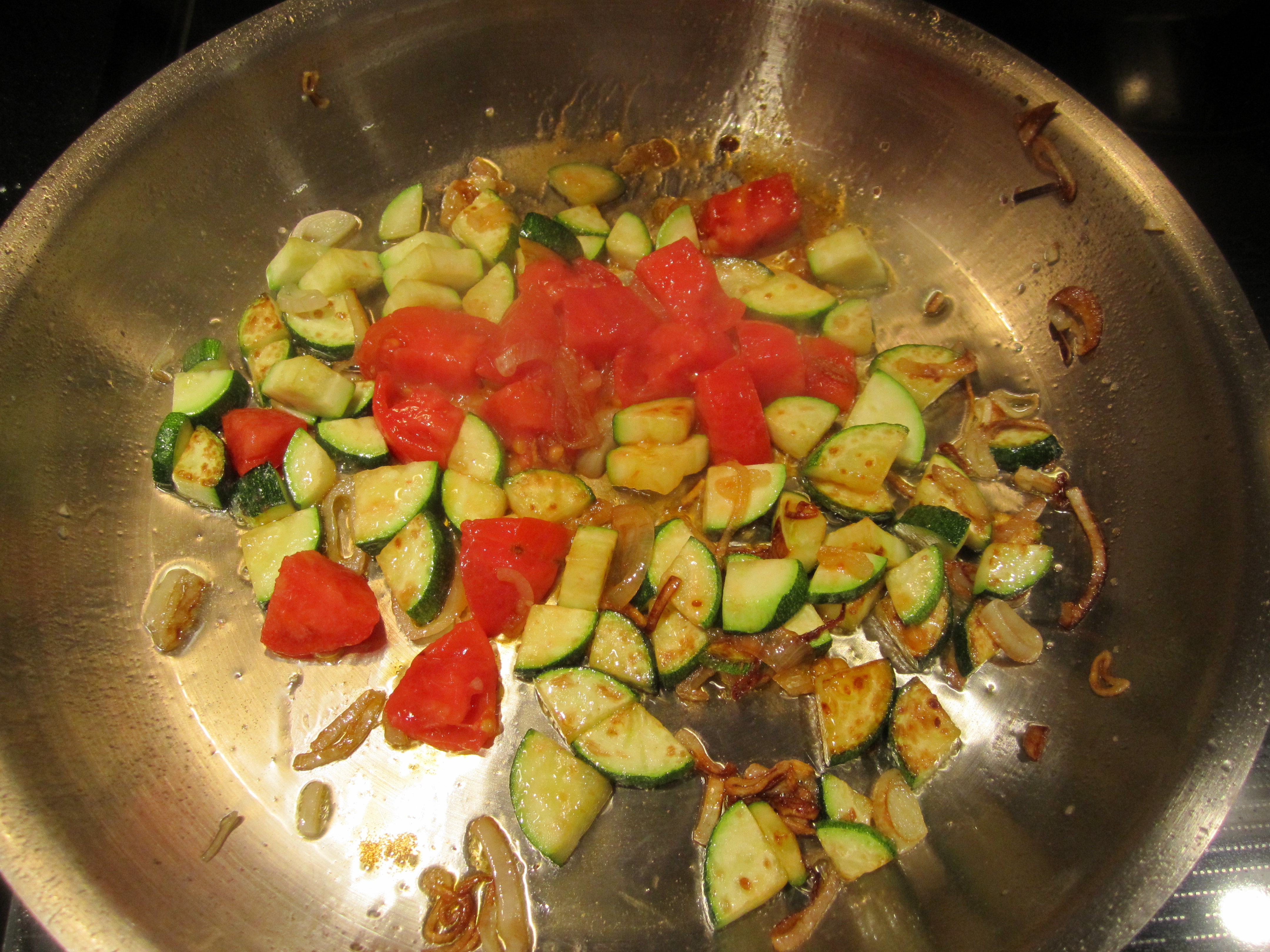
While pasta cooks, in a large skillet, combine shallots and oil and place over medium heat.  Cook for about a minute, then add zucchini.  Turn heat to high and saute for about 10 minutes, tossing and stirring often.  Taste and add salt and pepper.  Add tomatoes and reduce heat to medium.  Continue cooking until pasta is ready.
 Add pasta to skillet with vegetables, along with a half-cup of pasta cooking liquid.  Saute for about a minute. 

 Top with ricotta and shredded basil.  Drizzle with additional extra-virgin olive oil.


Pasta with Zucchini, Sausage and Cherry Tomatoes

serves 4

1 lb spaghetti or pici

4 medium zucchini

3 pieces of cooked Italian sausage (I used turkey sausage, boiled for 10 minutes)

4 medium zucchini

1/4 onion, finely diced

1 clove garlic, split in half

1/4 c olive oil + 2 tbls for drizzling

2 tbls shredded basil leaves

1 tbl fresh chopped parsley

salt and pepper to taste

grated pecorino for sprinkling

While pasta is cooking, in a broad skillet, place sausage, shallots and garlic.  Saute on medium heat for about 3 minutes, then add zucchini and continue sauteing on high heat for about 5 minutes.

  Add tomatoes, then taste and add salt and pepper. 

When pasta is cooked, add to skillet, along with a half-cup of pasta cooking liquid.  Toss and stir to combine for a minute. 

Top with black pepper, drizzle with olive oil and sprinkle with basil, parsley and plenty of grated pecorino.

Posted in Pasta | Leave a comment

Swiss Chard Three Ways

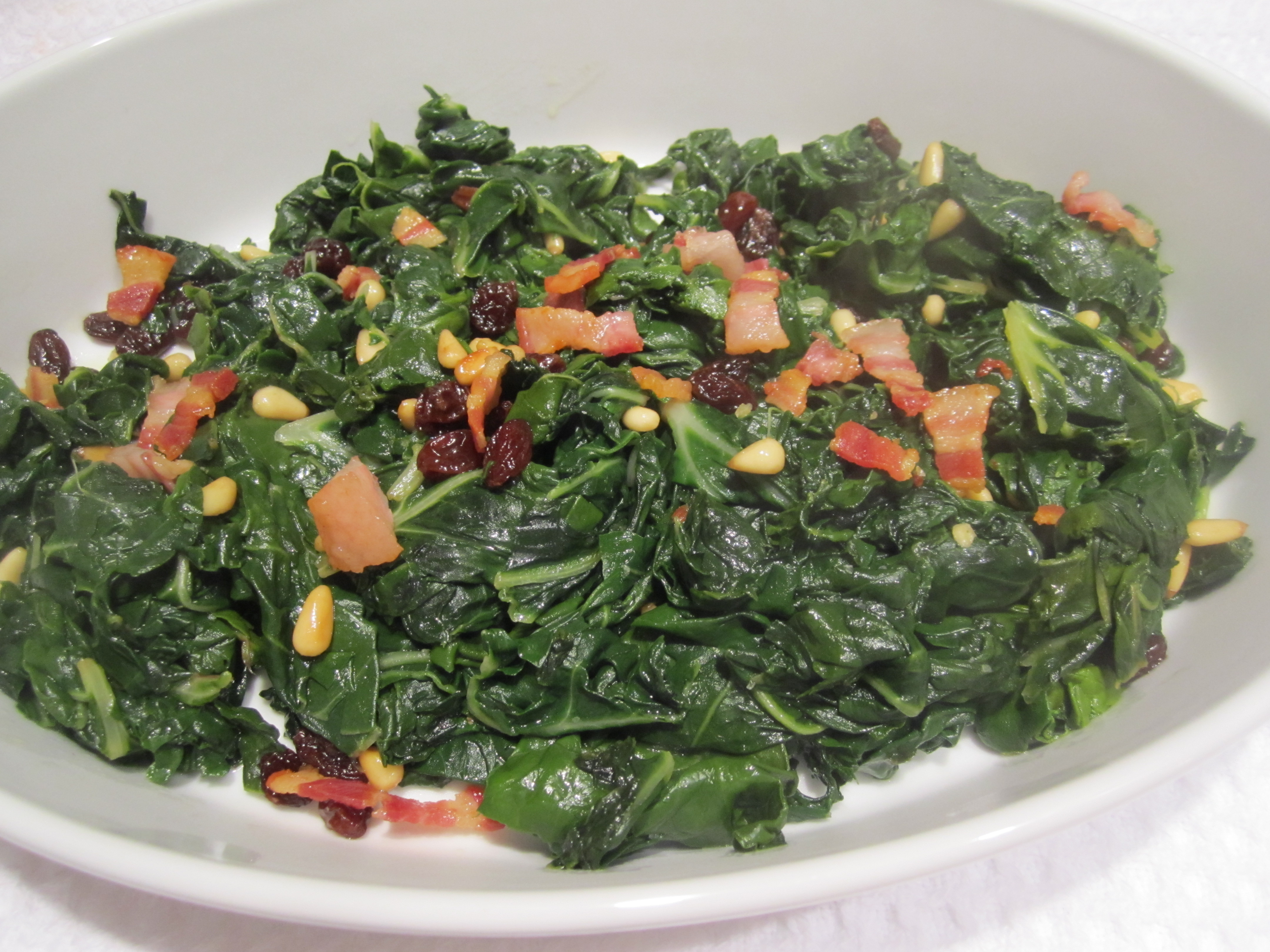
Swiss chard is one of my favorite green vegetables because the entire plant is edible from top to bottom.  I don’t see it on restaurant menus as much as spinach or broccoli, so when I see it, I always order it.  Last week I saw it on a menu and the preparation sounded great–pancetta, raisins and pine nuts.  Although I’ve made swiss chard with pancetta alone, and  swiss chard with pine nuts/raisins, I’ve never combined pancetta, pine nuts and raisins.  When the dish arrived, it contained only the leaves of the swiss chard–no stems.  It was quite delicious, so I decided to try making it on my own. 

I wanted to duplicate the dish faithfully, but I couldn’t bring myself to throw away the stems.  Therefore, I removed the leaves from the stems and blanched them both separately, reserving the stems for a later use.  From these three bunches of swiss chaird, I ended up making three separate dishes on three consecutive evenings. 

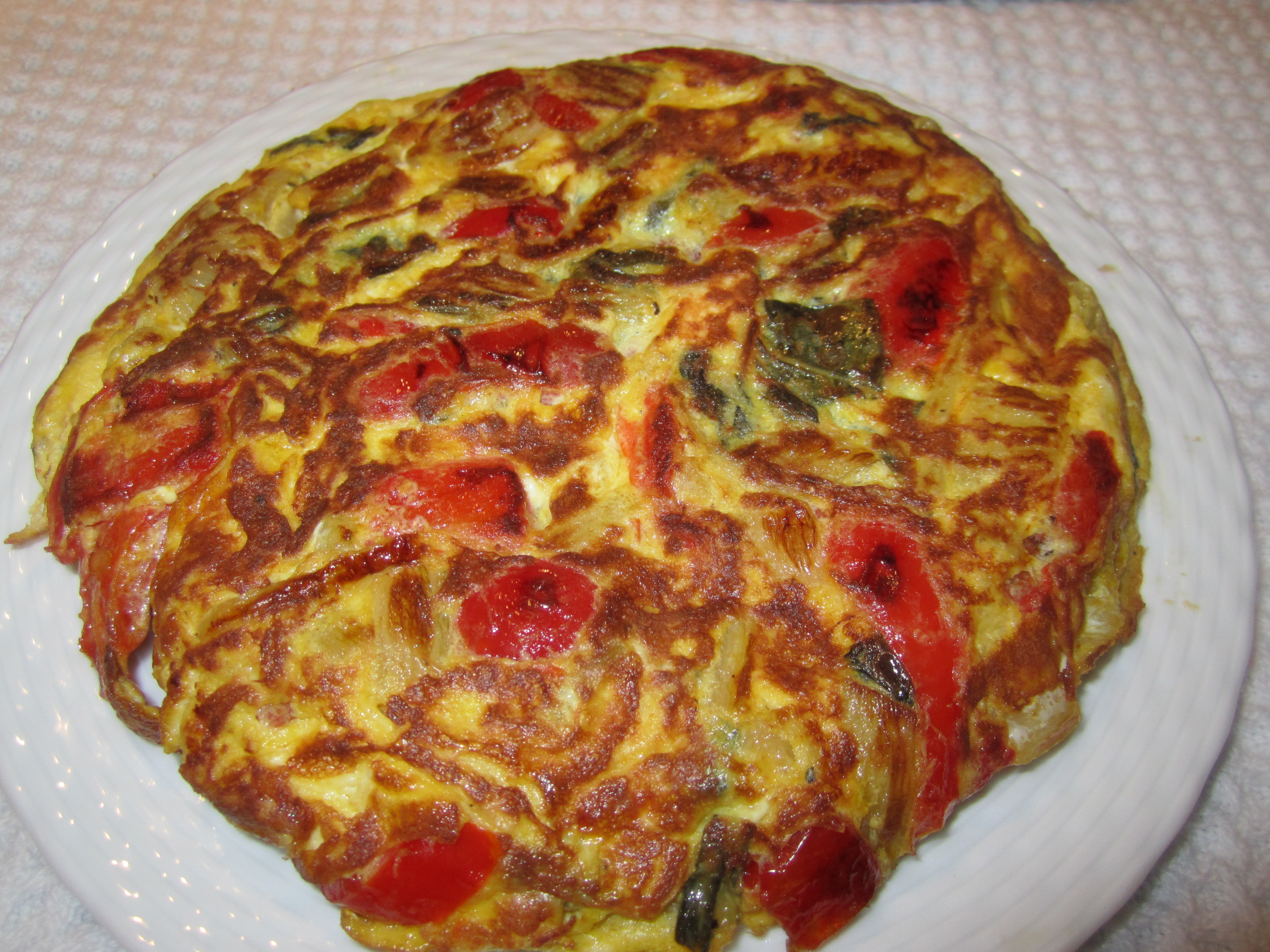
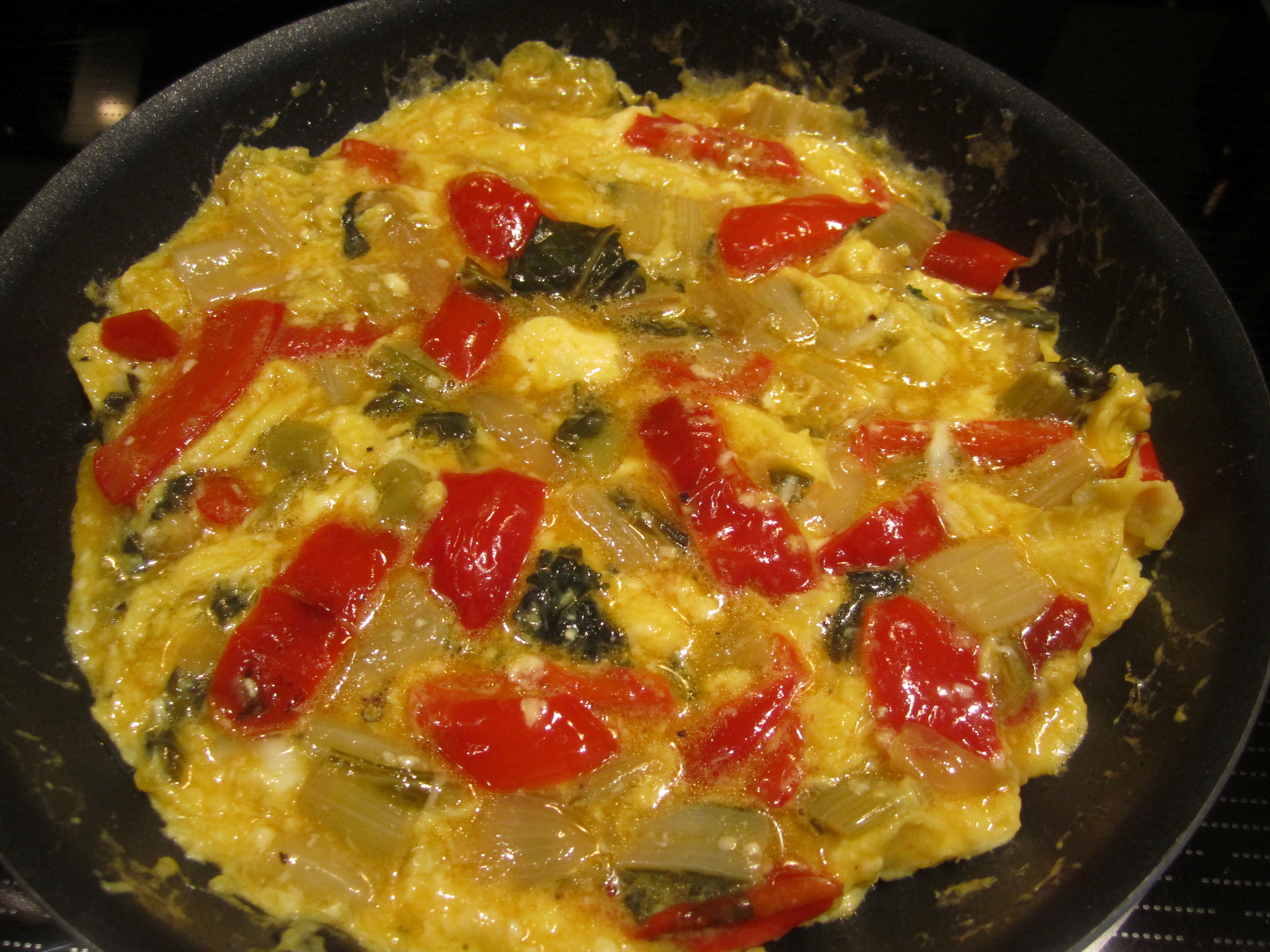
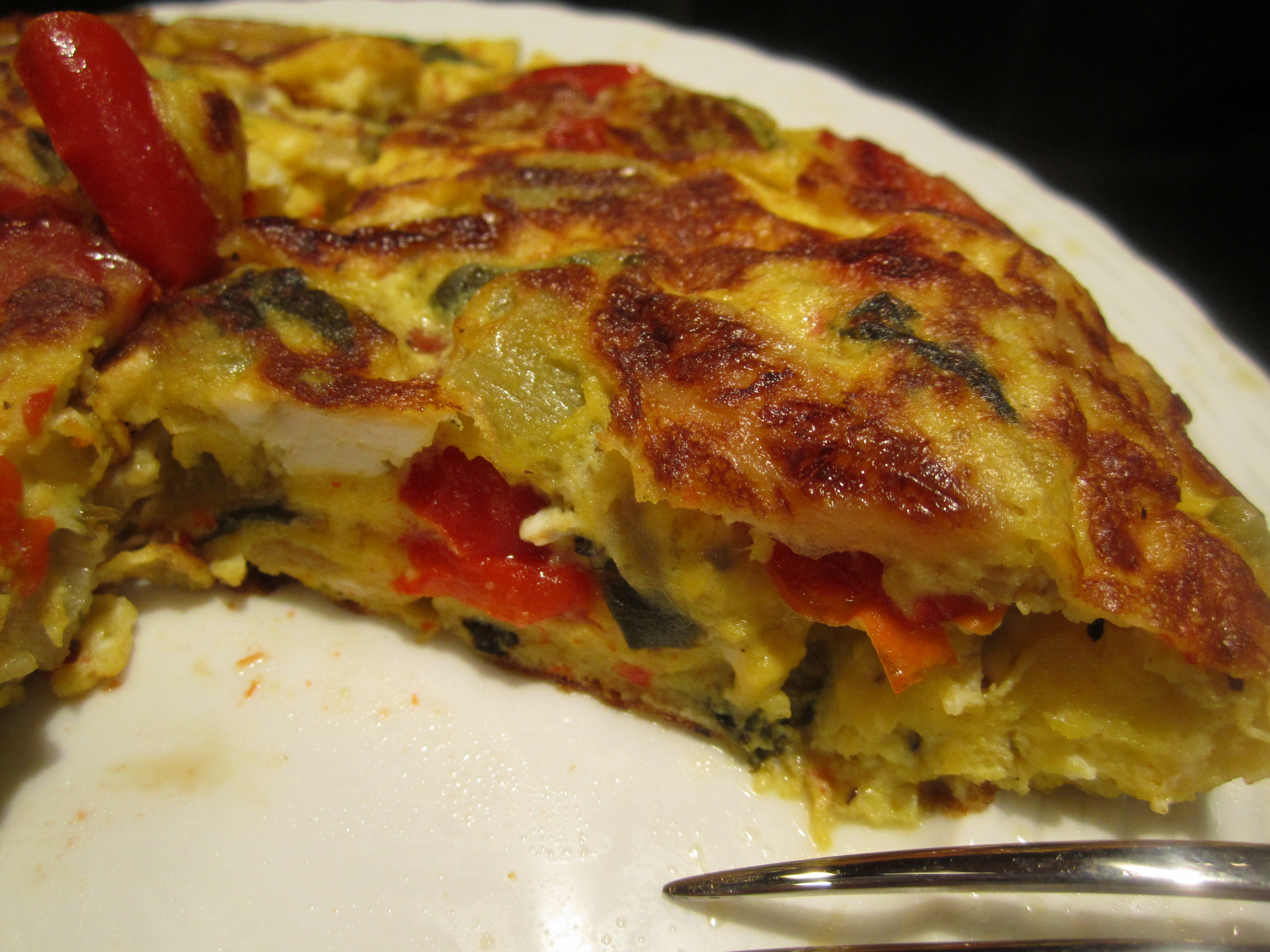
The first evening was my rendition of swiss chard (leaves only) with pancetta, pine nuts and raisins.  The second evening, I sauteed the swiss chard stems with peppers and onions.  The following day, I made a frittata with the leftover sauteed stems and peppers, with a touch of ricotta salata–all were great!

Swiss Chard with Pancetta, Pine Nuts and Raisins

Serves 4, with stems leftover

3 bunches swiss chard (about 2 lbs), washed well, with leaves stripped from stems, leaves sliced into 1″ ribbons

2 oz. pancetta, thinly sliced

1/4 c olive oil

1/4 c raisins

1/4 c pine nuts

salt and pepper to taste

Drop swiss chard leaves in a pot of well-salted boiling water and blanch for approximately 5 minutes after the water returns to the boil (can be done in batches–don’t overcrowd the pot–especially if you’re at the mercy of an electric range).  Drain and set aside.

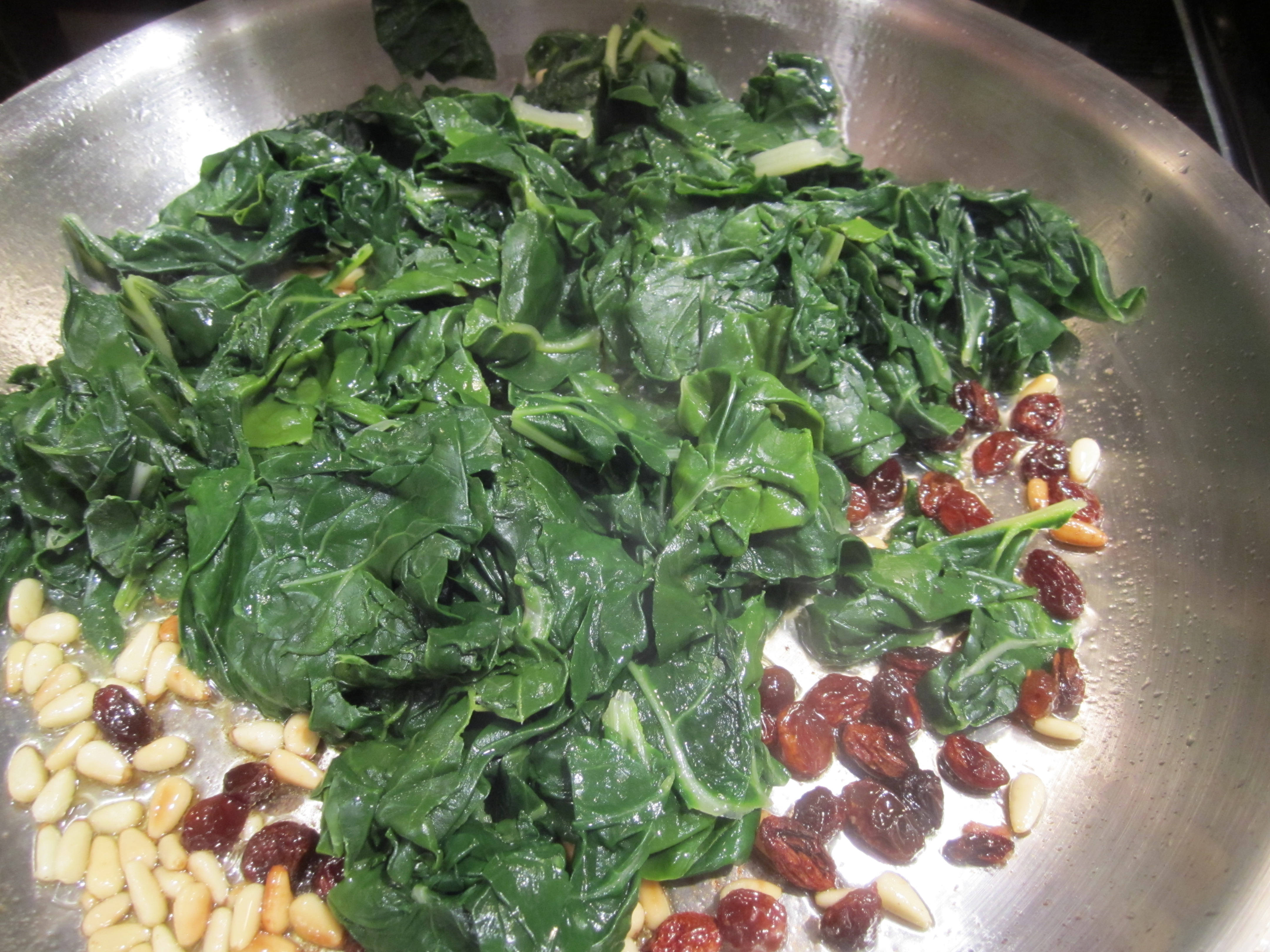
In a cold large nonstick skillet, add oil and pancetta and turn heat to medium.  Cook until pancetta begins to sizzle and render (about 6 minutes).  Remove pancetta and set aside. Add pine nuts to the hot fat and saute only until the first of them begin to turn golden (about a minute).  Add raisins and continue sauteing for about 30 seconds, until they begin to expand and caramelize. 

Immediately add in the drained swiss chard and saute, tossing and turning to coat the leaves with the fat. 

Taste and add salt if necessary.  Saute for about 4 – 5 minutes on medium heat, then sprinkle with pancetta and serve. 

Swiss Chard Stems with Red Peppers and Onions

serves 4

3 bunches stems from swiss chard, cut crosswise into 1/2″ sices

3 red peppers, seeded and cored, and sliced into 1/2″ strips

1 onion, cut in half, sliced into 1/4″ slices

1/4 c olive oil

Drop stems into well-salted boiling water, and allow to cook until crisp-tender–about 8 – 10 minutes.  Drain and set aside.

In a large, unheated nonstick skillet, add peppers and onions.  Turn heat to medium and saute for about 5 minutes, or until just beginning to caramelize.  Add swiss chard stems and cover for another 10 minutes, tossing occasionally.  Taste and add salt, if necessary.

Uncover and saute on medium-high heat until all is tender and caramelized–another 5 minutes or so. 

Frittata of Swiss Chard Stems and Red Peppers


serves 4

2 c sauteed swiss chard stems with red peppers and onions

1 tsp olive oil

4 large eggs

2 tbls half-and-half

1/4 c grated ricotta salata

1/2 tsp salt (this all depends on how salty the vegetables are–adjust salt accordingly)

1/2 tsp black pepper

In an 8″ nonstick skillet, add oil and vegetables and turn heat to medium-low.  Saute until vegetables are heated through.

Combine egg and cheese mixture while vegetables are sauteing. 

Add beaten egg/cheese mixture and begin stirring and folding, lifting the outer edges to allow the uncooked egg to run to the bottom of the skillet. 

After about 2 minutes of stirring and incoroporating, turn heat to lowest and leave skillet undisturbed for about 3 minutes.  Gently lift one side of the frittata to see if the underside is browning.  When underside is golden.  Place a large plate on top of the skillet and invert the plate over the skillet.  Quickly slide the frittata back into the hot skillet, uncooked side down.  Let brown undisturbed for about 5 minutes (or until golden on the bottom). 

Allow to rest for 5 minutes before serving.


Posted in Vegetables | Leave a comment

Braciole of Chicken

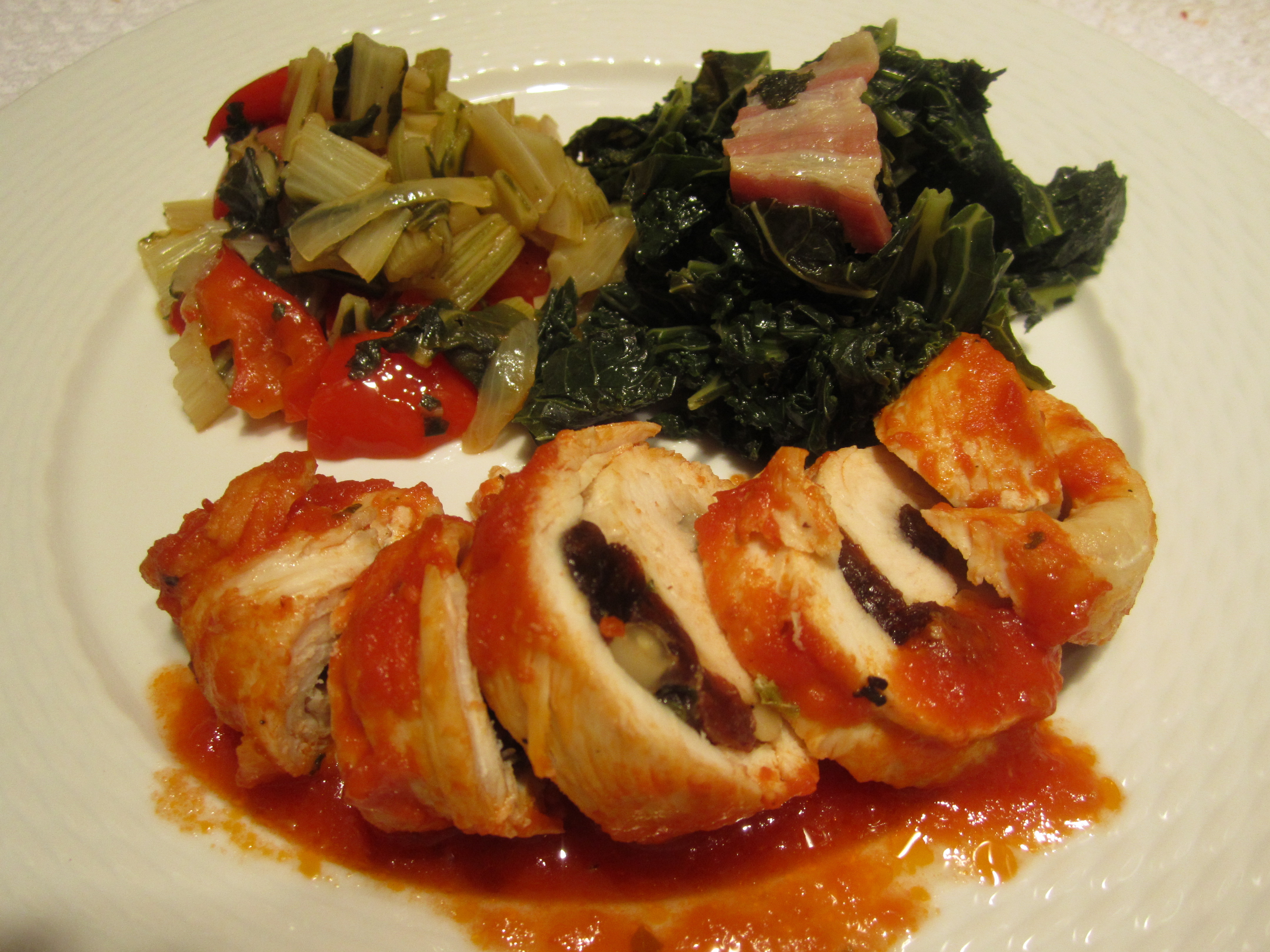
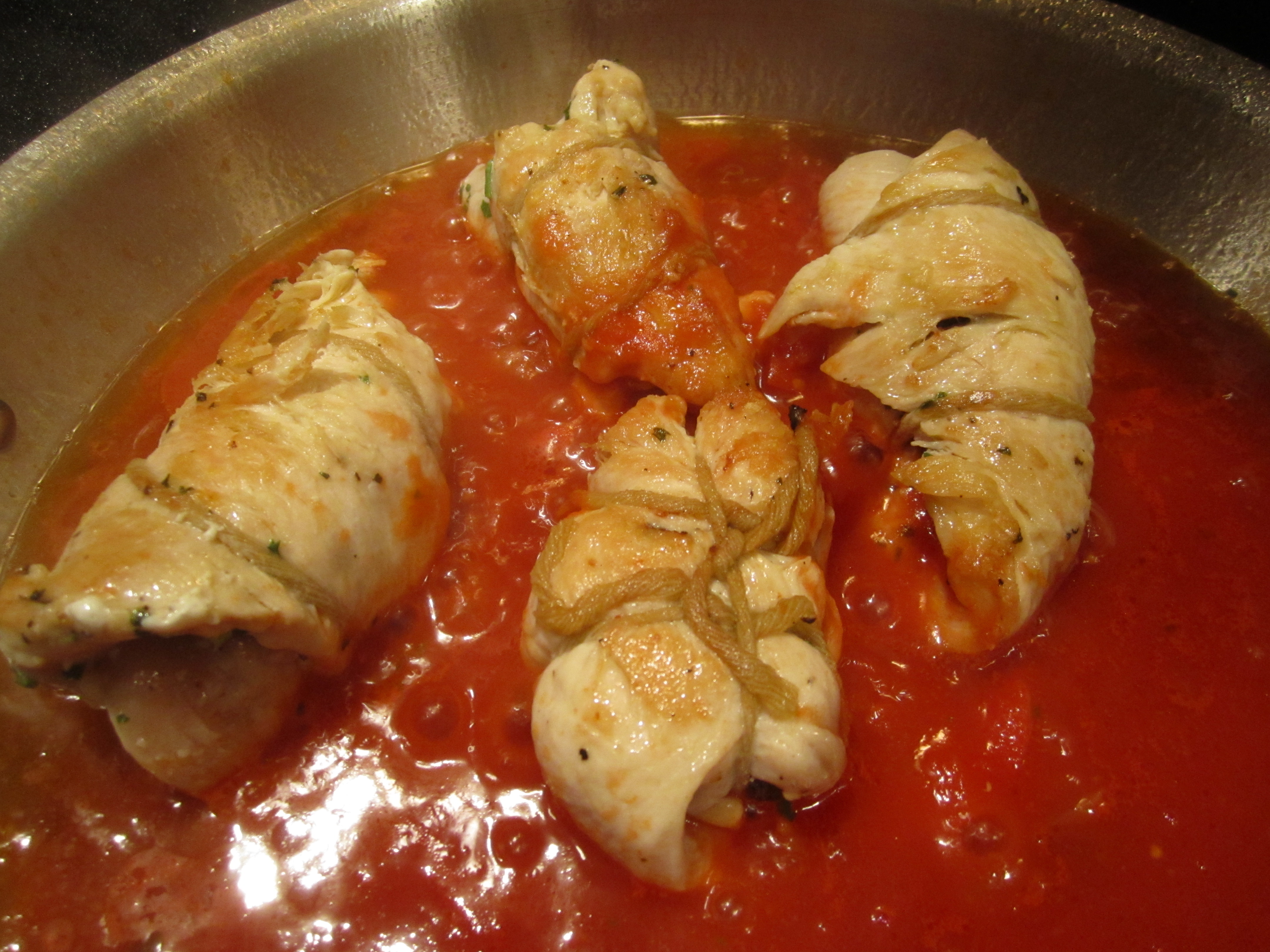
This is a simple but festive dish we made at Po Restaurant in the late 1990’s.  It’s a simple chicken breast, pounded thin, stuffed with a combination of pine nuts, raisins, parmigiano and parsley, then rolled, lightly browned, and braised in tomato sauce. 

I had a small group for dinner and this is a great dish to serve guests, because it can be made ahead and held in a warm oven while the first course is served.  The first course tonight is pasta, more specifically “pici“, which are fat, meaty spaghetti.  They were lightly sauced with the braising liquid from the chicken, and sprinkled with grated pecorino.


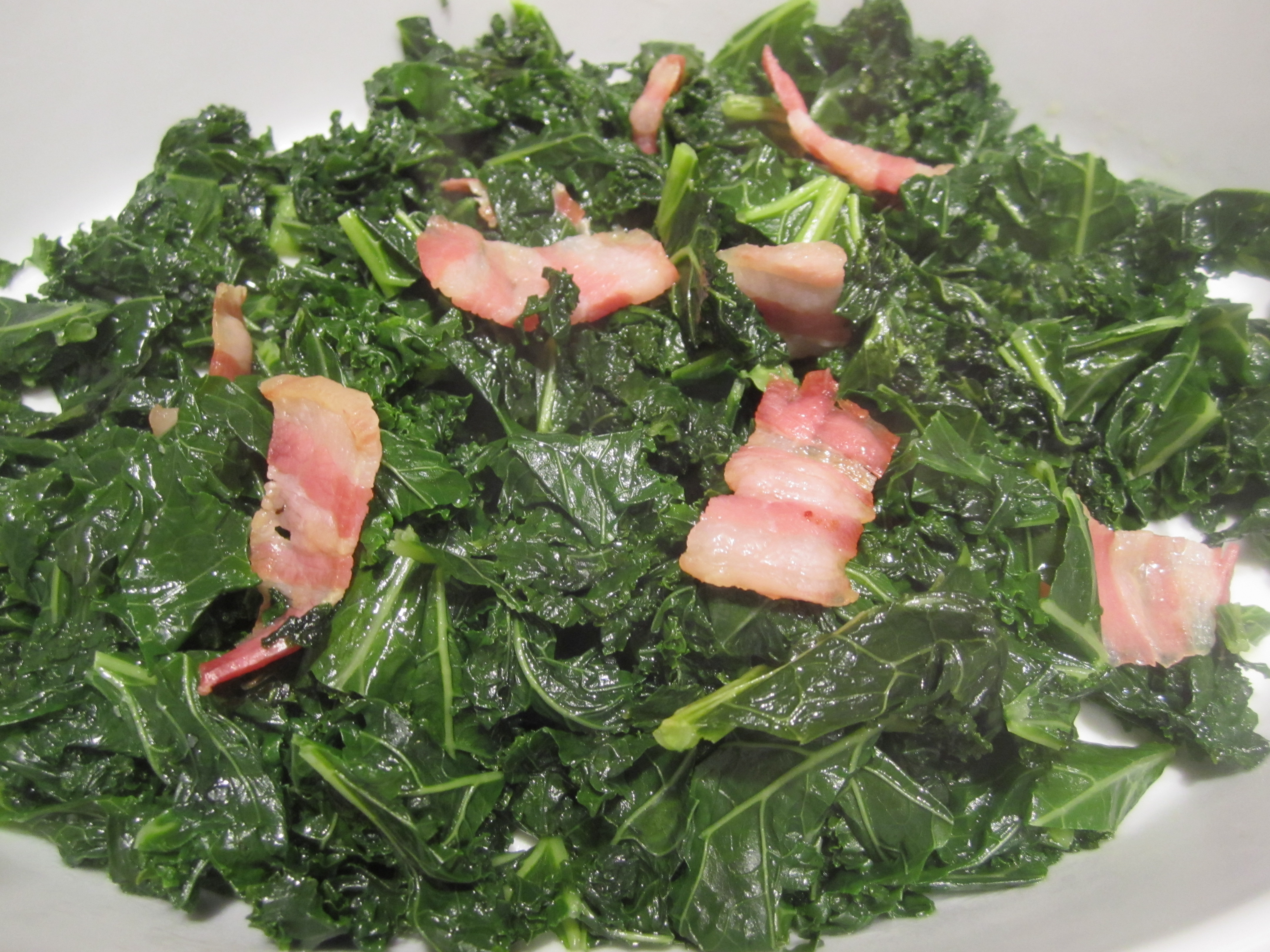
I made two accompaniments to the chicken–one was kale with pancetta, from this past weekend’s farmers’ market.

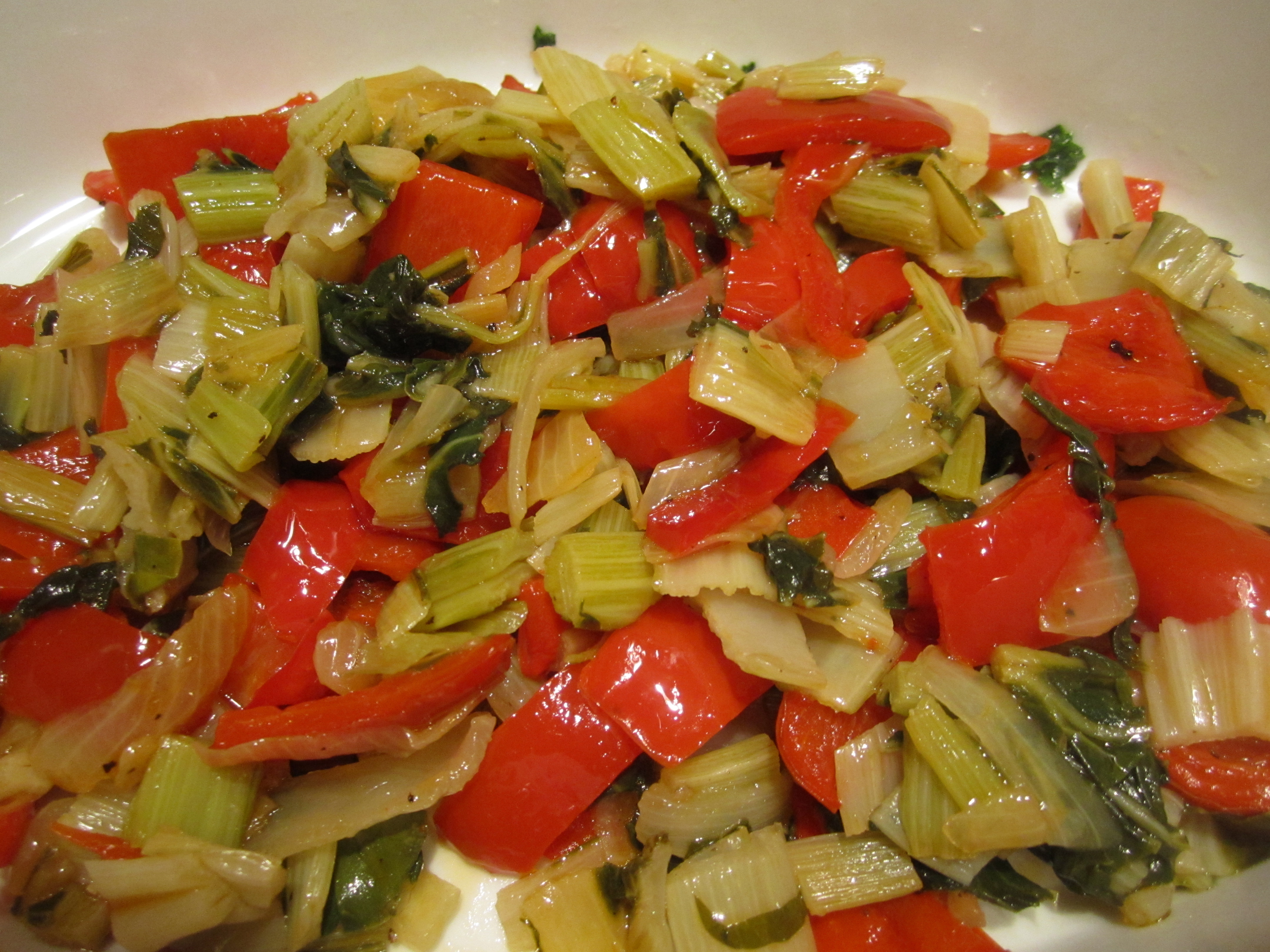
The other side dish was a bonus made from leftover swiss chard stems, boiled and sauteed with florida red peppers and onions.

Braciole of Chicken

serves 4

2 lbs chicken breasts, thinly pounded (approximately 4 pieces)

2 tbls raisins

2 tbls pine nuts

2 tbls chopped fresh parsley

2 tbls grated parmigiano

2 tbls olive oil

salt and pepper to taste

2 c basic tomato sauce 

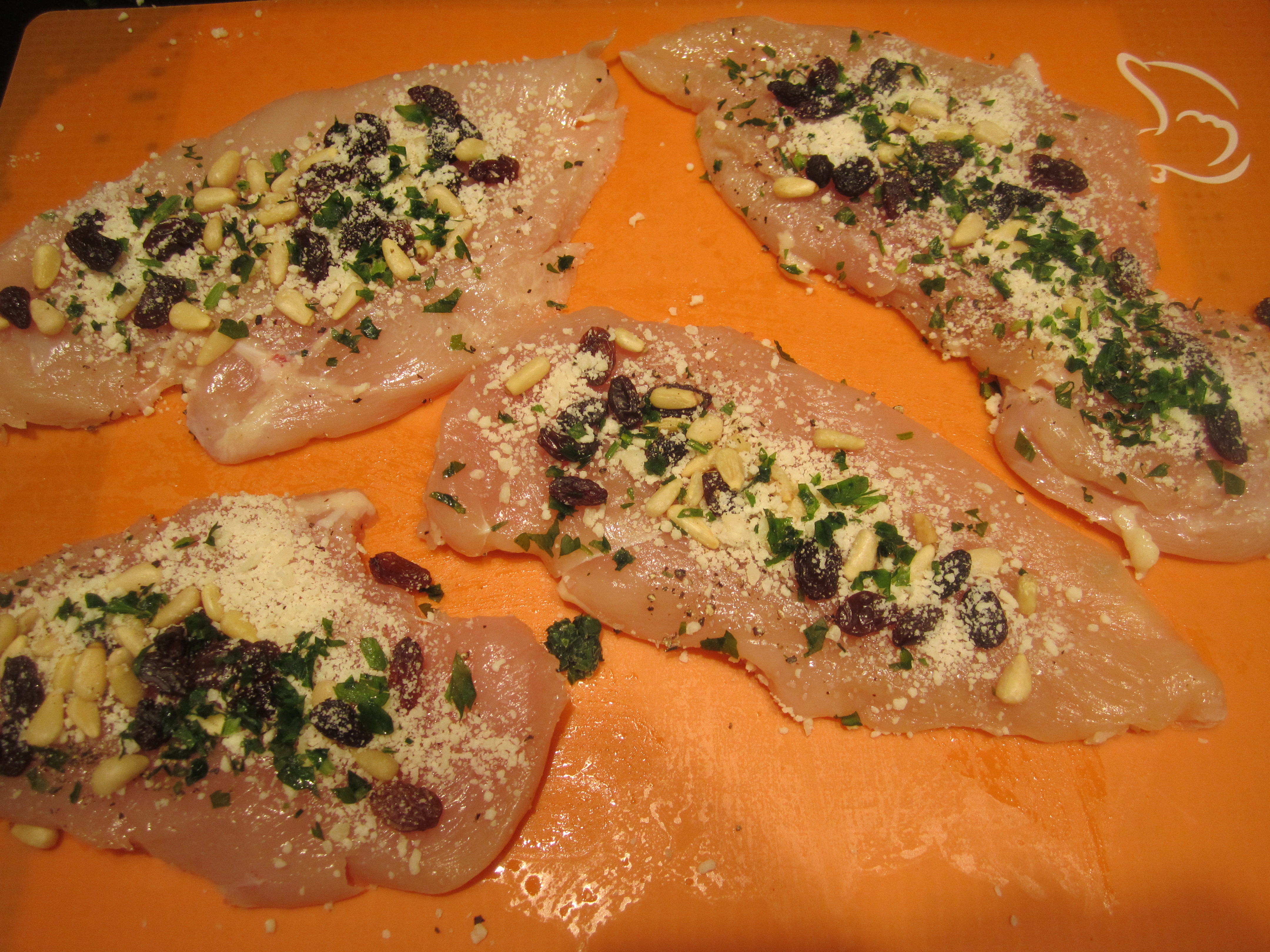
Spread chicken breasts on board and season both sides lightly with salt and black pepper.  Sprinkle the raisins, pine nuts, parsley and cheese evenly over each piece.


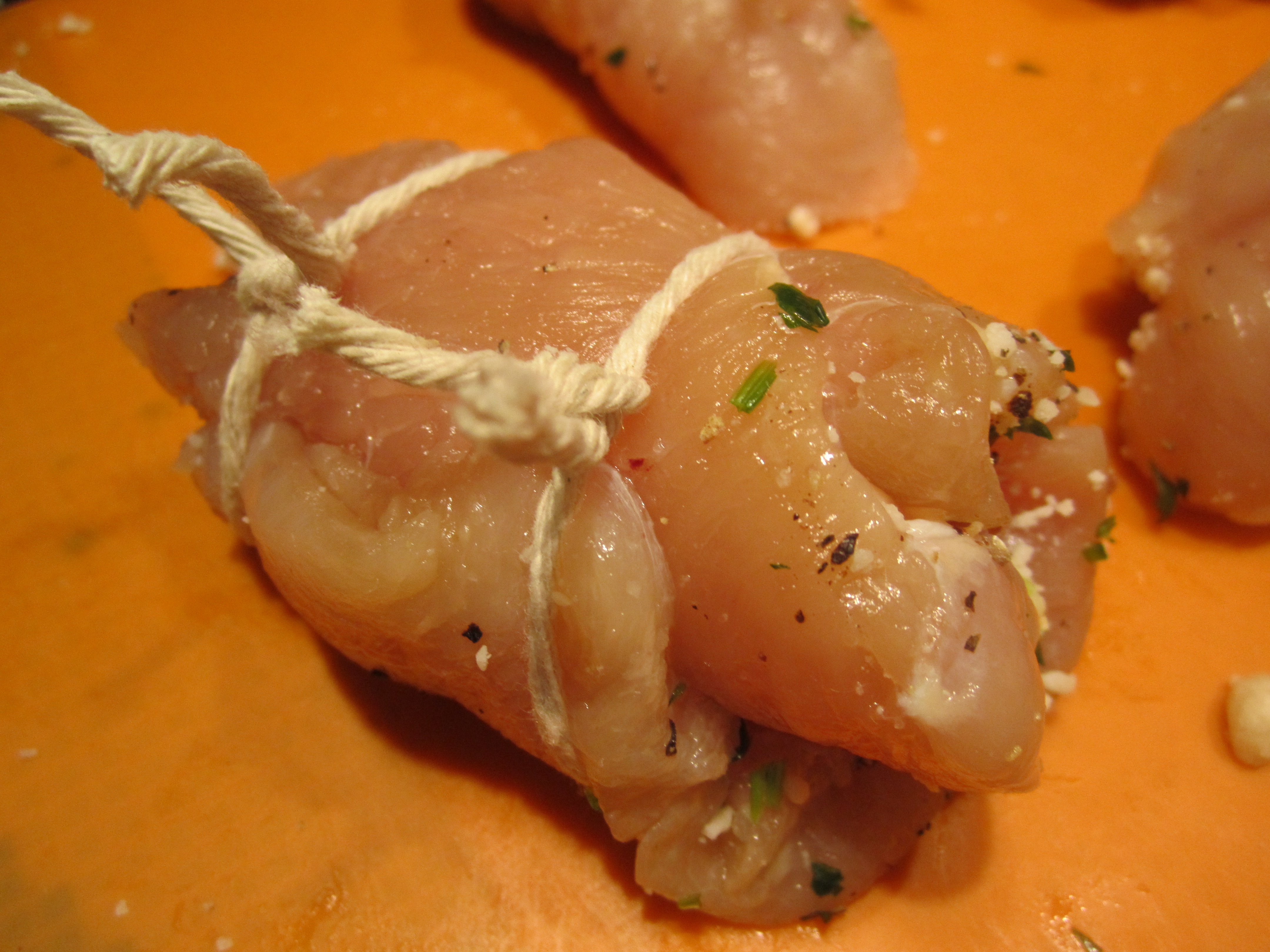
Gently roll the breasts into little bundles, being careful to press out the filling.  With kitchen twine, tie each breast in 2 places to maintain shape (toothpicks may be used in place of string). 

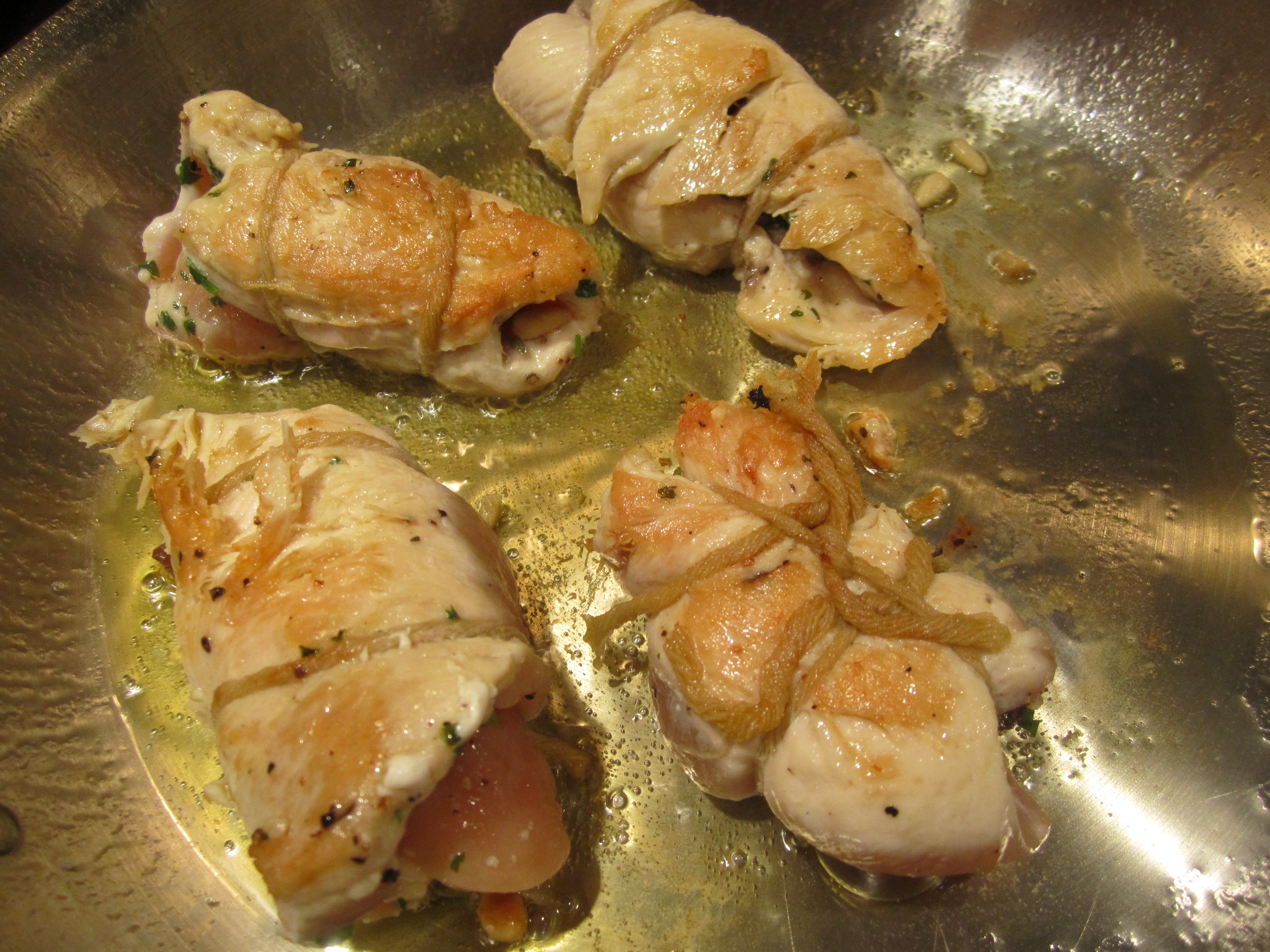
Heat oil in skillet and add braciole.  Without disturbing, alow to lightly brown on one side before turning–approximately 5 minutes. 

After the first side is golden, turn and add sauce to the skillet. 

Cover and reduce heat to low.  Simmer, partially covered for 15 minutes. 

May be made to this point an hour ahead of time and reheated in a 275-degree oven for 20 minutes.  When ready to serve,  remove string and gently slice.

Posted in Poultry | Leave a comment

Colorado Lamb Shepherds’ Pie

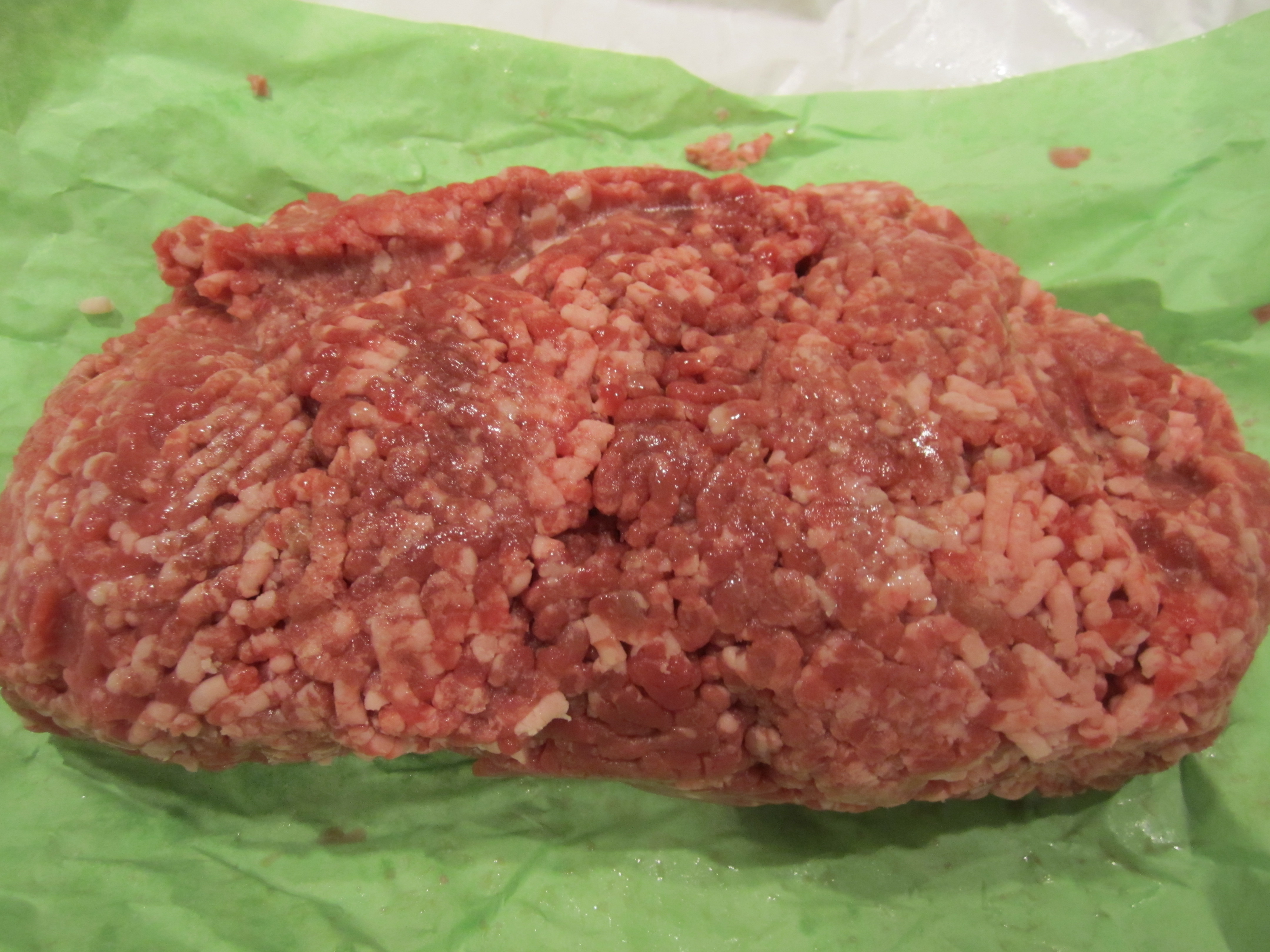
A weekend ski trip with some friends in Colorado has inspired me to make a quintessentially winter dinner of Shepherd’s pie, using local Colorado lamb, ground for me at the local butcher. 

I figured I’d take advantage of my temporarily snowy environs to make something rich, earthy and rib-sticking.  

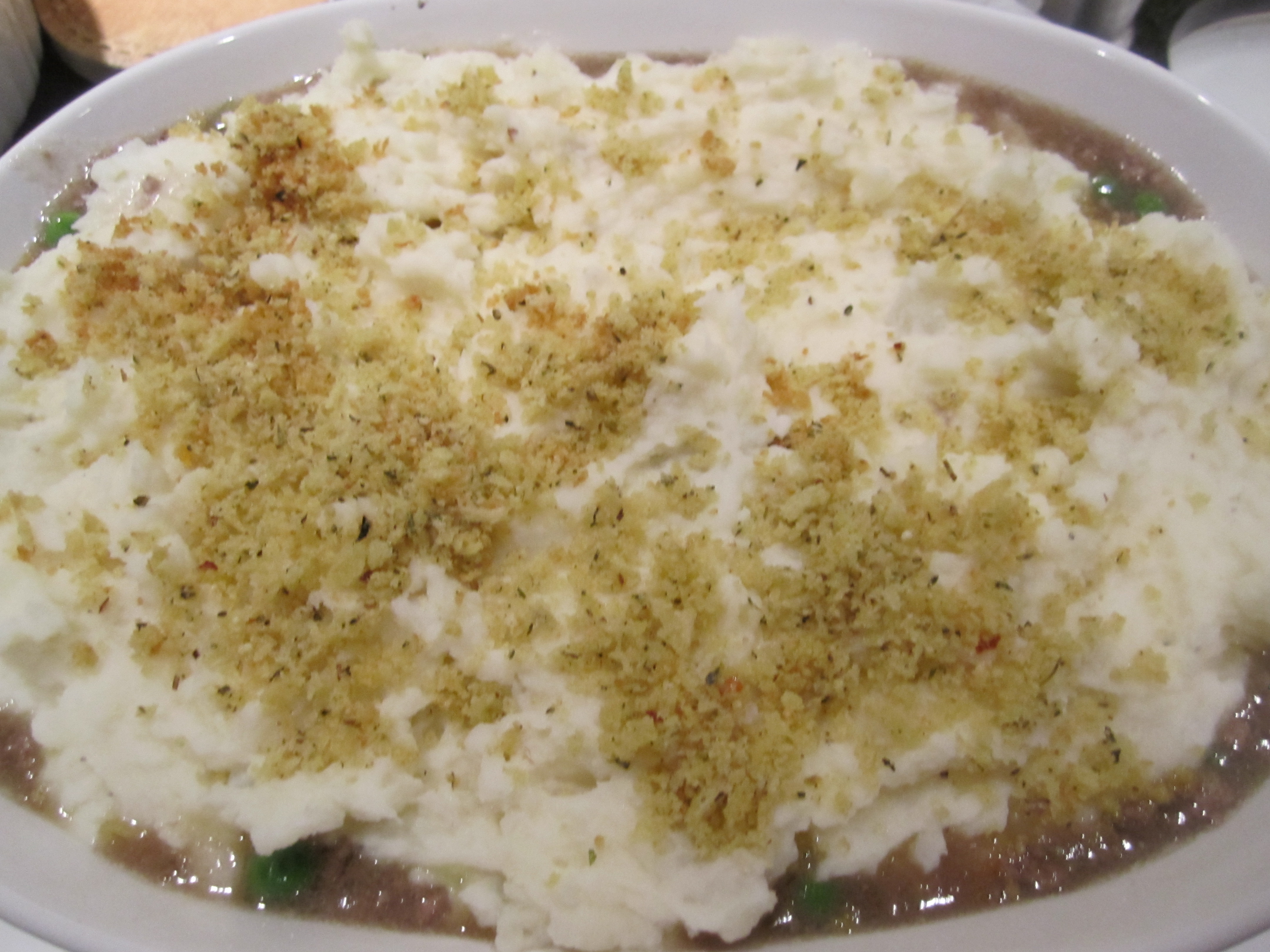
This dish is essentially a meat stew topped with a layer of mashed potatoes, sprinkled with seasoned toasted breadcrumbs, and baked to bubbly crispy perfection.  Although this dish requires several steps to make, it’s a great dish to make for a crowd, since it can be leisurely made in steps and assembled hours ahead while everyone is relaxing in the late afternoon.  (It can also be entirely assembled and refrigerated until ready to bake). 

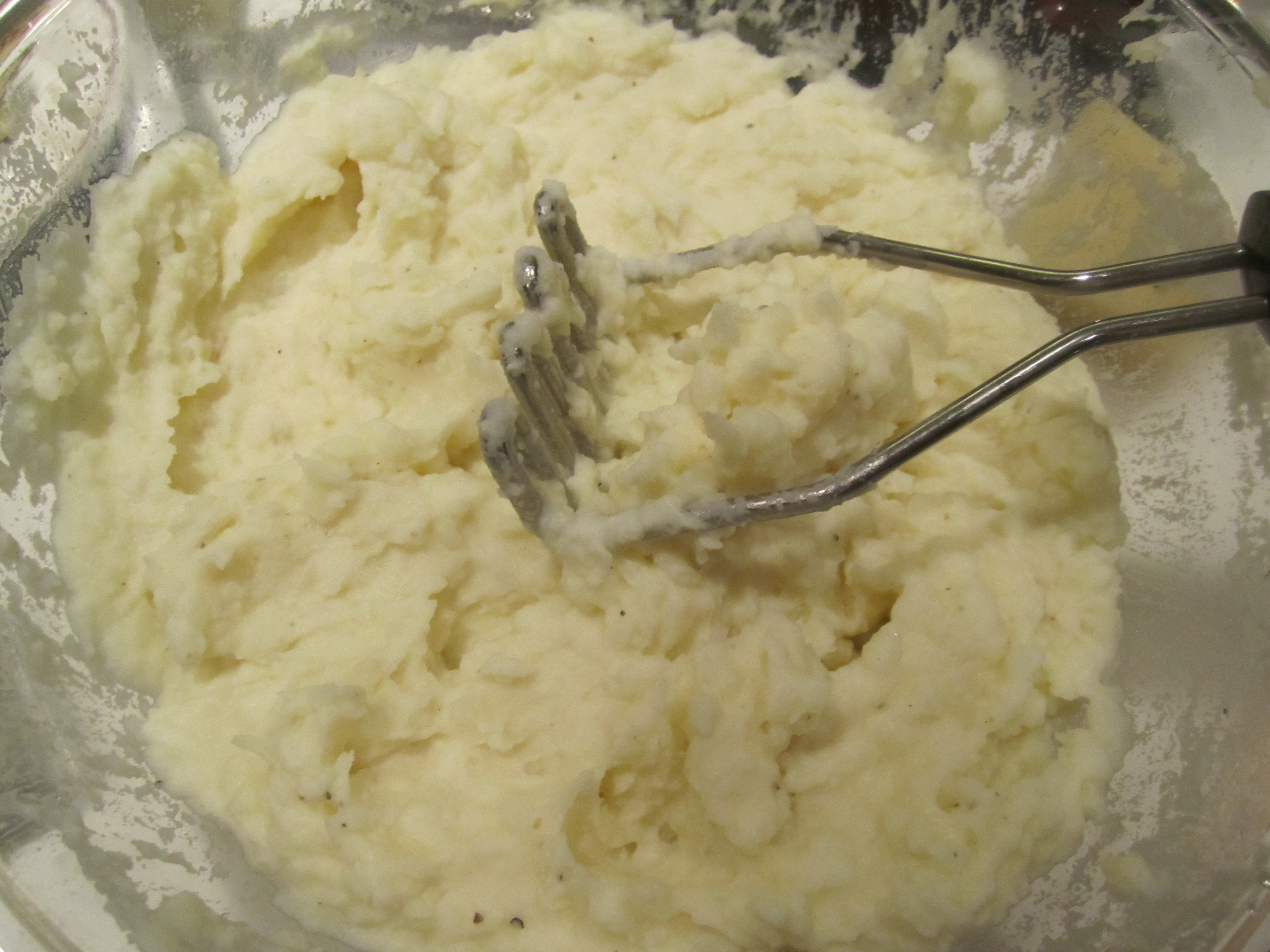
I began by making mashed potatoes.  I used Idaho potatoes, since I couldn’t find my preferred yukon golds here.  I peeled and diced them, placed them in salted, boiling water and simmered them until soft (about 20 minutes).  I mashed them with an old-fashioned masher, while adding in butter, grated cheese (manchego) and half-and-half.  Although you want these to be fairly stiff, add back some of the salty potato cooking liquid to get them to a creamy consistency.  These may be made an hour or so ahead.

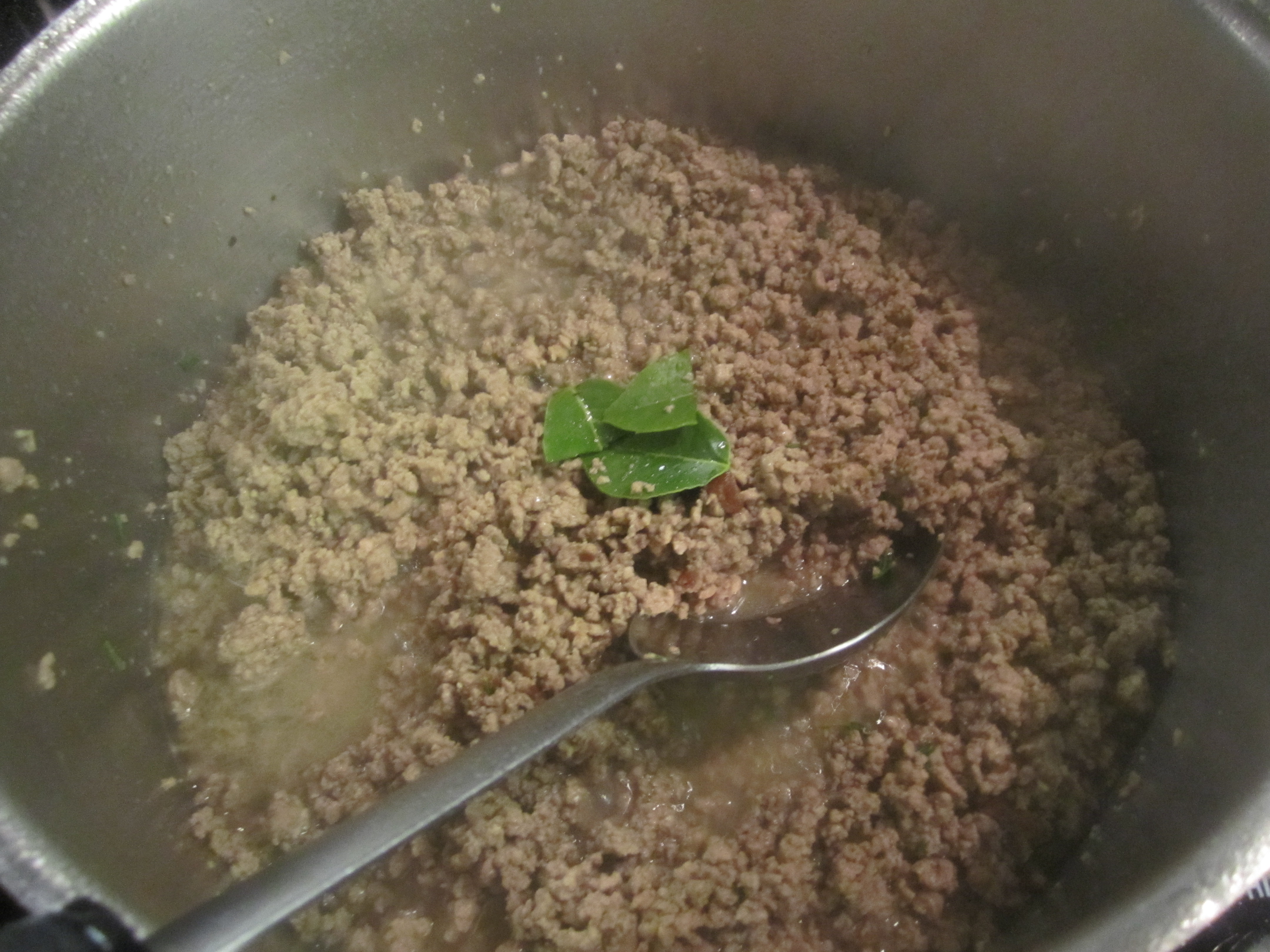
Then the meat and aromatics were browned in a dutch oven.  Flour was added for thickening, then red wine and broth,  to form a sauce.  This rich meat sauce is wonderful on its own, but topped with cheesy mashed potatoes–even better! 

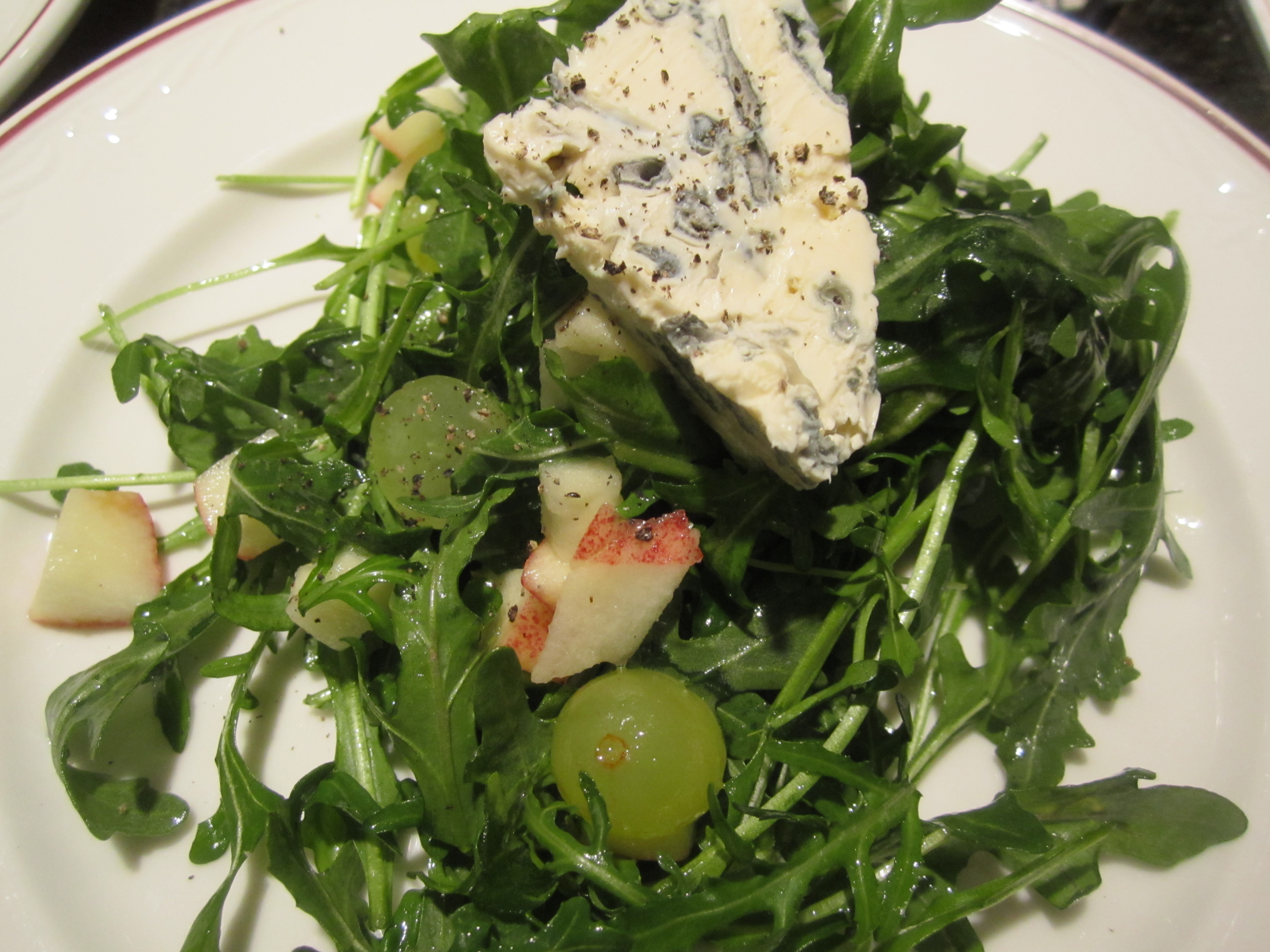
For a first course, we began with a salad of baby arugula, diced apples and grapes (all easy to find in the winter), topped with stilton cheese, dressed with lemon juice, agave and olive oil. 

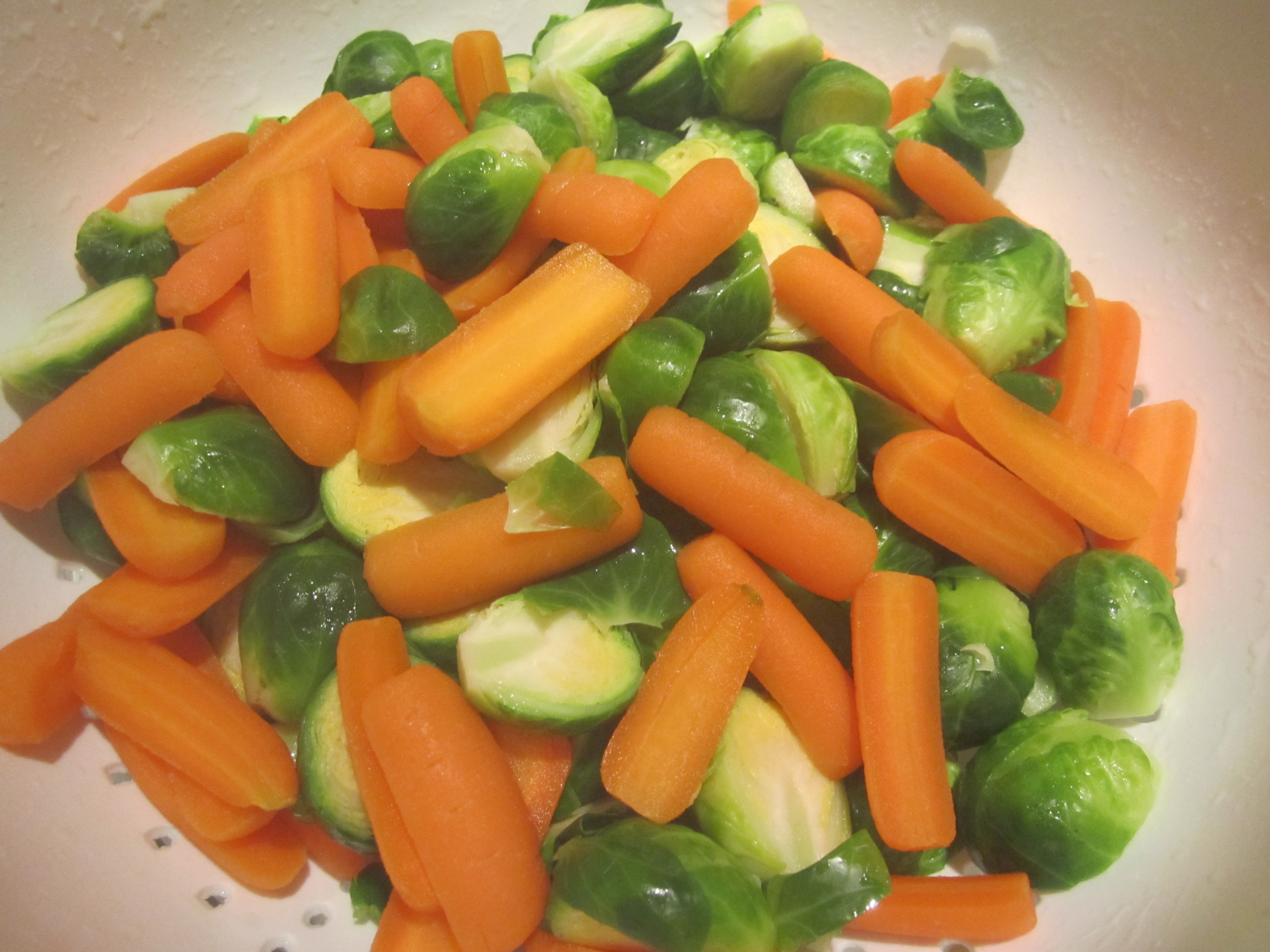
Although a side dish may not me necessary with this stew, I chose to make brussels sprouts and carrots as an accompaniment, since I don’t ever like a plate containing only brown food. 

These vegetables lend themselves to advance preparation, since they can be boiled (right in the potato cooking liquid) ahead of time, then sauteed in olive oil at the last moment, with a touch of chopped shallots. 

This meal was, for me,  the perfect dose of deep-winter, before returning to bright, sunny Florida!

Colorado Lamb Shepherds’ Pie

Serves 8

4 large potatoes, peeled and diced into 1″ cubes

1/2 c grated manchego cheese

4 tbls butter

1/4 c half-and-half

3 lbs ground lamb

3 medium shallots, finely diced

1 medium onion, finely diced

2 carrots, finely diced

2 ribs of celery, finely diced

3 bay leaves

sprig of fresh thyme

sprig of fresh rosemary

1 c red wine

3 c chicken or beef broth

1/3 c flour

1 10-oz. pkg frozen peas

salt and pepper to taste

1 1/2 c seasoned breadcrumbs (I used panko)

1/4 c olive oil

Begin by making the mashed potatoes.  Place potatoes in cold water and add a generous amount of salt (enough to make the water taste like sea water).  Bring to boil and simmer until soft.  Drain and reserve cooking liquid.  With a masher, add in the butter, cheese, cream and pepper.  Add in some cooking liquid if the mixture is too stiff.  Taste for salt–if you’ve salted your cooking liquid adequately, it might not need any.   Set aside.

Preheat oven to 375 degrees.

Heat half the oil in a dutch oven and add the lamb and 2 bay leaves.  Saute until lamb loses its red color but not so long as to brown the meat. 

Remove the meat and set aside.  Add 2 tablespoons of fresh oil to the pan and add the carrots, celery, shallots, onion, remaining bay leaf, and sprigs of rosemary and thyme.  Saute on medium heat for about 10  minutes or until vegetables become translucent. 

Add in flour and saute the flour and stir and saute for about a minute.  It will become very thick and pasty.  Add in the red wine (it will instantly become a mass of red glue).  Stir for a minute to combine and reduce the wine a bit. 

Add in the broth and bring to a simmer.  Add in the lamb and its juices and simmer for another 10 minutes on low heat.  It should have the texture of a medium-thick stew.   Remove bay leaves and herb sprigs.

Add in frozen peas and turn off heat. 

Pour mixture into a casserole (or two). 

Set aside to cool for a few minutes while you toast the breadcrumbs.

In a skillet, heat remaining oil briefly, then add ini the crumbs and saute on medium heat, stirring and tossing, for about 5 minutes or until they begin to take on a golden color.  Remove from heat immediately.

For final assembly, spread a layer of the mashed potatoes over the meat, then top with toasted crumbs. 


(This may be done up to an hour ahead of baking, or it may be done the day before and refrigerated).

Bake uncovered in 375 degree oven for approximately 40 minutes, or until golden brown on top and bubbling around the sides.  Remove from oven and allow to rest for at least 15 minutes prior to serving. 

Posted in Soup/Stew | 1 Comment

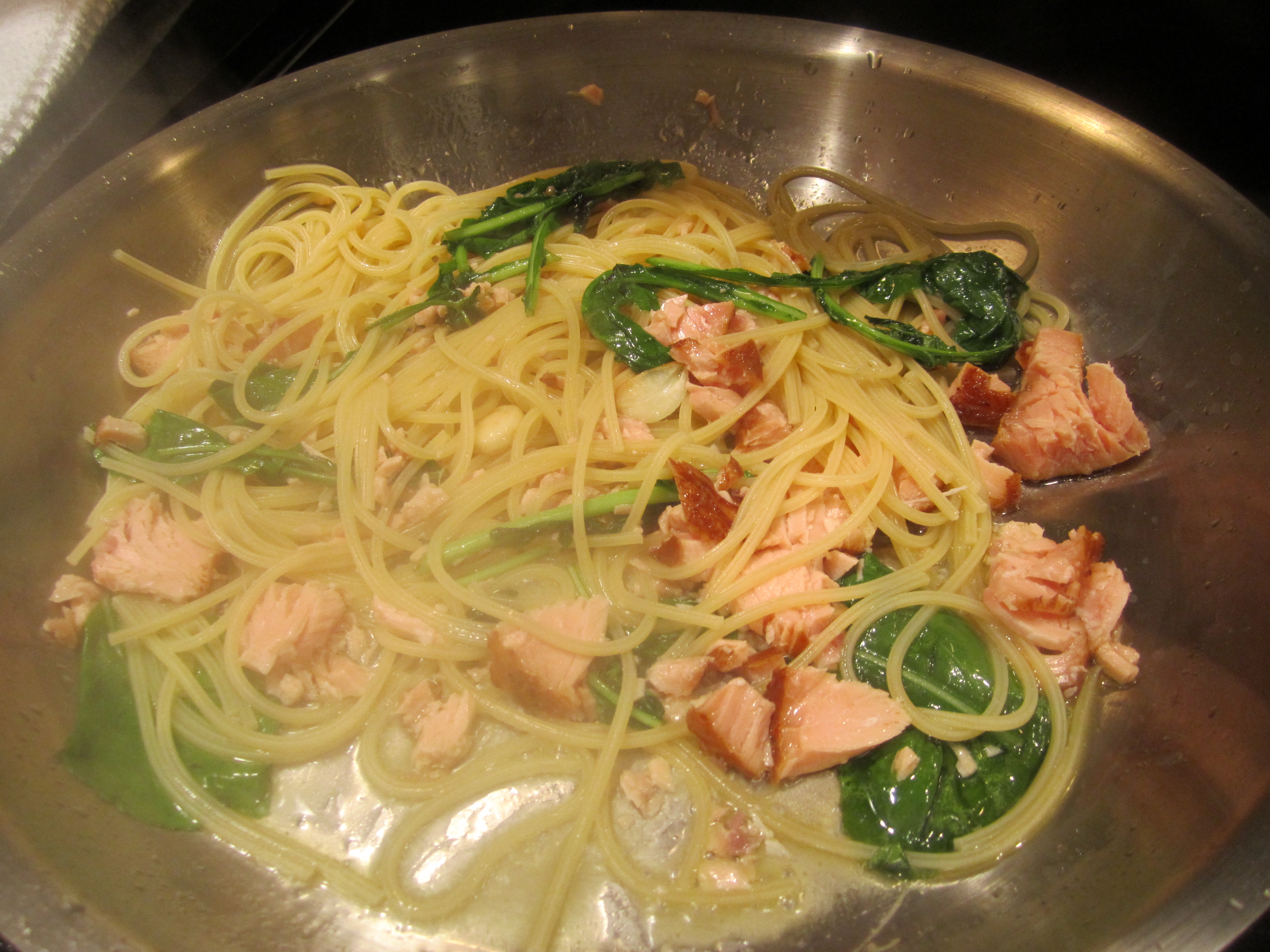
Pasta with Smoked Salmon, Arugula and Lemony Breadcrumbs


This is a great dish to make when you have only a small piece of smoked fish and want to extend it into a meal.  This hot-smoked fish is as versatile as any salty condiment like anchovies or bottarga (cured mullet roe) and should be used sparingly

The toasted breadcrumbs are what Italians would use instead of grated cheese to top a seafood-based pasta like this one.  These breadcrumbs are made with the scraps of bread that I keep for months on end and pulverize in the food processor.  I’ve added garlic, lemon zest, parsley, salt and lots of black pepper to them and the aroma of them toasting is irrestistible. 

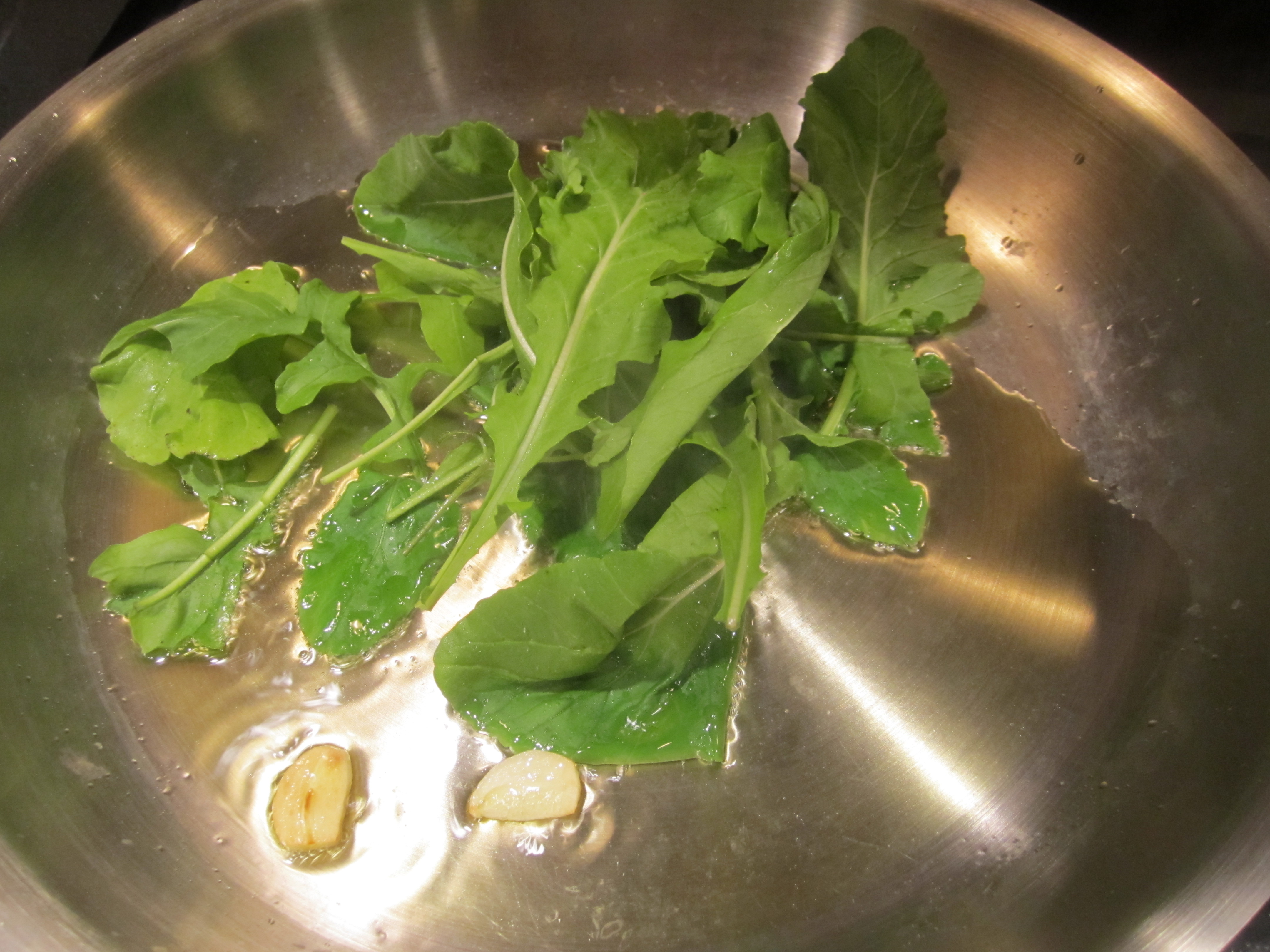
The arugula was grown locally and bought at the farmers’ market.  Like winter arugula (even in Florida), it is stronger and more peppery than delicate summer arugula, or baby arugula.  Its lemony bite is the perfect addition to a pasta with seafood.  I’ve simply toasted a split clove of garlic, added the arugula, then topped with the hot pasta and diced smoked fish.  The crumbs get sprinkled on top, and, (like grated cheese) it’s a good idea to keep an extra bowl of them on the table during the meal, since they seem to be the main attraction!

As a salad, I served some wonderful raw Florida dandelion greens with dressing of warm pancetta, olive oil, agave and red wine vinegar.  Simply render the pancetta in a tablespoon of olive oil, then add a tablespoon of red wine vinegar and a teaspoon of agave.  Pour over greens, toss and top with crispy pancetta.

Pasta with Smoked Salmon, Arugula and Lemony Breadcrumbs

serves 4

1 lb spaghetti

1 bunch arugula, washed and dried

2 tbls olive oil

1 clove garlic, peeled and split

1/4 lb smoked salmon (hot-smoked variety, if available, if not–regular smoked salmon is fine)

1 c toasted lemony breadcrumbs (see below)

Place garlic cloves face down in skillet with oil.  Heat until garlic begins to turn golden.  Add arugula leaves and toss in hot oil.  Set aside until pasta is cooked.

Add cooked pasta, smoked salmon, and a quarter-cup of pasta cooking liquid.  Toss over low heat for a minute or so.  

Remove garlic cloves and serve, topped with toasted crumbs.


Toasted Lemony Breadcrumbs

4 thick slices stale leftover country bread, like ciabatta

1 clove garlic, peeled and split

2 tbls olive oil

zest of 1 lemon

2 tsps chopped fresh parsley

salt and pepper to taste

In a nonstick skillet, on medium heat, place garlic halves, cut-side down, and allow oil to warm about 30 seconds, then add breadcrumbs.   Stir and toss for a minute until they begin to turn golden. 

Add lemon zest, parsley, salt and pepper, and continiue sauteing until the crumbs are golden.  Do not overcook, as they scorch easily.  When they’re done, remove from heat immediately and set aside to cool.  Taste and add salt or pepper, if necessary.  Remove and discard garlic clove.

Posted in Pasta | Leave a comment

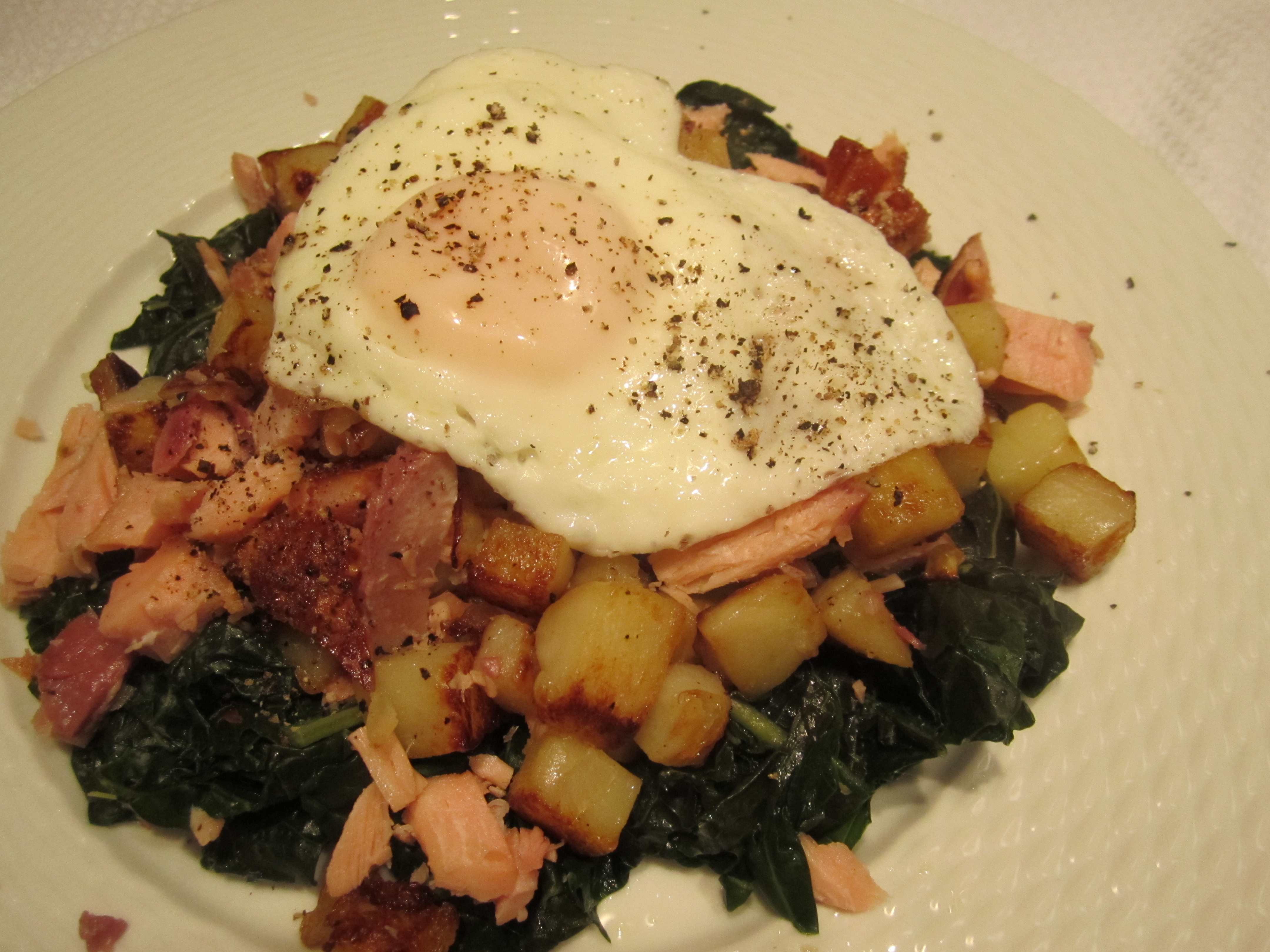
Dinner for One–Smoked Salmon Hash with Tuscan Kale

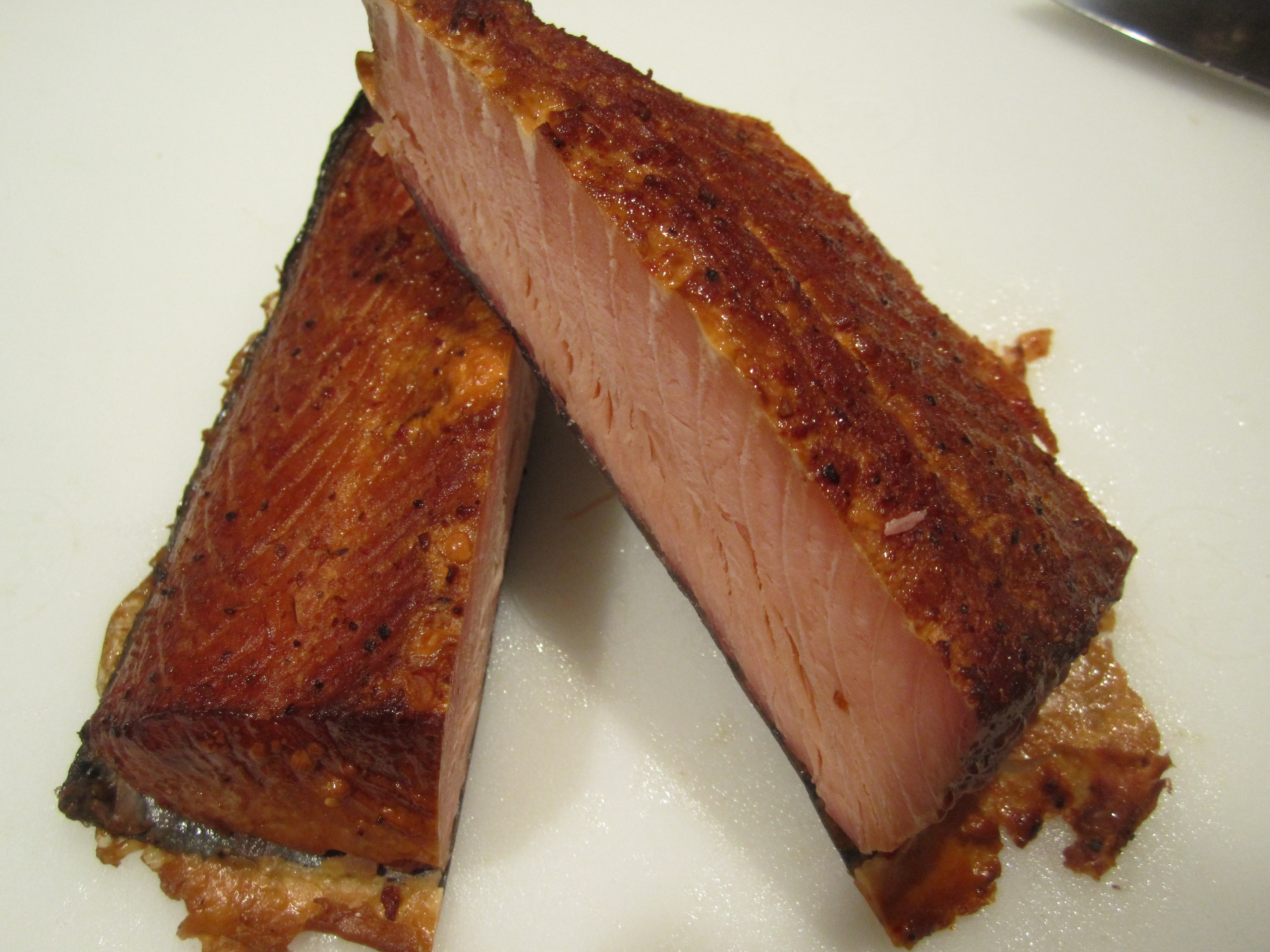
At the farmers’ market, I found a vendor that smokes his own salmon using a hot-smoke method, rather than a simple cure.  This means that the fish is cooked, as well as smoked.  It’s firmer and drier than conventional smoked salmon, but so rich and meaty, I couldn’t resist buying a piece. 

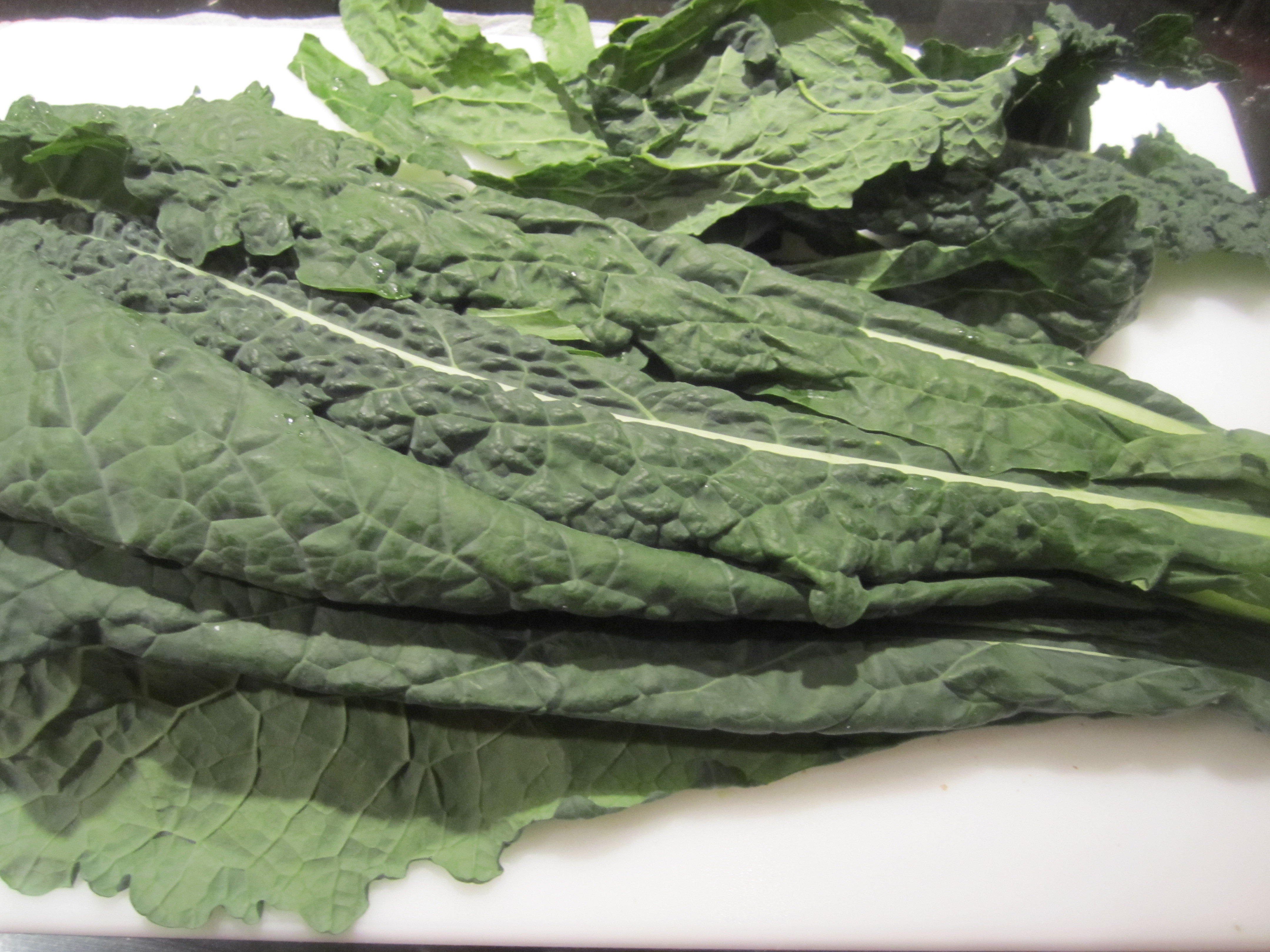
There was also a farmer who had a wonderful array of greens, including Tuscan (lacinato) kale, which I LOVE.  Tuscan kale gets stripped off its stems, cut into ribbons boiled in salted water for about 5 minutes, then drained.

I decided to use the cooked kale as a healthy base on which to heap fried potatoes, onions, smoked salmon, and of course, a soft fried egg. 

This dish is simple enough to illustrate without a recipe, since for one person,  it’s basically one potato, one egg, a quarter onion, and some smoked fish (an amount to your liking).  The kale could be replaced by some raw salad greens.

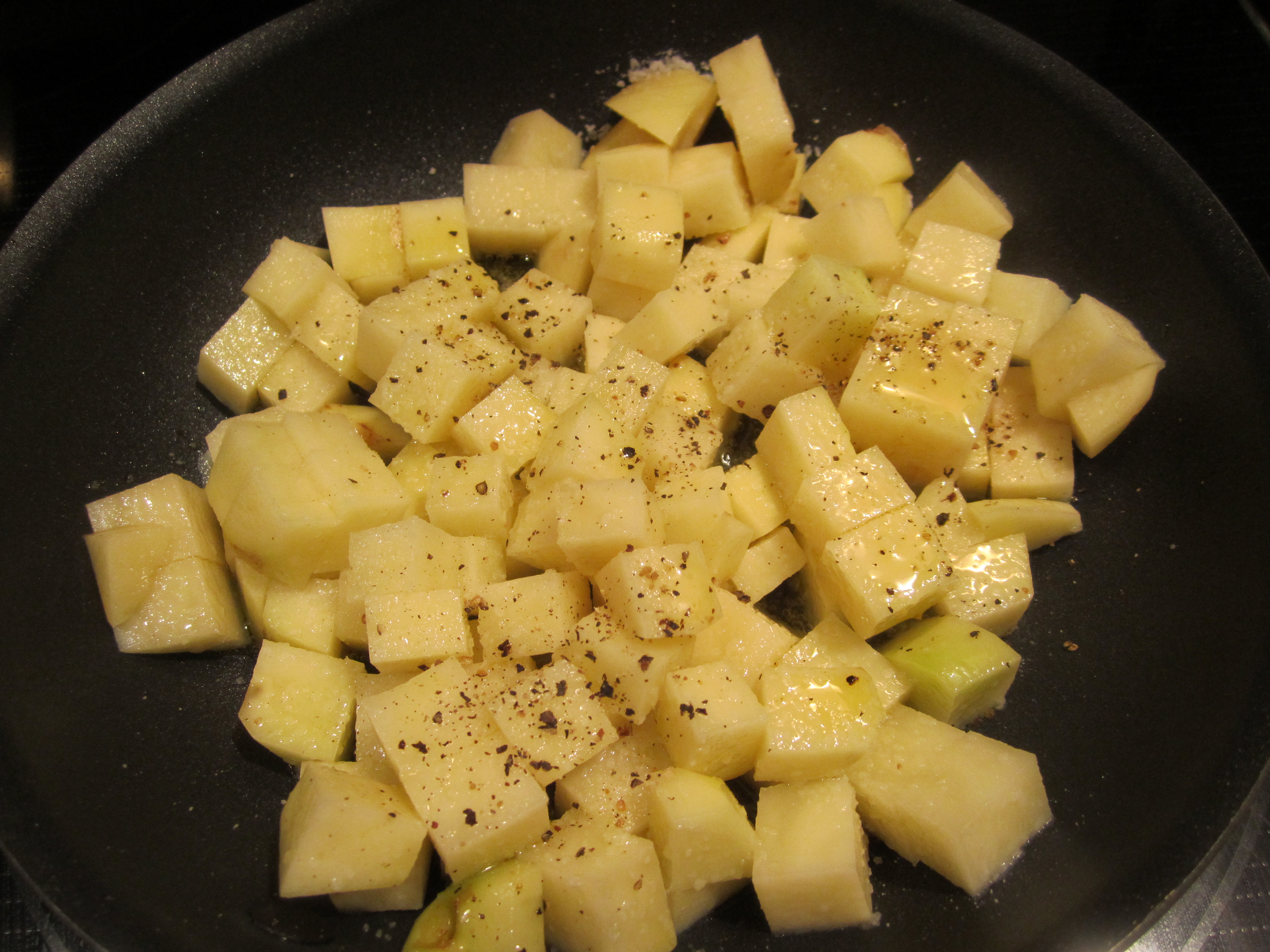
The dish begins with a tablespoon of olive oil in a nonstick skillet on low heat.  Once the oil gets warm, add potatoes that have been peeled and diced into 1/2″ cubes, sprinkle with salt and pepper, and cover.  

Toss and turn pieces occasionally, replacing the cover each time.  Depending on the strength of your burners, it should take approximately one-half hour for the pieces to become slightly golden and soft.  Add some diced onion and continue cooking for about 10 minutes, covered. 

Raise heat and uncover.  Saute for approximately 5 minutes or until golden and crispy.  Taste for salt, but hold back on the salt a bit–the smoked fish is salty.  When the potato/onion mixture is done, turn off the heat and add in diced smoked salmon and allow all to rest in the warm skillet while you prepare a sunnyside-up egg. 

To present the dish, spread a layer of blanched, chopped kale, or a pile of salad greens, then top with hash mixture and egg.  Needless to say, this is a great brunch dish as well.

Posted in Dinner for One, Eggs | Leave a comment

Pork Milanese, Florida-Style


 For a last-minute dinner for four, I ran to Publix with no preconceptions about what I’d cook, except that it had to be quick and not use too many (electric) burners at one time.  I went right to the produce section and found instant inspiration in some great-looking salad ingredients–avocadoes, kumquats and lemons–all grown in Florida.

In the meat department, I found naturally-raised (whatever that means) pork from a named ranch in the mid-west.  The loins were thinly sliced, perfect for breading and quick pan-frying.  I bought them not because they were designer-labeled, but because they had a beautiful deep pink color and were sliced perfectly thinly, without the need for further pounding. 

Next I needed eggs for breading and was delighted to find “Country Hen” organic eggs (at Publix, no less).  These eggs have yolks that are so orange, they almost look like eggs found in Italy.  I buy them almost exclusively when I’m not near an egg farm.  They are the only commercial egg producer that invites its customers to eat their eggs raw without worry of bacteria. 

This dish is great for guests because you can bread and partially fry the cutlets ahead of time, then finish them in a 275-degree oven while you’re enjoying a first course with your guests.  The salad gets tossed at the last minute and served alongside the crisp cutlets.  If you leave the cutlets in the oven too long, don’t worry–pork loin is very forgiving and the oven is mild enough not to overcook and dry out the meat–it will stay crispy on the outside and tender on the inside.

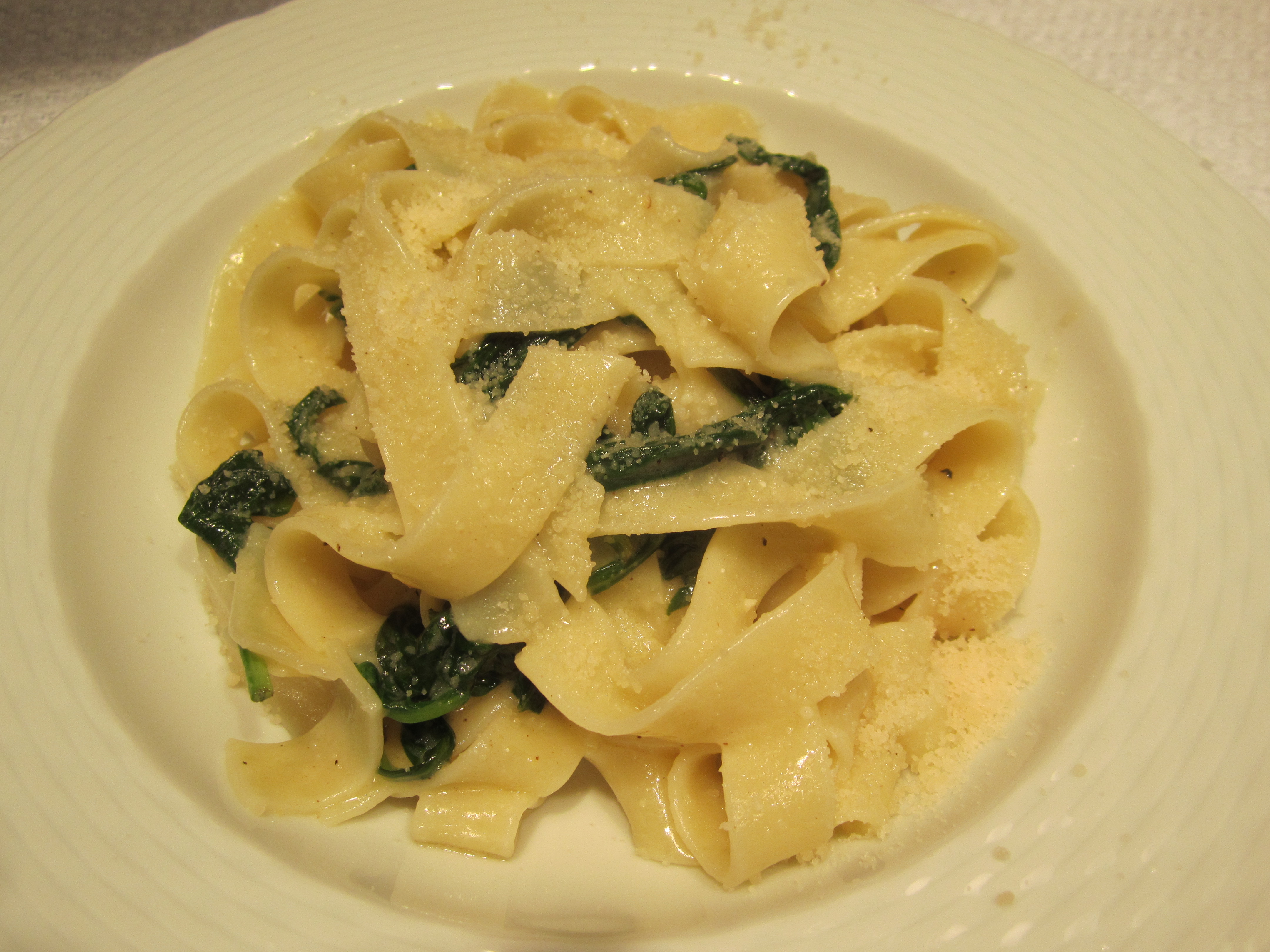
For our first course, I decided to make a simple pasta–fettucine with baby spinach, butter and parmigiano.  This dish is so easy, I almost consider it cheating when I serve it to company–but it’s always comforting and well-received.  It’s simply a box of pre-washed baby spinach tossed in a skillet of melted butter to wilt (plus a touch of chicken broth), then combined with pasta ribbons and lots of grated cheese. 

After we finished pasta, I tossed the salad and served a large pile beside the slices of breaded pork.  The salad was a revelation–the kumquats infused the dish with their sweet-tart flavor; the avocado with its buttery richness, and the dressing of lemon juice and extra-virgin olive oil added its own brightness and richness to the baby greens. 

Pork Milanese, Florida-Style

serves 4

For Cutlets:

2 lbs thinly sliced pork loin

2 eggs

2 c seasoned breadcrumbs (I used Progresso and added a tablespoon of freshly chopped parsley and a pinch of freshly grated nutmeg)

1 c flour for dredging

1/2 c olive oil for pan-frying

salt and pepper to taste

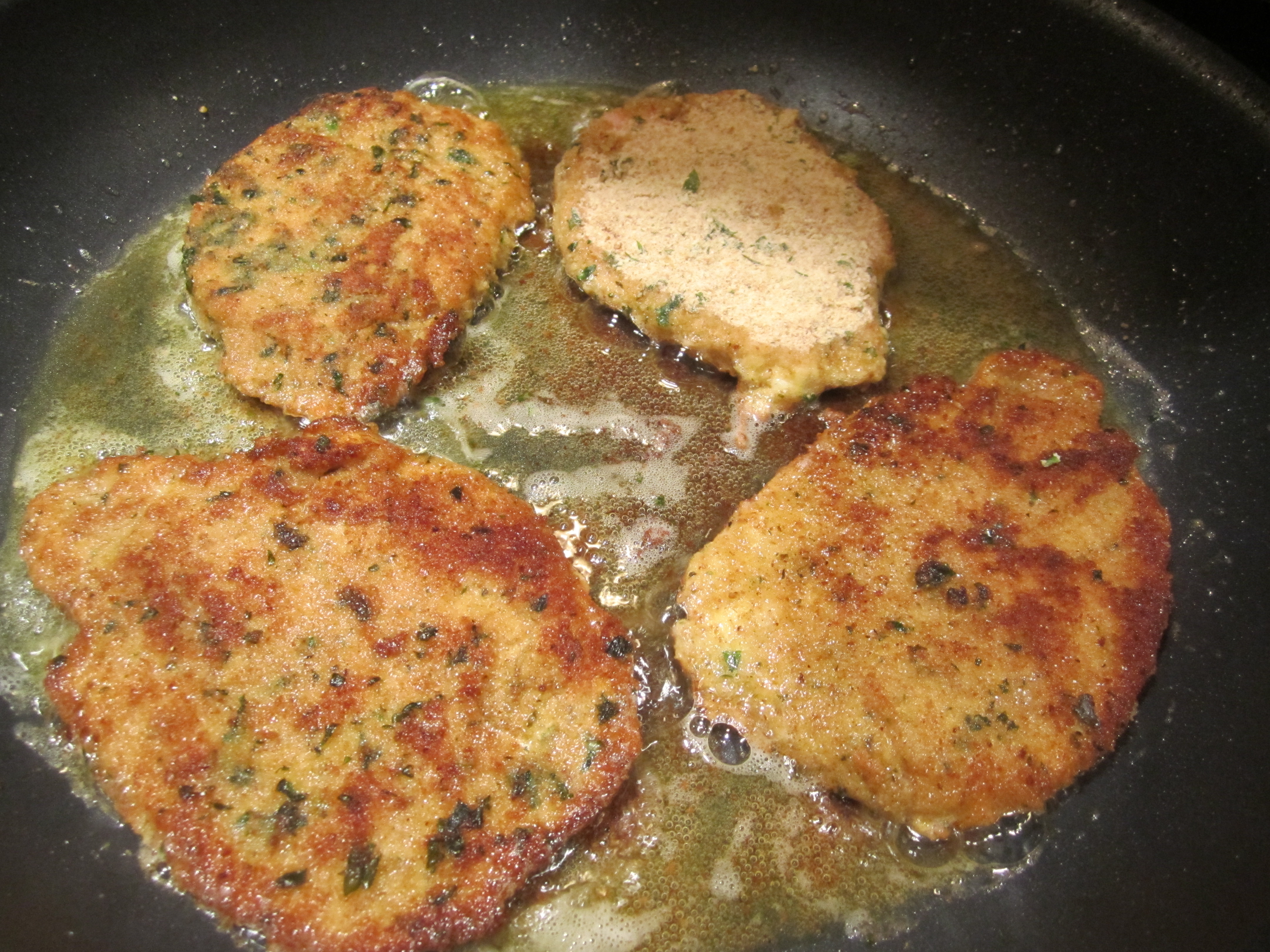
Dredge cutlets first in flour (shake off excess), then egg (shake off excess), then crumbs (press the crumbs into the cutlets well).  Set aside (may be done up to an hour ahead). 

A half-hour prior to serving, preheat oven to 275 degrees. 

To fry, preheat oil until just about smoking (when you touch the oil with the tip of a piece of meat, it should sizzle immediately–if not, remove meat and allow oil to heat more).   Fry on high heat for about 2 minutes on each side, then set aside in one layer on a baking sheet.   Work in batches, changing the oil between batches.  Sprinkle each batch lightly with salt as soon as it comes out of the skillet.

May be done an hour ahead, then set aside.

Place baking sheet in pre-heated oven about 20 – 30 minutes prior to serving and allow the meat to gently heat through. 


For salad:

4 large handfuls of mixed baby greens

8 kumquats, thinly sliced, with large seeds removed (slice them gently with a sharp knife, and knock out the seeds as you slice).

half a Florida avocado (larger, smoother and brighter green than California–may be eaten on the firmer side than California variety), peeled and cubed

juice of half a lemon

2 tbls extra-virgin olive oil

salt and pepper to taste

Toss ingredients together in a large mixing bowl and mound on the plate beside the hot, crispy cutlets.


Posted in Meat, Salads | Leave a comment

Dinner for One–Salad with Roasted Peppers and Soppressata


Soppressata is a natural with roasted peppers, in the same way anchovies are–they’re both very strong and salty, and pair beautifully with the sweetness of the peppers. 

Last week at the farmers’ market, I bought some Florida red peppers–they were uniformly a deep red color and some were beginning to shrivel a bit–I could tell they’d be sweet.  Also at the farmers’ market, I bought wonderful, artisanally made mozzarella–so fresh, its proud vendor promised me it would keep for 3 weeks in its water–amazing.   The soppressata came from Beppi, my Southampton neighbor. 

Beppi is also spending his winter in South Florida, about 45 minutes from where I am, and today we decided to have lunch together.   I picked him up and we had a wonderful lunch at one of his favorite local Neopolitan restaurants, where the 79 year-old owner is always thrilled to see him.  Of course, as usual, our conversation turned to food.  Beppi’s favorite store in Florida is Restaurant Depot, where he buys a supply of cured meats that last him the better part of the year.  He buys pancetta, soppressata and capicola.  Whatever he doesn’t finish in Florida, ends up in his suitcases and back in Southampton in the spring. 

After lunch, I accompanied him back to his apartment and he insisted on giving me pieces of soppressata and pancetta (“you can make a nice carbonara,” he suggested, as he sliced off the hunk of pancetta).  He lamented not having his professional meat slicer in his Florida kitchen and we both launched into a discussion of the indignities of cooking on a glass-top electric range!

This salad is so simple, no recipe is required.  To begin, roast the peppers. 

I learned a great shortcut for great microwave-roasted peppers from my mother.  If you only have one or two peppers to roast and don’t want to wait forty-five minutes for oven-roasted peppers, this is the  perfect cooking method for sweet, tender roasted peppers. 

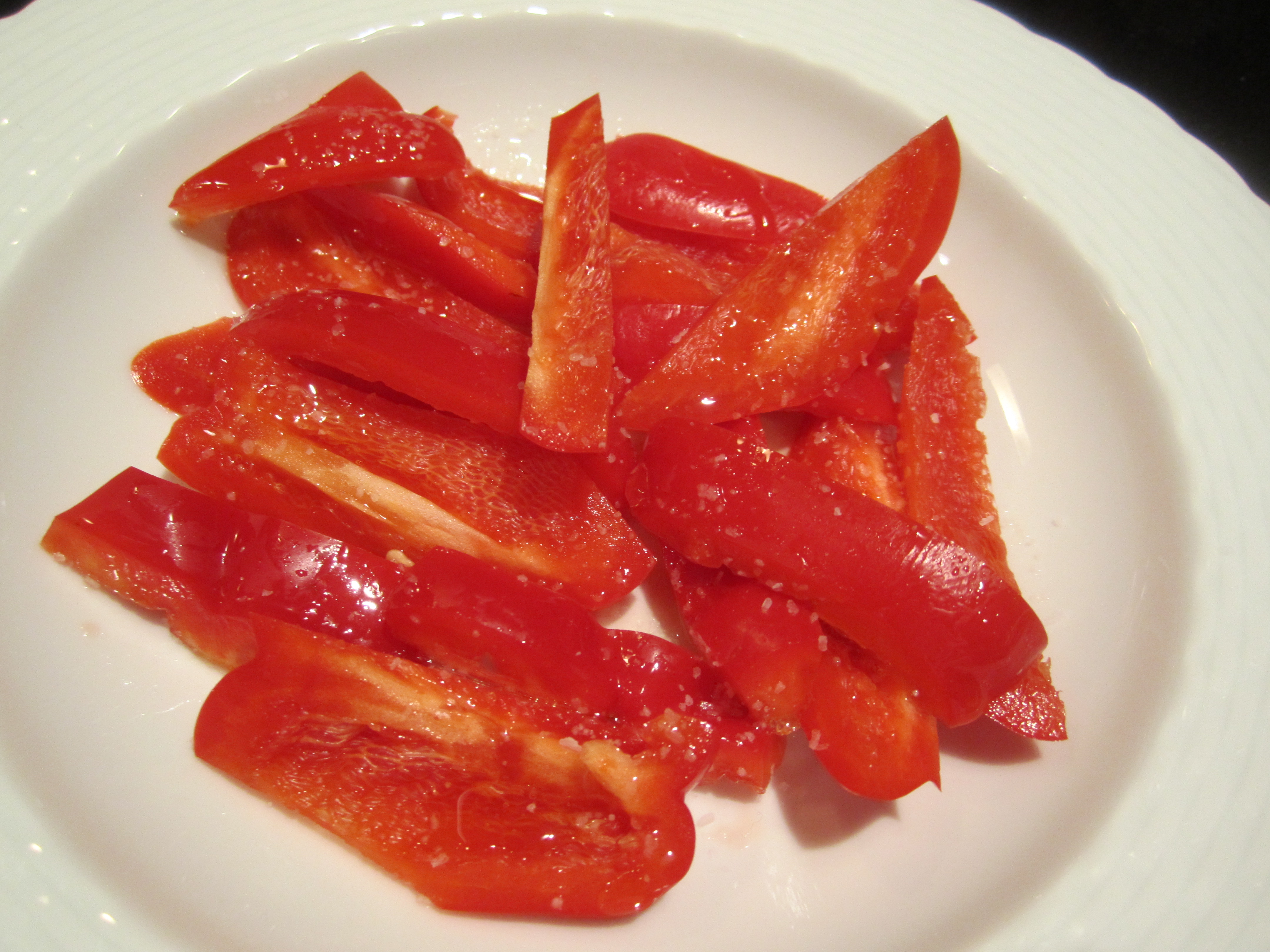
Simply slice the peppers into strips and place in a pasta bowl or flat plate. 


Drizzle with olive oil and sprinkle with salt.  Place a paper towel over the top and roast in the microwave for about 3 to 4 minutes (depending on the age and strength of your microwave). 

Check on them after 2 minutes and stir them around a bit.  They might make some popping sounds, but don’t worry, they won’t explode.  Because this is the microwave, they must not be overcooked–stop cooking once they’ve begun to srivel and turn soft.  The oil turns a wonderul red and is delicious to add to the salad. 

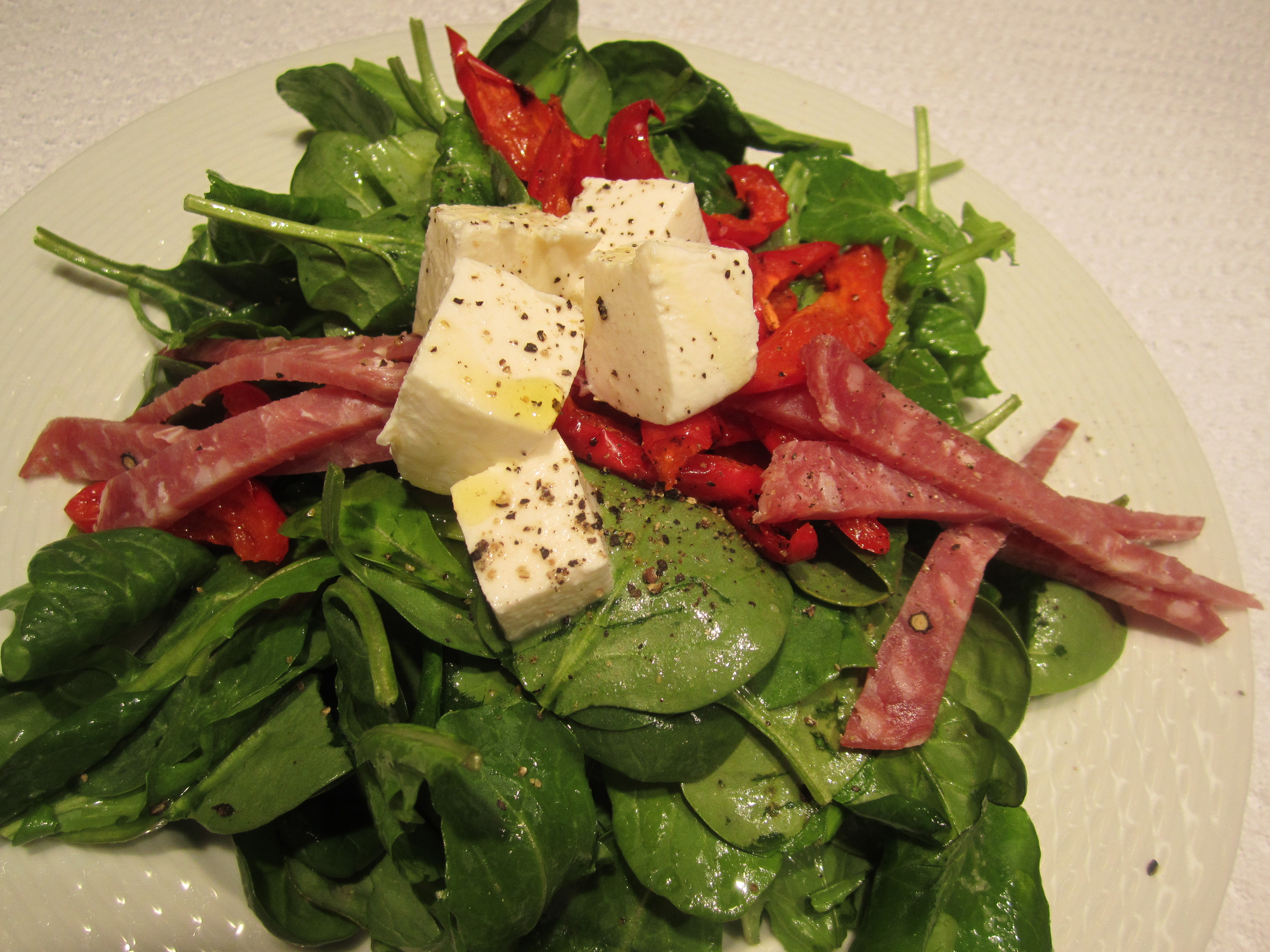
To assemble the salad, take 2 big handfuls of baby arugula/spinach blend and place in mixing bowl.  Squeeze the juice of half a lemon, then sprinkle with  a pinch of salt (not too much).  Drizzle with 2 teaspoons of extra-virgin olive oil and toss well.  Mound the greens on a plate and arrange mozzarella, peppers, and soppressata on and around them.  It’s sweet, salty and entirely satisfying, but still light and bright!

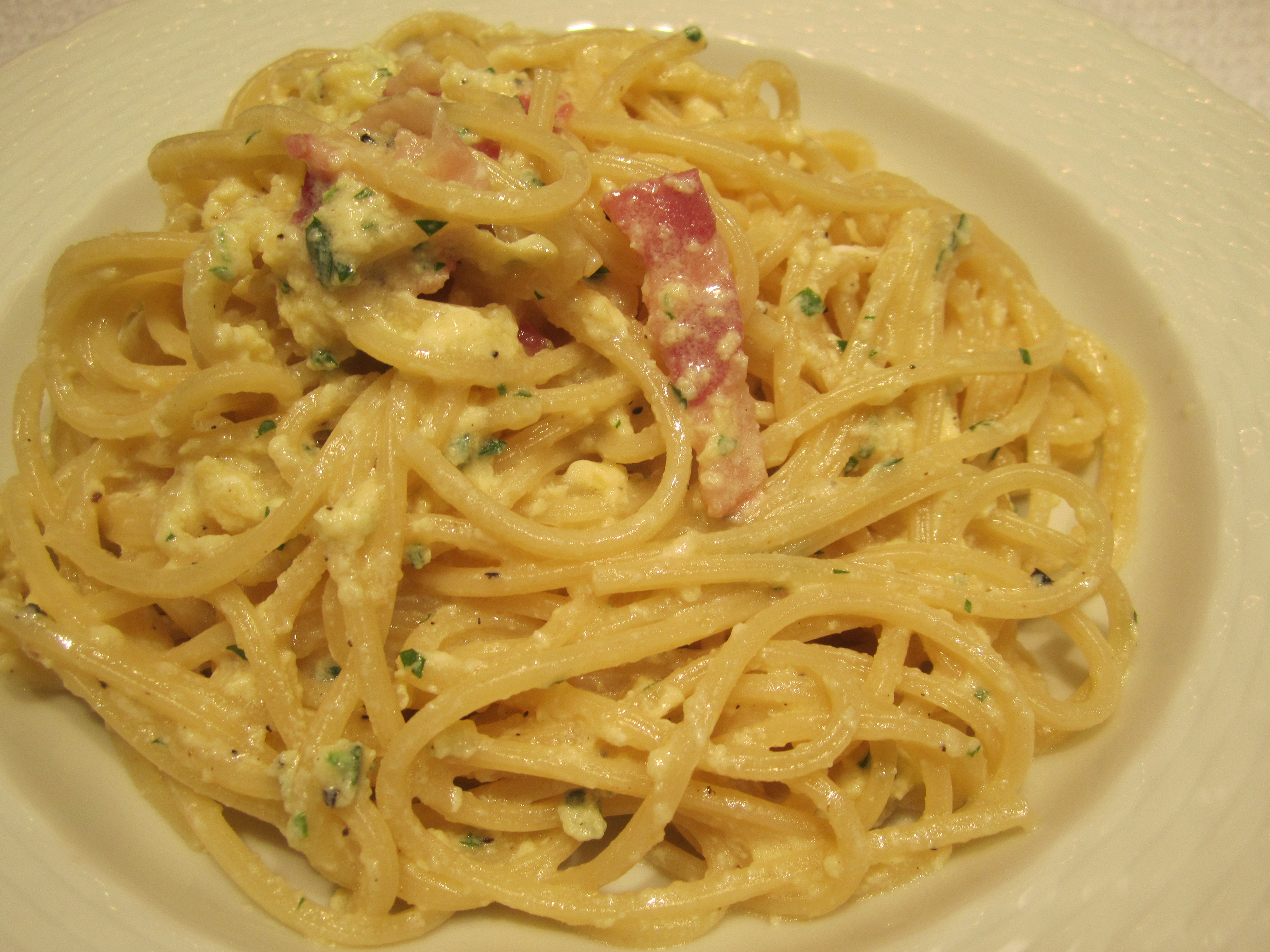
For my main course–as per Beppi’s suggestion–I made a heavenly dish of pasta alla carbonara–a great dish to make for one. 


Posted in Dinner for One, Salads | 1 Comment