Chicken Scaloppine with White Wine and Shallots

Adjusting to a new kitchen has been a challenge.  Every time I set out to make something, I realize I’m missing ingredients or utensils that I took for granted in my full-time kitchen in Southampton.  The biggest challenge, however, has been learning how to cook (competently) on an electric range.

The burners become hot fairly quickly, but not as instantly as the 22,000 b.t.u. gas flame I’m used to.  When you turn the burners off, the heat lingers for quite a while, so once a dish is done, it must be promptly removed from its burner.    When I blanch vegetables, which I do almost daily, I’ve learned to blanch in much smaller batches than I’m accustomed to–lest the water take too long to return to a boil, resulting in soft, mushy vegetables.  Therefore, the process of prepping for a meal is a bit more time-consuming.  This comes as no news to most people, but actually putting it into practice on a daily basis has been challenging.

Enough complaining–if I could cook in a tiny NYC kitchen for 25 years (albeit on a tiny gas range), I can adjust to cooking on an electric range in sunny Florida for a few months . . .

My local supermarket is now Publix and I’m favorably impressed with the array of groceries and products that are available here, although I miss several of my staples from Citarella Market at home.  Publix, combined with the weekly farmers’ market should be enough to keep us well-fed throughout the winter.

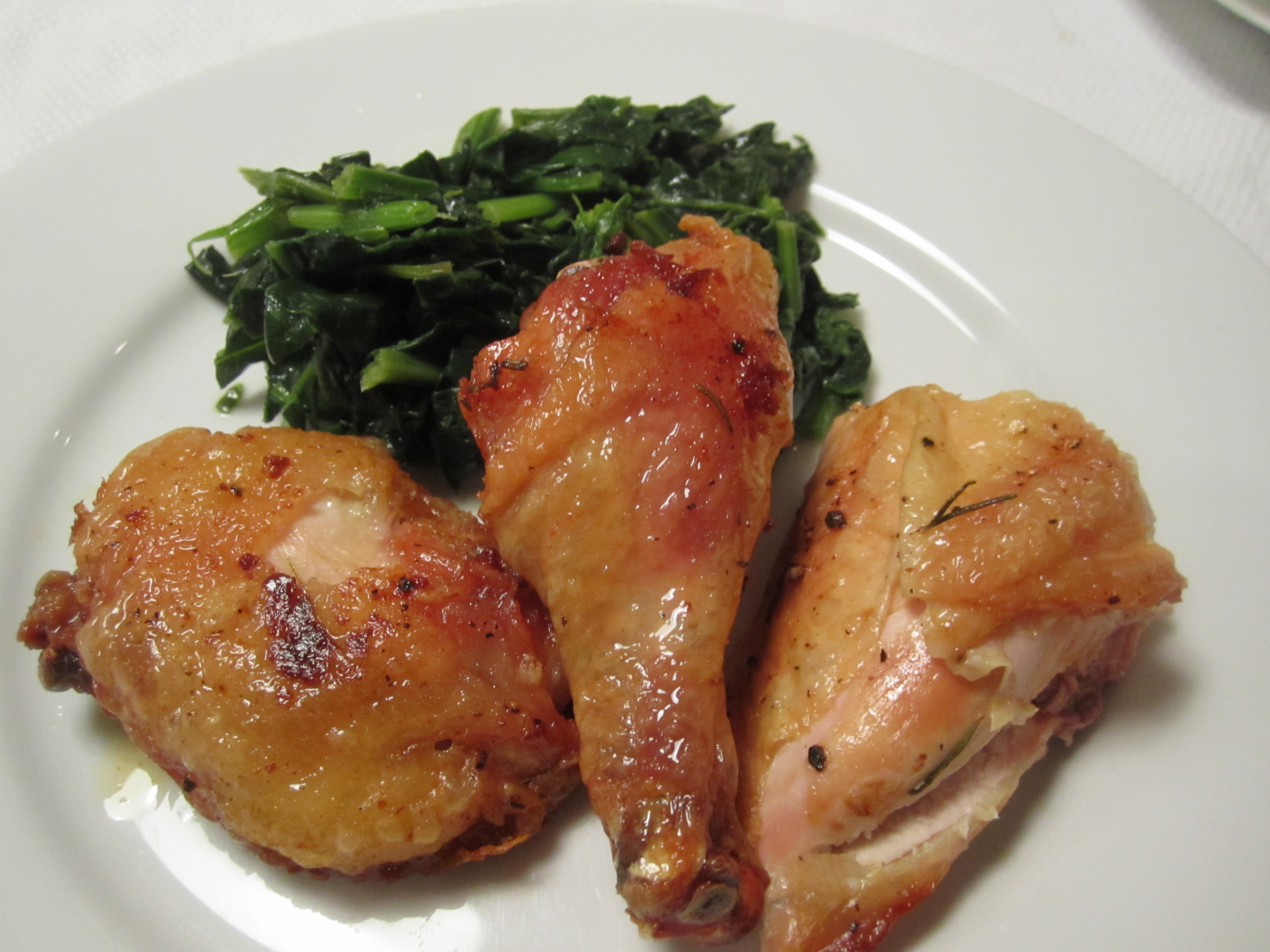
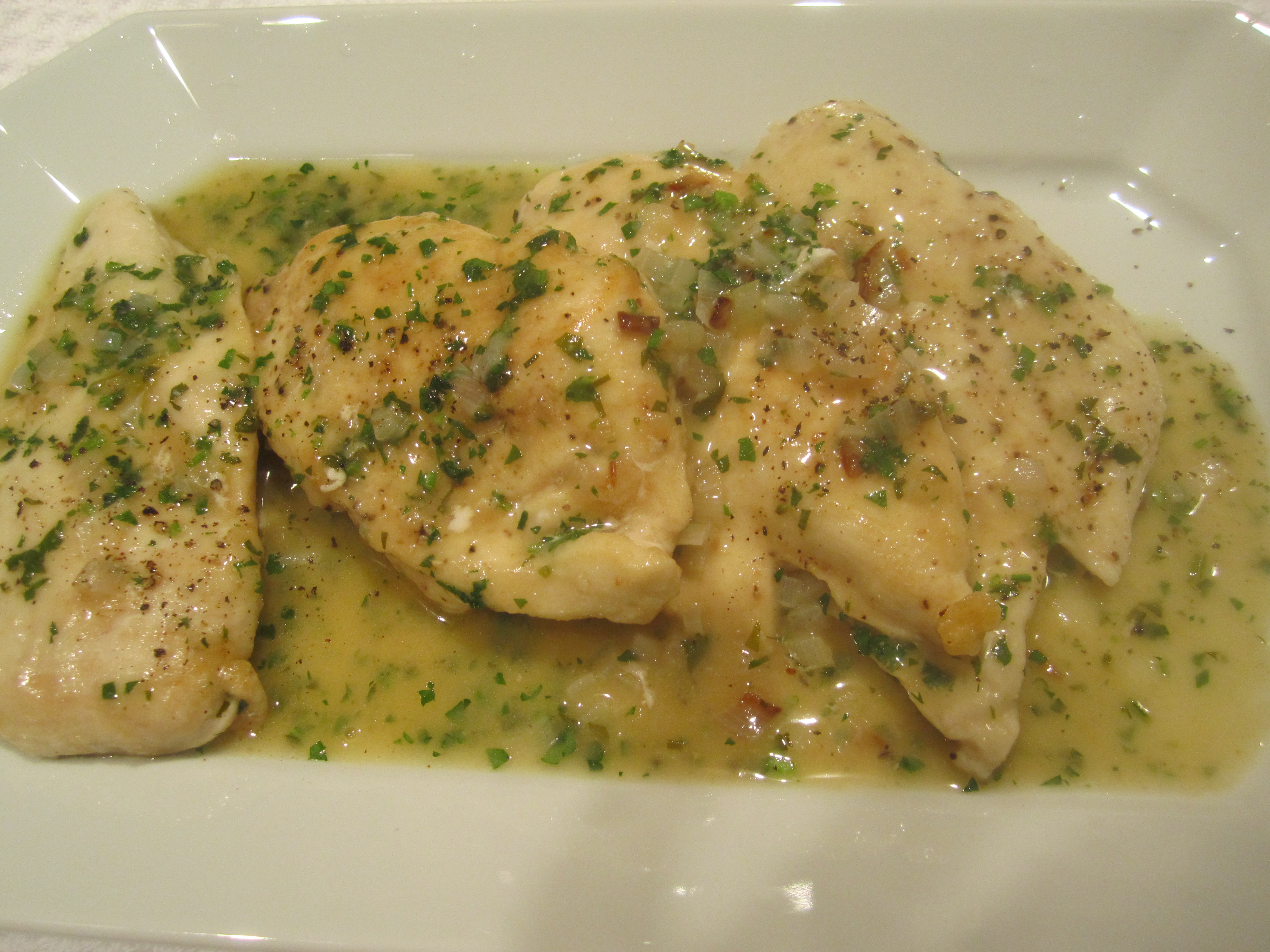
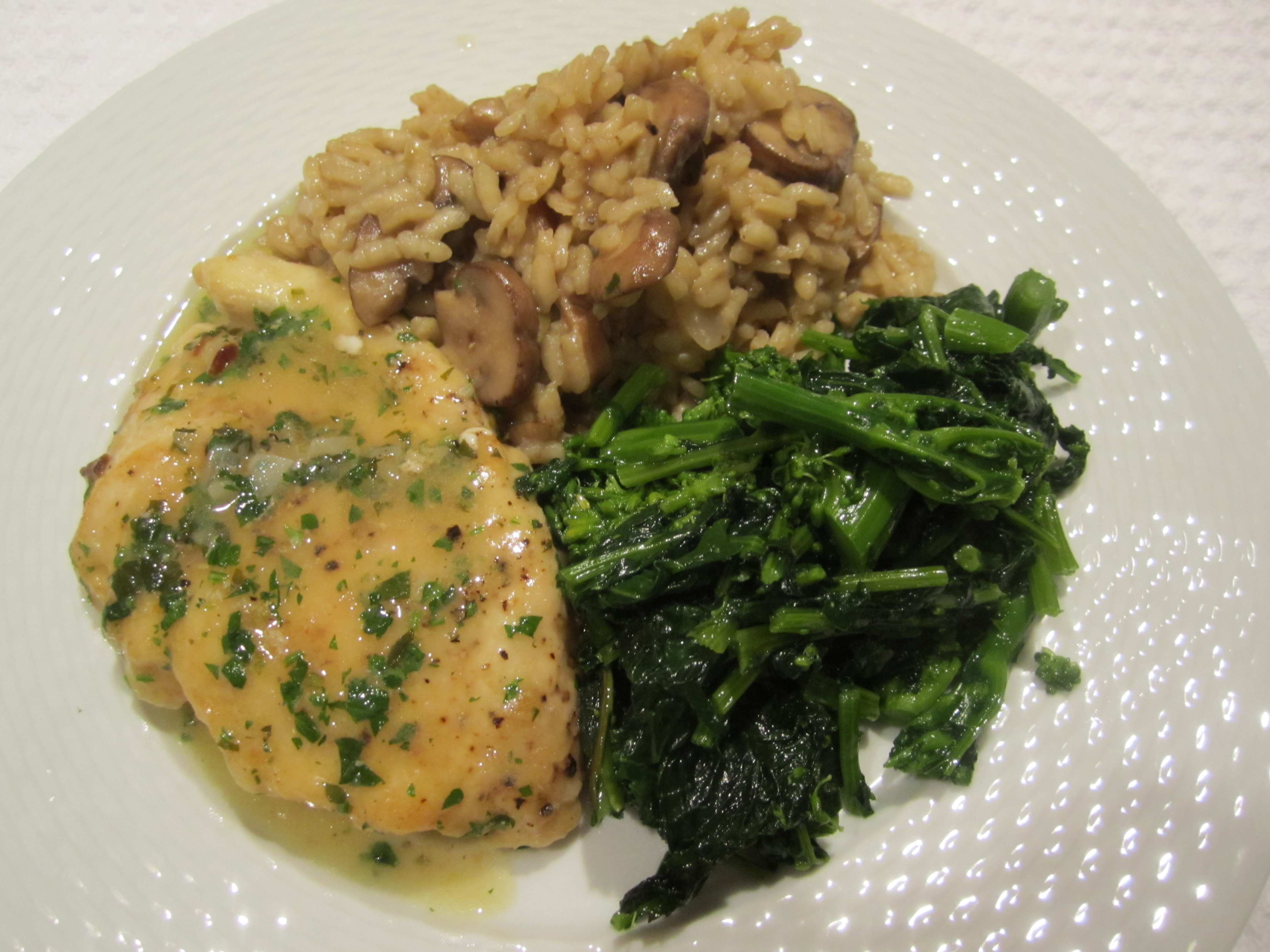
This weekend, I decided to make  a simple main course of chicken scalloppini with white wine and shallots, along with porcini risotto and sauteed broccoli di rapa.  The ingredients for the main course are simple–thinly sliced chicken breasts, shallots, parsley, butter and white wine.

The chicken breasts get dredged in flour, then lightly sauteed on both sides in a combination of butter and oil, along with chopped shallots.  White wine is added and reduced slightly, then broth is added and reduced for a couple of minutes.  Parsley is added at the end to preserve its green color and flavor.

Normally I would serve this meal Italian-style, with the risotto as a first course on its own, then the chicken and vegetables second, but this evening, I thought the rice would benefit by the sauce from the chicken, so I served everything at once on the same plate.
Chicken Scaloppine with White Wine and Shallots

serves 4

2 lbs boneless, skinless chicken breasts, sliced thinly

3 tbls olive oil

1 tbl butter

1 medium shallot, finely diced

1/2 c white wine

1/2 c chicken broth

2 tbls chopped fresh parsley

flour for dredging

salt and pepper to taste

While heating oil and butter in a large skillet, season chicken well with salt and pepper, dredge in flour and shake off excess.

Gently slide chicken breasts into hot skillet, along with shallots.  Saute on each side for about 2 minutes (no need to brown–the goal here is gentle cooking).
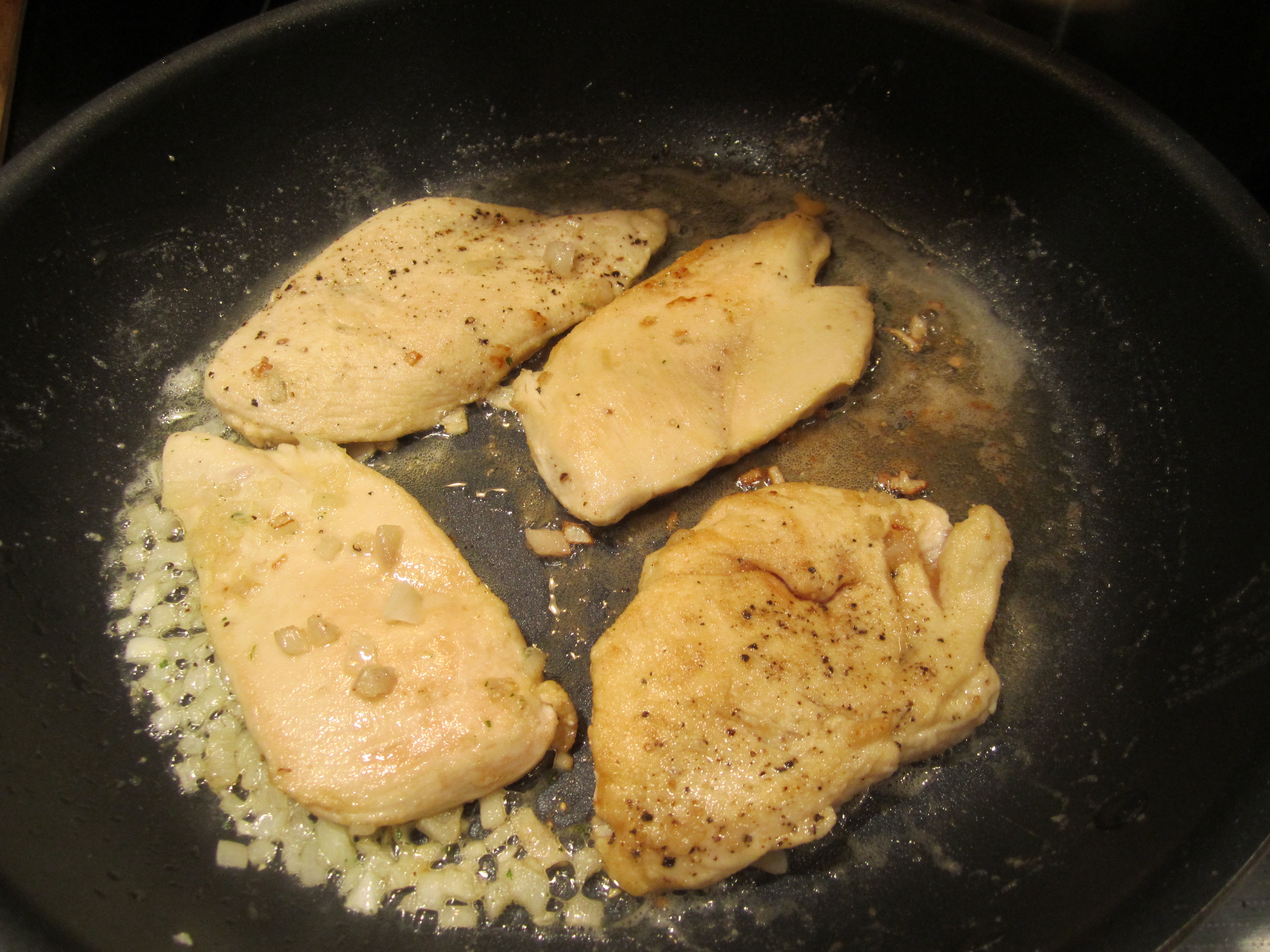
Add wine and reduce for a minute, until syrupy consistency results.  Add broth and cover for a minute.  Uncover and cook for another minute or two.  Sprinkle on parsley.
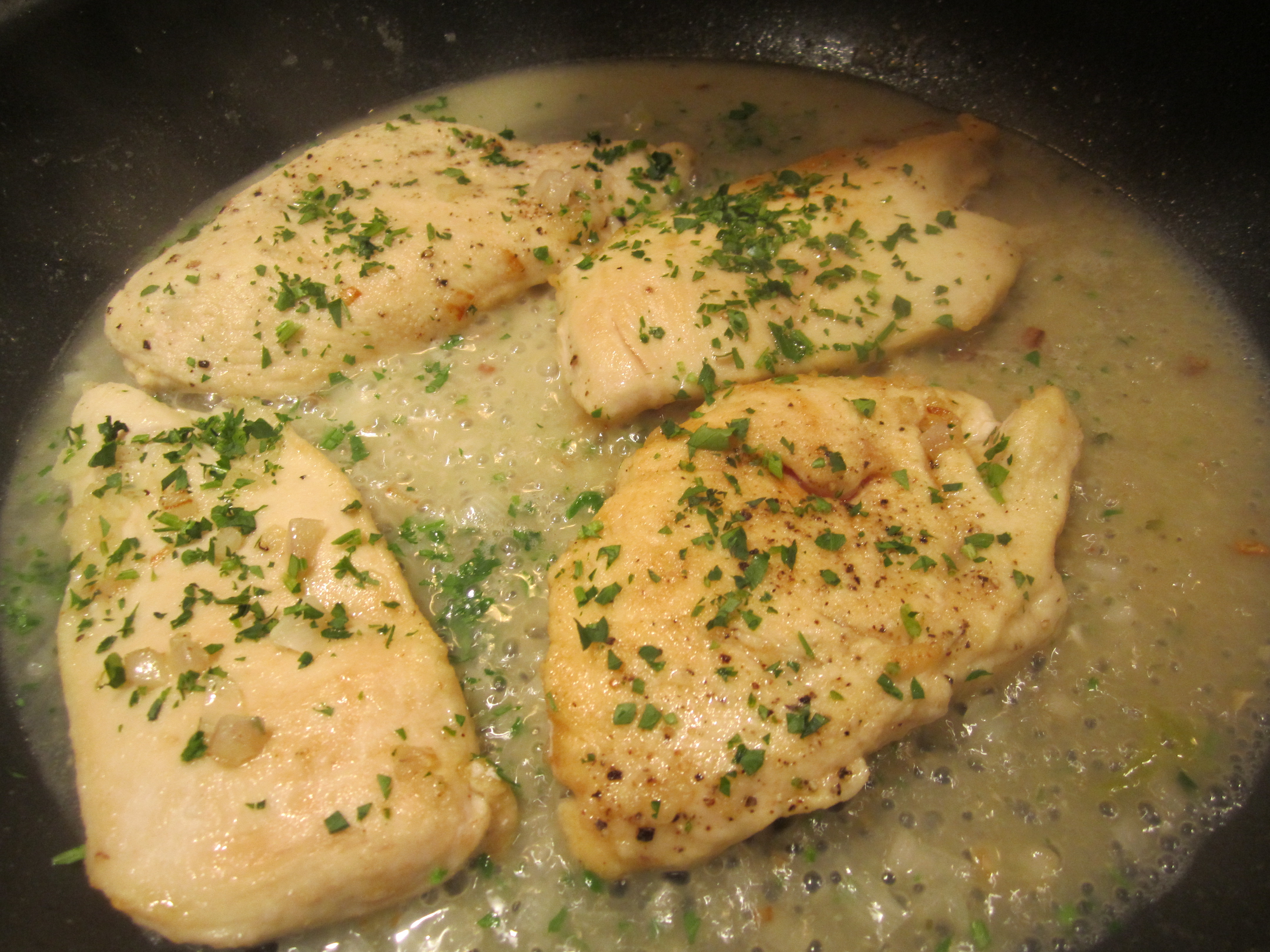
Can be made to this point, then kept warm for up to 10 minutes while you finish sauteing vegetables, etc.

Posted in Poultry | Leave a comment

Orzo with Zucchini, Almonds and Lemon


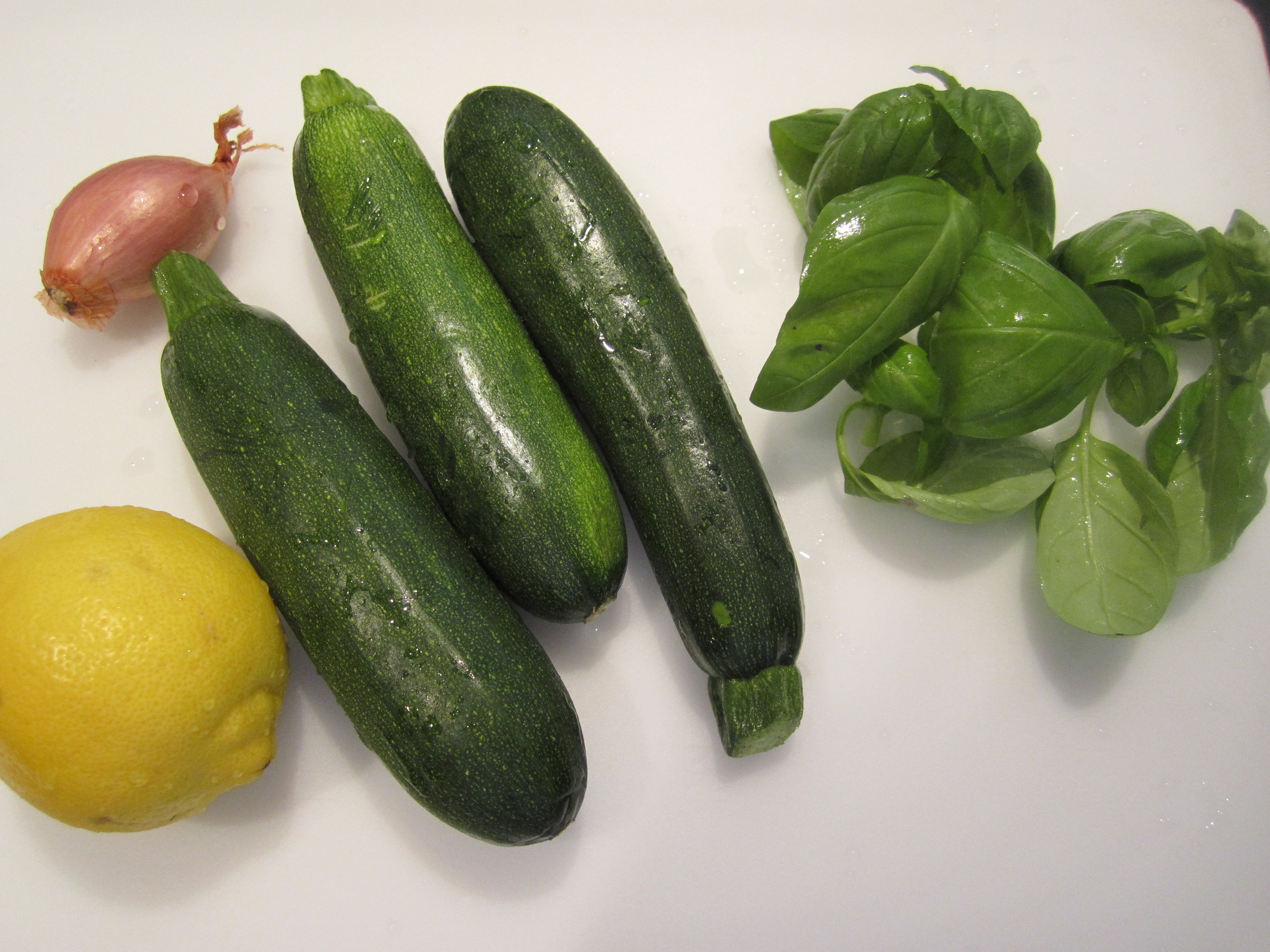
On my first visit to my (new) farmers’ market in Florida, I was pleased to find some beautiful locally-grown produce that made me happy to be newly transplanted to the sunshine state.  There were zucchini, lemons, shallots and onions, among other great-looking just-picked vegetables.  There were also pots of fresh herbs, so naturally, I bought a pot of basil to keep on my terrace for the winter.   I bought whatever looked good without a plan in mind for the meals to come. 

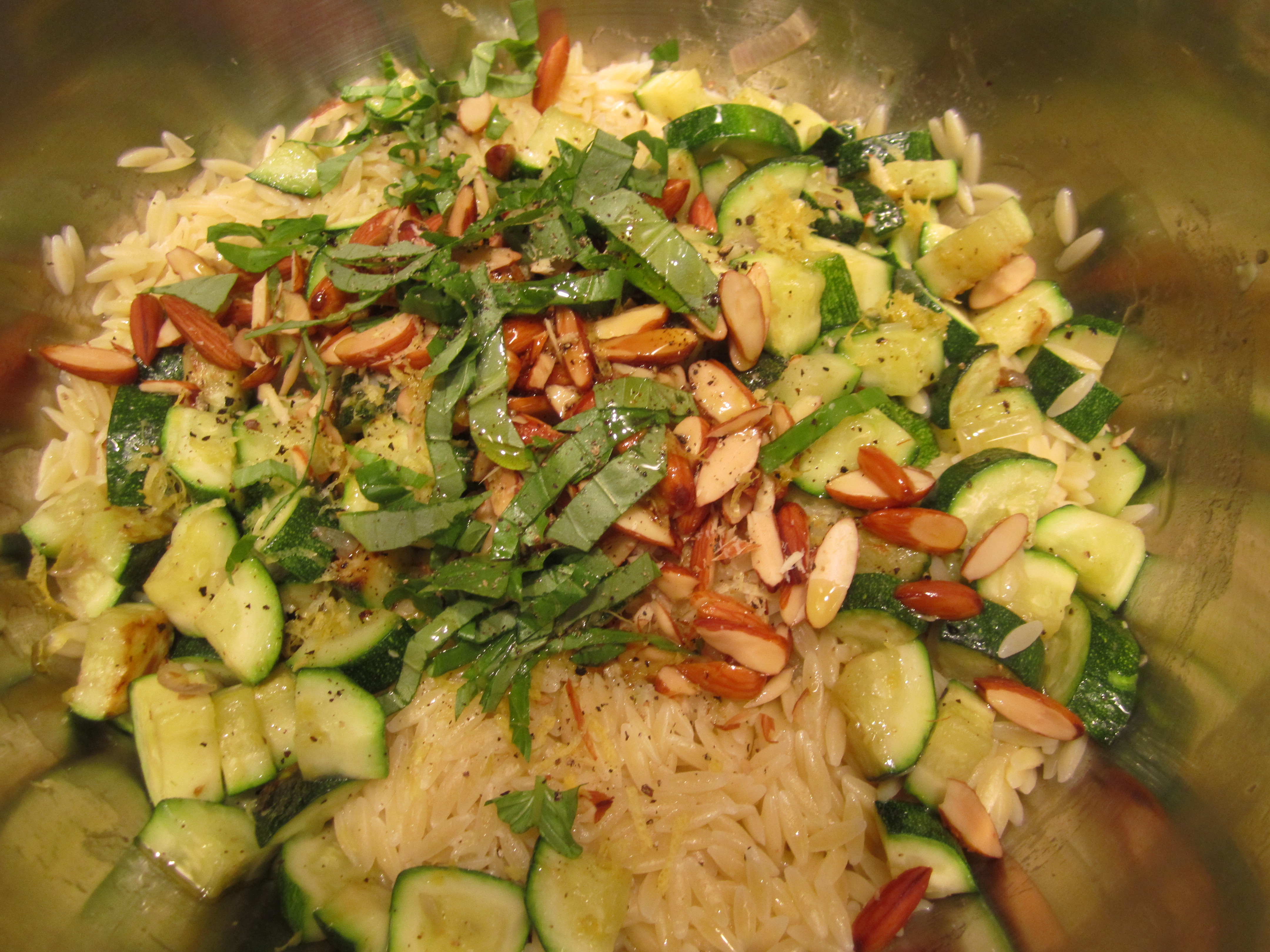
When invited to a friend’s house for lunch, I decided to make orzo, which is a great blank canvas which can take a variety of preparations.  It’s quick and holds well at room temperature.  With some sauteed zucchini, it was a natural side dish for whatever was being served for lunch. 

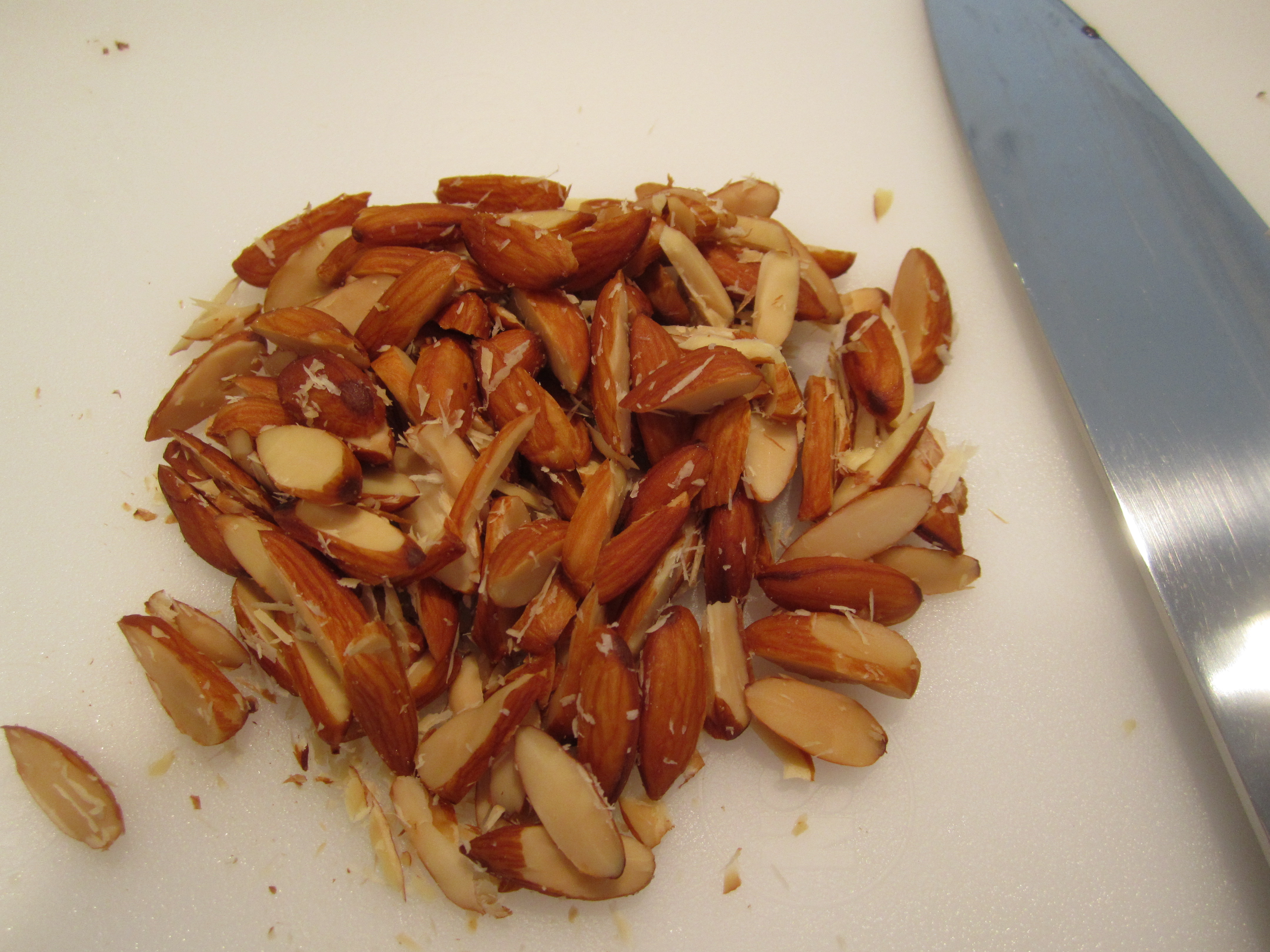
The zucchini were fresh and sweet, and along with some sauteed shallots, made a wonderful addition to the orzo.  Lemon zest and juice added a bright note, along with a handful of chopped basil.  To add some saltiness and crunch, chopped almonds were the perfect addition.  Just prior to serving, I added a liberal sprinkle of fruity raw extra-virgin olive oil and black pepper. 

Orzo with Zucchini, Almonds and Lemon


serves 6 with leftovers

1 lb orzo

4 medium zucchini (about 8″ long)

2 large shallots

juice and zest of 1 lemon

2 tbls freshly chopped basil leaves

1/3 c salted roasted almonds

1/2 c extra-virgin olive oil

salt and pepper to taste

Boil orzo in a pot of well-salted water.

While orzo cooks, in a broad skillet on high heat, add 2 tablespoons of olive oil, the shallots and zucchini.  Saute until zucchini begin to turn golden, tossing often.  Add salt and pepper.

Chop almonds coarsely and set aside.

When orzo is cooked, drain, reserving a cup of the cooking liquid.  In a  mixing bowl, toss remaining ingredients together and taste for salt and pepper.  Just prior to serving, drizzle on the remainder of olive oil. 

Posted in Pasta | Leave a comment

Til We Meet Again in Florida


This January marks the one-year anniversary of this blog and I’m proud to look back on 254 posts that encompass a year’s worth of seasonal cooking on the East End of Long Island.

This winter, I’m fortunate enough to be able to leave the cold weather behind and spend my winter months in South Florida.  I hope to have plenty of local Florida produce and seafood with which to cook this winter.

There will be no more posts until after the holidays when I’m settled into my new Florida kitchen.

Happy Holidays and tune in to see what Florida brings . . .

Posted in Uncategorized | 1 Comment

Beef Stew

This is the perfect dish for a wintry Sunday dinner.  It can be made a few hours ahead, and will perfume the house with the aroma of red wine and bay leaves.  Like most stews, it can be made a day or two ahead as well, and freezes well.

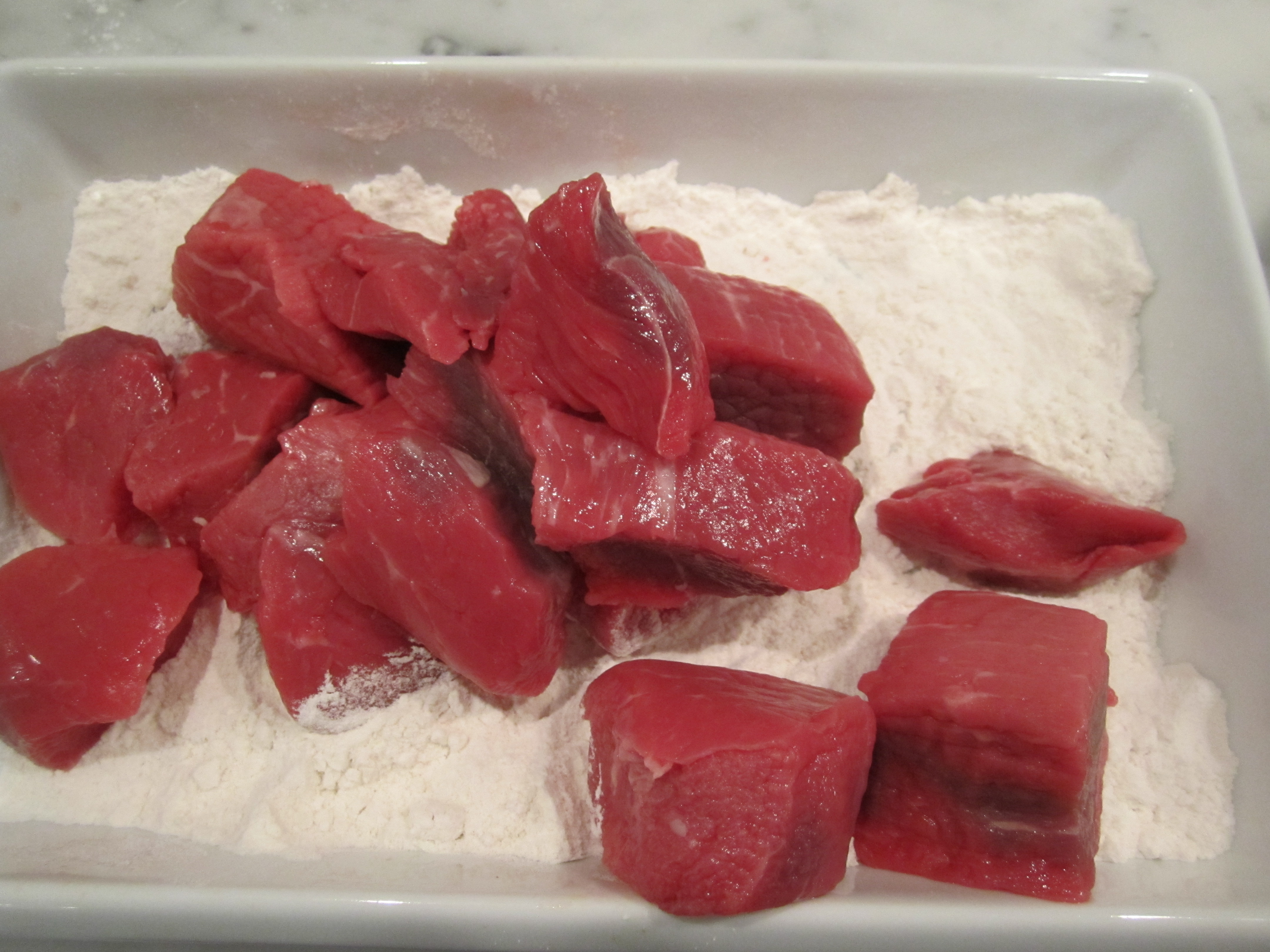
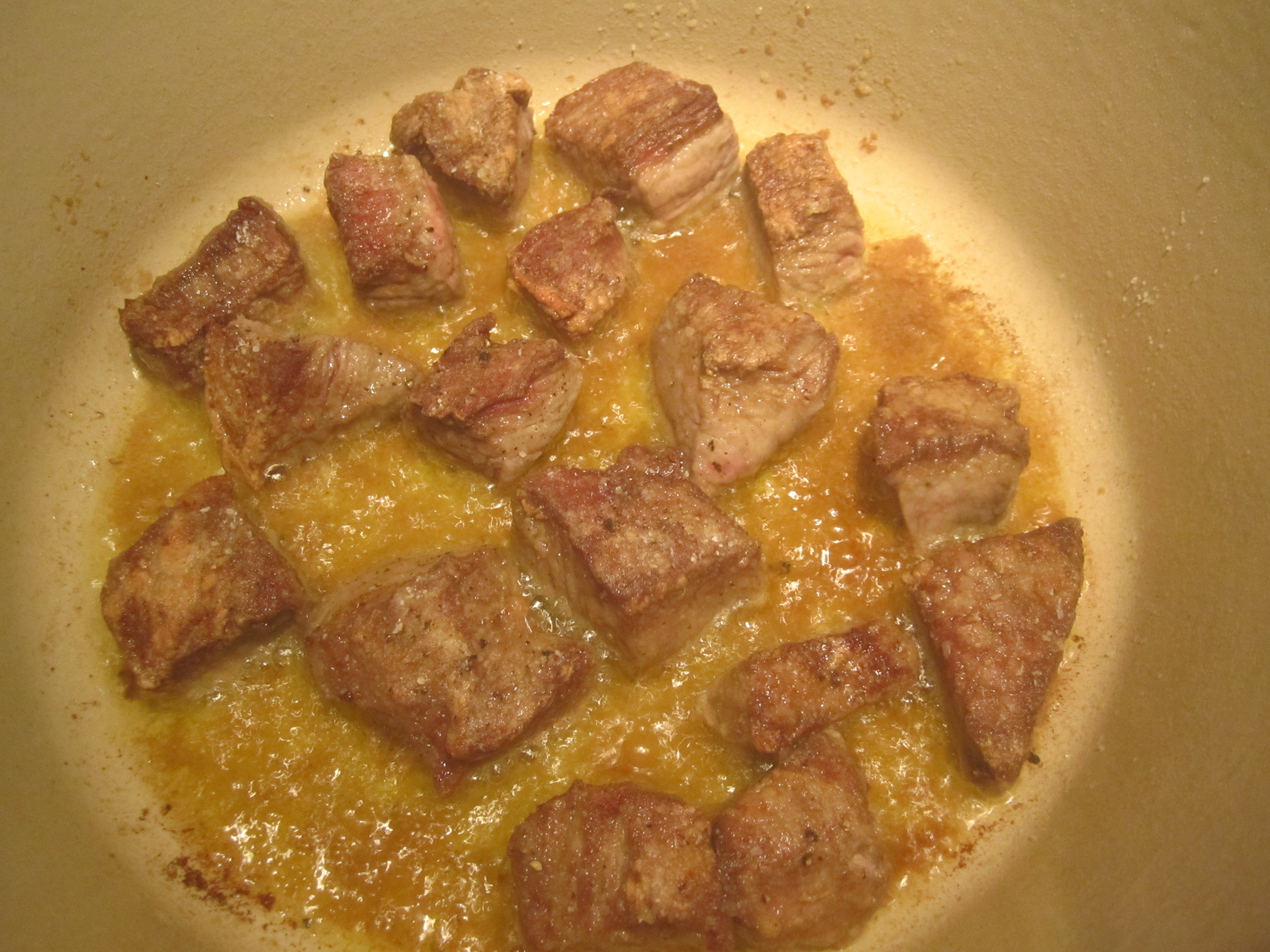
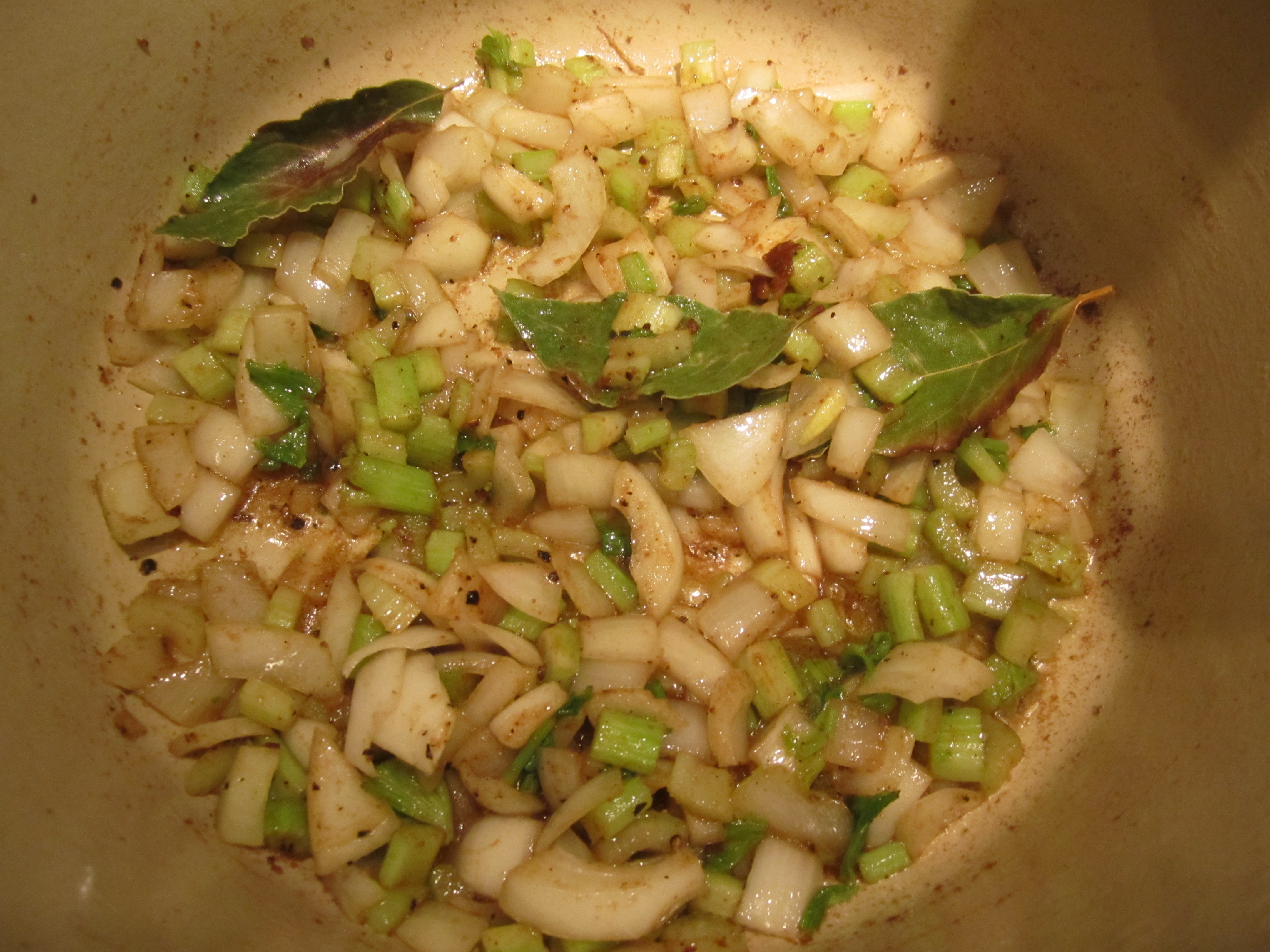
Cubes of beef chuck are dredged in flour and browned in olive oil.  Celery, onions and bay leaves are then sauteed, then red wine and broth are added.  The stew simmers partially covered for about two hours.

You can either add carrots and potatoes to the stew during the last 45 minutes, or you can boil them separately and serve them alongside the stew.  I prefer the latter, since the vegetables retain their own flavors and colors when they’re boiled separately from the stew.  Besides, I like to shred the leftover stew and serve it over pasta.  This works better if there is only meat, without extraneous potatoes and carrots, in the stew.

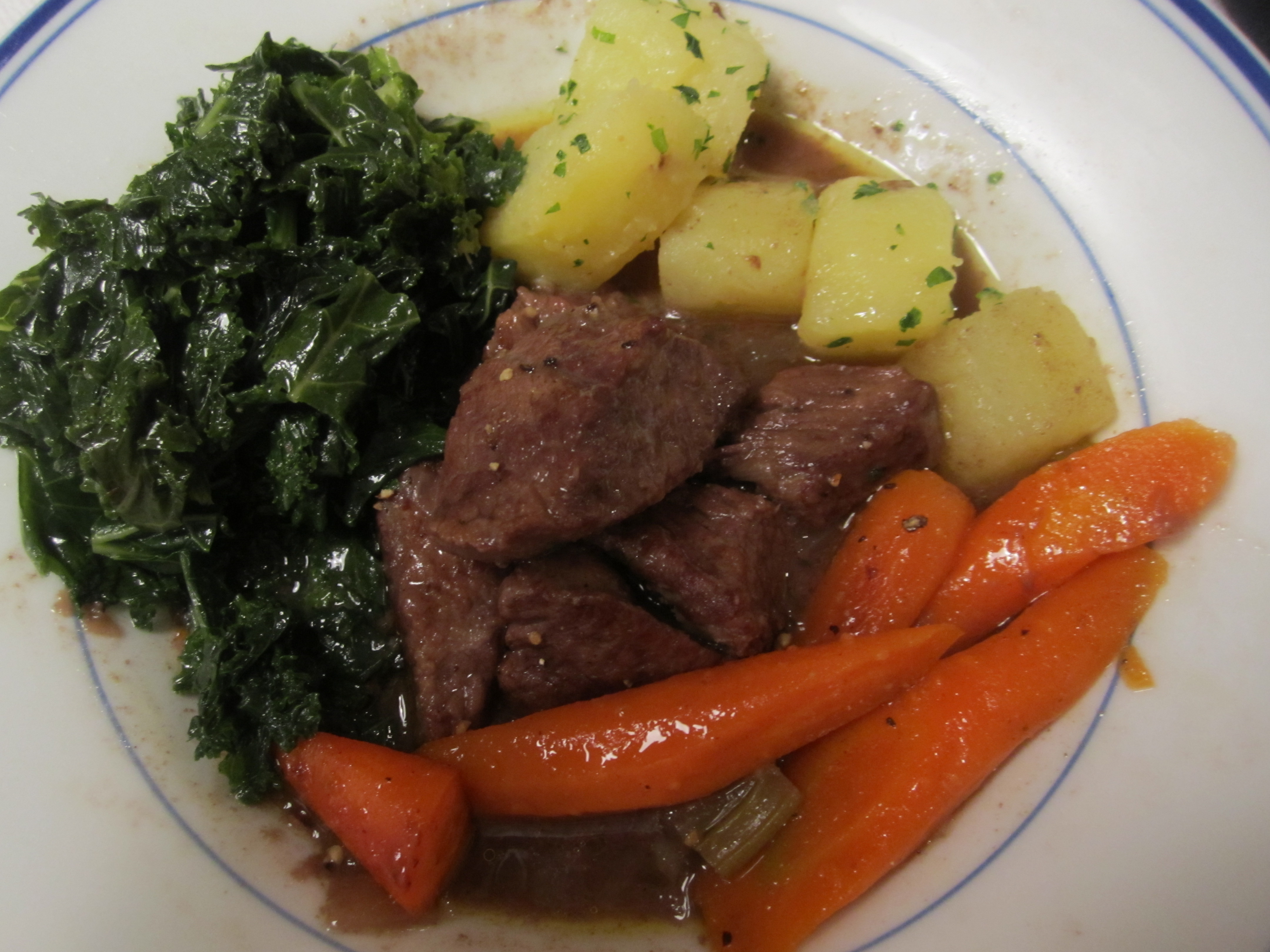
I served the stew with boiled carrots, potatoes and sauteed kale.  All that was necessary was plenty of warm bread to soak up the magnificent brown sauce that forms the base of this stew.

Beef Stew

serves 4 with leftovers

2 1/2 lbs. beef chuck, cut into 1 1/2″ cubes

1 medium onion, diced finely

2 ribs celery, diced finely

1/4 c olive oil

3 bay leaves

1 1/2 c red wine

1 qt chicken broth (or beef)

1 tsp black pepper

salt to taste

flour for dredging.

Heat olive oil in a dutch oven on high heat.  Sprinkle meat with salt and dredge cubes in flour.

 Shake off excess flour and place meat in hot oil.  Brown on all sides over medium heat (about 8 minutes total).  Work in batches, if necessary and set meat aside.

Add onions, celery and bay leaves and reduce heat to medium low.  Stir to release brown bits from bottom and sides of pot.  Saute for about 8 minutes or until translucent.

Turn heat to high, then add wine and reduce for 2 minutes.

Add broth and turn heat to low.  Simmer, partially covered for 2 hours.  Add salt and pepper (I like it peppery).

 Boil potatoes and carrots separately, then toss with butter and parsley and serve with stew, if desired.

Posted in Soup/Stew | Leave a comment

Zuppa di Pesce

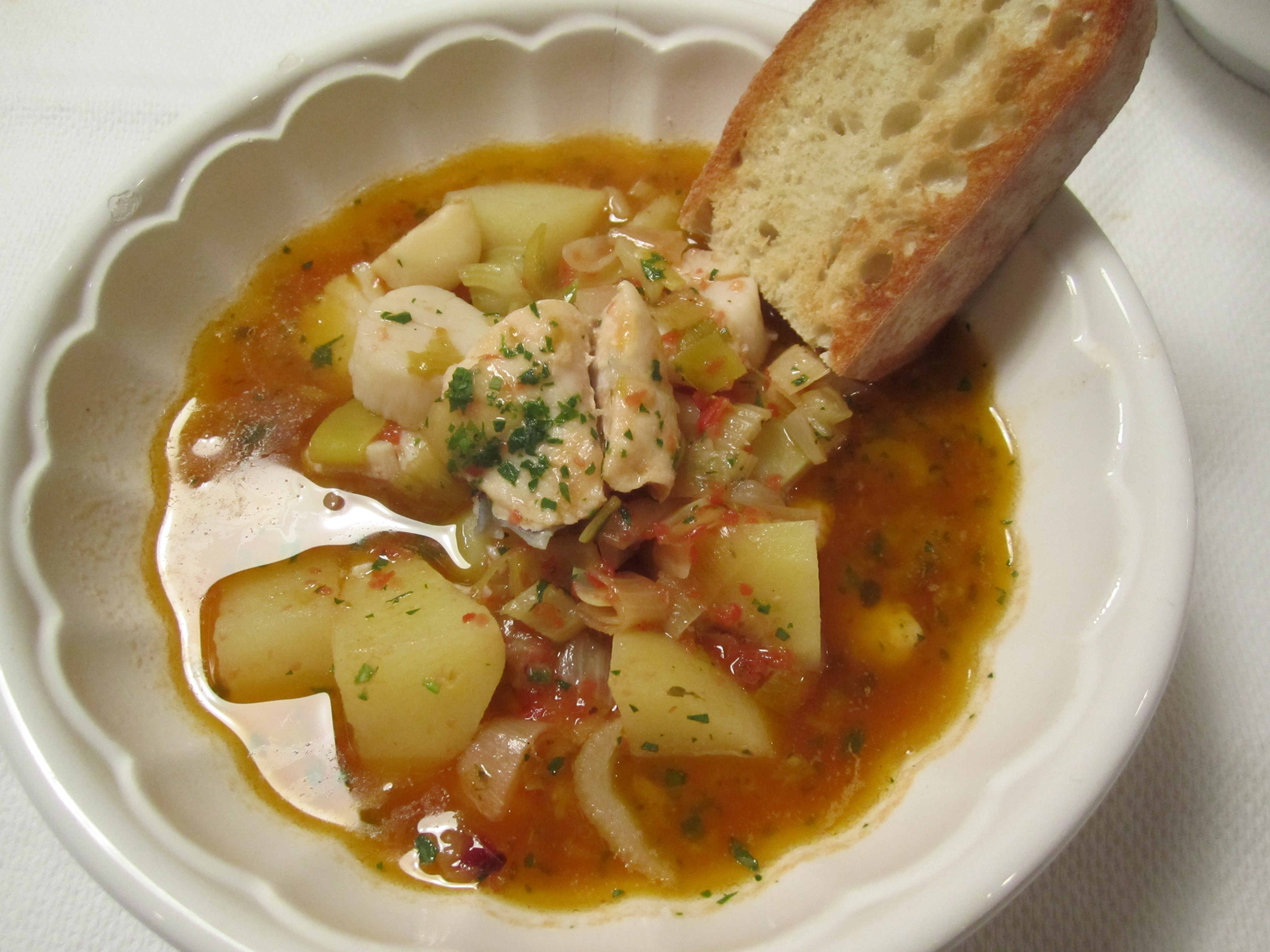
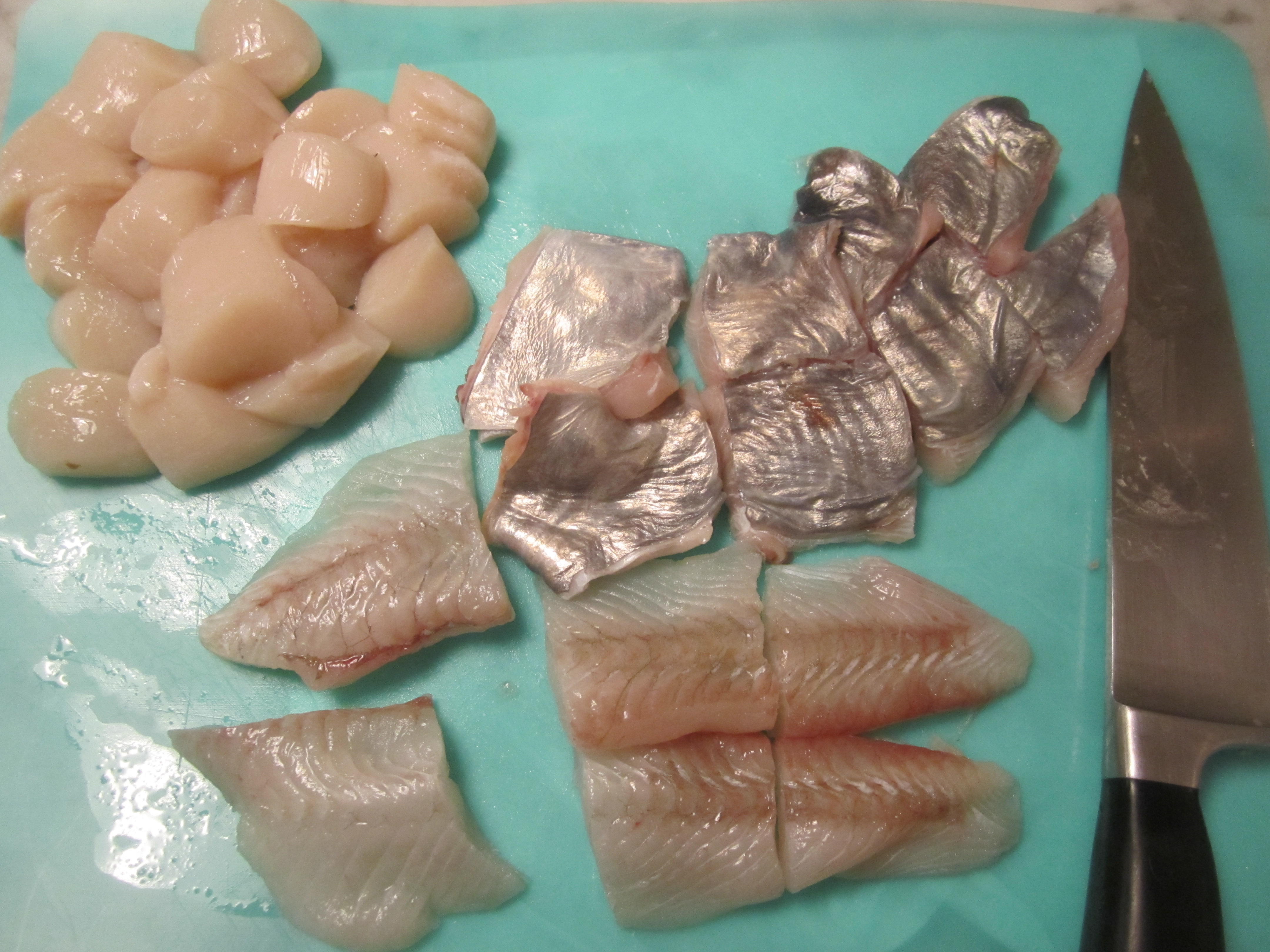
This soup can be made with a variety of different types of fish and seafood.  I picked the ones that were caught locally and that I liked.  Today’s soup had scallops, fluke and john dory.

John dory has a silky texture and a delicate silver skin; fluke cooks very quickly and flakes easily; scallops add sweetness and brininess to the broth.  All three of these ingredients cook at relatively the same rate, which is important.

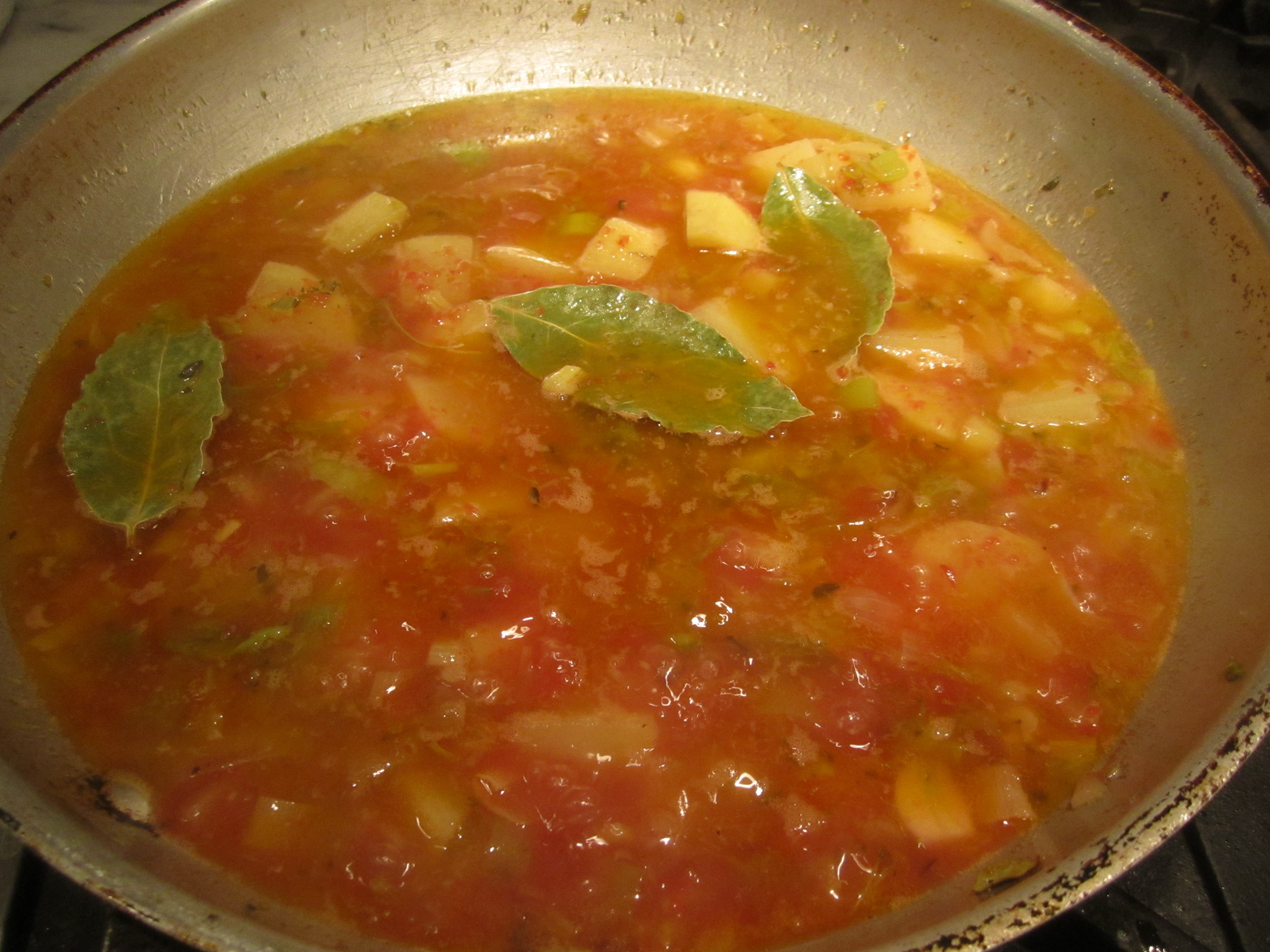
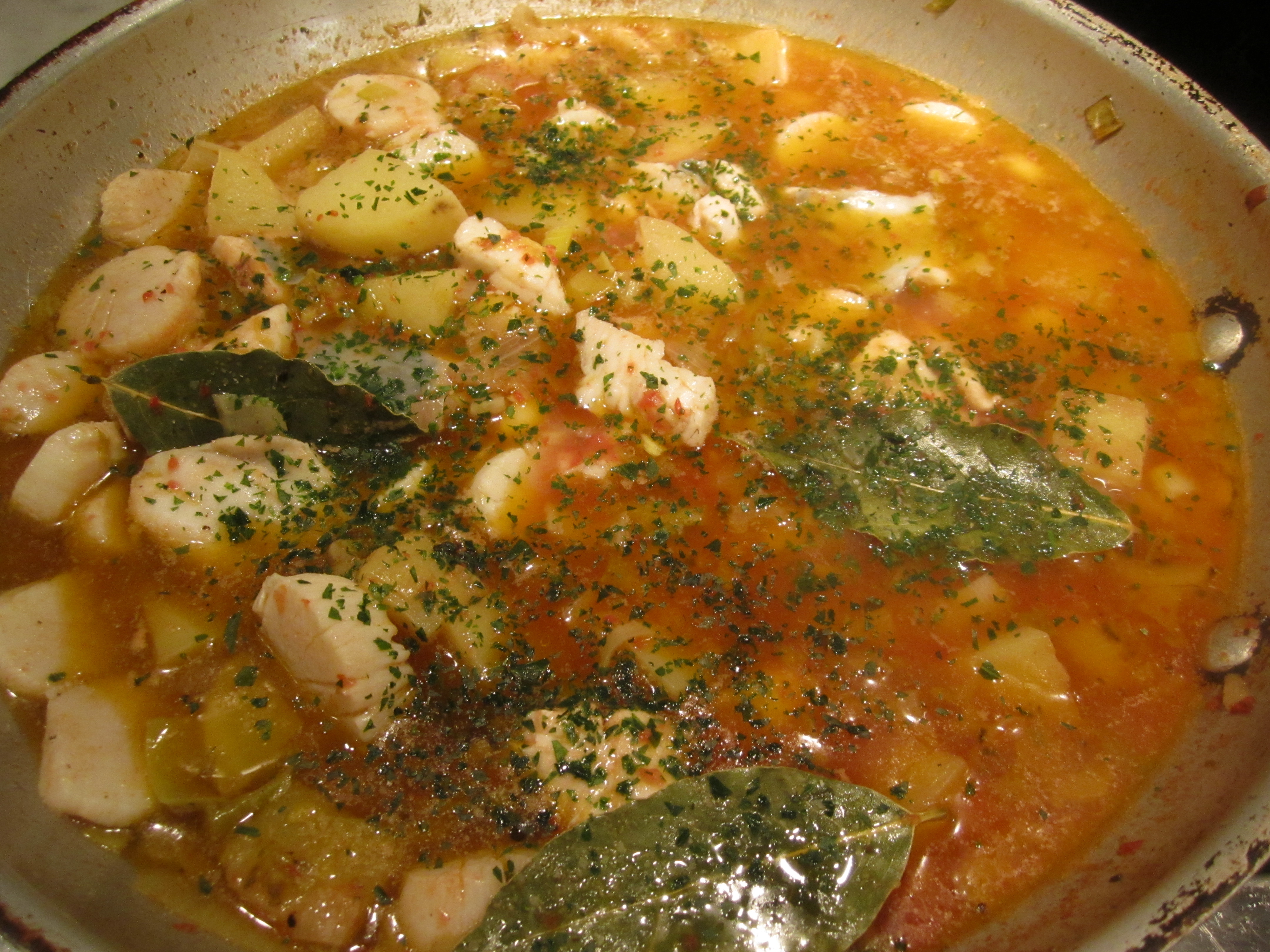
The technique would be the same regardless of what varieties of seafood you were using.  Saute the aromatics and potatoes, then add wine, then broth and pureed tomatoes.  Let the broth simmer for about 8 minutes (or until potatoes are cooked through).   Then add the seafood and simmer for another 6 minutes or so.

This dish is deeply rich and satisfying but relatively light, making it the perfect meal to eat during the holidays, when everything is over-the-top rich.  It’s also very quick to prepare (it takes no more time than boiling pasta).  All that is necessary as an accompaniment is some fresh hot crostini, drizzled with olive oil.

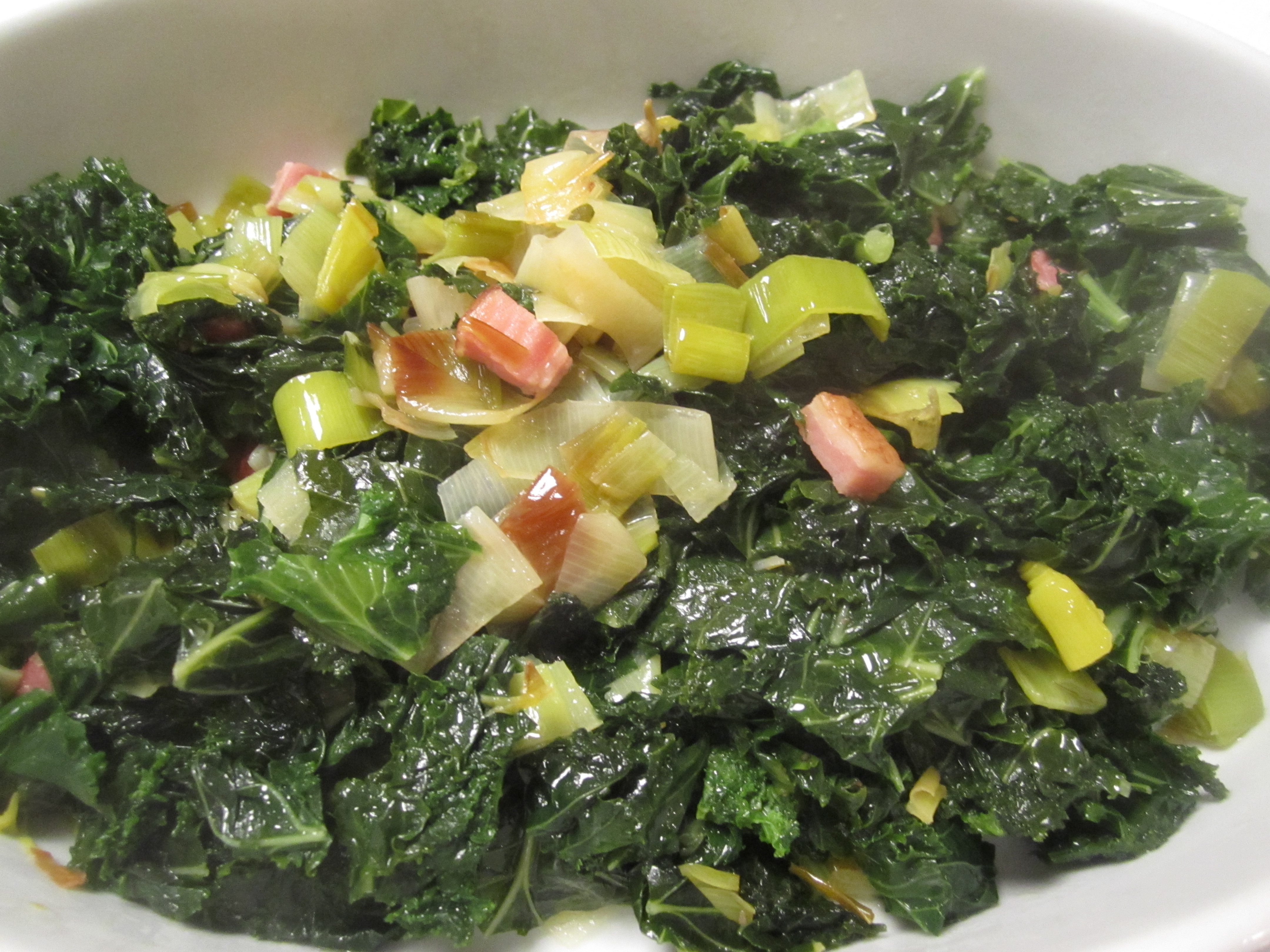
As a side dish, we had kale, sauteed with leeks and bacon (there had to be a little bacon in the meal!).

Zuppa di Pesce

serves 4 with leftovers

3/4 lb john dory fillets, sliced into bite-size pieces (could be halibut or cod)

3/4 lb fluke fillets, sliced into bite-size pieces (could be snapper or striped bass)

1 lb sea scallops (could be shrimp or lobster)

2 small shallots, finely diced

1 leek, white part only, split, cleaned and sliced into 1/4″ half-moons

2 stalks celery, including some leaves, diced into 1/4″ half-moons

4 cloves garlic, peeled and cut in half

2 large yukon gold potatoes

3 bay leaves

1/2 tsp dried oregano

1/4 c fresh chopped parsley

1/4 c olive oil

3/4 c white wine

3 c chicken broth (bouillon is fine)

2 c pureed tomatoes (either fresh or canned)

salt and pepper to taste

In a large skillet, place oil, shallots, leeks, potatoes, bay leaves, and oregano.  Turn heat to high and saute for about 8 minutes, or until the mixture begins to turn golden.

Add wine and reduce for a minute.  Add tomato, broth, and simmer for about 6 minutes, or until potatoes are just cooked through.  Taste and add salt and pepper.

Add fish and seafood and cover.  Turn heat to medium and simmer for about 5 minutes.  Uncover and simmer for another minute, or until all is cooked through, then sprinkle with parsley.

Serve immediately in heated bowls with freshly toasted bread drizzled with olive oil.

Posted in Seafood | Leave a comment

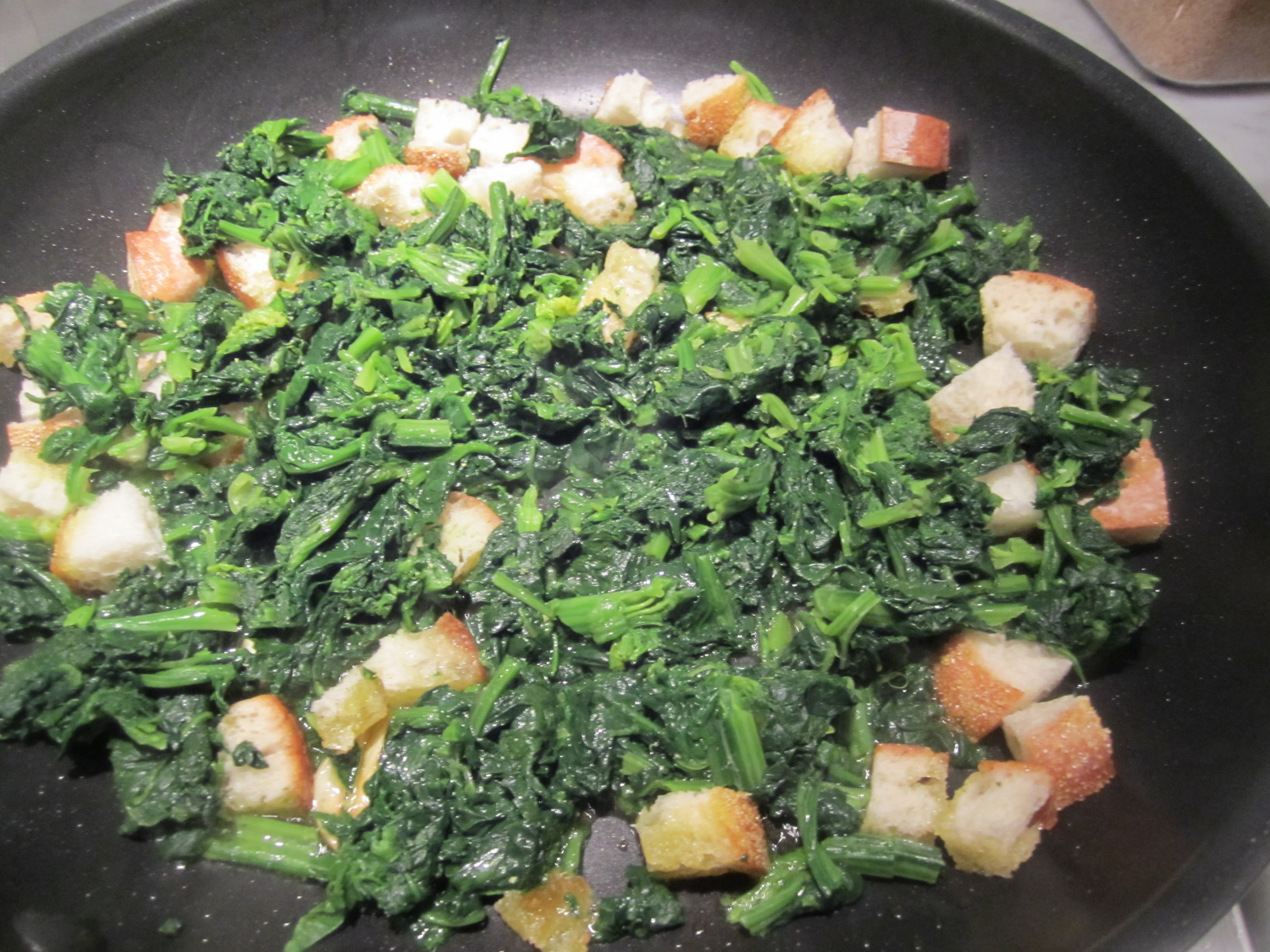
Mom’s Spinach with Bread Cubes

As I mentioned in yesterday’s post, this was the way my mother got us to eat our vegetables.  Who can resist salty, garlicky croutons hot out of the skillet–even if they’re buried in sauteed spinach.

I will say that despite my efforts as a kid to eat around the spinach, I unwittingly ended up eating a good deal of spinach.  Now, of course, I love spinach, and the bread cubes make it all the more delicious.

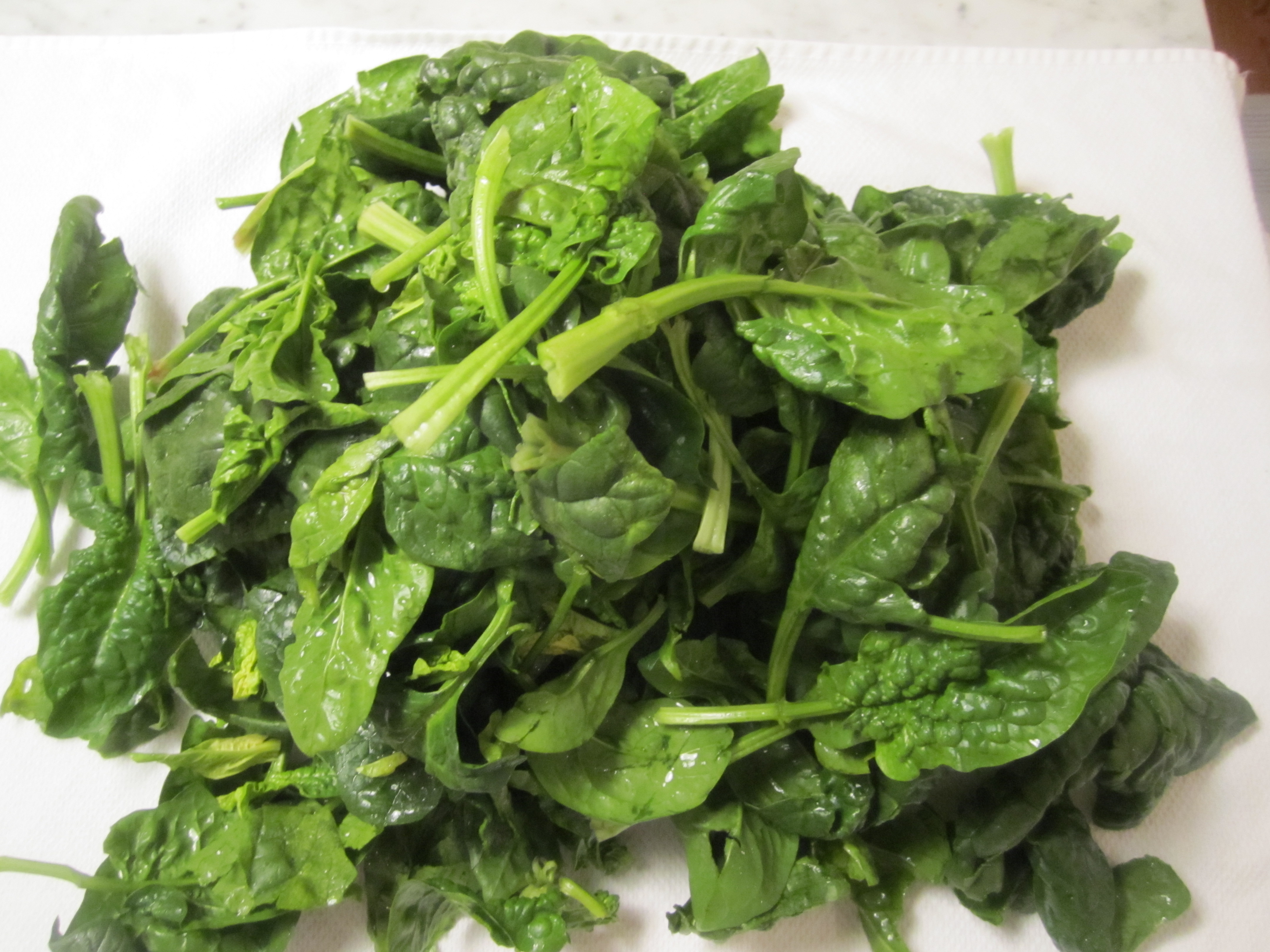
This may be made with fresh or frozen spinach.  The important thing about spinach is that it must be boiled then squeezed well.  I’ve tried the packages of spinach that direct you to simply microwave the leaves then “drain and saute”.  

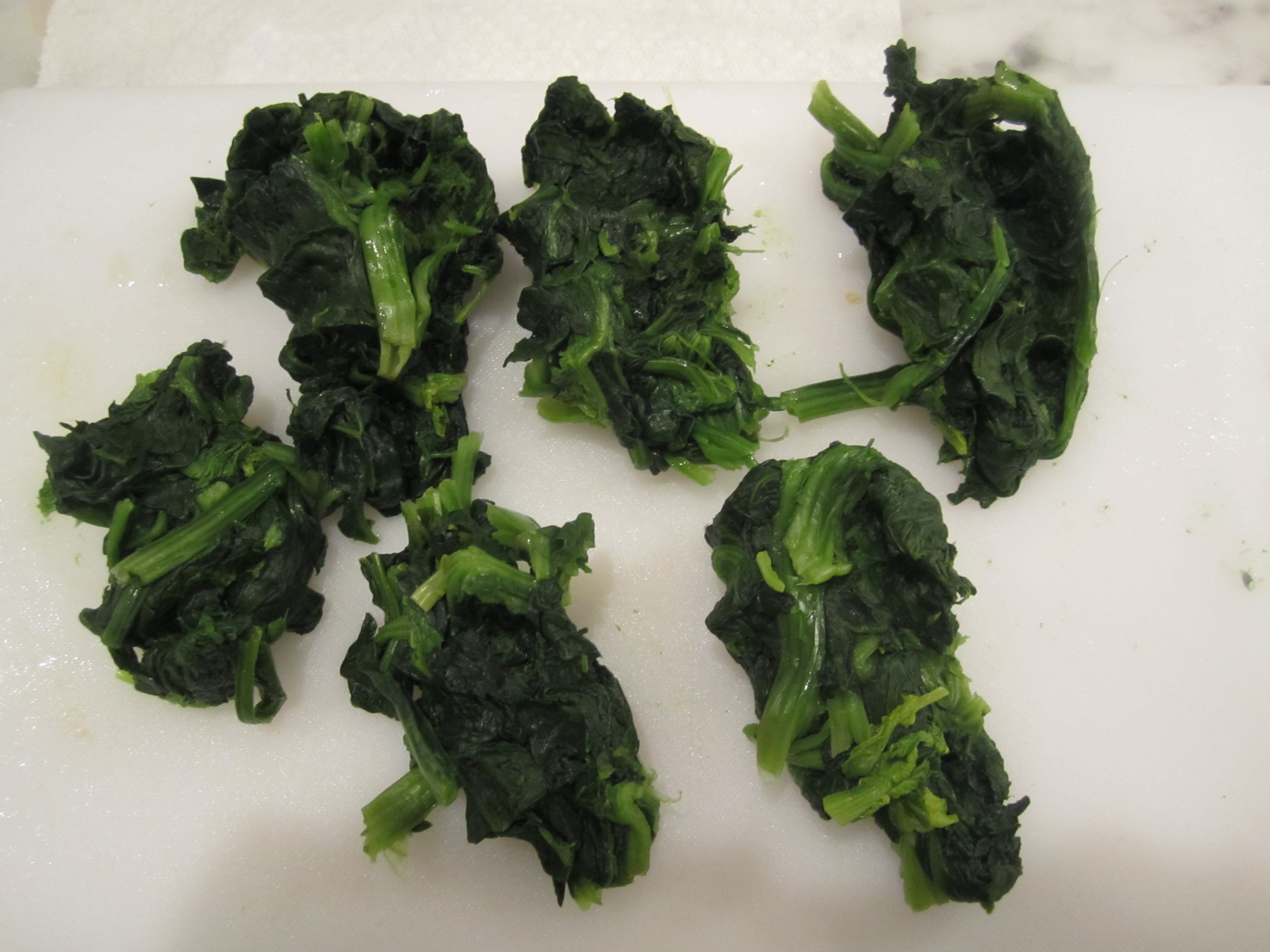
There are no shortcuts to good sauteed spinach.  It must be boiled in plenty of salted water–not just wilted in the skillet.  It must be squeezed by hand–tightly–until no more water remains.  This will rid the spinach of the iron-y aftertaste that is a natural part of spinach.  Only after this process, can you saute the leaves without the aftertaste of iron.

This time of year, when spinach is at its peak, I consider this process a worthwhile endeavor.  The spinach leaves are sturdy and bright green, and make a beautiful side dish.

Mom’s Spinach and Bread Cubes

serves 4

2 lbs fresh spinach leaves, roots removed, but stems left intact–washed well and drained.

1 1/2 c fresh bread cubes

4 garlic cloves, sliced

1/4 c olive oil

1/2 c chicken broth

salt and pepper to taste

Drop spinach leaves (in batches if necessary) into salted boiling water and blanch for about 3 minutes (after water returns to boil).  Drain and rinse with cold water.

Take handfuls of spinach and squeeze tightly between both hands.  Set aside balls of squeezed spinach and cover with a damp towel until ready to use.  May be made to this point several hours ahead.

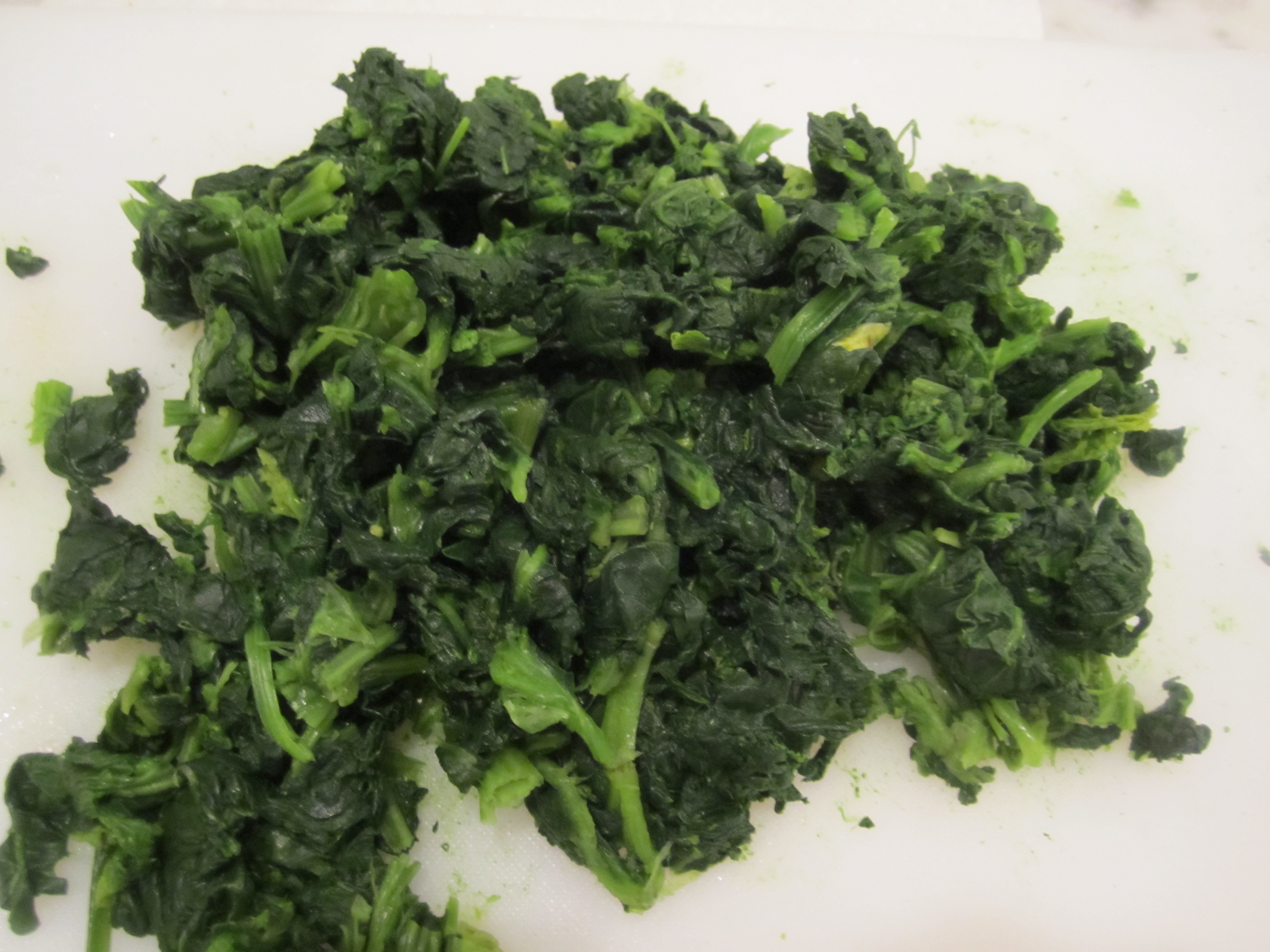
When ready to saute, chop the balls coarsely  and spread out on board to loosen the bundles.

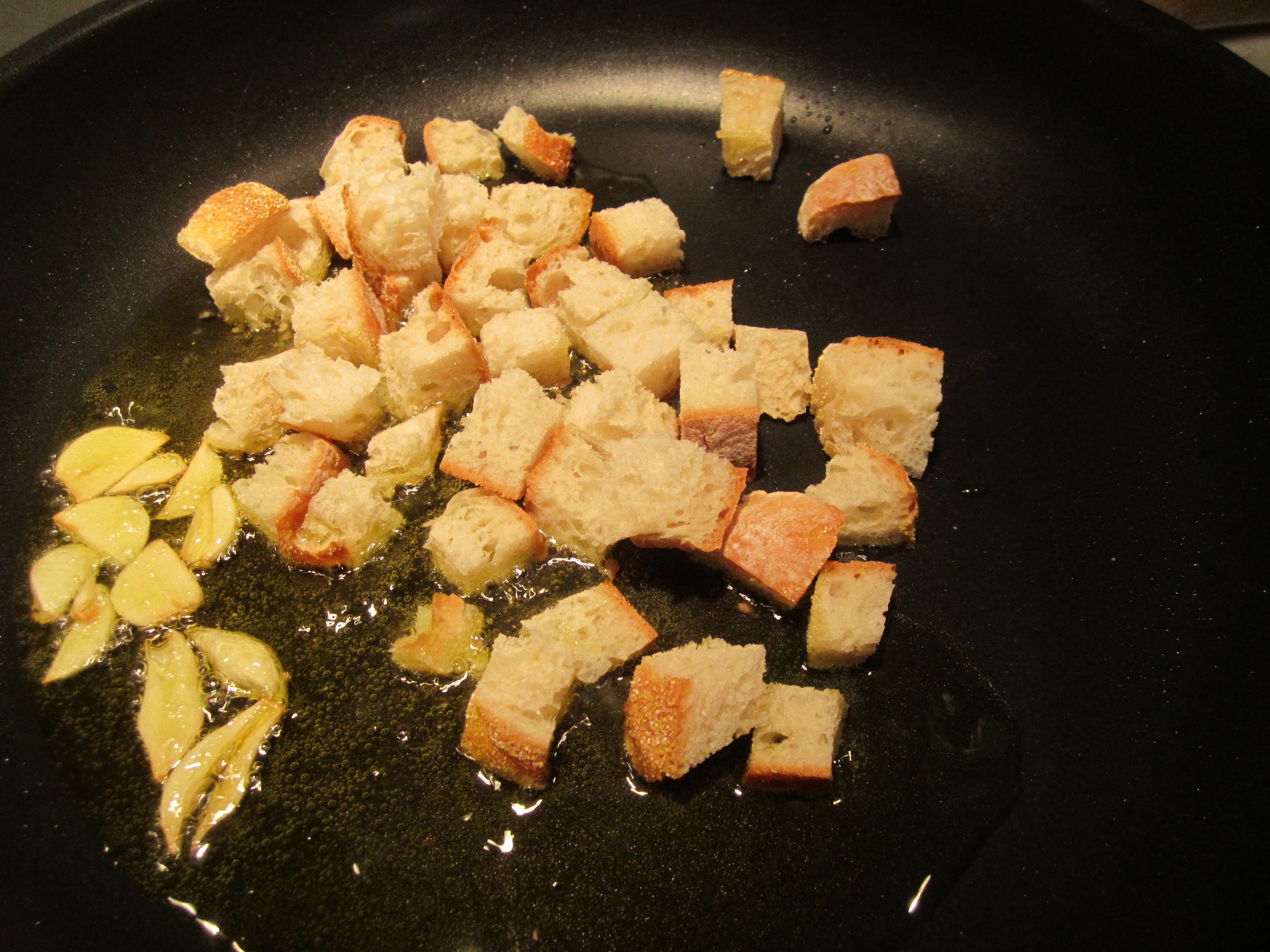
Brown garlic in olive oil until slightly golden.  Add bread cubes and saute for a minute.

Add spinach and chicken broth and continue sauteing for another 2 – 3 minutes.  Taste and add salt and pepper.


Posted in Vegetables | Leave a comment

Lamb Meatballs with Sweet Tomato Ragu

Lamb is one of my favorite red meats–especially the shoulder or shank.  These cuts generally get braised in an aromatic combination of broth, wine, stock and tomatoes.  There might be herbs, bay leaves, celery, carrots, onions and garlic.  The meat gets browned then braised for 3 to 4 hours in the braising liquid.  These cuts are better-tasting the day after they’re made–something about the muscles relaxing and the meat becoming more tender, as well as the flavors melding overnight.
If you are fortunate enough to have a butcher who regularly sells freshly ground lamb, you can achieve that long-simmered lamb flavor without the time-consuming braising (not that there’s anything wrong with that) by making meatballs.

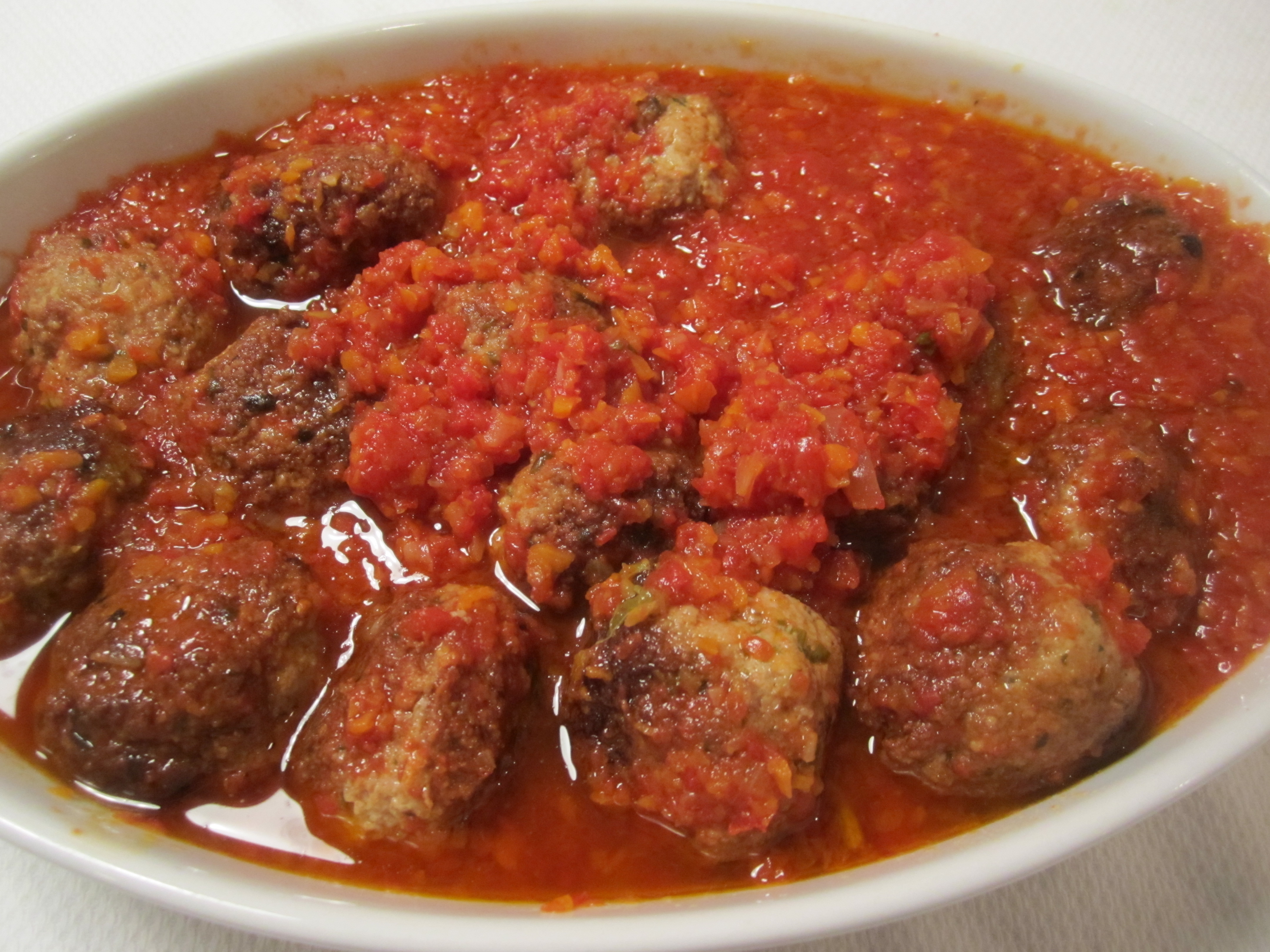
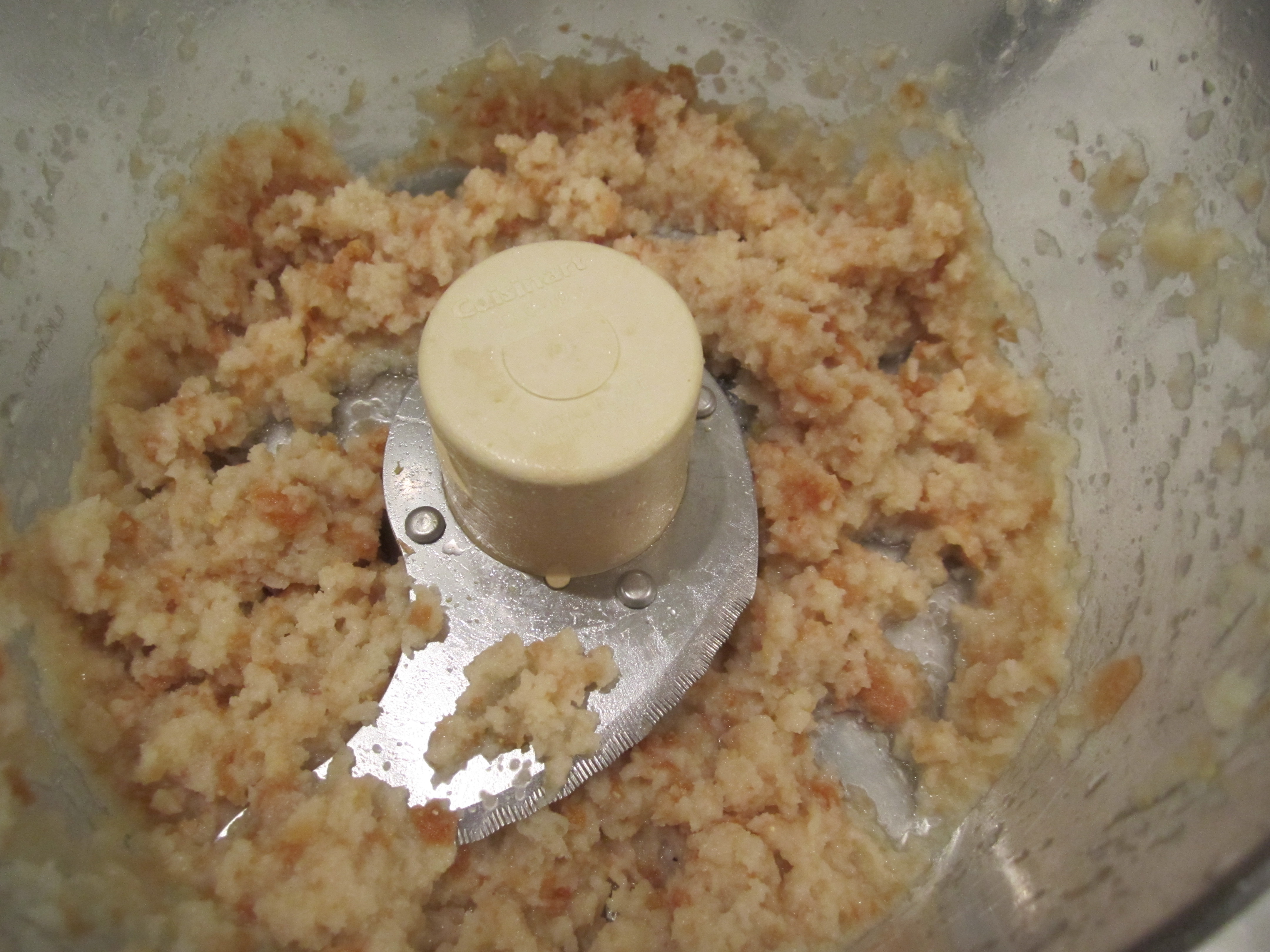
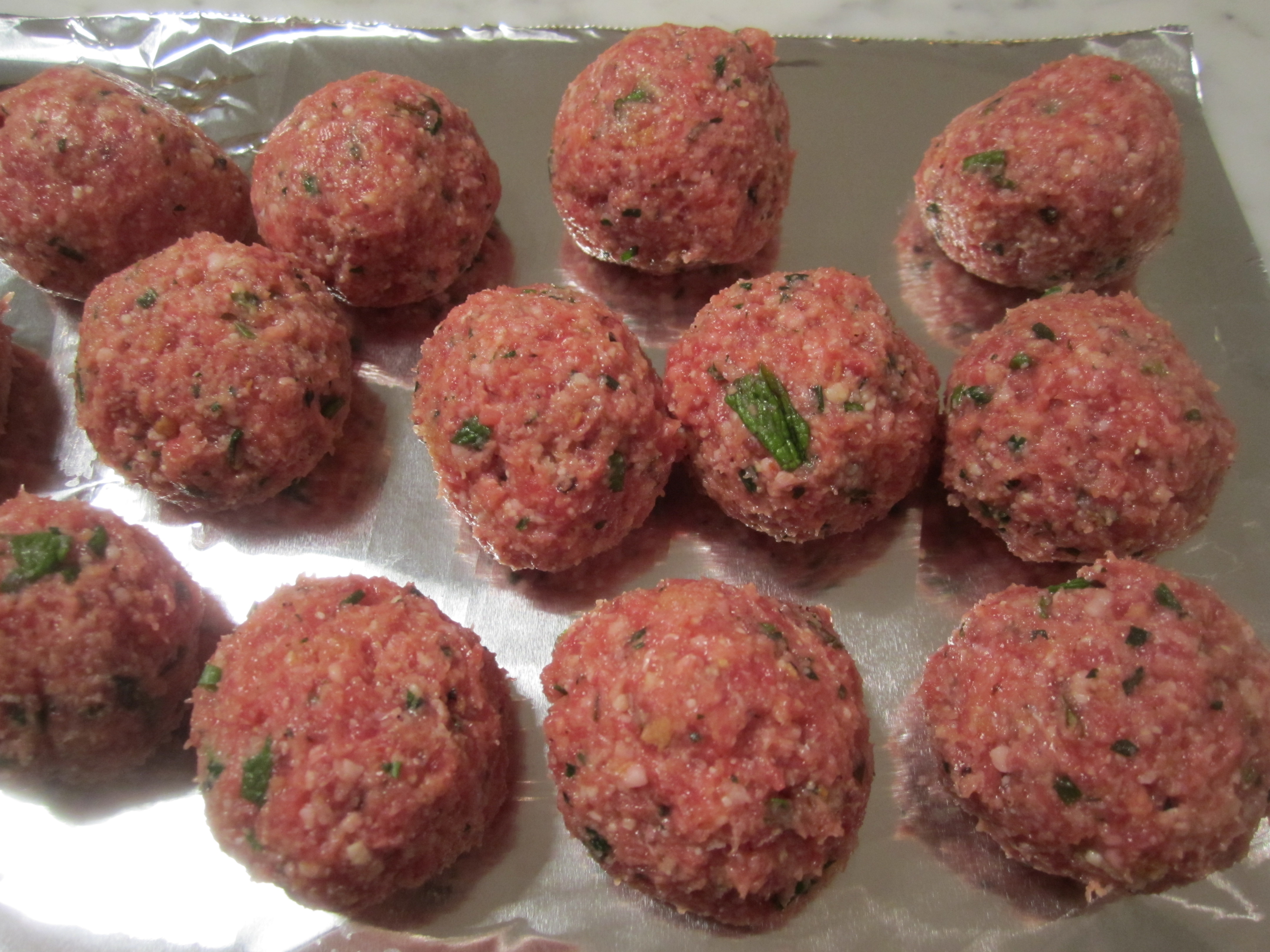
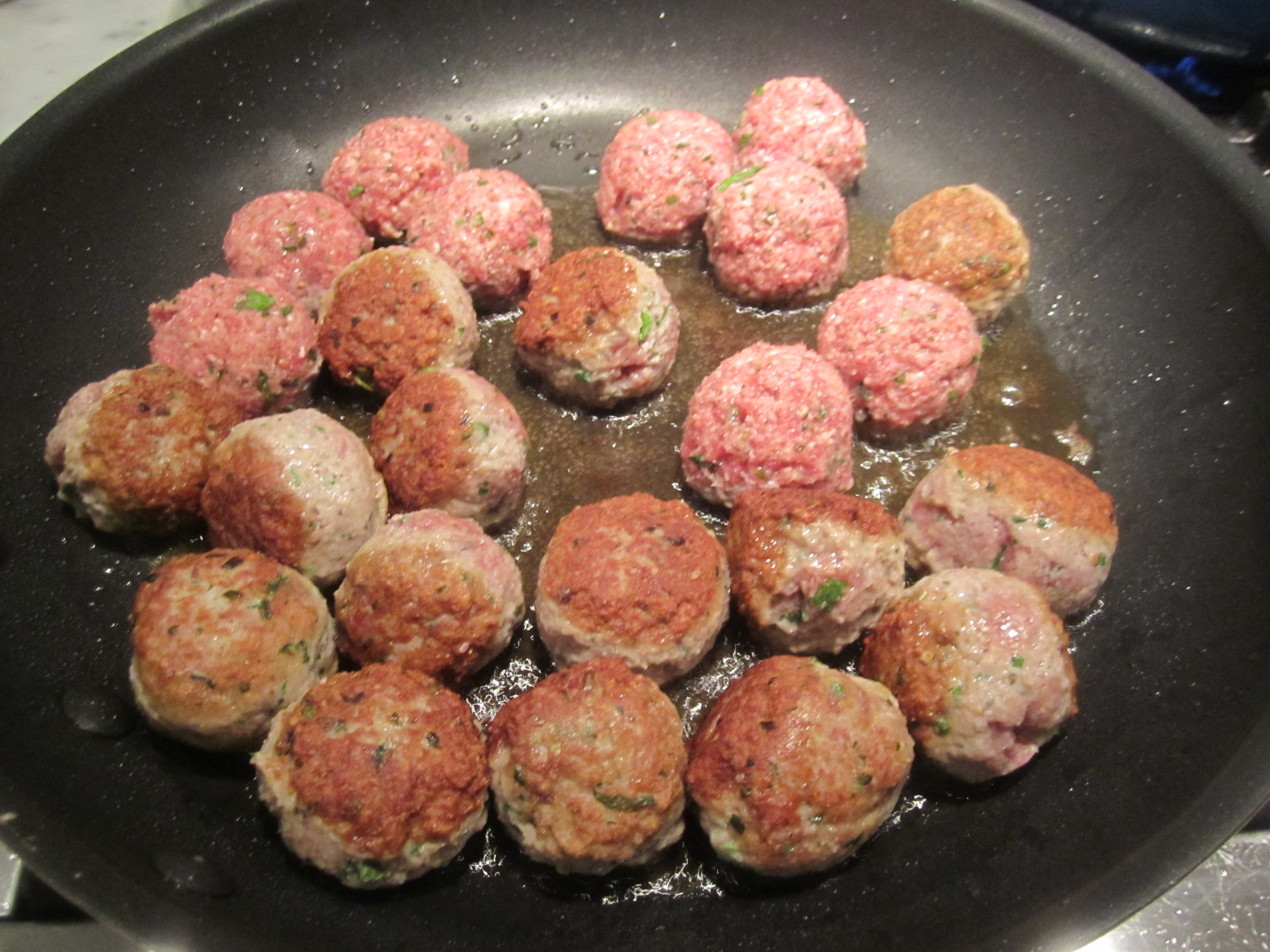
All my meatballs are made using a similar technique.  Bread cubes are soaked with broth, then pureed into a mush.  The mush is combined with the ground meat or poultry plus herbs, seasoned bread crumbs and cheese.  Because I’m using lamb today, I’ve added a handful of freshly chopped mint leaves–a natural complement to lamb.  Eggs are added to bind, then all is kneaded into a cohesive mass.  Meatballs are formed, then browned in olive oil, then added to a simmering tomato sauce for about 15 minutes.

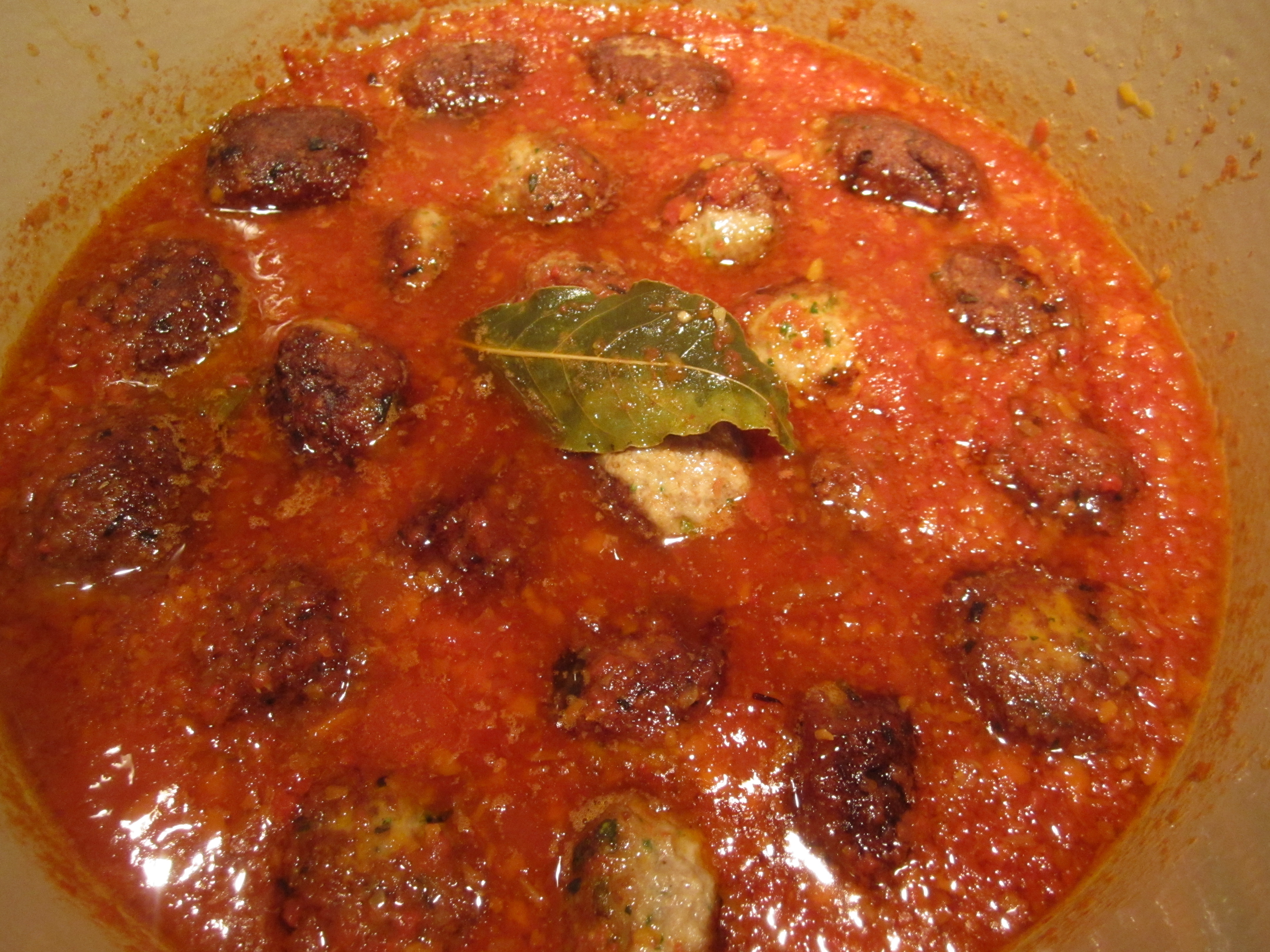
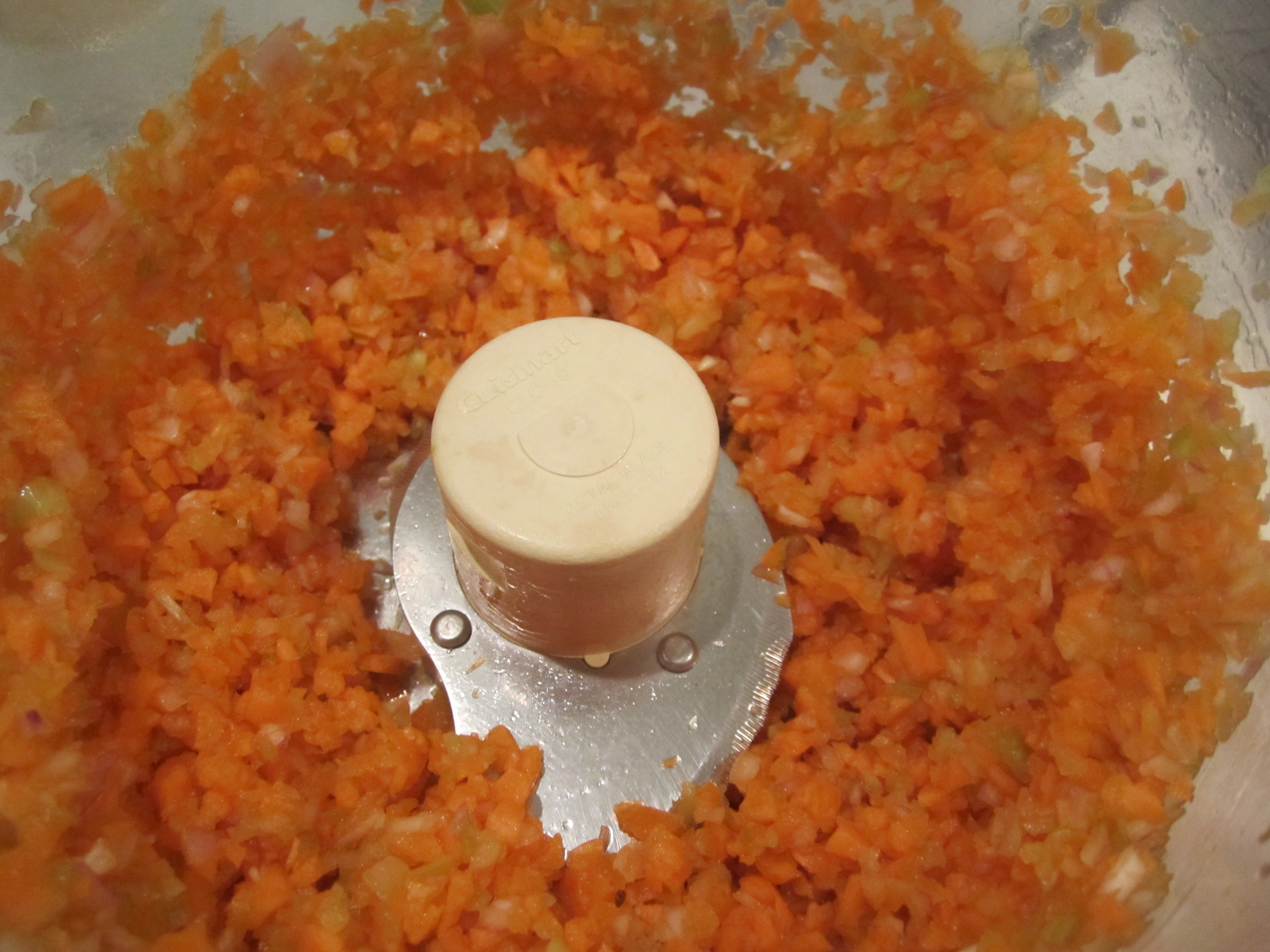
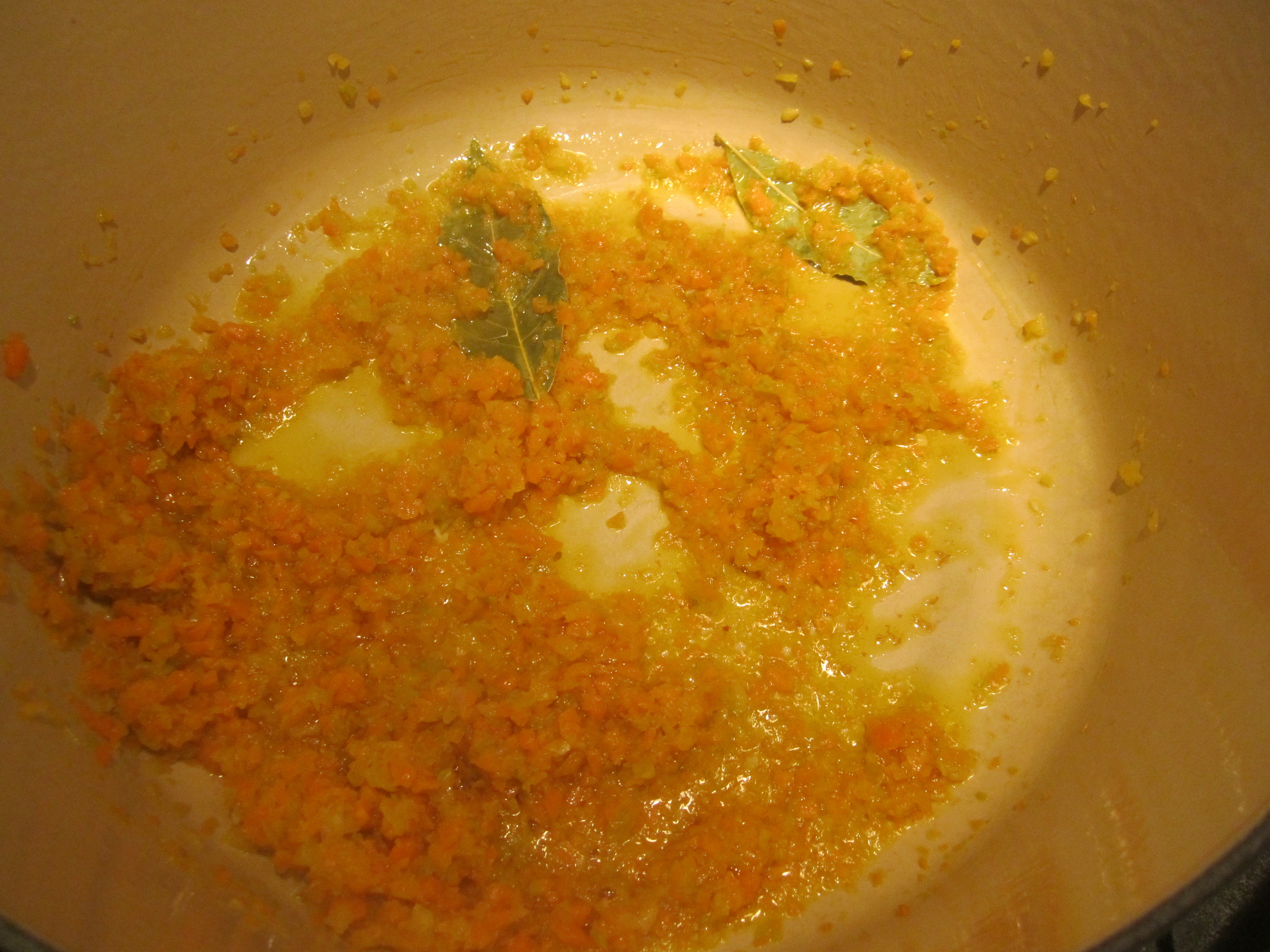
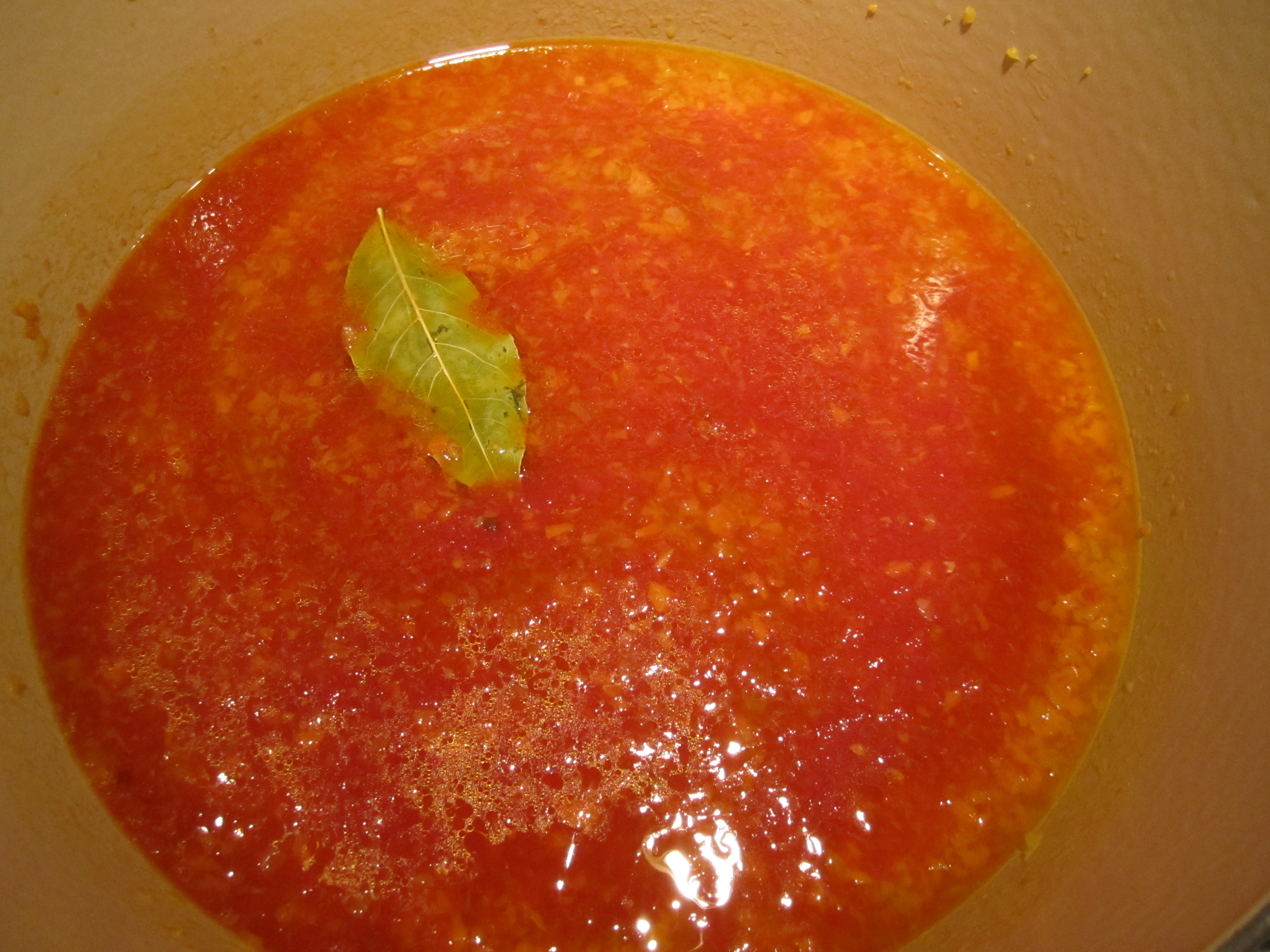
The sauce can be a simple tomato sauce, made with some sauteed onions, then pureed tomato (either canned whole peeled or fresh plum).  But today,  for my lamb balls, I wanted a sauce with a bit more complexity and sweetness, so I’ve begun with an aromatic paste (commonly known as a pestata in Italian cooking) of carrots, celery and shallots, sauteed in oil, along with a couple of bay leaves.  Pureed tomatoes are added, plus broth and tomato paste.  The sauce is allowed to simmer for one hour prior to adding the meatballs.  This pestata adds a layer of complexity to the basic tomato sauce and complements the rich gaminess of the lamb.

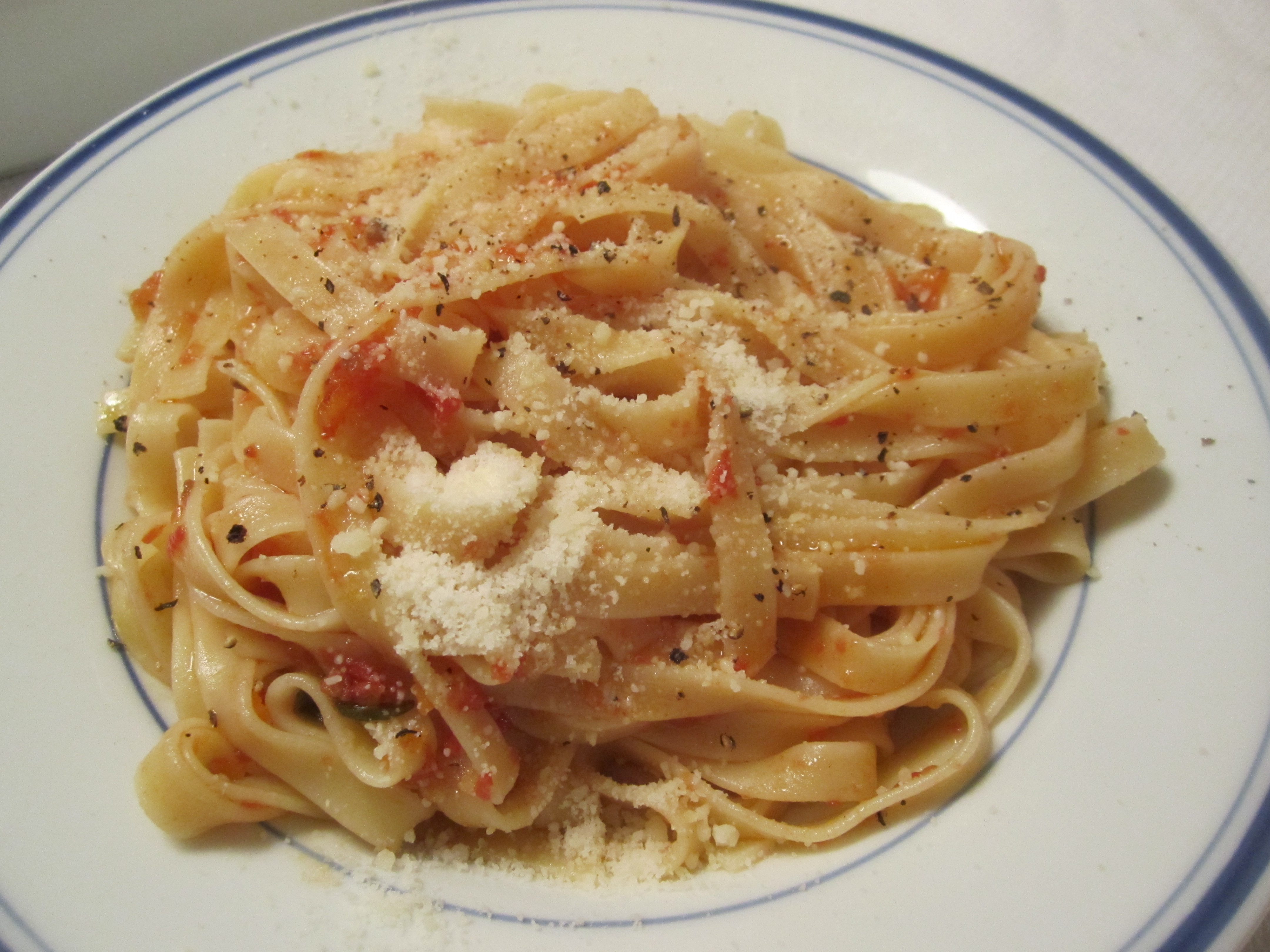
The sauce was used to (lightly) dress some fettucine as a first course to the meatballs.

Along with the lamb meatballs, I made some freshly picked local spinach, sauteed with garlic and bread cubes, the way mom always made it (the bread cubes were designed to entice us kids to eat the spinach–and it worked).

Lamb Meatballs

Serves 4 – 6

1 1/2 lbs ground lamb

1 1/2 c fresh bread cubes

1 c chicken broth

1/2 c seasoned bread crumbs

1/2 c grated pecorino romano

2 large eggs

2 tbls fresh chopped parsley

1/2 c chopped fresh mint leaves

2 tbls chopped fresh chives

1 tsp salt

1/2 tsp black pepper

1/4 c olive oil

Cut bread into 1″ cubes and soak with broth.  Puree in food processor to a pale mush.

In a mixing bowl, combine remaining ingredients and mix with hands to combine.  Form into balls 1 1/2″ in diameter.

In a nonstick skillet, brown on all sides.

 Add to ragu and simmer for 15 minutes.


Sweet Tomato Ragu

1 carrot

1 rib celery

2 shallots

2 bay leaves

2 tbls olive oil

1 qt tomato puree (either canned or fresh)

1 c chicken broth

2 tbls tomato paste

salt and pepper to taste

Cut the celery, carrots and shallots into 1″ chunks.  Puree in the food processor until a coarse paste forms.

In a heavy-bottomed dutch oven, saute the paste in oil, along with bay leaves on low heat for about 10 minutes, until the water evaporates from the vegetables.

Add tomatoes, broth and paste and simmer on low heat, partially covered for 1 hour.

Posted in Meat, Sauces | Leave a comment

Striped Bass with Leeks, Tomatoes and Olives

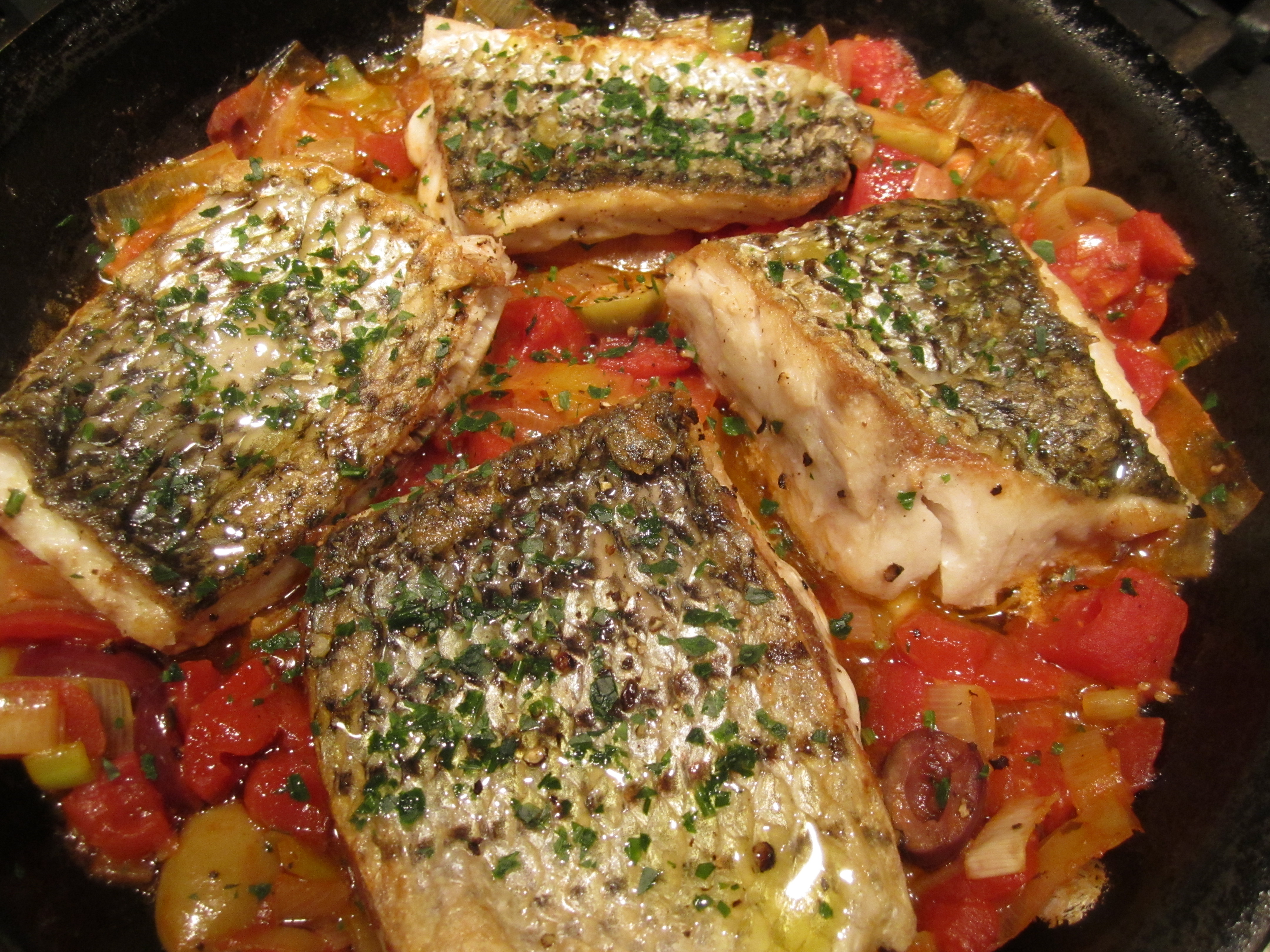
Striped bass is a local delicacy on the East End of Long Island–it’s available all through the winter and has the perfect texture for a variety of preparations.  It’s firm enough to grill without falling apart; it’s great in a seafood stew–it becomes tender and flaky without instantly falling apart; and it’s great simply pan-seared.

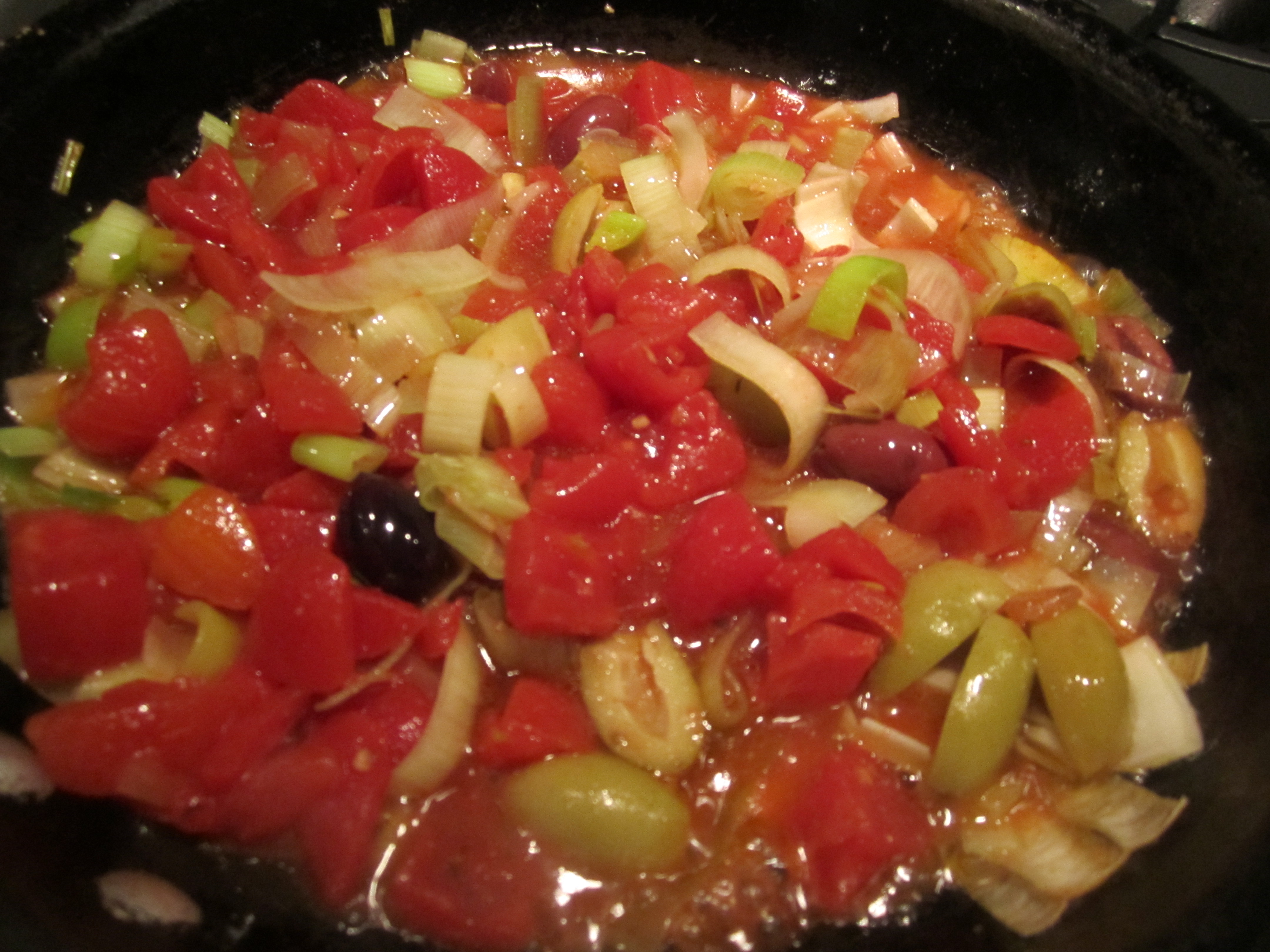
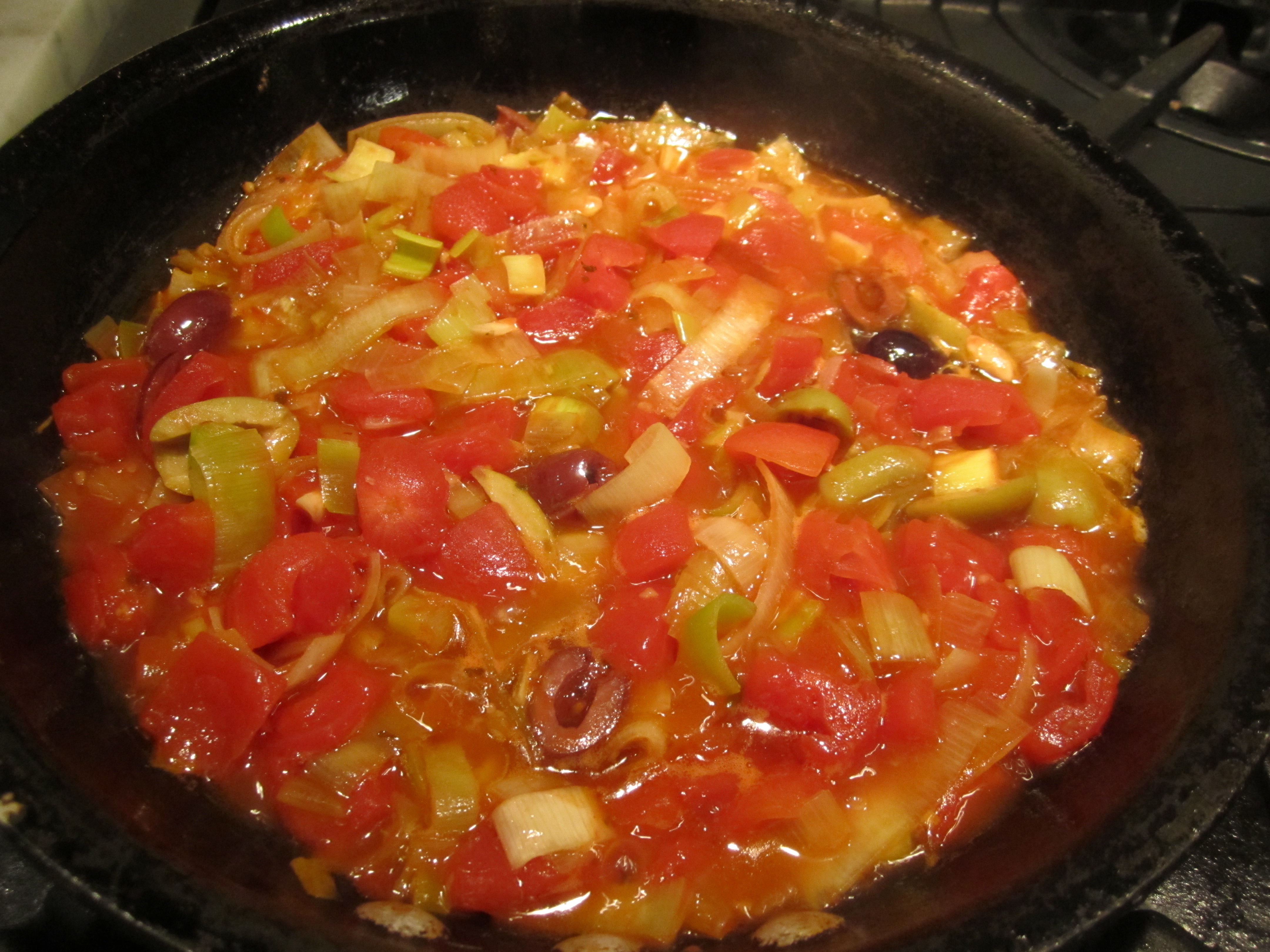
This dish is a combination of a pan-sear and a stew.  With leeks still in season, I’ve decided to make a light tomato sauce with leeks, olives and white wine.  This is a tart but delicate sauce that’s great with just about any fish. 

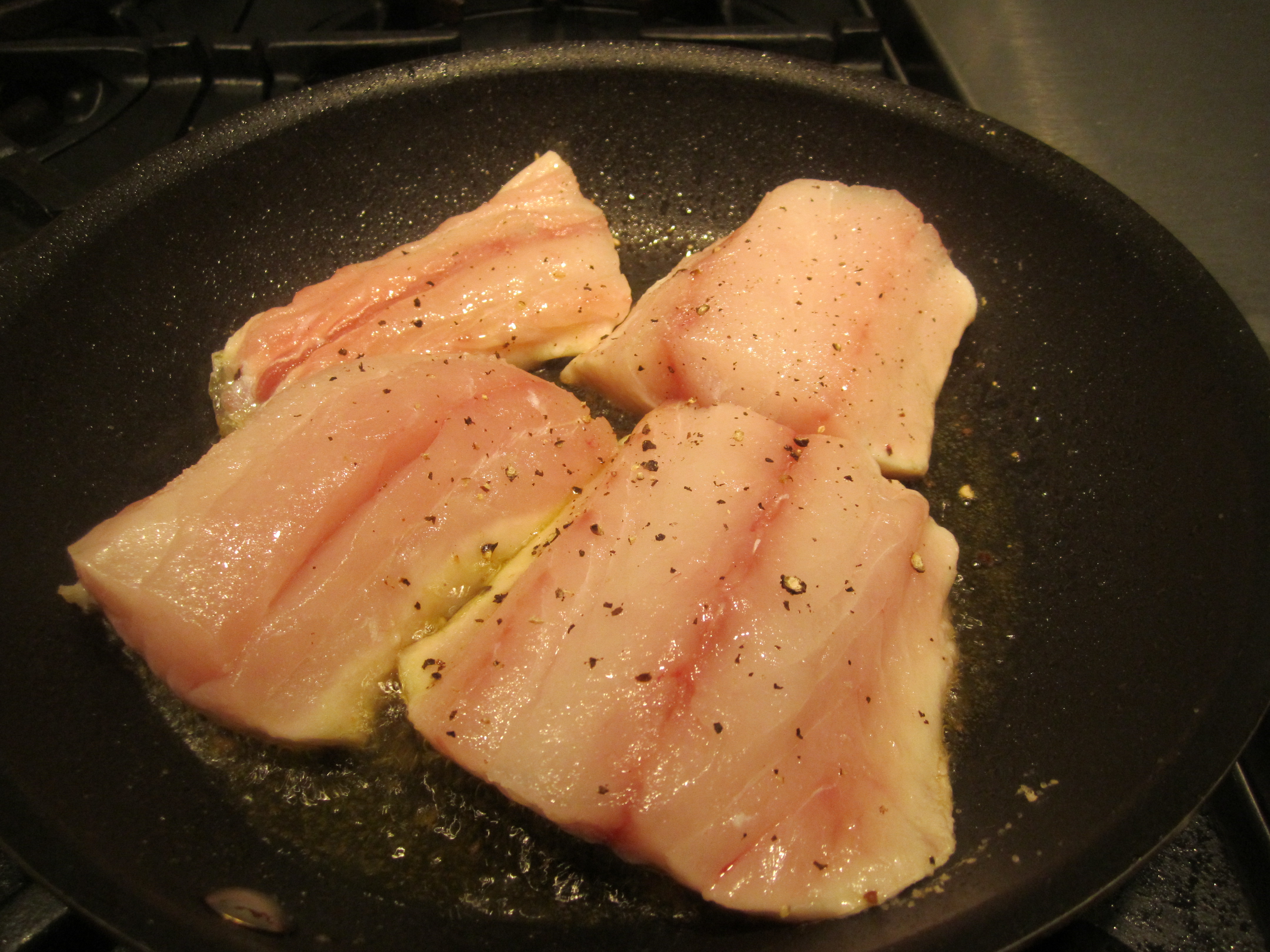
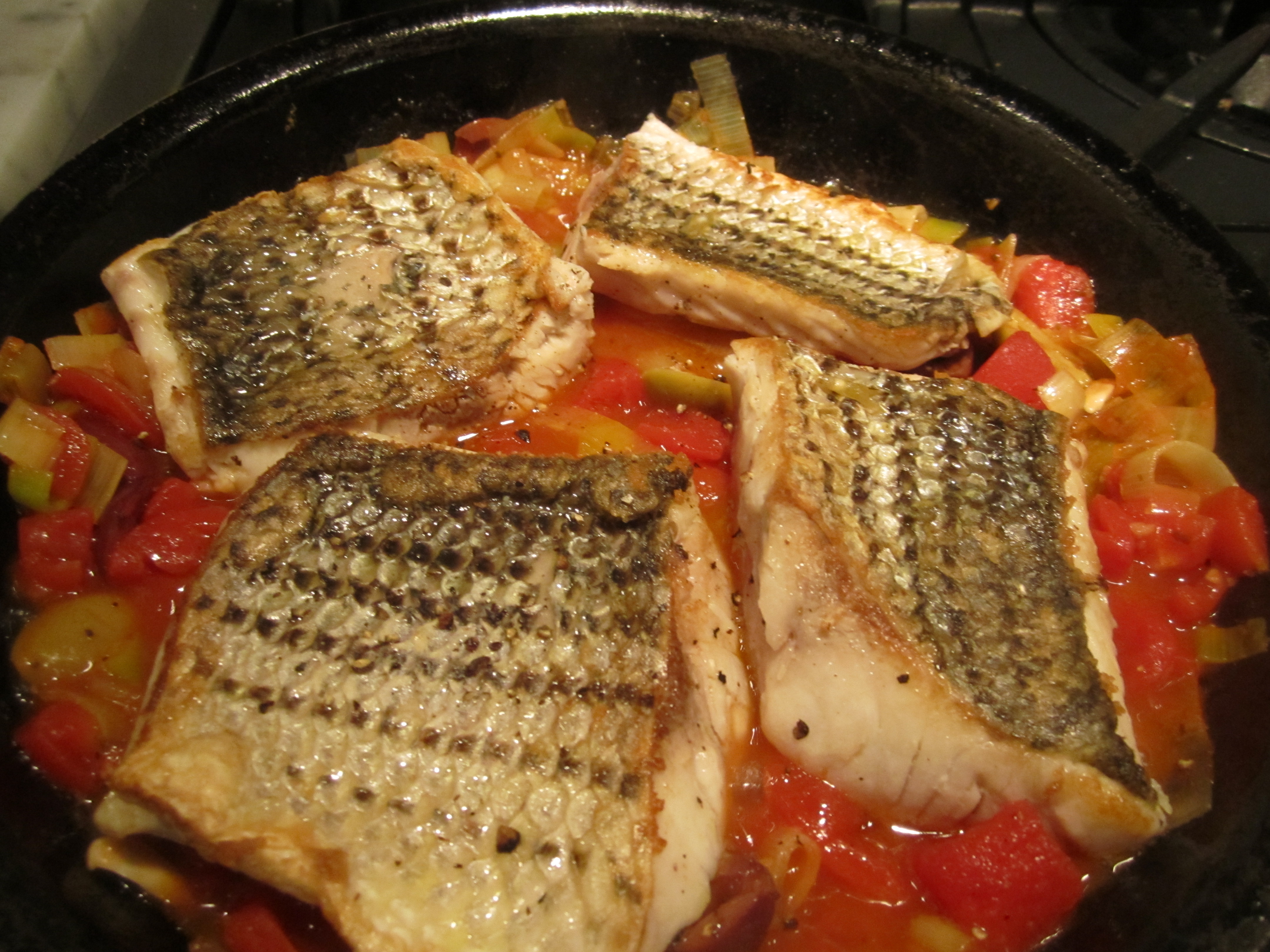
The sauce is made in an ovenproof skillet large enough to hold the fish.  The fish gets seared separately on the skin side, which makes the skin golden and crispy.  The fish is then nestled in the sauce skin side up.  The skillet is placed in a 400 degree oven and allowed to braise for about 10 minutes (depending on the thickness of your filets). 

The sauce, which is made with canned diced tomatoes, is allowed to remain a bit liquidy, since it will reduce and tighten in the oven while the fish braises.  The fish will impart its flavor to the sauce, and after the time in the oven, the sauce will be slightly thicker, with all flavors in perfect harmony.

Along with the fish, I served buttery (even before I added the butter) baked yukon gold potatoes coated with salt, and savoy cabbage with bacon.  The smokey bacon flavor on the plate also marries quite well with striped bass.  


Striped Bass with Leeks, Tomatoes and Olives

serves 4

2 lbs. striped bass filets

2 large leeks, whites and light green sections only–halved, cleaned, and sliced into 1/4″ half-moon slices

1 15-oz. can diced tomatoes

1/4 c olive oil

2 tbls pitted green olives (I used Picholine)

2 tbls pitted black olives (I used Kalamata)

1/2 c white wine

salt and pepper to taste

1 tbl fresh chopped parsley

Preheat oven to 400 degrees.

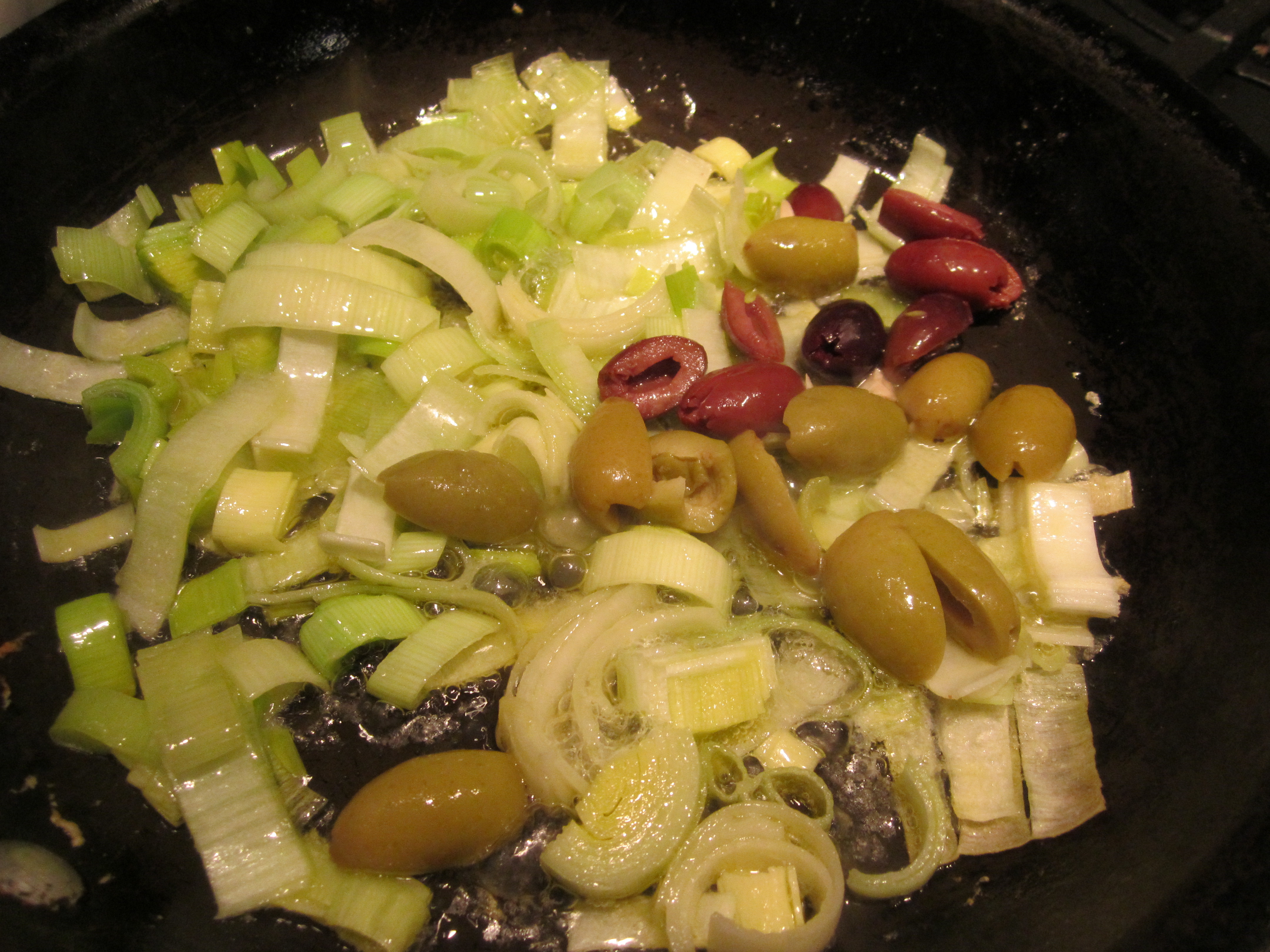
In an ovenproof skillet, combine the leeks, olives and half the olive oil.  Sprinkle with salt and pepper. 

Turn heat to high and saute for about 3 minutes, or until leeks begin to wilt.  Add white wine and cook for another minute.  Add canned tomatoes and simmer, uncovered for another 8 minutes. 

After 8  minutes, the sauce should have reduced slightly, but still be quite liquidy.

Taste for salt and set aside.

Heat a nonstick skillet on high heat for about 1 minute, then add 1 tablespoon olive oil.  Spinkle fish with salt and pepper on both sides and genlty slip the fish filets into the hot oil, skin side down. 

Allow to sear, undisturbed for 3 minutes on high heat. (This will spatter and smoke but it’s only 3 minutes).

Remove fish from skillet and nestle the filets in the sauce, skin side up.  The skin should not be submerged. 

Place in oven for 10 minutes.  Test for doneness by inconspicuously slitting the thickest filet and looking inside to make sure that the center is white and fairly soft (not pink and rubbery).  

Sprinkle with parsley and drizzle with remaining olive oil.

Serve immediately.  If you have leftovers, remove the skin before you refrigerate–the skin gets unpleasantly rubbery after refrigeration.


Posted in Seafood | 1 Comment

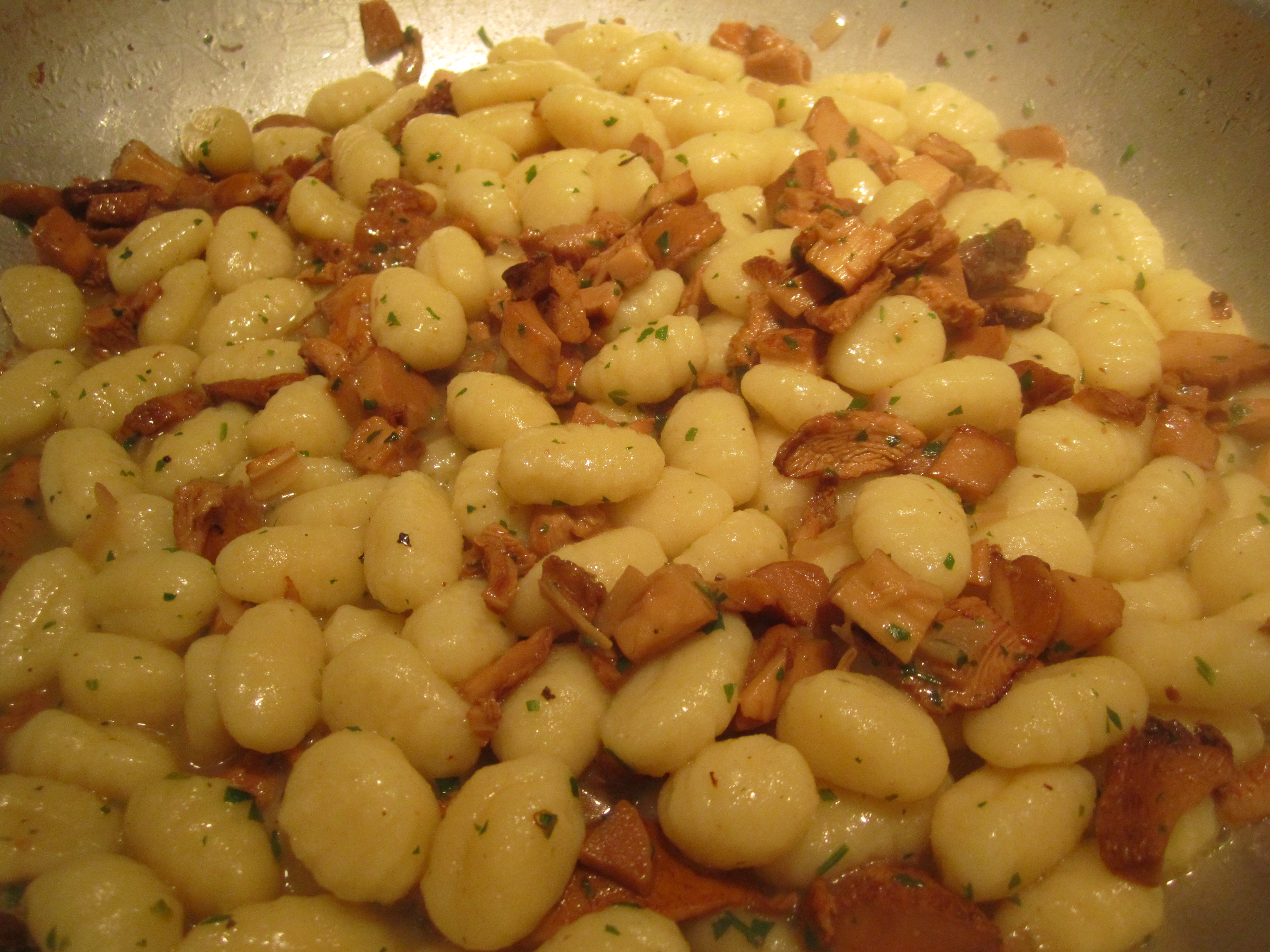
Gnocchi with Chanterelles

This is admittedly a luxurious dish, since chanterelles are not widely available, and are very expensive when you can find them.  Today, the chanterelles in our local branch of the NYC market Citarella, were so plump and golden, that I couldn’t resist. 

I often make a roast chicken for dinner on Sundays–something about that scent wafting through the house makes the day feel festive and comforting. Instead of making potatoes to accompany the chicken, I decided we’d have pasta as a first course, then chicken as our second course, then salad afterwards.   

Gnocchi are a great accompaniment to roast chicken (and roasted meats in general).  They cook quickly, but need to be eaten as soon as they’re ready.  The wild mushroom sauce is also a very quick preparation, but unlike the gnocchi, it can be made about 15 – 20 minutes ahead and reheated at the last second before the gnocchi get tossed in. 

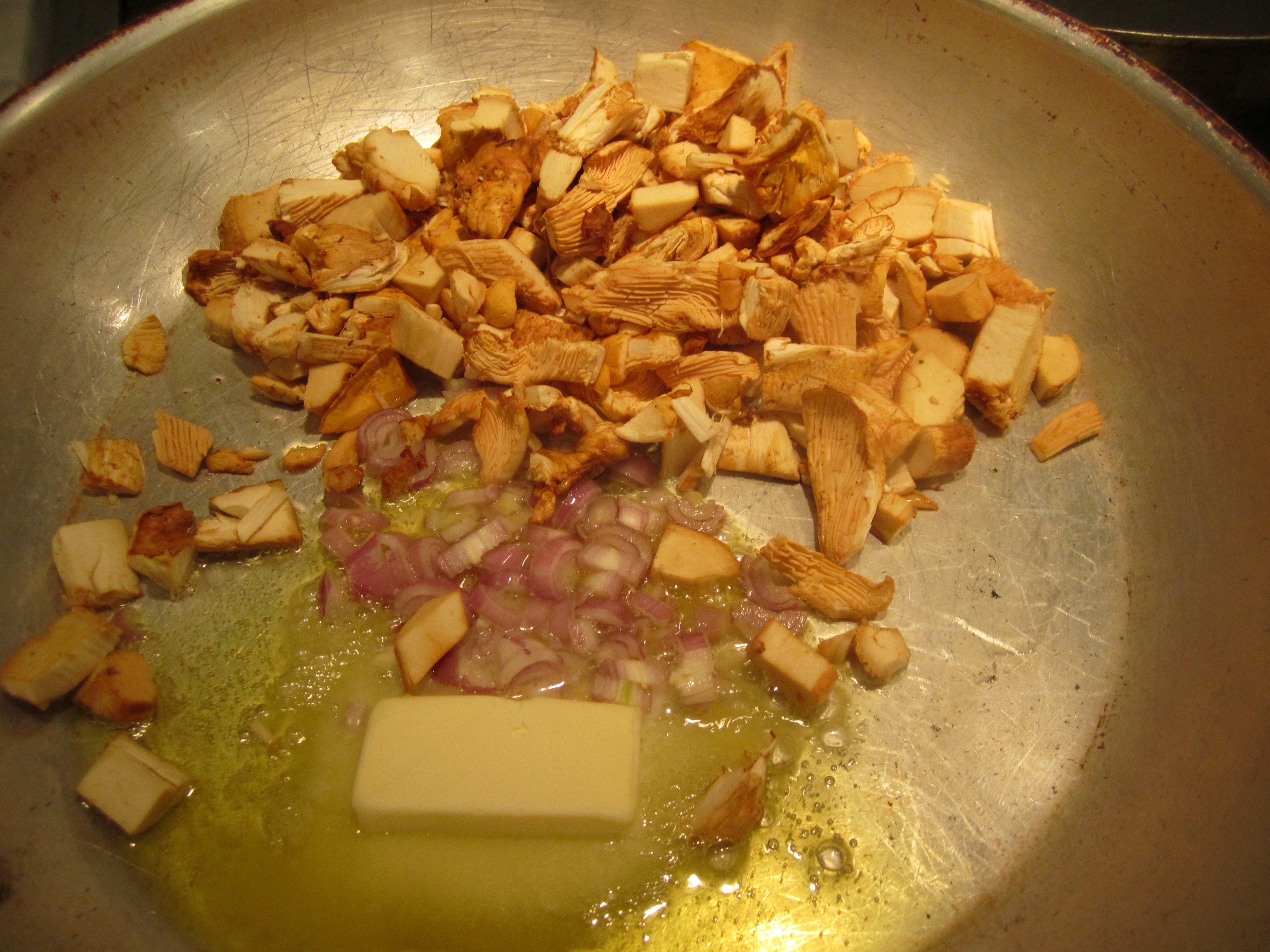
I cannot over-emphasize the importance of the chicken broth that I use in many of my stewy, saucy dishes.  This dish is no exception.  Once the mushrooms are cooked to golden perfection, add some chicken broth and simmer on the lowest of heat until the sauce emulsifies–it will also reduce a bit. The broth gives the whole sauce its body and complexity, and, along with white wine, turns sauteed mushrooms into a sauce. 

The timing of this meal is easy–simply allow 45 minutes to 1 hour to make the chicken.  After the chicken comes out of the oven to rest, serve the gnocchi.  The chicken can sit, loosely covered with foil for up to a half-hour without losing too much heat.  After everyone is done with gnocchi, carve the chicken and serve.  In addition, we had some sauteed spinach (boiled ahead, drained, squeezed, then sauteed at the last moment). 

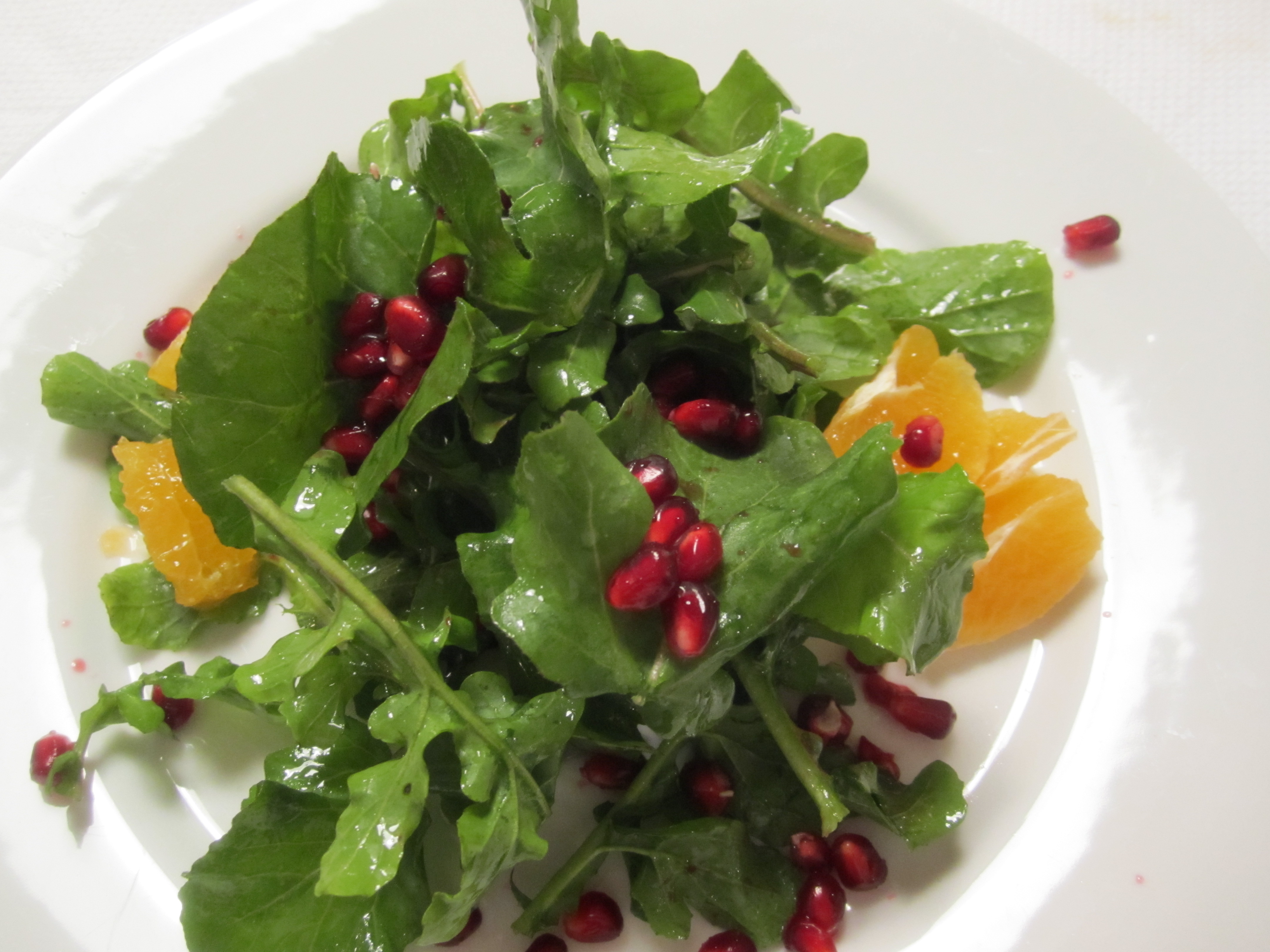
After the chicken, we had a brilliant salad, the centerpiece of which was an unexpected treat from my neighbor Beppi–arugula from his garden!  It never ceases to amaze me that greens like arugula continue to thrive in cold and frost.  This makes them stronger, more peppery than summer arugula.  Therefore, to tame the arugula, I added some sweet,  juicy clementine sections.  The greens and clementines were tossed with red wine vinegar, agave and olive oil.  Then I garnished with pomegranate seeds–a messy, endeavor, but beautiful to look at and delicious!

Gnocchi with Chanterelles

serves 4

2 1-lb packages of vaccuum packed or frozen gnocchi

1/2 lb fresh chanterelle mushrooms

6 shallots, chopped finely

2 tbls olive oil

2 tbls butter

1/2 c white wine

1/2 c chicken broth

1 tbl fresh chopped parsley

salt and pepper to taste

grated parmigiano for sprinkling

Place a large pot of salted water on to boil for the gnocchi.

With a damp paper towel, wipe any loose soil from the surface of the chanterelles, then dice into large bite-size pieces. 

Place the shallot, oil/butter and mushrooms in a broad skillet and saute for a minute on high heat for about 3 minutes, until mushrooms begin to turn golden. 

Add white wine and reduce until only a syrup remains.  Add broth and reduce heat to low.  Simmer, uncovered until gnocchi are cooked.  Add parsley.


Add gnocchi to sauce and saute for about a minute, or until all is combined.   Add additional pasta water if mixture is too tight.

Serve immediately, with plenty of grated parmigiano on the side.

Posted in Pasta | Leave a comment

Pancetta-Wrapped Scallops

Pork and shellfish have a natural affinity for one another.  The sweetness of scallops are greatly enhanced by the saltiness of pancetta or bacon.

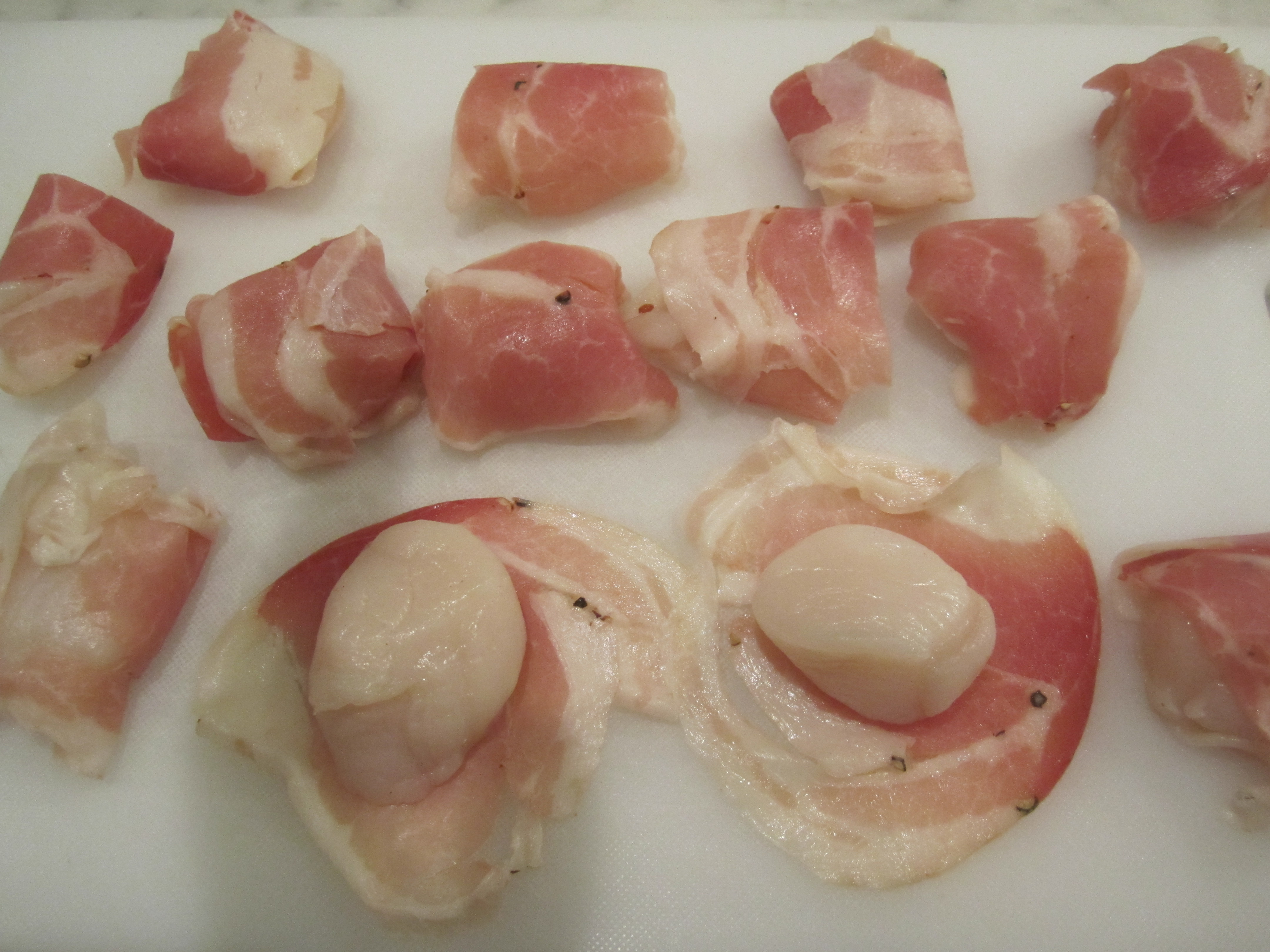
I happened to have some very thinly sliced pancetta in the fridge and I knew it would make the perfect salty crust for my sea scallops.  The thinness of the pancetta is the most important factor in this dish–it needs to be able to drape over and around the scallop and practically melt into it.  If the pancetta is not thin enough, it will simply toughen and separate from the scallops as you cook it.

No recipe is necessary here–this is a very simple procedure.  Simply lay out the slices of pancetta on a board and place a scallop over each slice.

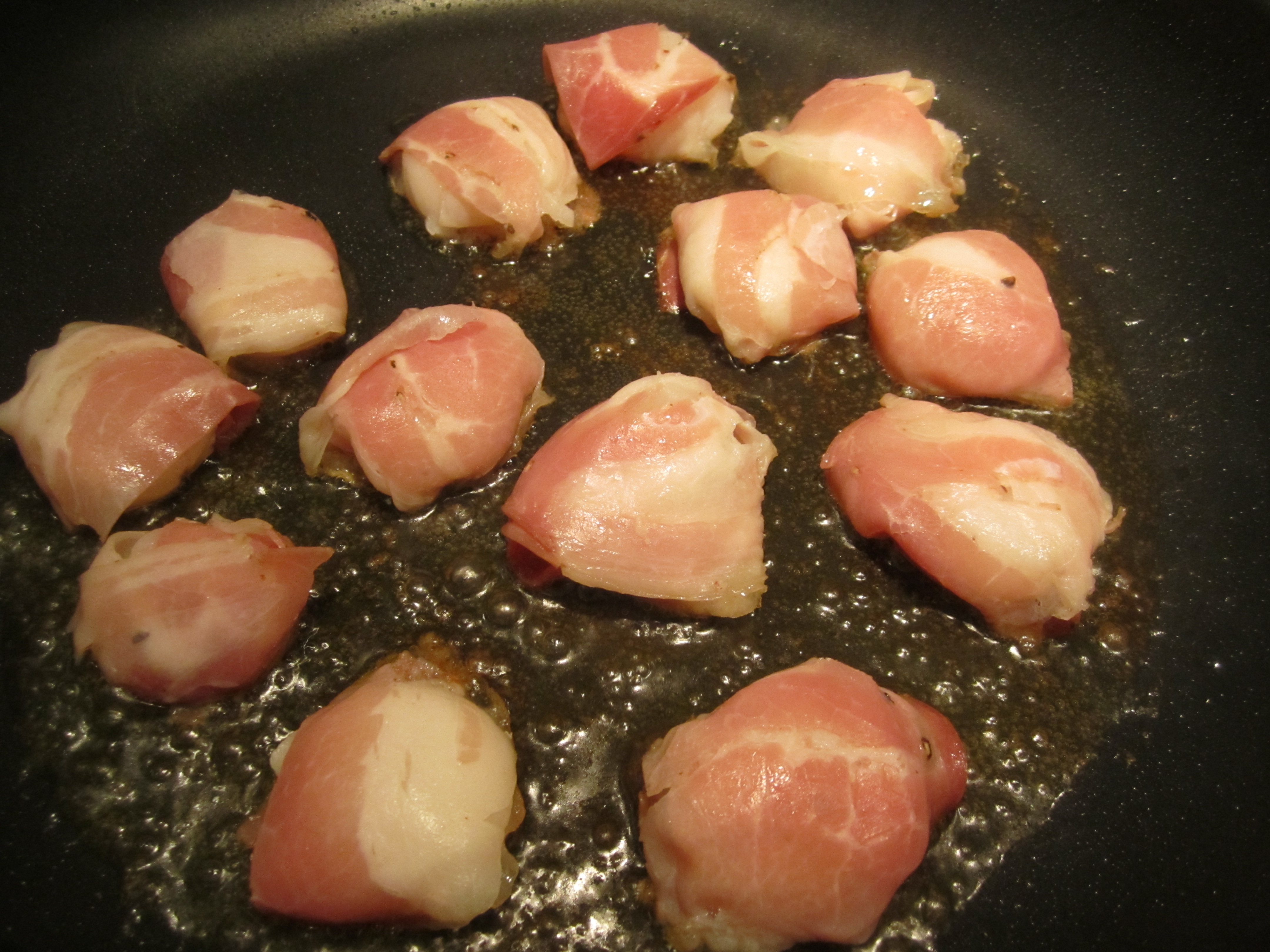
If the scallop is too big or the slice of pancetta too small to encase the scallop, add another piece of pancetta on top and press the pancetta together to form a nice little bundle.  No need for toothpicks–the pancetta will melt and adhere as it renders and crisps.

Place in a broad skillet containing 2 tablespoons slightly preheated olive oil on medium heat (high heat is not necessary here).

Allow the bundles to cook for about 3 or 4 minutes on the first side.  Gently flip each bundle with two spatulas.  Allow to turn golden on the second side (another 3 minutes or so).

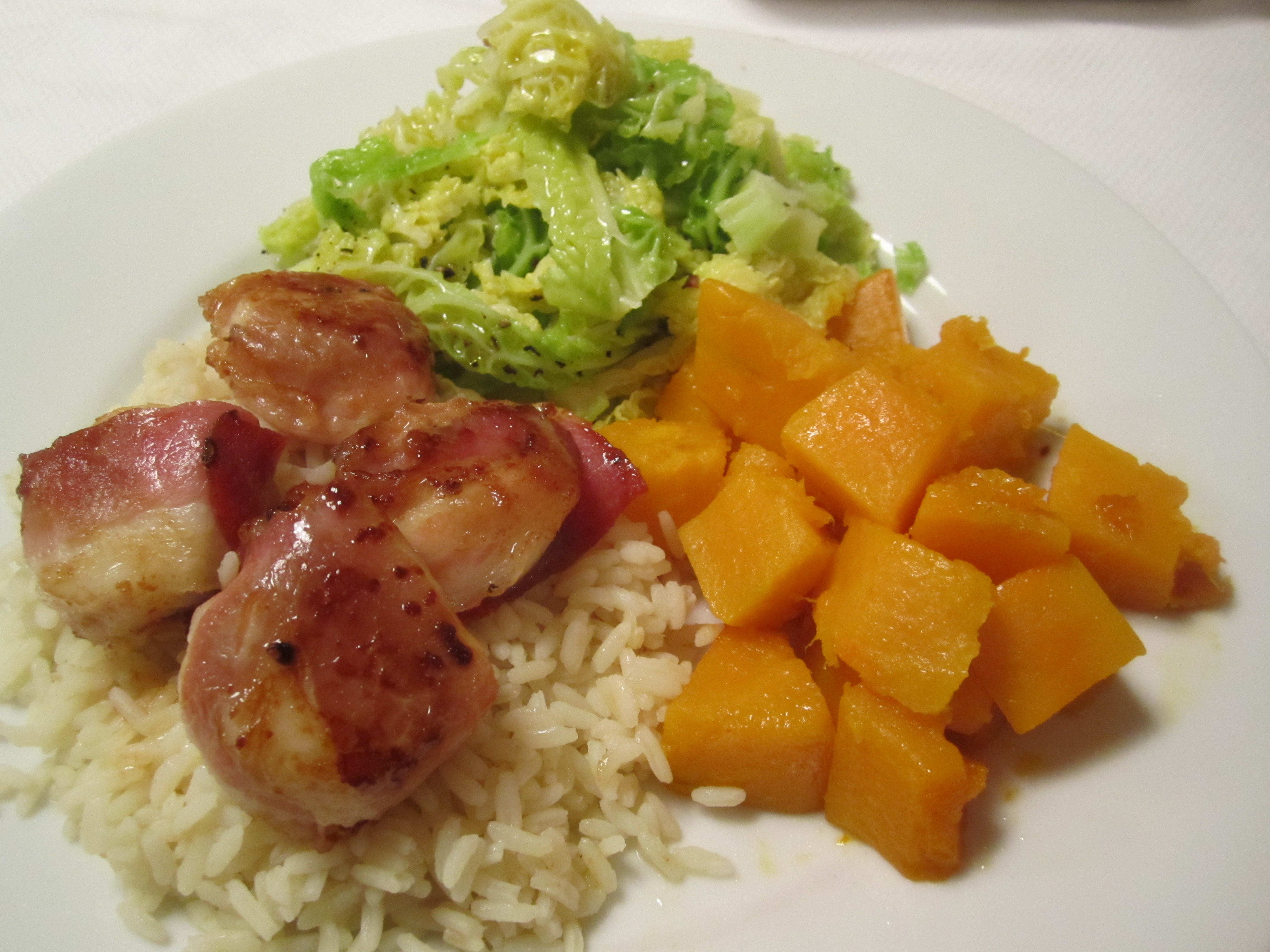
Tonight, along with the scallops, we had sauteed savoy cabbage, plain boiled rice and sauteed kabocha squash–all quiet, neutral pork-friendly accompaniments.

Posted in Seafood | Leave a comment