Pasta Frittata

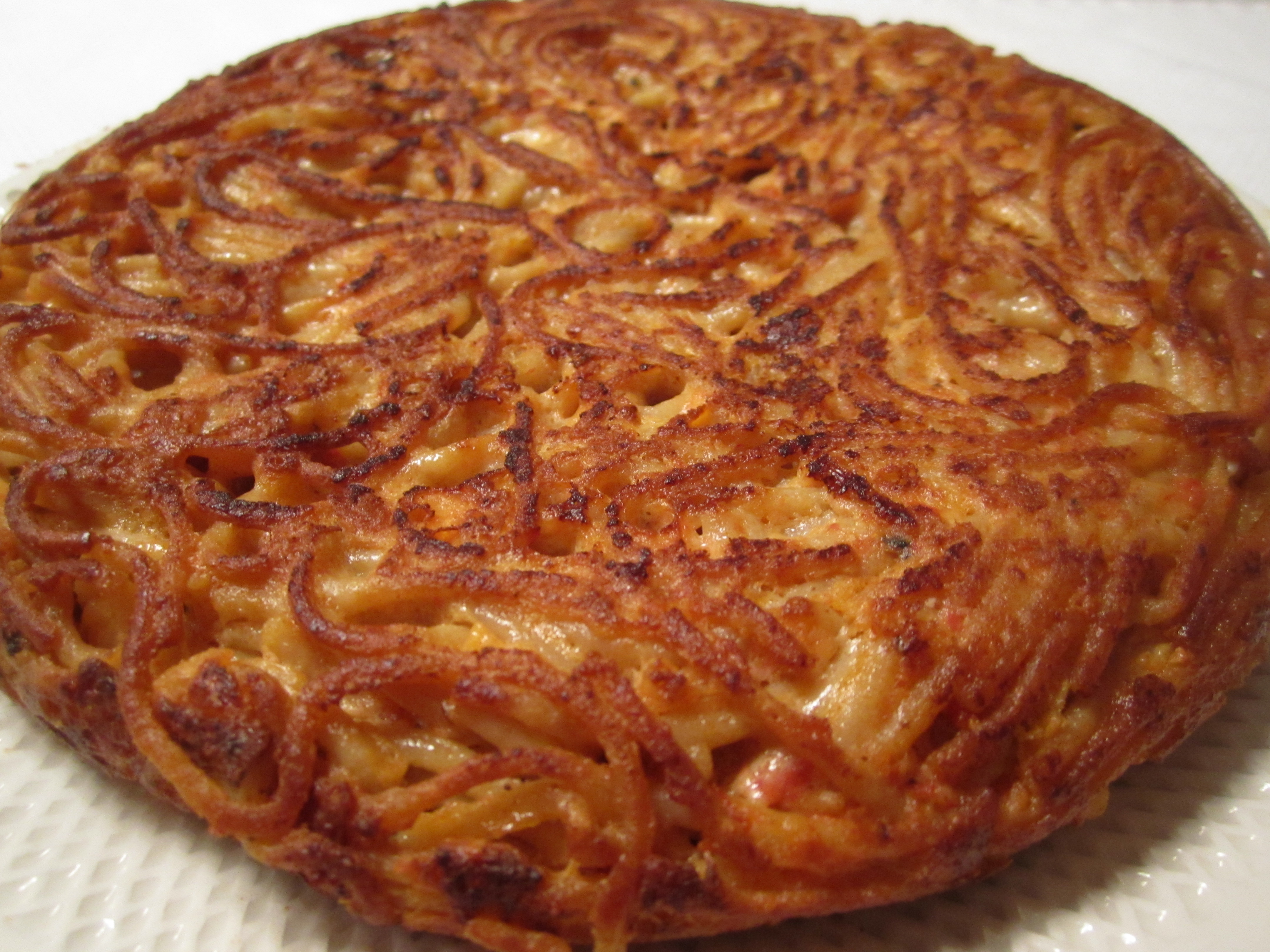
Many years ago, when I was in Italy staying at my aunt and uncle’s house for the summer, my aunt made me this dish with some leftover spaghetti.  It was a revelation–she just cracked some eggs into the pasta, sauce and all, added cheese and turned the whole mass into a skillet of sizzling butter.  It was so delicious, I never forgot the flavor, and I think of my (late) Aunt Rita every time I make it.

Last night, I made whole wheat spaghetti and tomato sauce, and  I purposely made extra pasta because I wanted to make this frittata.
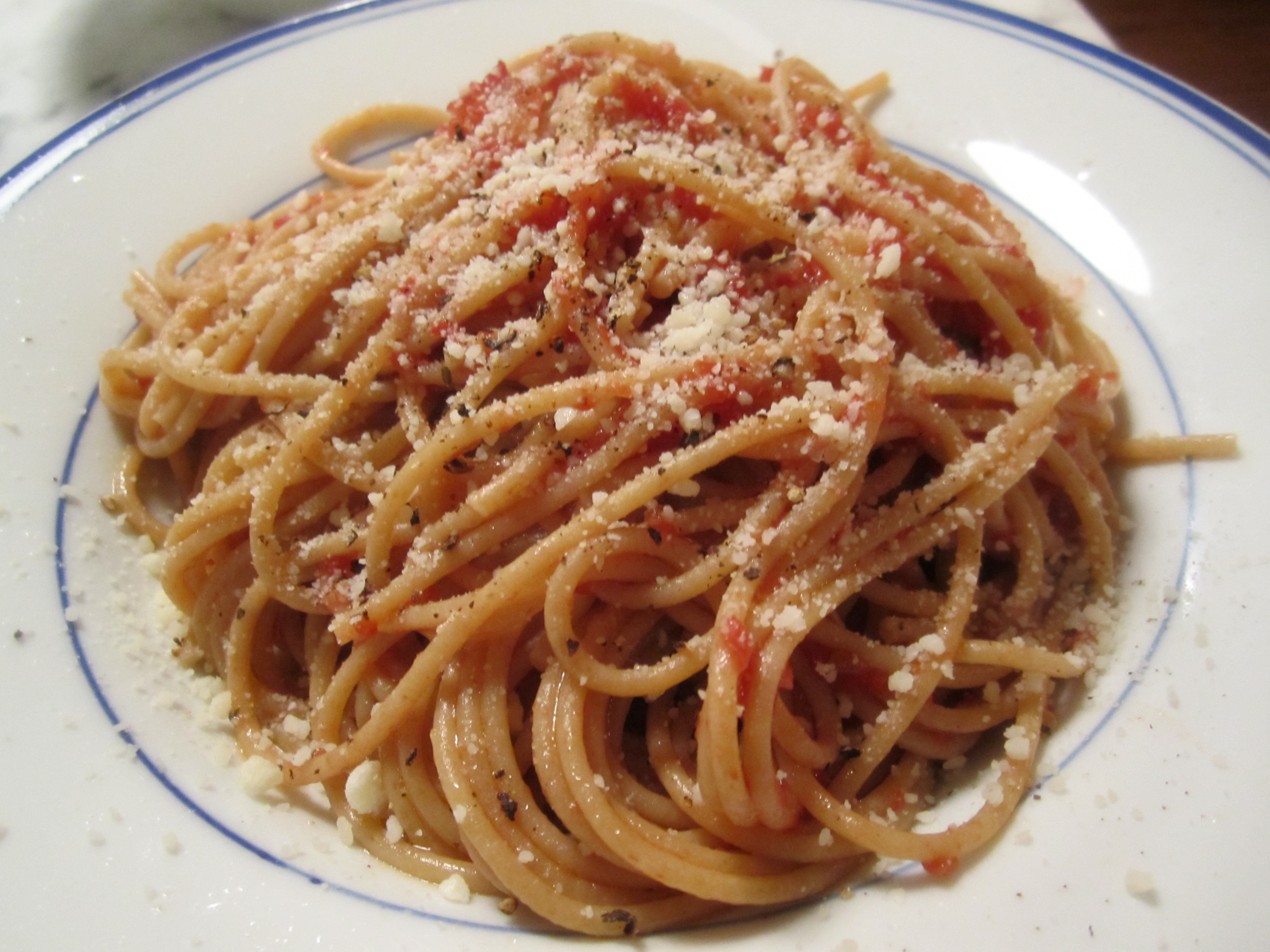
This frittata may be made with any type of long noodle, and it need not be whole wheat, although I’ve found that the nuttiness of the whole wheat noodle adds a wonderful dimension to the dish.

Exact quantities are difficult to prescribe here, and not crucial, so I’ll simply show you the technique and give you some general instructions on how to duplicate this in your kitchen.

I began with about 2 cups cold cooked whole wheat spaghetti in tomato sauce.  In a mixing bowl, I added 2 large eggs, 1/2 cup grated pecorino romano cheese, 2 tablespoons milk or half and half, 1/4 teaspoon black pepper.  You could add up to 6 eggs here, depending on how eggy and creamy you want the finished dish–I happen to like it drier and crispier.

Note:  the mixture must be very salty to make a flavorful frittata, so prior to adding the eggs, taste it and make sure that the salt is right.  If not, add additional salt.  In my case, the leftover pasta was on the salty side, therfore no additional salt was necessary.

In a nonstick skillet (I usually use an 8″ skillet to make frittata, since I like the frittata to have a little height), melt about 1 tablespoon of butter, making sure to coat the sides of the skillet well.  When the butter has melted and begins to sizzle, add the pasta and eggs and stir briefly.

Turn the heat to low and allow it to brown, undisturbed, on the underside–this may take about 8 minutes, depending on your flame.   Lift gently with a spatula from time to time to check the underside.  When it is golden brown, turn a large plate on top of the skillet, flip the frittata onto the plate and slip it back into the skillet to cook on the other side.
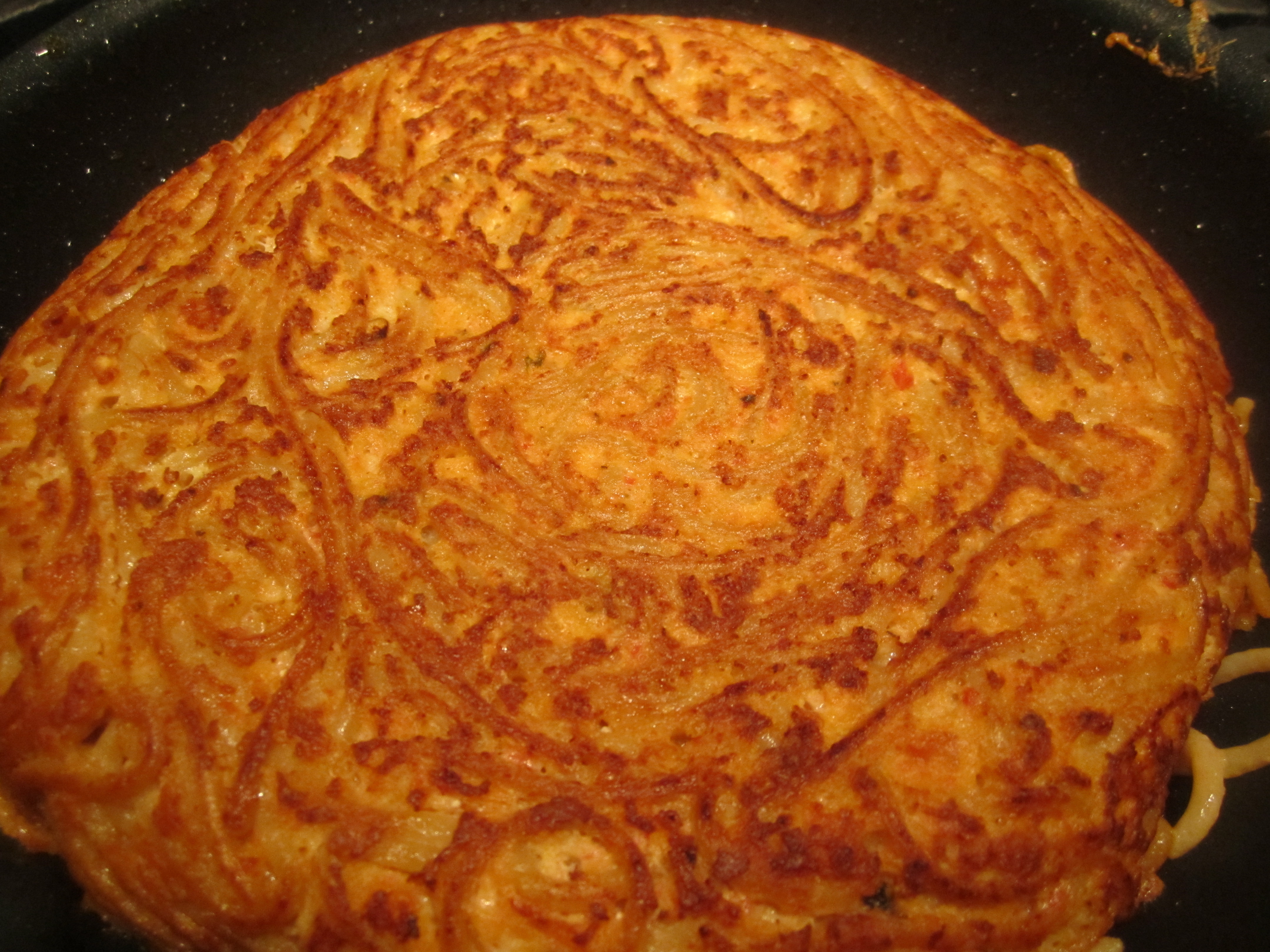
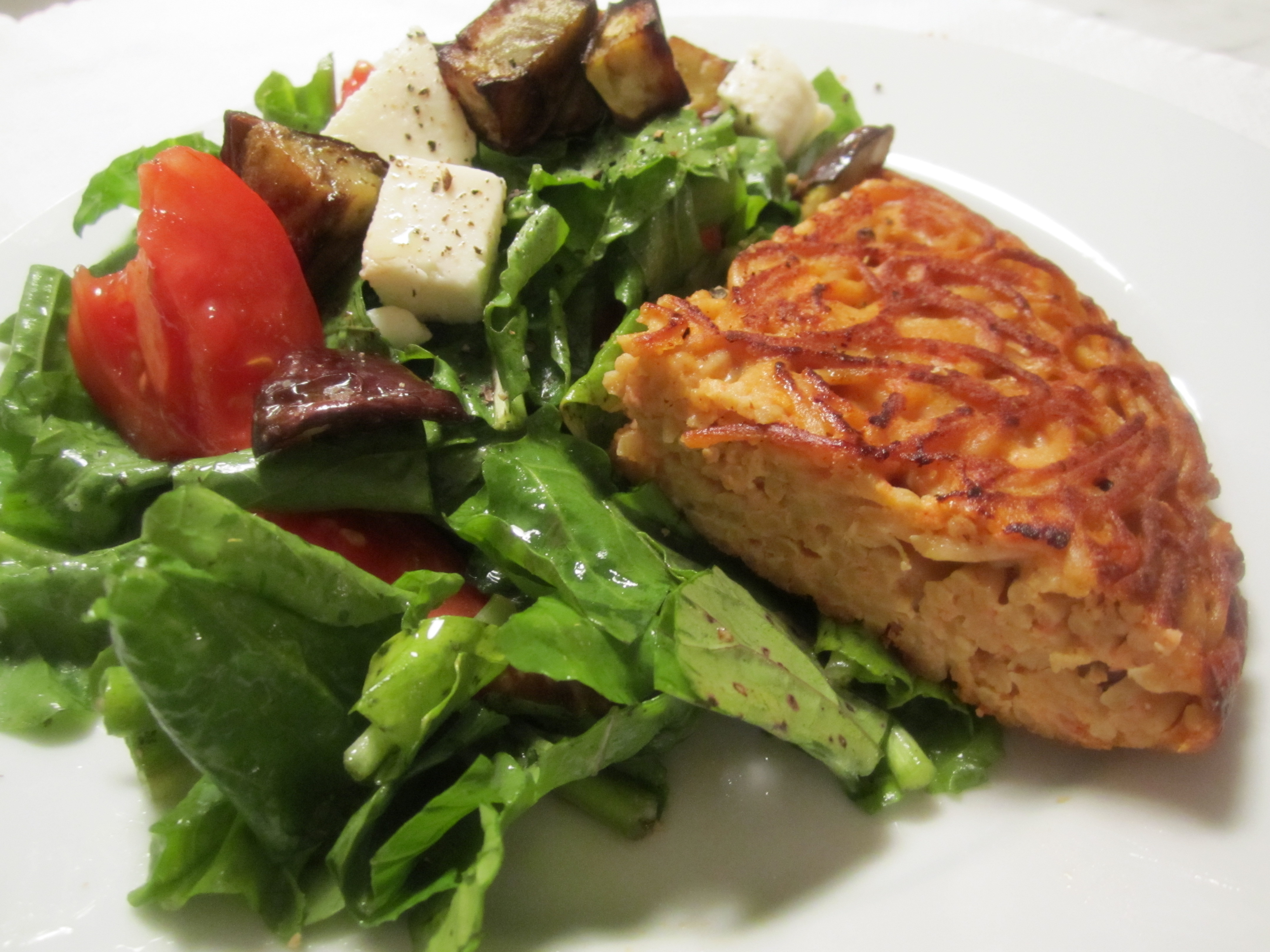
Tuck in any loose spaghetti around the edges with the spatula to ensure a nice round shape.  Fry for another 6 to 8 minutes until the underside is brown and crispy.  Let settle for at least 10 minutes prior to cutting.  The inside will be creamy and cheesy and the outside will be crispy and nutty.

The best thing with which to serve frittata is a salad of some sort.  Tonight, we had a salad of arugula, tomatoes, crispy fried eggplant and cubes of mozzarella.  My neighbor Beppi surprised me with one last eggplant from his garden, so I sauteed it added it to the salad.
Posted in Eggs | Leave a comment

Pasta with White Truffles

The white truffle is perhaps one of the most fabled, lavish ingredients in Italian cookery.  Fall is truffle season in the town of Alba, in Piemonte, Italy.   For those of us in this country lucky enough to live near an importer of fresh truffles, we can get a taste of those very truffles.

I made this dish in honor of and under the direction of my neighbor, Beppi.  For those of you who havcen’t read my “About” page, Beppi is the former owner of a highly acclaimed Italian restaurant, “San Marco,” in New York from the sixties through 1990.  Named after the square in Venice,  it featured the cuisine of the Veneto region, and was one of the forerunners of regional Italian restaurants in New York.

The cooking of the Veneto is elegant and refined, light on the garlic and red sauce; heavy on the wine and butter.  Every year at this time, San Marco featured a pasta dish that was so lavish that its $16 price tag eclipsed all the other dishes on its already expensive menu, with pasta dishes averaging $3.  Craig Claiborne of the New York Times wrote, in his three-star review,  that “San Marco was the most expensive Italian restaurant in the country–but worth it.”   Recounting this always puts a broad, proud smile on Beppi’s face.

It’s been years since I’ve bought a white truffle, and this year, on Beppi’s 90th birthday, I promised him I’d find a fresh white truffle if he’d teach me to make the pasta dish from the San Marco menu.

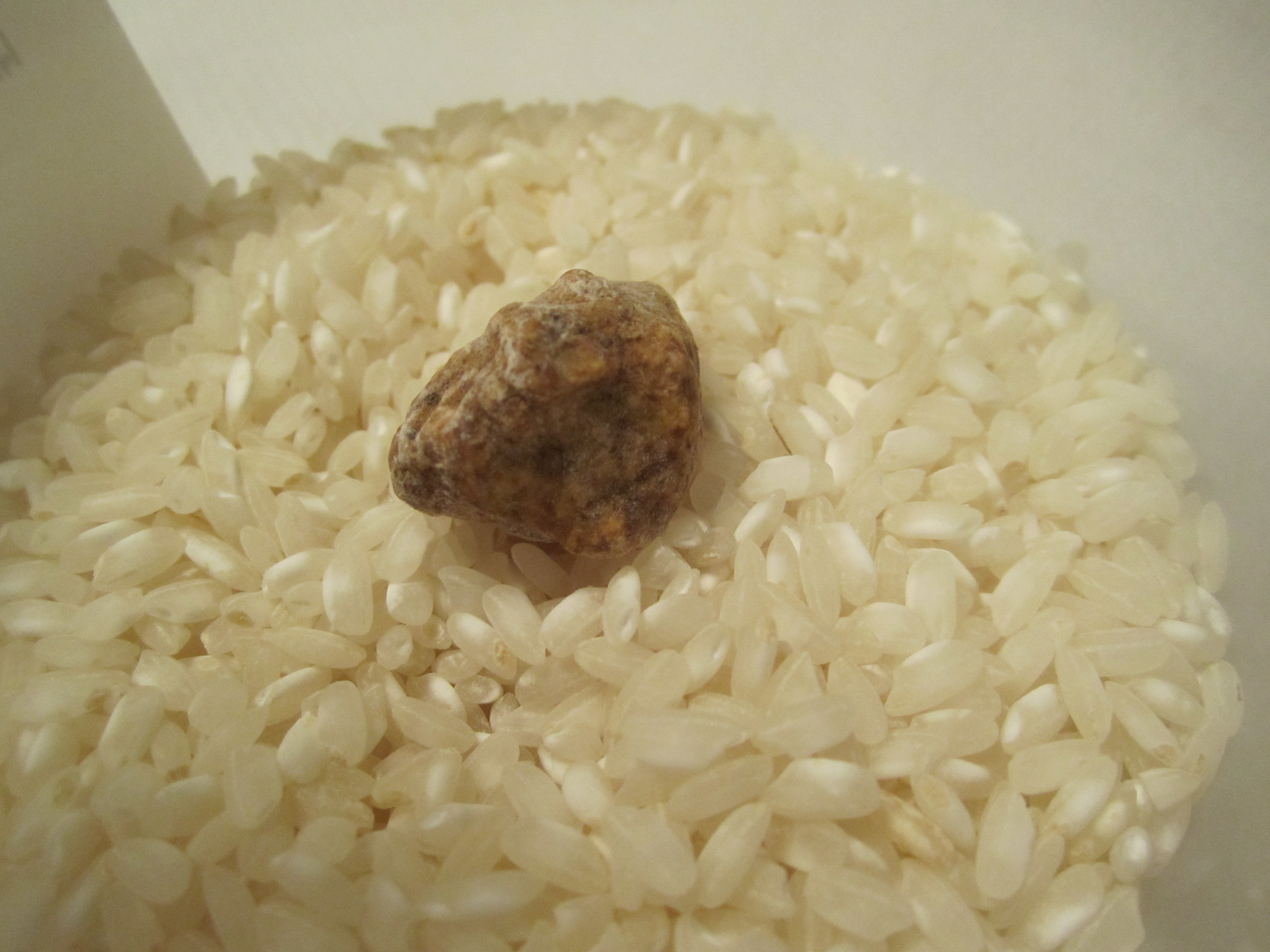
I went to my local branch of the NYC gourmet market, Citarella, suspecting that if anyone on the east end of Long Island would have a white truffle, they would.  I was thrilled to find 2 tiny, fresh truffles in the appetizer section behind the glass.  They are stored in rice (which becomes scented by them) and sold by the ounce.  I’m not even sure of the price per ounce, but each of the 2 quarter-sized orbs was $56.
I breathed in their fragrance and instantly bought them, knowing how happy the sight and scent of them would make Beppi.  Besides, what better thing to do on a stormy, prematurely cold October Saturday afternoon?

When I returned from shopping and burst into Beppi’s kitchen, breathless from the teeming rain, I pulled the container of truffles out of my shopping bag and asked him if he’d come to my kitchen and teach me the dish.  He couldn’t believe his eyes–he opened the container and, ecstatic from the scent, proclaimed them “the real thing.”

From his utensil drawer, Beppi pulled a cherished implement–a truffle slicer given to him by Enrico Caruso’s personal assistant, who was very old at the time of the gift. Since Caruso died in the 1920s, this slicer had been used to shave truffles over Caruso’s pasta before Beppi had even been born.   He gave the truffle slicer to Beppi as a keepsake,  and Beppi hadn’t used it in many years.  We eagerly brought it to my kitchen, along with the ingredients to the pasta.

Besides truffle, there is prosciutto, shallots, mushrooms, butter and stock, plus plenty of parmigiano for sprinkling at the table.   The pasta should be fresh egg fettucine.

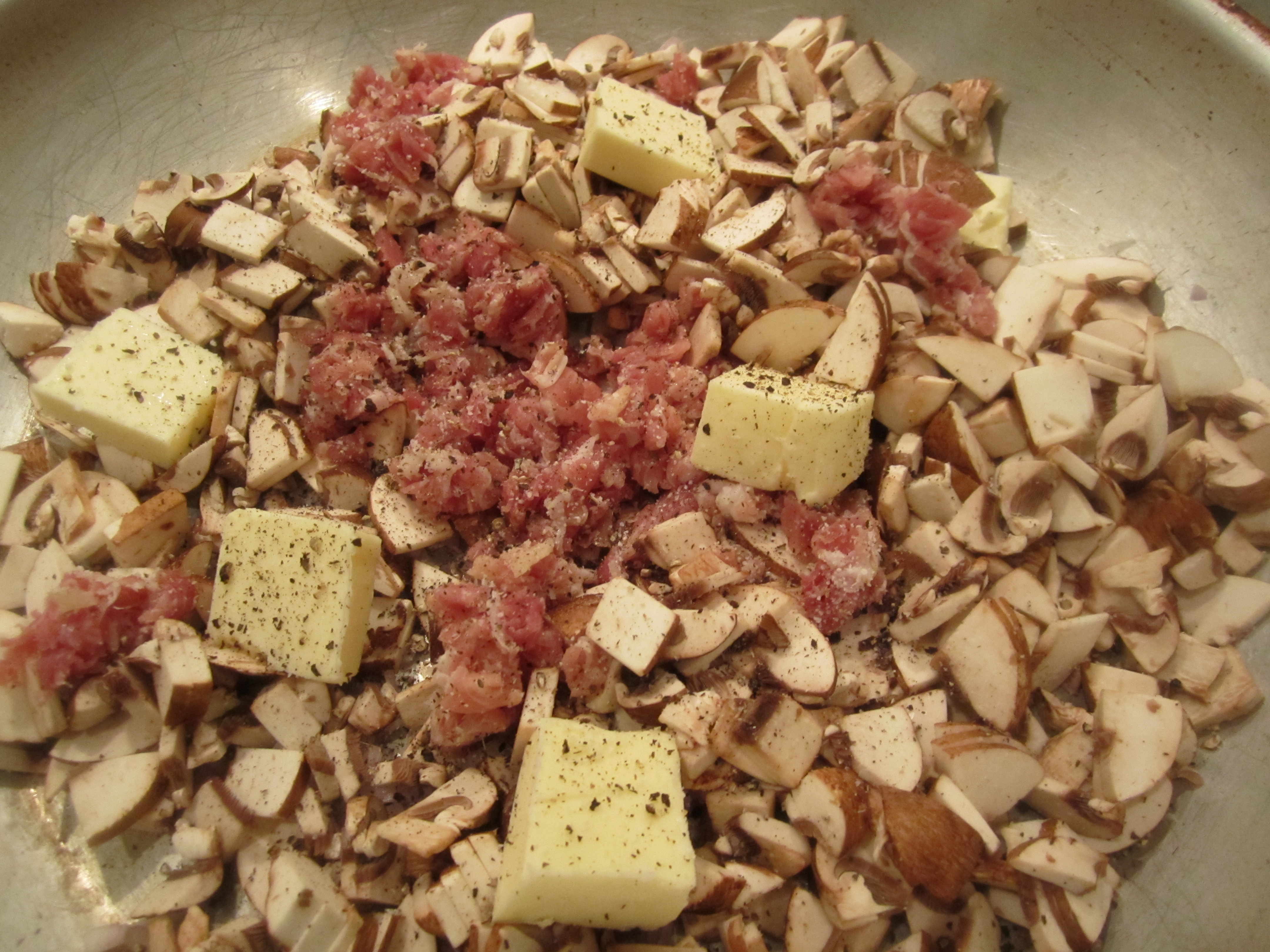
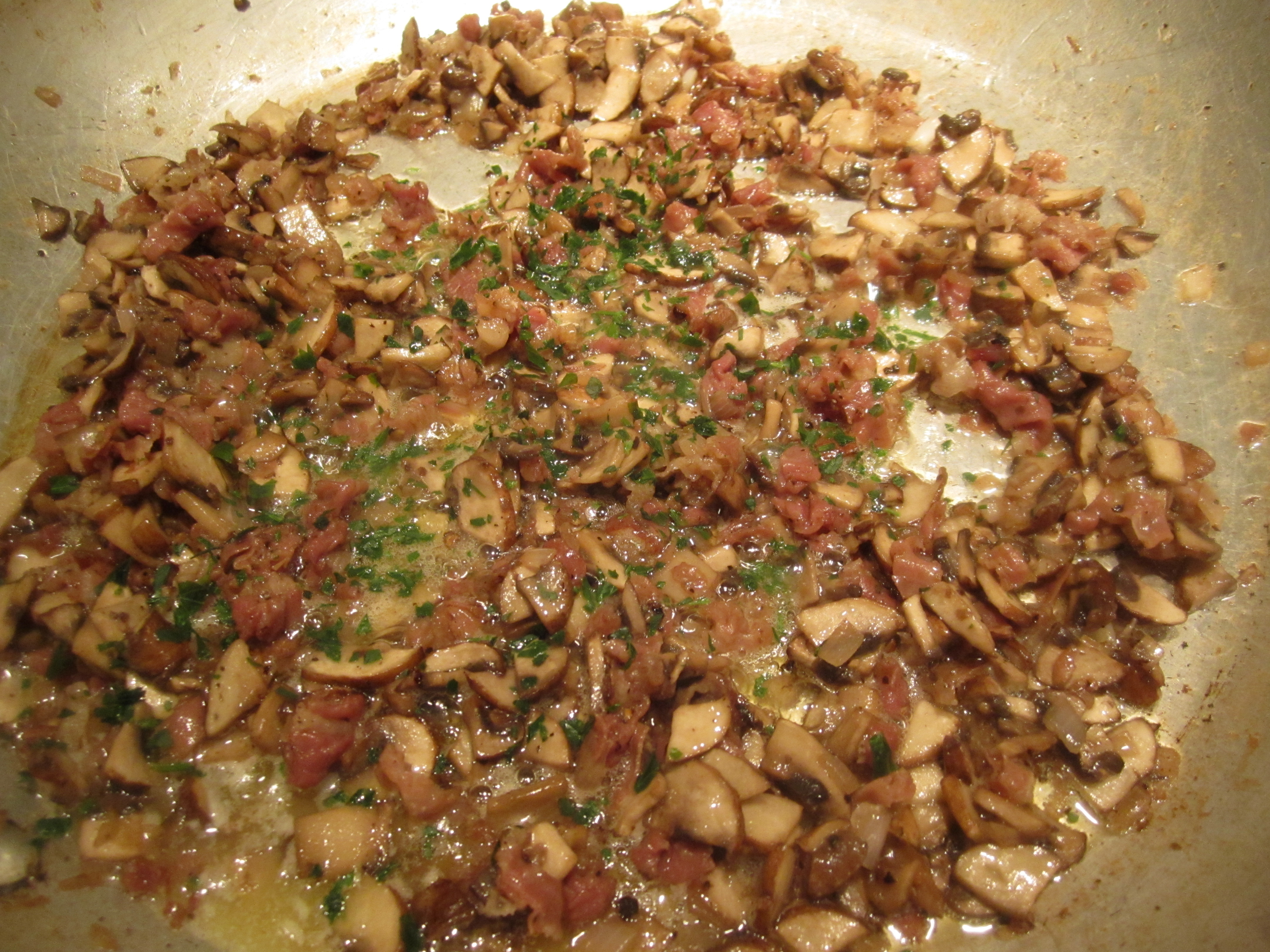
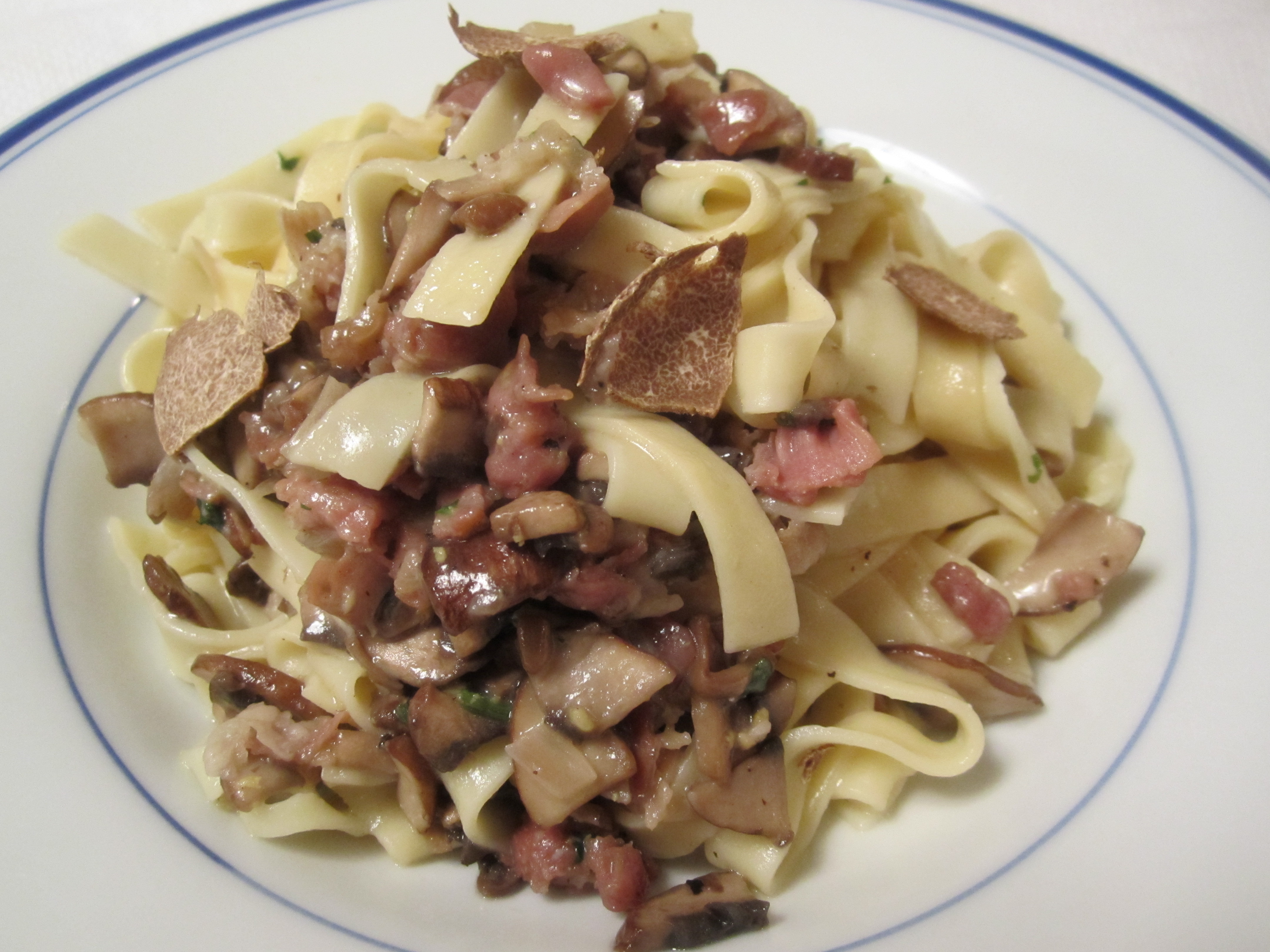
The mushrooms and prosciutto get chopped very thinly and finely and sauteed, resulting in a wonderfully salty, earthy undertone.  The thin wisps of white truffle shaved on at the end simply take the earthiness to new heights.

Without further ado, here’s the dish.

Pasta with White Truffles

serves 4 as a first course

1 lb fresh egg fettucine

1 stick butter

3/4 lb cremini (or plain white) mushrooms

2 small shallots, chopped finely

1/4 lb thinly sliced prosciutto, diced finely

2 tbls fresh chopped parsley

1 c chicken broth

1 or 2 small truffles (depending on how lavish you want to be)

salt and pepper to taste

grated parmigiano for sprinkling

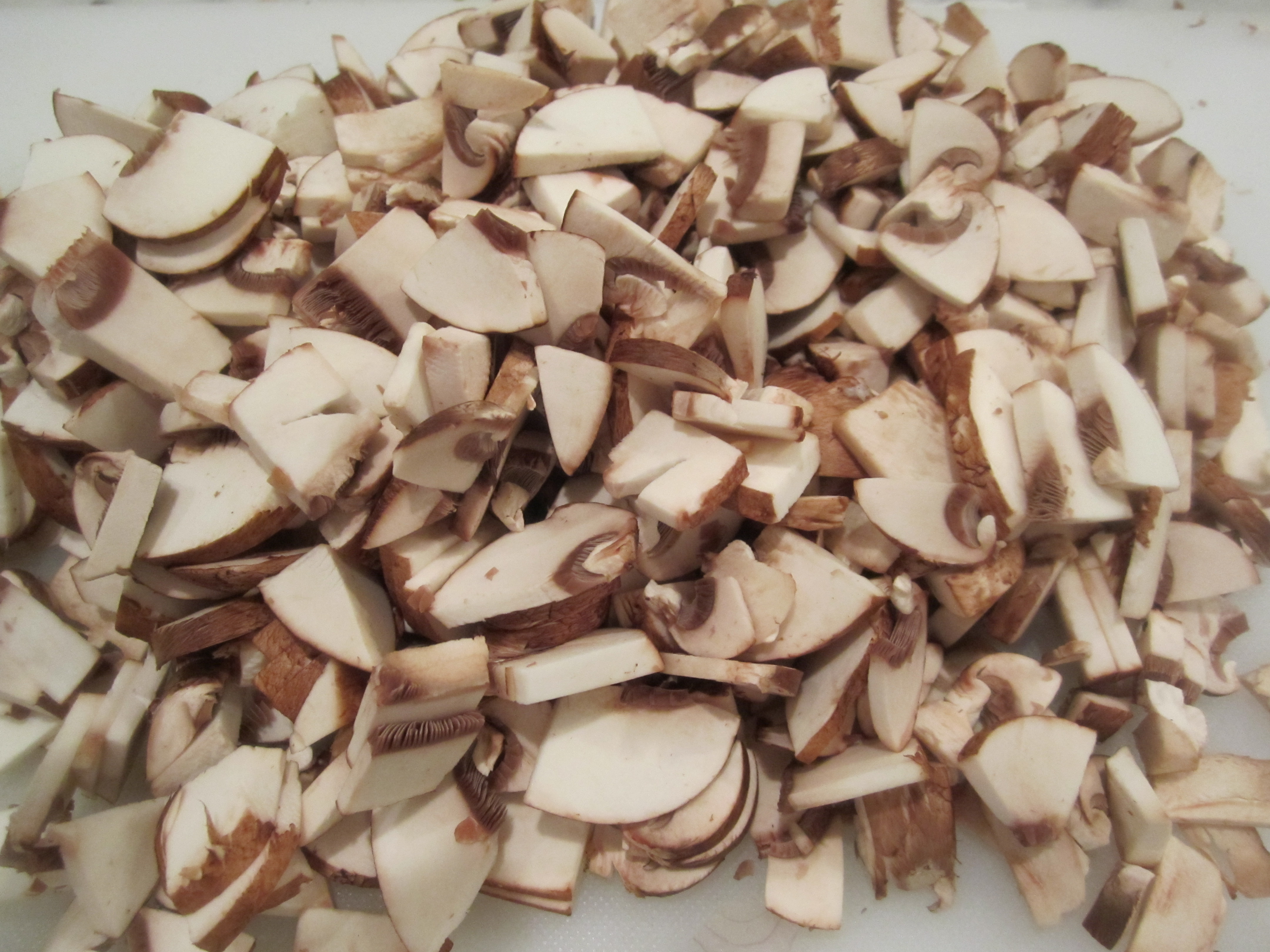
Slice each mushroom in half, or thirds if  it is large, and slice each half into thin little shavings.

Place mushrooms, prosciutto, shallot and butter in a large skillet, along with a 1/2 teaspoon of salt and pepper.

Turn heat to high and saute until mushrooms shrink and begin to turn golden (about 7 minutes, depending on the strength of your burner).  Add parsley and taste for salt and pepper–it should be nice and salty.

Toss the cooked pasta into the skillet with the sauce and add the broth, along with 1/4 cup of grated parmigiano cheese.  Toss well to combine.

Place a pile of pasta in each heated pasta bowl and top with shavings of white truffle (use a vegetable peeler if you don’t have a storied truffle shaver).  Serve immediately!

Posted in Pasta | Leave a comment

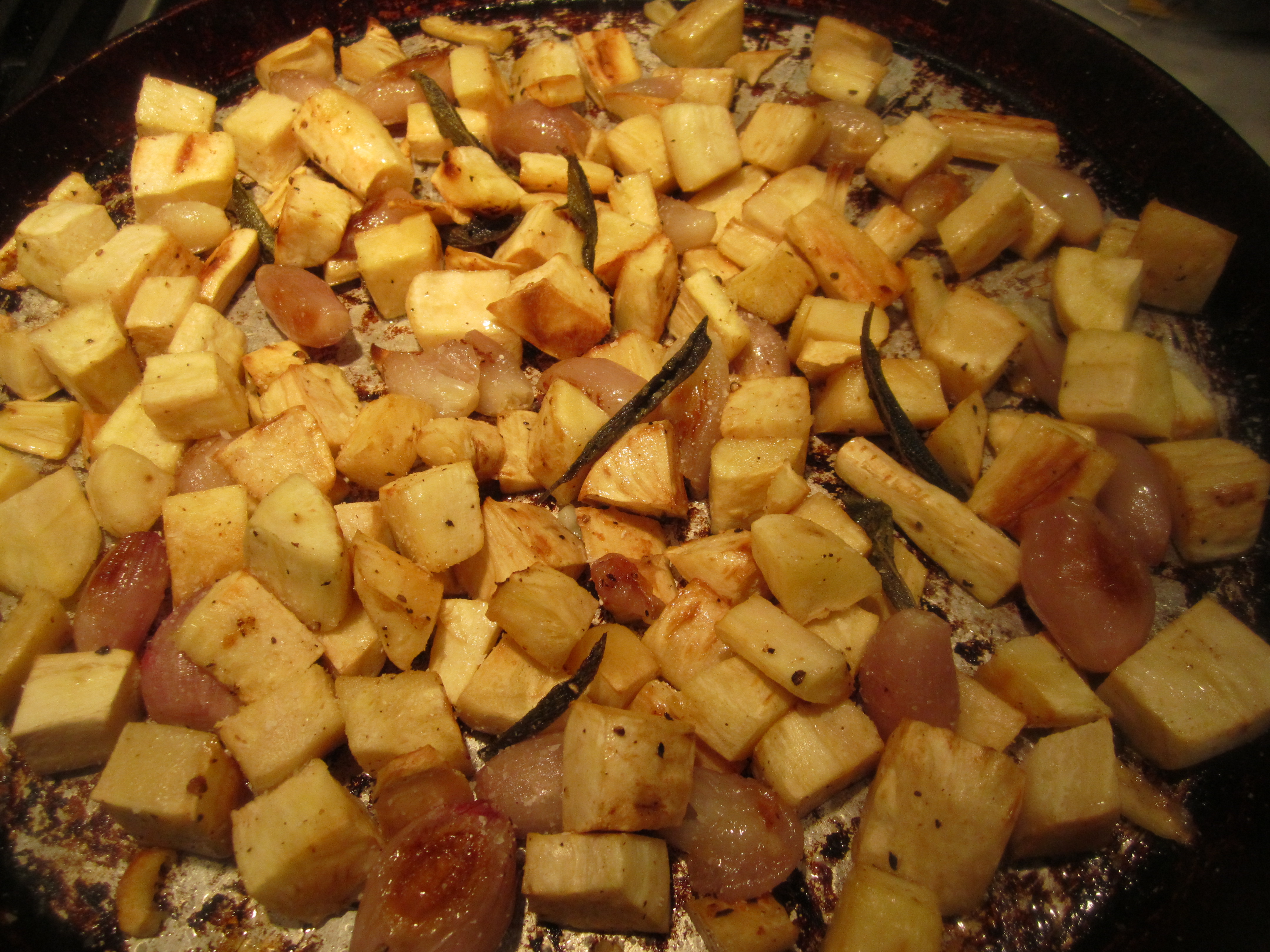
Caramelized Parsnips and Shallots

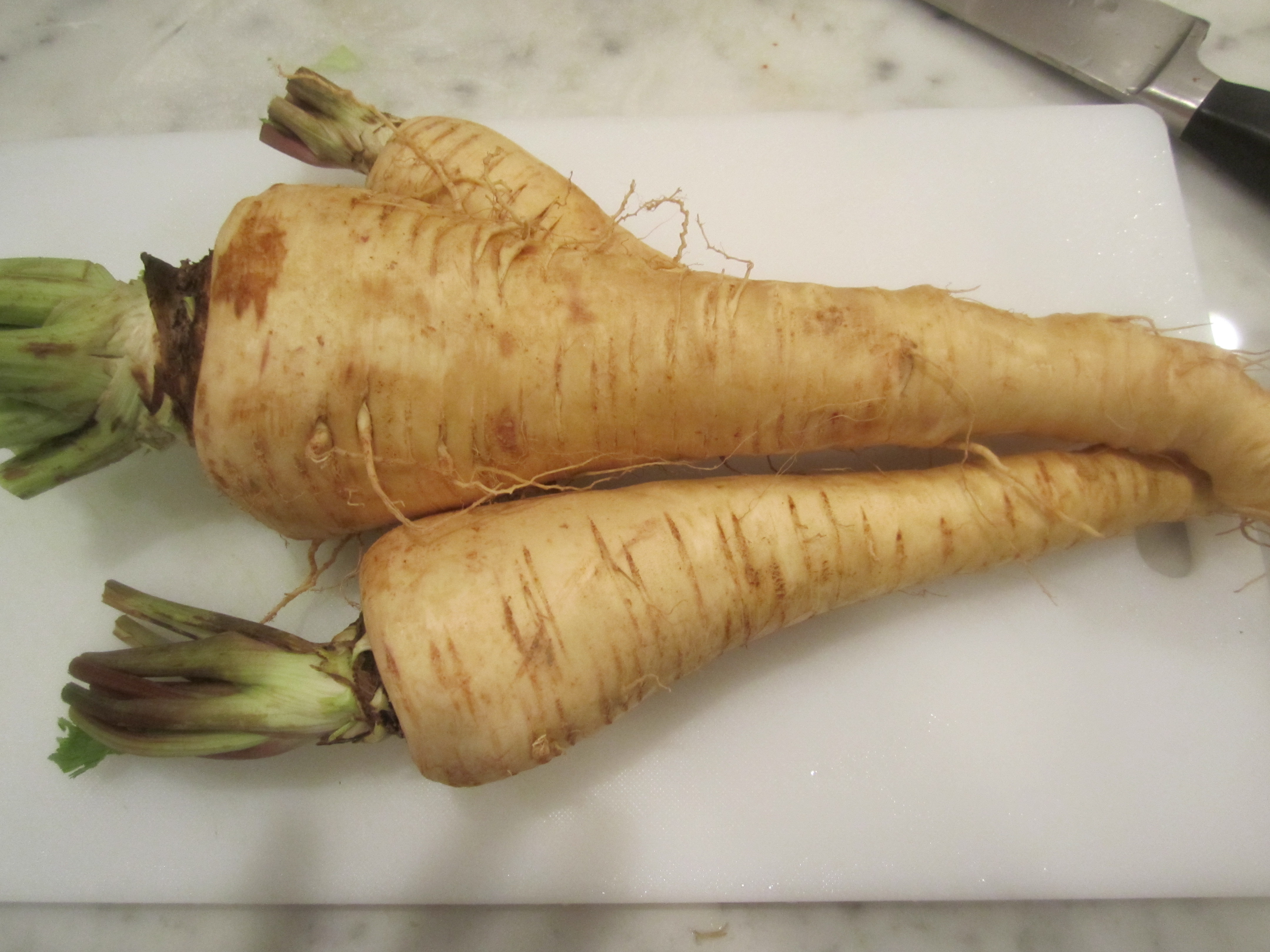
Parsnips will be in season from now into the winter.  Like carrots, they have a natural sweetness that lends itself to roasting.

I’ve done a little experimenting with this recipe, and had to make it twice to get the texture of the parsnips to a point that I thought was luxurious and crispy on the outside, but tender on the inside.

You’ll find that most recipes for roasted parsnips direct you to simply oil them and place them on a baking sheet for anywhere from twenty to forty minutes.  I found this a woefully inadequate cooking time.  I roasted my first round of parsnips for a full hour-and-a-half, and although they were nice and golden, they were tough as leather.

I realized that the only way to get them to a texture with which  I was satisfied was to boil them first, then roast.  This technique worked brilliantly and also gave me a dish that can be partially prepped ahead, then finished off in a hot oven in no more than a half-hour.

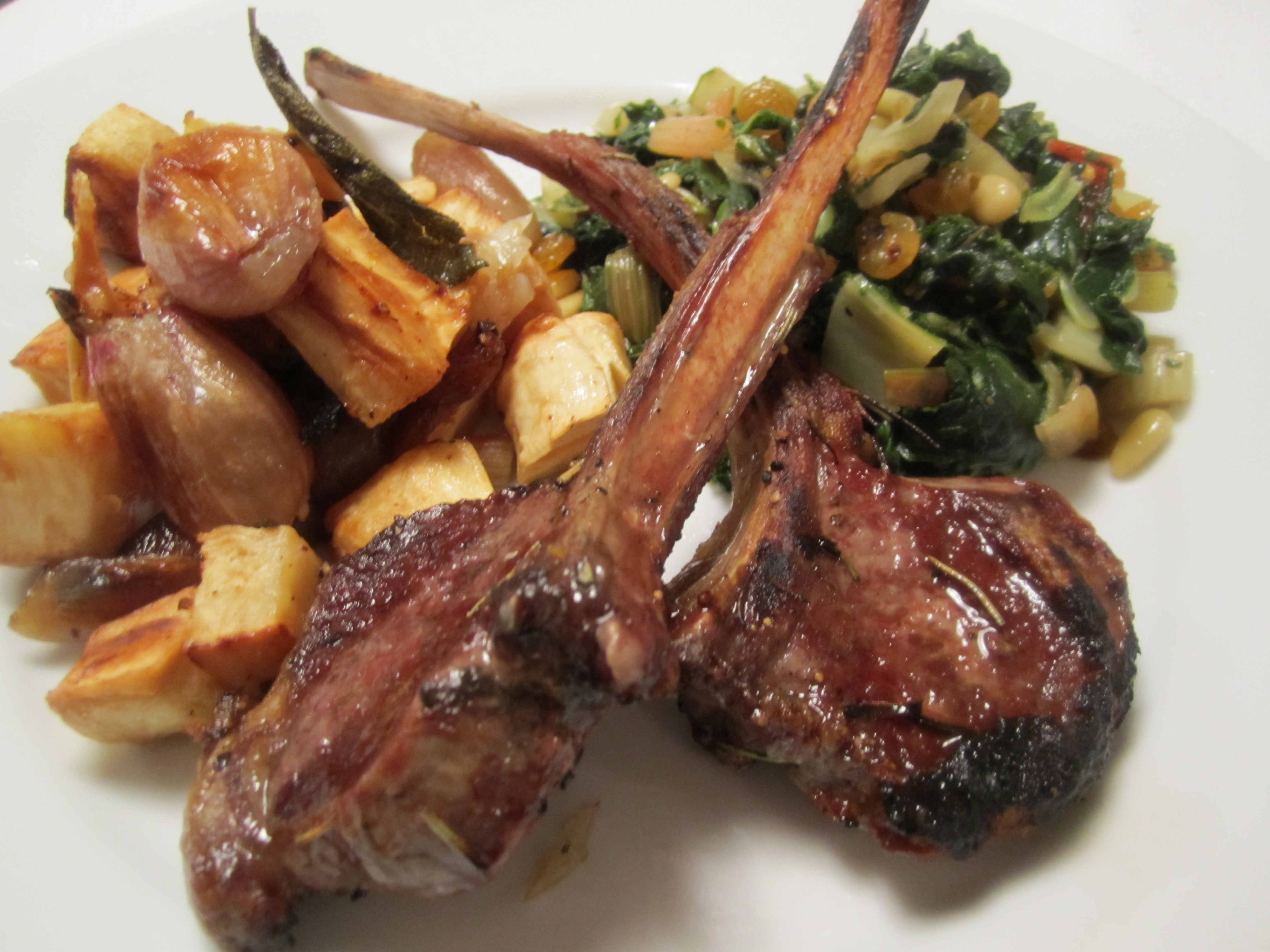
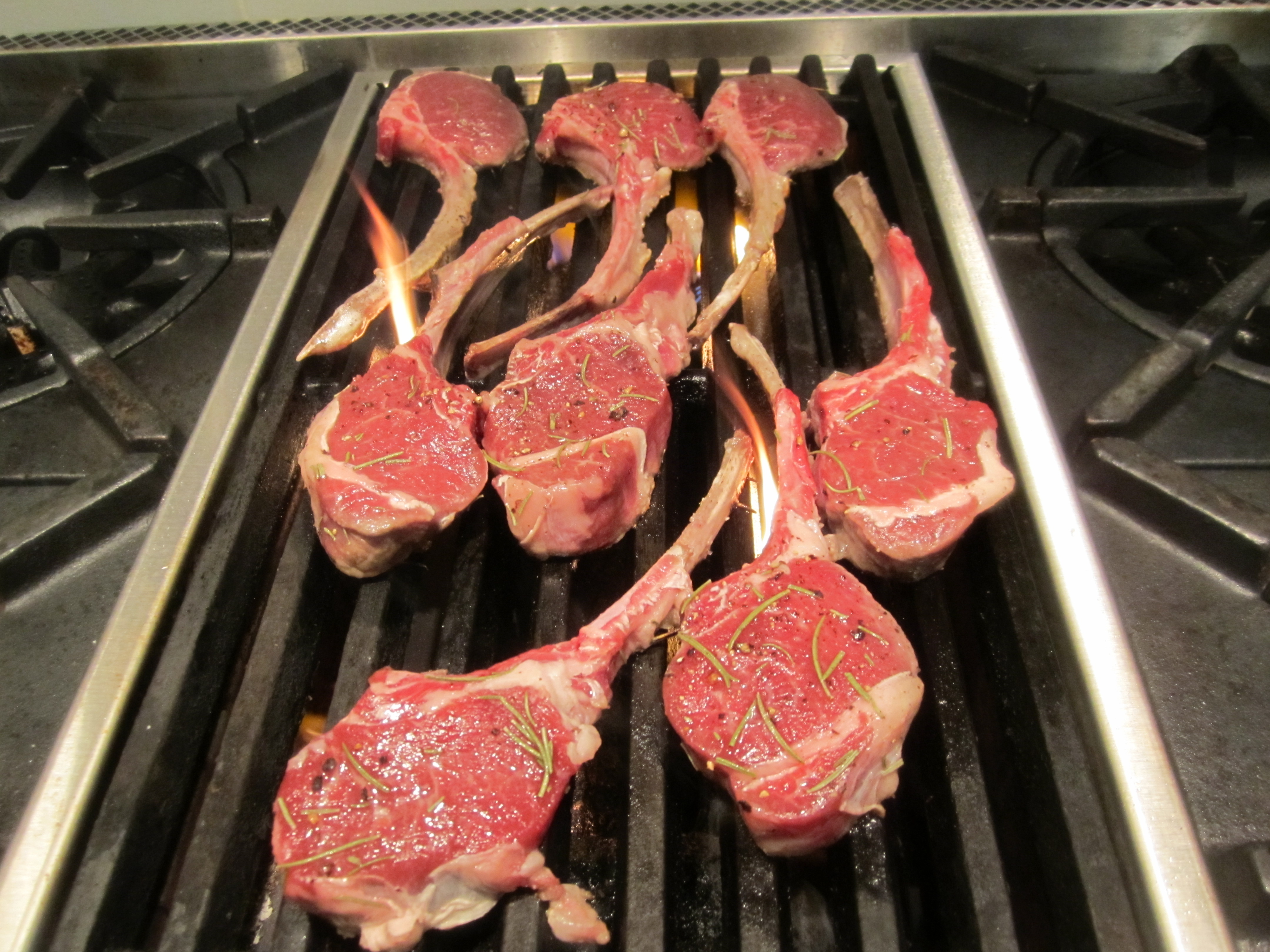
Tonight, our main course was lamb chops, rubbed with salt, pepper and rosemary and simply grilled on my stovetop charbroiler.

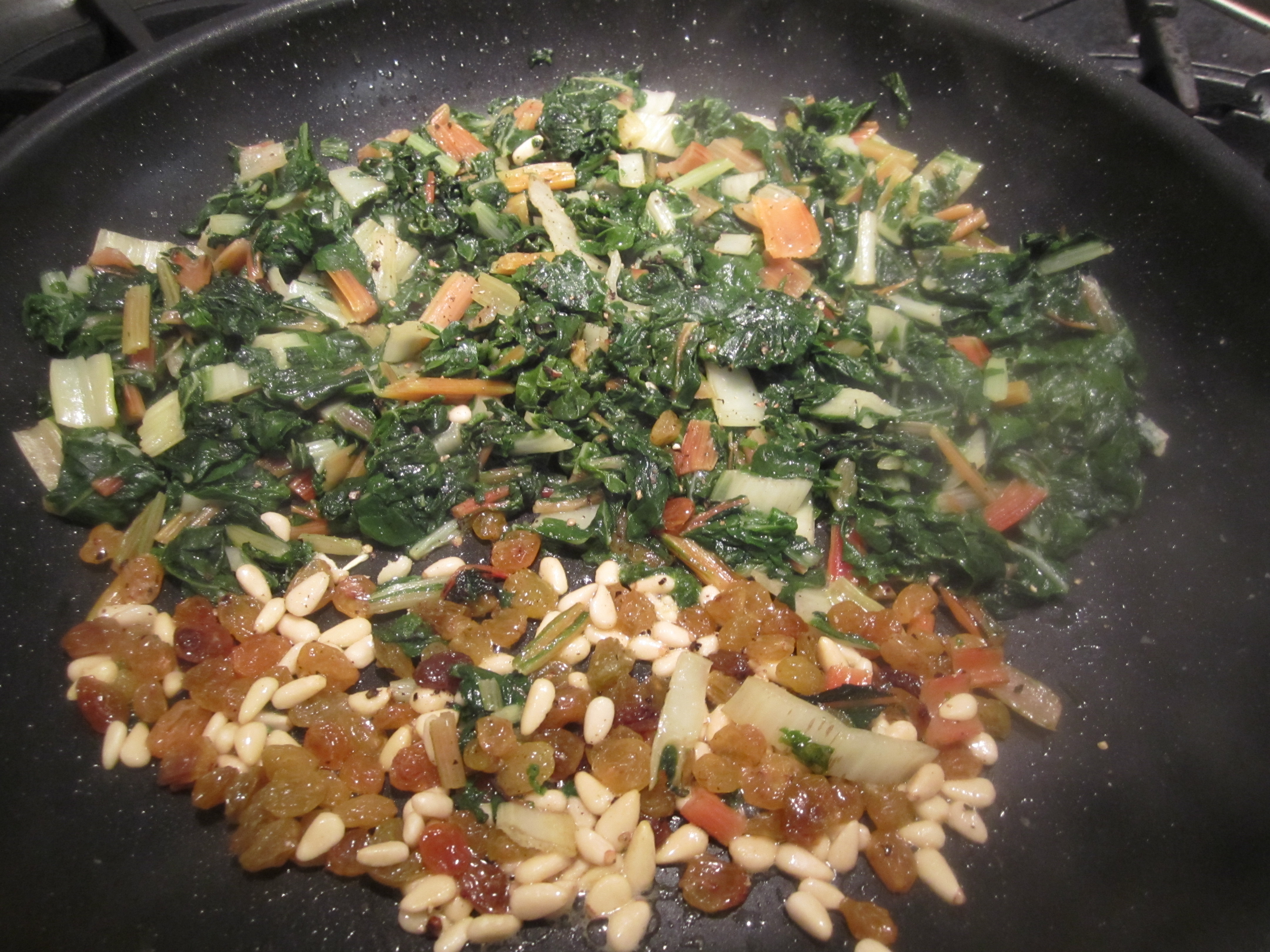
As an accompaniment, we had swiss chard, chopped, blanched, then sauteed in olive oil with pine nuts and raisins.

Caramelized Parsnips and Shallots

serves 4 as a side dish

6 medium to large parsnips

12 shallots

1/4 c olive oil

12 sage leaves

salt and pepper to taste

Preheat oven to 450 degrees.

Remove root ends and tips from parsnips.  Peel and cut into 1″ cubes. Place in a pot of cold water and bring to a boil.  Boil for approximately 10 minutes or until soft.

Remove parsnips and drain.

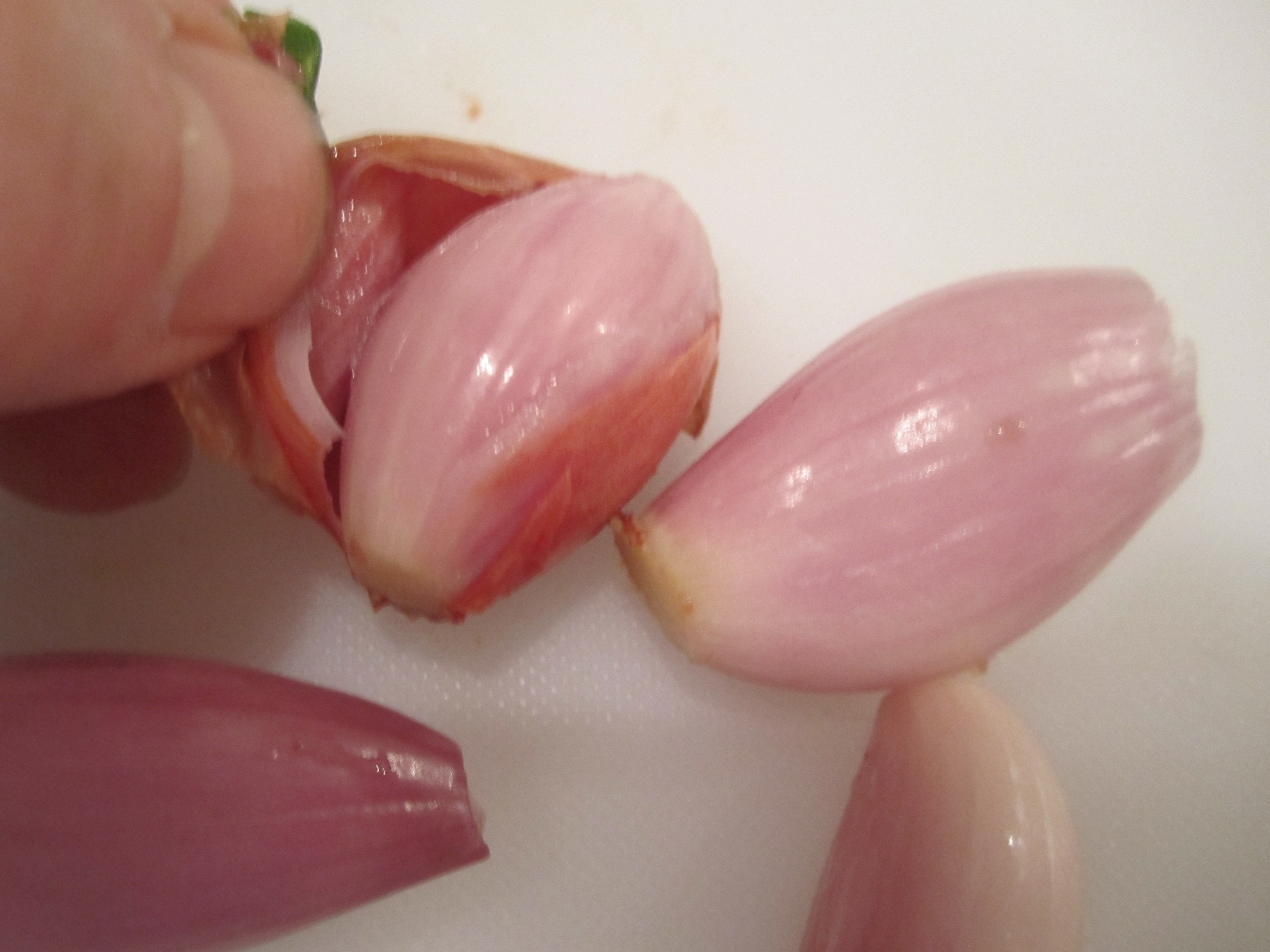
Drop shallots into the same pot of boiling water and blanch for 1 minute.  Remove and peel off outer skins.

Arrange parsnips, shallots and sage leaves on baking sheet and coat well with oil, salt and pepper.

Roast for approximately 30 minutes, or until golden and crispy.

Posted in Vegetables | Leave a comment

Beppi’s Celery Root and Rice Soup (My Way)

It’s time to harvest the celery roots that my neighbor Beppi grows in his garden.  He makes a wonderful minestra di sedono every year with these roots.  It’s the simplest, most delicate soup, made with only celery root, onion, butter and water–that’s it. When the soup is fifteen minutes shy of done, he adds rice and continues cooking until the rice is still slightly al dente.

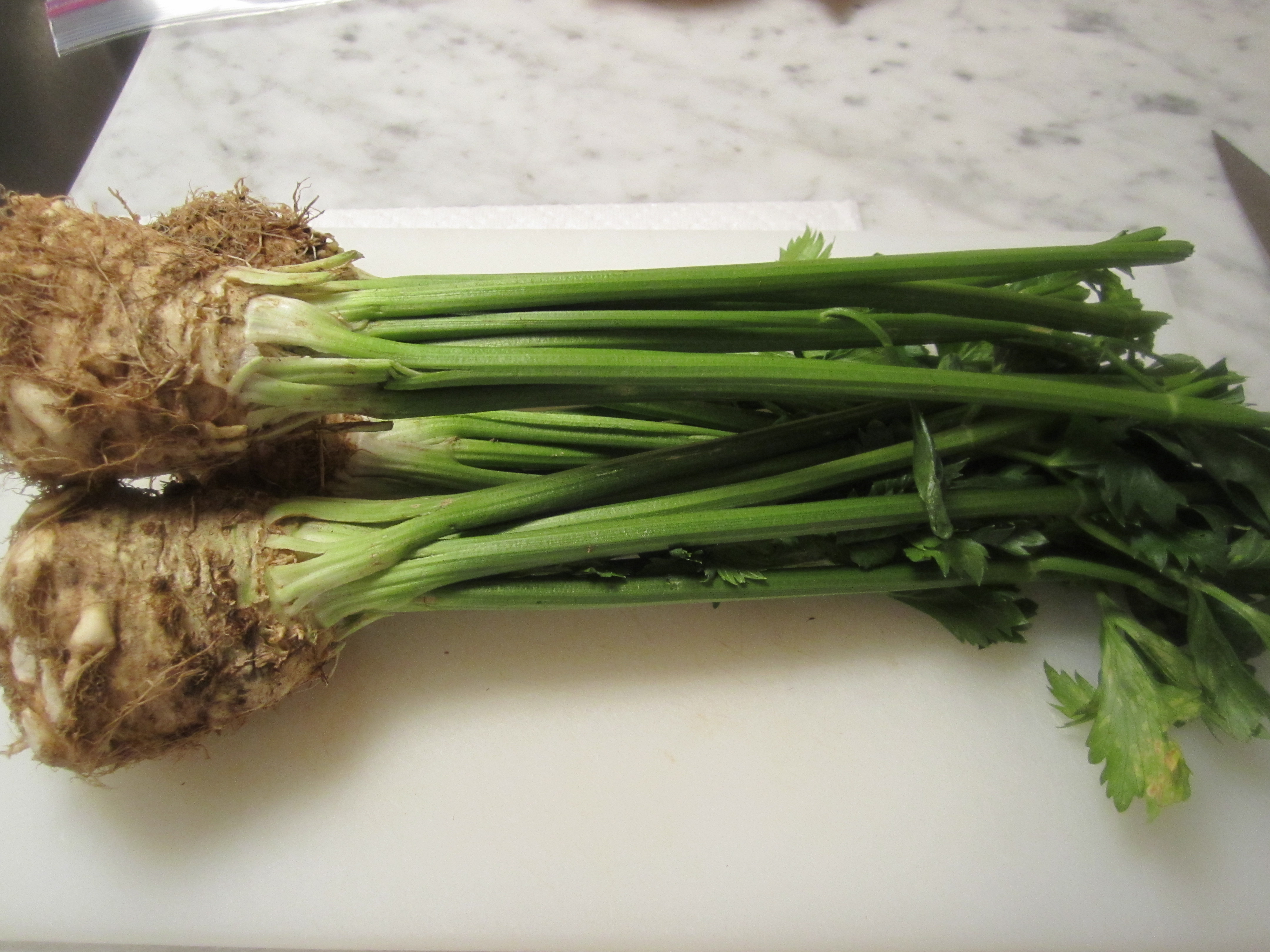
This year, Beppi offered to come over and give me a lesson in making the soup and I eagerly accepted.  He showed up at my door with the most beautiful roots, just pulled from the ground.

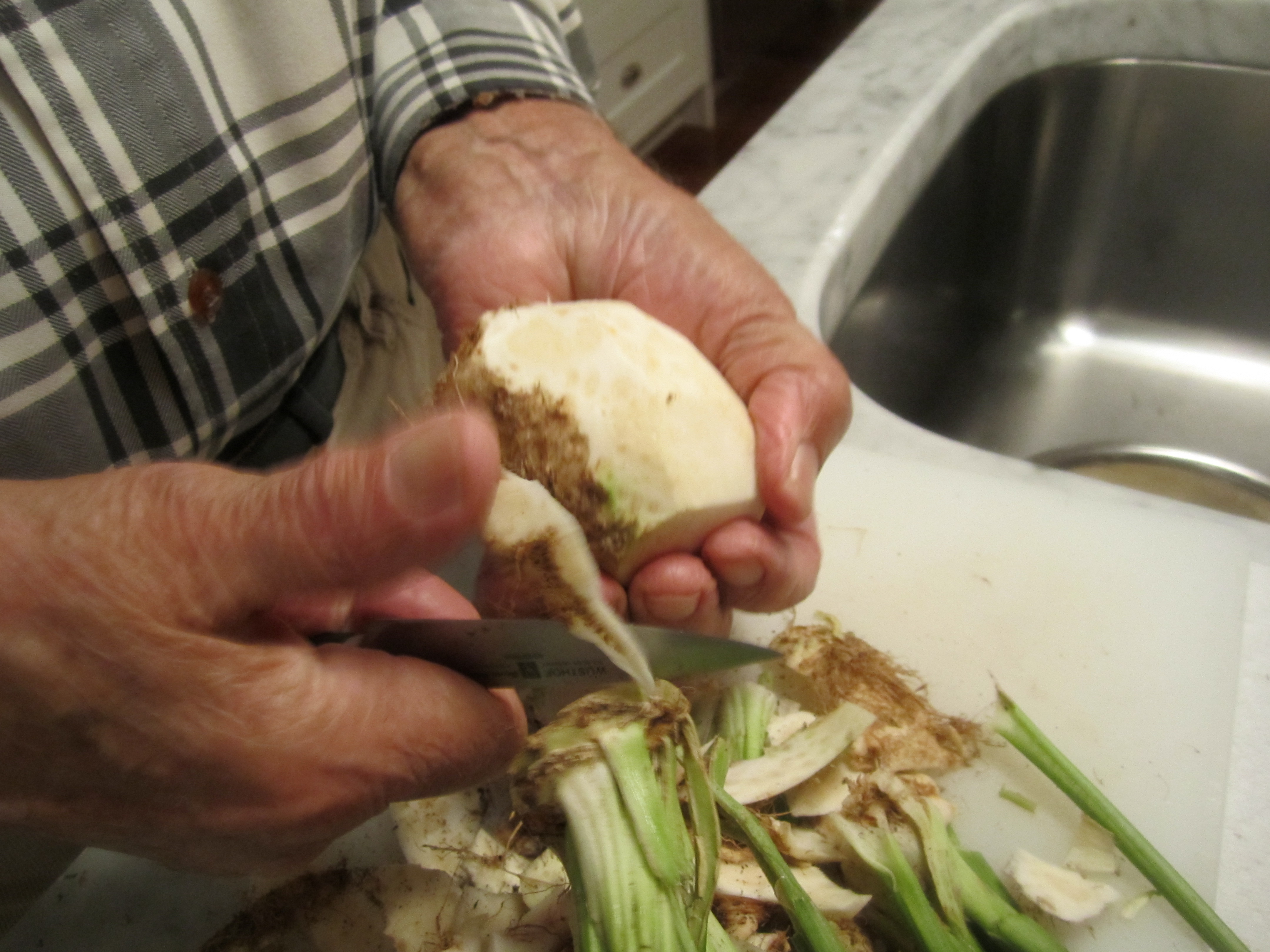
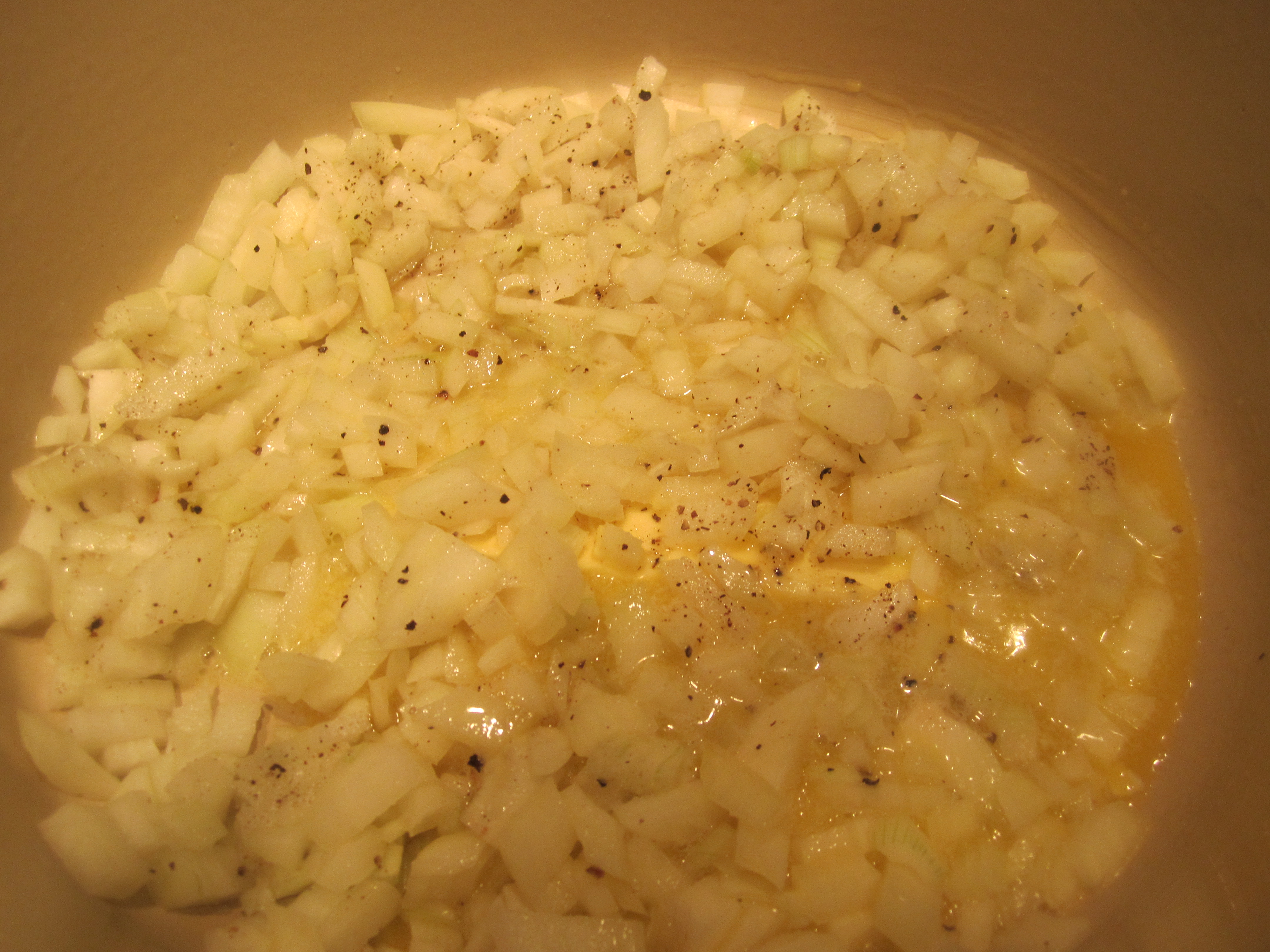
He peeled them with a paring knife, removing all of the gnarley exterior and exposing the white interiors.  The stalks get discarded (too strong to eat–much stronger than conventional celery).  The roots then get diced into 1/2″ cubes and sauteed, along with some onions, in lots of butter.  The whole mixture is cooked until it begins to caramelize.  At that time, plain simmering water is added (along with salt and pepper), and the soup perks away for about 45 minutes, until the celery roots are tender and the soup has taken on the faintly sweet, earthy flavor of celery root.  Then the rice is added and the pot is covered for fifteen minutes, at which time it’s ready to serve.

A word about the rice . . . I’m accustomed to using arborio rice for just about everything rice-related (unless I’m making brown rice, which I love, from time to time).  Arborio rice is great to make and serve immediately, but if left in a soup for any extended length of time, it practically dissolves.  I never put it in soup that won’t be eaten in one sitting. When I asked Beppi what ingredients I needed to buy for the soup, he said only butter, onions and rice.  I asked if arborio rice was OK, since I had it in the house.

No”–he replied, emphatically–“Not for this soup. . . Come to my kitchen, I show you the kind of rice you need to buy.”

In his very conspiratorial way, he presented me with the orange Uncle Ben’s box from his cupboard.  “I let you in on a little trade secret. . . When I had the restaurant, we used to use Uncle Ben’s for everything–except, of course, risotto.  The risotto it must be served right away, but all other rice dishes–always Uncle Ben’s. . . it doesn’t fall apart.”

Uncle Ben’s it was.

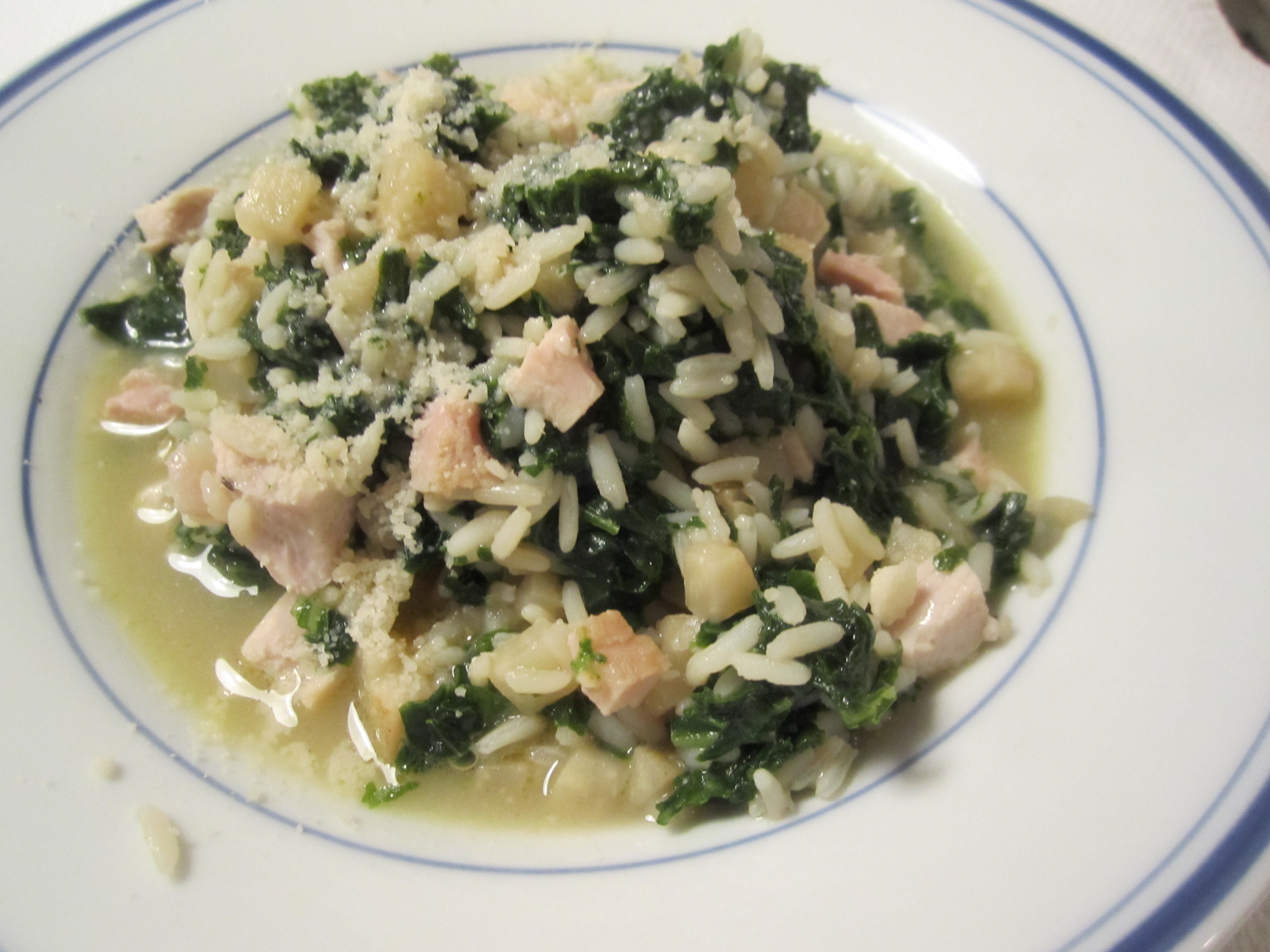
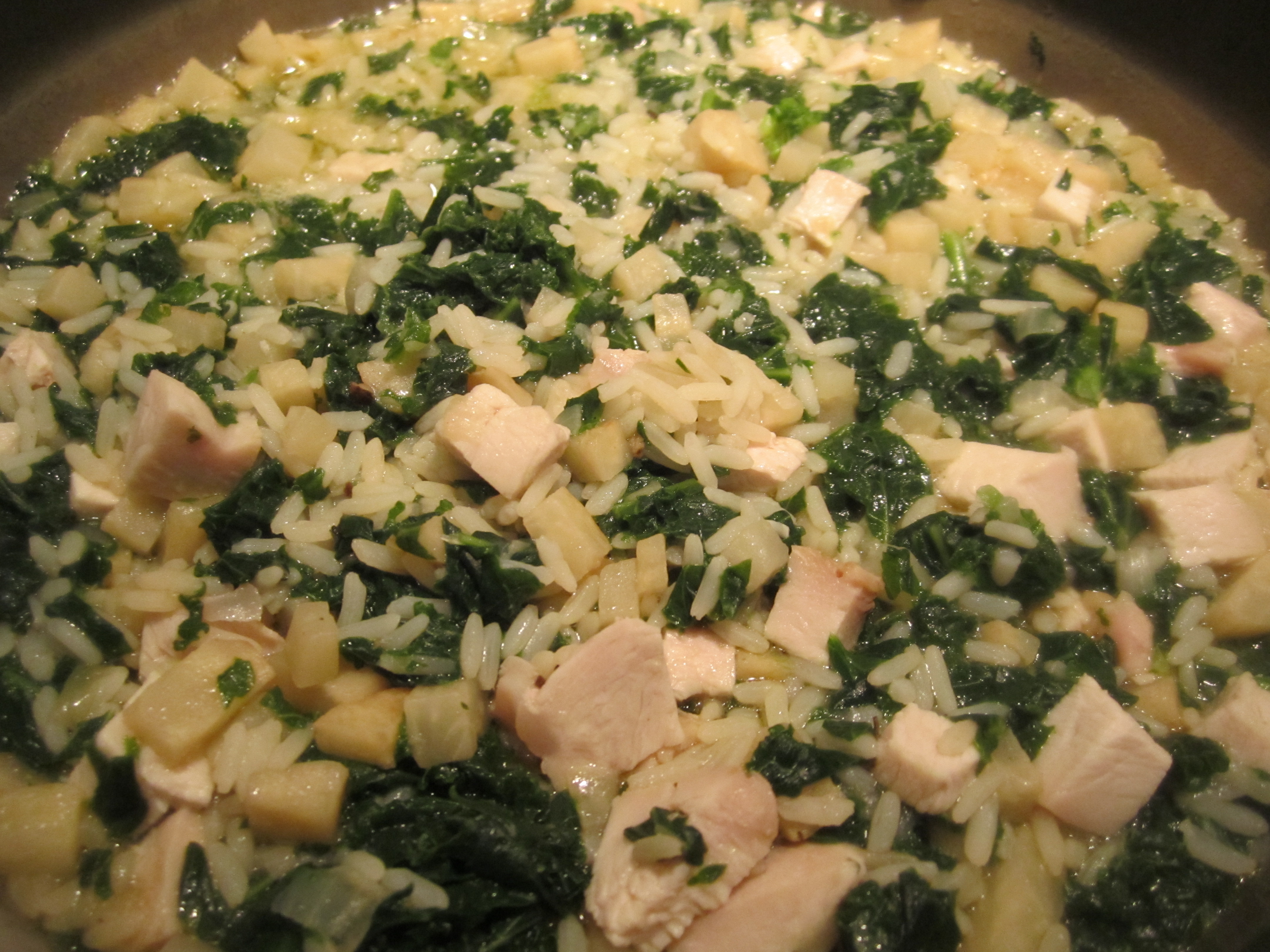
Tonight, I used Beppi’s soup as a base for our one-pot meal.  The celery root and rice soup by itself, would be a great first course, but tonight I wanted the soup to be our dinner.  I happened to have the perfect additions in my fridge to fortify this soup–turkey and kale.  The turkey was from my brined turkey breast the other evening–it was salty and flavorful–almost like a piece of cured sausage.  The kale, I had cooked and frozen a few weeks ago, since I always cook large amounts of it this time of year, knowing that it freezes impeccably.  Both together, these ingredients complemented Beppi’s celery roots and rice beautifully.

Beppi’s Celery Root and Rice Soup

serves 6 as a first course

4 – 5 celery roots

2 medium onions

1 stick (8 tbls) butter

1 1/2 c Uncle Ben’s Original rice

2 quarts water

salt and pepper to taste

grated parmigiano to sprinkle on at the table

1  1/2 c each of diced turkey meat and cooked, drained kale (optional)

Peel celery roots with paring knife until only the white interior is exposed.

Dice celery root, along with onion, into 1/2″ pieces.

In an 8-quart dutch oven on medium heat, saute celery root and onion (with a sprinkle of salt and pepper) until they begin to turn golden (about 10 minutes on moderate heat).

Add boiling water, salt and pepper and simmer, partially covered on low heat, for 45 minutes.  Add rice and simmer another 15 minutes.

If using turkey and kale, add both and return to simmer.

Serve with plenty of grated parmigiano and black pepper at the table.

Posted in Soup/Stew | Leave a comment

Whole Wheat Kale Stuffing

I have several ingredients in the house which have inspired me to make a fall stuffing–bread, kale, sausage, sage, shallots, celery and broth.  The only thing that remains to be bought is the turkey.

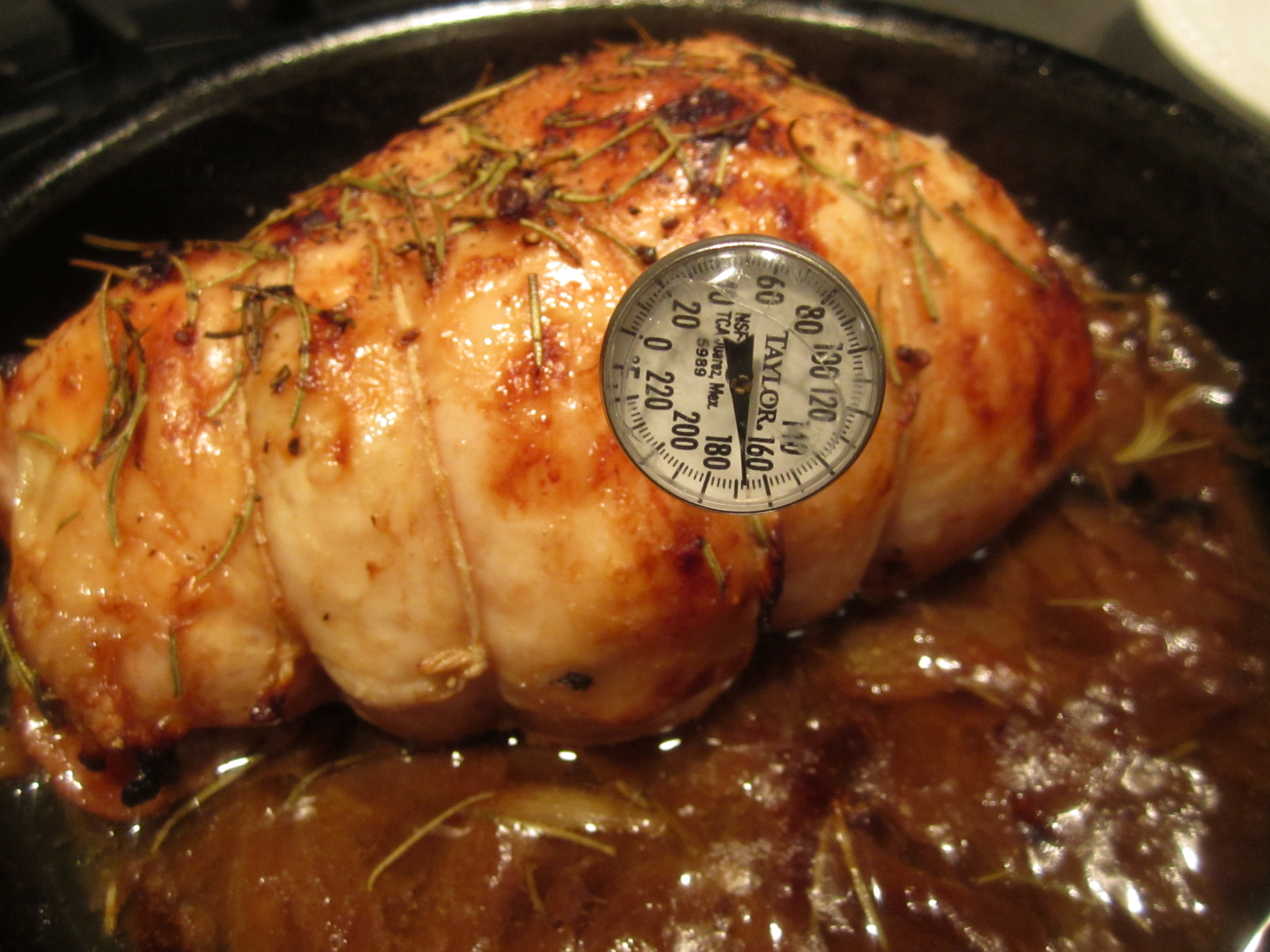
Therefore, I bought a boneless breast already tied into a roast.  This is something my butcher regularly carries and is a great time saver–free-range and organic, to boot.  I decided to brine it because I had the time and because the leftovers are nice and juicy–like cured meat.  For the method, see my brined turkey breast.

As for the stuffing, it’s a combination of my own method and a little nod to my neighbor, Beppi.  Beppi puts mortadella and luganiga sausage in his stuffing, as well as the traditional breadcrumbs and herbs.  I’ve decided to add these meats, since I already have them in the fridge.

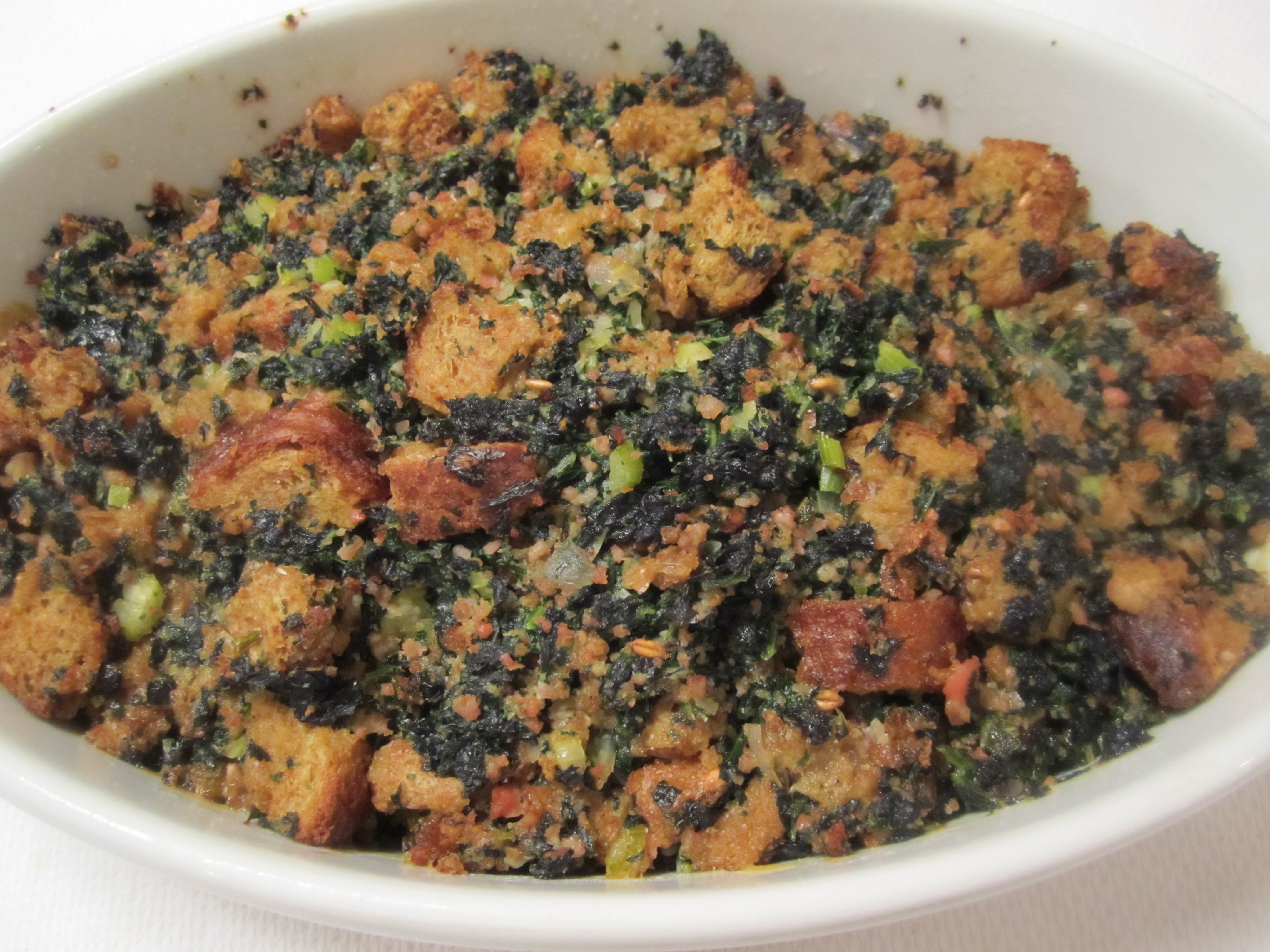
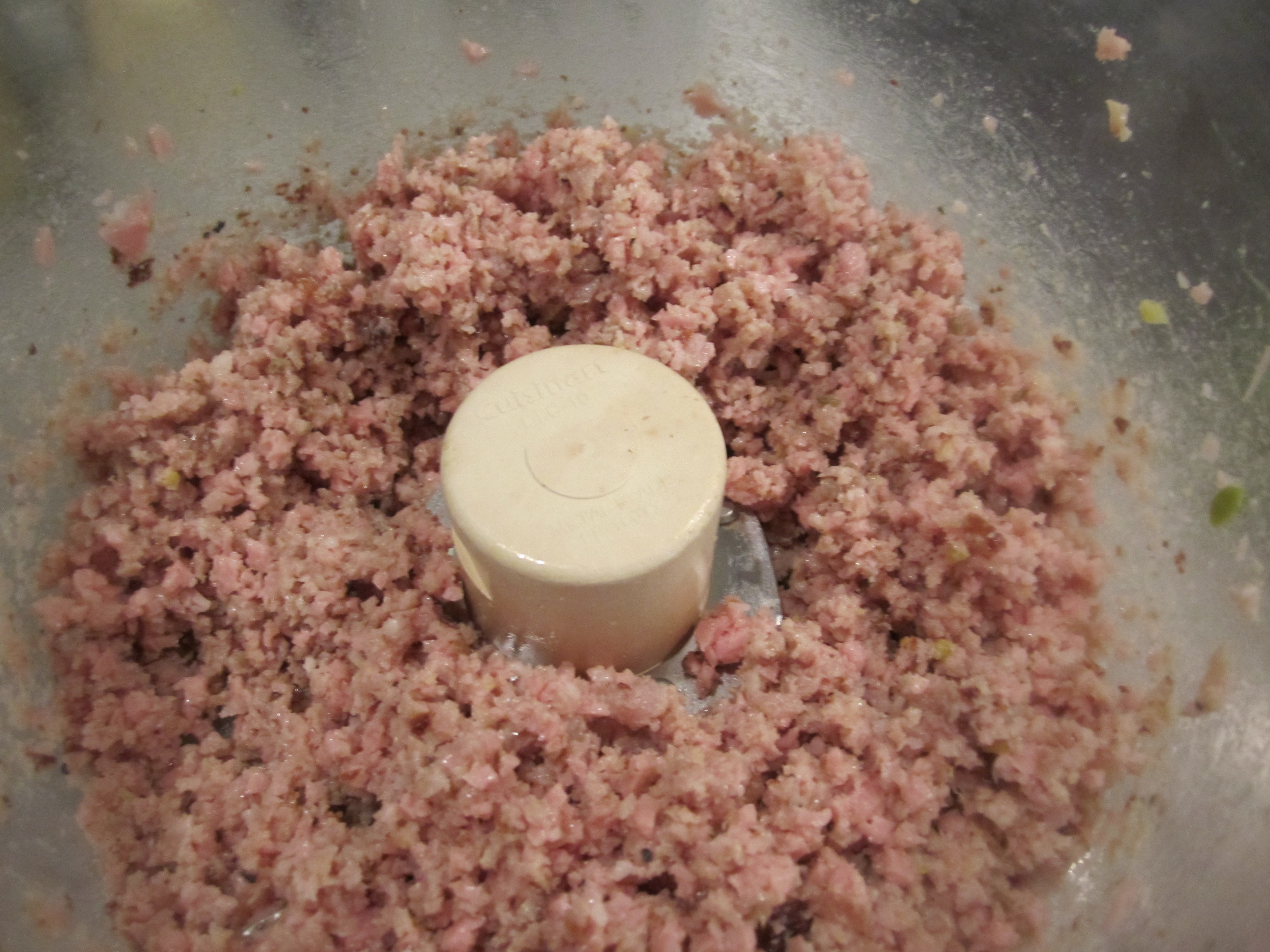
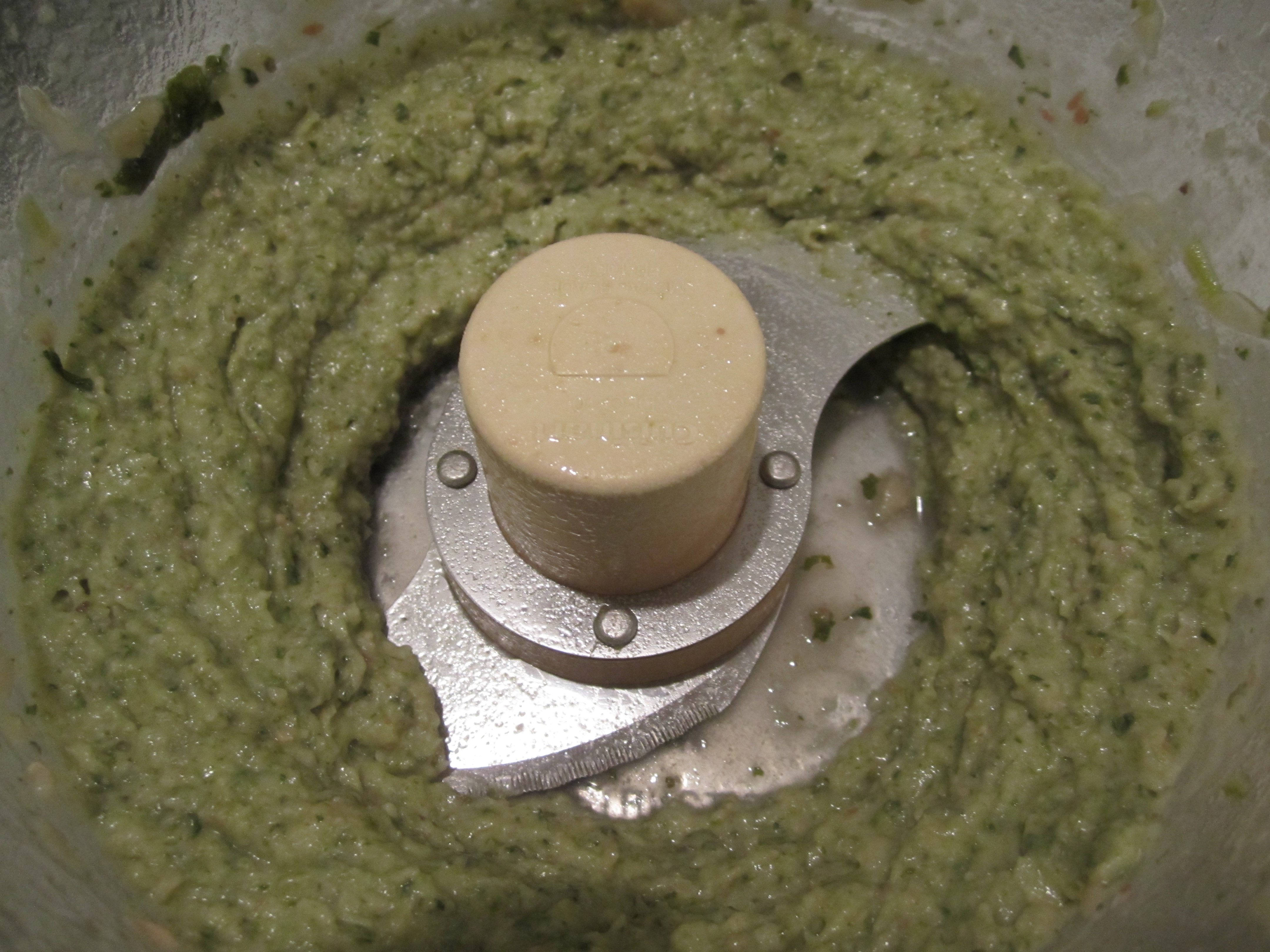
I also happen to have a loaf of whole wheat bread in the freezer and I love the flavor and texture of whole wheat in stuffing.  It has a nuttiness that combines well with butter, sage, celery and onions.  The process begins with toasting the bread cubes in a low oven until they’re dried out and crunchy.  Then the celery and shallots or onions get sauteed with butter and sage.  The mortadella and pre-cooked luganiga sausage get minced in the food processor until they form a paste.

Kale is boiled, then coarsely chopped and added as well.  The whole mixture is bound with enough broth to make it moist and cohesive. The kale lightens the stuffing and gives it a nice green flavor and color.

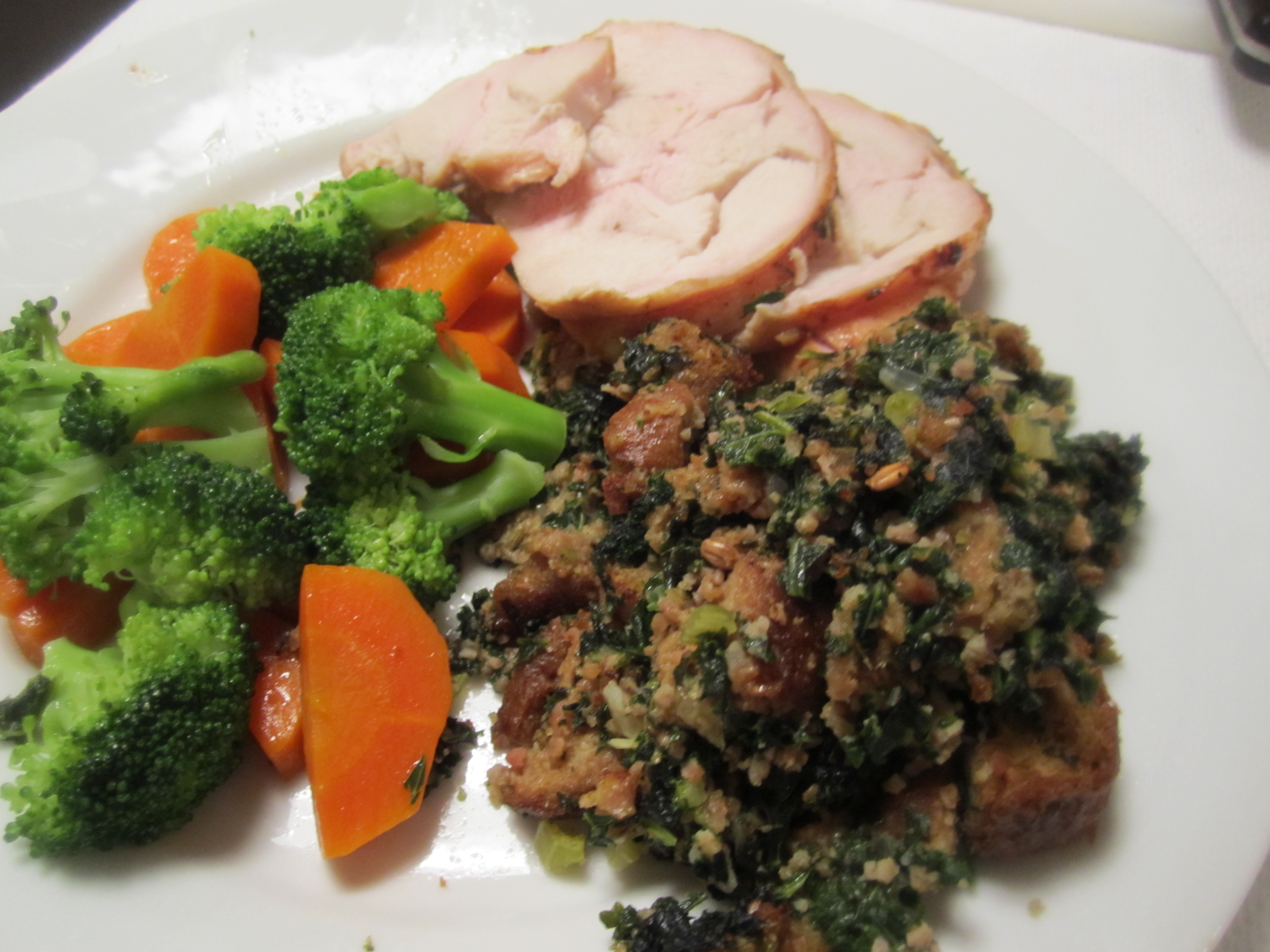
I made the stuffing and added it to the oven during the last 45 minutes of cooking my turkey breast.  Some carrots and broccoli added more fall flavors to the plate.

Whole Wheat and Kale Stuffing

serves 4 – 6 persons (alternatively, enough to stuff a 12-lb turkey)

6 slices whole wheat bread

6 oz. cooked luganiga sausage

3 oz. mortadella

6 small shallots or 2 small onions, finely diced

3 ribs celery, finely diced

8 sage leaves

1 1/2 sticks butter

approx. 6 cups chicken broth

1 small bunch kale

salt and pepper to taste

Slice bread into 1″ cubes and toast in a 250 degree oven for about an hour.

Cut sausage and mortadella into 1″ cubes and process to a coarse puree in the food processor.  Set aside.

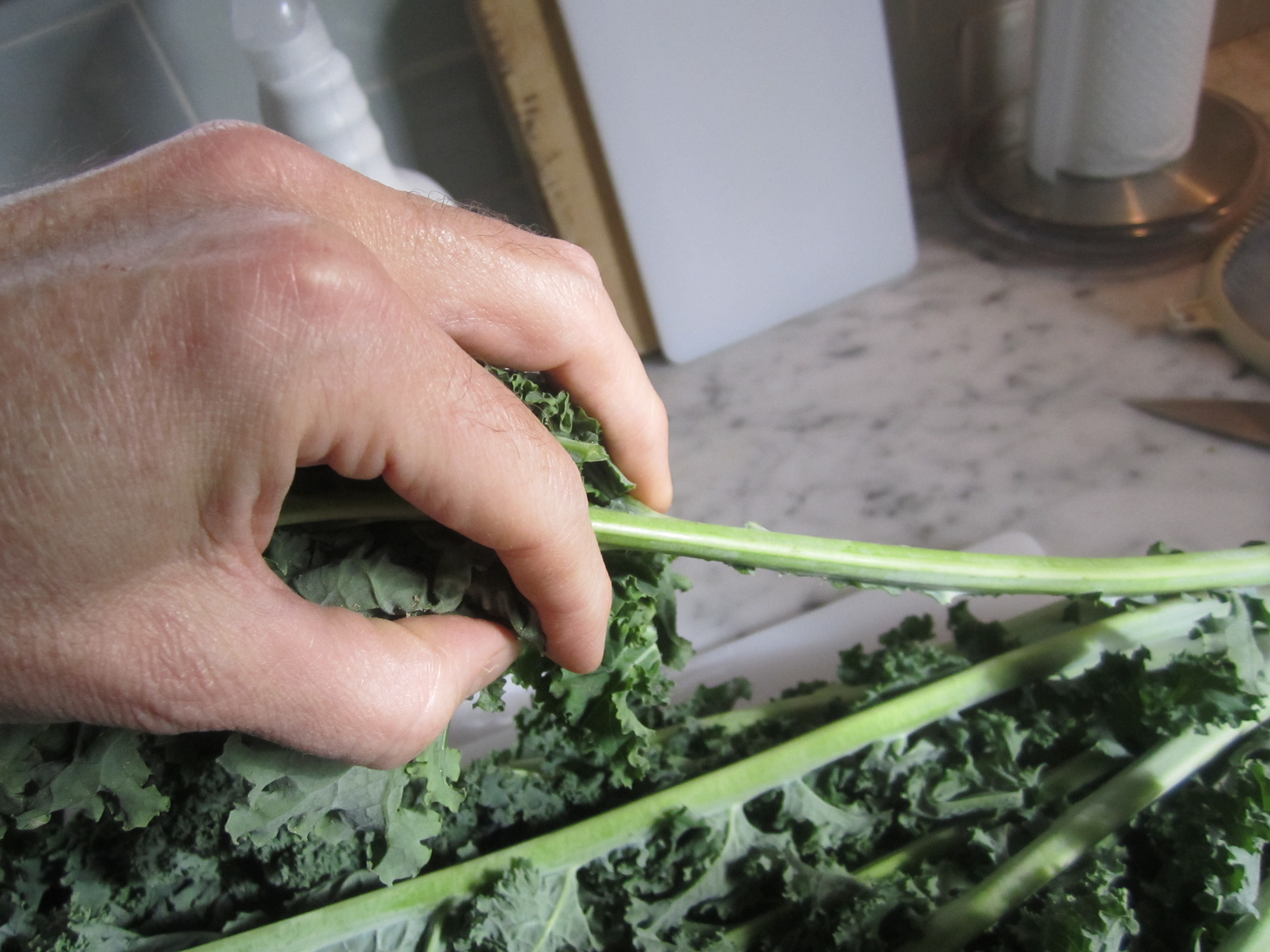
To prepare kale, strip leaves off stems.

Slice into 1/2″ ribbons and blanch in boiling salted water for about 5 minutes.  Drain, set aside.

After kale has drained, pulse a few times in the food processor (working in batches if all doesn’t fit at once) to achieve a coarse chop (alternatively, chop by hand until coarsely chopped).

In a skillet on low heat, place butter, shallots, celery and sage.  Saute for about 10 minutes or until vegetables are wilted and soft.

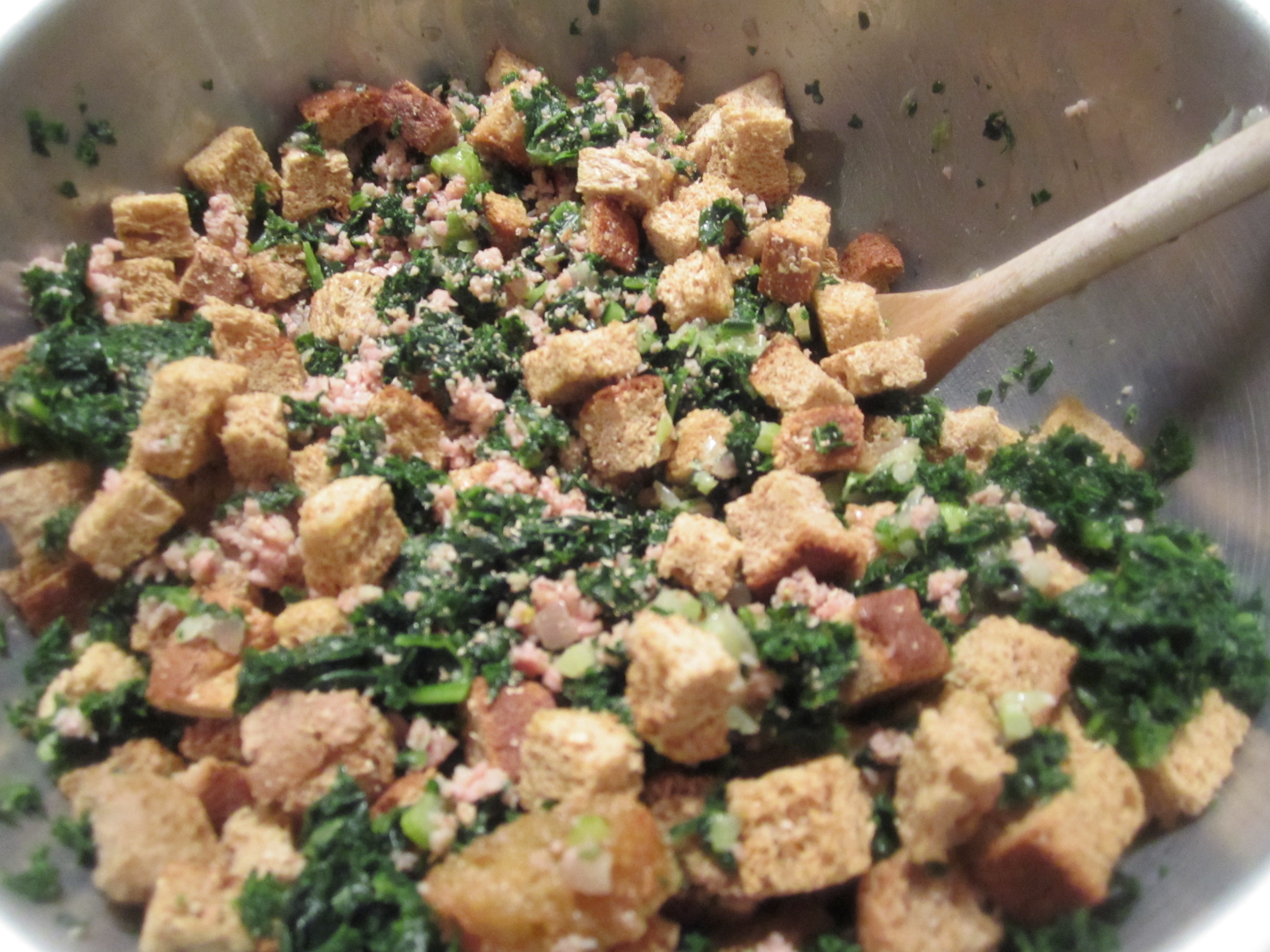
Combine all ingredients except broth, in a mixing bowl.

Preheat oven to 375 degrees.

Add all but one cup of broth to mixture, then transfer to a buttered baking dish.  Cover with foil, bake for a half hour, then uncover.  Taste for moisture and if too dry, add more broth.  Continue baking for another 15 minutes, uncovered or until top has browned slightly.

Serve alongside a juicy, salty, perfectly roasted turkey breast.

Posted in Uncategorized, Vegetables | Leave a comment

Indian Summer Brunch

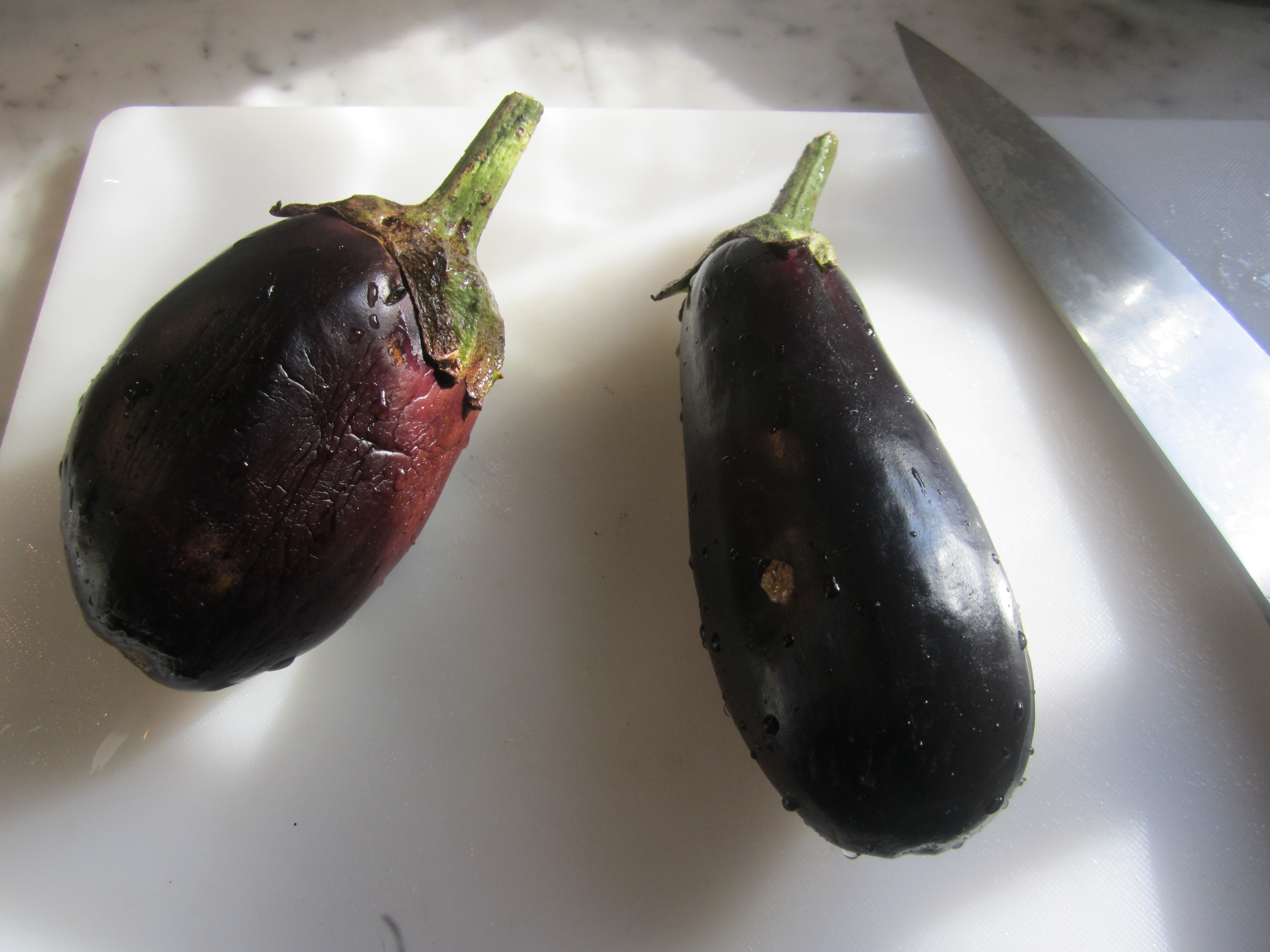
It’s such a joy having my neighbor Beppi’s produce all summer, and now, just when I thought I  wouldn’t see an eggplant until next summer, he knocks on my door with the last two remaining baby eggplants from his garden (along with a handful of basil). 

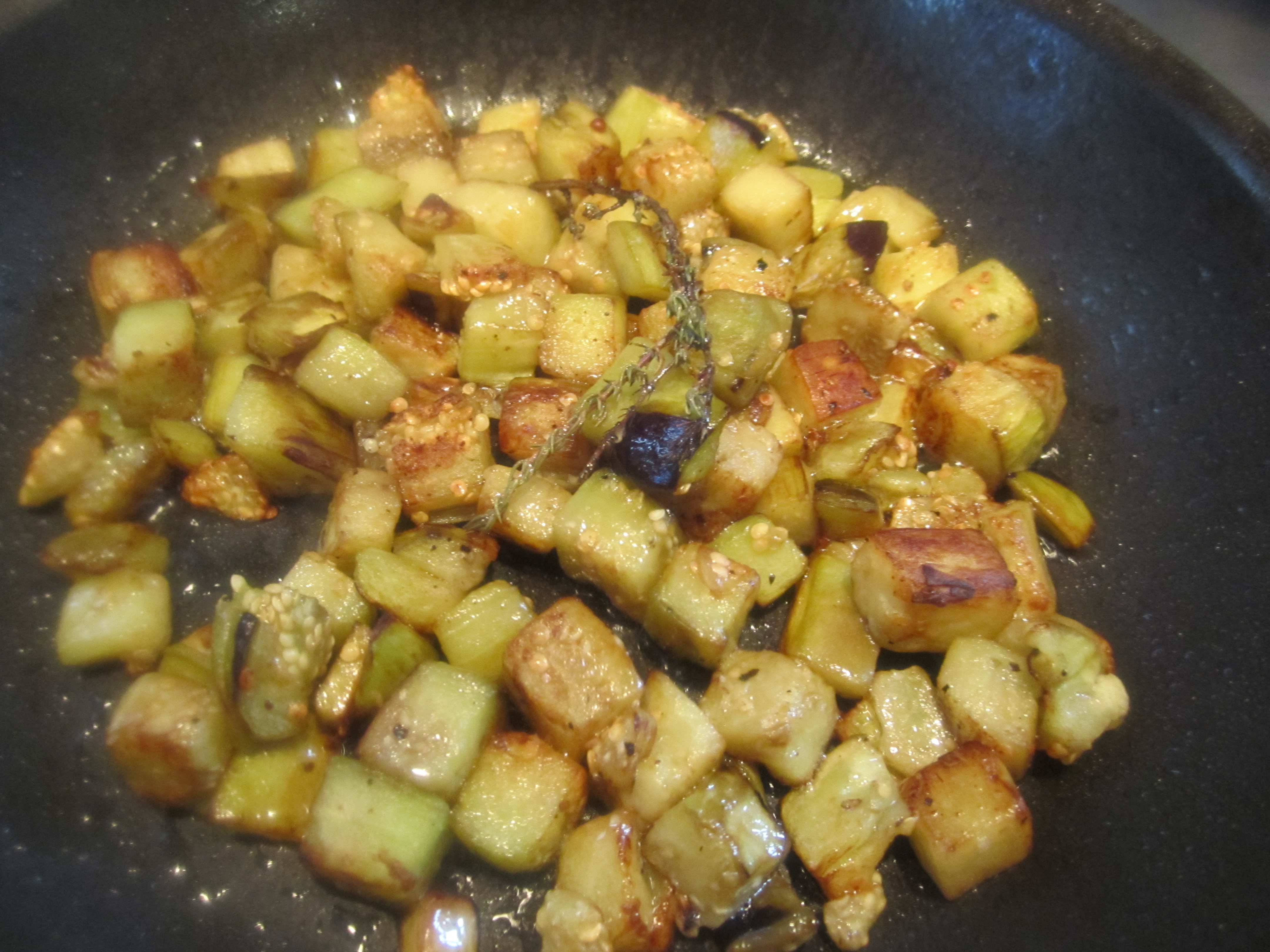
He directed me to simply peel and saute the eggplants in olive oil with a sprig of thyme–plenty of salt and pepper–that’s it–no tomato, no pepper, etc. 

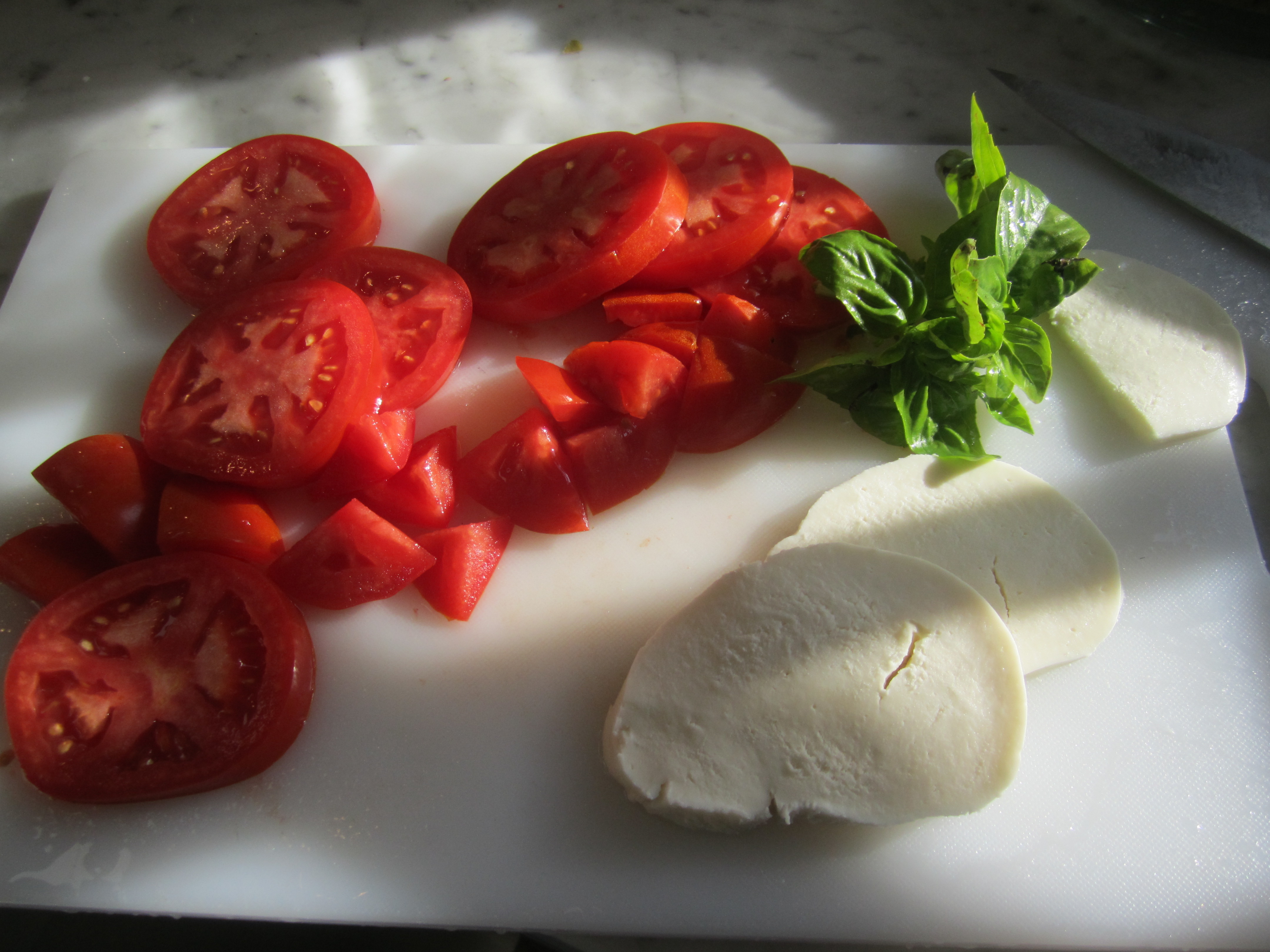
 It was delicious.  On the side, I decided to slice up a local tomato, some fresh mozzarella, and some of Beppi’s basil. 

This made our chilly but sun-filled Sunday feel like a breath (if only a gasp) of summer! 


Posted in Vegetables | Leave a comment

Beans and Farro

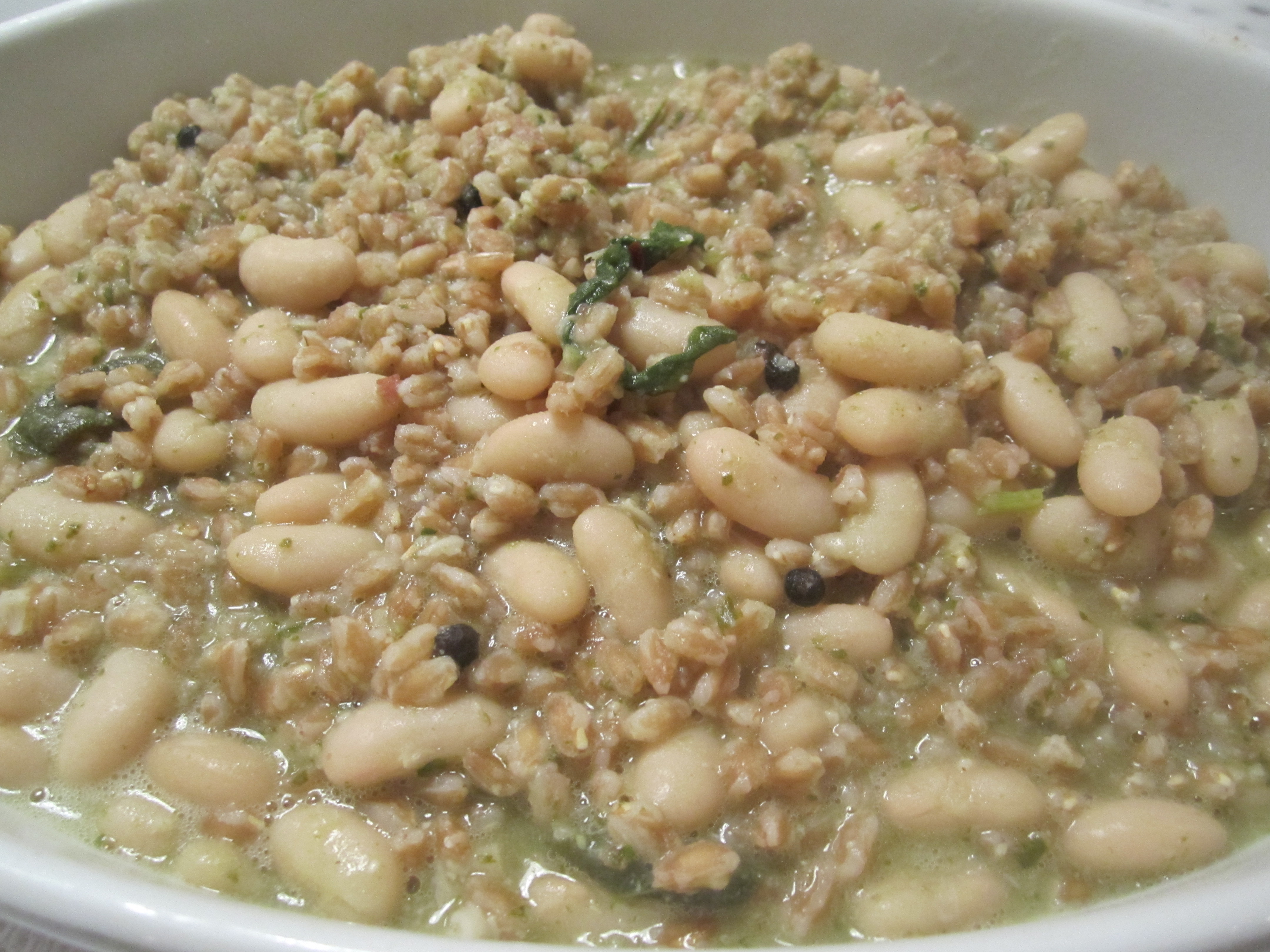
Although this is simply a dinner based on leftover beans, I can’t tell you how exquisite it was!  My Tuscan Beans are so versatile and just keep tasting better every day.  Tonight, I’ve decided to use up the last of them up by combining them with cooked farro.  This is a wonderfully nutty and healthy combination–loaded with fiber, vitamins and minerals.

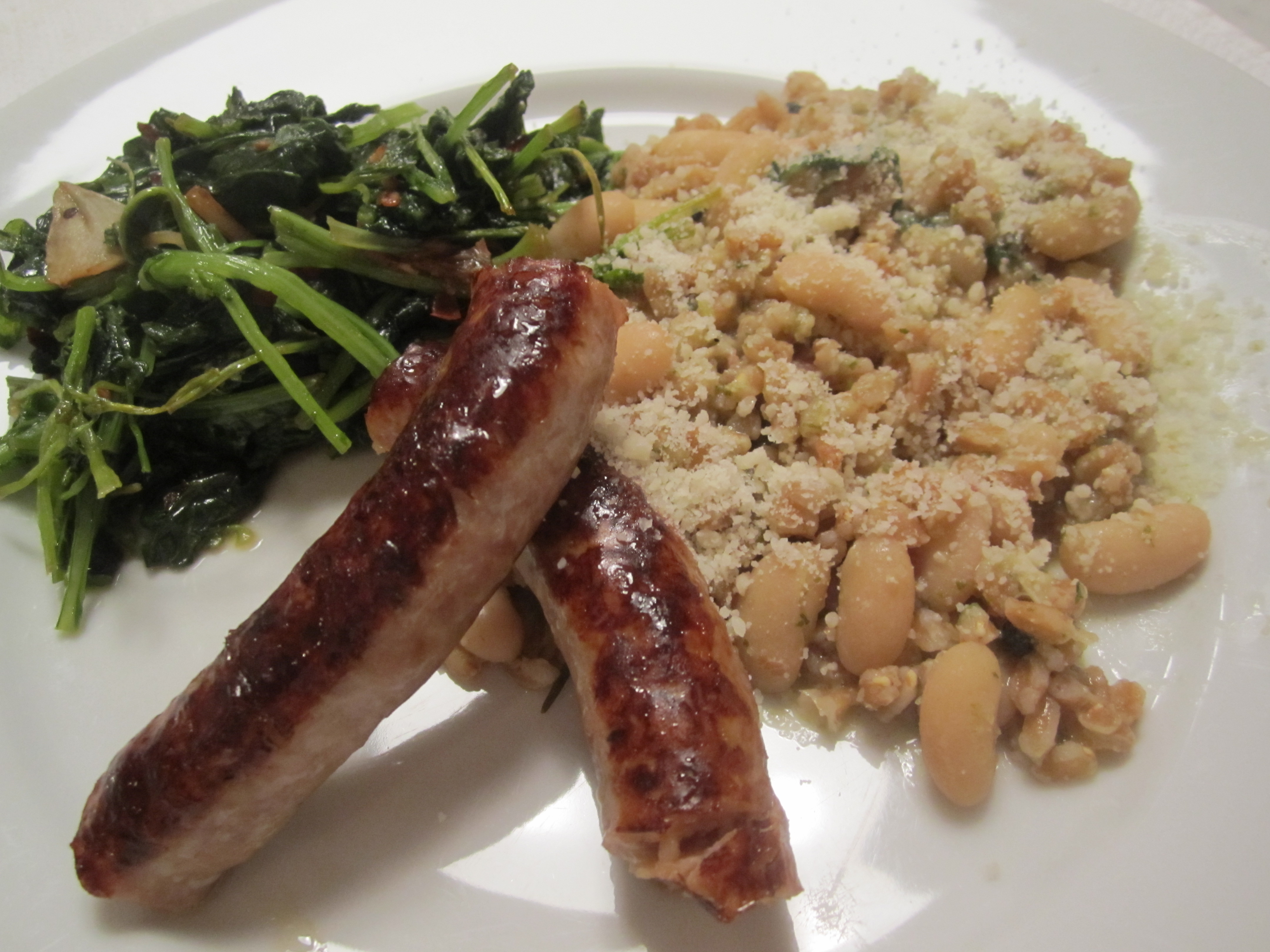
My neighbor Beppi, just coming down off a weeklong celebration of his 90th  birthday, had a freezer full of luganiga sausage, so when I told him I was making beans, he suggested some luganiga to go with them.  Unlike in past recipes, where I’ve boiled the sausage before sauteing it, Beppi suggested I simply saute it in a covered skillet on medium heat until cooked through (about 15 minutes).  It made a deliciously brown but moist and luscious main course.

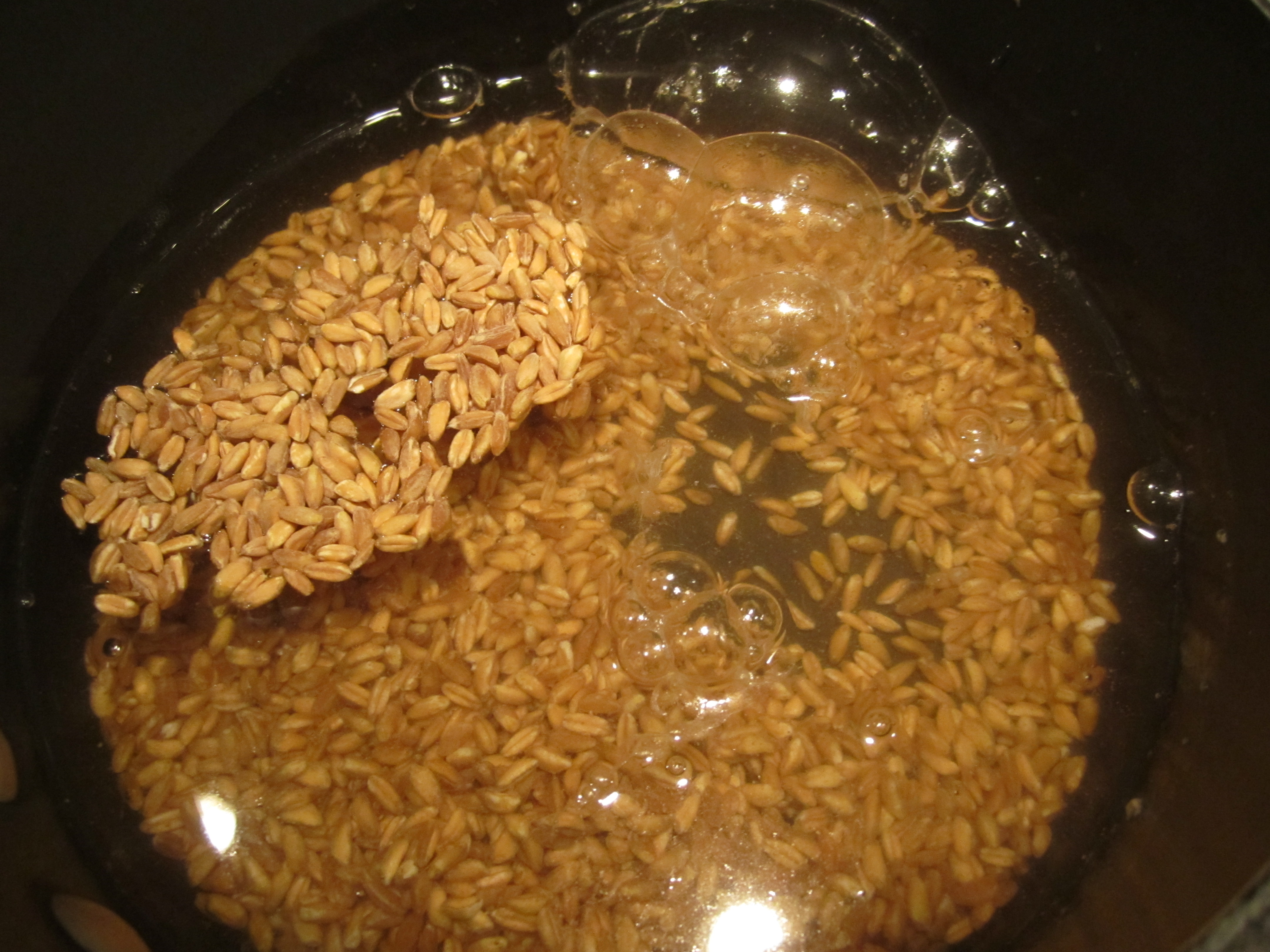
For the farro and beans, I simply placed about a cupful of farro in cold water with a half-teaspoon of salt and brought it to a simmer.

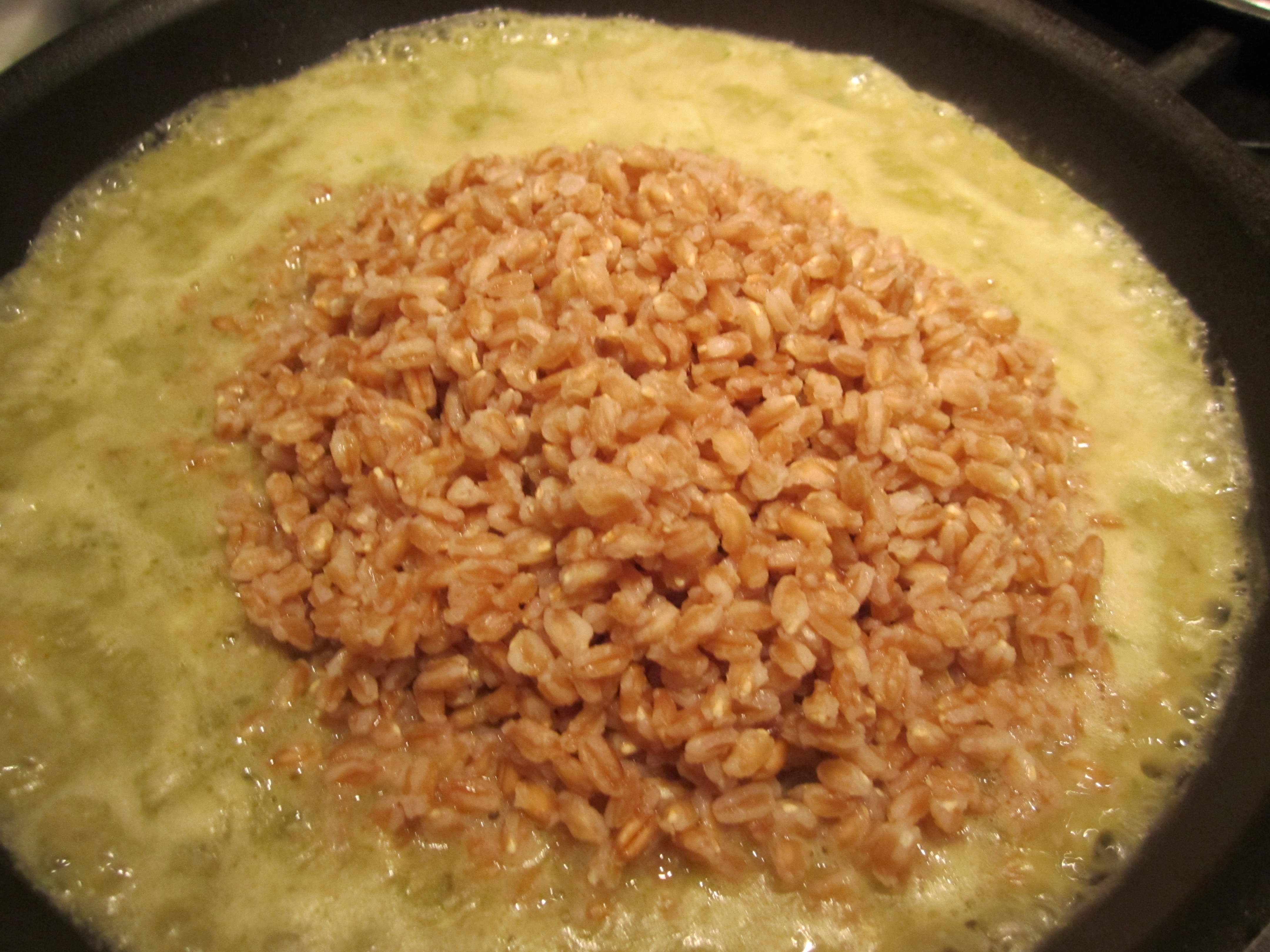
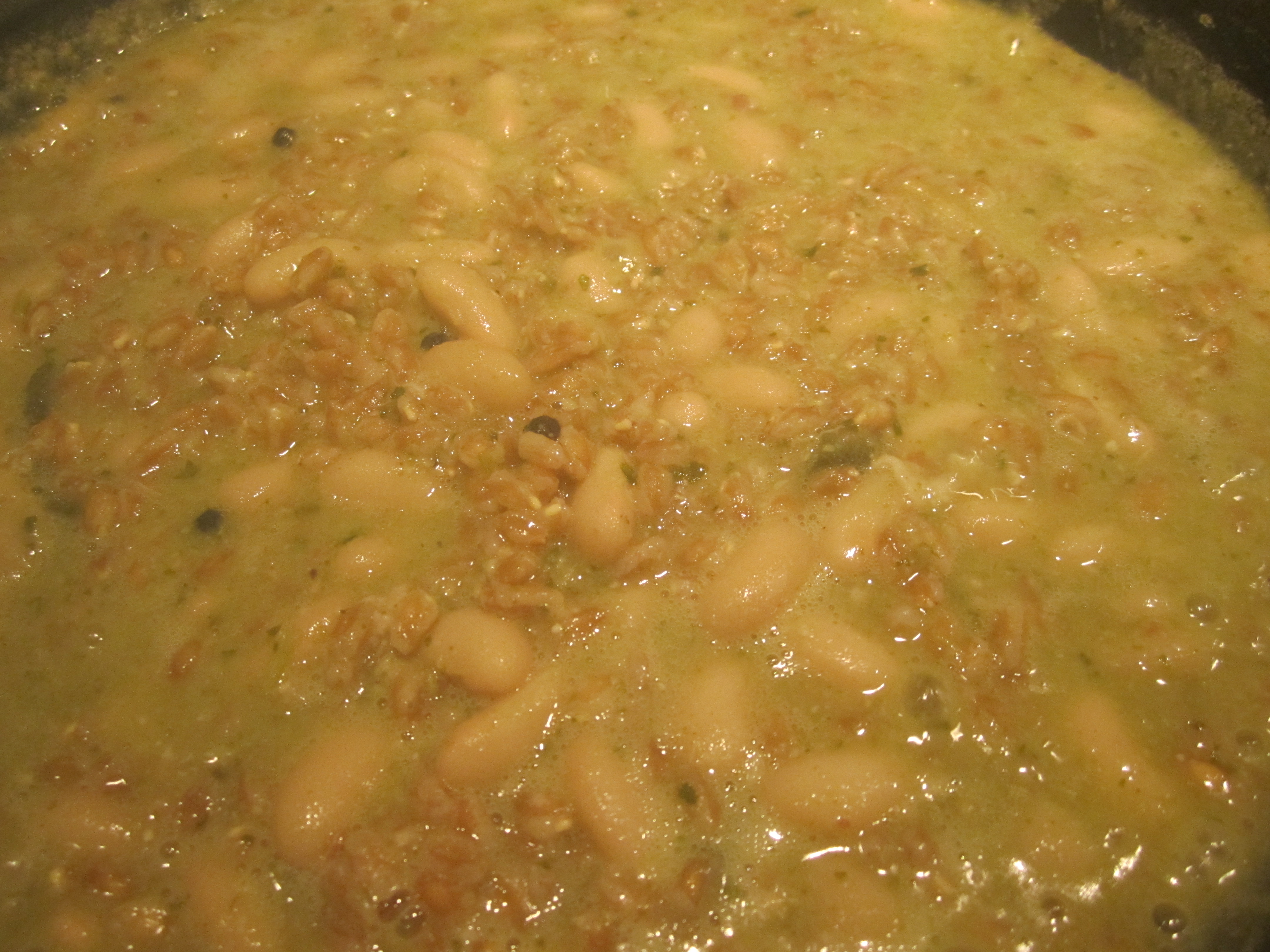
Boil for about 25 minutes, then drain and add to the leftover beans.

Simmer together for a couple of minutes until well-combined.

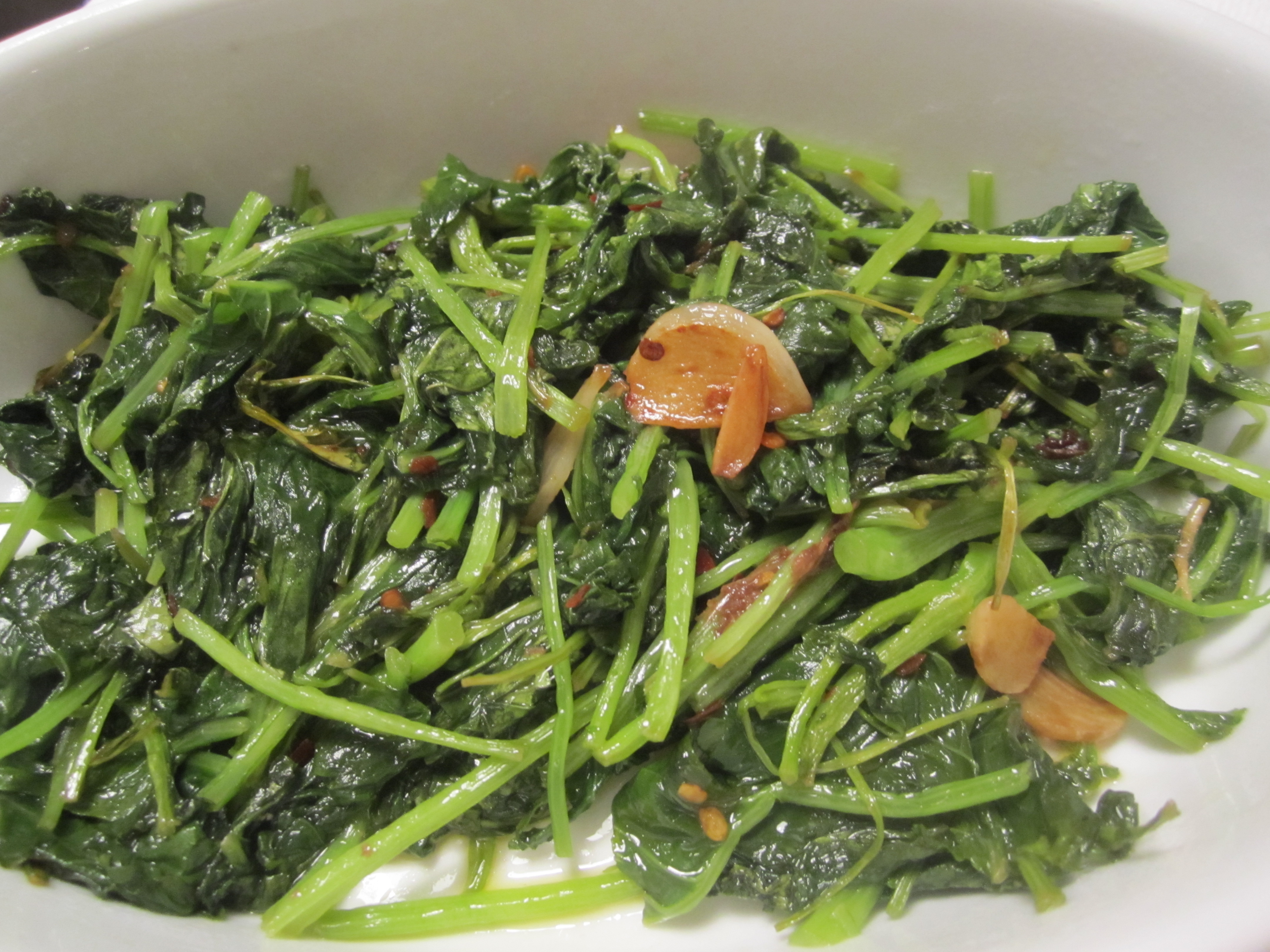
For something green, I sauteed baby broccoli di rapa, grown on a local farm, with sliced garlic and chili flakes.

This was the perfect bitter and spicy accompaniment to the richness of the sausage and beans.

Posted in Vegetables | Leave a comment

Tuscan Beans (My Way)

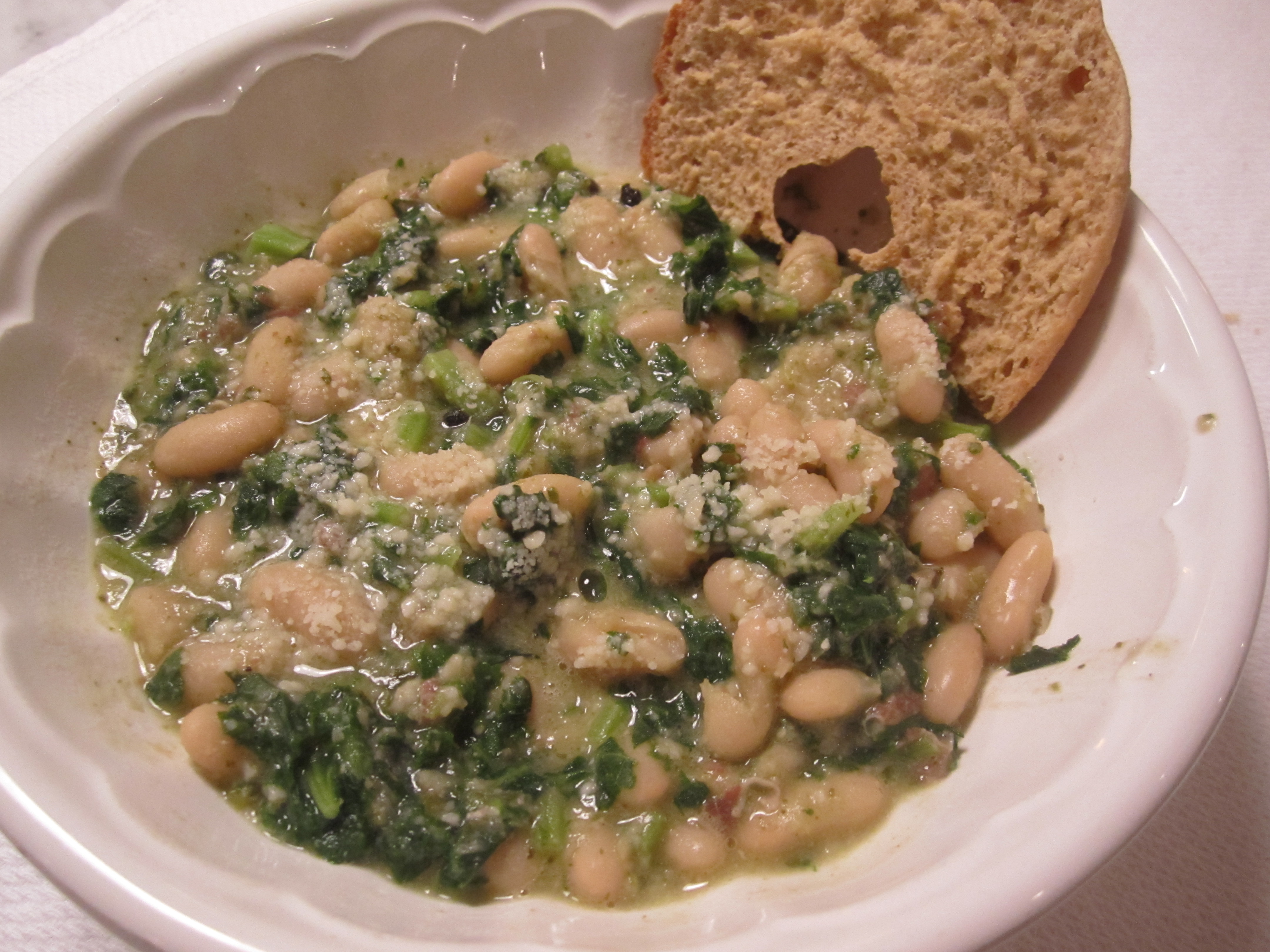
These beans are creamy, luxurious and packed with salty, spicy intensity.  Although they’re not cooked in terra cotta, as is customary in Italy, they are every bit as luxurious and irresistable as beans I’ve had in Italy.

Beans take one day’s advance planning to allow for the overnight soak.  I’ve tried the quick-soak method and it never works to my satisfaction.  The quick-soak method involves placing the beans in cold water then bringing to a boil.  The beans are allowed to sit in the cooking liquid for one hour, then drained and used as pre-soaked beans would be.  In my opinion, the quick-soak compromises the texture of the beans and promotes their disintegration in the final cooking.  To me, they end up having the texture of canned beans.

Incidentally, my mother maintains that her mother never pre-soaked white beans–she simply cooked them in one step from start to finish.  I still prefer to soak my beans overnight prior to cooking.

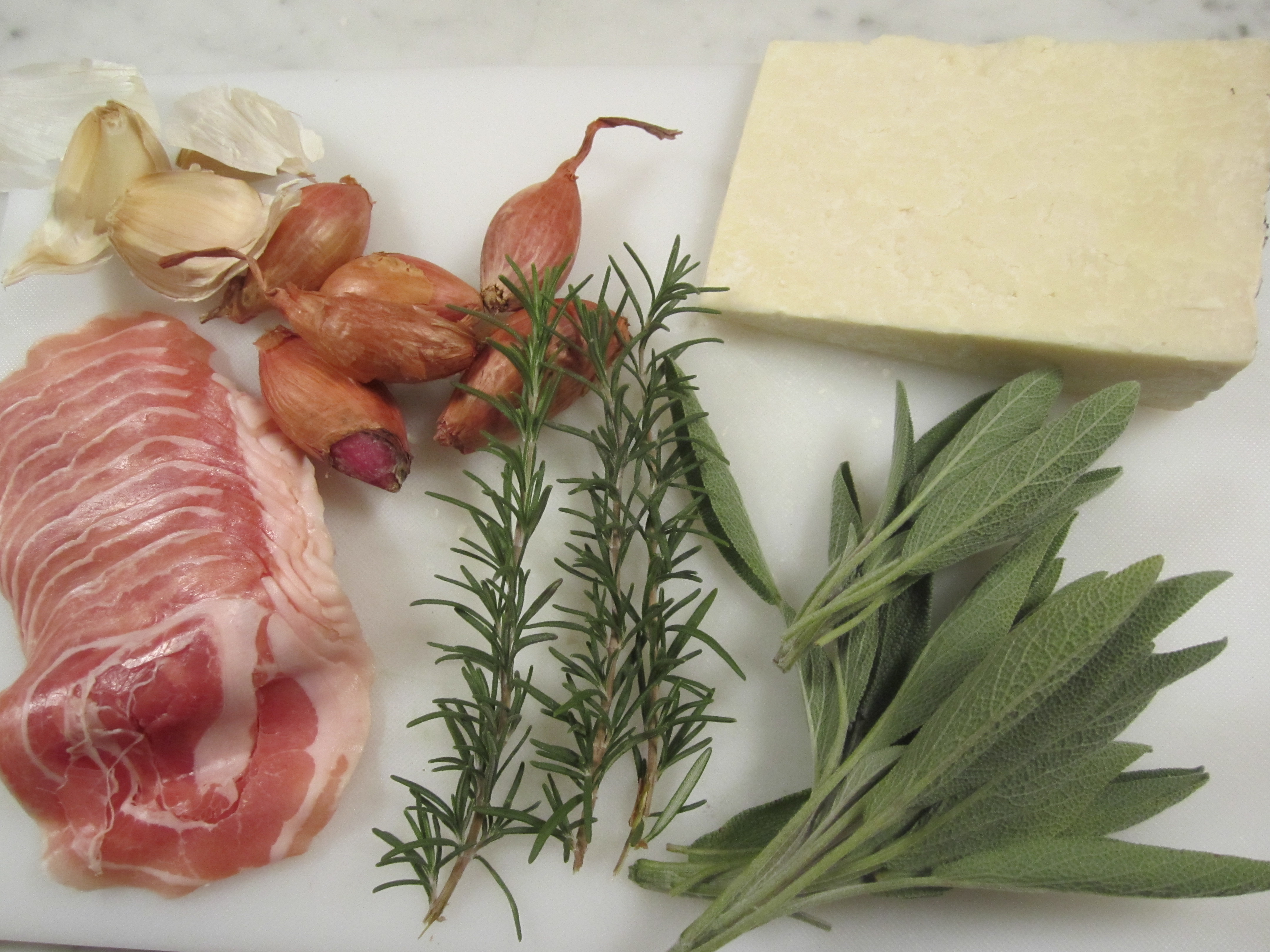
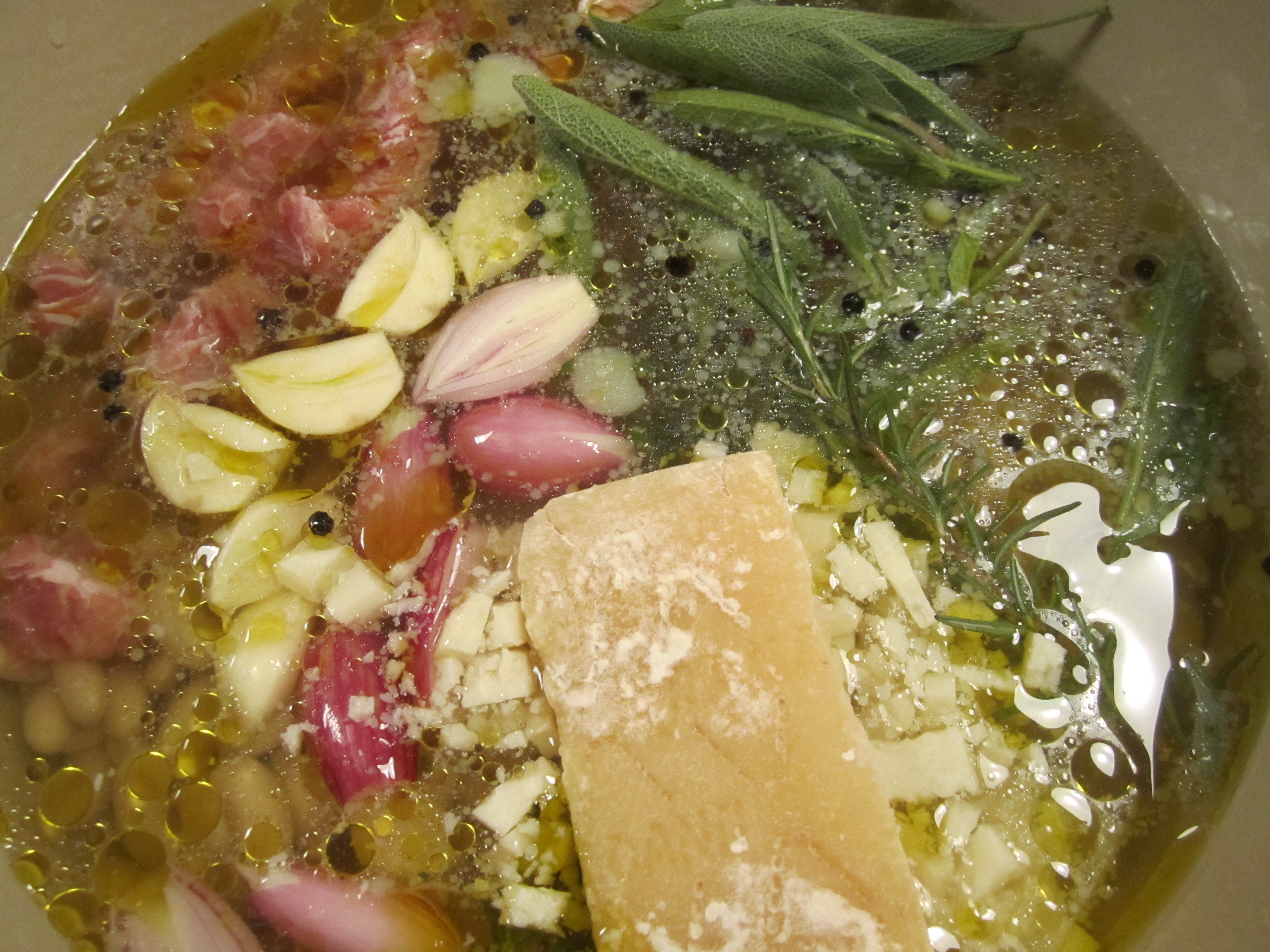
After soaking and draining, the beans are placed in a pot of salted water or broth (I’m using the cooking liquid from my kale the other evening–it made a brilliant broth).  In addition, whole cloves of garlic, whole shallots, sprigs of rosemary, sage leaves, whole black peppercorns, parmigiano rind, and diced pancetta are added.  The whole pot is brought to a simmer, then placed in a 300 degree oven for about 2 hours.  A portion of the beans are then removed, pureed and returned to the pot.  This makes for a salty, creamy, herbaceous soup that is great with some pasta or by itself with some bruschetta.

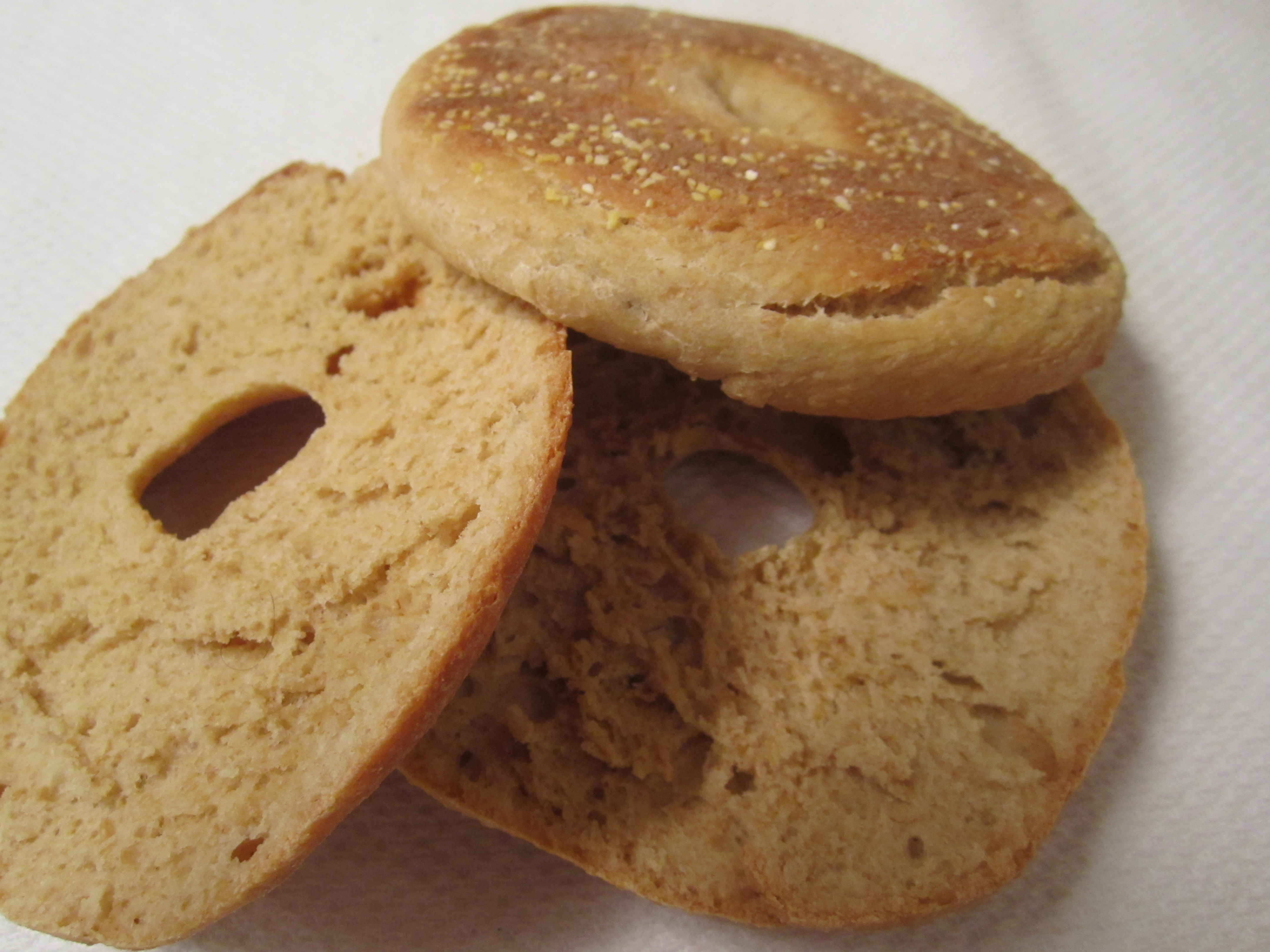
This evening, instead of bruschetta, I was fortunate enough to have a batch of freshly baked friselle from my mother, who was visiting for my neighbor Beppi’s 90th birthday.

Although these friselle might resemble bagels in the photo, they are actually more like a cracker.  They are baked, then split and baked a second time on low heat for a long time, until they’re crispy right to their core (like biscotti, which actually means “twice-cooked”).  Go serve, they are then dampened with water and dressed like a bruschetta, or in tonight’s case, they’re placed in the bottom of a soup bowl, then the soup is ladled on top.  They are unique and addictive.   Because they’re made with a combination of whole-wheat and white flour, they retain a sturdy, nutty quality, even when wet.

Also tonight, I happen to have a bit of boiled kale from my pasta the other evening, so I’ve tossed the remainder into the beans–a wonderful combination.

The beauty of these beans is that they can be made, then frozen without sacrificing any quality.  Therefore, make a large batch of it and enjoy it throughout the colder months.

Tuscan Beans (My Way)

serves 4 – 6

1 lb dried white (cannellini beans), soaked in water overnight then drained

3 oz. pancetta, thinly sliced, then diced into 1/2″ pieces

8 sage leaves

2 sprigs fresh rosemary

6 peeled shallots, cut in half

6 cloves of garlic, cut in half lengthwise

12 whole black peppercorns

2 1/2 qts chicken or vegetable broth

1 small piece (aproximately 4″ x 2″) rind from the parmigiano, rinsed and dried

1/4 c pecorino romano, cut into 1/4 dice

1/4 c extra-virgin olive oil plus additional for drizzling at the table

extra pecorino for sprinkling at the table

1 c cooked, chopped kale (optional)

Preheat oven to 300 degrees.

In a dutch oven (I used enameled cast iron), place all ingredients and bring to a simmer.

Cover pot and place in pre-heated oven for approximately 1 1/2 to 2 hours (until beans are cooked through and creamy inside but still maintain a slightly toothy exterior).

Remove beans from oven and drain them in a strainer, keeping all the liquid in a separate bowl. Remove rosemary branches (leaving the stray needles in).  Place 2 cups of beans in the food processor (include some rosemary and sage leaves) along with 1/2 cup cooking liquid.  Process to a smooth puree.

Return the beans to the pot, along with bean puree and enough bean cooking liquid to make the mixture creamy but not too soupy.  Add in the kale, if using.  Serve with bruschetta, grated pecorino romano and a drizzle of extra-virgin olive oil.  May be frozen indefinitely, without any ill-effects.

Posted in Vegetables | Leave a comment

Pasta with Sausage and Baby Kale

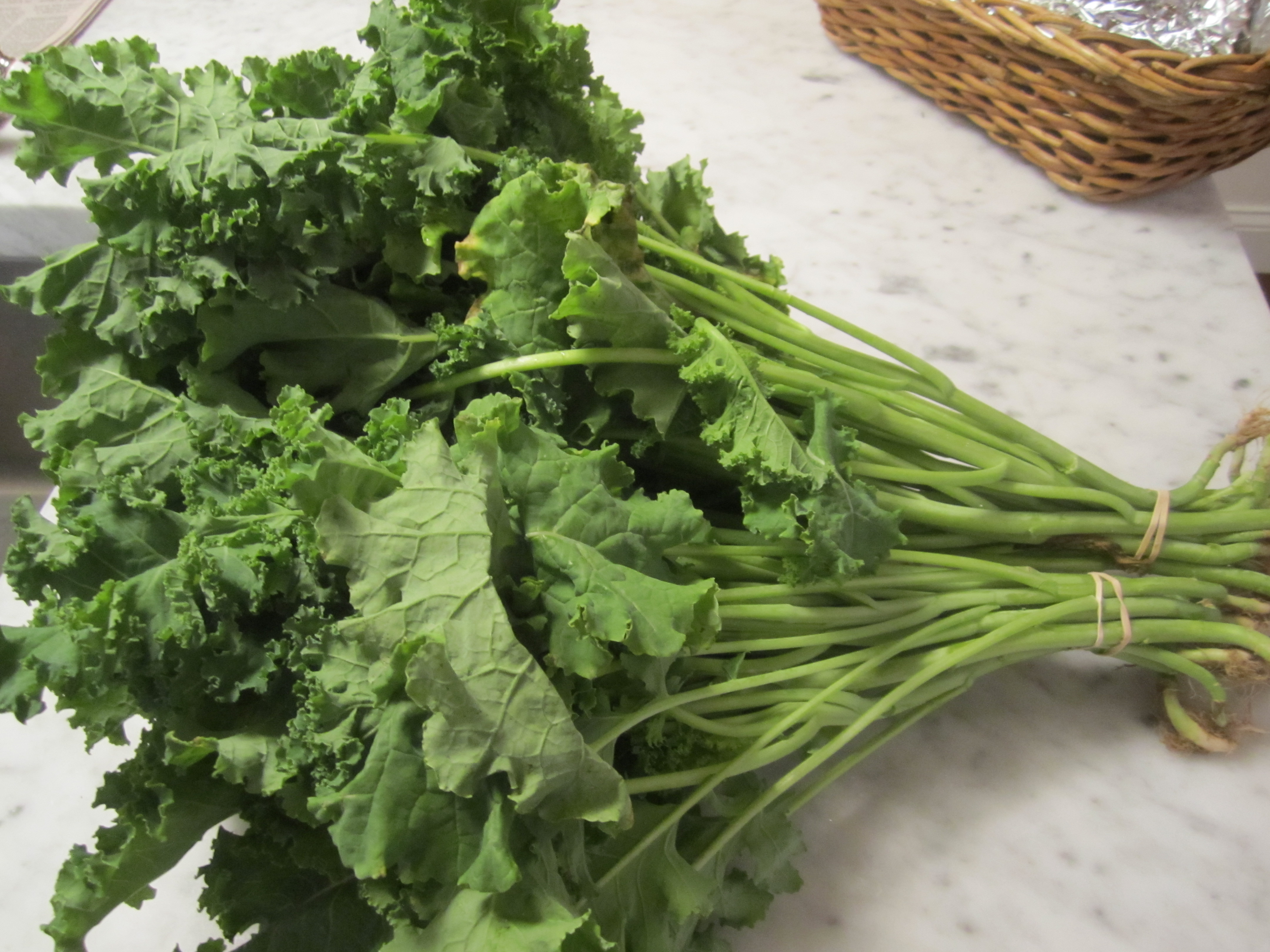
My farm stand has been selling a smaller more delicate variety of kale that I love to use because I don’t have to strip the leaves off the stems–I can simply chop across the stems crosswise and use virtually the entire stalk.

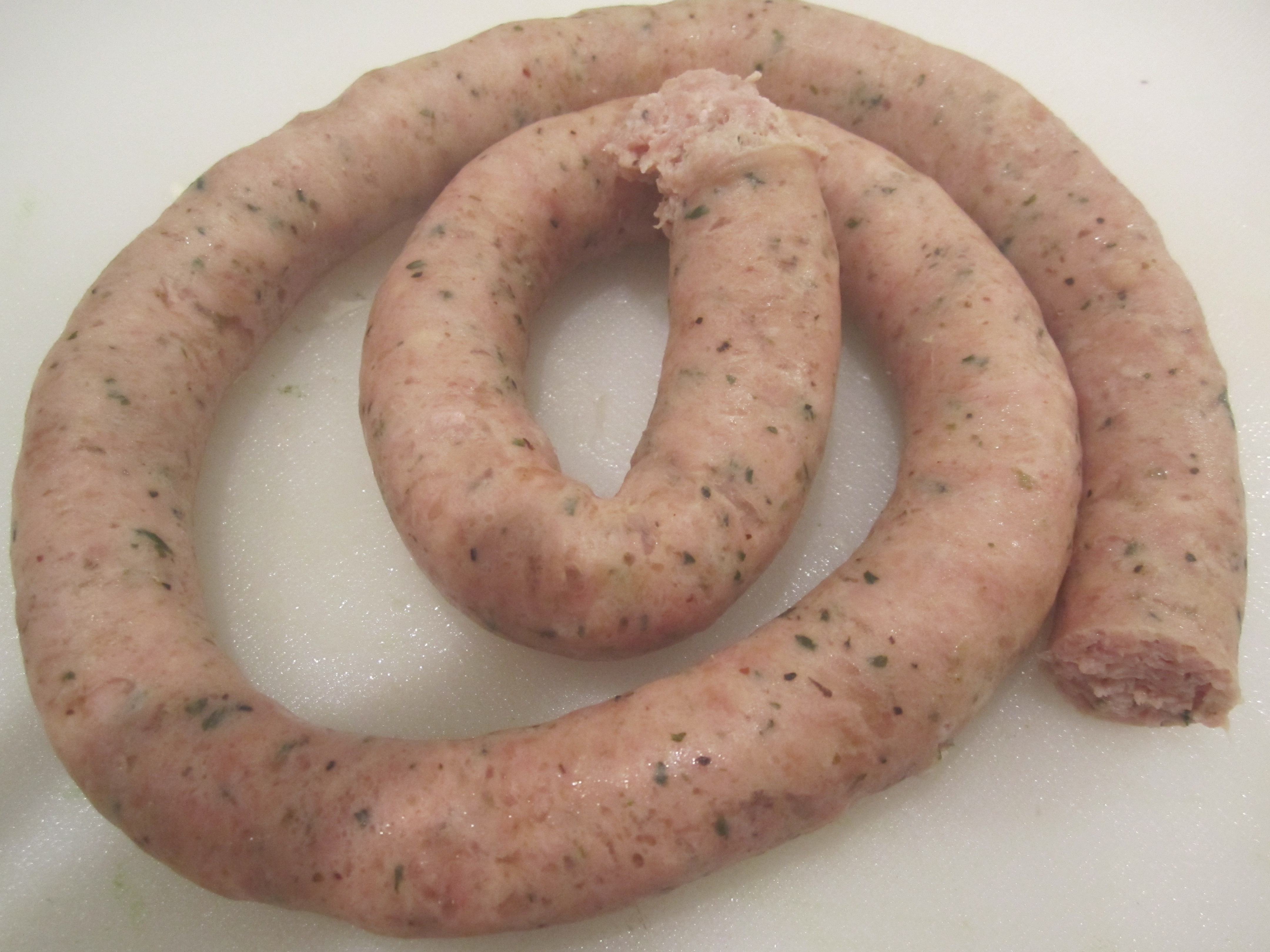
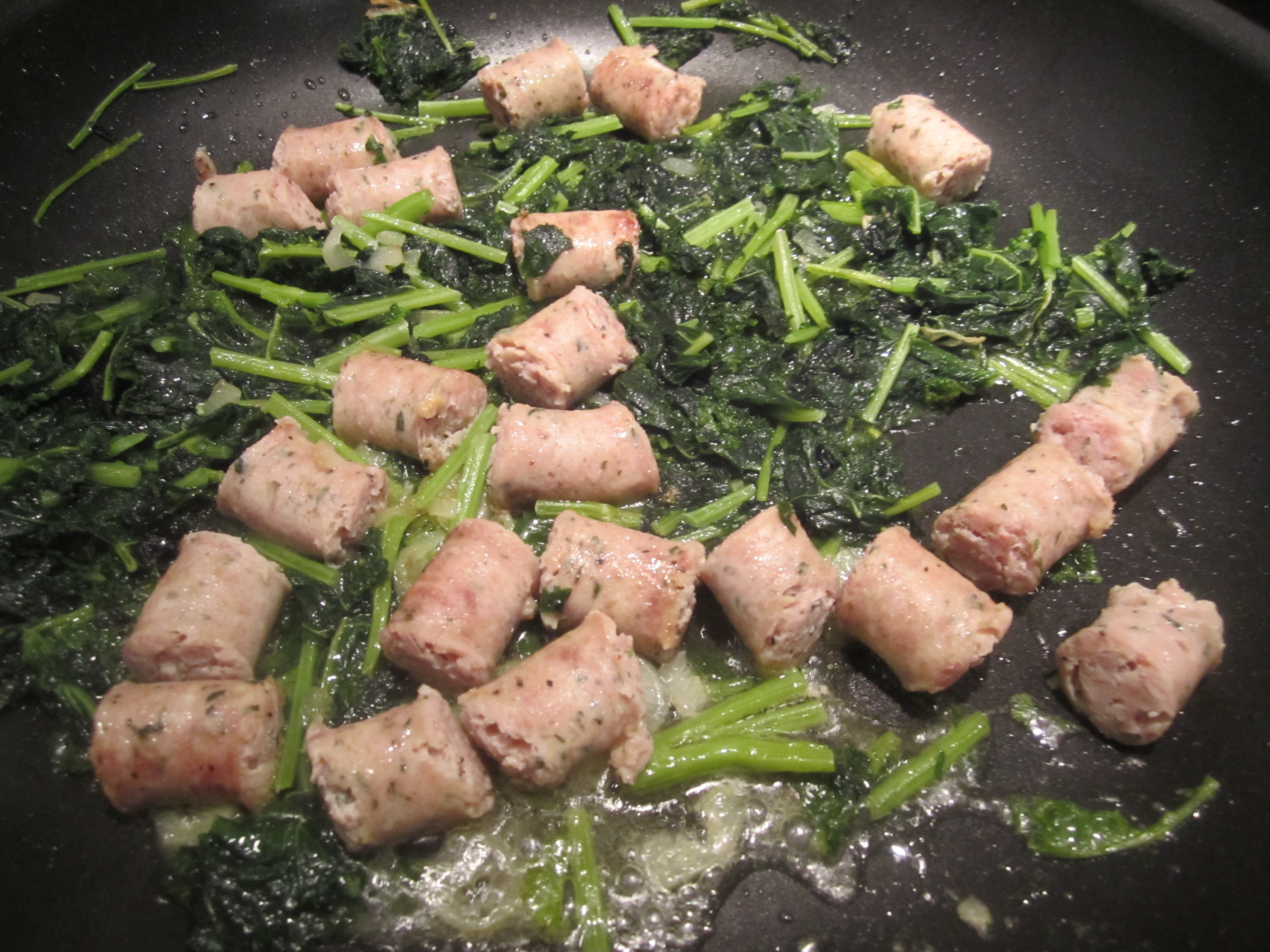
I simply slice the kale, boil it in heavily salted water, drain and set aside.  After I remove the kale, in the same water, I boil the sausage (tonight, it’s chicken sausage), then let set aside.

The brilliant thing about this dish is that the cooking liquid from the kale and sausage makes such a beautiful, flavorful broth, I’m actually able to save it to use in other dishes.  It has a mild chicken flavor from the sausage, but if you choose to omit the sausage, the kale cooking liquid makes a great vegetable broth in itself.  You could never do this with spinach or swiss chard, which both leave their cooking liquid with a strong acrid iron-y taste.

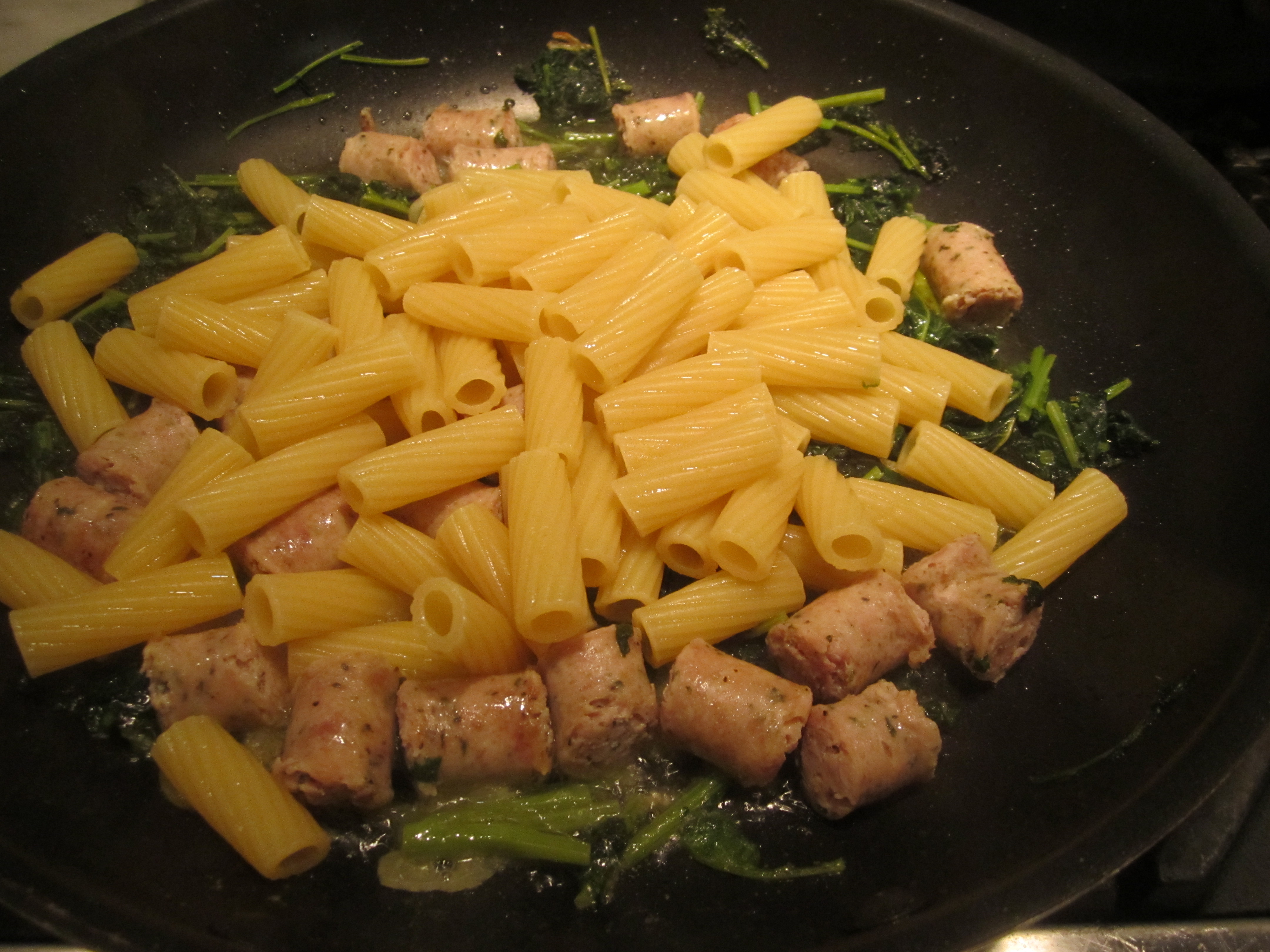
While the pasta is boiling, I brown the sausage (very lightly), then add some sliced shallot and kale and saute until the pasta is cooked. I toss in the pasta, along with some cooking liquid and raw olive oil. I serve this dish with plenty of grated pecorino romano cheese and black pepper.

Pasta with Sausage and Baby Kale

serves 4

1 lb rigatoni or other short, fat pasta

1 bunch young kale (stems should be no more than about a quarter-inch in diameter)

1 lb chicken sausage (optional)

2 shallots, peeled and sliced thinly

1/4 c extra-virgin olive oil

salt and pepper to taste

grated pecorino romano for sprinkling at the table

Wash and slice kale crosswise into 1″ lengths and drop into well-salted boiling water.  Cook for about 7 – 10 minutes.  Drain and set aside.

In the same water, boil the sausage for approximately 10 minutes and set aside to partially cool.

Cut sausage into 1″ lengths and set aside.

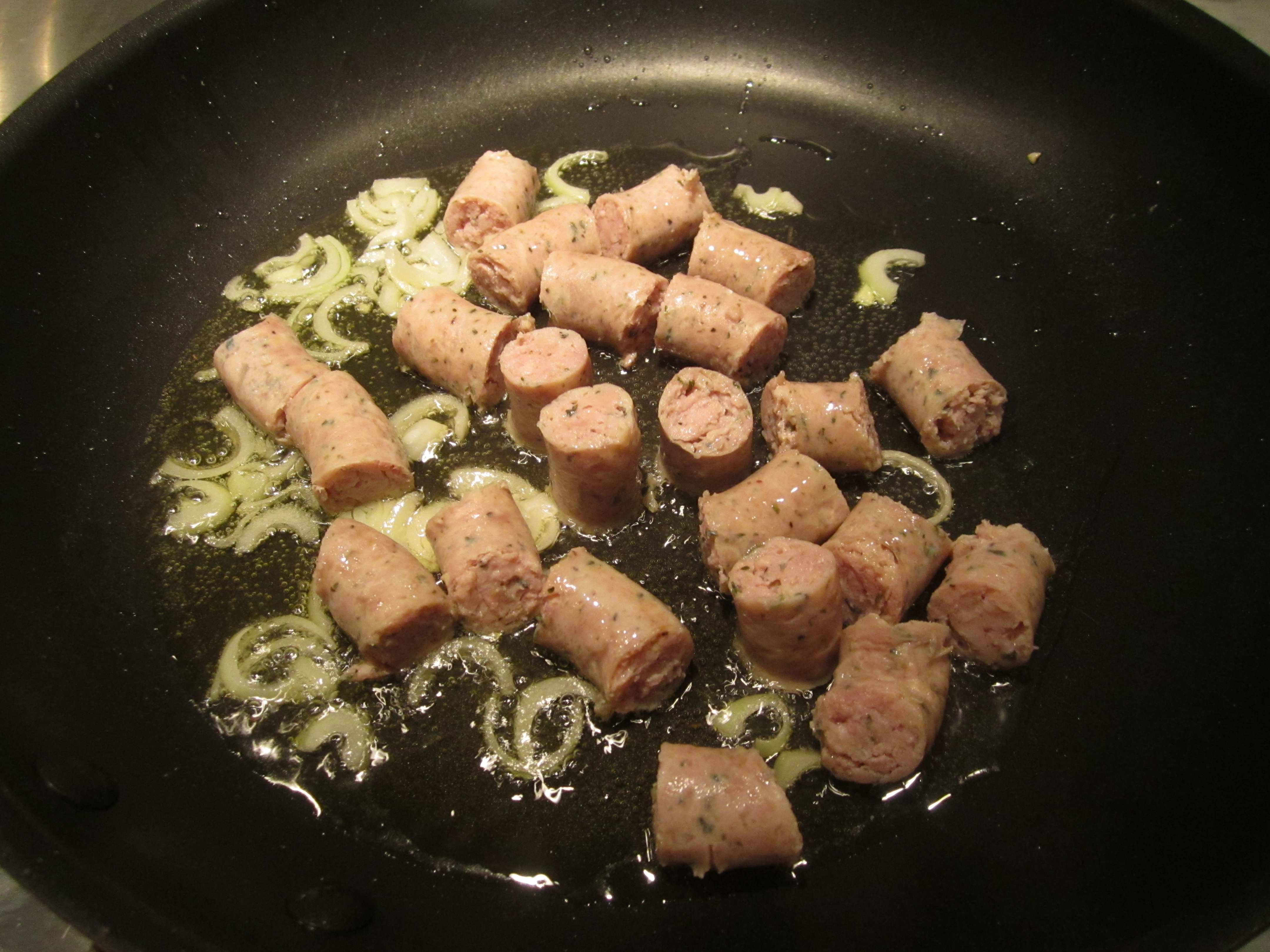
While pasta is boiling, place sausage, shallots and oil in broad skillet. Place on low heat and lightly brown sausage for about 5 minutes.

Add kale and continue sauteing until pasta is cooked.

Toss in pasta, along with about a cup of pasta cooking liquid, and a tablespoon more extra-virgin olive oil.  Taste and add salt and pepper, if necessary.

Serve with plenty of grated pecorino romano and additional black pepper.

Posted in Pasta | Leave a comment

Beppi’s 90th Birthday

The reason for my lack of posts the last several days has been preparing for and celebrating Beppi’s 90th birthday.  It’s truly a gift to have him as vibrant and full of life and enthusiasm as ever.  True to form, Beppi insisted on preparing the birthday meal himself.  The meal began with potato leek soup, made with leeks from his garden–absolutely divine.

The main course was pot roast, which he made and froze a week ahead of time.  Beppi’s pot roast is made with beef top round, aromatic vegetables, a bottle of red wine, broth and a touch of cloves.  It is subtly, deeply flavored and can be cut with a fork.  Alongside the pot roast were farfalle pasta, in a departure from the Italian tradition of only serving pasta as its own separate course.  The sauce from the pot roast was exquisite over the pasta.

We concluded with a salad of brilliant, sturdy arugula and lettuce from his garden.

I was honored to be asked to bring zucchini as a side dish, since Beppi claims he can never make it to his satisfaction.  These zucchini came from a local farm and were simply sauteed with olive oil, butter, and some shallots.  I didn’t bother with the pretense of keeping the vegetables crispy and green.  These zucchini were cooked until meltingly tender and sweet.

The soft vegetables seemed to be well-received by Beppi’s nieces from Italy, so I took it as a high compliment.

The meal began at 4 in the afternoon and went on well into the evening, with story after wonderful story from Beppi about the exploits of owning a restaurant in New York during the age of the three-martini lunch and la dolce vita.  Priceless.

Posted in Uncategorized | 1 Comment