Quinoa with Zucchini and Basil

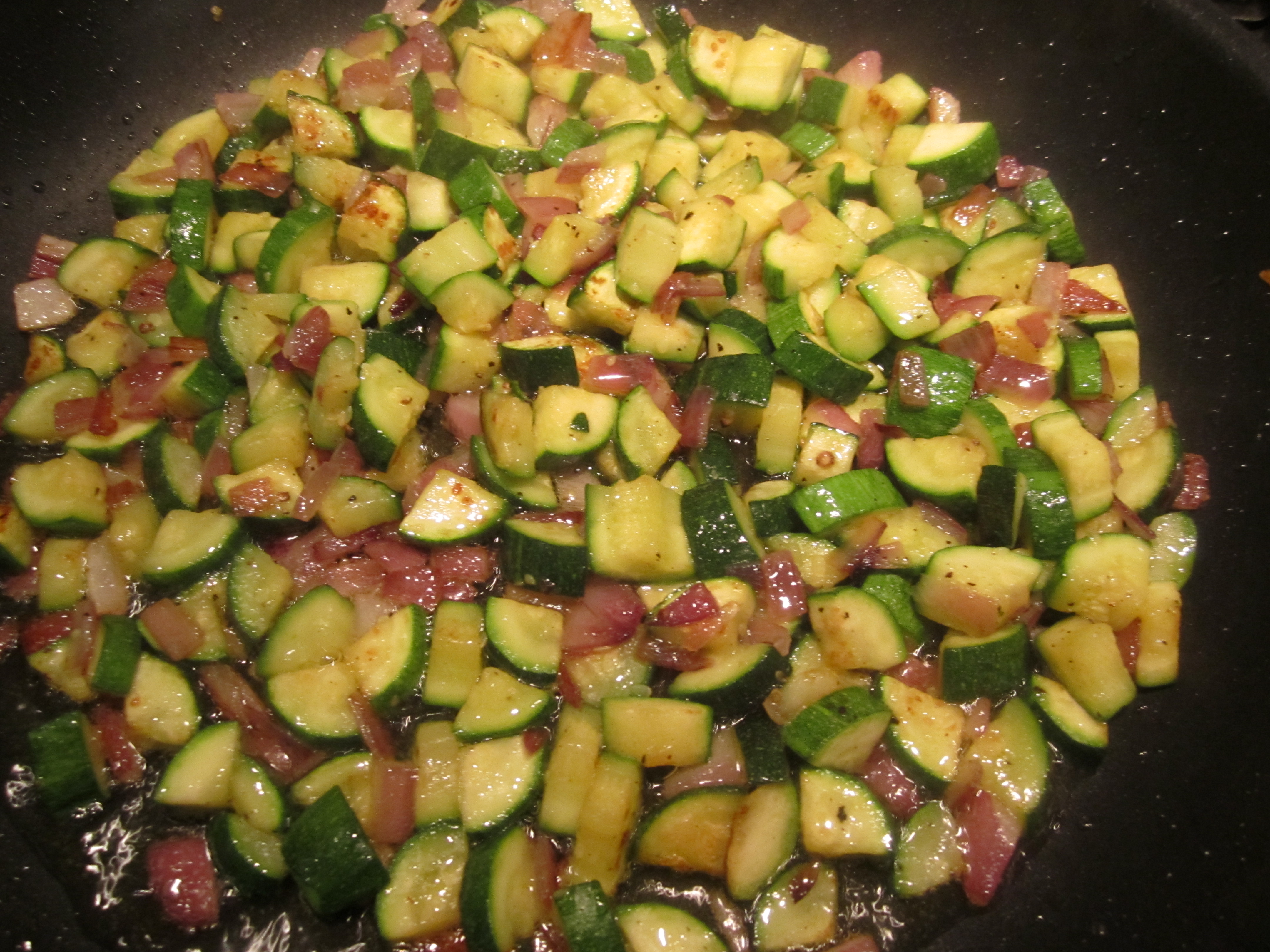
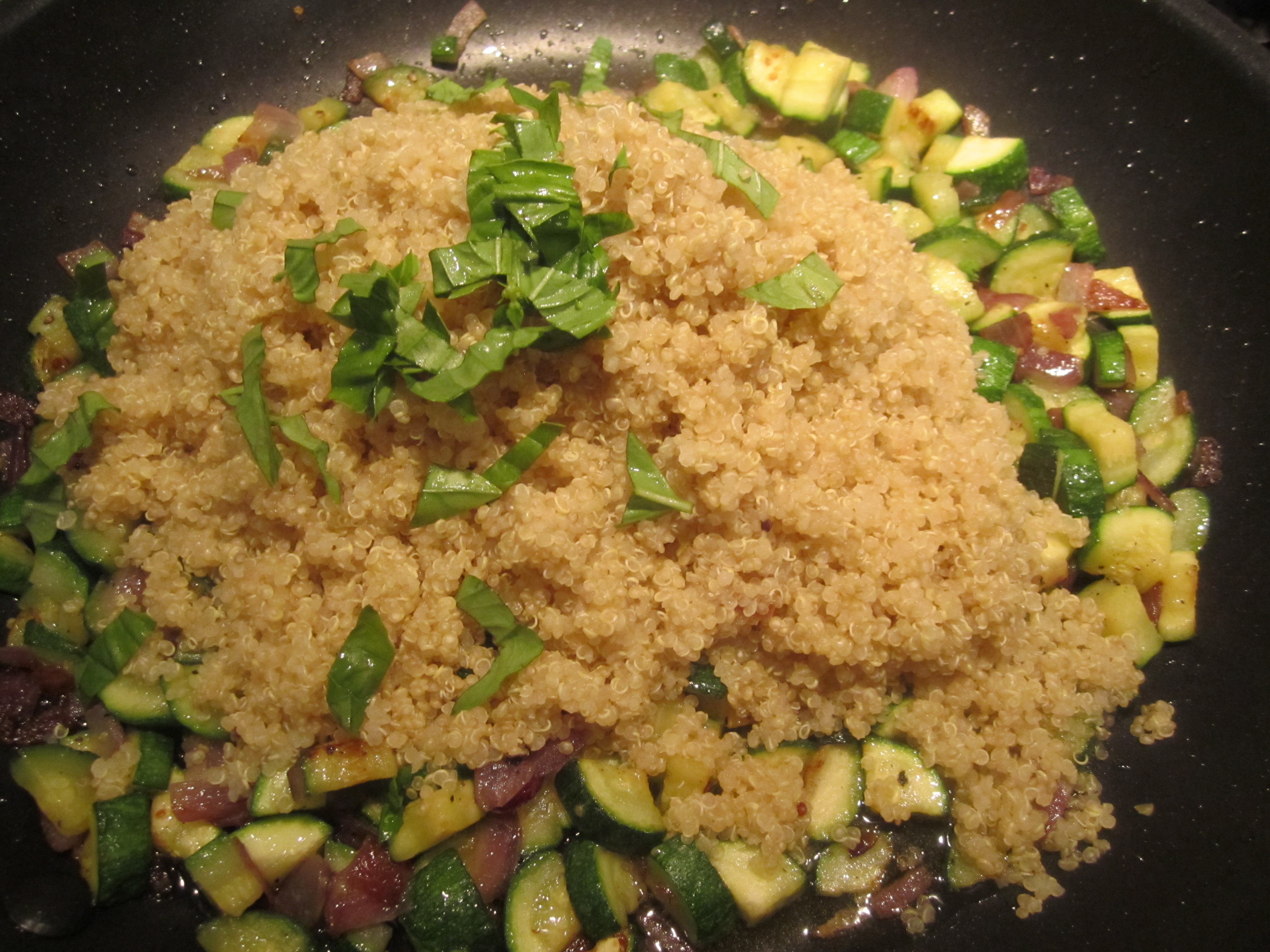
This is another example of summertime on a plate!  Sweet zucchini and onions are sauteed until tender and slightly caramelized, then cooked quinoa is folded in with a handful of basil leaves.  The basil is what makes this dish taste so bright and summery.

Use the finest quality smaller sized zucchini (around 6″ long) and saute quickly on high heat so as not to make the zucchini too soft (although they taste great soft as well).  This is  a great party dish because it holds beautifully at room temperature.

It’s great with seafood or poultry, and also keeps well as a leftover at room temperature.  The basil will discolor, but it will have given up its perfume to the entire dish by then.

Quinoa with Zucchini and Basil

serves 4

6 small zucchini (6″L), sliced lengthwise in quarters, then crosswise in 1/4″ slices

1 small red onion, diced finely

2 c quinoa

3 c chicken broth

1 bay leaf

1/4 c extra-virgin olive oil

10 basil leaves, sliced into ribbons (at the last moment)

salt and pepper to taste

In a small pot, combine quinoa with cold broth and bay leaf.  Bring to boil and simmer approximately 20 minutes.  Cover and let stand for about 5 minutes.

In a broad skillet on high heat, saute onions in half the olive oil for a minute, then add zucchini and saute for about 4 minutes, until it begins to caramelize.  Taste and add salt and pepper.

When quinoa is cooked, fold into zucchini mixture, along with slivered basil leaves.  Gently stir to combine and add remaining olive oil.

Posted in Vegetables | 1 Comment

Kale with Tomatoes and Onion

Kale is local and plentiful, and tomatoes are at their peak.  I would only make this dish when tomatoes are at their best because I want very red, meaty pulp with as little water and seeds as possible.  The dish should be moist, but not watery.  The onions and tomatoes give the kale a wonderful, natural sweetness and tartness at the same time. 

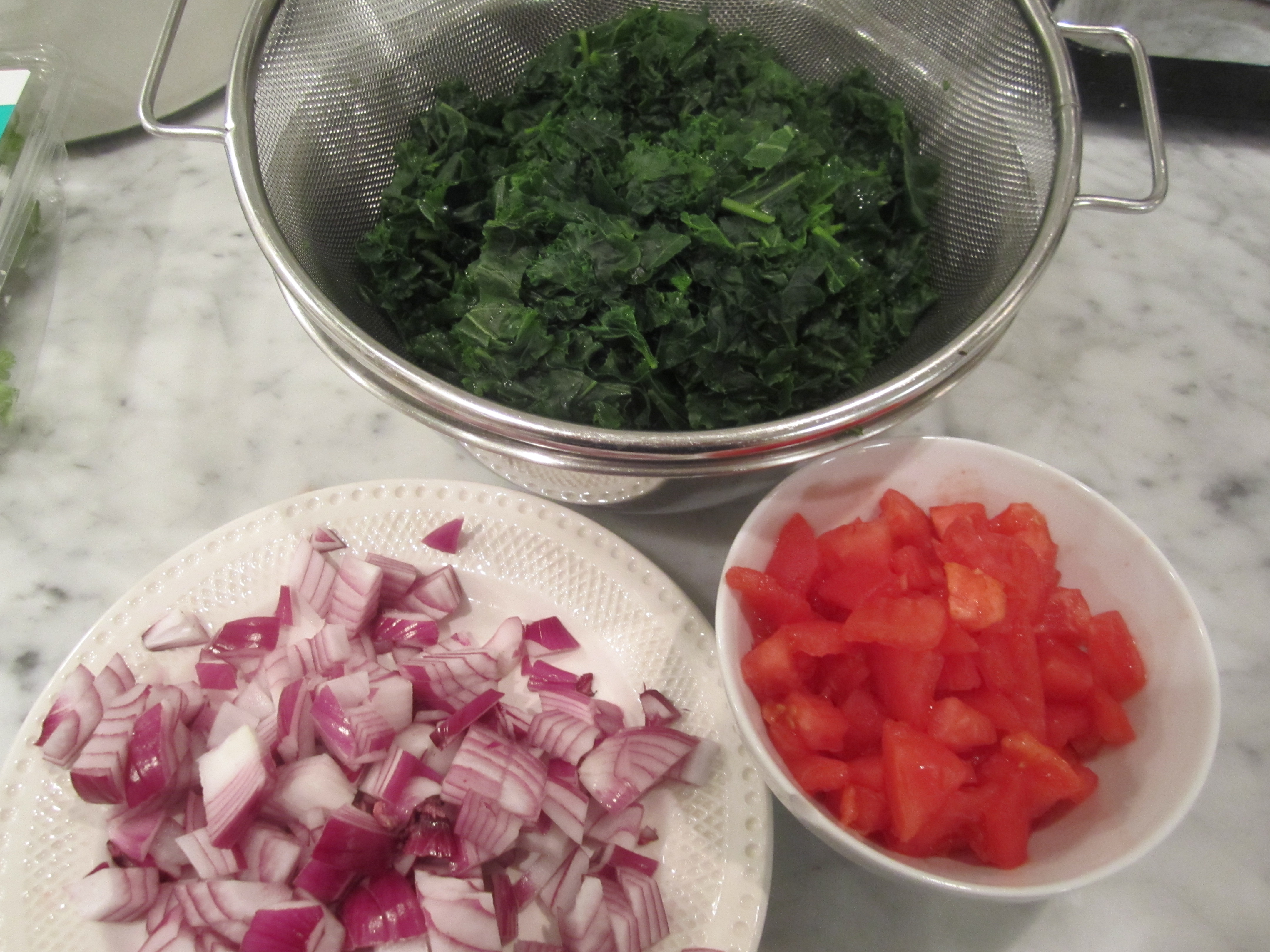
One crucial step in this recipe is to peel and seed the tomatoes.  You’ll see this step in many classical recipes and it’s much quicker and easier than it sounds.   Simply dip the tomatoes in boiling water for 10 – 20 seconds and remove.  The skin will blister and peel off easily with your hands.

To remove seeds, simply quarter the tomatoes and run your fingers around the cavities to remove seeds and excess water.  Chop the tomatoes coarsely and you’ll have a nice cubes of meaty tomato. 

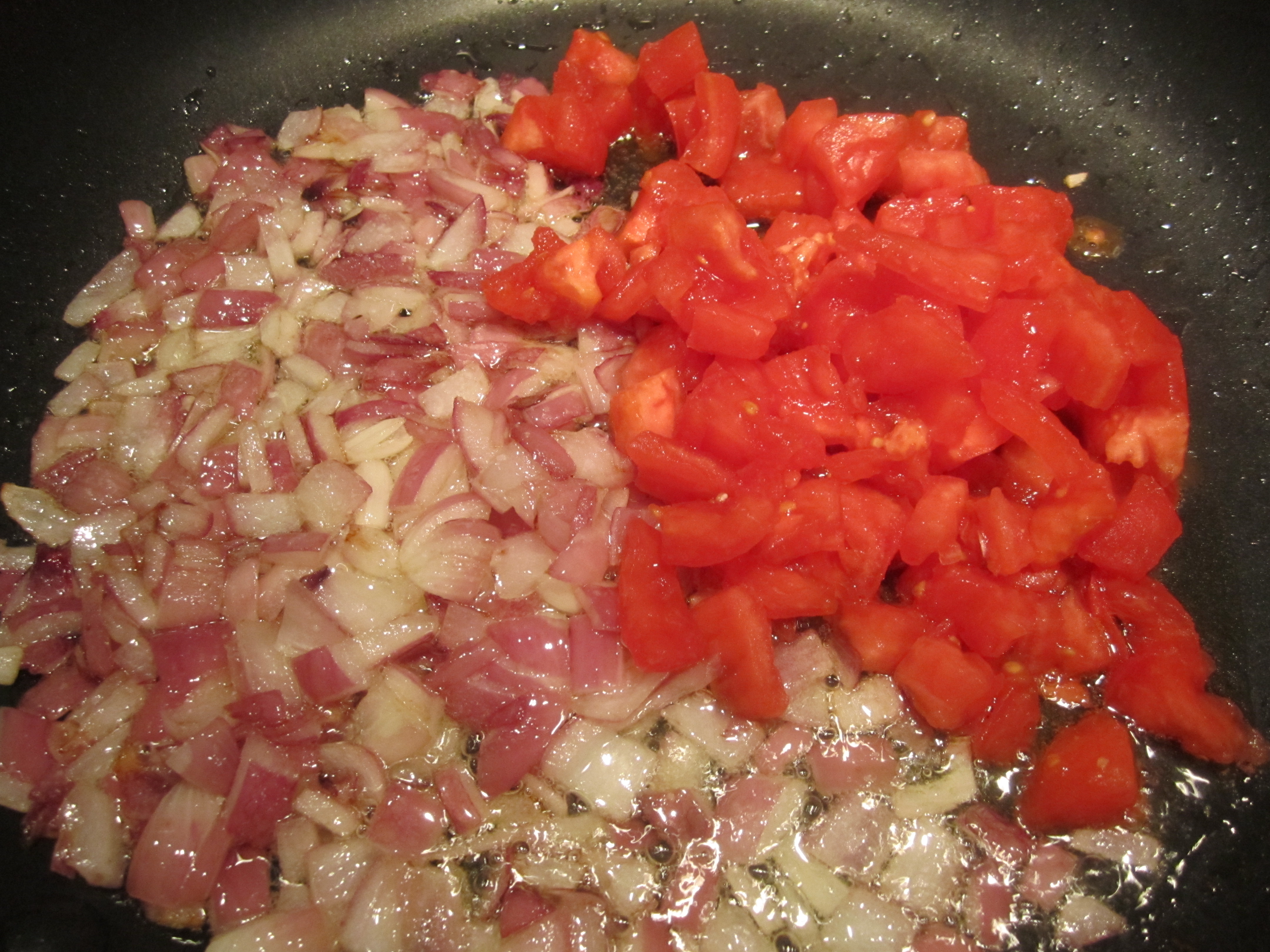
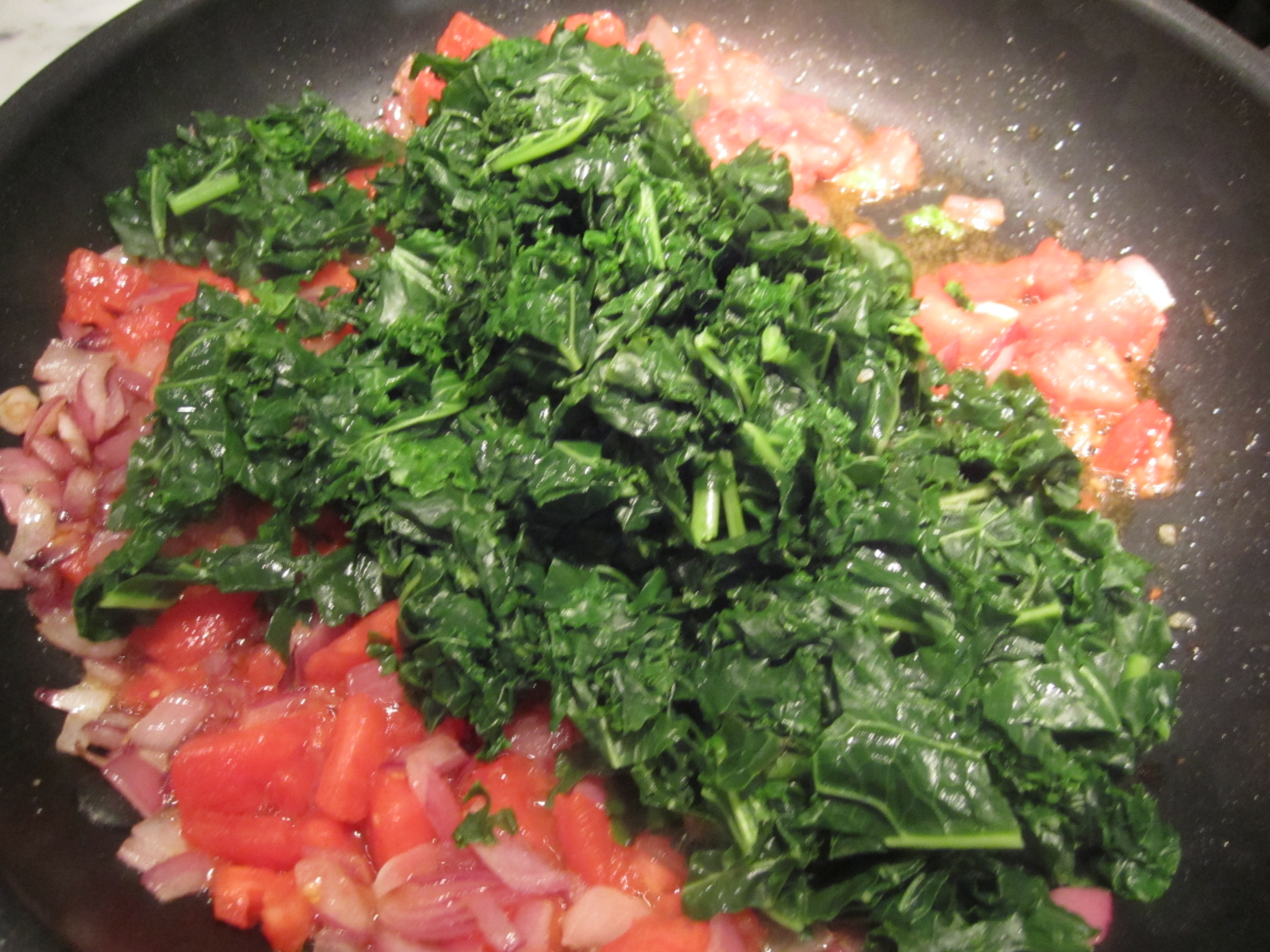
The onions get sauteed until soft and beginning to caramelize, then the tomatoes get added and sauteed briefly.  The kale is tossed into the skillet and all is combined.  The whole mixture gets a drizzle of raw extra-virgin olive oil, and the dish can be presented either hot or at room temperature. 

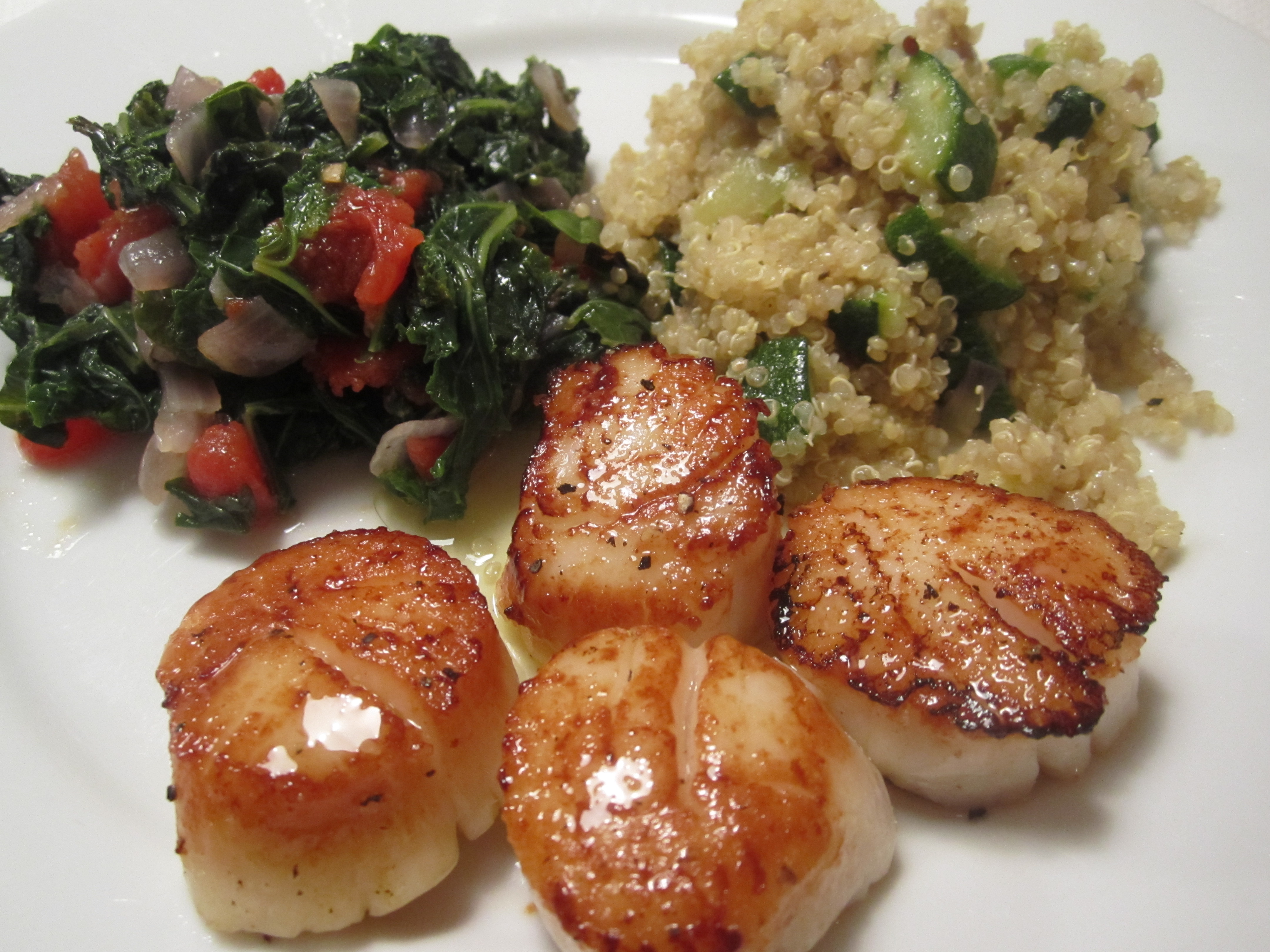
Tonight, the rest of our meal consisted of our local favorite–seared Montauk scallops and quinoa with zucchini.  Summer’s not over yet!


Kale with Tomatoes and Onion

serves 4

1 large bunch of kale, stripped off stems and cut into 1/2″ ribbons

1 onion, coarsely diced

2 large, ripe tomatoes, peeled and seeded, as described above

1/4 c + 2 tbls extra-virgin olive oil

salt and pepper to taste

Drop kale into salted, boiling water and blanch for 5 minutes.  Drain in strainer.

In a broad skillet on low heat, brown the onions in 1/4 cup of olive oil until lightly caramelized (about 7 – 9 minutes).  Add in diced tomatoes.

Saute for approximately 3 minutes more.  Stir in kale, taste and add salt.  Continue sauteing for another 3 – 4 minutes, until most of the water evaporates.


Posted in Vegetables | 1 Comment

Italian String Bean Salad

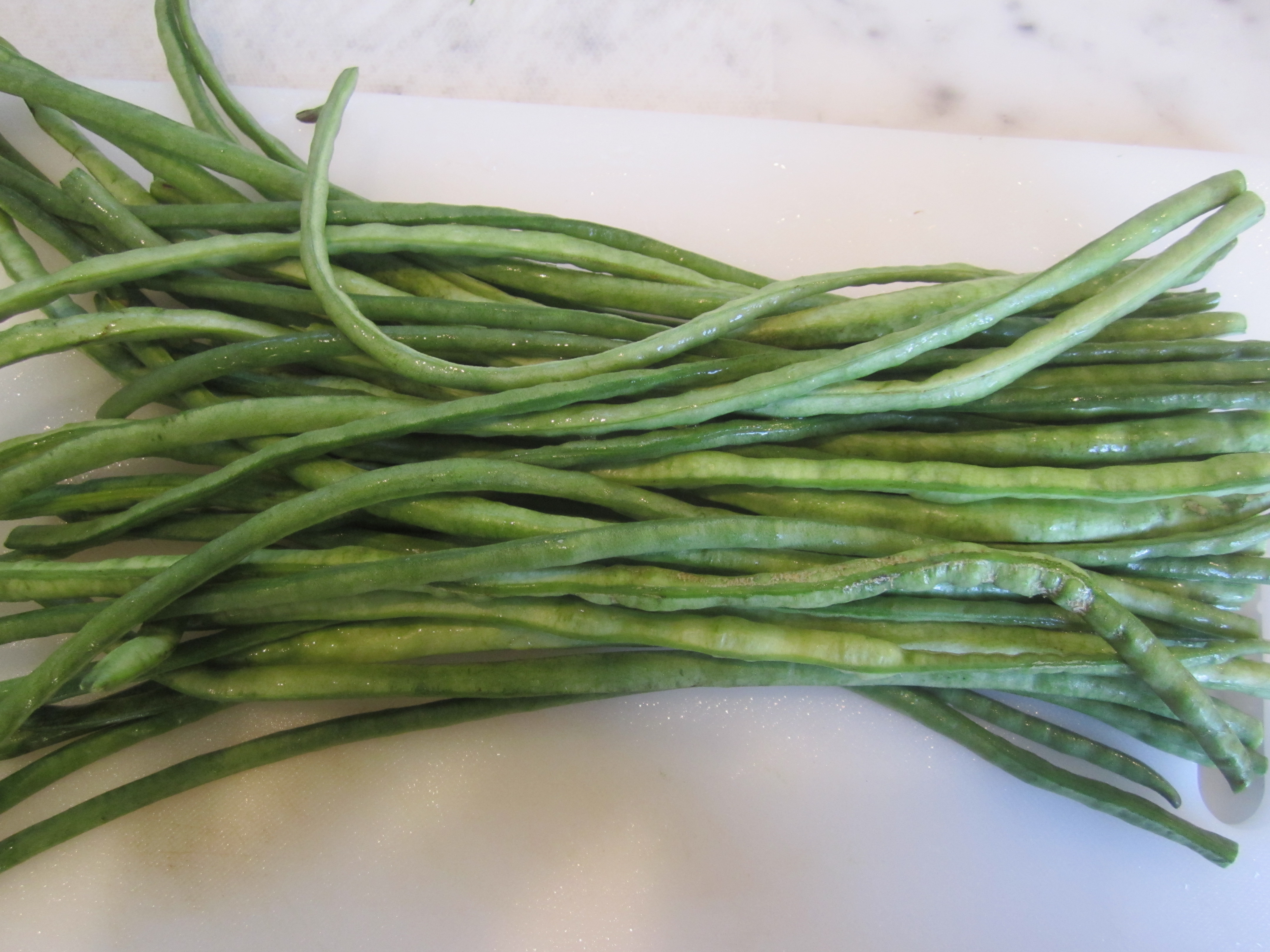
String beans are abundant in my neighbor Beppi’s garden this time of year, particularly a variety of long bean that he grows, which produces beans as long as 18″.

I love these long beans because they’re thin and delicate (almost like baby green beans) but they’re easy to clean and trim, (fewer tops and bottoms to trim and remove–just slice the whole bunch into manageable lengths).

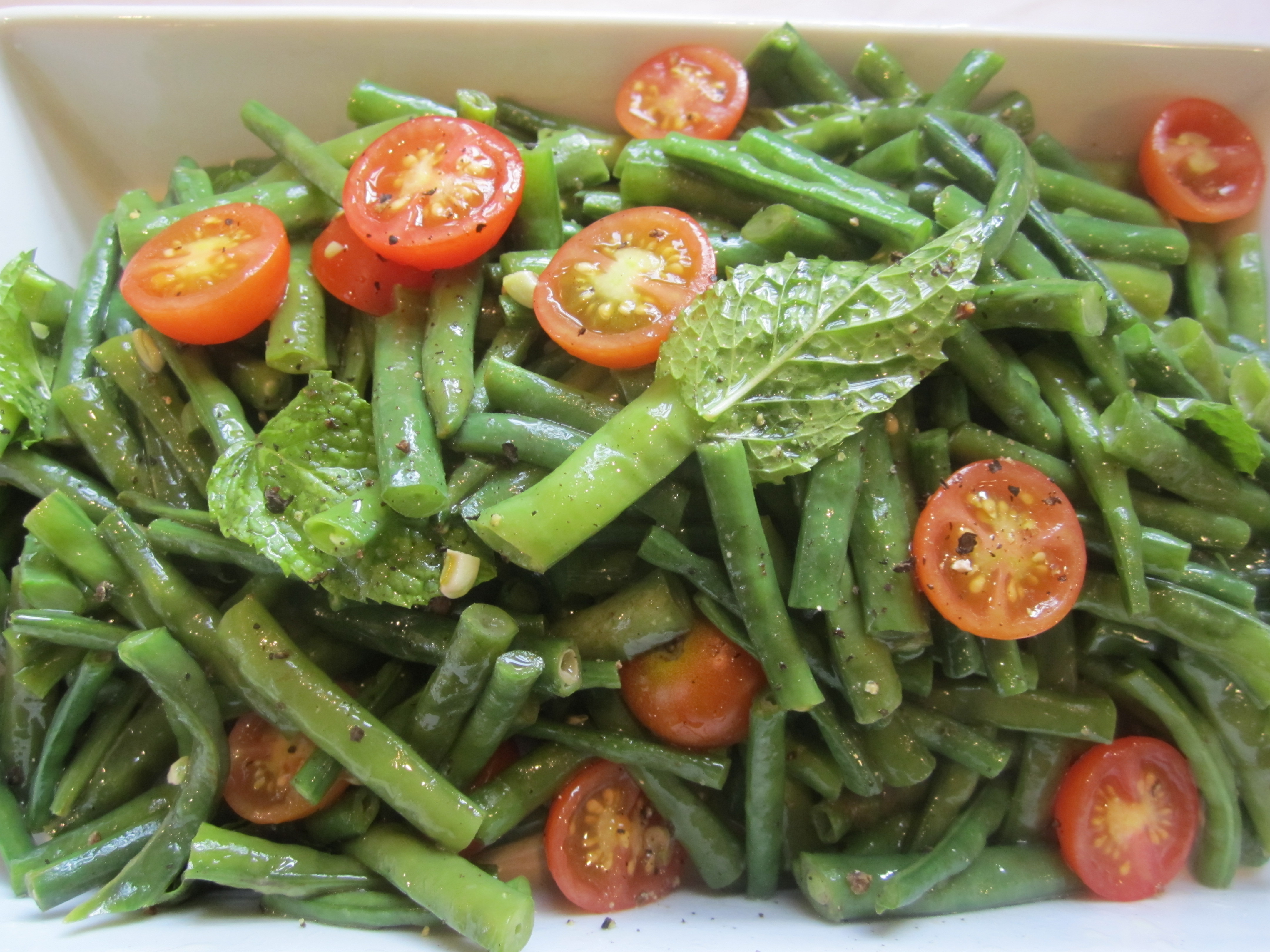
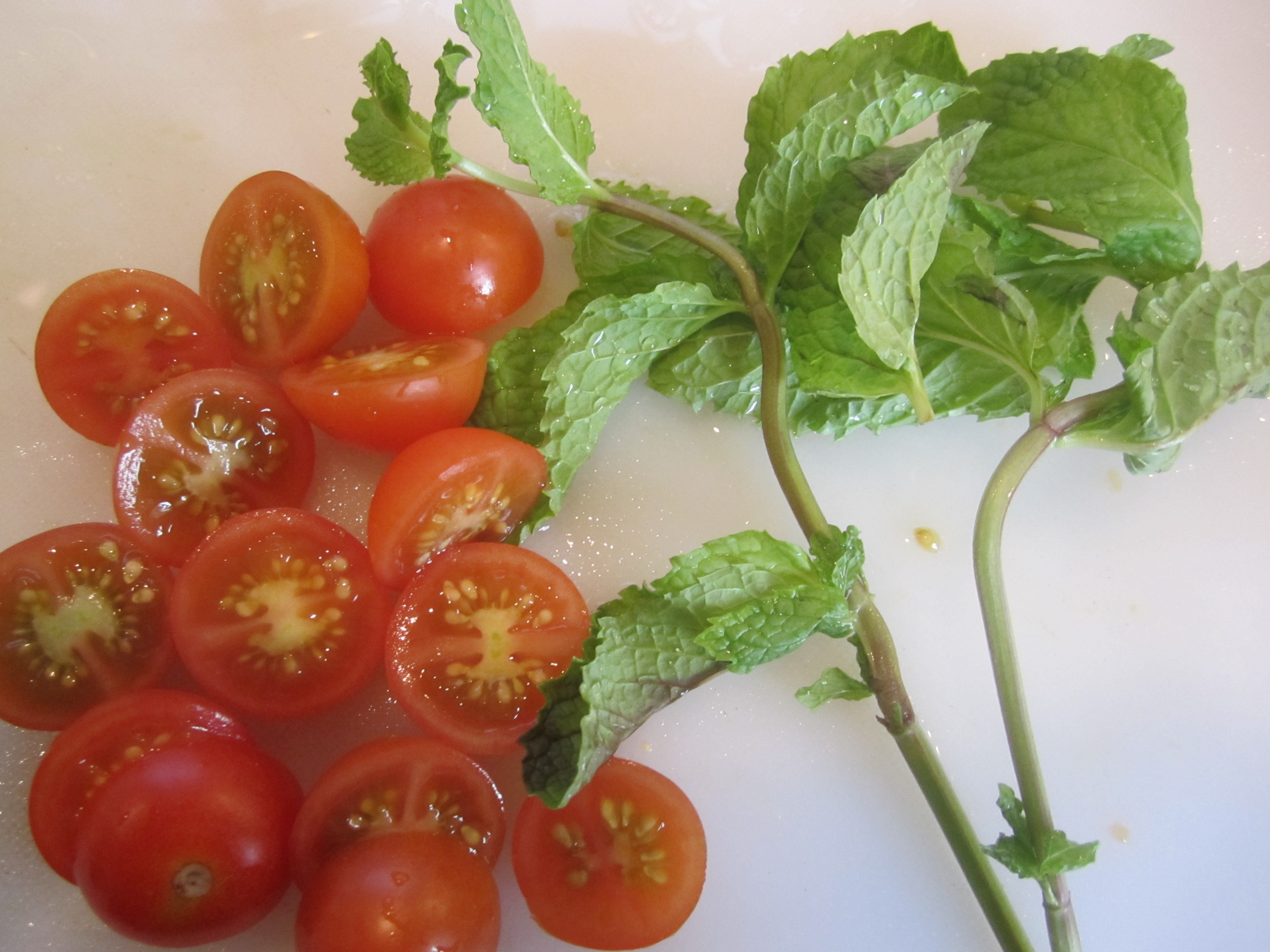
One way to dress these beans is the way my mother always did–with olive oil, red wine vinegar and mint.  The beans are simply boiled until crisp-tender, then dressed while they’re still warm.  I’ve added ripe cherry tomatoes because they give the salad a little sweetness and contrast in texture.  They also hold up well in the dressing.

These beans taste great the day after they’re made, but they do discolor due to the red wine vinegar and mint.  This is a great dish to bring to a cookout because it holds well at room temperature or even in the heat of a summer afternoon.

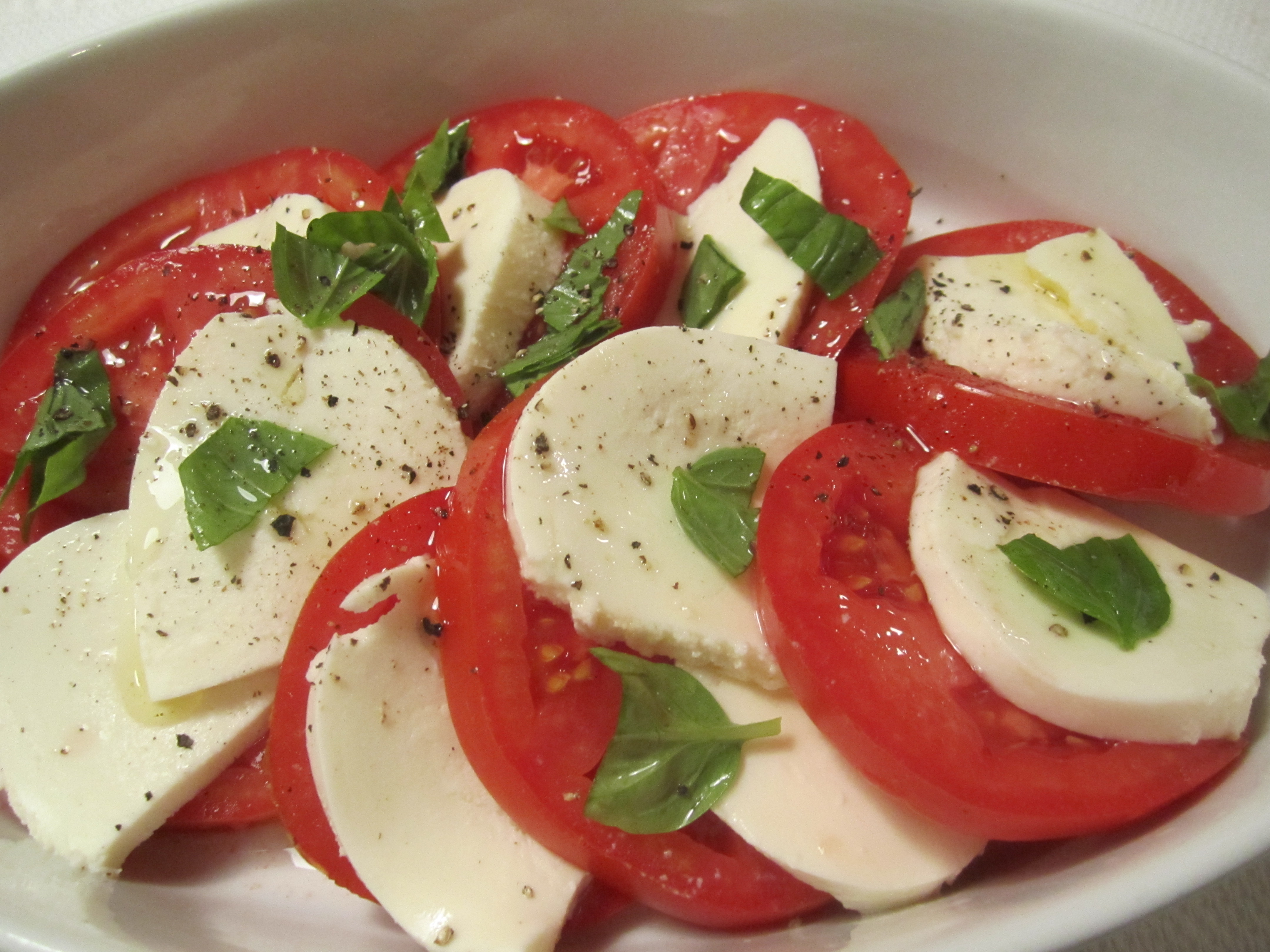
Tonight, our meal began with a simple caprese salad.

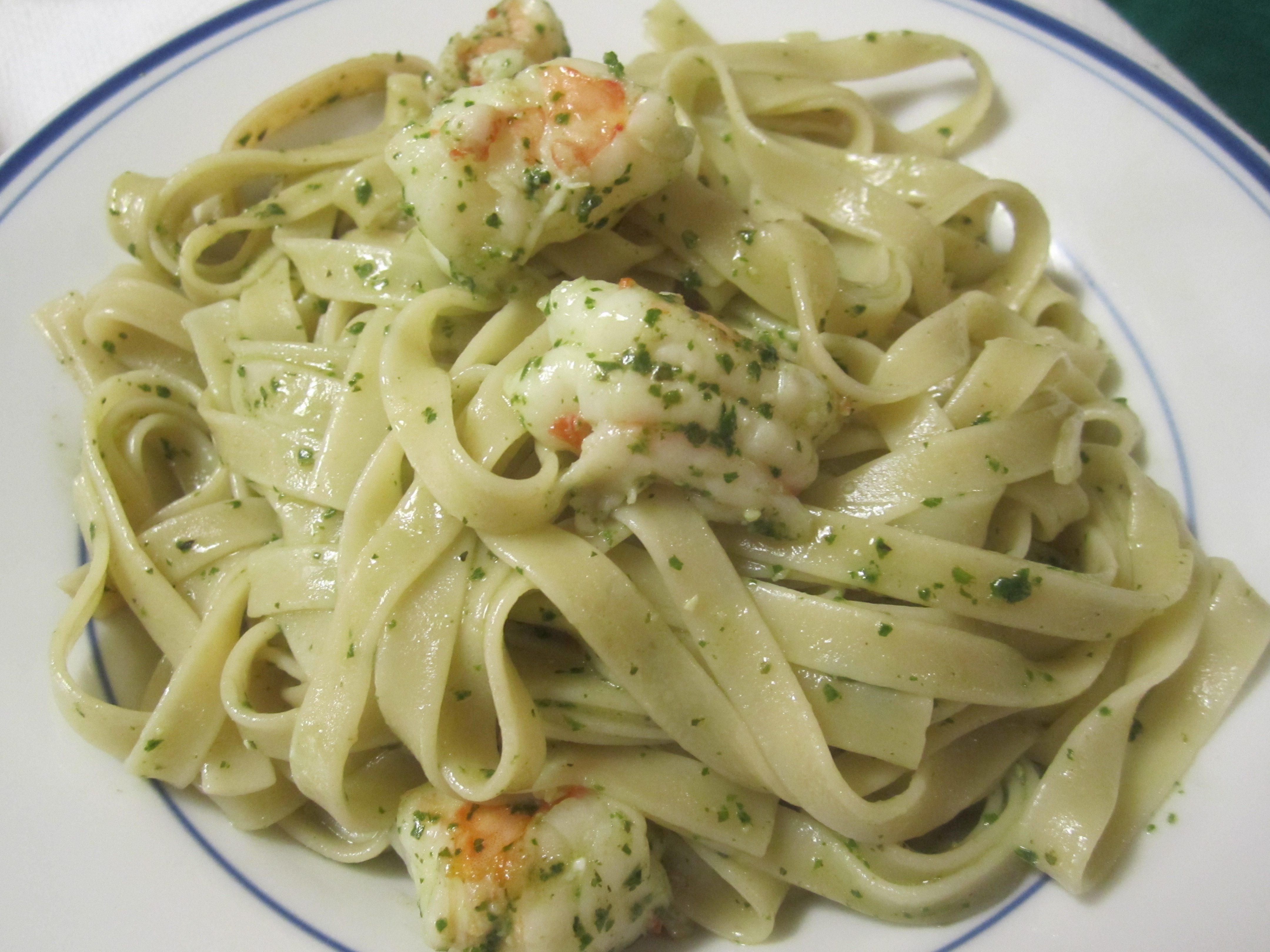
As a main course, we had a summer favorite, pasta with shrimp and pesto.


Italian String Bean Salad

1 1/2 lbs string beans, trimmed of their stems and pointy bottoms

1 c ripe cherry tomatoes, halved

2 tbls extra-virgin olive oil

2 tbls red wine vinegar

12 mint leaves

salt and pepper to taste

Drop beans in boiling salted water and cook for about 5 minutes, or until crisp-tender.

Drain and dress with remaining ingredients.  Can be served immediately or the next day, but expect discoloration almost instantly.

Posted in Salads | Leave a comment

Farro with Kale and Leek

This meal falls on the eve of a very special occasion–four out of the six diners at my table are competing in a triathlon tomorrow (myself not included).  The main goal of this meal is to get as many vitamins, nutrients, carbohydrates and fiber into them as possible.

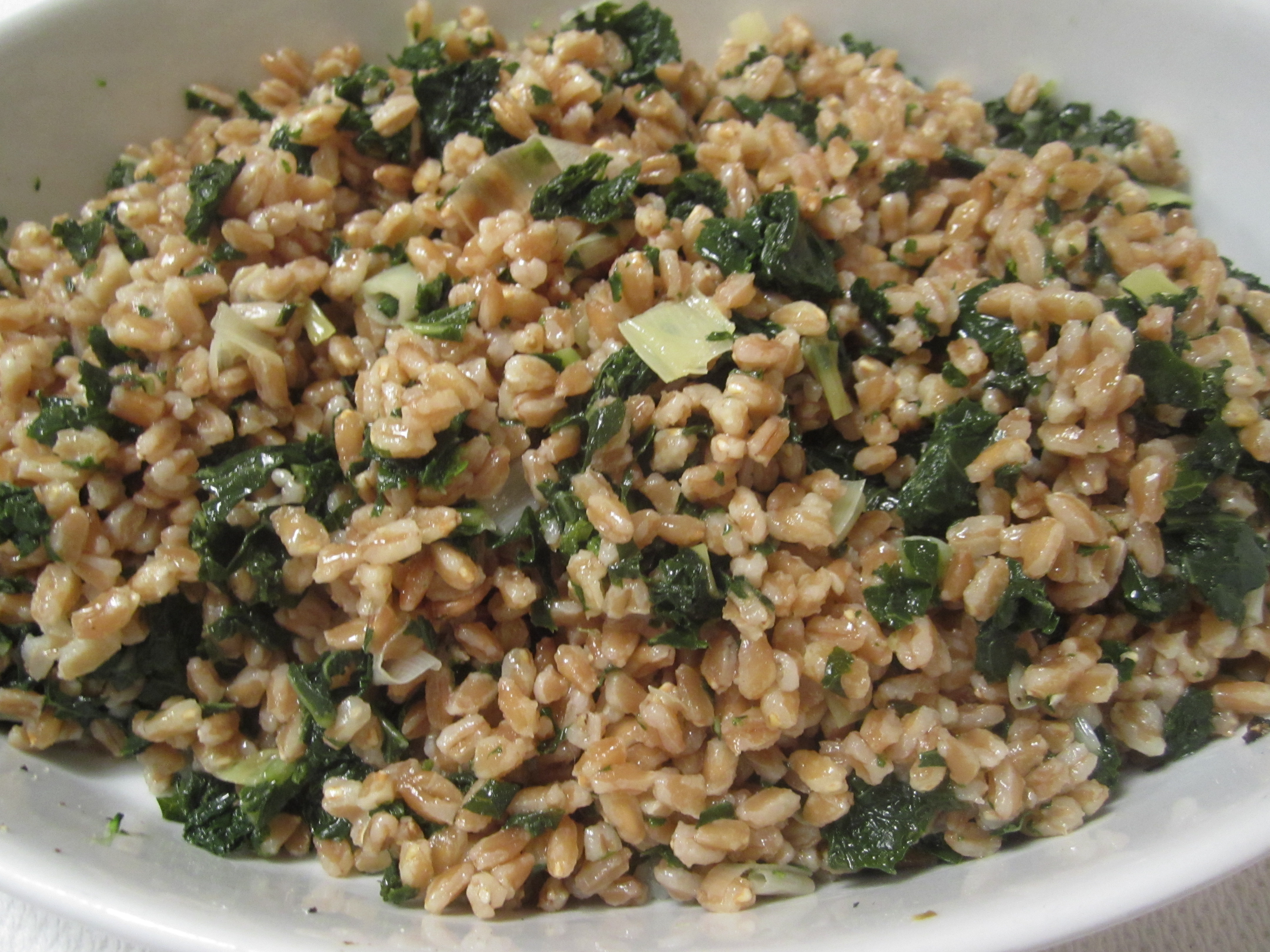
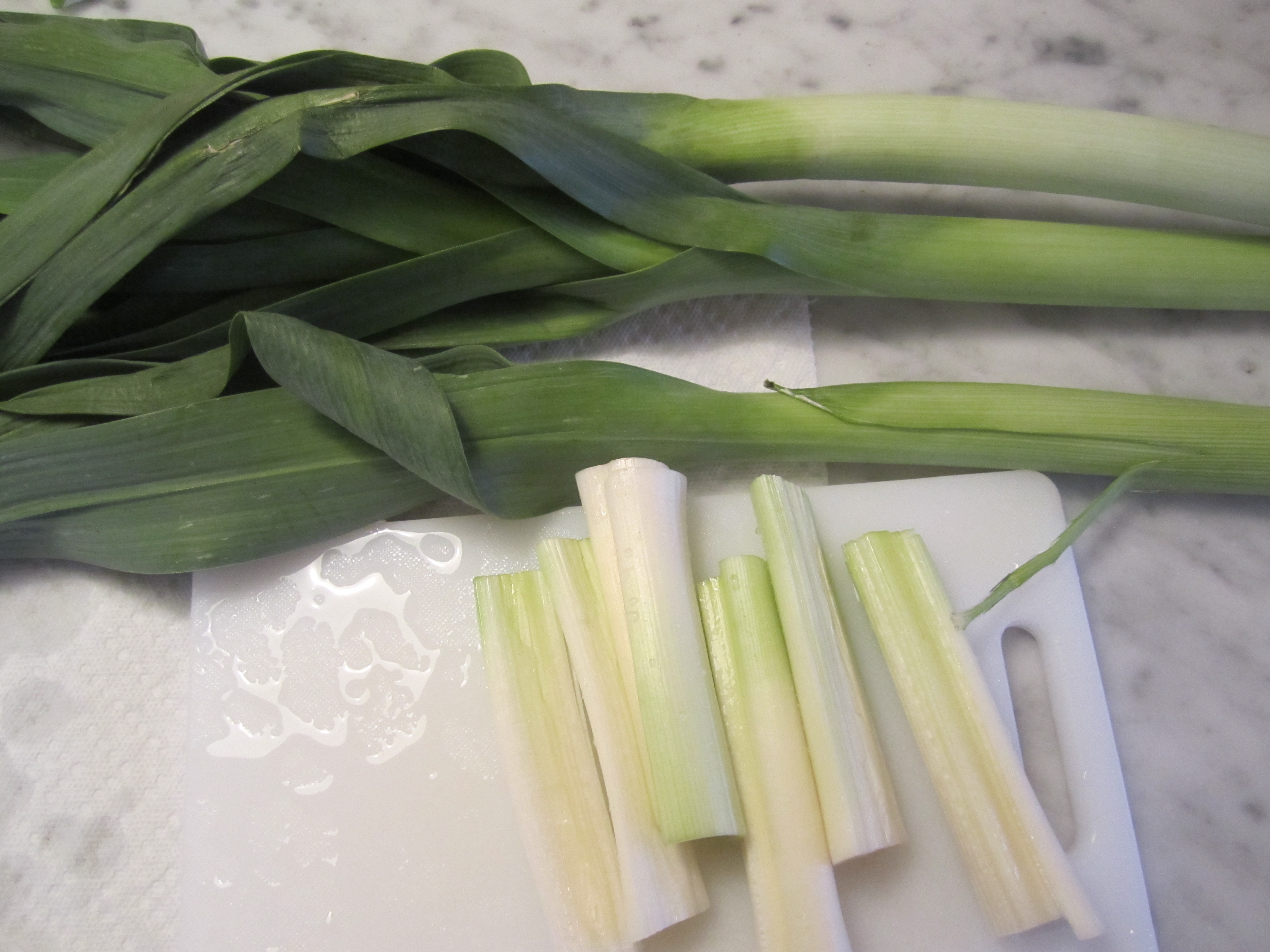
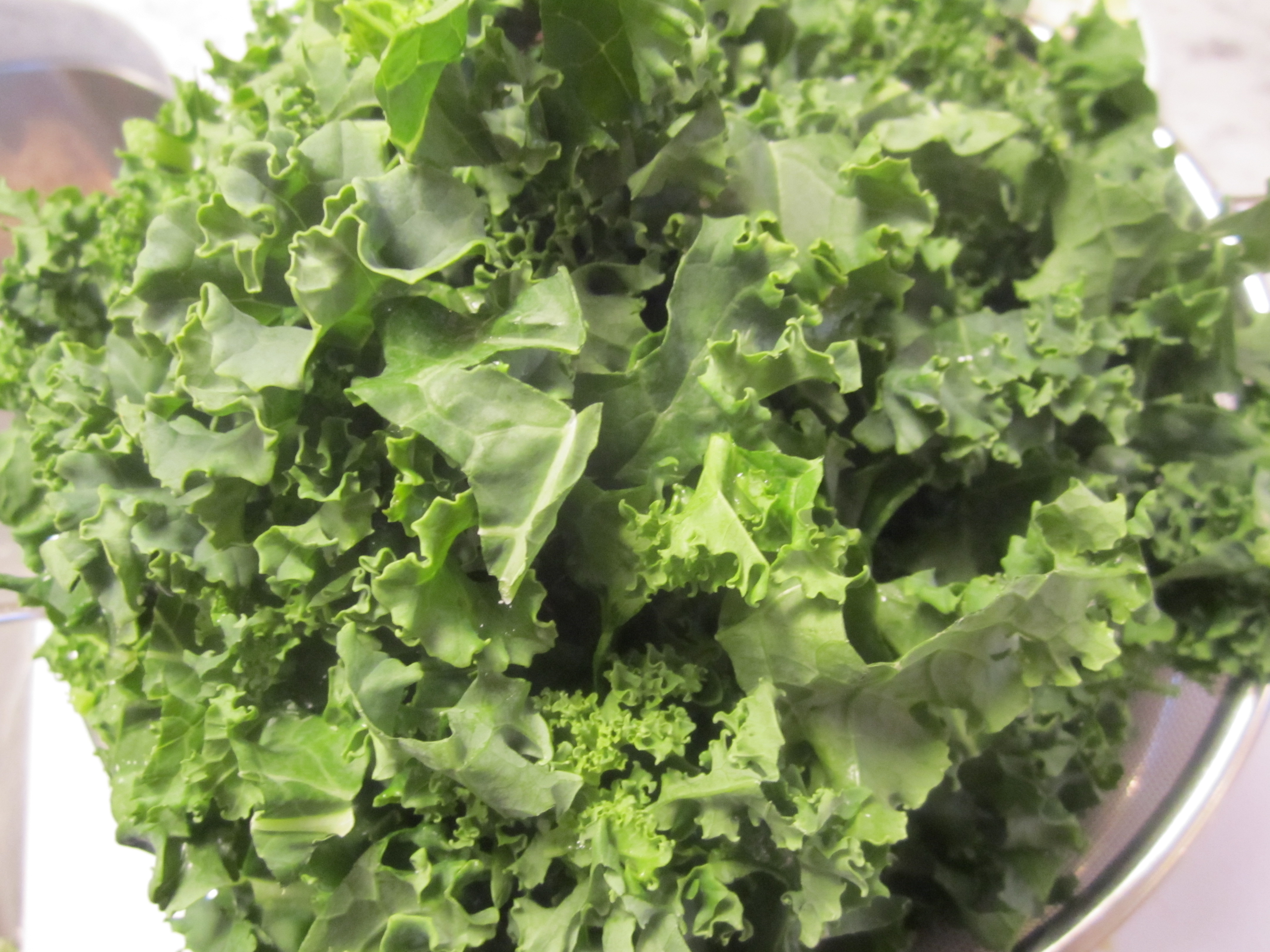
The centerpiece of this nutritious meal is farro (a.k.a. triticum), which is a great source of nutrients, fiber, carbohydrates, and even some protein.  To the farro, I’m adding some blanched, chopped kale–freshy harvested.  Kale is, of course, king of nutrients and fiber in the vegetable kingdom, and there is a farm nearby that grows it every fall.  To complement the kale and farro, are leeks–fresh from my neighbor Beppi’s garden.

When I begin to receive leeks from Beppi, it’s a sure sign that fall is upon us–he makes the most divine leek and potato soup (I’ll publish the recipe someday).

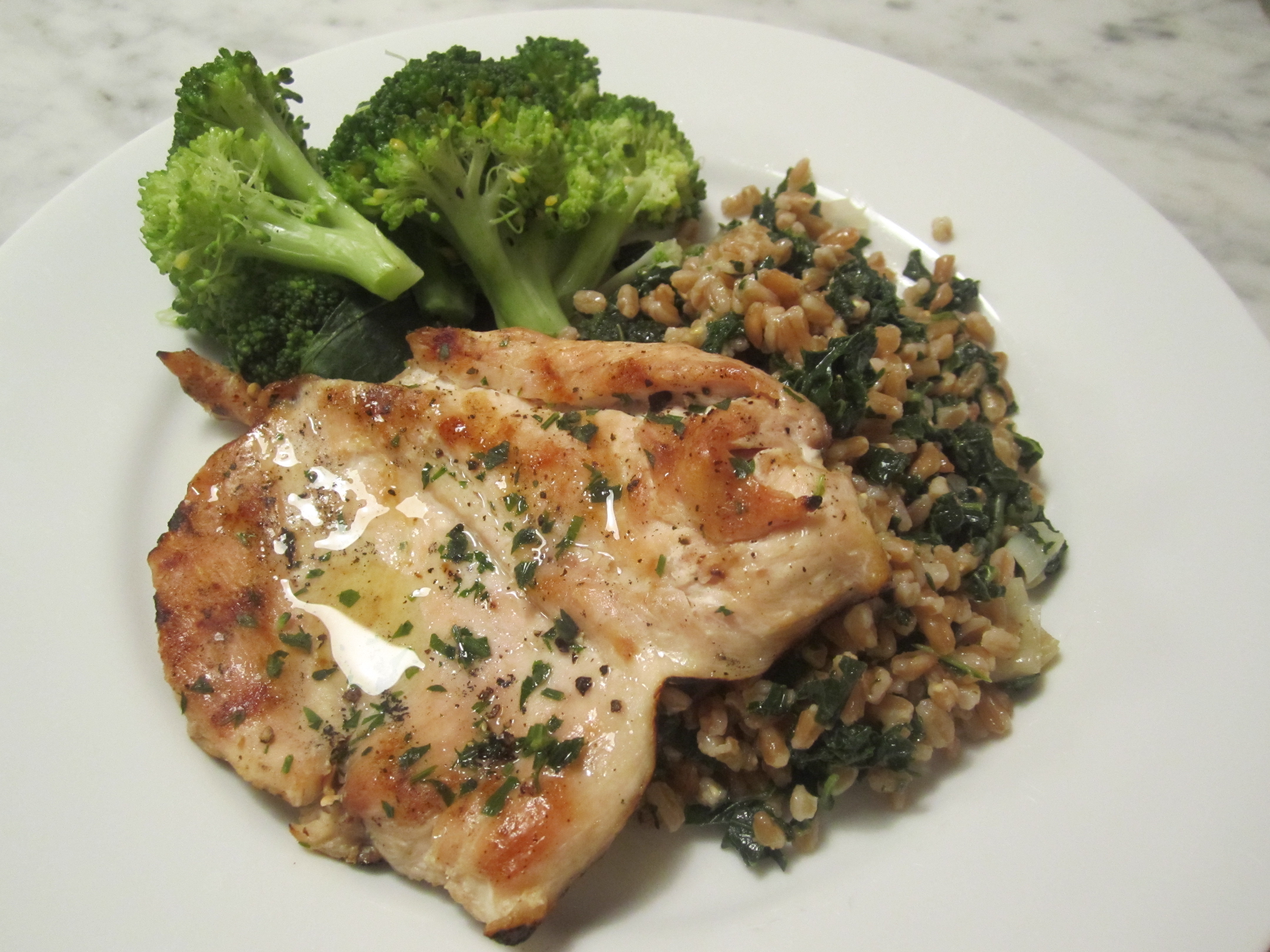
The main course tonight is simple grilled paillards of chicken–thinly pounded breasts seasoned with salt, pepper, fresh parsley and drizzled with good olive oil.

This is the best protein punch I can give my guests with the least extraneous ingredients or fat (not that I’m normally concerned with such things).   Along with the chicken is an abundant amount of freshly picked and boiled broccoli, simply dressed with extra-virgin olive oil and salt.

Farro with Kale and Leek

serves 4

2 c farro

3 c chicken broth

1 bunch leeks, white parts only

1/8 tsp nutmeg

1/4 c olive oil

salt and pepper to taste

grated parmigiano for sprinkling

Trim leeks of their roots and slice in half lengthwise.  Under running water, separate the layers of the leeks and rinse any loose soil between the layers, while keeping the leek largely intact.   Cut crosswise into half-moon slices approximately 1/2″ thick.

Strip kale off the coarse stems and slice into ribbons approximately 1/2″ wide.

Drop into well-salted boiling water and blanch for about 5 minutes. Drain in strainer.

Place farro in a small pot with chicken broth.  Bring to a simmer and cook on low heat, covered for approximately 20 – 30 minutes.  The grains will become bloated and increase in bulk, but will remain nutty and sturdy.  Stir occasionally and add water if the chicken broth evaporates.  Can be cooked a half-hour in advance and let rest, covered, until ready to combine with kale and leeks.

After kale has drained well, place on cutting board and chop vigorously in both directions for a coarse but even chop.

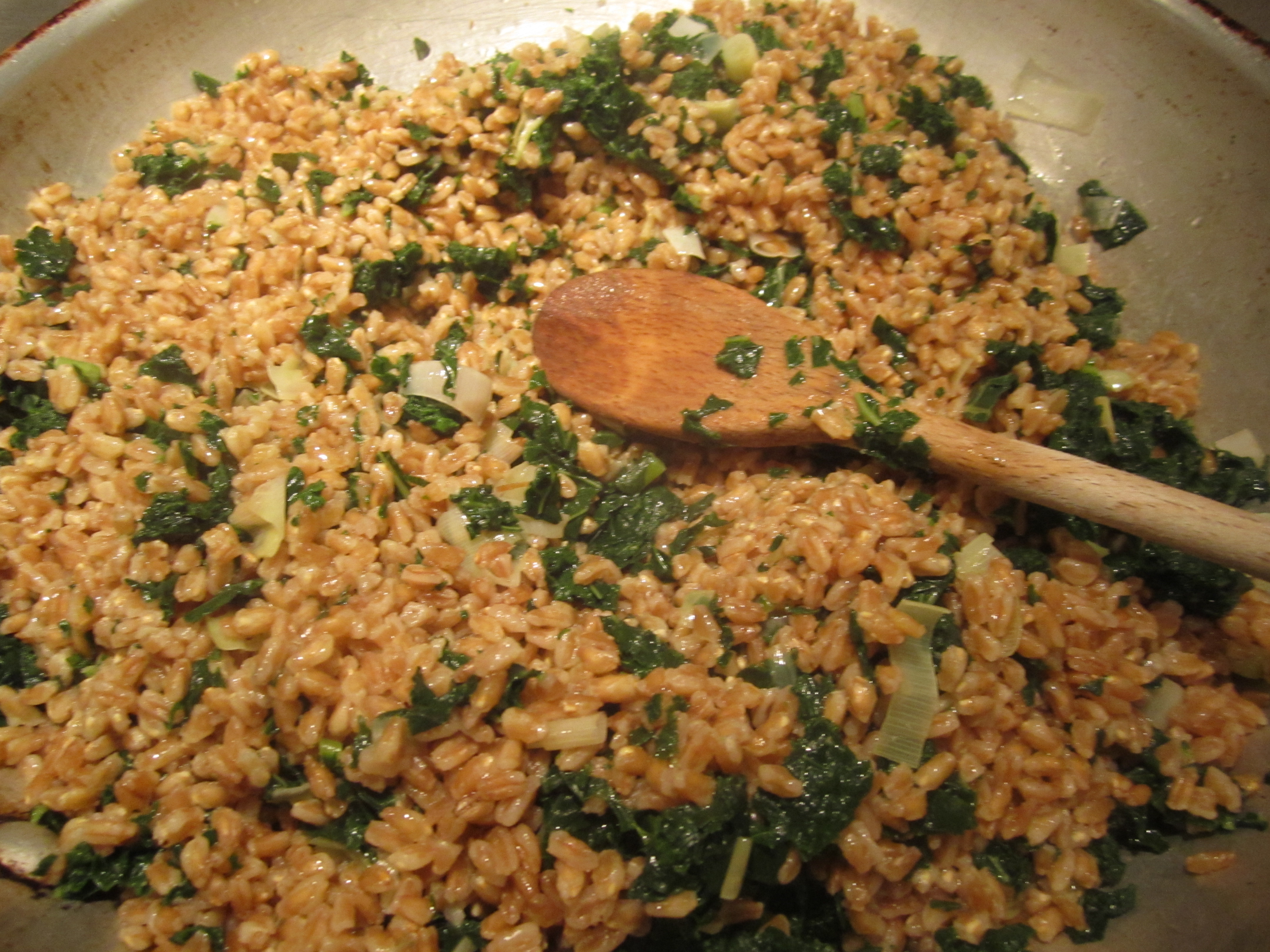
In a broad skillet on medium heat, saute leeks in half the oil for about 2 minutes.  Add chopped kale, sprinkle with salt, pepper, and nutmeg, and continue sauteing for a minute.

Add cooked farro (and any remaining broth) to skillet with kale and leeks.  Drizzle with the remainder of the oil, toss and serve.

Sprinkle with grated parmigiano (only for the protein, of course) at the table.

Posted in Pasta | Leave a comment

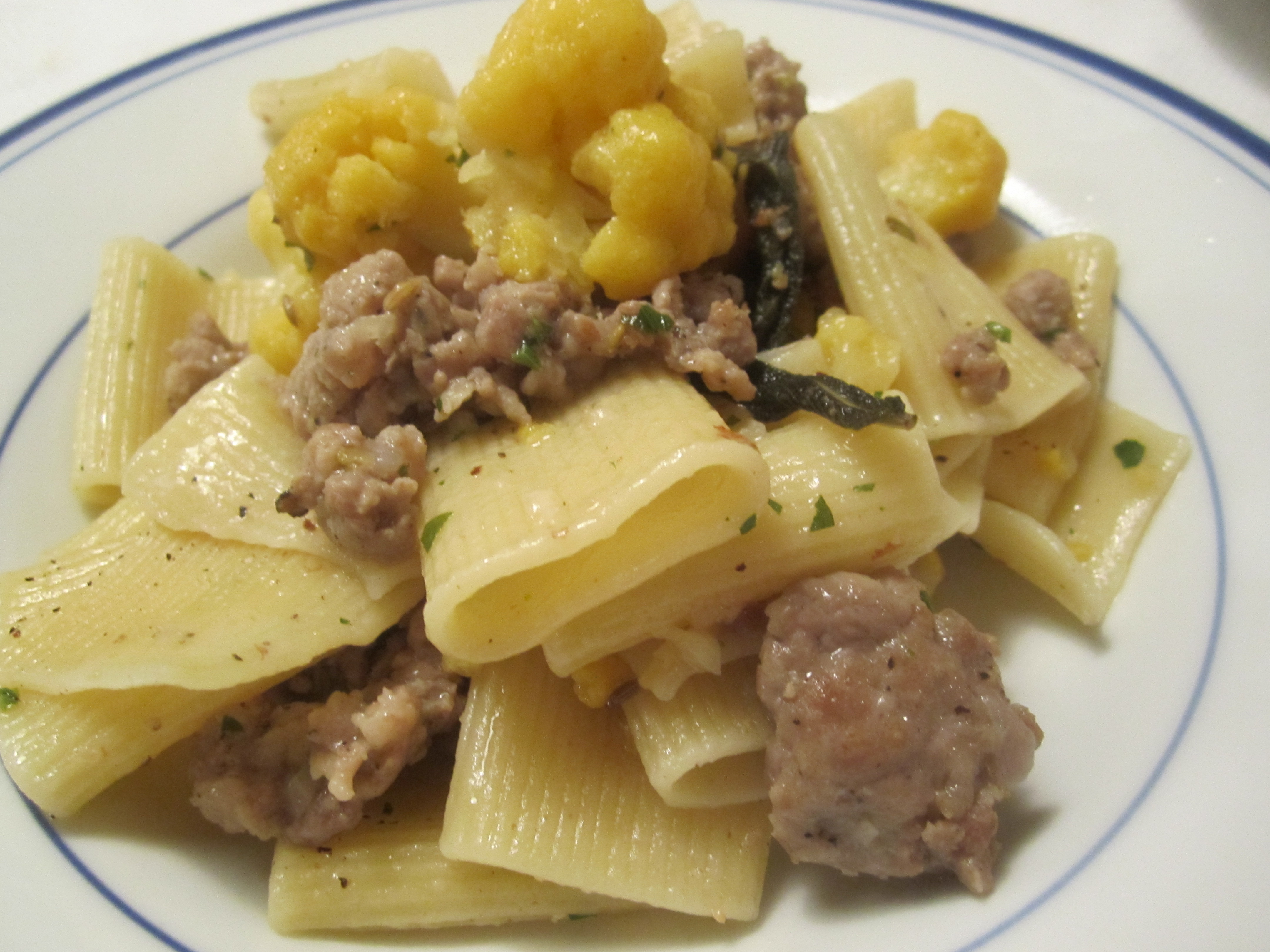
Pasta with Cauliflower and Sausage

There’s a gorgeous variety of yellow cauliflower at my farm stand that intrigues me.

I don’t know that there’s any difference in flavor between yellow and the traditional white, but (they claim) it’s richer in vitamins (beta carotene) because of its yellow color. This time of year, both varieties of cauliflower are mild and sweet, and either one will do for this recipe.

Sage is another prominent flavor in this dish–it goes so well with cauliflower.  It’s earthy, aromatic, and imparts such complex woodsy flavor to anything it touches.

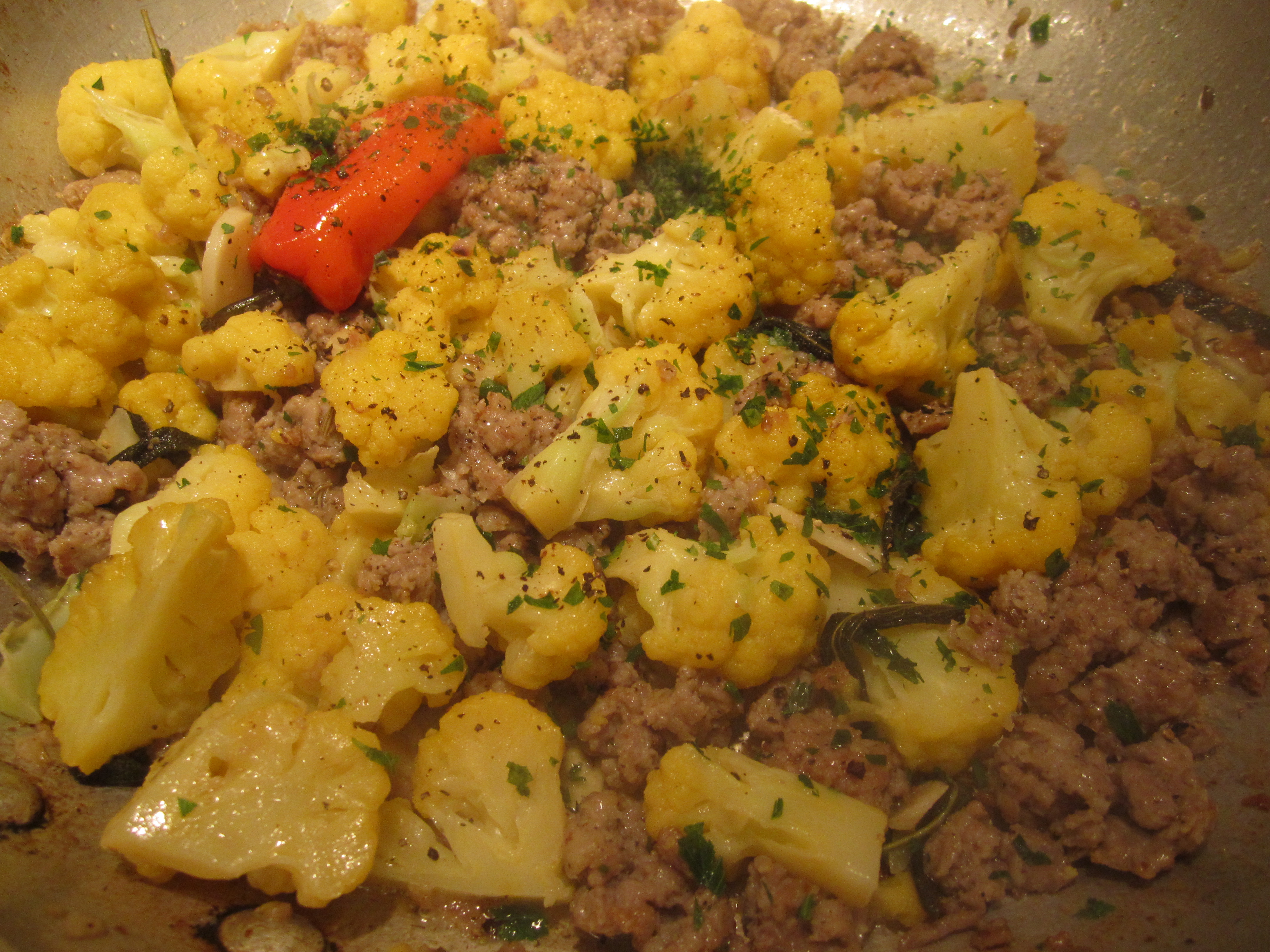
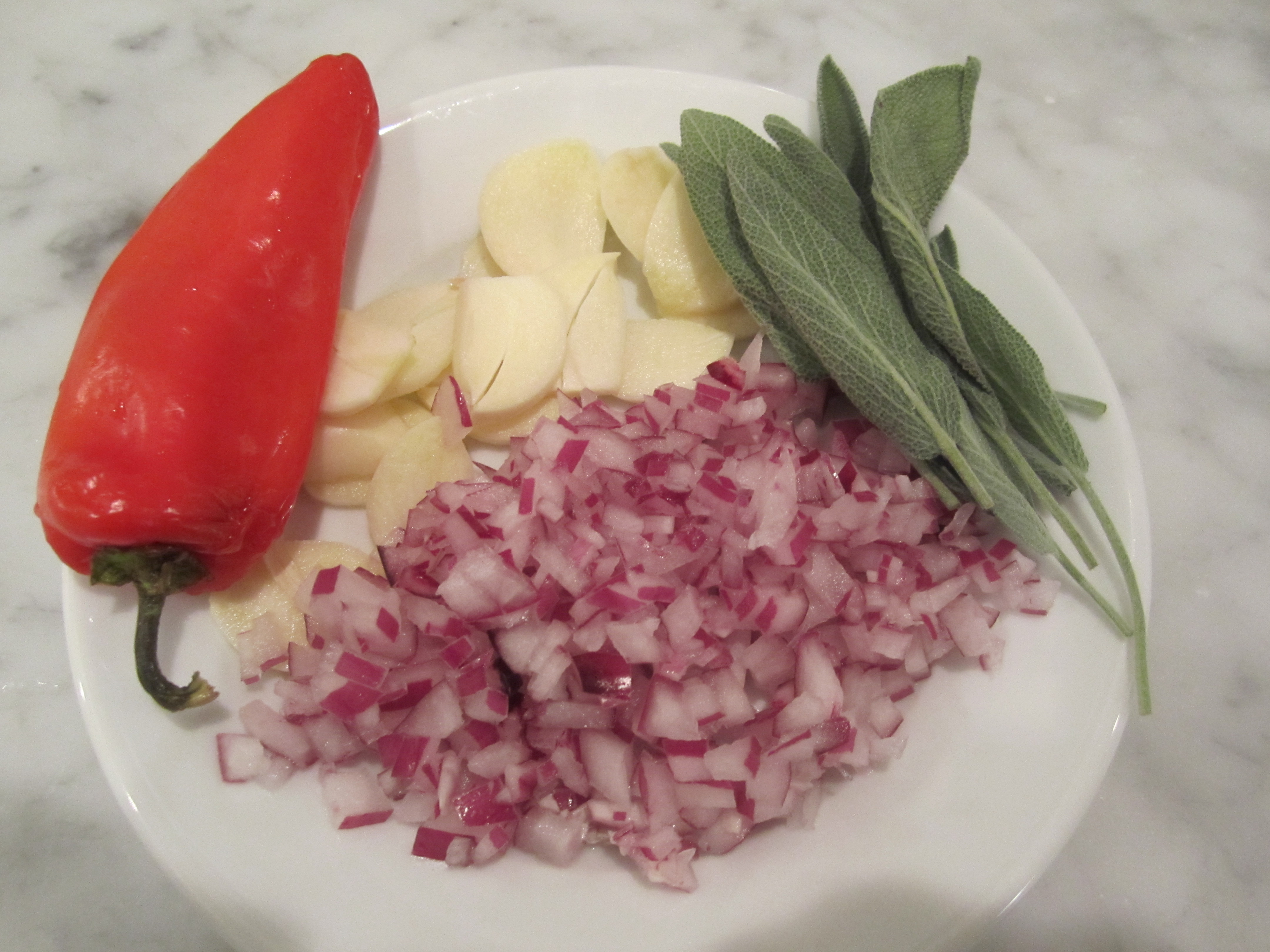
In this dish, pork sausage is removed from its casing and lightly browned in olive oil, along with sage, garlic, finely diced onion, and a hot chili pepper (if you like).  White wine is added, along with chicken stock, and all is reduced a bit.

The cauliflower gets blanched in plenty of salted water, drained and added to the sauce and simmered, while the pasta cooks in the water from the cauliflower.  This dish takes only about 20 minutes from the time the water boils, until it goes to the table.

Since local cauliflower are available into winter, I make this dish frequently from fall through winter.   You’ll be seeing more cauliflower recipes in the coming months.

Pasta with Cauliflower and Sausage

serves 4

1 lb rigatoni

1 lb sweet Italian sausage

1 head cauliflower

1/2 a small onion, diced finely

3 cloves garlic, peeled and sliced

1/4 c olive oil

1/2 c white wine

1 c chicken broth

1 tbl chopped fresh parsley

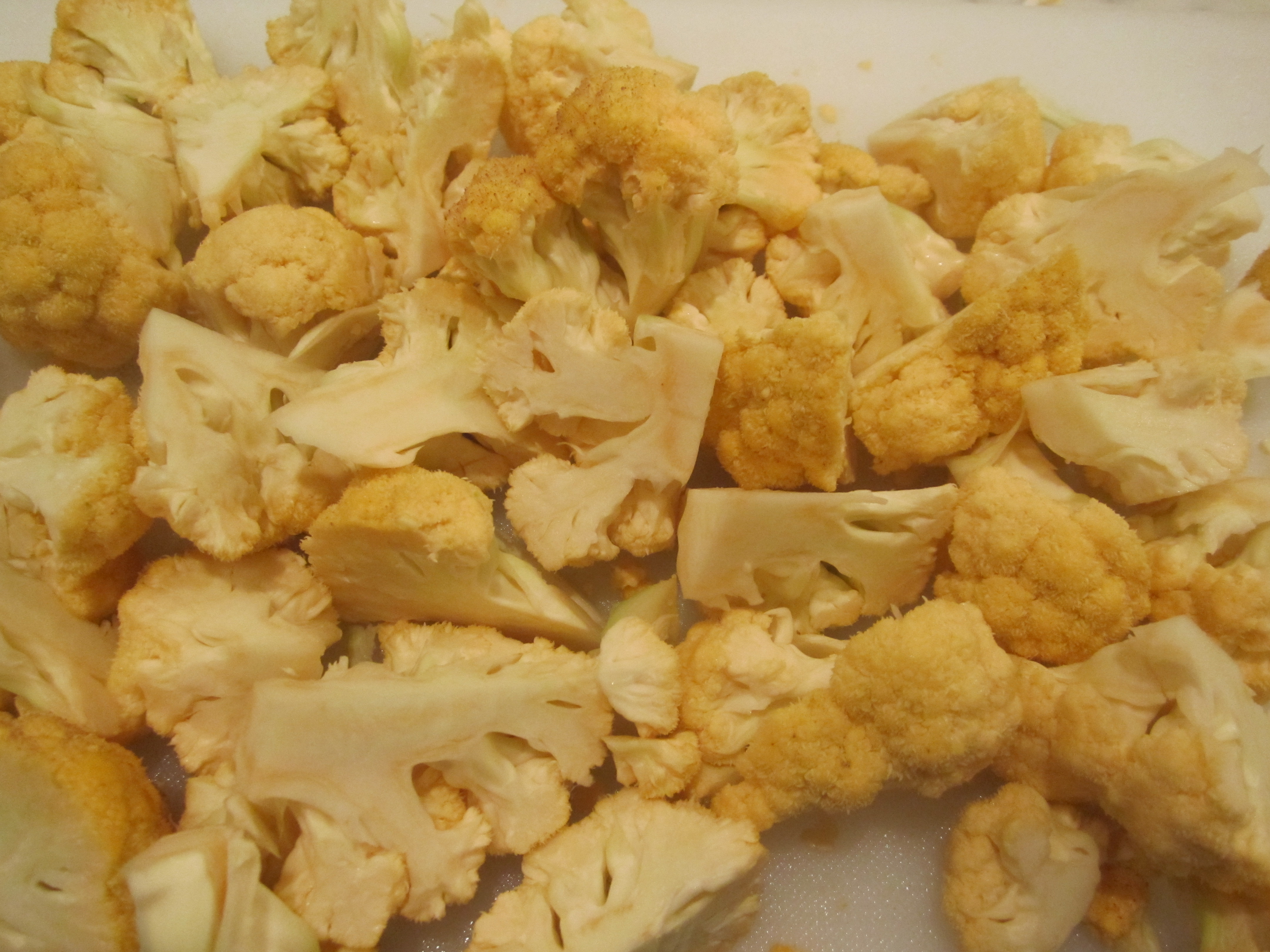
Remove outer leaves of cauliflower.  Slice in half and cut out triangular core from each half.

Cut cauliflower into bite-size pieces.

Drop into salted boiling water for 5 minutes. Drain and set aside.

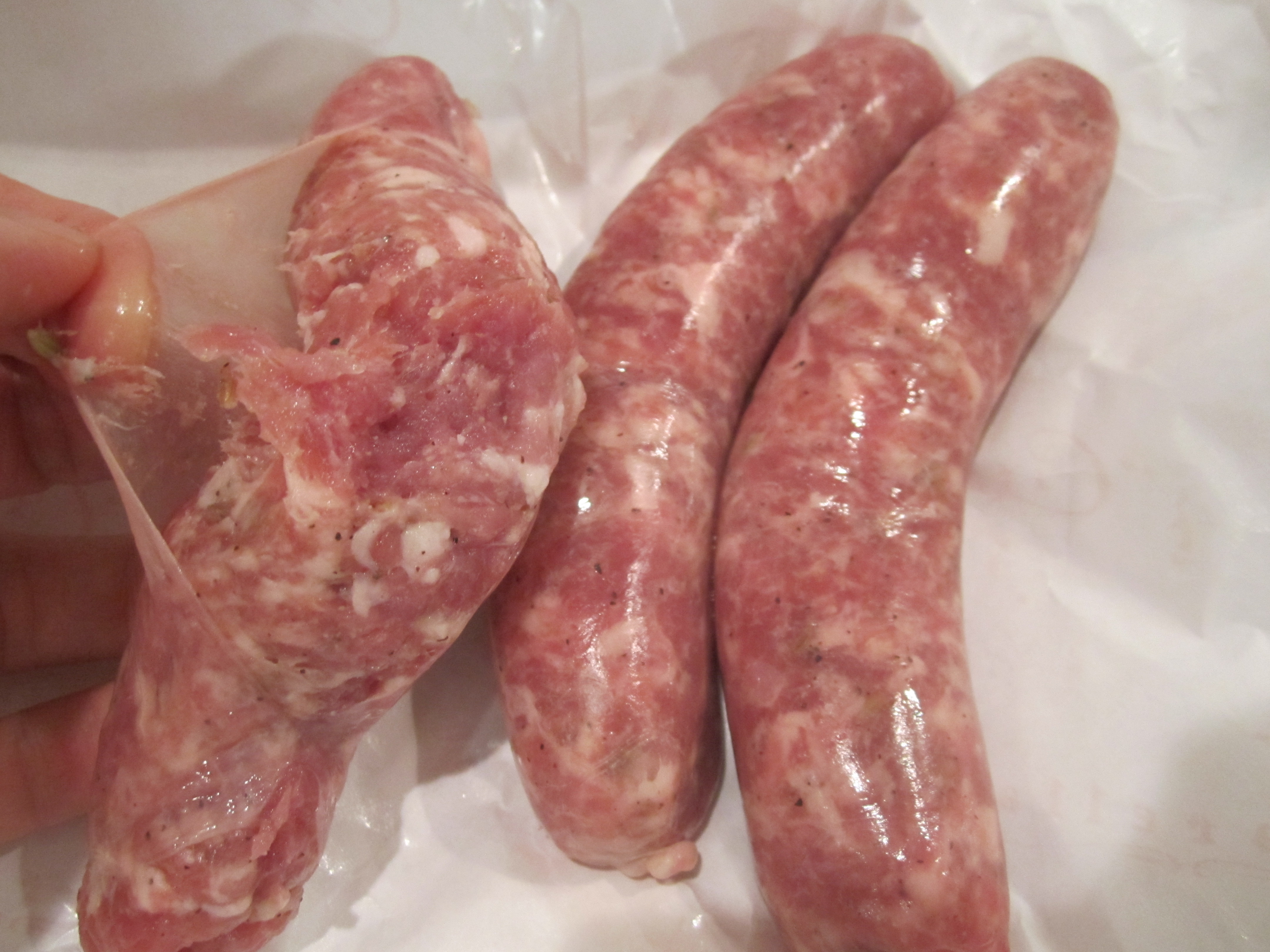
 Remove sausage from casing by slitting casing and pushing meat out with hands.

In a broad skillet, brown the sausage, while breaking up with a spatula.

 After about 3 minutes of browning (the meat needn’t be competely cooked through at this point),  add onion, garlic and chili pepper (if using).   Saute for about 5 minutes on low heat.

Turn heat to high and add wine. Reduce wine for a minute, then add broth.  Add cauliflower to skillet and sprinkle with parsley.  Simmer on low heat while pasta cooks.

When pasta is done, add pasta and toss with a 1/2 cup pasta cooking liquid.  Saute for a minute or so to amalgamate.

Serve with plenty of grated pecorino romano.

Posted in Pasta | 1 Comment

Mom’s Eggplant Fritters

These are straight from my mother’s home town in Calabria and straight out of my own childhood.  I never liked eggplant as a child, but I always liked these fritters–probably because they’re as much cheese and breadcrumbs as they are eggplant.    Essentially, these are meatballs without the meat–only much moister, since eggplant is mostly water.

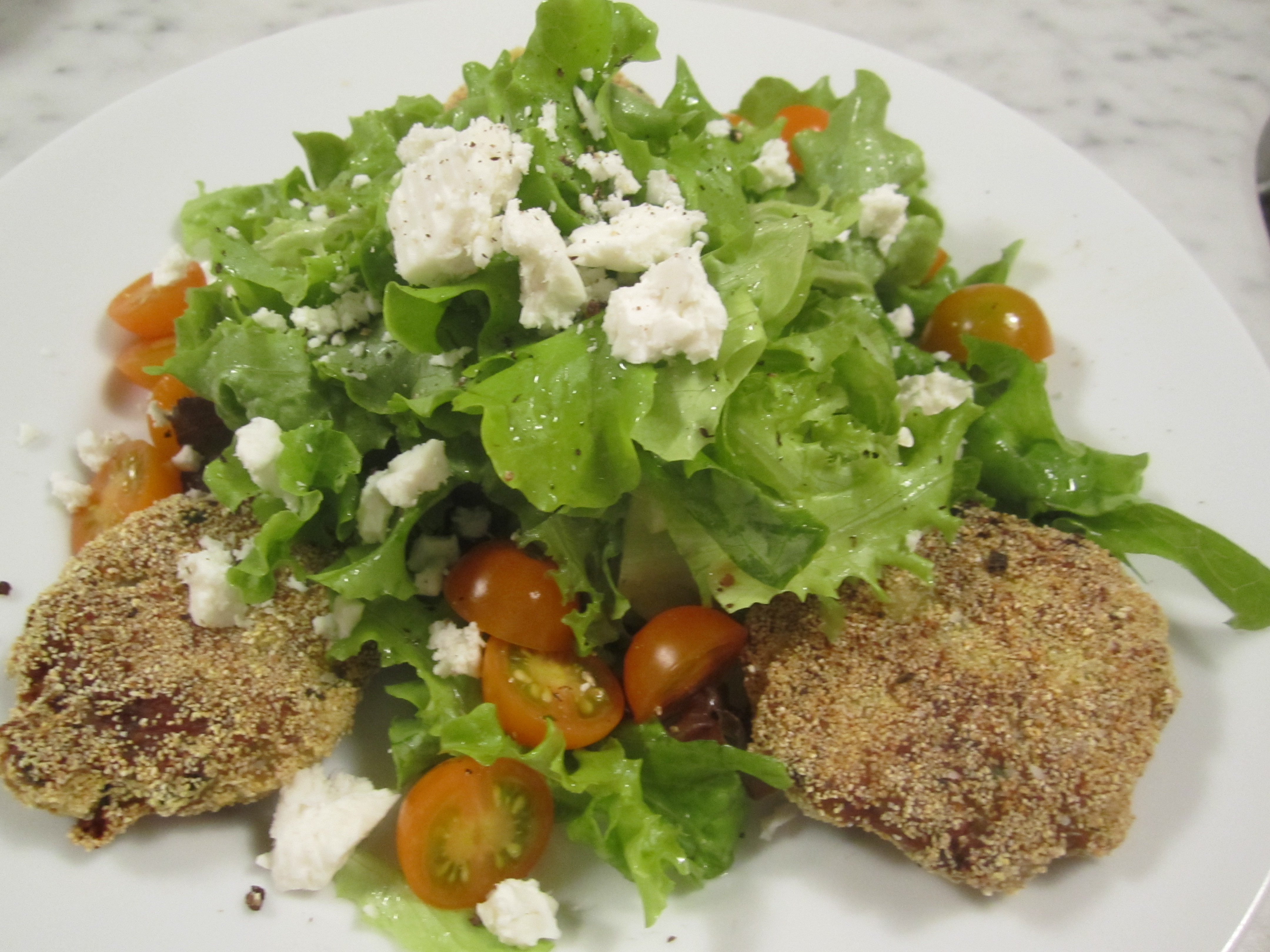
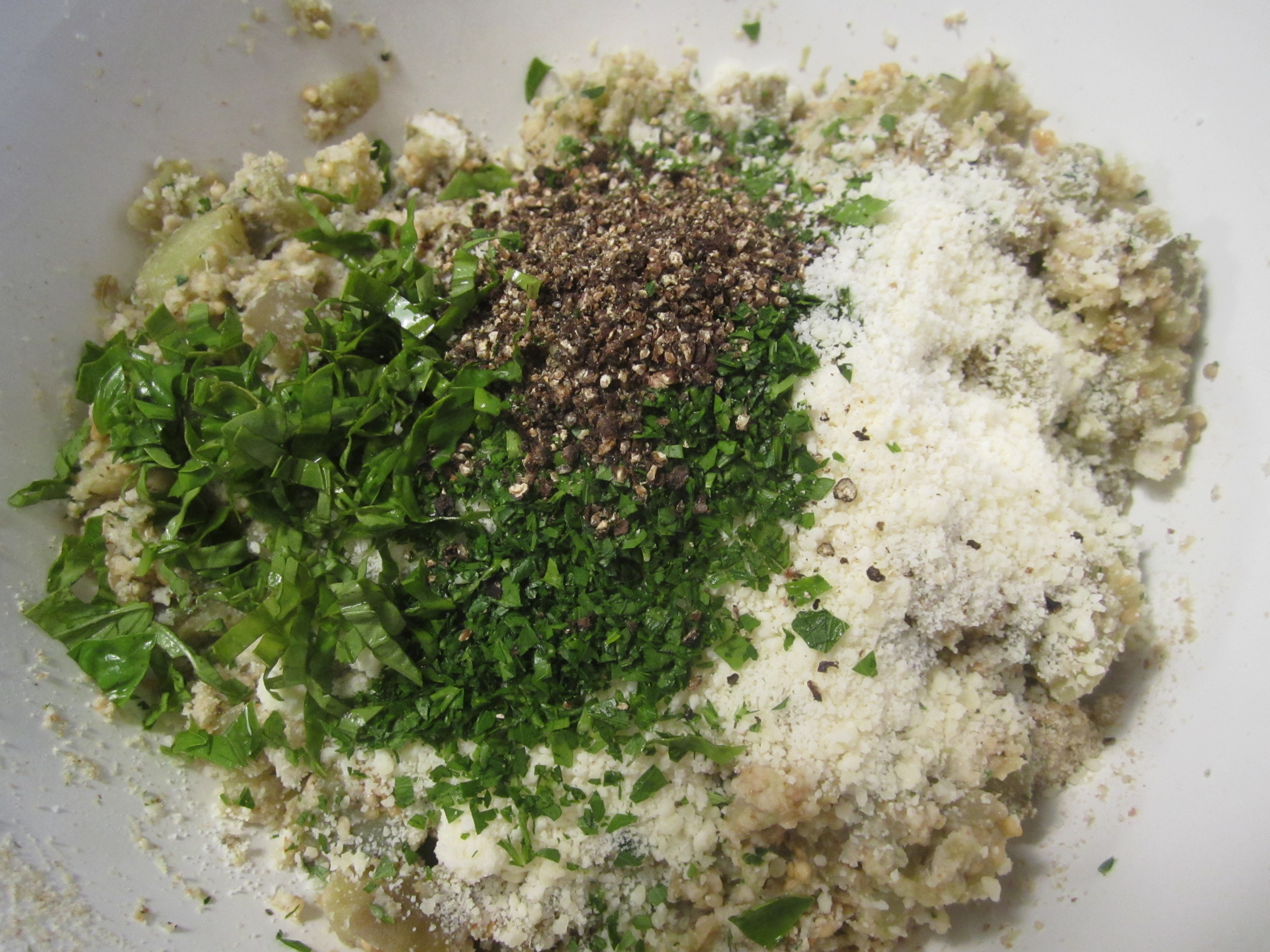
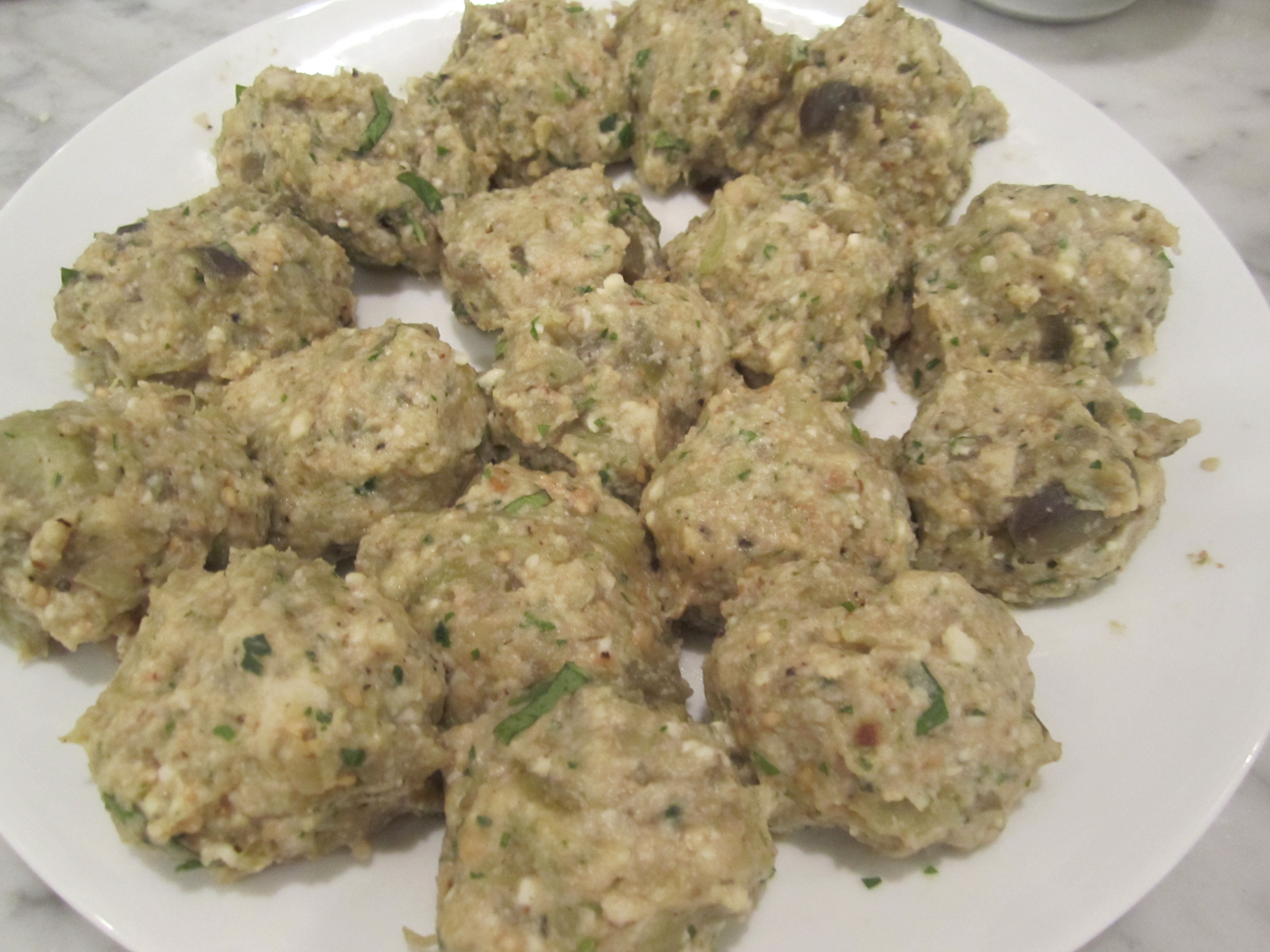
They require a bit of advance preparation, but this can be done the day (or days) before. The eggplant gets peeled and diced, then drained well and squeezed well.  Then the breadcrumbs are added–seasoned ones.  Generous amounts of pecorino romano and black pepper are added.  Fresh chopped parsley and basil are added as well.  The whole mixture is kneaded and incorporated with hands, then formed into patties.  The patties are then dredged in additional bread crumbs, then pan fried in olive oil.

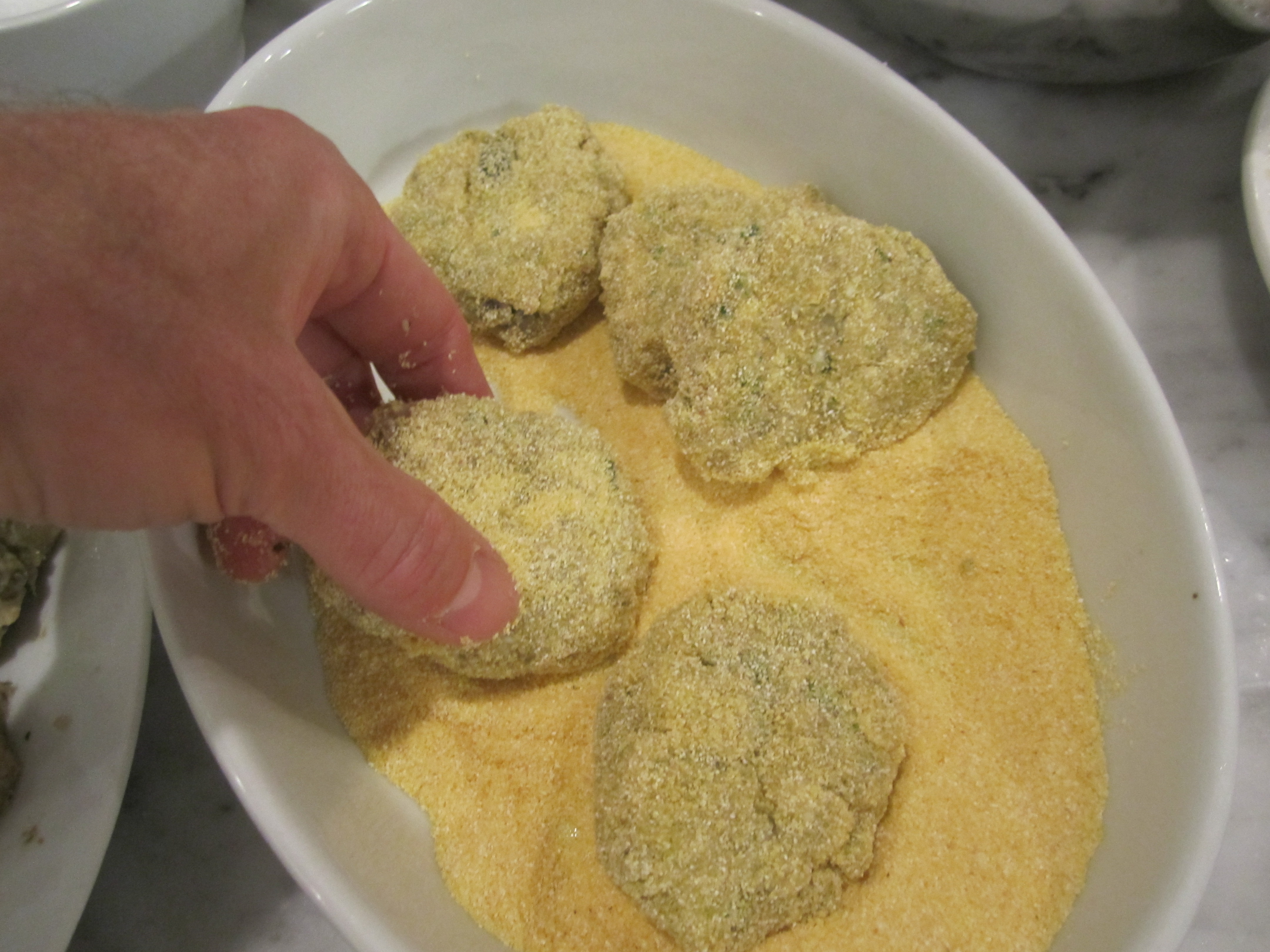
I’ve made a modification to my mother’s recipe (after much experimentation) although I don’t tamper with old-world recipes lightly.  I switched to cornmeal as an exterior coating on the fritters–it stays crispy (even when they cool), and gives the exterior of the fritters more of a contrast to the interior.

My proportions of ingredients (which I’ve measured carefully) produce a moist, light fritter, which tastes as good cold the next day as it does piping hot out of the oil.

The beauty of these fritters is that they can be prepared partly or entire ahead of time, then frozen.   For example, you can boil and drain the eggplant, then refrigerate it a few days (in a strainer, covered with plastic) or freeze it indefinitely, then proceed with the recipe.  Or–you can make the entire mixture and refrigerate it a couple of days (or freeze it indefinitely), then form the patties and dredge and fry.  Or–you can make the fritters completely, freeze them, then toast them in a 400 degree oven on a baking tray until they become crispy again.  In no way do any of these advance preparations impact on the quality of the fritters–they hold beautifully in the freezer.

Since these fritters are very rich and earthy-tasting, I like to serve them as an appetizer with a green salad dressed with red wine vinegar and olive oil.  Some sweet tomatoes (or chopped tomato) are great on this salad, since eggplant and tomatoes are a perfect match.  In addition, I like to sprinkle some goat cheese or feta over the salad (although you could do without it).  This could easily be a lunch in itself.

If you have guests that might not like eggplant, try this dish on them–you might change their minds!

Mom’s Eggplant Fritters

5 c (tightly packed) cubed and boiled eggplant pulp (the yield from 6 medium eggplants)

3 c seasoned bread crumbs

1 1/2 c grated pecorino romano cheese

2 tbls fresh chopped parsley

2 tbls fresh chopped basil

2 tbls black pepper

3 large eggs

cornmeal for dredging

olive oil for frying

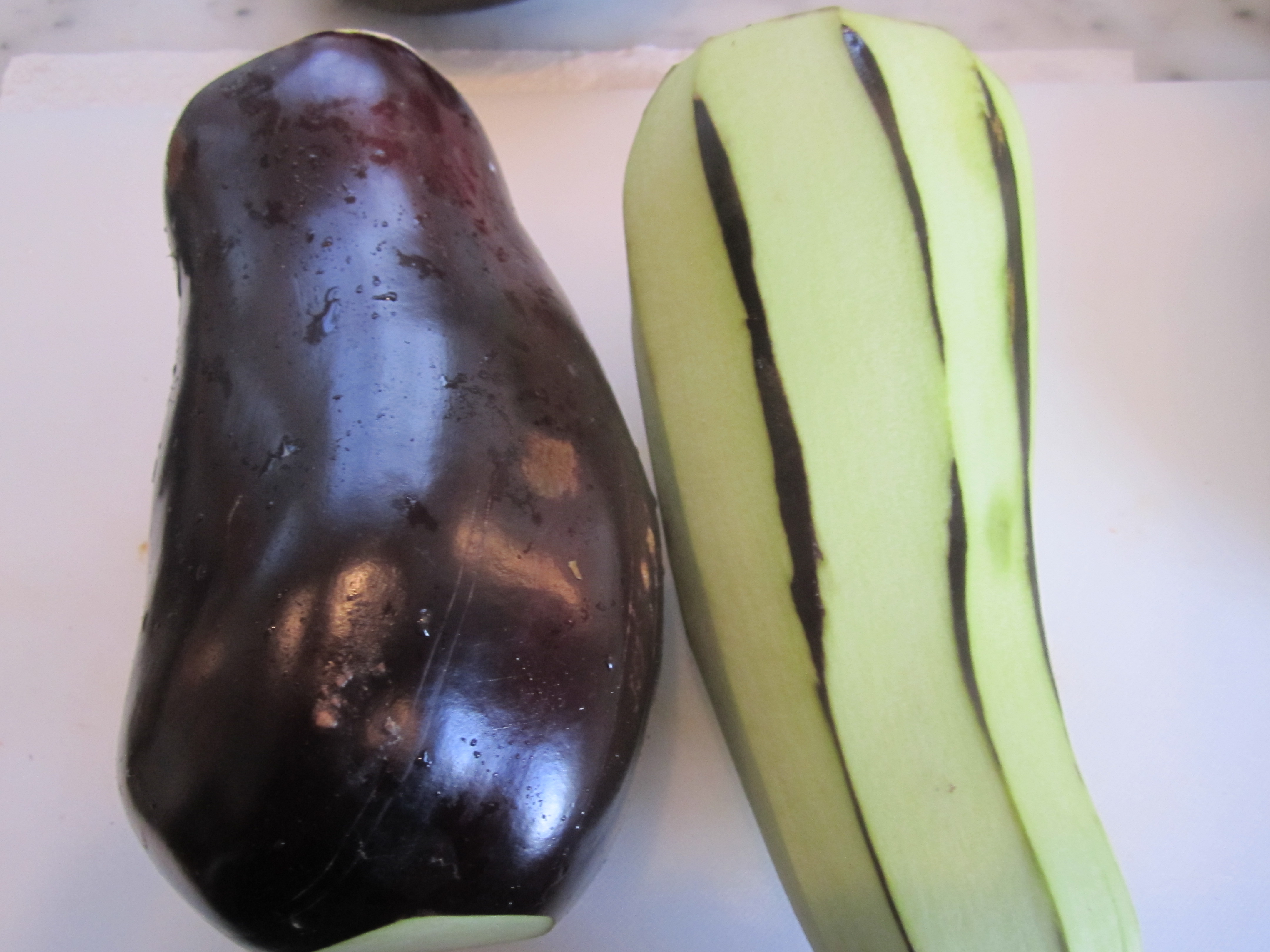
Peel the eggplant (leaving some stripes of peel on for flavor).

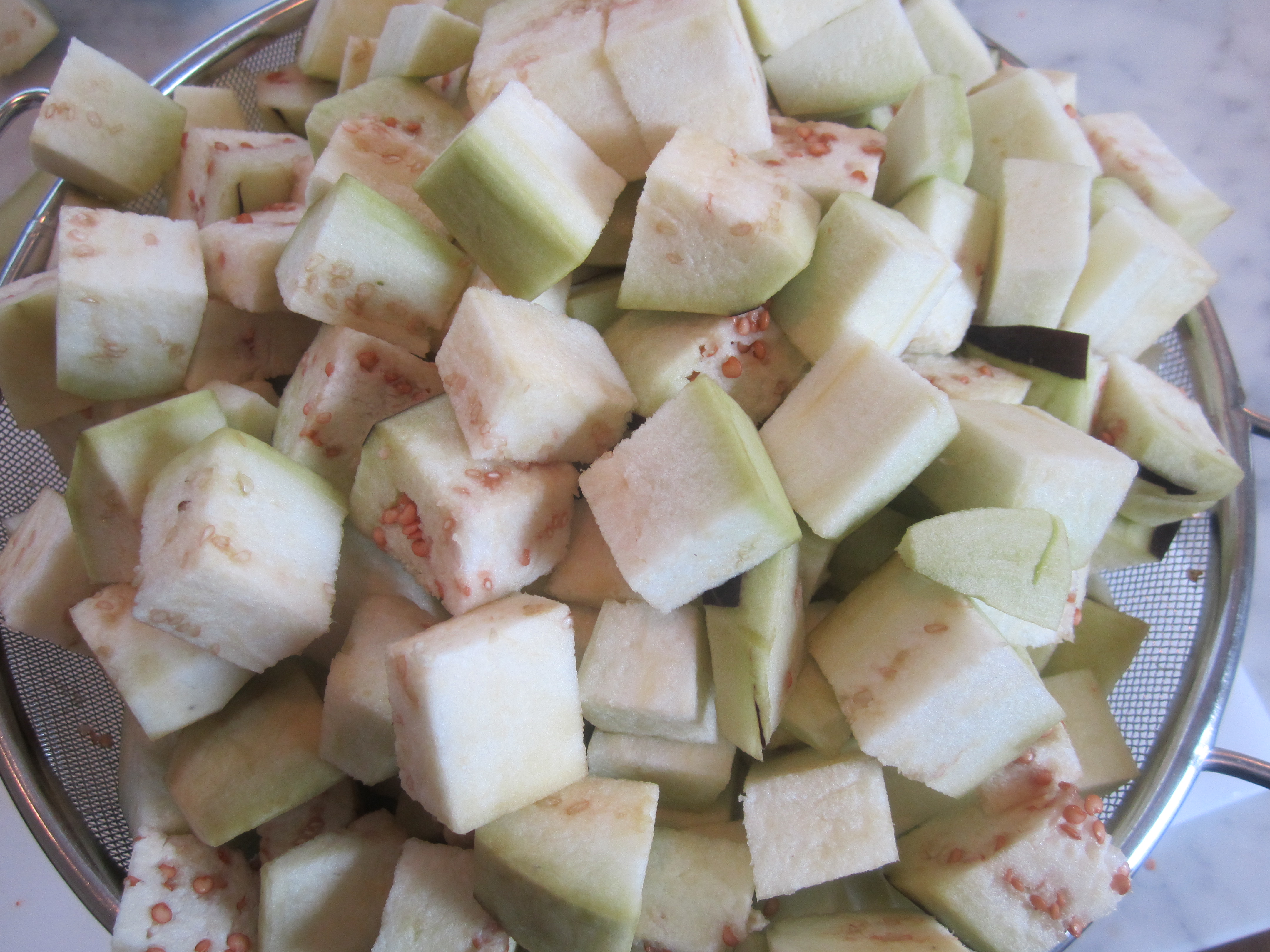
Dice into approximately 3/4″ cubes.

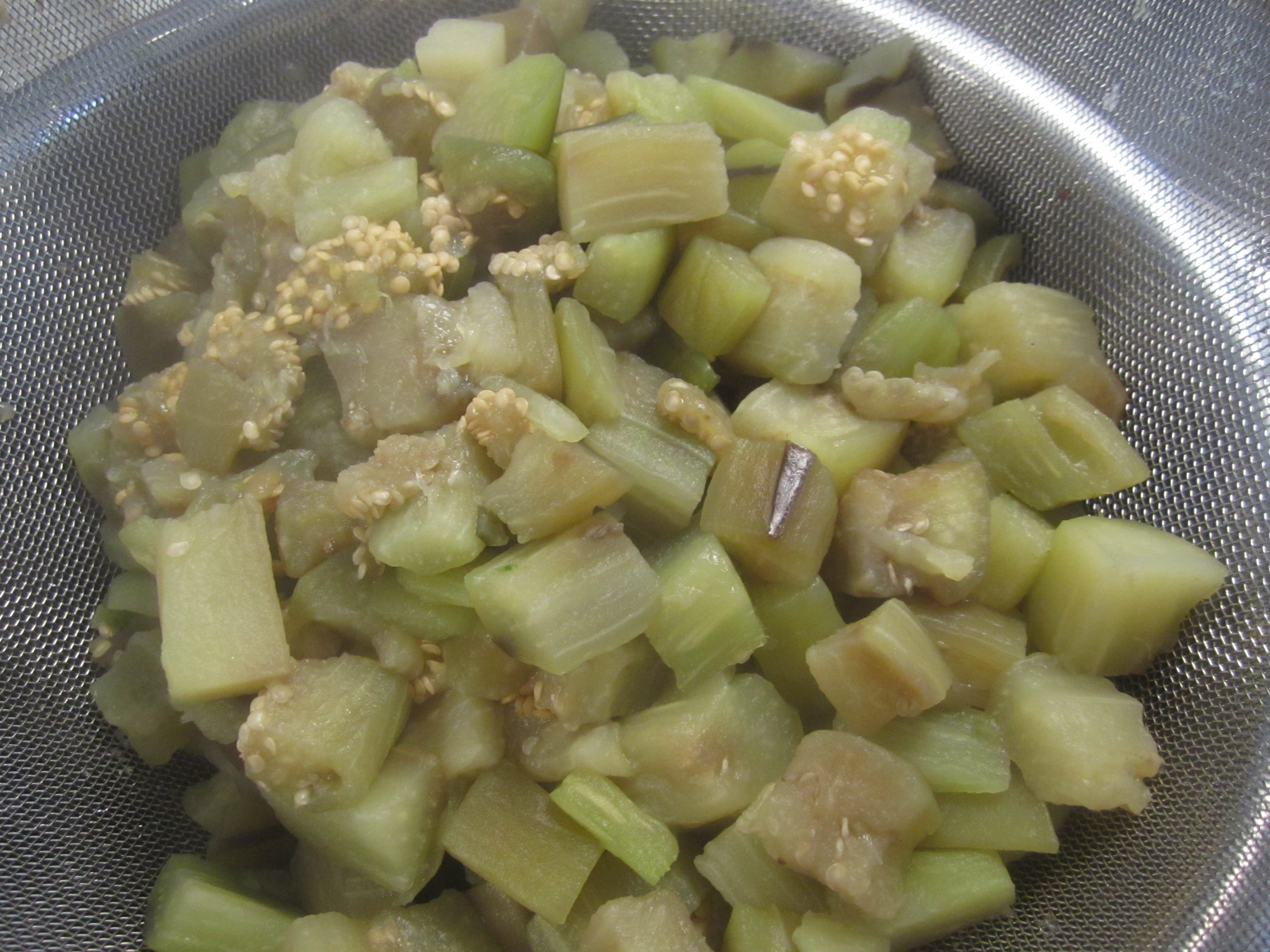
In a large pot of salted boiling water, drop in peeled, diced eggplant cubes.  Don’t worry about crowding the pot, just pack it all in and keep stirring the eggplant and pressing the cubes down into the boiling water.  Boil for 15 – 20 minutes, or until eggplant is tender and translucent.
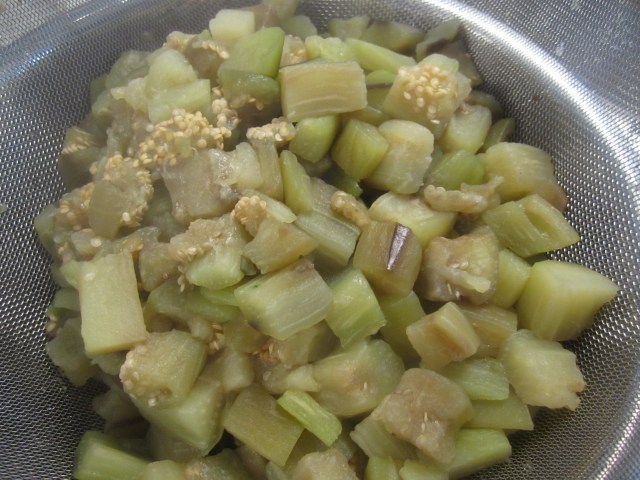
Drain well in a strainer (a couple of hours, if possible).  In small handfuls, squeeze between hands to remove more water (it’s not easy to squeeze–very slippery).

Place eggplant in a large mixing bowl, then top with remaining ingredients, except eggs.
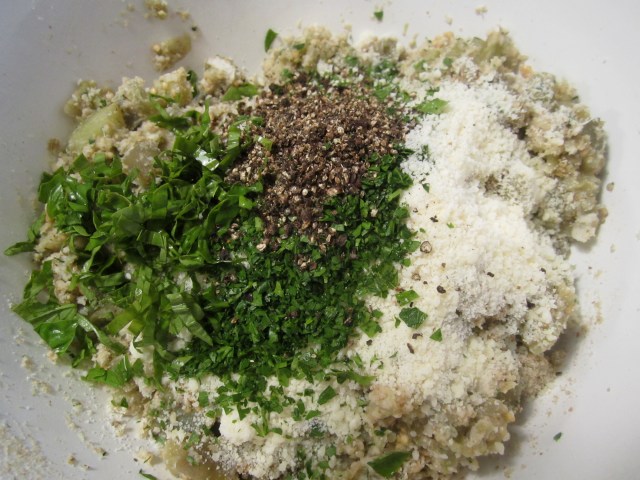
Stir and incorporate well.  Taste for salt and add, if necessary.

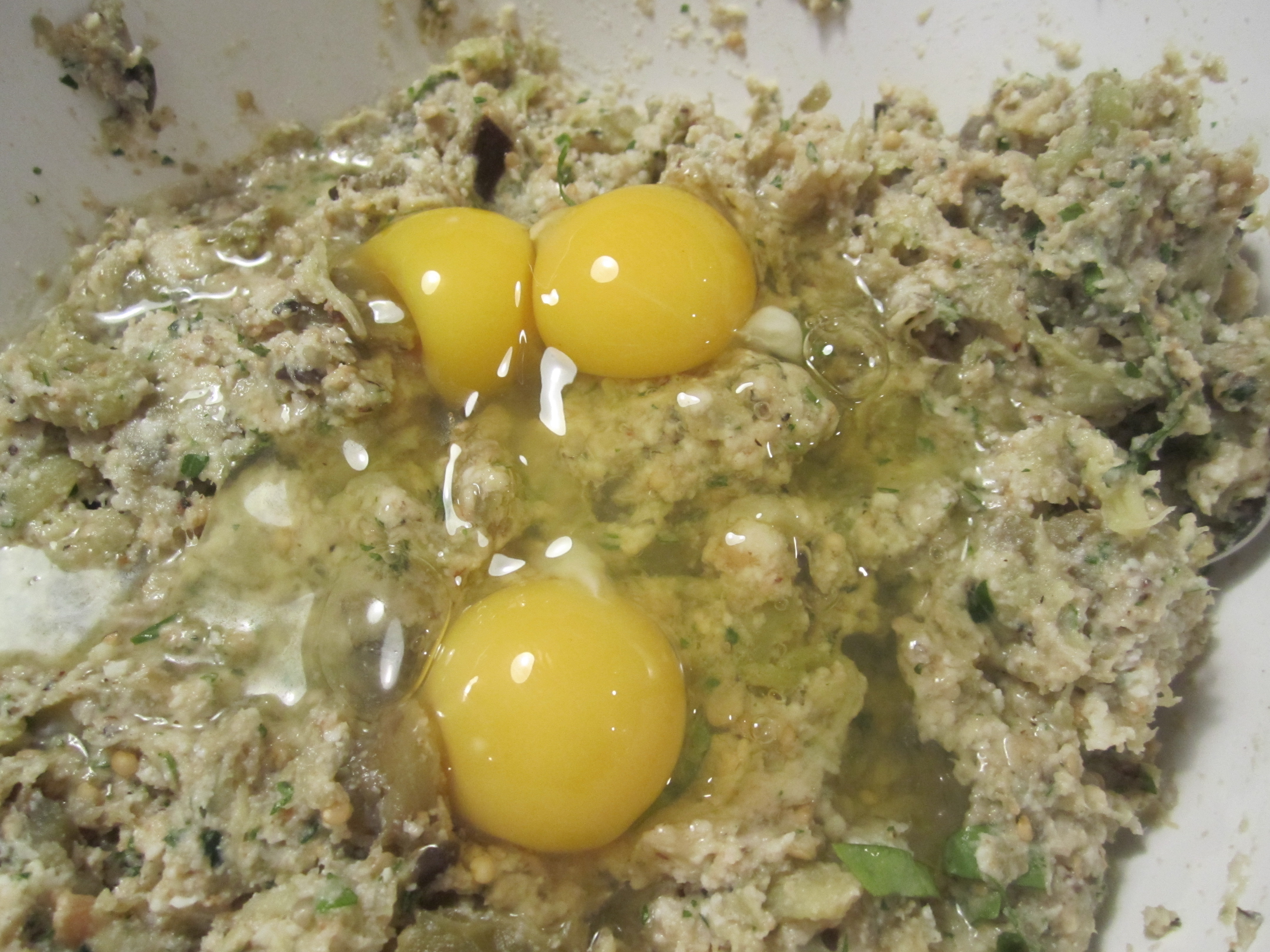
Add eggs, then incorporate, kneading with hands.  After adding eggs, batter can be frozen, then later thawed and made into patties and fried.

When ready to fry, form batter into patties approximately 2″ in diameter.

Dredge patties in fine cornmeal, then shake off excess.
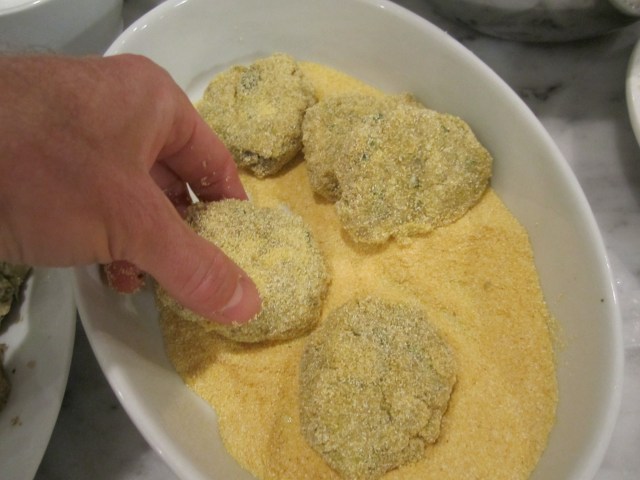
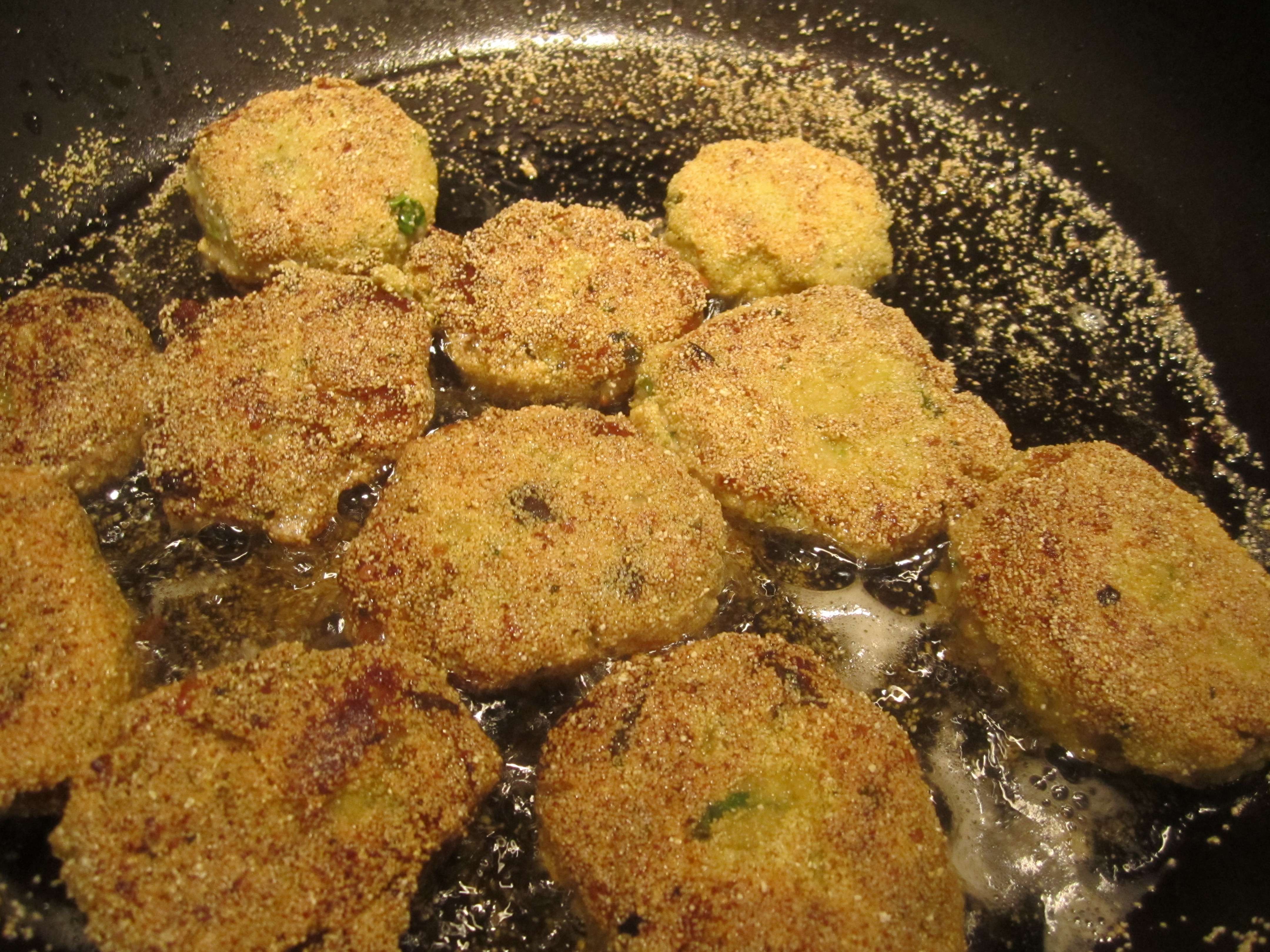
Carefully slip patties into 1/4″ of hot olive oil and fry until golden on each side–approximately 4 – 5 minutes per side.  They will be crispy on the outside, tender and moist on the inside.

Serve immediately or let cool to room temperature.  May be frozen, then thawed and toasted in the oven at 400 degrees for 15 minutes.


Posted in Vegetables | Leave a comment

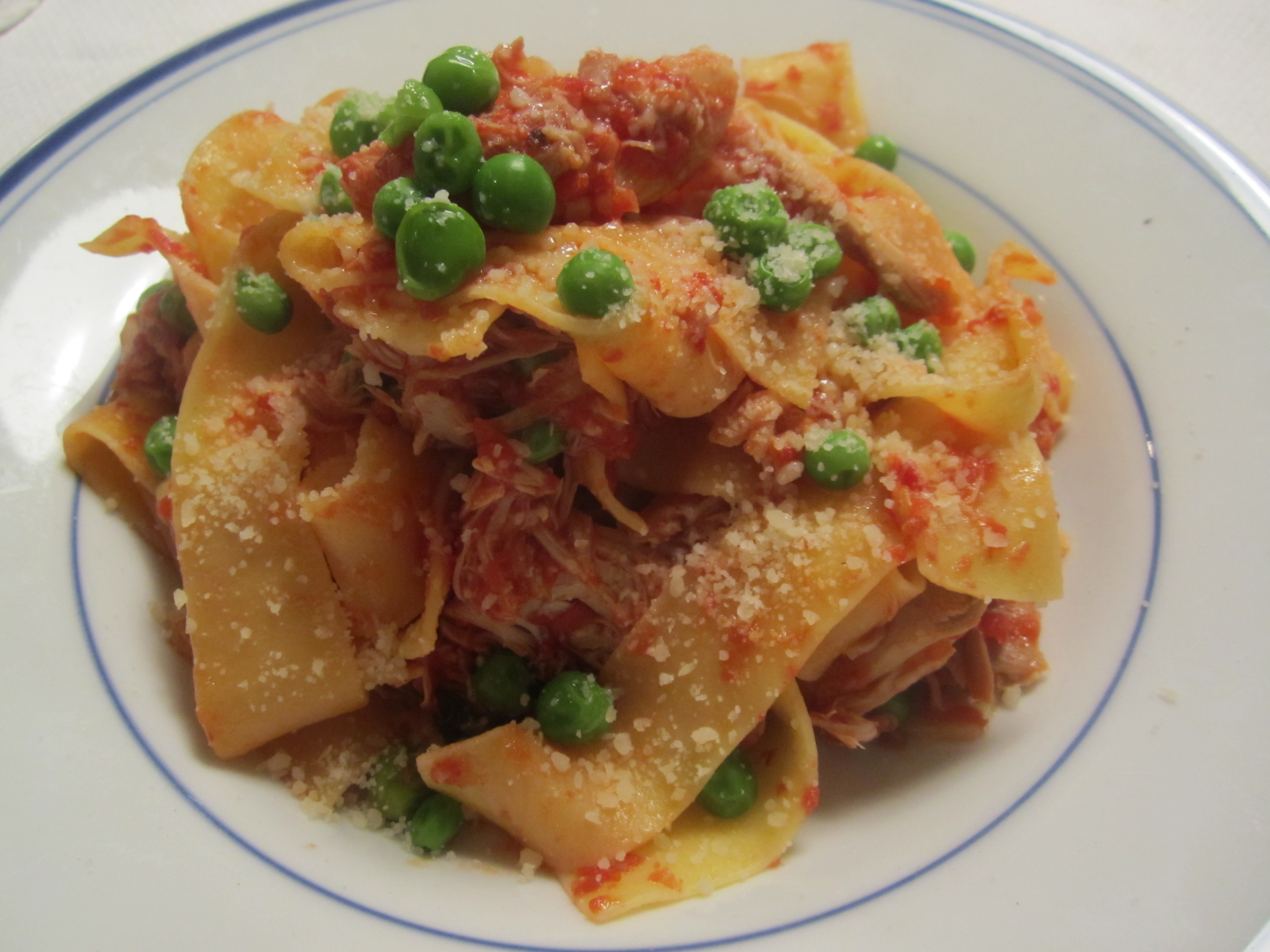
Papardelle with Chicken and Peas

Even I am amazed at the bounty that a pot of chicken broth produces–that’s why I make the effort to have it in my freezer at all times.  As I stated in my last post, I made broth last week for risotto.  It was a large pot of broth, so I was able to freeze several quarts, besides what I needed for the risotto.  To recap, in my broth I used all legs and thighs and froze the meat in a separate bag.  In my last post, I used some of the meat for a warm and comforting chicken soup. 

Tonight, I used the remaining meat to make a sauce for pasta.  If you didn’t have a bag of dark meat chicken in the freezer, you could certainly use raw chicken thighs/legs in this sauce.  Simply brown them lightly, then add the pureed tomatoes and cook the sauce for about a half-hour to 45 minutes, until the thighs are meltingly tender. 

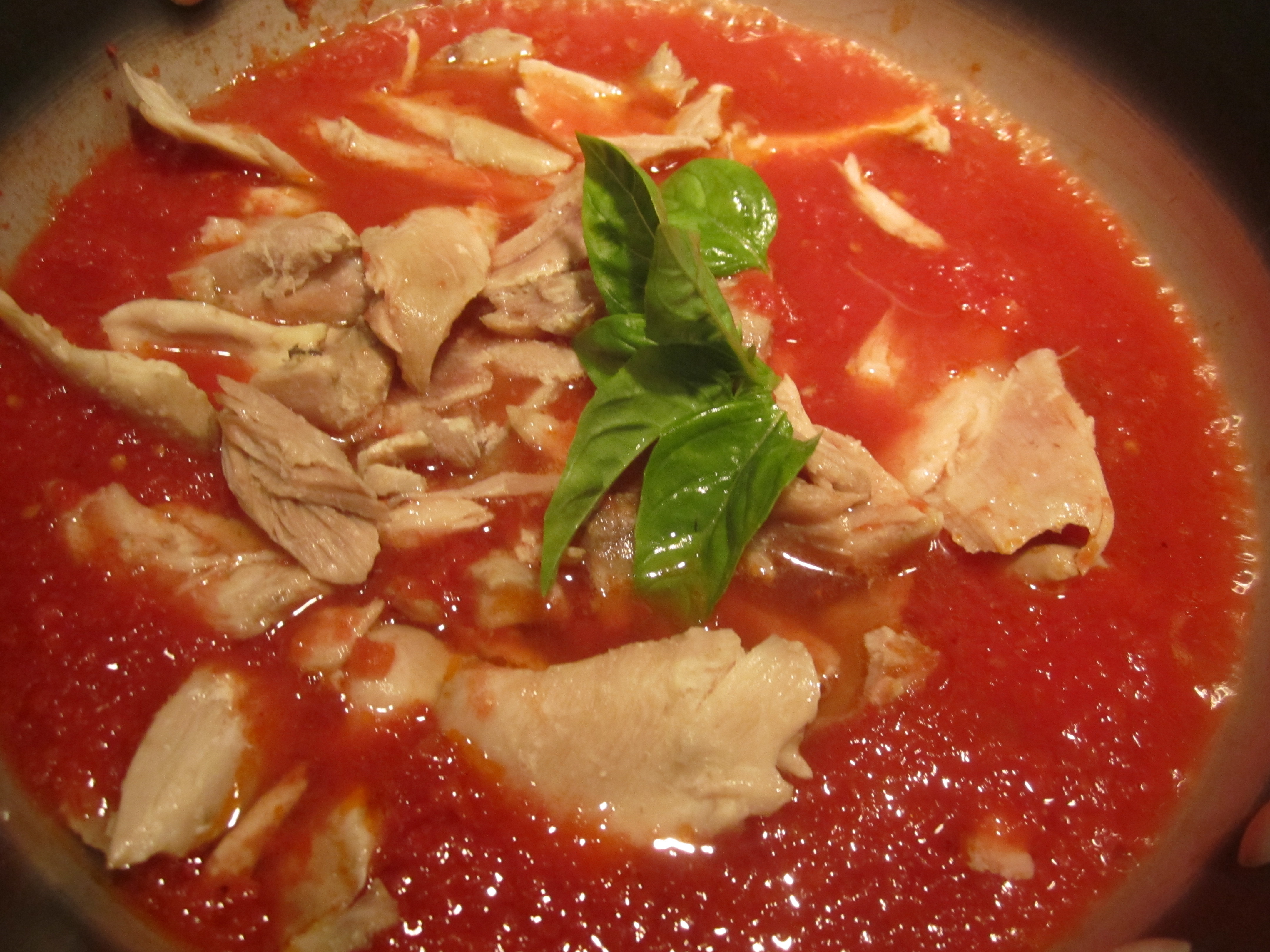
For my sauce, I’m still working with fresh tomatoes, as long as our local tomato harvest holds out.  Simply cut the tomatoes into chunks and process them in the blender until a smooth puree forms.  Then place in a saucepan with a couple of tablespoons of olive oil and a sprig of basil.  Simmer for a mere 15 minutes to achieve the sweetest, freshest sauce you’ve ever tasted. 

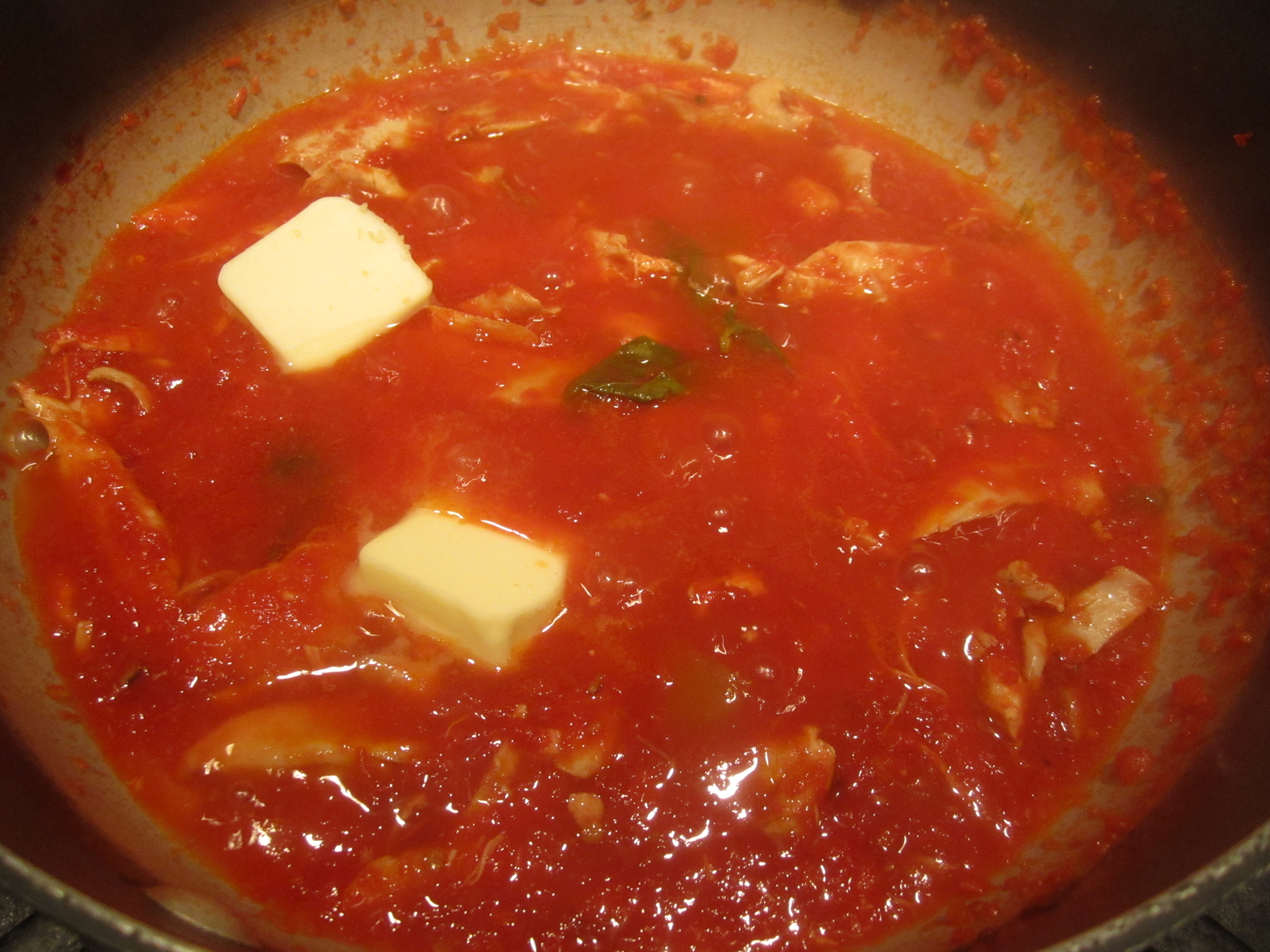
Tonight, after simmering the tomato sauce for 15 minutes, I’ve added the chicken and simmered it for about 15 additional minutes.  As a nod to the egg pasta, I’ve decided to add a touch of butter to my sauce, and use parmigiano cheese for sprinkling at the table (rather than the more traditional pecorino, which I normally prefer on tomato sauce).  Peas make a naturally great addition to any egg pasta dish, adding sweetness and greenness wherever they go. 

This is a delicate but hearty pasta, refined enough to serve to guests any night of the week!


Papardelle with Chicken and Peas

serves 4

1 lb egg papardelle

1 quart of freshly pureed tomatoes (about 6 or 7 large tomatoes–can be mixed varieties as along as all are completely ripe and juicy)

1 sprig basil

2 c cooked chicken meat from thighs/legs,  lightly shredded

2 tbls olive oil

2 tbls butter

1 c frozen peas

salt and pepper to taste

grated parmigiano, for sprinkling

In a saucepot, simmer tomatoes with basil and olive oil on low heat for about 15 minutes.  Add shredded chicken meat and simmer additional 15 minutes.
Add butter and stir and simmer until pasta is cooked.

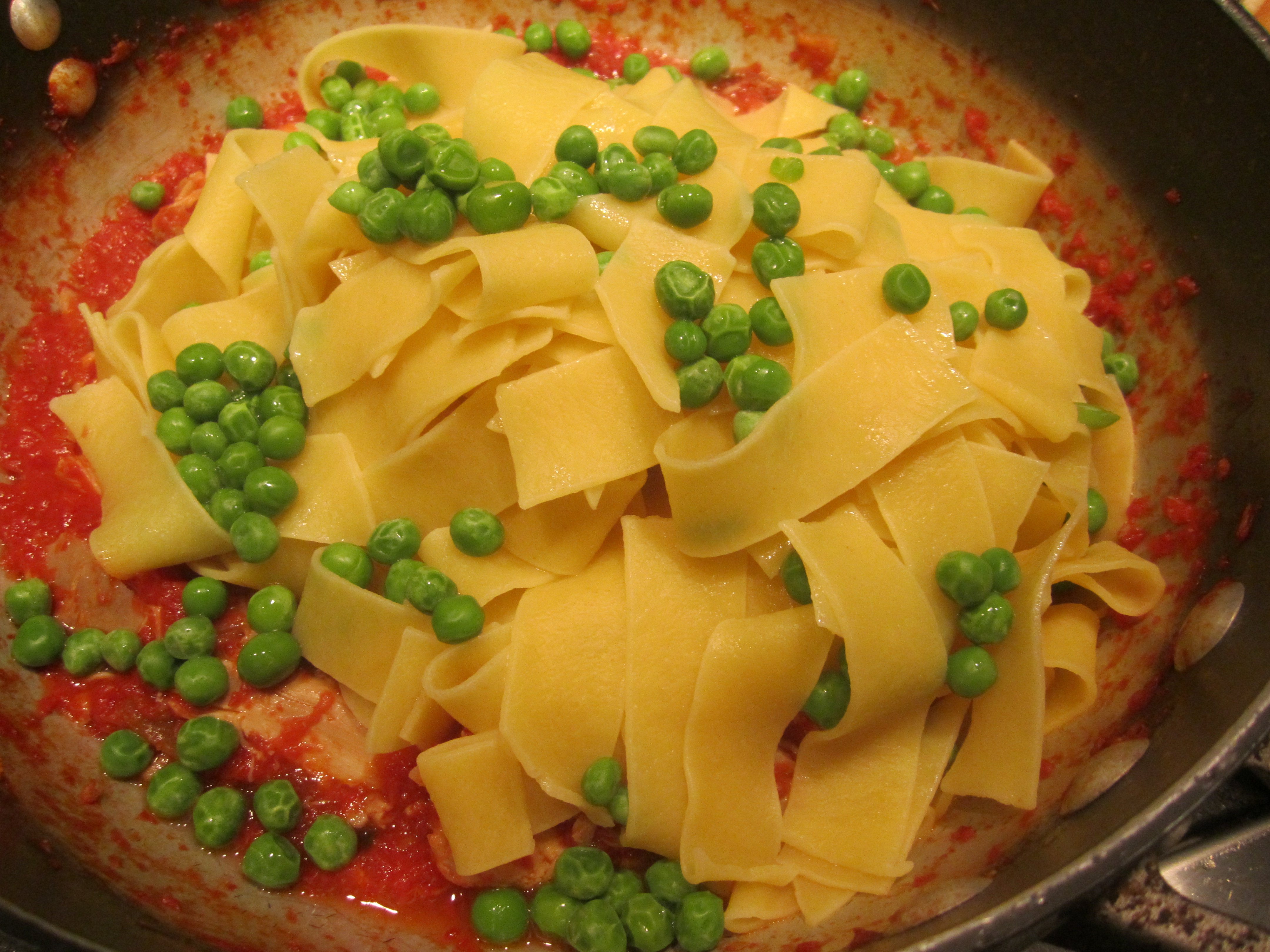
Toss in cooked pasta with a cup of pasta cooking liquid.  Blanch peas in remaining pasta water for a minute, then drain and add to pasta.  Serve with plenty of grated parmigiano.

Posted in Pasta | Leave a comment

Chicken and White Bean Soup

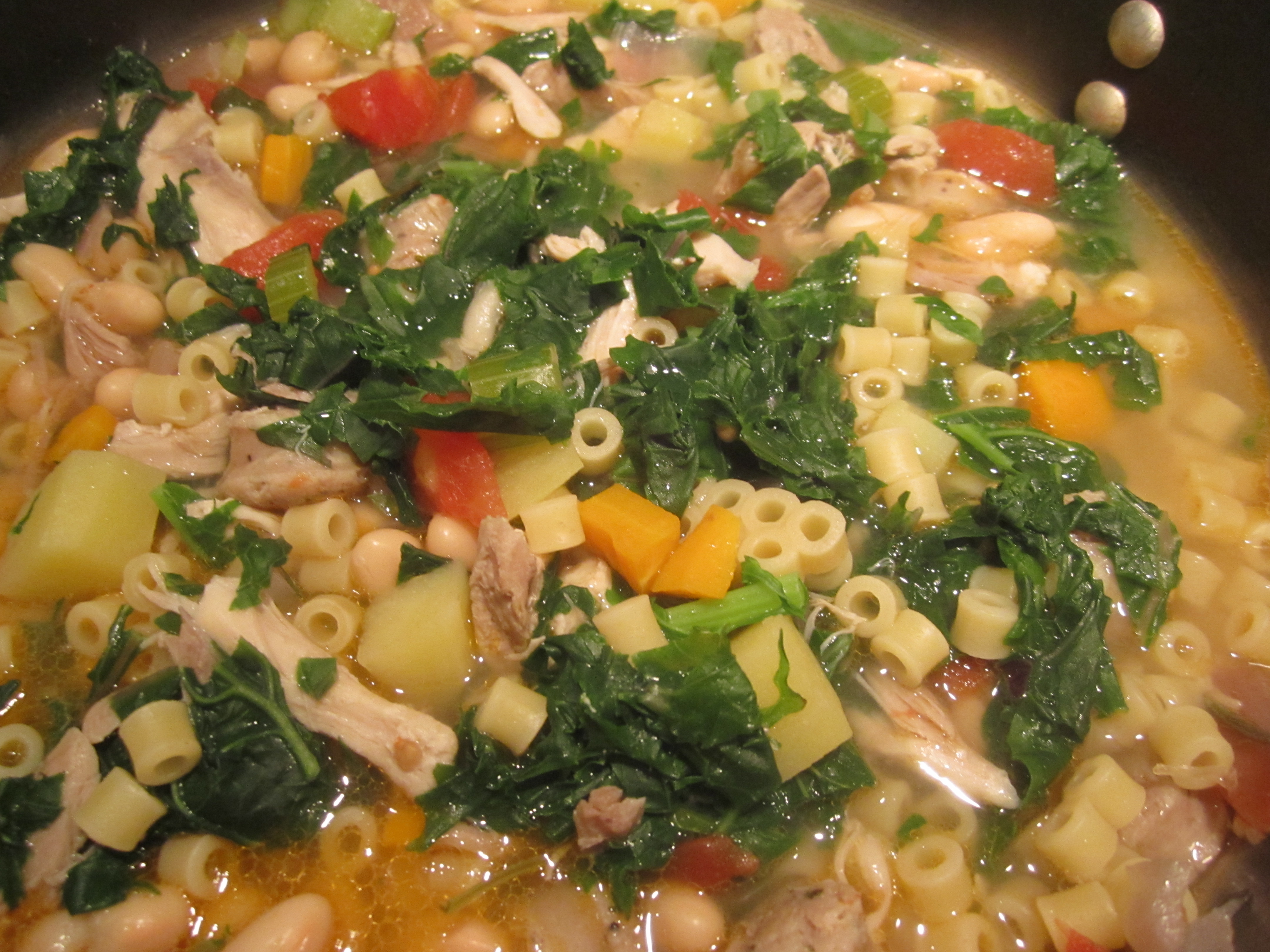
This is a dish inspired by a dark, rainy day-after labor day that feels more like fall, even though we’ve barely said goodbye to summer.  I’ve raided my pantry and freezer to make this soup and it’s a good, hearty one-pot dinner. 

About a week ago, when I made broth for my porcini risotto, I froze the remainder of the broth, as well as the meat used in making it.  For that broth, I used only thighs and legs.  After the broth was done, I removed the meat from the bones and froze it in a separate bag.  This meat is perfect to use in a soup or stew, since it will not dry out like breast meat might. 

Tonight, I’m using both the broth and some of the frozen chicken meat as the basis for my soup.  In addition, I’m using some aromatic vegetables–carrots, celery, onion, chopped tomato, and a potato.  And since I bought so many cans of beans for the hurricane, I’m using a can of drained white beans as well.  In addition, I still had some russian kale left from my russian kale and beet salad, so I decided to chop it and add it to my soup as well.

I’ve added a sprig of rosemary (great with white beans) and a bay leaf (great in almost any soup), and I’ve simmered the soup for only about 15 minutes.  Some cooked ditalini help to fortify the soup and give it some heft.
At the table, I’ve drizzled on some olive oil and sprinkled plenty of grated pecorino romano.  This soup will almost make you look forward to the colder months ahead!

Chicken and White Bean Soup

serves 4

2 quarts chicken broth

2 cups chicken meat, preferably dark meat

1 carrot, peeled and coarsely diced

1 rib celery, coarsely diced

1/2 onion, coarsely diced

1 yukon gold potato, peeled and diced into 1/2″ cubes

1 tomato, peeled and diced into 1/2″ cubes

2 c chopped kale (large ribs removed)

1 15-oz. can white beans, drained

1 sprig rosemary

1 bay leaf

salt and pepper to taste

1 1/2 c ditalini, or other tiny pasta

extra virgin olive oil for drizzling

grated pecorino romano for sprinkling

Place broth, vegetables (except beans), and chicken meat in broth and simmer for approximately 15 minutes.  Cook pasta separately until 2 minutes shy of done.  Add pasta and beans to broth and simmer for a couple of minutes.
Serve with plenty of olive oil and grated cheese on top.

Posted in Soup/Stew | Leave a comment

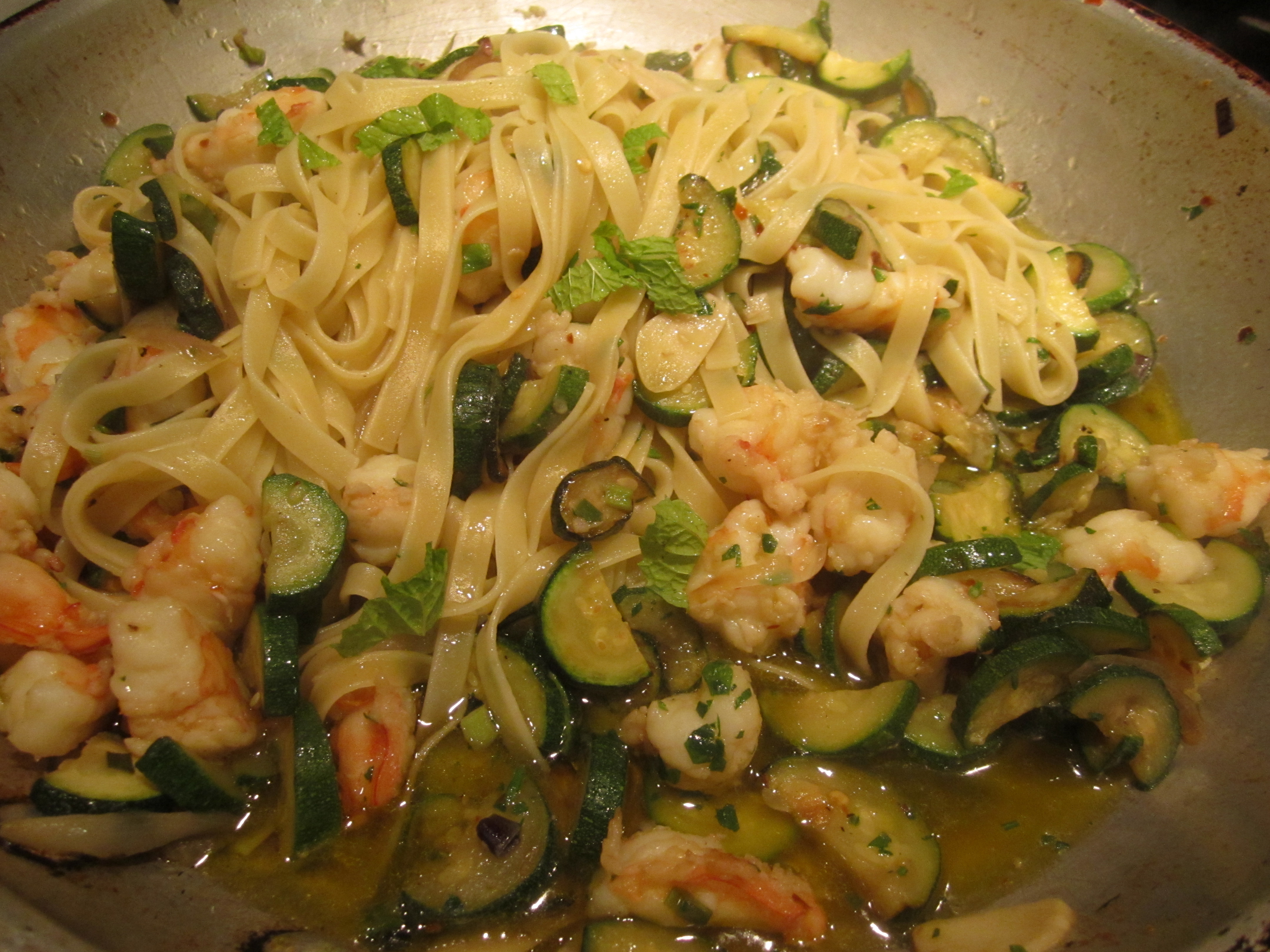
Pasta with Shrimp and Zucchini

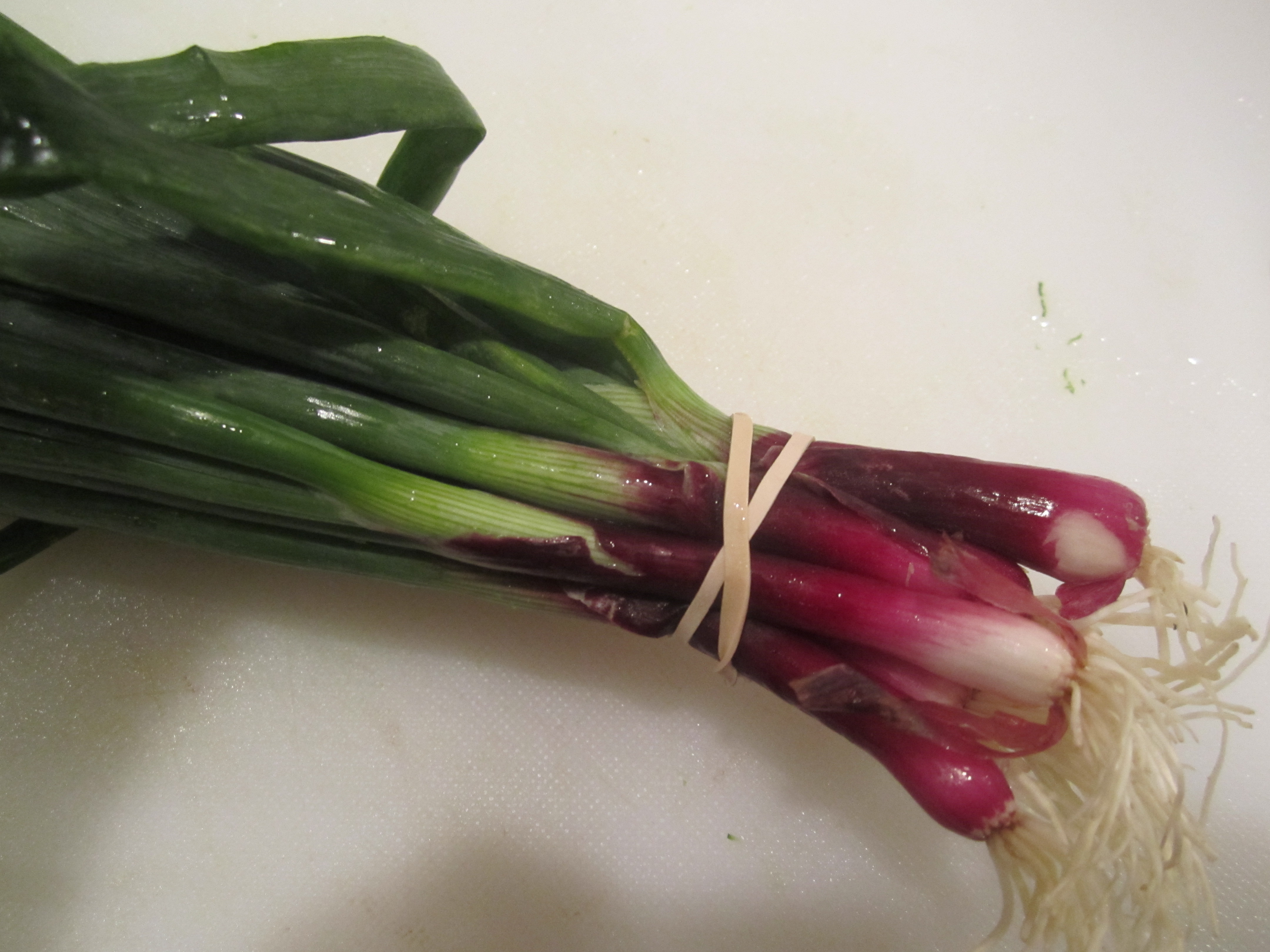
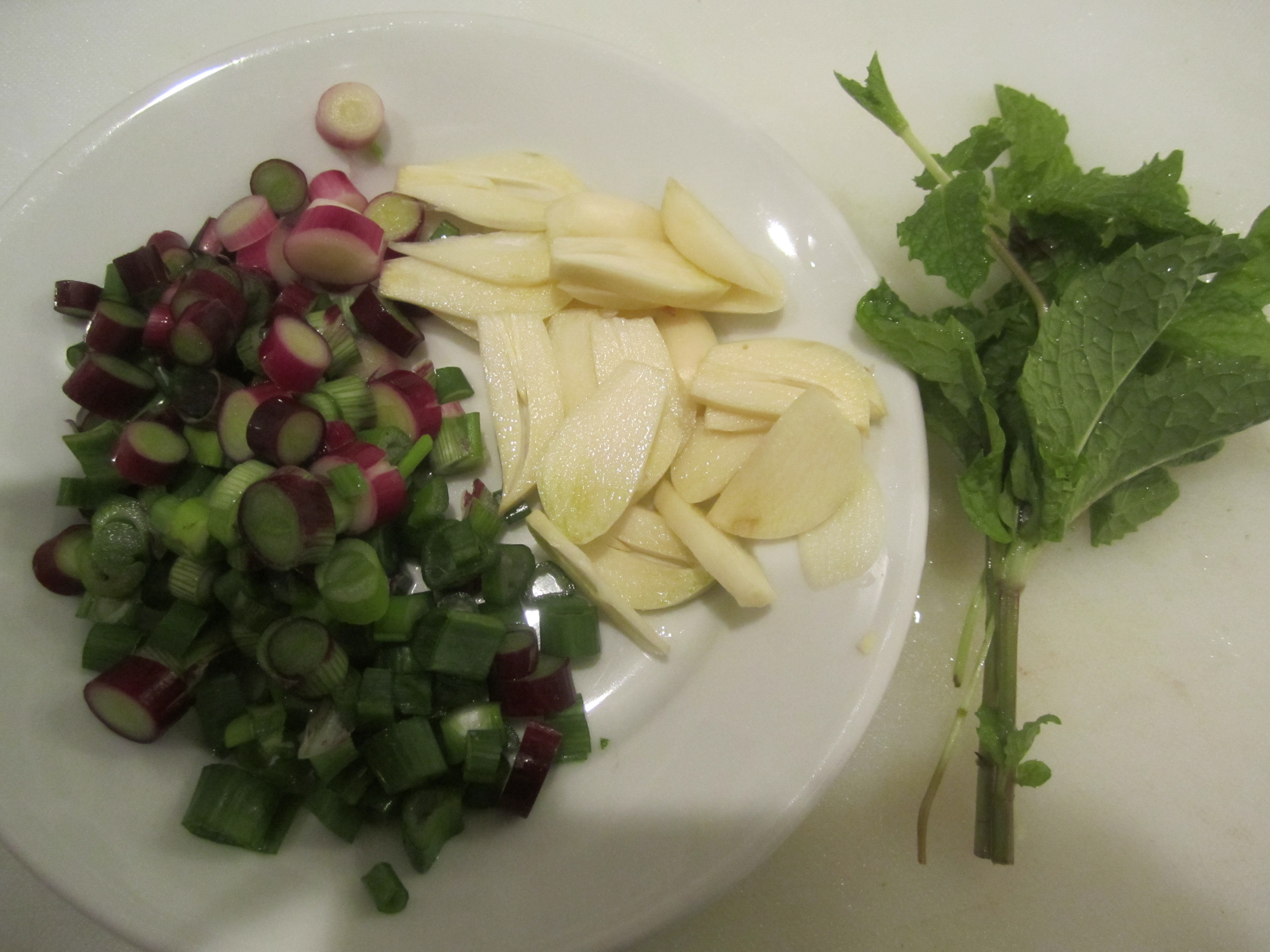
I’m still enjoying the super-sweet zucchini at my farm stand and the perfect way to accentuate its sweet flavor is with some briny shellfish and sweet scallions.  The scallions at my farm stand were deep purple and particularly beautiful–they inspired me to make this dish.

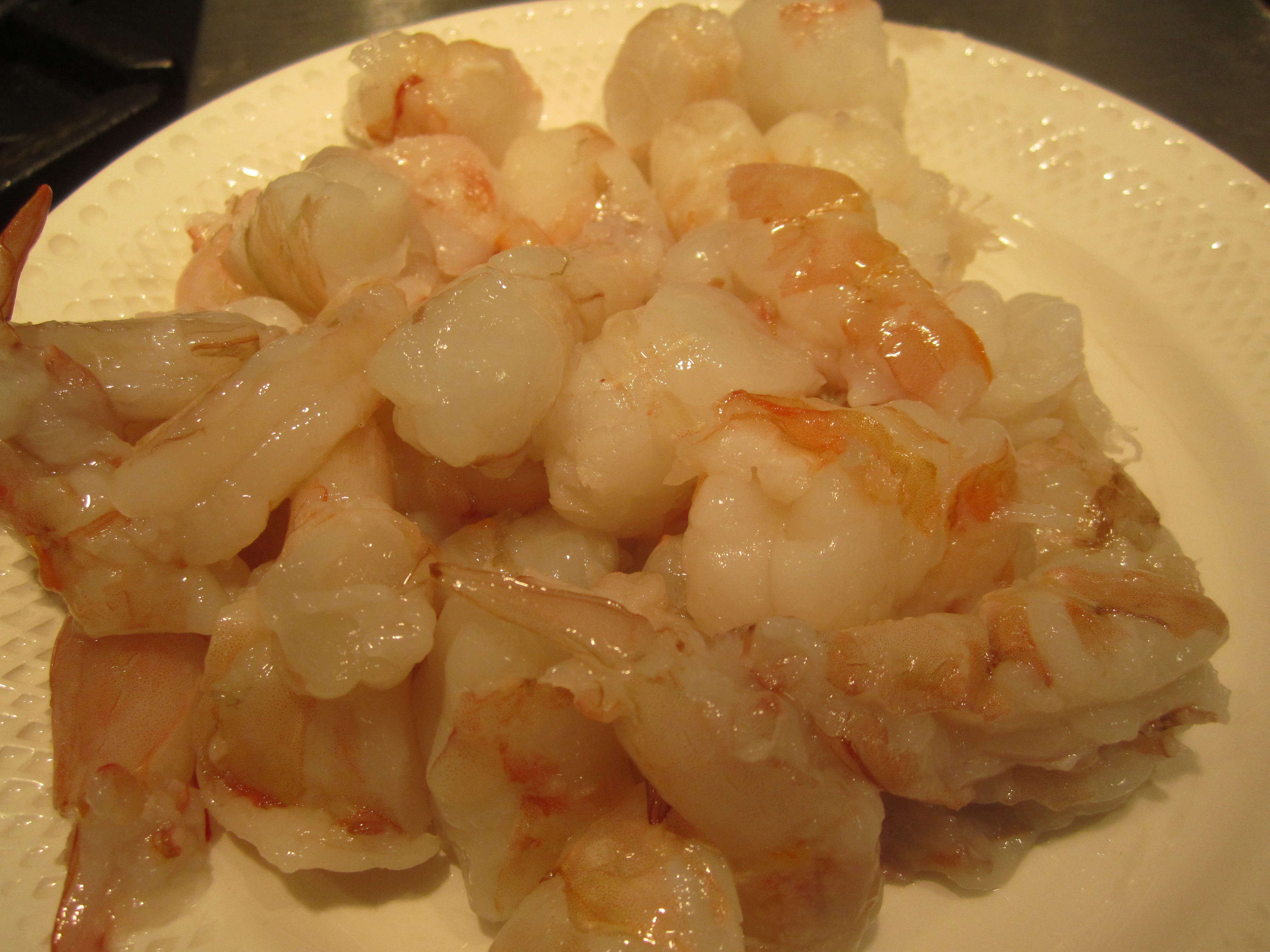
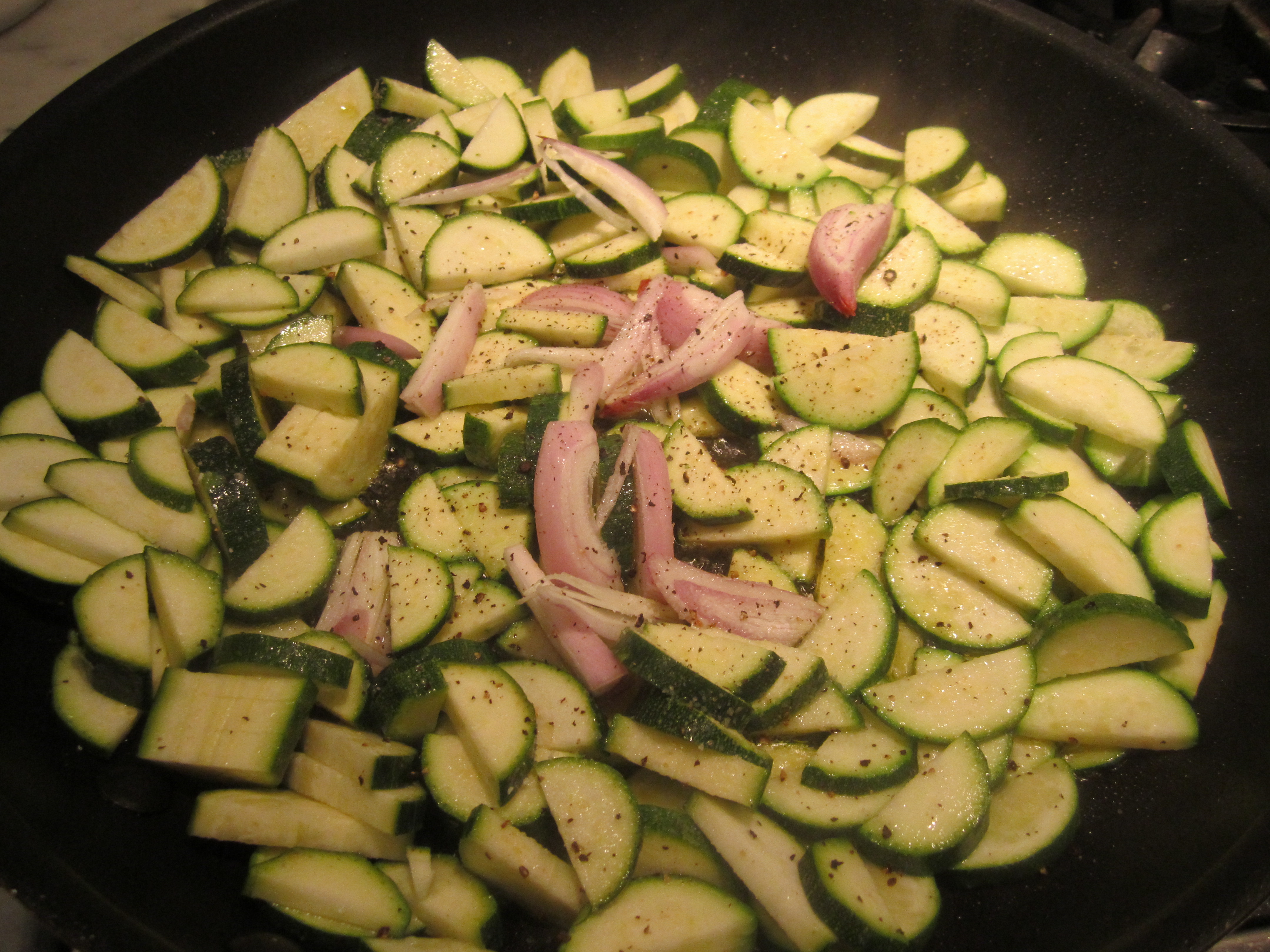
I decided to saute my zucchini separately from the shrimp because zucchini take longer to cook than shrimp, which take almost no time at all.  Therefore, the zucchini and shallots were sauteed until lightly caramelized, then set aside while I made the rest of the dish.  The zucchini were then folded into the dish right before the pasta.  This is a refined, light and elegant pasta dish that is a beautiful main course by itself.

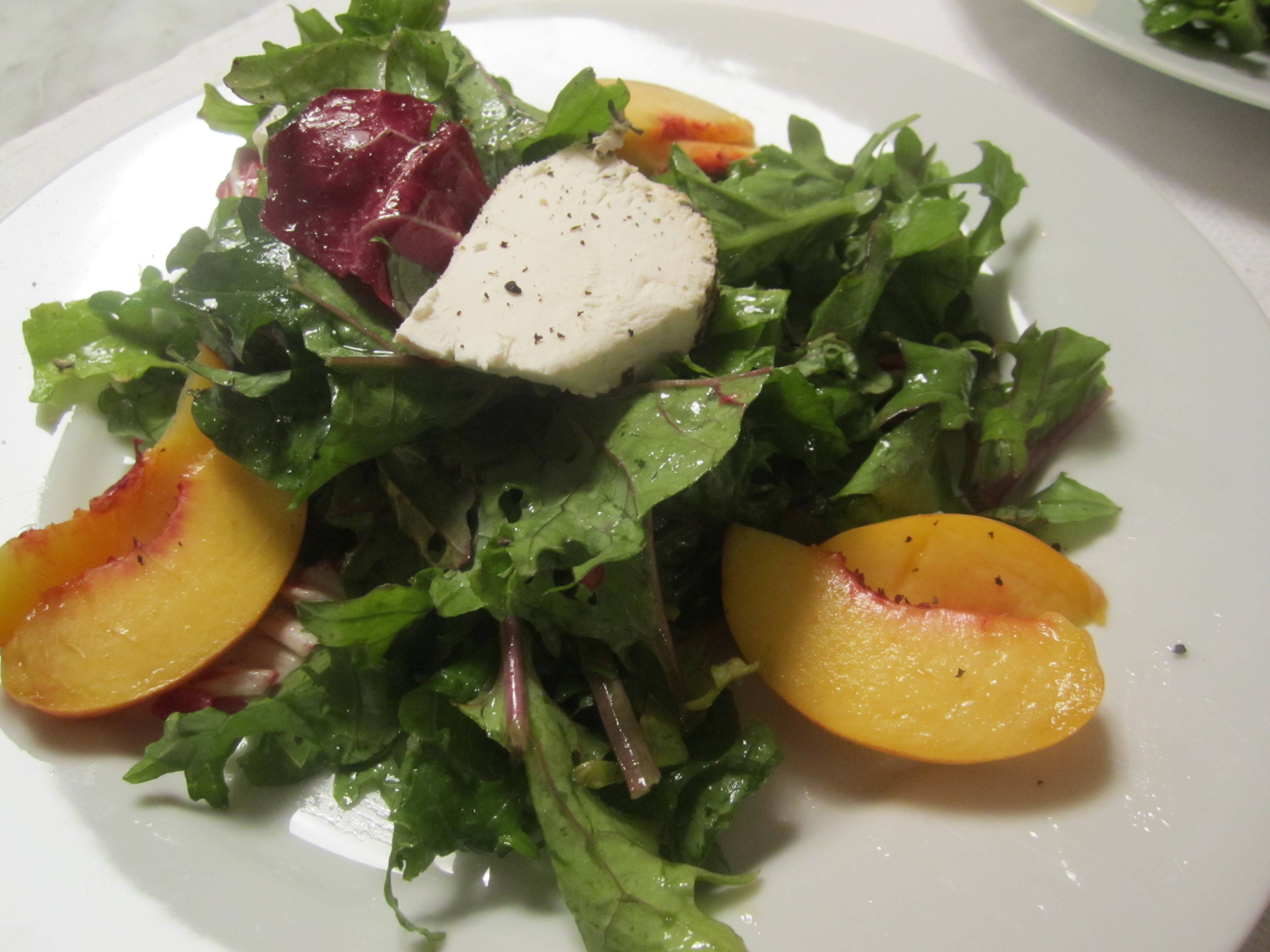
Tonight, I decided to start with a salad that features the same russian kale I served the other evening in my russian kale and beet salad.  This time, instead of beets, I used fresh, sweet peaches (see my prior post for the exact recipe, and substitute raw peaches for golden beets).  I got the idea for this salad from my friend Elle, who had it in a restaurant the other evening and texted me a photo of it.  It’s an appealing cross between a salad and a dessert.  Try it while peaches are still sweet and juicy–we won’t have them much longer.

Pasta with Shrimp and Zucchini

serves 4

1 lb dried fettucine

6 small (6″) zucchini, halved lengthwise, then cut crosswise into 1/4″ half-moons

1 medium shallot, sliced into 1/4″ pieces

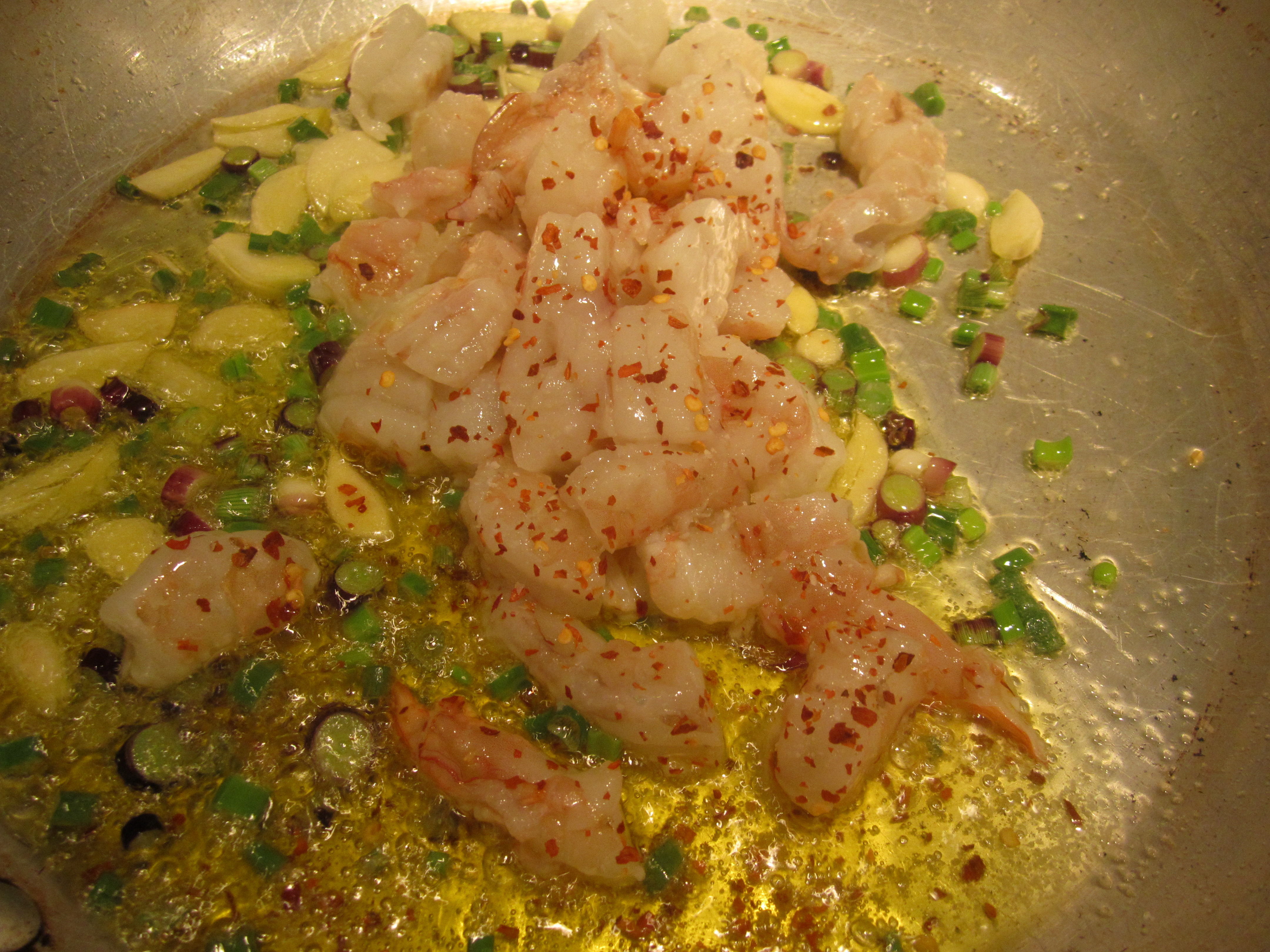
1 lb large shrimp, peeled and de-veined, cut into bite-size pieces

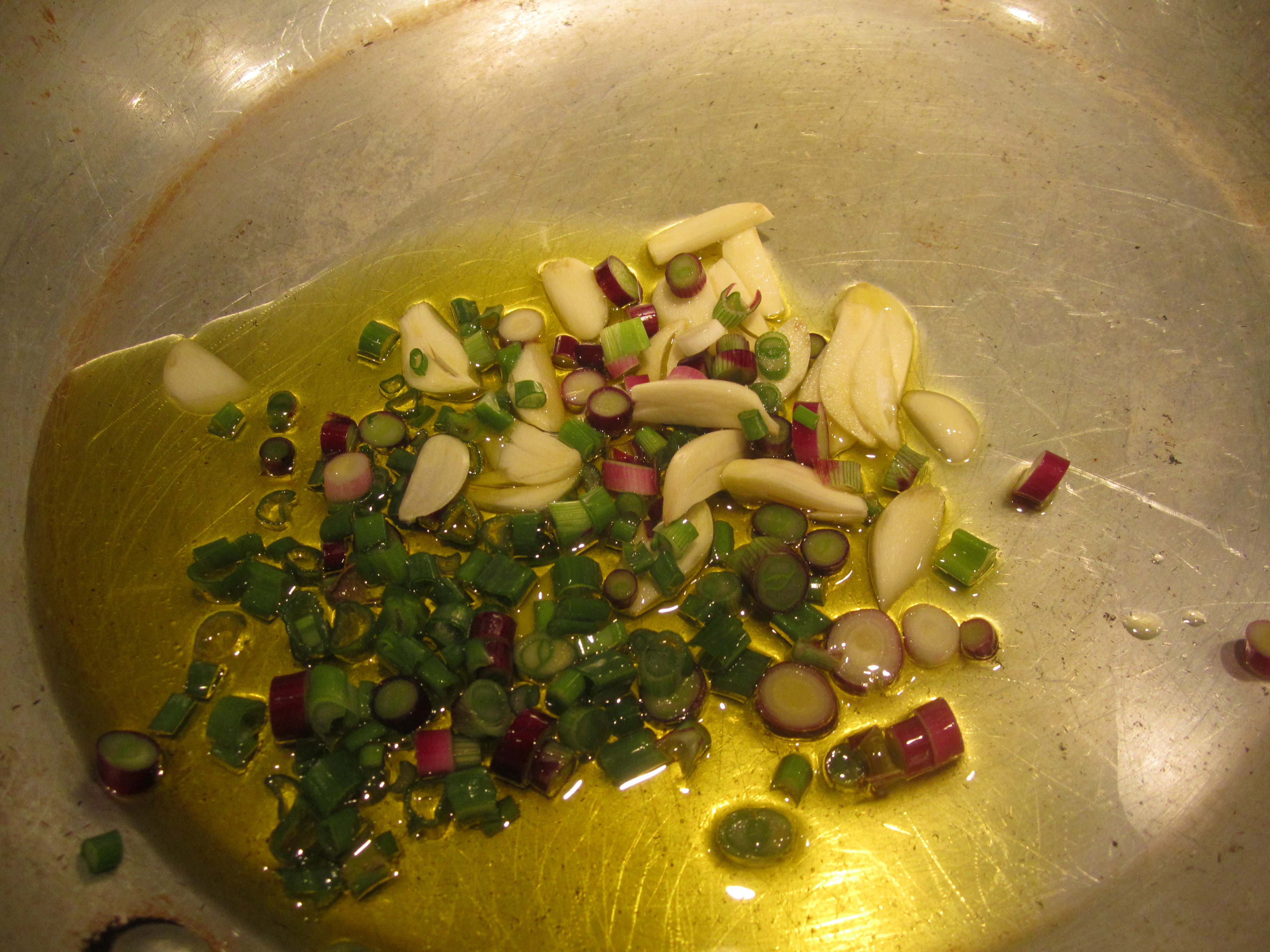
1 bunch scallions, only bottom third portion

4 cloves garlic, peeled and sliced

1/2 c white wine

12 mint leaves

1/4 tsp chili flakes

1/2 c olive oil

2 tbls fresh chopped parsley

salt to taste

In a broad skillet place zucchini and shallot in 1/4 cup olive oil and sprinkle generously with at least 1/2 teaspoon salt.  Saute for about 8 minutes, or until some slices are golden and caramelized, then set aside.

While pasta is cooking in plenty of salted water, in another skillet, saute garlic and scallion in remaining oil until they begin to become golden–about 2 minutes on low heat.

Raise heat to high and add shrimp, salt and some chili flakes.

Saute for 1 minute, then pour in wine and reduce for about 3 – 4 minutes.  Toss in zucchini.

Add cooked pasta, parsley and mint and toss with 1/2 cup pasta cooking liquid.  Taste for salt and serve immediately.

Posted in Pasta | 2 Comments

Broccoli and Radicchio Salad

Summer would not have been summer without a beach party, complete with bonfire and s’mores.  My friends have this ritual down to a science–someone provides the main course; someone else provides the plastic tableware, someone else provides drinks, and someone else provides the fire (the hardest job of all, since that person is stoking and tending all evening).  The rest of the food is assigned to various guests via email–no haphazard side dishes–everyone knows what everyone else is bringing. 
I always love to bring vegetables.   I think that vegetables tend to get overlooked at parties, in favor of starchy side dishes, like pasta salad or potato salad.  Also, this time of year, there is so much bounty in the way of late summer/early fall produce, that it’s a joy to make an abundant plate of them.
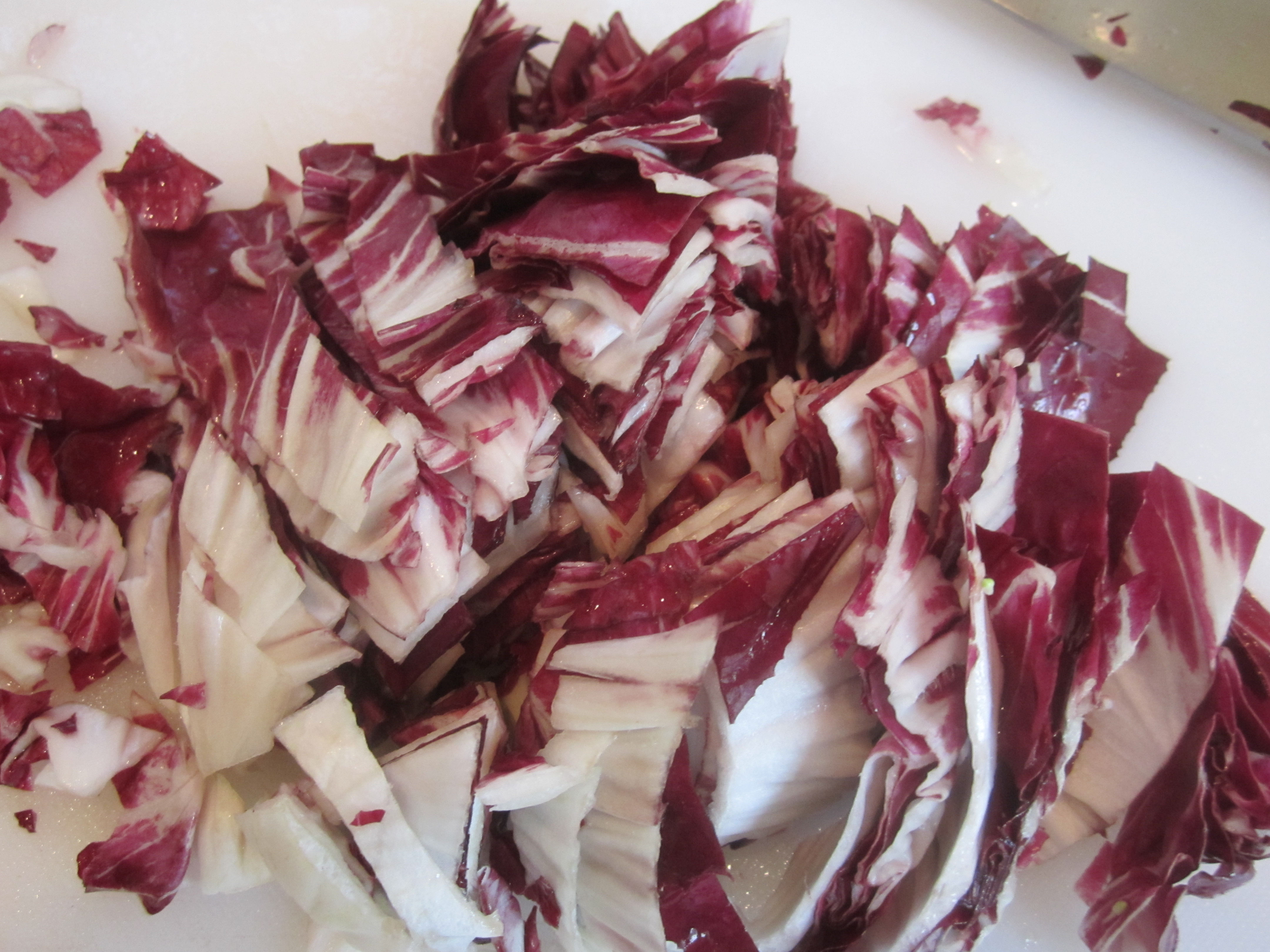
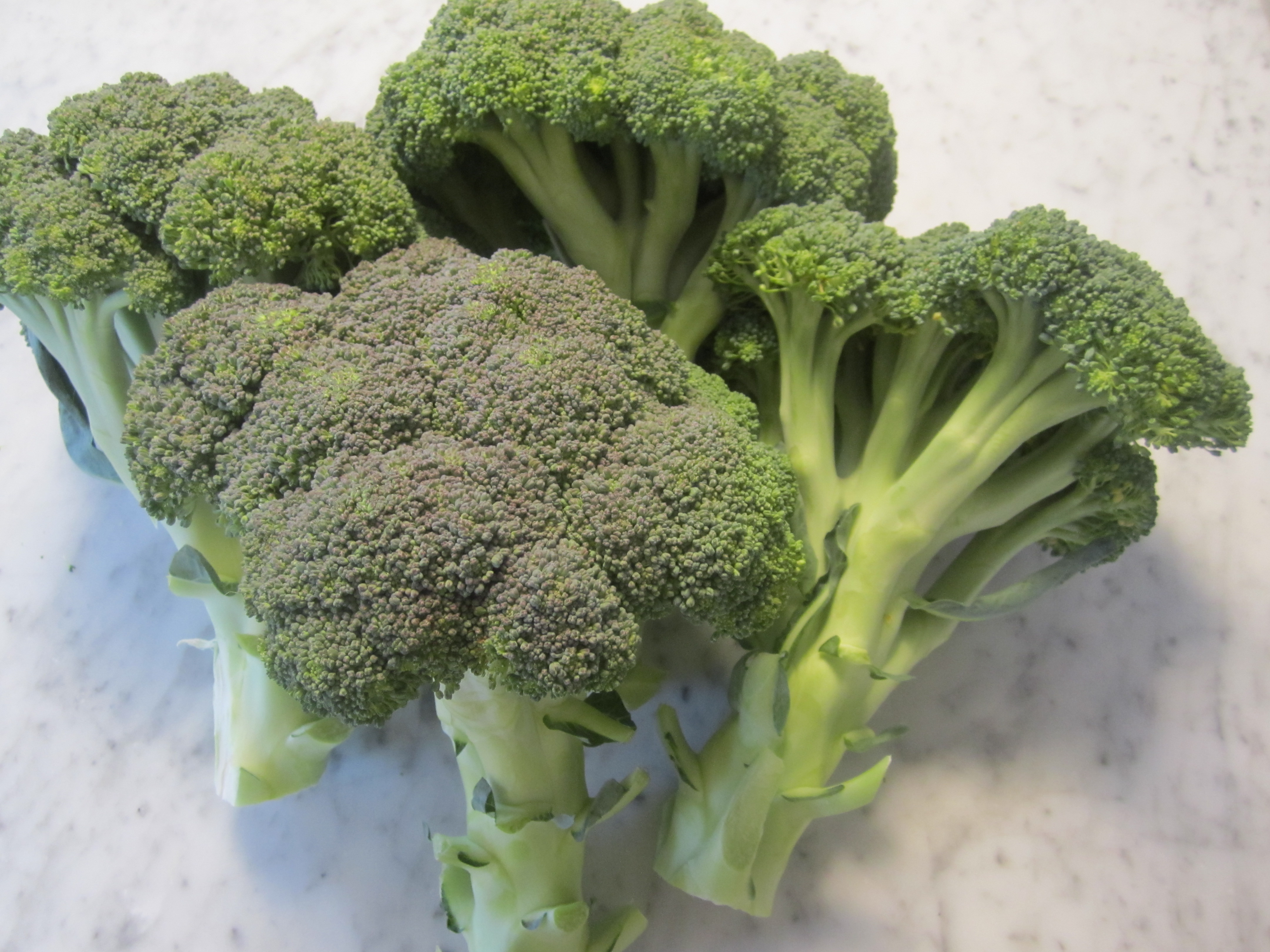
The local broccoli is sweeter and milder than the California broccoli that we get during other times of year–it has none of the mustardy bite that most people associate with broccoli.  Therefore, it’s nice to add a little something bitter  and crunchy to balance the sweetness of the broccoli.  Radicchio is a nice foil for this purpose.  It’s crunchy, bitter and absolutely beautiful to look at. 

Also, it doesn’t wilt or discolor when dressed. 

For an outdoor buffet, the obvious goal is to serve things that hold well at room temperature, so, although I usually serve my broccoli hot, on this occasion, a salad is more appropriate.   The broccoli simply get trimmed and lightly blanched (in batches), and the raw radicchio gets sliced into fat ribbons and tossed with the warm broccoli and dressing. 

The question of dressing this salad presented me with a quandary–acid or no acid? I like to think of myself as a very judicious user of acids.  Working with Mario was an education in using acids in cooking and achieving bright notes with them in all kinds of dishes.  It was the late 1990’s and balsamic vinegar was all the rage–sometimes I liked it, sometimes not.  But Mario gave me a broadening experience in the way of tweaking the flavors of foods with vinegars, citrus zests and mustards. 

One of my favorite lessons from him was the subtle but startling use of lemon and orange zest in all manner of dishes.  Tonight, I experimented with a variety of vinegars and citrus in dressing this salad.  I simply took a tiny piece of broccoli and ribbon of radicchio and dipped it in the various vinegars and added a piece of lemon or orange zest, and tasted. 

The winning combination for this salad was olive oil and lemon zest, with a sprinkling of black olives–pitted nicoise olives.  These olives gave the salad random little bites of brininess, along with the overall lemon essence from the zest.  An added bonus to using just the zest (without the juice) was a bright green salad, without any discoloration from the acid. 

This salad can be made ahead and kept at room temperature for up to 4 hours. It’s a great (and gorgeous) salad to bring to a dinner party anytime of year! 

 Broccoli and Radicchio Salad

serves 20

4 large heads broccoli

2 heads radicchio, cored and sliced crosswise into  1″ ribbons

1 cup extra-virgin olive oil

zest of 2 lemons

1 c pitted black olives

salt and pepper to taste

Trim the broccoli into manageable bites and drop, in batches, into a large pot of heavily  salted boiling water ( I mean heavily–about a half-cup salt for a large stockpot of water) .  The salinity of your water will affect the overall evenness and subtlety (believe it or not) of seasoning of the finished salad–it’s difficult to infuse these vegetables with the right amount of salt (without them tasting like pure salt) after cooking. 

As soon as the water returns to a boil, drain each batch of broccoli and add to large mixing bowl.  Toss in radicchio, lemon zest, oil and lots of black pepper. 

Arrange on large platter and top with plenty of black olives. 


Posted in Uncategorized | Leave a comment