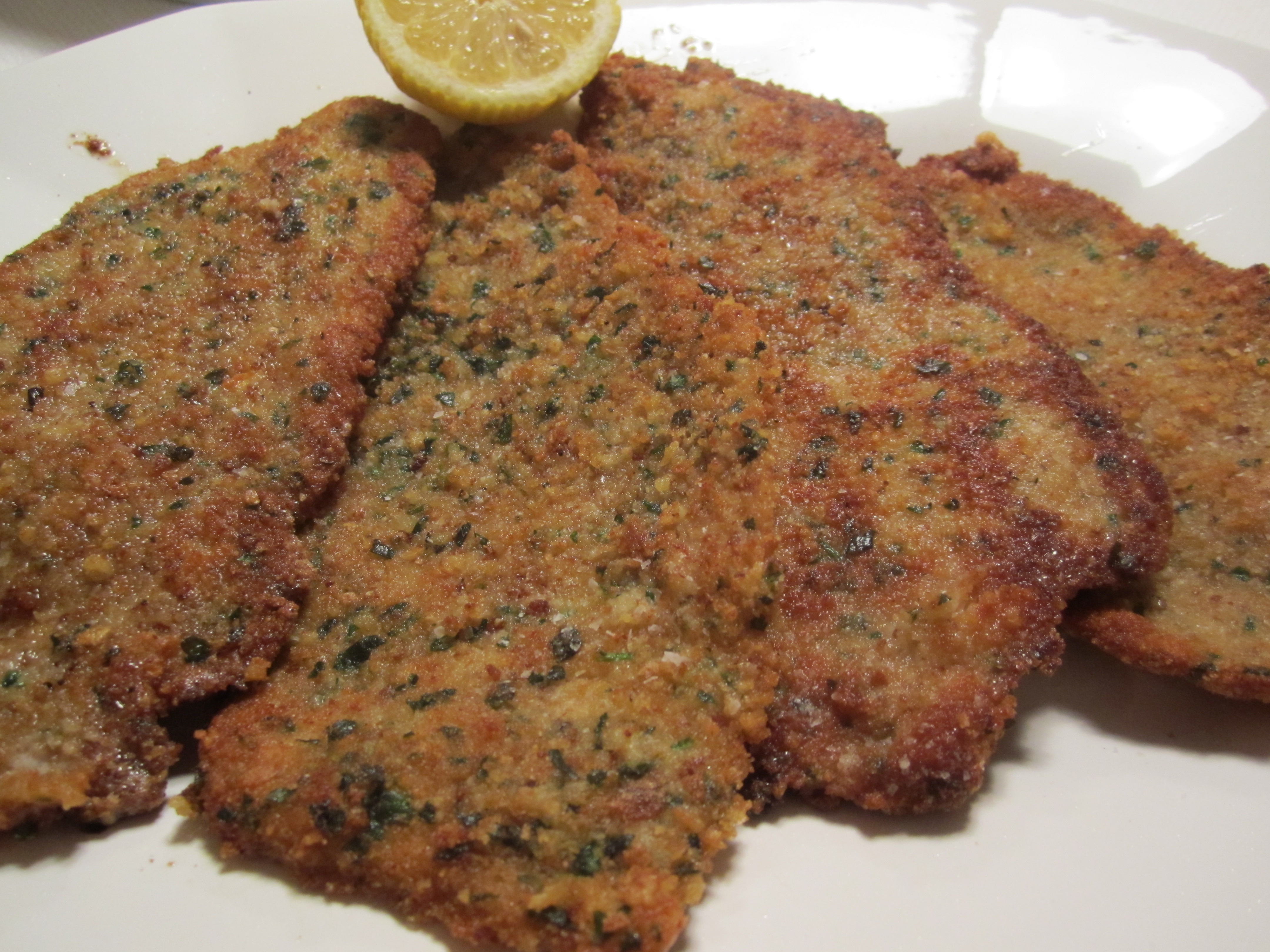
Veal Cutlet (Scallopine)

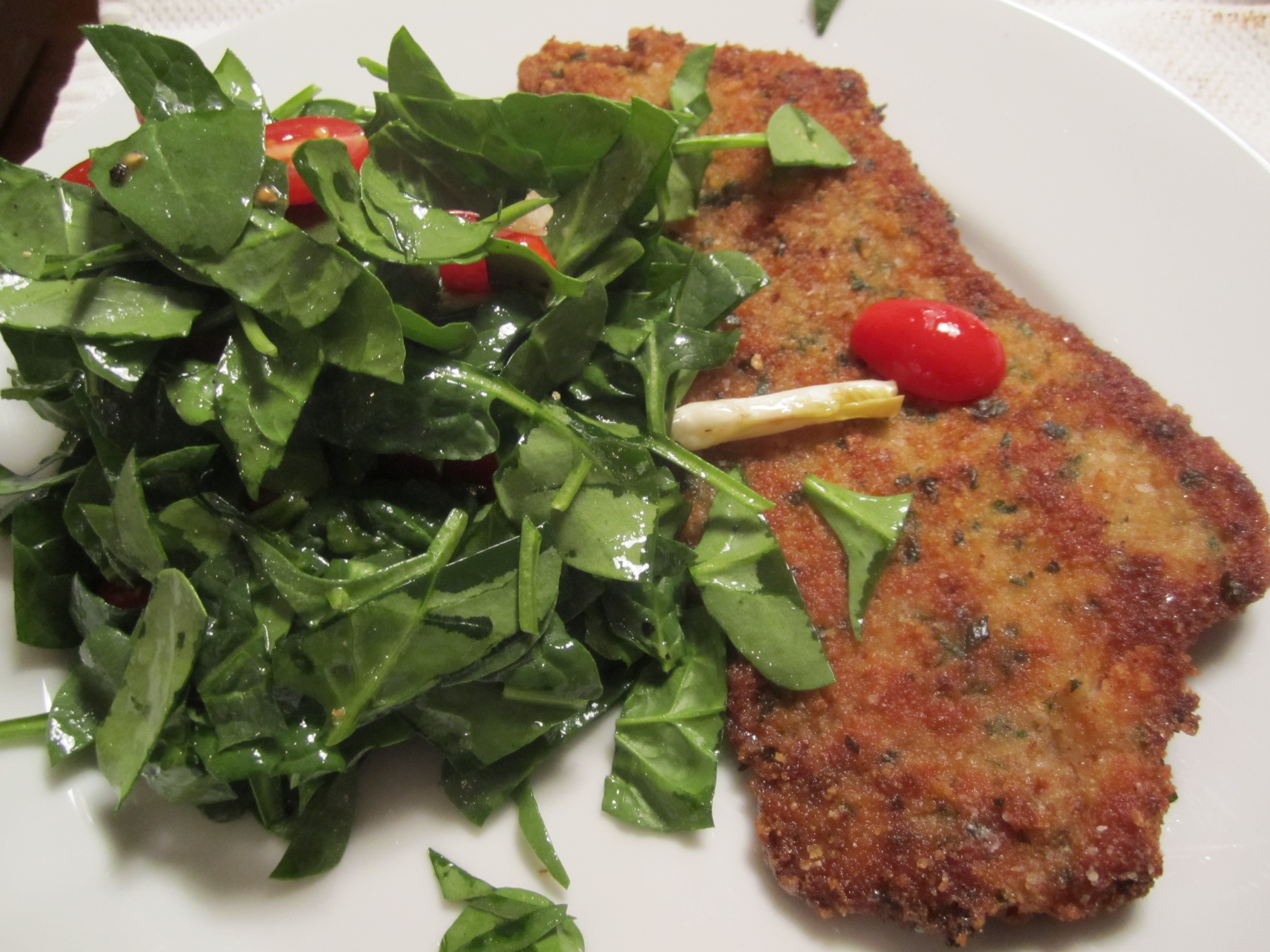
This is essentially the same preparation I used in my prior post “crispy skate wing” only with veal, instead of fish.  I’ll take you through it step-by-step.

First, the process of making seasoned breadcrumbs . . . Seasoned crumbs are often an ingredient in my recipes, and I always recommend using Progresso if you don’t have homemade.  Homemade seasoned crumbs, however,  are much more refined and subtler than processed.

First you must have bread that is sufficiently dried out (beyond stale–absolutely devoid of moisture).  I keep scraps of bread on a tray in the oven.  I remove them when I’m baking something, then replace them when I’m done baking (but the oven is still hot).  In this way, they dehydrate over time.   I usually allow the bread to dry out for a couple of weeks to a month.

After the bread is dried out, I grind it in the food processor until it’s a sawdust-like powder (much like commercially dried crumbs) then add it to a bag I keep in the freezer.
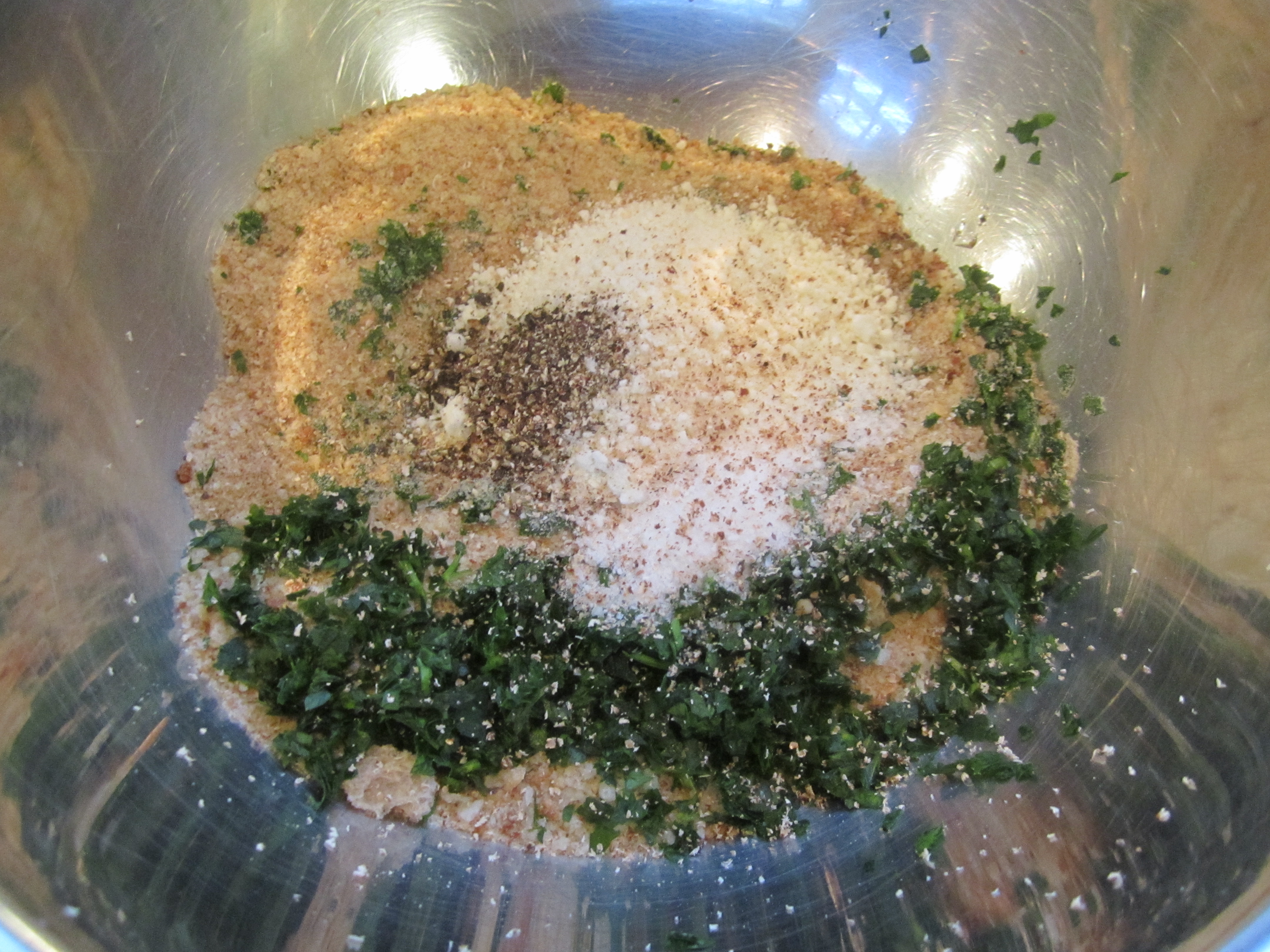
When I want to make seasoned crumbs, I take some out and put them in a mixing bowl.  I add chopped parsley (washed and allowed to dry in a kitchen towel for several days in the fridge before chopping), salt, pepper, grated cheese and nutmeg.   It’s a worthwhile exercise (although I still occasionally resort to seasoned crumbs from my local gourmet market “Citarella”).

Homemade Seasoned Bread Crumbs

2 c dried breadcrumbs

1/4 c fresh chopped parsley

1/4 c grated parmiggiano

1/4 c grated pecorino romano

t tsp salt

1/2 tsp black pepper

1/8 tsp nutmeg

Combine all ingredients and freeze indefinitely.

Veal Scallopine

serves 4

4 thinly pounded veal scallops (from the leg)

1/2 c flour for dredging

2 eggs

1 1/2 c seasoned breadcrumbs

1/4 c olive oil for frying

Dredge each scallop first in flour, then shake off excess flour.
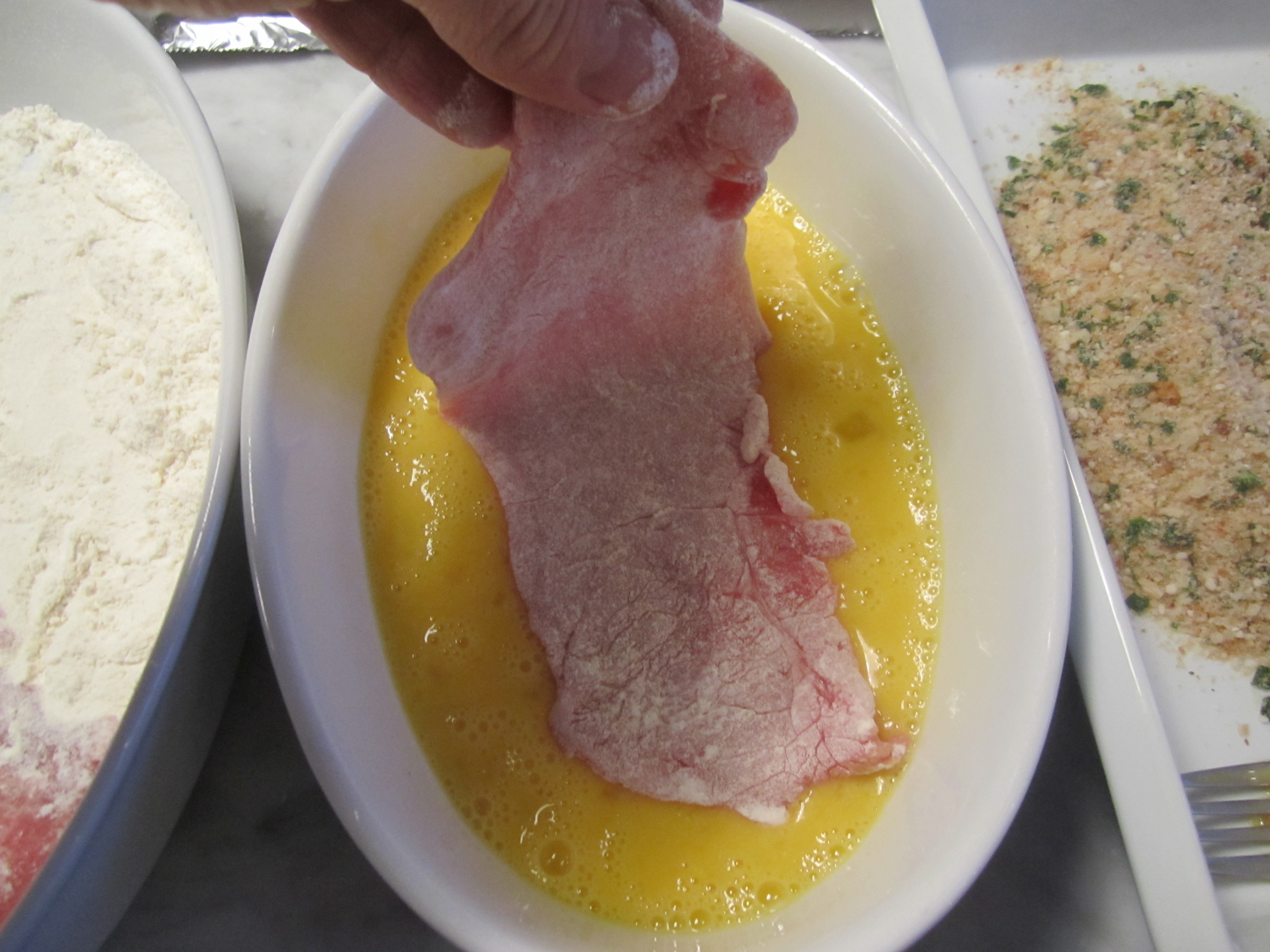
 Next dip in egg and let the excess egg drip off.

Next press the scallop into the breadcrumbs and coat on both sides.  Really press the crumbs into the scallops.
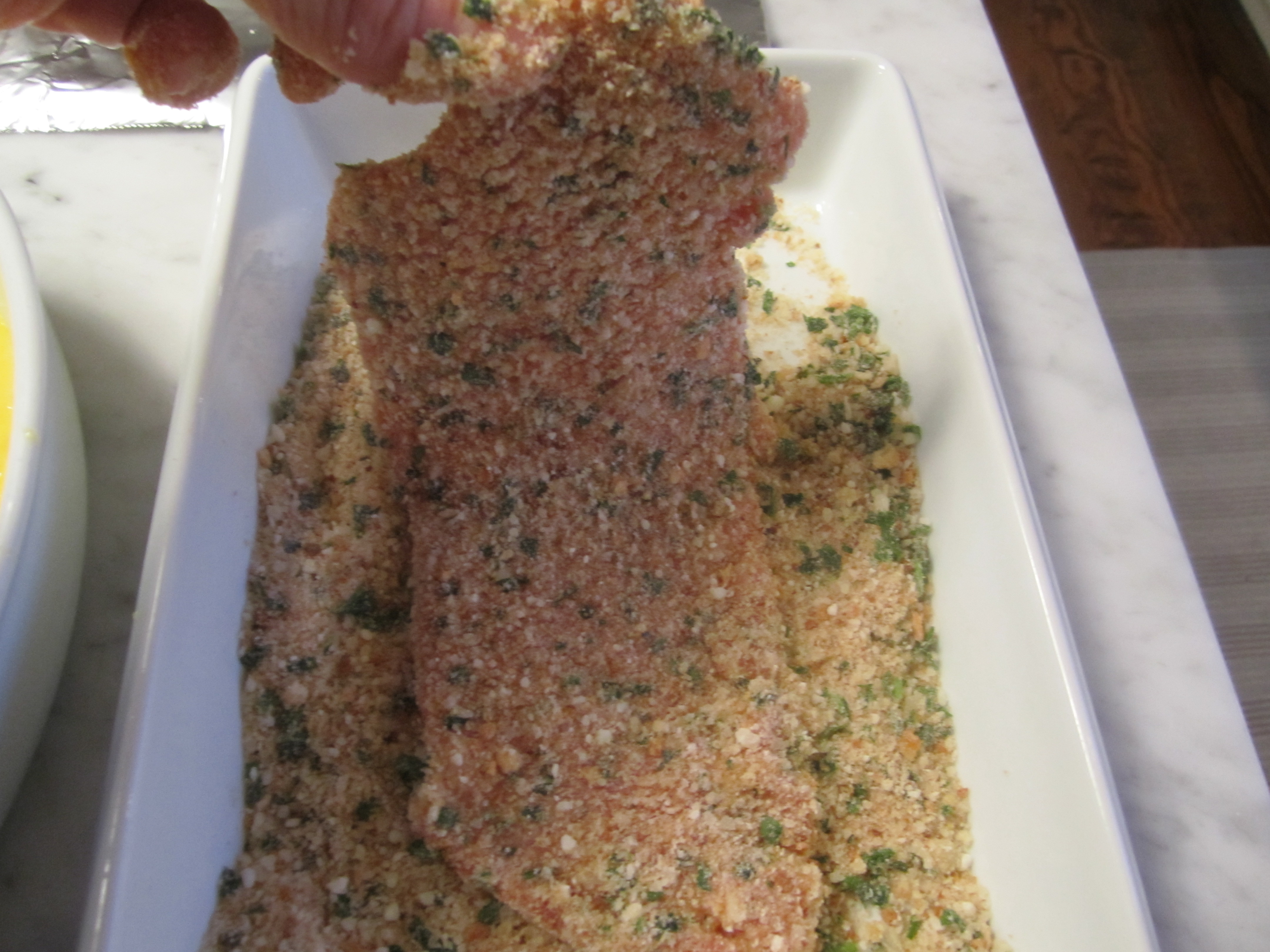
Set aside scallops and refrigerate on a sheet of foil until ready to saute (can be done an hour ahead).

At the last moment, preheat olive oil in a broad skillet on high until smoking.  Slip in each of the scallops and cook for about 1 minute on each side until golden brown.  Serve immediately or make in batches and keep warm in 275 degree oven.

Tonight, I’m serving mine alongside a spinach , radicchio and tomato salad dressed with lemon and olive oil.
Posted in Meat | Leave a comment

Professional Roast Chicken

The warm weather has inspired me to uncover my grill and begin cooking outdoors.  Unfortunately, this being the first day I’ve tested my grill (which was a little temperamental all last summer), I’ve discovered that it isn’t working properly.

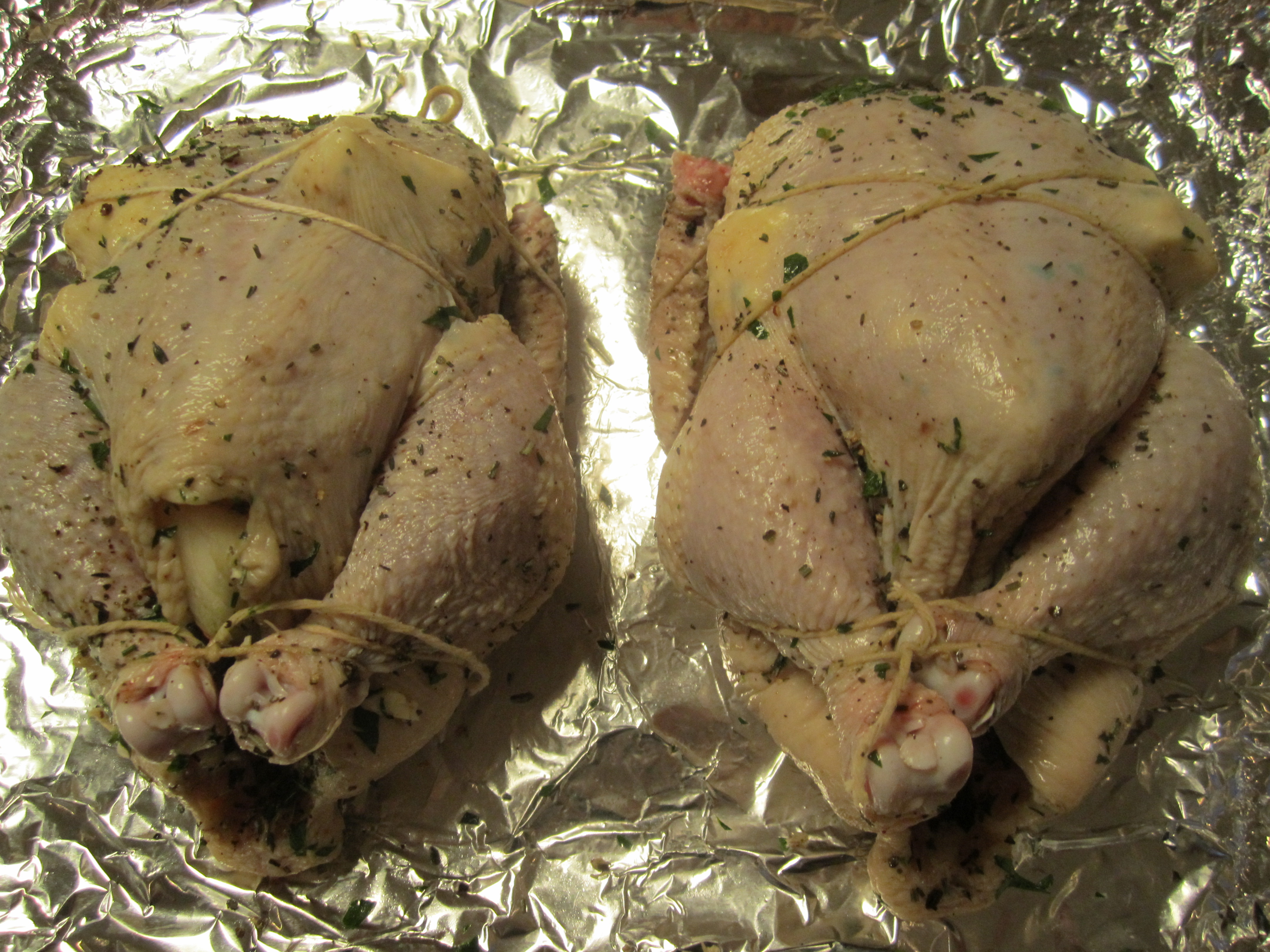
The chickens I was going to grill have been marinating all afternoon, in a mix of thyme, rosemary, parsley, lots of salt, pepper and olive oil.  I’ve stuffed their cavities with some shallots and the branches of the thyme and rosemary. 

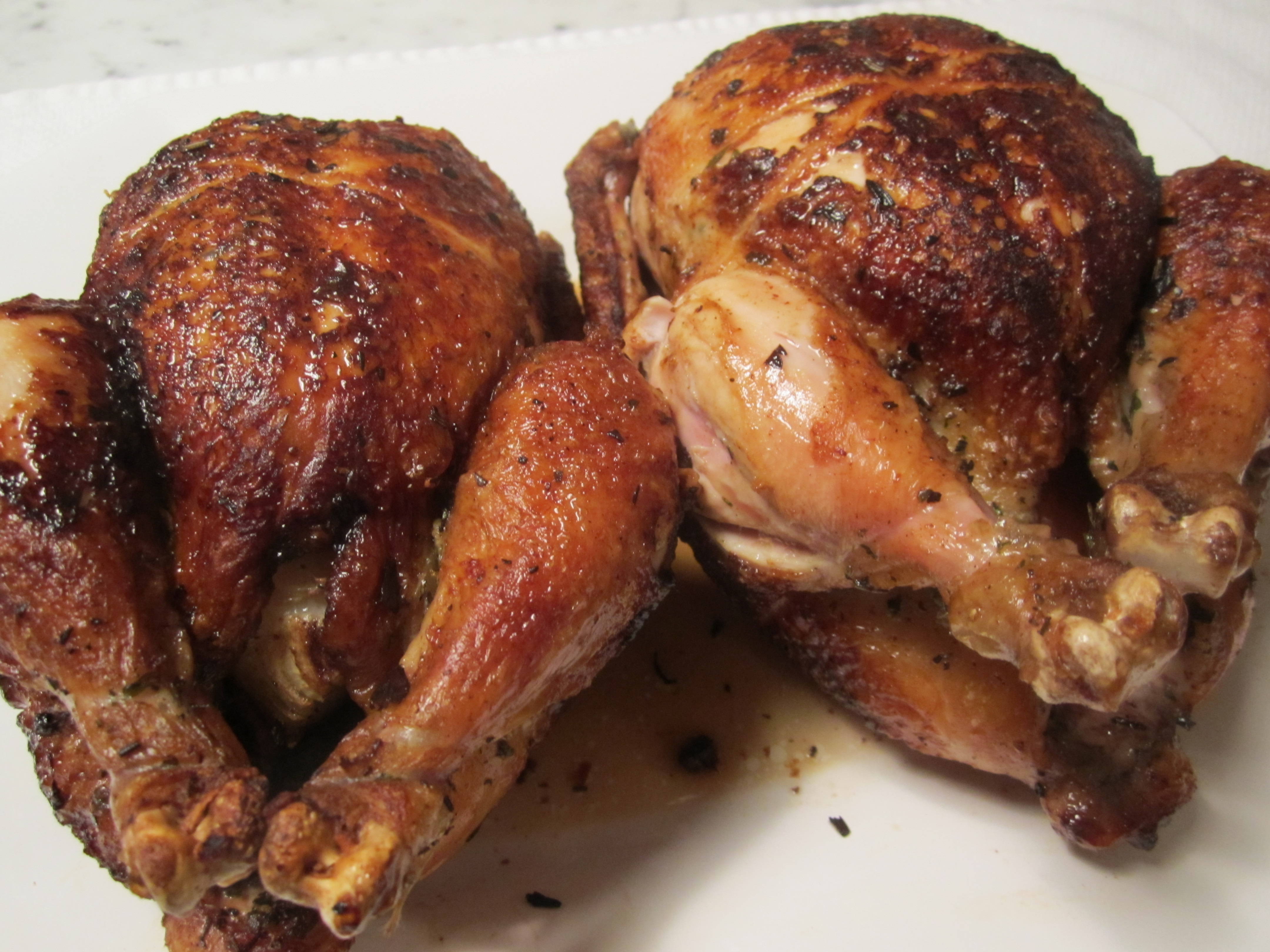
I only allowed myself an hour to make these chickens, so I had to do some fast last-minute strategizing . . . the fastest way to roast a chicken whole while still getting a nice mahogany brown exterior is to do what many professional chefs do–first sear it on the stovetop, then roast it in a 450-degree oven for about 45 minutes.  This is the way those kitchens always turn out roast chickens that are so brown and gorgeous.

Searing on the stovetop is a smoky, messy proposition, but the results are worth it.  Otherwise, it’s nearly impossible to get the exterior of  a chicken this brown and crispy, while keeping the inside moist and juicy.

Before searing, the chickens must be properly trussed, so they hold together in a tight little ball.  Trussing is not a difficult operation–simply take a length of kitchen string about a yard long and place crosswise under the middle of the chicken.  Wrap the wings and pull them close, then cross over the breast, bringing both ends of the string down under the thighs.  Wrap around each ankle and pull the string together tightly.  Tie into a knot and cut excess string.

I don’t always bother trussing the chicken when I’m going to make a simple roast chicken, but when I’m going to sear it on the stovetop first, the trussing is indispensable.  It helps the chicken brown evenly all over and it allows you turn pick up and turn the chicken without ripping it apart.

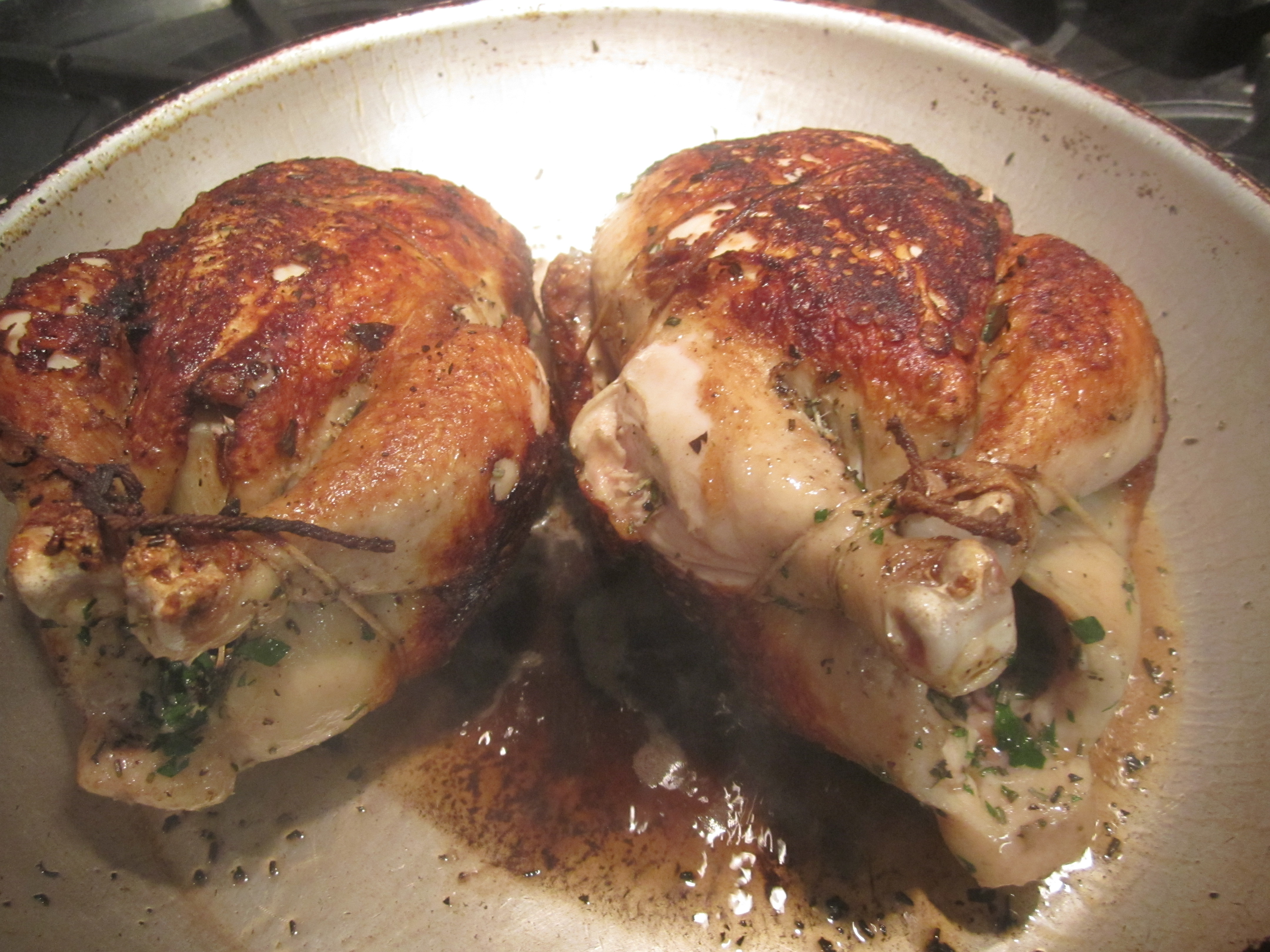
Begin cooking the chickens on their sides in an ovenproof skillet or a flameproof baking dish.  Place in hot oil and allow the sides to brown for about 3 – 4 minutes on high heat. 

Then turn them on the other side and brown.  Follow with the bottom sides, then the breast side.  By the time you are finished, you have chickens that are evenly brown on all 4 sides.

 Then drain the burned oil from the pan and replace with a couple tablespoons of fresh olive oil and place the pan in a pre-heated 450-degree oven for about 45 minutes, basting from time-to-time.  Let rest for 10 minutes before carving. Your guests will be very impressed with the results.

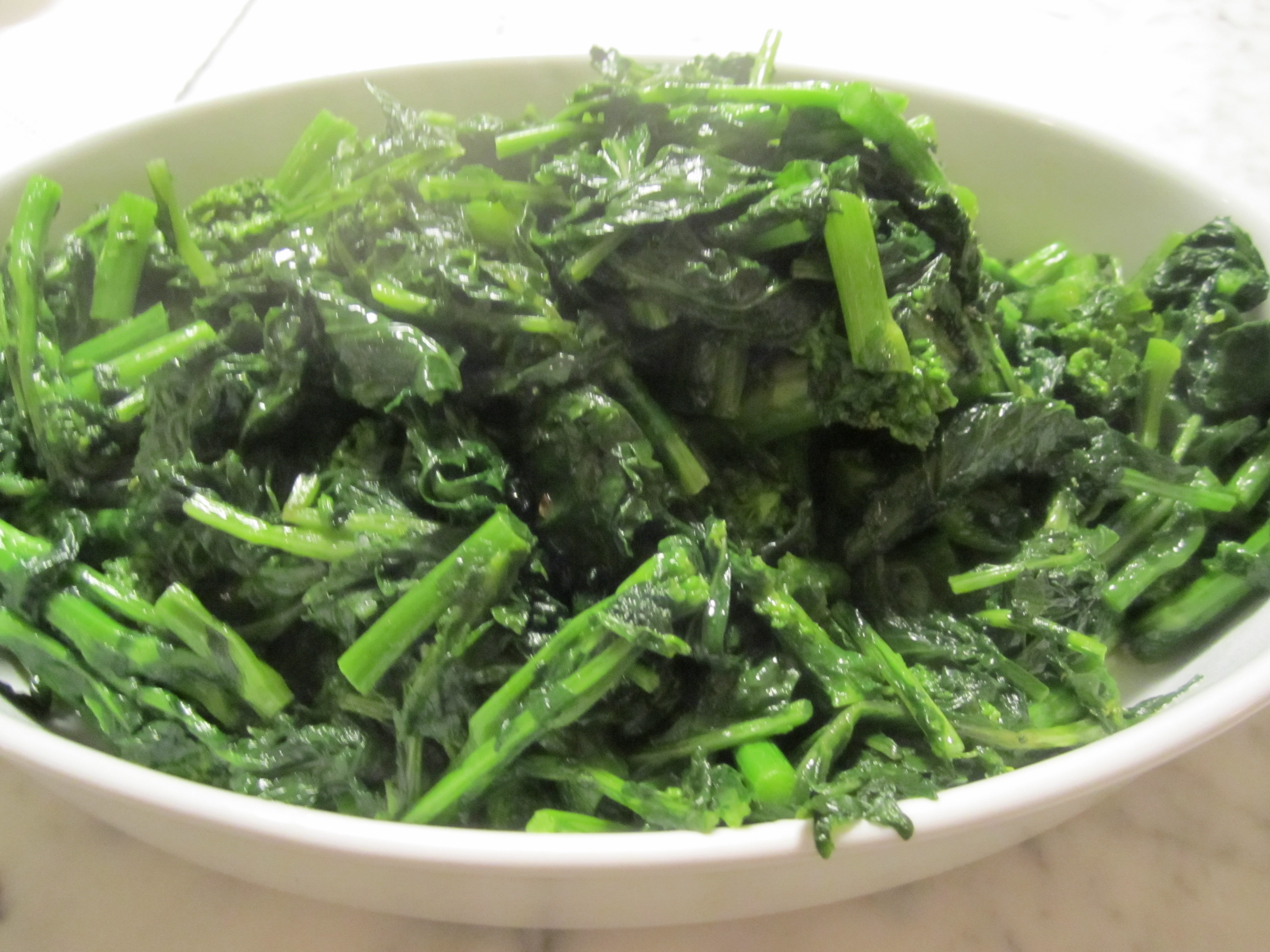
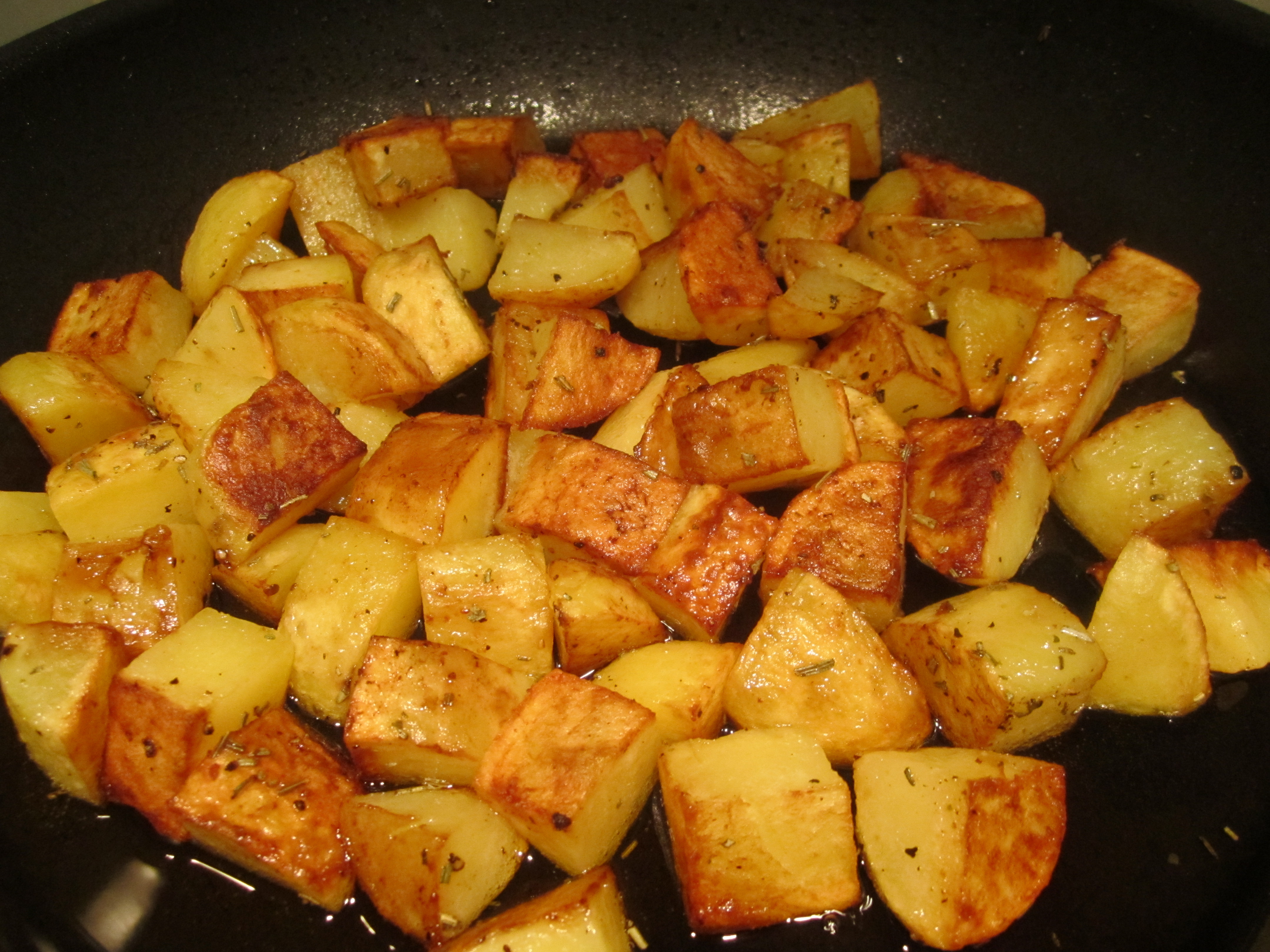
I’m serving my chicken with some sauteed broccoli di rapa, with garlic and chili flakes (see my prior post for the recipe), as well as skillet potatoes (you’ll also find that recipe in my earlier “dinner for one” post).


Posted in Poultry | Leave a comment

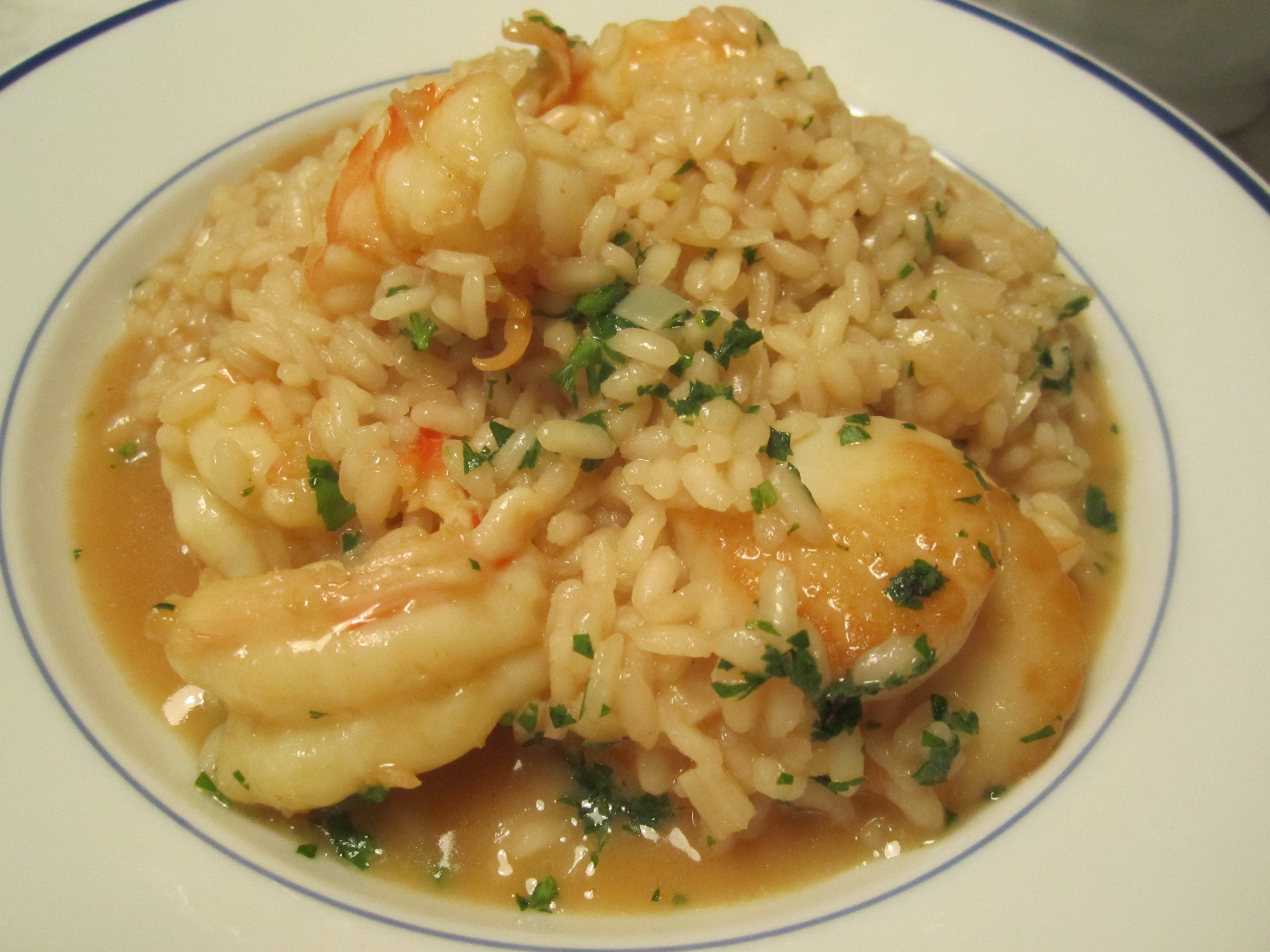
Seafood Risotto

I’m in the mood for a one-dish main course tonight but I don’t have a lot of time to prep ahead.  Seafood usually fills that bill nicely–it generally cooks quickly, with little or no time necessary to marinate or brine anything ahead.

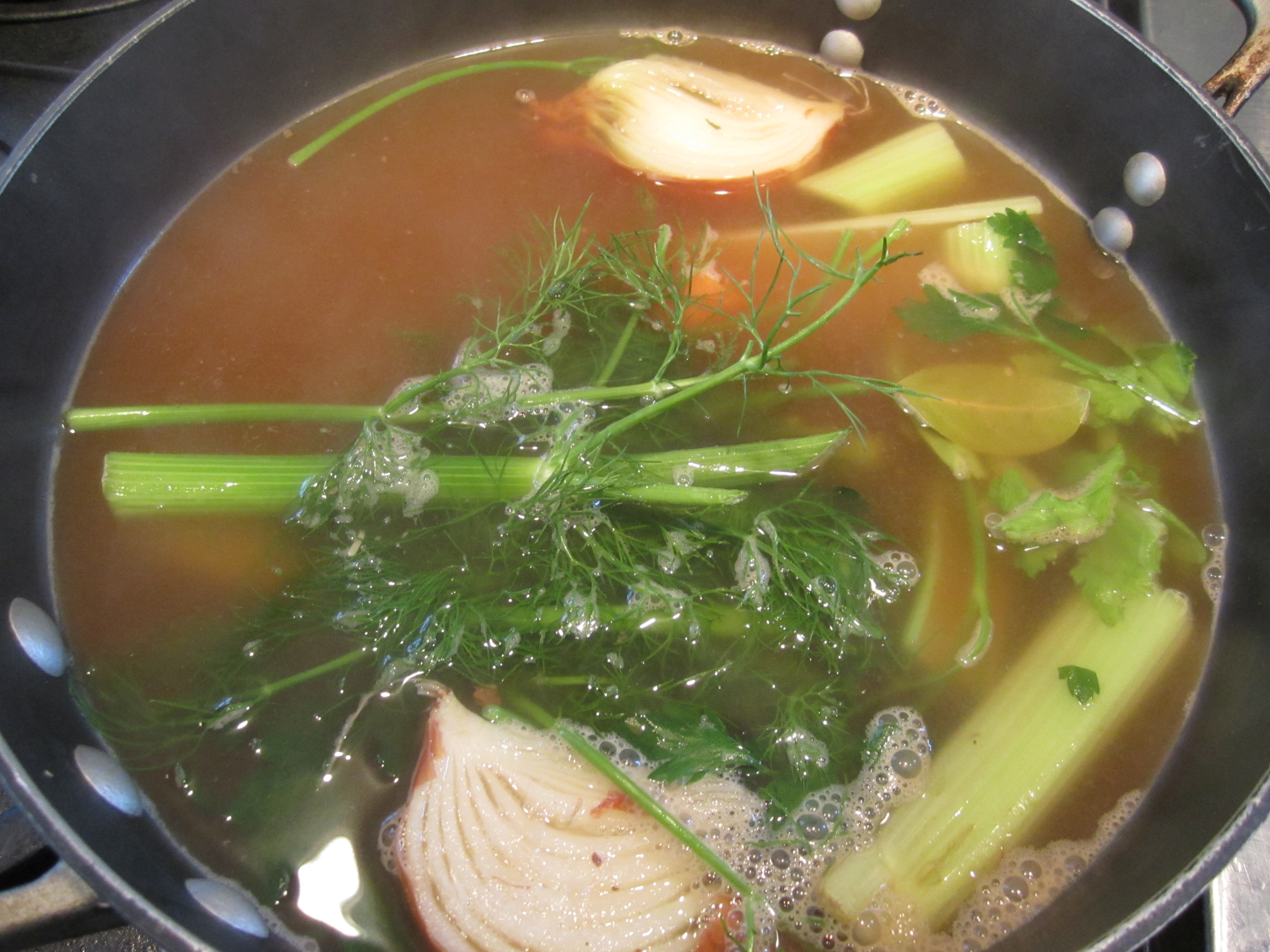
The most important flavor component in risotto is the broth or stock, so it’s really important to use good broth.   Because this is seafood risotto, I’d like shellfish broth, rather than straight chicken broth.  This is easy enough to achieve, using the shells and tails from the shrimp.  I’ve boiled the shells and tails in some good chicken broth, a touch of white wine, celery, fennel fronds, carrot, tomato paste and onion for about 30 minutes. 

This gives me all the brininess of a shellfish broth but also the body of chicken broth–it’s a very nice easy way to get a shellfish stock for risotto.

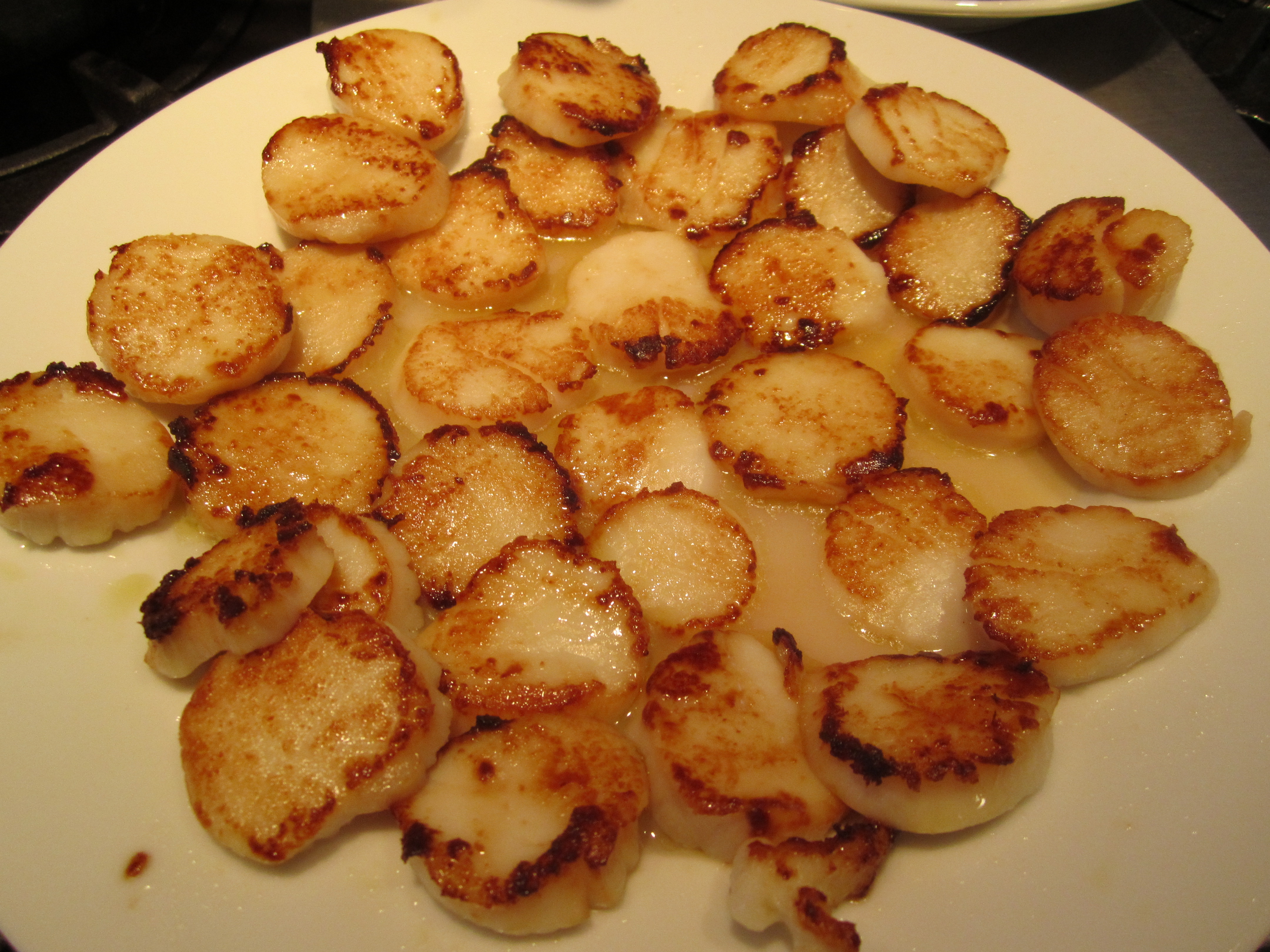
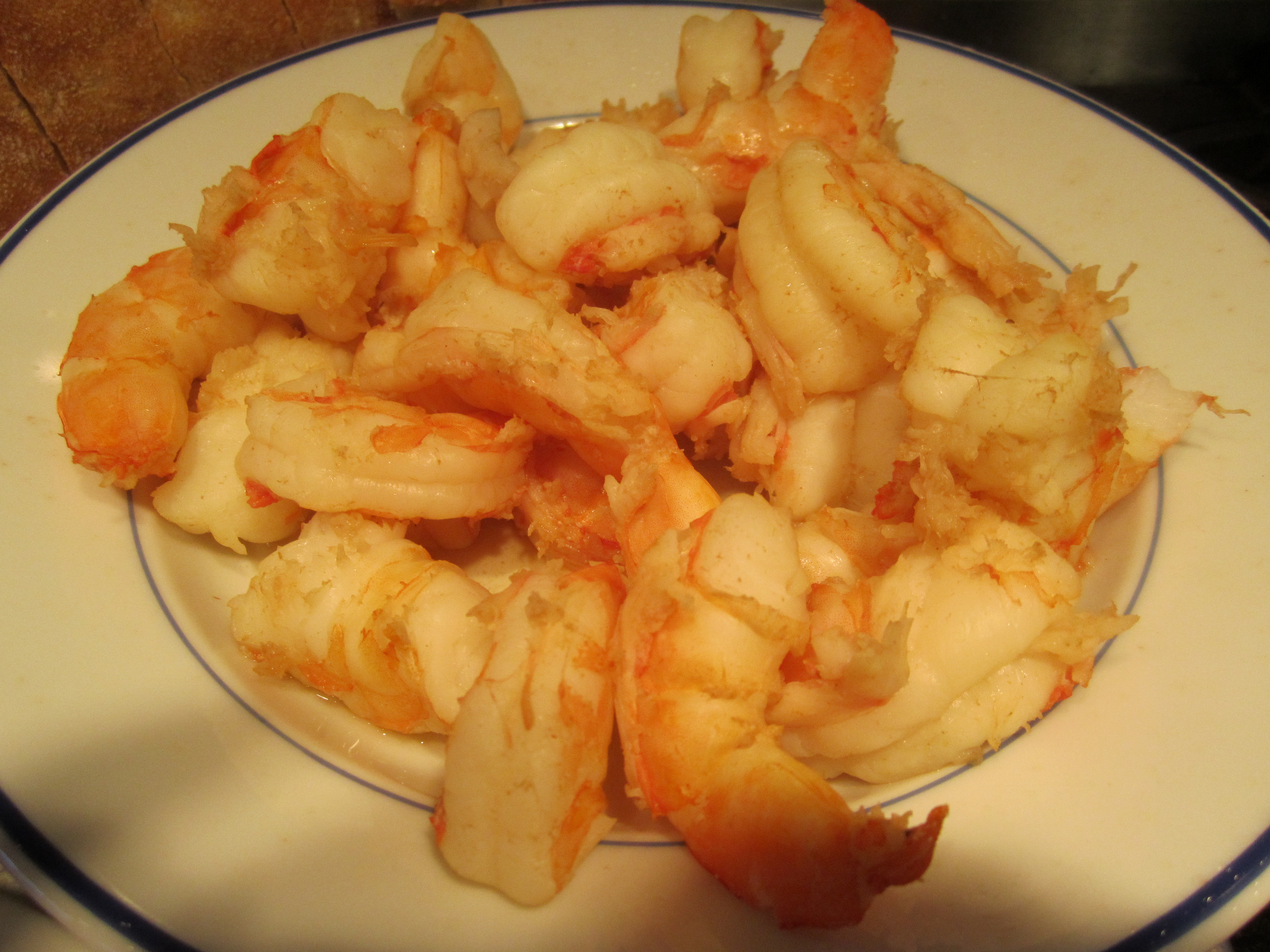
The seafood gets cooked separately from the risotto, then added to the simmering rice toward the finish.  The scallops get cut in half horizontally, seared in olive oil in a broad skillet and set aside. 

The shrimp get added to the cold shellfish stock, then brought to a simmer (just before it boils), then set aside.  This results in tender, perfectly cooked shrimp.  

 I like the combination of seared scallops, but gently poached shrimp.

The seafood can be par-cooked about a half-hour ahead of making the risotto, then added at the last moment.  If you’re making this dish for guests, try to not have any other last minute cooking to do, because the risotto will require most of your attention at the last minute.

Seafood Risotto

serves 4 – 6

1 lb sea scallops, cut in half horizontally

1 lb shrimp , cleaned, with shells and tails reserved for making broth

2 cups arborio rice

4 tlbs butter

2 tbls olive oil

2 quarts shellfish broth (or chicken broth simmered with the shrimp shells for about a half-hour).

4 medium shallots, diced finely

1 cup white wine

2 tbls fresh chopped parsley

grated parmiggiano, for sprinkling

salt and pepper to taste

Sear scallops on one side until golden and caramelized (2 – 3 minutes) and set aside.

Place peeled and cleaned shrimp in room-temperature broth and bring to a simmer.  Remove shrimp immediately and set aside.

In a heavy round-bottomed saute pan with high sides (or a small dutch oven), saute shallots in 2 tbls butter and all the olive oil until the shallots turn translucent (about 2 minutes).  Add the rice and saute for about 3 – 4 minutes until it begins to crackle.  Turn heat on high and add wine and stir until wine is mostly evaporated (about 3 minutes, depending on the strength of your flame). 

Begin adding broth, a cup at a time, until each addition is absorbed by the rice.  Don’t let the rice dry out to the point of sticking to the bottom of the pot.  After 13 minutes, add the seafood and cook 2 minutes longer.  Turn off the flame, cover and let the risotto rest for 5 minutes.  Add the remaining butter and 2 tbls grated parmiggiano, as well as the parsley.  Serve immediately.

Posted in Risotti, Seafood | Leave a comment

Trippa alla Veronese

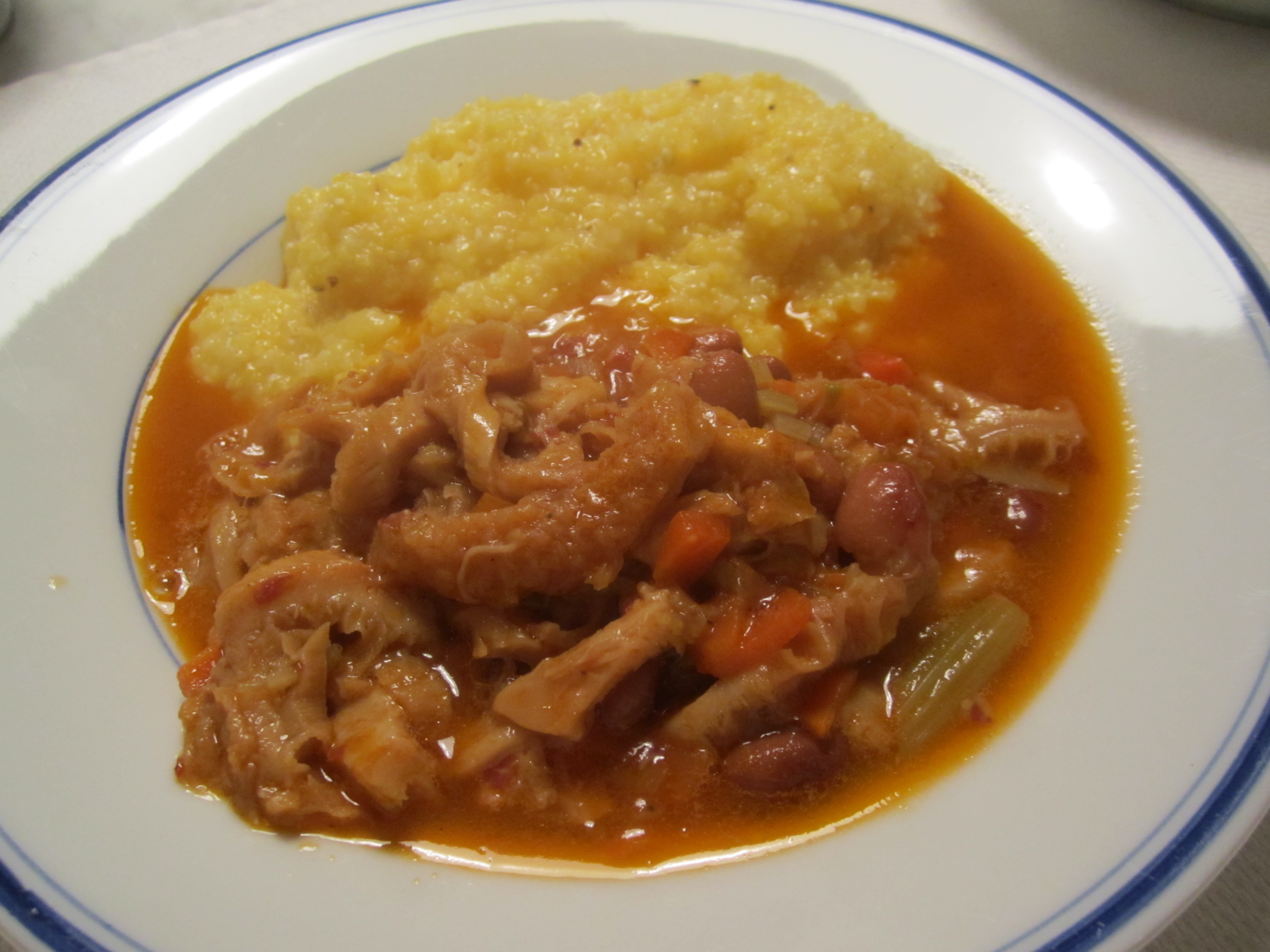
This magnificent dinner arrived on my doorstep, courtesy of my 89-year old neighbor, Beppi.  For those of you who haven’t read my blog before,  Beppi is not only my neighbor, but a friend and mentor in the kitchen.

Beppi owned one of the most critically acclaimed Italian restaurants in New York during the 1960’s through 1990, located at Rockefeller Center, called “San Marco”.  The restaurant was named after the famed Square in Venice, which is also the region from which Beppi comes.

Beppi is a wealth of information about the cuisine of the Veneto region of Italy (as well as other regions).  He’s always ready with a story about the famous characters with whom he was well-acquainted during that golden era of la dolce vita in New York.  Whether it’s the afternoon he spent with Elizabeth Taylor and Montgomery Clift on Jones Beach on Long Island, or the evening that Prince Rainier proposed to Grace Kelly before his very eyes, I never tire of Beppi’s anecdotes and good-humor.  I never tire of his cooking, either. 

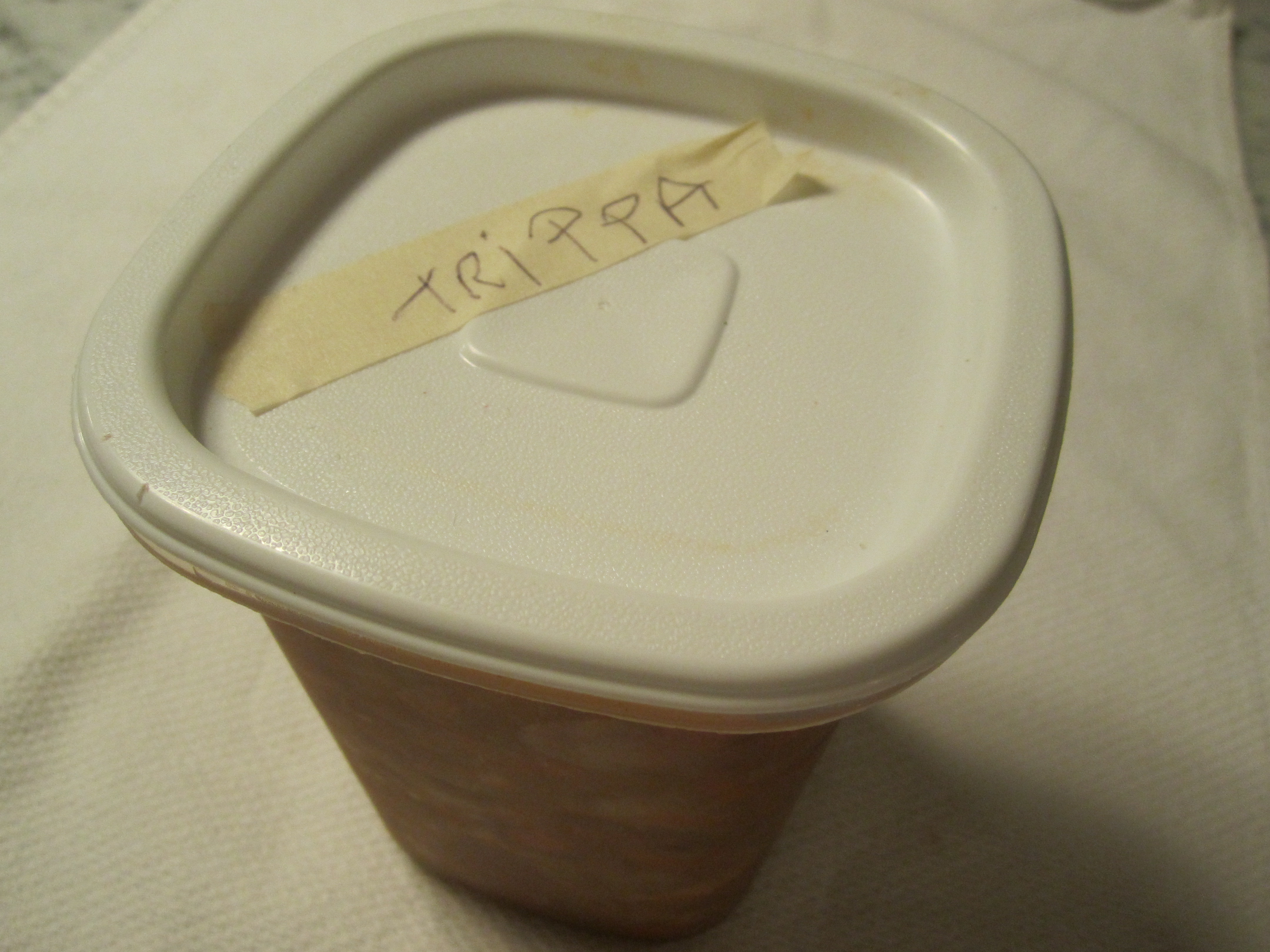
This morning, when I returned from my swim, I found the following package in a bag, hanging on my back door.

Beppi had obviously been at it in the kitchen again (since it’s been too cold to work in the garden), and today–it’s one of my favorites–tripe.   Many of you might be squeamish about the idea of tripe (cow’s stomach), but it is a great delicacy that not many people know how to make or enjoy anymore.  It’s rarely served at restaurants and it’s odd that in the quest for lighter dishes rich in protein, tripe is often overlooked.  Rich as it tastes, it’s actually a very lean source of protein.

It does have a certain taste and texture all it’s own, and if not handled properly, can be tough as rubber.  Beppi has been making tripe for a generation and the result is masterful–moist, tender and bursting with meaty,  winey flavor.  Since I didn’t make this dish, I can only share the technique, not the exact recipe for the dish (for those of you who are still reading).  Beppi has explained it to me at length and I’ll share it with you . . .

Tripe is bought in large pieces, already washed and bleached white.  It has a honeycomb texture and must be boiled for a couple of hours in water in which some aromatics are added–lemon and orange zest, a cinnamon stick, bay leaves.   Then the tripe is removed from the water and allowed to rest overnight. 

The next day, it’s cut into tiny, bite-size pieces, about 1/2″ x 1″ and set aside while the sauce is prepared.  In a special terra cotta vessel with straight sides that Beppi brought over from Italy specifically for cooking tripe, he sautes a fine dice of prosciutto, shallot, carrot and celery in a blend of butter and oil.  In another pot, he combines chicken broth, white wine and tomato paste.  Once the aromatics have sauteed for about 10 minutes, he adds the tripe and the liquid and covers and simmers for about 2 hours.  He also adds some  pre-cooked red beans, for a Tuscan touch. 

The perfect accompaniment to this dish is polenta (the recipe for which you can find in a prior post of mine).  Beppi’s SO happy when I tell him I’m making polenta to accompany his tripe.  “Perfetto!” he praises, “trippa colla polenta”, as if I couldn’t have made anything that would better crown his masterpiece.  “I hope you enjoy it–I made it with all my heart,” he proffers, with his luminous smile.

As a first course to the tripe and polenta, I’m serving the salad below–local asparagus, arugula and tomatoes, simply dressed with olive oil and lemon.

Posted in Meat, Soup/Stew | Leave a comment

Pasta con le Fave

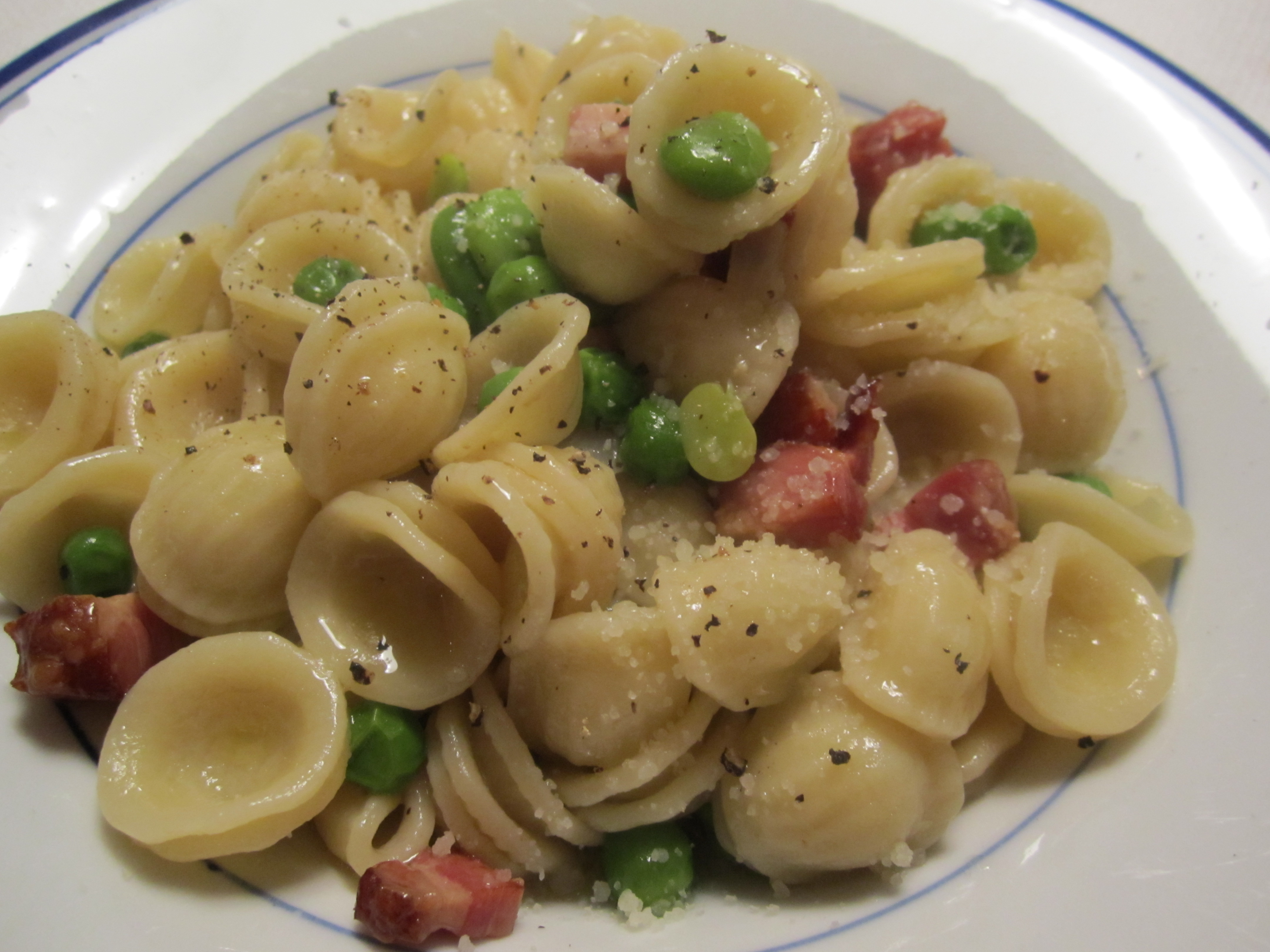
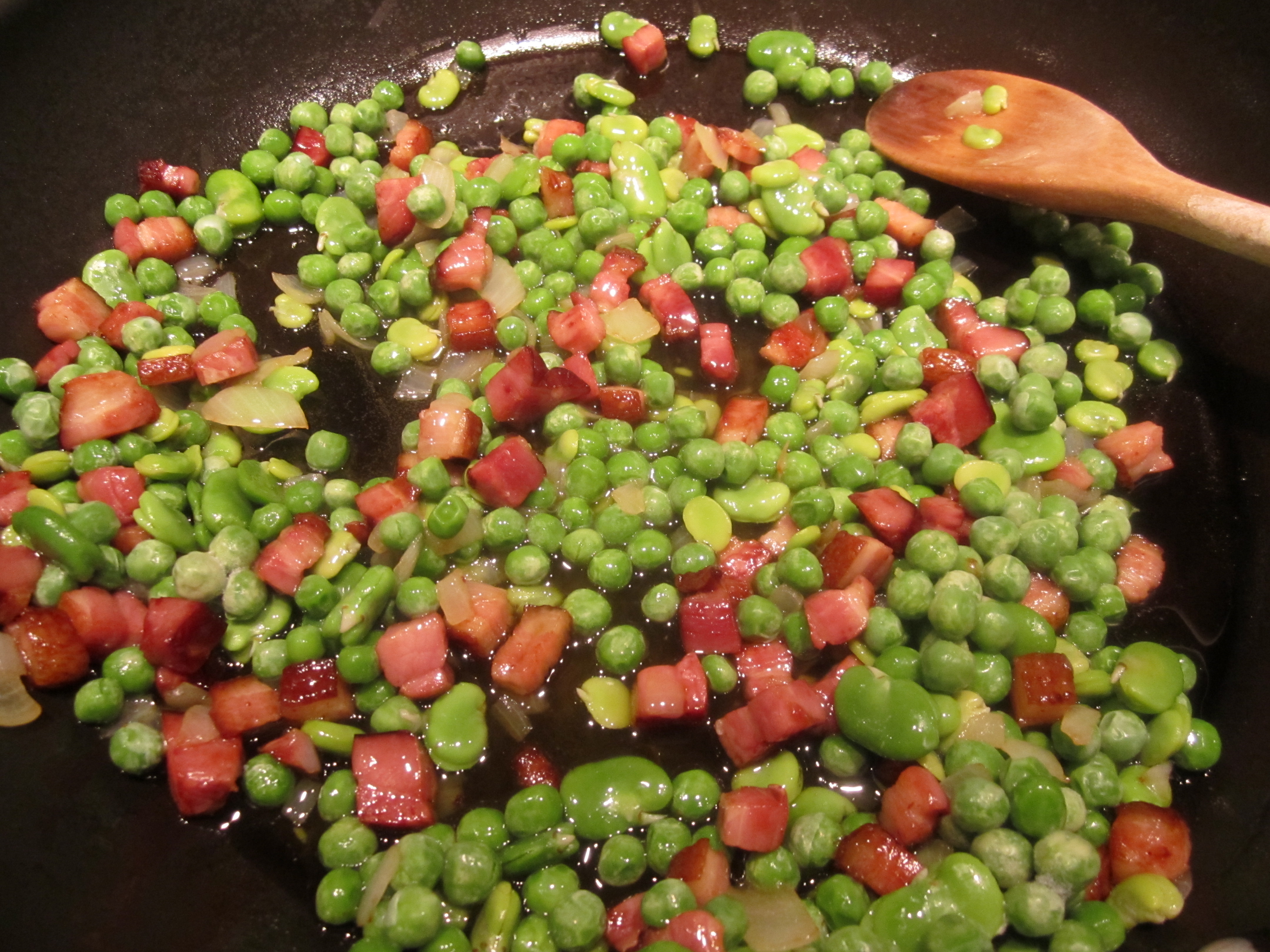
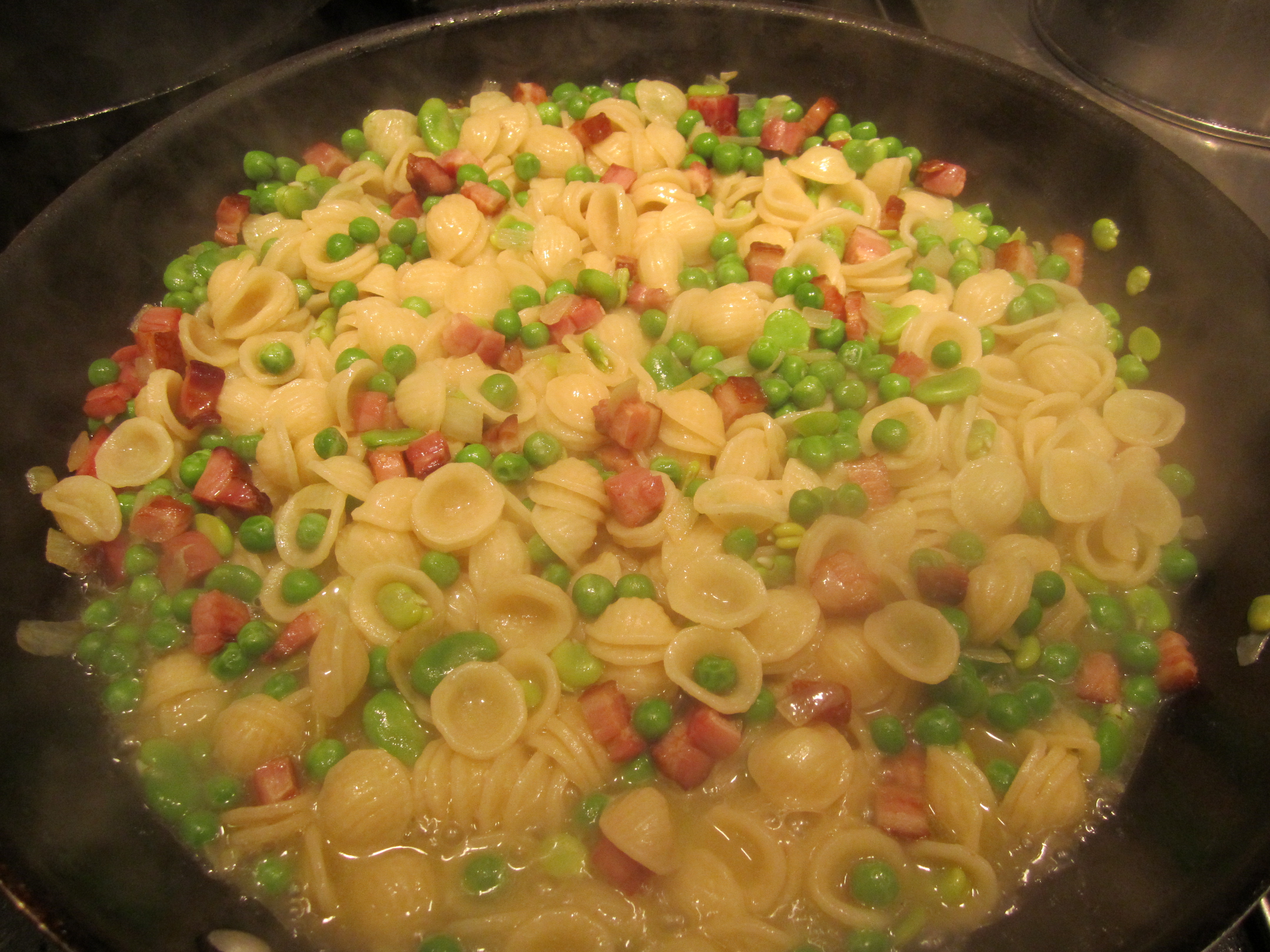
Since I had willing help shucking my fava beans, I decided to make more with pasta tonight.  Fava beans go extraordinarily well with bacon, pancetta, or any salty porky meat.  My mother always made them with pancetta and cooked them for a long time.  I don’t cook them quite so long.

Tonight, I’ve made them with bacon, onions and peas.  I added the peas because the fava beans I bought today were smaller than the ones I bought yesterday.  Once they were shucked, there was merely a handful of tiny beans.  The peas went a long way toward adding some green to the dish.  Fresh peas should be in the markets any day now–can’t wait.

With the exception of the fava bean preparation (it’s a big exception–I know), this dish can be made in the time it takes to cook the pasta.

Pasta con le Fave

Serves 4

2 lbs fava beans (gross weight, including pods) shucked blanched and peeled (see last night’s post)

1 cup peas (fresh or frozen)

half a small onion, diced finely

1/4 lb slab bacon, cut into 1/2″ cubes

1 cup chicken broth

4 tbls extra-virgin olive oil

grated pecorino for sprinkling

In a broad skillet, render the fat from the bacon cubes on very low heat for about 7 – 10 minutes.  Add onion and continue sauteing on low heat.  Add fava beans, peas and broth and simmer until pasta is cooked.

Toss in cooked pasta and drizzle with more extra-virgin olive oil, along with some pasta cooking liquid.  Saute on high heat for a minute or so.  Should be slightly soupy consistency.  Sprinkle with plenty of pecorino romano.

Posted in Pasta | Leave a comment

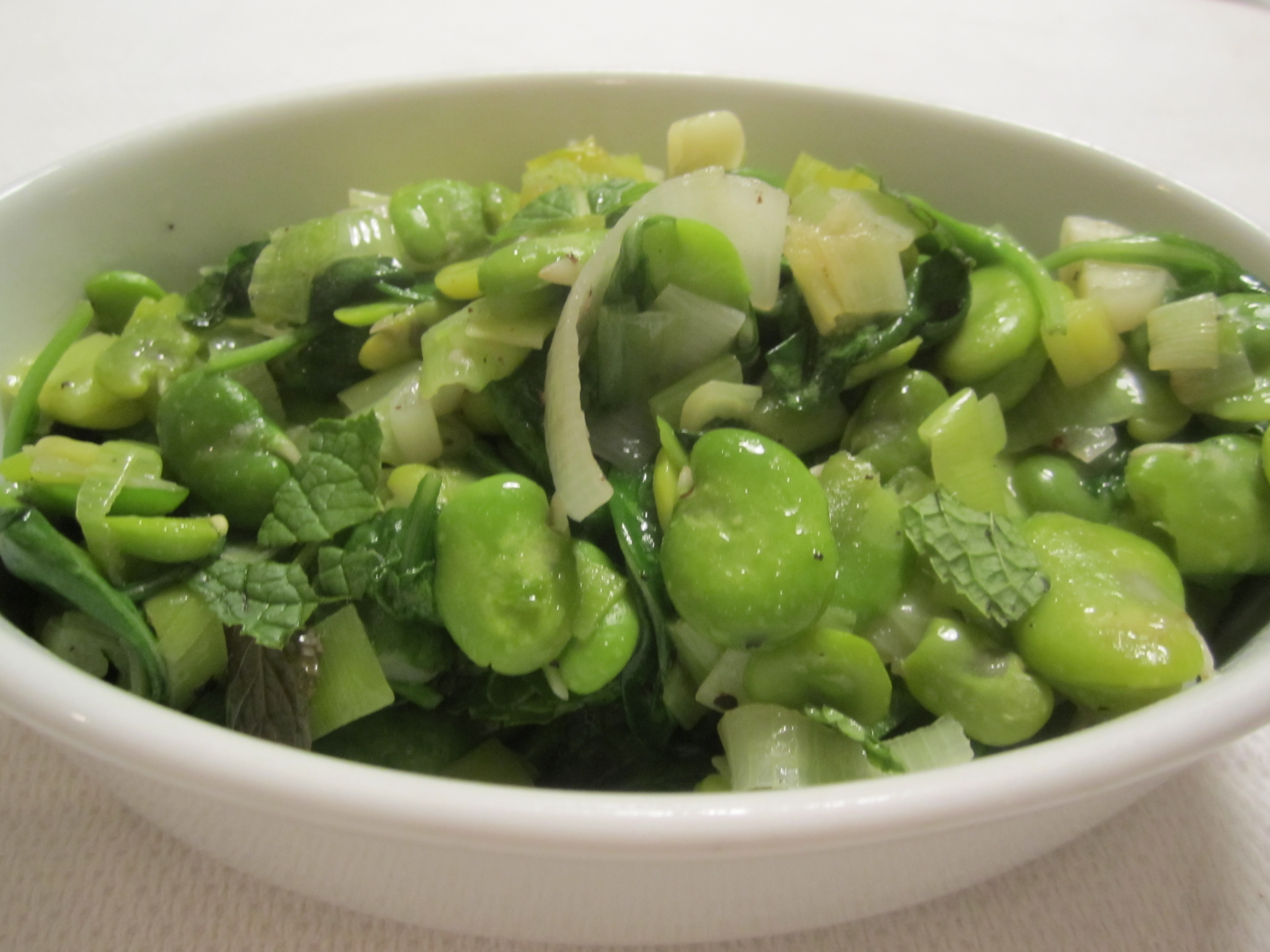
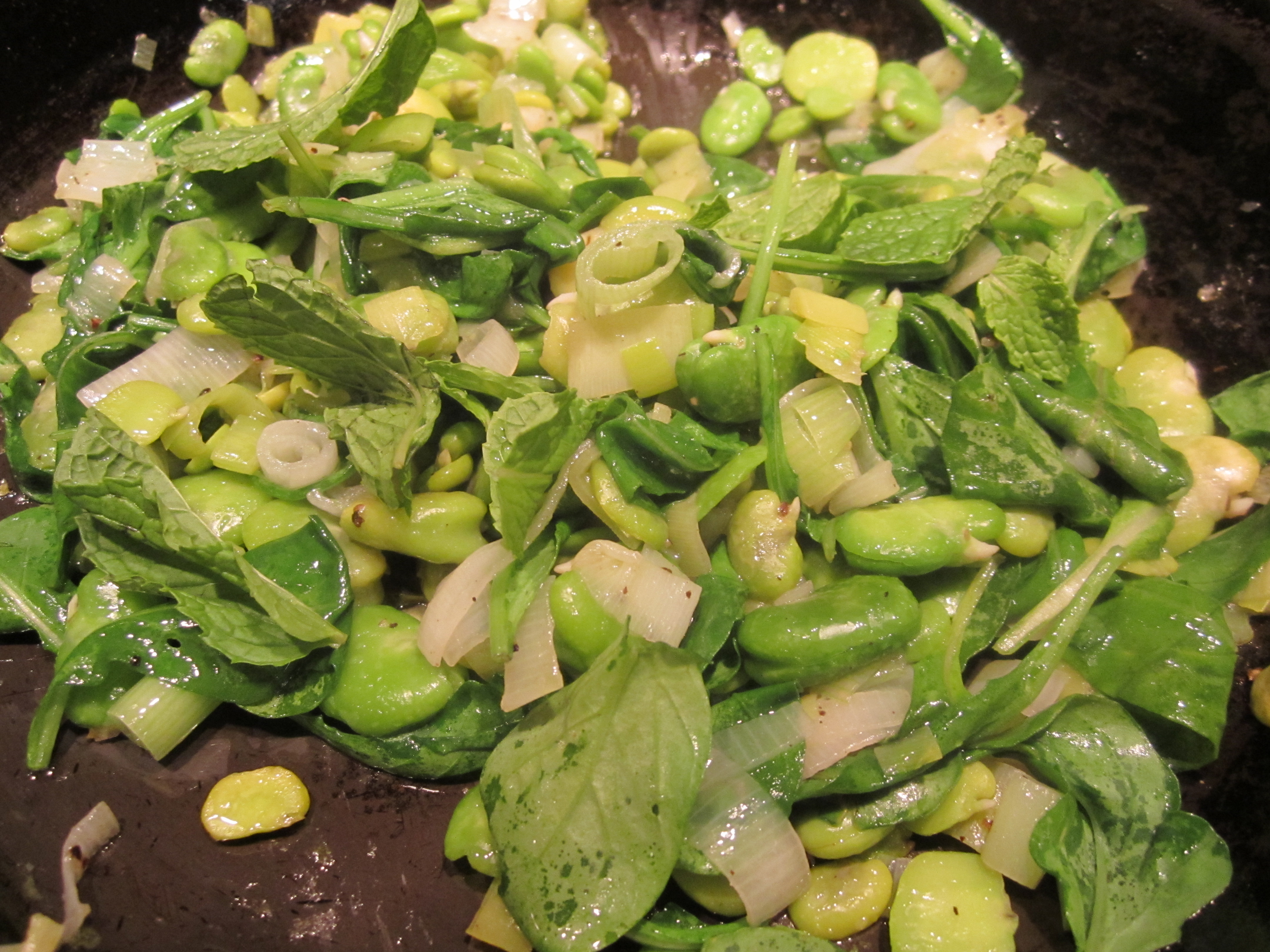
Fava Beans with Leeks, Arugula and Mint

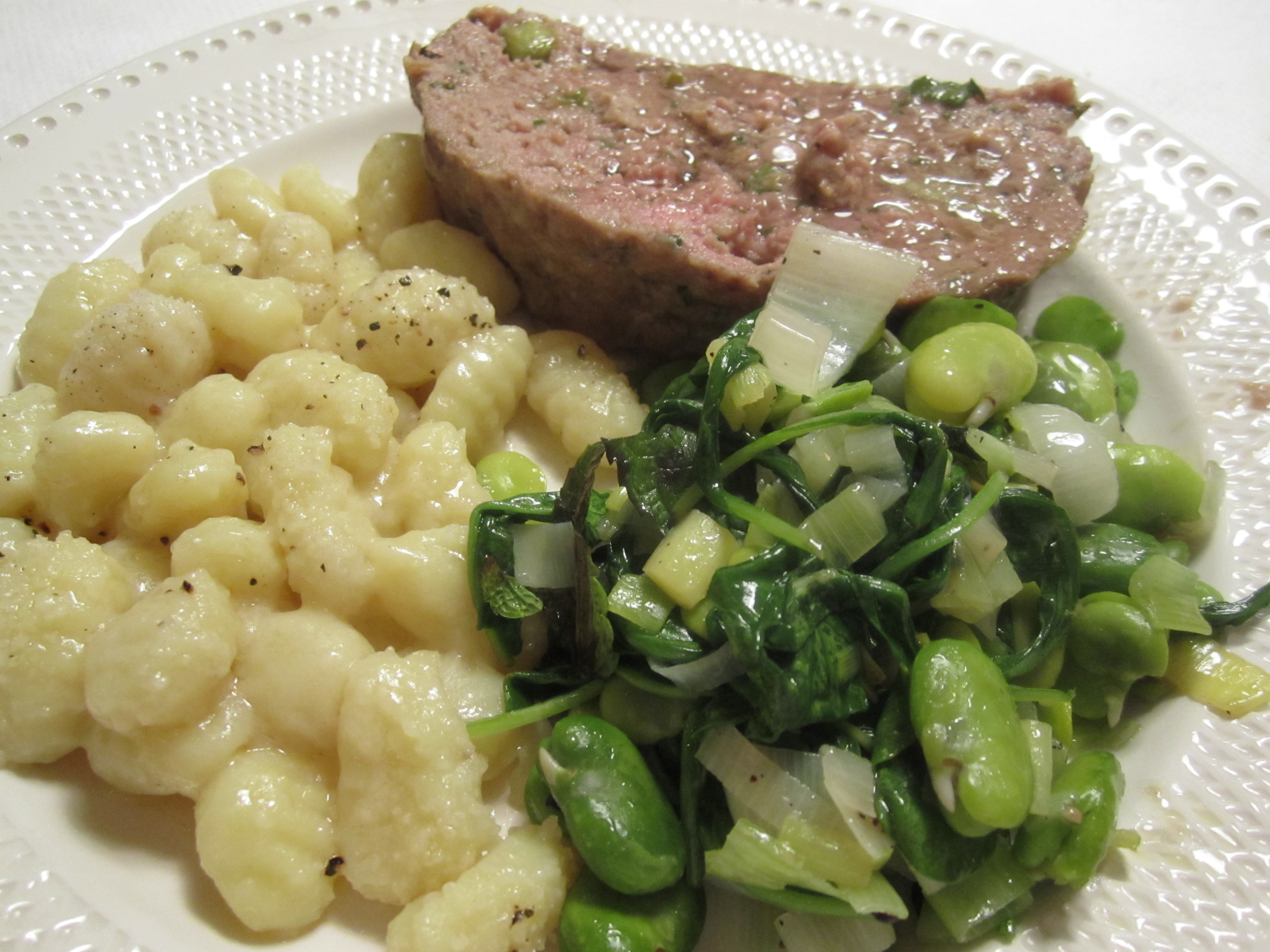
Tonight, I’ve decided to serve fava beans alongside lamb meatloaf (see post below).    Fava beans are a spring labor of love.  They require shucking from their pods, then each bean requires peeling.  This can be a fun activity for the entire family, or for a group of willing dinner guests. 

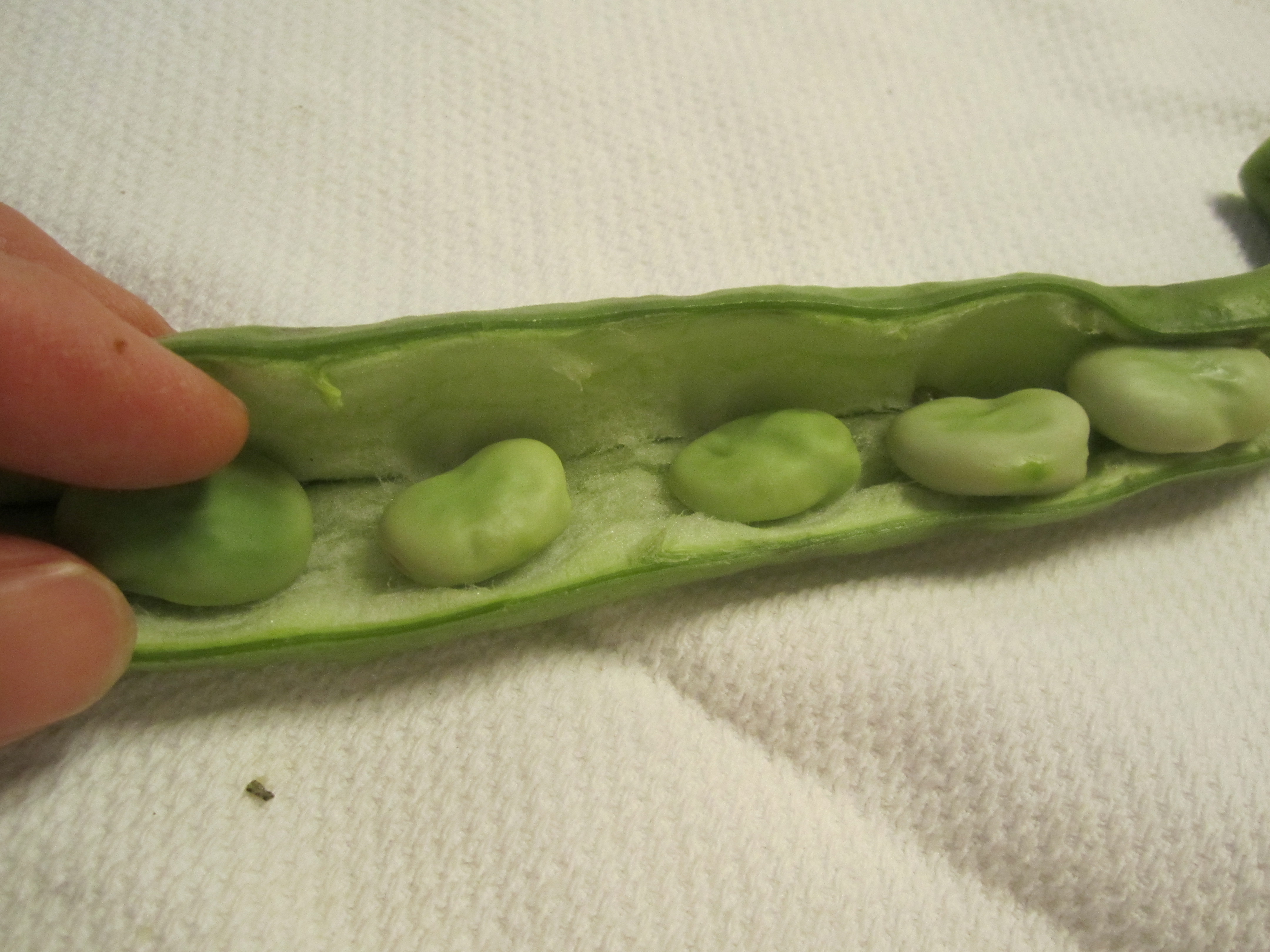
To begin the preparation, each pod must be split by hand (not with a knife or you’ll bruise the beans inside) and the beans inside removed (scrape them out with your fingers–they pry out easily enough).

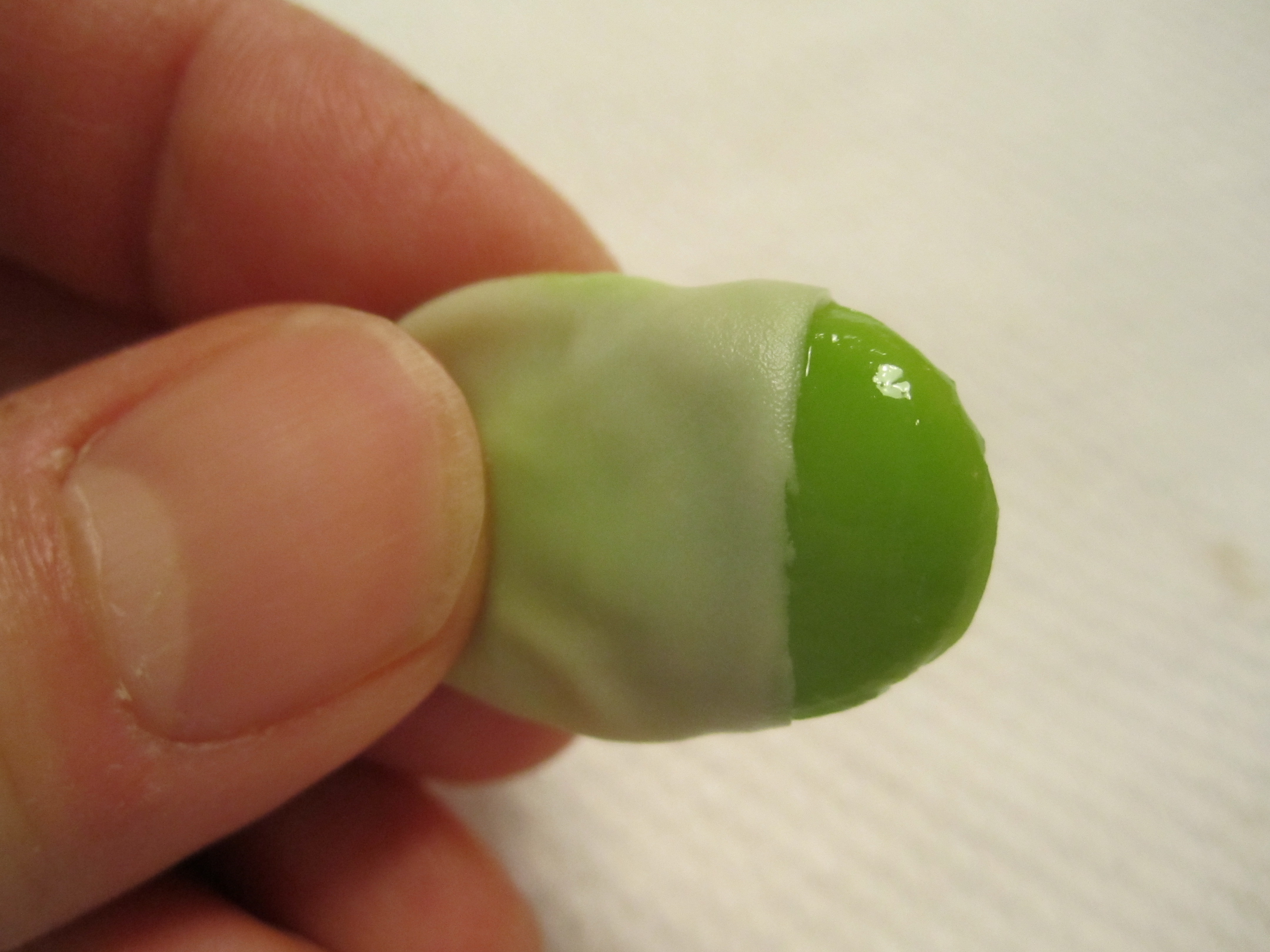
Then blanch the shucked beans in boiling water for about a minute.  Then shock in cold water for a few seconds, so the beans are cool enough to handle.  Next, take each bean and pinch a slit on one side.  Note:  there is already an apparent “opening” in the bean from which it appears the bean is beginning to burst.  Although it seems counterintuitive–that is NOT the place to try to pinch and extract the bean. It’s easier to pinch the opposite end of the bean, then the bright green bean will slip right out.

After peeling all the beans, proceed with the recipe below.

Fava Beans with Arugula and Mint

Serves 2

2 lbs fresh fava beans (weight of the pods)

2 large leeks, washed and cut into 1/2″ half-moon slices

10-0z. pkg baby arugula

12 mint leaves

3 tbls extra-virgin olive oil

salt and pepper to taste.

In a skillet, saute the leeks in oil on low heat for about 5 minutes.  Add fava beans and saute for another minute or two.  Add arugula and toss just until wilted.  Turn off flame and add mint, salt and pepper.

This is great as a side dish or on warm bruschetta.  Tonight, in addition to this side dish, we’re having plain gnocchi dressed with butter and parmiggiano (no mint) beside our lamb meatloaf (see post below for meatloaf).

Posted in Vegetables | Leave a comment

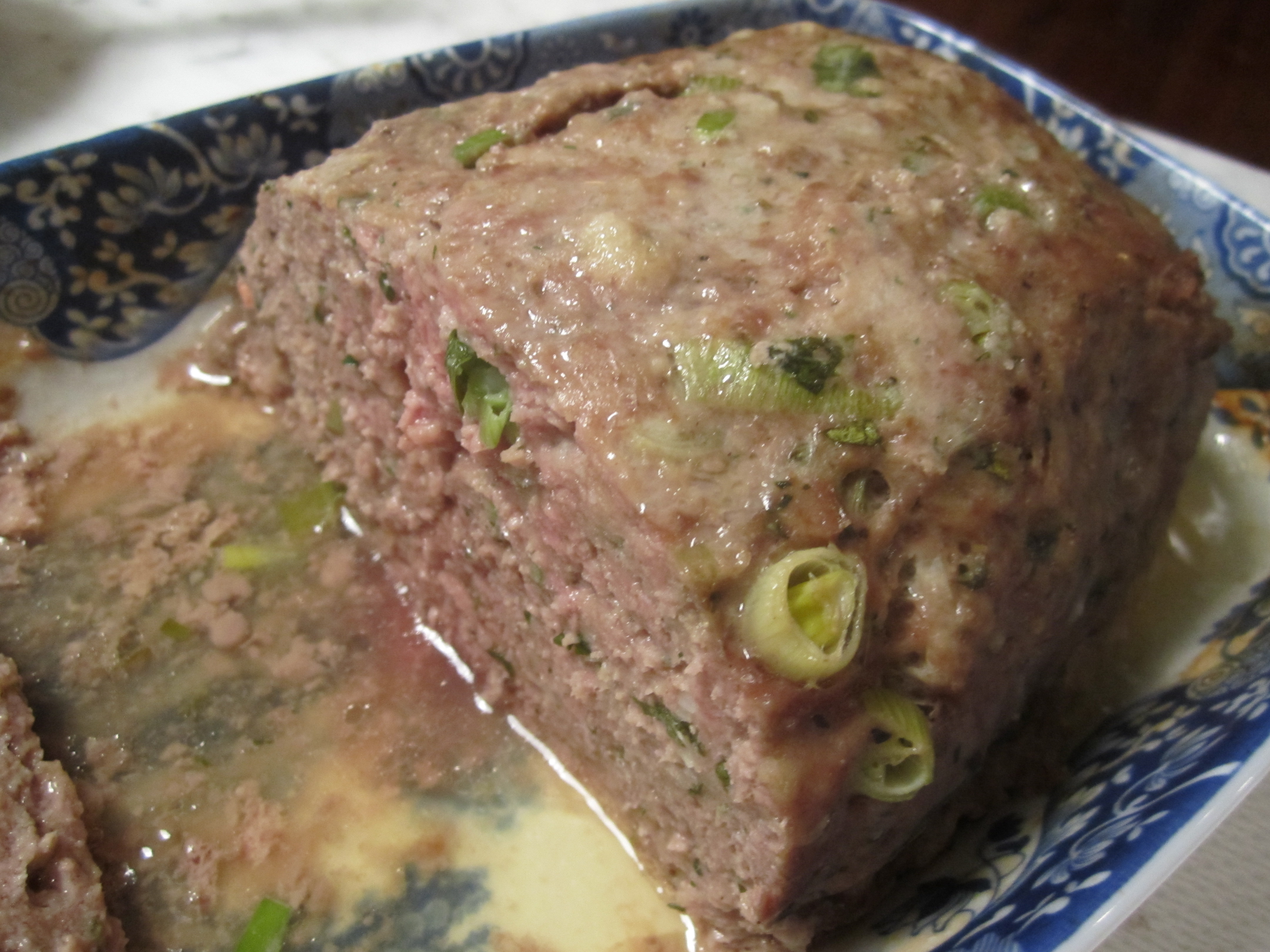
Lamb Meatloaf

As promised, since I bought mint the other day for the oyster mushrooms, I’m in the mint-mode (which happens to work well with many spring dishes).  Therefore, I was inspired to make lamb meatloaf, which uses a half-cup of mint leaves.  This is essentially the same recipe that I posted a couple of months ago (substituting scallions for chives) but with more detailed illustrations.  Enjoy!

Lamb Meatloaf

Serves 6

2 lbs ground lamb

1/2 c fresh mint leaves

1/2 c fresh parsley leaves

1/2 c fresh scallions, chopped into 1/2″ pieces

2 large eggs

4 slices white bread (can be stale)

1 c chicken broth (can be bouillon)

1/2 c seasoned breadcrumbs

1 1/2 tsp salt

1 tsp freshly ground black pepper

1/8 tsp freshly grated nutmeg

Soak bread in broth for at least ten minutes. 

In  food processor, chop mint, parsley, chives (pulse until they are coarsely chopped).  Add bread/broth and process into a coarse mush (about fifteen seconds or so)

In a mixing bowl, combine all ingredients except lamb, eggs and salt.  Taste for seasoning (it must be very salty).

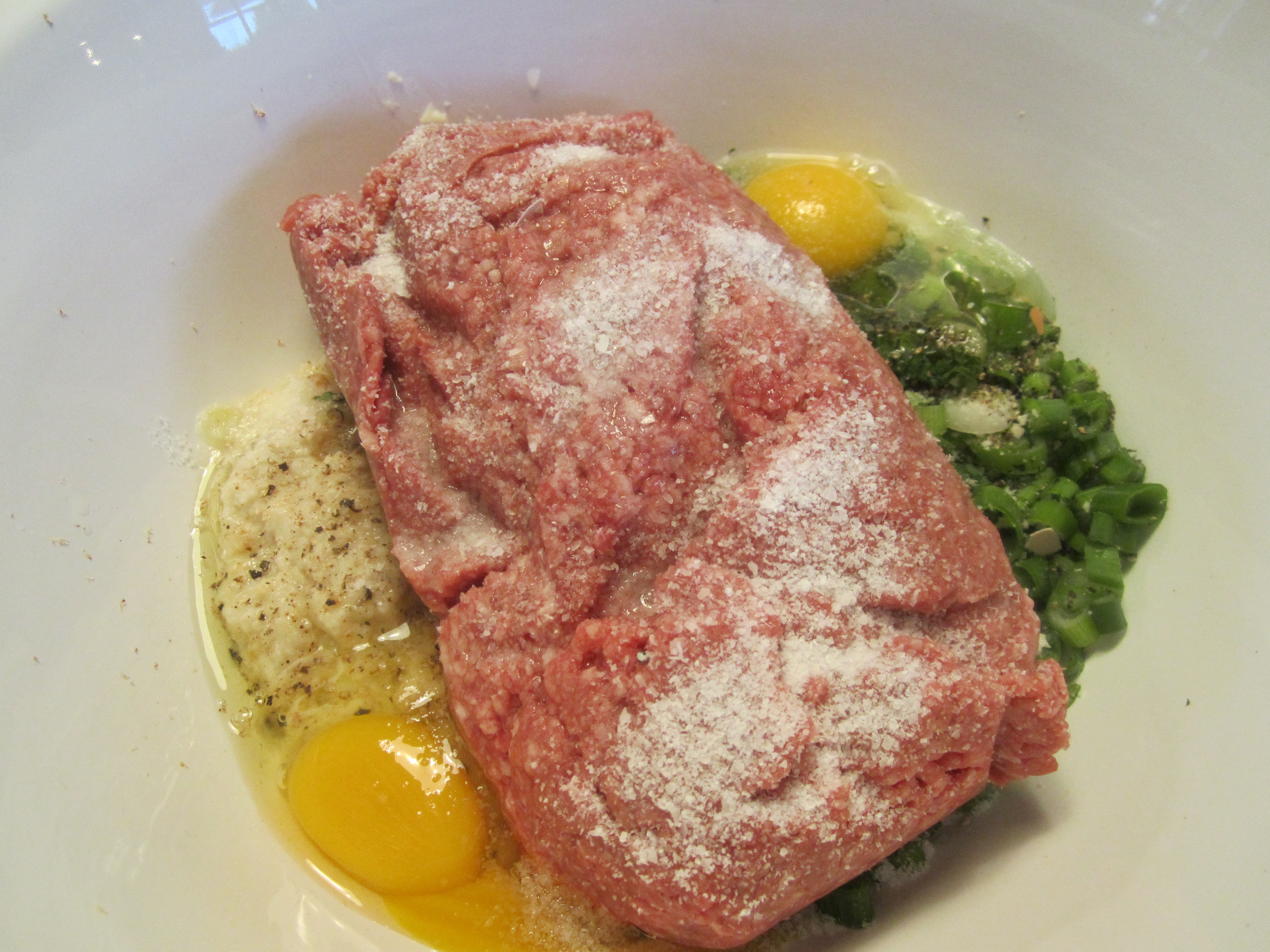
Add lamb, sprinkle with salt and add eggs.

Mix with hands, turn into a rectangular baking dish and shape into a loaf.

Cover and bake for an hour, then uncover for about fifteen minutes.   NOTE: If you prefer a browner loaf, bake uncovered for a longer period within that  hour and 15 minutes (or entirely).  I’ve come to love the moister, juicier meatloaf that results from covering.

It’s done when a meat thermometer reads 165 degrees.

Let rest at least ten minutes before slicing.

 
Posted in Meat | Leave a comment

Asparagus Milanese

It’s now the season–this is a favorite brunch dish or appetizer in the spring when asparagus are at their peak.    Last night I made asparagus with our dinner and I made an extra-large amount so I could make this dish for brunch.

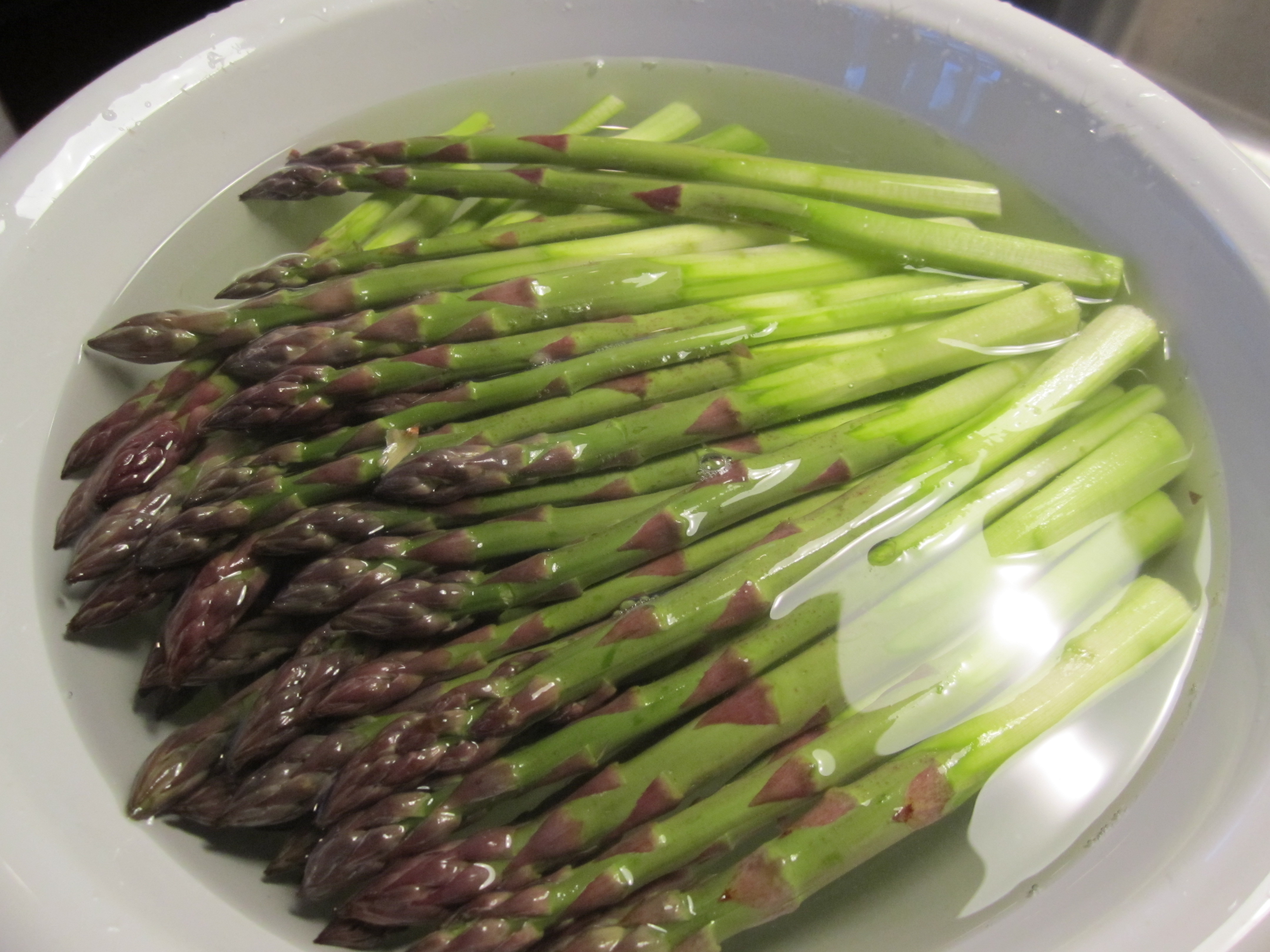
I took the time to peel the asparagus because I didn’t want to throw away any of their fresh just-picked goodness.  When the asparagus are local (and picked that day), it’s necessary to soak them in a deep bowl of water to let the soil settle to the bottom.  First I peel their lower stalks, then soak them.

Then boil them for about 2 to 8 minutes, depending on their thickness–I stand over the pot and pull out the skinnier ones sooner and let the thicker ones cook longer.  Any that I’m not going to eat right away, I shock in cold water to keep them green. 

To make this dish, simply take cooked asparagus and saute in a tablespoon or so of extra-virgin olive oil for 2 minutes or so, until they’re heated through and maybe slightly golden in spots.

Fry eggs to your preferred degree of doneness (it’s traditional to fry the eggs in butter, but I prefer olive oil).  Top the asparagus with fried eggs and lots of parmiggiano and black pepper. 

Eat immediately with bread or bruschetta.  This is also a great late-night dinner on its own.

Posted in Eggs, Vegetables | Leave a comment

Oyster Mushrooms with Mint

The wild mushrooms have been looking irresistable at my produce market lately–not only are there morels ($79/lb), fresh porcini ($59/lb), but equally impressive giant oyster mushrooms ($8/lb). 

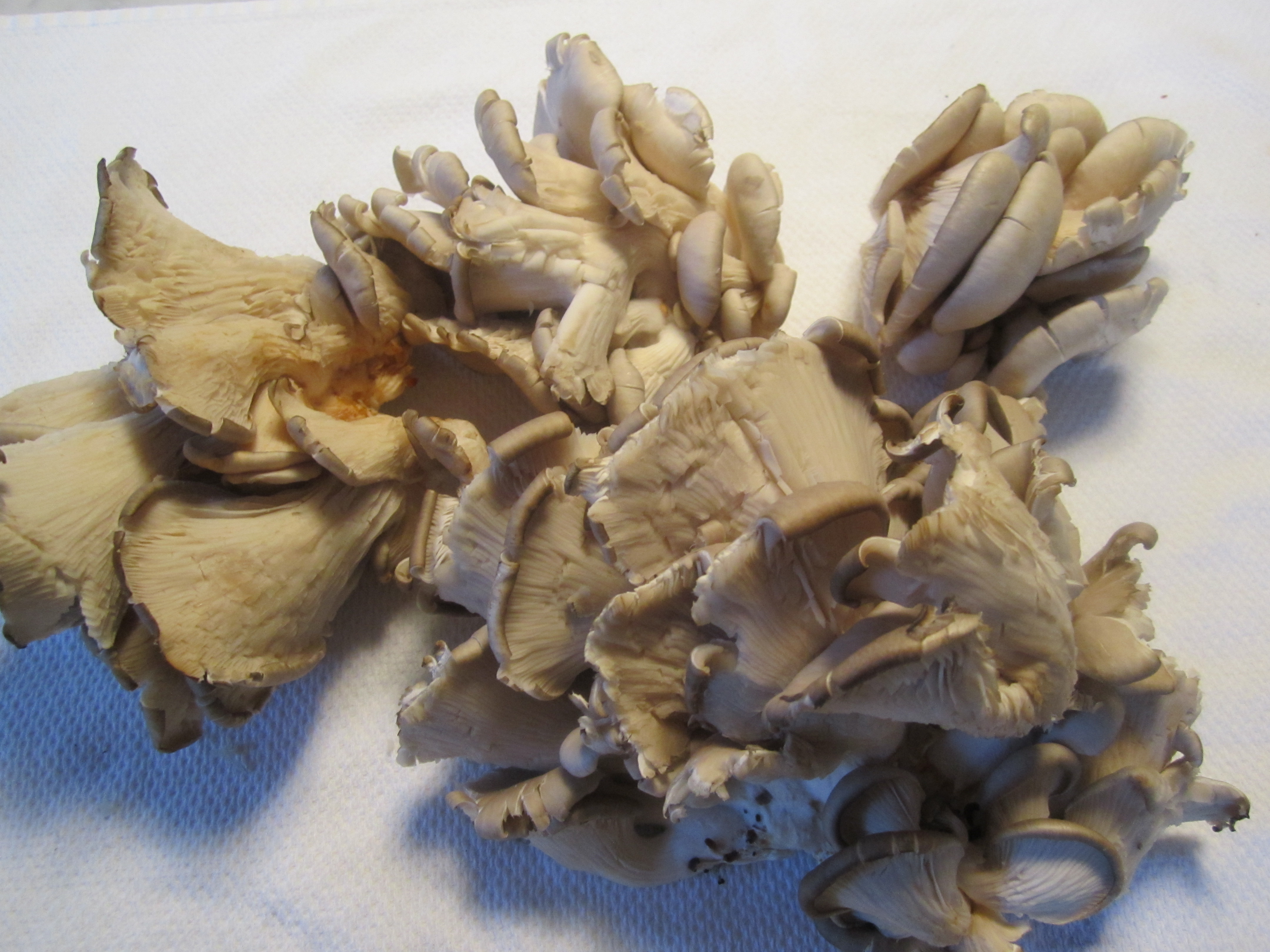
Oyster mushrooms have a wonderful assertive flavor that I would describe as  briny, and a meaty texture.  They need to be tamed by something strong–in this case, garlic and mint.   Mint is a wonderful brightener in many earthy dishes, and since I’ve bought a bunch of it to season these mushrooms, it will probably make an appearance several times in the coming days and weeks (if it lasts). 

Simply pull the layers of the mushroom off of the tough thick bases and discard the bases.  Cut or tear the layers into manageable pieces.  Wipe any loose soil from them with a damp paper towel and set aside.  They need little cleaning since most of the soil is on the bases. 

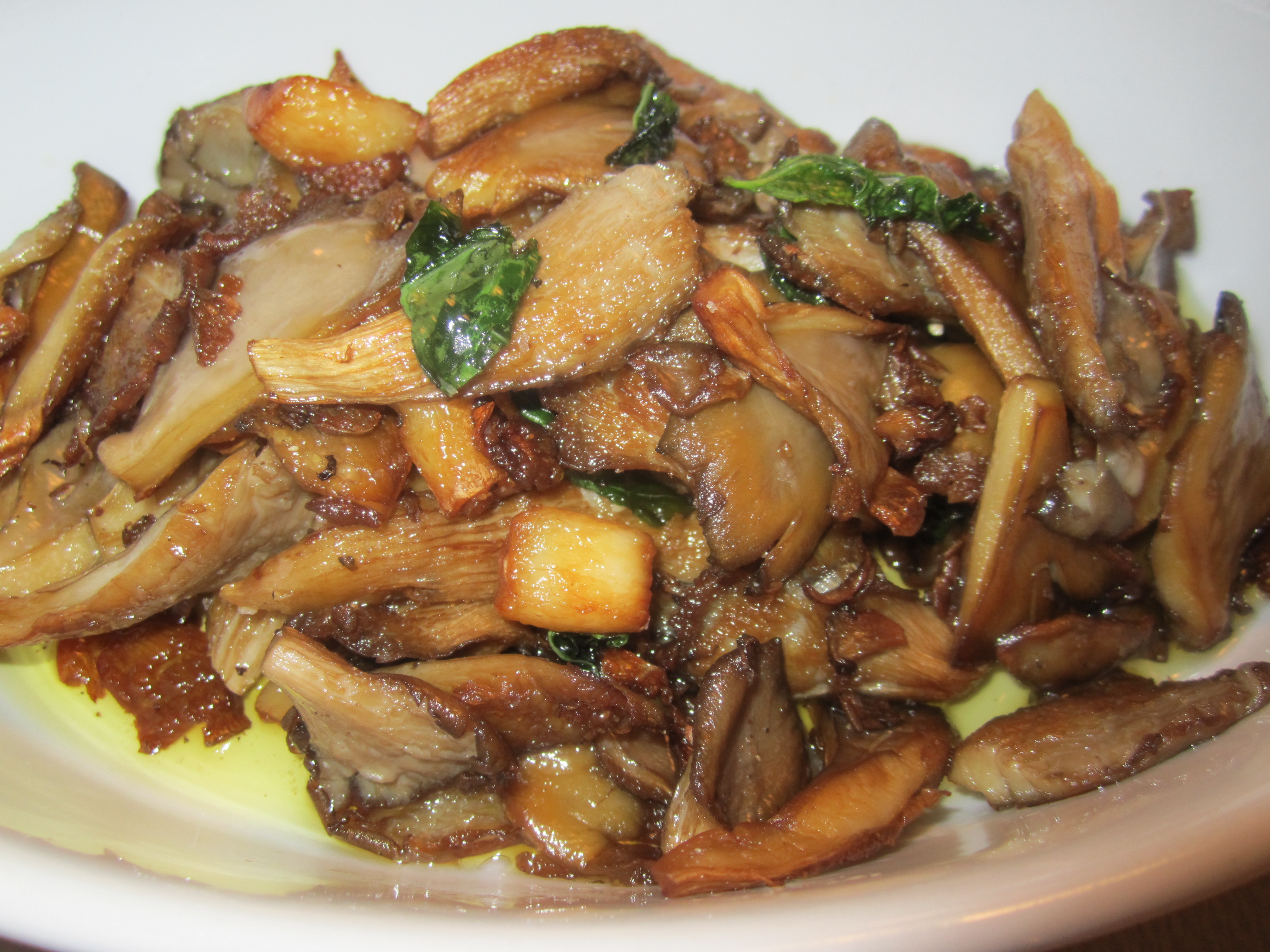
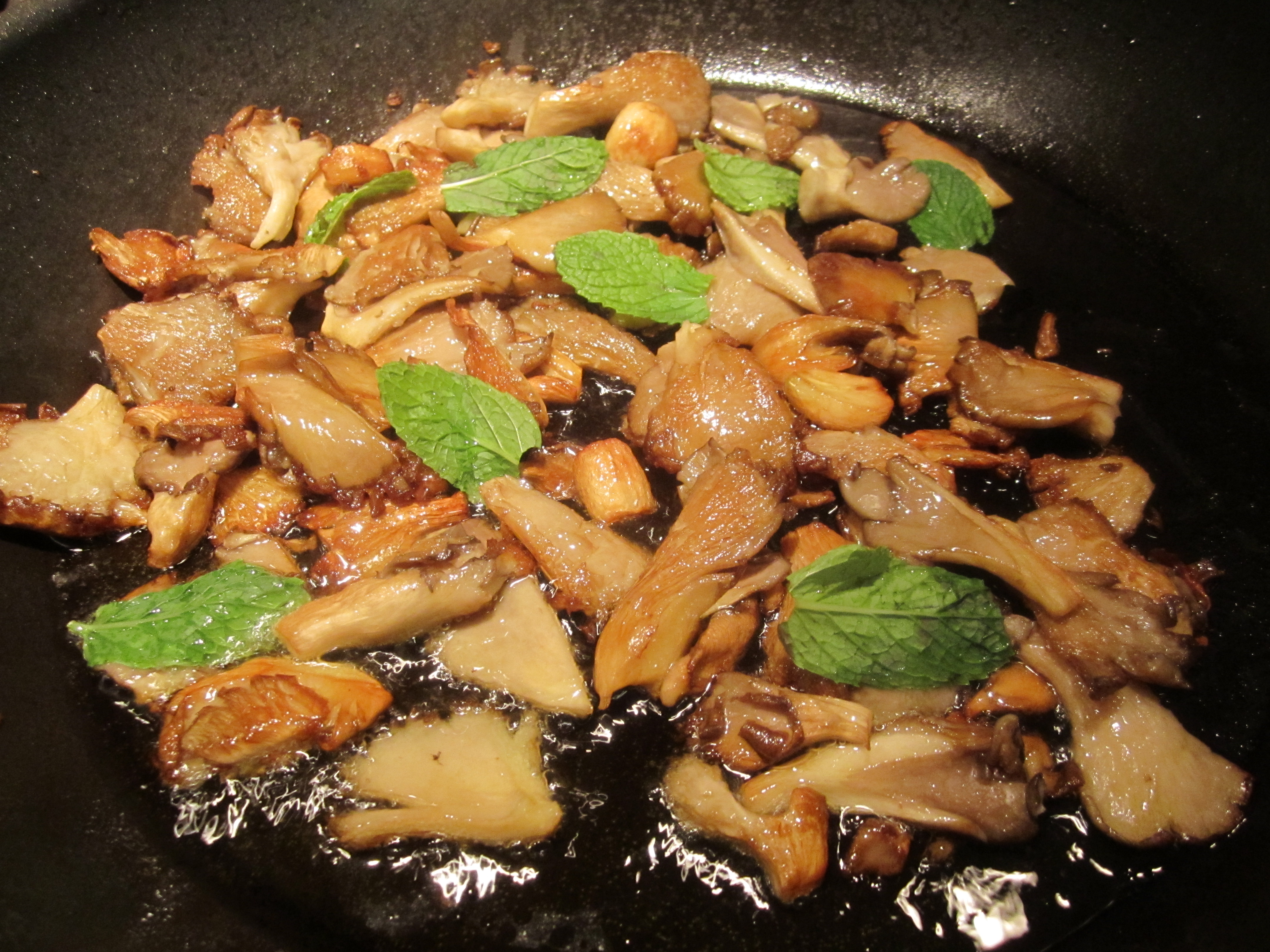
The garlic cloves get browned in oil first, then the mushrooms are added.  Salt and black pepper are added after the mushrooms have sauteed and begun to become golden.  Finally, a handful of mint leaves are tossed in. 

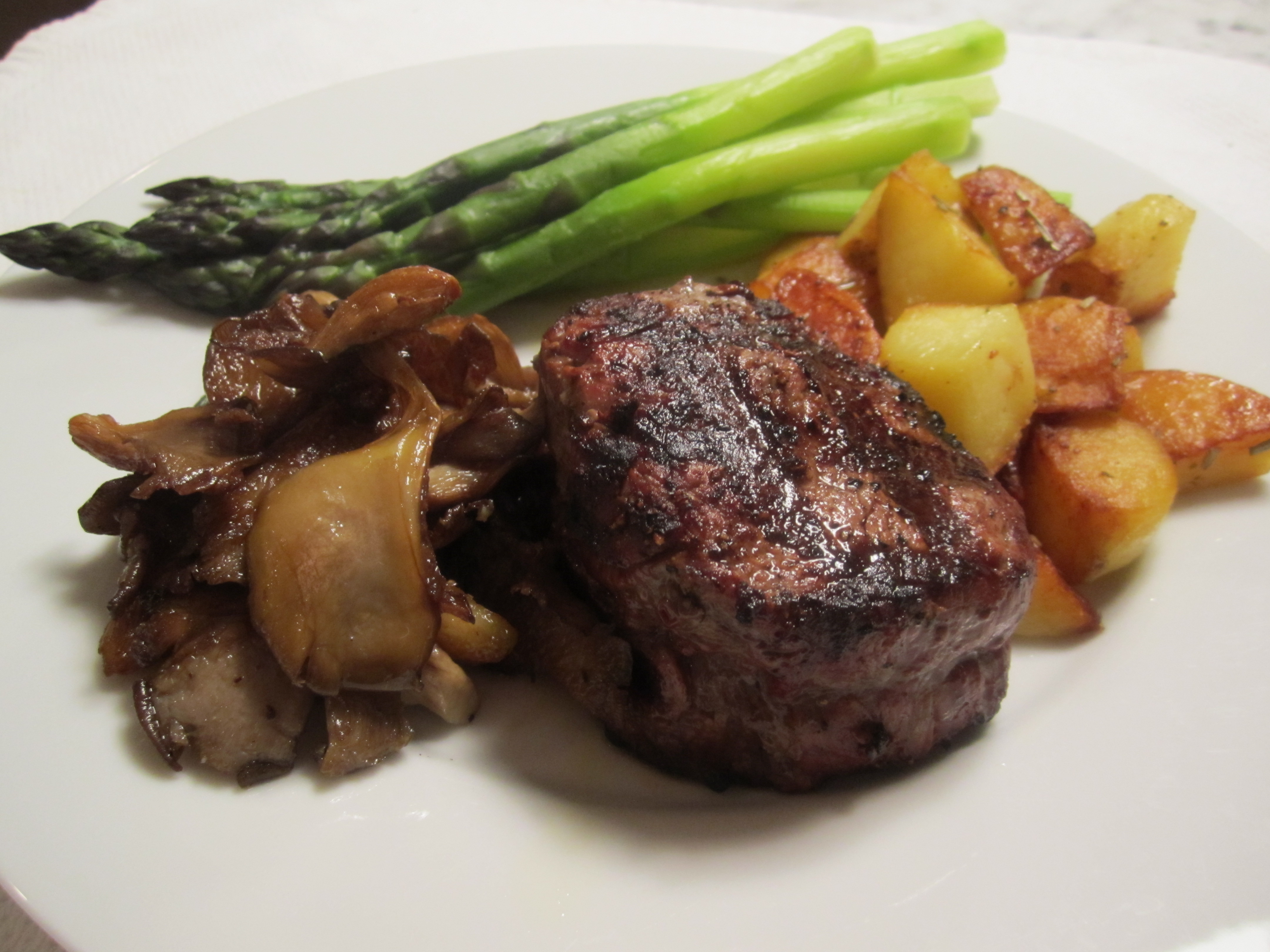
We’re having a simple grilled filet with the mushrooms, some skillet potatoes with rosemary and some LOCAL asparagus–spring has finally reached us!

Oyster Mushrooms with Mint

serves 2

2 lbs oyster mushrooms, cleaned and cut into pieces

4 cloves garlic split

6 tbls olive oil

12 mint leaves

salt and pepper to taste

Heat oil and brown garlic cloves slowly until they turn light golden.  Add mushrooms and saute on high heat for about 5 minutes.  Taste and add salt and pepper.  Toss in mint leaves and serve.

Like all mushrooms, these shrink and shed a great deal of water when you saute them.  Therefore, be sure to use a very large skillet and high heat so that the water evaporates quickly and they turn golden and crispy as quickly as possible–otherwise they’ll boil and turn to grey rubber!

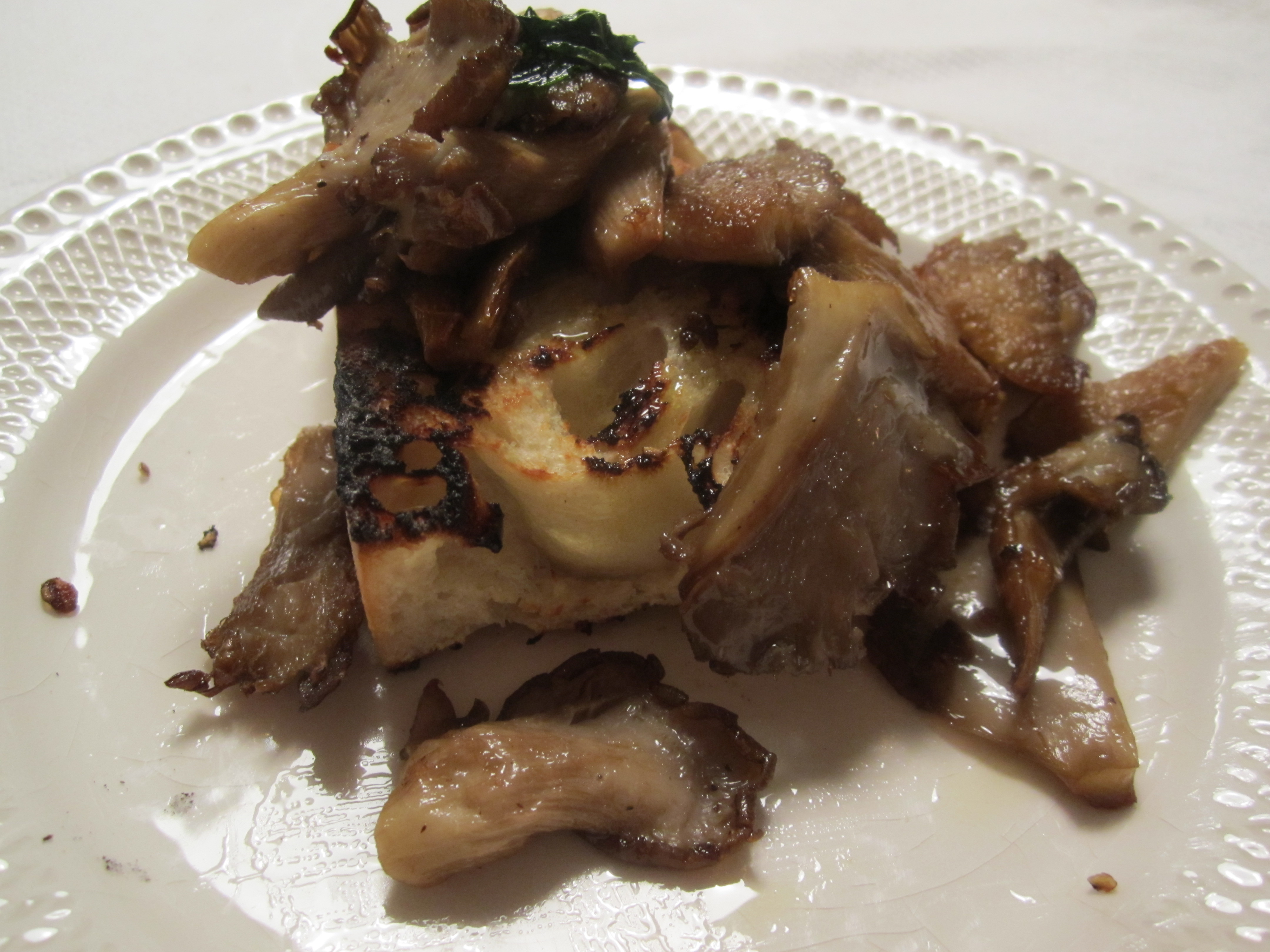
Great hot or at room temperature.  The mint flavor becomes more developed the following day.  Leftovers are AMAZING on a piece of  bruschetta drizzled with extra-virgin olive oil.
 

Posted in Vegetables | Leave a comment

Quinoa and Swiss Chard Cakes

Leftover grains of almost any kind are–to me–an occasion for fritters!  The green quinoa from the other evening’s dinner is the perfect nutty backdrop for some fritters made with swiss chard and parmiggiano cheese.

You need not have made the whole quinoa recipe from my prior post (although the arugula pesto adds greatly to the flavor of the fritters)–you can simply start with plain cooked quinoa.   Adding a bunch of boiled, squeezed swiss chard to the quinoa gives these fritters additional moisture, lightness, and green flavor.

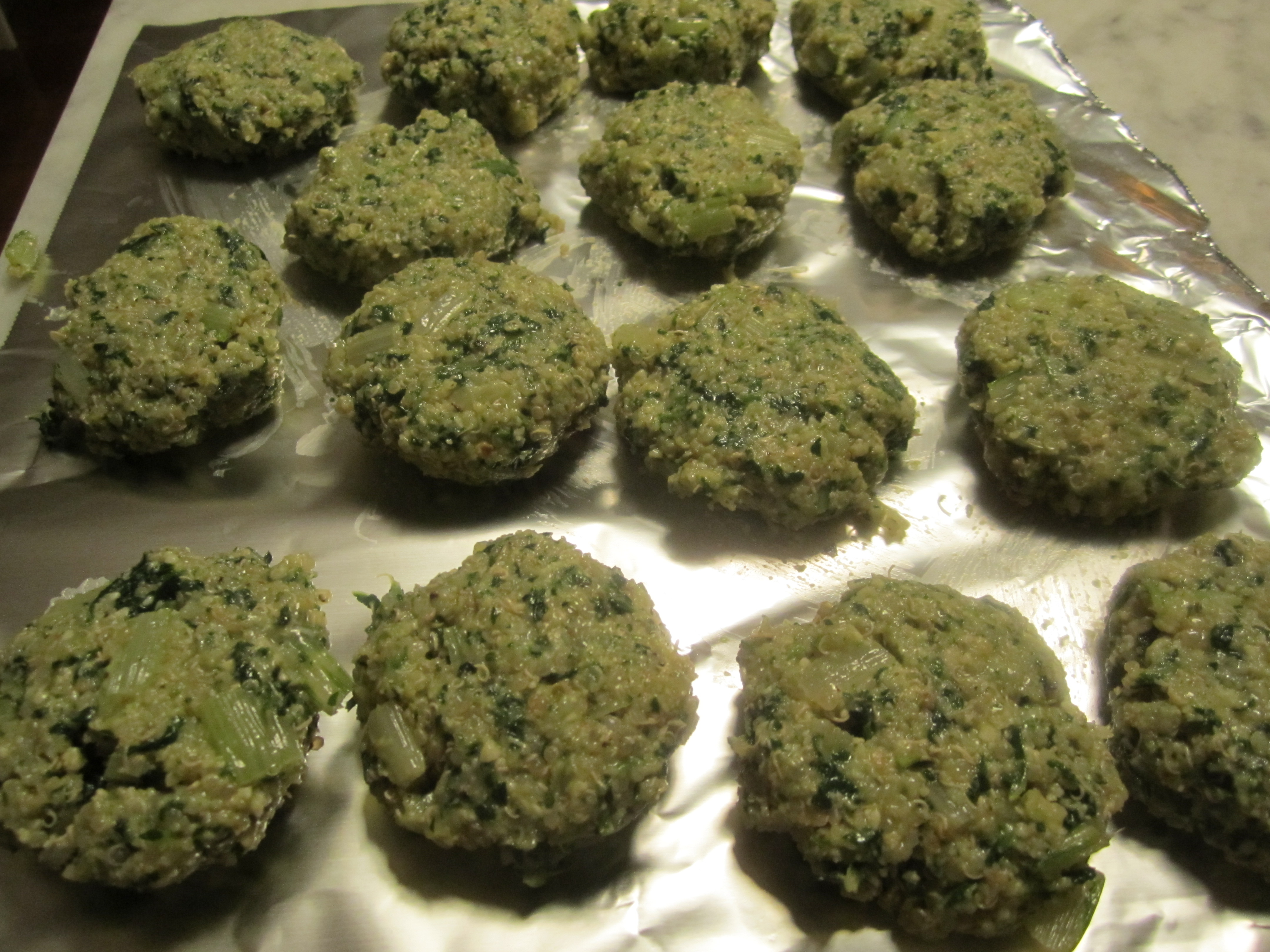
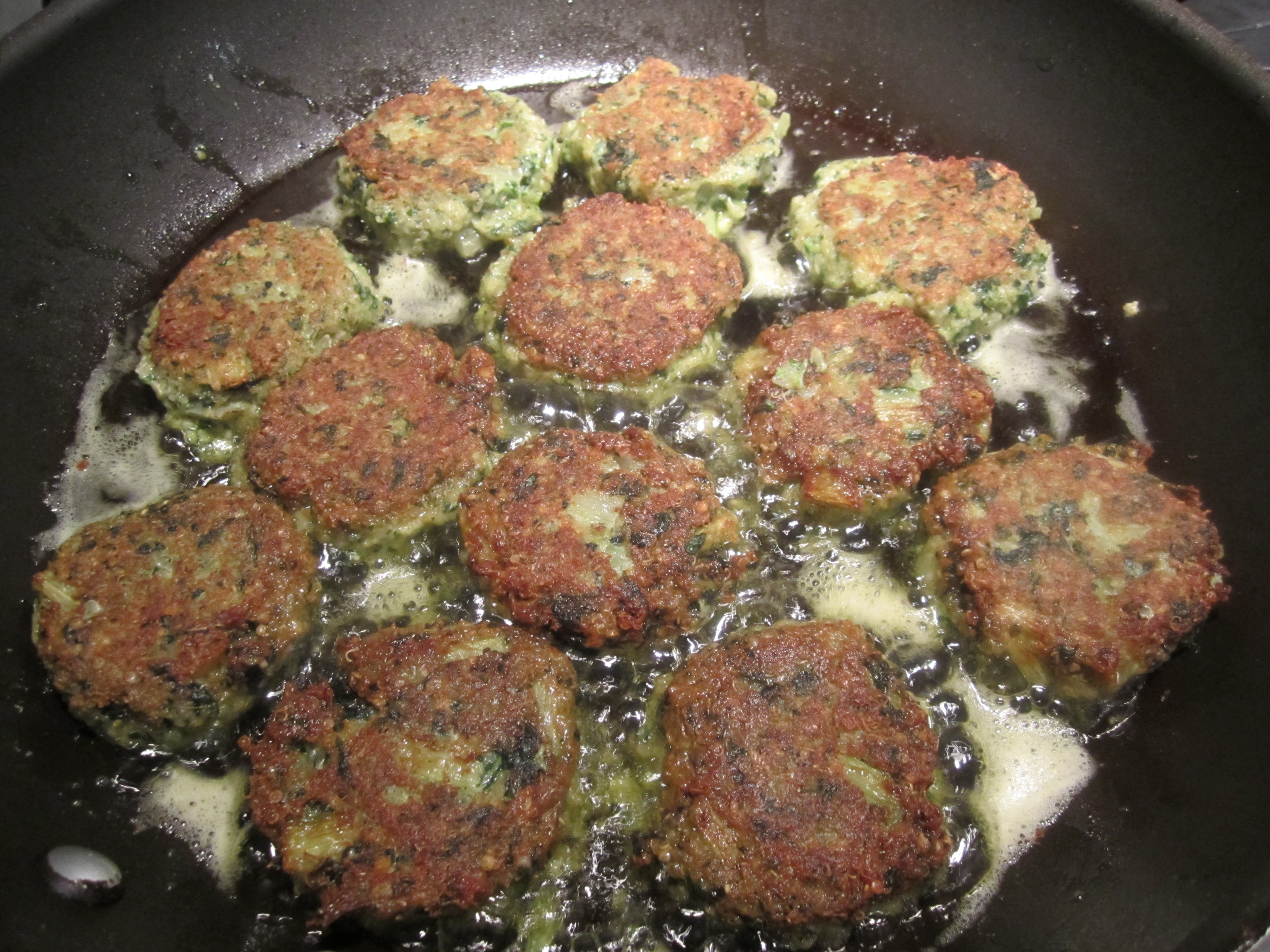
The method to making these fritters is very similar to that of meatballs, using the grain as a substitute for meat.  Combine the cooked grain, swiss chard (cooked, chopped, squeezed), then add bread crumbs (a mix of plain and seasoned) to dry out the mixture sufficiently.  Add cheese, parsley, black pepper, and salt.  Taste and add more salt if necessary.  Add the eggs and mix well with hands.   form into balls and flatten.  Fry in olive oil and eat at any temperature!   They also freeze well–just reheat in a 300 degree oven on a sheet of foil for 15 minutes.

Quinoa and Swiss Chard Cakes

makes about 20 cakes

2 1/2 cups (more or less) cooked quinoa 

1 1/2 lbs. swiss chard, washed and chopped crosswise into 1/2″ ribbons, including stems, then boiled in salted water for about 10 minutes or until stems are soft.  Shocked in cold water, drained and squeezed in small bundles

1/4 c plain bread crumbs (I accumulate stale bread pieces and let them dry out for a couple of weeks (or months), then process them into fine crumbs in the food processor)

1/2 c  seasoned bread crumbs (Progresso is fine but my local gourmet market, Citarella makes very fine seasoned crumbs)

1/2 c grated parmiggiano

1/4 c chopped fresh parsley

1/2 tsp black pepper

1/2 tsp (or more) salt

2 large eggs

approx. 1/2 c olive oil for frying

Mix all ingredients except egg, then taste for salt.  Add eggs, form into balls, then flatten each ball into a patty.   Lay out on foil until ready to fry.


 Gently place in pre-heated olive oil in broad nonstick skillet, then let fry for at least 3 or 4 minutes per side until golden brown.

 These are great hot, warm or cold.  I generally fry the whole batch, eat some hot, then refrigerate or freeze the rest in foil.  Although this evening, I served mine with the arugula, tomato and goat cheese salad in the opening photo, they’re brilliant by themselves as a cocktail snack.

Posted in Vegetables | Comments Off on Quinoa and Swiss Chard Cakes