Pasta with Artichokes


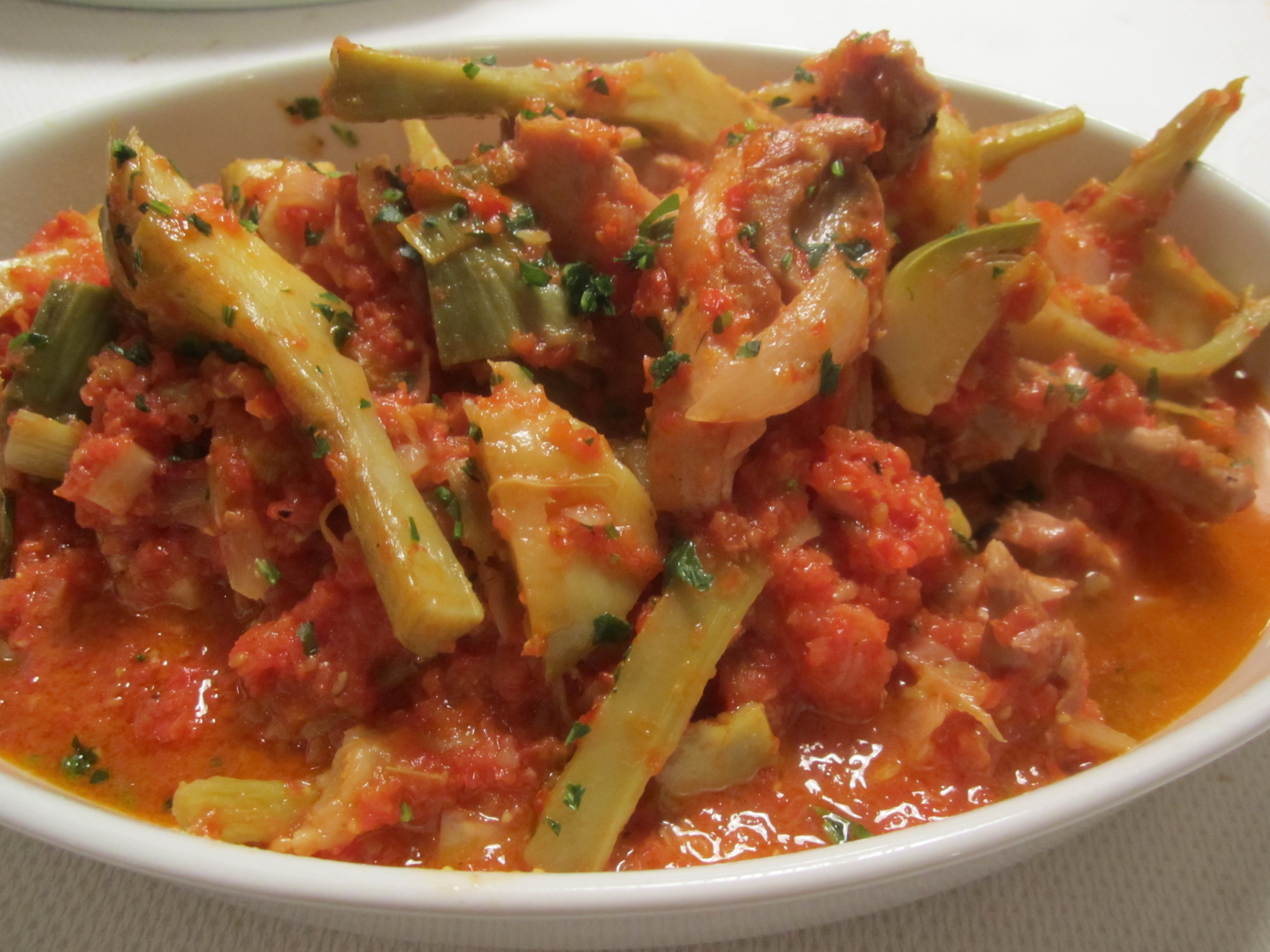
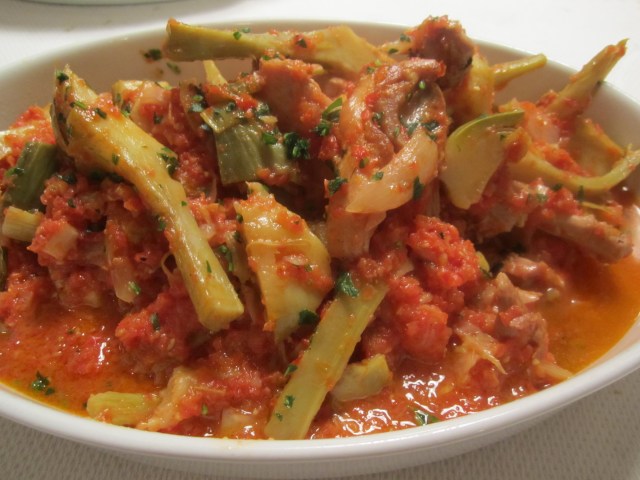
Since I have some leftover artichoke stew from the other evening (we ate all the chicken from it, but there’s a nice amount of artichokes and sauce left), I couldn’t resist tossing it with some bucattini and topping it with plenty of pecorino romano cheese. 

Simply boil the pasta in salted water and combine in a skillet with the leftover sauce, with some added extra-virgin olive oil and chili flakes.  Toss with some pasta cooking liquid and top with cheese.

Along with the pasta, I served the salad below.

Posted in Pasta, Salads | Comments Off on Pasta with Artichokes

Salad of Arugula and Apricots

This is a bright and sweet combination that was (once again) inspired by my weekend in California.  Arugula, dried apricots, tomatoes and green olives.  Topped with a blue/goat cheese, this is a wonderful sweet/tart combination of ingredients that is a thoroughly refreshing palette cleanser, dressed with lemon and extra-virgin olive oil.

serves 4

10 oz. package baby arugula

1/3 cup slivered dried apricots

1/2 pt grape tomatoes, cut in half lengthwise

2 tbls pitted green olives such as picholine

4 oz. crumbled goat cheese  or blue goat, if available

2 tbls olive oil

juice of half a lemon

1 tsp agave nectar or honey

salt and pepper to taste.

Combine ingredients in large mixing bowl and top with (in this order) lemon juice, agave (drizzle over the top) and olive oil.  Toss and add salt and pepper.

Posted in Salads | Leave a comment

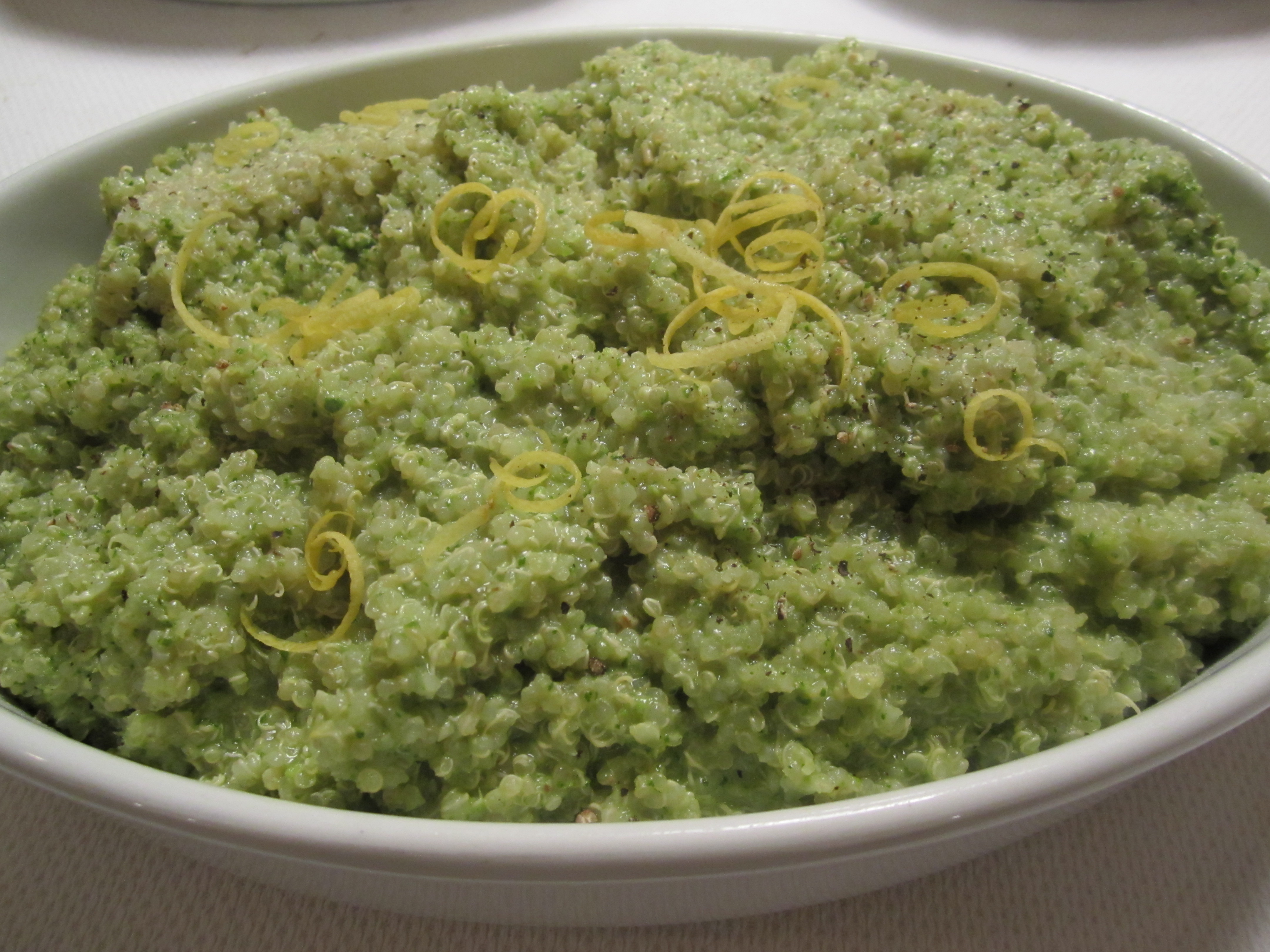
Quinoa with Arugula and Lemon Pesto

In case you were wondering why the quinoa on the plate in last night’s dinner was a lovely pale green –I thought I’d share the recipe with you. 

I love making and experimenting with pesto of all different varieties–it’s a great way to concentrate a lot of flavor into a little package.  Then you can decide in which medium to disseminate it–pasta, rice, bulgar, quinoa, couscous, etc. 

Arugula or baby spinach are particularly well-suited to pesto because they pack a punch of bright green flavor and they don’t blacken as quickly as basil.  For this dish, I’m using arugula because of the added lemony bite.  In addition, I’m adding walnuts and grated lemon zest.  Grated parmiggiano is optional, but I’m adding it, since I love lemon and parmiggiano together. 

The quinoa (or whatever grain you’re using) is simply boiled in salted water,  then drained and tossed with as much or as little pesto as you desire.

Quinoa with Arugula and Lemon Pesto

 serves 4

10-oz box of baby arugula

1/4 c walnuts

1/4 c grated parmiggiano

1/2 c extra-virgin olive oil

grated zest of half a lemon

salt to taste

2 c quinoa

Begin pesto by placing arugula and walnuts in food processor.  Pulse several times (a few seconds per pulse) until nuts and arugula are coarsely ground.  Add oil gradually and process until a light green puree forms.  Add cheese and zest and pulse 2 or 3 times.  Taste for salt (it may not need any).

Boil quinoa in plenty of salted water.  Drain and reserve some cooking liquid. In a mixing bowl, toss drained quinoa with pesto, adding pesto gradually until it’s green enough to your liking (I used the entire batch of pesto in my 2 cups of quinoa).  Add some reserved cooking liquid if the mixture is too stiff.

Posted in Pasta, Risotti | Comments Off on Quinoa with Arugula and Lemon Pesto

Pollo e Carciofi

My friend in California couldn’t have planned a better weekend for us culinarily . . . one great restaurant after another–each offering a bounty of local and artisanal ingredients which Californians (like Italians) accept as their birthright. 

Without a doubt, the high point of my food trip was a visit to the San Francisco farmers’ market–breathtaking!!  I was absolutely astounded at the breadth and quality of local produce and ingredients.  The fruit, vegetables, poultry, meat and other products were inspiring and the whole experience was truly life-affirming.   Spring produce was at its peak there (unlike in New York, where we’re still a few weeks away from local produce).  

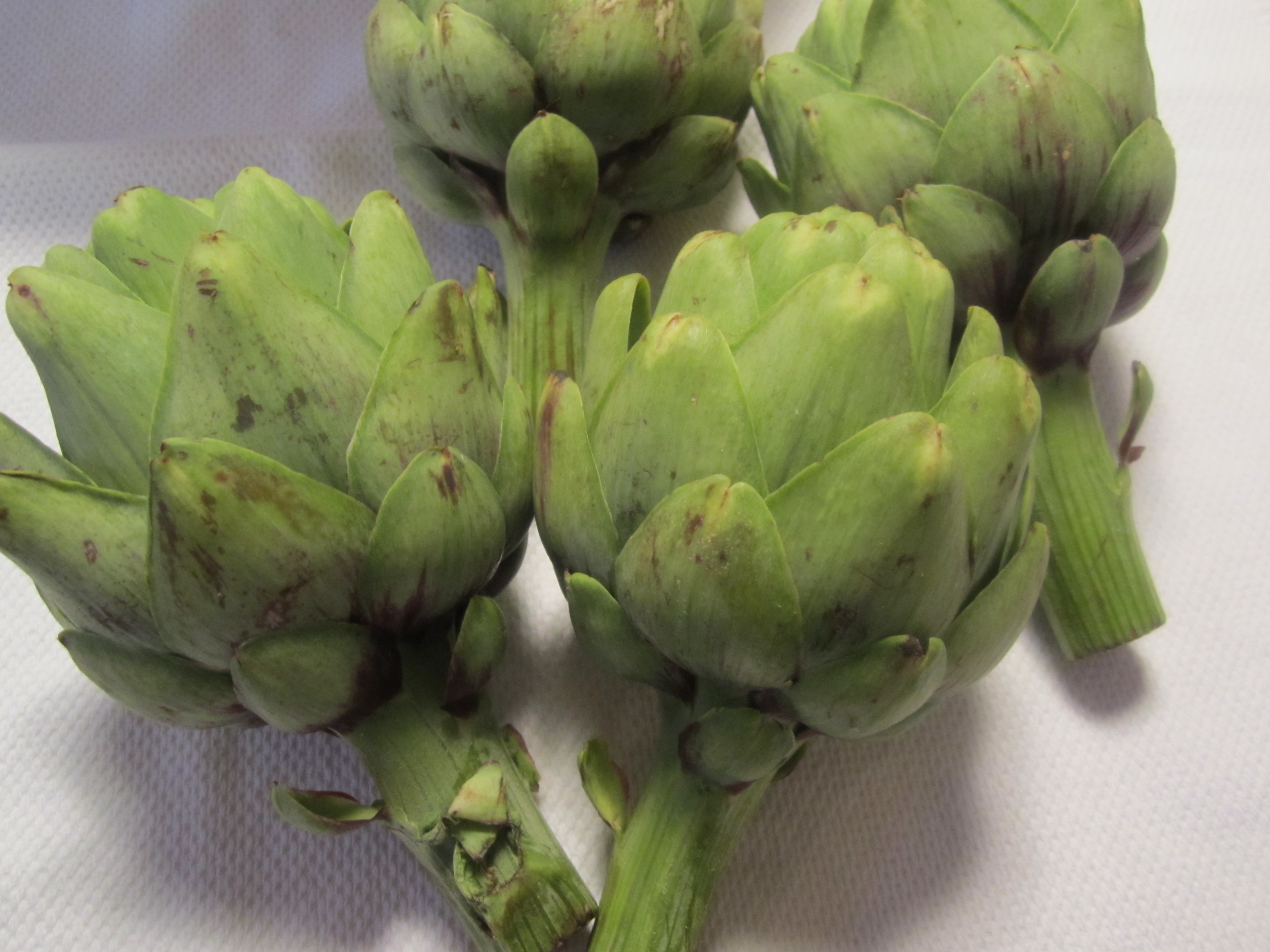
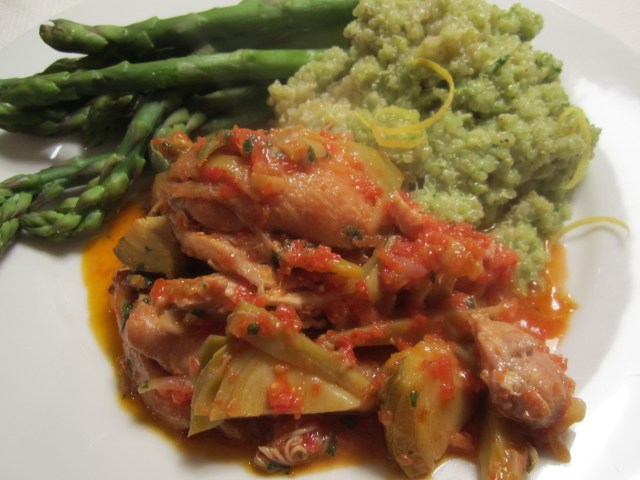
Today, in my Southampton market, the (California) artichokes looked great, so I decided to make a stew with white wine and fresh tomato–both flavors which accentuate the wonderful acidity of the artichoke.  To anchor this spring stew, instead of the traditional lamb, I decided to use chicken thighs.  Chicken and artichokes are a great combination–and chicken is lighter and quicker to cook than lamb stew.  

The stew begins with cleaning and trimming the artichokes. 


“Trimming” is a vast understatement when it comes to artichokes.  Artichokes must be trimmed mercilessly(Marcella Hazan’s terminology), and in fact, are about eighty percent waste.  What remains is a delicate, tart, lemony bottom with some stem attached (if you’re lucky enough to find stems still attached to your artichokes).  It’s a flavor that really cannot be duplicated by any other vegetable.

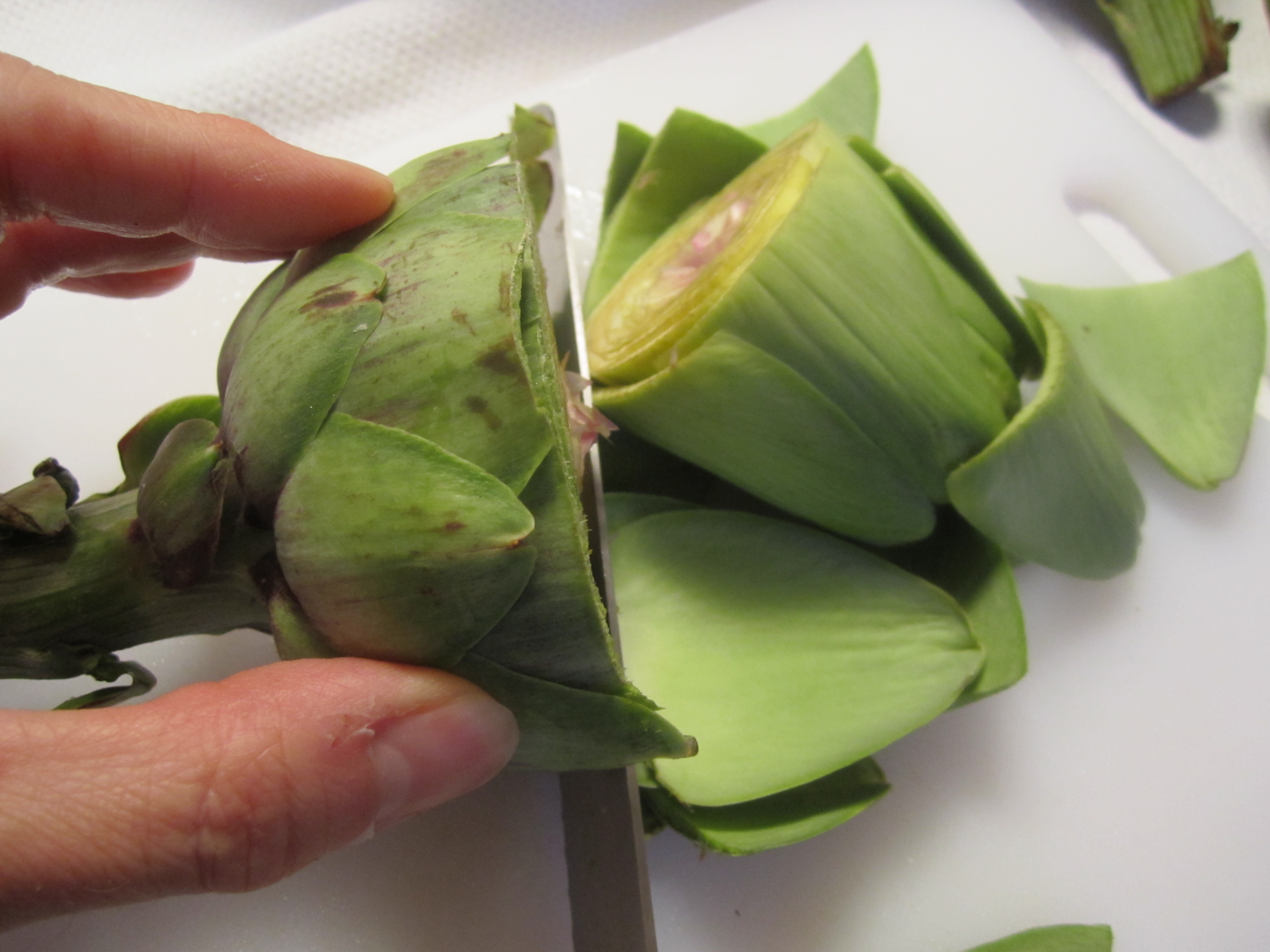
As far as I’m concerned, a well-stocked kitchen only really requires three good knives–a paring knige, a serrated bread knife, and a large chef’s knife (8″).  For cleaning artichokes, you will need all three of these knives.

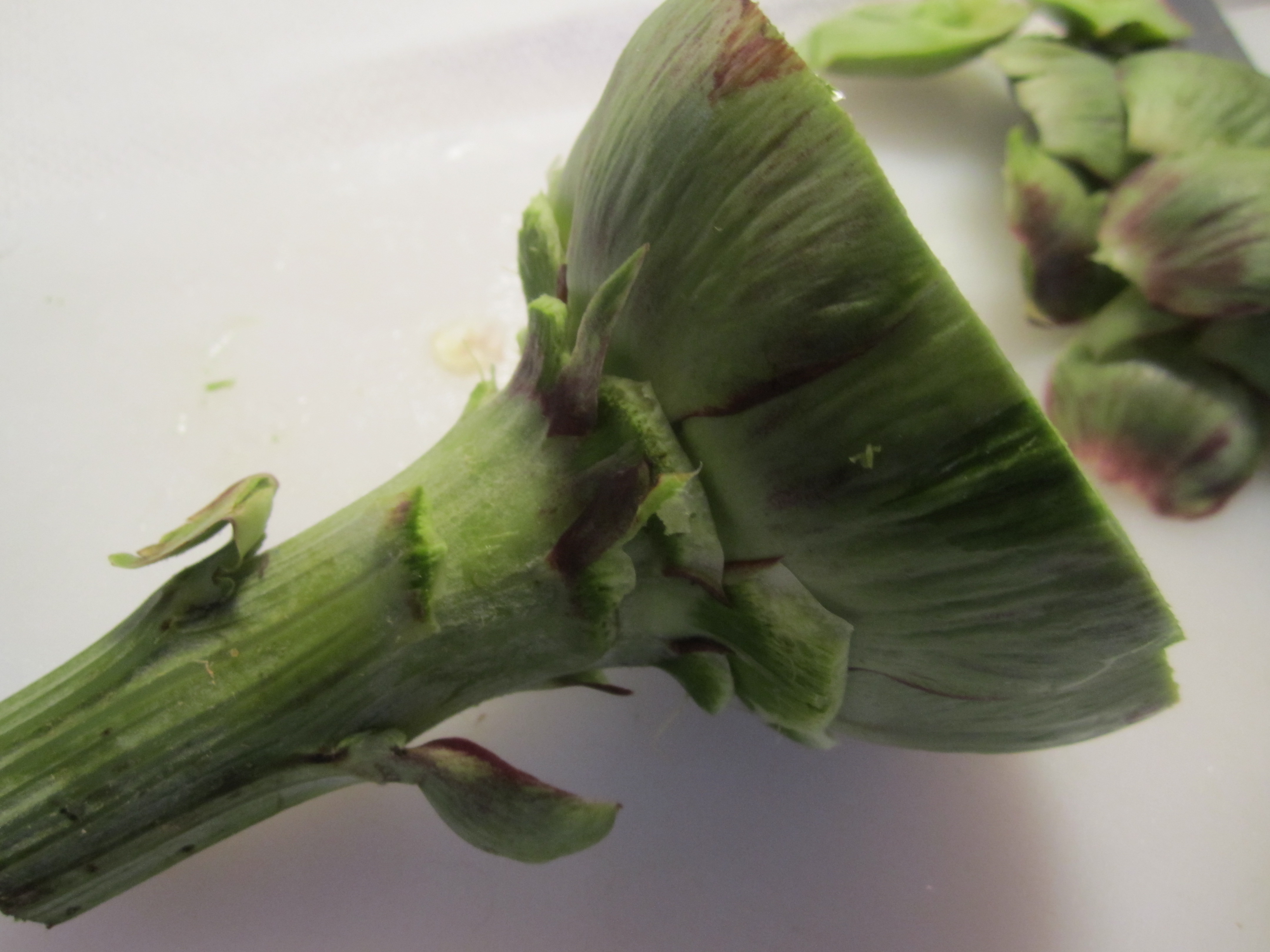
Begin with the serrated knife, by slicing 2/3 off the top  and discard the tops.
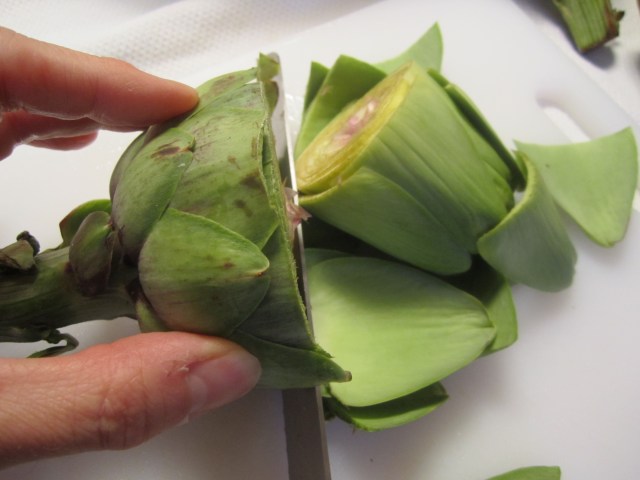
Next, with the paring knife, begin peeling the stem from the bottom up toward the bulb.  When you come to the bulbous part, peel off some of those bottom leaves as well. 

Peel until the surface looks more white than green.  Don’t be fooled into thinking you’re mistakenly trimming away the prettiest brightest green parts–they’re fibrous and inedible.

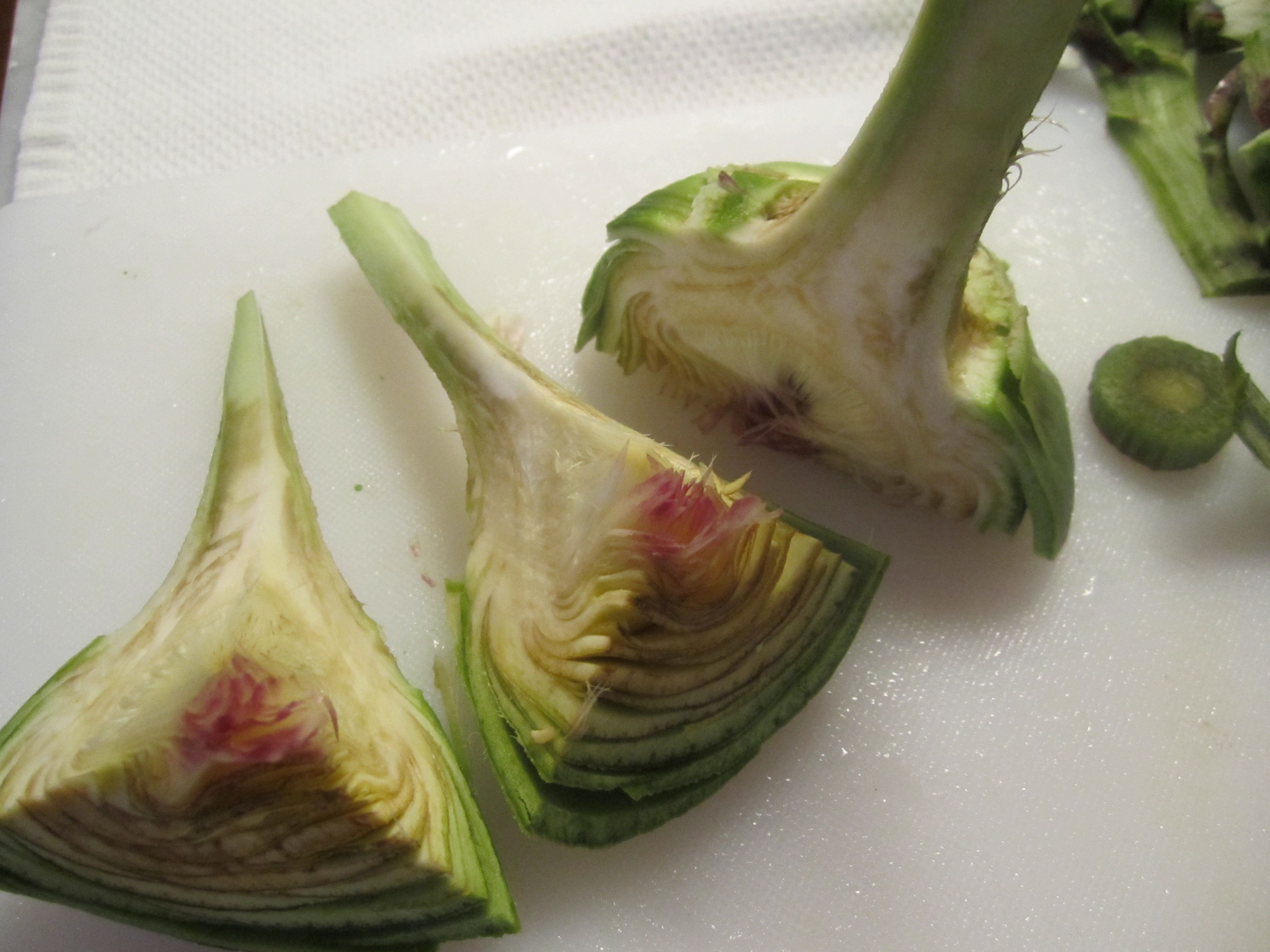
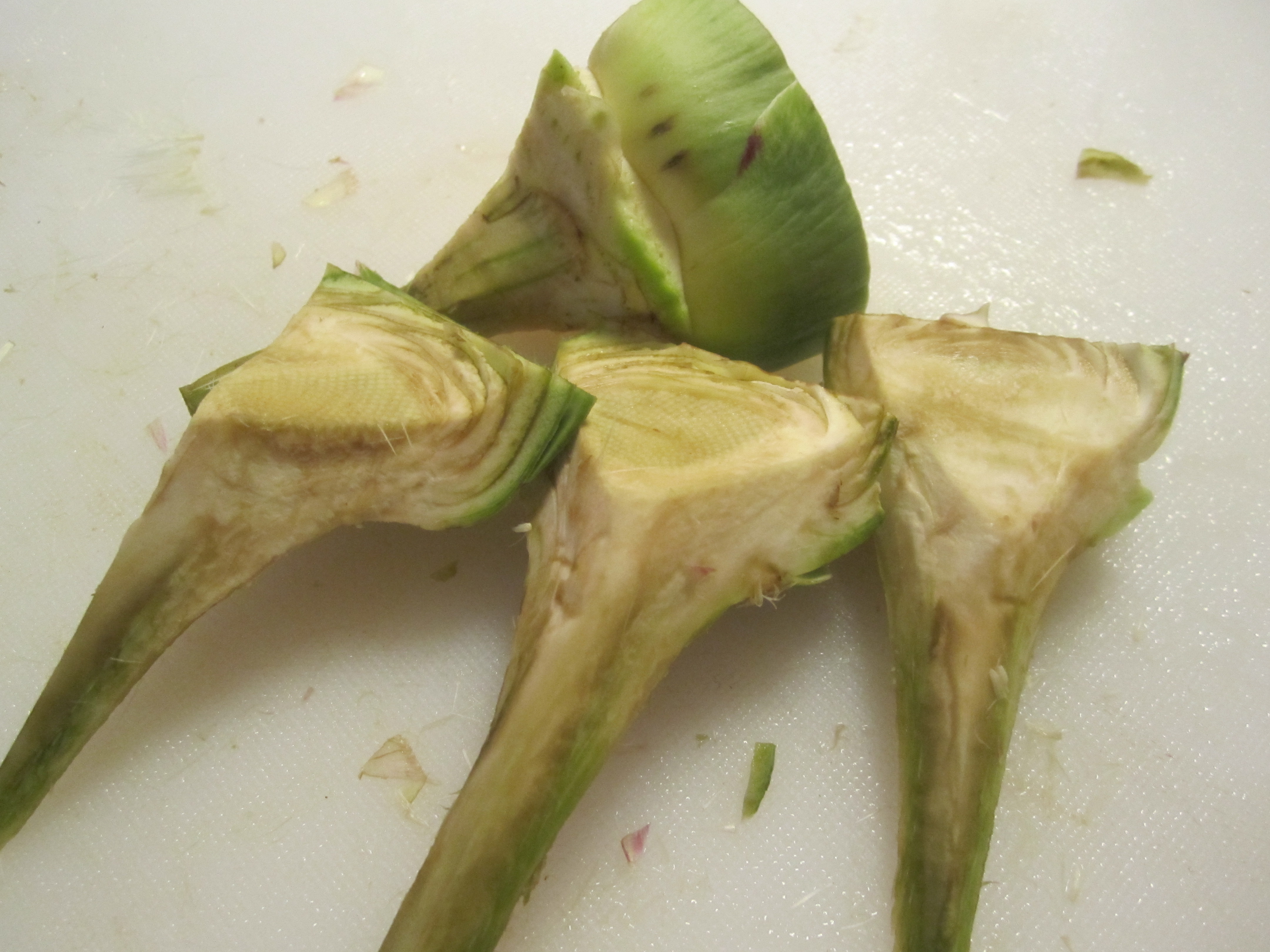
Then with the chef’s knife, cut what remains of the artichoke into quarters, keeping a little stem intact on each quarter.

With the paring knife, cut out the fuzzy choke from each quarter.
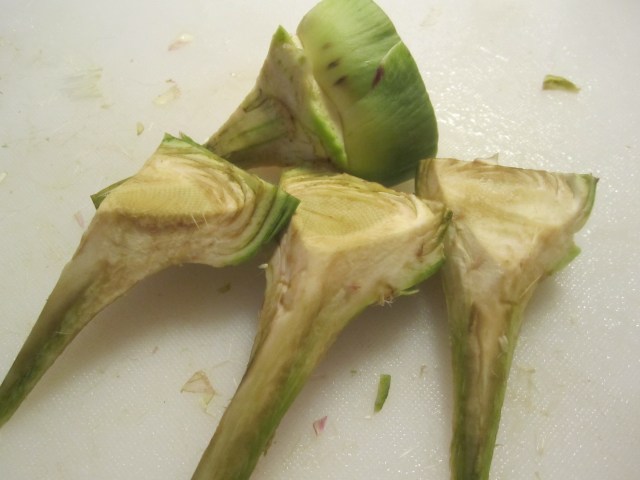
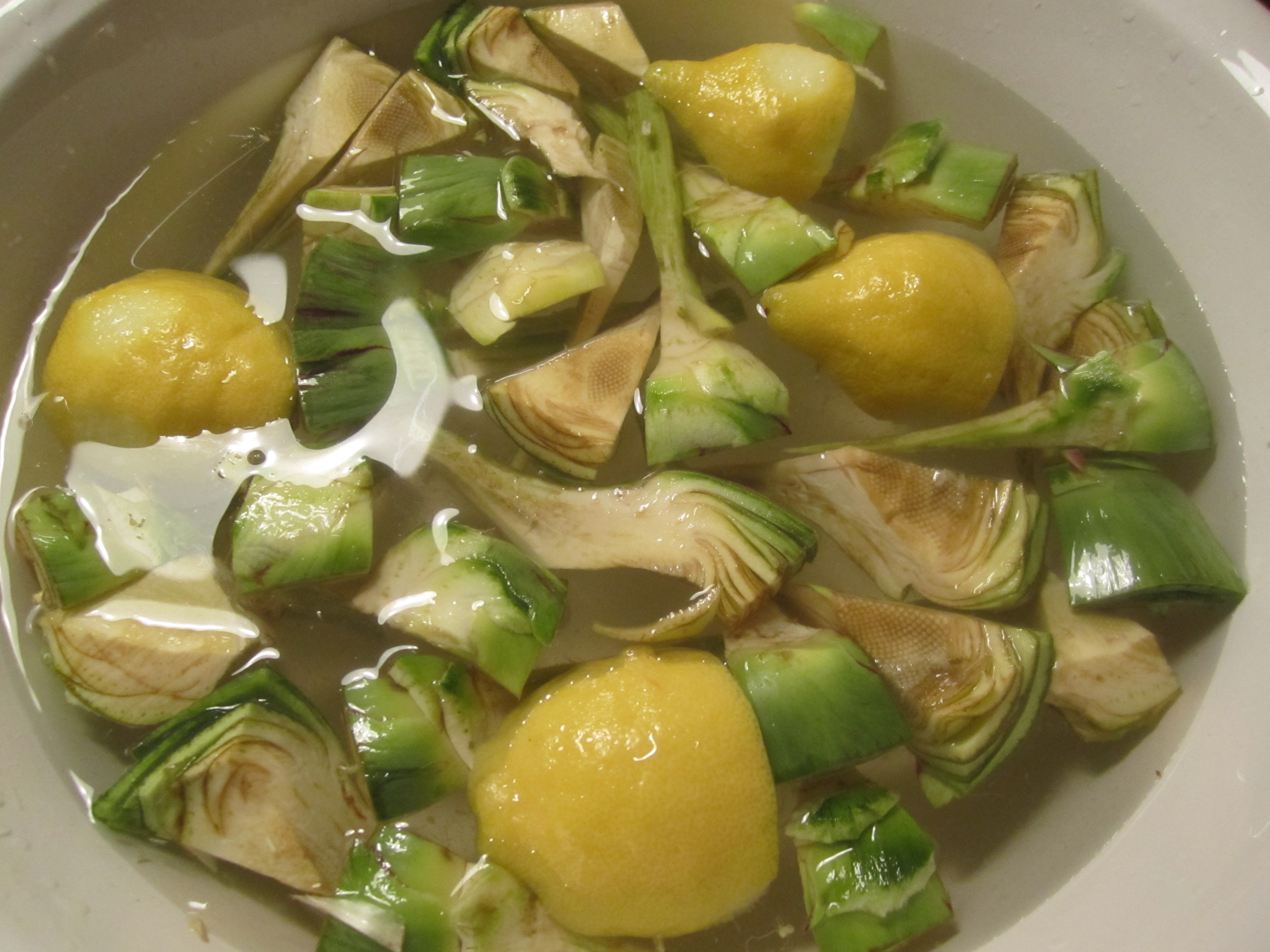
Place each piece of newly cut artichoke directly into a bowl of water containing the squeezed juice of a lemon. 
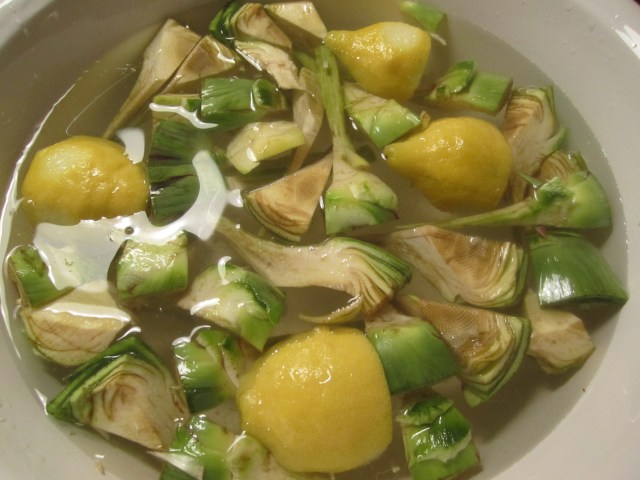
The pieces will blacken as soon as air hits them, so the lemon water keeps them green.  In fact, if there is any portion of the trimmed artichoke sticking out of water, it will blacken instantly. 

Now that your artichokes are cleaned–proceed with the recipe below.

Chicken and Artichoke Stew

serves 3

6 boneless skinless chicken thighs

4 large artichokes, prepared as described above

1 leek, white to light-green part only, washed and sliced into 1/2″ half-moons

1 small onion diced into large pieces

2 pints grape tomatoes, pureed in the food processor (or 1 28-oz. can of whole peeled tomatoes, lightly squeezed with hands or pureed in blender)

1 cup white wine

1 cup chicken broth

6 tbls olive oil

parsley for sprinkling

salt and pepper to taste.

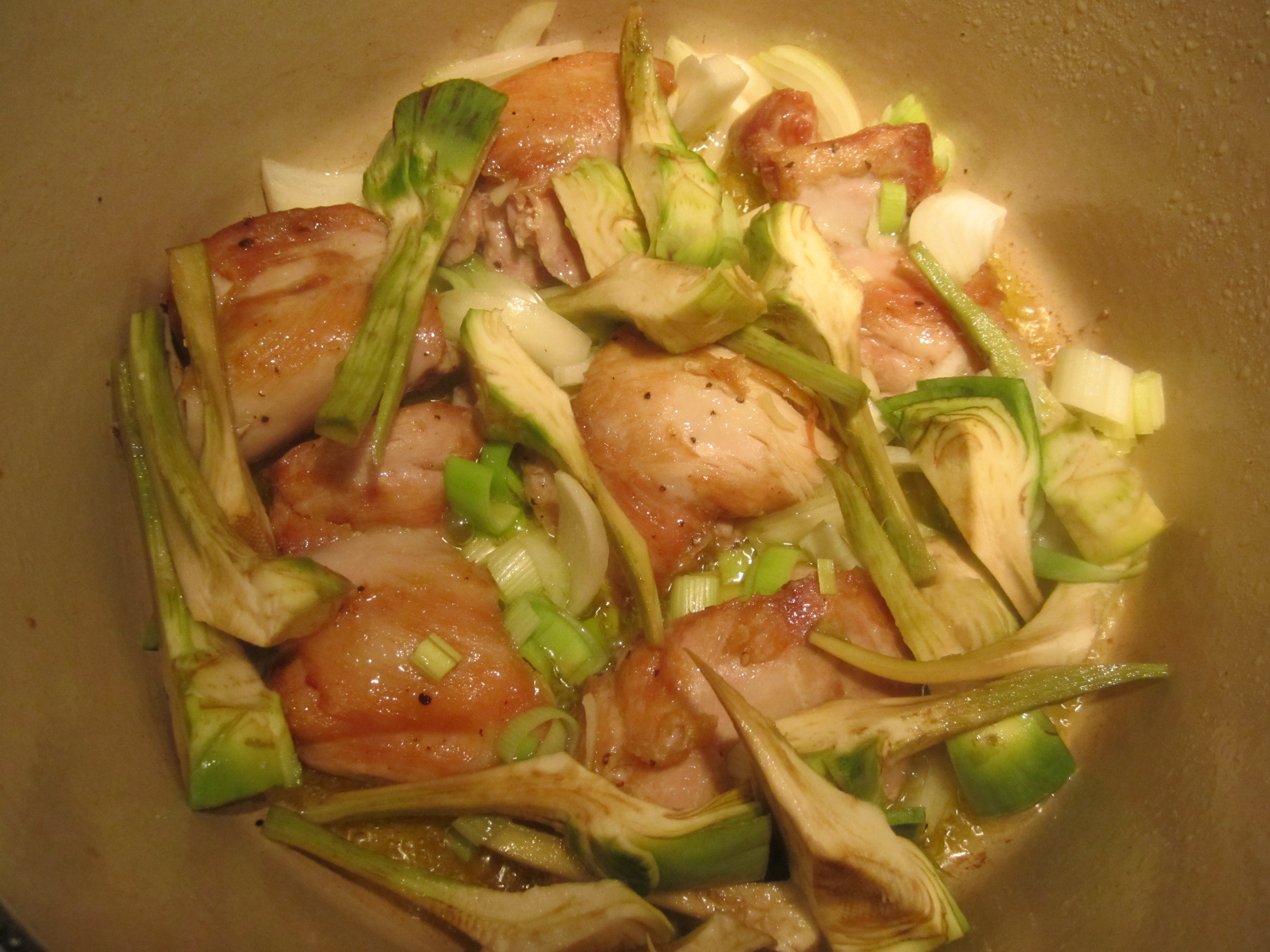
In a heavy dutch oven, brown the chicken thighs in oil for about 5 minutes on one side.  Turn and add the leek and onion and saute on high for about 3 minutes. 

Add artichokes (no need to dry them–just pull them out of the lemon water and drop them into the dutch oven).  Add wine and boil for about 2 minutes (no need to reduce wine too much).  Add tomatoes.

Partially cover and continue cooking on low heat for 45 minutes.   Uncover and reduce to thicken sauce for about 15 minutes. 
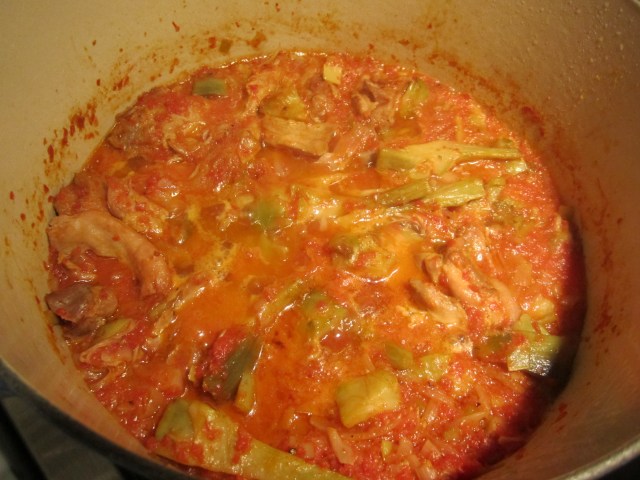
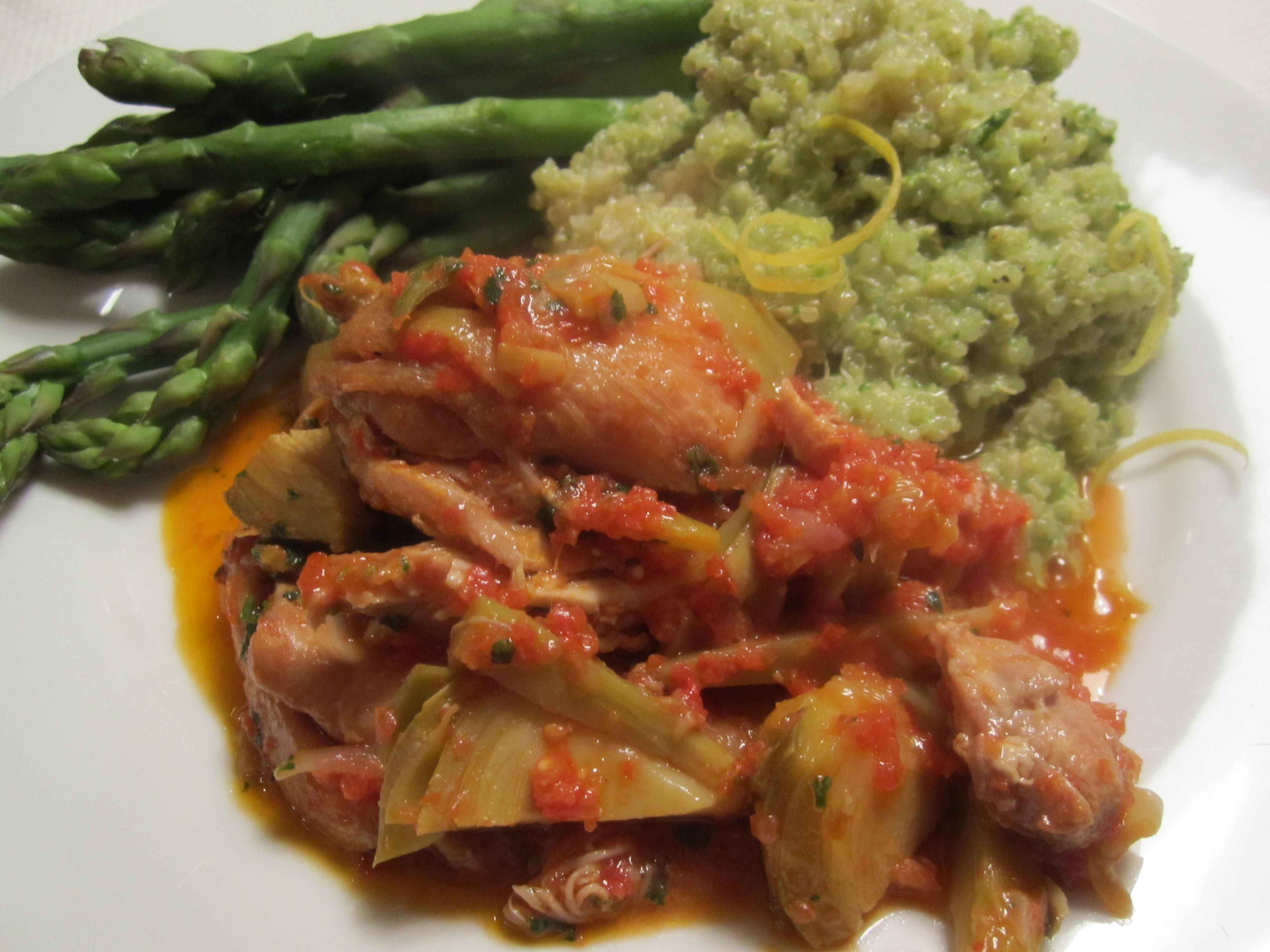
Tonight, I’m serving quinoa and asparagus with my stew.  You could serve rice or couscous, or simply a piece of oiled toasted country bread to soak up all of that wonderful sauce.
 

Posted in Soup/Stew, Vegetables | Comments Off on Pollo e Carciofi

Off to California

I’m off to California for the weekend.  Posts will resume early next week.  Tune in then and Happy Easter!

Posted in Uncategorized | Leave a comment

Mustard Greens with Bacon

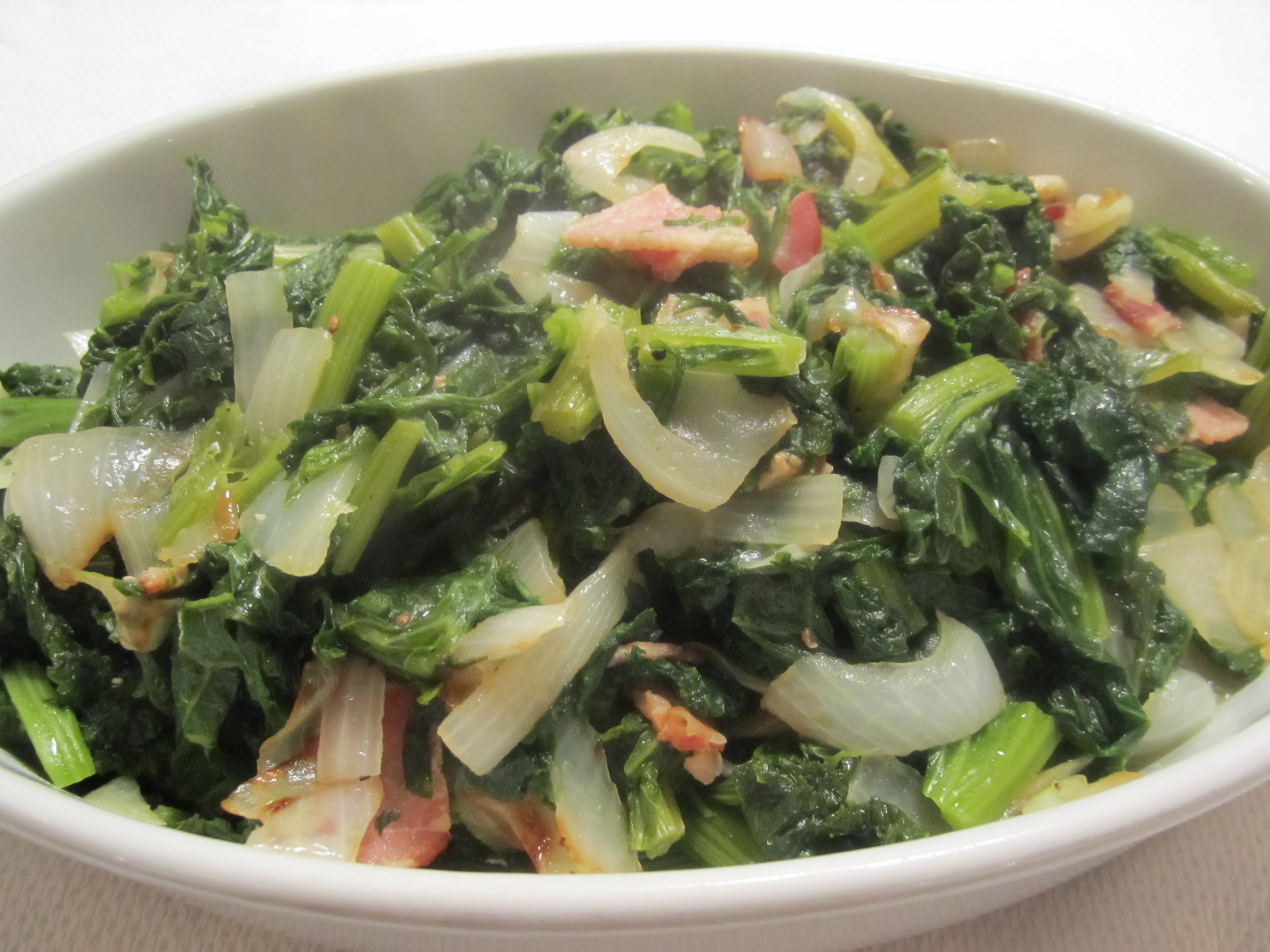
This is very similar to my collard green recipe of a month ago, but the mustard greens tend to have more delicate stems than collards, so tonight I’m keeping the stems. 

Like swiss chard, I begin by cutting off the bottom inch of the stems, then slicing the remaining leaves and stems crosswise into inch-long sections and soaking in a deep mixing bowl of cold water, to allow any sand or soil to fall to the bottom. 

Note: If the stems on your mustard greens are too sturdy, you may have to apply the extra step of stripping the leaves off the stems and discarding the stems. (The stems on my greens tonight  probably should have been stripped, but by the time I realized it, they were already in the boiling water–oh well–more fiber for me.)

Drain the chopped leaves and toss into plenty of well-salted boiling water and boil until the stems are tender (about 10 minutes).  Drain in a strainer until ready to saute.  May be made several hours ahead and allowed to sit in a strainer.

Mustard Greens with Bacon

serves 4

approx. 4 lbs of mustard greens (3 bunches), bottom inch removed, then remainder chopped into 1″ sections crosswise, boiled for about 8 ot 9 minutes, then drained and squeezed.

1/4 lb bacon, cut into 1/2″ pieces

1/2 large onion, coarsely chopped

4 tbls olive oil

salt and pepper to taste

In a broad nonstick skillet, on low heat, saute the bacon in the oil until bacon begins rendering its fat–about 3 – 4 minutes.  Add the onion and continue sauteing on low for about 8 or 9 minutes, or until onion begins to turn golden.

Turn heat to high, then add drained greens and saute for about 5 minutes, or until heated through.  Taste and add salt and pepper.

Posted in Vegetables | Leave a comment

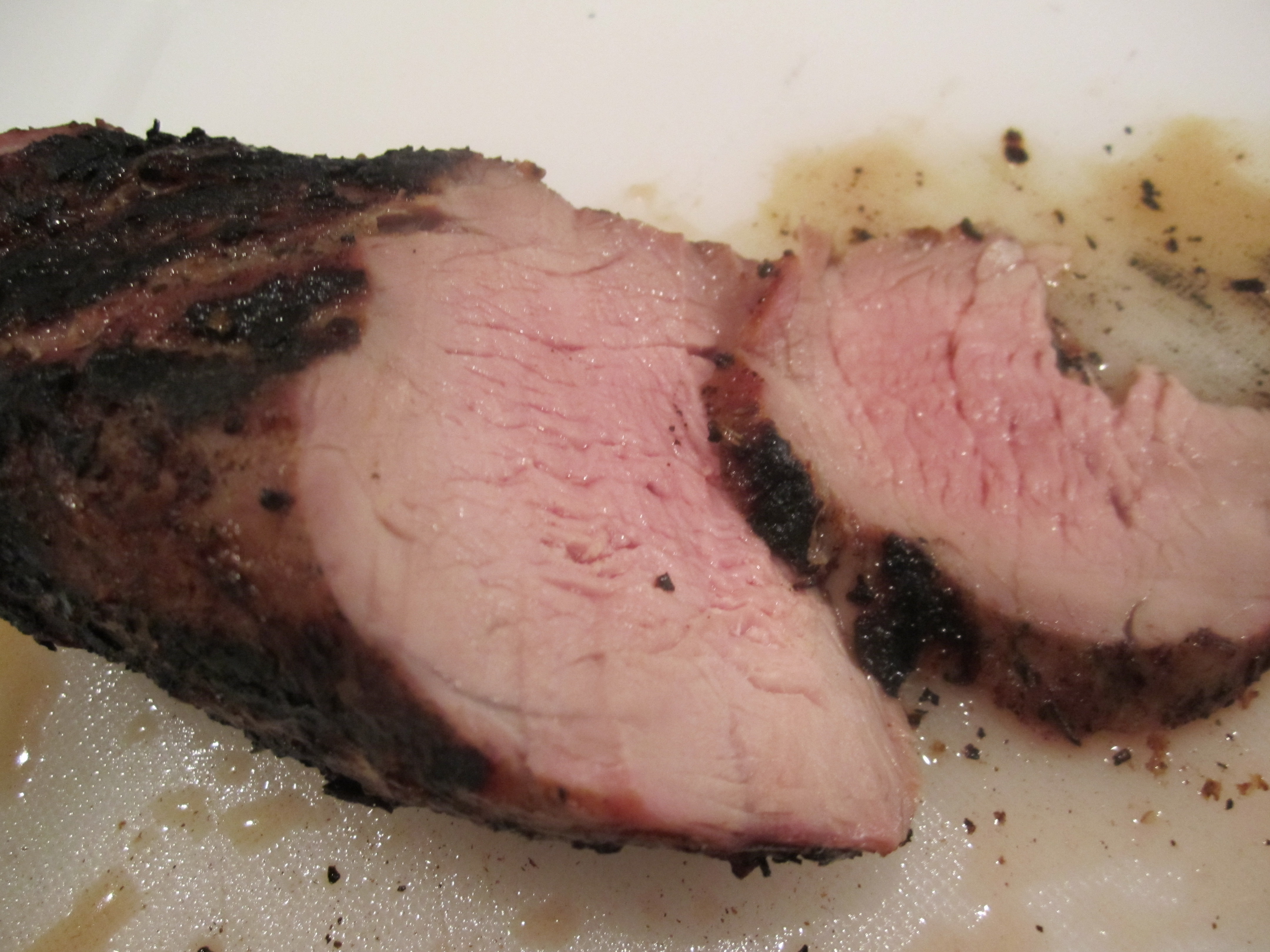
Dry Rubbed Pork Tenderloin


I learned this method of preparing pork tenderloin from Mario and have been using it ever since.   It has a couple of nice features . . . like any brining, it infuses the meat with moisture and seasons it from the inside out.  It also makes the meat more forgiving if you happen to overcook it. 

In the case of pork tenderloin, it only requires about 6 hours of forethought, so you can buy the meat in the early afternoon and have it sufficiently cured by dinnertime.  You can use this method with a pork loin as well, but a pork loin is much fatter than a tenderloin and may require longer to become infused with the seasoning.  You can rub individual pork chops as well, but be careful not to over-brine them (just a few hours). 

The rub always begins with sugar and salt.  For a single pork tenderloin, I put a teaspoon of salt plus a half-teaspoon of sugar plus a teaspoon of coarsely ground black pepper plus a half-teaspoon of dried rosemary into a shallow baking dish (we used to use fennel seeds at Po but I’m out of fennel tonight).  Mix the seasonings by tossing around and stirring with your hands. 

Spread the mixture out on the bottom of the dish and roll the meat in the mixture to coat all around.  Cover and refrigerate for about 6 hours (not more than 8).

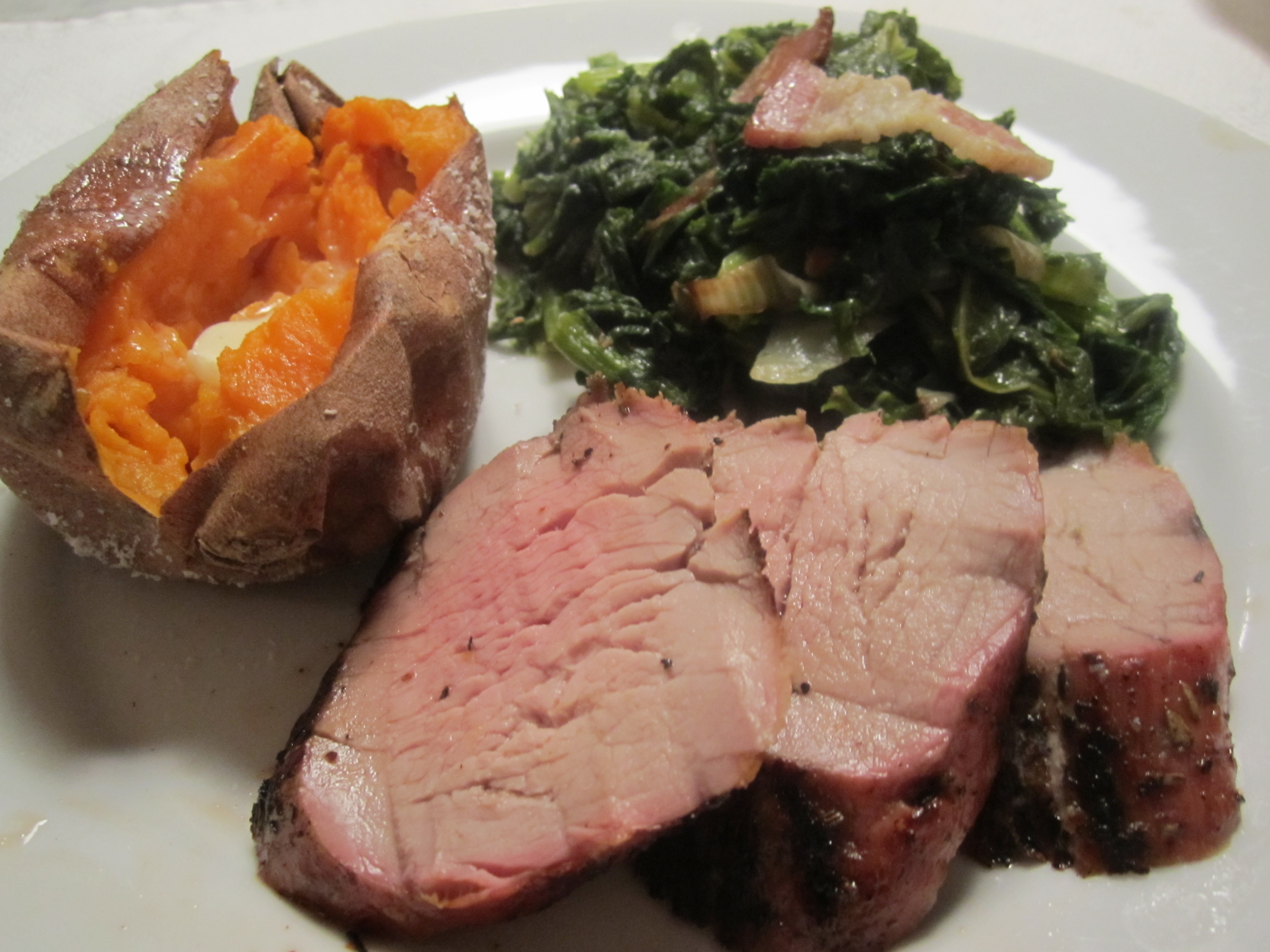
When it’s time to grill, remove the meat from the fridge for a half-hour while you preheat the grill.  Wipe the meat with paper towels to remove the residual salt and sugar (although the sugar and salt have melted, if you leave too much residual sugar on the meat it will burn too quickly).  Smear a bit of oil on the meat and place on pre-heated grill (in my case, my stovetop charbroiler) for about 4 – 5 minutes per side (16 – 20 minutes total).  Internal temperature of the fattest part should be between 135 and 140 degrees for medium rare. 

These cooking times are for a tenderloin that is approximatly 1 lb. but times vary within those parameters depending on the thickness of the tenderloin.  Let the meat rest for approximately 8 minutes before carving. 

As an accompaniment to the tenderloin, I’m making mustard greens with bacon and baked sweet potatoes.

Posted in Meat | Leave a comment

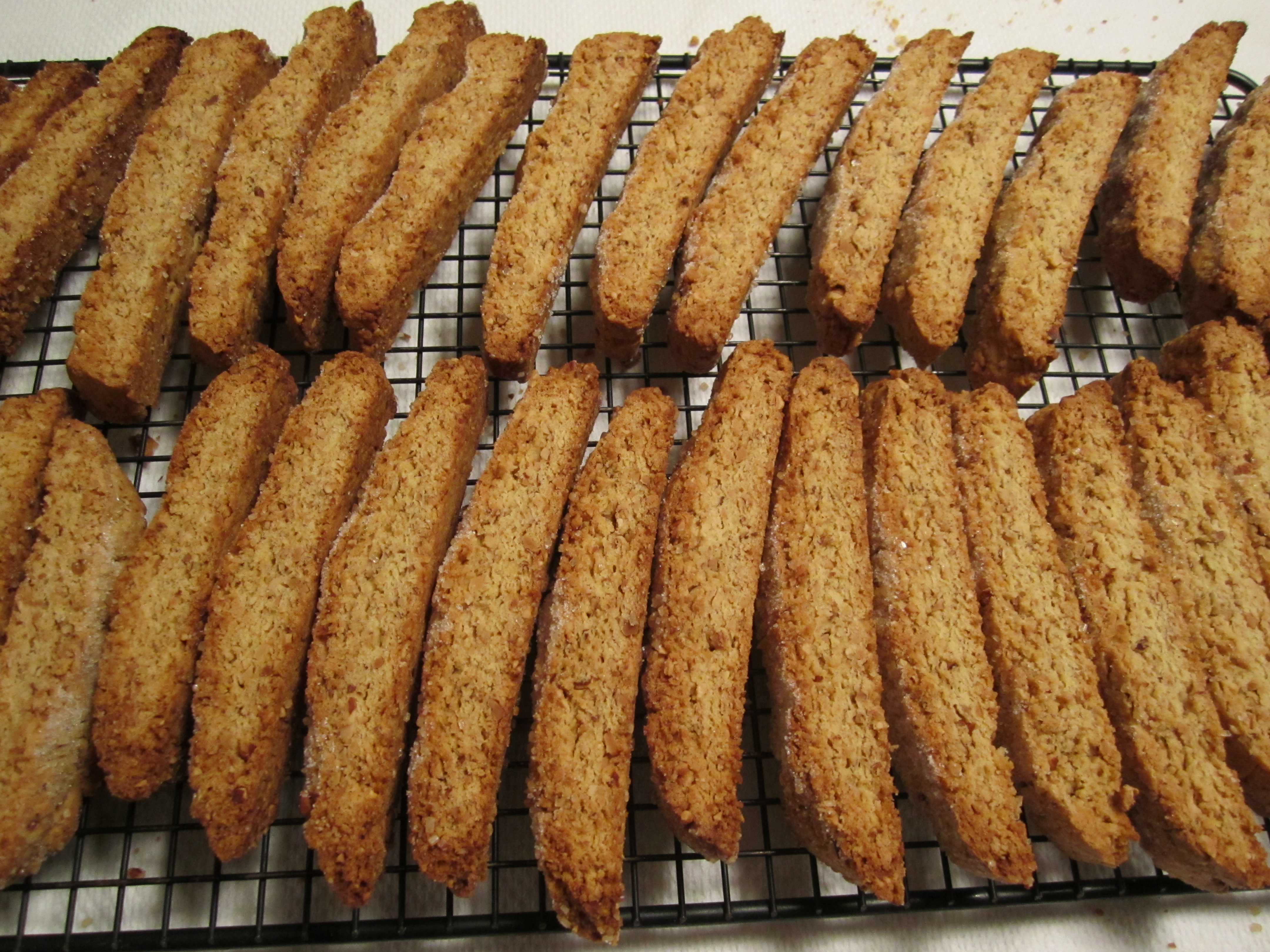
Biscotti

Let me make one thing perfectly clear–I am NOT a baker!   HOWEVER,  there is one cookie recipe that I’m confident enough to share with you that’s very simple and worthwhile.

Although “biscotti” means any type of cookie in Italian, I’m referring to the “biscotti” that we have all come to know and love in this country–the twice baked loaf-type cookies that were absolutely made to accompany a good shot of espresso.

This is a cookie that I make regularly because it keeps indefinitely in a cookie jar, truly without sacrificing a bit of taste or texture.  I have one every evening after dinner with a decaf espresso, and I am never without them in the house.

Biscotti

yields about 2 -1/2 dozen cookies

3 1/4 c unbleached flour

2 c salted almonds, ground finely in food processor (not quite to a paste)

1 c + 2 tbls sugar (I use “Sugar in the Raw” for this, but white sugar will do)

1/2 c olive oil

3 eggs

1 tbl baking powder

zest of half a lemon, grated finely

Preheat oven to 375 degrees.

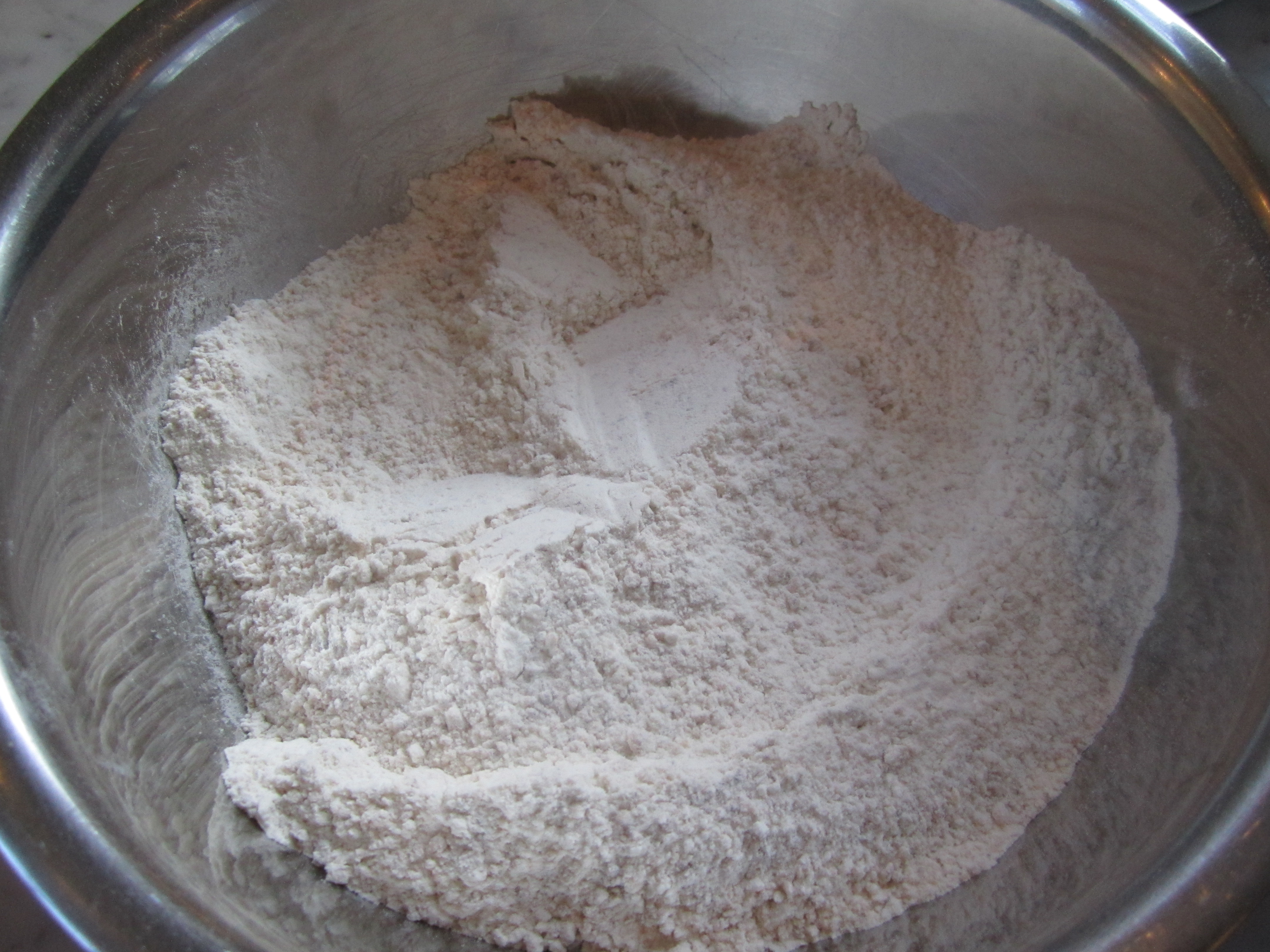
In a medium mixing bowl, combine flour, baking powder and ground almonds.  Mix thoroughly. 

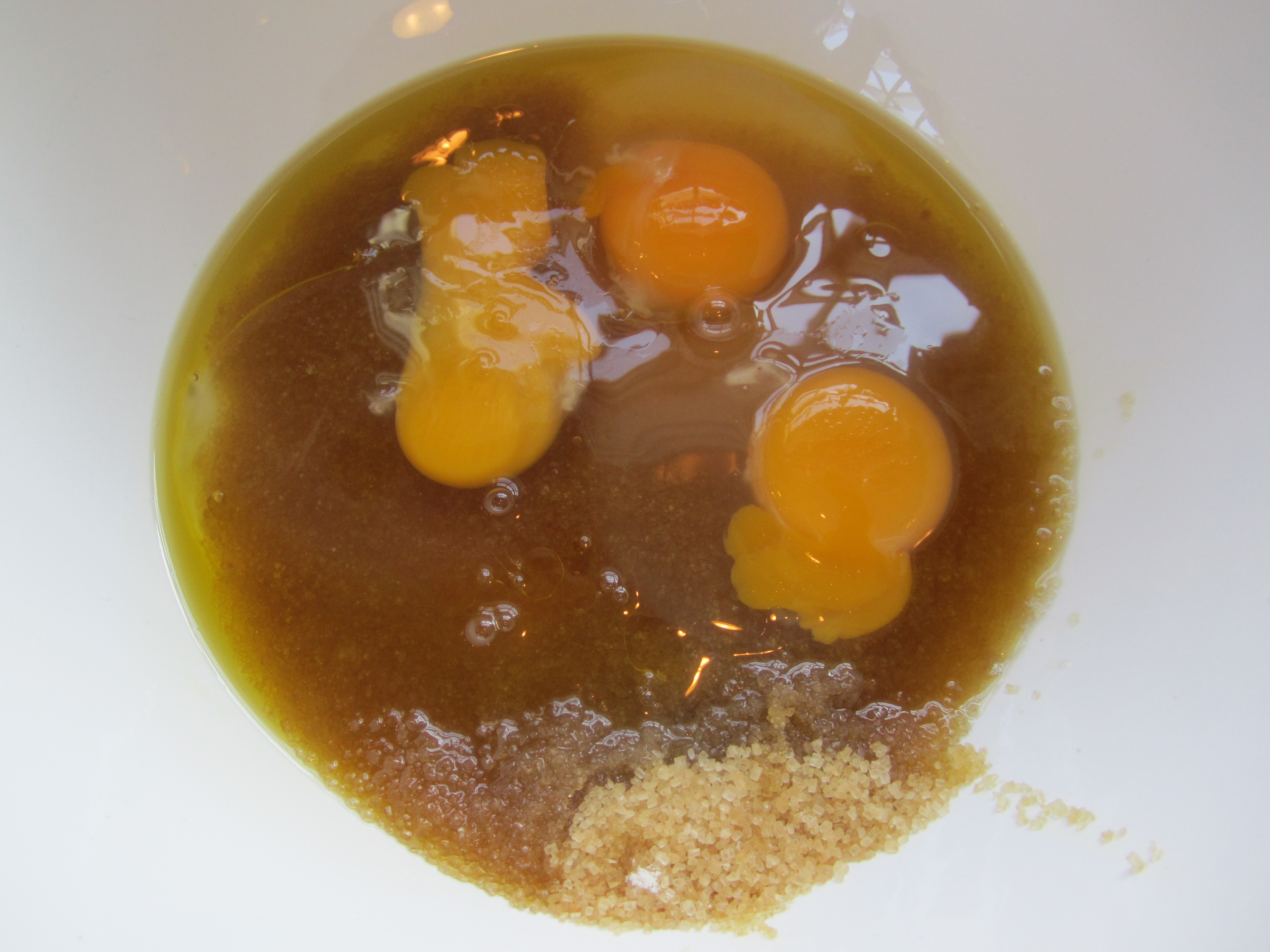
In a larger mixing bowl, combine eggs, oil, sugar and zest. 

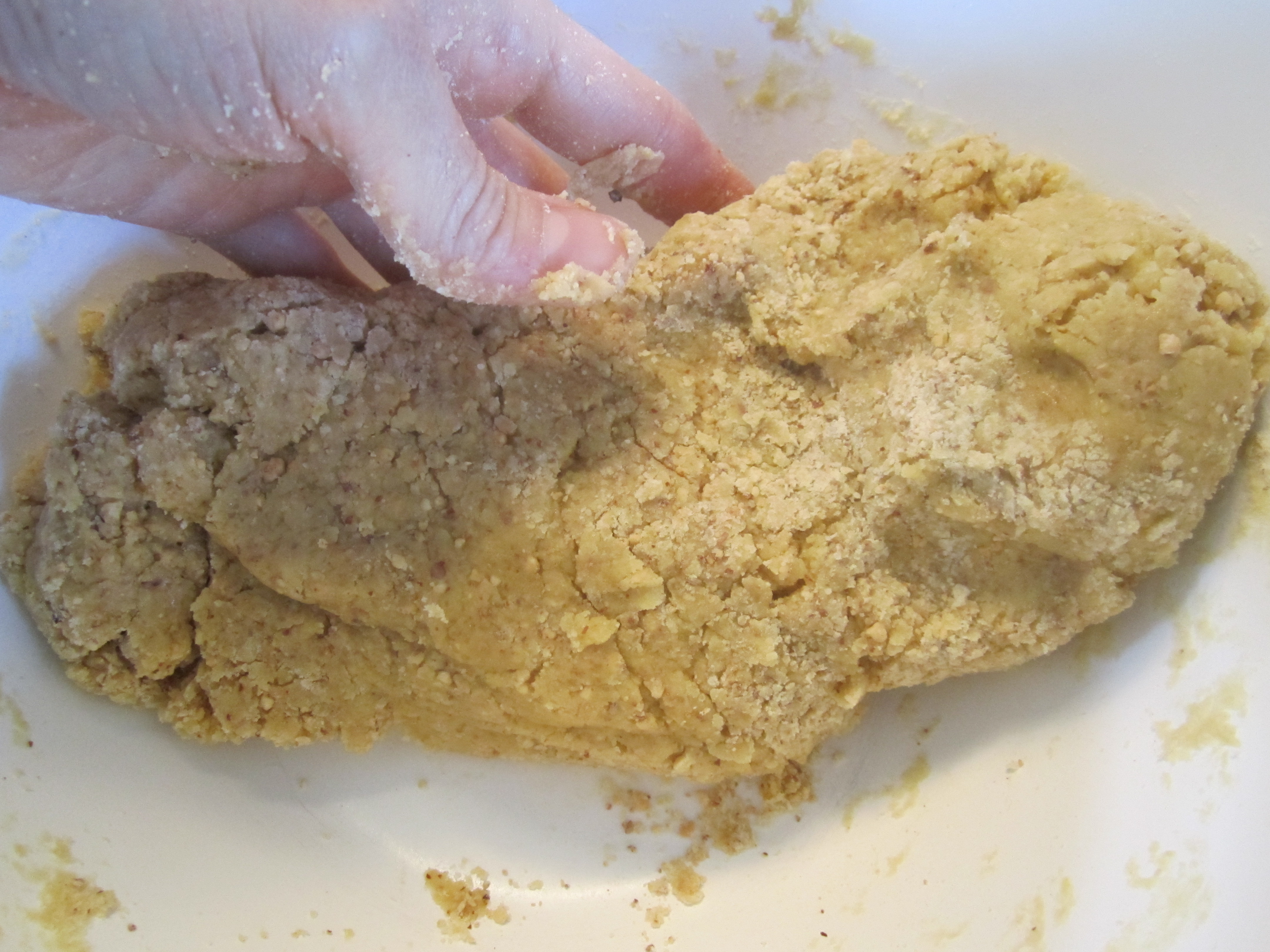
Pour flour into egg mixture and add almonds.  Blend with wooden spoon, then with hands. 

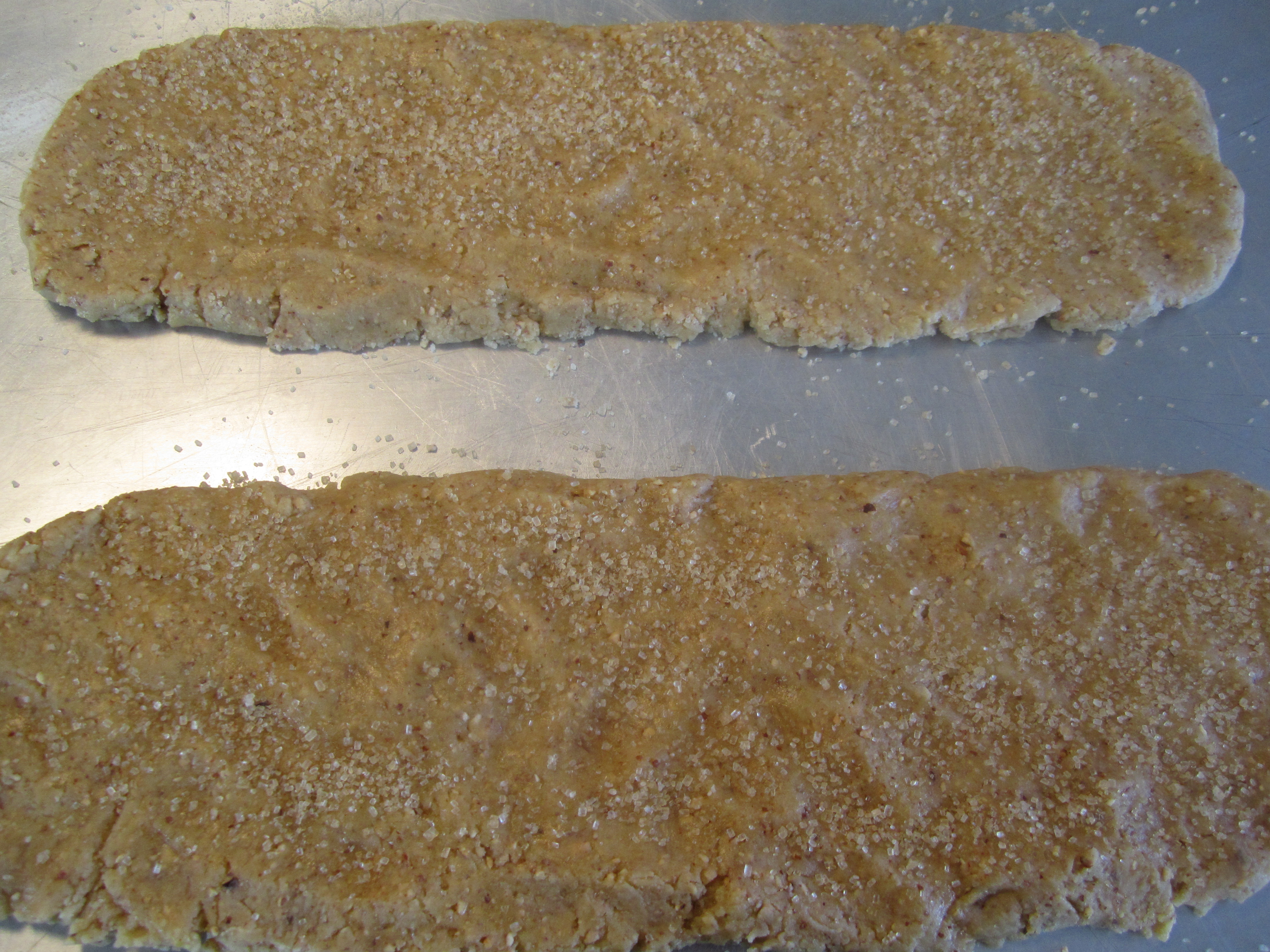
Form into 2 equal-sized mounds and set side-by-side on a lightly greased cookie sheet.  Form logs with each of the pieces of dough (they will be crumbly–just keep recombining and pressing them together if they break apart). Flatten and spread the logs with fingers to approximately 14″ long by about 3″ wide, by about 3/4″ high.  Sprinkle the remaining 2 tablespoons sugar on the tops of the logs. 

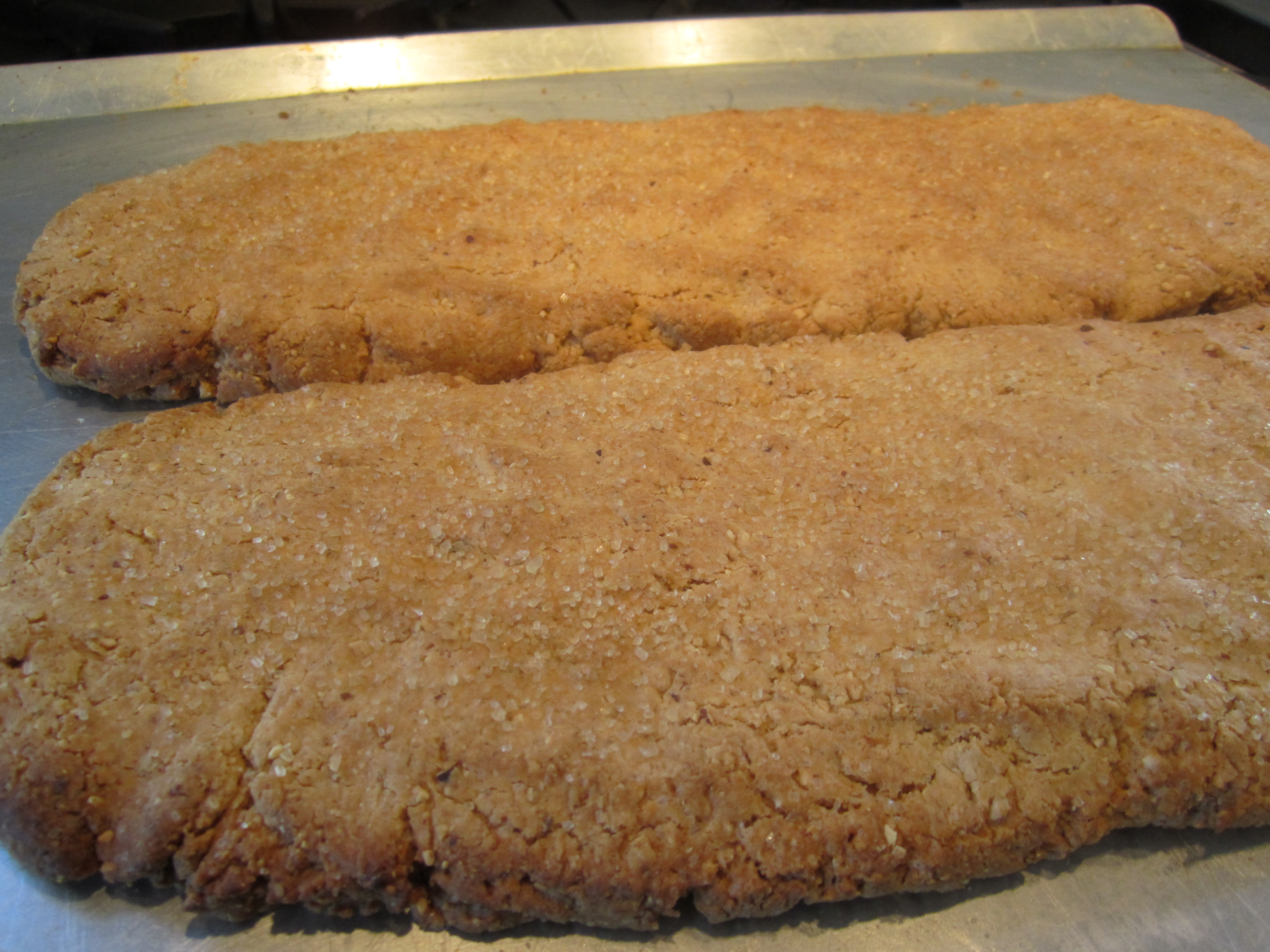
Place in oven for 20 – 25 minutes or until edges are golden brown.

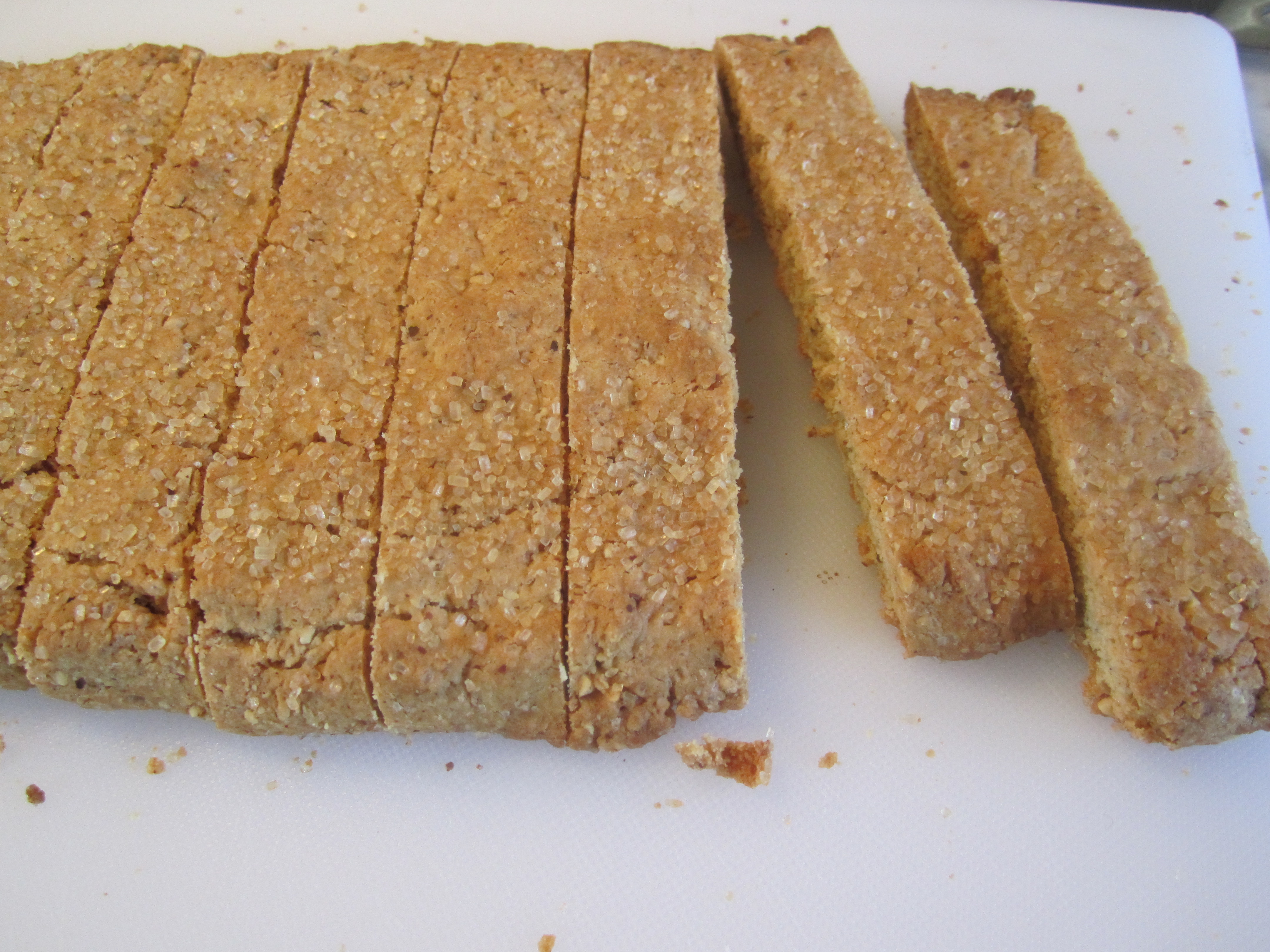
Remove from oven and slice loaves crosswise into 3/4″ thick slices. 

Arrange on cookie sheet and return to oven for 6 to 10 minutes or until slices are golden brown.  Cool completely on rack and store in cookie jar or freezer indefinitely.

Posted in Dessert | Leave a comment

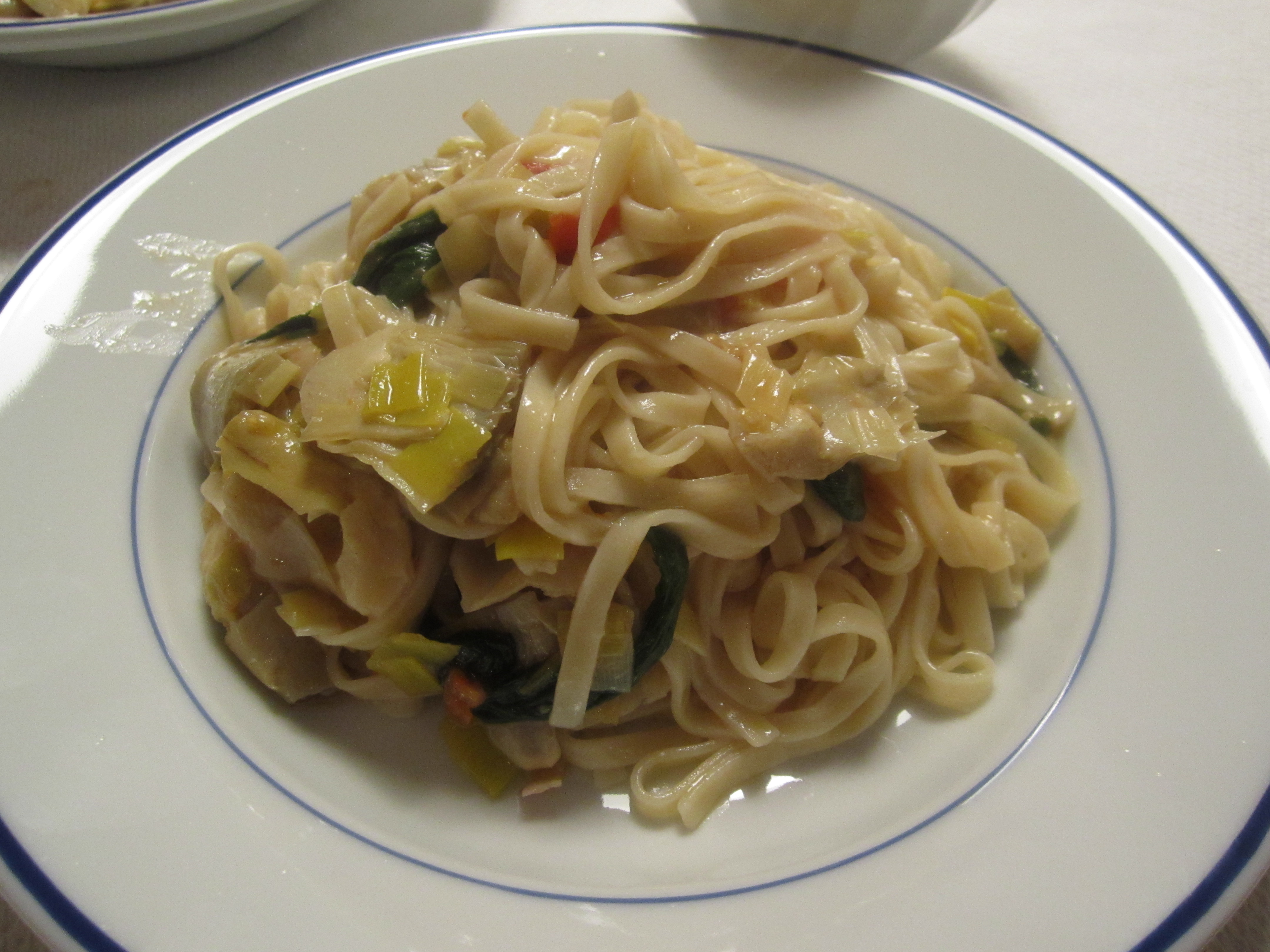
Pasta with Artichokes, Ramps and Leeks

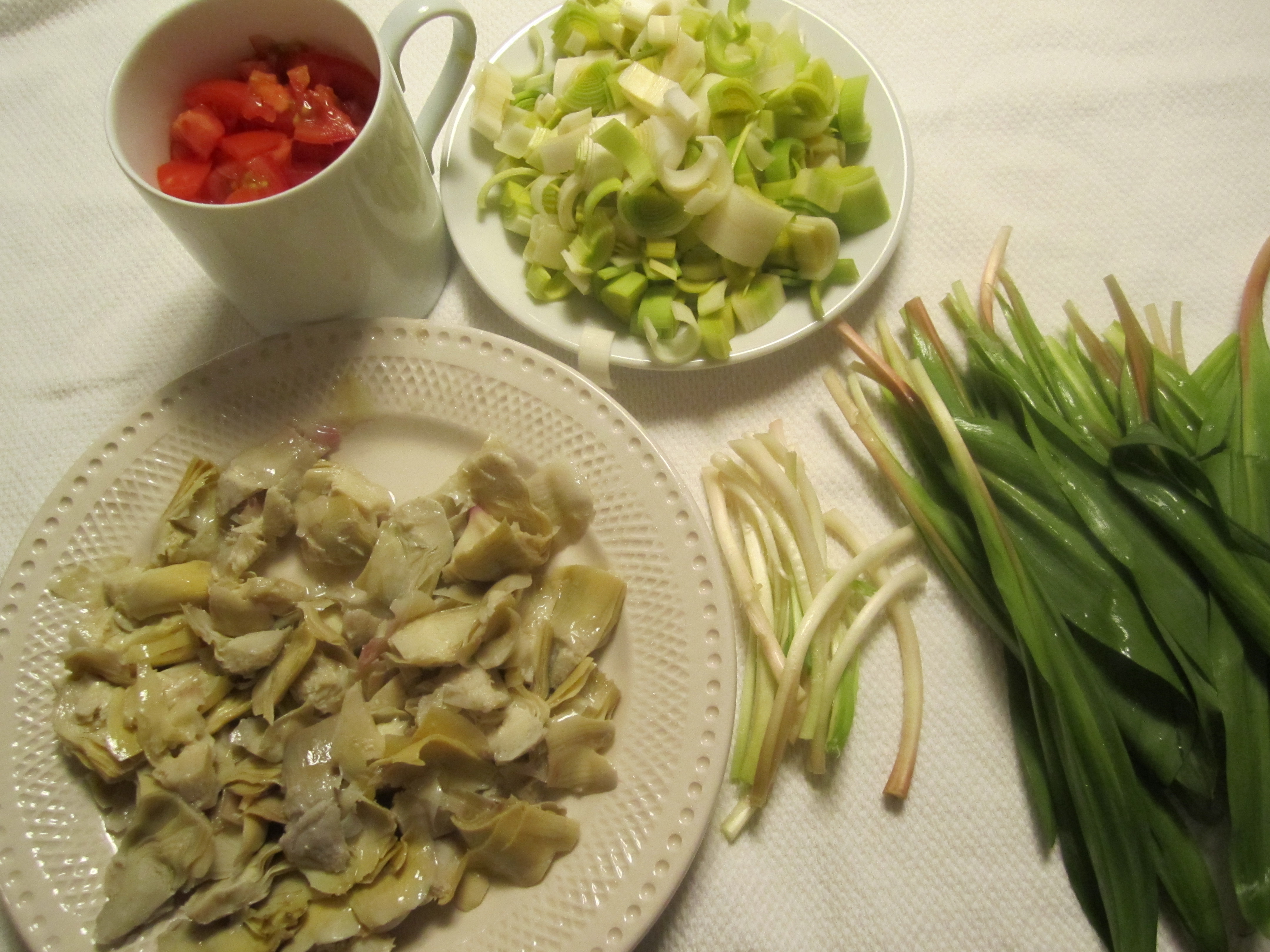
Artichokes offer both a spring and a fall crop (like figs), but I’m actually making this dish with marinated baby artichokes, which can be obtained any time of year–the same goes for leeks.  The only exclusively early spring component of this dish is ramps, for which you could easily substitute garlic.

The leeks and white portion of the ramps are sauteed in olive oil, then the artichoke, some chopped tomato, white wine and chicken broth are added.  The sauce may be thrown together in the time it takes the pasta water to boil.  This is a very delicate sauce and does not require more than about fifteen minutes to cook.

For this dish, I’m using fresh egg linguini, rather than dried pasta.  They give the dish a particularly delicate, luxurious quality.  I like to add parmiggiano reggiano at the table, although many (other) Italians would argue that it overpowers the delicate flavor of the artichokes, and that this dish should be eaten without grated cheese.

This is a perfect vegetarian dish (omit the broth and use some pasta cooking water instead) and is a great first course to something delicate like fish or seafood.  Or, to carry the spring theme through the meal, it’s great as a first course to a leg of spring lamb. 

Pasta with Artichokes, Ramps and Leeks

serves 4

1 1/2 lbs fresh linguini (fresh linguini shrink and collapse a great deal, so use more than you would when making dried pasta)

1/4 lb ramps, washed, whites and greens separated

1/2 lb marinated baby artichokes, pulled apart into leaves

3 leeks, white parts only, washed and sliced into 1/2″ half moon slices

1 1/2 c chopped fresh tomato

1/2 c white wine

1/2 chicken broth

6 tbls olive oil

Place leeks and white part of ramps in a broad skllet with 4 tbls olive oil and saute on medium heat until wilted, about 5 minutes.  Add artichokes and tomatoes and saute for a minute.  Turn up heat and add add white wine.  Cook until wine is reduced by half.  Add green part of ramps and continue simmering uncovered until pasta is cooked. 

Boil pasta in salted water (fresh pasta should cook in less than 5 minutes).  Pull out pasta with tongs and toss directly into sauce. 
Drizzle with additional oil off the heat.

Serve with grated parmiggiano


Posted in Pasta | Leave a comment

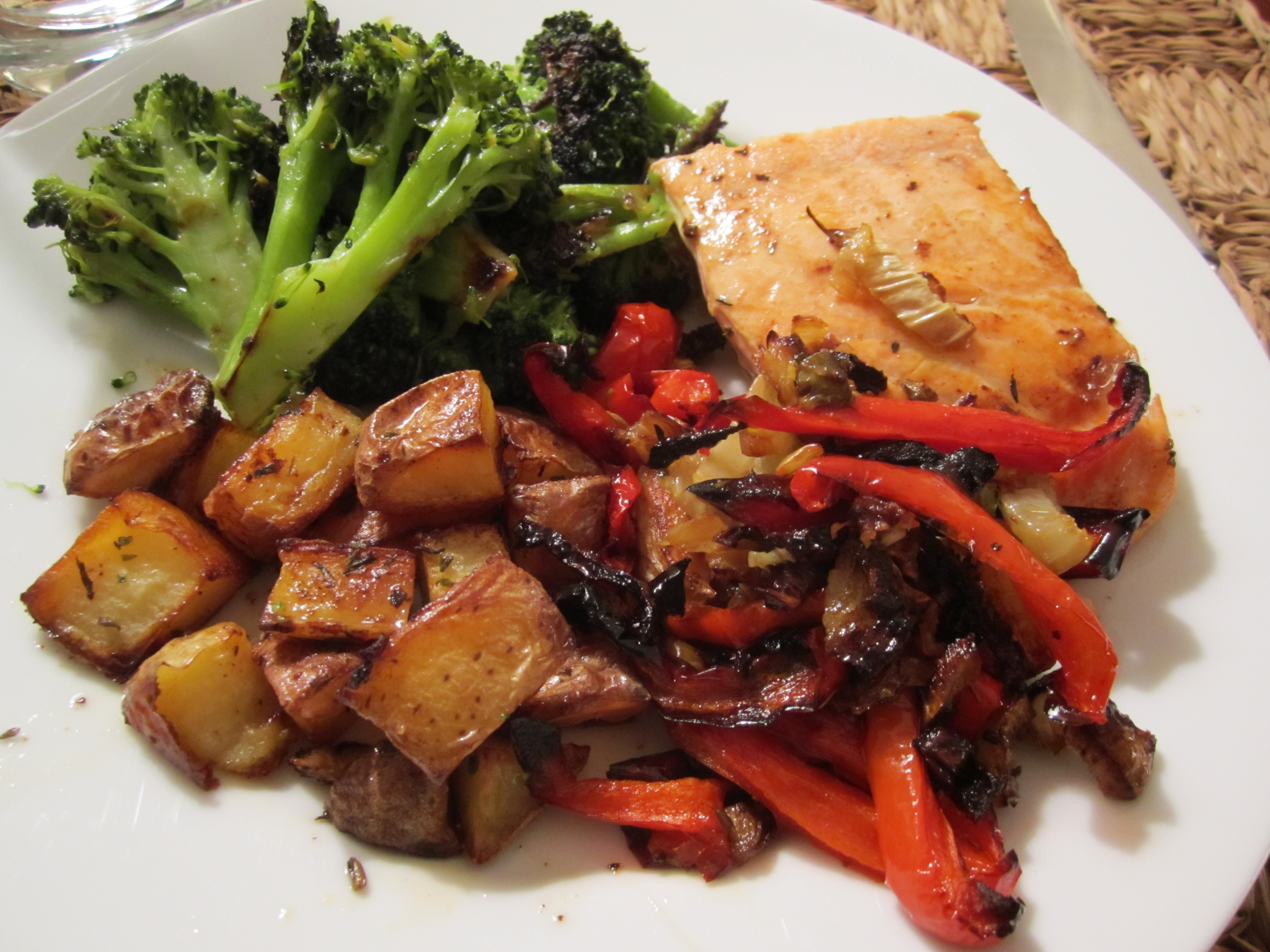
Dinner in the City–Roast Salmon with Fennel and Red Peppers

Once again, I am at my city apartment and I need an easy meal that doesn’t require a lot of prep work, ingredients (I don’t keep a full pantry in my city apartment), pots and pans (no room on the stove), or a lot of washing of vegetables (tiny sink and slow drain).  I don’t like to fry or sear things (lingering odors), although I sometimes do, anyway.

That leaves roasting or poaching.  Tonight’s dinner was made on my one pizza tray (with the exception of the broccoli–which you could omit and substitute a salad for).  With the exception of the salmon, the ingredients were all cut into bite-size pieces and roasted in a 400 degree oven for about a half hour.  Then I added the piece of salmon  (skin side up) and  continued roasting everything for another twenty minutes.  Everything should be ready at about the same time, but if the potatoes are not yet ready, just remove the other components from the roasting tray and continue roasting the potatoes for another 5 or 10 minutes.

Roast Salmon with Fennel, Red Peppers and Potatoes

serves 2

1 lb Salmon Filet

2 Yukon Gold Potatoes (I like them because they’re buttery and their skins are delicate enough to leave on)

2 red peppers

1 bulb of fennel, cut off at the top of the bulb, outer pieces removed and discarded

2 tbls olive oil

1/2  tsp herbs de provence

Preheat oven to 400 degrees.

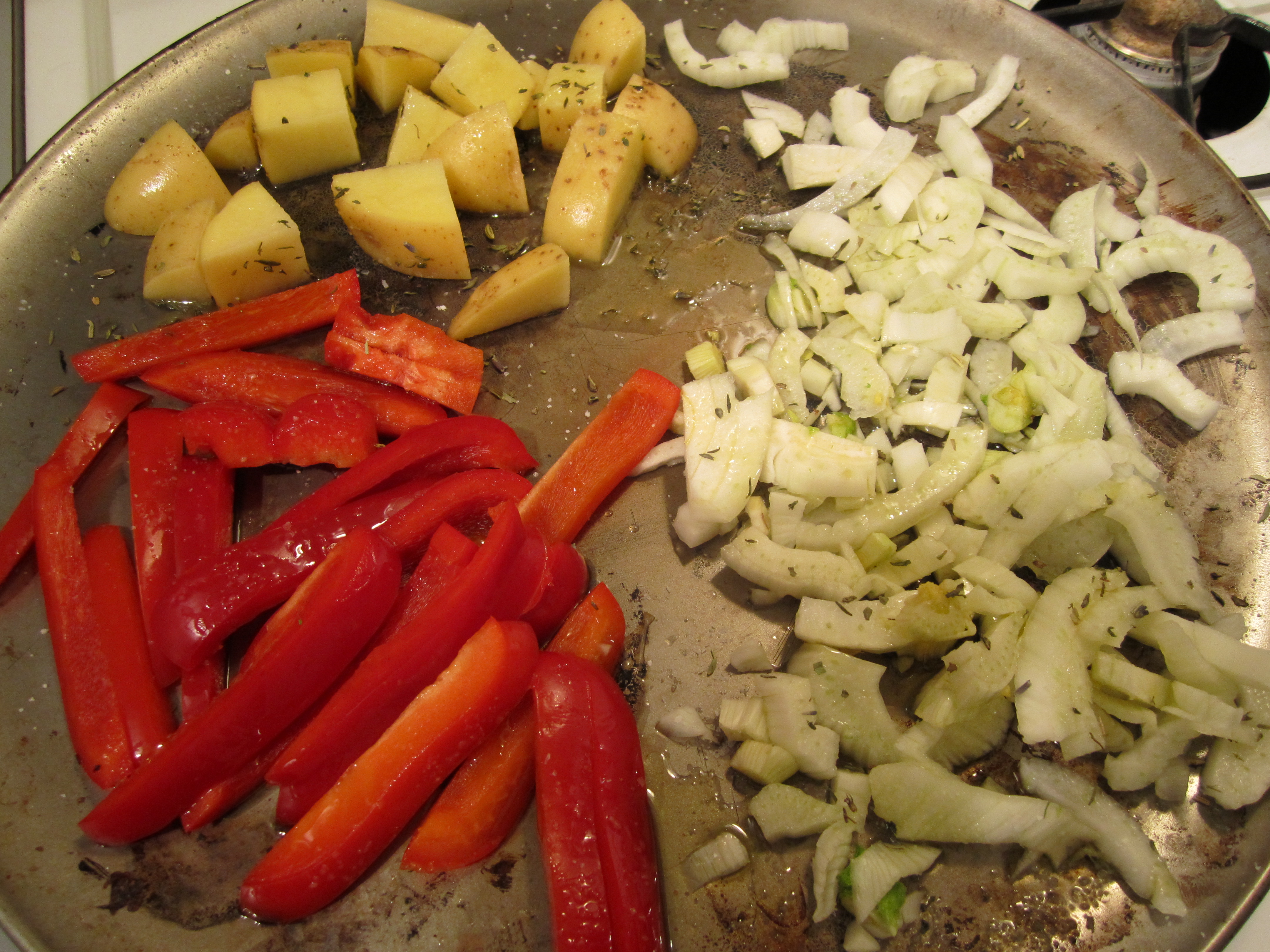
Slice red peppers in half then lengwise into 1/2″ strips.  Remove core from fennel and slice crosswise into 1/2″ half-moons.  Dice potatoes into 1″ cubes.  Lay all out on tray and drizzle with oil, salt pepper and herbs de provence.

Roast uncovered for about a half-hour, turning occasionally.  If fennel blackens too quickly around the edges, stir the well-done pieces toward the center of the tray and scatter the less cooked pieces on the perimeter; same with peppers.

Season the salmon with salt and pepper and add it to the tray, skin side up, moving  the fennel toward the center of the tray (because it’s already almost cooked and the center of the tray gets the least heat), and placing in the salmon filet to one side.  Continue cooking until the salmon is just cooked through (maybe about 20 minutes, depending on the strength of your oven.  If any of the piles of vegetables are getting too well-done, remove them and set aside until the rest is finished.  When the salmon is done, I pull off the skin with tongs before adding salt to the skin side and drizzling on a little extra-virgin olive oil at the table.

Posted in Seafood | Leave a comment