Flounder Stuffed with Kale

We are enjoying fresh, local wild flounder on the East End of Long Island now, so I thought I’d take advantage of it while I can.  Usually, I’d opt for a quick-cooking pan-fry for thin filets like these.  But a more elegant way to cook thin fish filets (or thinly-pounded chicken or veal, for that matter) is to wrap them around a moist stuffing of some sort.

I’ve been buying and cooking local kale for a month or so now, so I have several bags of cooked kale in my freezer for the winter ahead.  As I’ve said before, some vegetables freeze perfectly, while others turn mealy and mushy after freezing.  Kale (like spinach) is one of those perfect specimens–you can cook it, freeze it, then saute it or throw it into a stew or pasta dish, and you’ll never know it had been frozen.
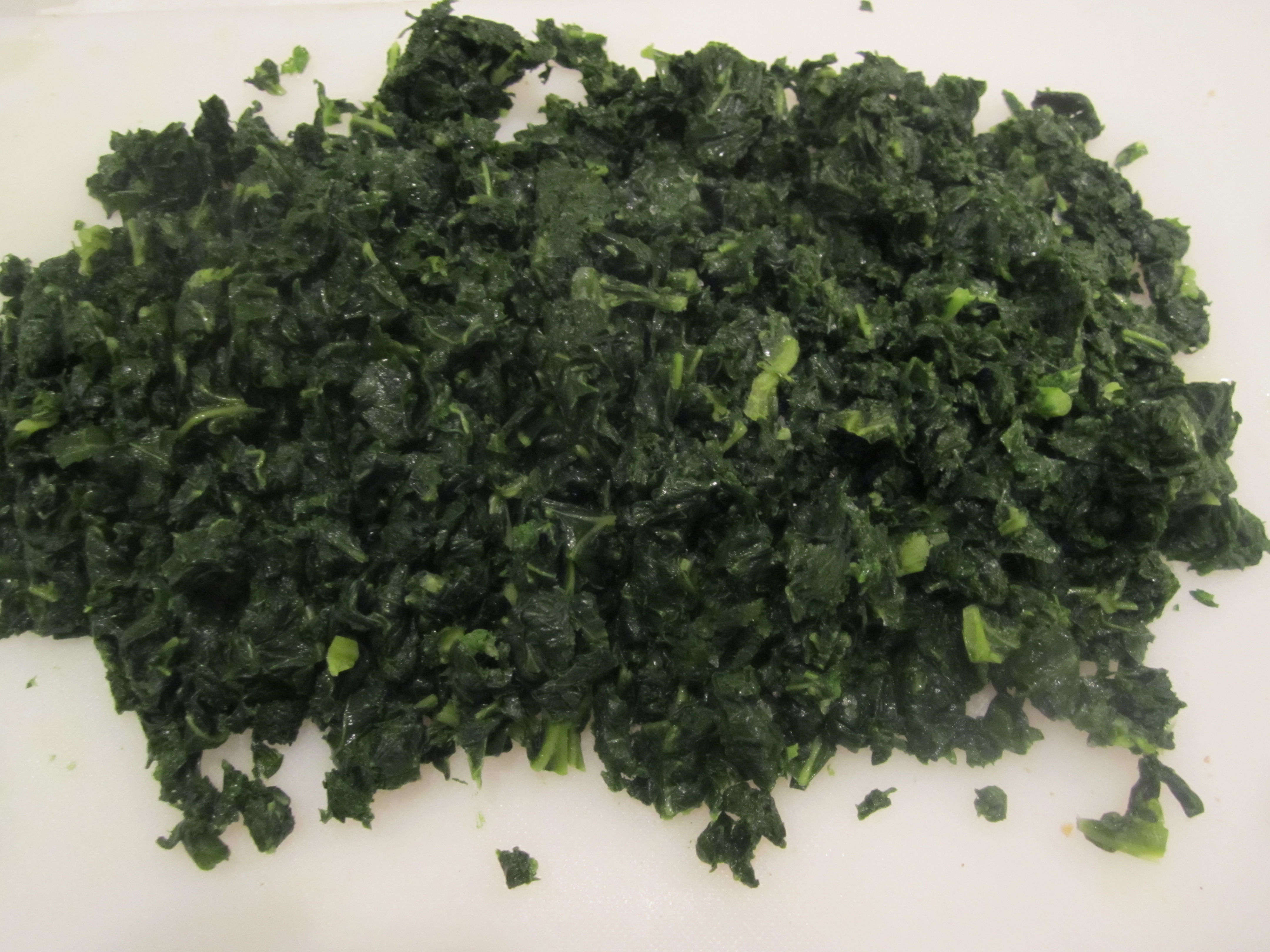
Kale also tends to be very sturdy, even after boiling, so the way to prepare it for a delicate stuffing is to saute it with some shallots or garlic (or both), then roughly chop it in the food processor.  This will turn it into the most delicate of vegetables.  The beauty of kale, as opposed to spinach, is that it has none of that iron-y aftertaste that spinach can have if it’s not squeezed thoroughly after boiling.  It’s the perfect stuffing for these flounder filets.  I’ve perfumed the kale with lemon zest, freshly grated nutmeg, and plenty of salt and pepper.

The fish filets are wrapped around the kale and placed in a baking dish.  The extra kale stuffing is nestled between the filets and baked with the fish.  Seasoned panko crumbs are piled on top of each little fish packet, then all gets a splash of white wine, the juice of the lemon (that you’ve zested), and a good drizzle of extra-virgin olive oil.

During the 13 – 15 minutes of baking, the crumbs become crispy, the fish cooks to tender perfection, and the lemon juice, wine and oil become the most delicate of sauces.

This is a great dish to make for guests, since the stuffing can be made ahead, then the fish assembled and baked at the last minute, while you’re enjoying a first course.

Tonight, we had skillet potatoes and local broccoli, sauteed with chili flakes and garlic.
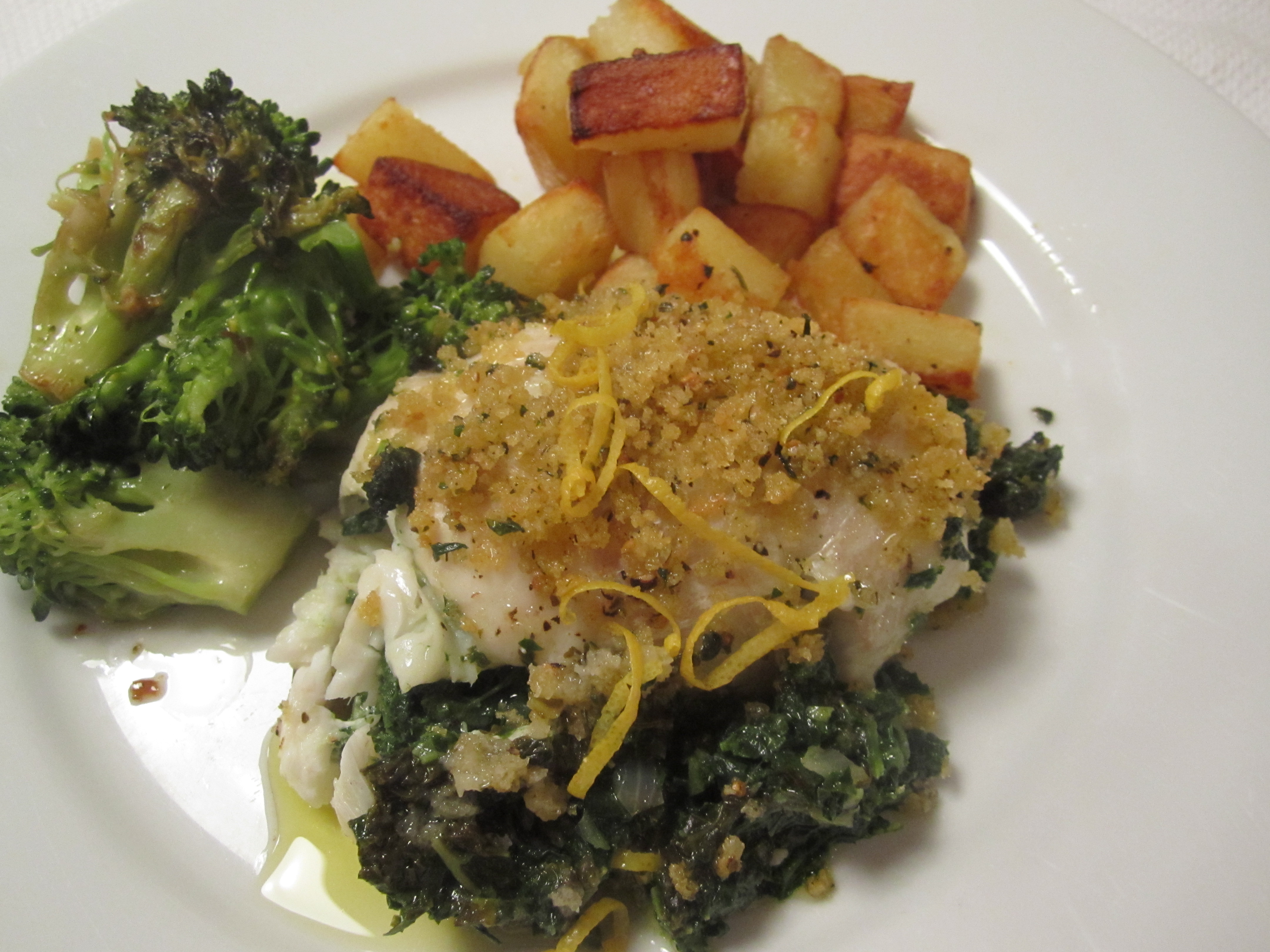
Flounder Stuffed with Kale

serves 4

1 1/4 lbs flounder filets (or sole, snapper or any thin white filets)

1 small bunch of kale, stripped off its stems, sliced into ribbons, then boiled for about 5 minutes and drained.  The yield should be about 2 cups chopped, cooked kale.

2 small shallots, finely diced

zest and juice of one lemon

1/8 tsp nutmeg

1/3 c white wine

1/4 c + 2 tbls extra-virgin olive oil

1/2 c seasoned panko crumbs (I’ve added 2 tsps fresh chopped parsley to mine).

salt and pepper to taste

Preheat oven to 400 degrees.

Place shallots in a skillet with 2 tablespoons of olive oil and bring to a sizzle on low heat.  Saute for about 5 minutes or until tender but not yet caramelized.  Add kale, half the lemon zest, plus nutmeg, salt and pepper to taste.
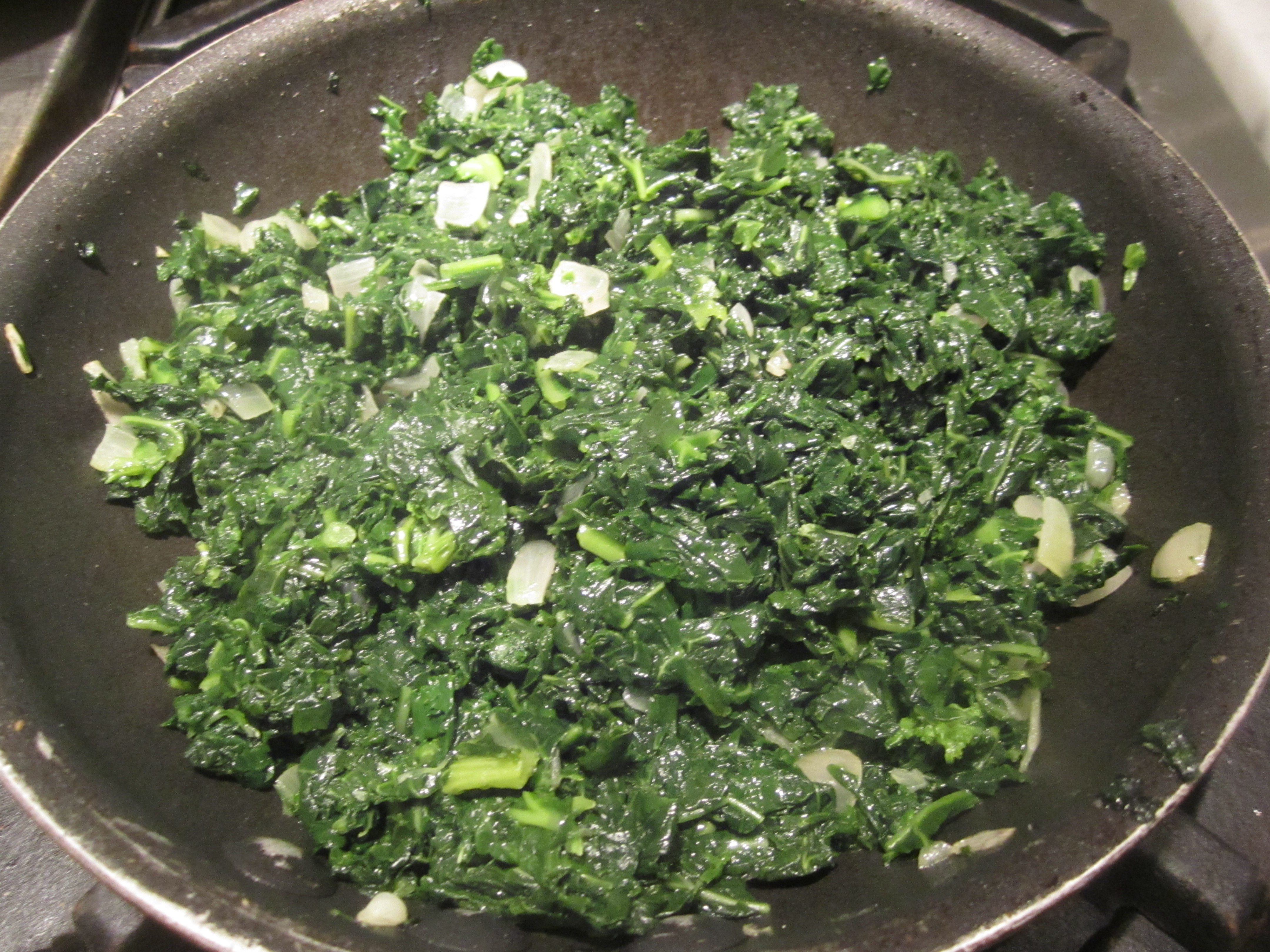
Continue sauteing for another 5 minutes, or so.

Place the kale mixture in the food processor and pulse to form a coarse puree.
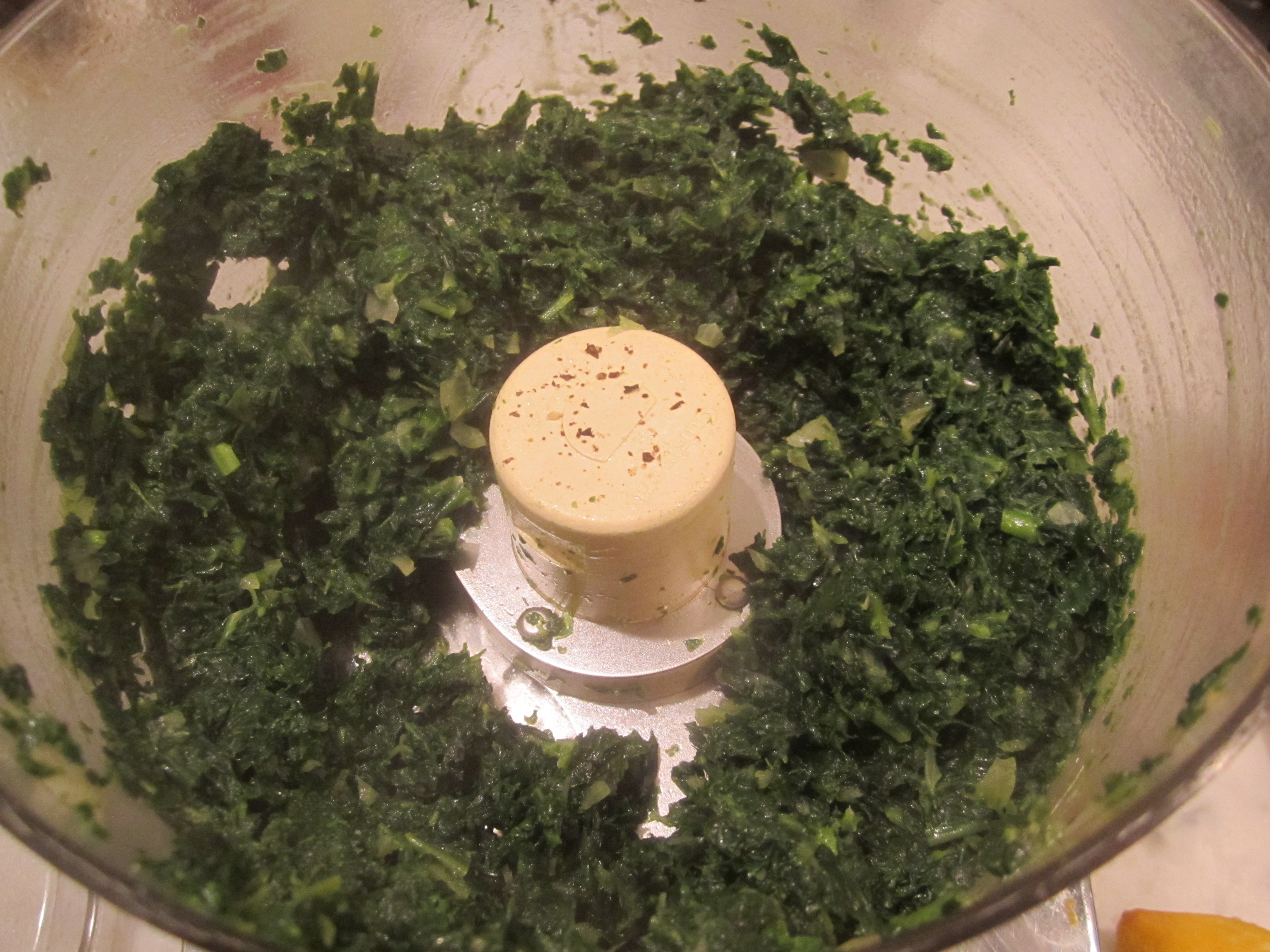
Allow to cool.

Season fish with a dusting of salt and pepper on both sides.  Place a mound of kale on each filet.
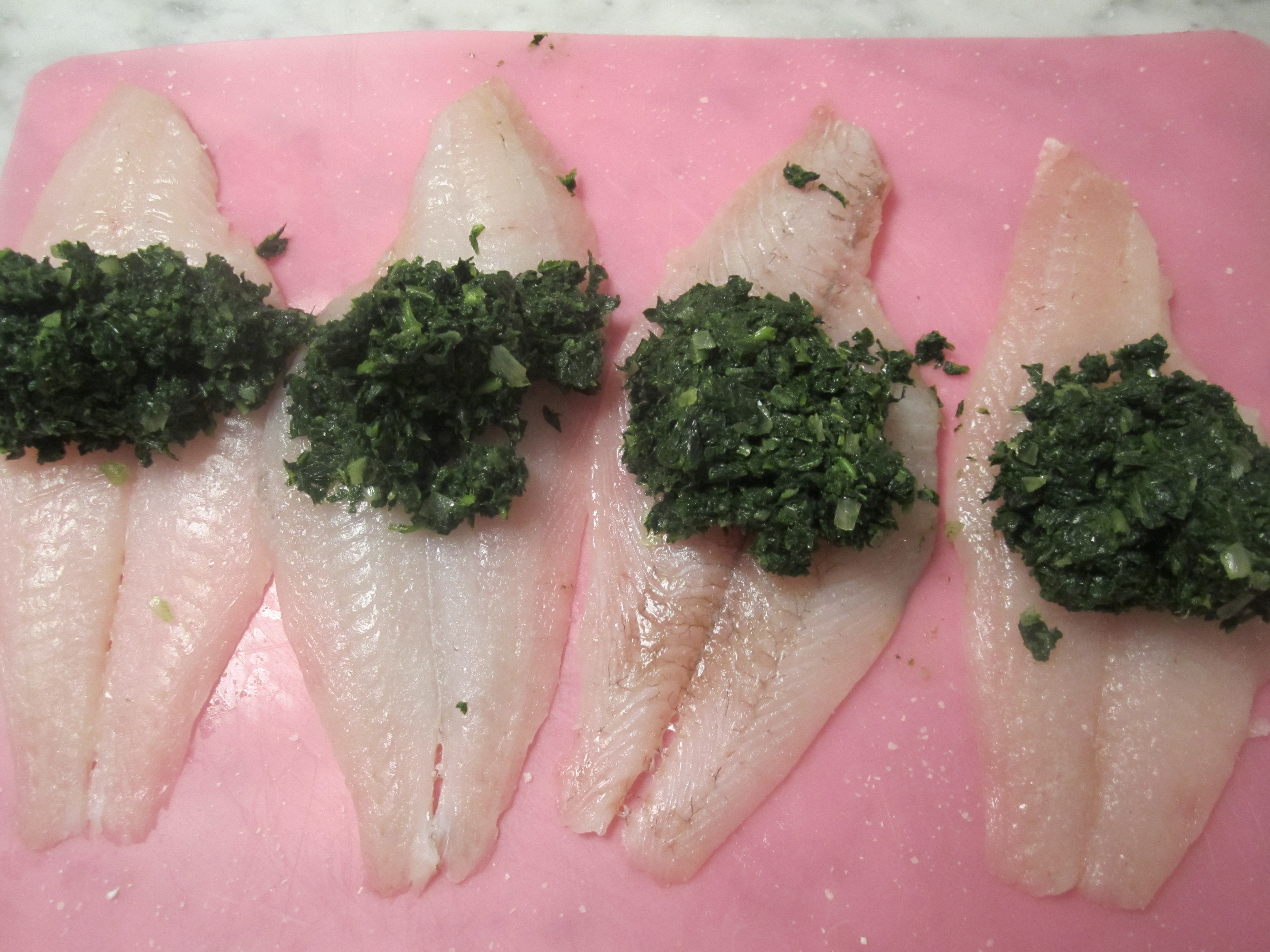
Roll fish around stuffing and place each packet, seam side down, in a baking dish.  Spoon any leftover kale in and around the fish bundles.
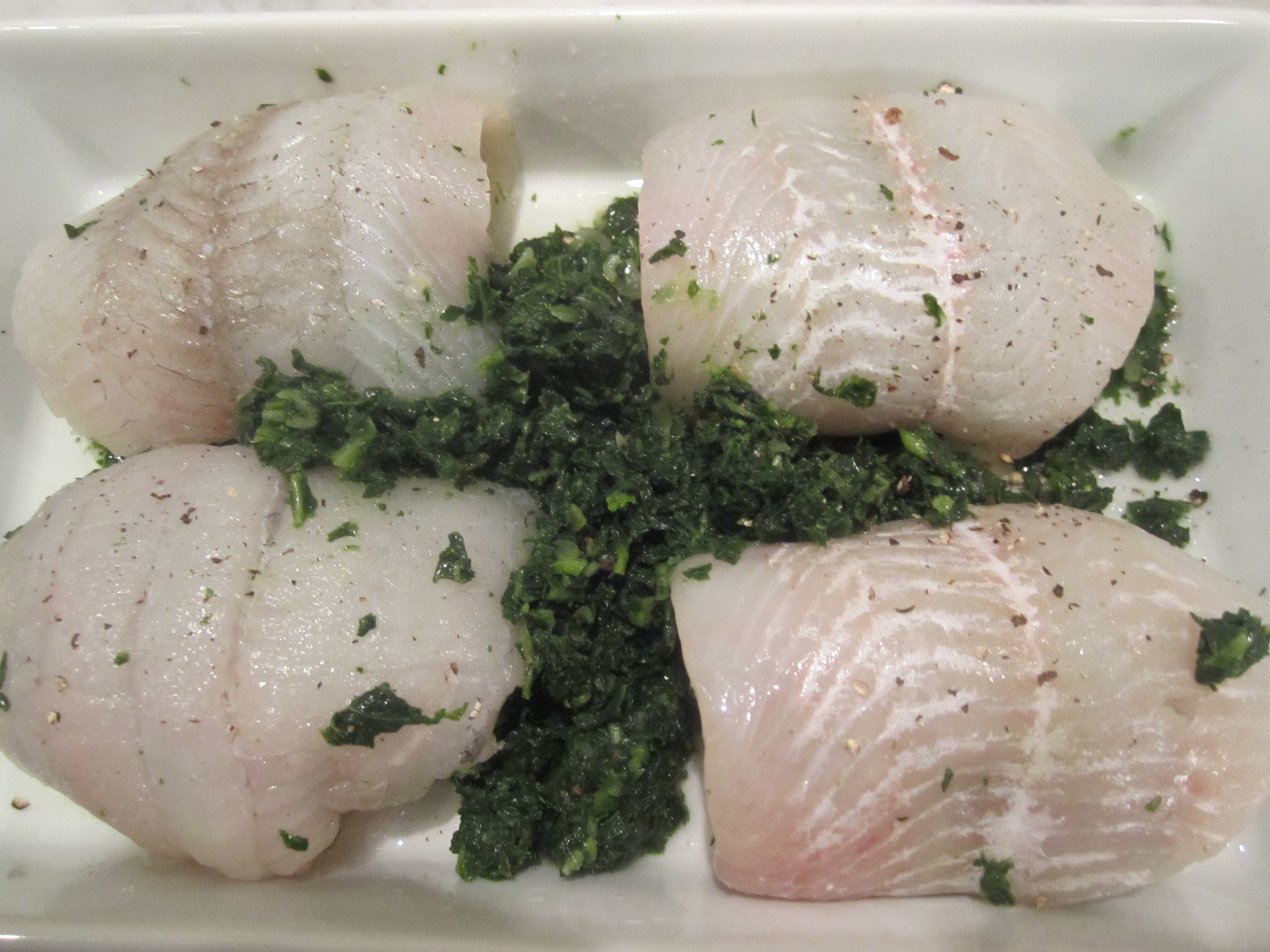
Drizzle fish with wine and lemon juice.

Top each packet with  a mound of panko crumbs, then drizzle  generously with the remaining quarter cup of olive oil.
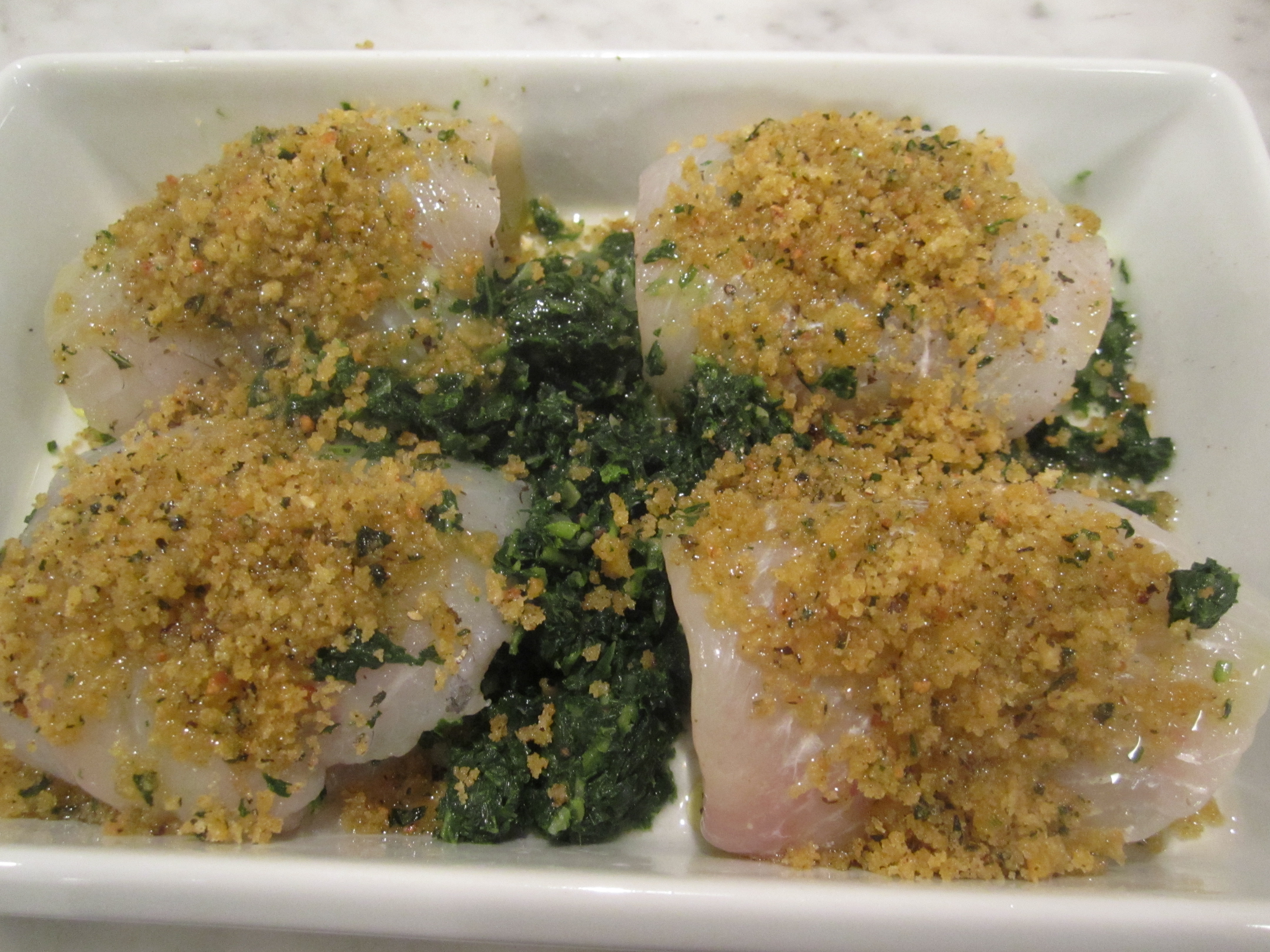
Bake for approximately 13 – 15 minutes, or until juices are bubbling and fish is cooked through.  Top with remaining lemon zest and serve hot or warm.
Posted in Seafood | Leave a comment

Old-Fashioned Meatloaf

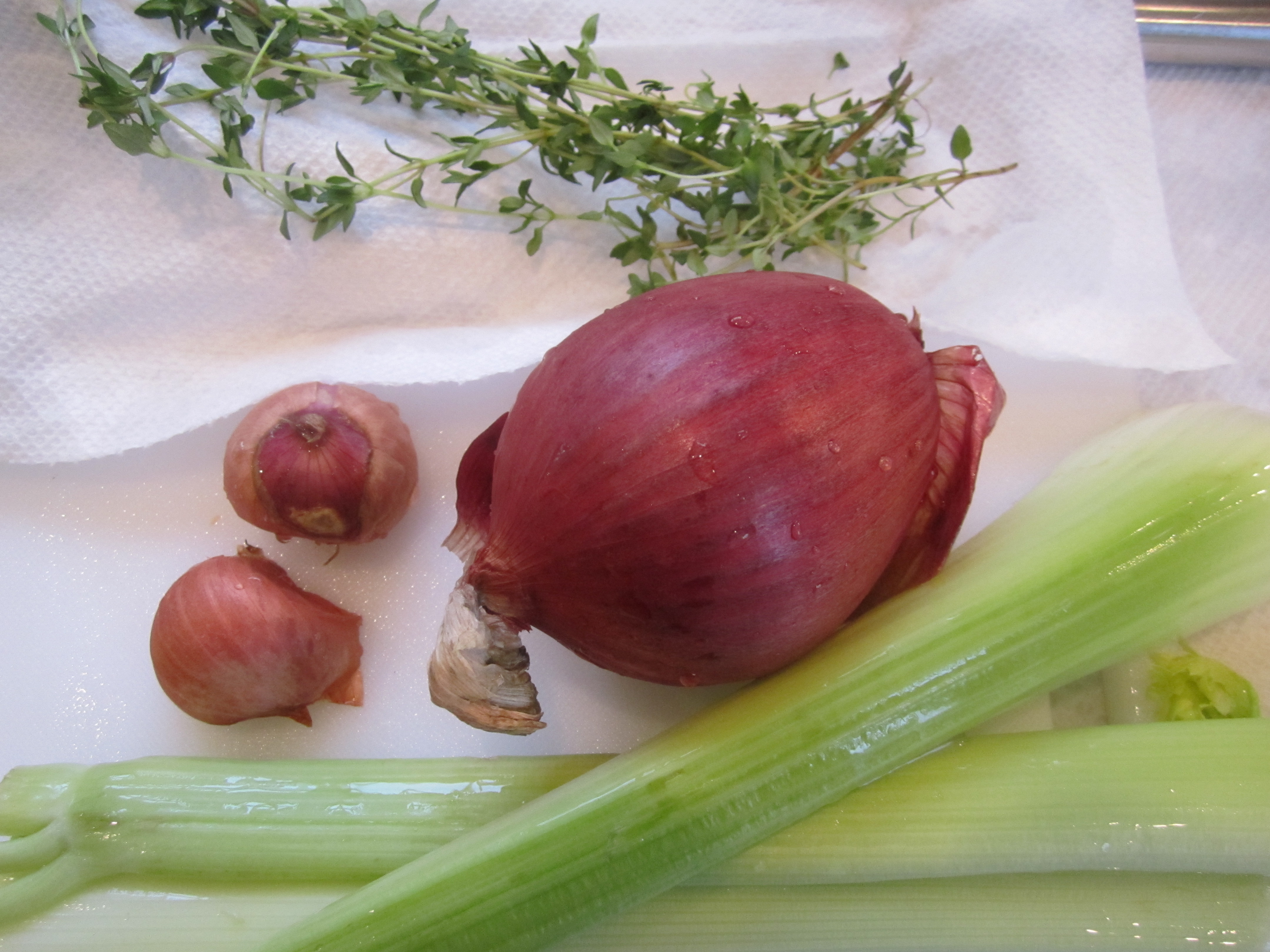
My friend Kathleen made meatloaf for a group of friends the other evening, using a mix of ground beef, pork and veal, and it was so delicious, I decided to try my hand at making one.  The ingredients, she assured me, were nothing exotic–celery, onions, thyme, chives, bread crumbs, milk and eggs.

I haven’t used the beef/pork/veal mixture for anything in many years and I’ve forgotten how good it can be.  My  mother always made meatballs and meatloaf using this combination throughout my childhood.  Later in life, she switched to ground turkey, which I love as well, and which I’ve come to use almost exclusively for my meatballs and meatloaf.

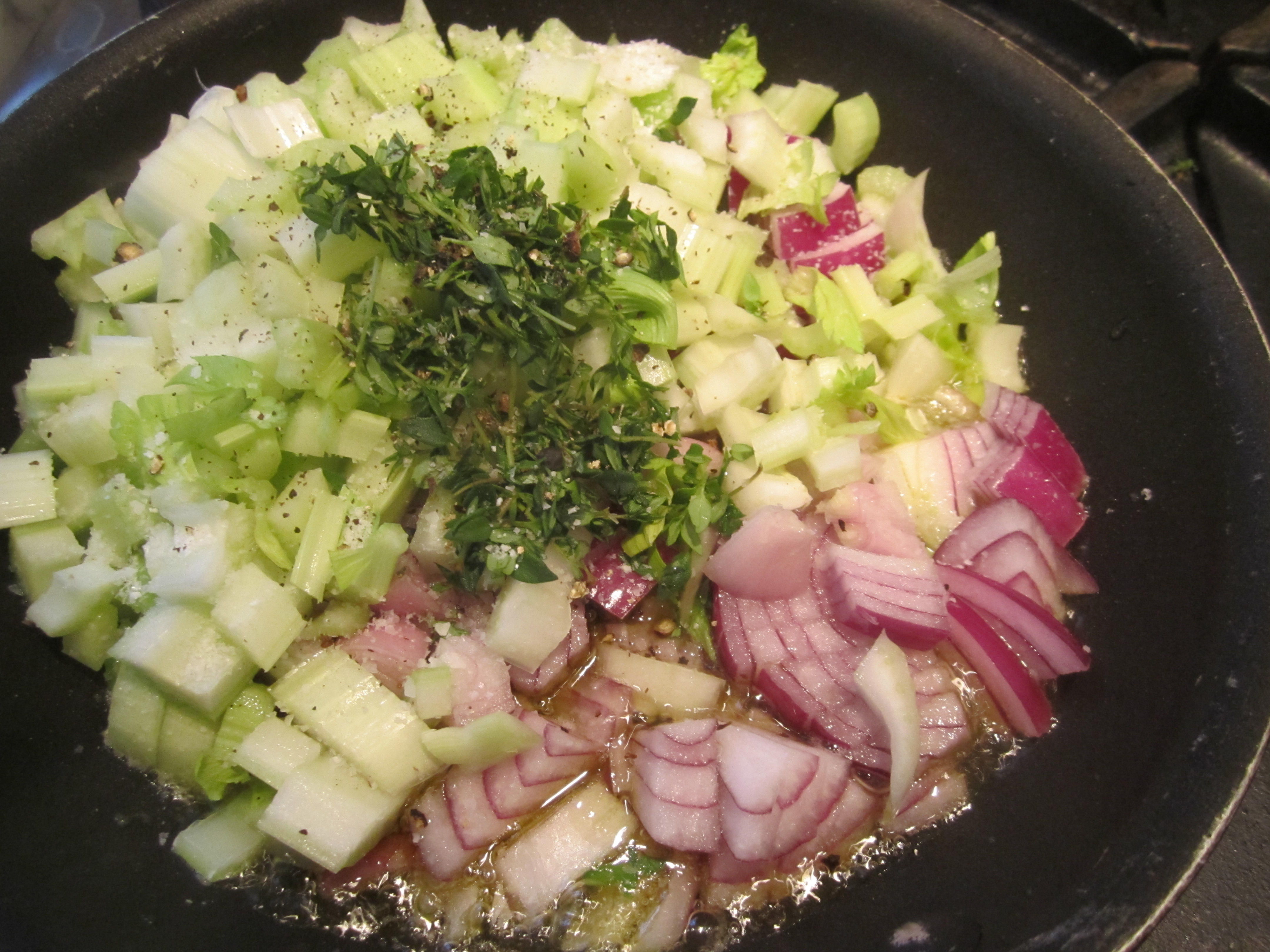
To begin, aromatics get sauteed in a combination of butter and olive oil.  Onions, shallots, celery and thyme are slowly softened until they begin to caramelize.  I gave them a generous sprinkle of salt and pepper and set them aside to cool.

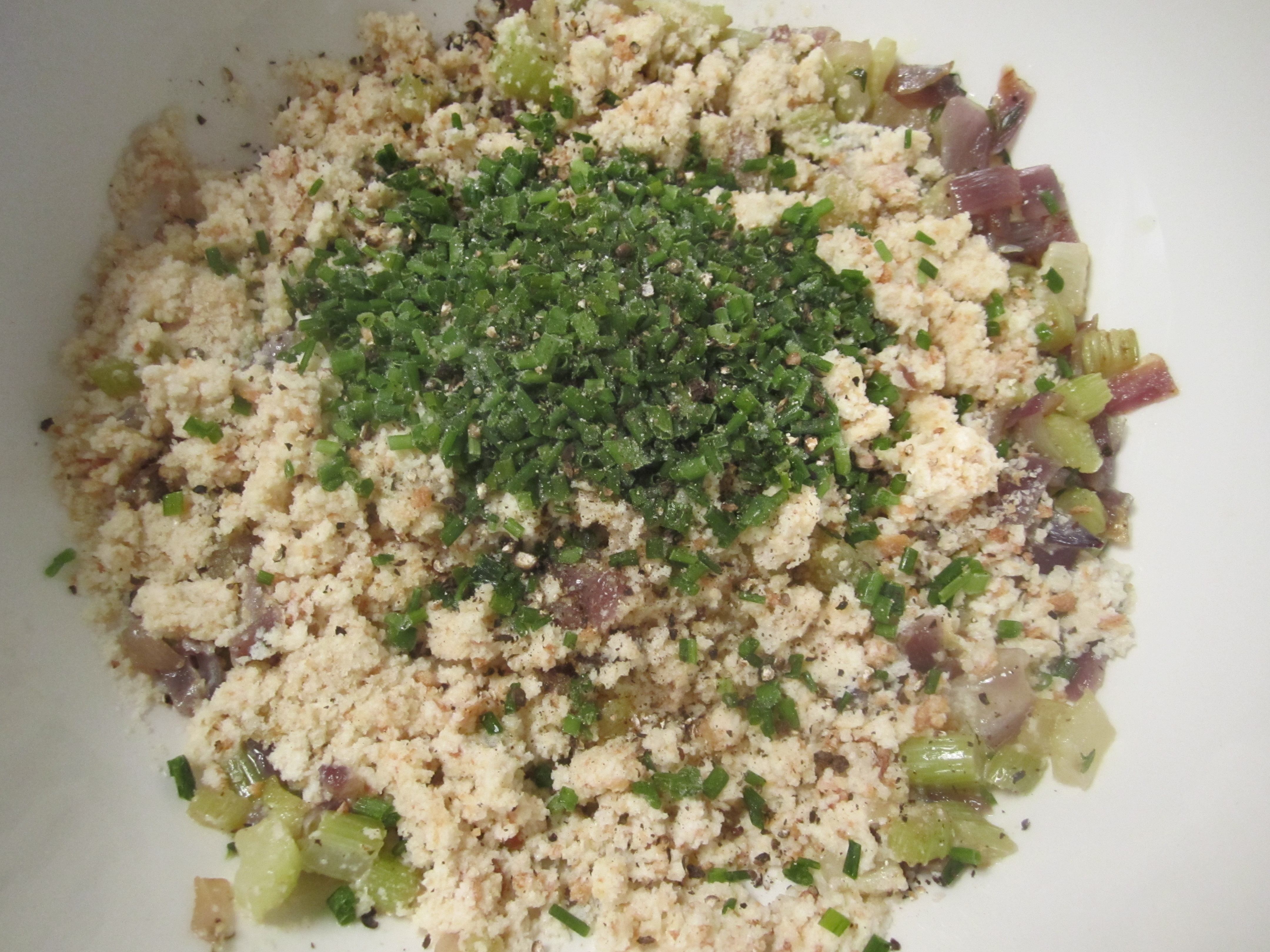
I made breadcrumbs by breaking some pieces of bread from my ever-present store of stale bread, into the food processor.  The older and drier the bread, the easier it is to make into crumbs.  Simply pulse until the crumbs resemble coarse sawdust.  If any stubborn large pieces remain once the majority of the breadcrumbs reach the desired fineness, just discard them.

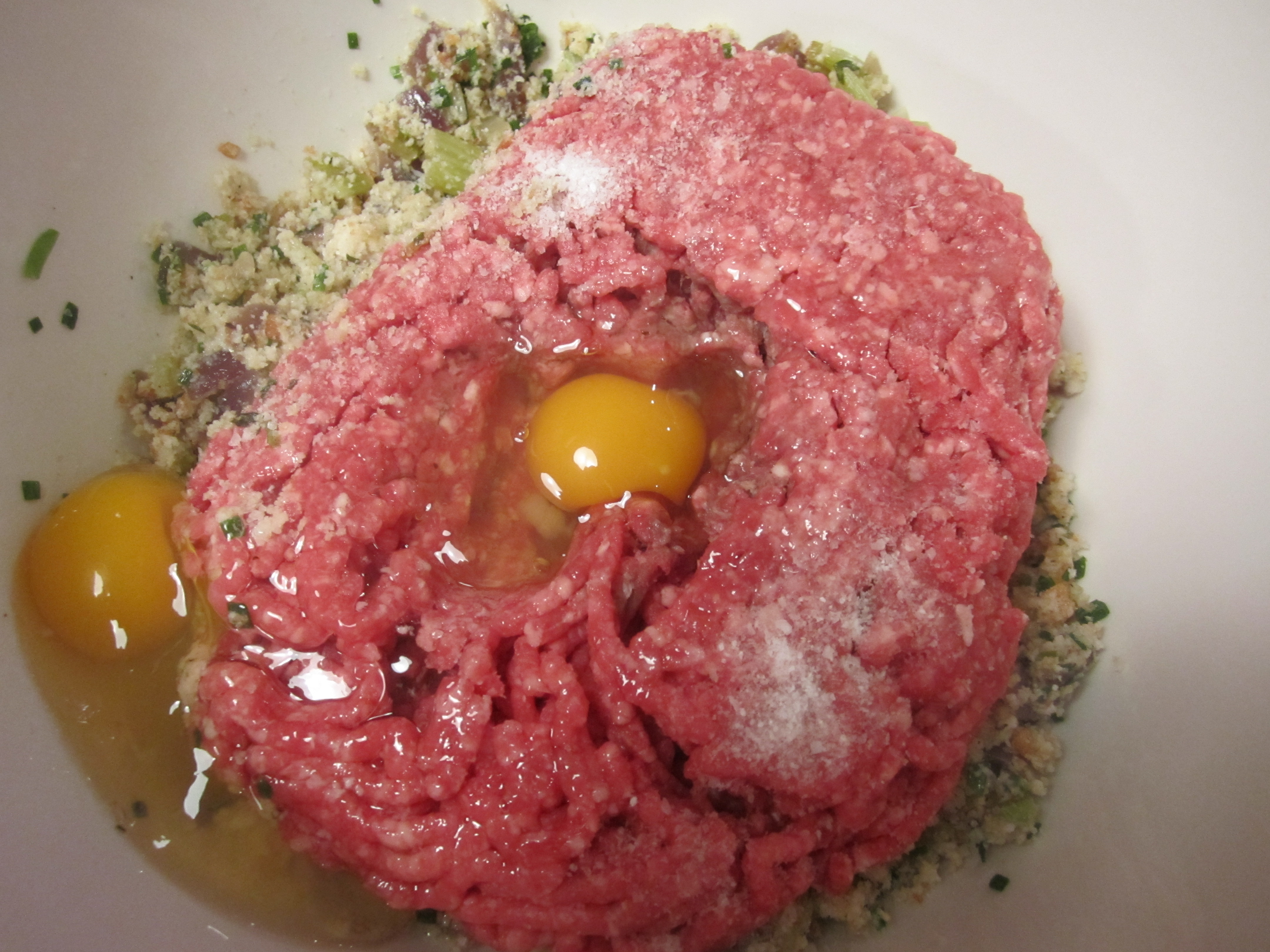
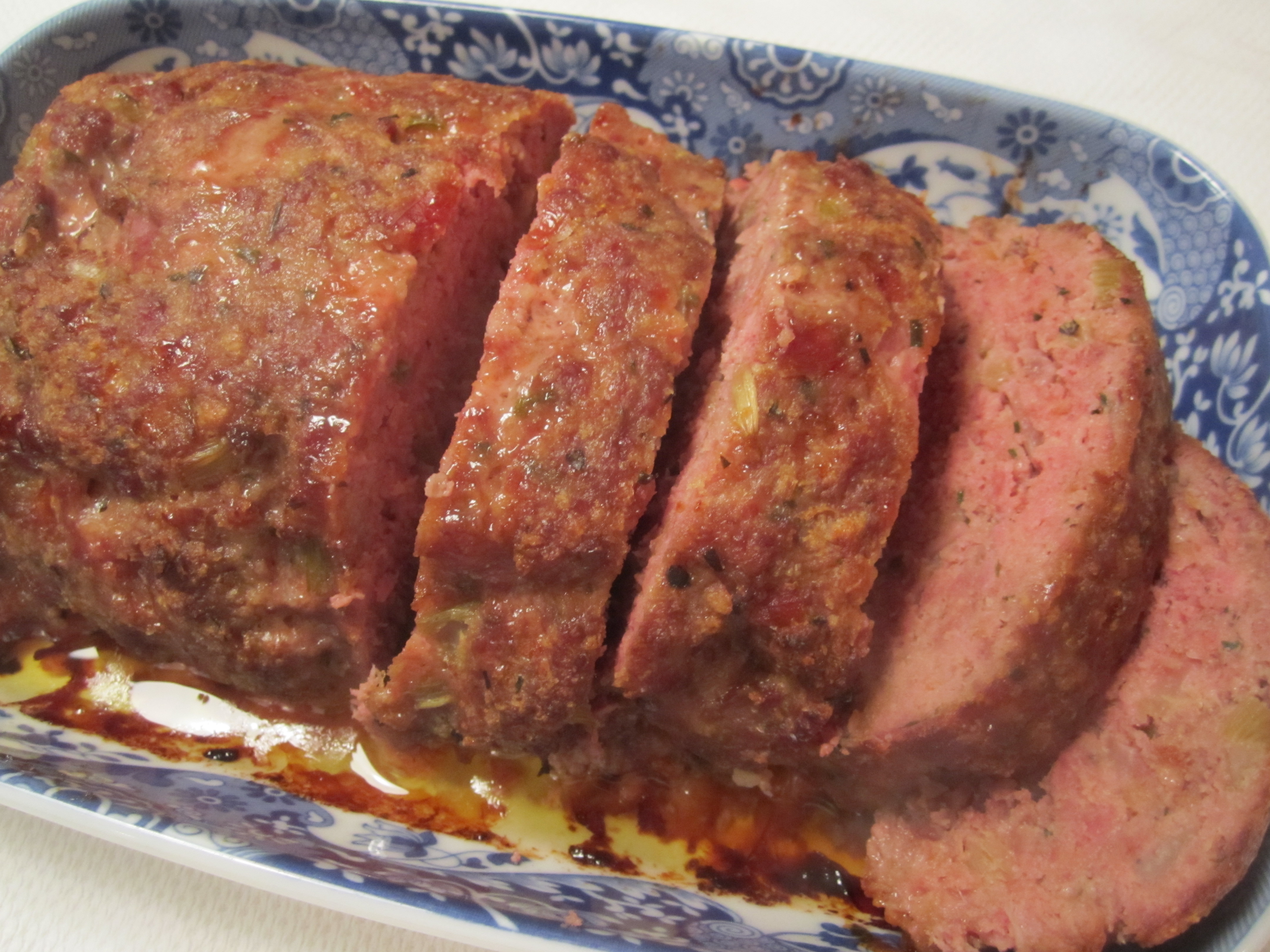
The aromatics and crumbs are combined, along with the meat and eggs, and kneaded into a loaf.   The loaf is baked, uncovered, until the internal temperature reaches around 165 degrees (in my oven, at 375 degrees, this took about an hour).
In addition to the meatloaf, tonight we had sauteed swiss chard, from my neighbor Beppi’s garden, as well as baked potatoes.

Old-Fashioned Meatloaf

2 lbs ground beef/pork/veal mixture

1 small red onion

2 small shallots

2 stalks celery

2 tbls freshly chopped thyme leaves

2 tbls butter

2 tbls olive oil

1 1/4 c bread crumbs

1/2 c half-and-half or milk

2 eggs

1/4 c fresh chopped chives

2 – 3 tsps salt + 1 tsp black pepper

In a skillet, place onions, shallots, celery, thyme, butter and olive oil.  Bring to a simmer on low heat and allow to soften until they begin to caramelize (about 10 minutes).  Season well to taste, with salt and pepper.

Set mixture aside to cool.

Once cool, add bread crumbs, half-and-half, and chives and mix well to combine.   Taste and salt again.

Add meat and eggs and sprinkle with an additional 2 teaspoons of salt.

Mix well with hands, until fairly uniformly combined.  Form into a loaf and bake, uncovered at 375 degrees for about an hour, or until the internal temperature is about 165 degrees.  Allow to rest at least 10 minutes before serving.

Posted in Meat | 2 Comments

Scarlet Runner Beans with Chorizo and Quinoa

These beans have a deep, velvety flavor, and when combined with a grain,  are a great one-pot meal.

Without the chorizo, this could be an entirely vegetarian dish, but the chorizo adds that smokey hint of paprika that I love.  In addition, I’ve added a handful of chopped, cooked kale for brightness and color.  The salted cooking water from the kale serves as the broth for the stew–it’s the perfect vegetable stock.

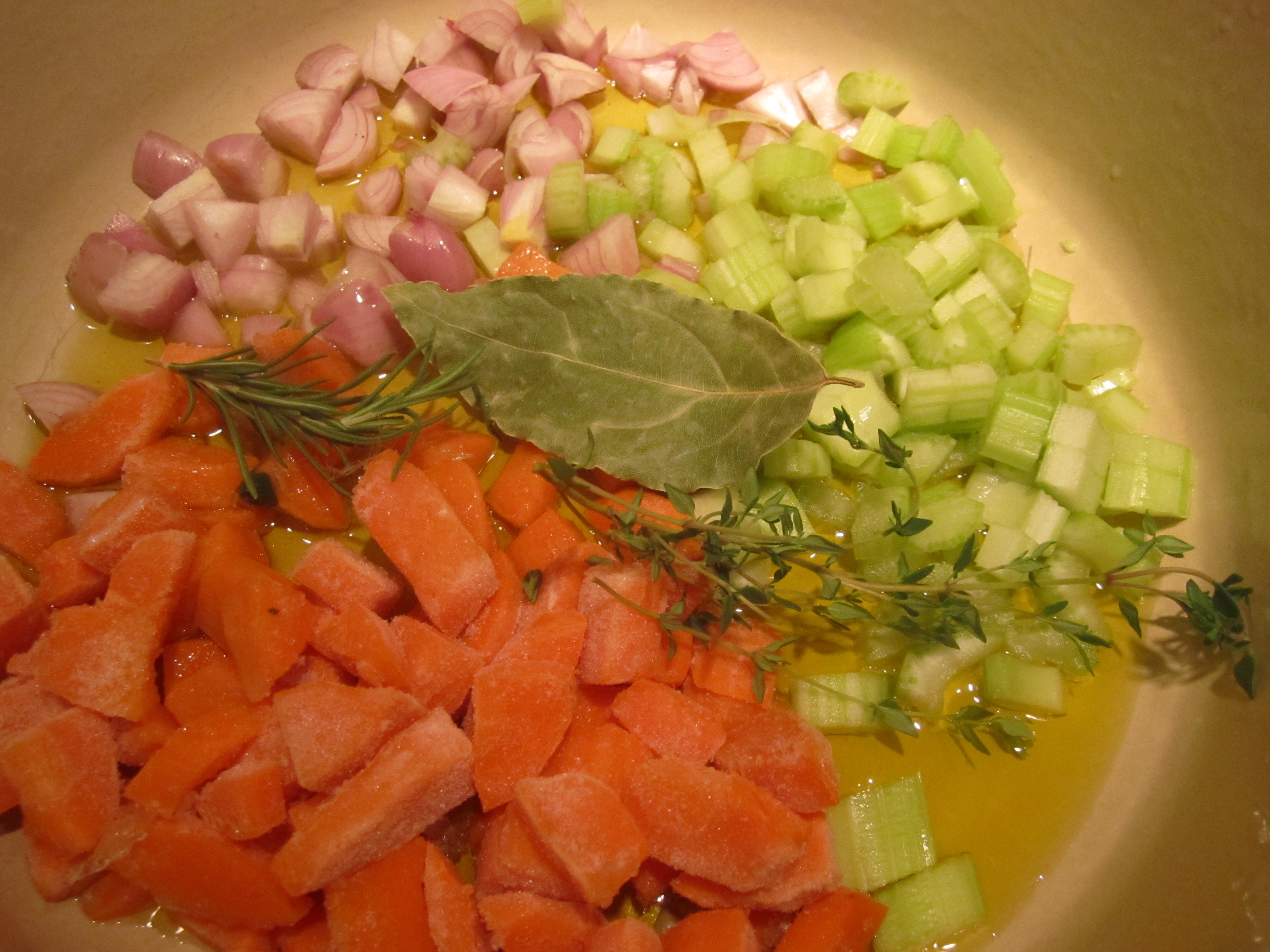
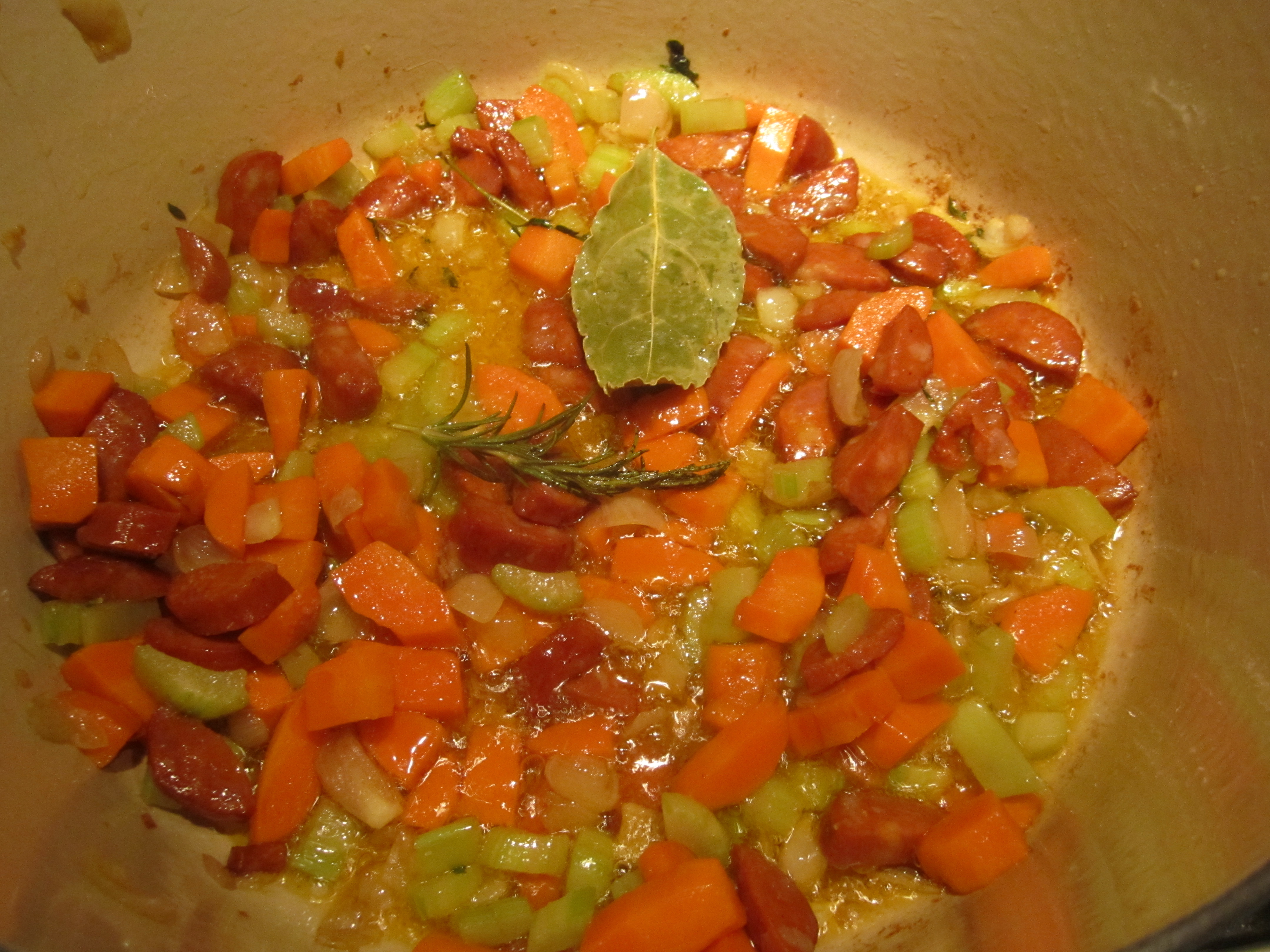
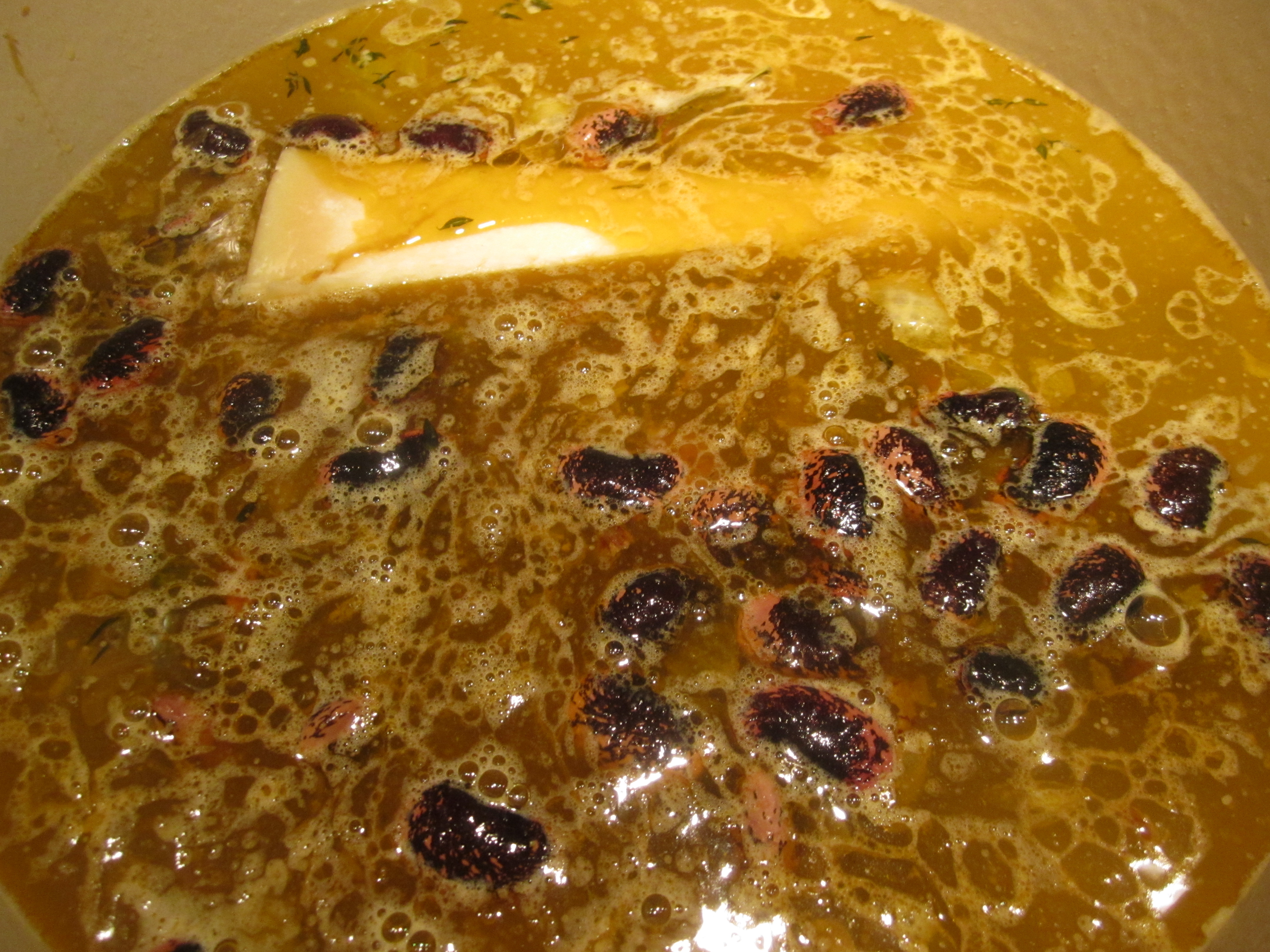
After an overnight soaking and draining of the beans, I begin by sauteing aromatics–carrots, celery, onion and shallot, along with a bay leaf, thyme and rosemary sprigs.  I then add some of the broth and all of the beans.

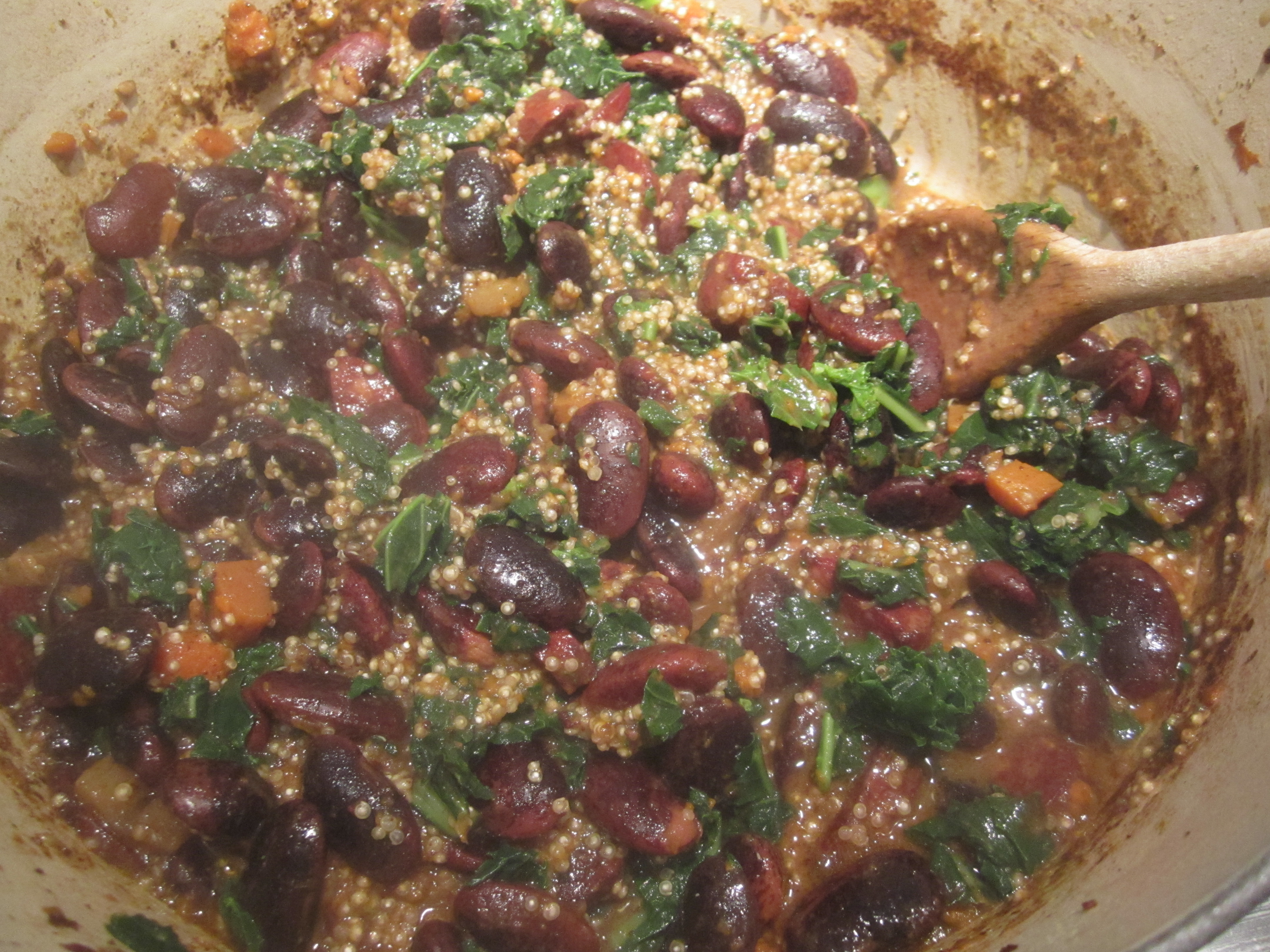
These beans will take the better part of 2 1/2 hours to simmer to the point of being velvety inside, while still maintaining a slight bite outside.  During the last 20 minutes of cooking, I add a cup of quinoa and continue cooking.  The kale gets added about 10 minutes before you’re ready to serve the stew.

I call this a stew, but it can just as easily be thinned to more of  a soup consistency, by the addition of more liquid.  Either way, you’ll find it the perfect dish for a slightly chilly fall afternoon or evening.

Scarlet Runner Beans with Chorizo and Quinoa

13 oz. Scarlet Runner beans, soaked in water overnight, then drained

6 small shallots

2 stalks celery

2 carrots, peeled

2 tbls olive oil

1 sprig fresh thyme

1 sprig fresh rosemary

1 bay leaf

2 pieces cured chorizo sausage, sliced lengthwise, then crosswise into 1/2″ half-moons

1 c quinoa

1 piece of parmigiano rind approximately 2″ x 2″

1 bunch kale, stripped off stems, sliced into 1/2″ ribbons, and blanched in plenty of generously salted water for about 5 minutes.  Retain water and set aside for use as  vegetable stock.

Chop all aromatic vegetables to a fairly uniform 1/2″ dice.

In a dutch oven, place all aromatics and oil and bring to a sizzle on low heat.

Saute for about 10 minutes, until onions and carrots begin to soften and color.  Add chorizo and continue sauteing until the chorizo begins to caramelize.

Add beans, along with enough broth to cover by an inch.  Also add the parmigiano rind.

Keep extra broth to add later, as water evaporates.

Simmer, partially covered on lowest heat for approximately 2 hours, stirring, tasting and adding broth from time-to-time.

When beans are pleasingly soft inside, add quinoa and continue simmering for another 20 minutes, until quinoa has softened and cooked through.

Add half of the kale (save the rest for a later use–it freezes perfectly) and bring to heat.

Taste for salt, and add broth to reach the desired consistency.

Serve with a drizzle of raw extra-virgin olive oil (and lots of grated pecorino or parmigiano).

Posted in Vegetables | Leave a comment

Chicken Thighs with Caramelized Shallots and Bacon

A local favorite restaurant of mine, Nick and Toni’s in Easthampton, makes one of my favorite roast chickens.  They have a wood-burning oven in which they roast most of the main courses that are served–meats, fish and chicken.

One of the things that makes their roast chicken so good is chunks of house-cured pancetta scattered about, as well as roasted whole cloves of garlic.

Tonight, I’m in the mood for my version of this roast chicken.  I’m using bacon instead of pancetta (because I have it) and shallots instead of garlic (because the shallots looked better than the garlic at my market).

Because this is a weeknight meal and I wanted to abbreviate the roasting time, I’ve used chicken thighs instead of a whole roast chicken.

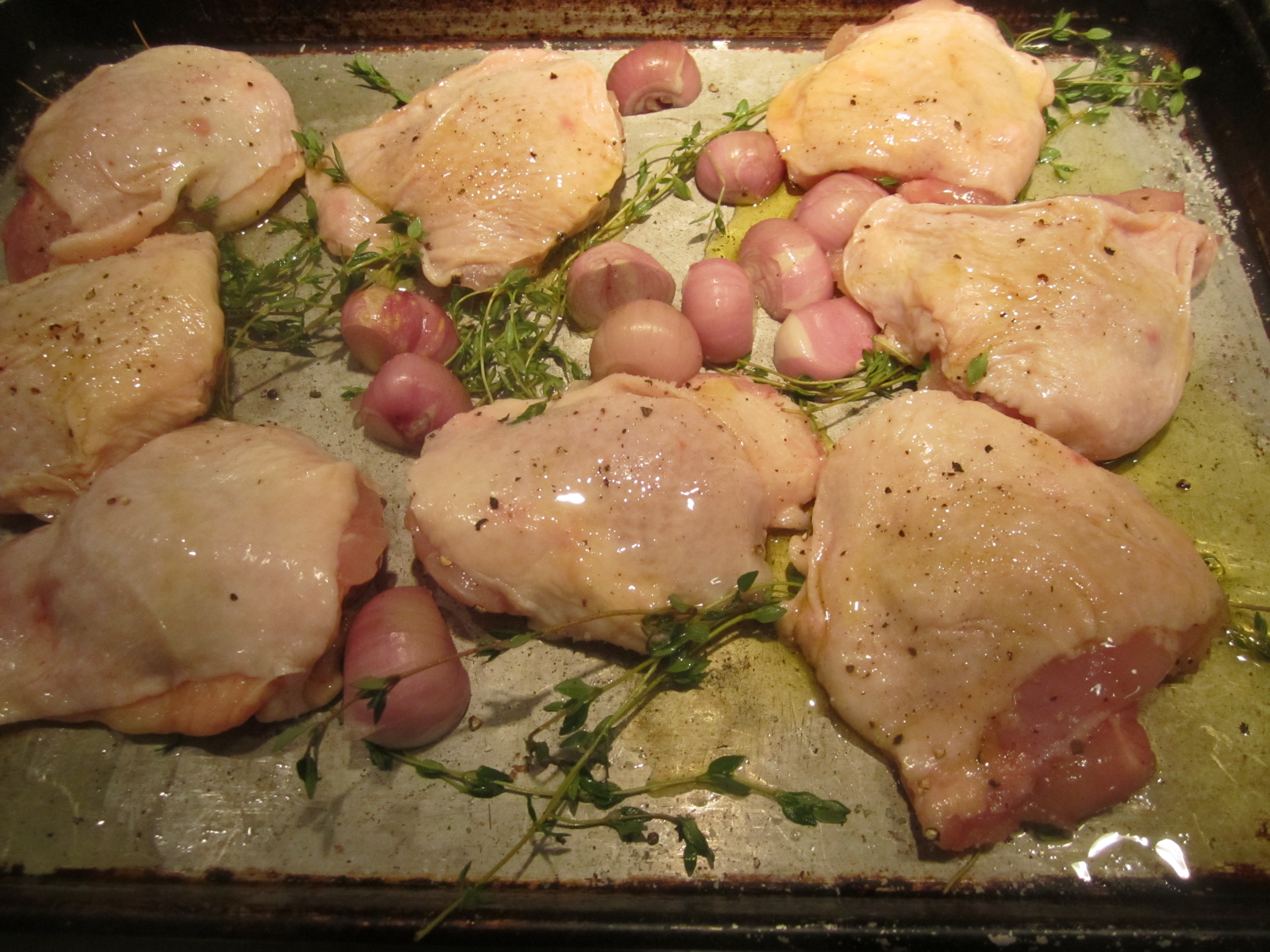
The chicken thighs are arranged on a bed of thyme branches, along with the shallots.

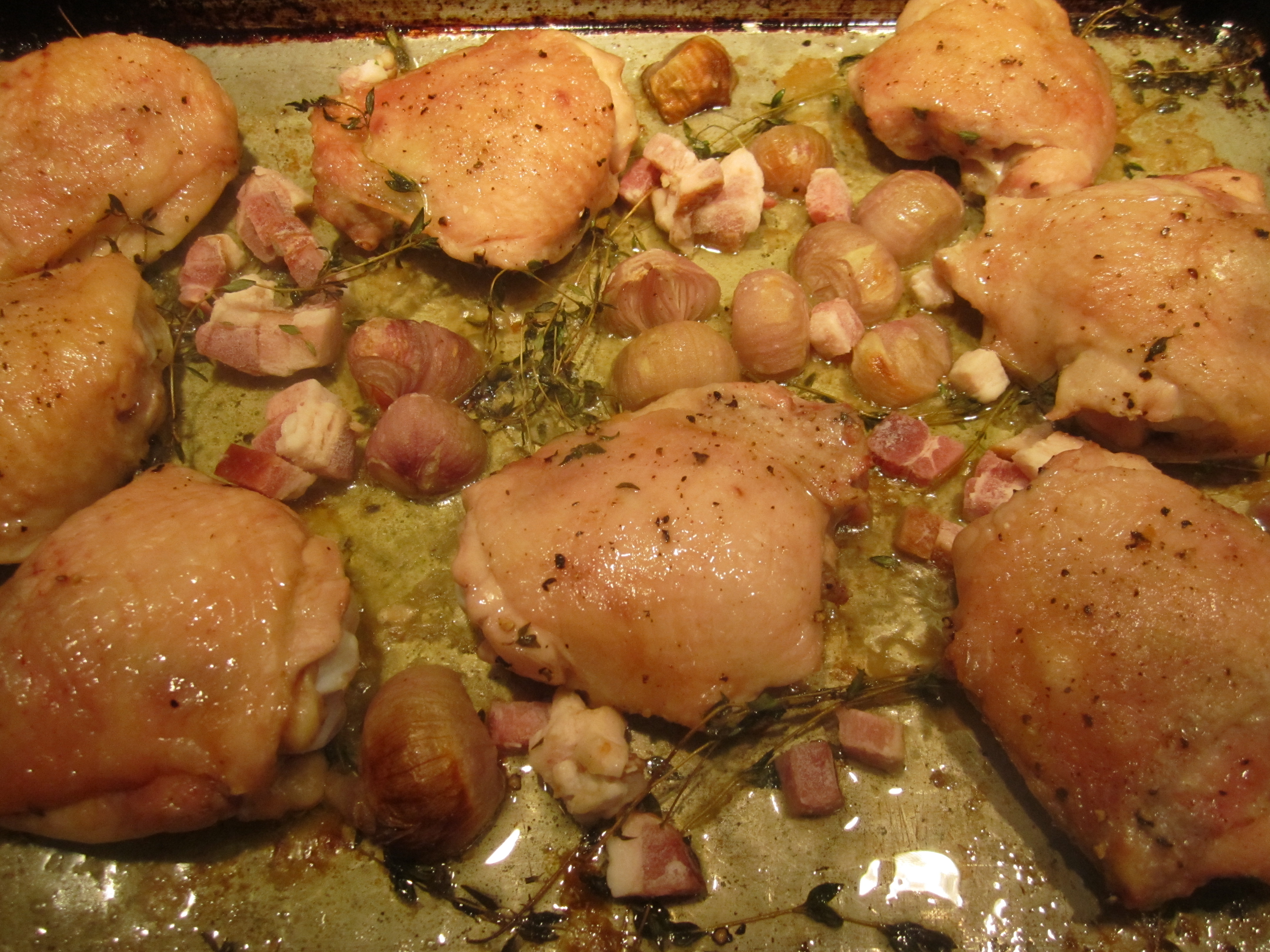
All gets seasoned generously with salt, pepper and drizzled with olive oil, then roasted in a preheated 400-degree oven for about a half hour.  The bacon cubes get added to the roasting pan for an additional 15 minutes of roasting.

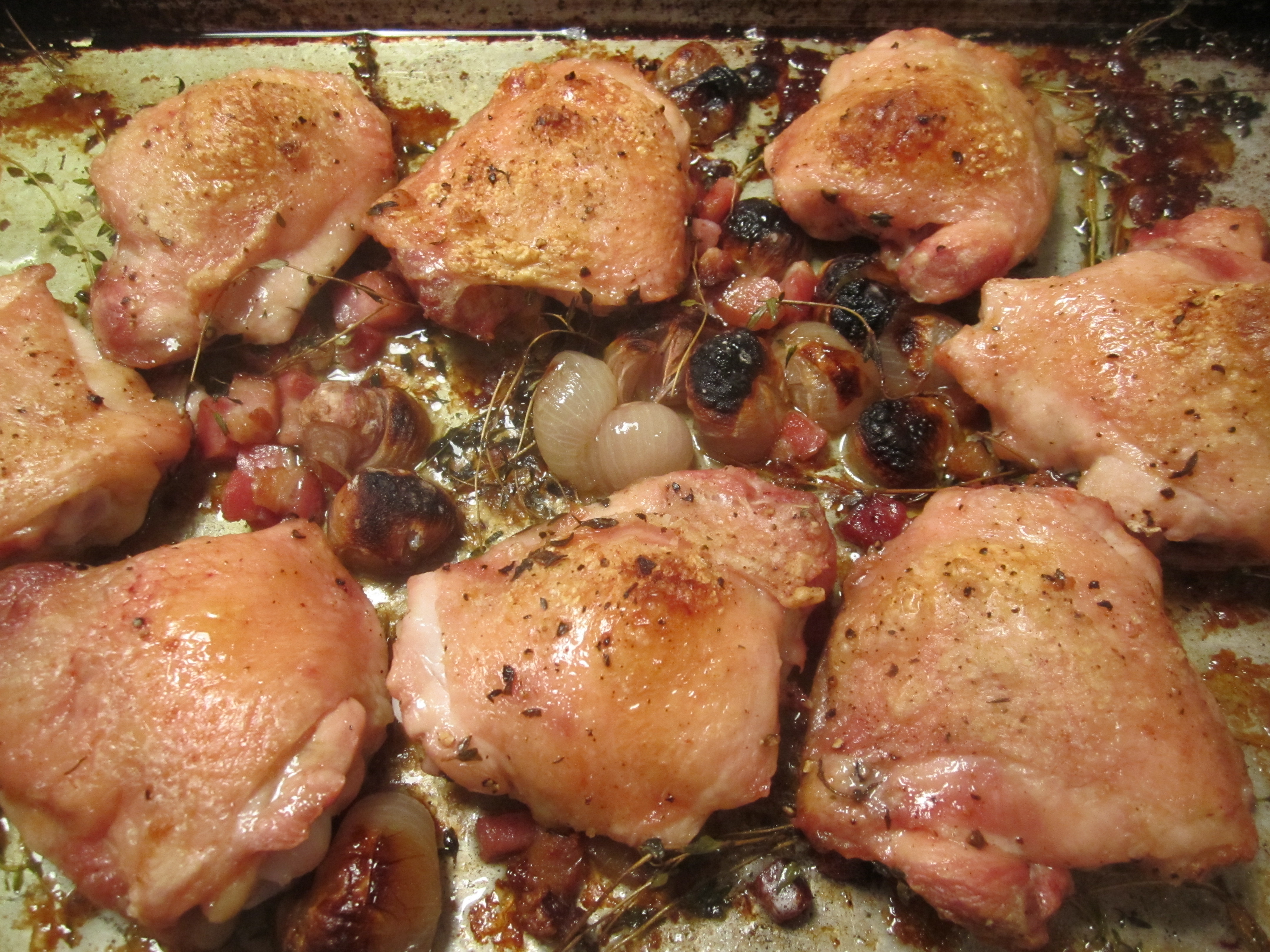
At the end of 45 minutes, turn on the broiler to brown the chicken (if it’s not golden brown already).  Once you turn on the broiler, keep a close watch on the chicken because it will go from brown to black in an instant.

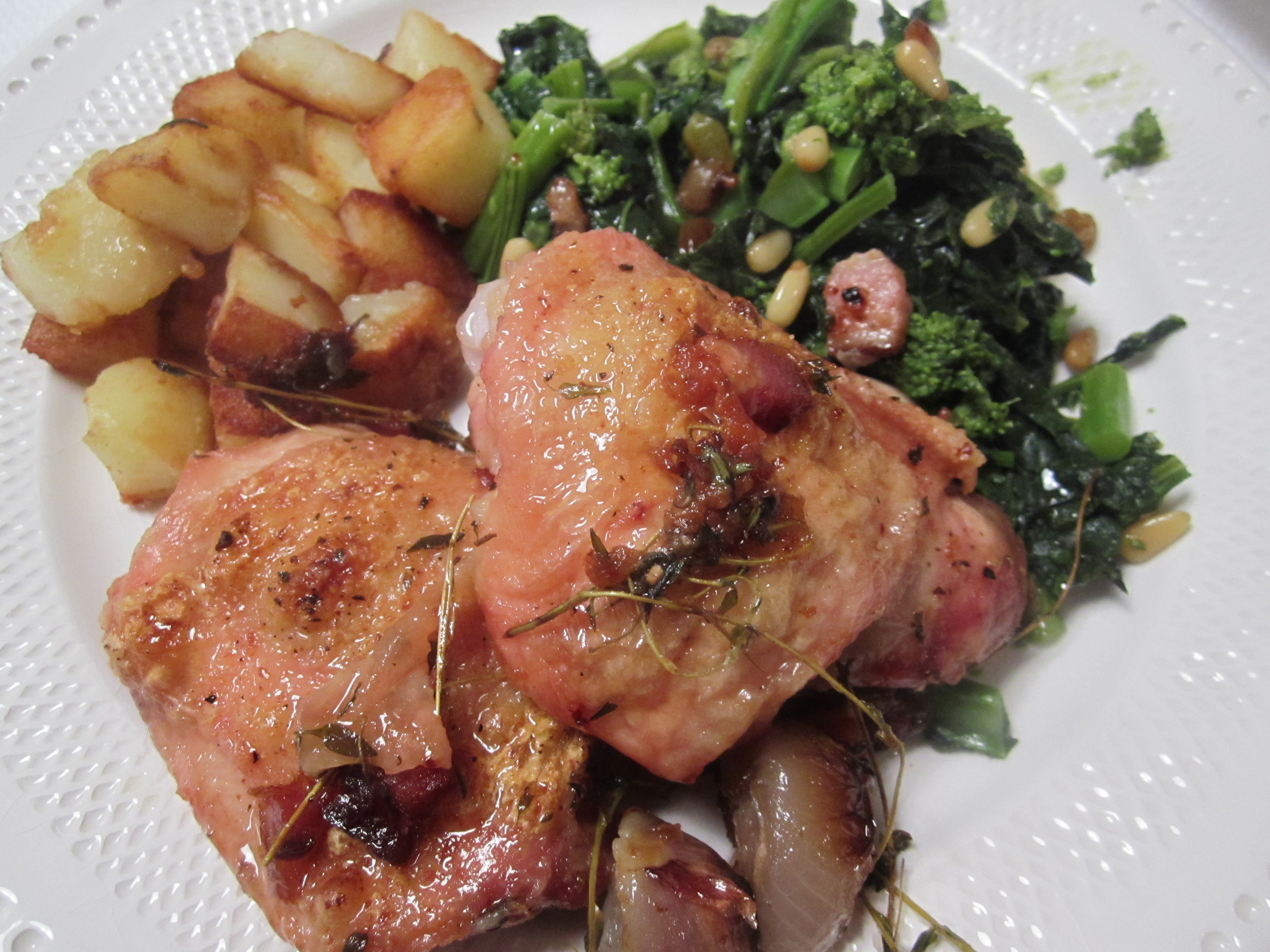
In addition to the chicken, we’re having skillet potatoes and broccoli di rapa with pine nuts and raisins.

The leftovers will make great lunches in the days to come.

Posted in Poultry | 1 Comment

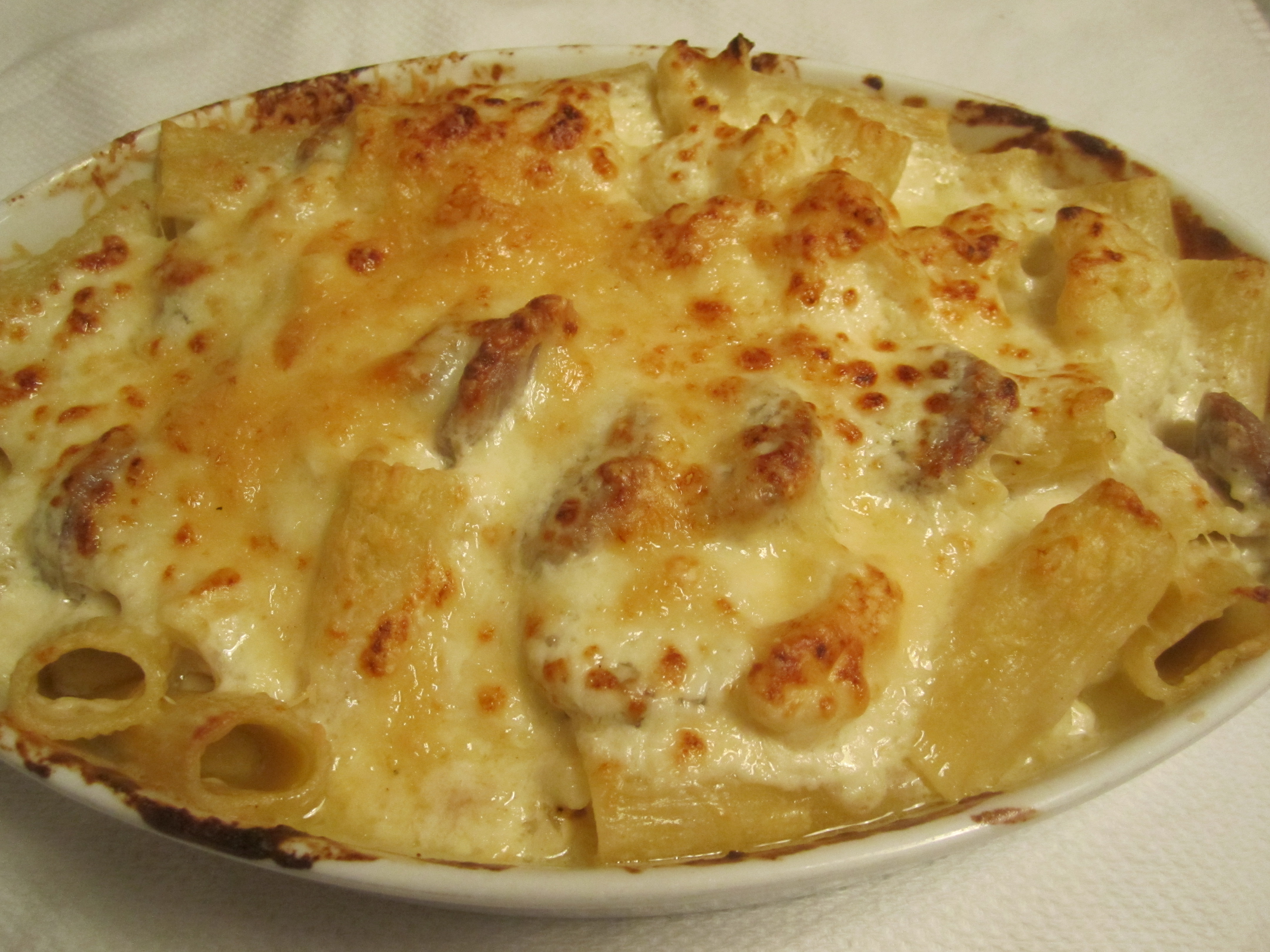
Pasta al Forno with Cauliflower and Sausage

I just returned home from a nice long vacation in London and the English countryside, and the food is still fresh in my mind.  The flavor of those wonderful English sausages was intoxicating (they produce so many great varieties–one more delicious than the next).

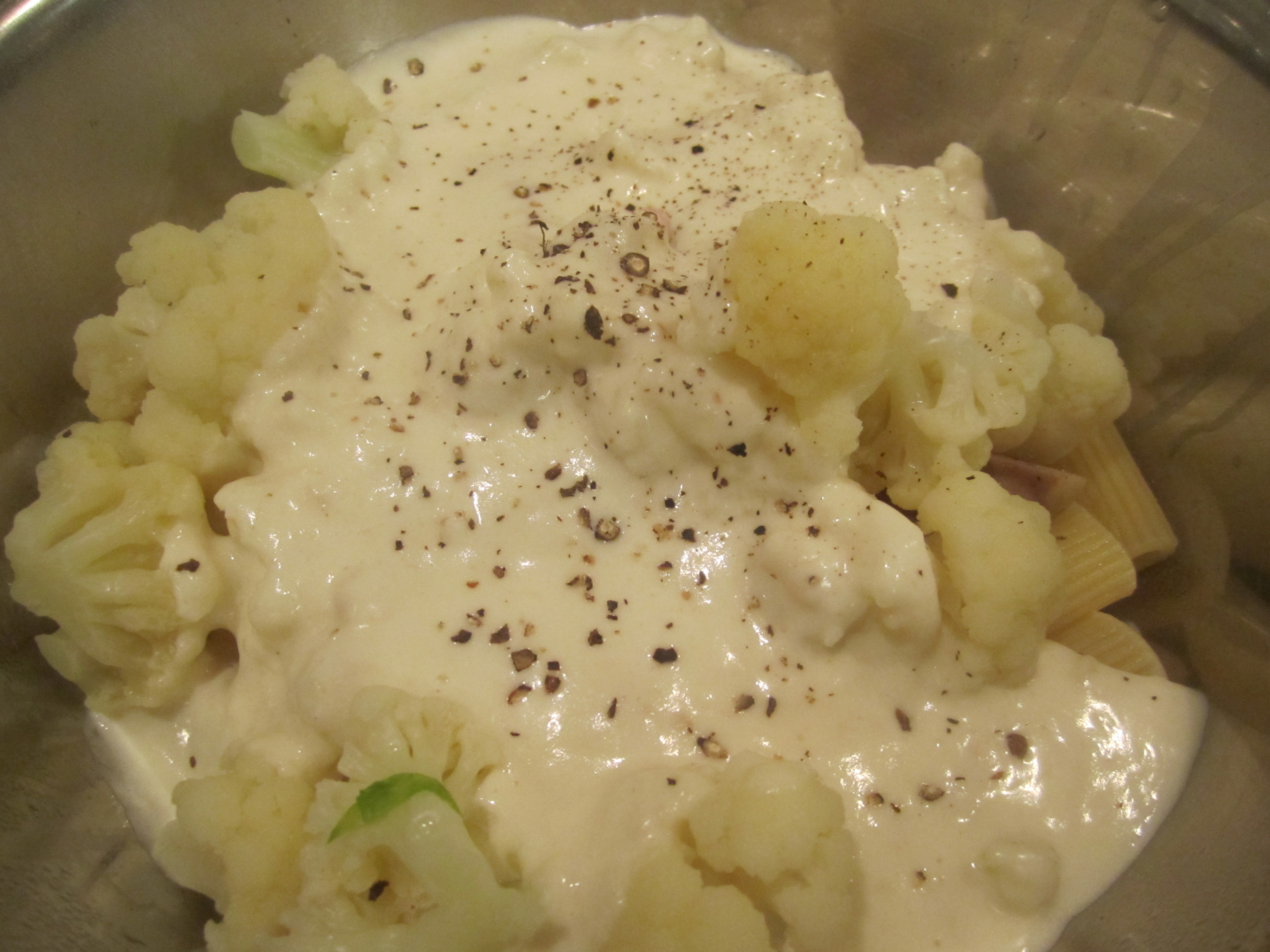
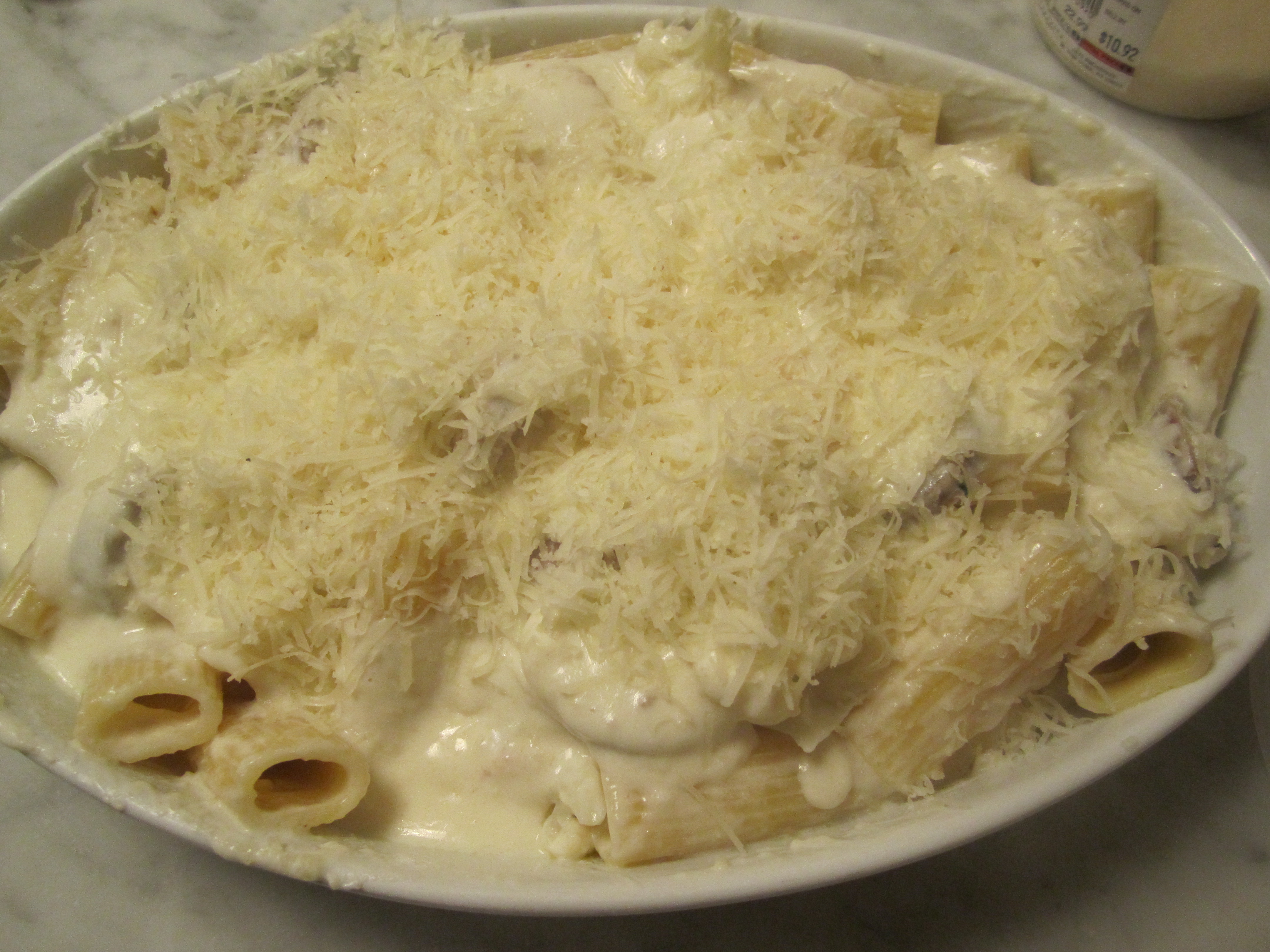
In addition, etched in my sense memory is a vegetable side dish I had at a fabulous restaurant in London, Scotts in Mayfair.  It was simply cauliflower, smothered in bechamel, topped with cheese, and baked until golden brown.  I’m always looking for great vegetables when I dine at new restaurants, and this sounded (albeit a little rich) irresistable–and was.

Although I don’t often cook with bechamel, in England, I was reminded of what a wonderful flavor conductor it can be for so many foods.  You can just as easily call this mac and cheese, but whatever you choose to call it, its inspiration was decidedly British, it’s preparation was quick and easy.

Because of the richness of the dish, all that is really necessary is a crisp green salad to accompany it.

Your guests will absolutely swoon over this one.

Pasta al Forno with Cauliflower and Sausage

serves 4

1/2 head cauliflower, cut into small florets

1/2 lb short fat pasta, such as rigatoni

2 pieces of sweet Italian sausage, fully cooked and sliced (about 4 oz)

3 tbls butter

1 small shallot, diced finely

1/4 c flour

2 1/2 c half and half

1/3 c grated pecorino sardo (you can substitute parmigiano)

1 c grated manchego (fresh or aged)

1/8 tsp nutmeg

1/2 tsp salt plus additional for the pasta water

1/4 tsp black pepper

Preheat oven to 400 degrees.

Bring pasta water to the boil.

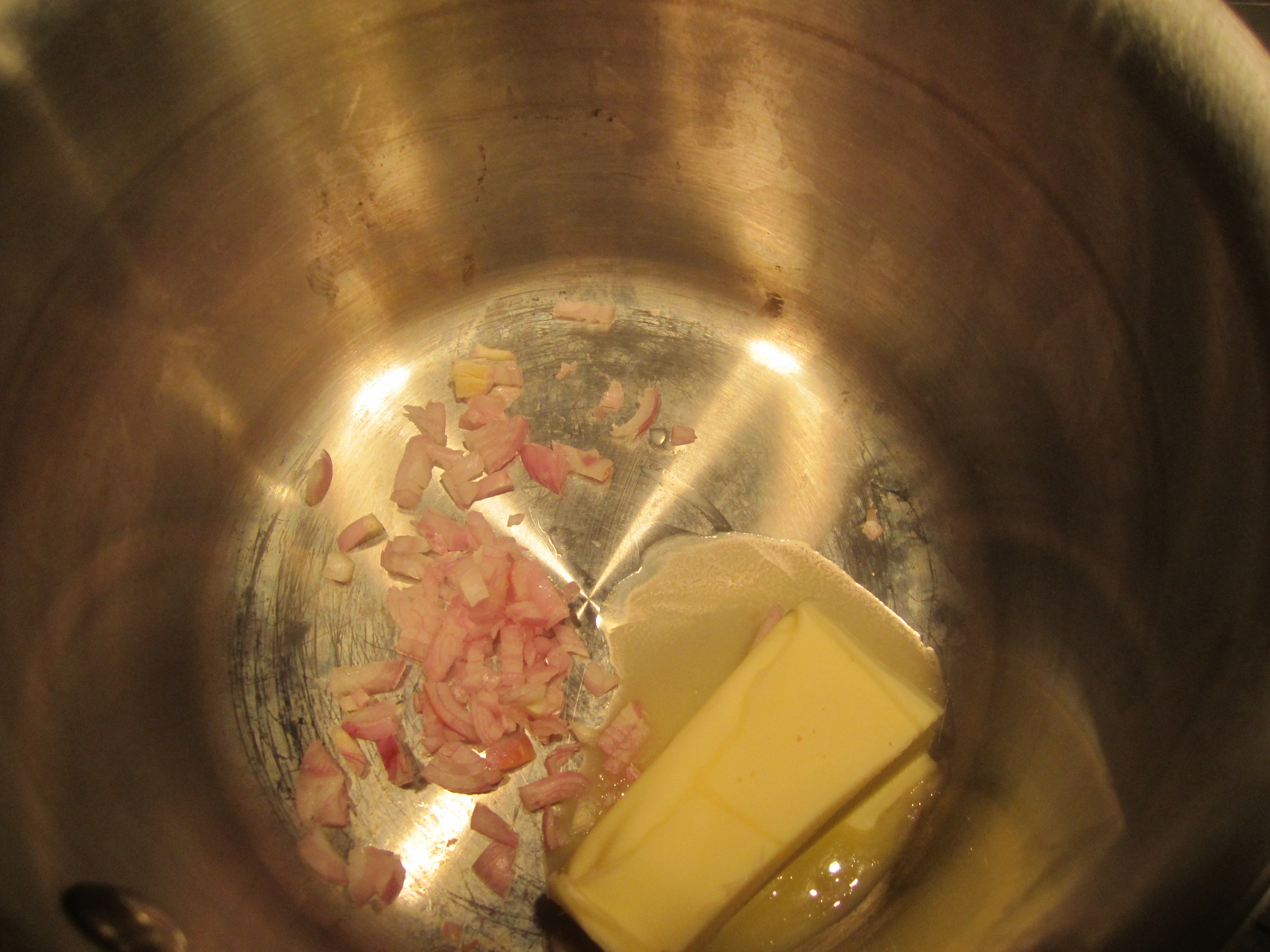
While waiting for water to boil, make bechamel.  In a saucepot, melt butter and shallots and cook on low for about 5 minutes.

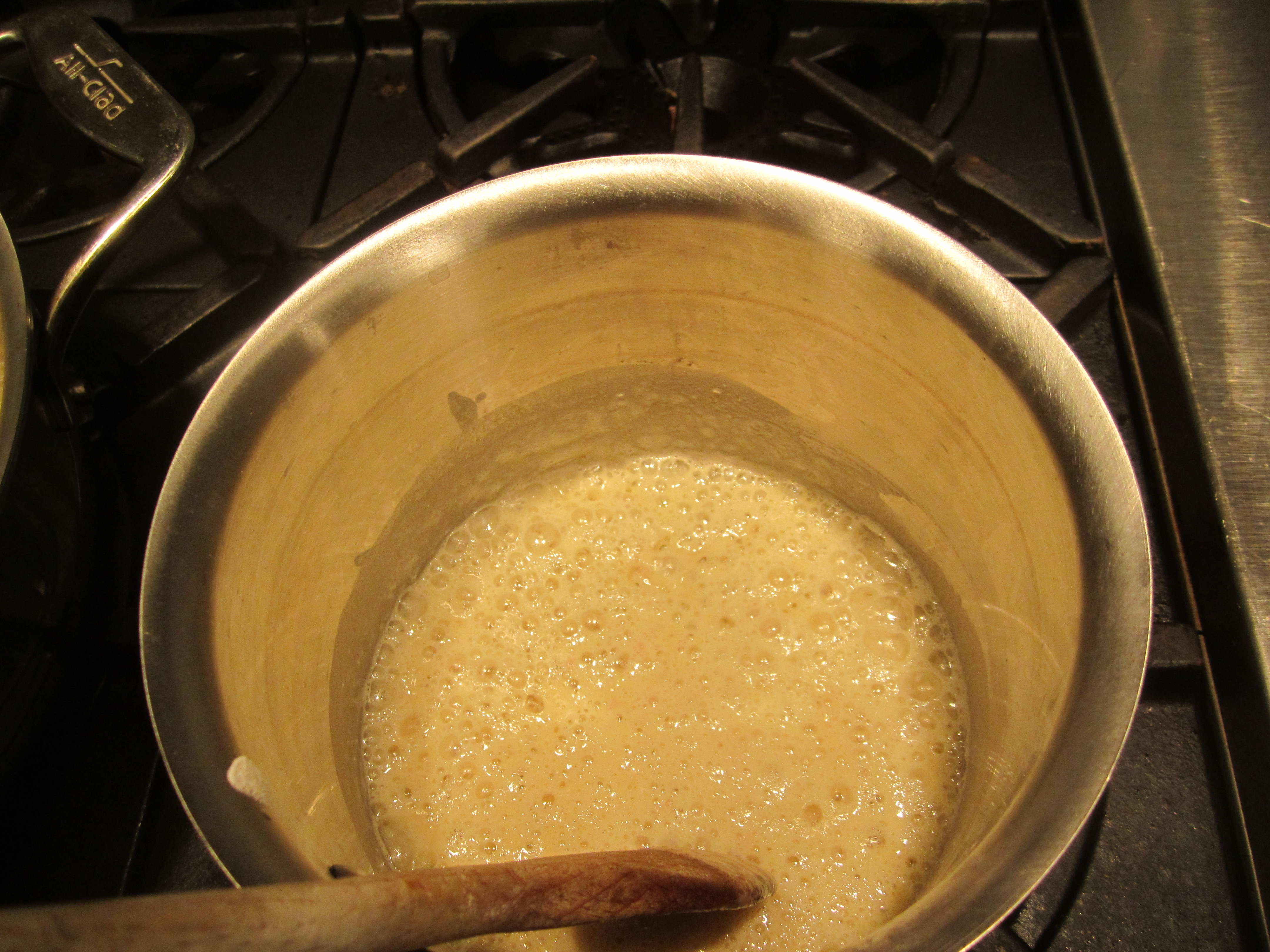
Add in flour and stir to break up any clumps, while coating flour completely with butter.  Stir and cook for about 4 minutes, just until the mixture begins to color (do not let it go beyond a pale yellow).

Add in the half and half, along with nutmeg and a teaspoon of salt, and allow the mixture to come to a simmer.  It will thicken as it simmers–you want it to be the consistency of very thick cream.  After it simmers for 2 – 3 minutes, turn off heat and add grated pecorino.  Set sauce aside until pasta is cooked.

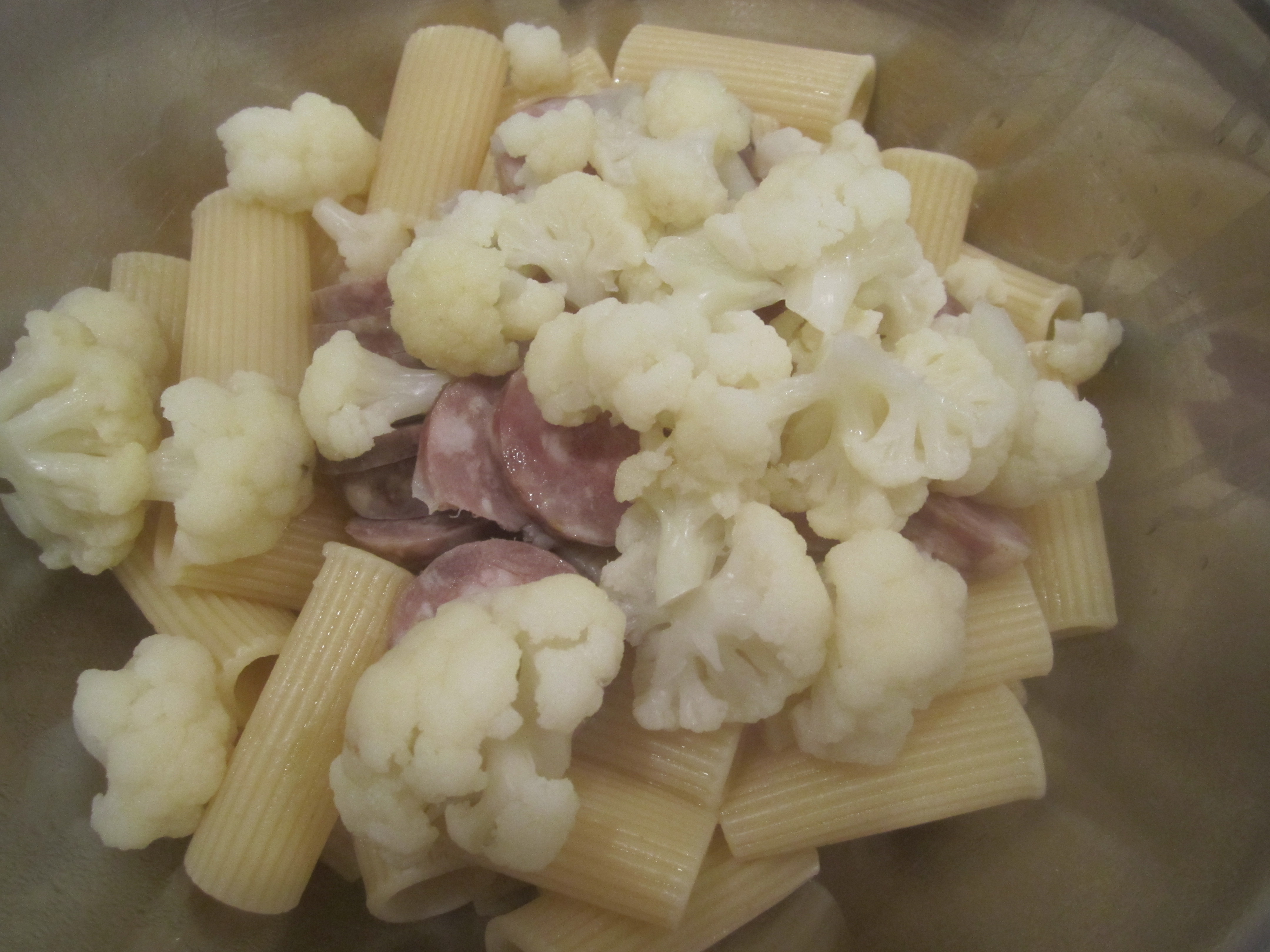
To the boiling pasta water, add salt and cauliflower.  Blanch cauliflower for approximately 7 minutes, or until tender.  Remove and drain.

Cook pasta in same water until a minute shy of done.

When pasta is ready, drain and combine with cauliflower and sausage in a mixing bowl.

Add half of sauce to mixing bowl and stir to combine.

Turn the mixture into a greased baking dish and top with the remaining bechamel, salt nd pepper to taste, along with all of the manchego.

Place in preheated oven for about 10 minutes, or until bubbling.  Turn on broiler to broiler to briefly brown the top.  Be careful–it browns quickly.  When uniformly browned and bubbly, serve immediately.

Posted in Pasta | Leave a comment

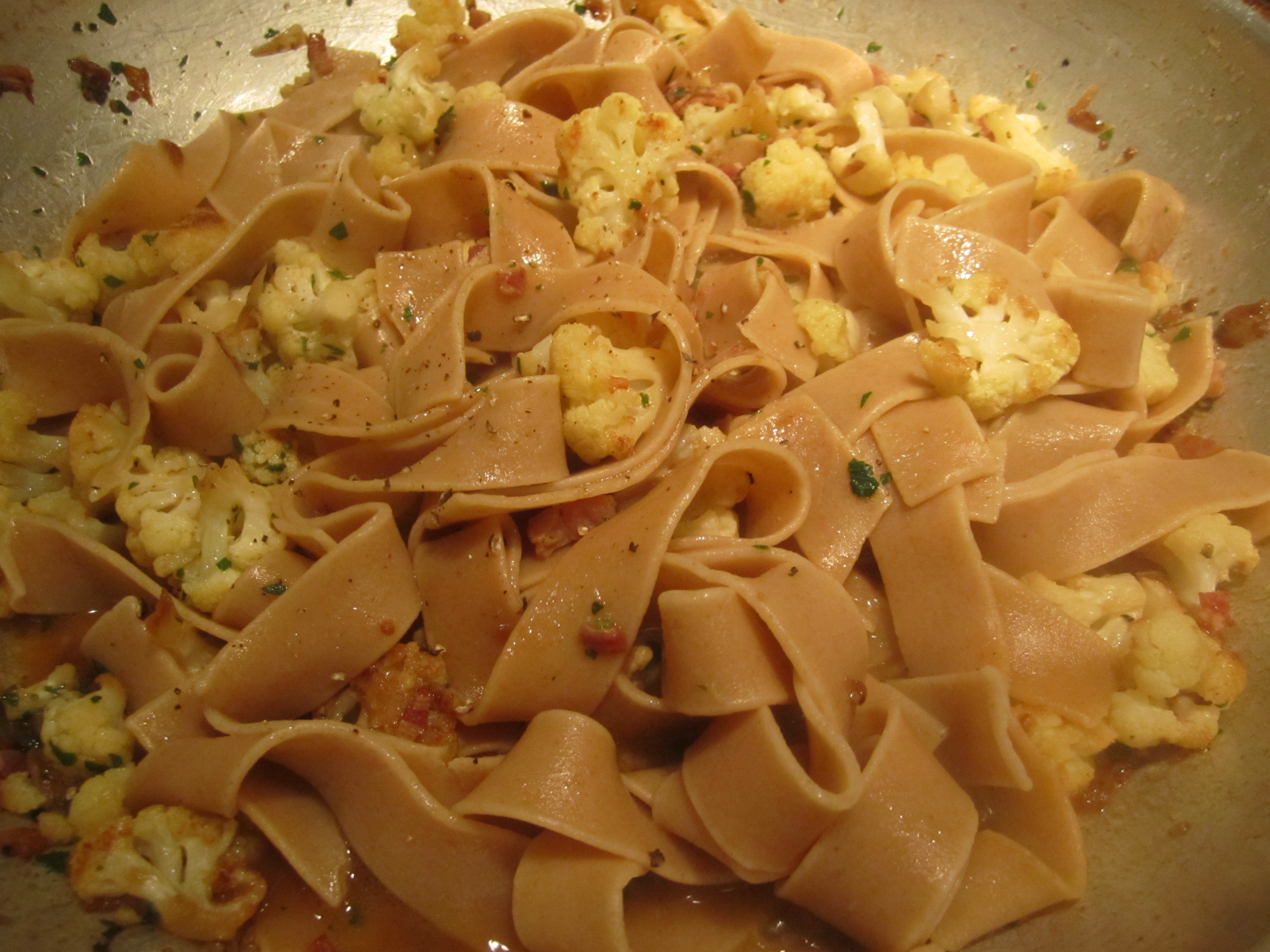
Whole Wheat Pasta with Cauliflower and Pancetta

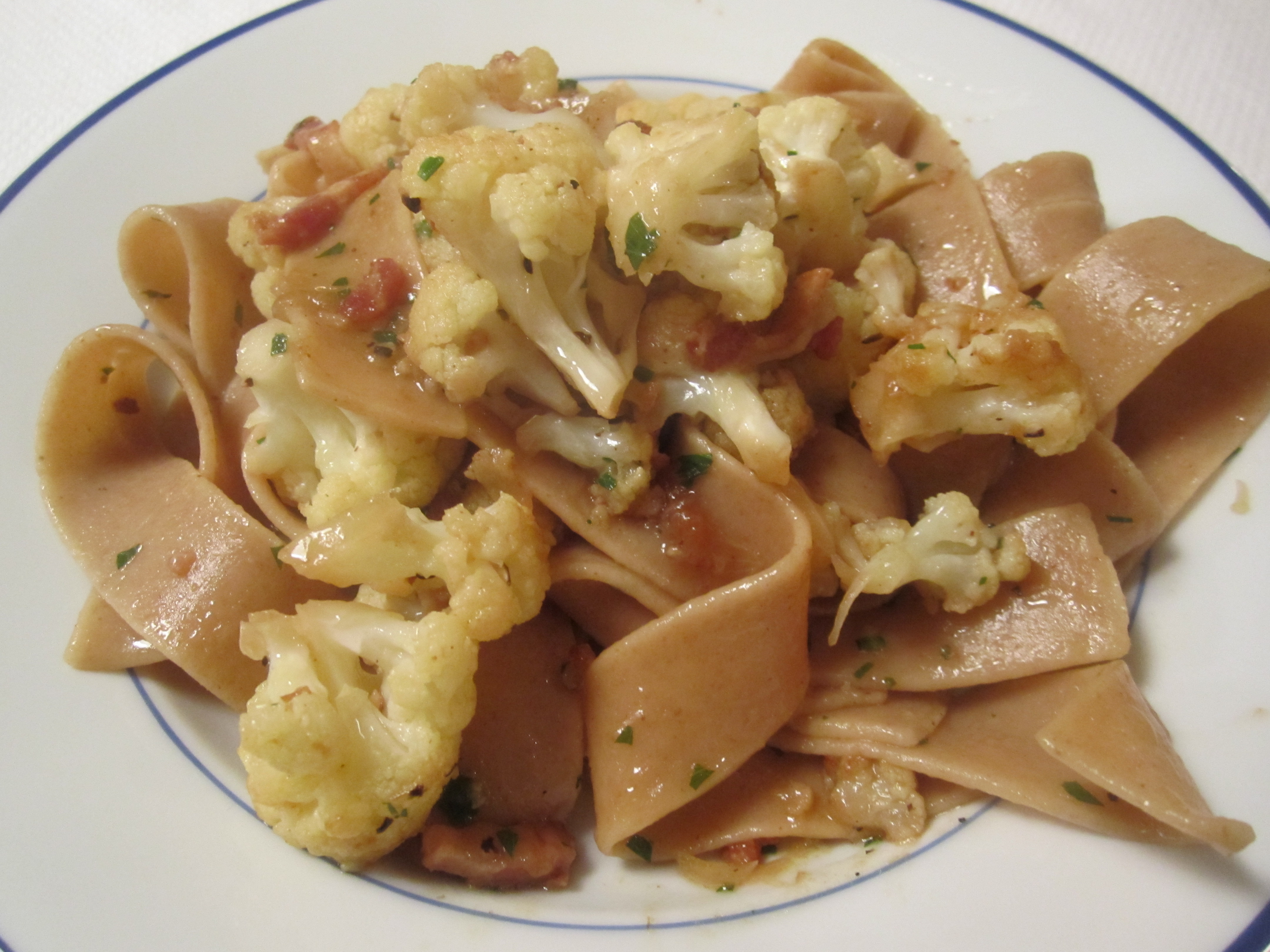
The earthy flavor of cauliflower is the perfect complement to the nutty, full-bodied flavor of whole wheat pasta.  Although this dish could be made vegetarian without the pancetta, I think the cured pork is a natural flavor enhancer for these ingredients.  In addition, I’ve added shallots and a sprig of thyme (sage would do just as well).

This dish can be ready in the time it takes to boil the water and cook the pasta.  The shallots, pancetta and cauliflower are placed in a large saute pan with olive oil, and allowed to come to a simmer.  While the pasta cooks, the vegetables simmer, with the addition of some pasta water from time to time, if the cauliflower mixture begins to brown too fast.

At the end, all that is needed to bring the sauce together is some additional pasta water and some raw extra-virgin olive oil, off the heat.  In addition, I like to sprinkle this dish heavily with grated pecorino romano and black pepper.

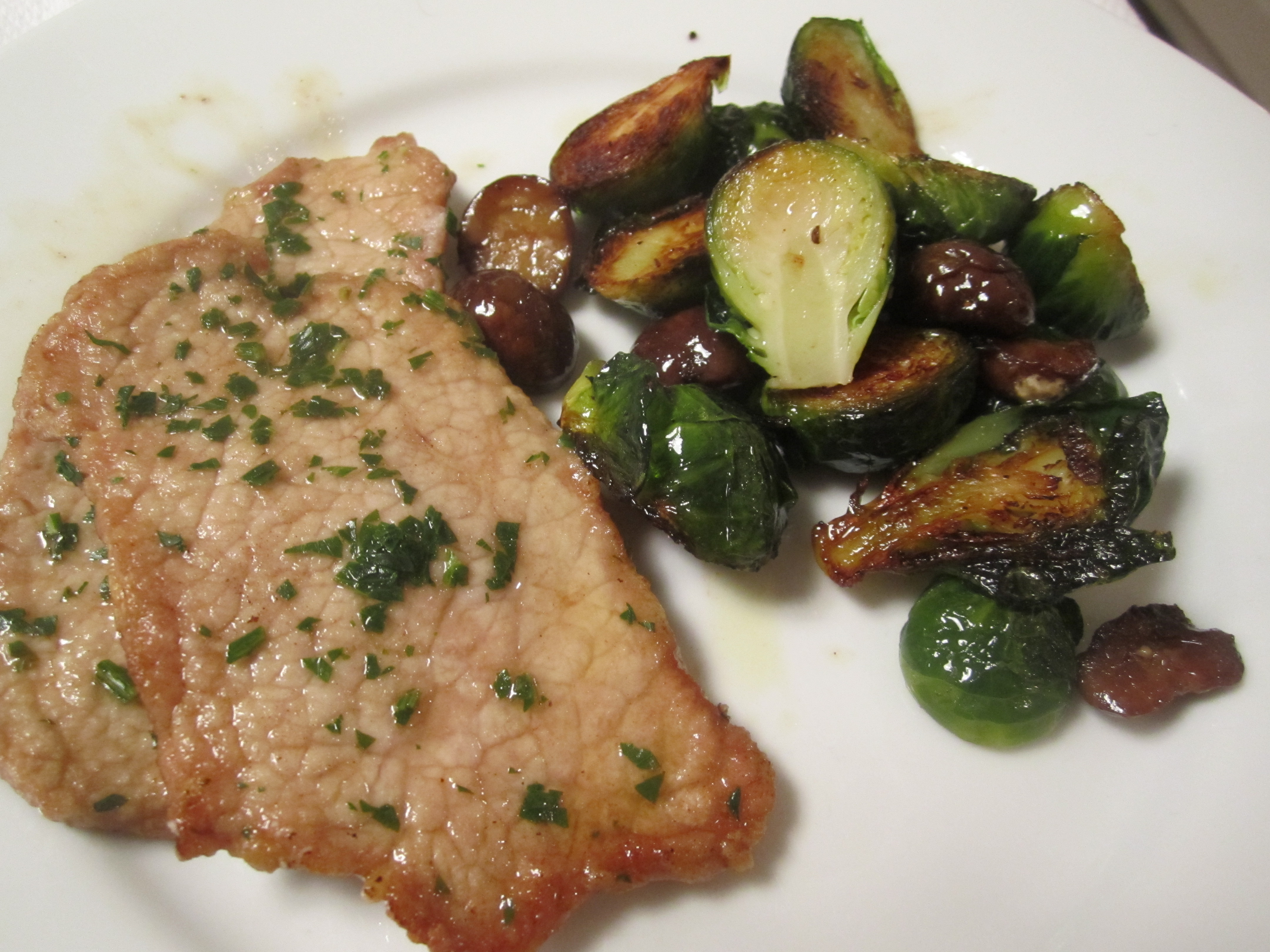
As a main course, tonight, we had veal scaloppine (see chicken scaloppine with white wine and shallots ), along with caramelized brussels sprouts and chestnuts.

Whole Wheat Pasta with Cauliflower and Pancetta

serves 4

1 lb whole wheat pasta (I’m using pappardelle, but penne or fusilli would be fine)

1 head cauliflower, center trunk discarded, cut into small florets

3 shallots, peeled and diced

2 oz. pancetta, sliced thin, then diced into 1″ pieces

1/4 c + 1 tbl extra-virgin olive oil

sprig thyme

salt and pepper to taste

2 tbls  fresh chopped parsley

grated pecorino romano for sprinkling

While pasta water is coming to the boil, place pancetta, shallots and all but 1 tablespoon of olive oil in a broad skillet on low heat.  Slowly bring up to a sizzle.

Saute for about 5 minutes, then add cauliflower.  Cover and simmer on low heat for about 10 minutes, stirring and flipping every couple of minutes.

If the pieces begin to brown too quickly, add some pasta cooking liquid.  Taste, add salt and black pepper and the parsley.

While pasta boils, allow the cauliflower to continue simmering until it is uniformly tender.  When pasta is cooked, add to the skillet, along with a couple of tablespoons of cooking water.

stir and toss for about a minute to combine.  Drizzle with a tablespoon of olive oil.  Serve immediately.

Posted in Pasta | Leave a comment

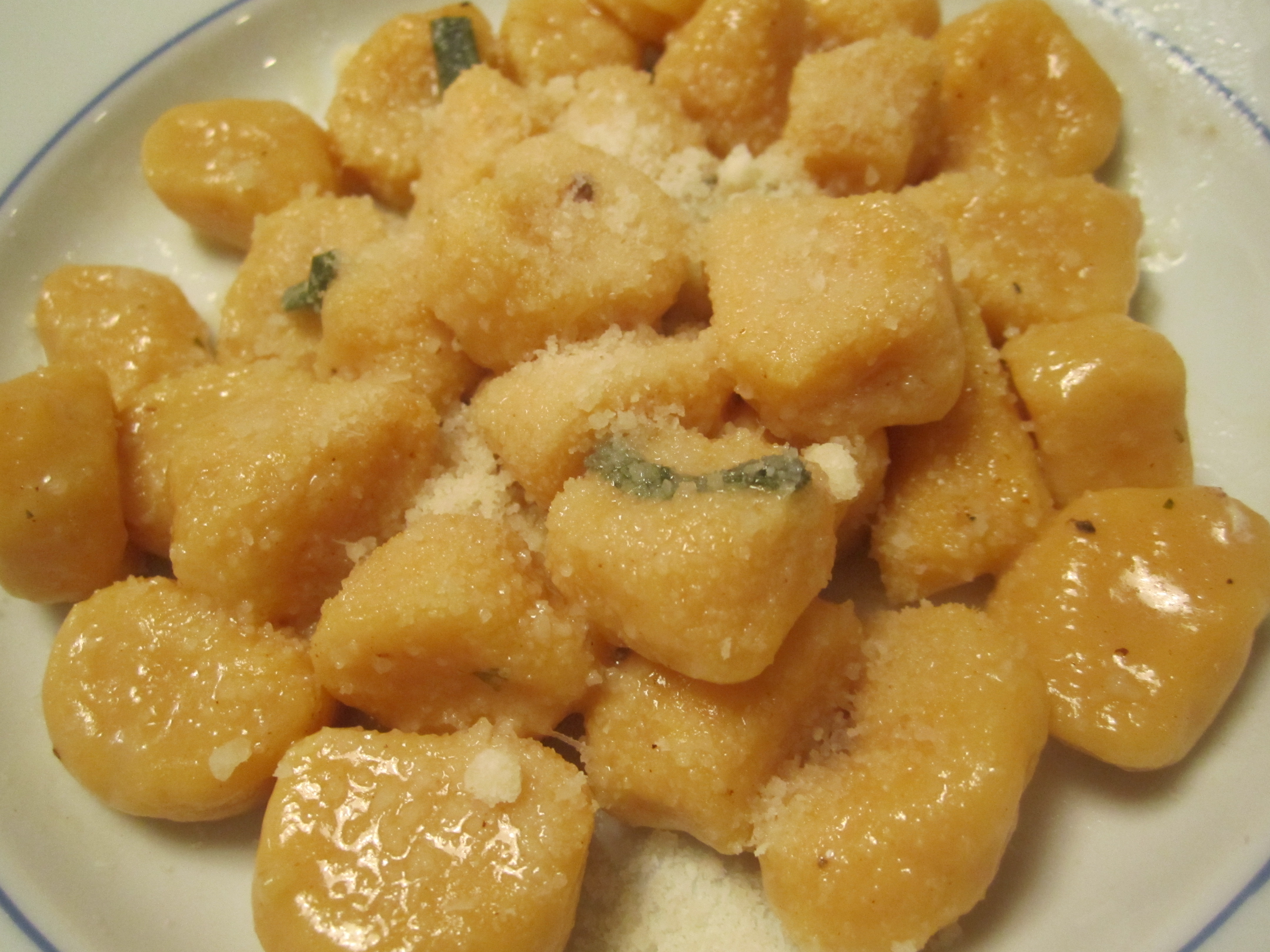
Sweet Potato Gnocchi with Spiced Sage Butter

Now that it’s sweet potato season, I’ve been experimenting to create the perfect sweet potato gnocchi.  These are predominantly made with sweet potato, with a touch of white potato added for starch and dryness.

The white potato is necessary because the sweet potatoes have a higher water content than russet potatoes, therefore if you used only sweet potatoes, you would need to add an amount of flour that would result in a leaden gnocchi with virtually no sweet potato flavor (trust me–I’ve thrown away enough gnocchi to know).  The white potato is absolutely essential in adding starch and flavor while allowing you to keep the flour to a minimum.

Lest you think the goal is to use as little flour as possible, if you use too little flour, the gnocchi become too moist and melt.  The goal (and the art) of good gnocchi is to use enough flour to bind the potato without adding so much that they taste more of flour than potato.

The sauce for tonight’s gnocchi is sage, butter, nutmeg and a touch of cinnamon.  The spices enhance the flavor of the sweet potato enormously.  Along with a sprinkle of grated parmigiano, this combination of nutty, spicy and buttery is good enough to be dessert.

As a second course to our gnocchi, I made dry rubbed pork tenderloin and kale sauteed with apples in a combination of butter and olive oil.

Sweet Potato Gnocchi

makes enough for 6  servings as a first course

2 large sweet potatoes (about 2 lbs)

1 large russet potato (about 1 lb)

4 cups flour for the gnocchi dough + as much as 1 additional cup for dusting the work surface and the dough as you work with it.

2 large eggs, beaten

1 stick of butter

1/8 tsp cinnamon

6 leaves sage, sliced into thin ribbons

1/4 c chicken broth

1/8 tsp nutmeg

salt and pepper to taste

1 c grated parmigiano for sprinkling at the table

Preheat oven to 400 degrees

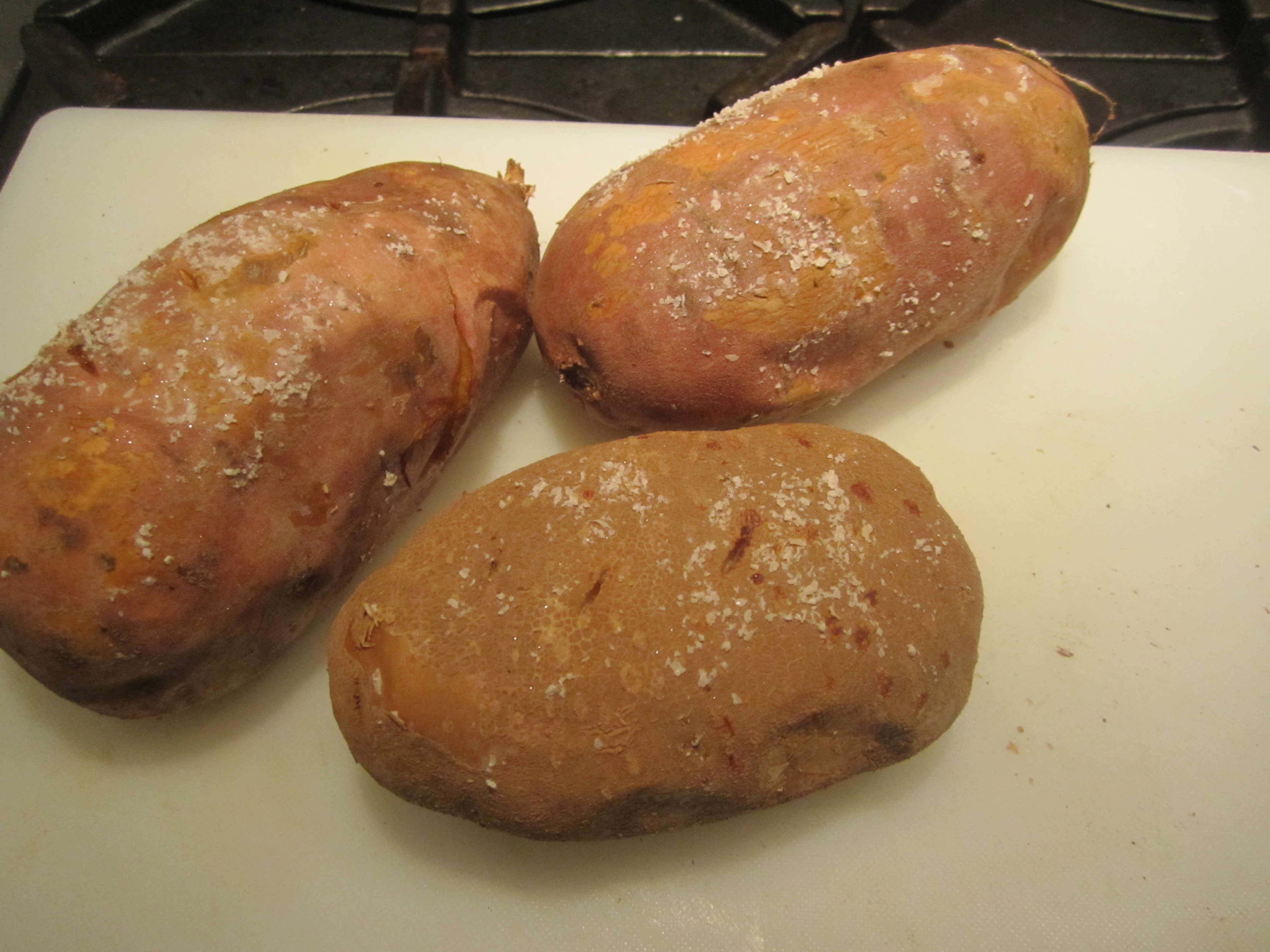
Wash potatoes and while still wet, coat lightly with a layer of kosher salt.  Pierce them with a fork or knife, then bake directly on the oven rack for about an hour-and-a-half, or until soft all the way through.

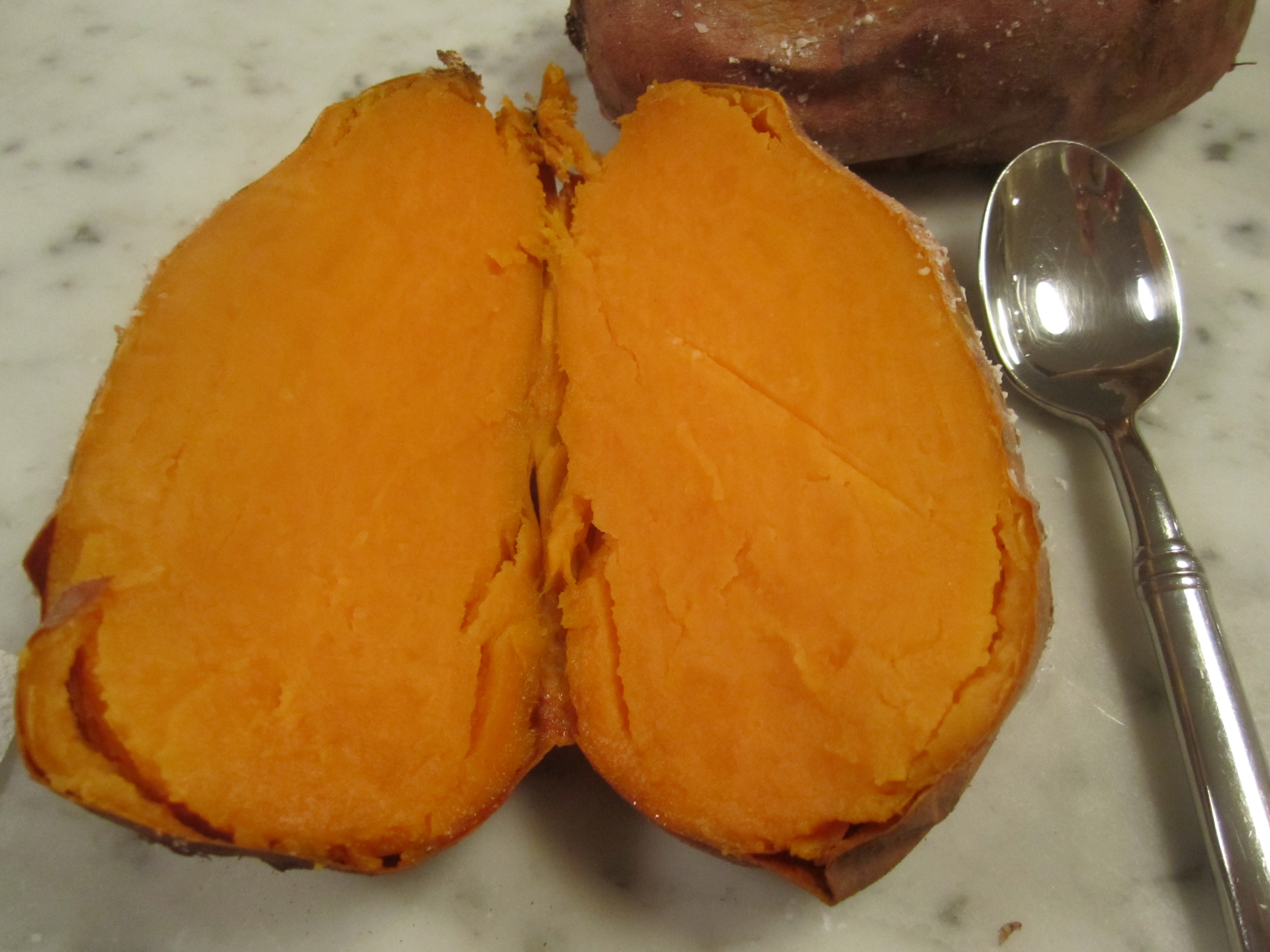
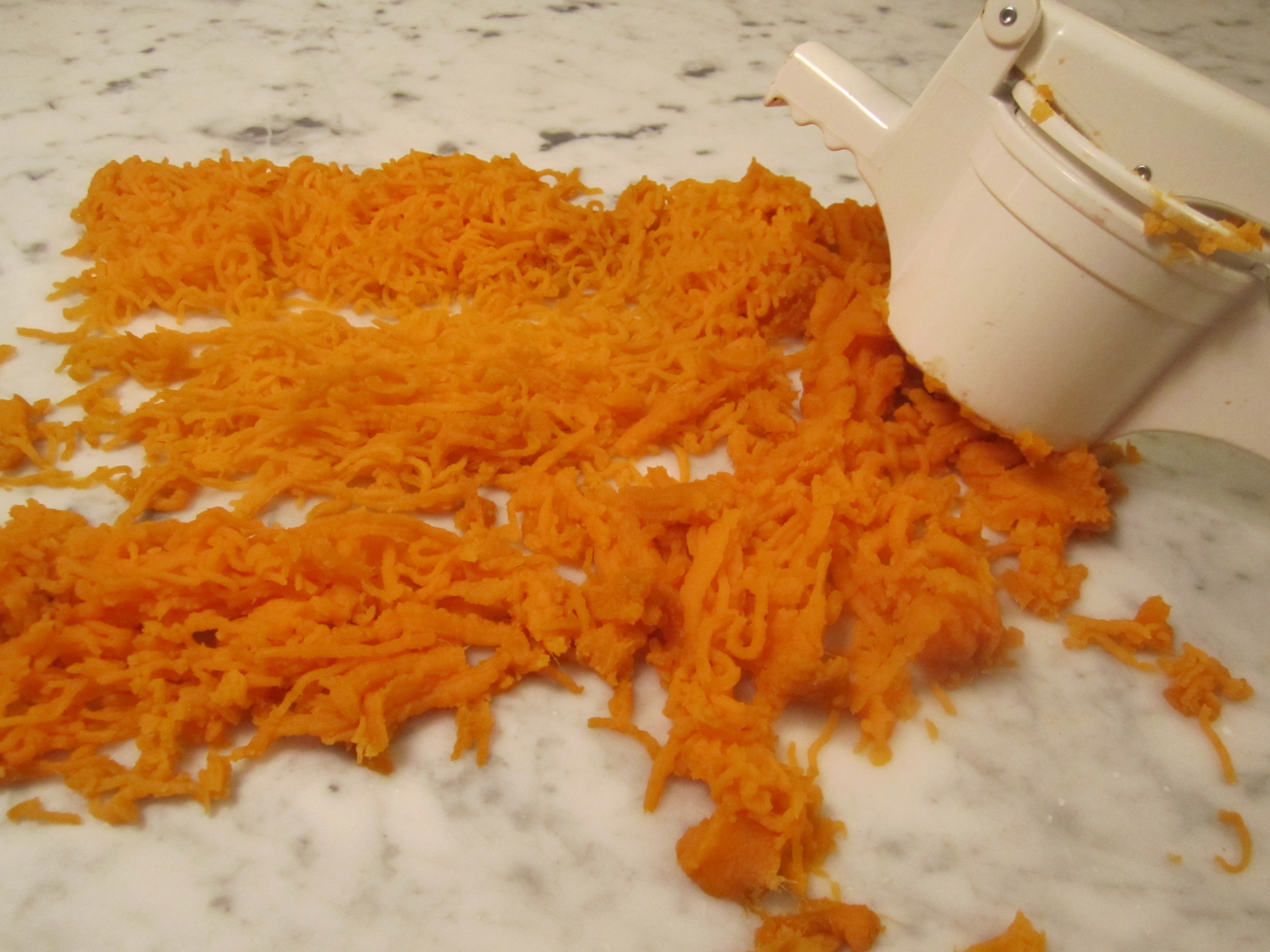
Cut potatoes in half and scoop out the insides with a spoon.  As you scoop out each potato, discard skin and spoon  insides directly into a ricer.  As you press the potatoes through the ricer, spread out over a clean marble countertop.

This will allow some steam (and therefore water) to dissipate.  After potatoes are riced and spread over the work surface, drizzle beaten eggs evenly over them.

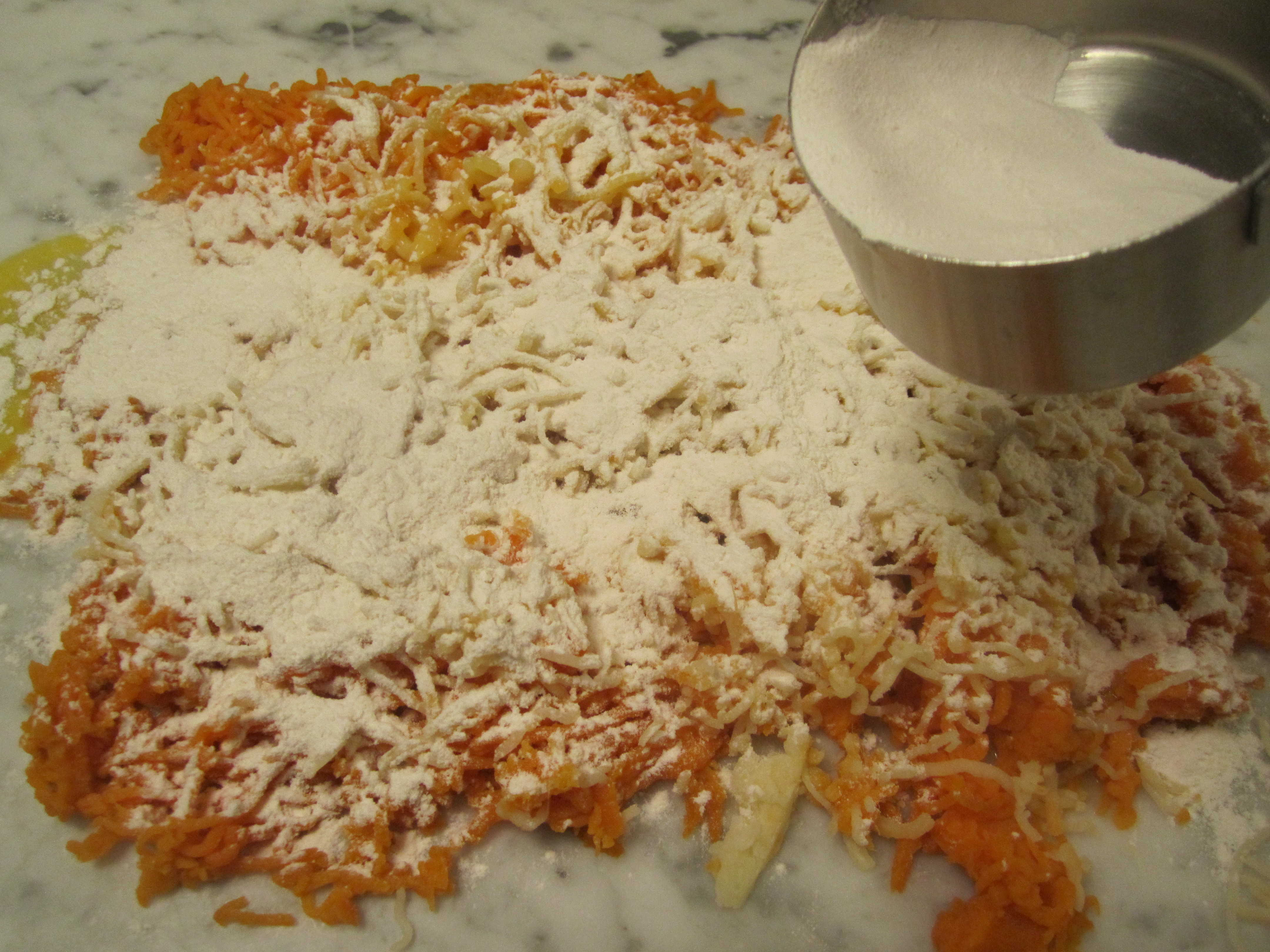
Sprinkle 3 cups of flour over potato and egg mixture.

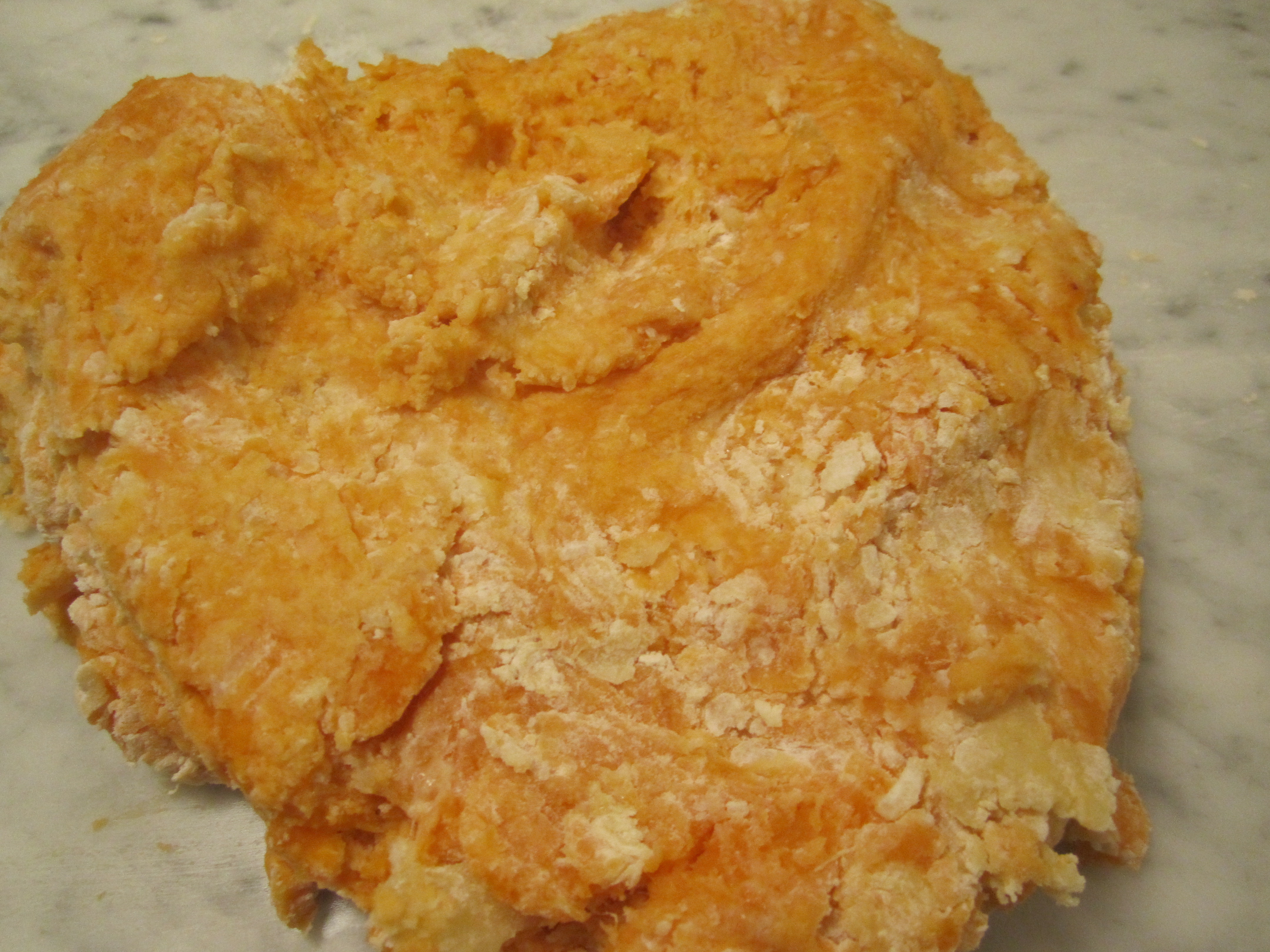
Begin pulling the mixture together with a pastry scraper and your hands.  Combine into a mass and knead lightly to combine.

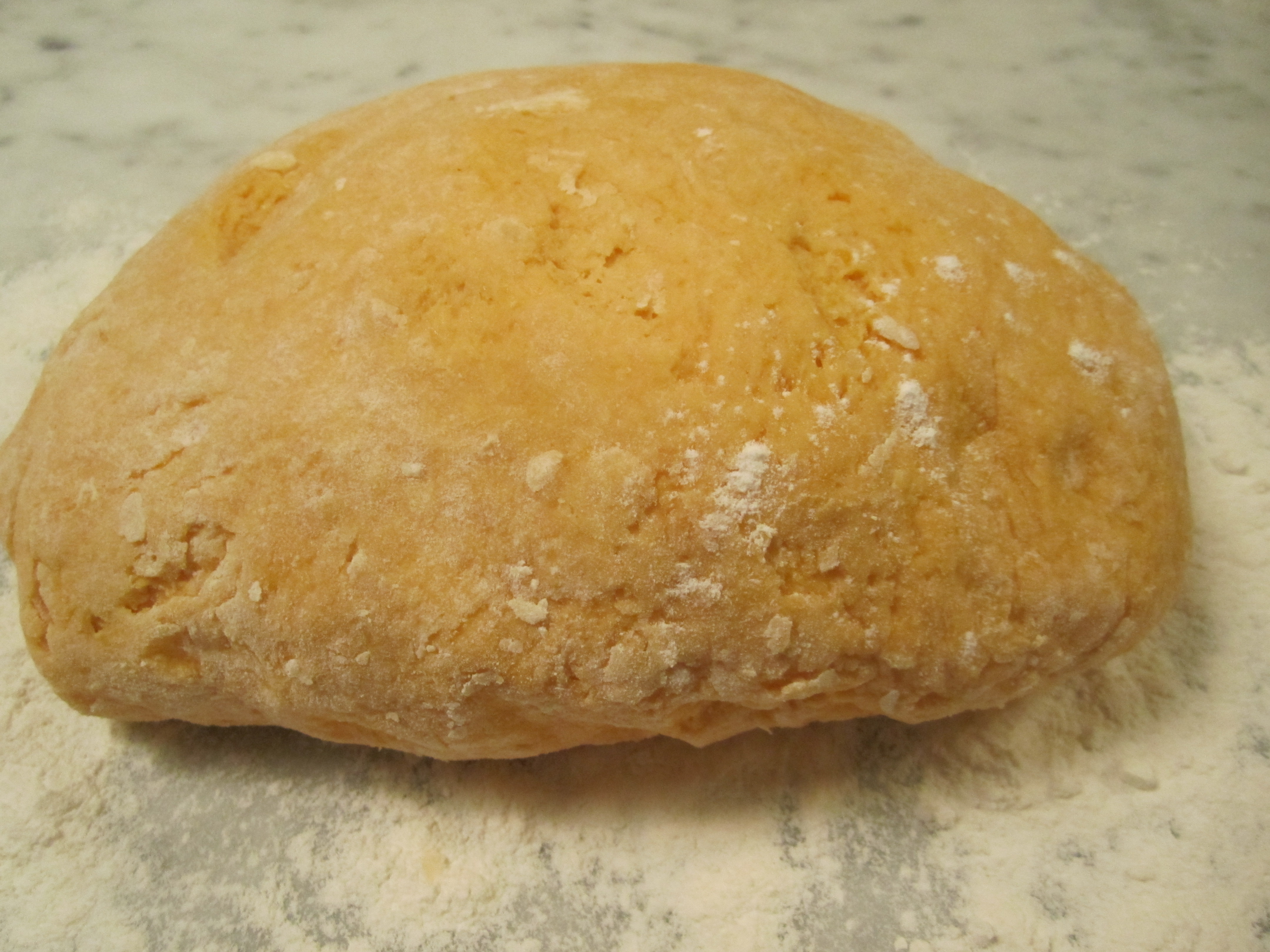
You will most likely need to continue adding flour until the dough has reached a medium-firm, medium-dry consistency.  As you add flour, the dough should become smoother, paler and firmer.

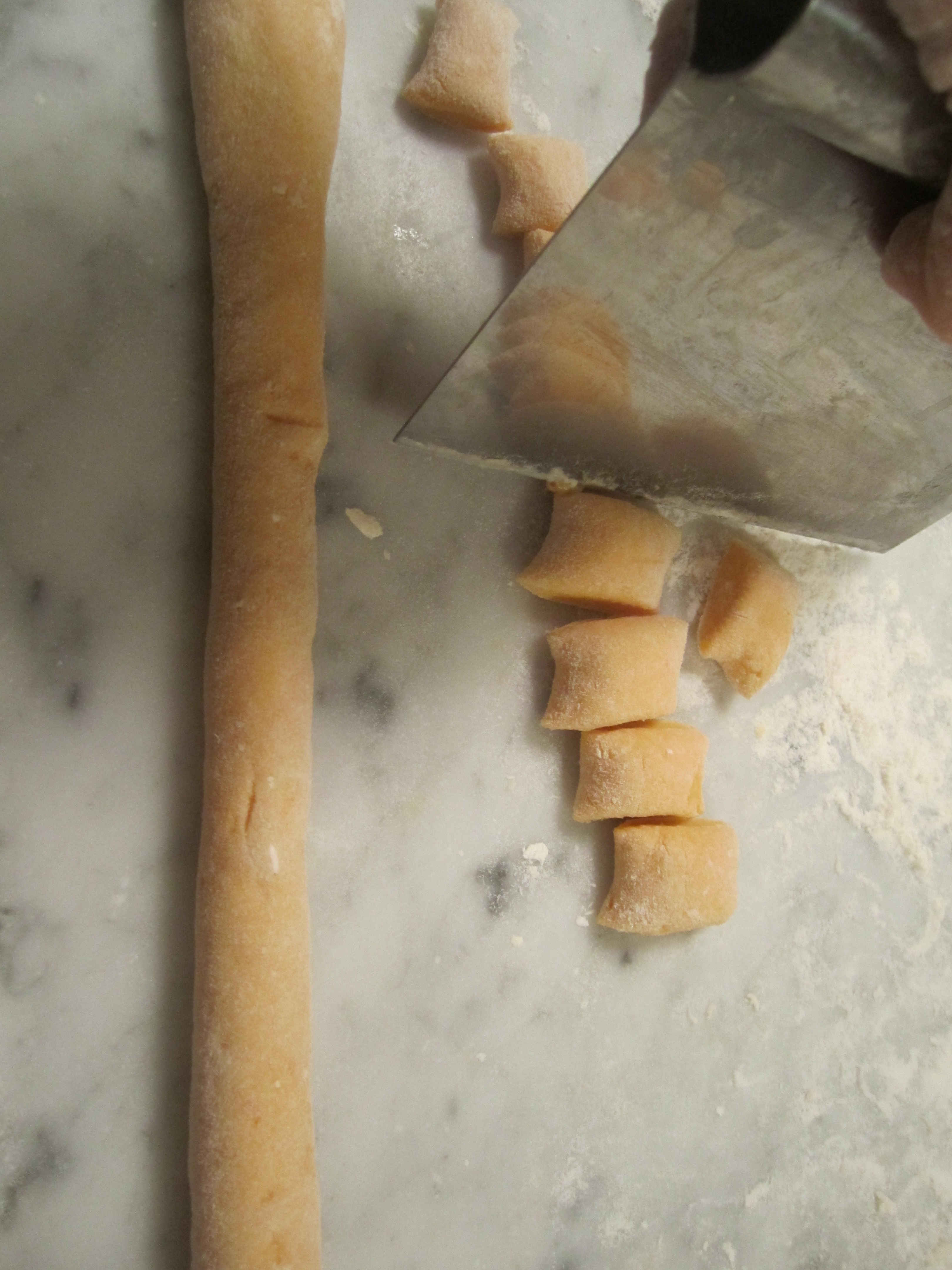
Slice the dough into 1″ slices, then roll into dowels approximately 3/4″ in diameter.  With the pastry cutter, slice dowels into 3/4″ squares.

As you roll and cut, make sure there is a generous dusting of flour on your work surface, and don’t hesitate to sprinkle  on more flour as you work.

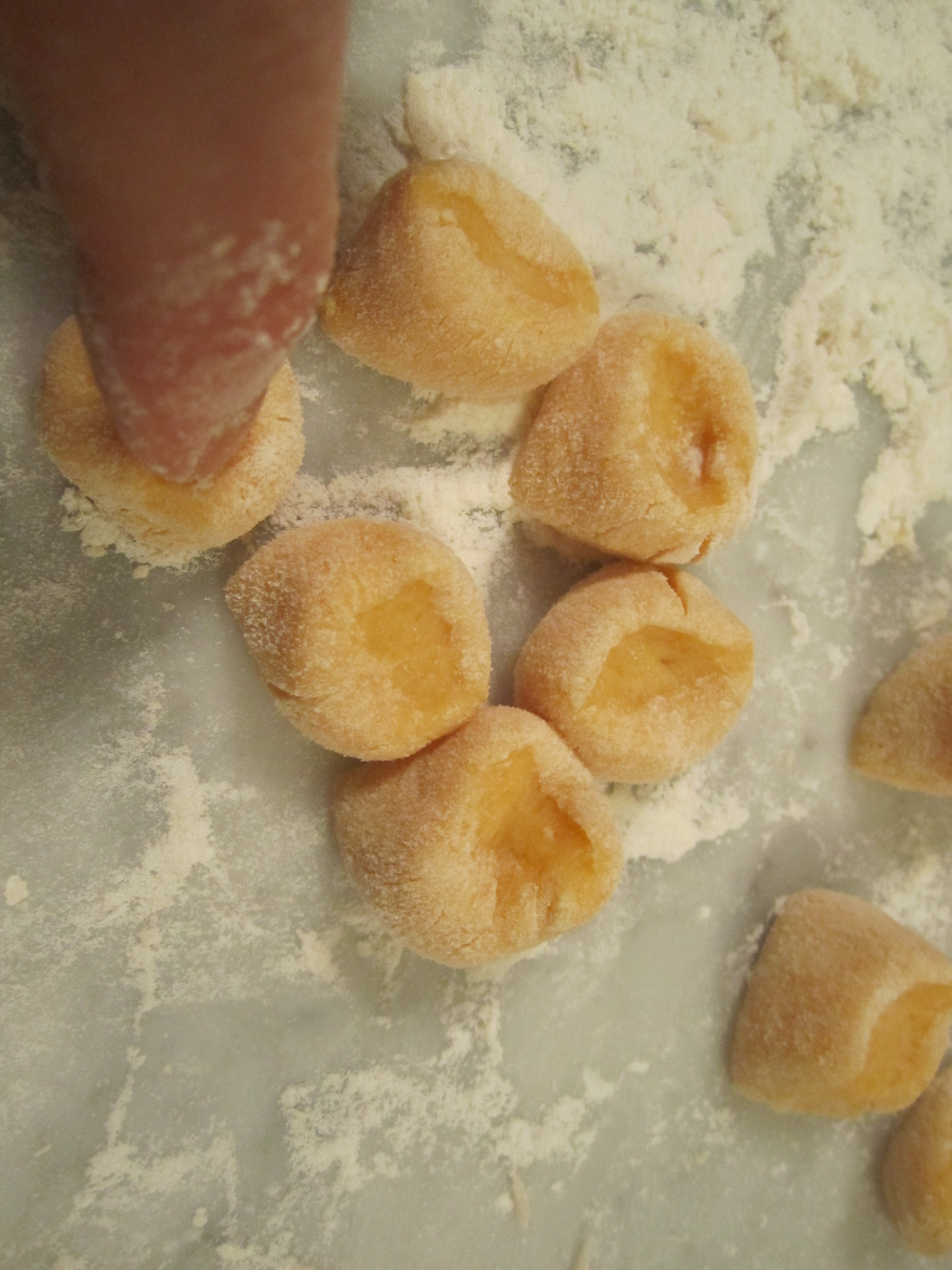
Take each little square and turn it on its cut side and press a little dimple into it.

This will create a nice little indentation in the gnocchi which will aid them in retaining sauce when they’re cooked.  Continue until all gnocchi are formed.

MAKE AHEAD NOTE:  These gnocchi can be made earlier in the day, or even the day before, then par-boiled (just until they float), rinsed and shocked with cold water, then held in a mixing bowl, drizzled with a generous amount of oil to keep them from sticking together.  They can rest in the refrigerator until ready to cook.  When ready to cook, simply rinse and proceed with recipe.

Bring a large pot of water to the boil and add a generous amount of salt–the water should taste aggressively salty–these gnocchi can be bland if the water and sauce are not adequately seasoned.

Prepare sauce.  In a skillet large enough to hold the gnocchi, place butter, nutmeg, cinnamon and sage leaves.  Turn heat to low and melt butter. Add the chicken broth and turn off heat.

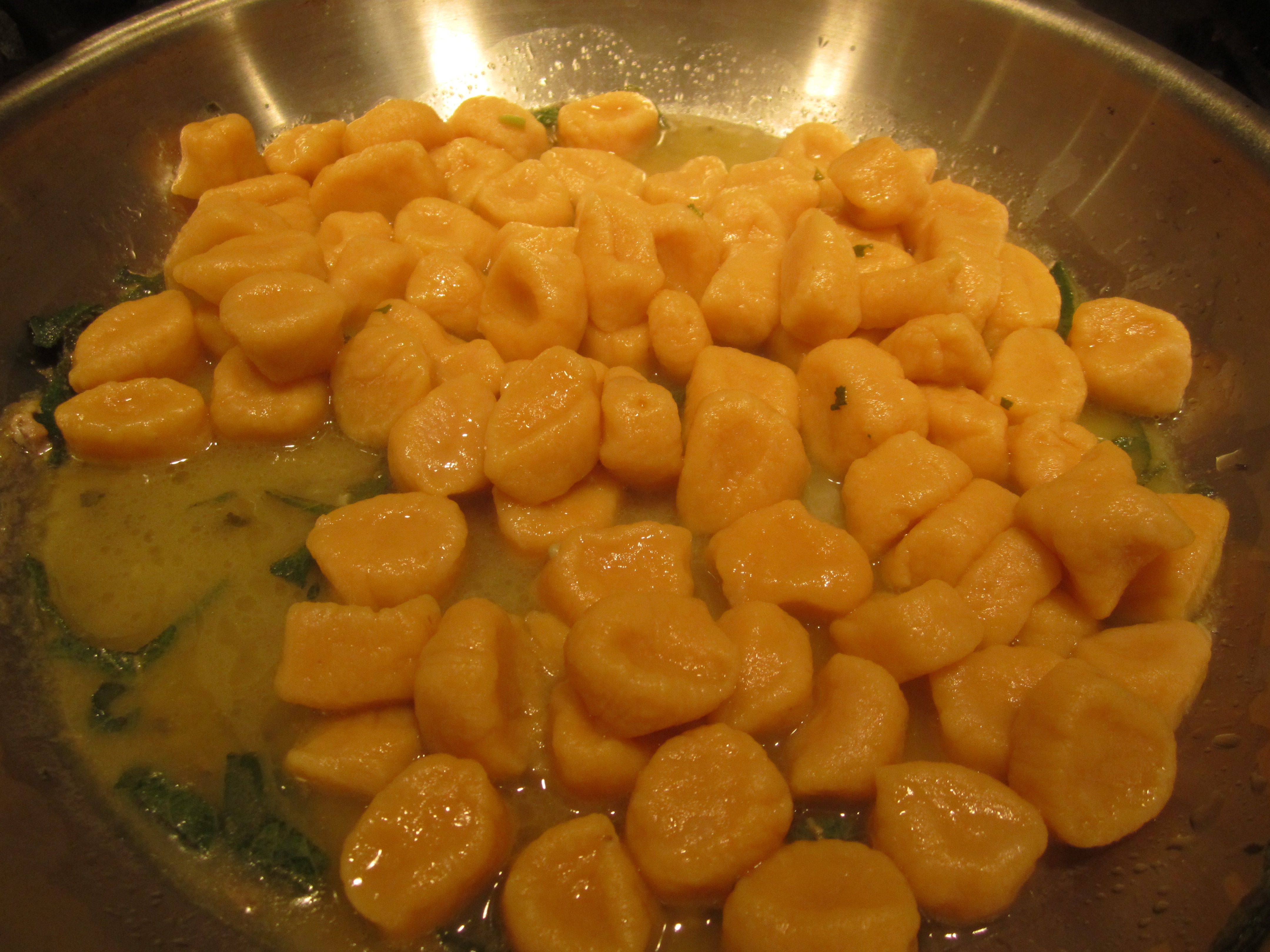
Drop half the gnocchi into boiling salted water.  After all gnocchi have floated to the surface, fish out with a spider and gently drop gnocchi into spiced butter.  Repeat with remaining gnocchi.

Bring butter up to heat and add a quarter cup of pasta water to amalgamate sauce.  Stir and toss over medium heat for a minute or so.  Serve in heated bowls and sprinkle with plenty of grated parmigiano.

Posted in Pasta | Leave a comment

Dinner for One–Golden Filet of Sole

Something about fresh fish and crispy potatoes always takes me back to Rome, since this is the meal I eat most often when I’m there.  This elegant dinner can be assembled for one (or two) persons in about 45 minutes from start to finish.  These dishes are simple enough to require no formal recipes, but I’ll take you through them step-by-step.

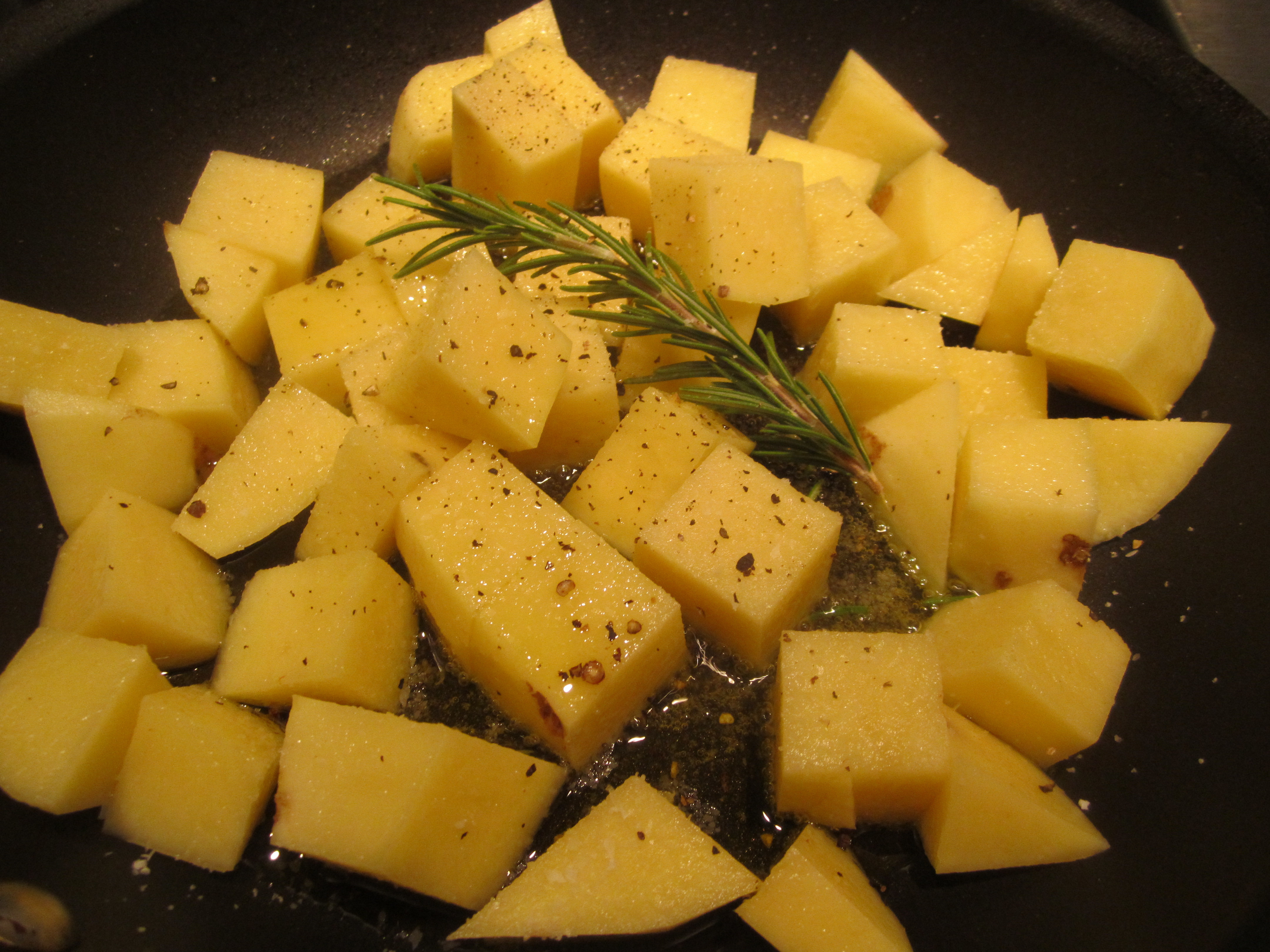
Begin with the dish that takes the longest–skillet potatoes.  These potatoes are quicker than roasted potatoes, and much crispier on the outside/moister on the inside.  They require no par-boiling–simply peel and dice into 1″ cubes.  Place the cubes in a nonstick skillet with 2 tablespoons of olive oil, sprig of rosemary and a good sprinkle of salt and pepper.

Turn heat on low and cover.  Every 5 minutes or so, uncover and toss the pieces to brown evenly.  After about 30 minutes, uncover, taste for salt and add a teaspoon of butter to the skillet.  Continue cooking uncovered until they become golden and crispy (another 10 minutes or so).

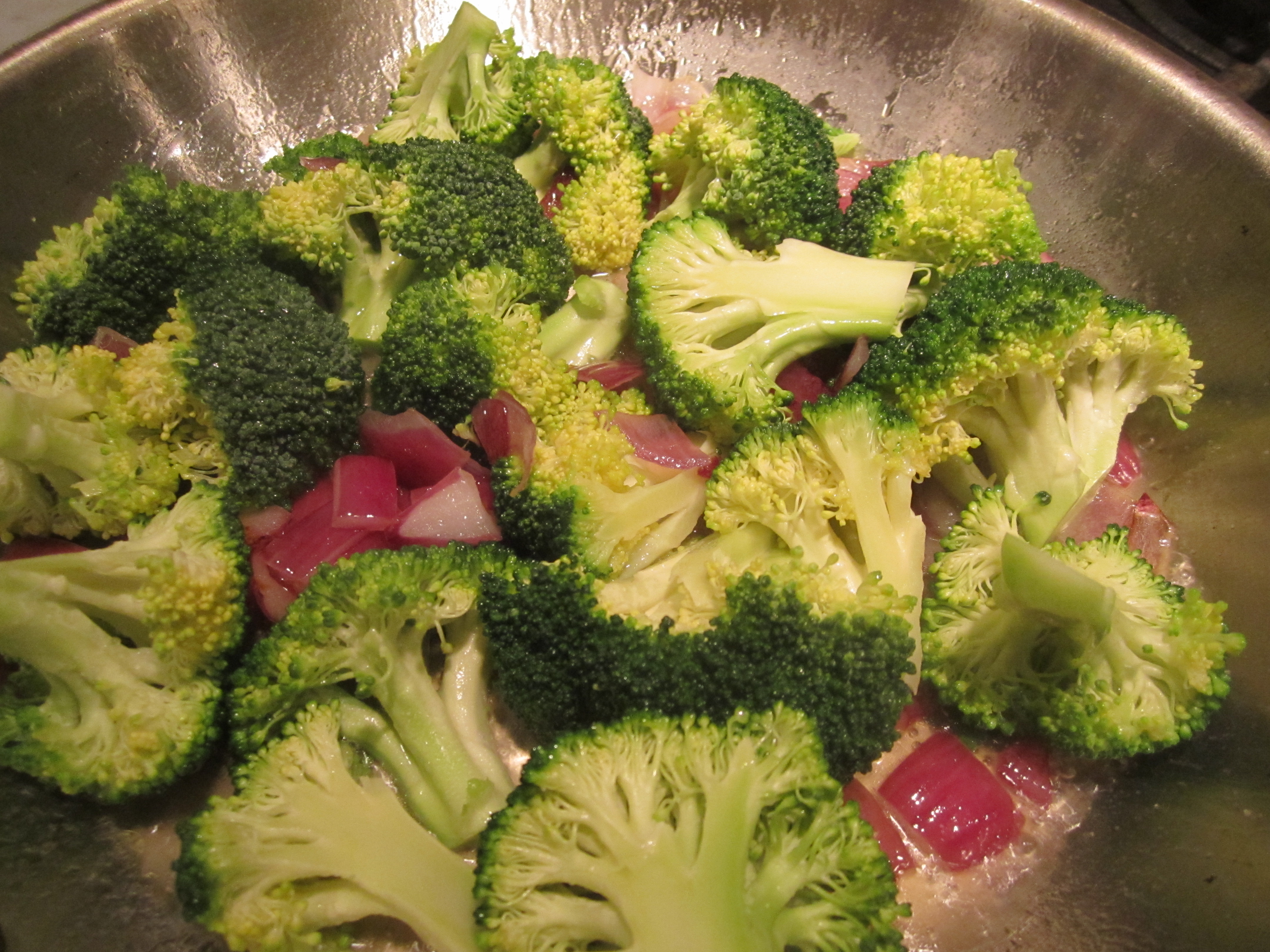
The second order of business is the broccoli.   Tonight, I’m making my broccoli the way my neighbor Beppi taught me.  He doesn’t blanch his broccoli, but rather, sautes them (raw) with onion, a touch of water, and olive oil.  The broccoli are simmered until sweet and tender–about 20 minutes total.

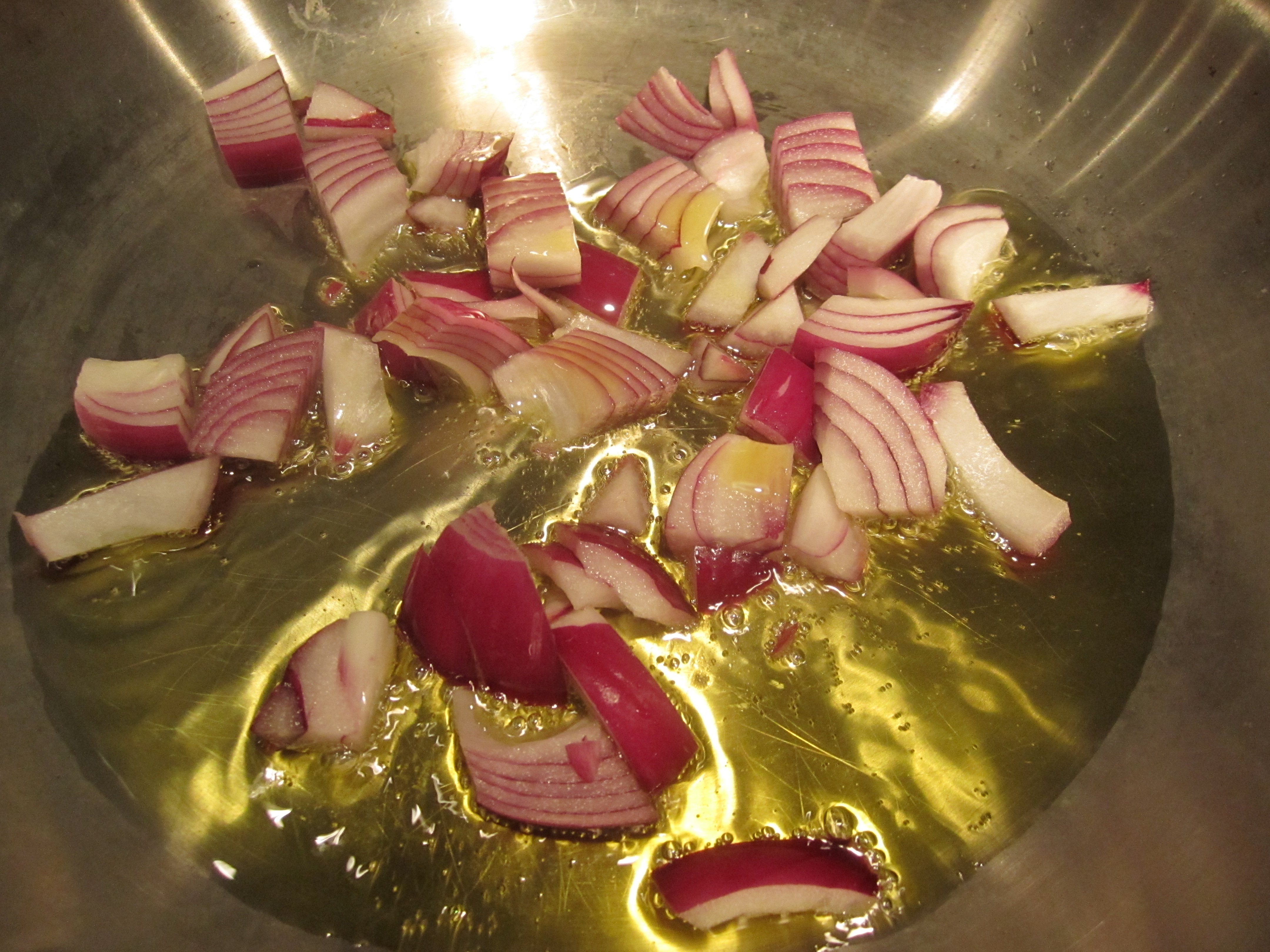
After my potatoes were started, I began preparing the broccoli.  In a skillet with 2 tablespoons of olive oil, on low heat, I sauteed half a red onion for about 5 minutes, or until it began to sweat.

I added the broccoli, 3 tablespoons of water, and a good sprinkling of salt and pepper.

Cover the skillet and let them simmer until the water evaporates.  When the water evaporates, the broccoli should be cooked through (if not, add a couple of teaspoons more water and continue cooking) and the onion should begin to sizzle.  At that time, I uncover and turnoff the flame until my fish is prepared.

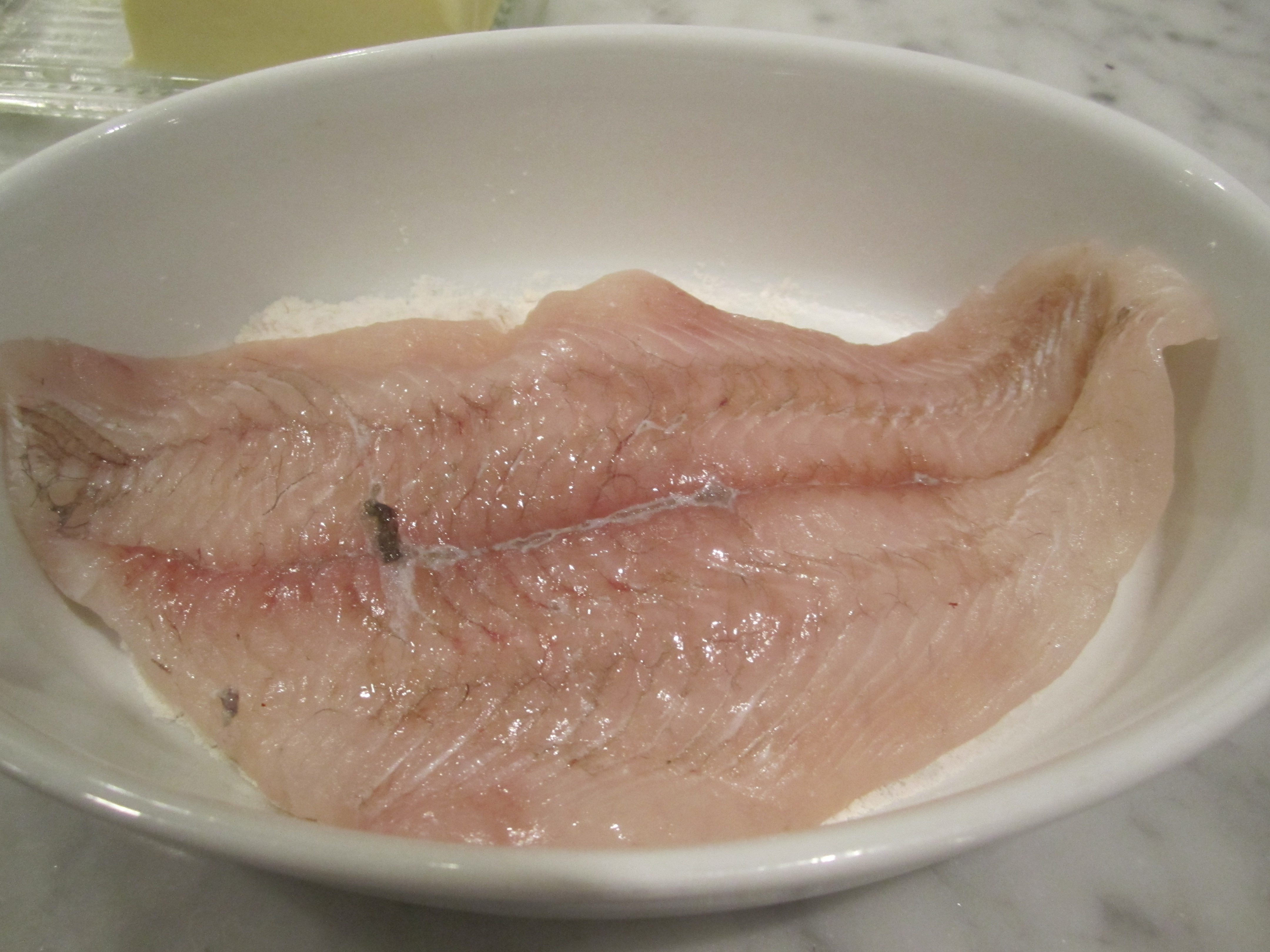
For the sole, I heat 2 tablespoons of butter in a nonstick skillet, while I dredge the fish in flour.

I’m using all butter here because the fish is thin and will cook in an instant.  The butter will brown at a much lower temperature than oil, resulting in a much quicker browning of the delicate fish.

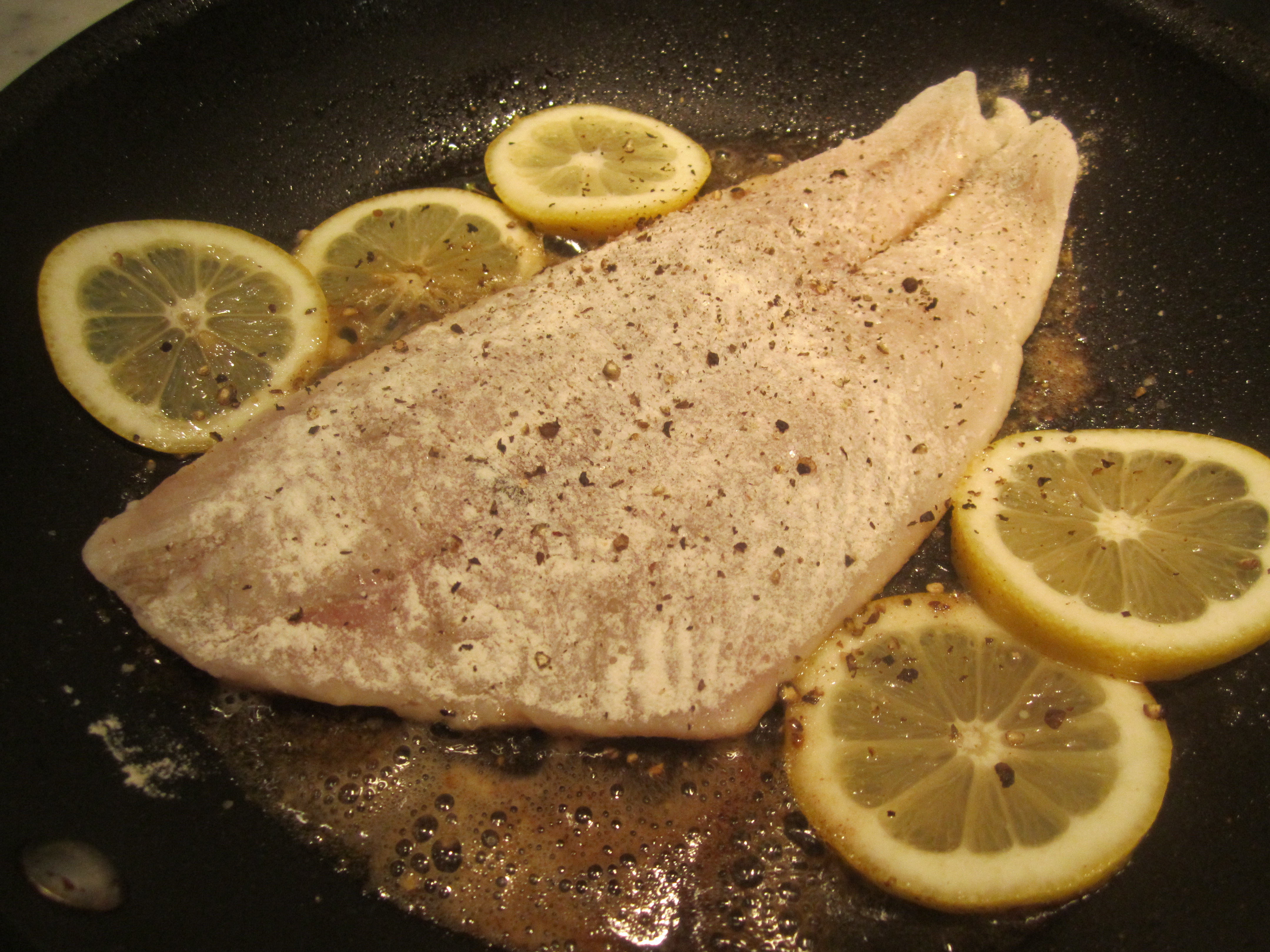
Once the butter is smoking and just beginning to brown, I add the fish to the skillet.  I also add a few thin slices of lemon to caramelize alongside the fish.

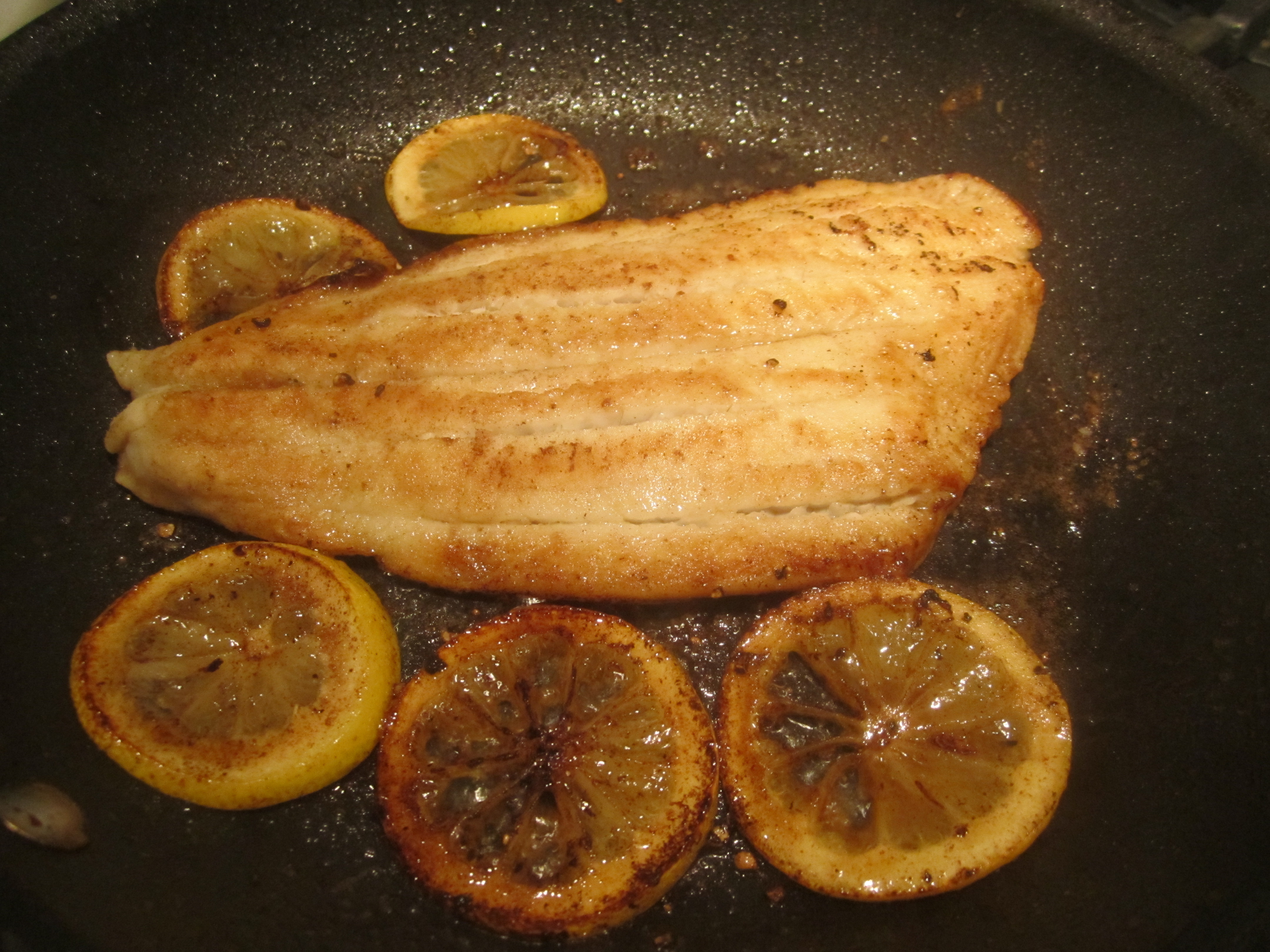
This adds wonderful flavor to the fish and also prevents the butter from burning as quickly.  I season the fish well with salt and pepper and cook it on highest heat for about 3 – 4 minutes per side.

At the last moment, I top the fish with a couple of teaspoons of fresh butter and some freshly chopped parsley (from the freezer).

When the fish is almost done, I turn up the heat under the potatoes and broccoli to give them one last sizzle before plating.  Admittedly, the meal requires  a bit of juggling of skillets (not to mention three skillets and a couple of lids to wash), but who is worthier of having a little attention lavished upon them by you (than you)??

Posted in Dinner for One, Seafood, Vegetables | 2 Comments

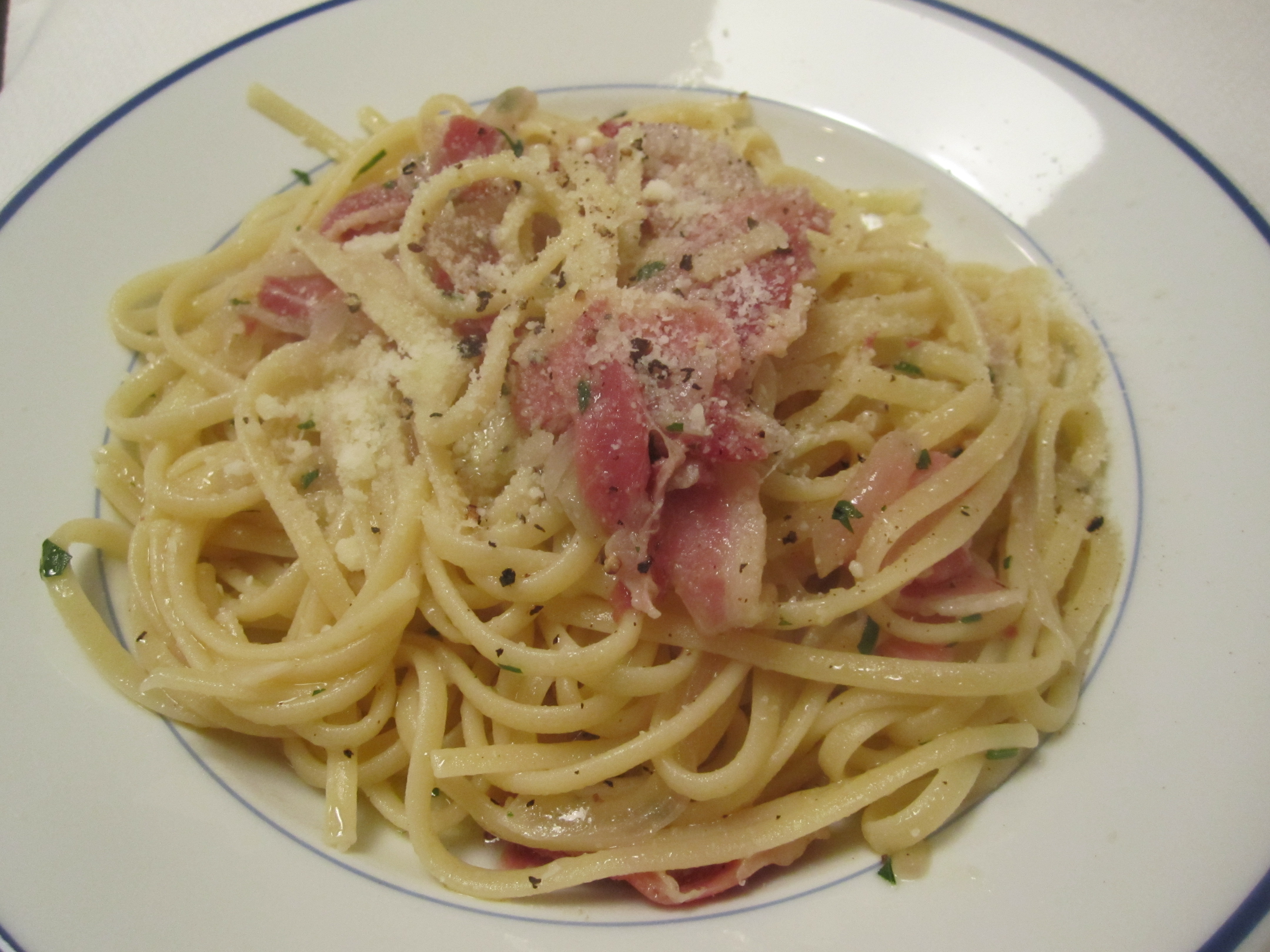
Pasta alla Gricia, Italian-Ate Style

This is my version of the classic Roman pasta dish made with pasta, pancetta and pecorino.  In Rome, the dish is made with guanciale (cured pig jowl) instead of pancetta (cured pig belly).  This is the perfect example of a dish whose ingredients are so few, they must each be stellar.

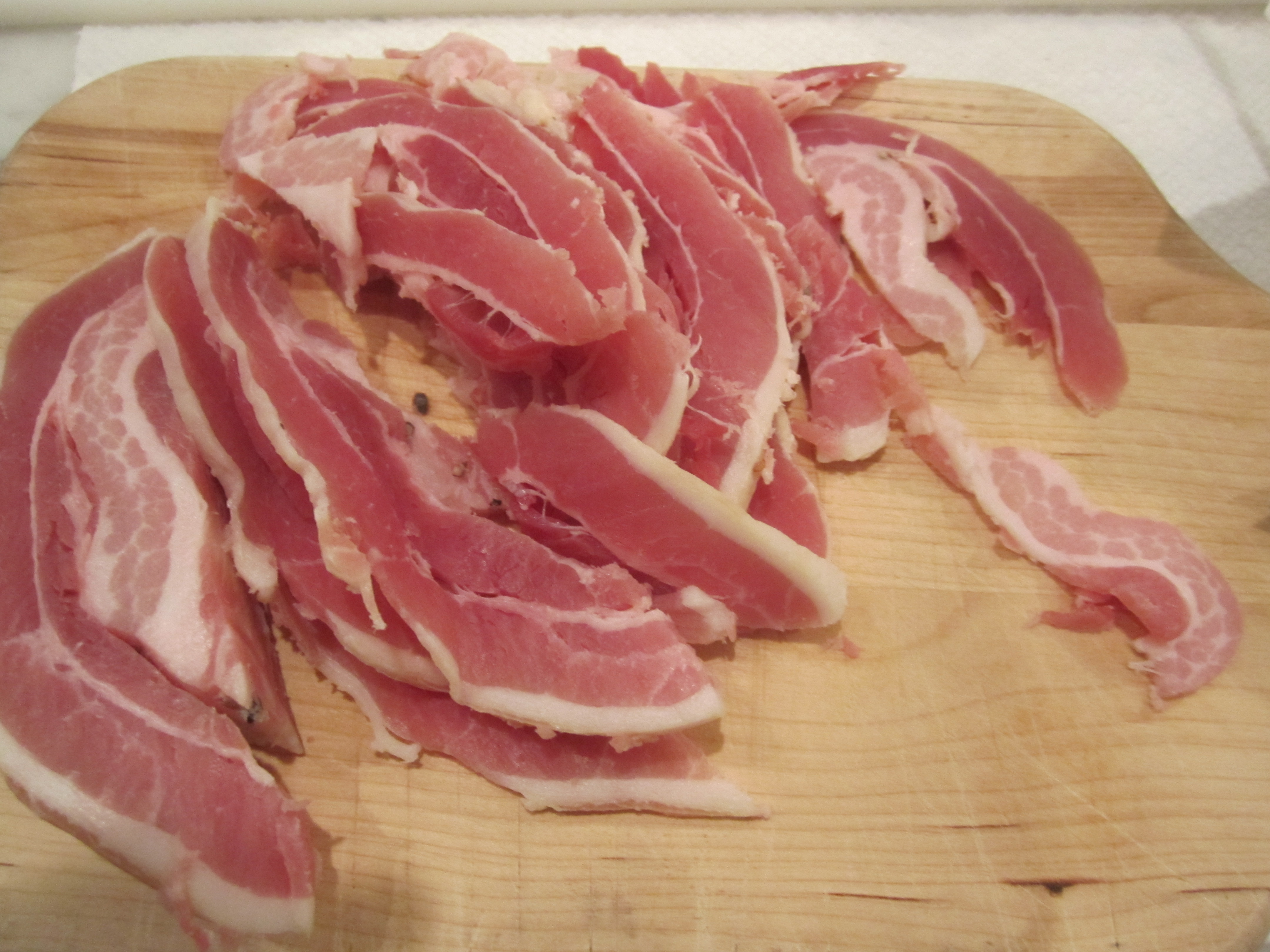
My inspiration for making this dish was the beautiful hunk of pancetta that my neighbor Beppi gave me a couple of months ago.

This pancetta is perfectly seasoned, perfectly balanced between fat and lean, and absolutely irresistable.  I’ve been using it little by little and putting into as many things as I can think of.  This dish features it to maximum effect.

My variation from the standard Roman dish includes another ingredient–red onion.  A Roman might not condone the use of onion in this dish, but I like the sweet counterpoint it provides to the salty pancetta.

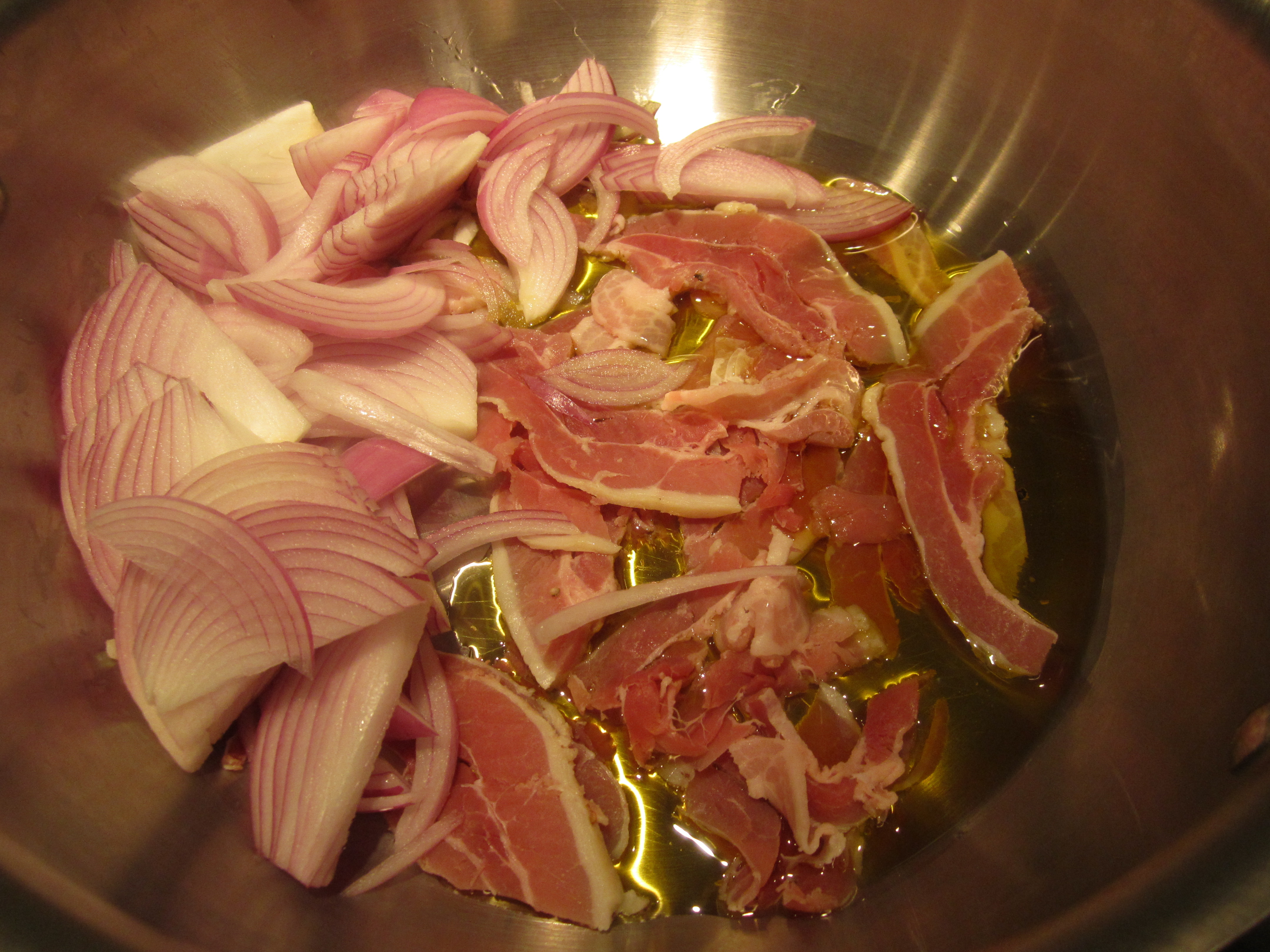
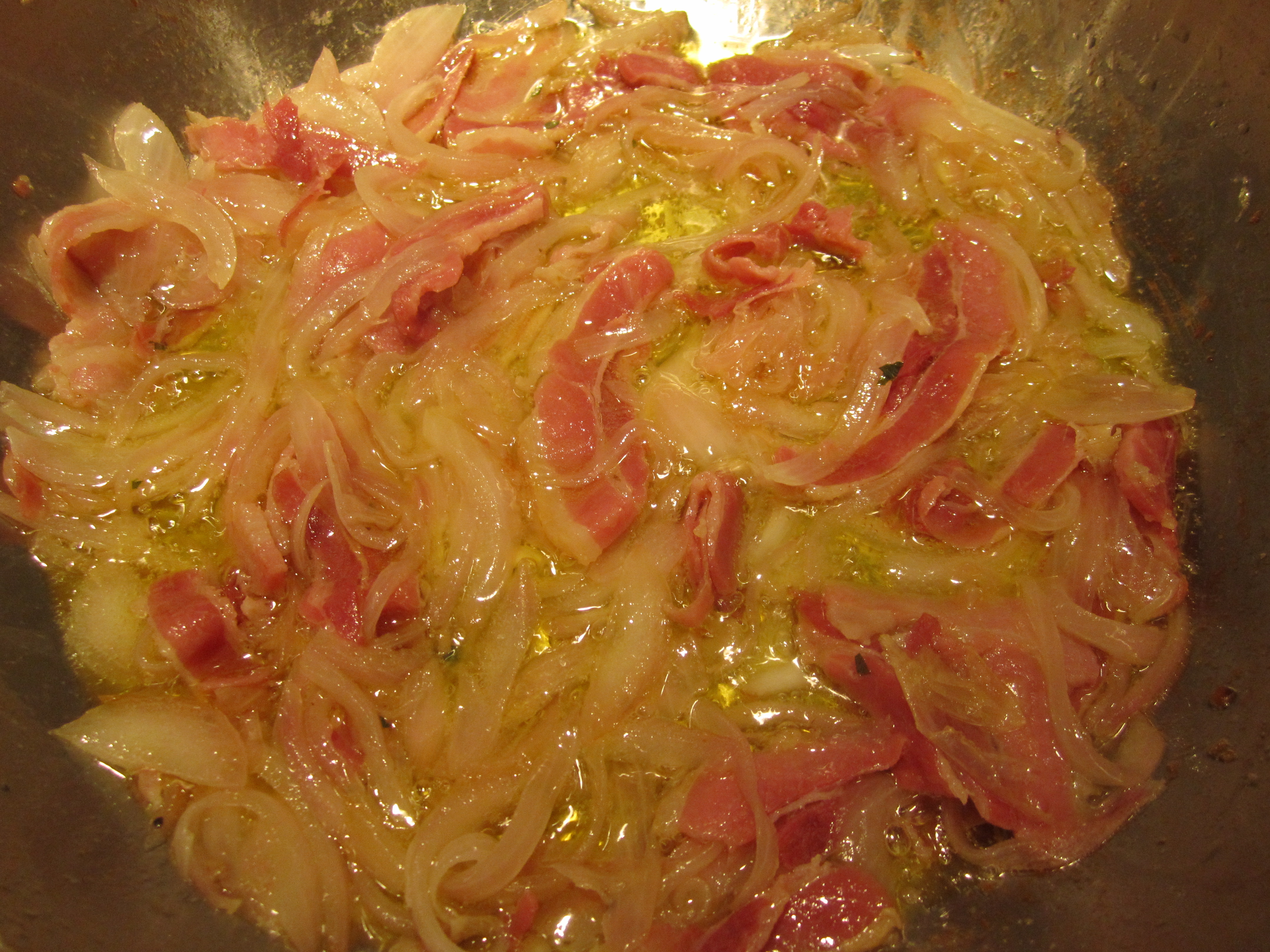
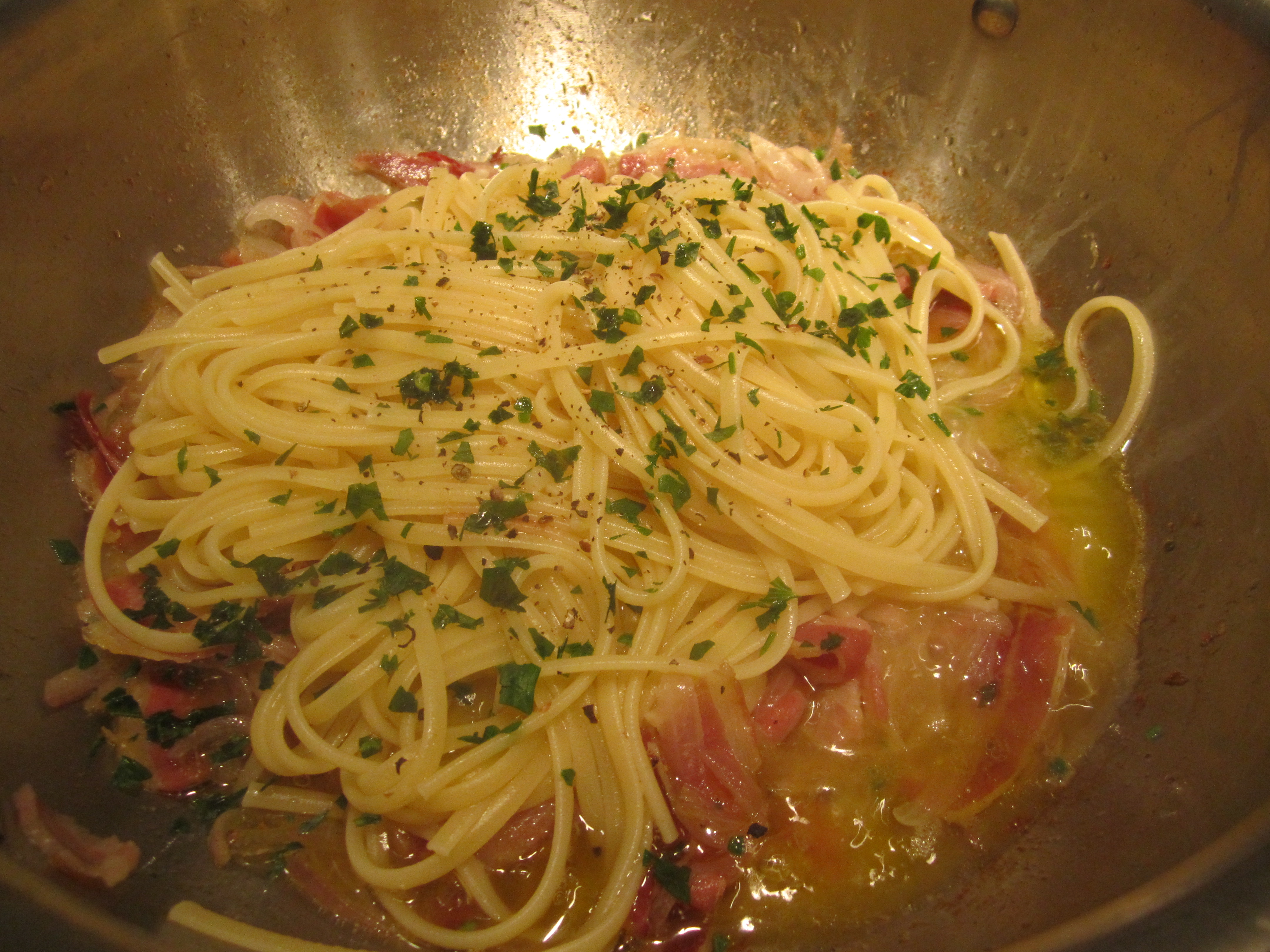
This dish is ready in the time it takes to boil water.   Simply saute the pancetta and onion together in olive oil, until they both turn soft, just before they begin to caramelize.  You don’t want caramelized onions or crispy pancetta here.  The two ingredients should be meltingly soft and tender.  Their residual moisture, combined with a bit of pasta water, provides the entire sauce for the dish.  If you like pasta alla carbonarayou’ll love this dish.

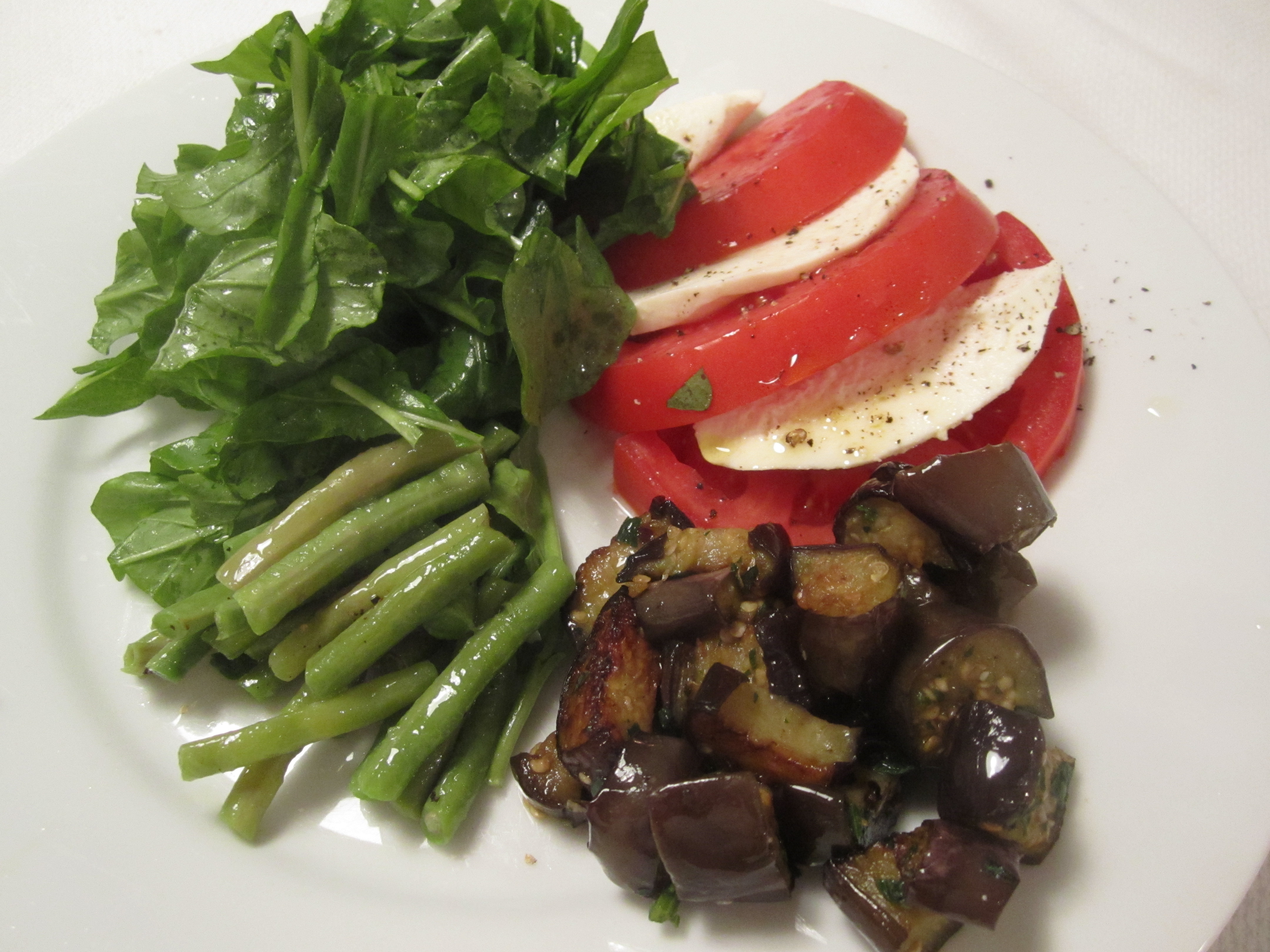
As a second course tonight, I decided to serve a nice assortment of fresh, clean vegetables from Beppi’s garden–string beans (dressed with lemon and olive oil), eggplant (sauteed with olive oil and finished with parsley), sliced tomatoes and mozzarella, and peppery arugula (dressed with oil and lemon).

Pasta alla Gricia, Italian-Ate Style

serves 4

1 lb linguini or spaghetti

4 oz. pancetta, sliced thinly

1 small red onion, thinly sliced

1/4 c extra-virgin olive oil

black pepper to taste

1 tbl fresh chopped parsley

grated pecorino romano for sprinkling

As the pasta water comes to a boil, place the pancetta, onion, and oil in a skillet large enough to hold the pasta.

Turn heat on low and cover.  Bring the pancetta and onion to a simmer and slowly cook until they are both soft, melting, and just beginning to caramelize–about 10 minutes.

When pasta is a minute shy of done, drain and add to pancetta and onion, along with about a quarter-cup of pasta cooking water.  Sprinkle with parsley, stir and toss over high heat, adding a couple of tablespoons of pecorino cheese to emulsify.

Serve with plenty of grated pecorino and black pepper.

Posted in Pasta | Leave a comment

Twice-Baked Potatoes, Italian-Ate Style

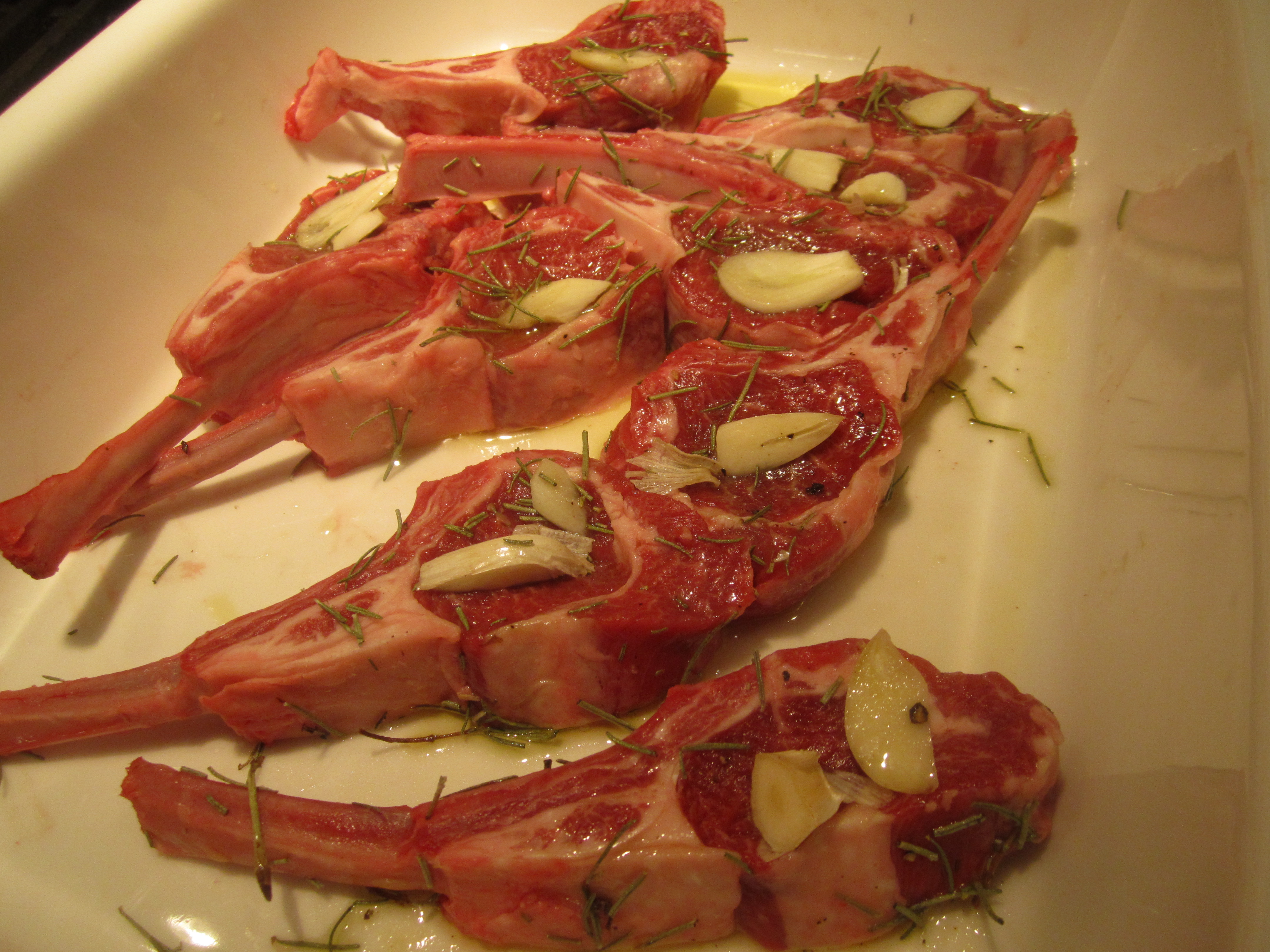
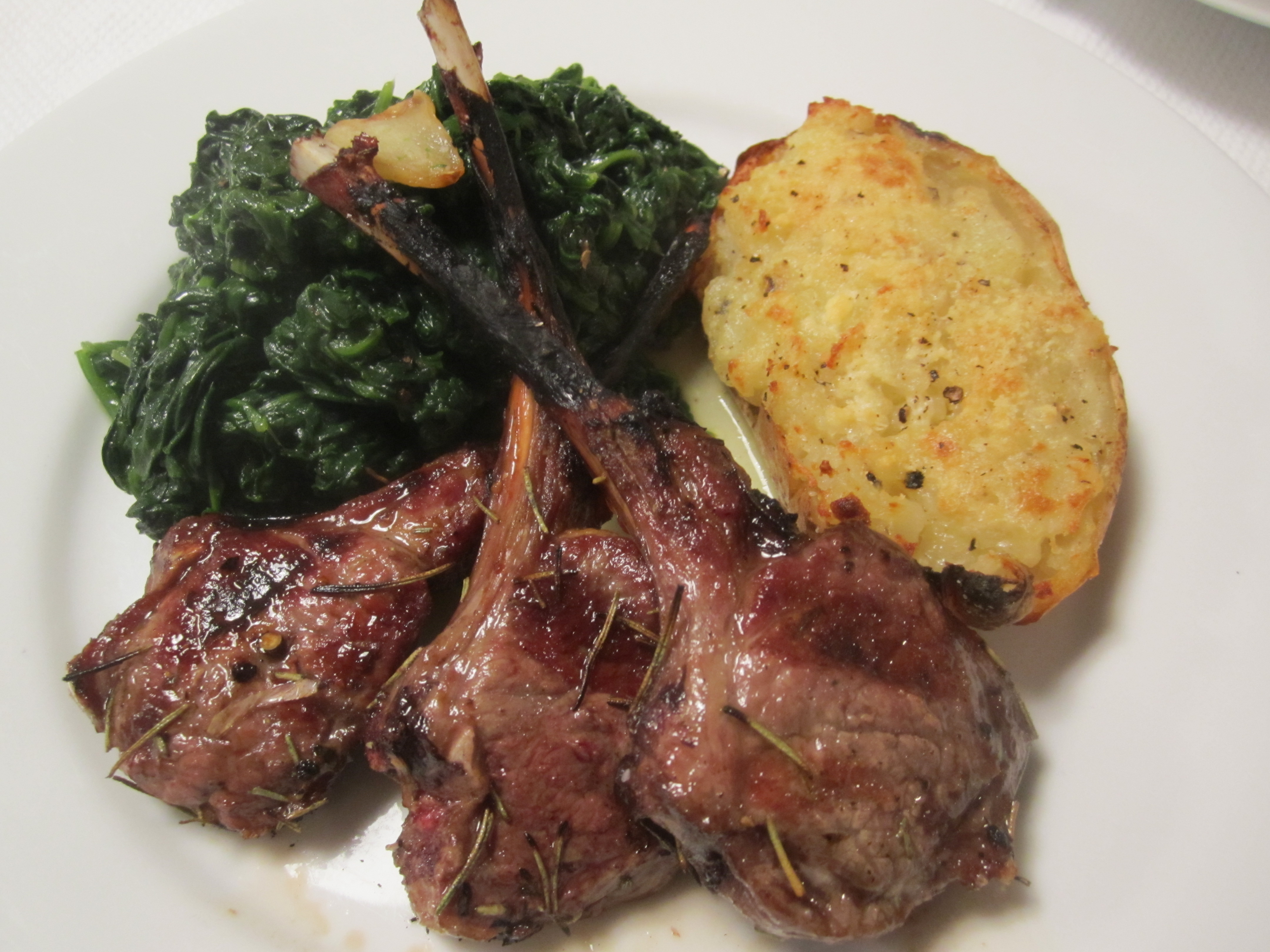
The beautiful lamb chops that my butcher had the other day inspired me to make my version of a meat-and-potatoes kind of meal.

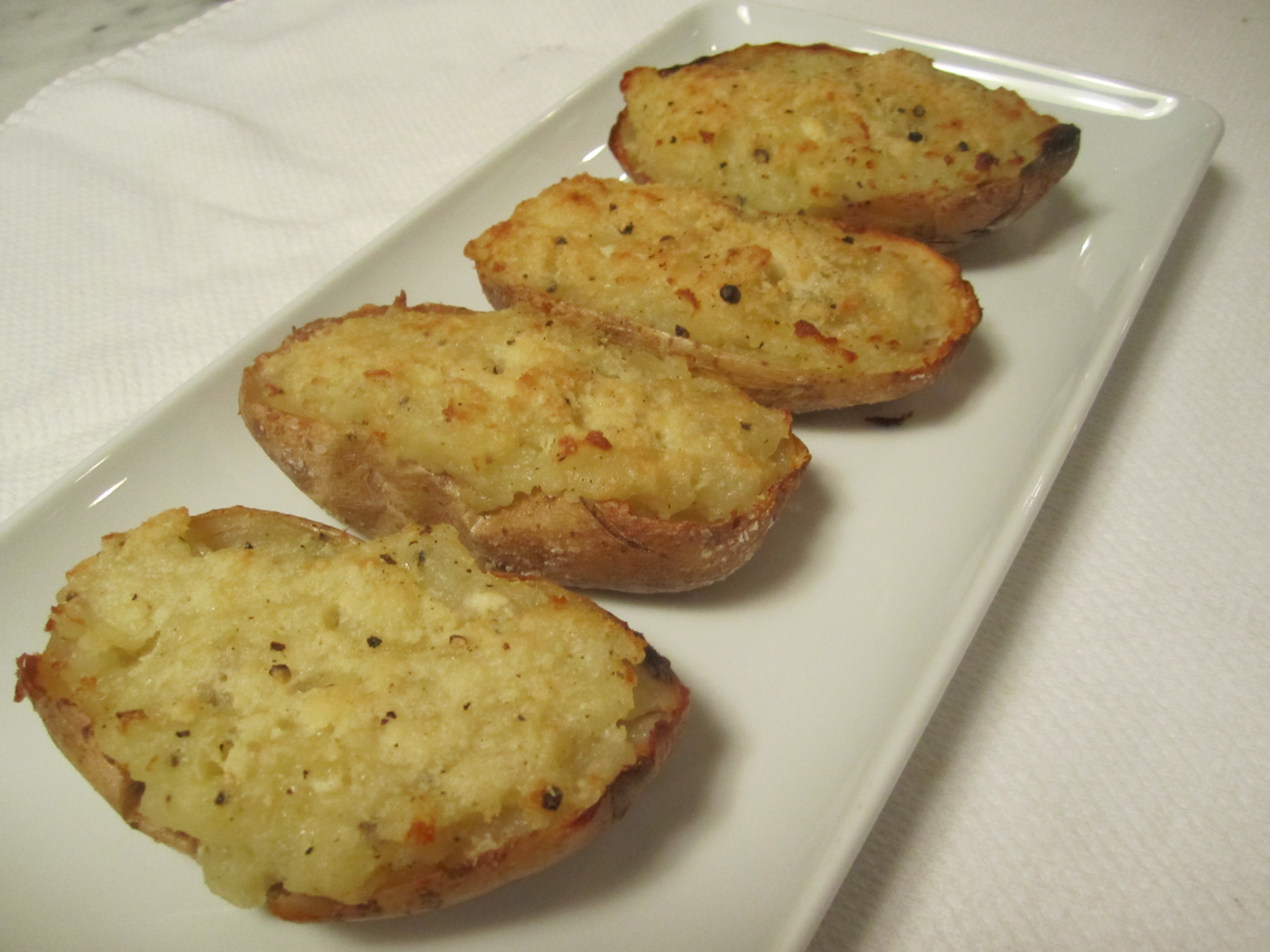
I was in the mood for baked potatoes,  and tonight, I decided to dress up our baked potatoes by scooping them out of their skins, mashing them with pecorino, olive oil and  black pepper, then returning them to their skins to bake a second time.

Along with the chops and potatoes, we had simple sauteed spinach with garlic and olive oil.

These potatoes are rich and luxurious, and a festive change from plain baked potatoes, especially with plain grilled meat.

Twice-Baked Potatoes, Italian-Ate Style

serves 2

2 small russet potatoes

kosher salt for coating potatoes

1/4 c + 2 tbls grated pecorino romano

1/4 c extra-virgin olive oil

1/2 tsp ground black pepper

Preheat oven to 400 degrees.

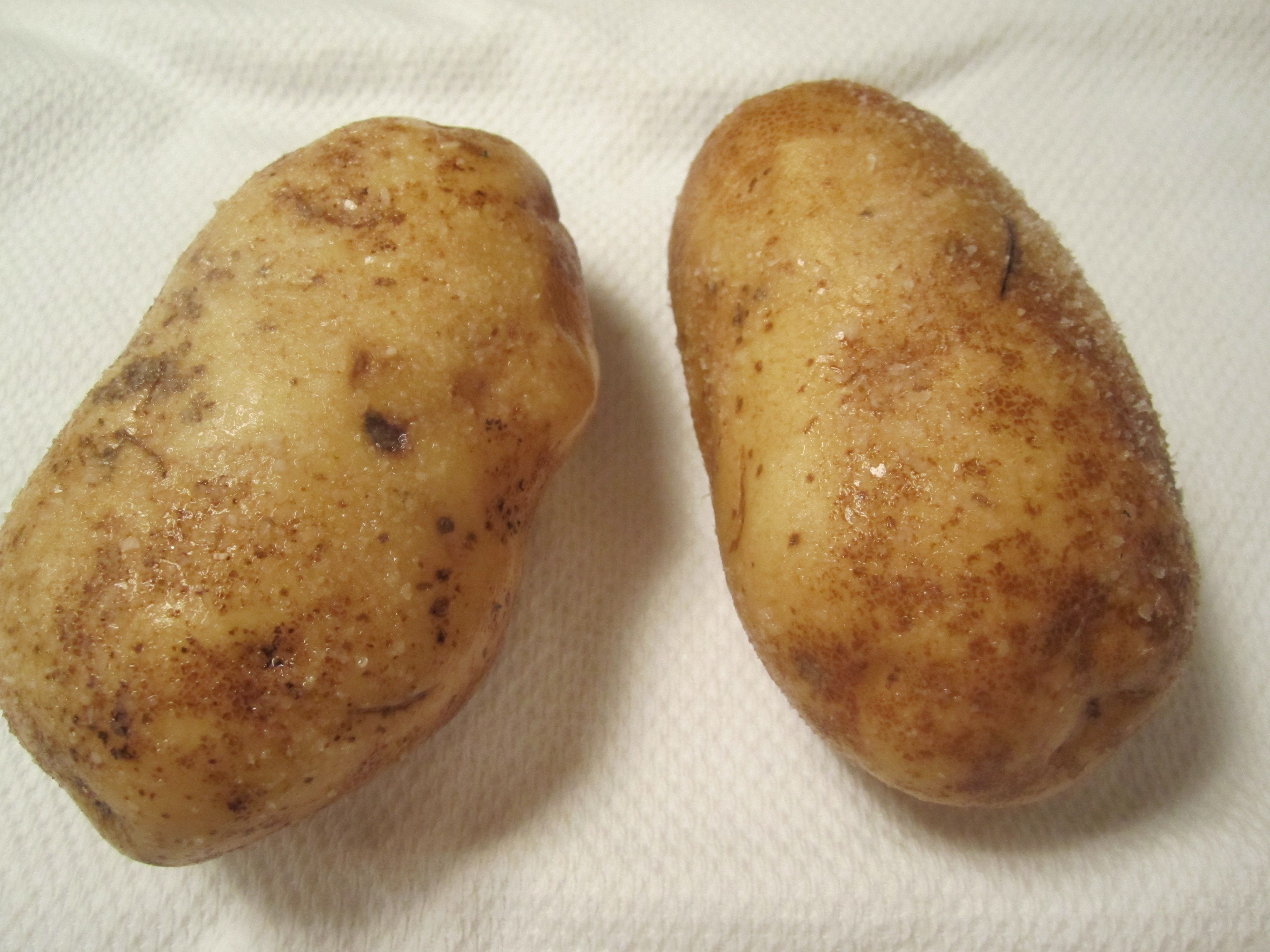
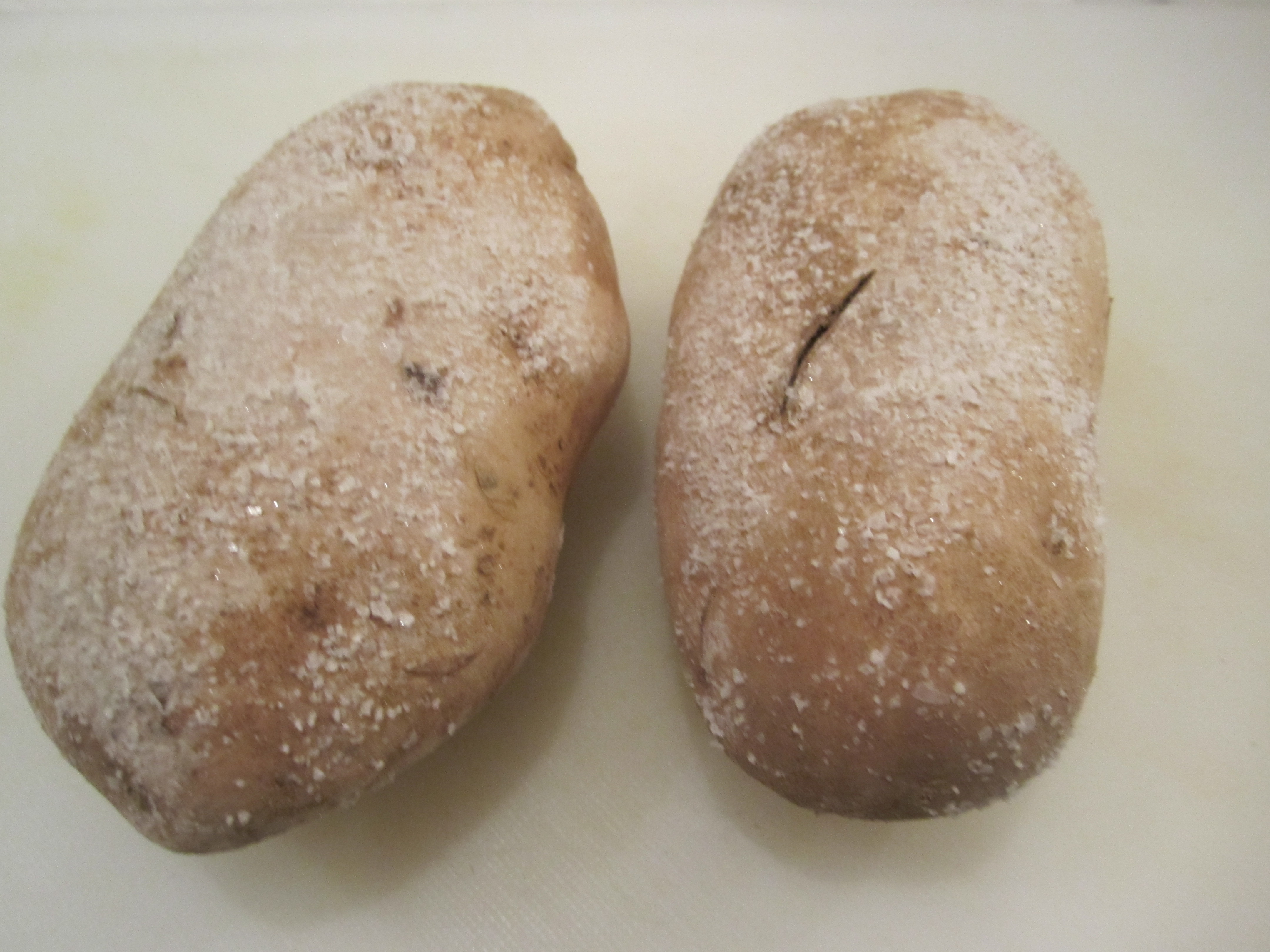
Wash potatoes and poke a couple of holes in each one with a knife or fork.  While still wet, sprinkle with a light coating of kosher salt.

Place on the rack in pre-heated oven and bake for an hour or until soft (all the way through) when poked with a knife.

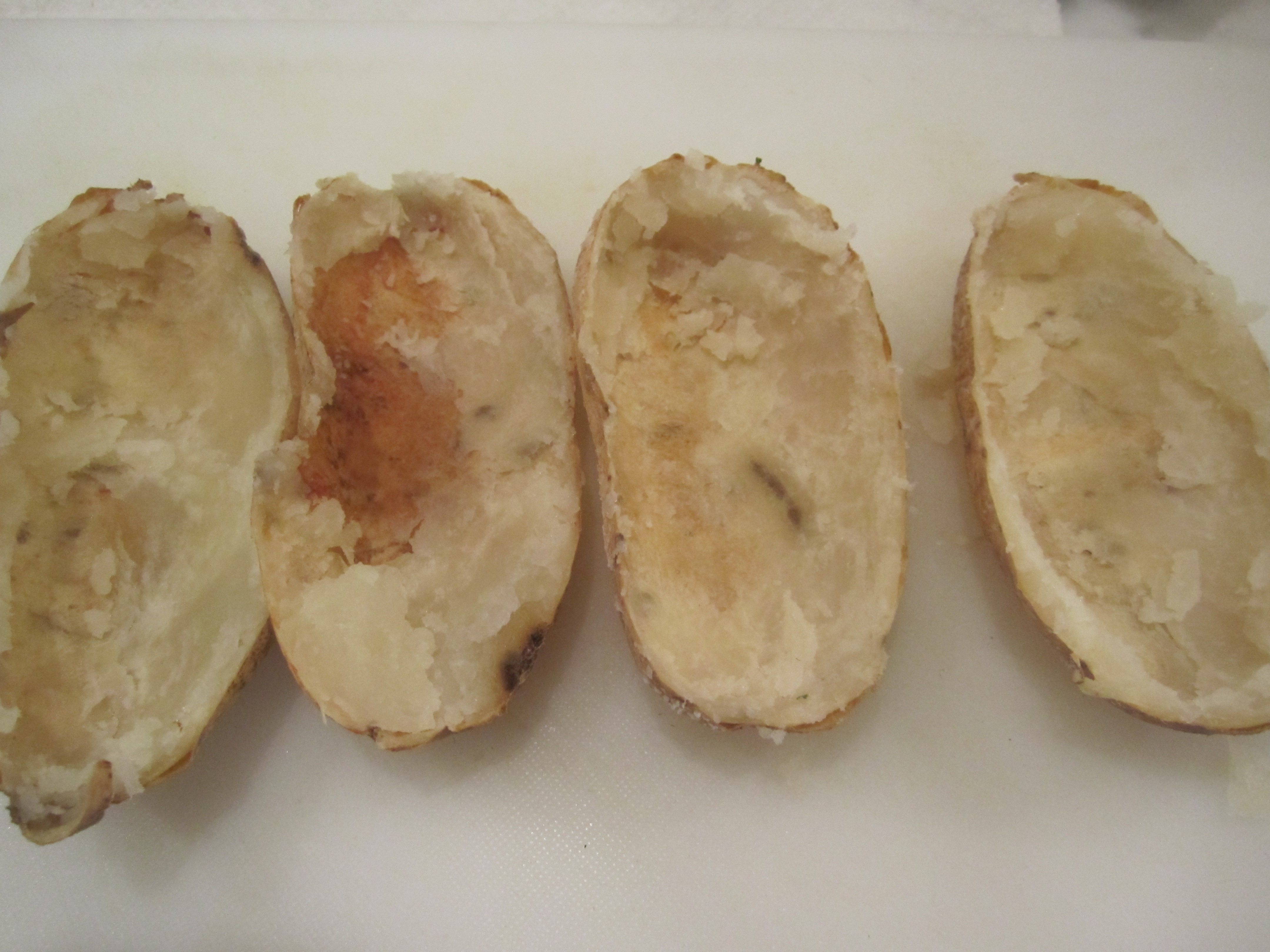
Slice potatoes in half lengthwise and with a spoon, scrape out the filling and set aside.

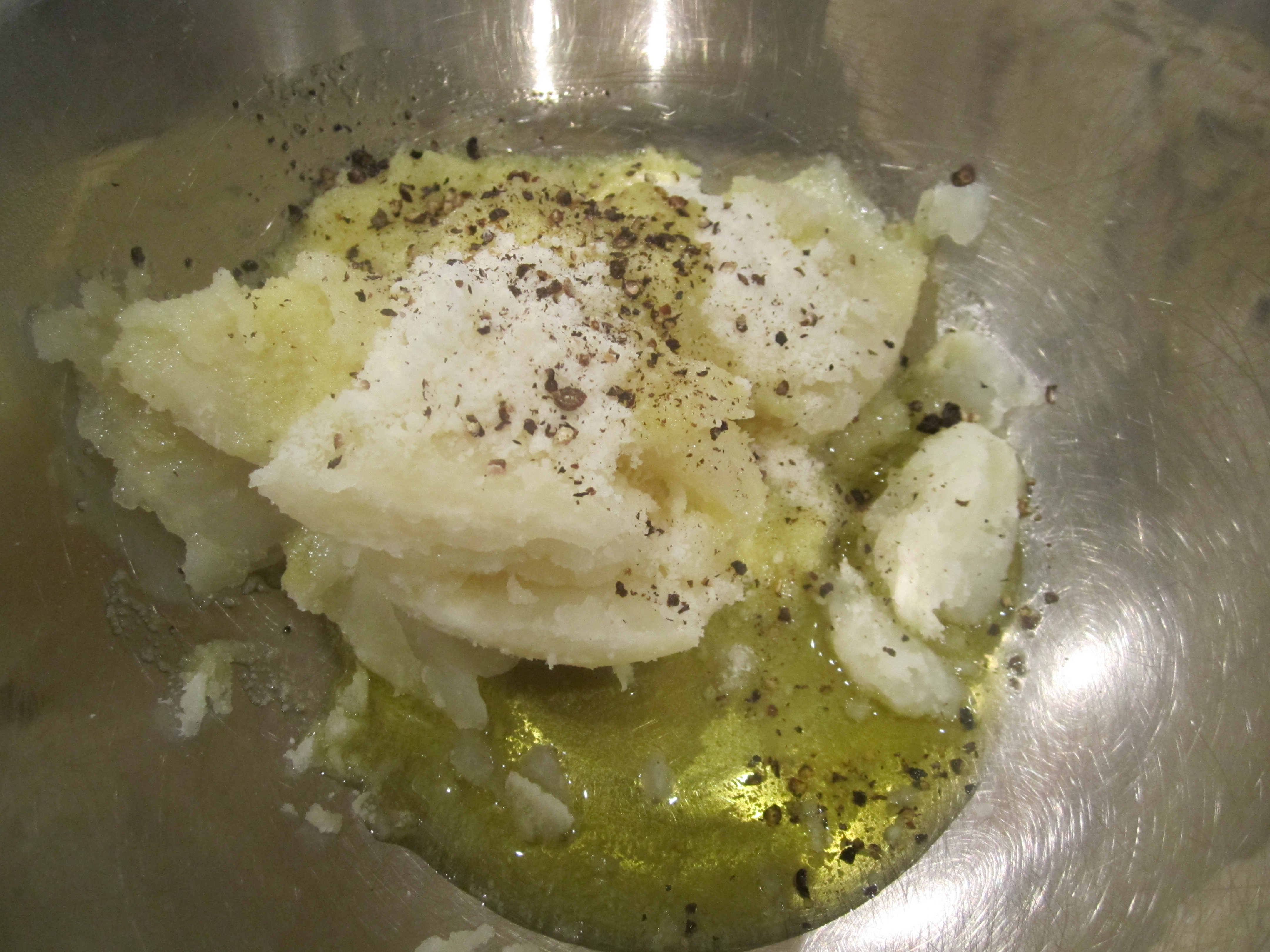
To the potato filling, add 1/4 cup pecorino, 3 tablespoons olive olive oil, and the black pepper.

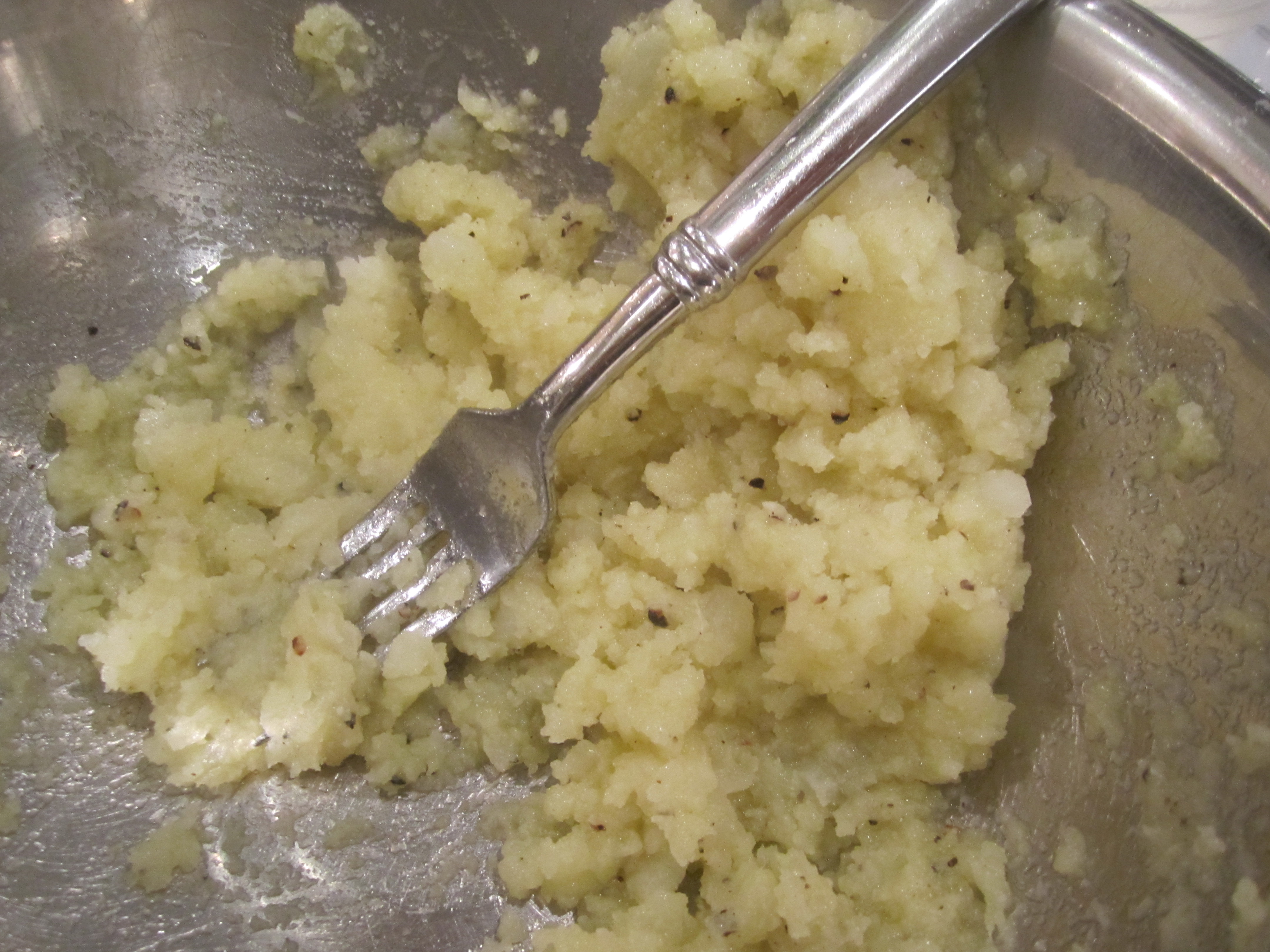
Mash with a fork until uniformly soft and combined into a slightly lumpy mass.

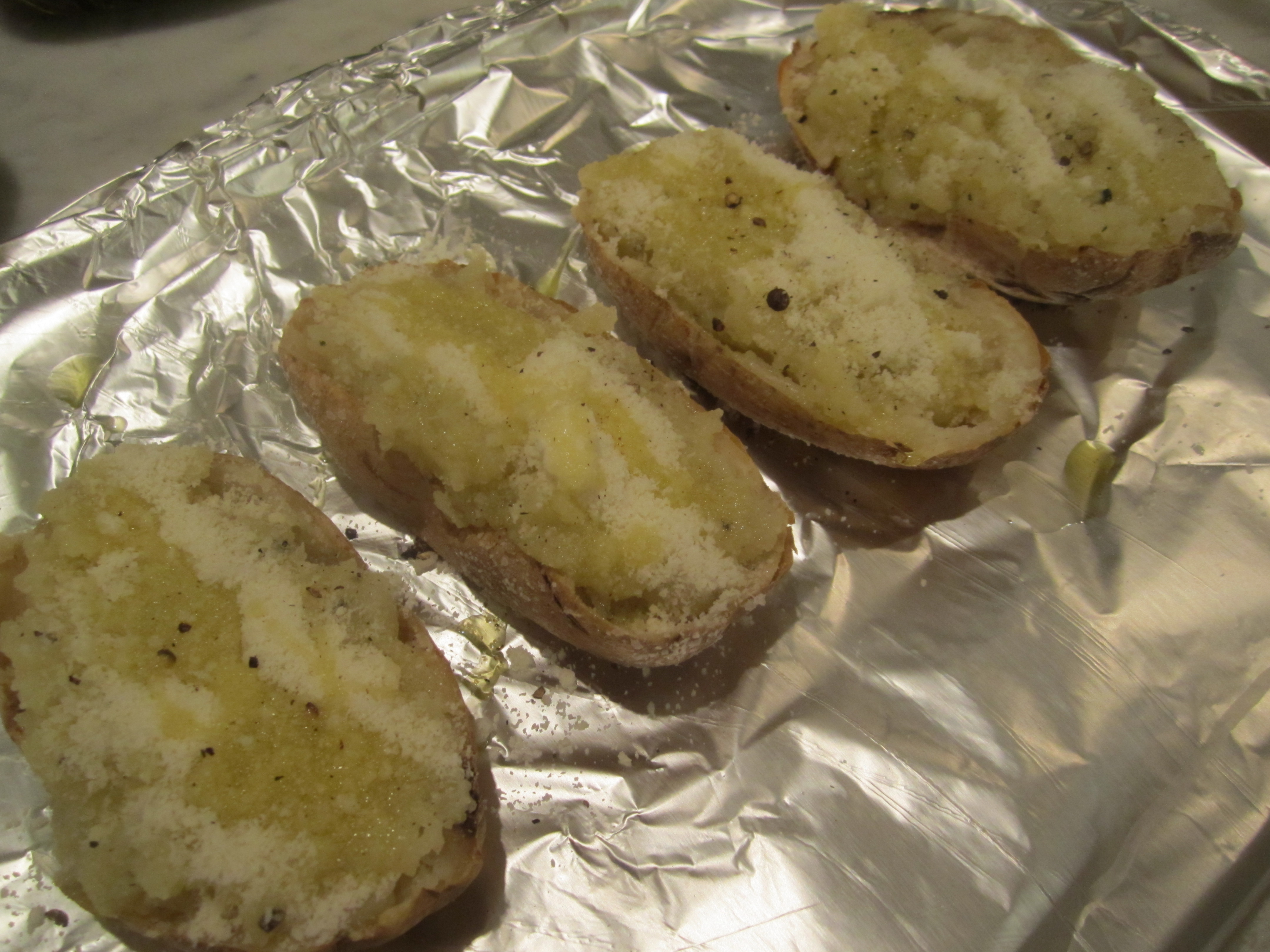
Re-fill potato skins with the filling.  Sprinkle the remaining cheese and drizzle remaining olive oil on top.

Return to oven for about 15 minutes, then place under broiler briefly until light golden-brown (don’t take your eyes off of them or they will burn).

Posted in Uncategorized, Vegetables | Leave a comment