Pasta with Seafood, Calabrese Style

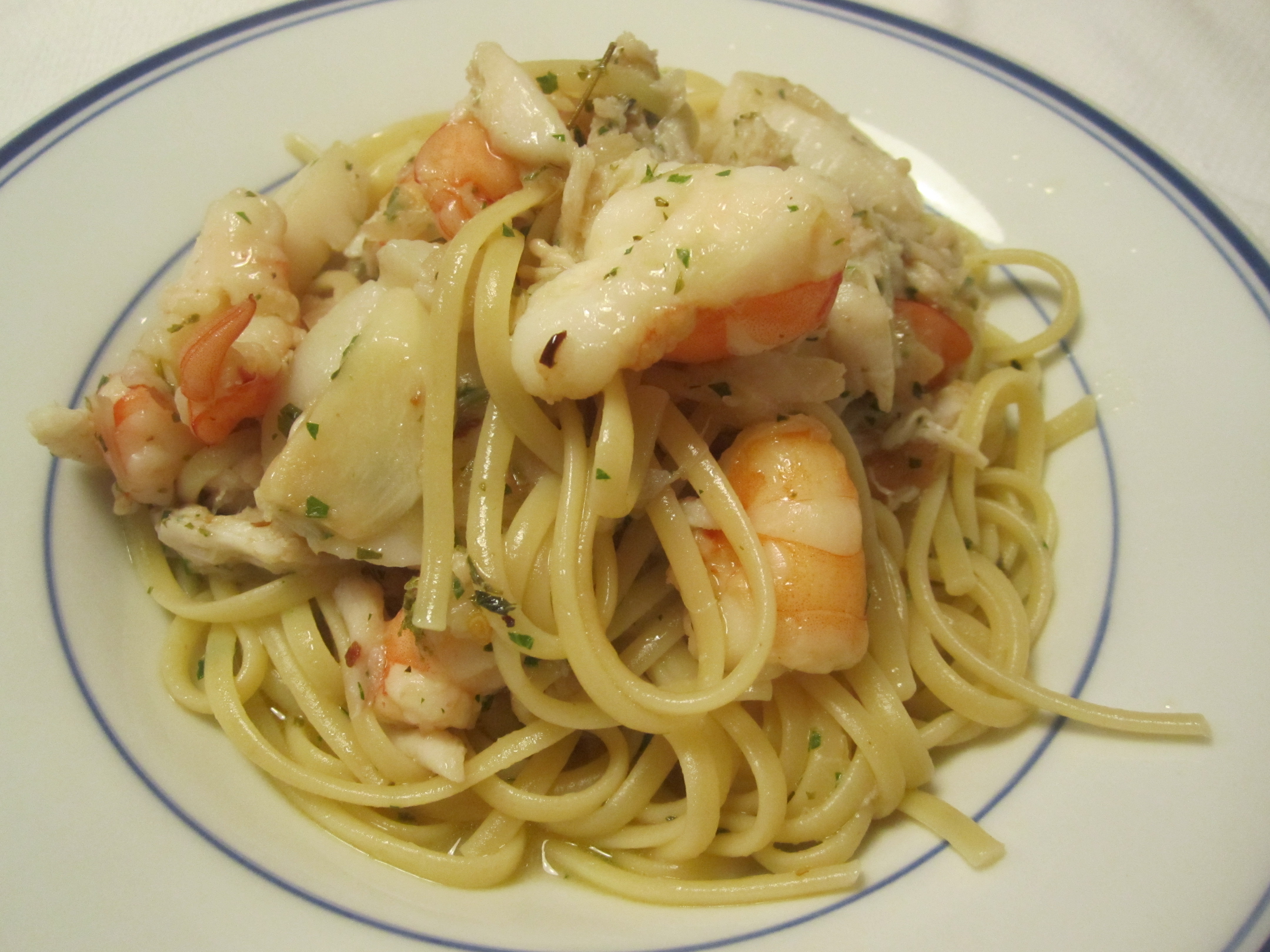
The big decision when making pasta with seafood is whether to add tomato (“in rosso“) or to make it “white” (“in bianco“).  Although I love it both ways, there’s something more delicate about the sauce without tomatoes.  My mother always flavored hers with oregano and bay leaves from Italy.

Since I have both of those ingredients from her last trip to Italy a year ago, I’m going to use the non-tomato method.  It’s very simple:  lots of onions (I’m using shallots today), some garlic (only a clove), parsley, white wine and oregano and bay leaves.  I also add a touch of chicken broth to give the sauce a richer flavor (although you can use your well-salted pasta cooking liquid instead.)

Today, I’ve chosen three types of seafood:  scallops, shrimp and skate.
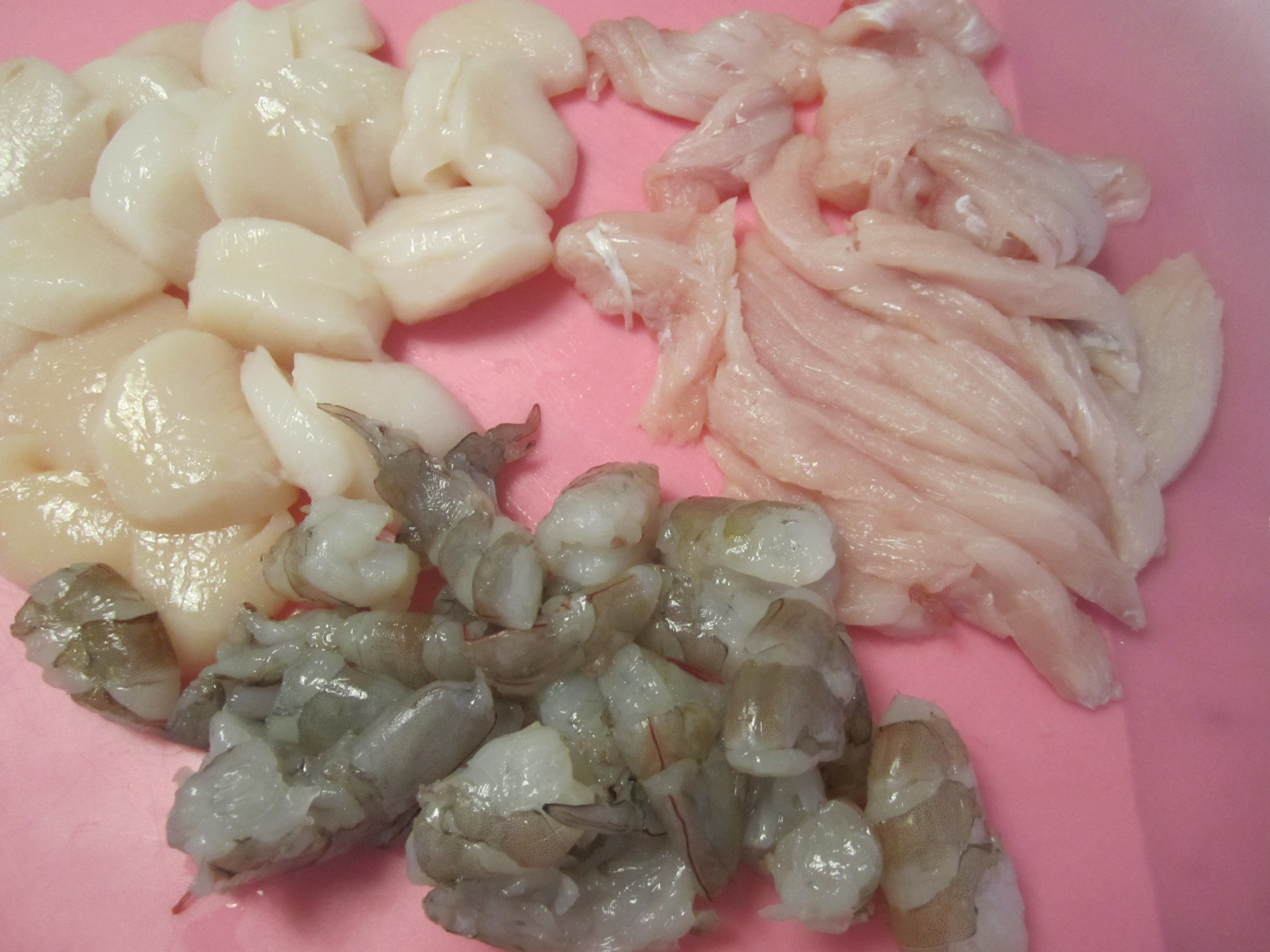
Skate is a great fish to use in this dish, because it practically falls apart, giving the sauce additonal body and brininess.  It’s also caught in local waters here on the east end of Long Island.

Assuming your ingredients are all prepped and the seafood is all cut into bite-size pieces, the sauce for this dish can be made in the time it takes to boil the pasta.

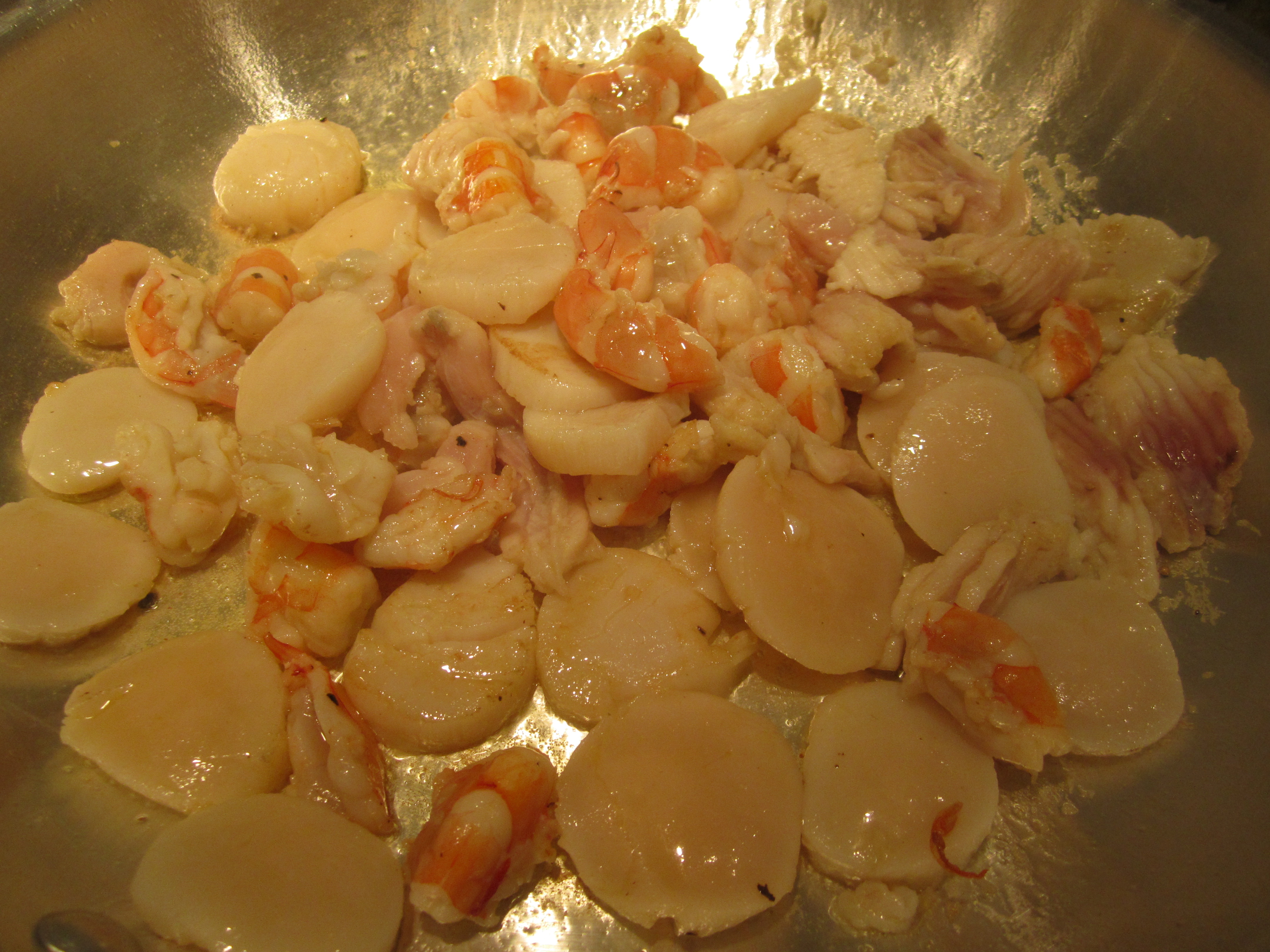
Simply heat a large skillet with olive oil on high heat and add the seafood.  Saute for about a minute, just until the seafood begins to lose its raw pink color.  Remove immediately and set aside.  Add the aromatics and saute for another minute, along with the wine, then stock.  The seafood gets added back in during the last minute of cooking time, along with a generous sprinkle of parsley.

This is a hearty main-course pasta dish–the only other thing required would be a salad or vegetable.  To carry the Calabrese them to our accompaniment, I’ve made simply broccoli di rapa with garlic and chili flakes.
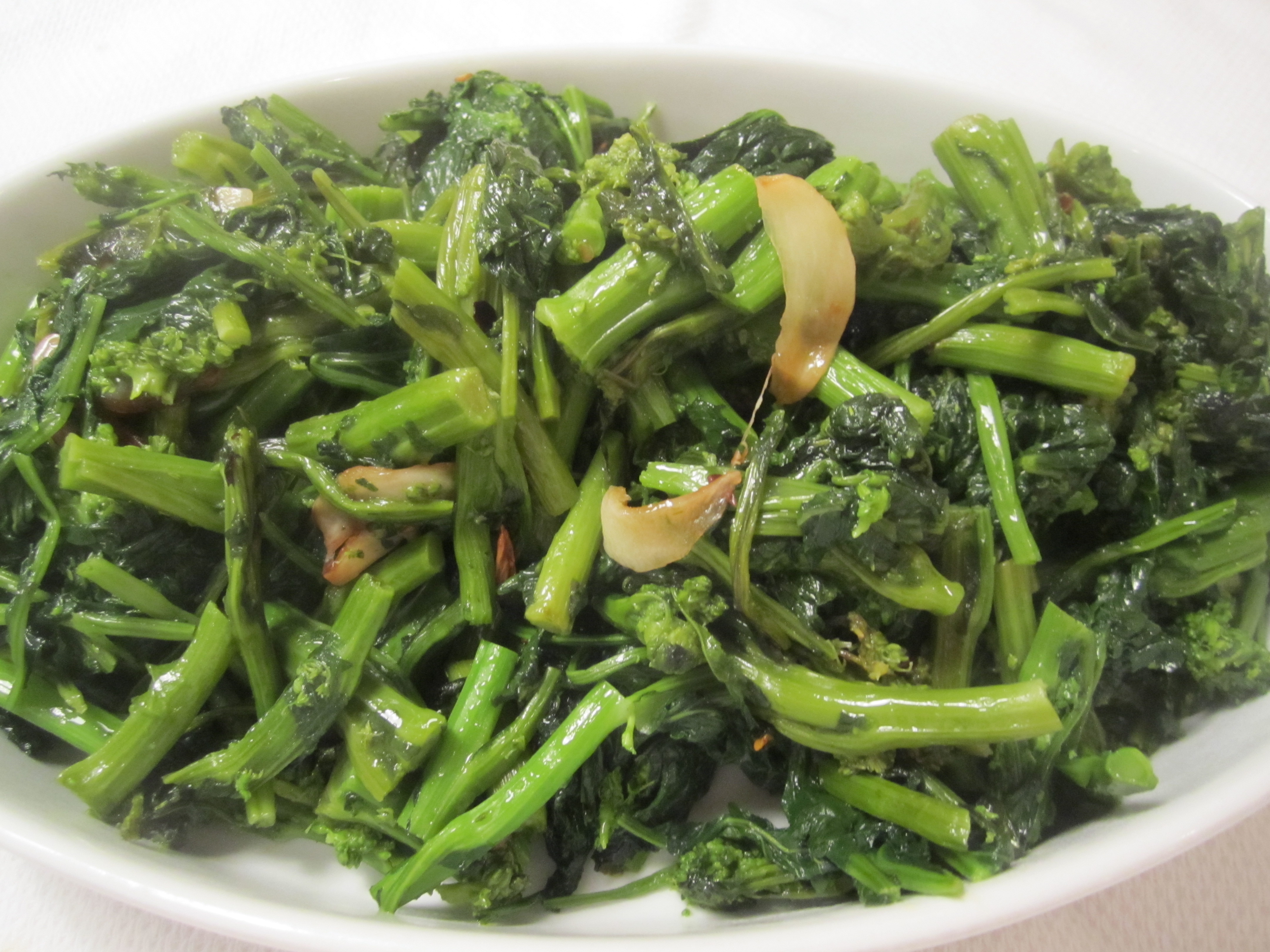
This is southern Italian summer dining at its best!

Pasta with Seafood, Calabrese Style

serves 4 generously

1 lb dried linguine

1/4 c + 1 tbl extra-virgin olive oil

1/2 lb sea scallops, cut into quarters

1/3 lb shrimp, peeled and de-veined, cut into thirds

1/2 lb skate filets, sliced crosswise into strips approximately 1″ wide

2 medium shallots, diced finely

1 clove garlic, sliced thinly

1/2 c white wine

1 c chicken broth

1 tsp dried oregano

3 bay leaves

2 tbls chopped fresh parsley

1/2 tsp dried chili flakes

salt to taste

While pasta boils, place a large skillet on high heat.  Add 1/4 cup olive oil and heat until smoking.  Add seafood, sprinkle with salt and saute for a minute, just until translucent–not fully cooked.  Remove seafood from skillet and set aside.
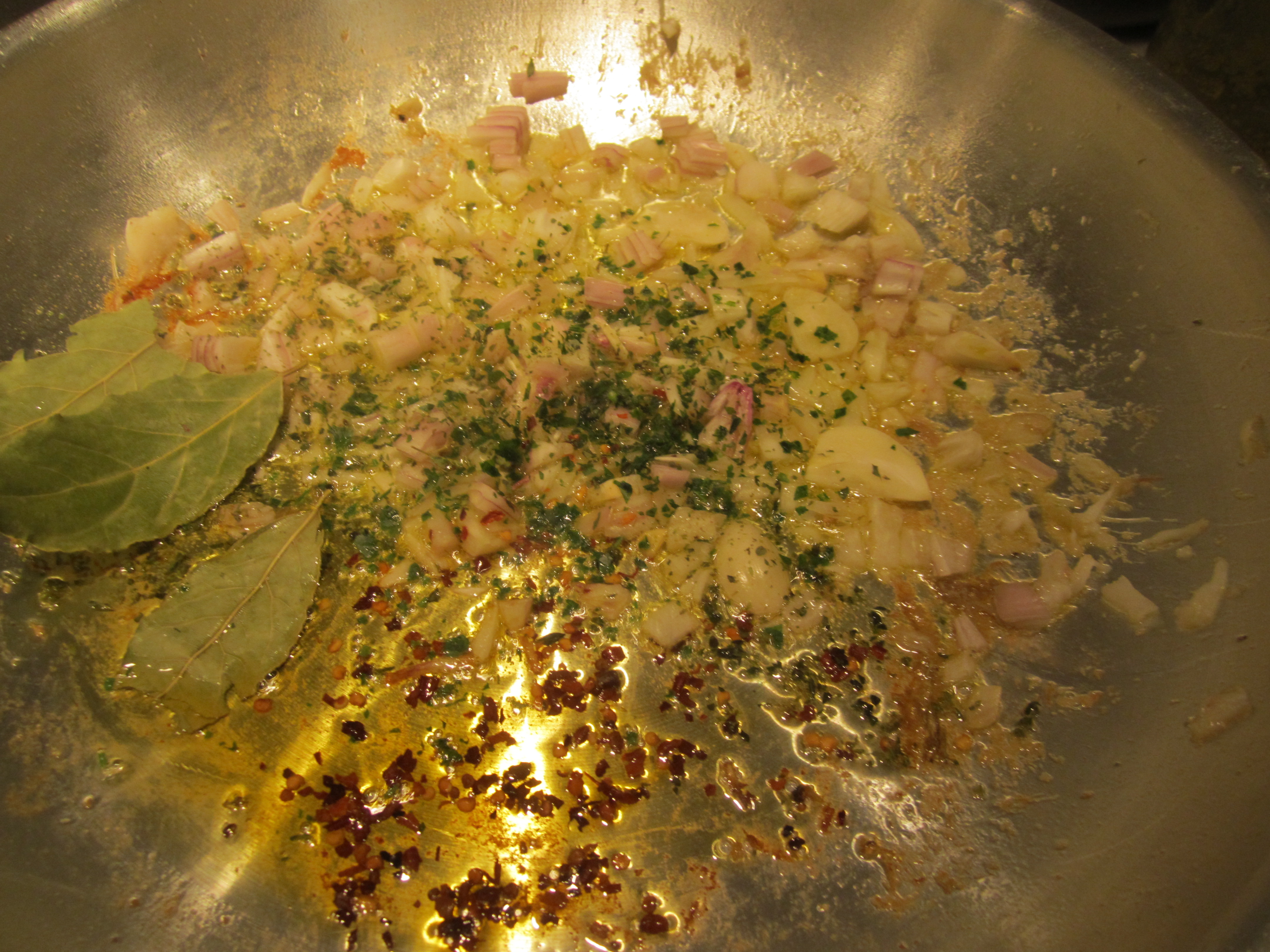
Add shallots and garlic to skillet, stirring and mixing up any brown bits left by the seafood.   Add chili flakes, oregano and bay leaves and continue sauteing for another minute.
Add white wine and reduce for 30 seconds.  Add broth and simmer until pasta is a minute shy of done.
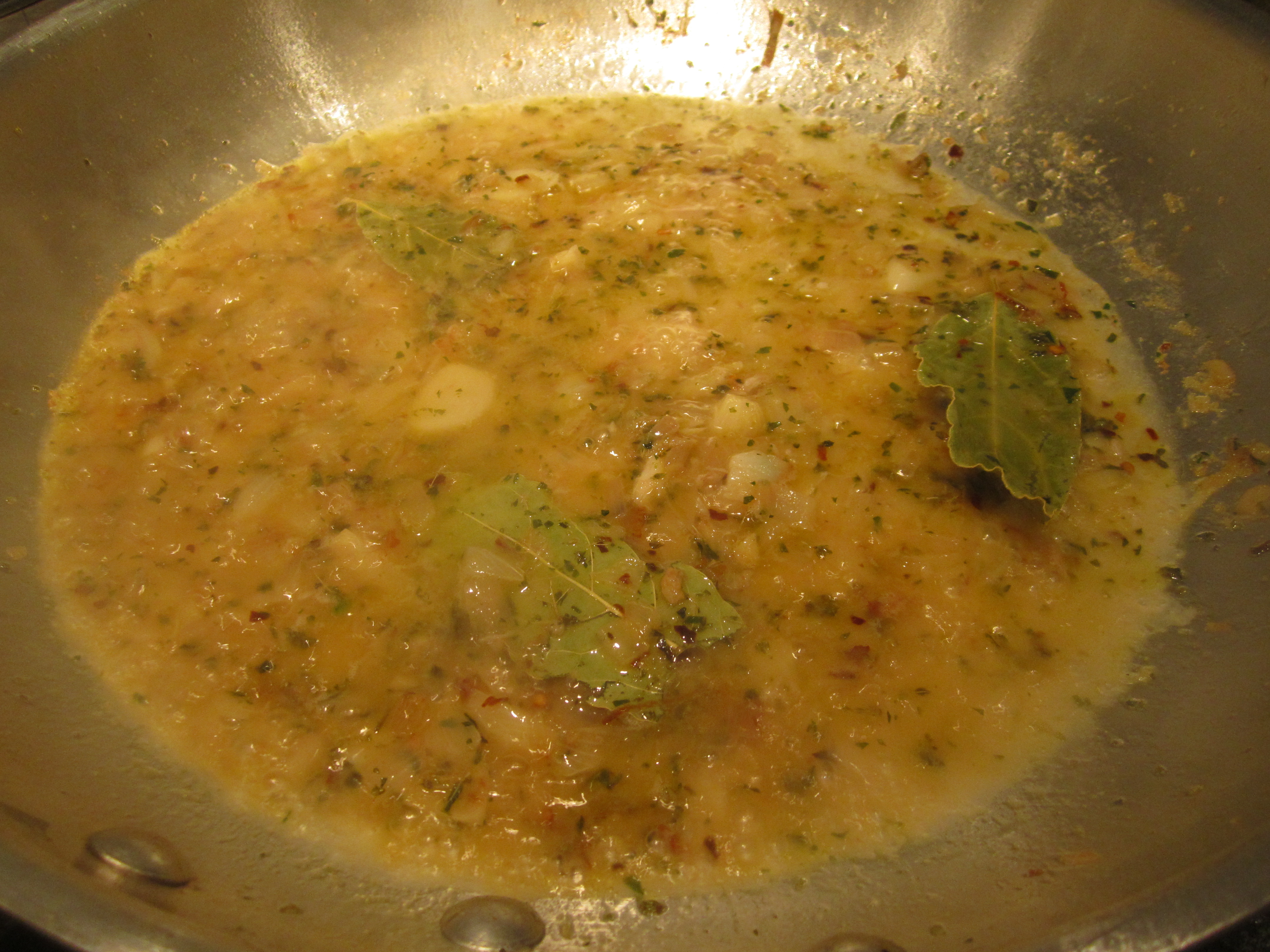
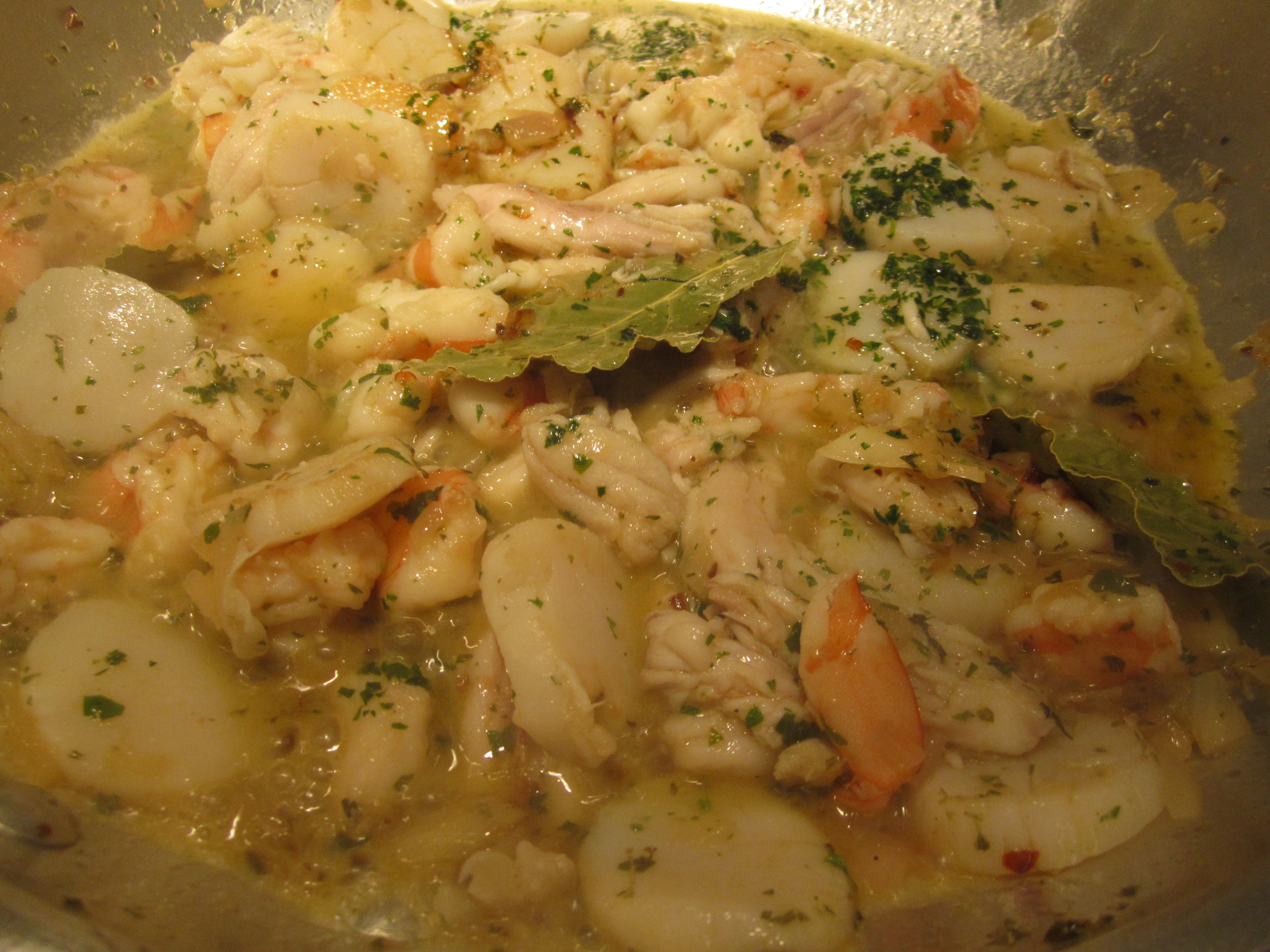
Add back seafood to sauce, along parsley.  Stir and saute for a minute.
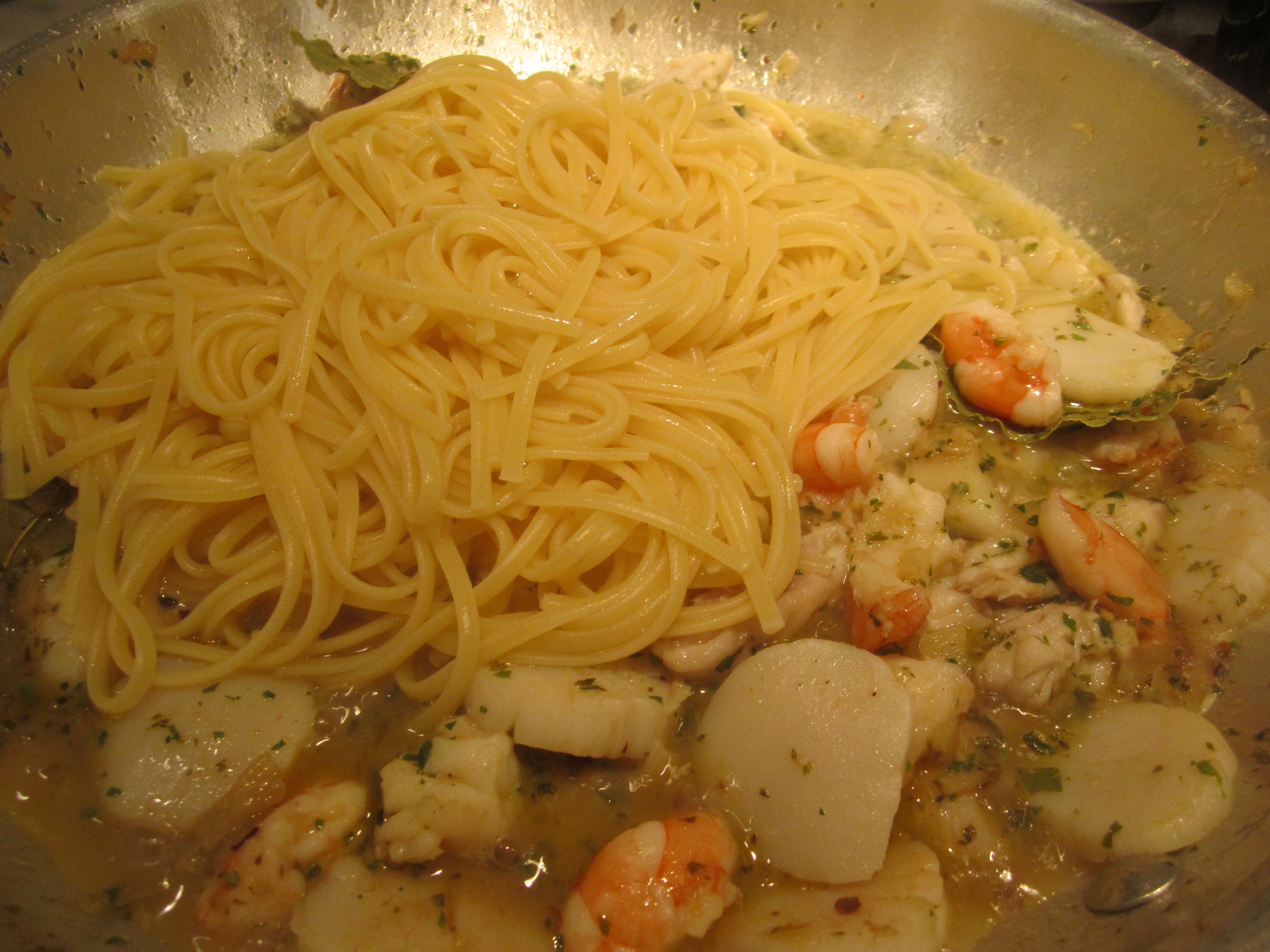
Add pasta and some pasta water if necessary to keep the sauce soupy.  Taste for salt and serve immediately.
Posted in Pasta, Seafood | 2 Comments

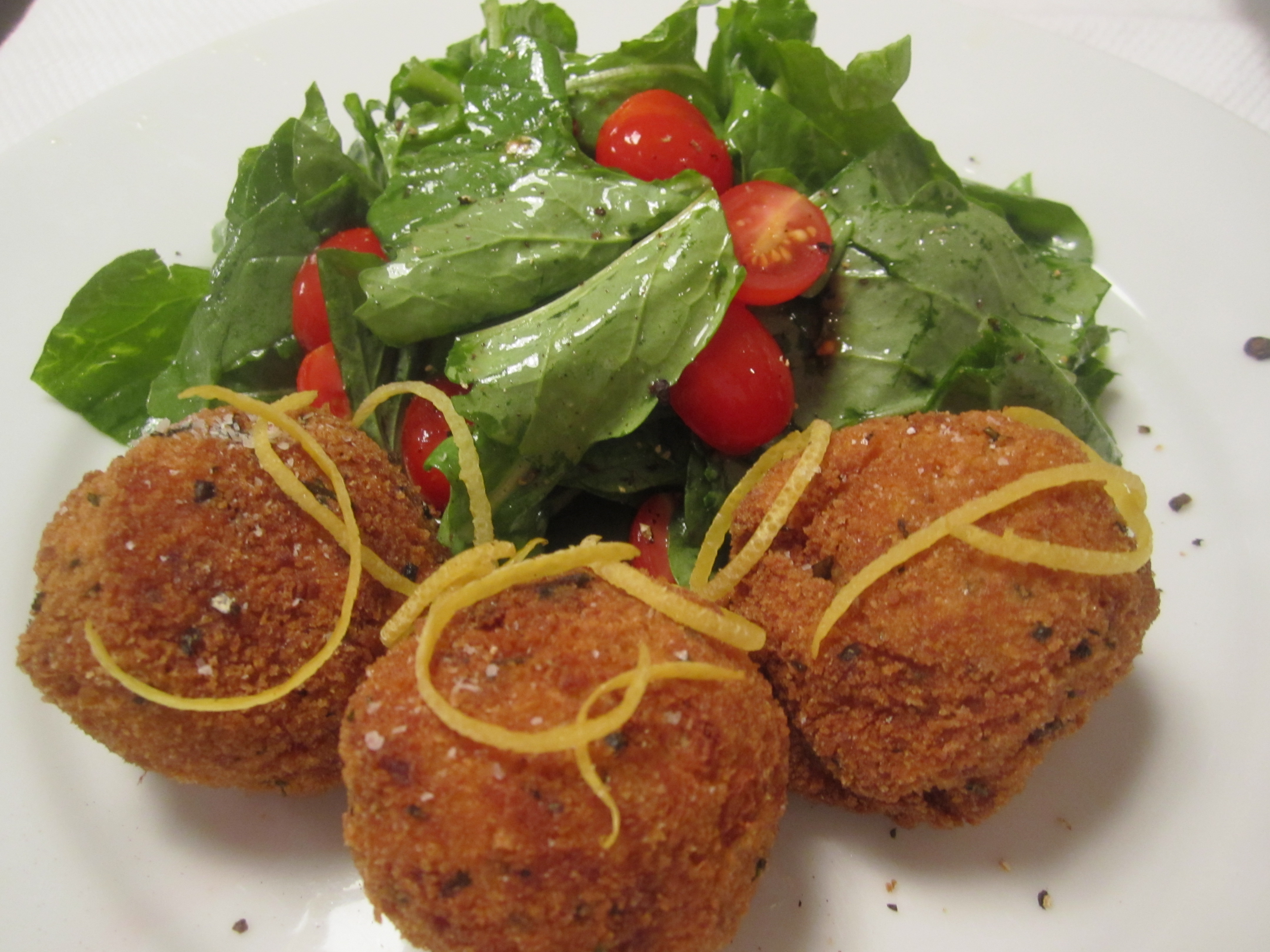
Tuna and Potato Croquettes

This is my take on a recipe of Mario’s that makes ingenious use of canned tuna and mashed potatoes.  I love croquettes of any kind, although, they’re a bit of work.

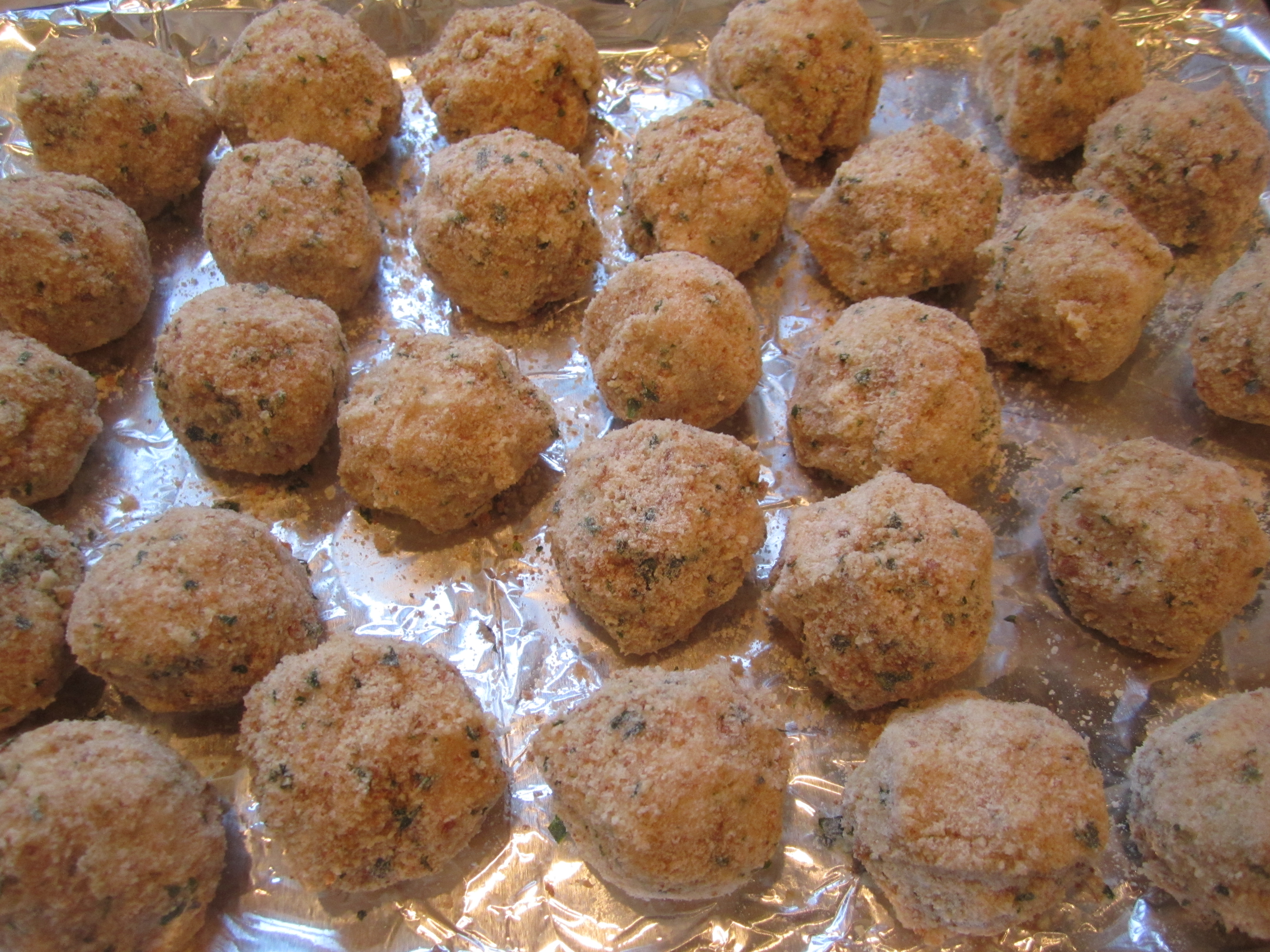
For these croquettes, potatoes need to be boiled with skins on (to insure that they remain as dry as possible) then peeled after boiling.  The potatoes are mashed, combined with tuna, ricotta, marjoram and eggs.  They are then rolled into balls and dipped first in flour, then eggs, then bread crumbs.

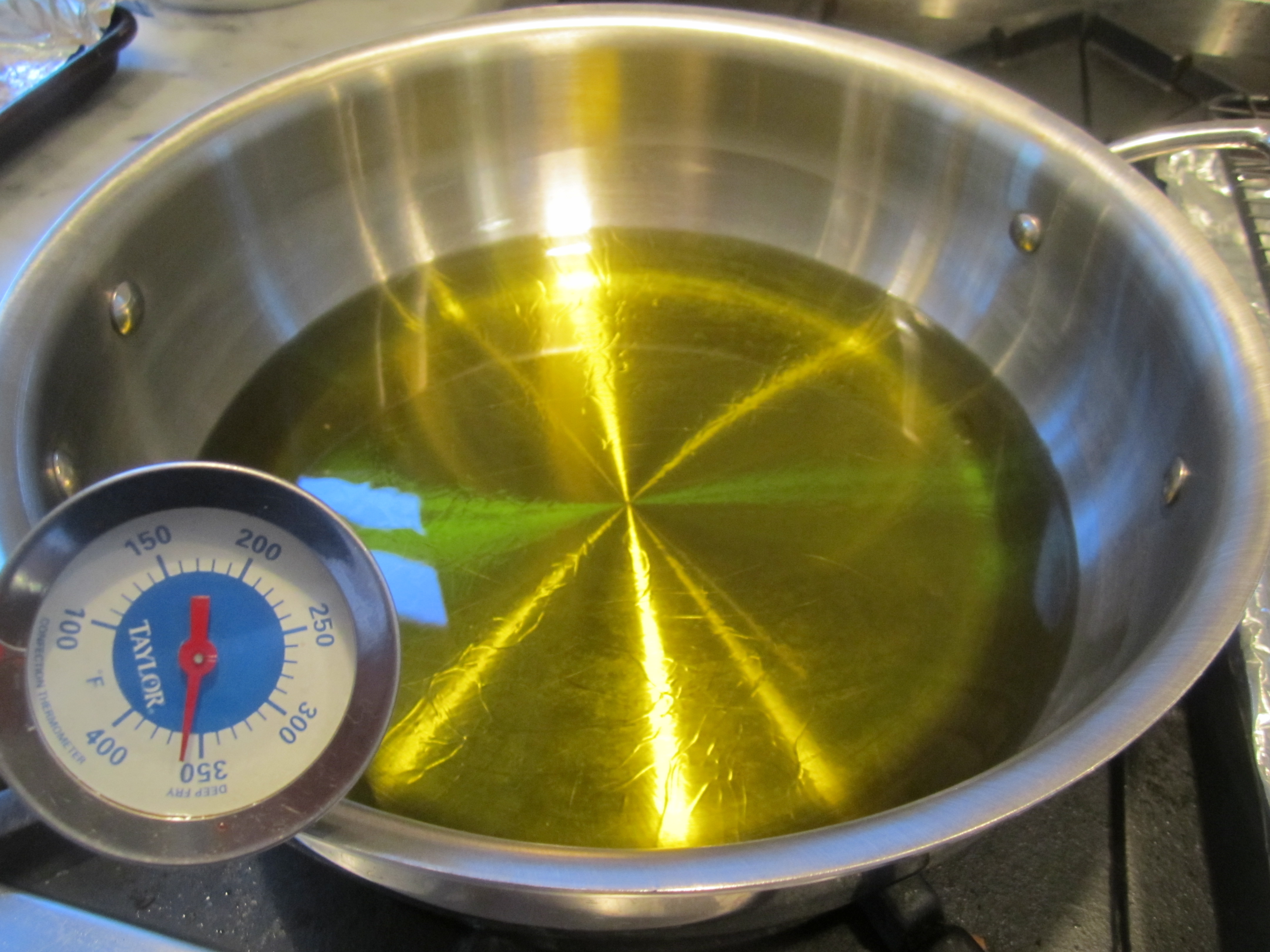
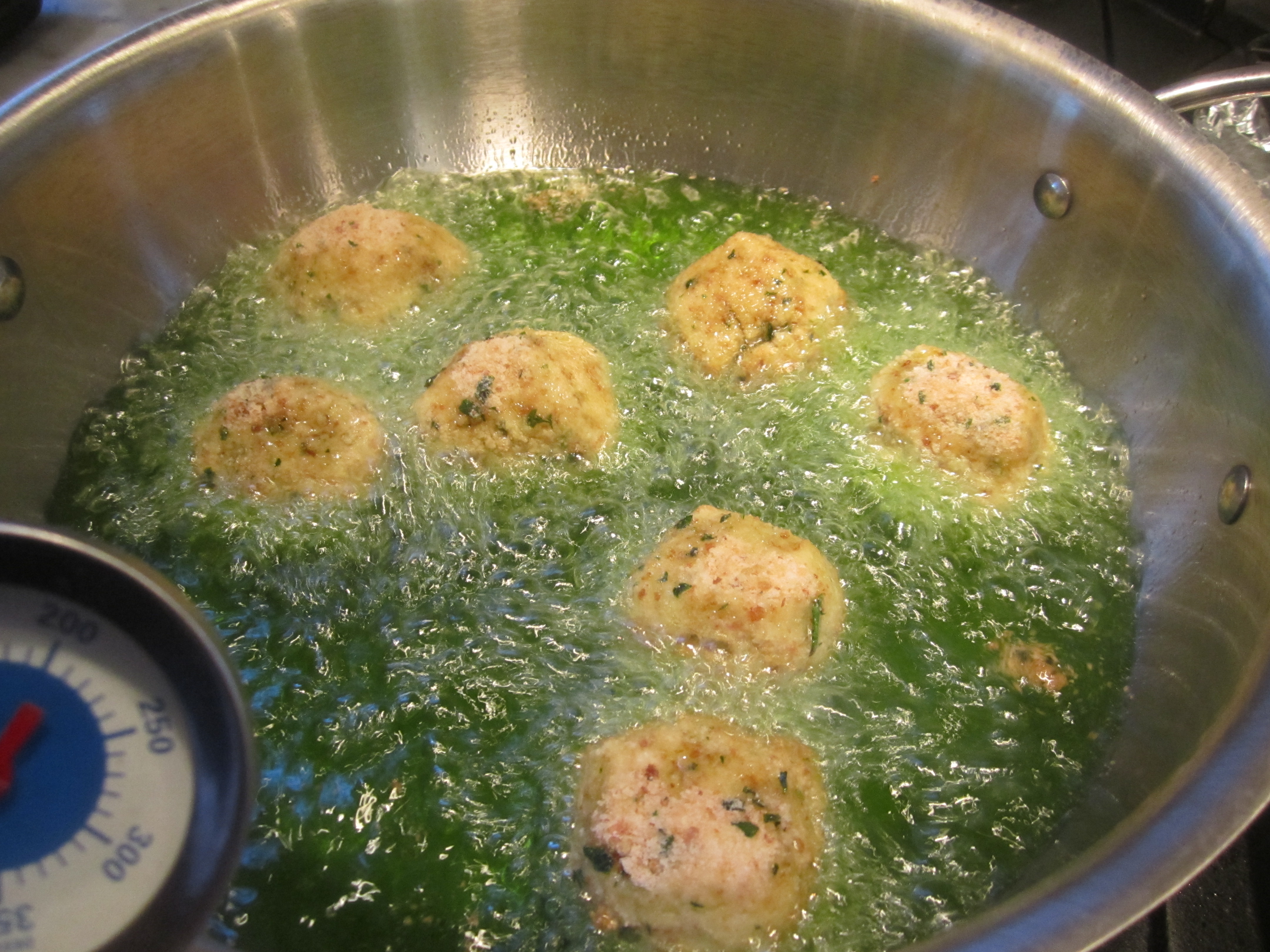
Rather than my usual pan-frying, these croquettes get deep-fried in extra-virgin olive oil.  If you keep the oil at the proper temperature (350 – 370 degrees), it will be a bit scorched and not recyclable by the end of the process, but you’ll have a wonderful bunch of crispy/ tender little balls that are a great lunch, along with a bright green salad.

I like these croquettes luke-warm or cold.  If they’re eaten too hot, their flavor is a bit dull.  As they cool, their flavors meld and the marjoram perfumes the entire mixture.  I don’t ever re-heat them, as they become too fishy.

Tonight, we began our meal with pasta, aglio, olio, e peperoncino.

We had the croquettes as a second course, with arugula and tomato salad, dressed with lemon and olive oil.

Tuna and Potato Croquettes

makes about 28 – 30 croquettes (2″ diameter)

4 medium Idaho potatoes

2 6-oz. cans Italian tuna in olive oil, drained

1 c homemade ricotta (if it’s processed ricotta, drain in a strainer for an hour)

2 tbls chopped fresh marjoram leaves

salt and pepper to taste

4 large eggs

olive oil for frying

flour for dredging

plain breadcrumbs with a liberal amount of chopped parsley added

zest of one lemon

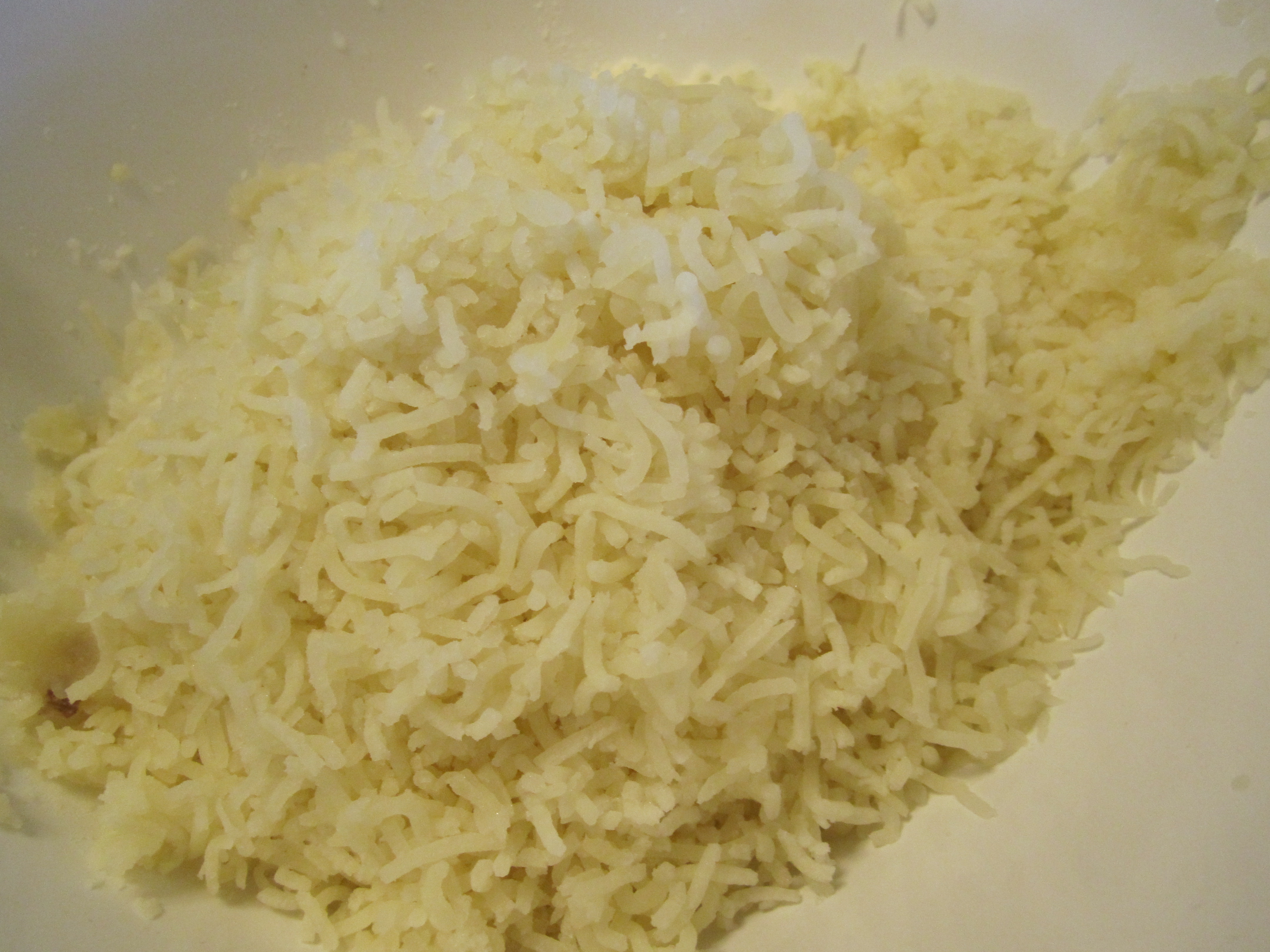
Place potatoes in cold water and bring to a simmer.  Cover partially and allow to cook on low heat for about an hour, or until a knife easily passes through the potato from top to bottom.  Peel and press through a ricer into a large mixing bowl.

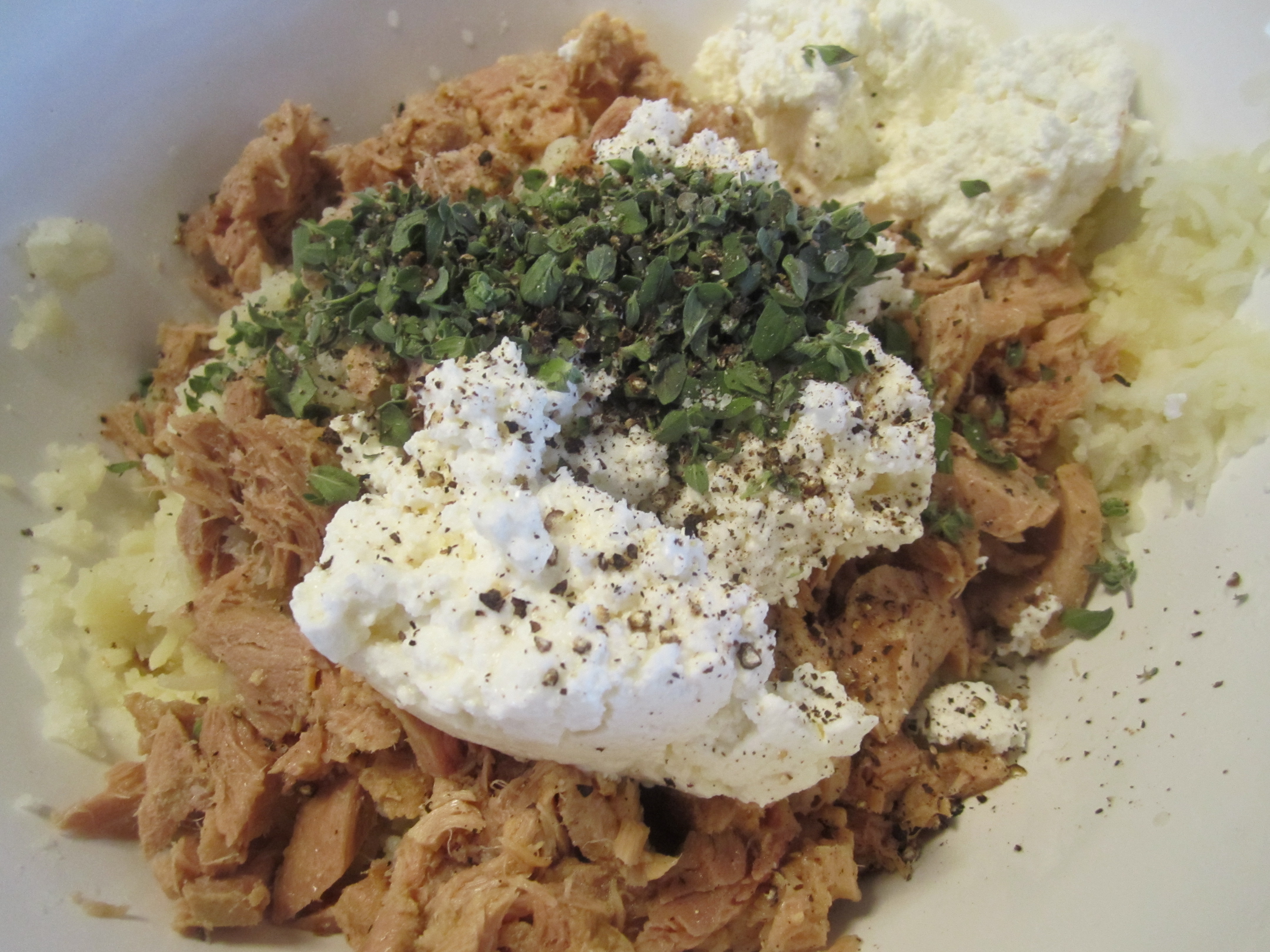
While potatoes are warm, add tuna, ricotta, marjoram, salt and pepper.  Taste for salt and pepper (you’ll need to add lots of salt and pepper to get it properly seasoned).

Add 2 eggs and mix well.

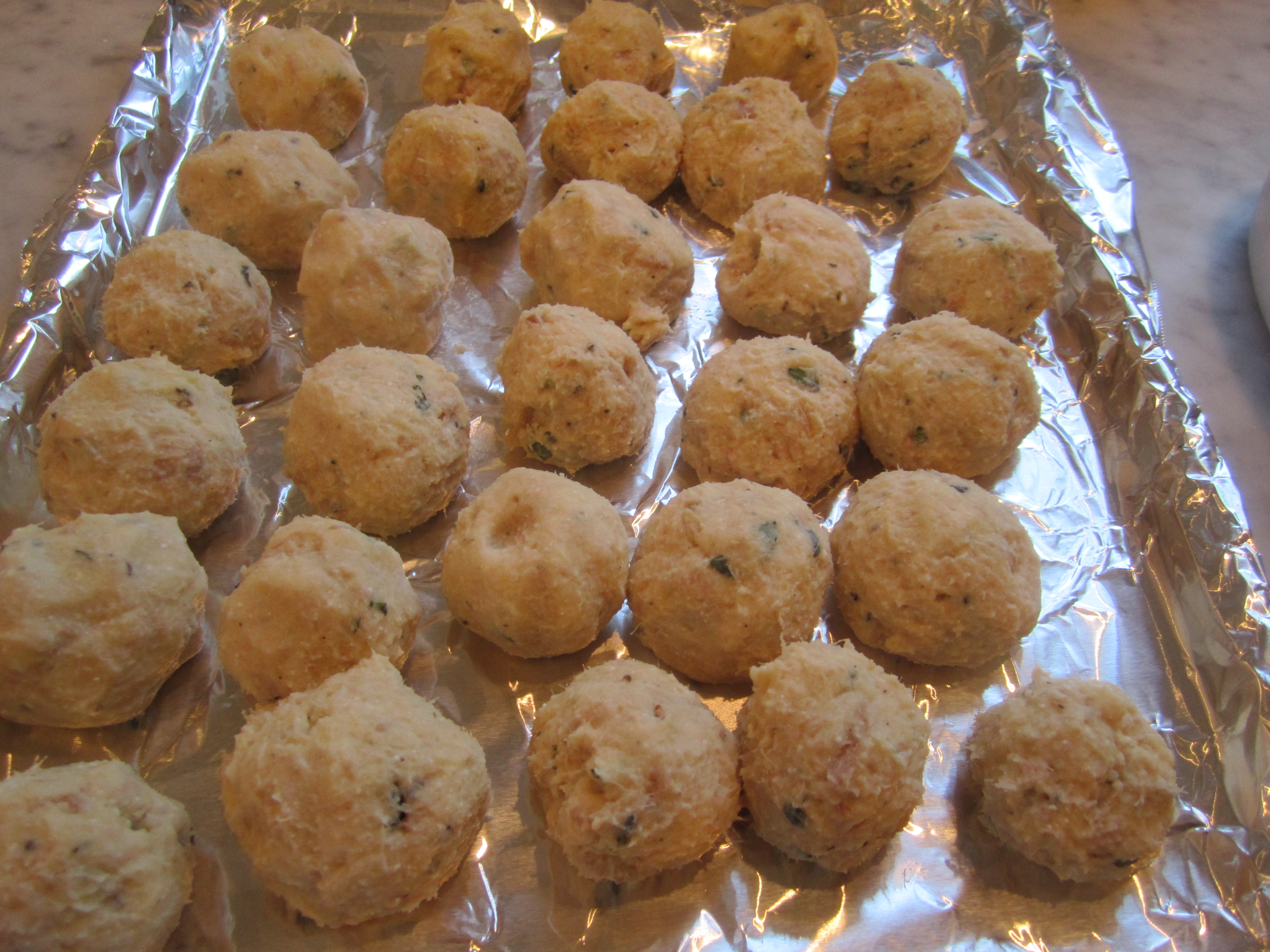
Form into balls approximately 2″ in diameter.

Beat remaining 2 eggs and prepare bread crumbs and flour in shallow trays for dredging.  Roll balls in flour, then eggs (drain well), then crumbs.  Set aside until all are breaded.

Heat oil in a fryer or saucepot until approximately 370 degrees.

Fry in batches, keeping the oil between 350 and 375 degrees the entire time.

Fry for about 5 minutes, or until golden on all sides.  The parsley and marjoram turn the oil a wonderful emerald green.

Sprinkle with additional salt as soon as they emerge from the oil.  Drain and allow to partially cool on rack.

Posted in Seafood, Uncategorized | Leave a comment

Ciambella

As I’ve said before, I’m not a baker.  Like my Biscotti,  this is the rare baked good that I’ve made successfully a sufficient number of times that I’m comfortable sharing the recipe and technique with you.

When I apprenticed at Po Restaurant, we would occasionally do cooking demonstrations at Macy’s, and in one of these demonstrations, we made a dessert/snack called Ciambella–a cross between a cookie and a cake.

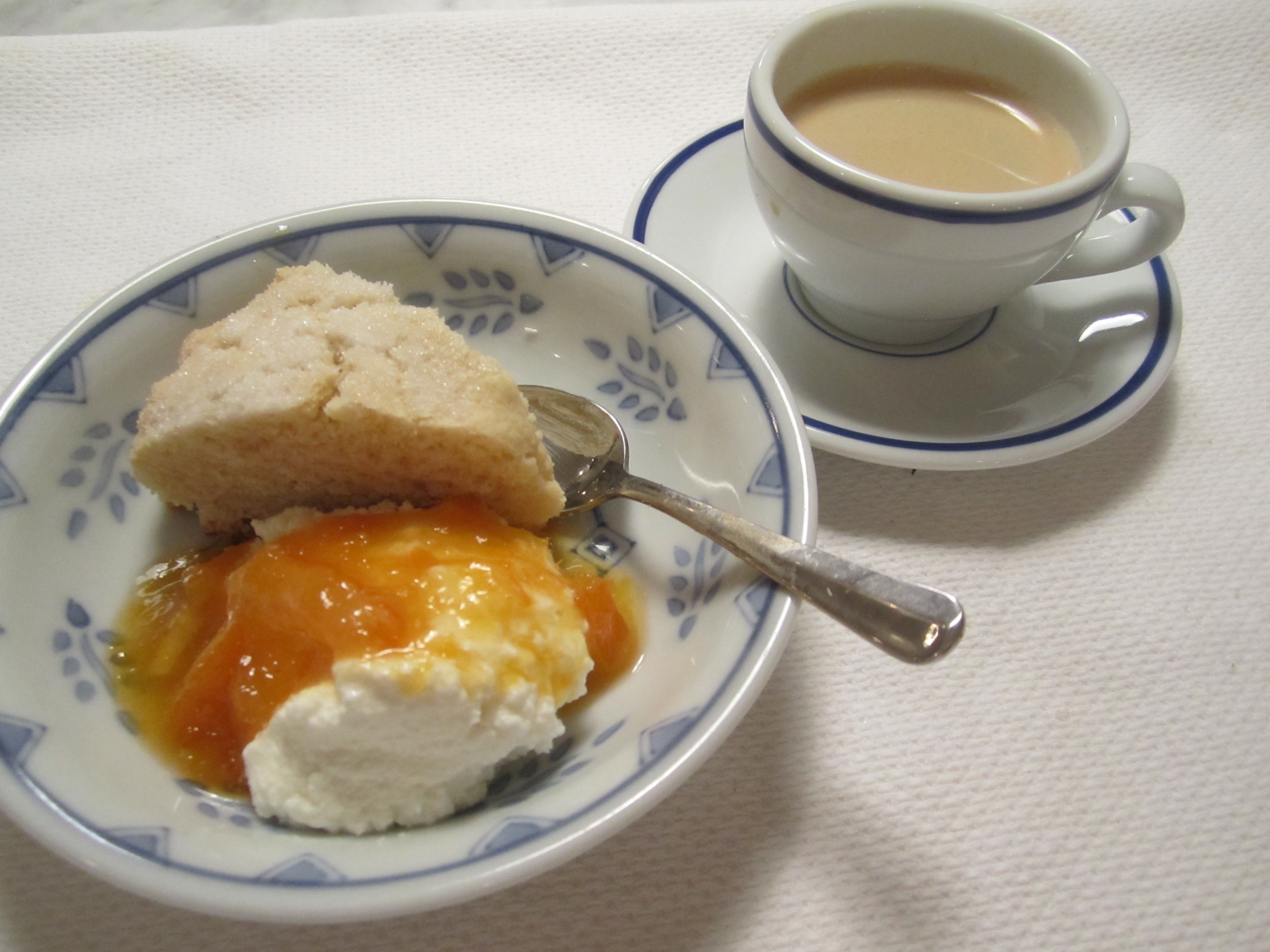
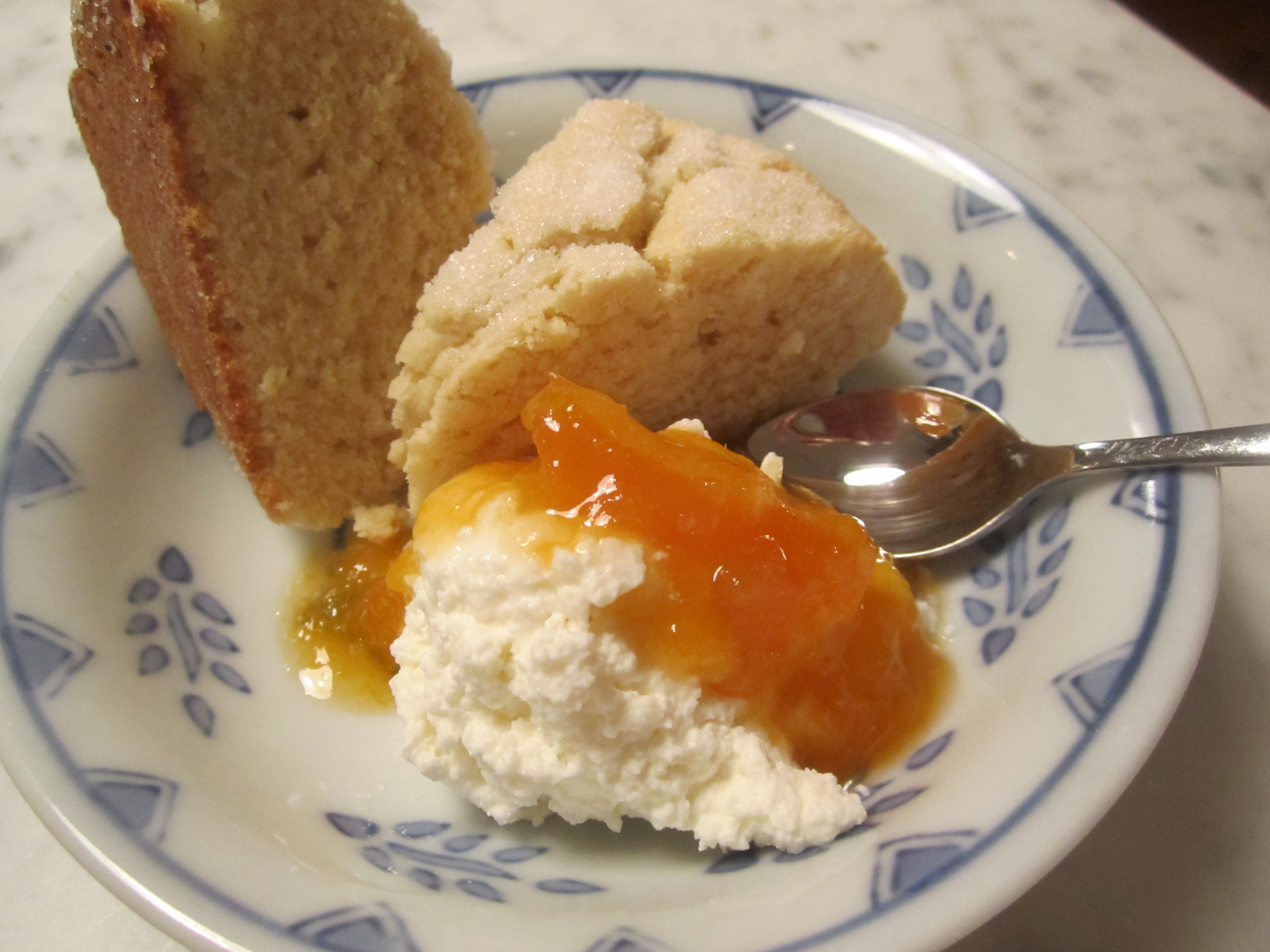
Italians have their sweets more in the late afternoon (a snack known as “la merenda“) than after a meal, and this is the perfect late afternoon snack with an espresso or cup of tea.  As a dessert, I like to dress it up a little with some preserves or macerated fruit and ricotta or some gelato.

I like to serve ciambella lukewarm, so if I’m serving it to guests, I’ll warm it in a 250-degree oven for about 10 minutes prior to cutting.  If I’m making one simply to keep on hand, I’ll bake it, cool it, slice and freeze it.  When I want a piece, I reheat an individual slice in the microwave (10 – 12 seconds) or oven, and it always tastes like it was just baked.

The basic recipe is Mario’s but I’ve made a few substitutions to suit my own palette, so I’ll share my version with you.

Ciambella

serves 6

2 c flour

1/2 c sugar plus 2 tbls for sprinkling

1/2 tsp baking powder

1 stick cold butter, cut into 1/2″ cubes

1 egg

1 tsp vanilla extract

1/4 c half and half

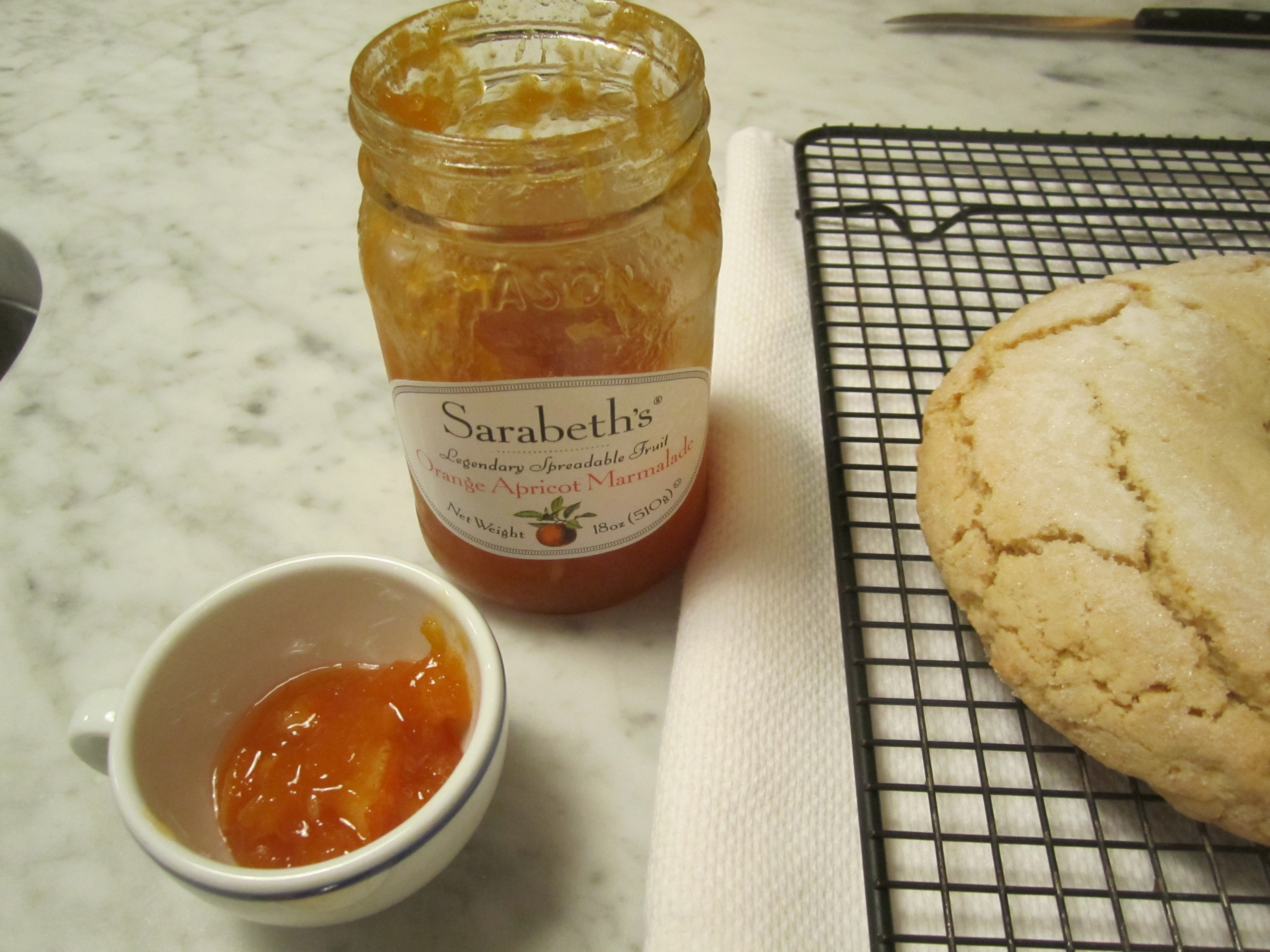
1/2 c orange-apricot preserves (I use Sarabeth’s, but any good orange or apricot will do fine)

2 tbls water

1 lb fresh ricotta

preheat oven to 375 degrees

 Combine the flour, baking powder and 1/2 cup of sugar in the food processor and pulse a few times to combine.  Add the cubed butter (which I throw into the freezer for 5 minutes).

Continue pulsing to form a mixture that has the texture of fine gravel.

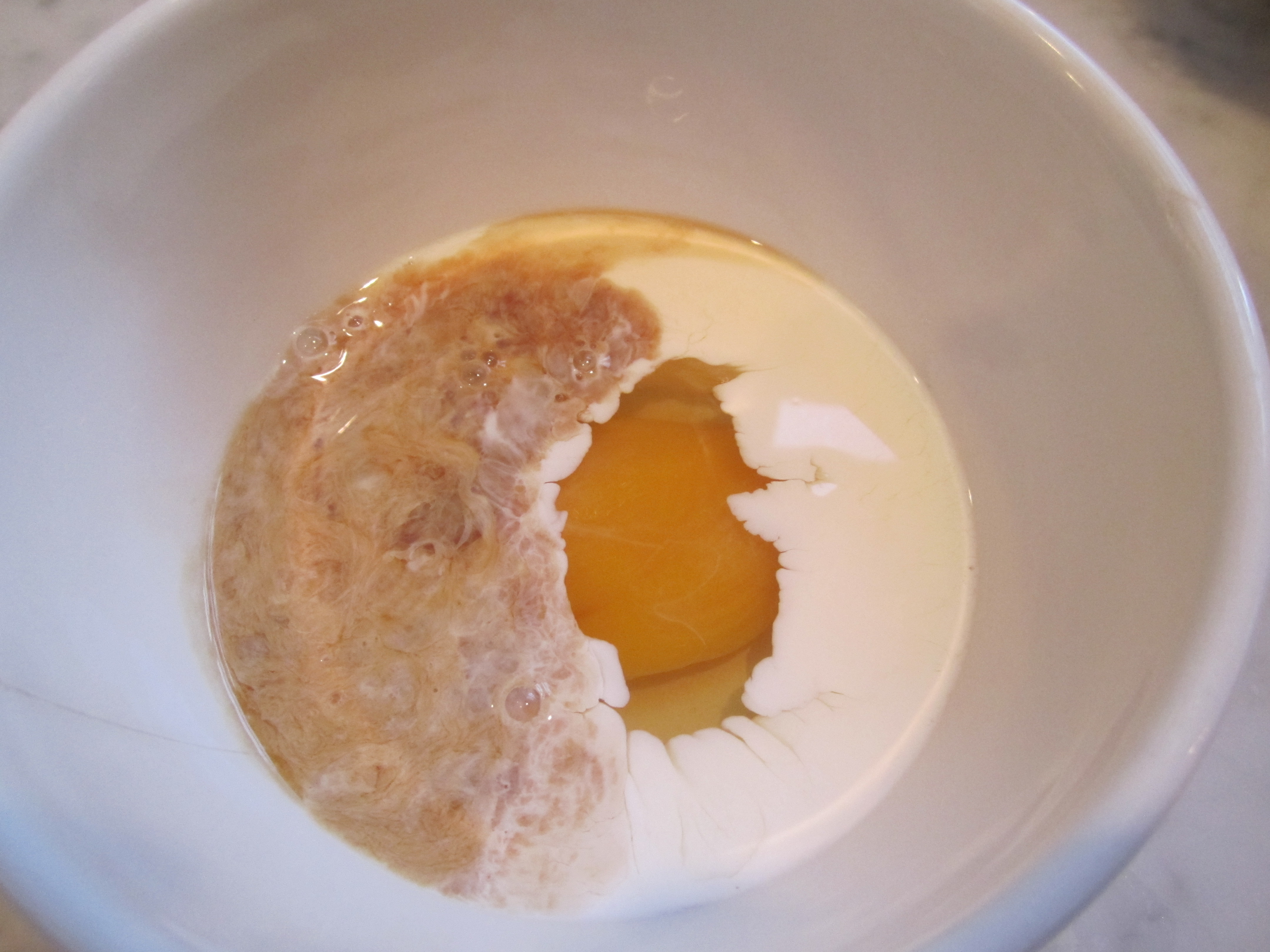
In a separate bowl, combine egg, extract and half and half, then beat with fork.

Pour liquid mixture into the food processor and process continuously just until mixture comes together in a ball.

Remove from processor and place on a lightly floured surface.  Gently shape into a log approximately 14″ long and 1 1/2″ diameter.

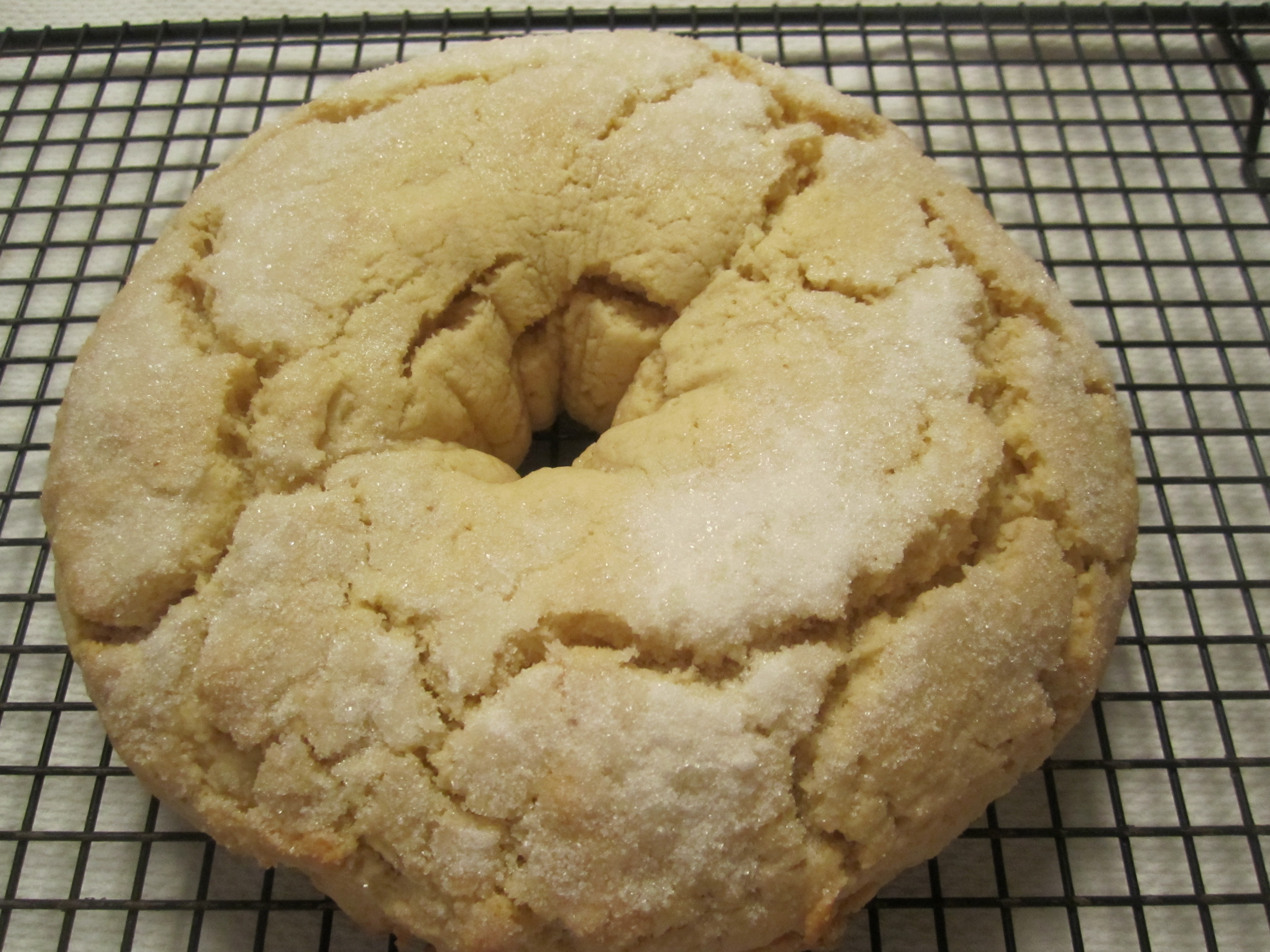
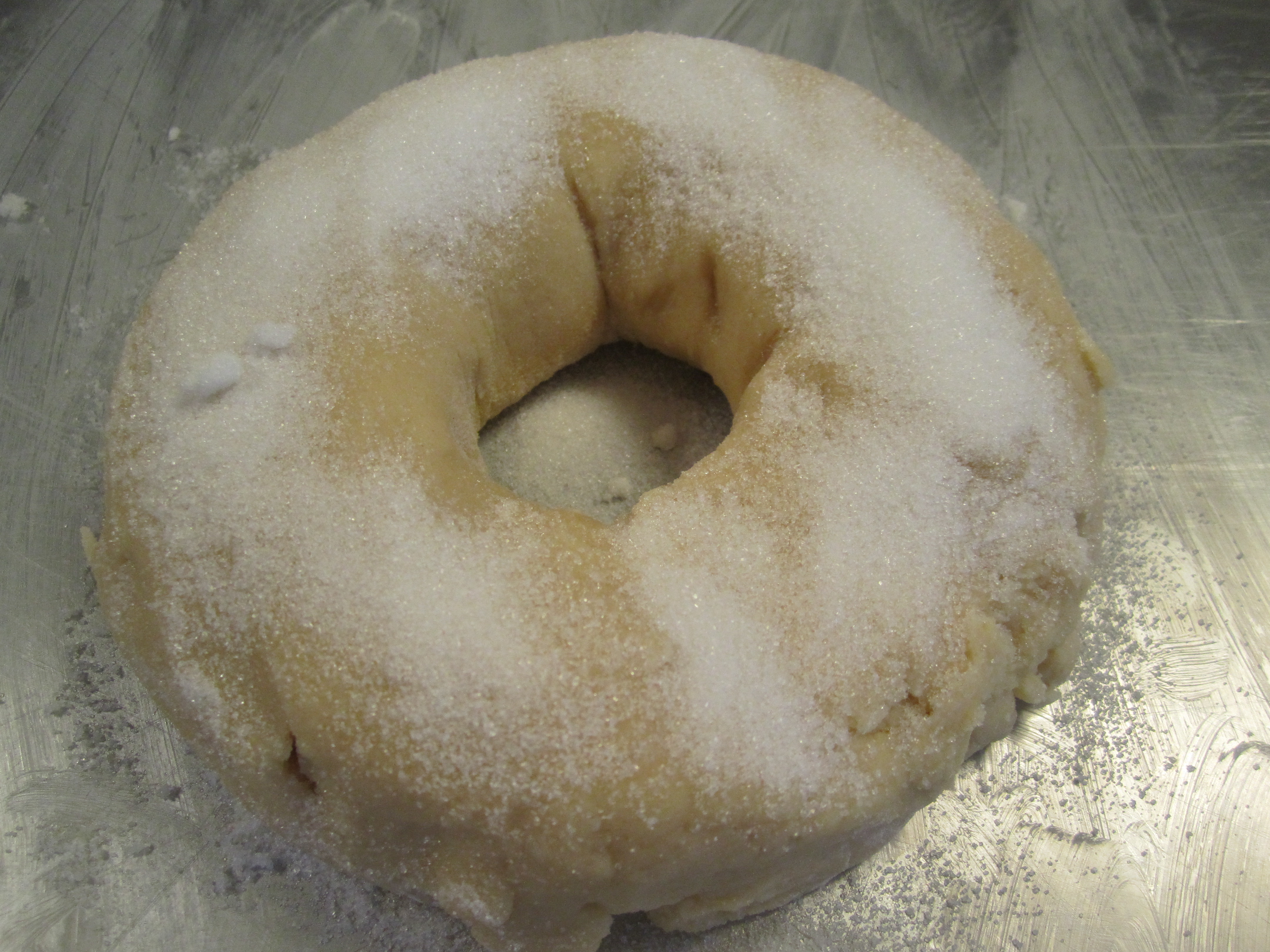
Place on a buttered cookie sheet and form into a ring, pressing the ends together to join them.  Sprinkle with remaining sugar.

Bake for approximately 35 minutes, or until just golden on the bottom.

Partially cool on a rack, then slice and serve luke warm (can be re-warmed in a 250 degree oven for about 10 minutes).

To serve, add water to preserves and stir to thin.

Place a mound of ricotta in a shallow bowl and top with preserves.  Serve the warm wedges of ciambella alongside.

Posted in Dessert | Leave a comment

Cicoria alla Romana

One of the great things about being in Rome is knowing that the same dishes will be on every restaurant menu at any given time of year.  When a vegetable or fish is in season, everyone offers it.

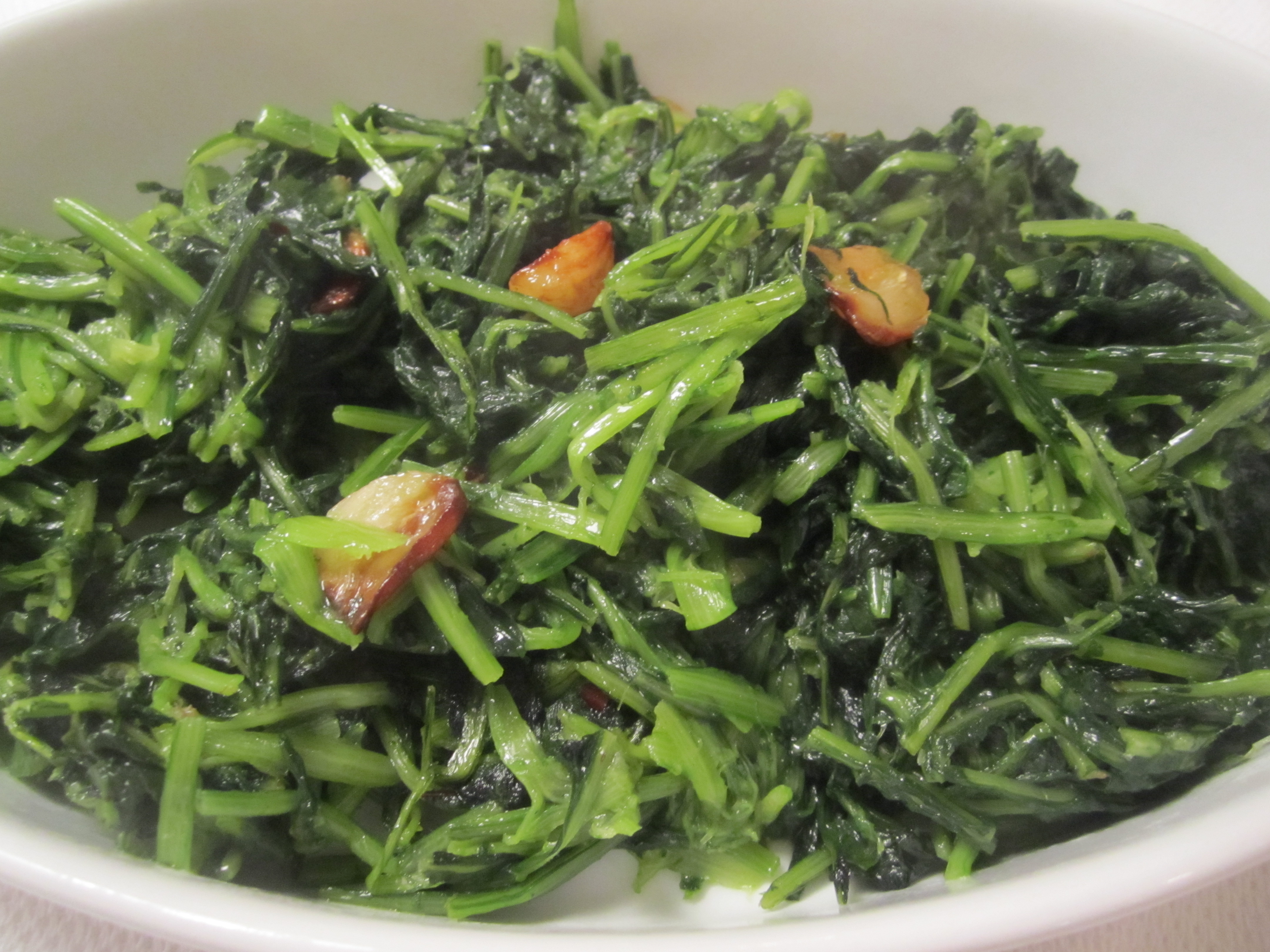
I’m usually in Italy in the fall, and at that time, every restaurant offers sauteed dandelion greens.  These greens are boiled, squeezed and simply sauteed with garlic, chili flakes and olive oil.  They are slightly bitter and earthy, tamed by the salt, oil and garlic.

I’ve been finding beautiful dandelion greens in my local markets and have been making salads with the leaves (see spring vegetable salad with pecorino sardo), soups and pasta dishes with the stems (see pasta, ceci e cicoria).

Tonight, I was in the mood for the simple Roman experience of chili flakes, garlic and olive oil.  For this dish, I’ll give you the technique, but a recipe is not required.

The main thing to realize is that dandelions, like spinach, shrink tremendously when cooked, therefore make sure you start out with a sufficient enough quantity to feed your guests.  A bunch of dandelions (about a pound) is enough to feed 2 to 3 persons generously.

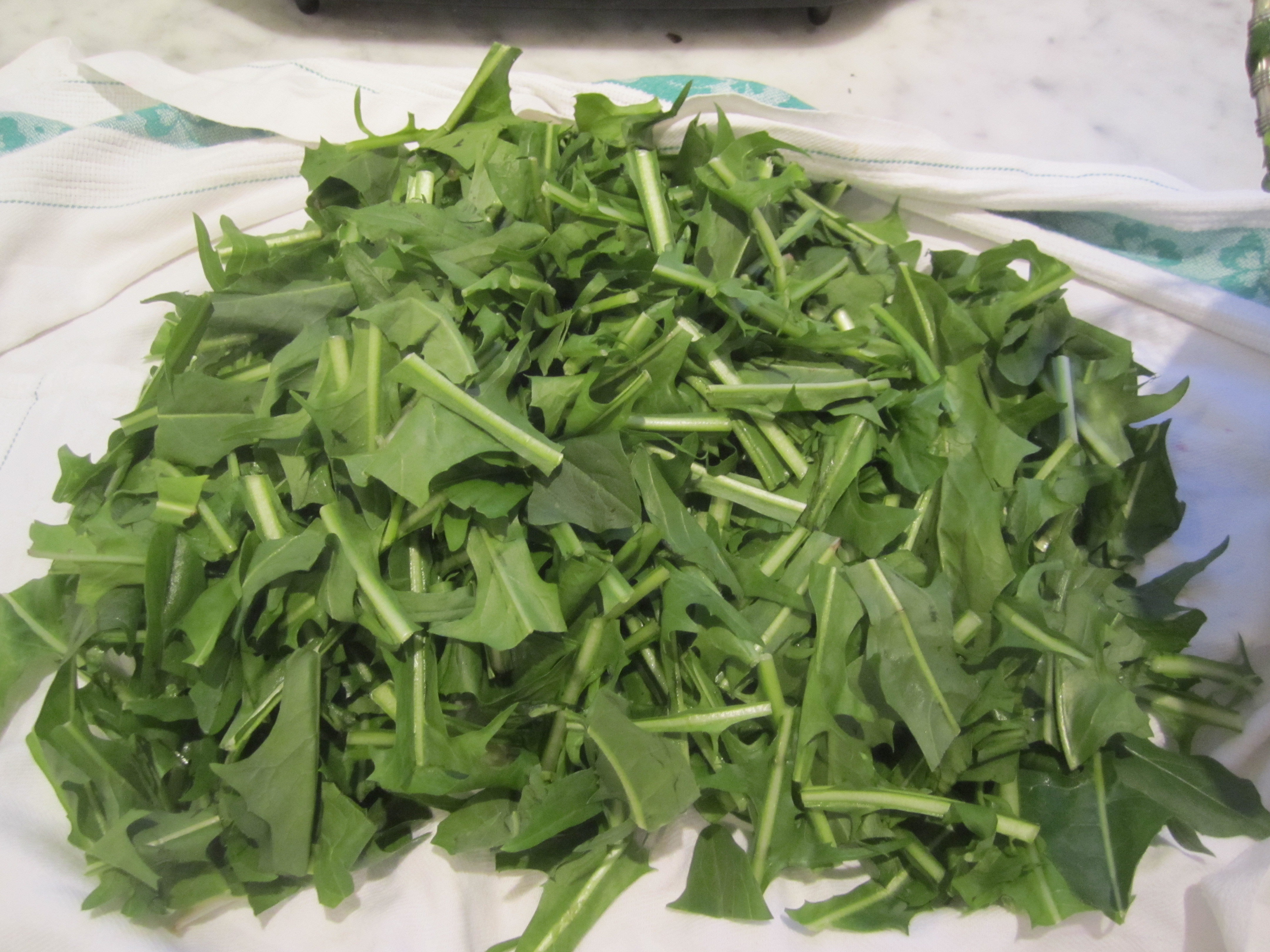
The next important step is to clean them well.  Slice the stems and leaves separately into 2″ lengths and drop into deep bowls of cold running water.  Allow the sand and dirt to fall to the bottom of the water, then pull the greens out and repeat until there is no more sand left in the bottom of the bowl.

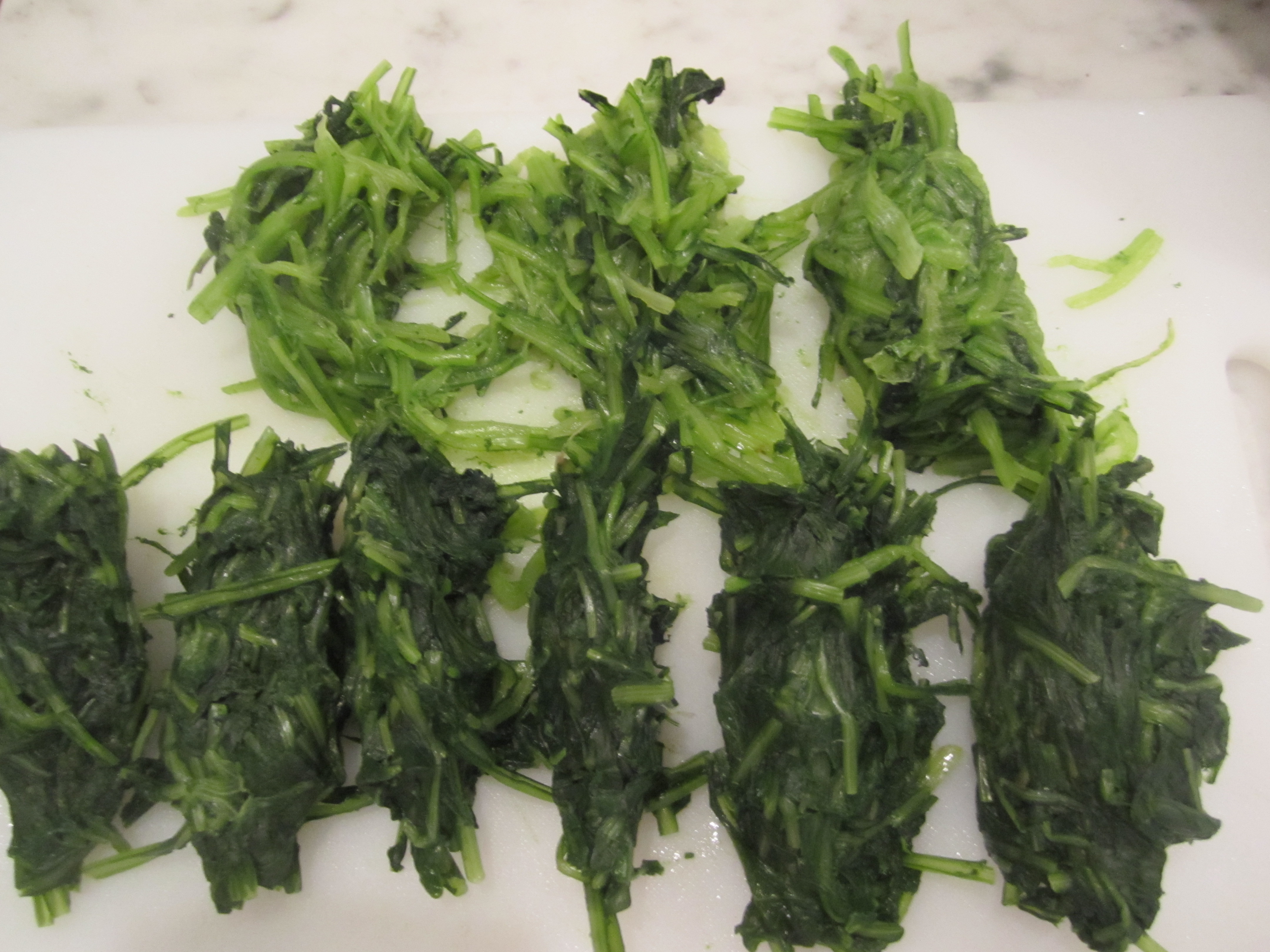
First, drop the stems into salted boiling water and boil for 10 minutes.  Drain and shock in cold water.  Next, drop the leaves into the same boiling water and cook for 8 minutes.

Shock and drain.

Squeeze the cooked greens well in small bundles to extract as much water as possible.  Set aside until ready to saute and serve.

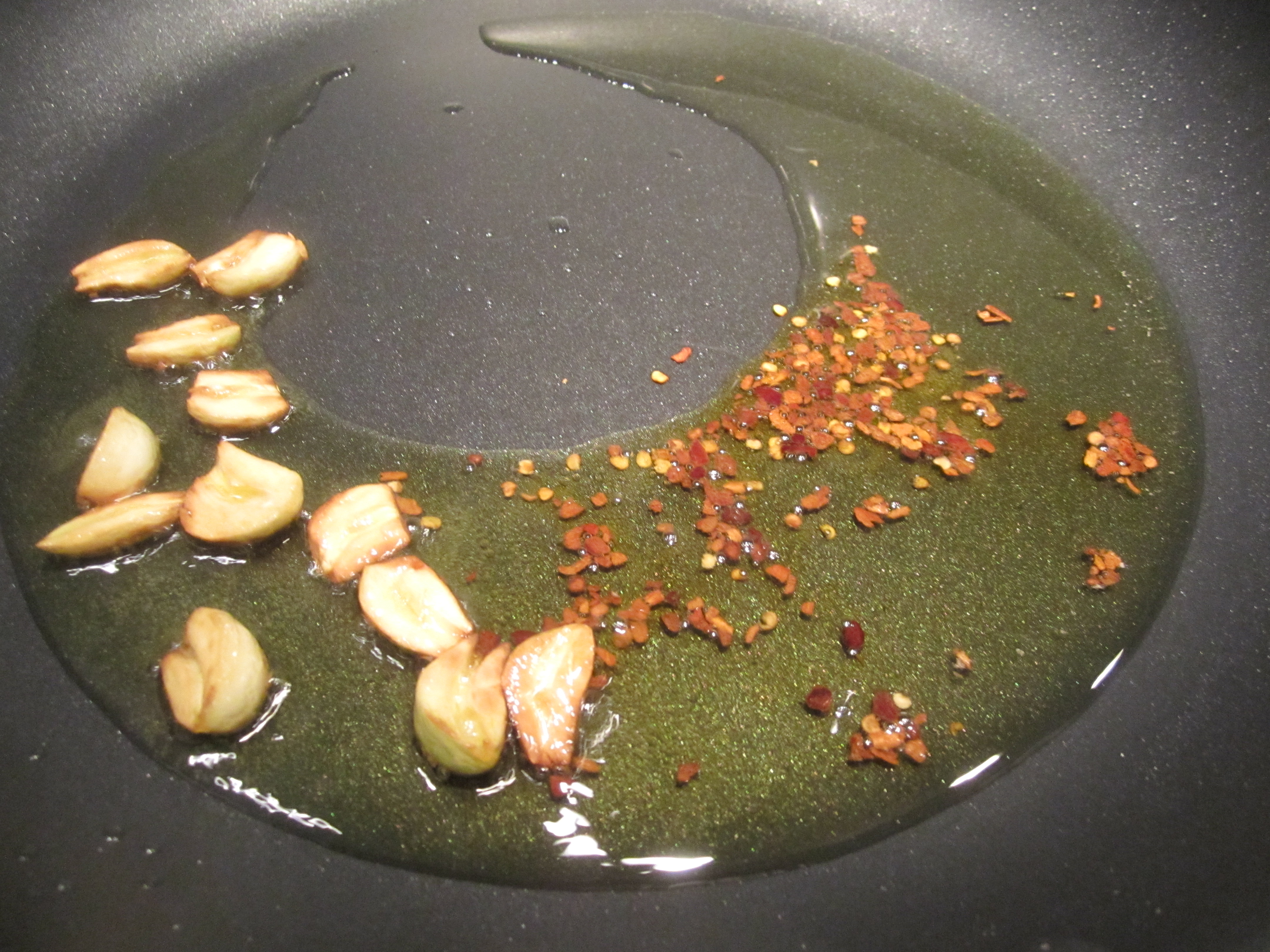
In a broad skillet on low heat, place a generous number of peeled, split garlic cloves face down in a generous amount of olive oil (at least a quarter-cup) and slowly bring to a sizzle, until the cloves are golden brown.  Add chili flakes and briefly saute for a minute or so.

Raise heat to high and add greens, along with a generous sprinkle of salt.  Saute for about 7 minutes, stirring and turning, until the greens begin to caramelize.  Taste and add salt, if necessary (it takes a lot to season them authentically).  Serve immediately.

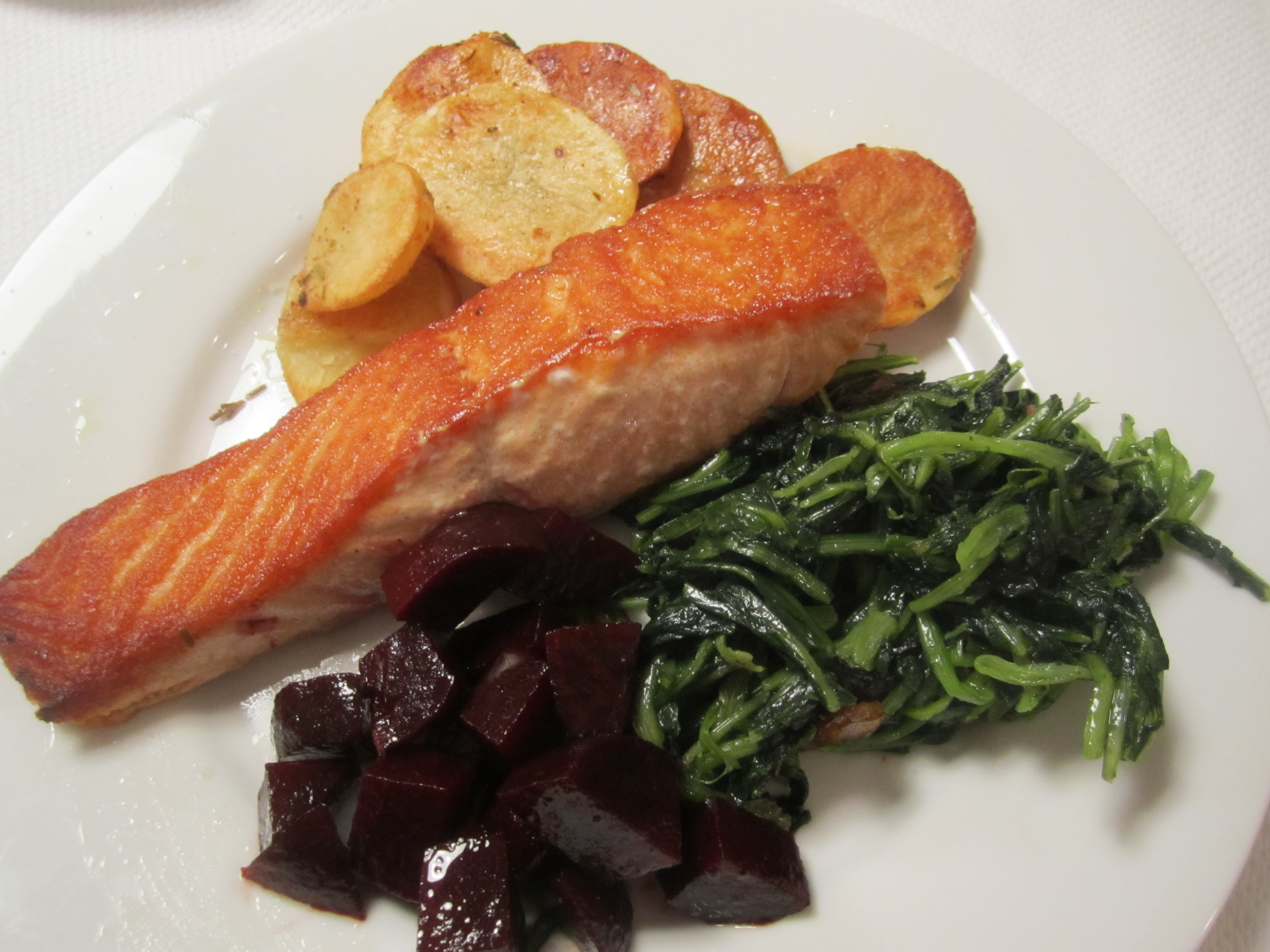
Tonight, along with the greens, I made pan-seared salmon (for the technique, see salsa verde with pan-roasted salmon), roasted beets, and roasted potatoes.

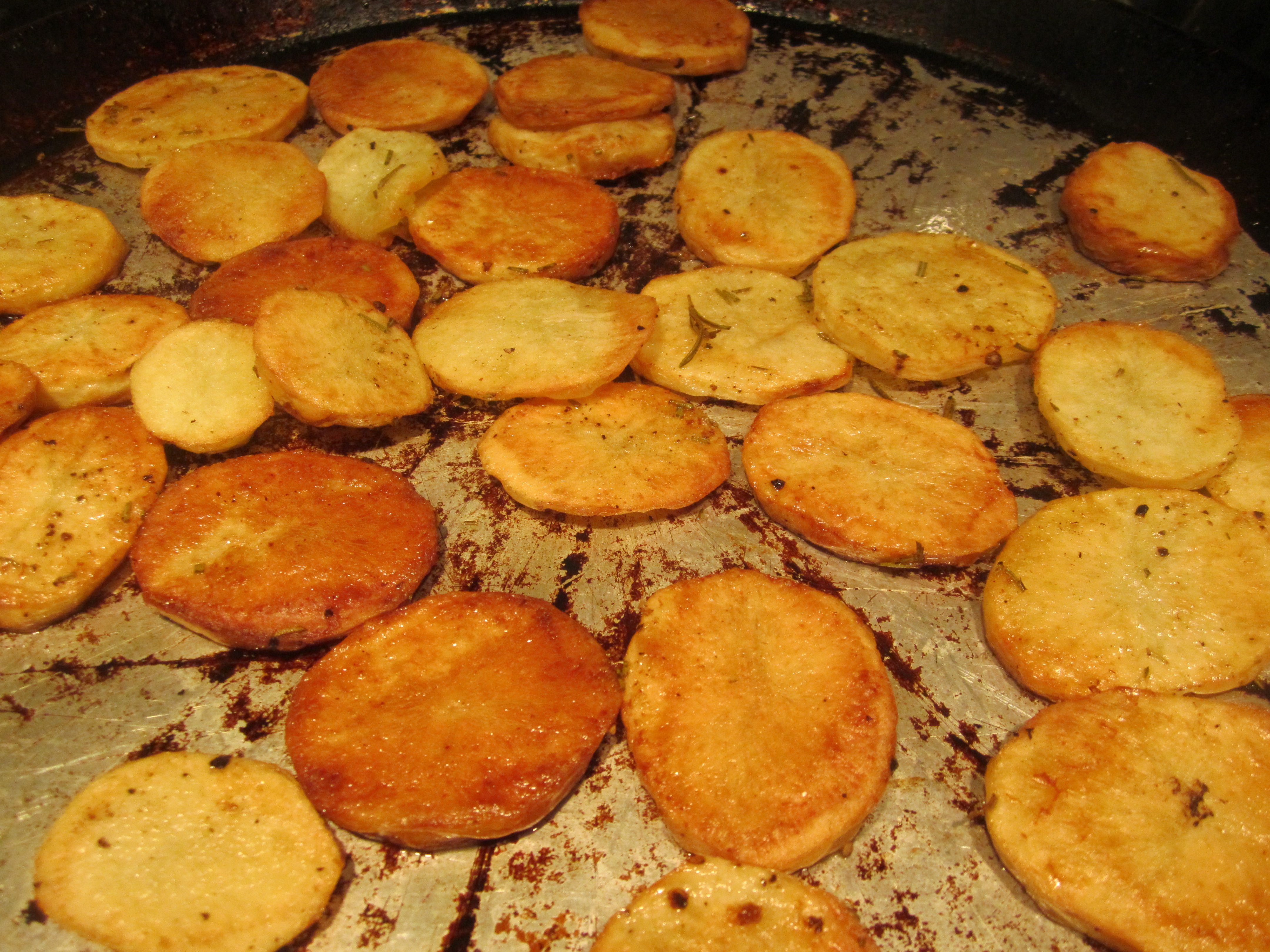
For the roasted potatoes, I chose my mother’s method of peeling and slicing into disks, sprinkled with rosemary, oil and salt, and roasted at 400 degrees, uncovered, for about 40 minutes.  If these weren’t so simple to make, they’d be worth a post on their own!

Posted in Vegetables | Leave a comment

Turkey Breast with Porcini Sauce

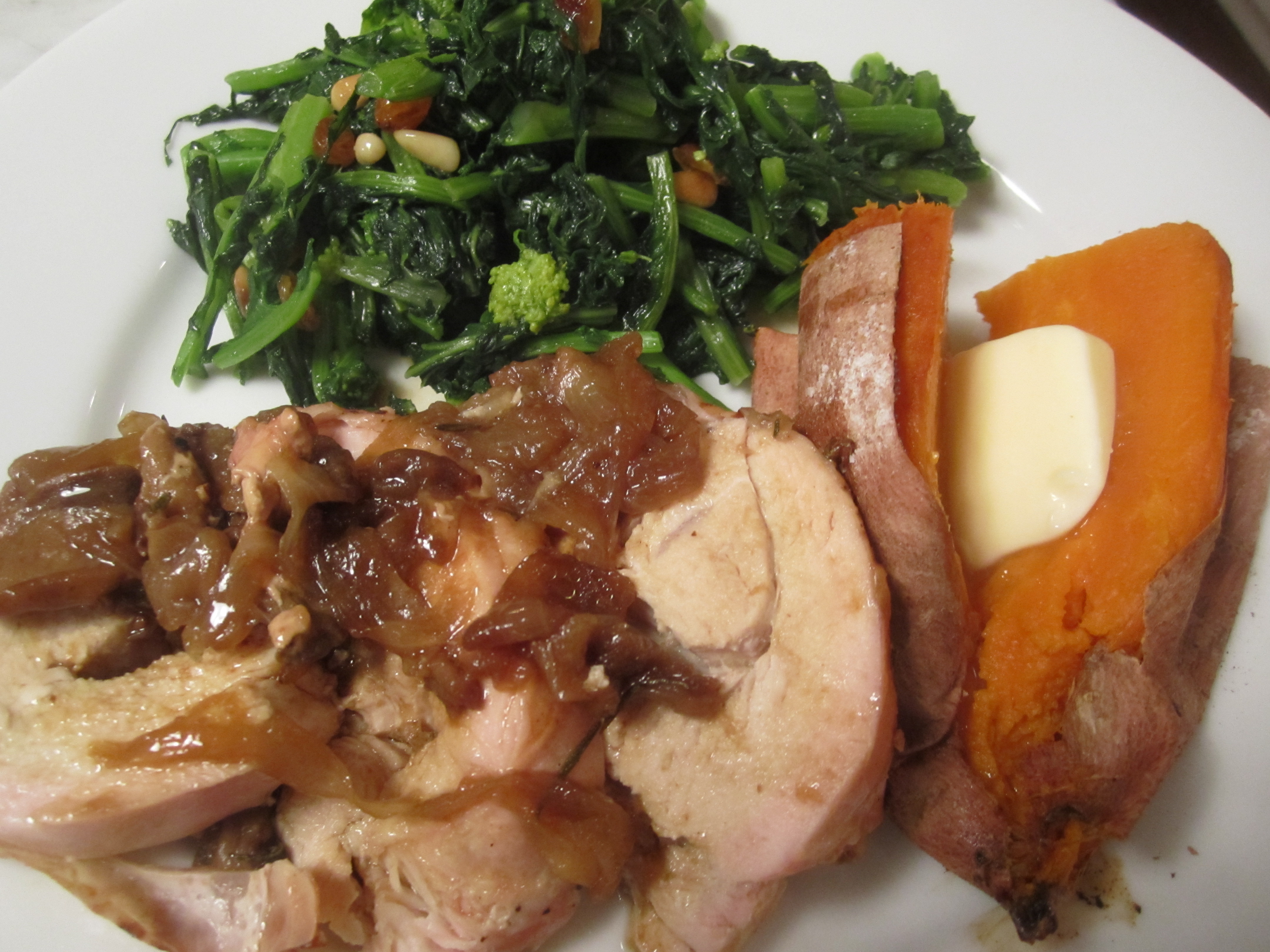
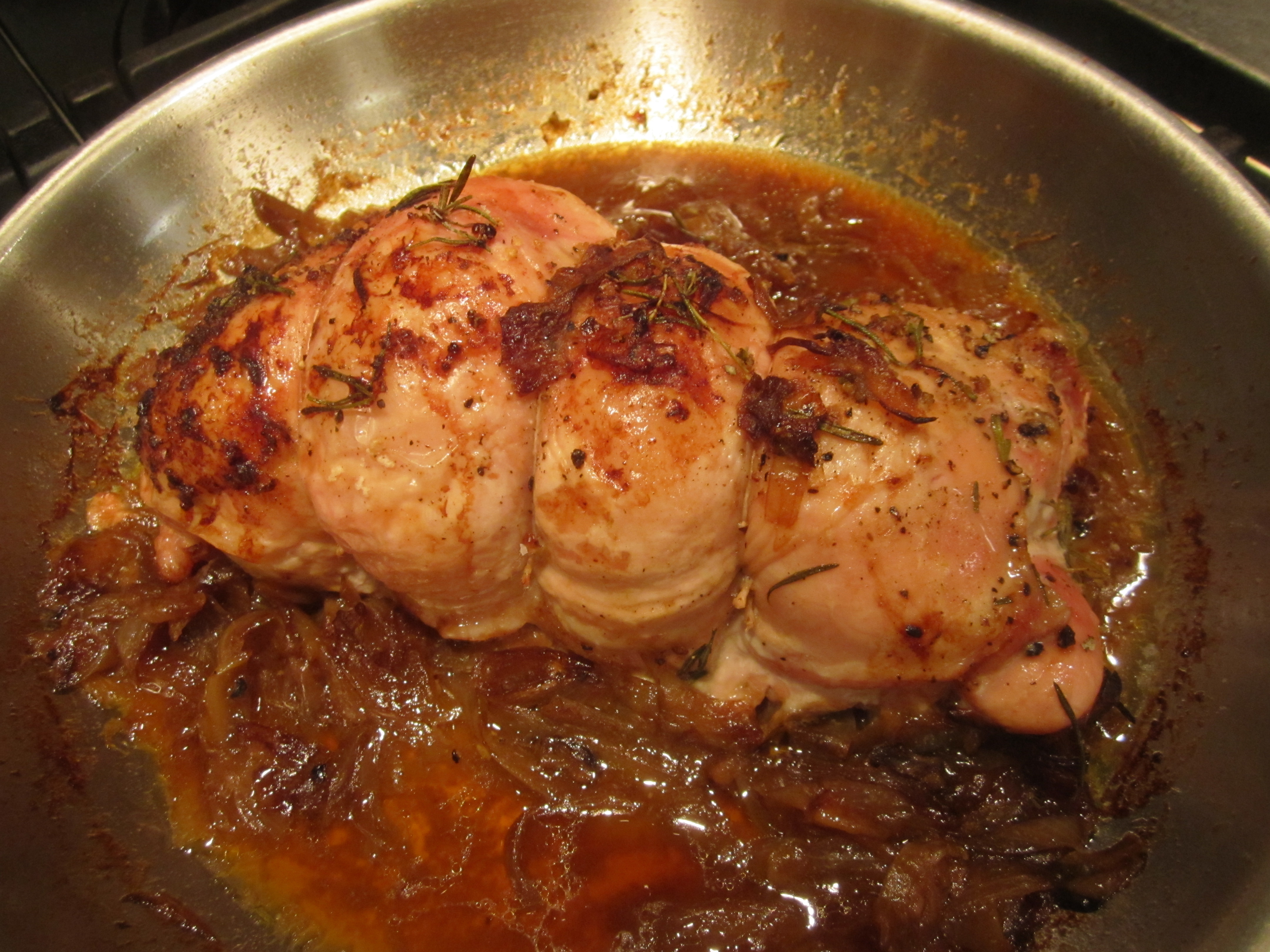
My butcher often has free-range, organic turkey breasts, rolled and tied into compact little roasts.  This is a great weeknight meal which can be ready in an hour, and makes great leftovers for lunch (for several days).

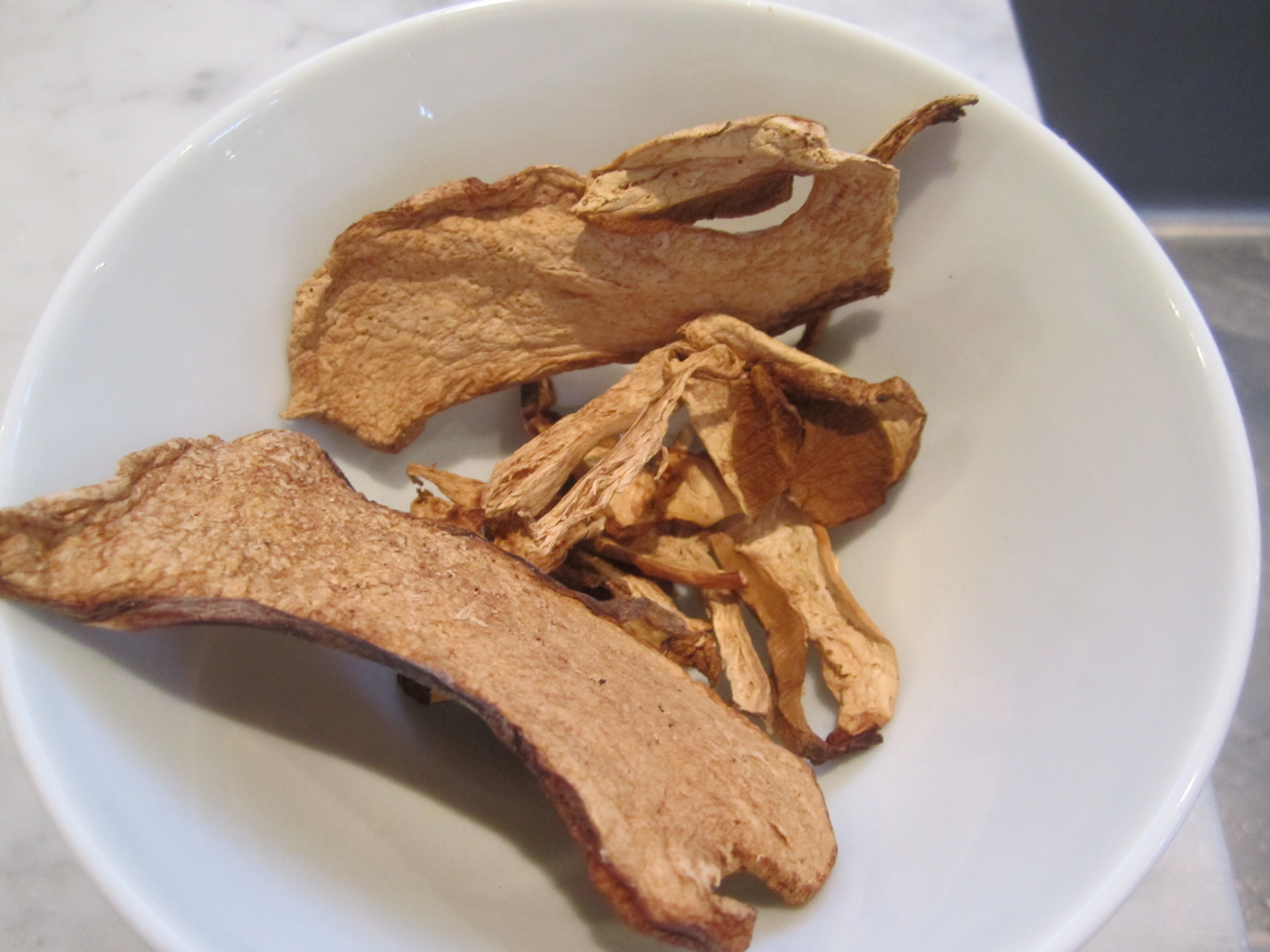
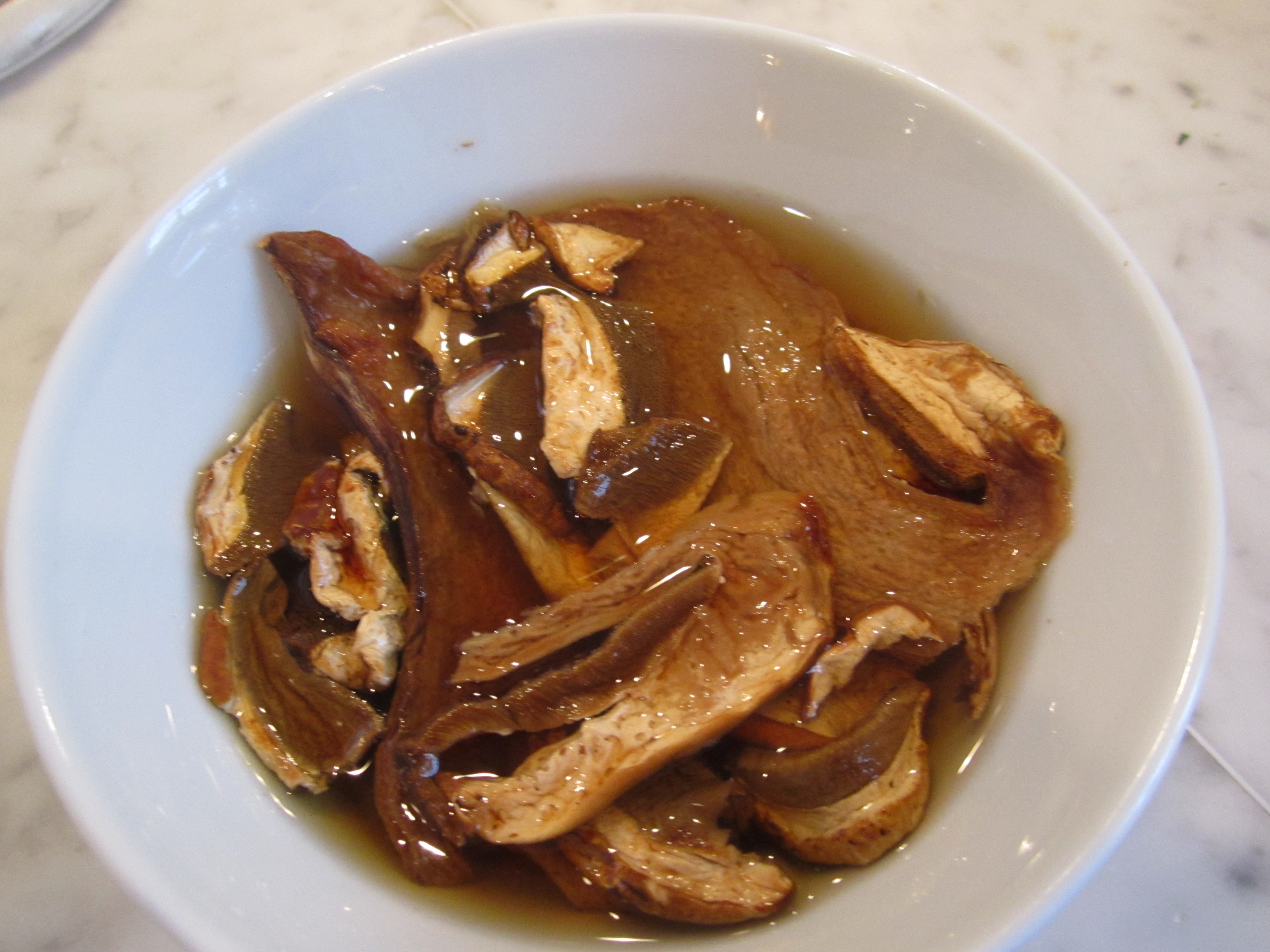
Although I’ve posted variations on this roast in the past, tonight, I’ve decided to re-hydrate some dried porcini that my mother brought back from Italy last fall.

In addition, dry sherry makes a nice addition to any dish made with mushrooms.

Because this is a weeknight meal, I’ve kept the side dishes simple–some broccoli di rapa, blanched then sauteed with pine nuts and raisins, along with simple baked orange-fleshed sweet potatoes.

Turkey Breast with Porcini Sauce

serves 4 – 6

a boneless turkey breast, approximately 3 lbs , rolled and tied

1/2 oz. dried porcini

3 onions

2 sprigs fresh rosemary

3 tbls olive oil

1/3 c dry sherry

1 1/2 c chicken broth

1 teaspoon salt and 1/2 teaspoon black pepper

Preheat oven to 375 degrees.

In a bowl of hot water, soak porcini for about 20 minutes.

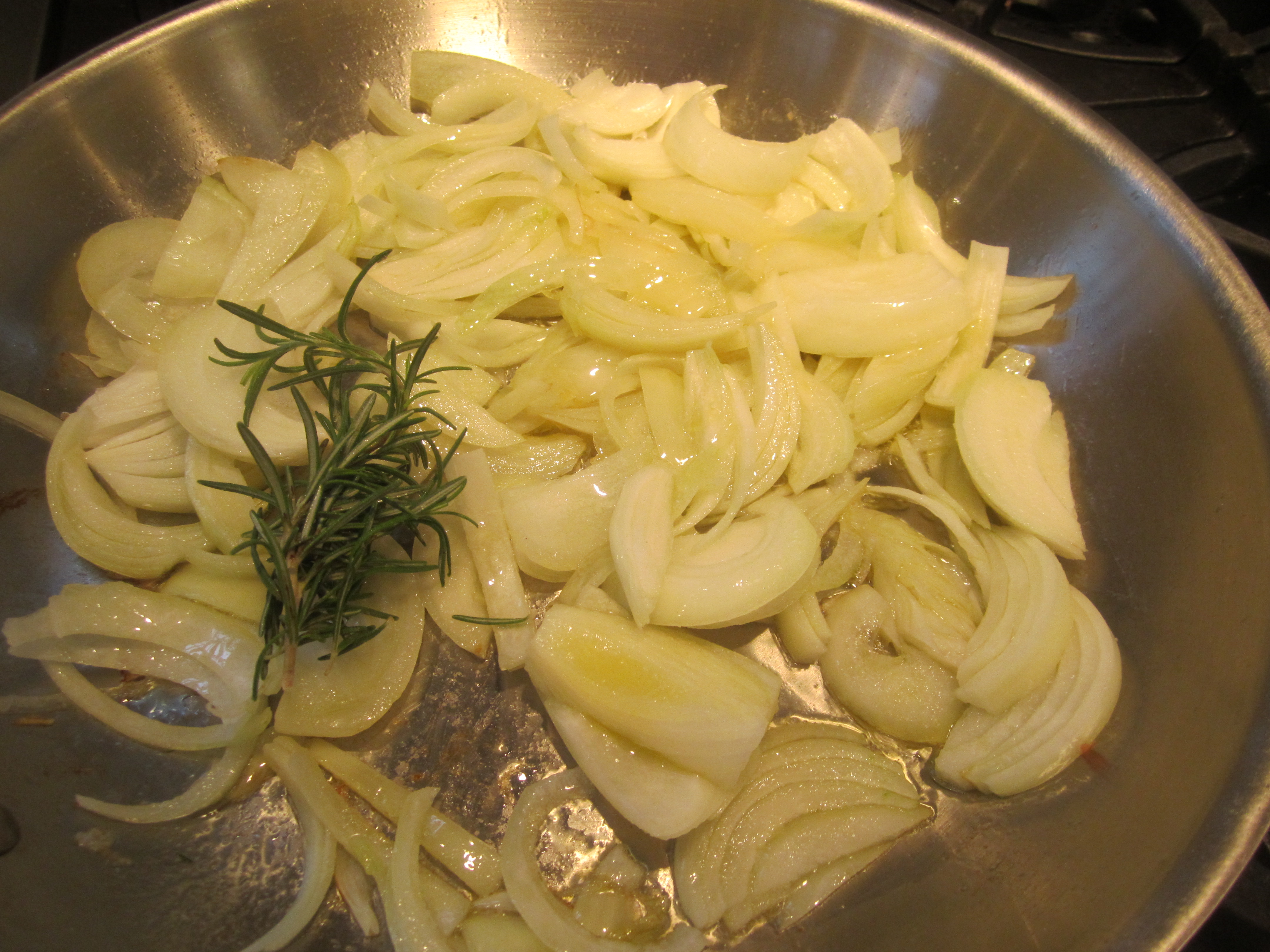
In an ovenproof skillet on low heat, begin sauteing onions with 2 tablespoons of oil and rosemary sprig.  Sprinkle lightly with salt and pepper and cover, stirring often, for about 10 – 15 minutes, until lightly caramelized.

Remove porcini from water and roughly chop.  Add to onion mixture and saute for another 3 – 5 minutes.  Pour in sherry and reduce for a minute.

Add broth and continue reducing for another 2 minutes.  Set aside and let cool.

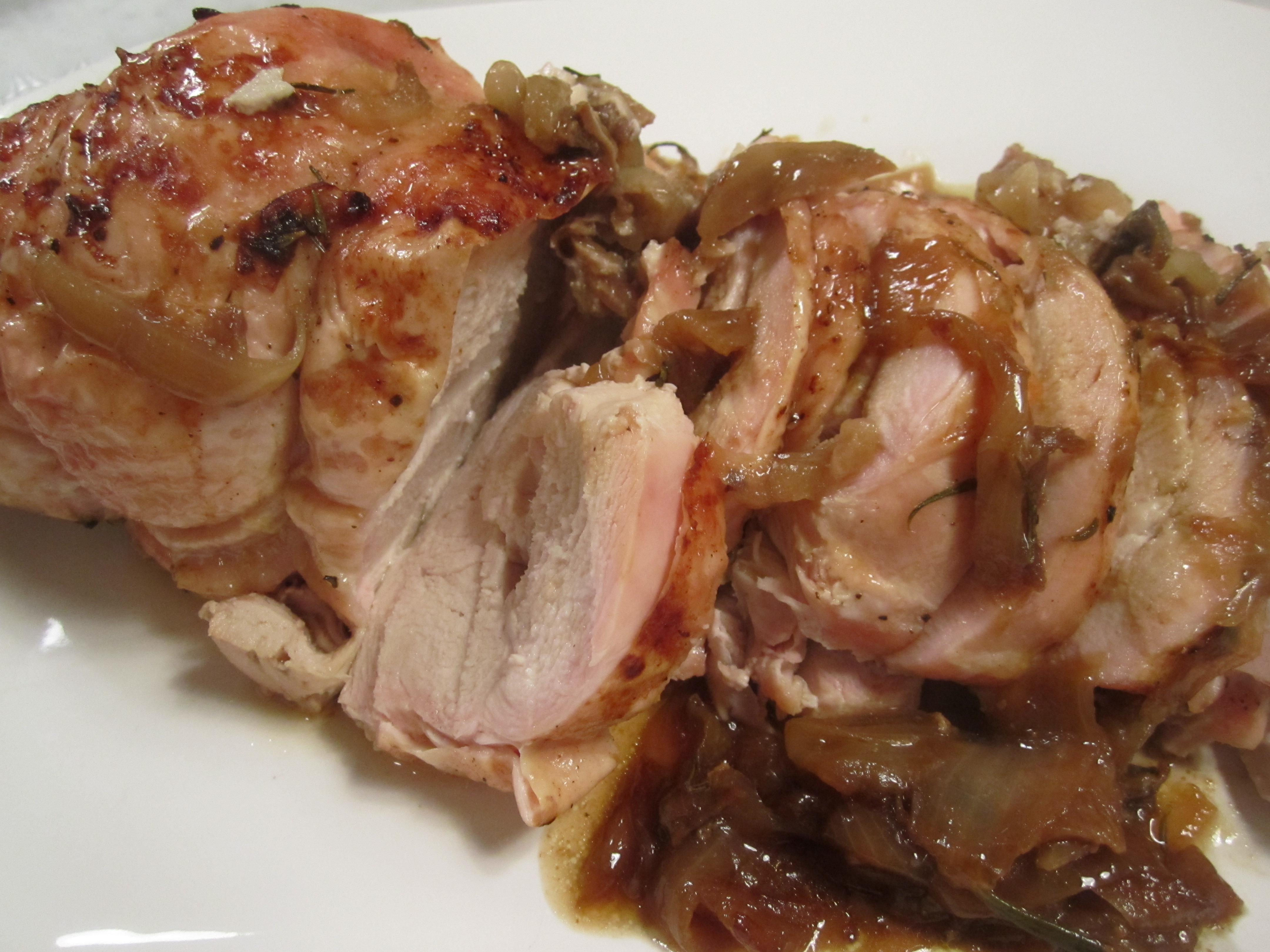
Place turkey on top of onion mixture and rub with salt, pepper, and the remaining sprig of rosemary, roughly chopped.  Drizzle with remaining olive oil.

Place in oven, uncovered, basting with pan juices and adding a tablespoon or two of water every 15 minutes as the juices evaporate.  Roast for approximately 1 hour and 10 minutes, or until the internal temperature registers about 165 degrees.

Allow to rest for at least 10 minutes.  Remove string and carve.  Keep sauce hot and spoon over meat right before serving.

Posted in Poultry | Leave a comment

Crostini of Broccoli di Rapa and Ramps

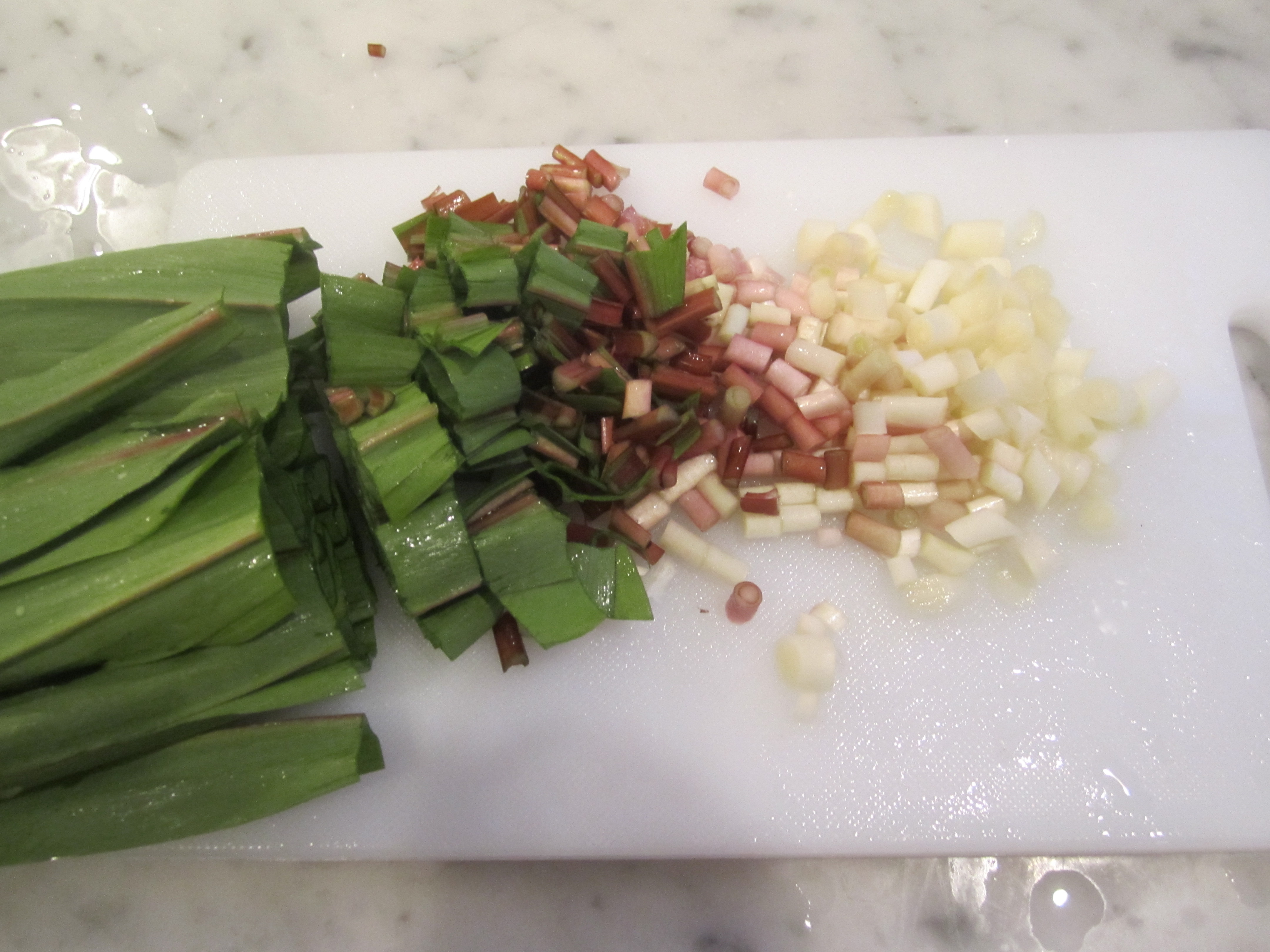
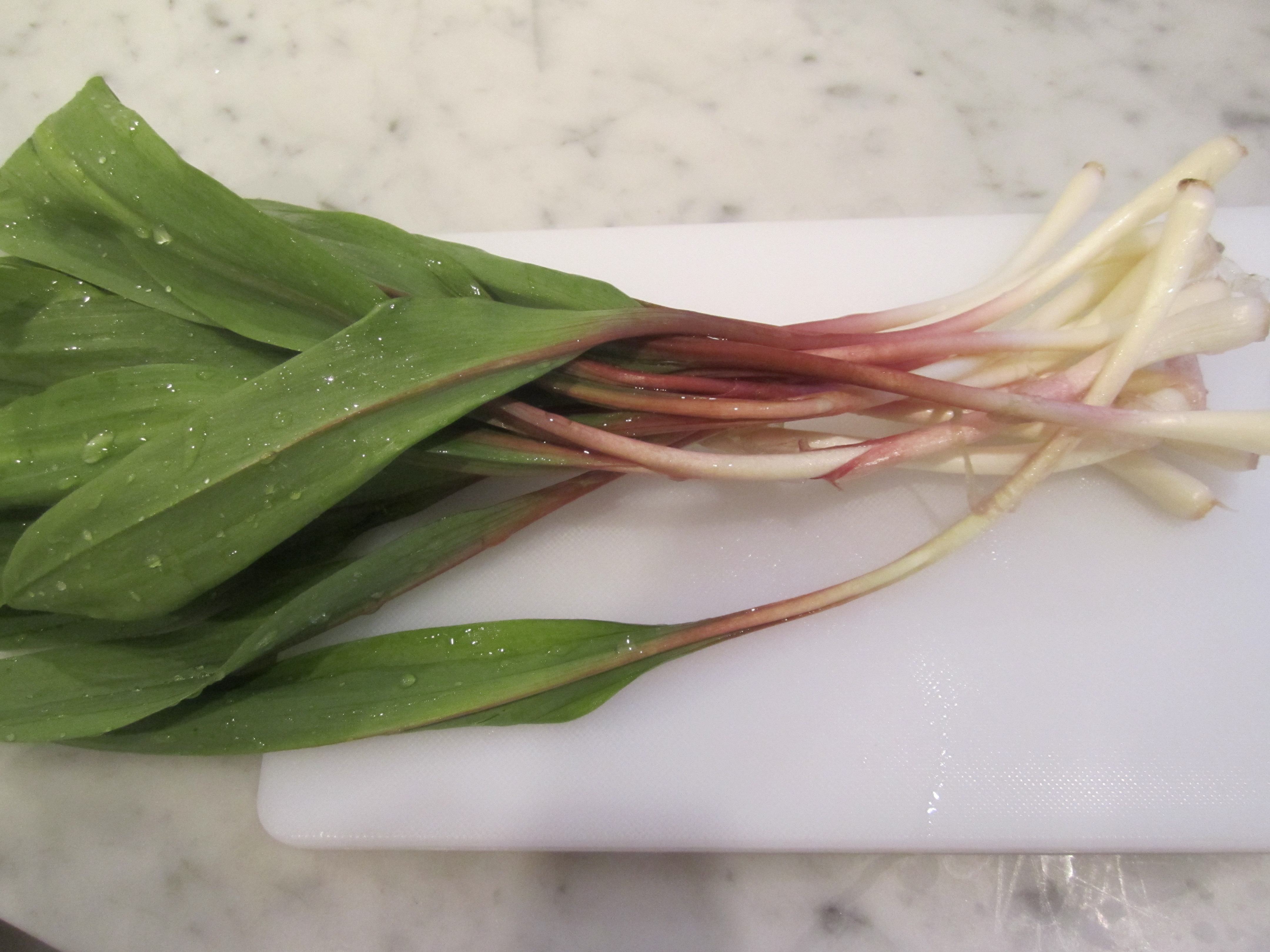
Ramps are in season right now, and they’re a delicacy worth seeking out, if you like the flavor of garlic.  They’re found only at farm stands and their season doesn’t last more than a couple of weeks in spring.  They’re perfect for those of us who like a mild, but complex garlic flavor in foods.  Although I’m a very judicious user of garlic, I absolutely love the flavor of ramps.

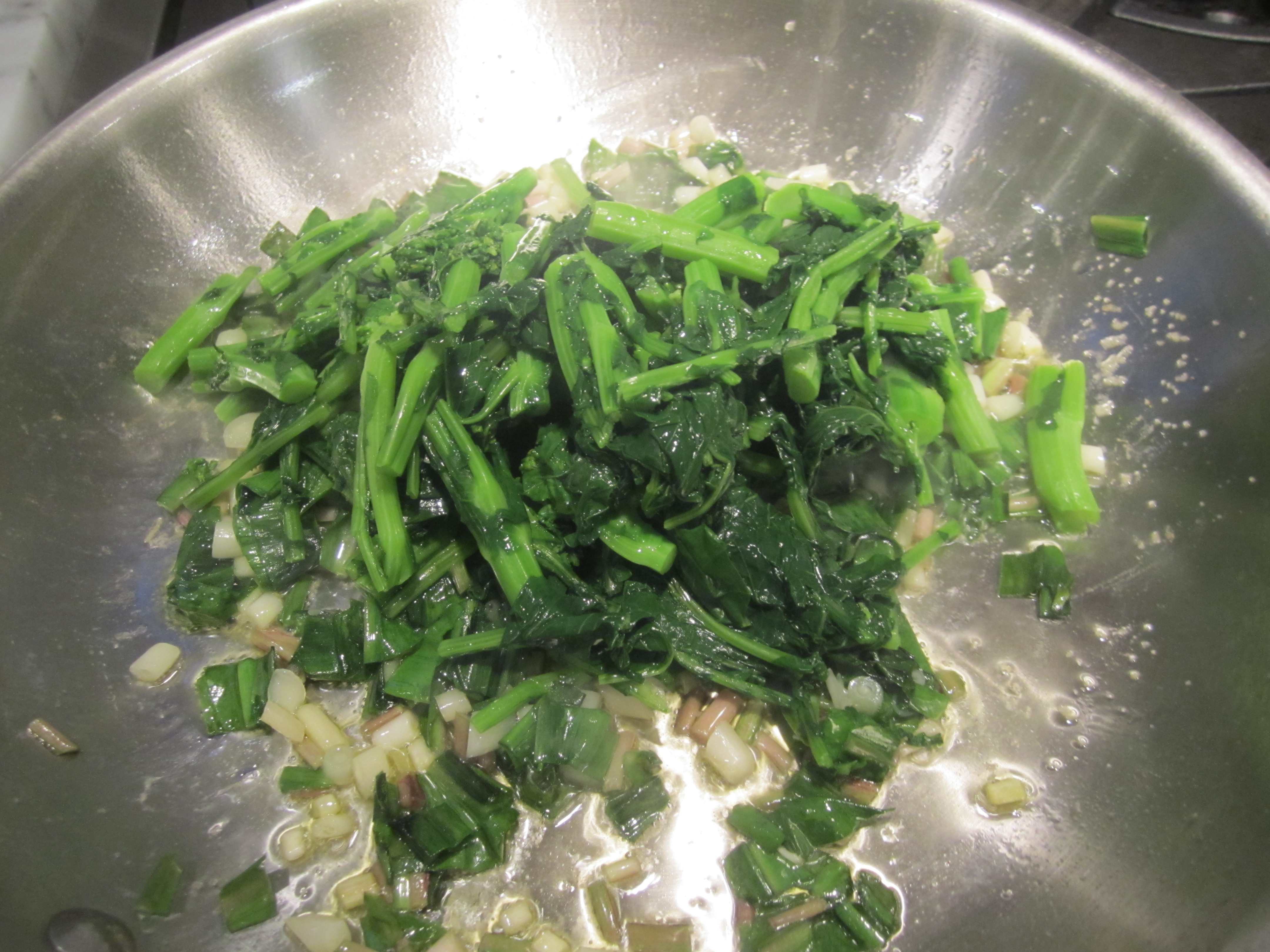
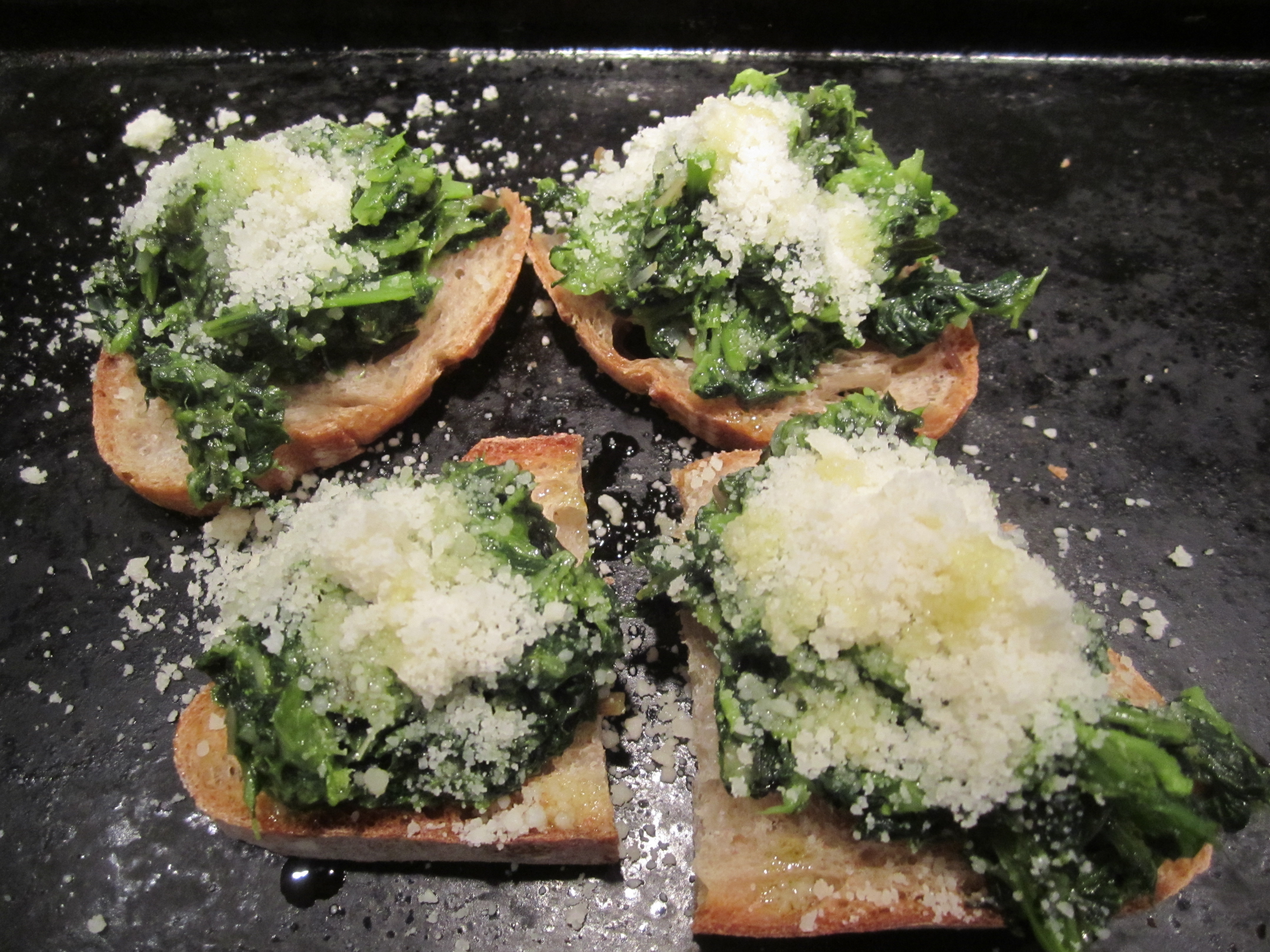
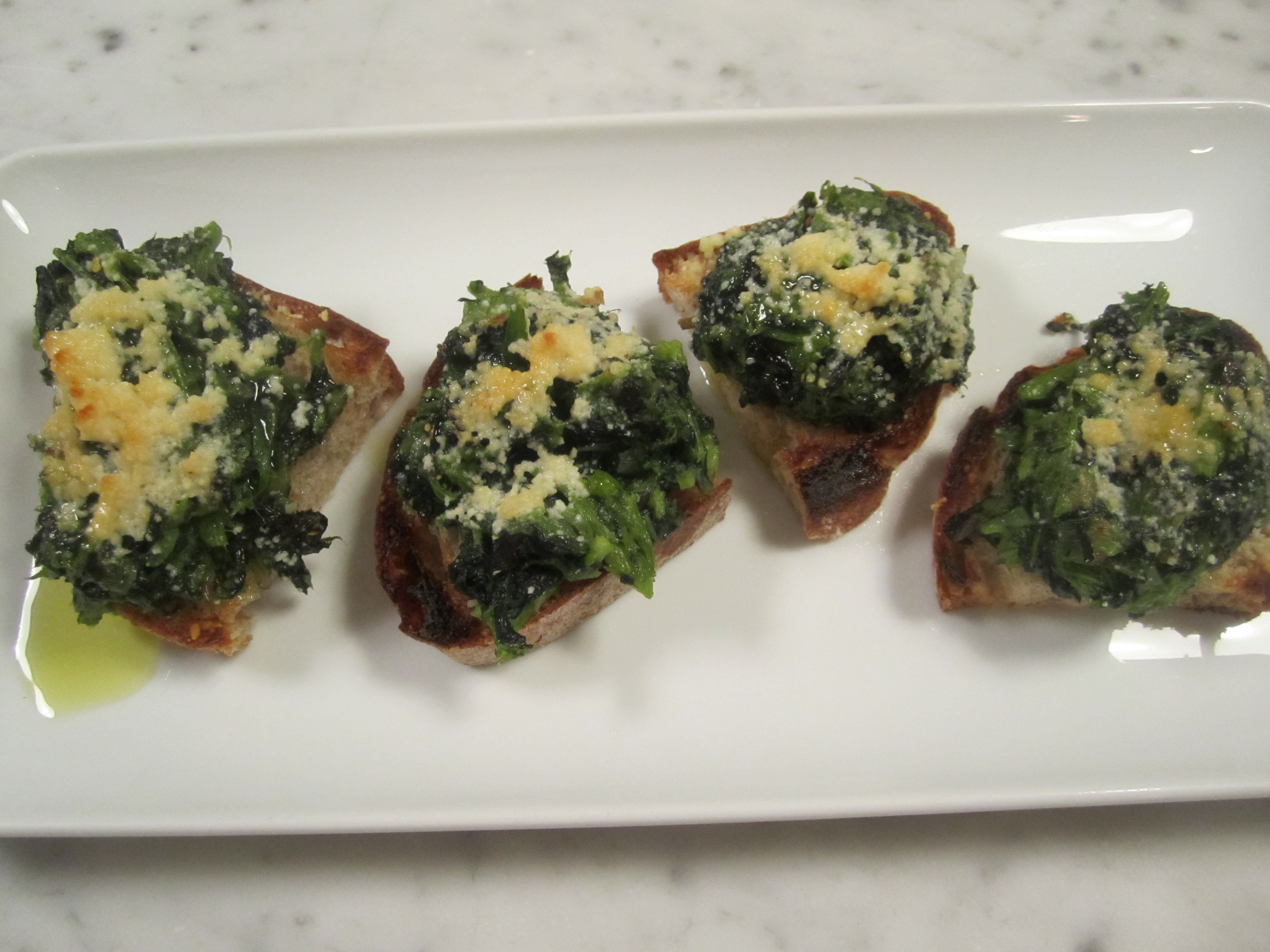
In this dish, broccoli di rapa are blanched, then sauteed with chopped ramps until soft and sweet, then lightly pulsed in the food processor.  They are then heaped onto slices of grilled country bread, crowned with a pile of grated pecorino, then briefly melted under the broiler.  The pecorino binds the mixture together, allowing you to serve these either as finger foods or as a first course with a fork and knife.

Crostini of Broccoli di Rapa and Ramps

serves 4

1 bunch broccoli di rapa

1 small bunch ramps (about 10 ramps)

1/4 c extra-virgin olive oil

4  slices of fresh country bread, about 1/2″ thick, cut in half crosswise

4 tbls (or more) grated pecorino romano 

salt and pepper to taste

Drop broccoli di rapa into salted boiling water and blanch for about 3 minutes.  Remove, drain, set aside.

Chop ramps crosswise into 1/2″ thick slices.

In a skillet on medium heat, saute the ramps in 3 tablespoons of olive oil, until they begin to caramelize.

Add broccoli and reduce heat to low.

Simmer, covered for about 15 minutes, stirring every so often.  Taste and add salt and pepper.  Add the mixture to the food processor and pulse a couple of times, to form a coarse puree.

Broil bread slices under broiler on one side only.

Turn the bread to the non-toasted side and heap on the broccoli and ramps.  Sprinkle with a liberal amount of grated pecorino and place under pre-heated broiler until they begin to bubble and turn golden.

Drizzle with additional tablespoon of olive oil and serve immediately.
Posted in Uncategorized, Vegetables | Leave a comment

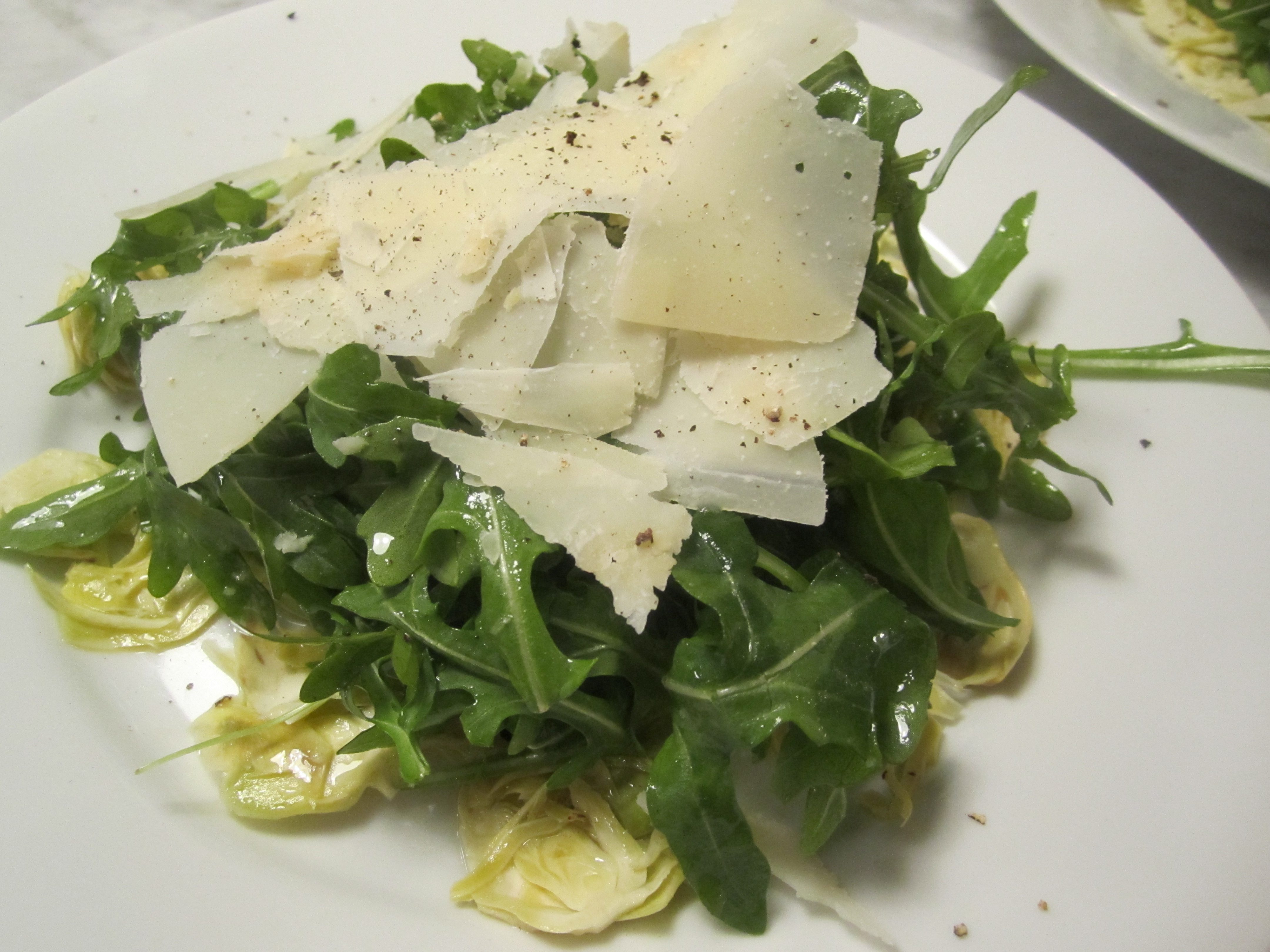
Insalata di Carciofi

This is a bright and very lemony salad, with shaved raw artichokes marinated in lots of lemon juice and olive oil–a few days is better than a few hours.  The arugula is then piled on and dressed with lemon juice and olive oil.  All is topped with shards of shaved pecorino, which provides the nutty richness that tempers the otherwise sharp, acidic flavors of artichoke, arugula and lemon.

 Insalata di Carciofi

 Serves 4

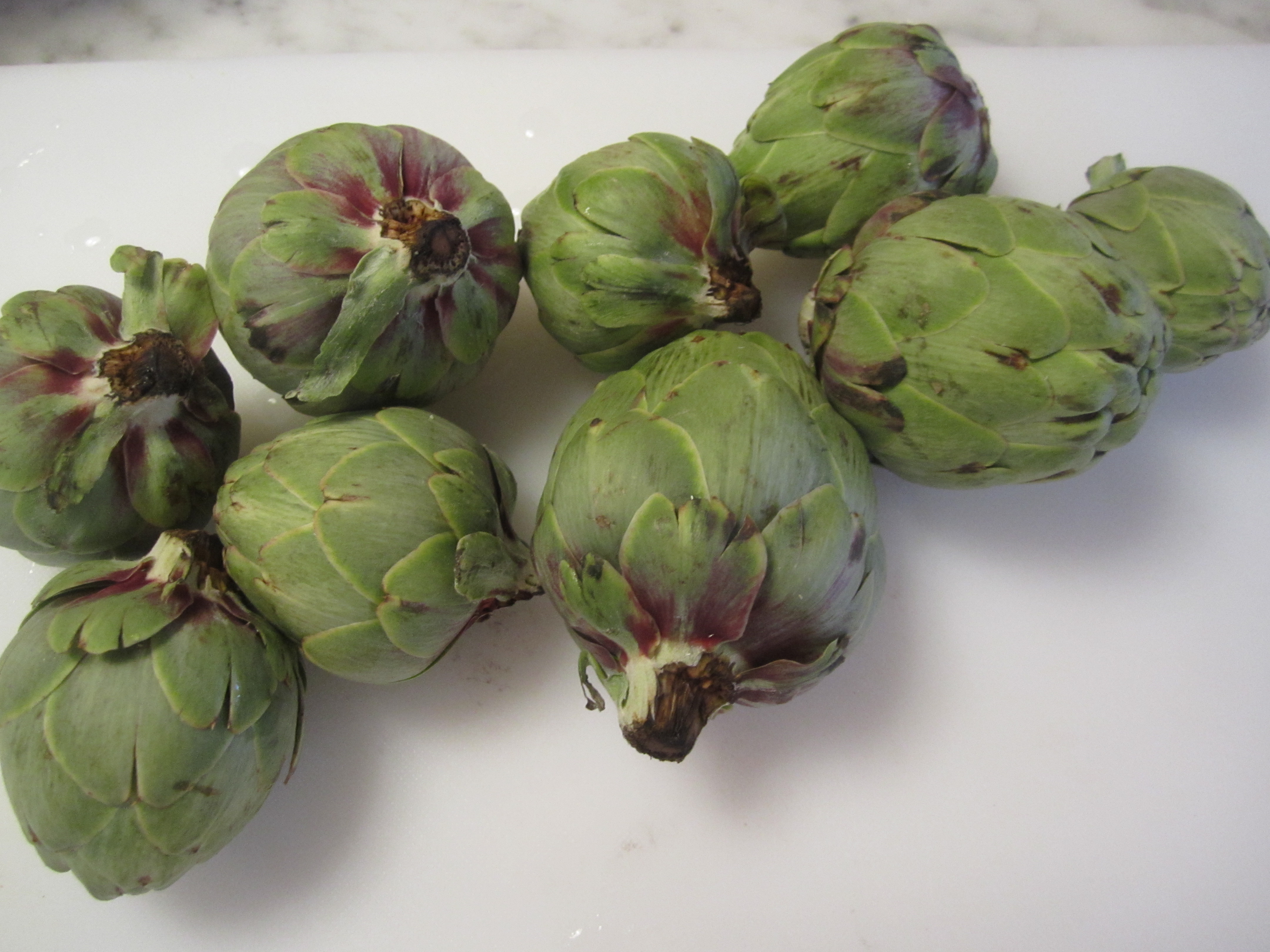
8 – 10 baby artichokes, cleaned by slicing off the top 1/2″ or so, then peeled until only the lightest green, tender leaves are exposed

juice of 3 1/2 lemons

4 tbls extra-virgin olive oil

pecorino sardo (pecorino romano will do, if you can’t find sardo) for shaving

salt and pepper to taste

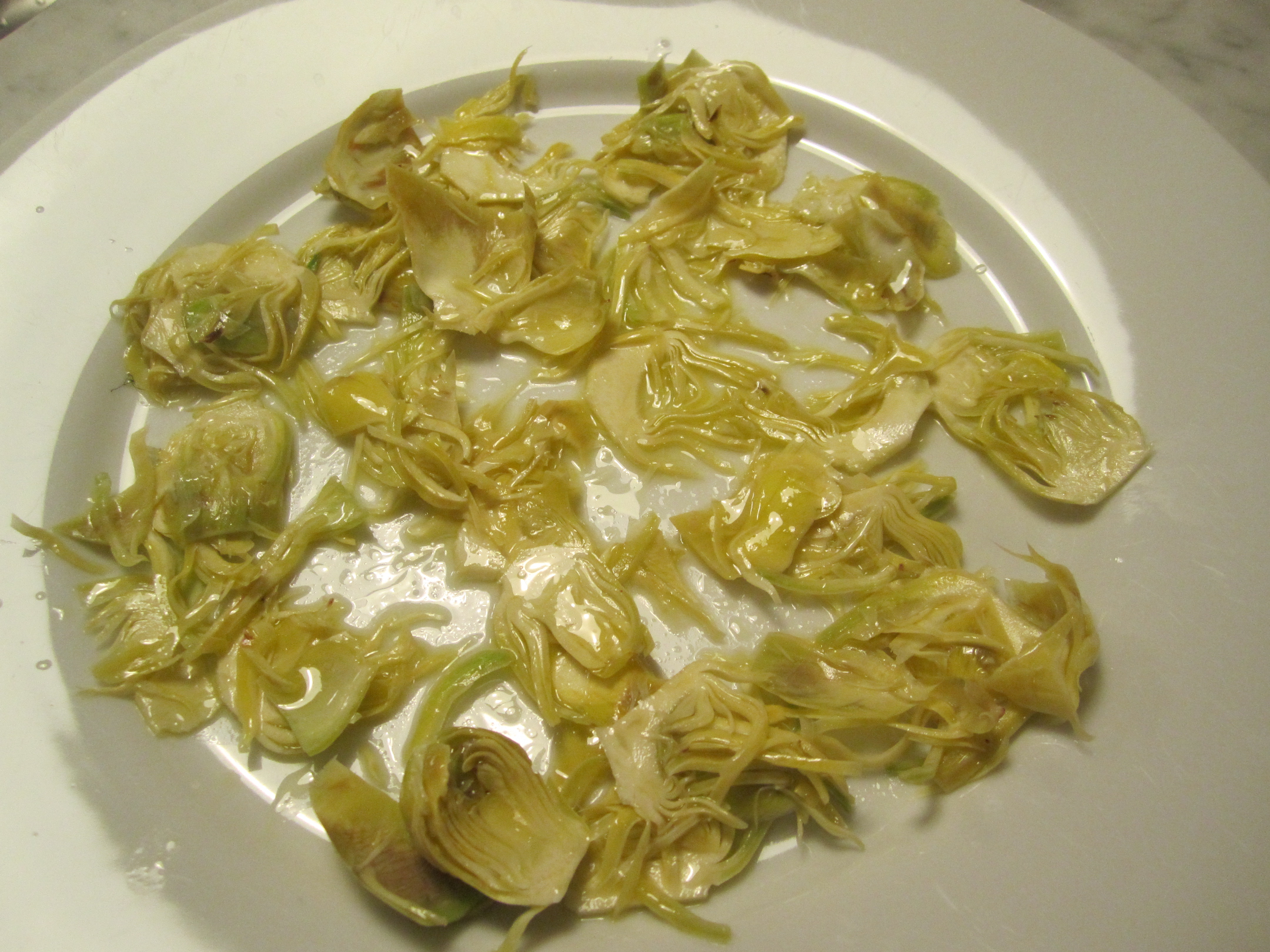
In a mixing bowl large enough to hold artichokes, combine all but 1 tablespoon of lemon juice with 3 tablespoons of olive oil.

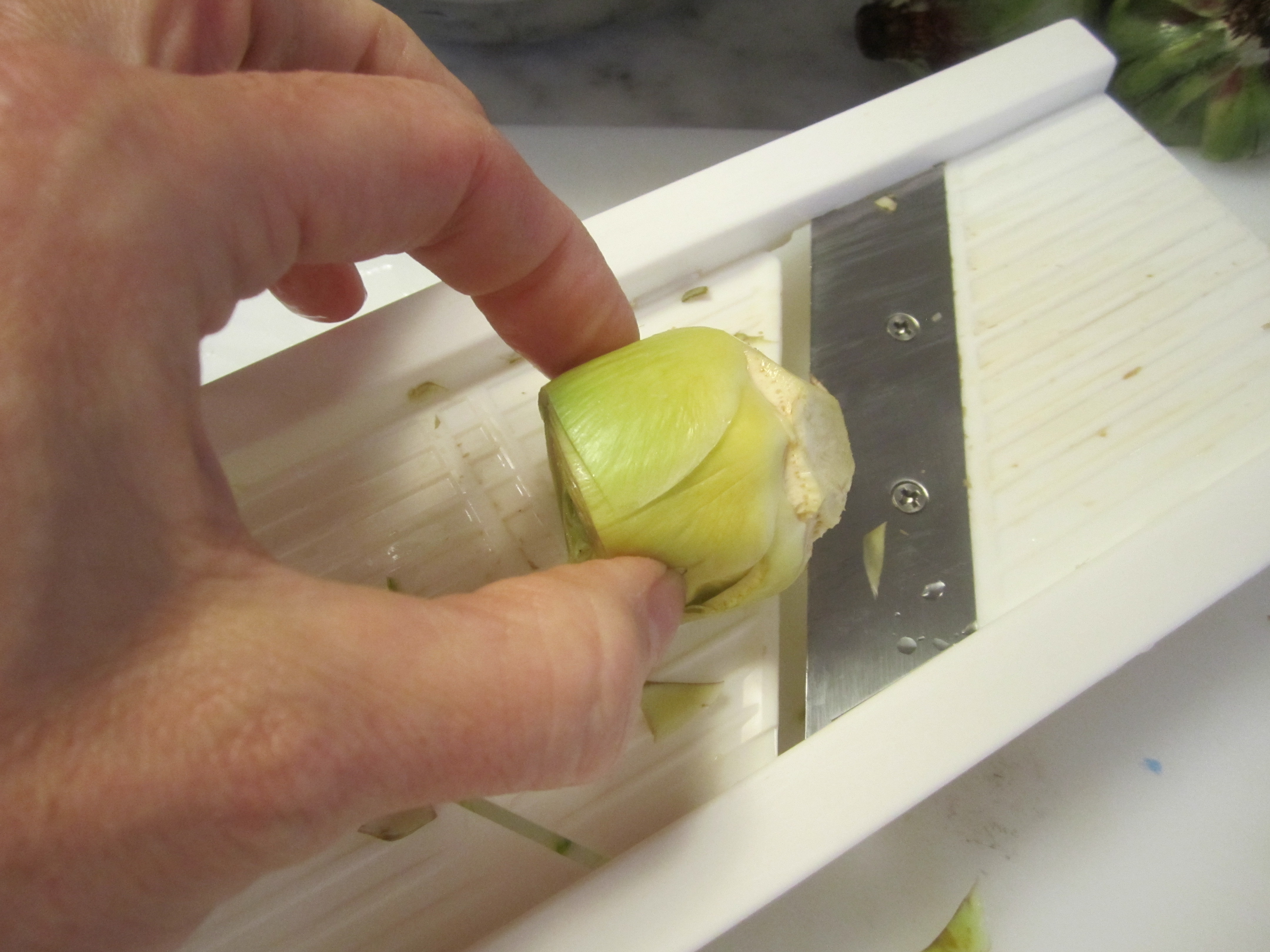
Shave artichokes on mandoline slicer directly into lemon juice and oil mixture, immediately tossing to coat them with oil and lemon. Be very careful of cutting your fingers–this is a delicate operation.

Allow artichokes to marinate, refrigerated, overnight, if possible.

When ready to assemble salad, Dress arugula with remaining oil and lemon juice and add salt and pepper to taste.  Spread a layer of artichokes on the bottom of each plate.

 Top with a mound of dressed arugula.  Shave  cheese liberally over the top.  Add some extra black pepper and an extra drizzle of olive oil.

Posted in Salads | Leave a comment

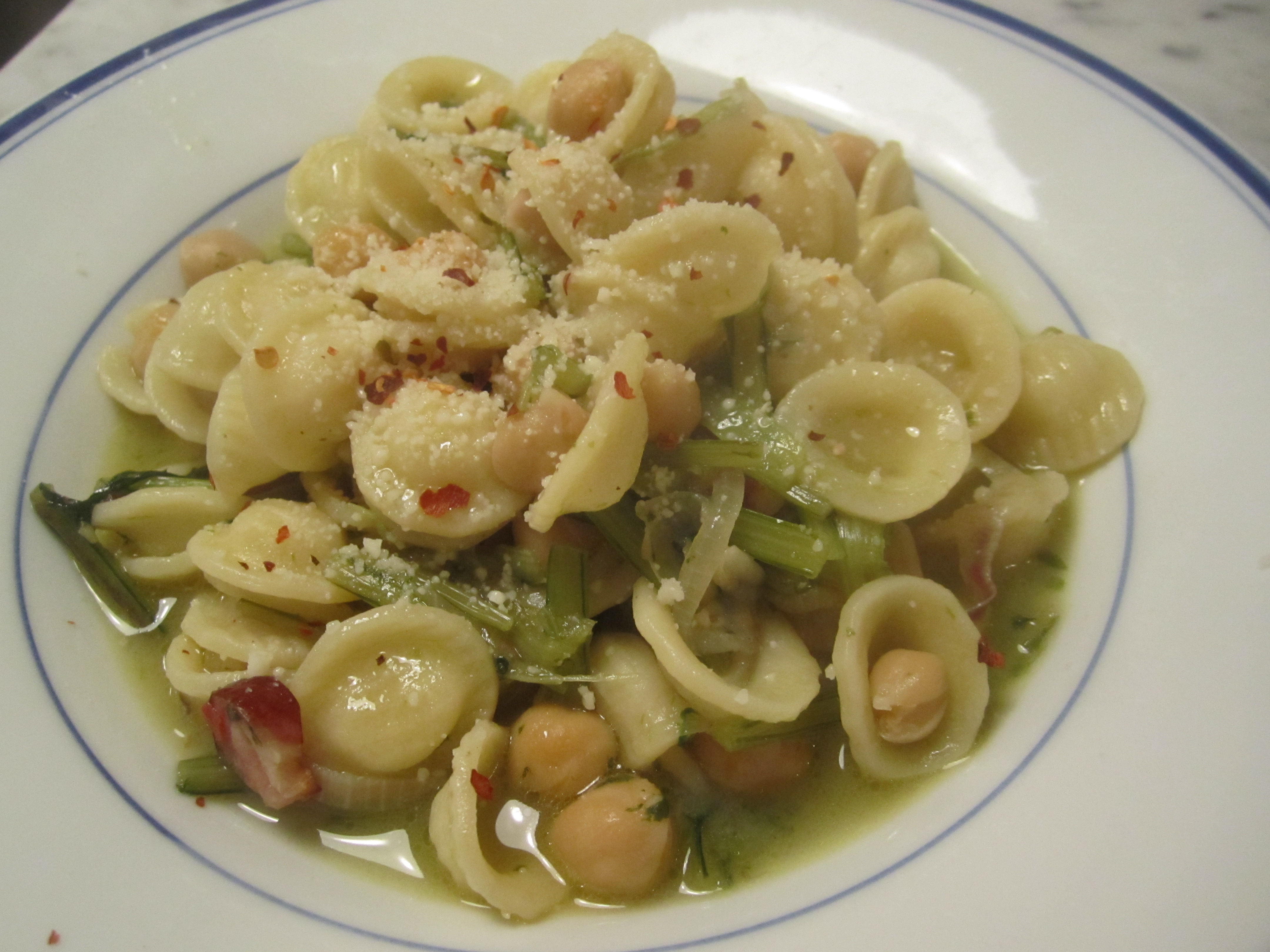
Pasta, Ceci e Cicoria

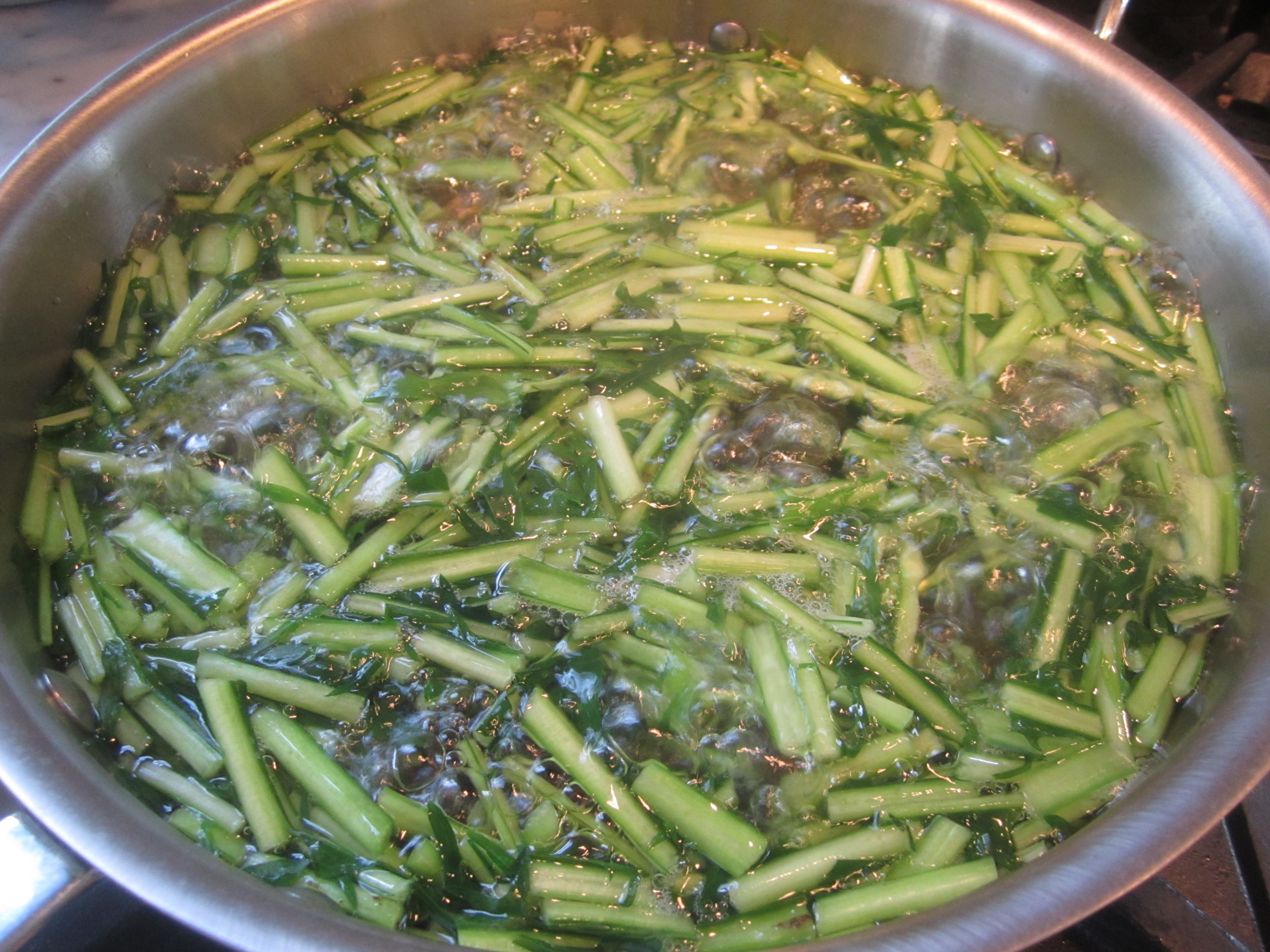
This dish is built around those dandelion stems that I saved when making my dandelion salad the other day.  Like spinach, the stems on dandelion greens are worth saving and savoring.  They are bitter, but when boiled and sauteed, have a unique earthy flavor.
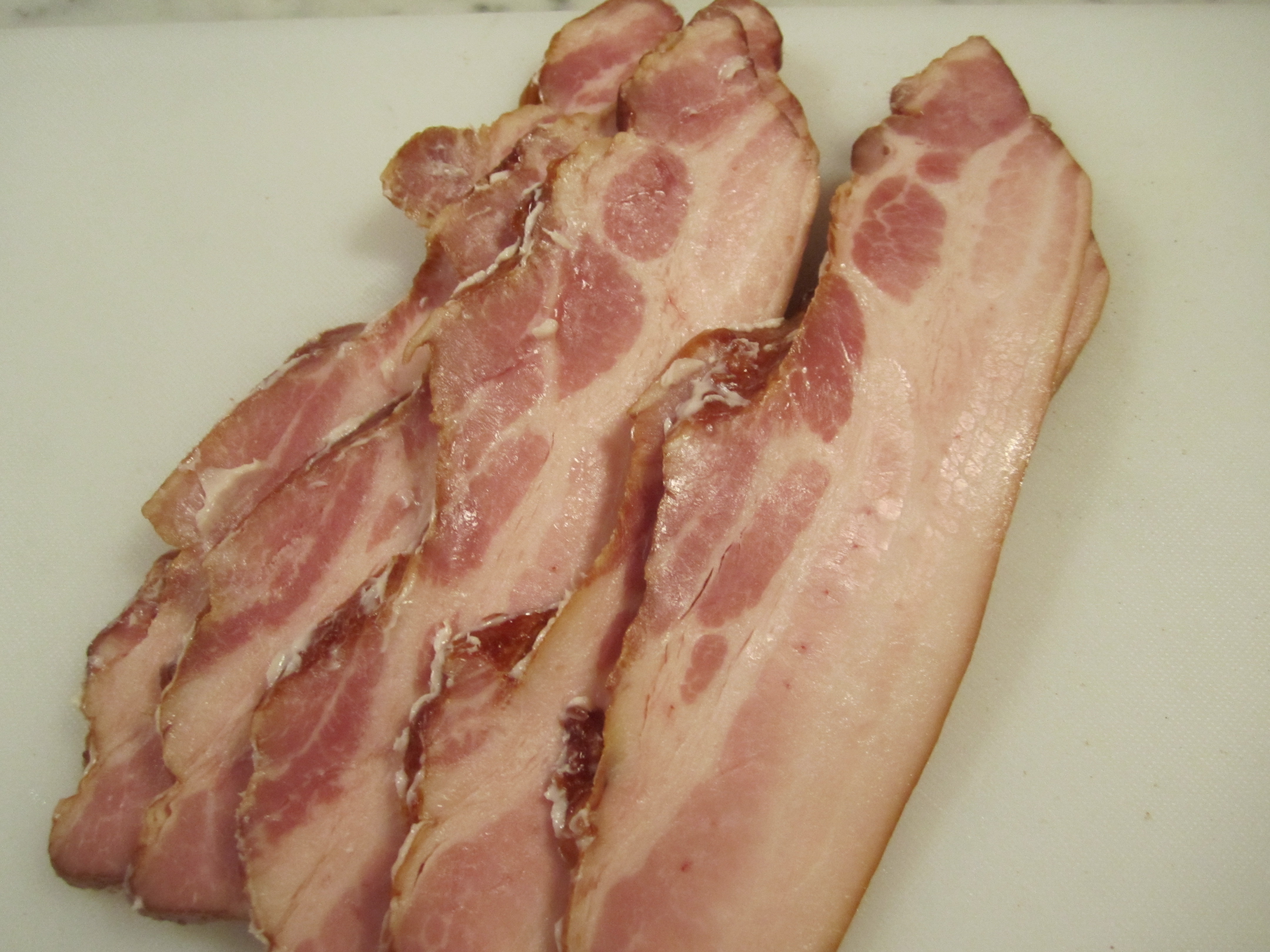
The other ingredient that gave me inspiration was this meaty, Irish slab bacon that I buy at Citarella, my local gourmet market.

This bacon adds a smokey, meatiness to any dish.  Cubed and sauteed with any leafy green vegetable, it’s spectacular.

Chick peas are especially good with smokey bacon, as well as with bitter greens, so they are a natural in this dish.  The pasta acts as the diffuser of all of these strong flavors and brings them together in just the right measure.

I’ve added a healthy dose of chili flakes to give the dish some southern Italian heat.  Black pepper is also good on this dish.  I’ve chosen to use both.

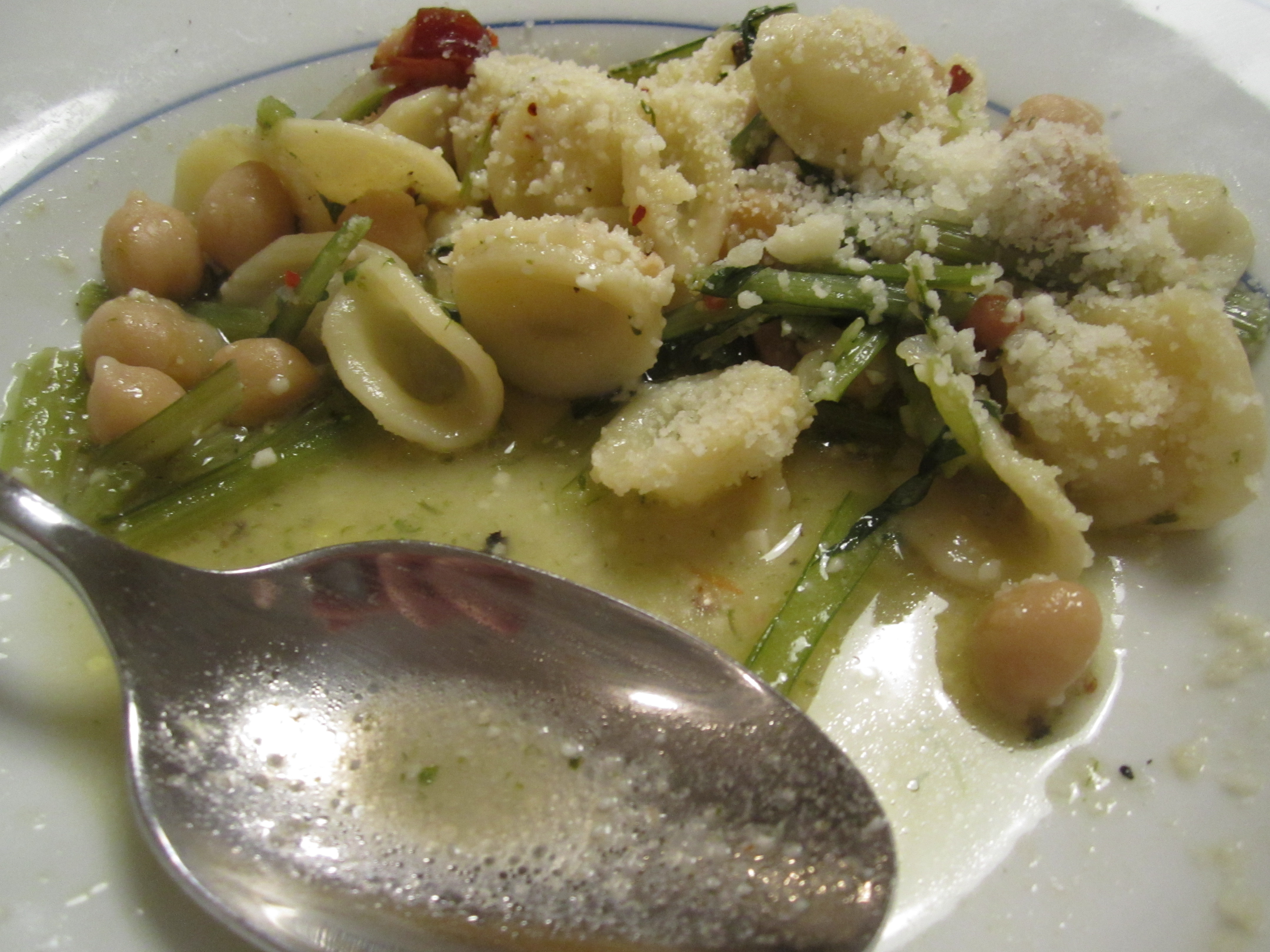
I like this dish on the soupy side, so I add a cup of chicken broth and serve the dish with soup spoons.   It’s a hearty dish that can easily serve as a one-pot meal (so you won’t have to feel guilty about taking seconds).

Pasta, Ceci e Cicoria

serves 4

1 lb orrechiette

stems from 1 bunch dandelion greens, cut into 2″ lengths

1 medium shallot

1/4 c olive oil + 2 tbls for drizzling

1/4 lb slab bacon, cubed

1 15-oz. can chick peas, drained

2 small sprigs fresh rosemary

1 c chicken broth

salt and pepper to taste

chili flakes for sprinkling

grated pecorino romano for sprinkling

Drop stems into boiling salted water and boil for 10 minutes, until soft.

Drain and set aside.  In the same water, boil pasta.

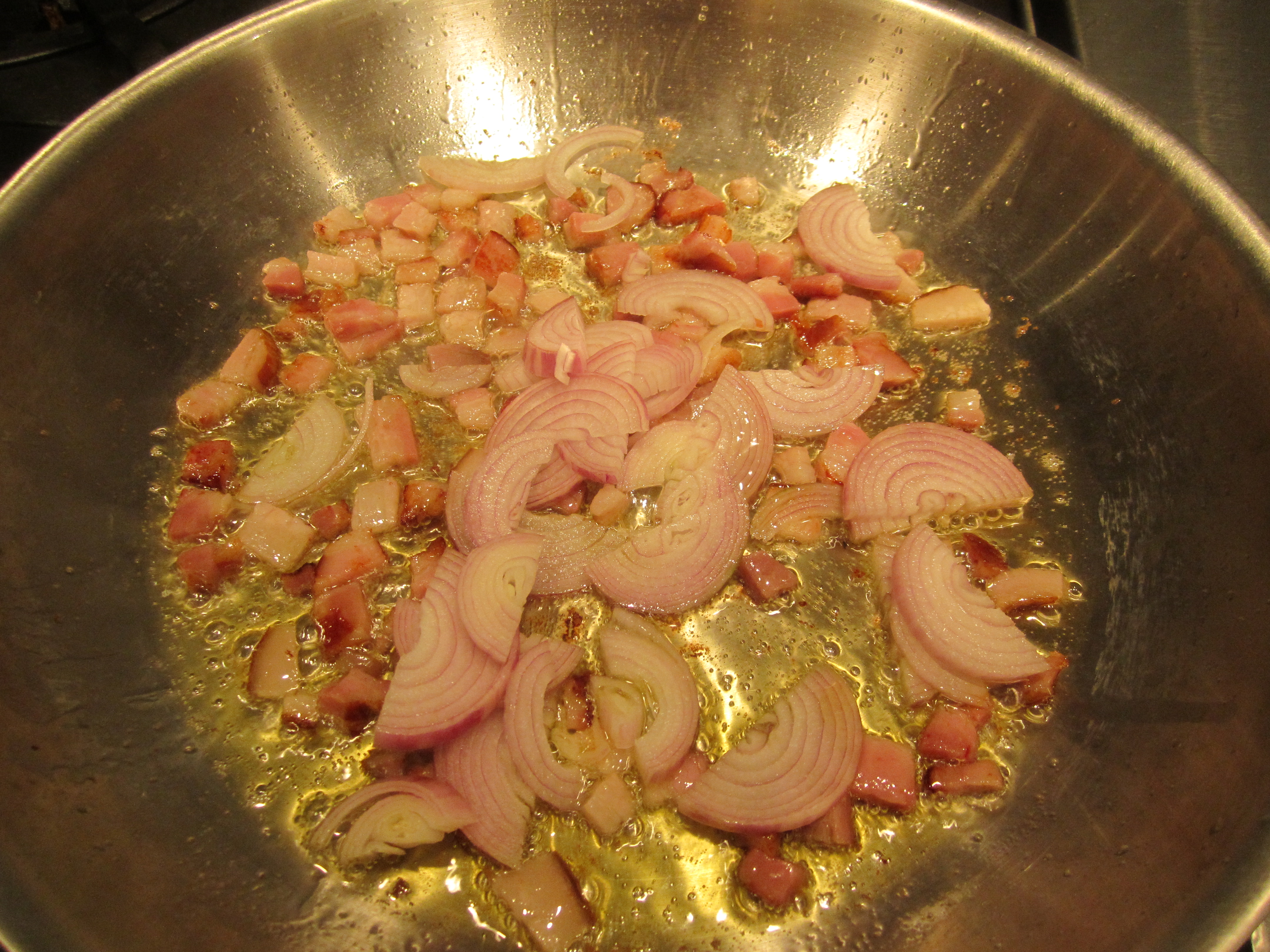
While pasta cooks, in a large saute pan on low heat, render bacon for about 3 – 4 minutes.  Raise heat to medium-high and add shallots. Saute for another 2 minutes.

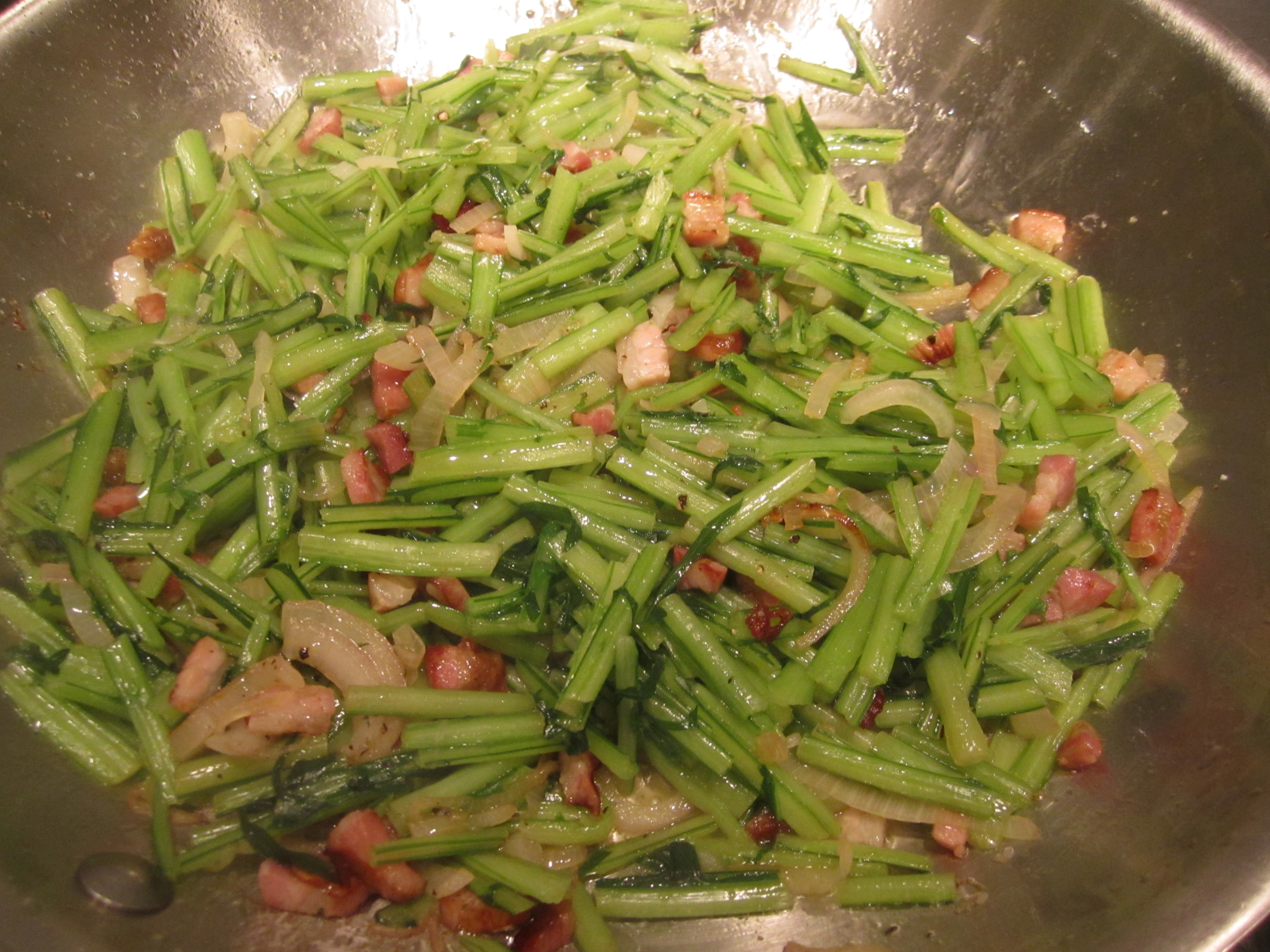
Add dandelion stems and rosemary and saute for about 3 – 4 minutes.

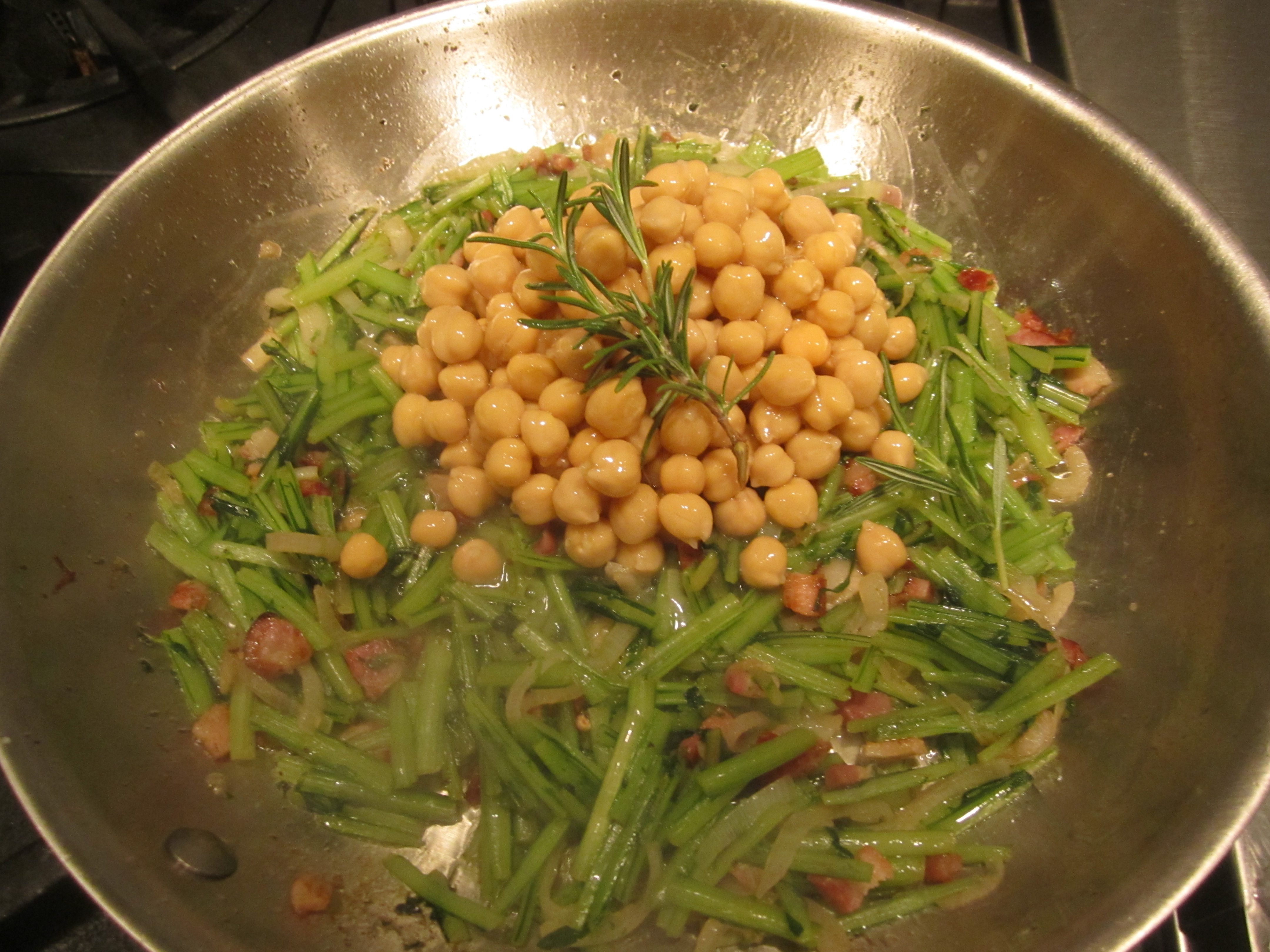
Add chick peas and continue sauteing for another minute.  Taste and add salt.

Add broth and allow to simmer until pasta is cooked.

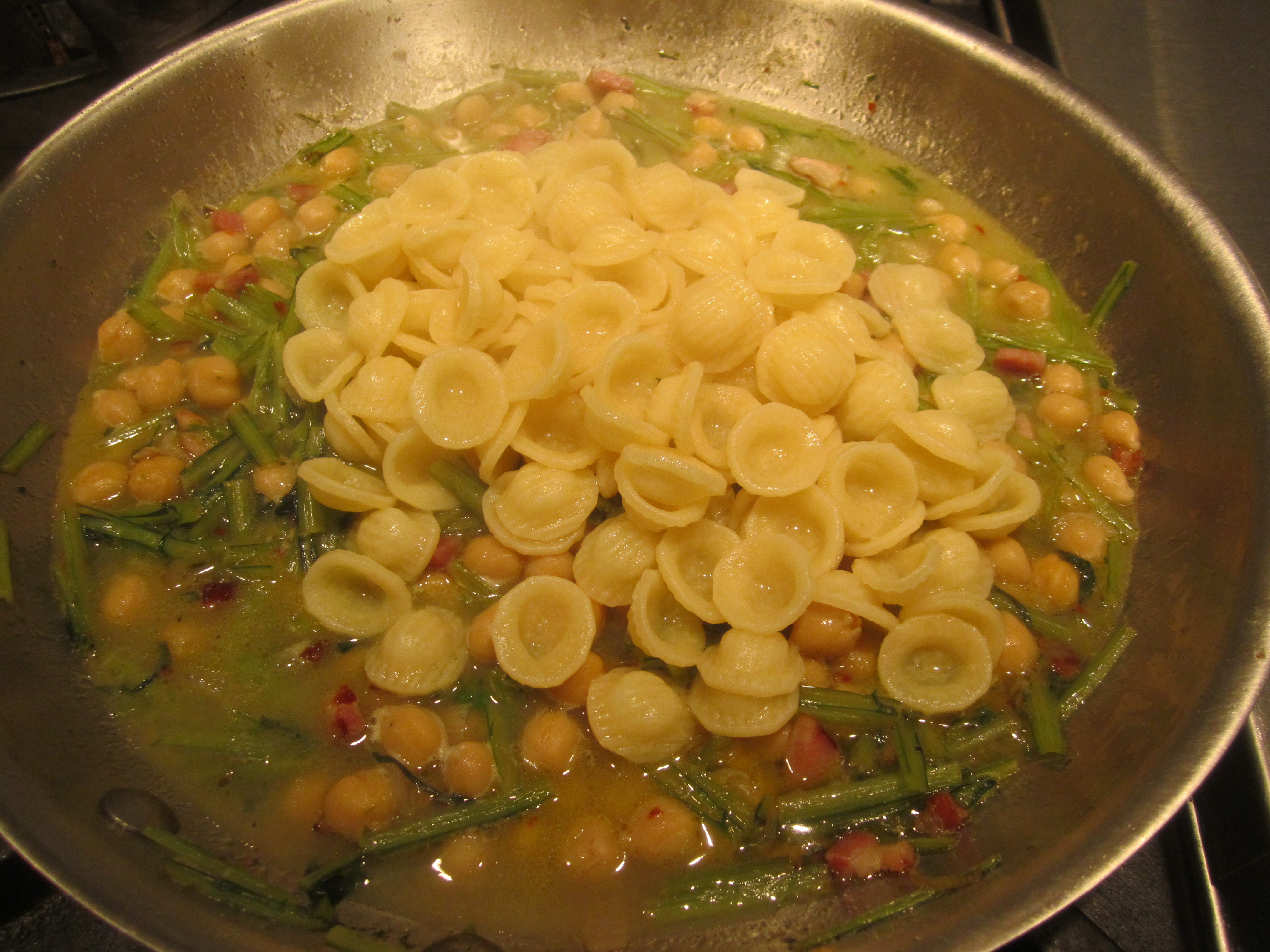
When pasta is done, add to skillet and cook on high heat to incorporate.

Drizzle with additional olive oil and sprinkle with chili flakes.

Serve sprinkled with plenty of grated pecorino romano.


Posted in Pasta | Leave a comment

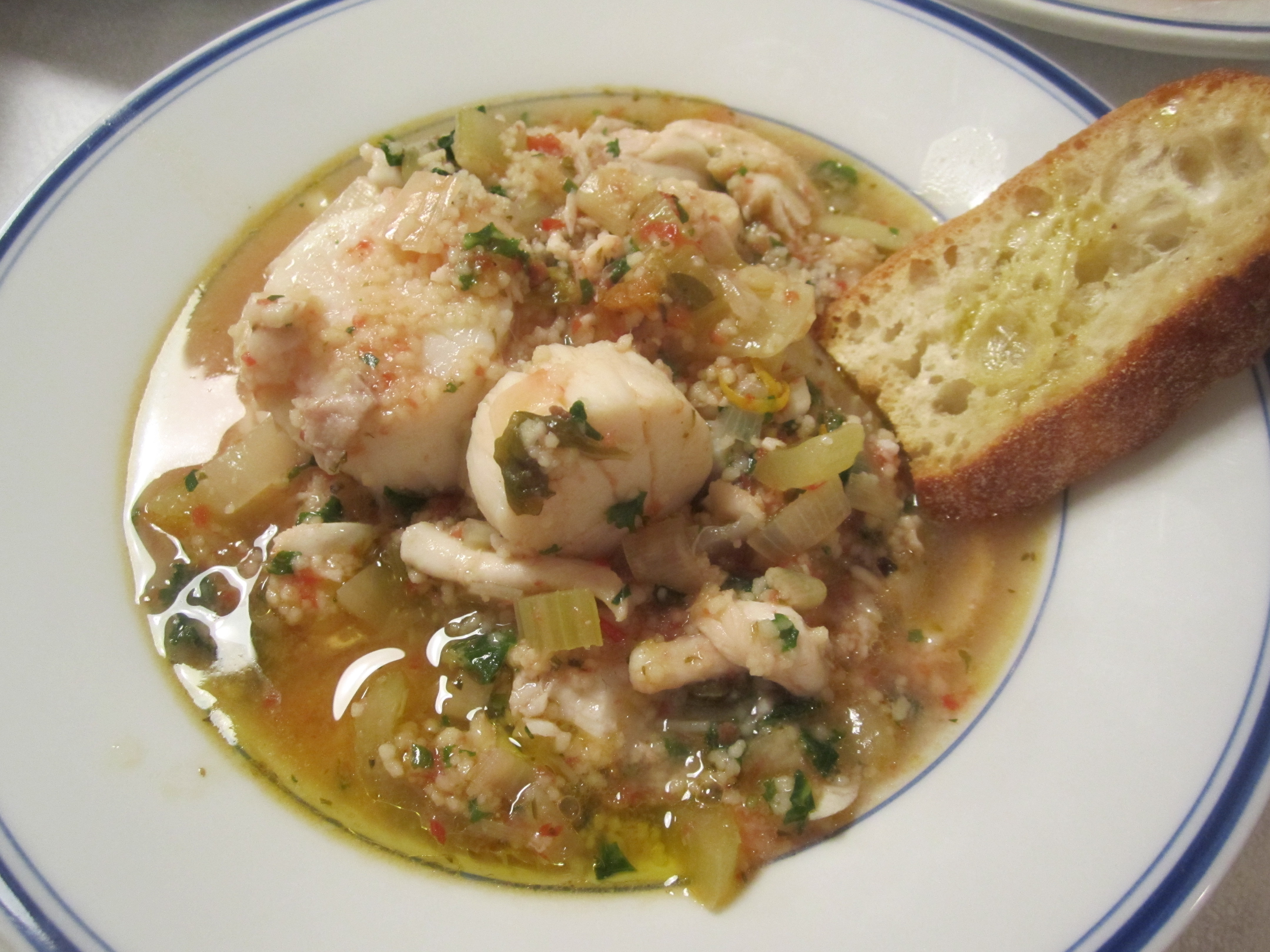
Frutti di Mare with Couscous

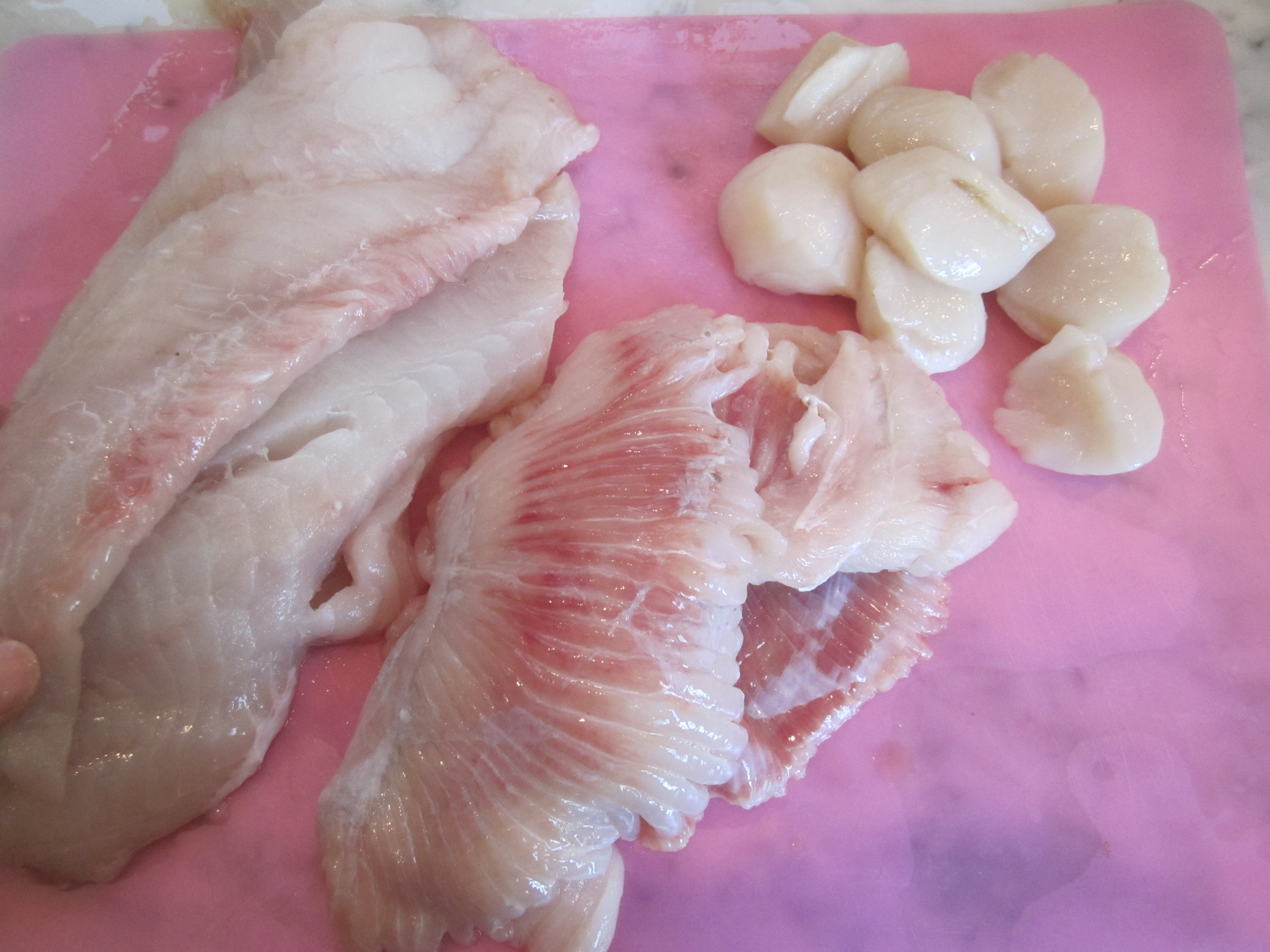
This is a light and delicate main-course that features fish, scallops, aromatics  with a touch of orange for sweetness and brightness.  A variety of fish and shellfish can be used to make this dish.  I used three locally-caught varieties that looked and smelled sweet and utterly fresh:  blackfish, skate and sea scallops.

Basically, you can use any firm, white fish, like striped bass or halibut, combined with a flaky, delicate fish, like flounder or fluke, combined with a shellfish, like shrimp, scallops, or lobster.

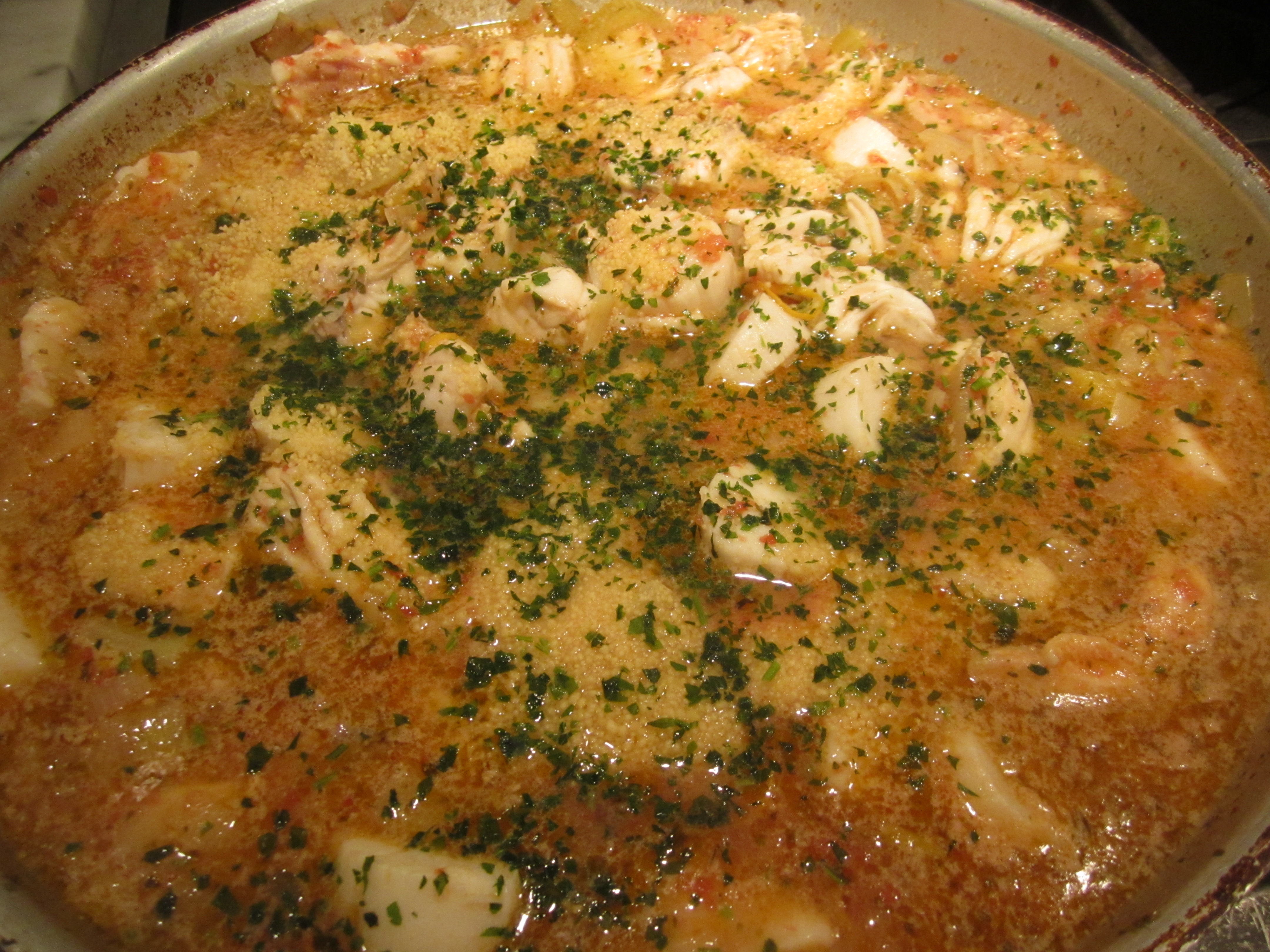
The beauty of this dish is that the sauce can be made hours ahead, then the seafood poached at the last moment.  The couscous gets added last, and the whole stew rests, covered, for 5 minutes, while the couscous steeps.  This is one-pot entertaining at its finest!

The only other last-minute preparation that remains is to toast some sliced country bread in the oven, drizzle with olive oil and heat the bowls for the stew (always heat plates for soup or stew).

Tonight, as a first-course for the seafood stew, I made a spring vegetable salad that deserved its own separate post (see below).

Frutti di Mare with Couscous

serves 6 – 8

1 lb blackfish (or striped bass or halibut)

1 lb skate wing (or flounder or fluke)

1 lb sea scallops (or shrimp or lobster)

1 bunch leeks, whites only, sliced into 1/4″ ribbons

2 shallots, sliced thinly

3 stalks celery, some leaves included, sliced crosswise into 1/4″ slices

1 bulb fennel, tops and outer layers removed, cored and sliced into 1/2″ pieces

2 tsps dried oregano

3 large bay leaves

2 tbls fresh chopped parsley

1 cup white wine

1 1/2 qts chicken broth

1 c tomato puree

zest and sections of one orange, seeds removed

1 c boiled, chopped kale (optional, but I had some leftover in the fridge, so I added it)

1 c instant couscous

1/4 c + 2 tbls extra-virgin olive oil

salt and pepper to taste

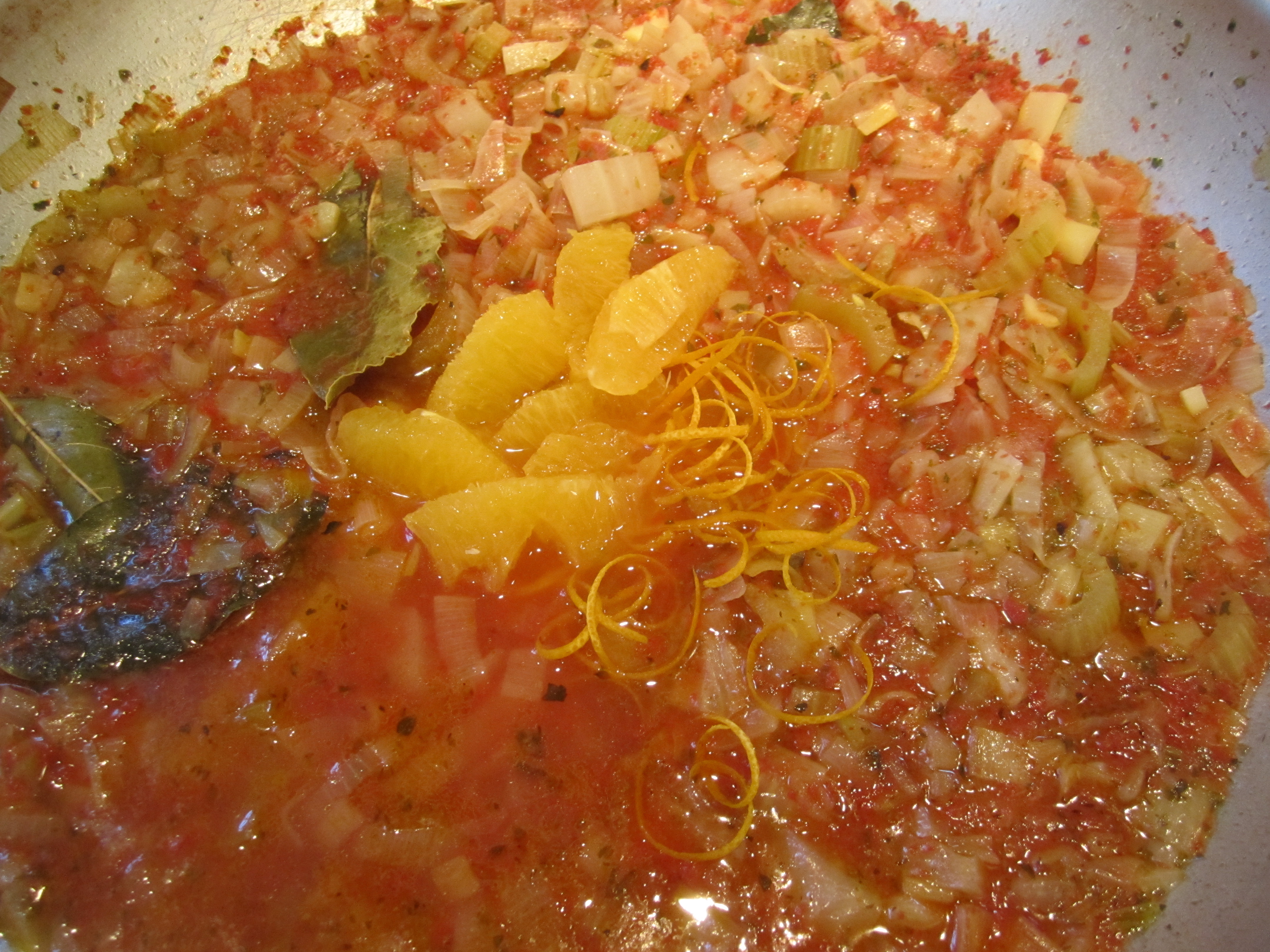
In a large saute pan on medium heat, combine 1/4 c oil with leeks, shallot, celery, bay leaves, oregano, half of parsley.

Saute, covered for about 10 minutes until vegetables soften and begin to caramelize.

Add wine and reduce for a minute.  Add tomatoes, orange zest and sections and broth.

Simmer for about 10 minutes, then taste and add salt and pepper.  May be made to this point up to 2 hours ahead.

Cut fish into bite-size pieces and set aside until ready to assemble stew.

When ready to serve, place the fish and seafood in the sauce and bring to a simmer.

Cover and simmer on low heat for about 5 – 7 minutes, until seafood begins to turn from translucent to white.  Add couscous, kale (if using) and remaining parsley, cover and turn off heat.

Allow to steep, covered, for about 5 minutes.

Serve in hot bowls with freshly toasted crostini drizzled with olive oil (drizzle on the oil after they’ve toasted, so as to preserve the raw flavor of the oil).

Posted in Seafood, Soup/Stew | Leave a comment

Spring Vegetable Salad with Pecorino Sardo

This is a wonderful and hearty first course which showcases an assortment of spring vegetables with maximum effect.  It’s perfect for company, since all of the components can be prepped ahead, then assembled and dressed at the last moment.  Served at room temperature, it requires no last-minute reheating or fumbling with pots.

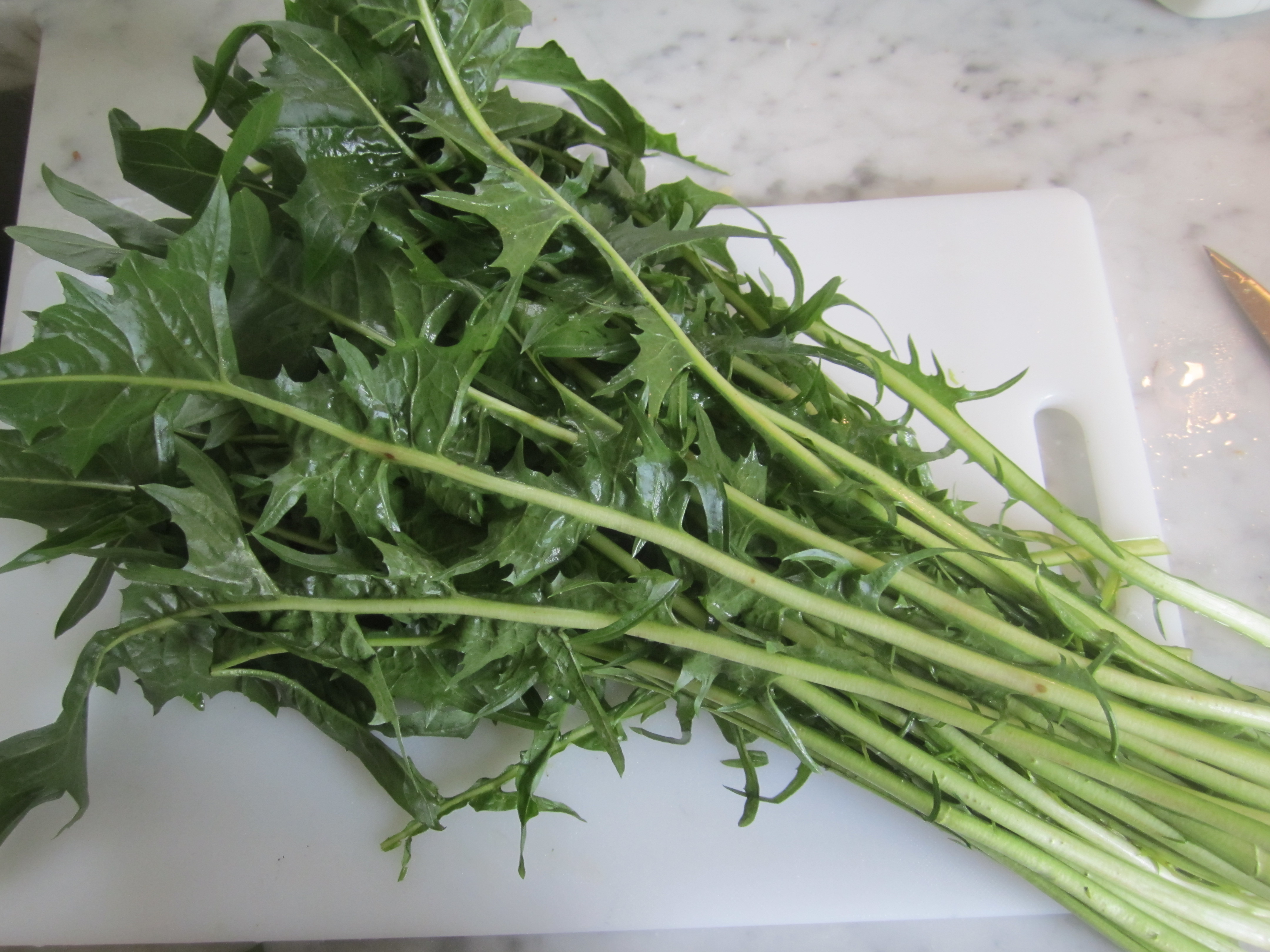
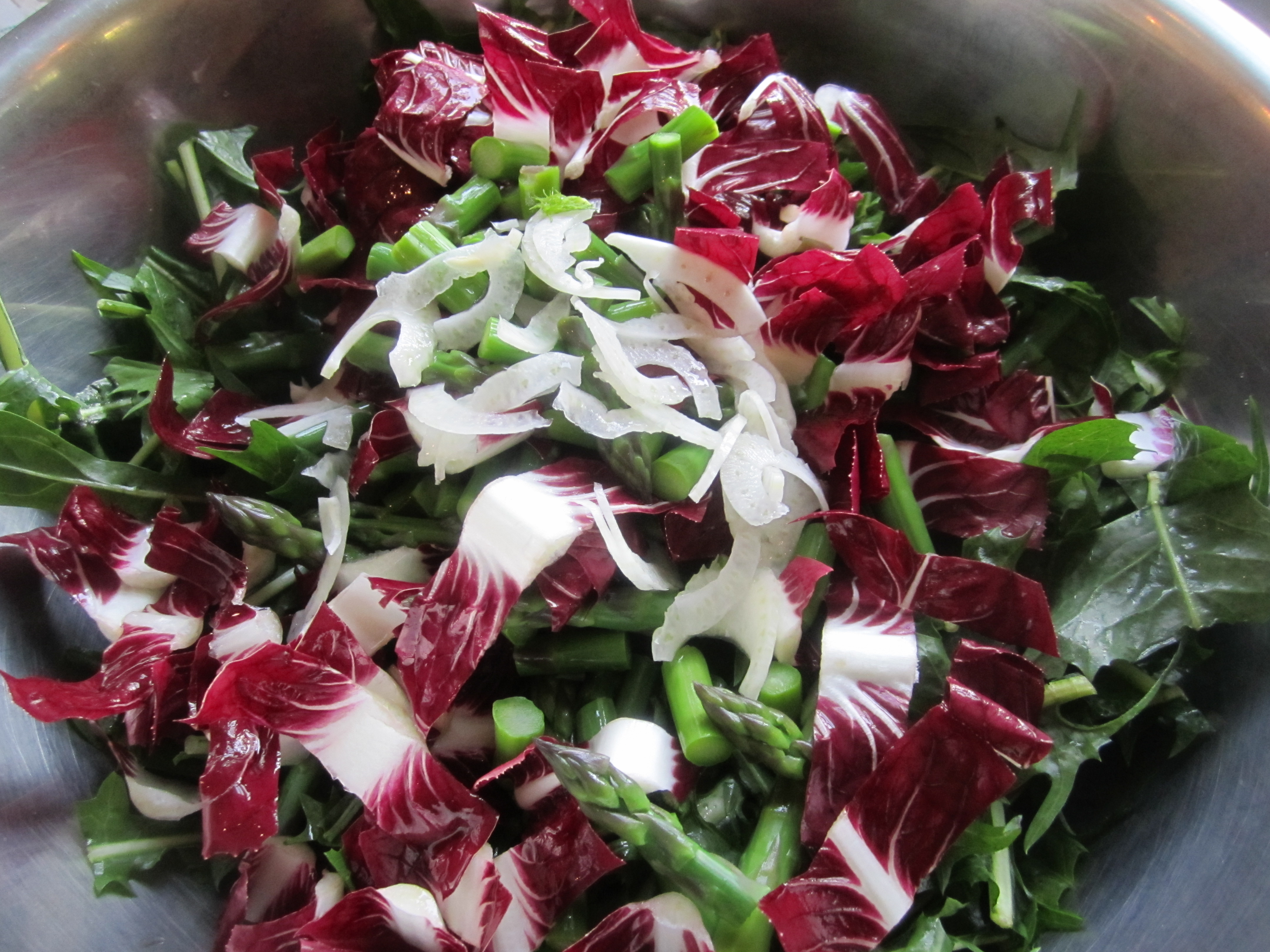
Dandelion greens serve as the base for the salad.

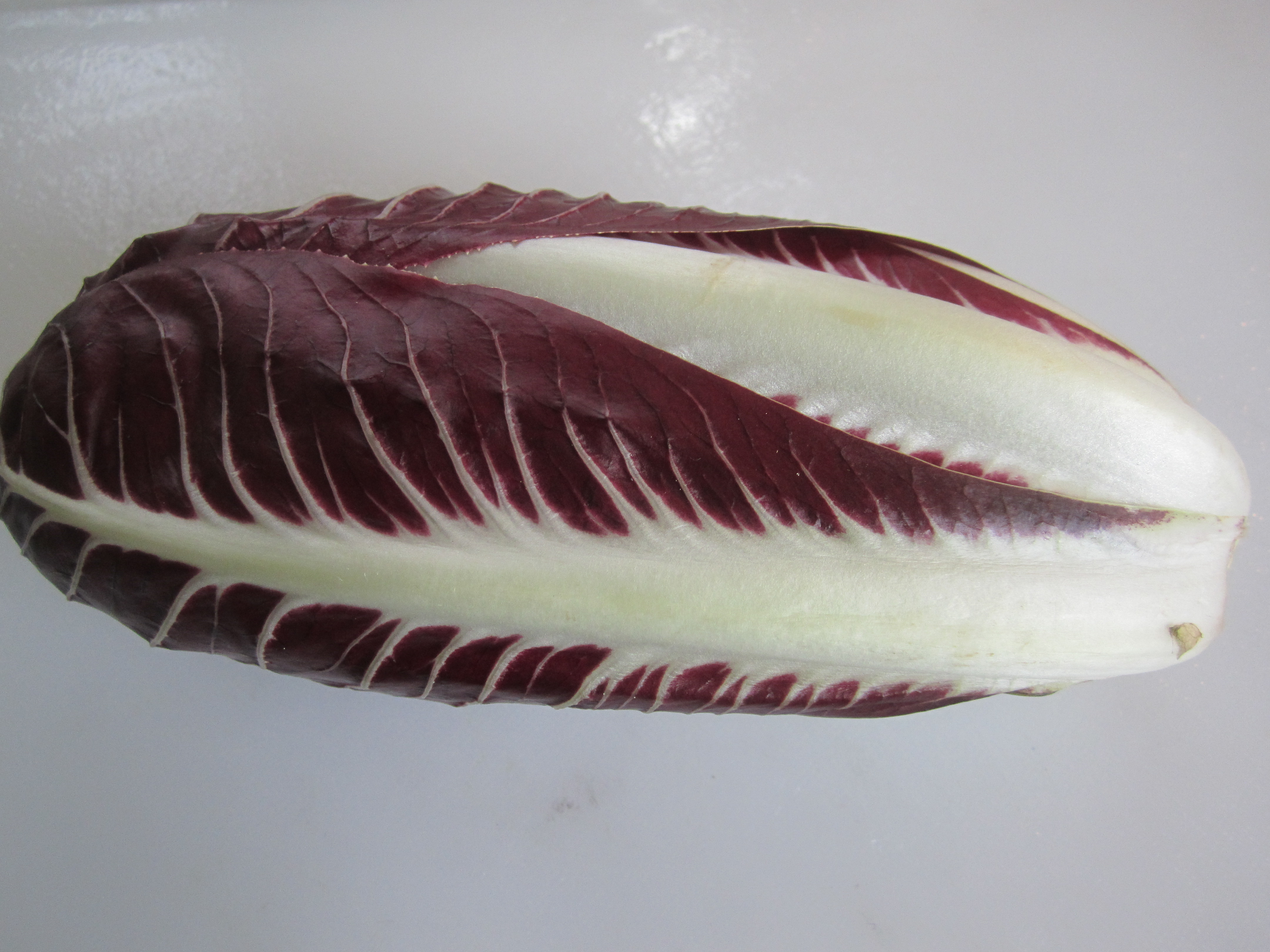
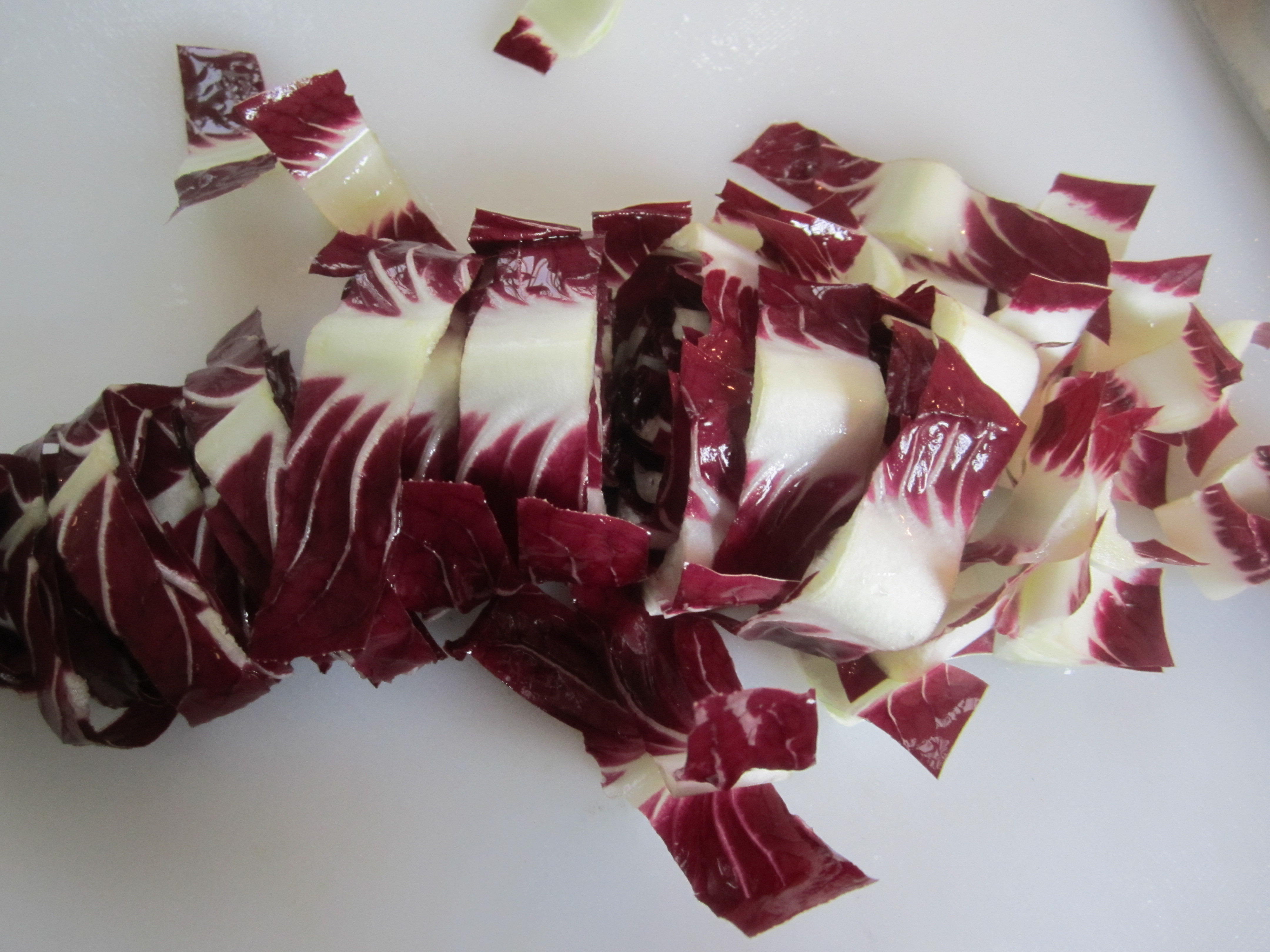
I use the leafy greens, slightly chopped, and save the stems for a later use.  Along with the dandelions, is radicchio di Treviso, that torpedo-shaped crimson leaf with the white ribs and veins.

To counter the bitterness of the dandelion and radicchio, asparagus and fava beans add softness and nuttiness. These are both blanched ahead of time and held at room temperature until ready to assemble the salad.

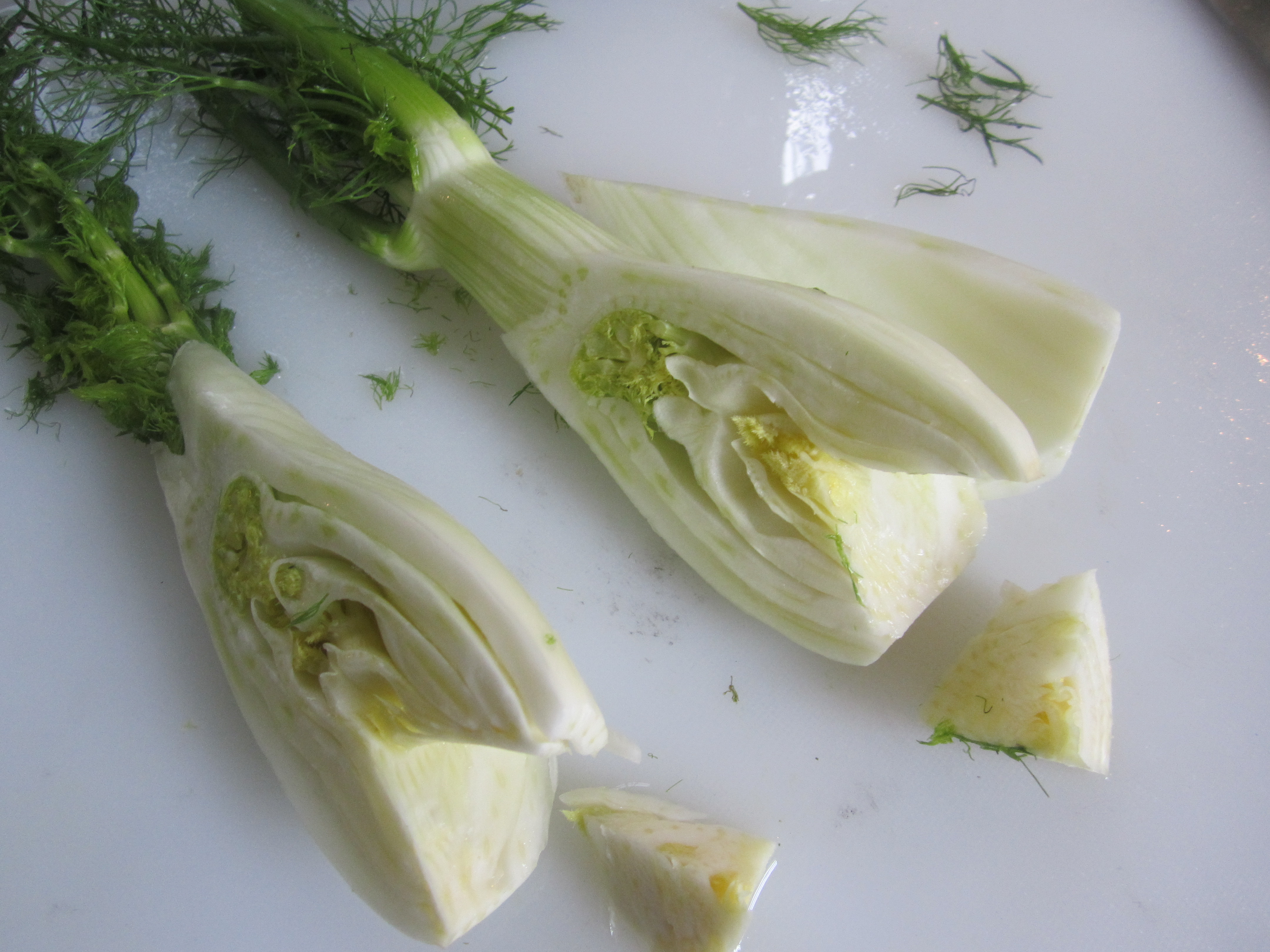
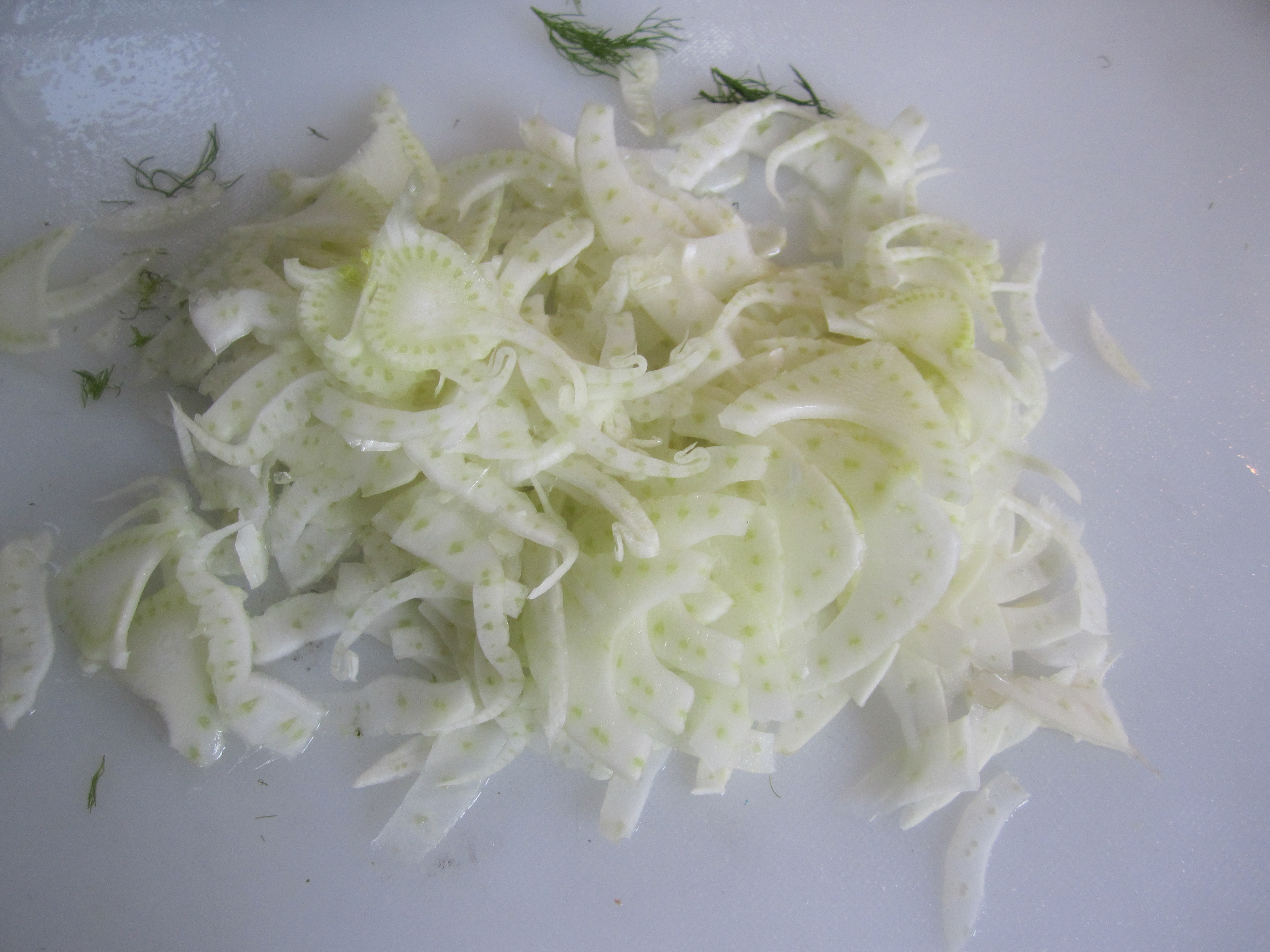
Shaved fennel adds a sweet, clean crunchiness to the mix.  The bulb is trimmed of any thick, fibrous outer layers, then shaved on a mandoline.  The shavings rest in a bath of ice water until ready to serve.  The ice water breaks down the toughness of the fennel and gives it a wonderfully crunchy texture, and mild flavor.

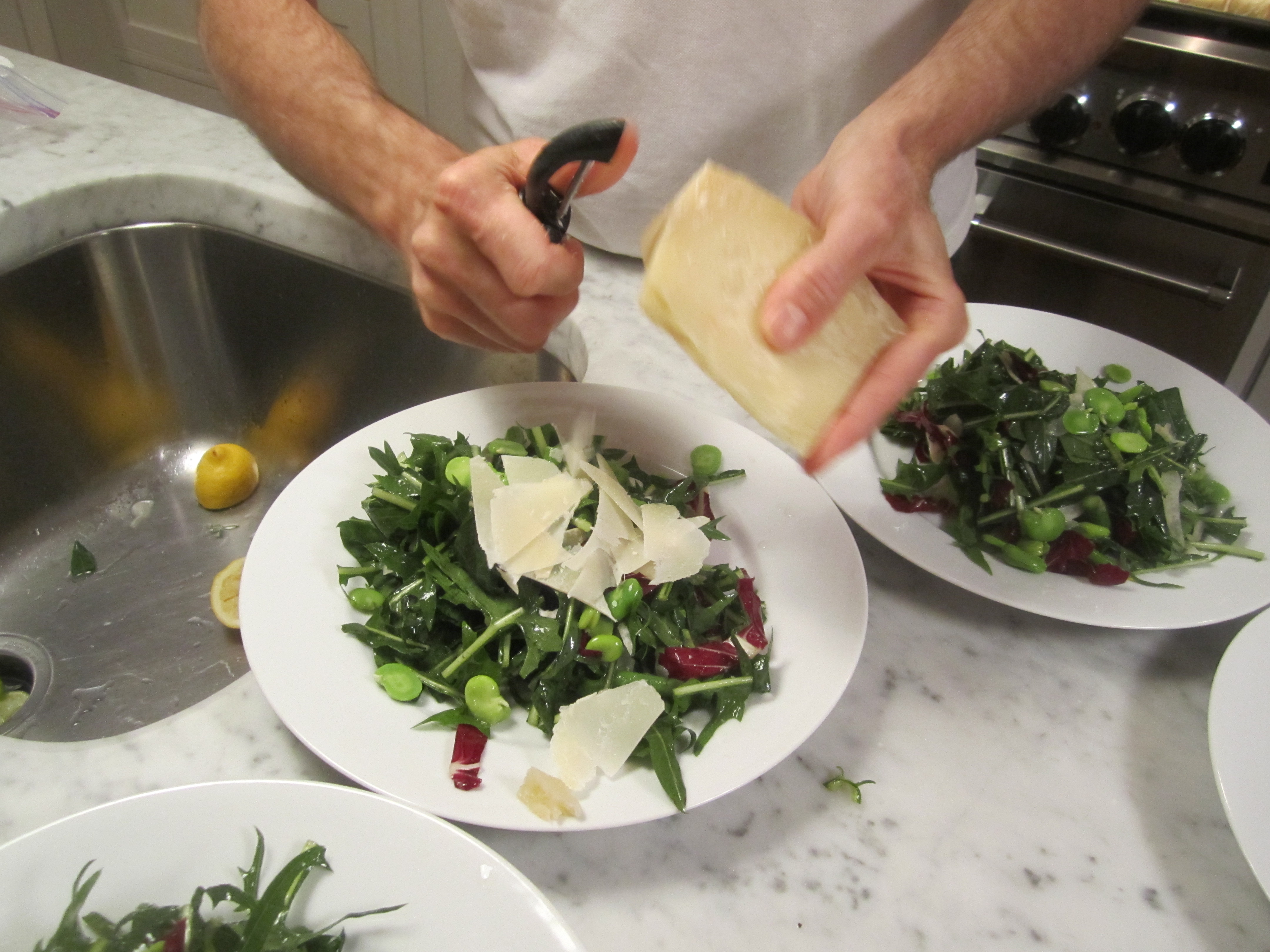
Last but not least, pecorino sardo, if you can find it, is literally the crowning ingredient that unifies and tempers all of the ingredients.  Also known as fiore sardo, it’s a sheeps’ milk cheese from Sardinia that is nuttier and milder than conventional supermarket-variety pecorino romano, but by all means, substitute pecorino romanoif you can’t find sardo.

The dressing is a heavy dose of extra-virgin olive oil and lemon juice.  A good amount is necessary to tame the bitter greens.  Lots of salt and black pepper also bring the flavors to life.

Spring Vegetable Salad with Pecorino Sardo

serves 6

2 medium bunches dandelion greens, cut crosswise into 2″ lengths, bottom 4″ of stems removed and set aside for later use.

1 head radicchio di treviso

1 bunch (approximately 1 lb) asparagus

1 1/2 c fava beans, the yield from approximately 2 lbs of whole pods, shucked, blanched and peeled (see Fava Beans with Leeks, Arugula and Mint).

1 head fennel

juice of 1 1/2 lemons

1/4 c extra-virgin olive oil

salt and pepper to taste

Wash dandelion greens well by soaking a deep bowl of cold water, draining the water after each washing, until no more soil remains on the bottom of the bowl.  Dry in a salad spinner and set aside.

Snap off bottoms of asparagus by bending the spear in half and allowing it to break where it wants.  Drop asparagus in small bunches into salted, boiling water and blanch for 1 1/2 minutes.  Place directly into ice cold water for about 5 minutes to stop the cooking and maintain green color.  Slice into 1″ pieces and set aside until ready to assemble salad.

Wash radicchio and slice crosswise into 1″ inch pieces.  Set aside.

Trim fennel of any fibrous outer layers (sometimes the outer layers comprise 50 percent of the bulb).  Cut in half lengthwise and remove triangular section of the core from each half.

Slice crosswise on mandoline slicer.

Place slices in bowl with water and ice cubes and allow to remain in the refrigerator until ready to assemble salad.

In large mixing bowl, place dandelion, radicchio, fennel and asparagus.

Sprinkle lemon juice, oil, salt and pepper over all and mix with tongs.  Taste and add salt if necessary.

Place a pile on each large plate and with a vegetable peeler, shave a generous amount of pecorino over each salad.

Drizzle with a  teaspoon of extra-virgin olive oil and serve.

Posted in Salads | 1 Comment