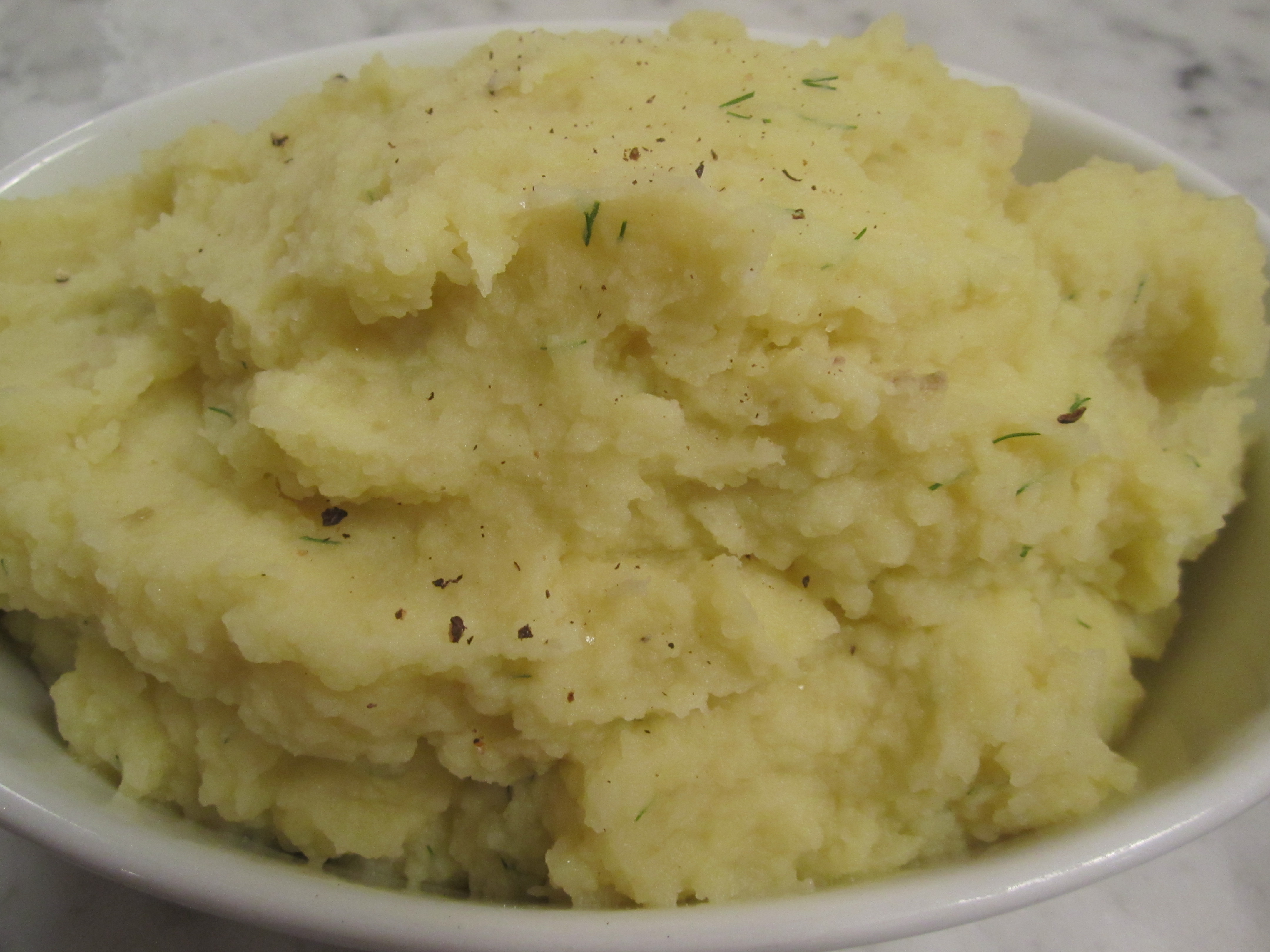
Fennel Mashed Potatoes

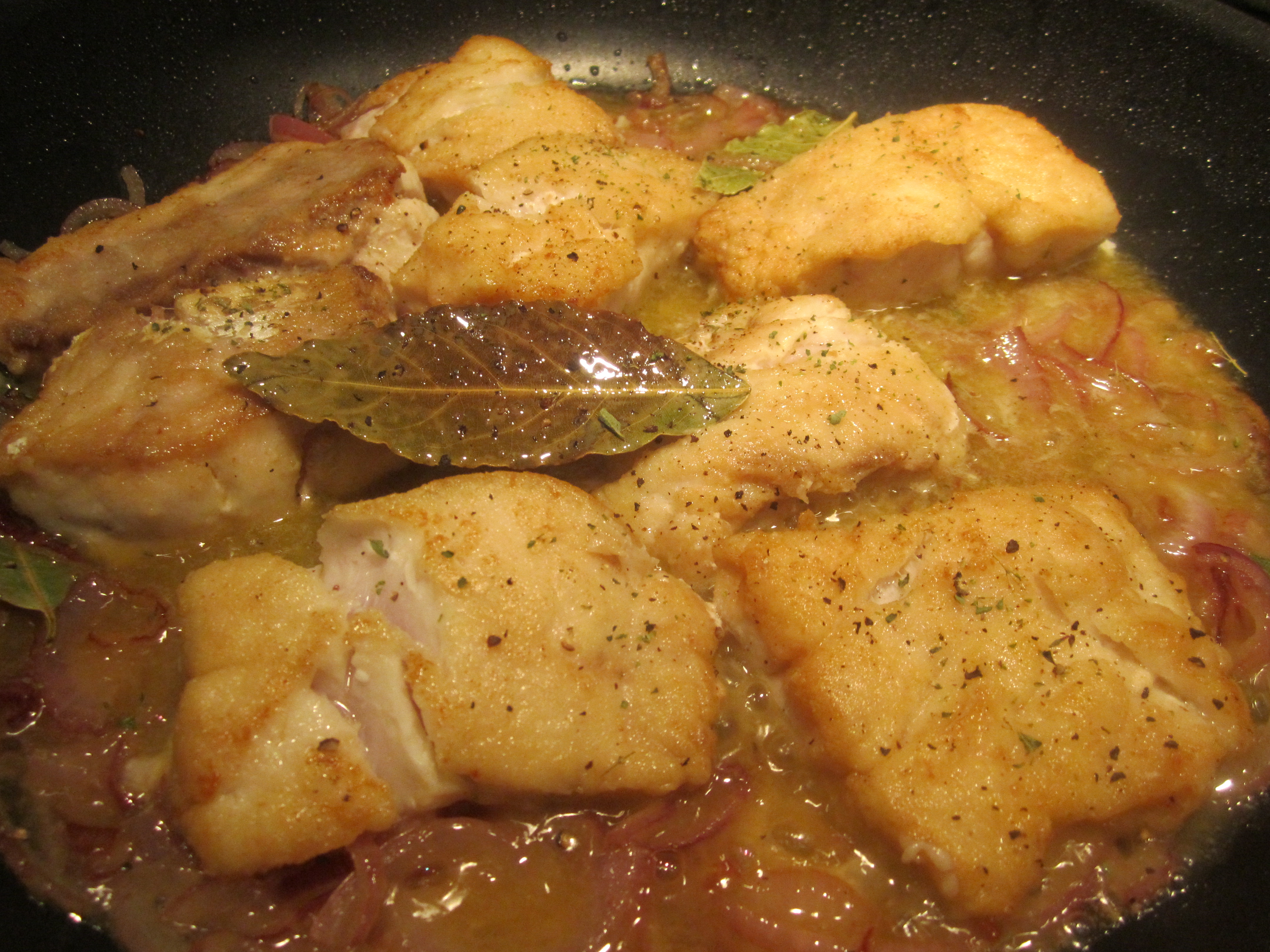
Tonight we’re having cod for dinner, made in the style that my mother taught me a couple of weeks ago (see pesce in umido for the recipe).  In addition, I wanted something to soak up the aromatic winey sauce from the fish.  I haven’t made mashed potatoes in ages–they’ll be the perfect accompaniment.

I’ll add some fresh fennel, slow-poached in olive oil, then pureed.  Fennel is a natural accompaniment to all kinds of fish and seafood, and poaching it in olive oil reduces it to a sweet, caramelized essence that you’ll have to stop yourself from eating on its own.

There is no butter or cream in these potatoes–just olive oil (admittedly a copious amount), but you can add or subract oil according to your taste.  You can add some of the oil in which you poached your fennel, but I wanted more of the flavor of the raw oil, rather than the cooked oil, so I added more raw oil than cooked. 

Lastly, I added some chopped raw fennel fronds–not too much–they’re strong–but necessary to give the puree a little brightness and textural contrast.  They also give you some flecks of bright green, which reinforce the deep flavor of the cooked fennel.  I always hate to throw away those gorgeous fronds, so this dish allows you to take advantage of (a couple of) them as well.

Along with the fish and mashed potatoes,  we had some simple baby green beans, boiled for about 5 minutes, then sauteed in olive oil right before serving. 

This meal is perfect for entertaining, since you can make the fish and keep it covered, off the heat, for a half-hour or so, while you’re having a first course.  You can blanch the green beans ahead, drain them, then saute them at the last moment.  The mashed potatoes can be made entirely ahead and left in a covered saucepot off the heat.  They can  be reheated in a saucepan with a half-cup of the potato cooking liquid at the last moment.


Fennel Mashed Potatoes

serves 4

4 large yukon gold potatoes, peeled and diced into 1″ cubes

2 bulbs of fennel, stalks removed, outer layers discarded

1 c extra-virgin olive oil

salt and pepper to taste

Place potatoes in pot of heavily salted water and bring to a simmer.  Cook until potatoes are soft–about 15 minutes. 

Remove potatoes, drain and set aside.  Reserve 2 cups of cooking liquid.

Slice fennel bulbs in half and remove the core from each half.
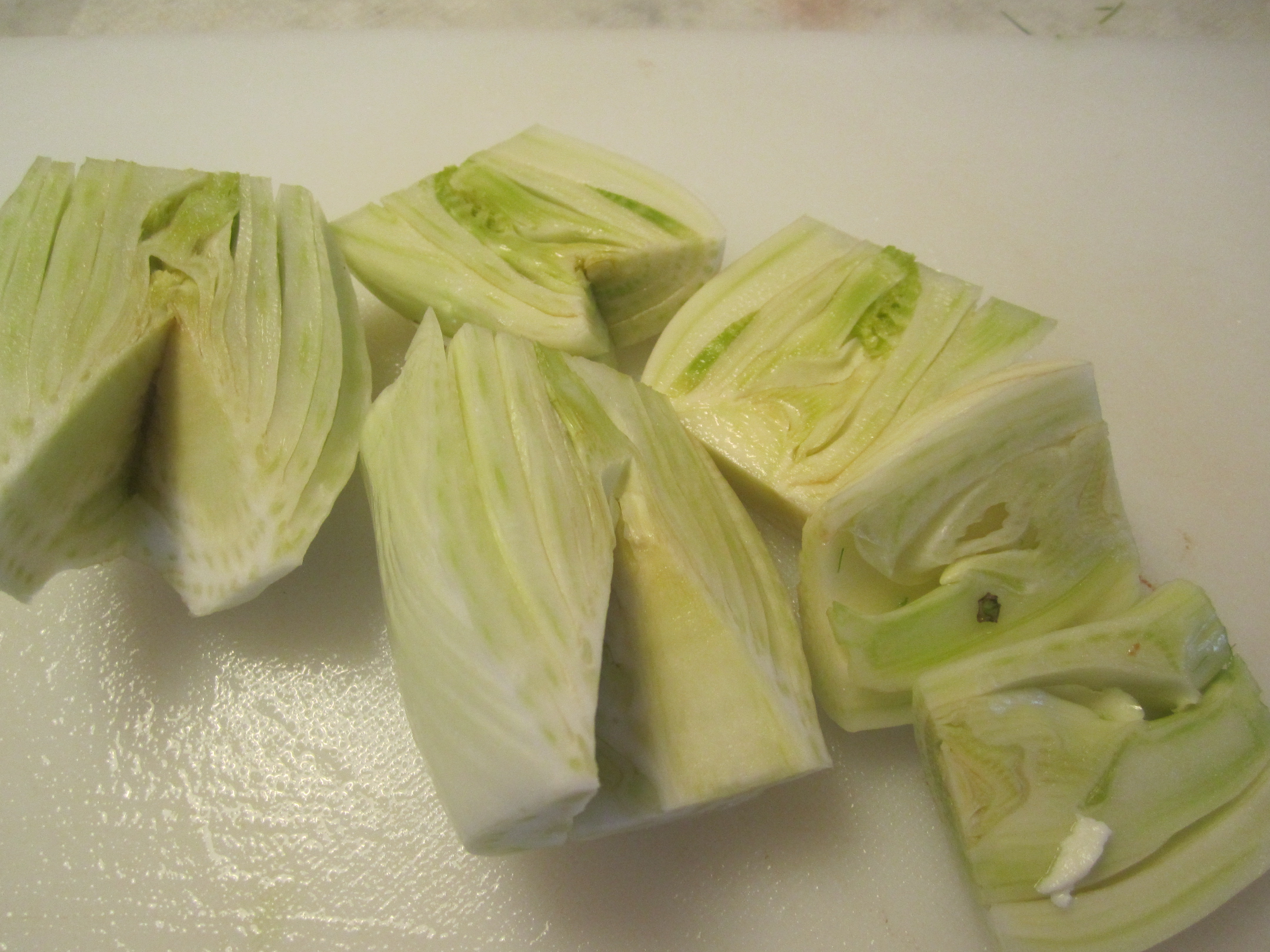
Slice fennel into 1/2″ slices and place in saucepan containing 1/2 c olive oil.  Sprinkle on 1/2 tsp salt. 
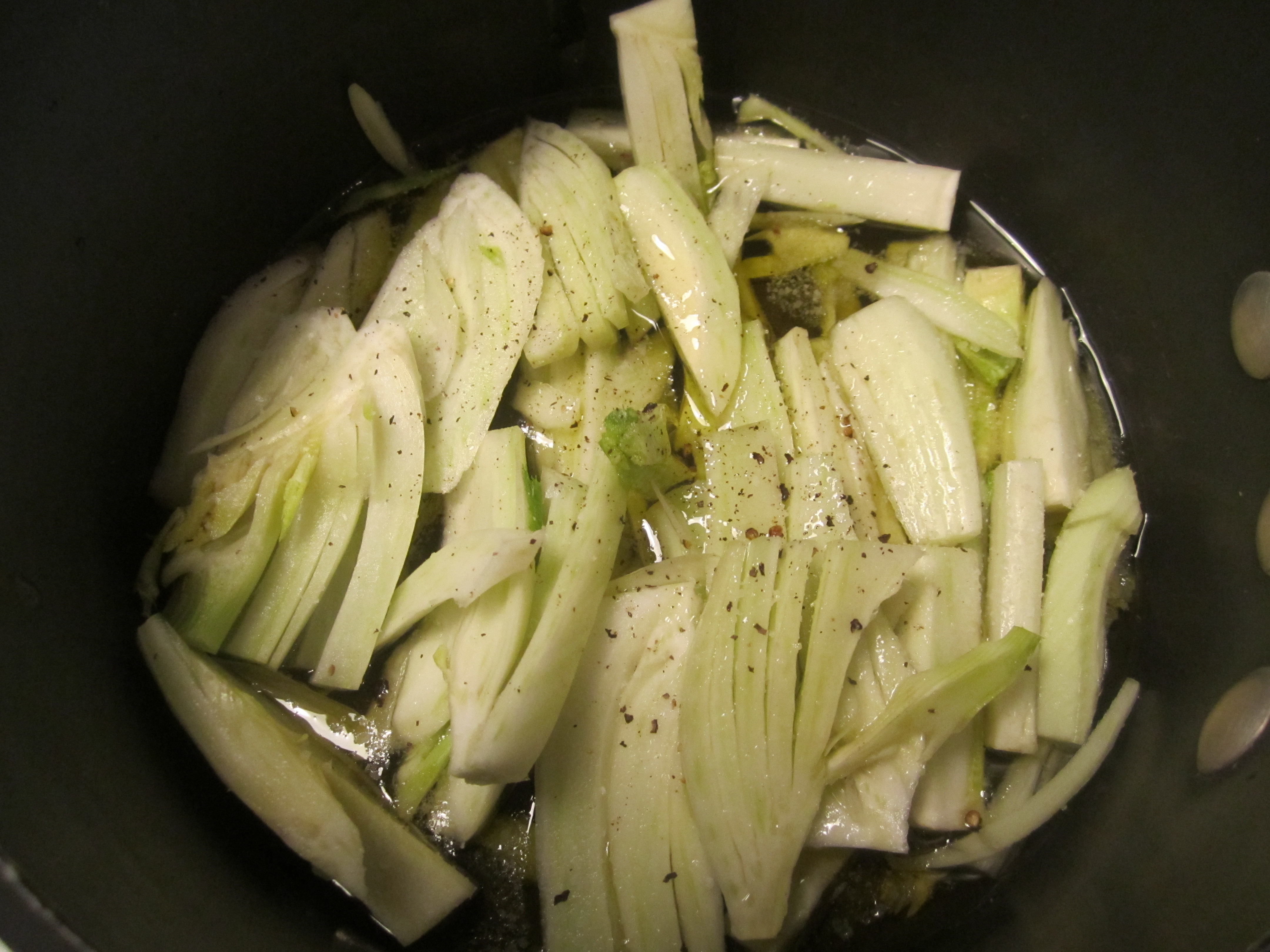
On lowest heat, slowly poach fennel in oil, covered for about 12 – 15 minutes, or until soft and melting. 

Place fennel in food processor with 2 tablespoons of its poaching liquid.  Process to form a puree.

Puree potatoes in a ricer (never in the food processor–they turn to glue). 

Fold fennel puree into mashed potatoes and return to saucepot. 

Fold in 2 teaspoons chopped fennel fronds (only the finest, wispiest fronds–not any coarse or woody ones). Add the remaining olive oil, along with 1/2 cup of additional salty cooking liquid.  You’ll find that, depending on the moisture content of your potatoes, you may need to add a lot of cooking liquid back into the potatoes to make them the right consistency (not too stiff).  This will continue adding salt to the puree, and should result in a nice creamy, salty puree. 
Posted in Vegetables | Leave a comment

Salad of Arugula, Fennel and Parmigiano

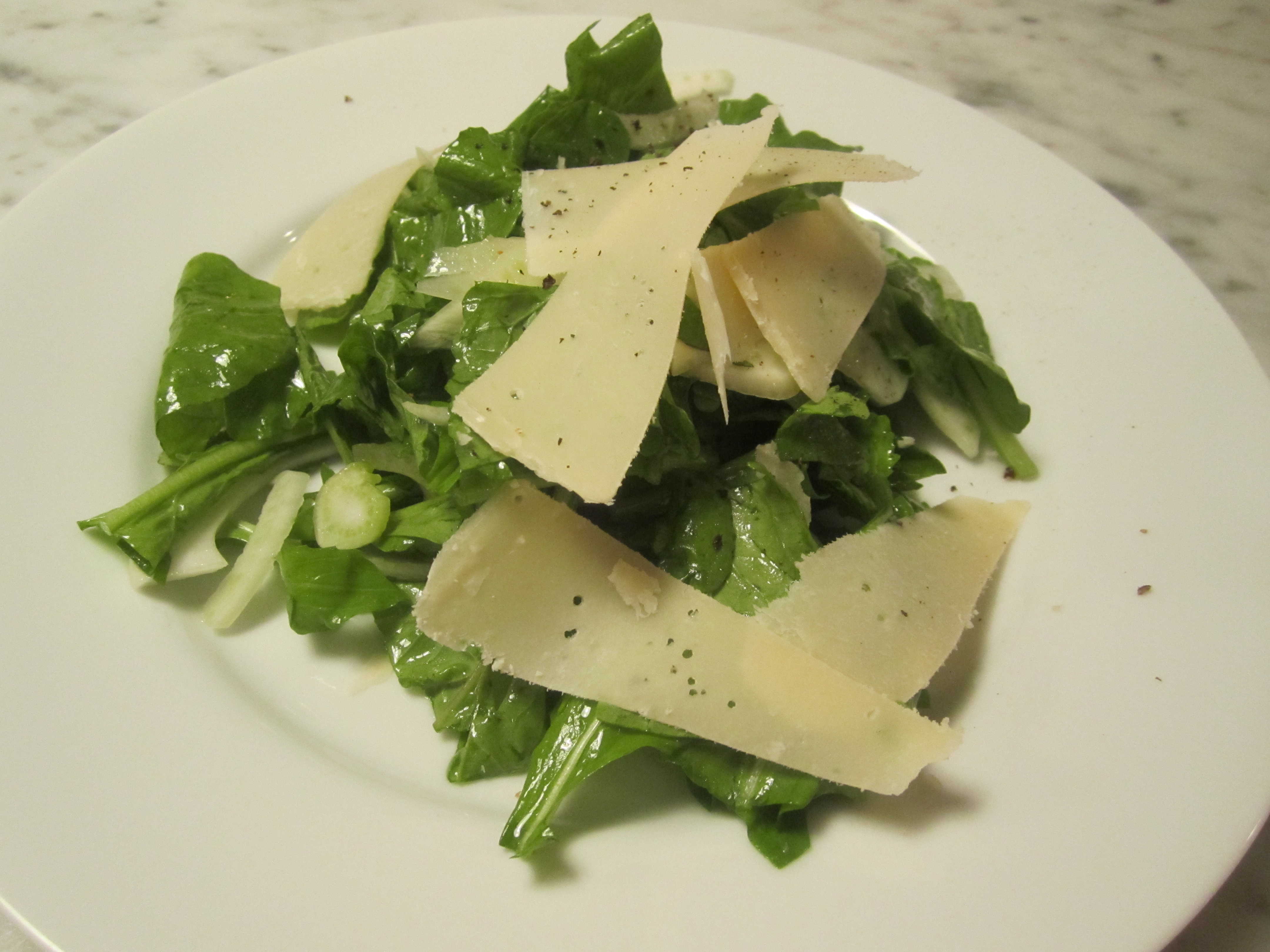
This is a great first course or light lunch year-round.  Right now, arugula and fennel are local, and they grow locally well into the fall.  Part of the occasion for this salad is the beautiful wedge of parmigiano my mom brought back from Italy last month. 

One of my dinner guests asked me if there’s really a difference between the cheese we bring back from Parma and the imported Parmesan we buy in stores here in this country.  The answer is truly one of degree.  I feel the cheese my mom brought back in her suitcase is slightly nuttier and fresher-tasting than the cheese I buy in my local gourmet market–or maybe it’s just in my mind.  Needless to say, any good parmigiano works well on this salad. 

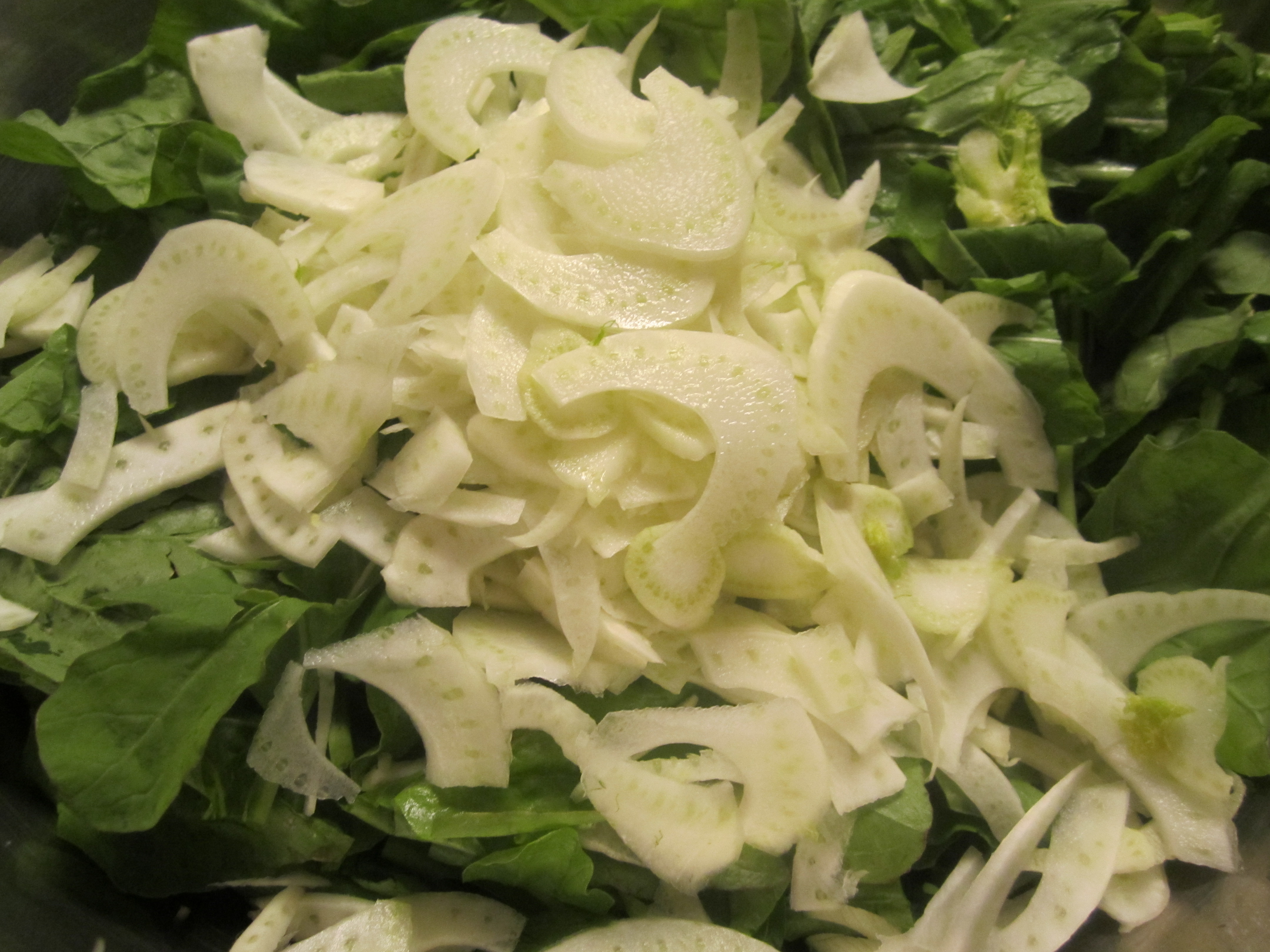
The crucial aspect of this salad is that the fennel be thinly shaved (on a mandoline slicer) and the cheese be thinly shaved in shards (with a vegetable peeler).  This way the contrast of the nutty rich cheese is optimally juxtaposed against the bright crisp fennel. 

The dressing is simply lemon and olive oil–but it must be on the lemony side–it needn’t be excessively oily, since the richness will come from the parmigiano.  Make and eat only at the last minute–arugula will wilt instantly.

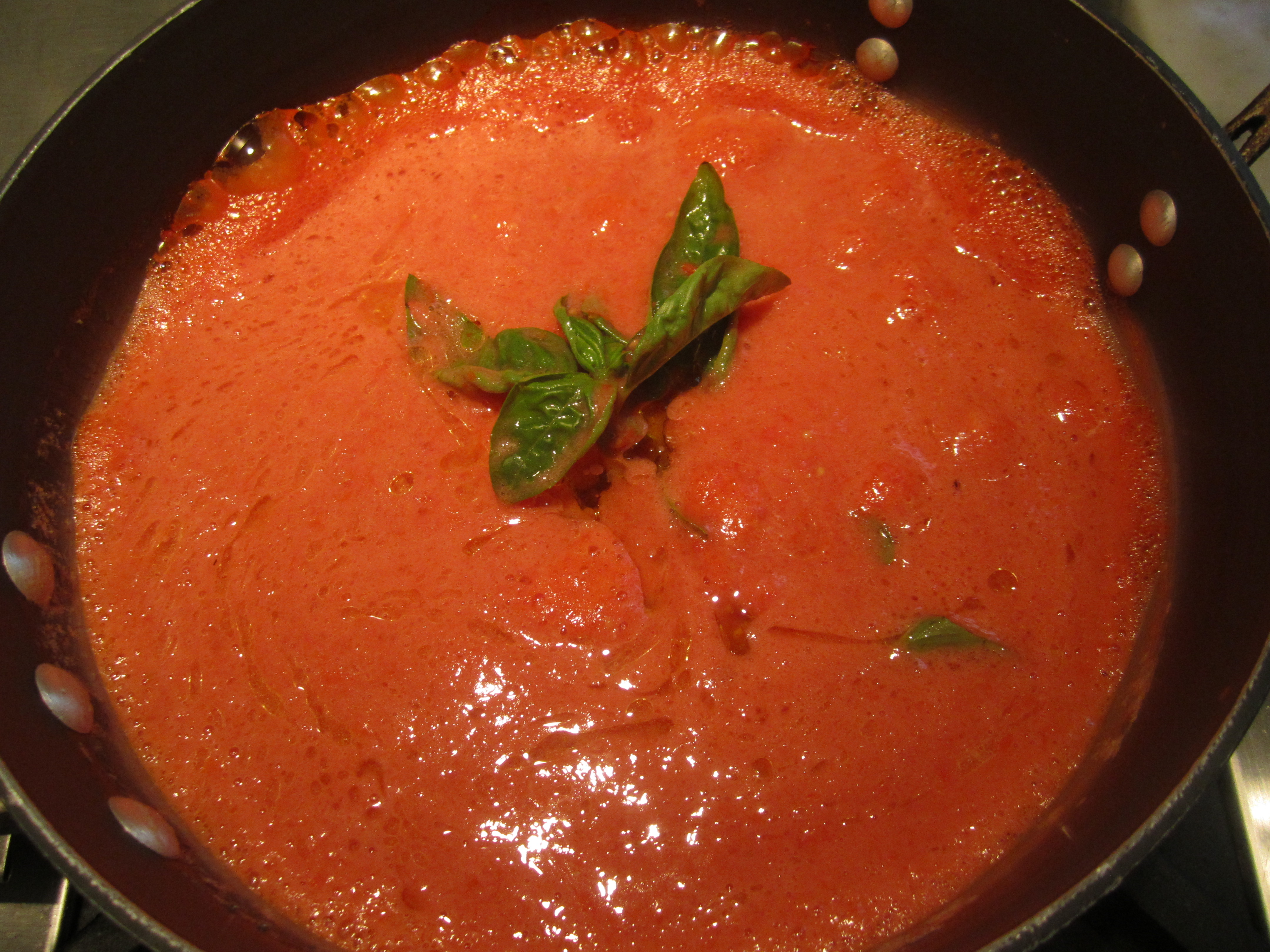
Tonight, along with our salad, I made a fresh tomato sauce which consisted of nothing other than some fresh summer tomatoes (a mixture of cherry tomatoes and plum tomatoes from Beppi’s garden, pureed in the blender, along with some olive oil and a sprig of basil. 

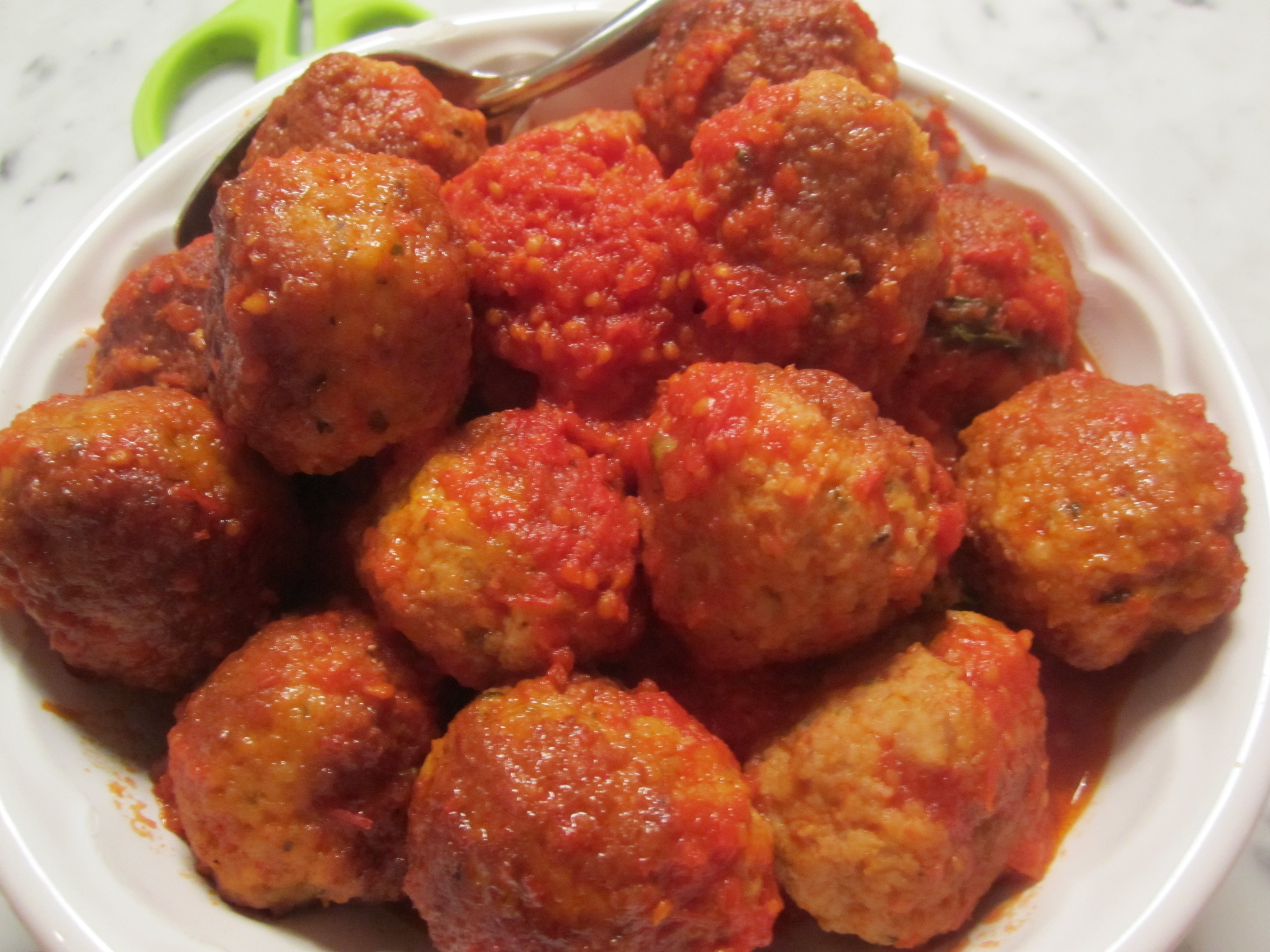
As the sauce began to simmer, I browned a batch of turkey meatballs and dropped them in for 15 minutes.

After the meatballs were done, I used the bit of remaining sauce to dress some irresistible fresh egg pappardelle.  Note:  it takes only about a cup of sauce, along with some pasta cooking water, to properly dress a pound of pasta.


Salad of Arugula, Fennel and Parmigiano

serves 4 – 5

3 medium bunches of arugula (approximately 1 lb)

1 plump bulb of fennel

juice of 1 lemon

1 1/2 tbls extra-virgin olive oil

salt and black pepper to taste

Remove stalk and outer layer of fennel bulbs and cut in half lengthwise.  Remove triangular core from each half.

Place arugula in mixing bowl.  With a mandoline slicer, shave fennel over arugula. 


Squeeze lemon over the salad.  Drizzle oil, then sprinkle on a half-teaspoon of salt.  Toss and taste–add more salt if necessary but not too much–the parmigiano will add saltiness to the salad.

Mound on serving plates and shave cheese over the top.  Grind fresh black pepper over all and serve immediately.


Posted in Salads | Leave a comment

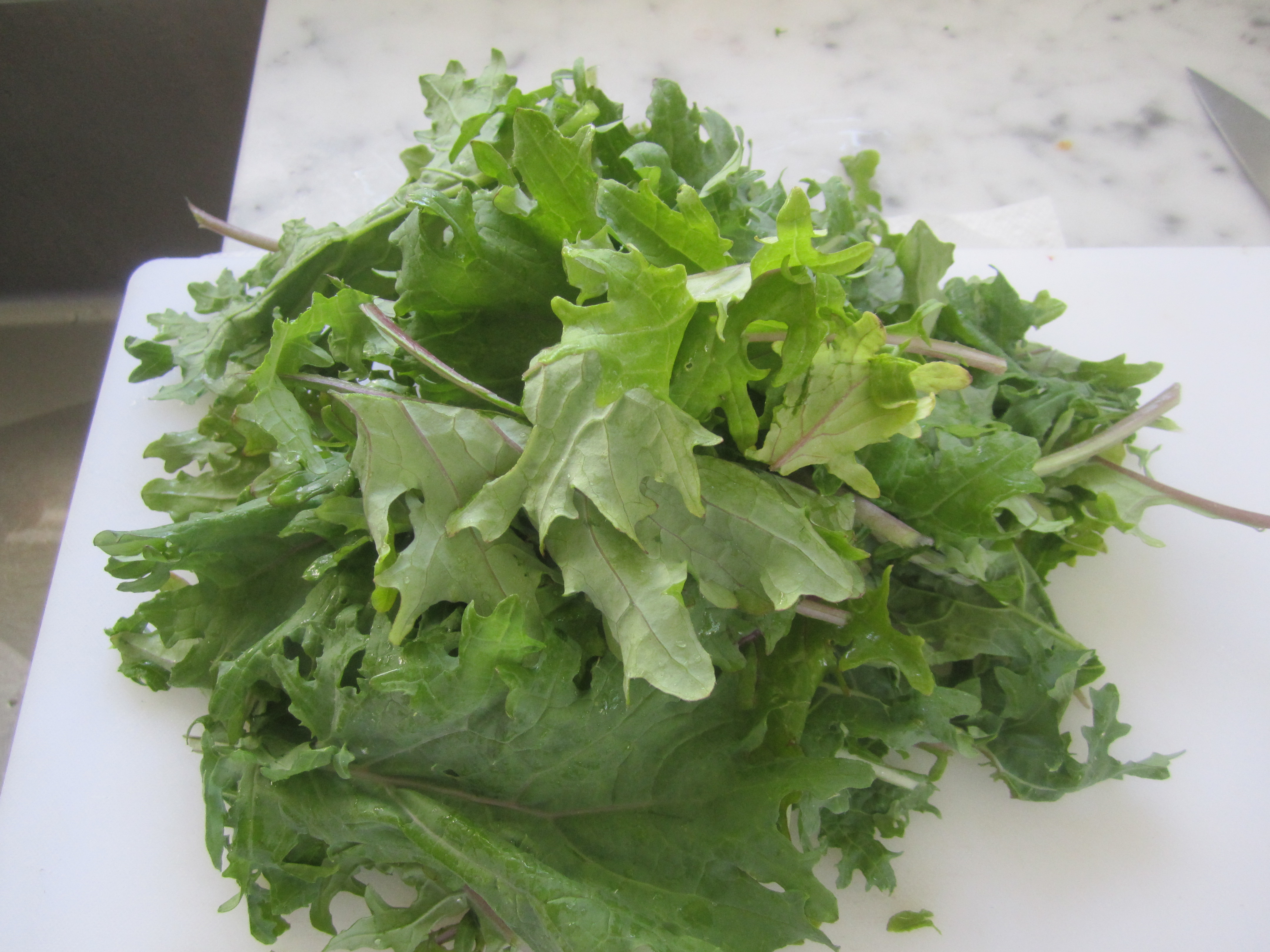
Russian Kale and Golden Beet Salad

Russian Kale is softer and more delicate than the conventional dark curly leafed variety. 

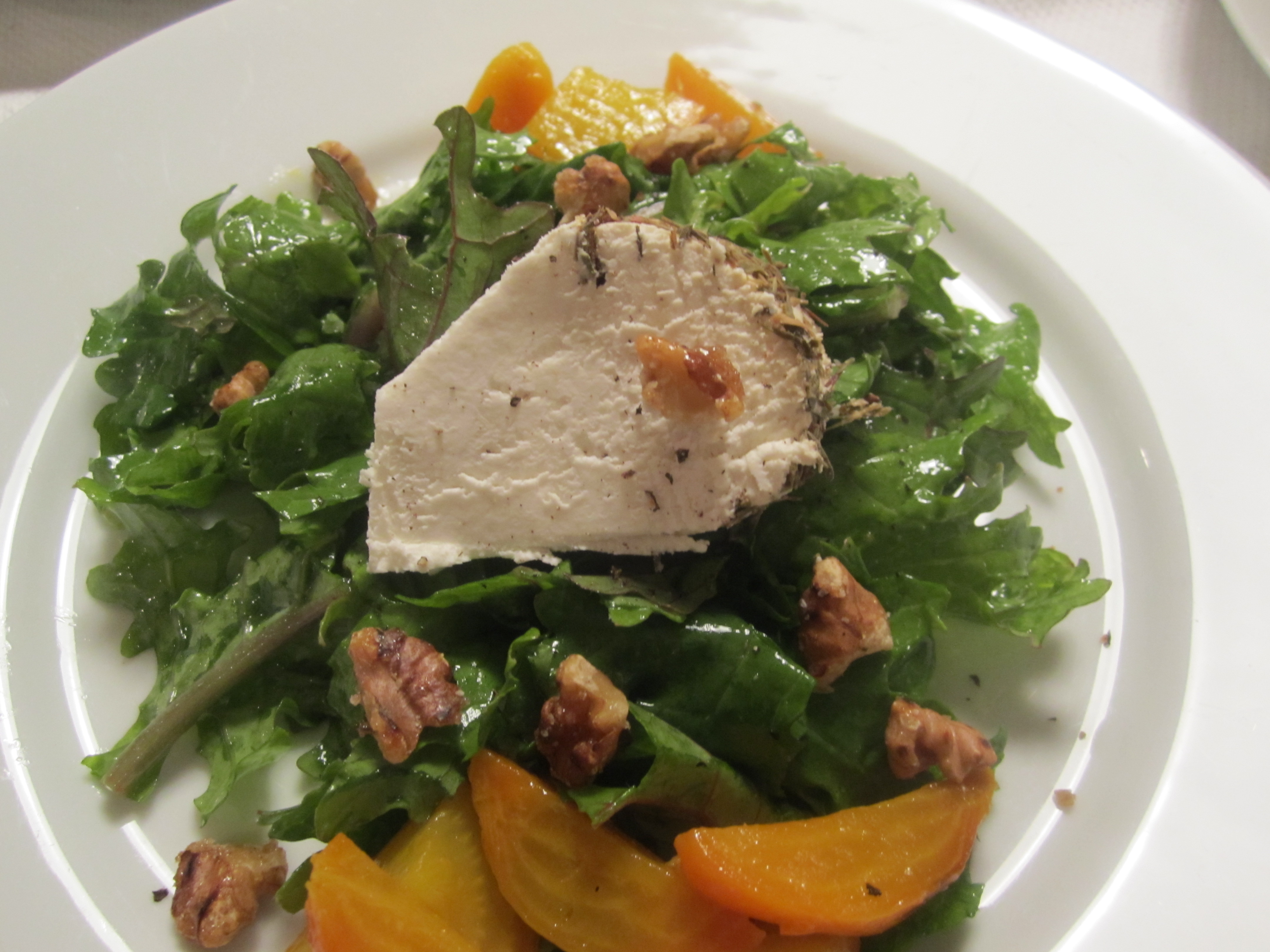
 It’s great eaten raw as a salad.  I like to tame its slightly mustardy bite with something sweet, like roasted golden beets.  A slab of herbed goat cheese is the perfect complement to both the beets and the kale. 

In addition, I’ve added some warm toasted walnuts, well-seasoned with salt, pepper and agave.  Simply toss the walnuts in a dry skillet on low heat until they release their toasty aroma and begin to turn a golden color, then sprinkle with agave to taste, stir, then coat generously with salt and pepper.  Turn onto a plate to cool. 

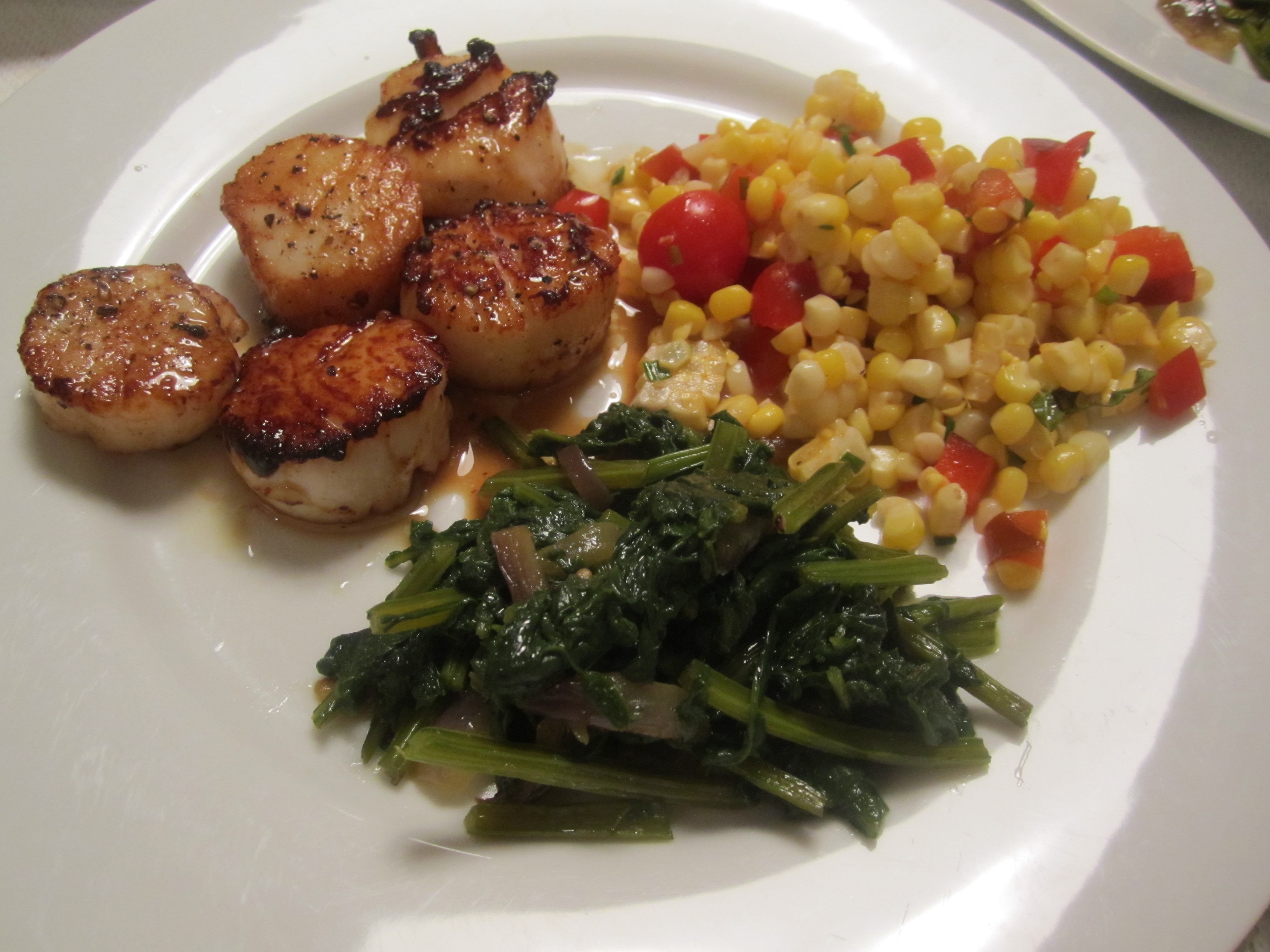
Tonight this salad was the perfect first course to our meal of seared scallops, corn salad, and sauteed beet greens with onions (see sauteed swiss chard but substitute beet greens for chard).  Expert photography by my friend,  Elle.

Russian Kale and Golden Beet Salad

serves 4

3 small bunches russian kale  (approx. 1- 1/4 lb)

10 golden beets with 1″ of stem still attached

1 tbl + 1/2 tsp red wine vinegar

2 tbls extra-virgin olive oil

2 1/2  tsps agave

salt and pepper to taste

1/4 c toasted walnuts, seasoned as described above

4 oz. herbed goat cheese, sliced into 4 large slabs

Preheat oven to 400 degrees.  Wash beets and place in 2 foil packets drizzled with a teaspoon each of olive oil.  Roast for 1 hour or until tender.  While still hot, rub peels off with paper towels and cut in quarters.  In a bowl, dress beets with 1/2 tsp vinegar, 1/2 tsp oil and 1/2 tsp agave.  Salt and pepper to taste.  Set aside.

In a large mixing bowl filled with kale, sprinkle on vinegar, agave, oil, salt and pepper.  Toss and taste–add more salt if necessary. 

Pile kale onto each plate and arrange beets around it.  Place slab of goat cheese on each pile of kale and sprinkle with warm walnuts. 


Posted in Salads | Leave a comment

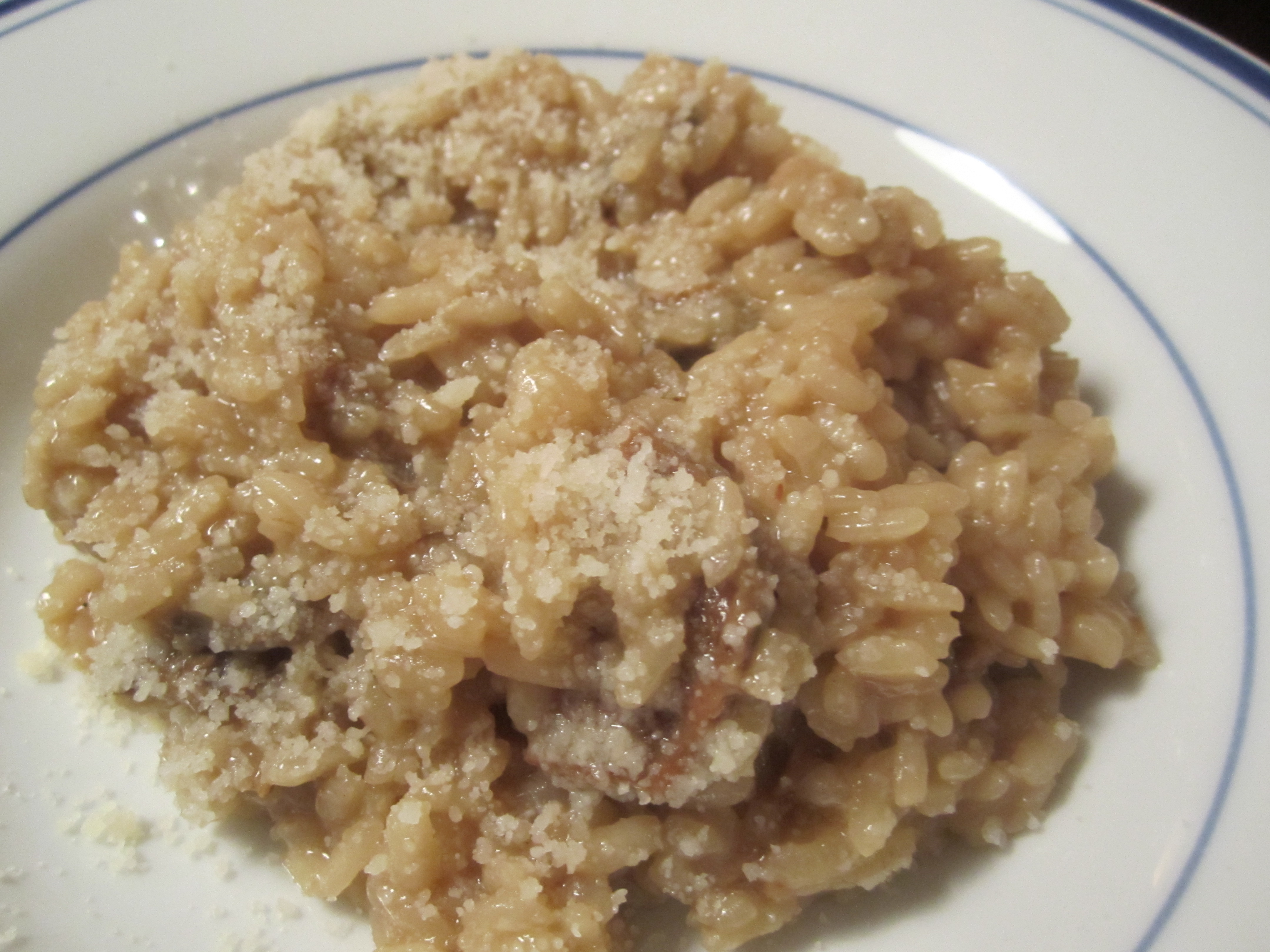
Porcini Risotto

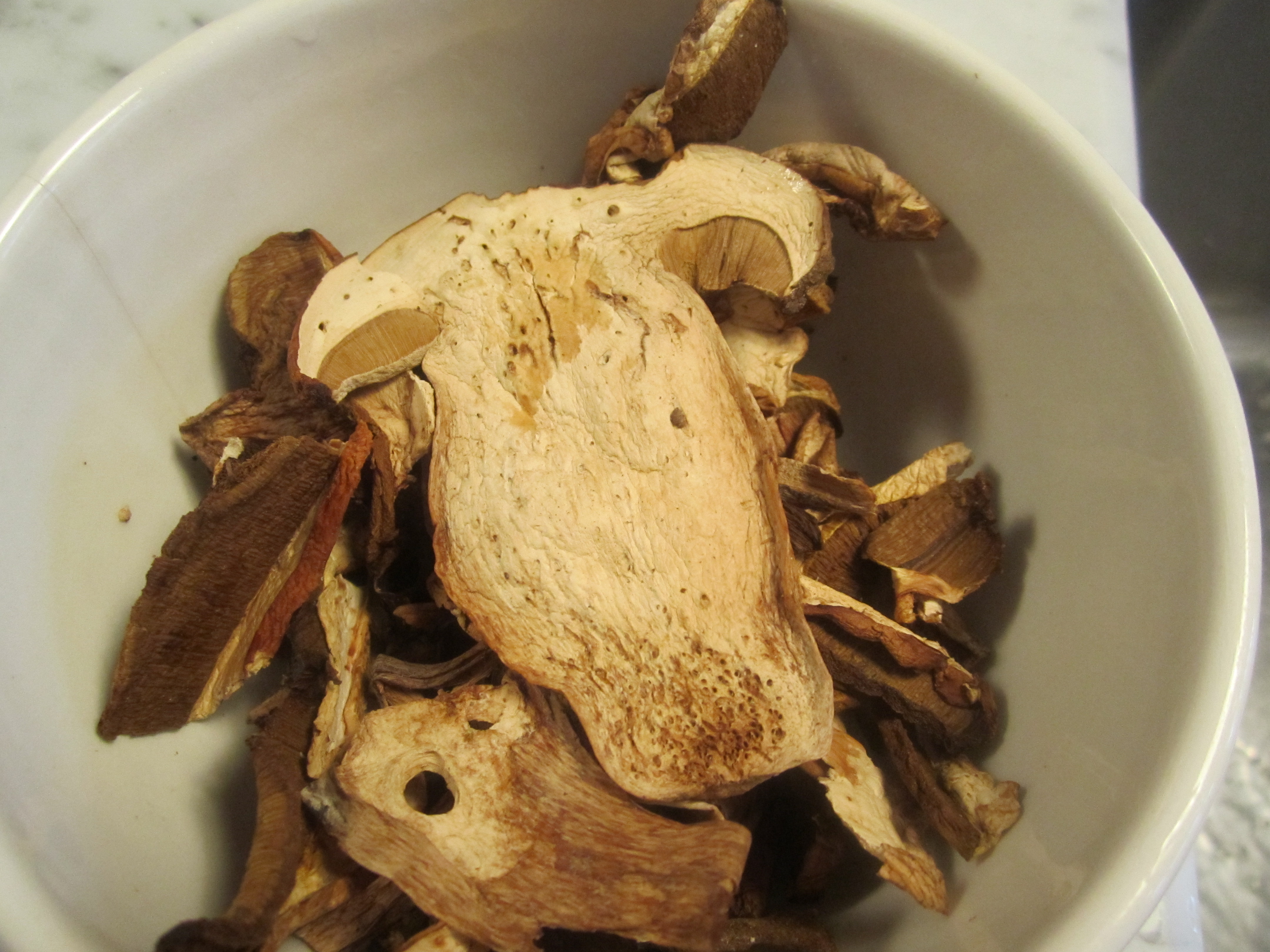
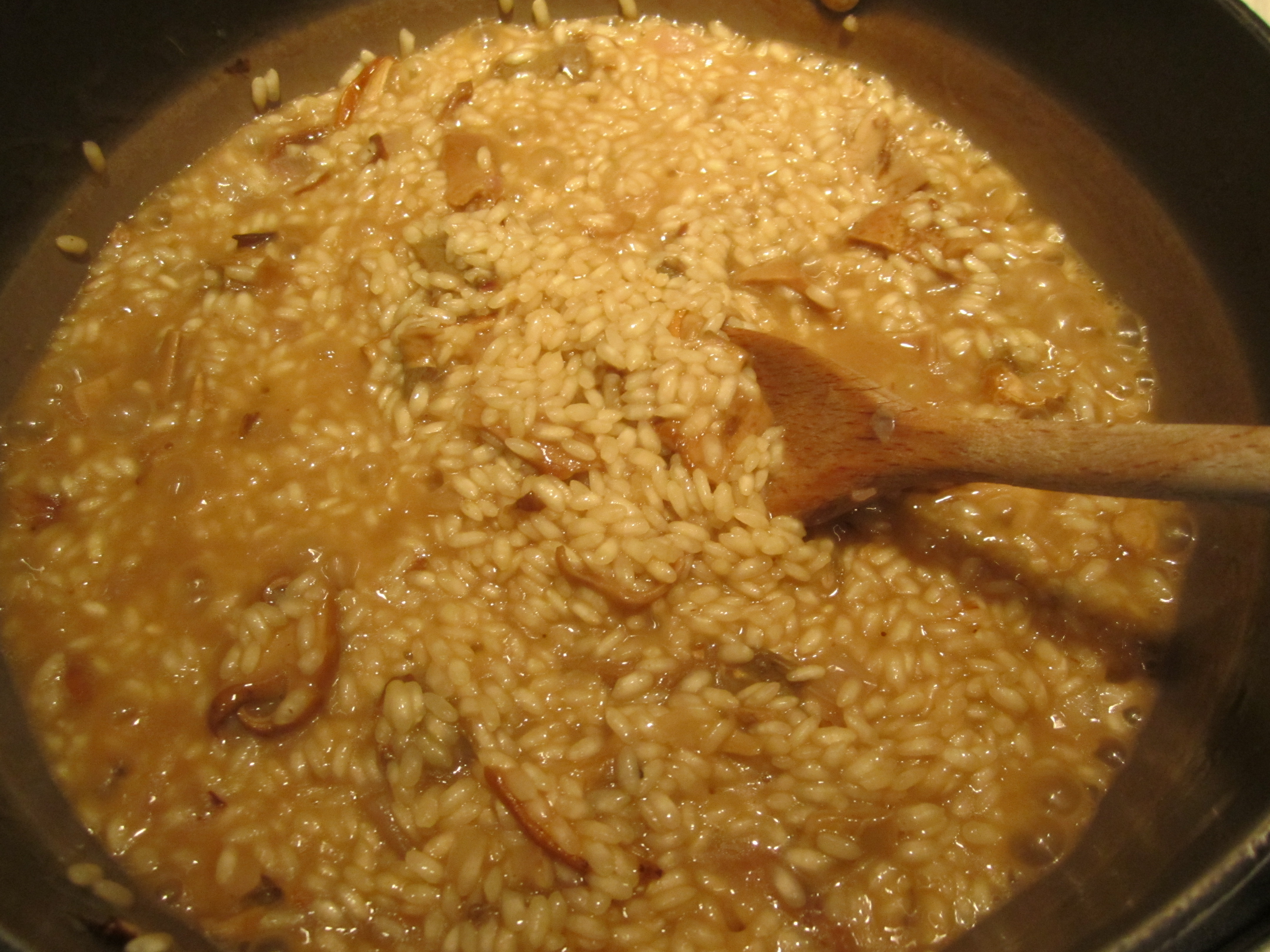
Since my mother brought back some beautiful dried porcini from Italy a couple of weeks ago, I’m using them in risotto tonight.  These porcini are so plump, meaty and supple, they’re almost as delicate as fresh ones, although they have a deeper, woodsier flavor.  They need to be soaked in hot (from the tap–not boiling) water for about 20 minutes prior to using.

Once the ingredients are prepped (shallots chopped, mushrooms soaked and roughly chopped), the dish goes very quickly.  It’s not necessary to stir the risotto constantly, although you shouldn’t venture too far away from the pot once you’ve started it.  The reason is that you must keep the mixture moist–don’t let it start sticking to the bottom of the pot–but not so moist that the rice is awash in liquid.  You want to keep adding just enough liquid for the rice to perk away with not much excess liquid at any given moment.

The heat should be a lively medium-high and the pot should be a heavy-bottomed saucepan with curved sides.  Keep plenty of good broth simmering on a neighboring burner and simply add a cup at a time to the rice for about 15 minutes.  After 15 minutes, turn off the heat and cover for 5 minutes.  After you uncover, add more butter and more broth if the mixture has tightened up too much (the rice will continue to absorb liquid as it sits).

The consistency of the finished dish should be moist but not too soupy.  The rice itself should still have a bit of bite to it (al-dente). Serve with plenty of grated parmigiano on top.

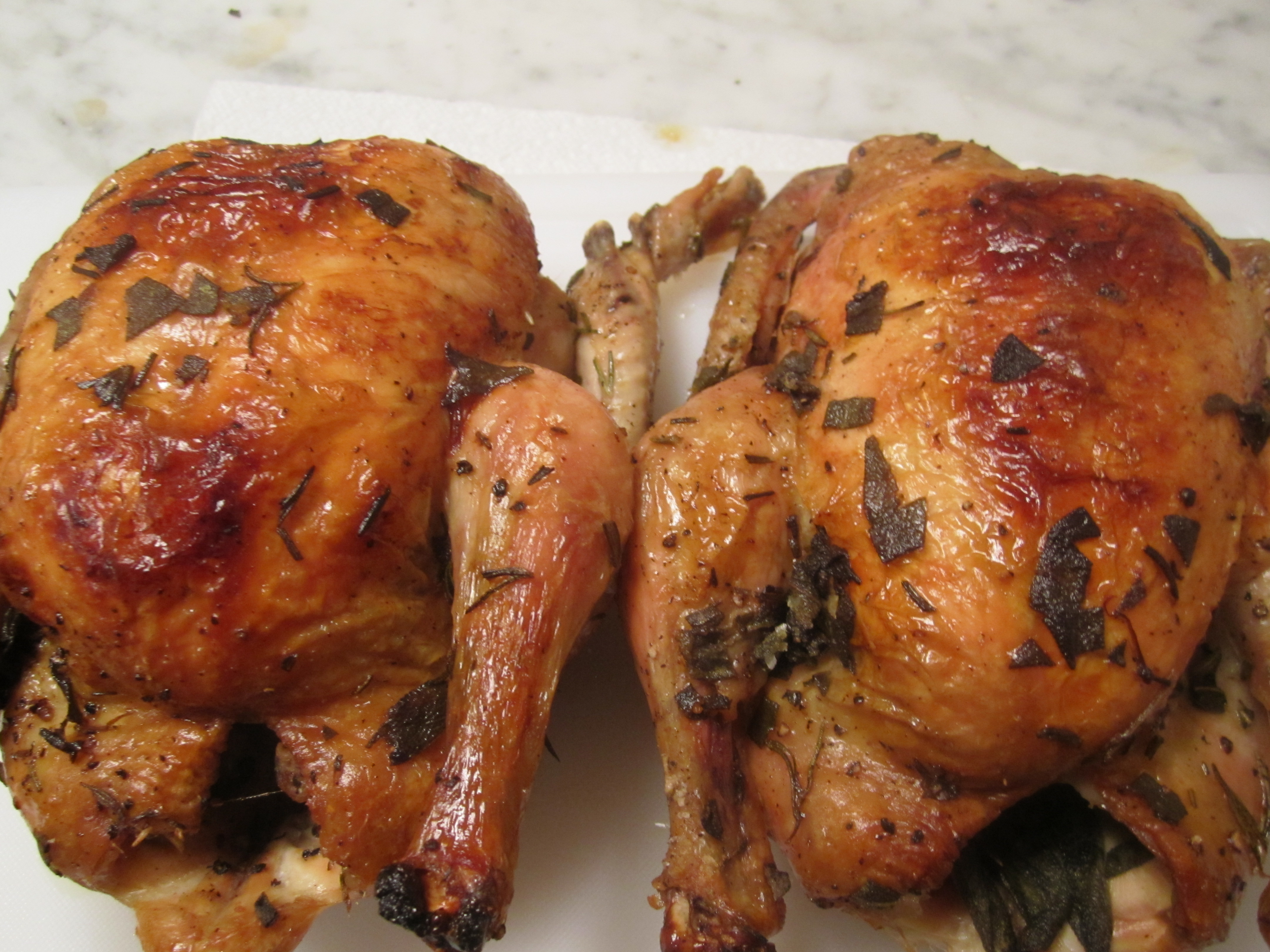
Our second course tonight (and an ideal one for this risotto) is roast chickens on the grill.

Porcini Risotto

Serves 4

2 cups arborio rice

9 – 10 cups homemade chicken broth

1 oz. dried porcini

2 medium shallots, diced finely

8 tbls unsalted butter

1 cup grated parmigiano

salt and pepper to taste

Soak porcini in hot water (just enough to cover mushrooms entirely) for about 20 minutes.  Remove mushrooms, squeeze lightly and chop roughly.  Add a cup of the porcini soaking liquid to the broth–slowly pour off the soaking liquid from the top of the bowl while leaving the soil undisturbed on the bottom.  Discard remainder of the liquid and soil.

In a saucepan, place shallots and 6 tbls butter on medium heat and saute shallots for about a minute.

Add rice to the shallots and butter.  Set your kitchen timer to 15 minutes.   Saute rice and shallots for another 3 – 4 minutes, until rice begins to crackle and turn pearly and translucent.

Add wine, which will sizzle and evaporate very quickly.  Stir to reduce wine, then add the mushrooms.  Begin adding broth, 1 cup at a time, while stirring often.

As the prior addition of broth is incorporated into the rice, add more broth.  Keep the mixture slightly liquidy at all times.

At 15 minutes, turn off heat and cover pot for 5 minutes.  After uncovering, add a ladle of broth and the remaining butter.  Stir in 1/2 cup parmigiano and serve in heated bowls immediately.  Sprinkle with the remaining grated cheese at the table.

Posted in Uncategorized | Leave a comment

Pasta with Zucchini and Sicilian Tomato Pesto

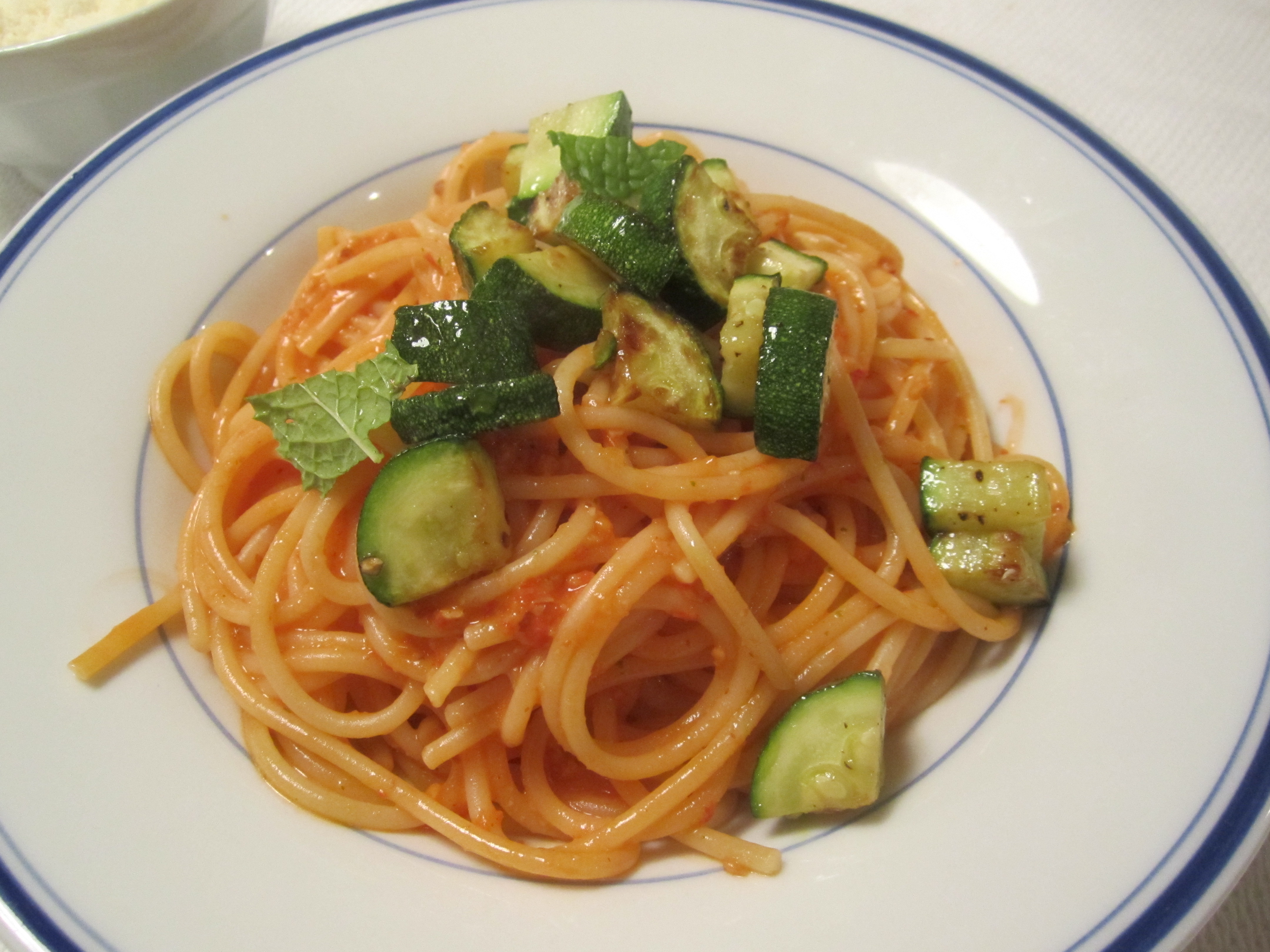
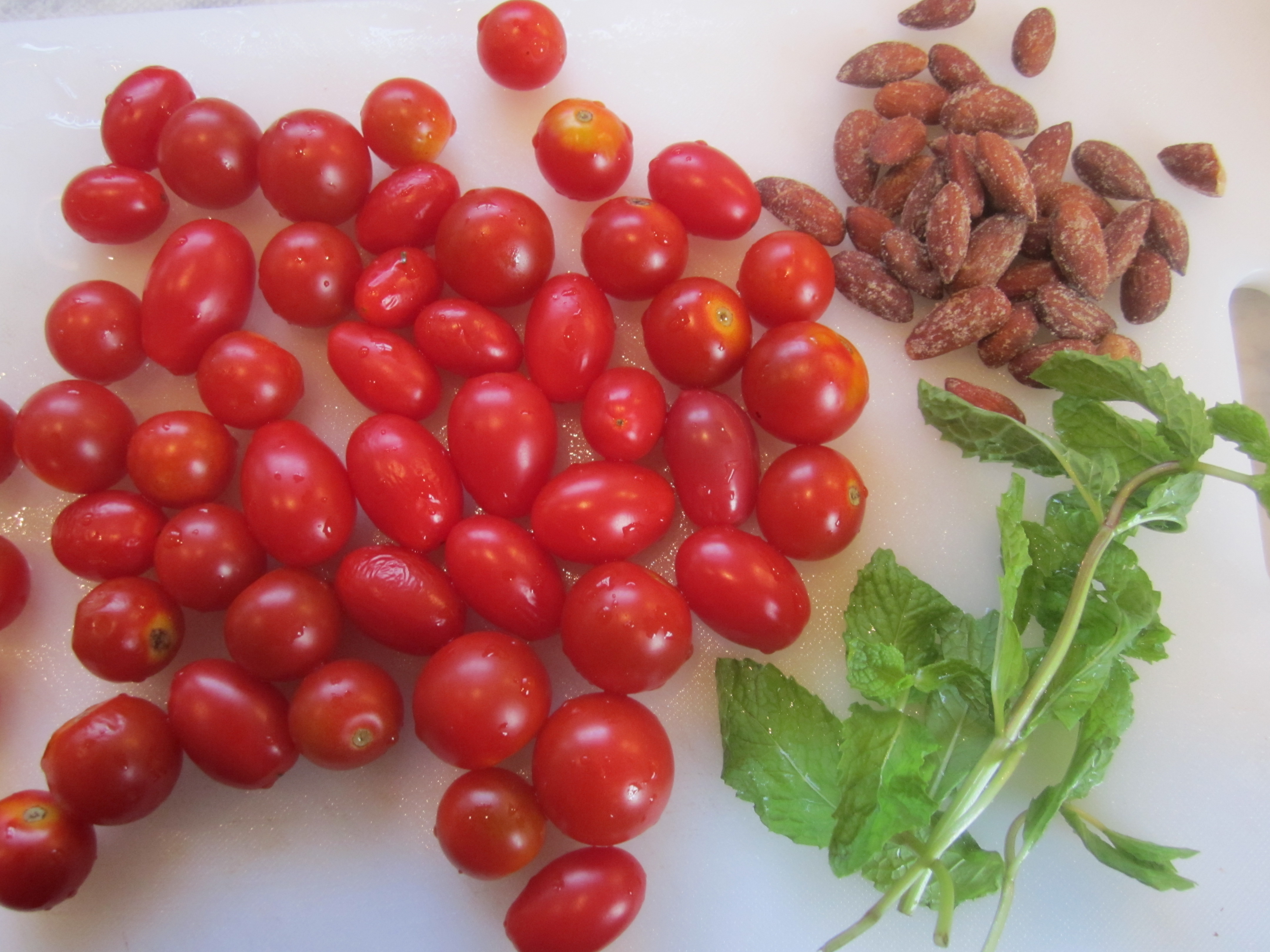
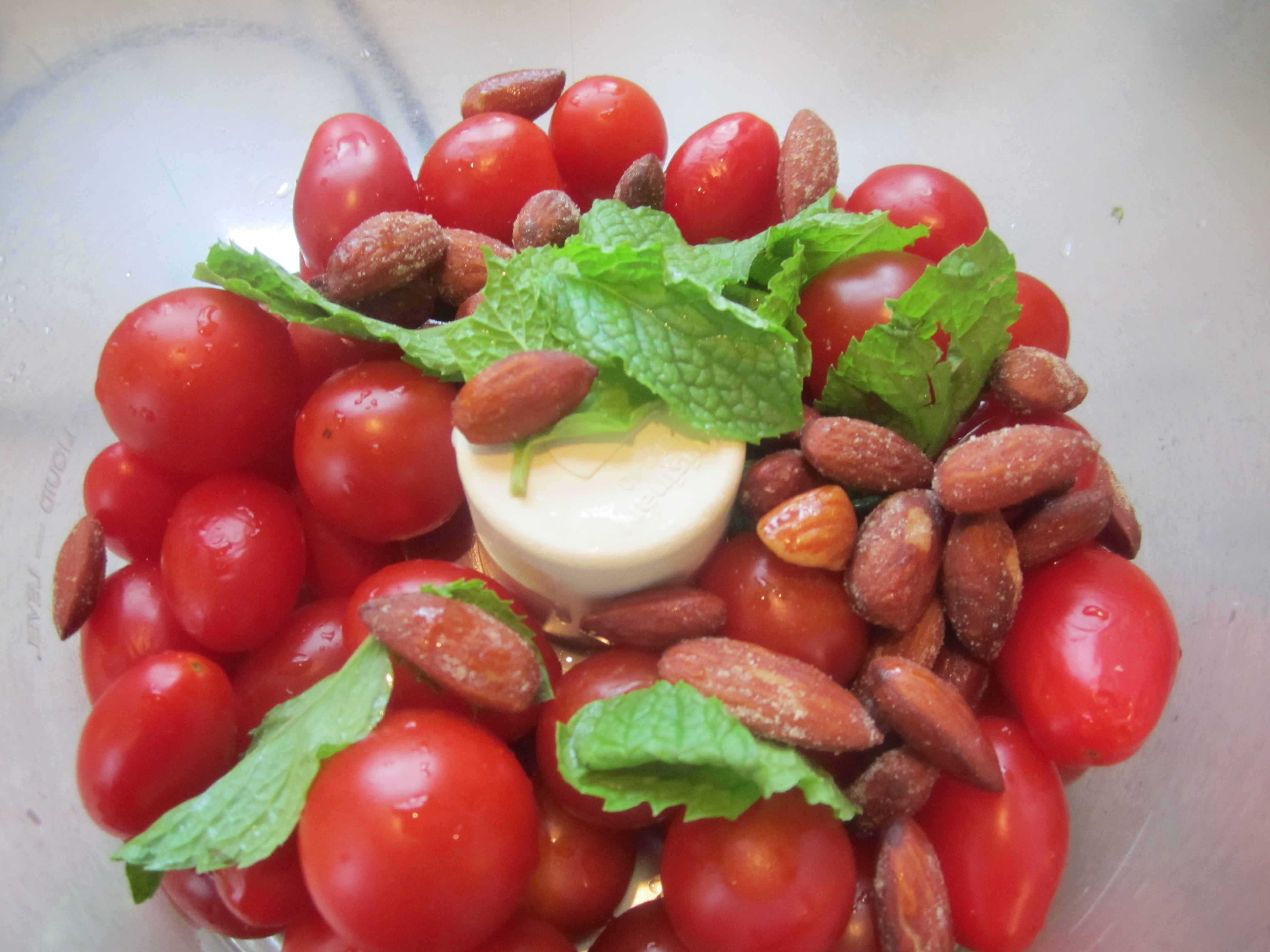
I can’t use up the cherry tomatoes from Beppi’s garden quickly enough. This is my version of a pesto that’s made in Sicily when cherry tomatoes are at their peak, and it’s one of the simplest, most luxurious ways to dress pasta.

The sauce is traditionally made with cherry tomatoes, basil, almonds and garlic.  I’ve deleted the garlic (not a fan of raw garlic), added mint and substituted smoked almonds for plain ones.  No cheese is added to this sauce, but I’m sprinkling on lots of pecorino romano at the table.

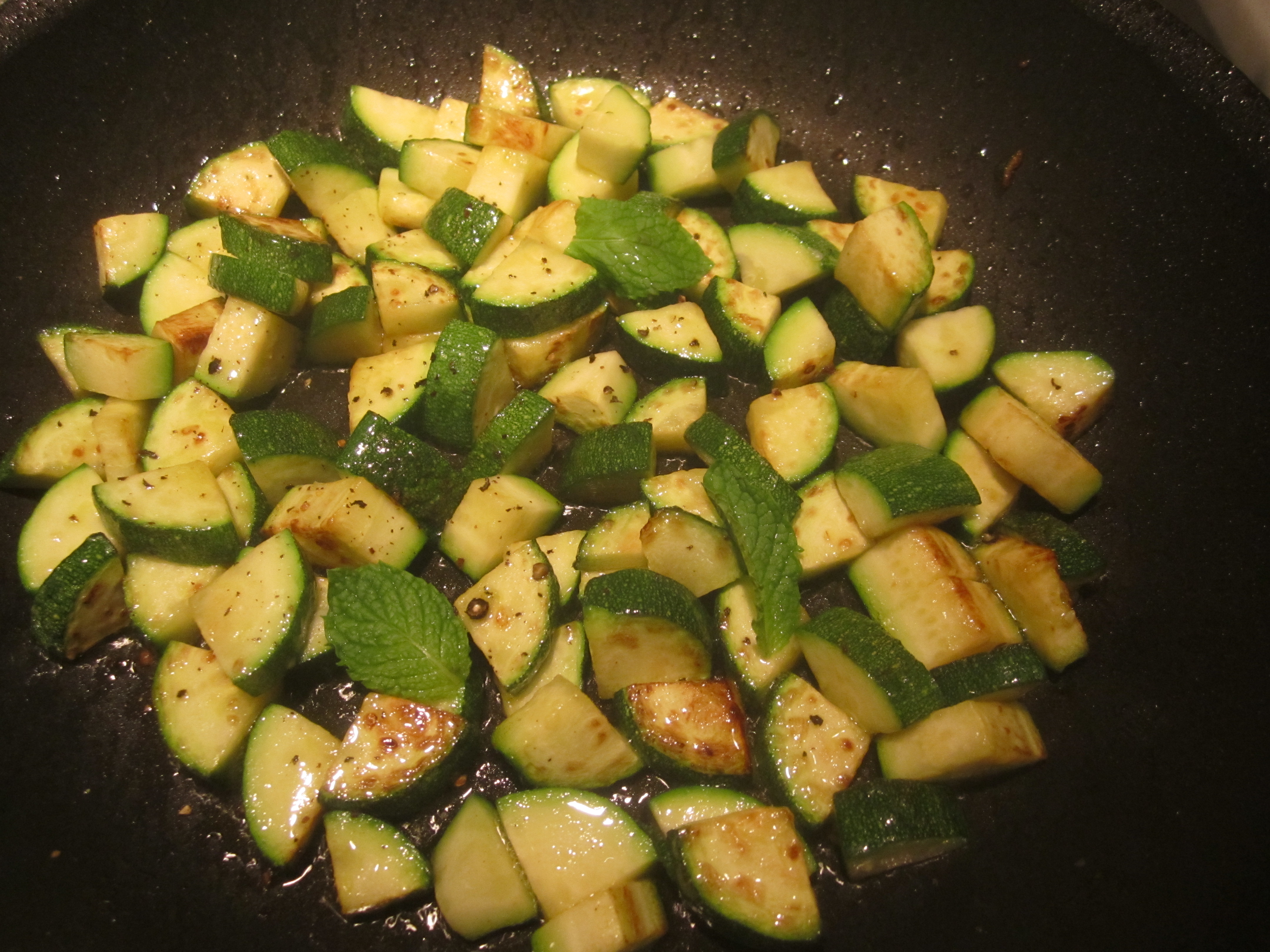
To add some green to the dish and take further advantage of the sweet summer zucchini, I’ve sauteed a dice of zucchini and sprinkled it on top.  It’s a beautiful, sweet addition to a bright, summery dish.

Sicilian Tomato Pesto

serves 4

1 lb. spaghetti

2 c ripe cherry tomatoes

1/4 c smoked almonds

15 mint leaves

1/4 c + 2 tbls extra-virgin olive oil

1/2 tsp salt

Place all ingredients except oil in food processor.

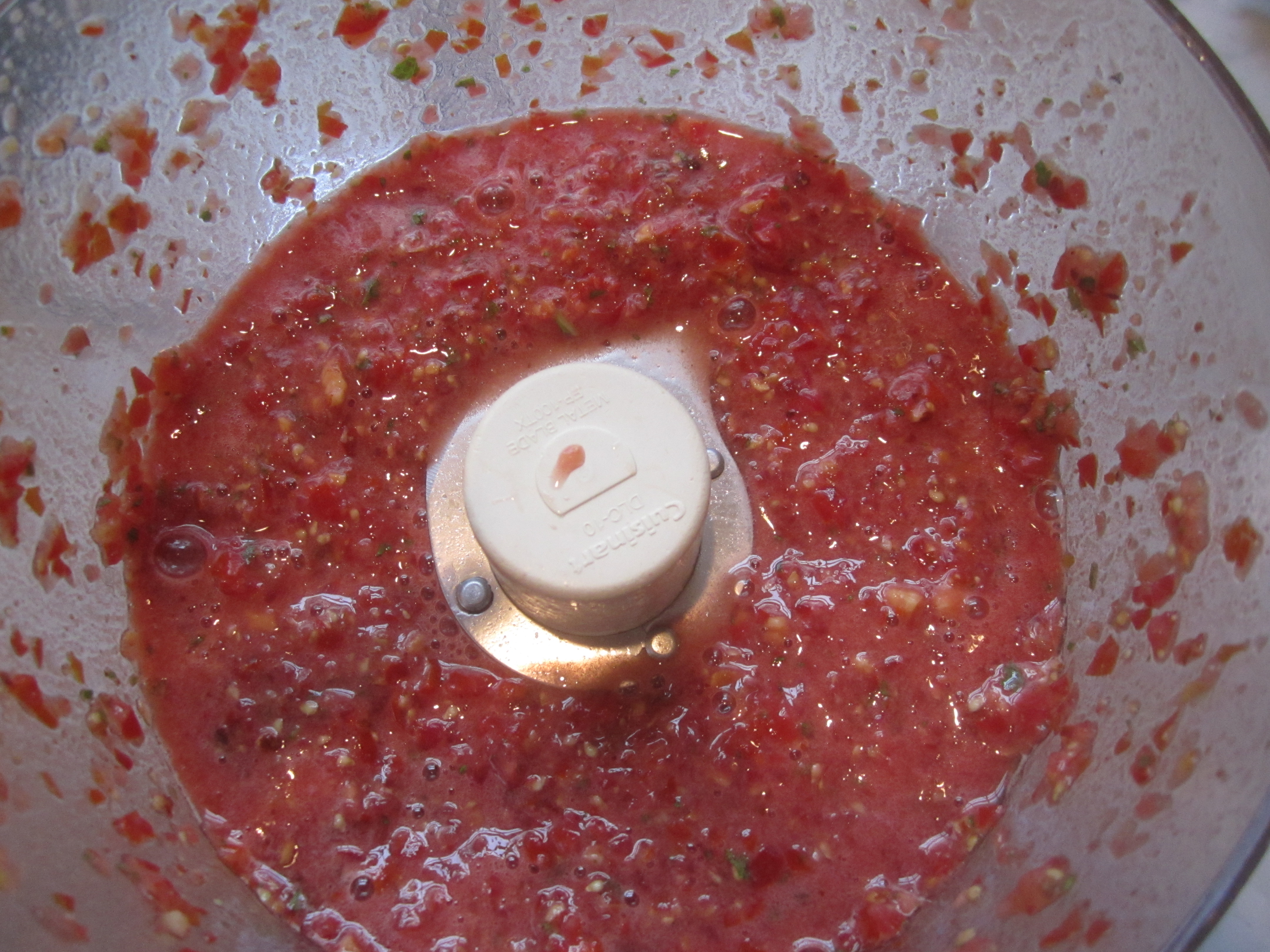
Process until a coarse puree forms.

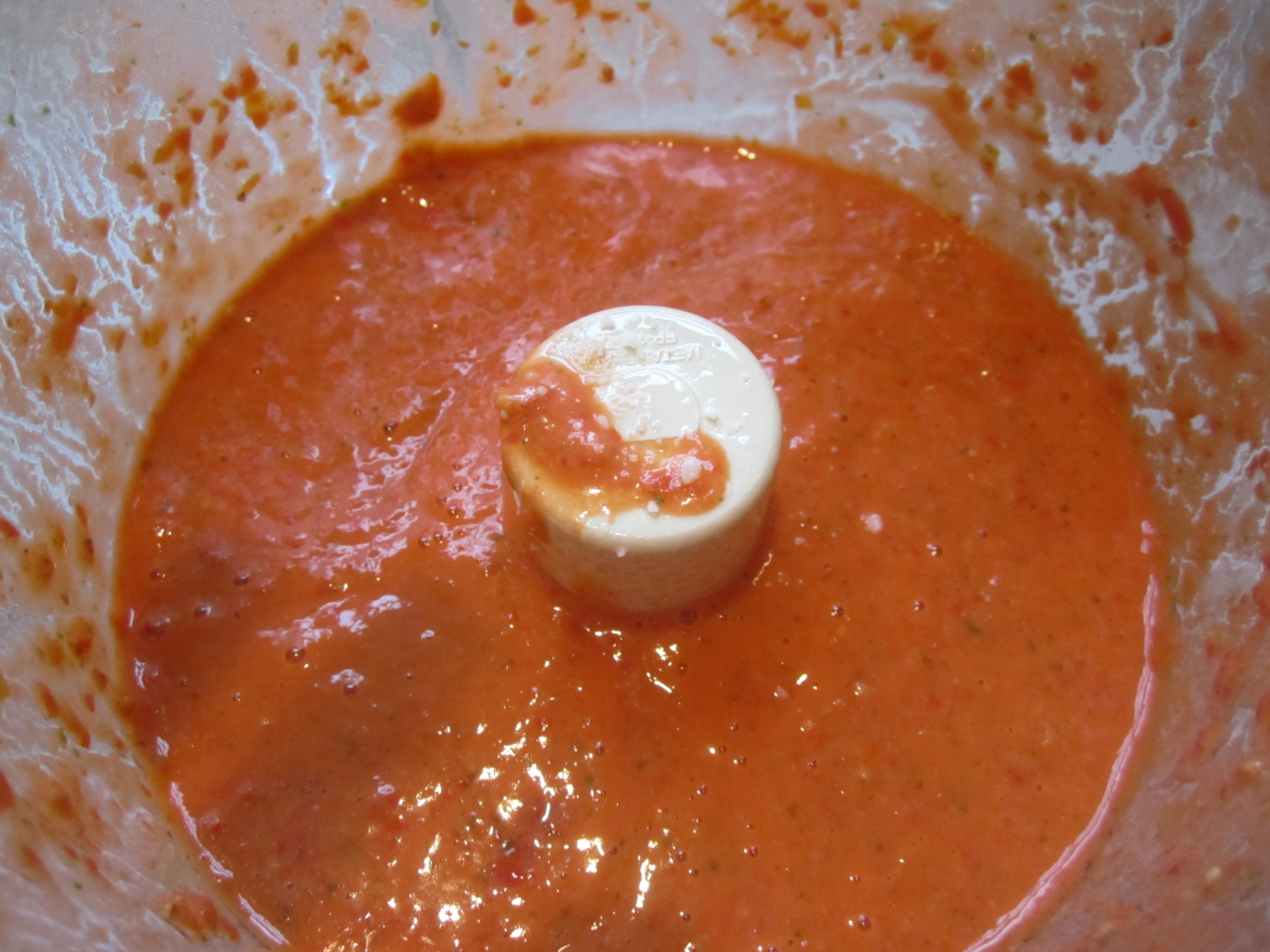
Add oil and process further until pureed and emulsified.

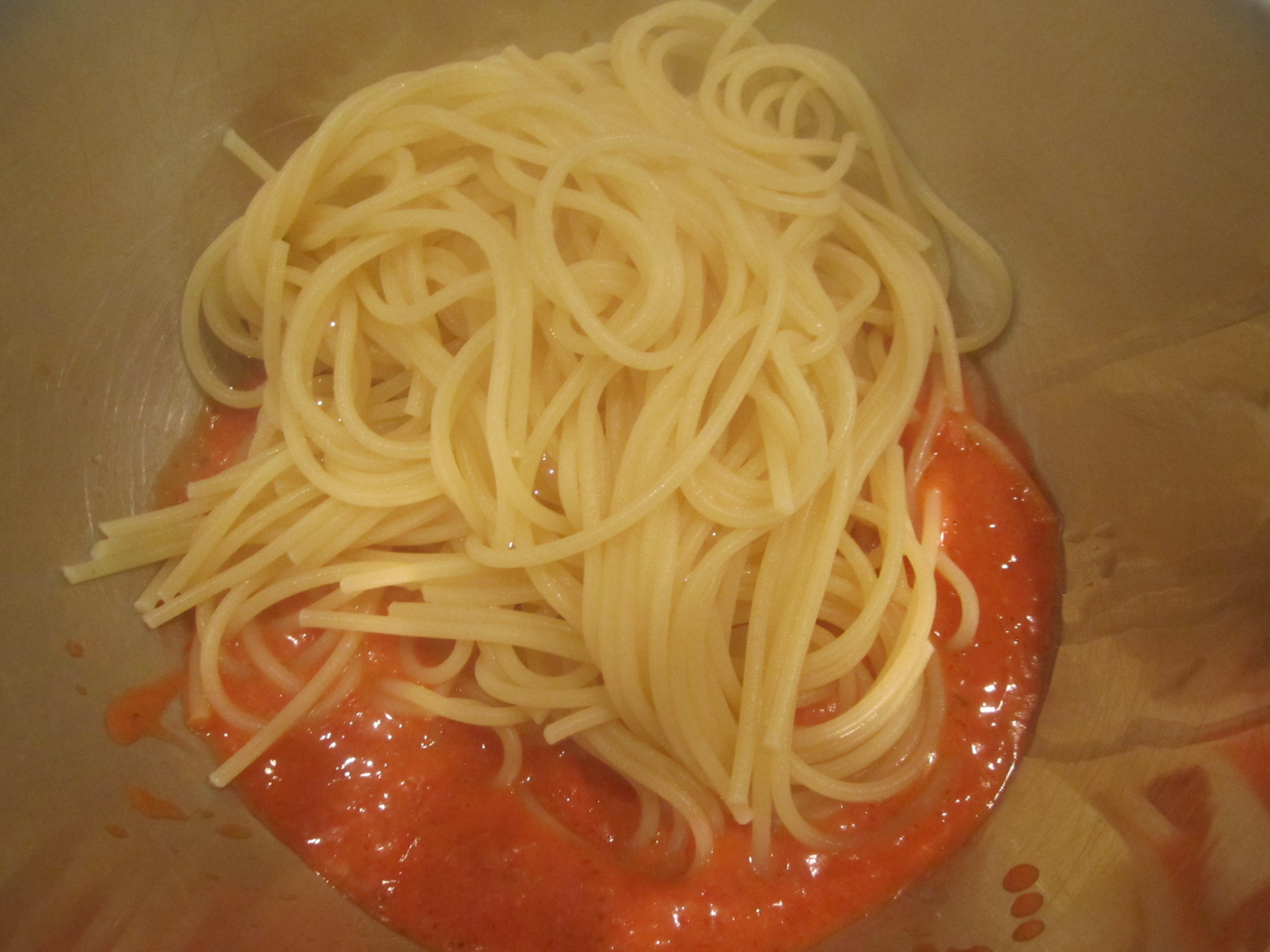
Boil pasta, then toss in mixing bowl with pesto.

For garnish, add sauteed zucchini (optional) with an additional touch of mint.

Posted in Pasta | 1 Comment

Hurricane Eve Dinner

We’re expecting the storm to hit after midnight this evening, so I’m trying to (continue to) make constructive use of what’s in my freezer and fridge.

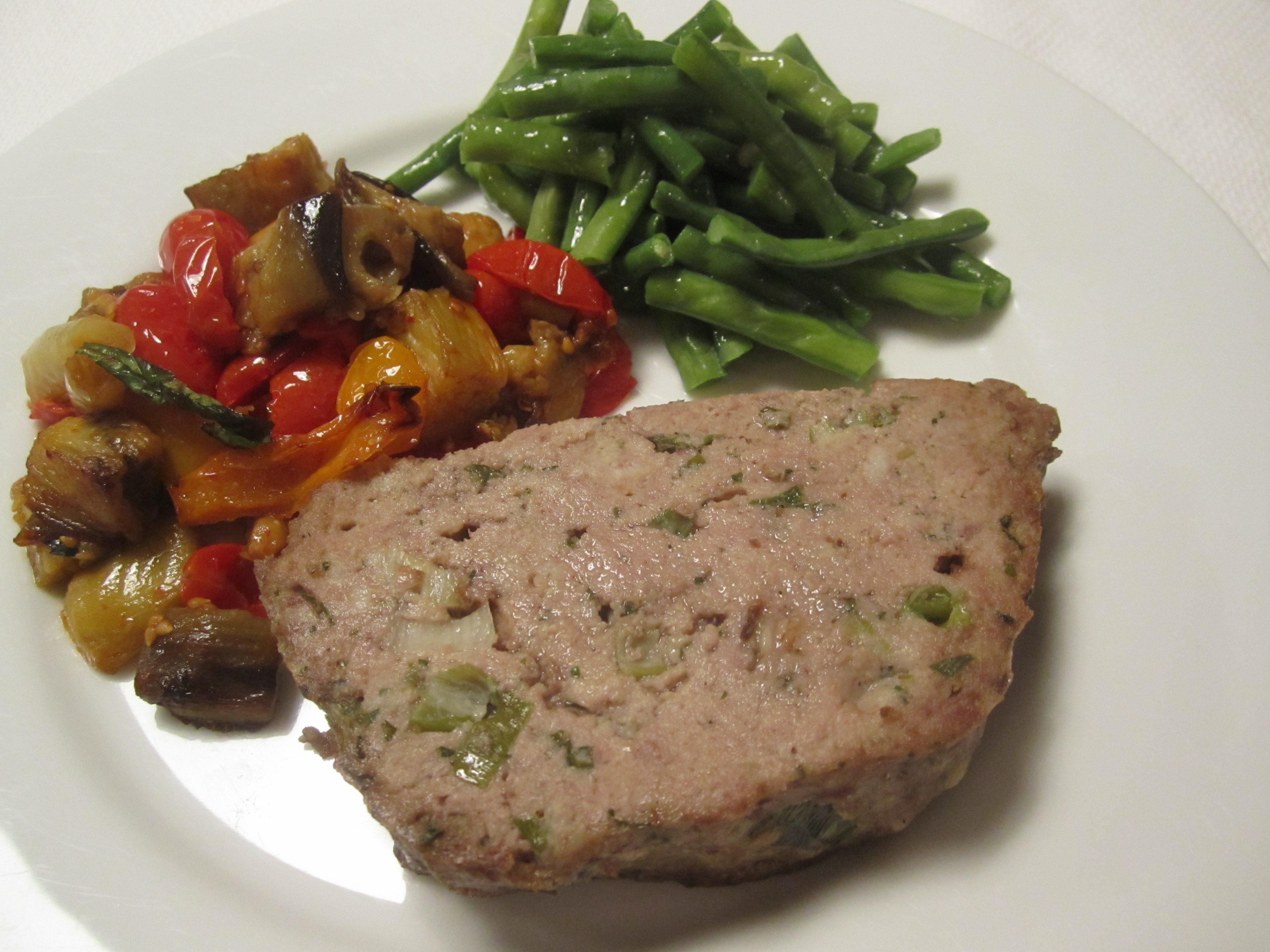
In my freezer are 2 thick slices of wonderful lamb meatloaf.

In the fridge are green beans from my neighbor Beppi’s garden just picked this morning.  They simply get trimmed on the ends, sliced into bite-size pieces, then boiled in well-salted water for about 5 minutes.

Also from Beppi’s garden are eggplants, peppers and tomatoes.  These were roasted in the oven the usual way (see roasted eggplant, peppers and tomatoes) and strewn with some mint leaves.

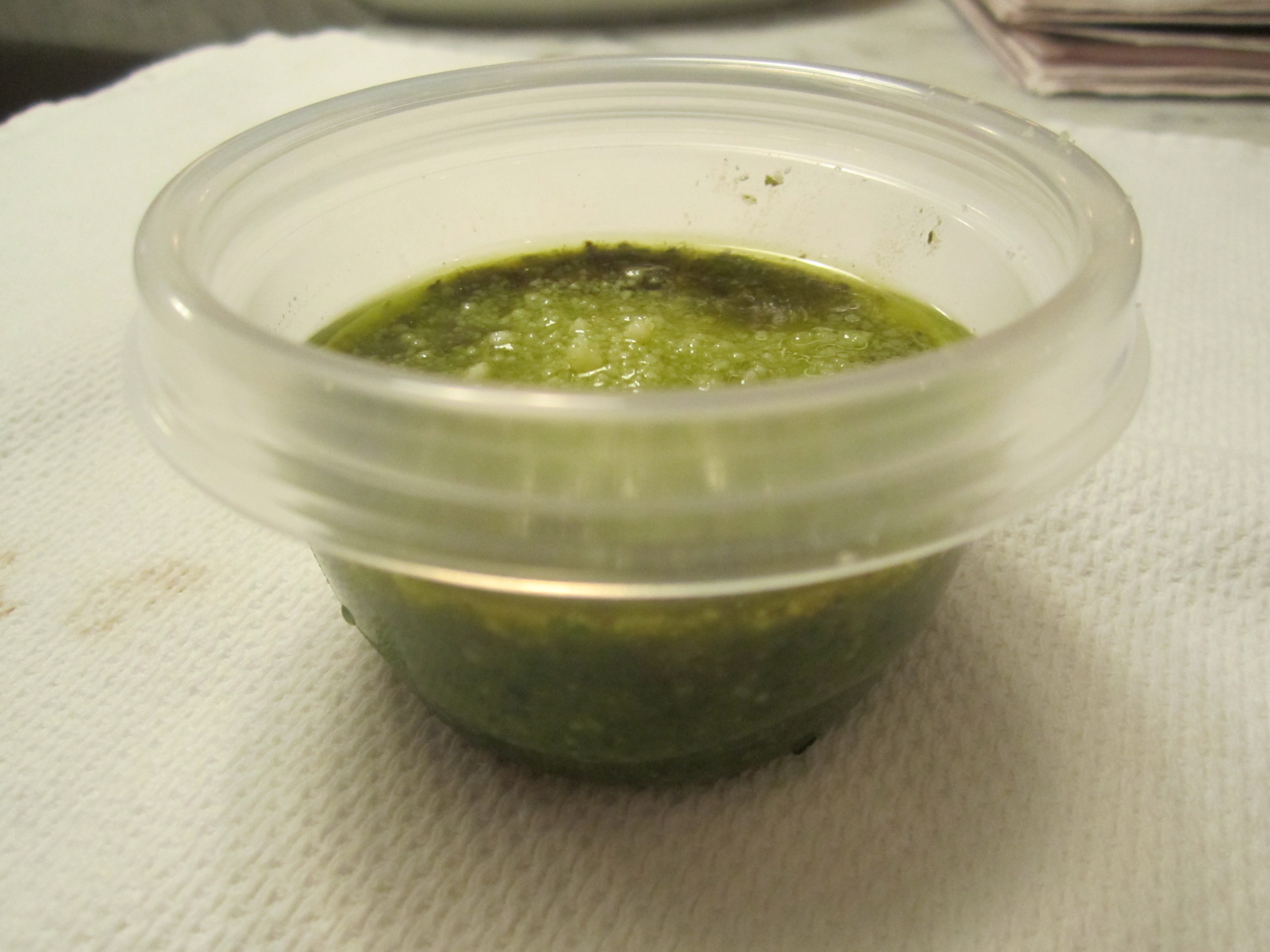
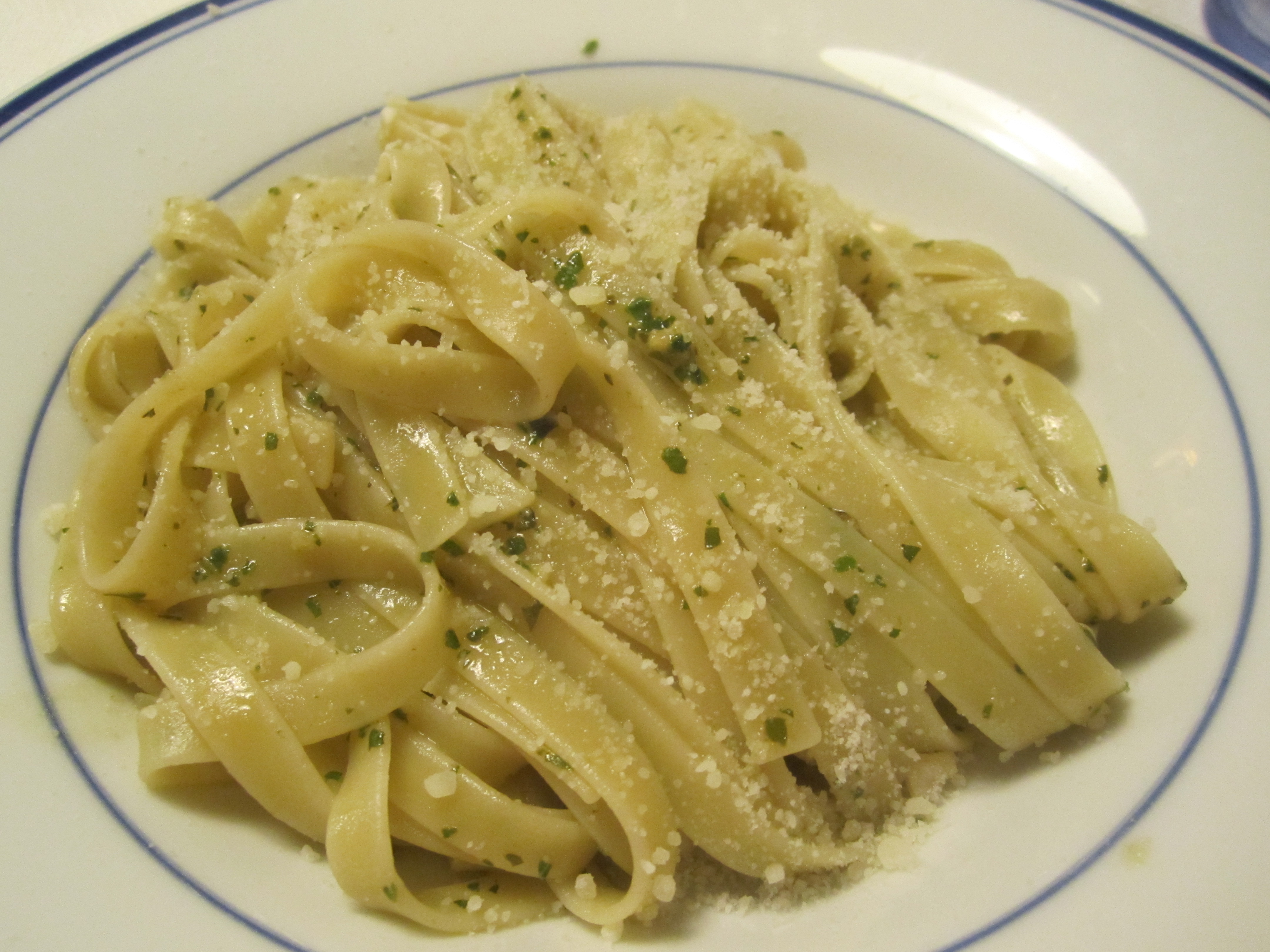
For a first course, we’re having pasta with pesto.  I must at least give a nod toward the 24 containers of pesto I made the other day from the basil that Beppi left on my doorstep. These were a labor of love and I need to use at least one of them before my power goes out.

Even if this bowl of pasta is all that survives of my stash of pesto–I’m glad I at least got to have a taste of it!

P.S. My internet went out with the onset of the hurricane and I never got a chance to post this before the storm.  I’m happy to report that we were among the lucky ones–although we lost internet–we never lost power–the pesto is SAFE!!

Posted in Uncategorized | Leave a comment

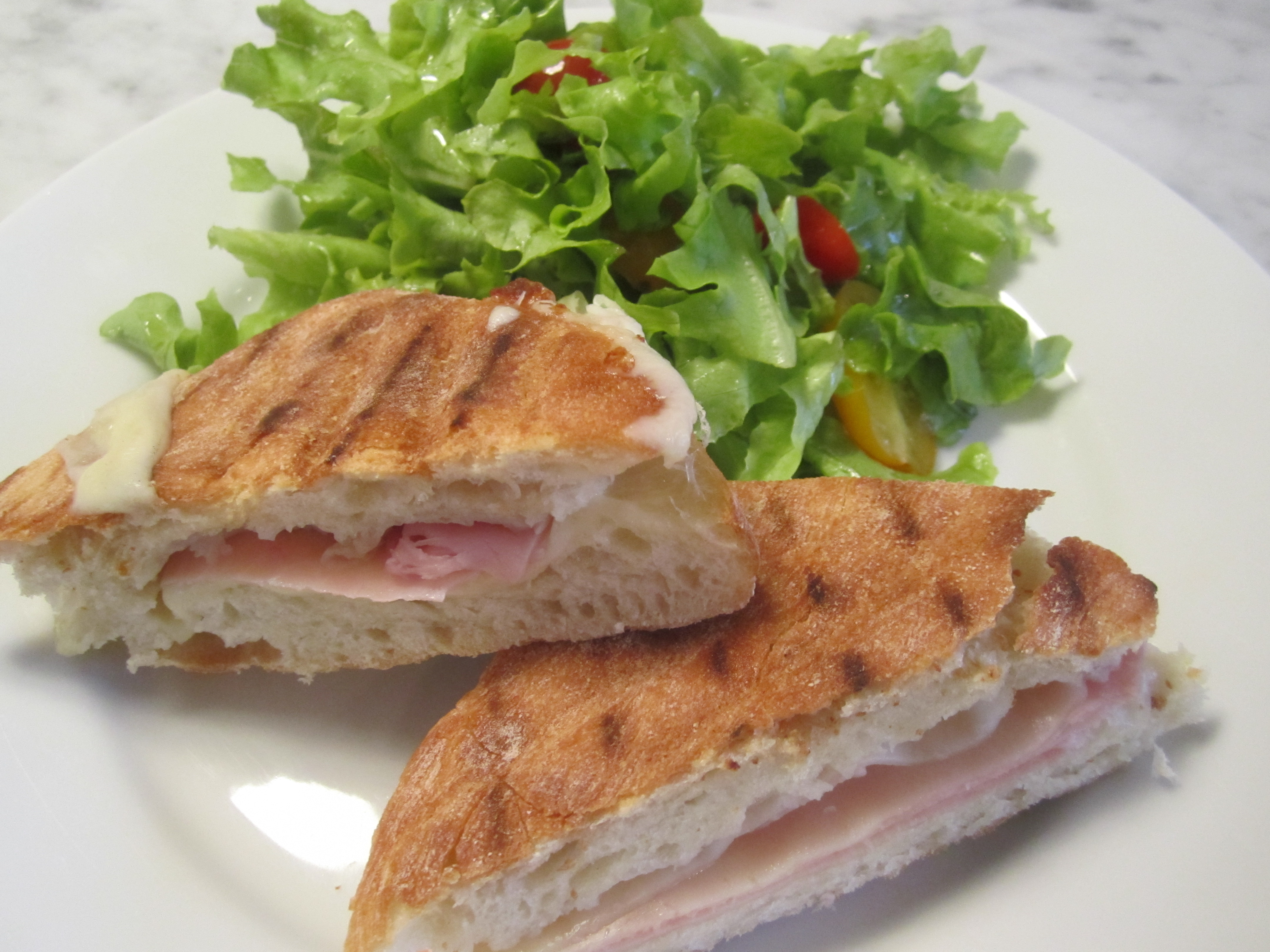
Ham and Provolone Panini

While waiting for a hurricane to hit, what better thing to do than devise dishes to help clean out my fridge/freezer.  In the event we lose power, I’d like to use as much as possible as quickly as possible.

A gooey melting panini is the perfect afternoon snack.  I had thinly-sliced ham and provolone left over from making my melanzane ripieno the other day and I just bought a fresh loaf of ciabatta at my local market. 

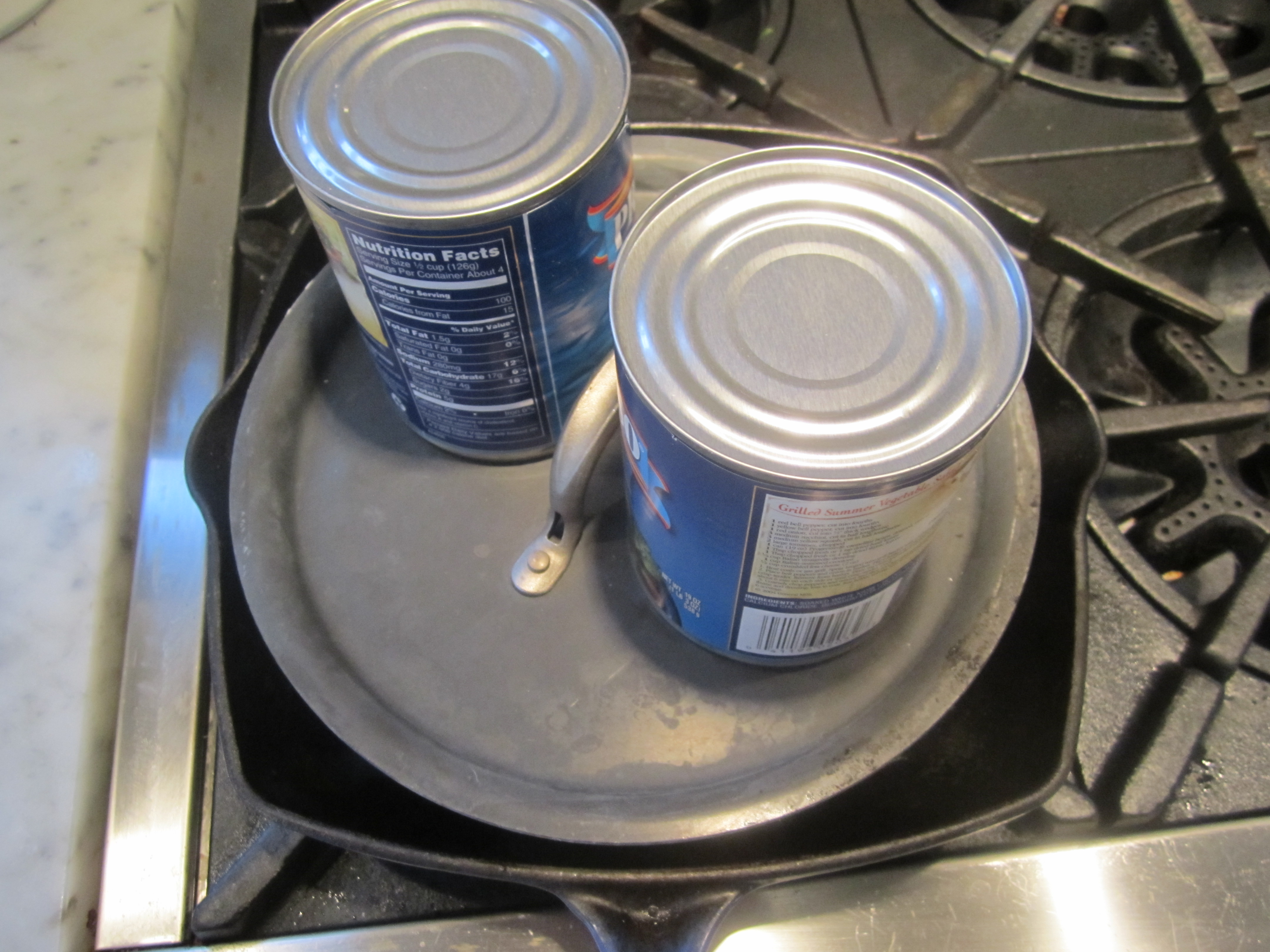
This is so simple, no recipe is required.  Nor is any electric panini maker required.  A stovetop griddle will suffice (or a simple saute pan if you don’t have a griddle).  A lid with some cans on it will act as a weight to press the sandwich into melting submission!

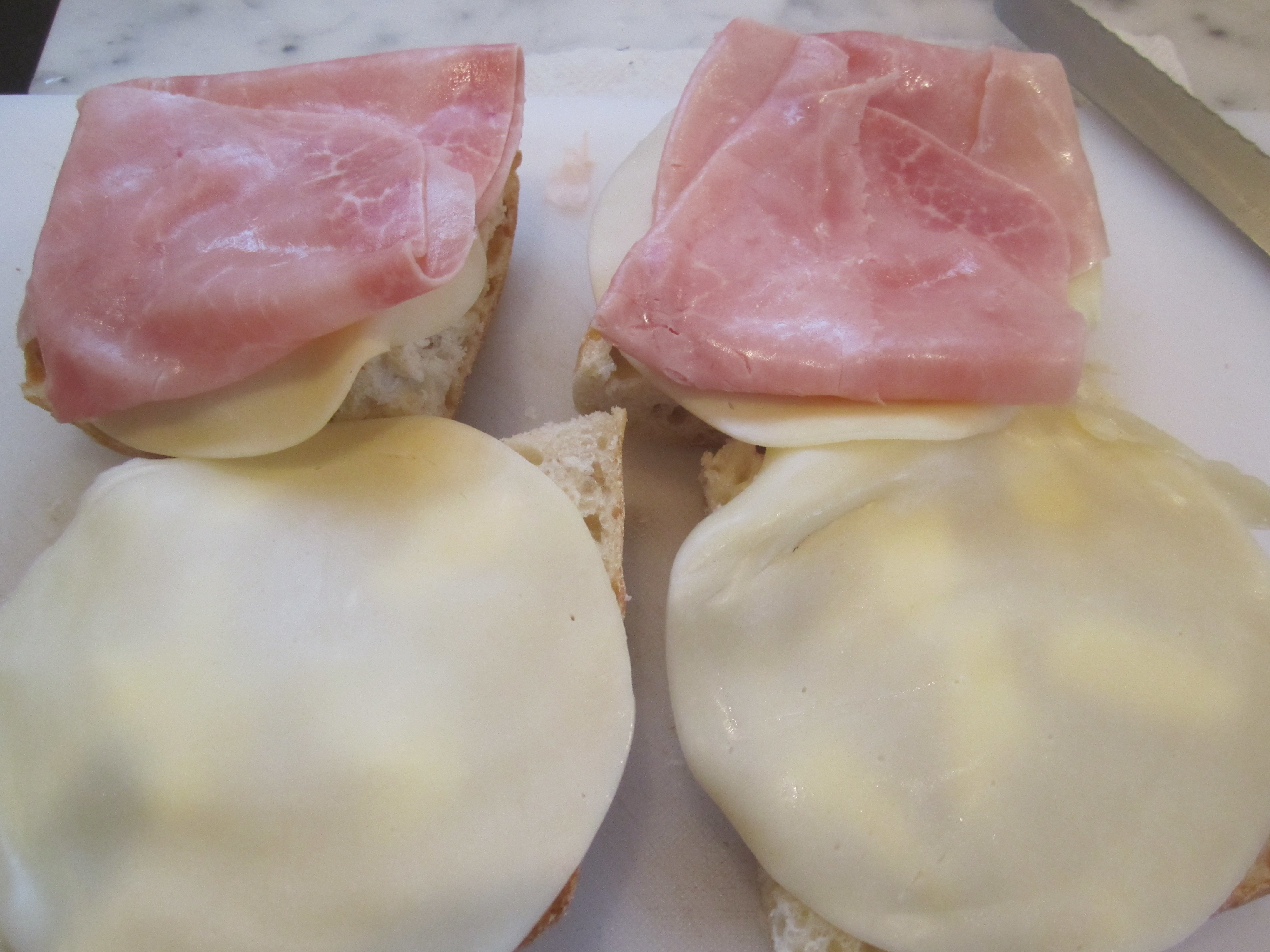
Simply butter the insides of 2 pieces of fresh split ciabatta bread

Add 2 thin slices of provolone and 2 thin slices of of ham.

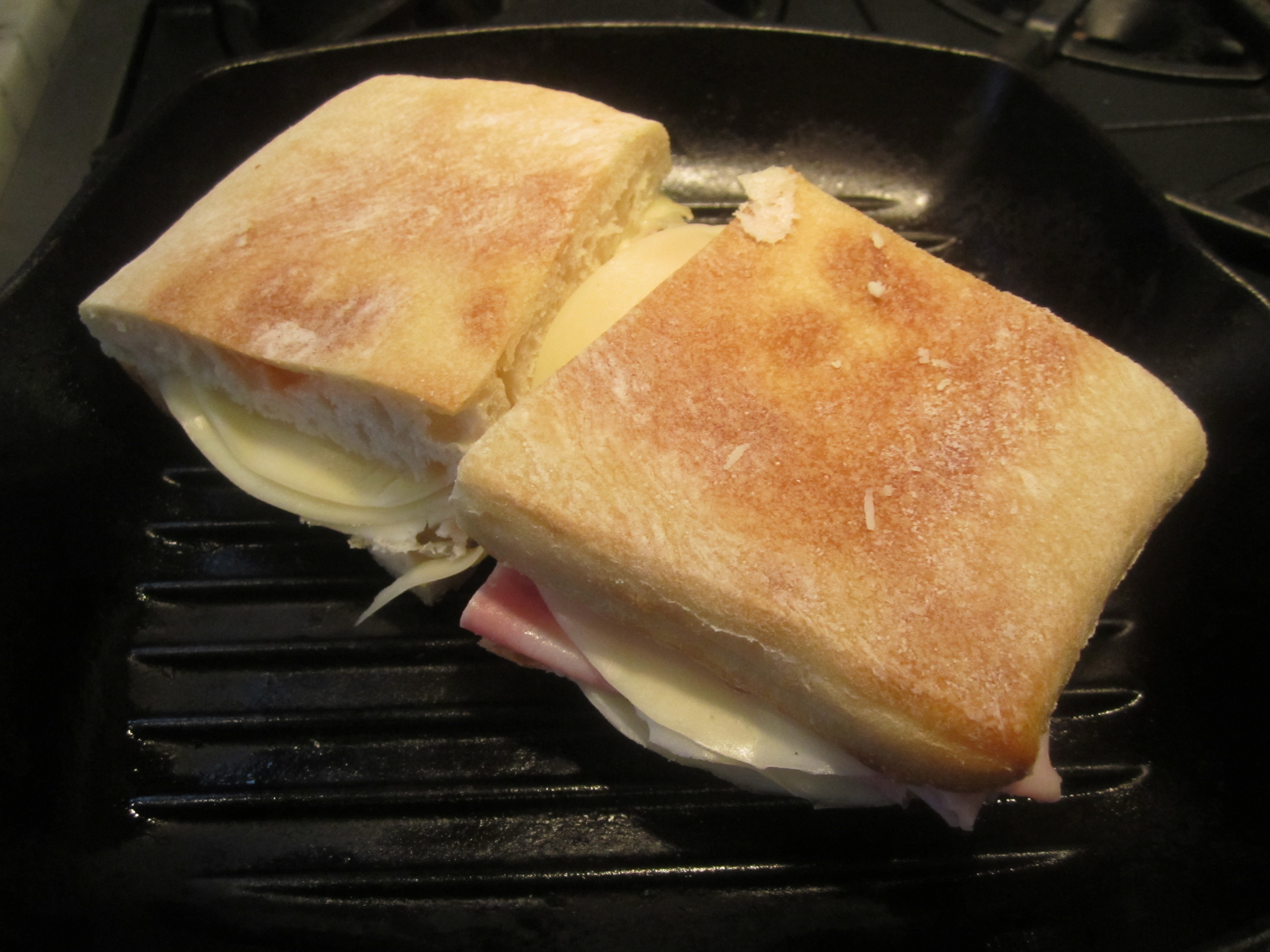
Press the sandwiches together and place on preheated stovetop grill pan or slightly oiled saute pan.

 Place a flat lid or baking pan on top, weighted down with 2 cans (beans).

Cook on medium-low heat for about 5 minutes, then flip.  Continue cooking on second side until cheese is melted and underside is toasted.


Posted in Uncategorized | Leave a comment

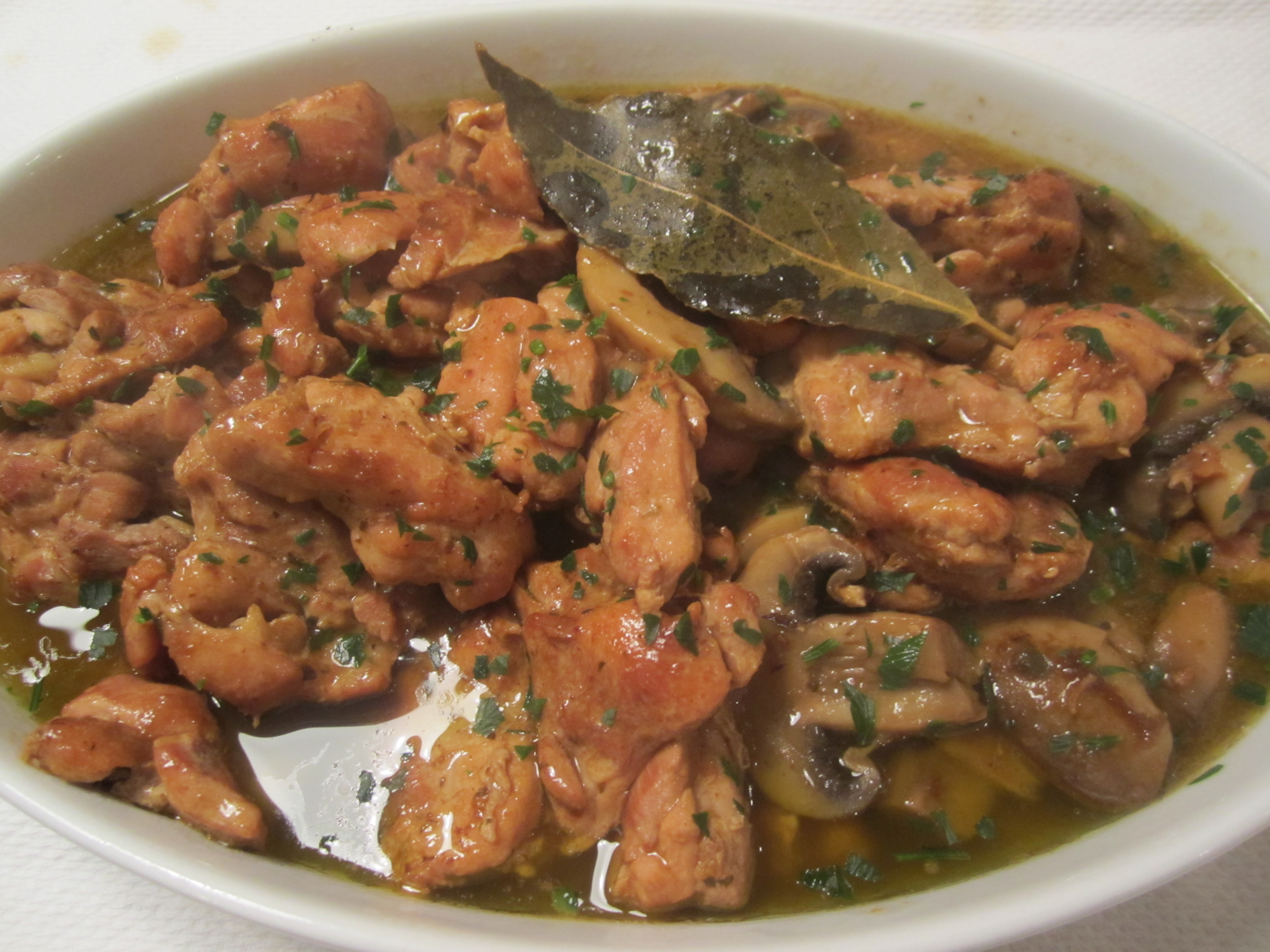
Mom’s Pollo alla Cacciatore

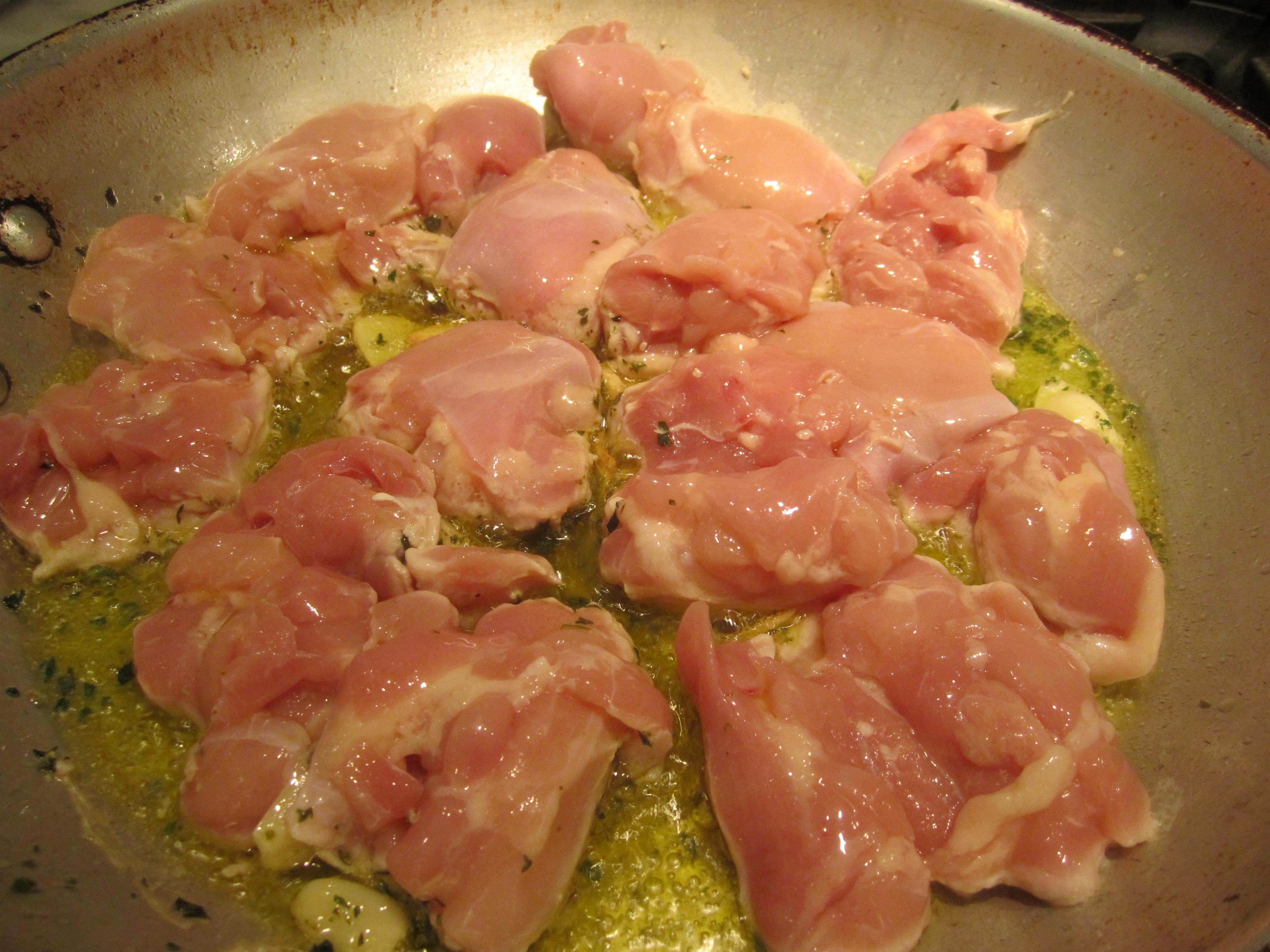
Chicken cacciatore has many variations both in the United States and in Italy.  Simply translated, it means “hunters’ style chicken”. Generally, it  implies a moist, stewy dish, made with chicken parts, plus wine and herbs.  Sometimes sweet peppers are added; sometimes tomato is added–neither are added to my mom’s recipe.

My mom’s chicken cacciatore gets its distinctive flavor not only from white wine and herbs, but also from a touch of white wine vinegar.  The predominant herbs are oregano, bay leaves and parsley.  As I’ve said before, mother doesn’t use a lot of oregano in her cooking, except for some seafood dishes, and most prominently here, in her chicken cacciatore.

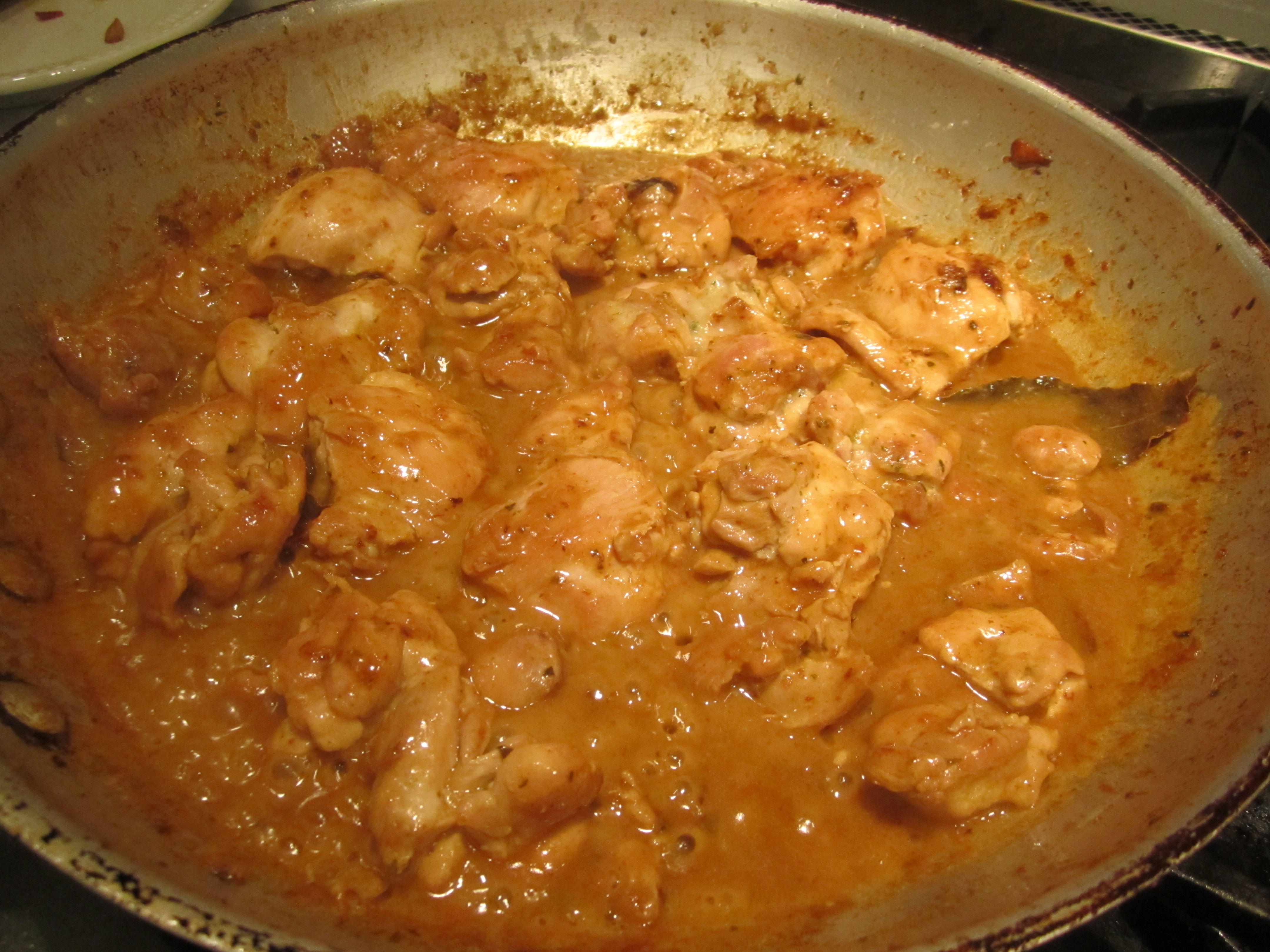
The dish begins in a way that many Italian mothers begin their stews or braises, but which is counterintuitive to anyone who’s ever worked in a professional kitchen.  Herbs, garlic and oil are placed in a cold saute pan.  The chicken gets added almost immediately,  then everything comes up to temperature together and begins gently browning together.

Mom always made it with a cut up whole chicken, but that was in the days before boneless, skinless thighs.  Now thighs are her preferred chicken parts (mine, too).

Since the dish is saucy, some plain pasta is a great accompaniment.  I decided to make fettucine al pesto as a first course however, since my neighbor Beppi brought me more basil than I could possibly cook with for the next year.  See Beppi’s pesto recipe in my Pasta with Shrimp and Pesto

In addition, I’m serving sauteed swiss chard as an accompaniment.

Mom’s Pollo alla Cacciatore

serves 4 – 6

2 lbs boneless, skinless chicken thighs

1/4 c olive oil

6 cloves garlic, peeled and sliced

3 large bay leaves

1 tsp dried oregano

1/2 c white wine

1/2 c white vinegar

3 tbls chopped fresh parsley

1/4 c flour

10 oz. white mushrooms, cleaned and sliced in 1/4″ slices

1 c water

salt and pepper to taste

Into a broad skillet large enough to hold all the chicken, pour in the oil and arrange garlic, bay leaves, and 2 tablespoons parsley in one layer, plus 1 teaspoon salt (my mother maintains that adding some salt at this point is critical).

After only about a minute, add the chicken thighs and continue sauteing all together for about  7 – 8 minutes on medium heat.

Add wine and cook for a minute to reduce alcohol.  Add flour and water and simmer, uncovered for 2 minutes.

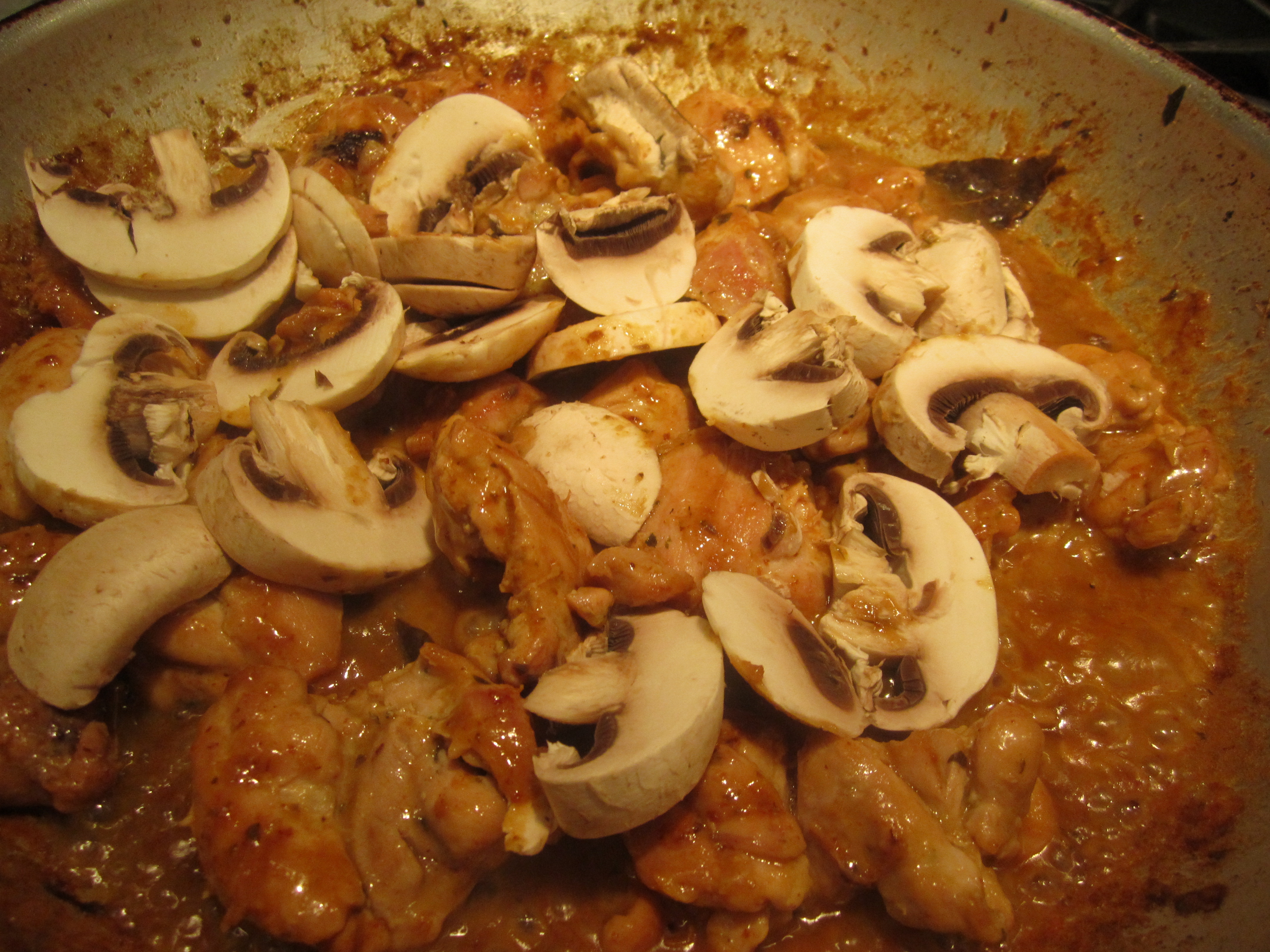
Add mushrooms and cover.

Simmer, covered on low heat, for about 10 minutes.  Uncover and continue cooking for another 3 – 5 minutes if the mixture is still watery.  Taste and add salt, if necessary.  Sprinkle with more fresh parsley and serve.

Posted in Poultry | Leave a comment

Melanzane Ripieno

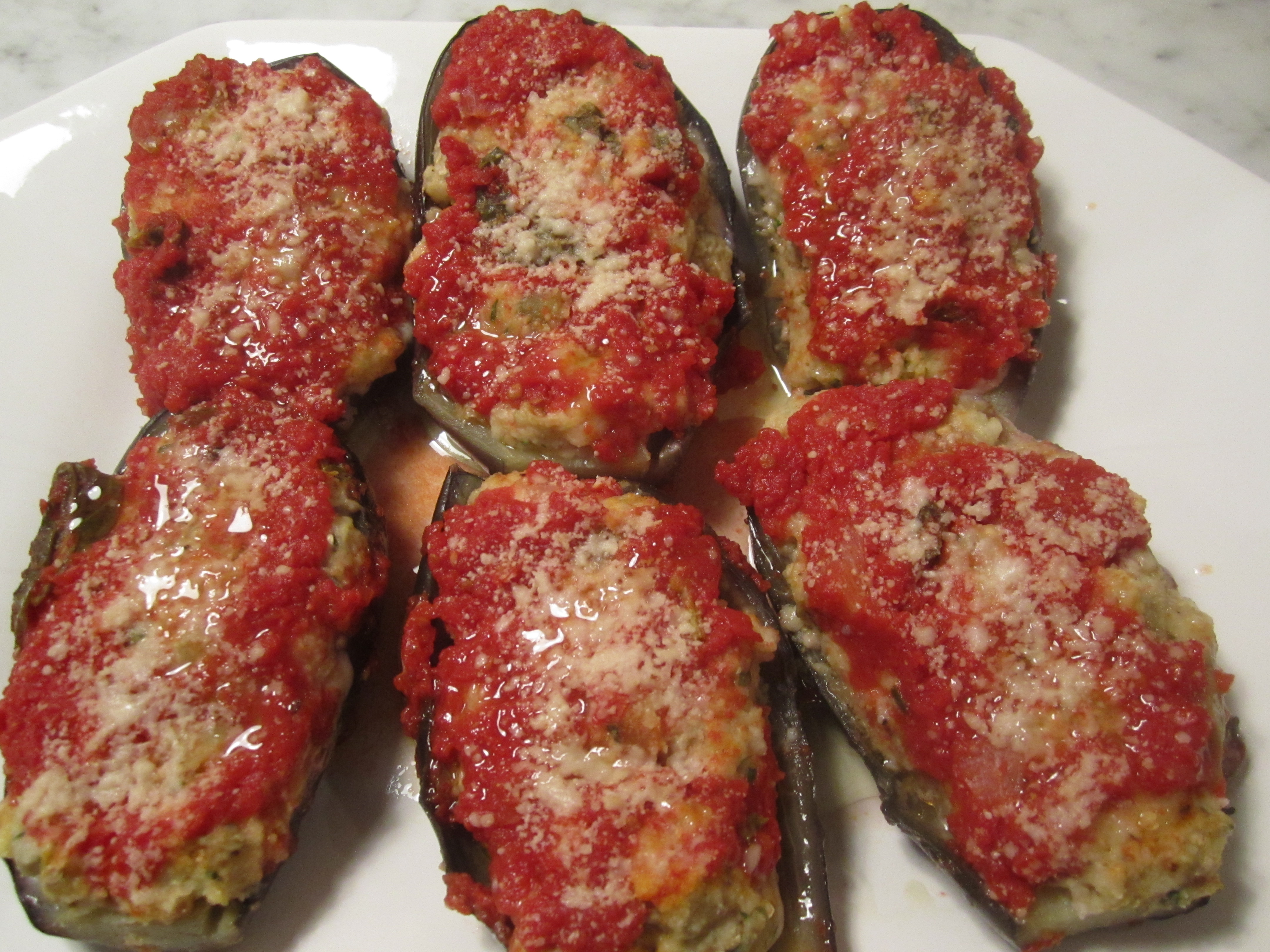
Stuffed Eggplant is another in my series of recipes from my mom during her visit with me this week.  Although this dish is native to my mother’s hometown in Calabria, it is one that is made with many different variations all over Italy in the summer.

It’s one of those festive dishes that may seem daunting at first, but is actually wonderful to make for guests because it can be prepared entirely ahead of time and baked an hour ahead of serving.  Alternatively, it can be completely baked several hours ahead of time and be served at room temperature.

It’s especially good in summer when tomatoes and eggplant are at their peak.  I’ve made a fresh tomato sauce with plum tomatoes processed in the blender and blended with some sauteed red onion for about 15 minutes.

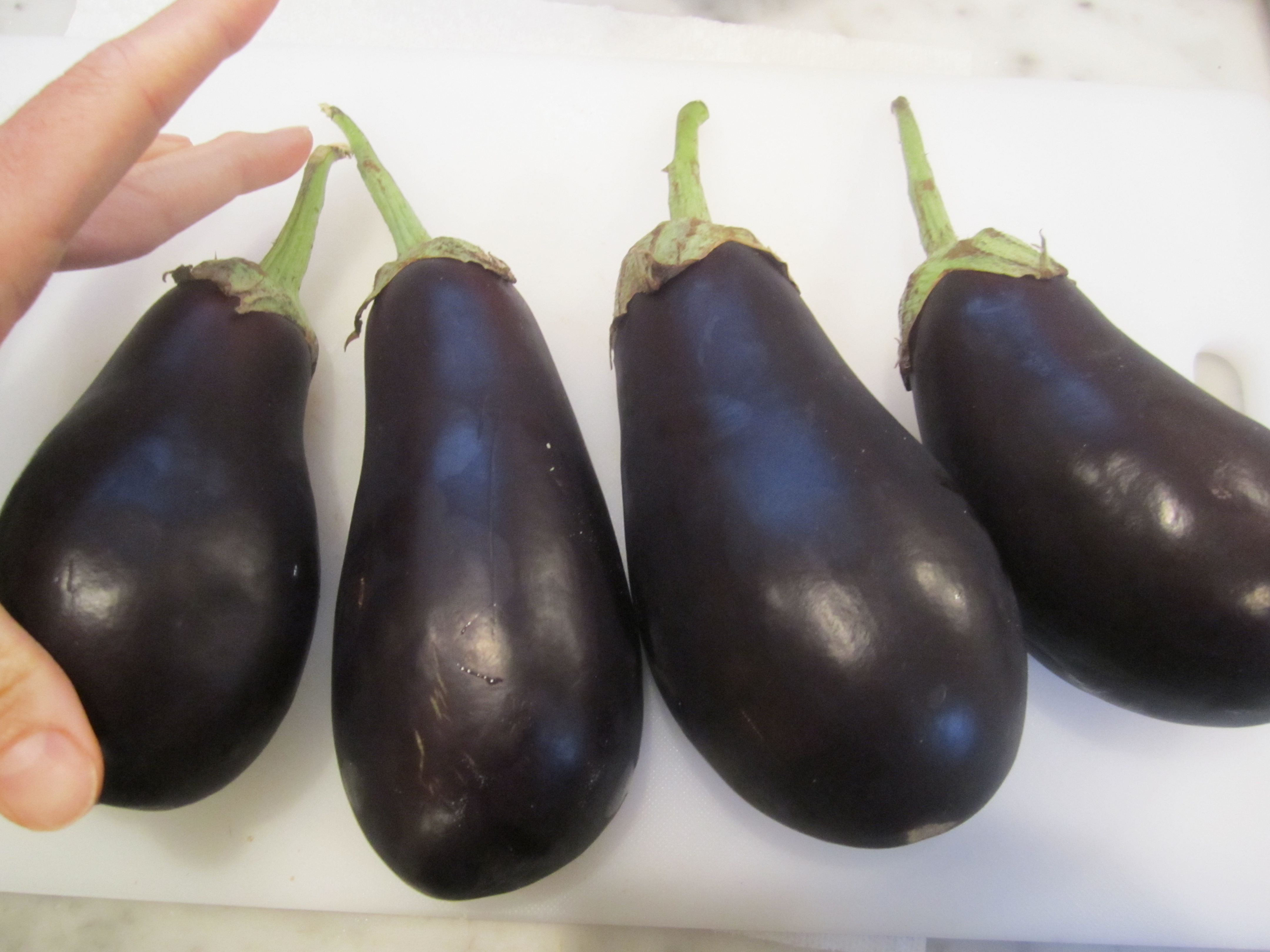
Critical to this dish is the proper sized eggplants–they need to be small (about 4″ – 5″ long not counting stem) but not tiny.

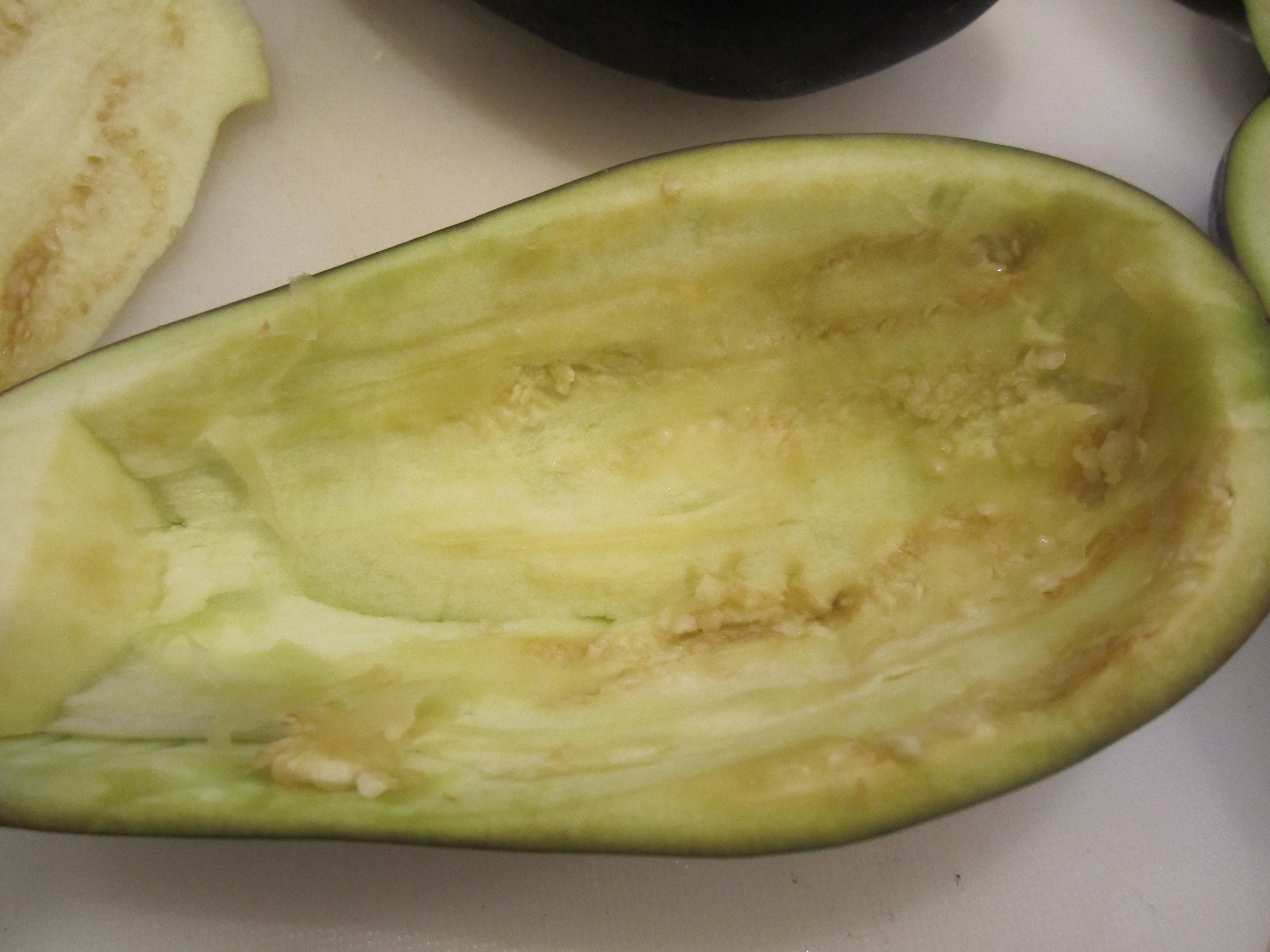
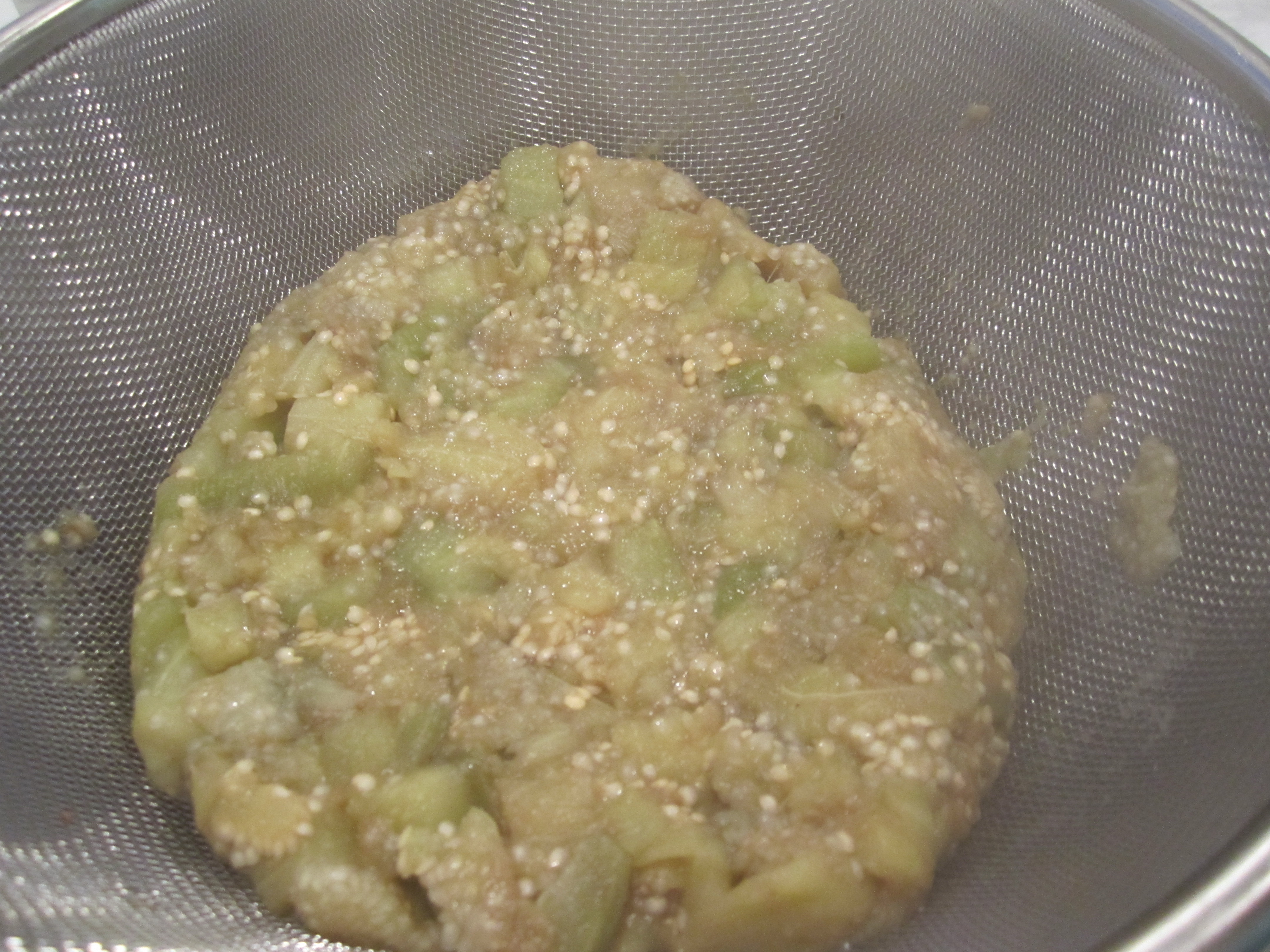
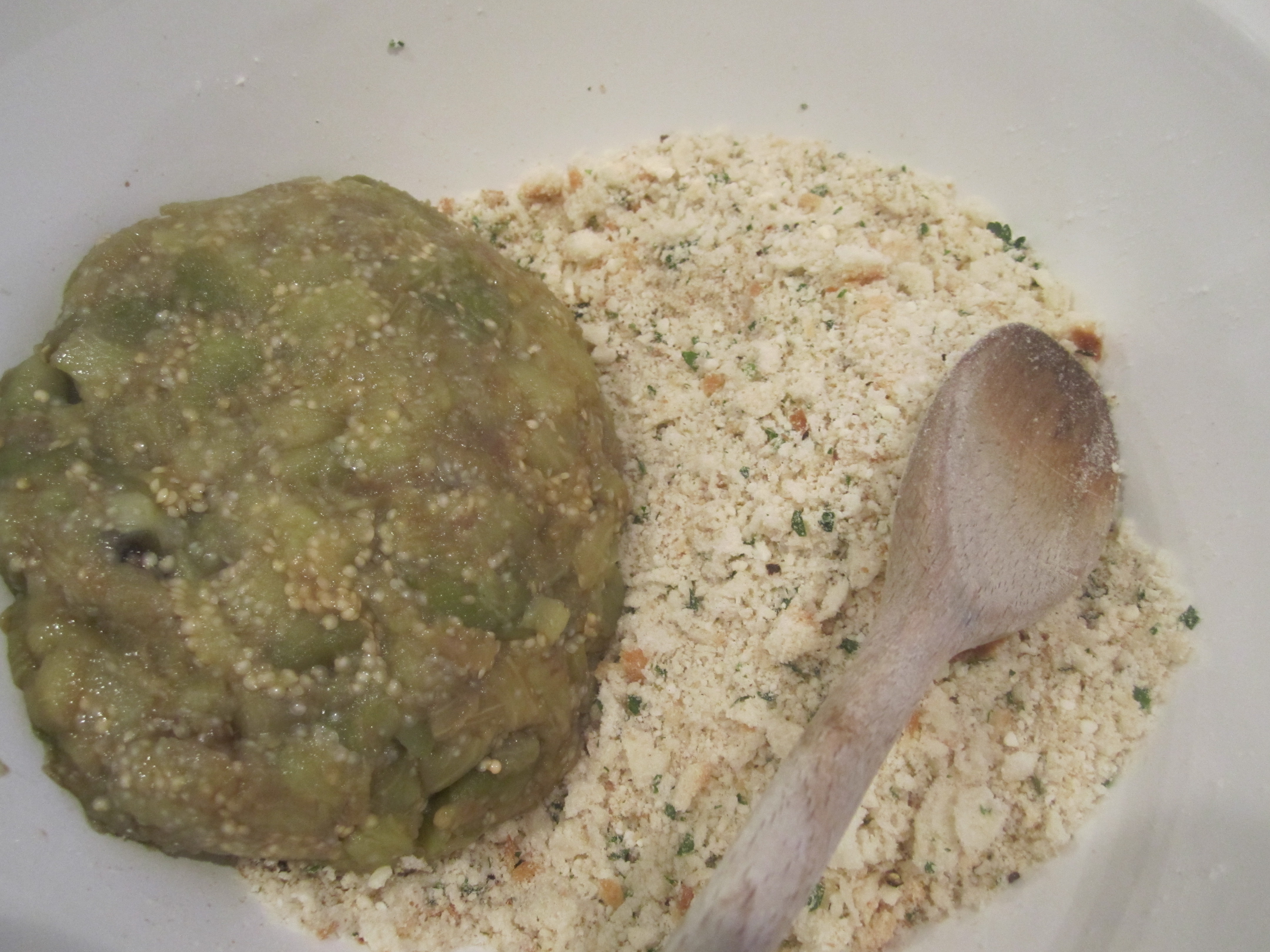
The eggplants are split lengthwise (stems removed), then hollowed out with a spoon.  The shells are blanched in boiling water until tender–about 10 minutes, then allowed to drain and cool slightly.  The meat is then coarsely diced and boiled in salted water for about 8 minutes, then drained well in a strainer.  A stuffing is then made with breadcrumbs, cheese, egg, black pepper and parsley, and combined with the boiled eggplant pulp.

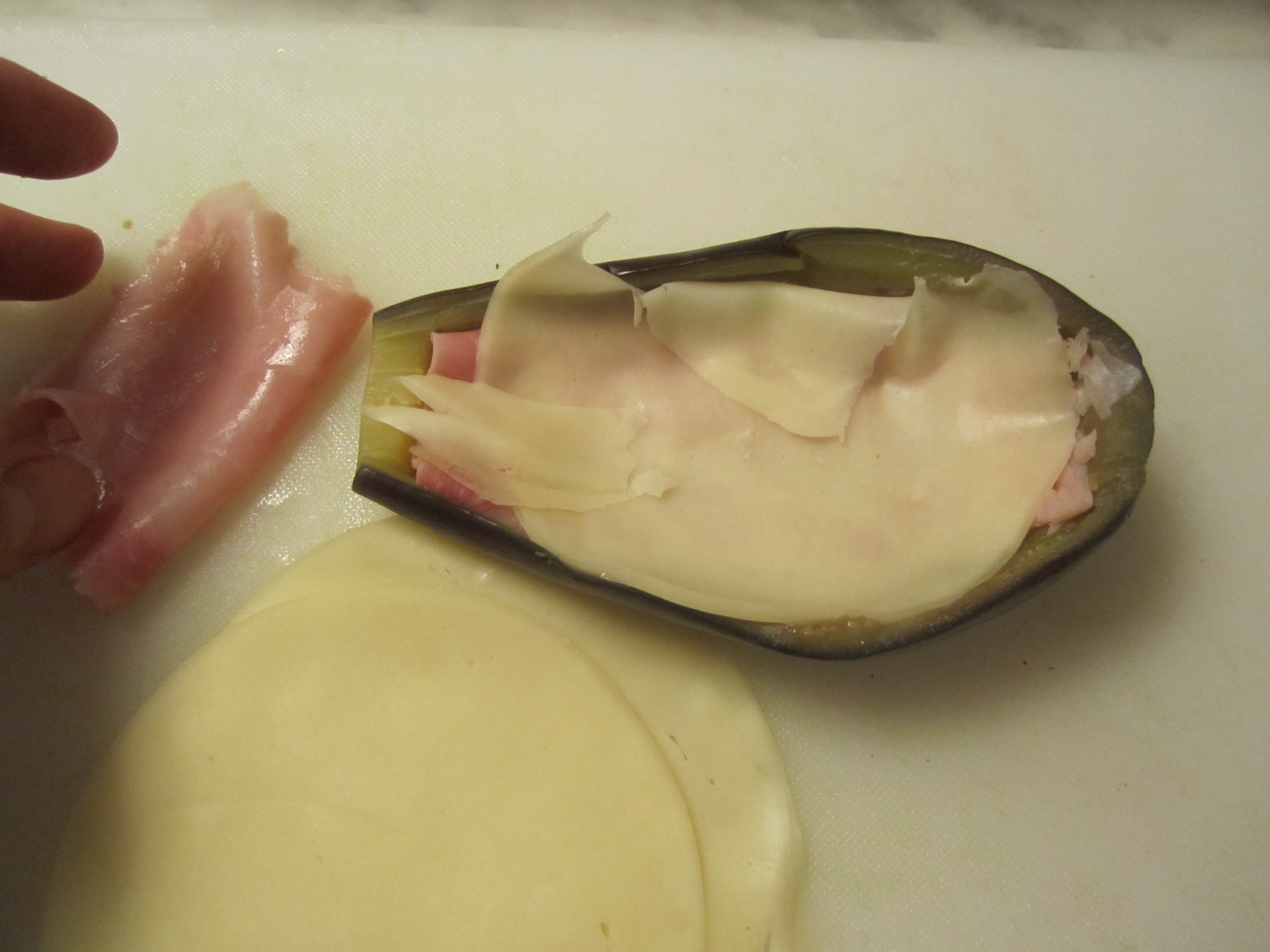
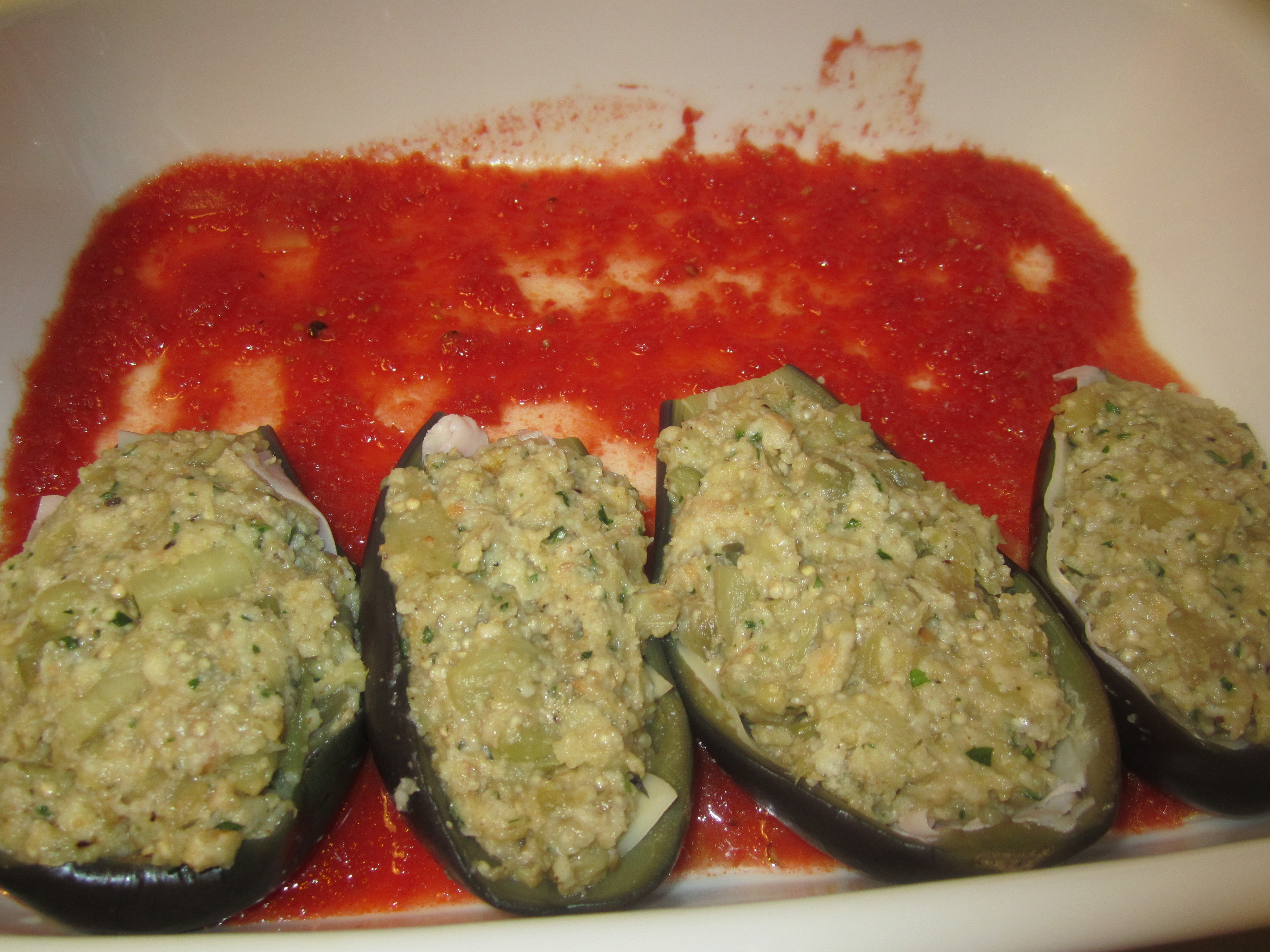
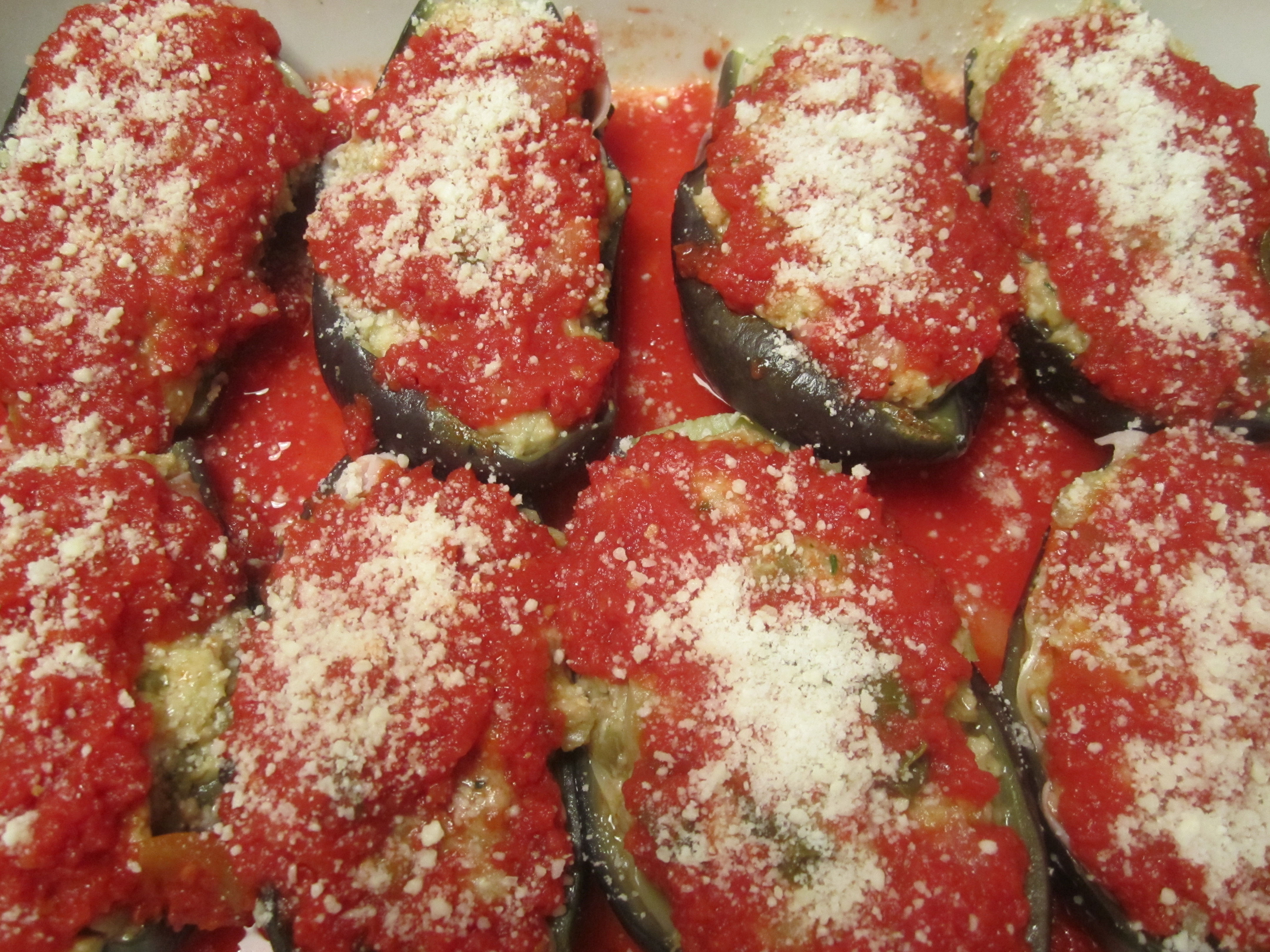
The shells of the eggplant are then lined with a single slice each of ham and provolone, then the stuffing is heaped on top and packed down by hand.  They are then baked in tomato sauce until bubbling and tender.  The sauce is used separately to dress pasta (it’s FULL of flavor).

With a simple green salad, this is a magnificent summer meal.

Melanzane Ripieno

serves 4 – 6

6 small eggplant (around 5″ not including stem) + 1 large eggplant

2 1/2 c fresh breadcrumbs (from a moist fresh loaf of bread–not dried)

1/2 c seasoned breadcrumbs

1 c grated pecorino romano

1/4 c fresh chopped parsley

2 tsp black pepper

3 large eggs

salt to taste

3 thin slices boiled ham

3 thin slices provolone cheese

1 batch basic tomato sauce

Preheat oven to 375 degrees.  Bring a large pot of water to a boil and add a couple of tablespoons of salt.

Cut off stems of eggplants and split small ones in half lengthwise.  With a spoon, gently scoop out the interior pulp, while leaving the skin and a thin layer of pulp intact. 

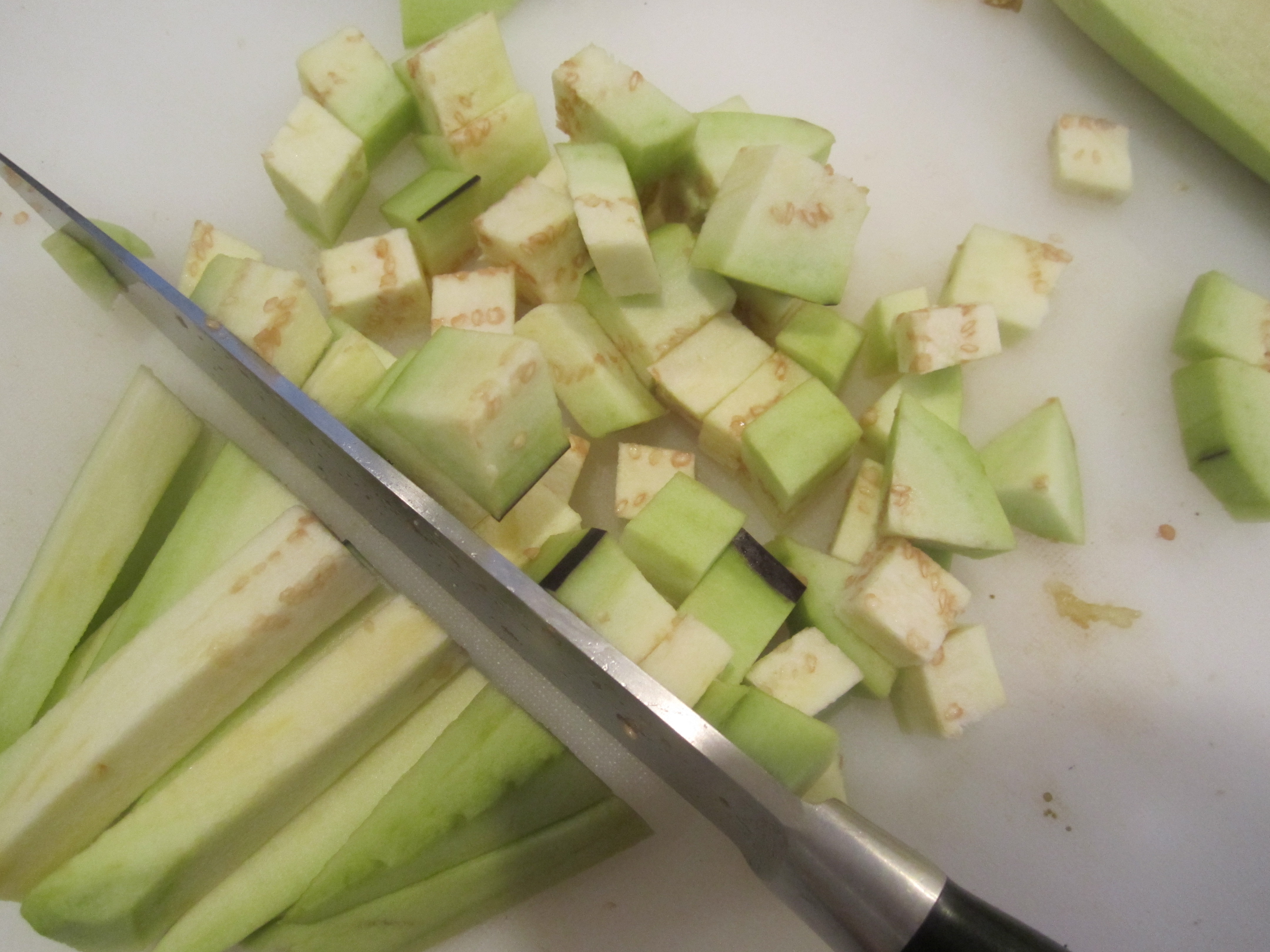
Dice interior pulp into 1/2″ pieces and set aside.   Drop skins in salted boiling water and boil for about 8 – 10 minutes or until tender.  Remove and set aside but keep water boiling.

Peel the large eggplant and dice into 1/2″ cubes.

Boil the eggplant cubes, as well as the diced insides of the eggplants in the same pot of salted water for about 8- 10 minutes or until tender.  Drain in a strainer for at least 15 minutes, while pressing down with a spatula to remove excess water.

In a large mixing bowl, combine breadcrumbs, eggplant, cheese and pepper.  Taste and add salt, if necessary.


Add eggs and blend with wooden spoon or hands.

Lay out the eggplant shells and line them each with a half slice of ham (it should cover the bottom of the eggplant and seal up any tears in the shell, if any exist), and a half-slice of provolone.


Divide the stuffing among the eggplants and press into place by hand.  In a baking dish, spread a layer of tomato sauce on bottom, then arrange eggplants in one layer.  

Ladle a generous amount of sauce on top of eggplants and sprinkle with grated pecorino.

 Cover with foil and bake for 30 minutes.  Uncover and bake for another 10 – 15 minutes, or until bubbly.

Remove eggplants from tray and use sauce to dress pasta.  Sprinkle generously with pecorino romano.

Posted in Vegetables | Leave a comment

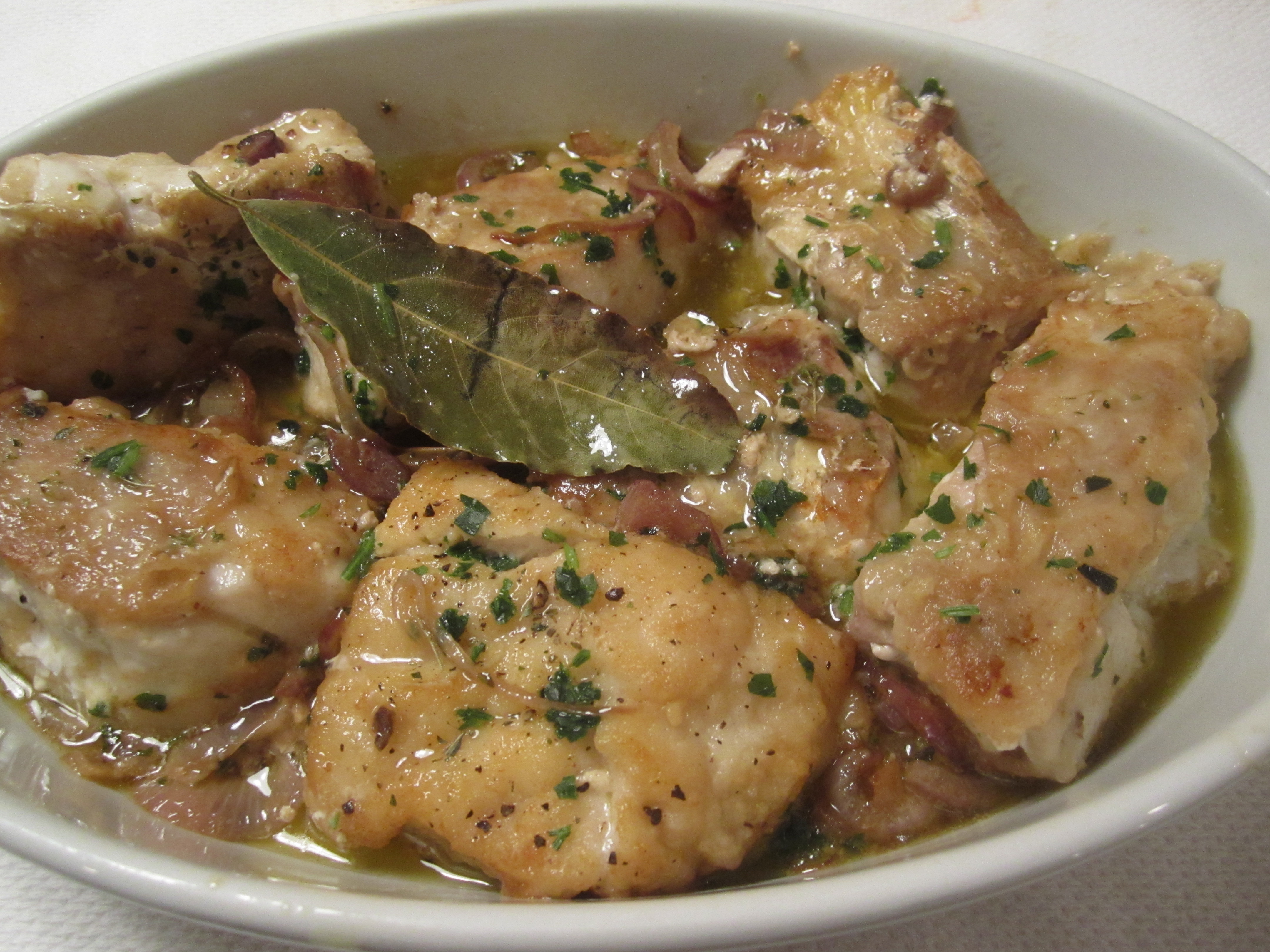
Pesce in Umido

I can always count on my mother to give me culinary inspiration.  While at the fish market without any direction, I spotted tilefish–a local fish in eastern Long Island–similar to striped bass.  The filets were thick, meaty and a nice healthy pink color.

Since my mother is visiting this week, I thought I’d look to her for a cooking method. She told me there were only three cooking methods which her mother used for fish–either fried, in tomato sauce, or “in umido.”  The last method involved white wine, onions, oregano and bay leaves.  Since she just got back from a month in Calabria, mom had brought back a cache of bay leaves and oregano, freshly dried.  This was the perfect chance to take advantage of them.

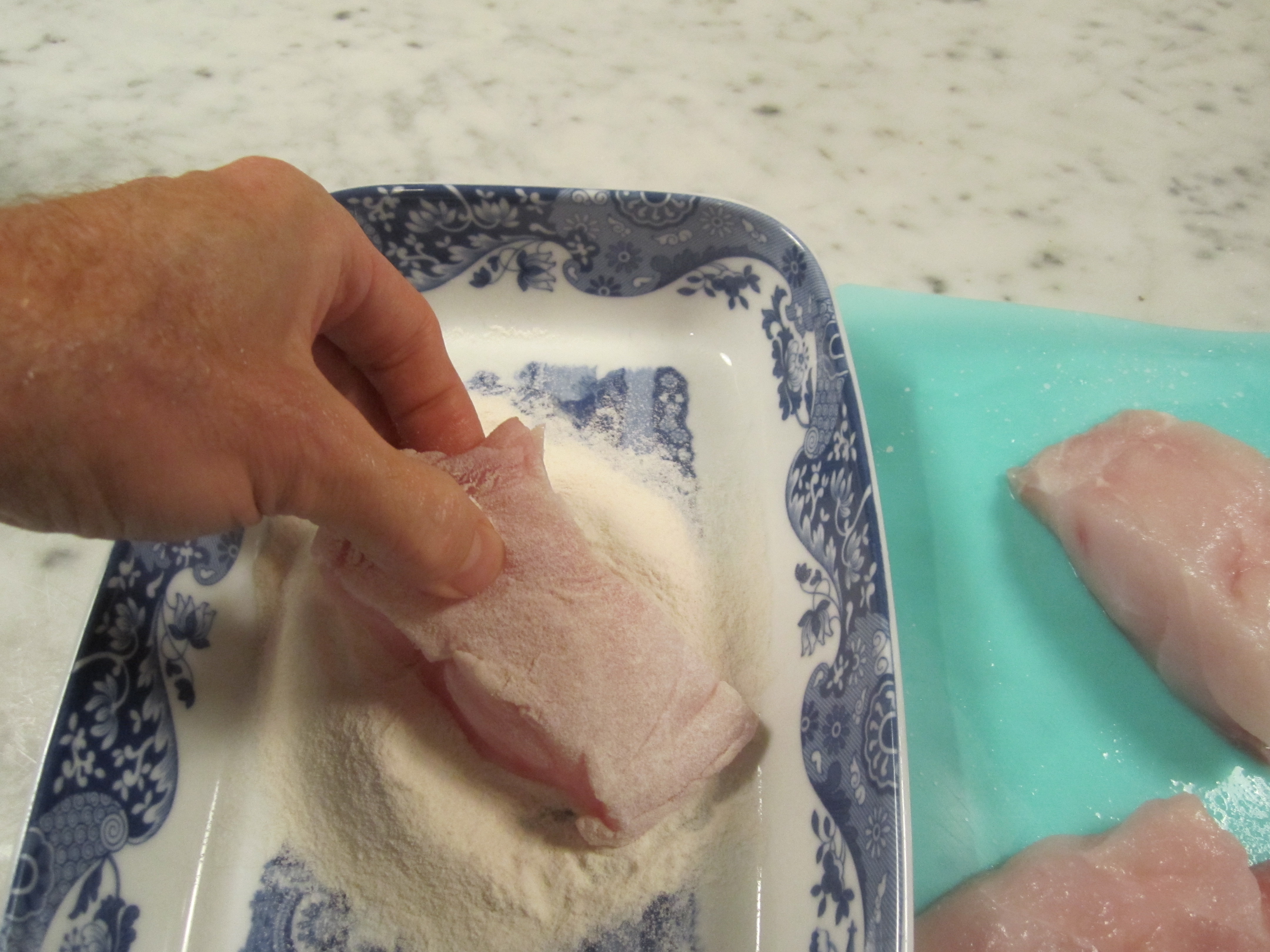
The method of preparation would involve making a simple sauce with sauteed onions, bay leaves, oregano and white wine, then slipping the fish in the sauce and allowing the whole mixture to simmer until cooked.  I decided to add one step to the process–dredging the fish in flour and pan-frying  prior to making the sauce.  The bits of flour clinging to the pan would provide a bit of body for the sauce (to be made in the same skillet as the fish).  My mom had no problem with the additional step, so I proceeded with my version of the recipe.

The results were spectacular–not least of all because of the aromatic bay leaves and oregano from Italy.  The extra step of dredging and frying was definitely worthwhile and provided an added depth of crispy flavor to the finished dish.

Use this method for virtually any firm fleshed fish–it’s virtually foolproof and takes about 20 minutes from start to finish.

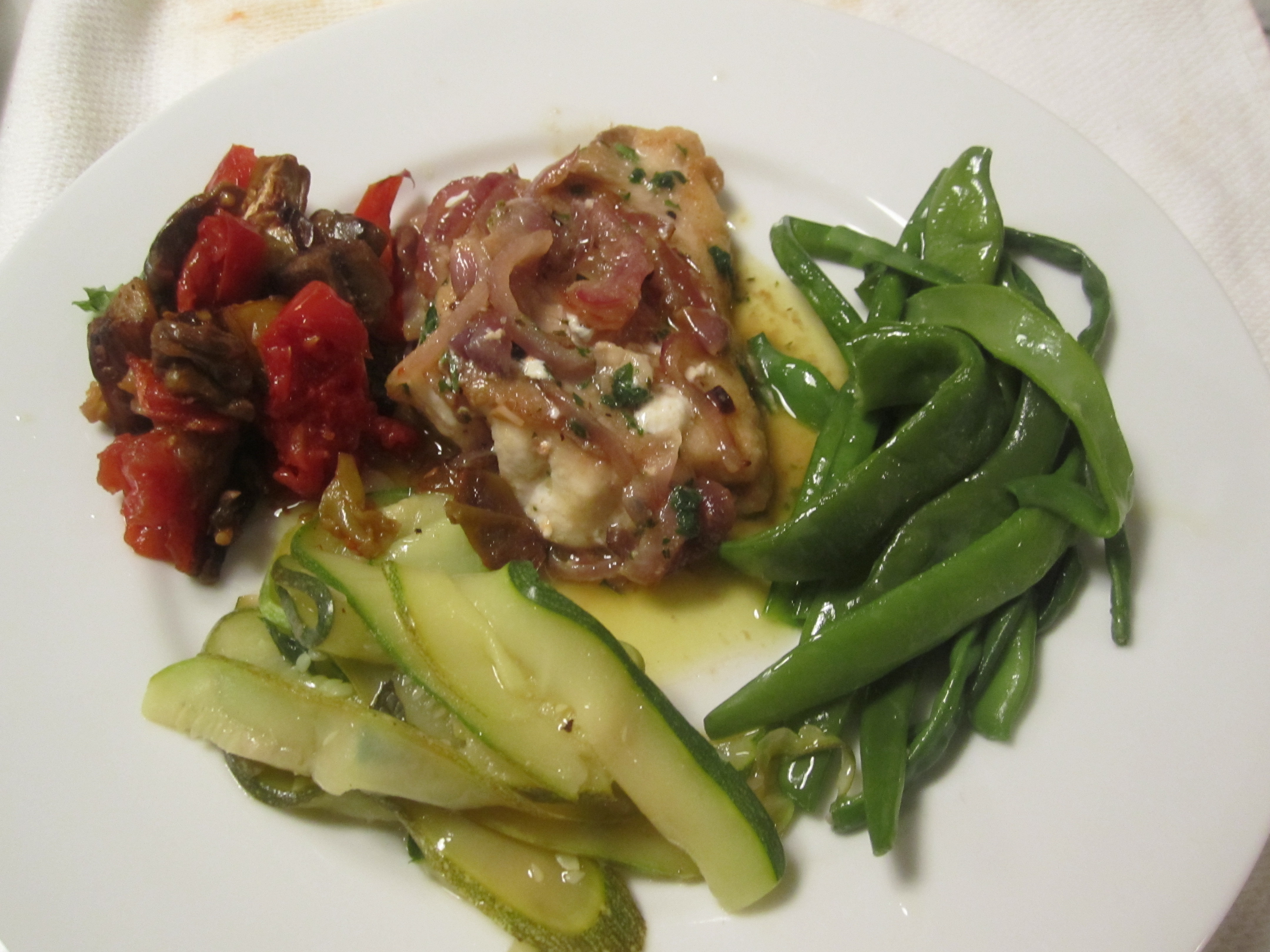
Along with the fish, we made another of my mother’s childhood favorites:  zucchini and mint salad.  Along with the salad, we had some simple boiled green beans from Beppi’s garden and roasted eggplant, peppers and tomatoes.

Pesce in Umido

serves 4 – 5

2 1/2 lbs of thick, firm fleshed fish such as cod, striped bass or tilefish

1 large onion or 3 bunches scallion

6 tbls olive oil

1 c white wine

3 large bay leaves

1 tsp dried oregano (or 2 tsps fresh)

flour for dredging (I used Wondra)

salt and pepper to taste

Season the filets well with salt and pepper on both sides and dredge in flour.  

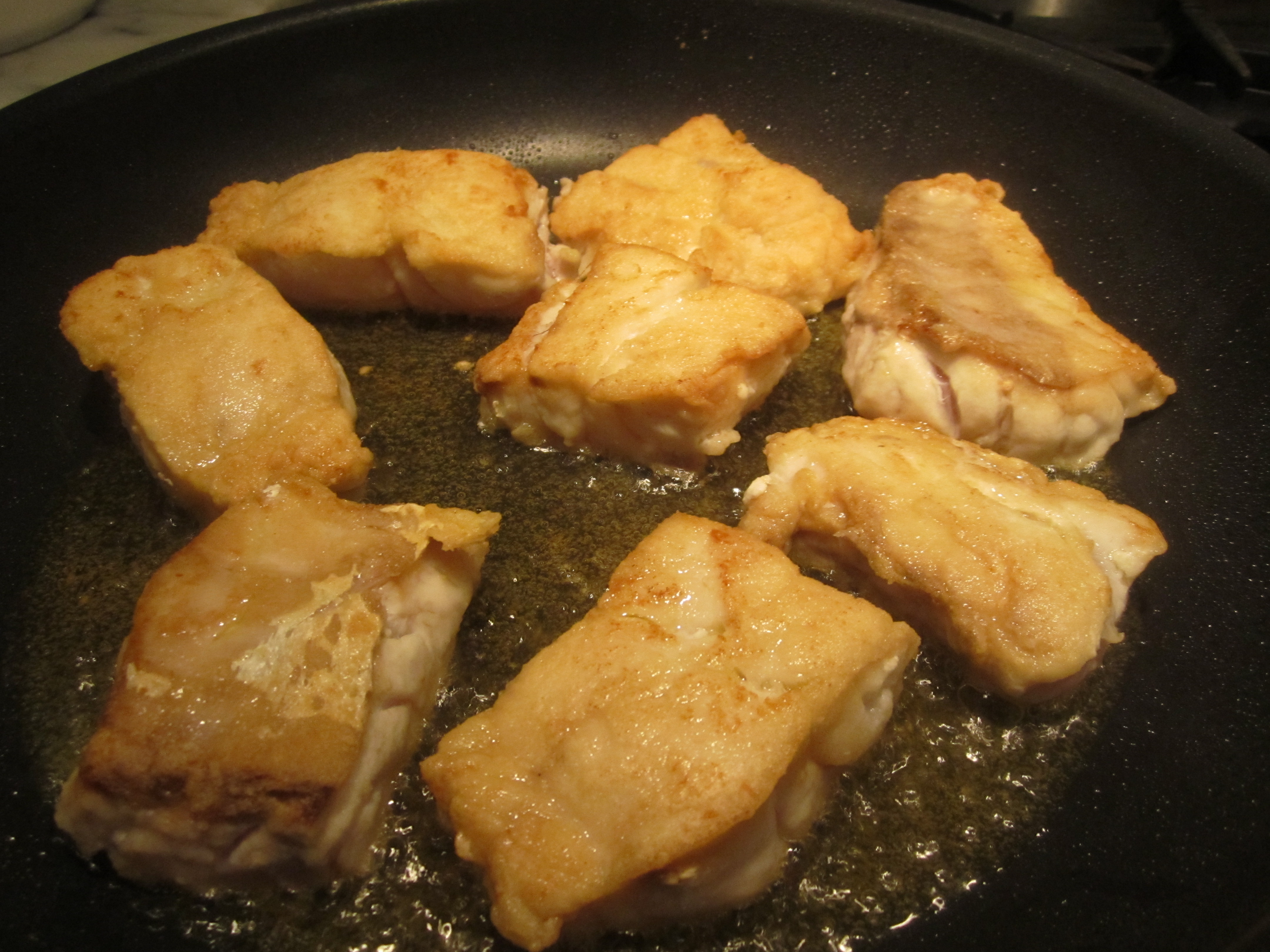
Heat 4 tablespoons oil in a broad nonstick skillet until smoking.  Slip in the filets and fry undisturbed on high heat for about 5 minutes or until golden on the underside.

Turn and briefly fry on the other side (about 1 minute).  Remove fish and set aside.

In the same skillet, add onions and bay leaves and lower the heat.  Saute onions until slightly caramelized (about 8 – 10 minutes).  Turn up heat and add white wine.

Reduce wine for about 2 minutes, then add back fish filets and sprinkle with oregano.  Simmer, uncovered on low heat for about 5 minutes, or until fish is cooked through and sauce has thickened nicely.  Taste and add salt, if necessary.

Posted in Seafood | Leave a comment