Quinoa with Cauliflower and Kale Pesto

This nutrient-packed dish was inspired by the cauliflower that’s started to appear at my local farm stand.

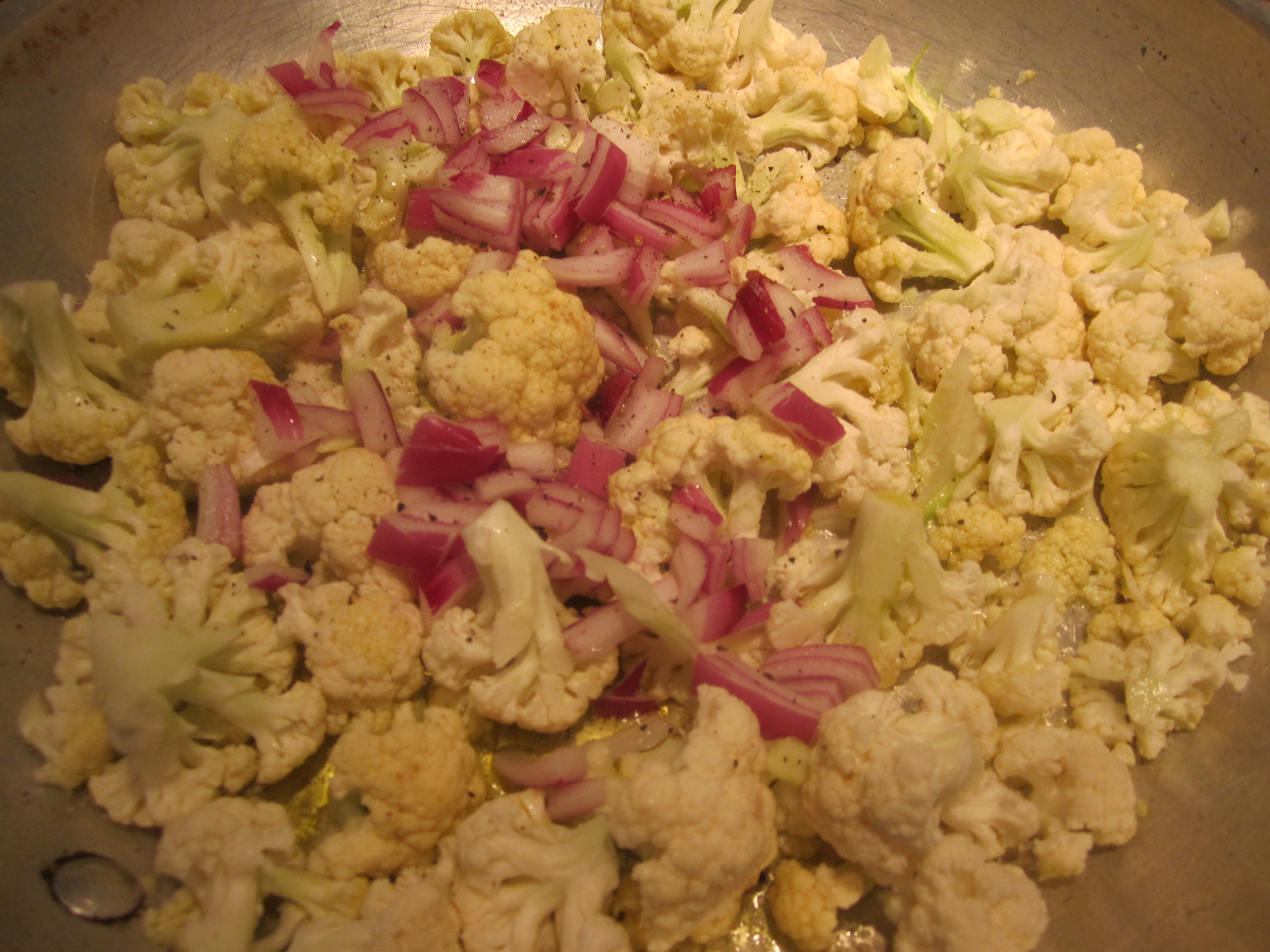
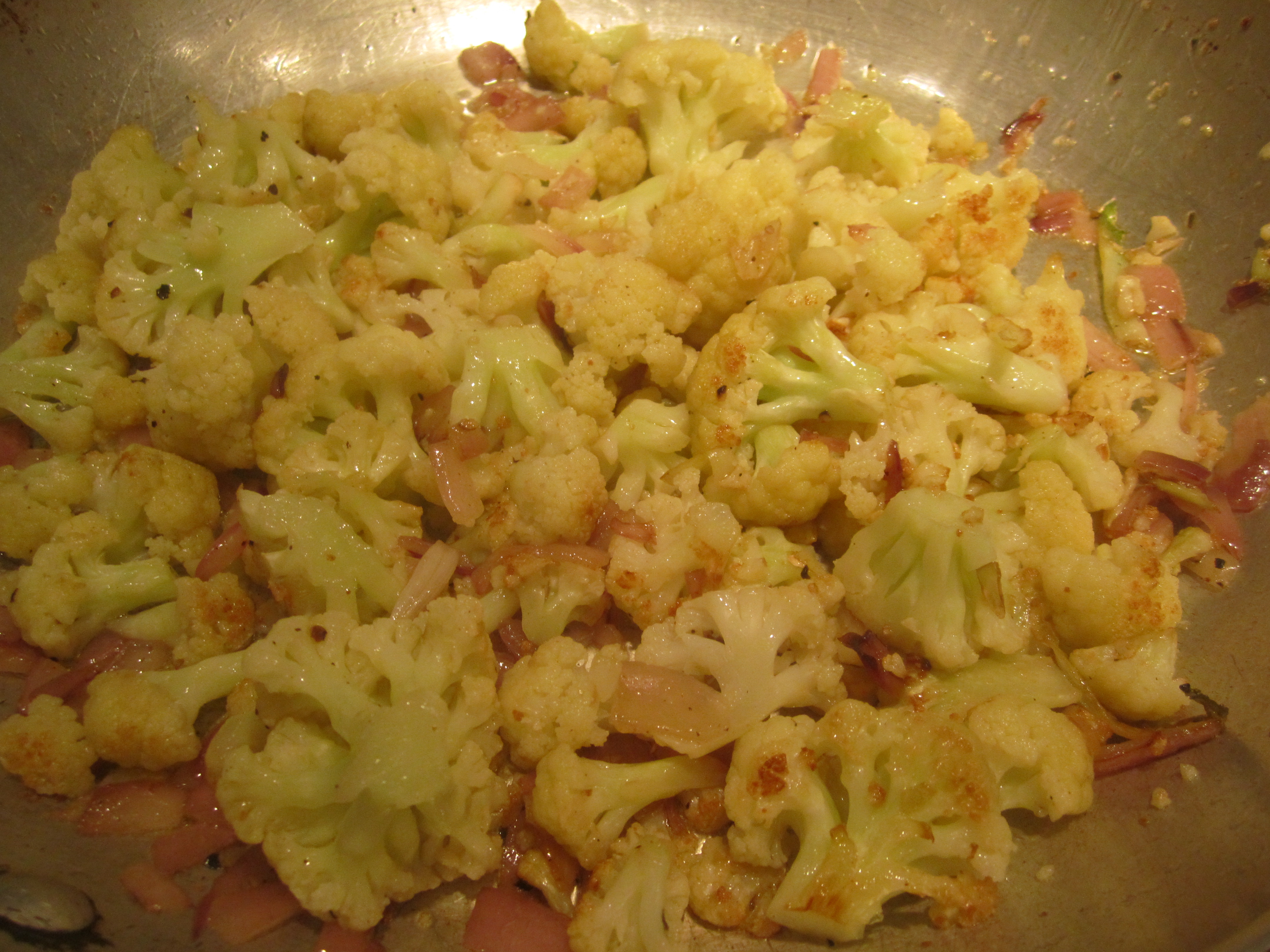
Cauliflower is so nutty and becomes so beautifully golden with so little effort.  I’m always inclined to make it with pasta or some other grain.  It simply needs to be cut into small florets and sauteed with olive oil to soften and caramelize it.  Tonight, I’ve added onion for sweetness.  Together, they cook, covered over medium-low heat, until both are golden and slightly soft.

Tuscan Kale pesto is a wonderful sauce for almost any variety of pasta, and goes particularly well with whole-wheat pasta, or whole grains, like quinoa or farro.  Tonight I’ve substituted pine nuts for the smoked almonds, to give the pesto a milder, smoother flavor.

The pesto is made by stripping the kale off the stems and boiling, then combining with the other ingredients and processing to a coarse puree.

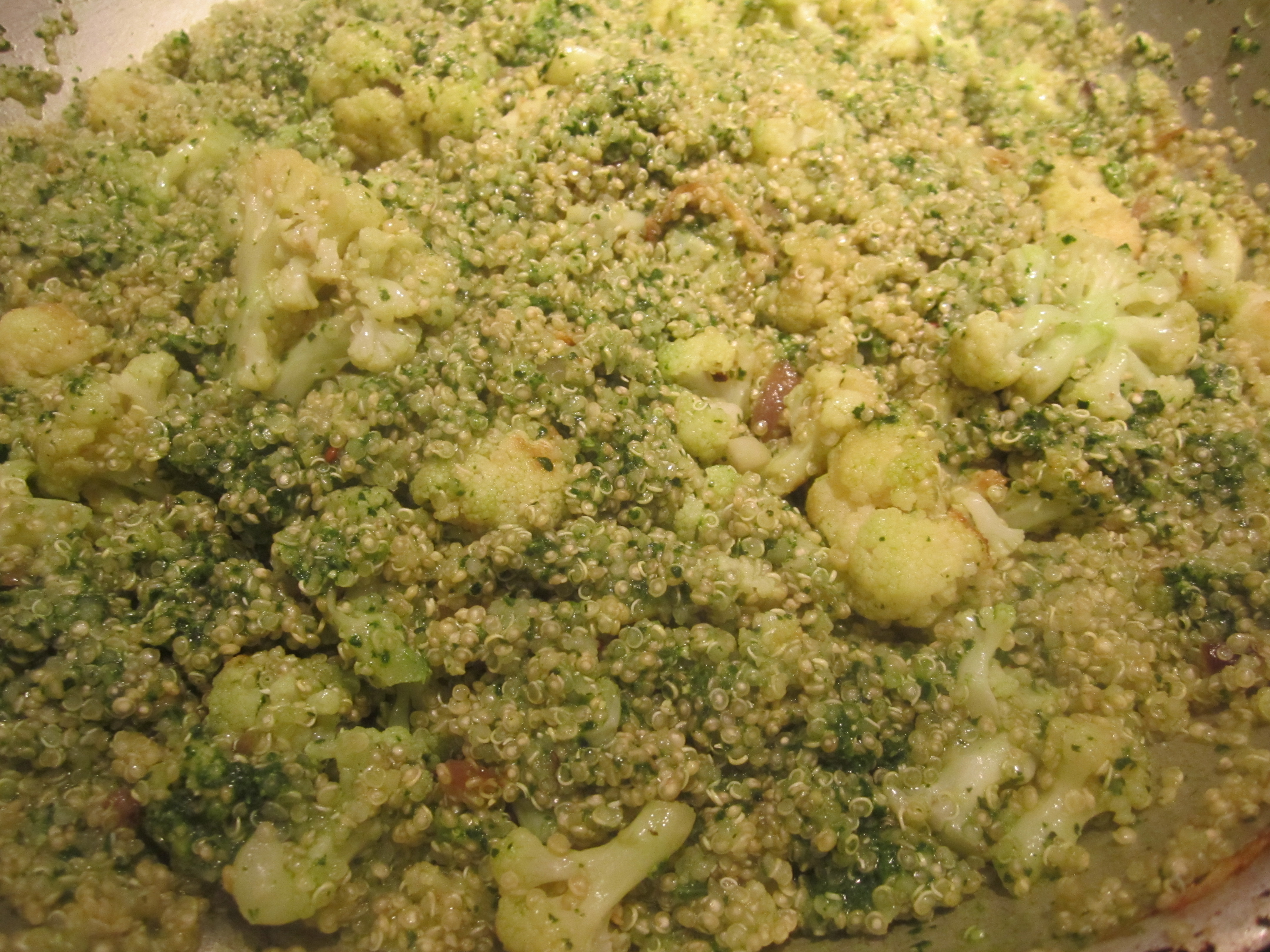
The cauliflower and onion saute while the quinoa is boiling.  Then the three ingredients are combined  to make a side dish (or even main course) that is so satisfying, you’ll crave it the next day.

Tonight, along with the quinoa, we had grilled shrimp, rubbed with fennel seeds, lemon zest and black pepper, then drizzled with meyer lemon oil hot off the grill.

Quinoa with Cauliflower and Kale Pesto

serves 8

4 c quinoa

8 c water

1 tbl salt + additional to taste

1 head cauliflower, cut into approximately 1″ florets

1 small red onion, coarsely diced

1/4 c extra-virgin olive oil

1 recipe tuscan kale pesto, pine nuts substituted for smoked almonds

In a pot, combine 4 cups quinoa with 8 cups water and 1 tablespoon salt.  Bring to a boil.

Cook, partially covered, over medium heat, for approximately 15 minutes.  Turn off heat and allow to rest, covered for approximately 5 minutes (up to 15 minutes).

While quinoa cooks, place cauliflower and onion in a skillet with olive oil.  Sprinkle with salt and pepper.

On high heat, bring to a sizzle, then reduce heat and cover, tossing and stirring every 3 minutes or so.  Add salt and pepper to taste, and continue tossing and stirring until the vegetables turn golden and become crisp-tender (approximately 12 – 15 minutes).

Drain quinoa and pour over cauliflower, along with some of its liquid.  Add pesto.

 Stir to combine and season with additional salt and pepper, if necessary.

Posted in Risotti, Vegetables | Leave a comment

Whole Roasted Striped Bass

Whole roasted fish is always a festive and impressive main course.  It’s success depends entirely on the freshness of the fish and the hand of the cook, in de-boning and seasoning the finished dish properly.

It seems that fish mongers are always excited when customers ask for whole fish.  They invariably rush to the cooler and pull out their freshest, most beautiful specimens with great pride.  For tonight’s meal, I asked my fish monger for  a local striped bass, or anything else that was freshly caught and freshly delivered.  It’s very easy to pick out a whole fish–it must be shiny, not slimy; the eyes must be clear, not cloudy.  Lift the gills and the insides should be bright red and glistening.  Last but not least, smell it up close–it should smell clean and not fishy.  Today’s catch passed all of these criteria with flying colors.

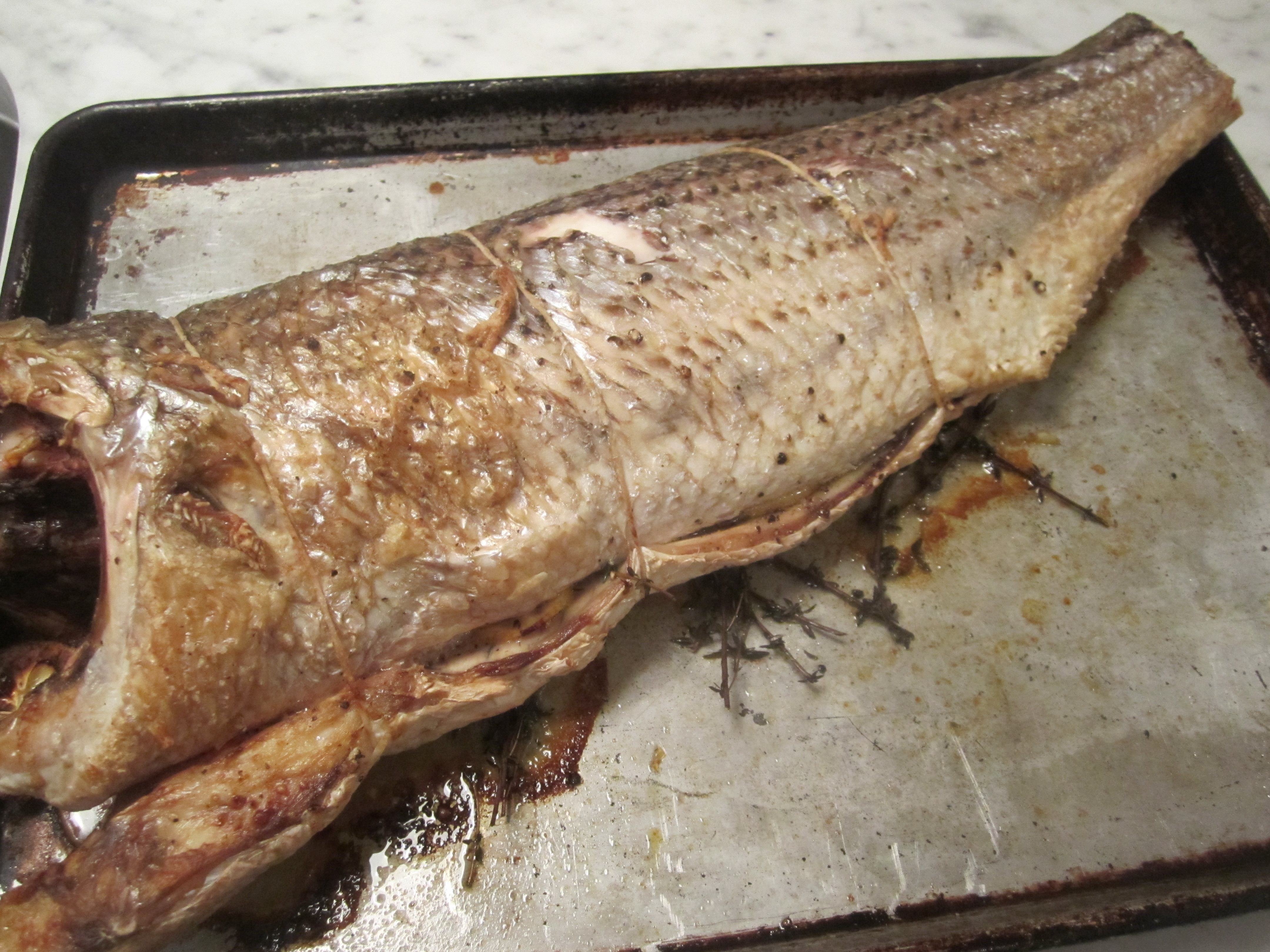
I kept the head and tail on the fish, thinking I’d much rather present my fish intact, but the fish was a bit too long for my roasting pan and I didn’t want the head and tail hanging over the edge too far, so I ultimately opted to remove the head and tail myself at home.

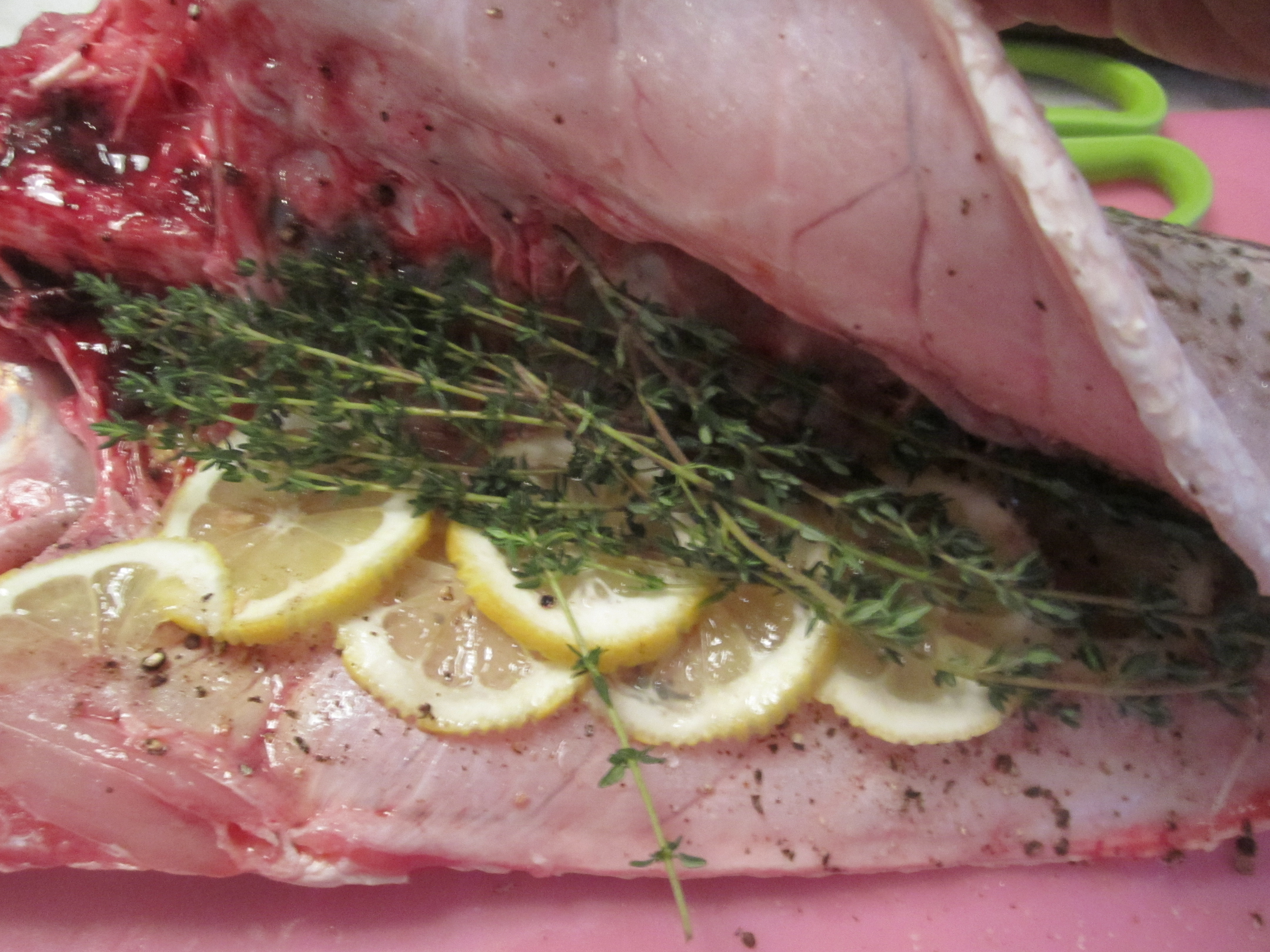
Preparation of the fish is extremely simple–lift up the flap of flesh that covers the cavity and sprinkle heavily with salt, then insert some herbs and/or lemon slices.

These will help perfume the meat from the inside out.  In addition, sprinkle the outside of the fish heavily with salt and rub with olive oil.

Tie the fish crosswise with string to keep it in a tight bundle and hold the cavity shut.

Lay the fish over some herbs (I used thyme sprigs) in a roasting pan and place in a preheated 500-degree oven.

Roast, undisturbed, for a half-hour to 45 minutes, depending on the size of your fish and the strength of your oven.  The fish I made was exactly 10 pounds and took about 40 minutes to cook through.  Pierce the skin with a knife and try to look as far into the middle of the flesh as possible–the meat should be white but still juicy.  You don’t want raw meat in the middle, nor do you want to overcook the meat, although in this case, overcooking is preferable to undercooking, since it won’t filet easily if undercooked.

Once the fish comes out of the oven, allow it to rest for about 10 minutes.

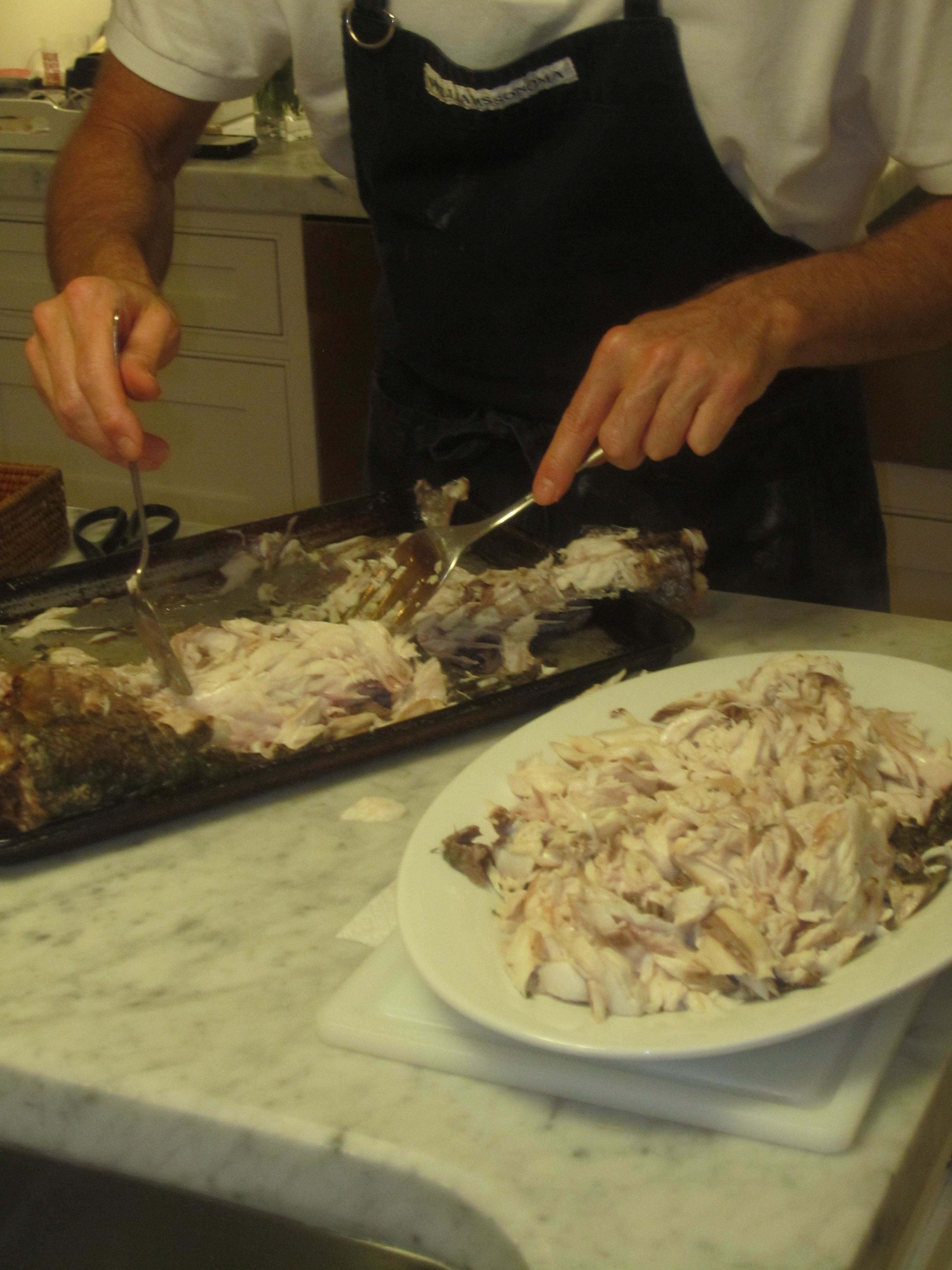
To present the fish, remove the string, lift the skin and set aside, working with a large fork and spoon.  Insert the spoon along the backbone area of the and run it down the length of the skeleton, scraping the meat off one side of the skeleton, and piling it onto your heated serving plate.

Continue scraping and lifting off sections of meat and spreading on a platter.  After one side of the fish has been filleted, flip the carcass and repeat with the other side.

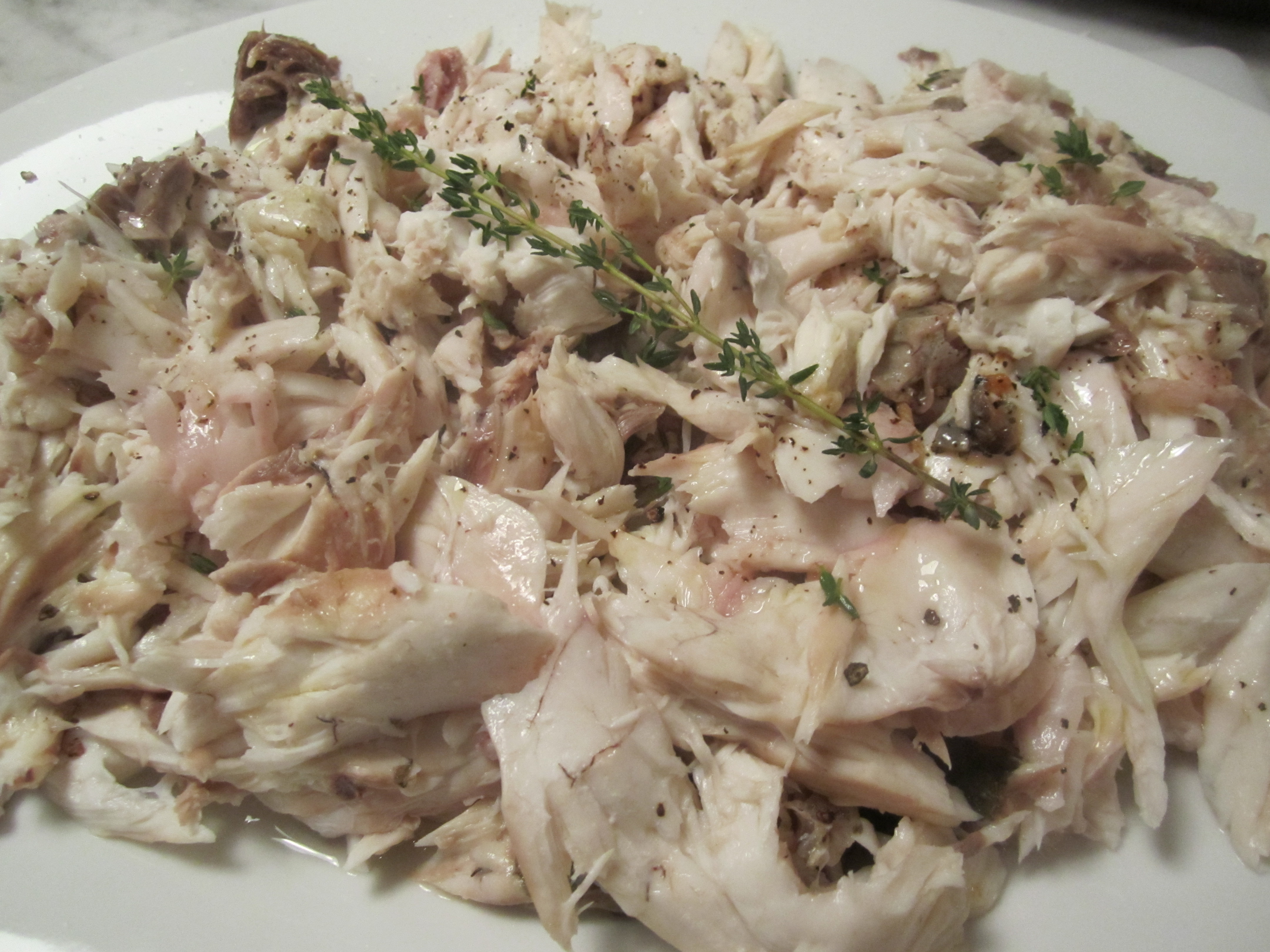
Once you’ve gotten most of the meat off the bone, season aggressively with salt, black pepper and olive oil.  We had the added bonus of having a bottle of olive oil infused with meyer lemon–absolutely fabulous.  You might also sprinkle with some of the fresh herbs that went into the cavity (thyme, in my case).  Serve as quickly as possible.

Along with the fish, we had risotto with arugula and lemon,  its aggressively peppery and lemony flavor complemented the fish beautifully.

In addition, we had sauteed zucchini with leeks and a touch of chopped tomato.  All of these flavors blended beautifully with one another on the plate and made for a light, fresh end-of-summer celebration.

Posted in Seafood | Leave a comment

Rosemary-Orange Glazed Turkey Breast

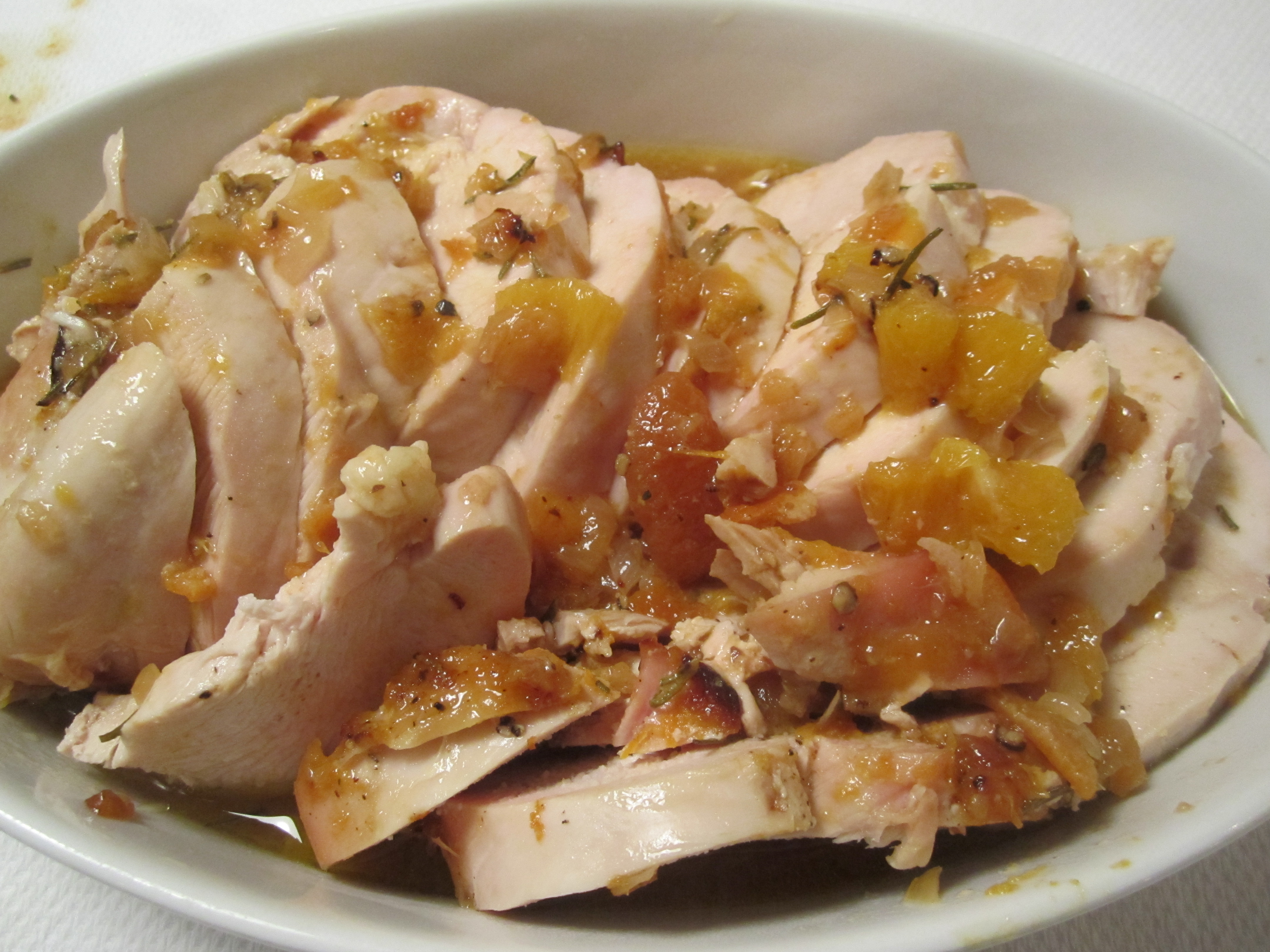
This is a wonderful main course for dinner, that can also provide you with wonderful leftovers for lunches the following days.    As a main course, I serve it with the skin on, dressed with some of the orange glaze.  After dinner, I remove the skin, slice the meat and nestle the slices in the pool of glaze and pan juices. The bright, sunny citrus permeates the meat and the flavor gets better as the slices sit in the glaze over the course of several days.

My butcher sells free-range organic turkey breast already boned and tied into a roast, but you can just as easily make this with a bone-in turkey breast (just add cooking time to compensate for the bones).

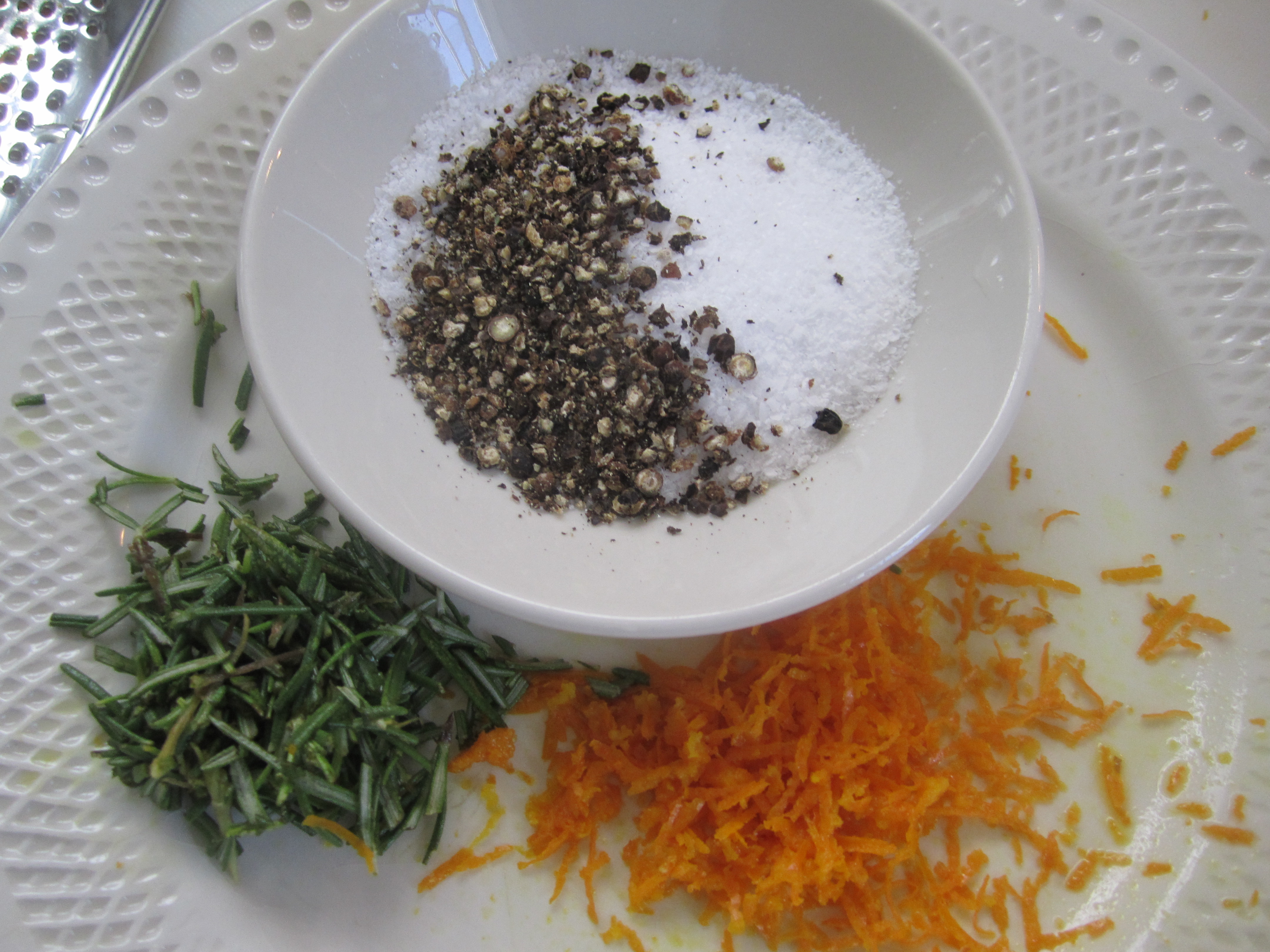
I like to dry-brine the breast with plenty of salt, pepper, chopped rosemary and orange zest.  I also add a bit of olive oil to disperse the seasonings.  This can be done about 6 hours ahead of cooking time.

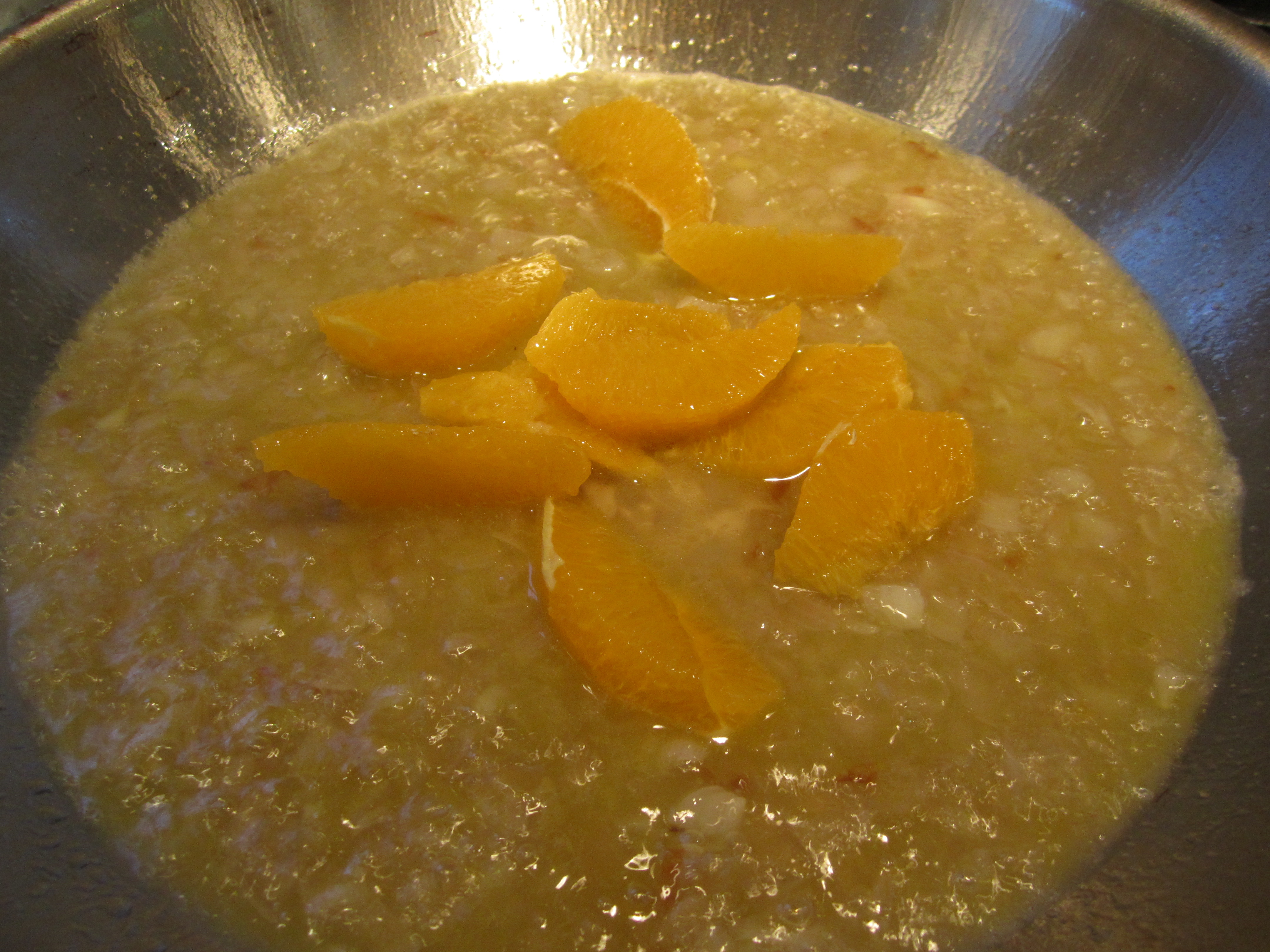
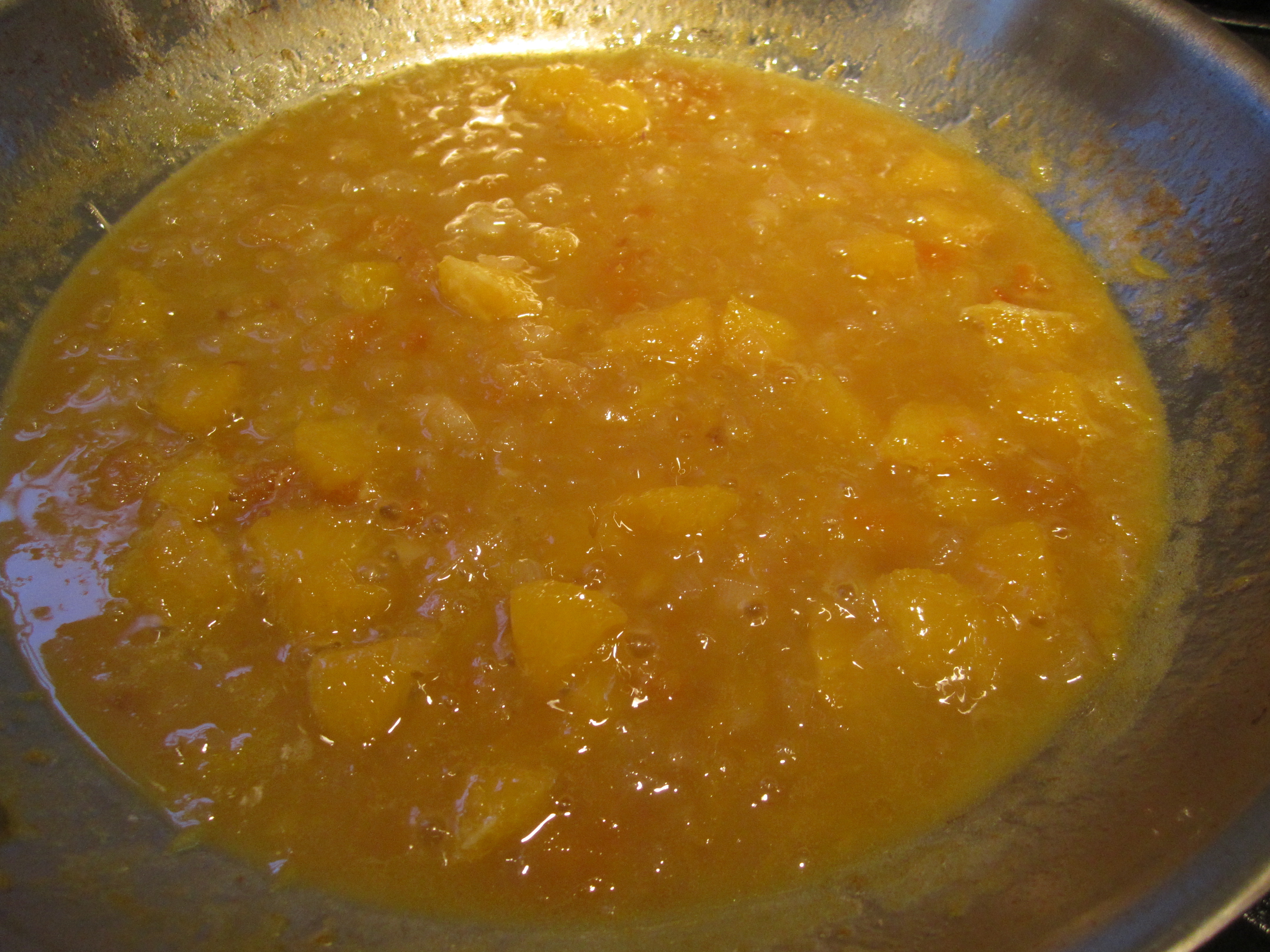
Meanwhile, I make the orange glaze, which consists of shallots, white wine, rice wine vinegar, orange juice, and orange marmalade.  The shallots are slowly cooked in oil until soft and melting, then white wine and vinegar are added and reduced.  Then orange juice, orange sections, marmalade, and chicken broth are added.  The mixture is simmered for about 15 – 20 minutes until syrupy.  It’s difficult not to eat it with a spoon before it even before it touches the turkey.

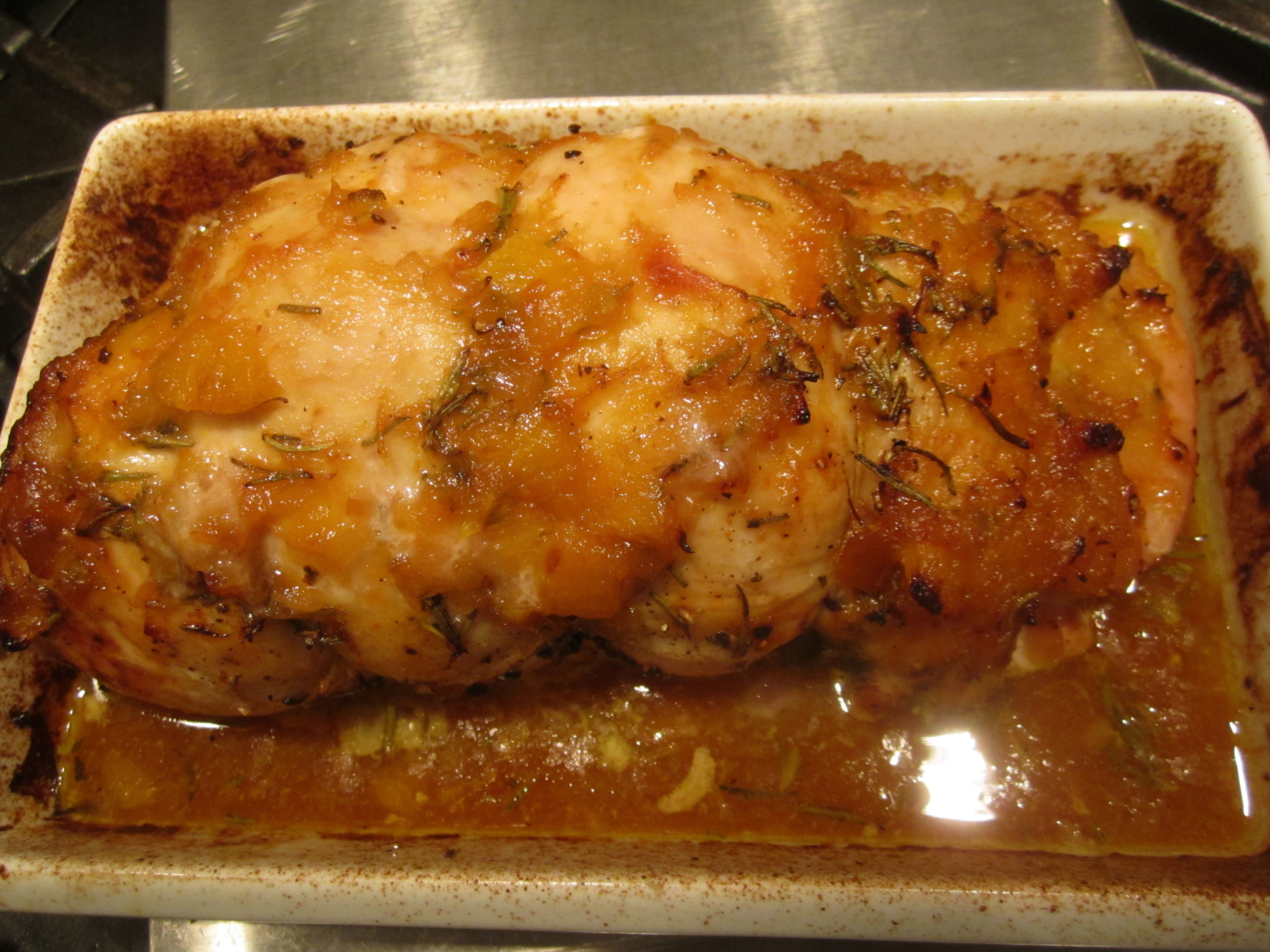
The breast gets roasted, uncovered, until halfway cooked, then basted with the glaze.  The glaze combines with the pan juices to make the most wonderful sweet-tart combination.  I add a bit more broth to the pan as well, to insure that there will be plenty of liquid left when the roast is cooked.

Tonight, in addition to the turkey breast, we had farro with beet greens and broccoli with pine nuts and raisins.  All three of these dishes will make for wonderful lunches in the days to come.

Rosemary-Orange Glazed Turkey Breast

1 boneless turkey breast, rolled into a roast (approximately 2 – 3 lbs)

2 tsps kosher salt

2 tsps black pepper

zest of 1 orange

2 tsps chopped fresh rosemary

2 tbls olive oil

1/2 c chicken broth for basting

Orange glaze (below)

About 6 hours prior to cooking, rub turkey breast with salt, pepper, rosemary and 1 tablespoon olive oil.

Cover and refrigerate until ready to roast.

Preheat oven to 375 degrees.

When ready to roast, drizzle an additional tablespoon of olive oil over roast.  Place in oven, uncovered, and allow to roast for 15 minutes.  At that time, add 1/2 cup broth to the roasting pan, and roast for another 15 minutes.   Remove from oven and spoon on half of the glaze.

Continue roasting and adding glaze until the internal temperature of the roast is around 160 – 165 degrees.  (my roast was 3-lbs, and total cooking time was 1 hour 20 minutes). Let set for at least 15 minutes prior to carving.

When ready to store leftovers, remove string and skin from the remaining piece of breast and slice into 1/2″ thick slices. Nestle the slices in the remaining glaze and pan juices.

May be refrigerated and served straight from the fridge for up to 5 days.

Orange Glaze

3 small or 2 medium shallots

2 tbls olive oil

1/2 c white wine

1/4 c rice wine vinegar

1/3 c orange juice

1/4 c + 2 tbls orange marmalade

segments (without pith or seeds) of 1 orange

1/2 c chicken broth

salt to taste

In a skillet, combine shallots and oil and cook over low heat  until shallots have turned translucent and begun to melt.

Add wine and vinegar and increase heat to high.  Reduce until only a few tablespoons of liquid remain (about 3 minutes on high heat).  Add remaining ingredients and simmer for about 15 minutes on medium heat, or until thick and syrupy.

Set aside until ready to use.

Posted in Poultry, Sauces | Leave a comment

Frico

This post is the culmination of  a long story that spans the course of a week’s meals . . .

My meals this past week were all inspired by cheeses leftover from the cheese course of a meal I that served to friends last weekend.  Each meal this week featured one or two of those leftover cheeses to maximum effect.

When I serve a cheese course, I like to have at least three cheeses–one blue, one goat, and one (or two) mild cow’s milk cheeses of some kind.  A cheese course requires just as much thought and planning as any other part of the meal.  You want a balance of flavors and textures that harmonize yet contrast with each other (and with the other foods being served at the meal).  I serve my cheese course along with salad and bread.

Last weekend, I featured four cheeses.

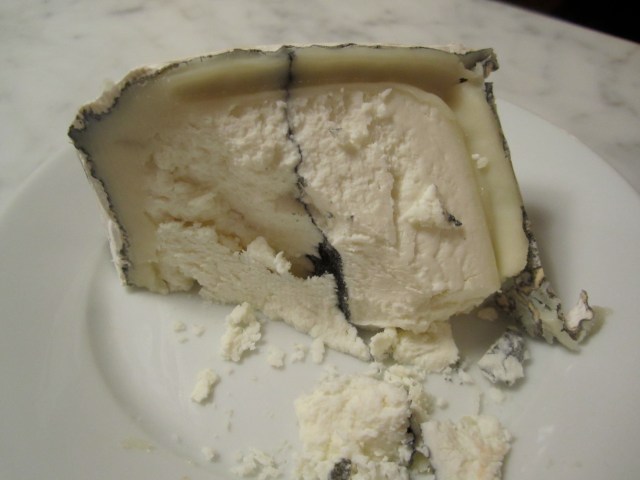
First, below: a goat cheese known as “Humboldt Fog”, made by Cypress Grove.  Very refined and earthy, with a layer of ash in the middle.
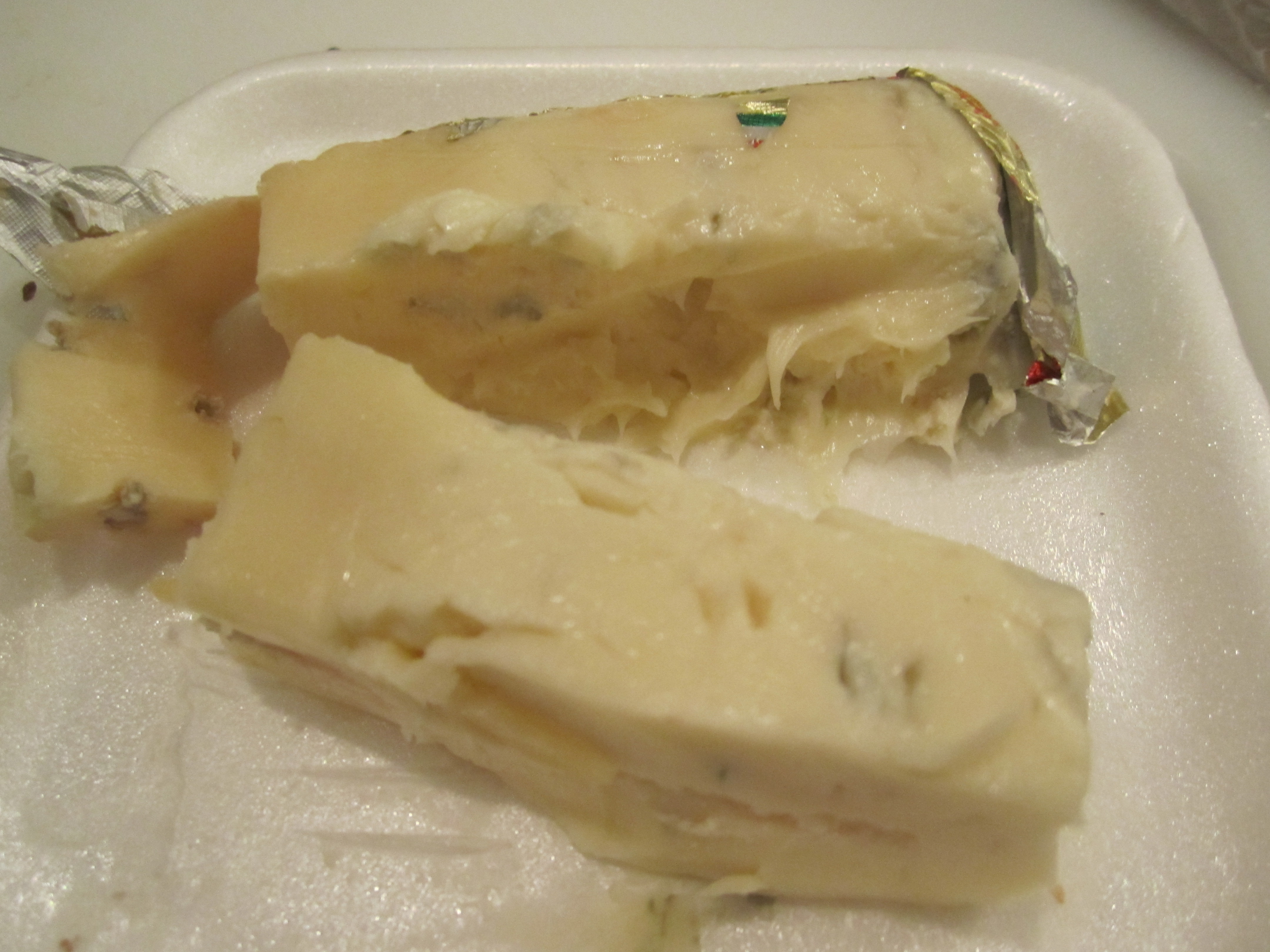
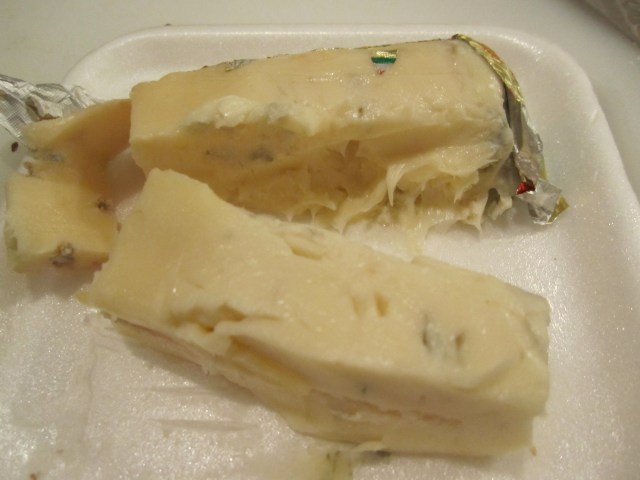
Second, below, Gorgonzola Dolce (as opposed to aged, crumbly gorgonzola)
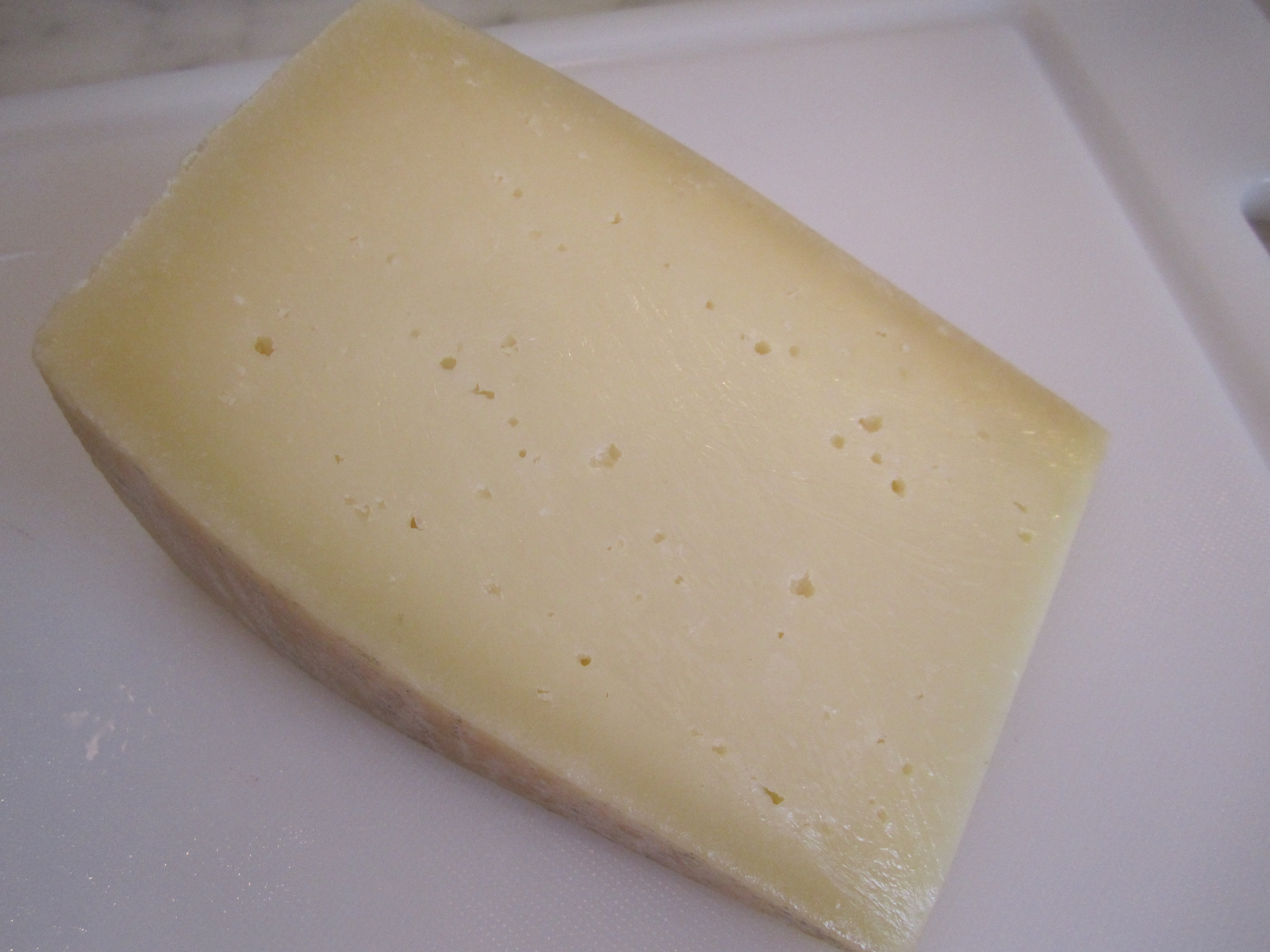
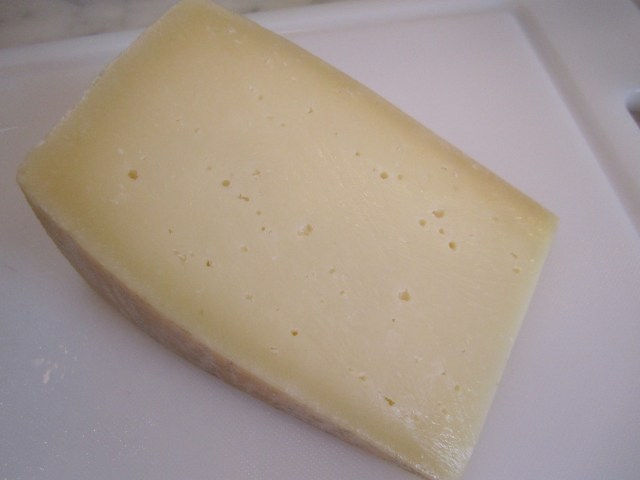
Third, below, Montasio, a slightly tart semi-soft cows’ milk cheese (the cheese for making Frico).
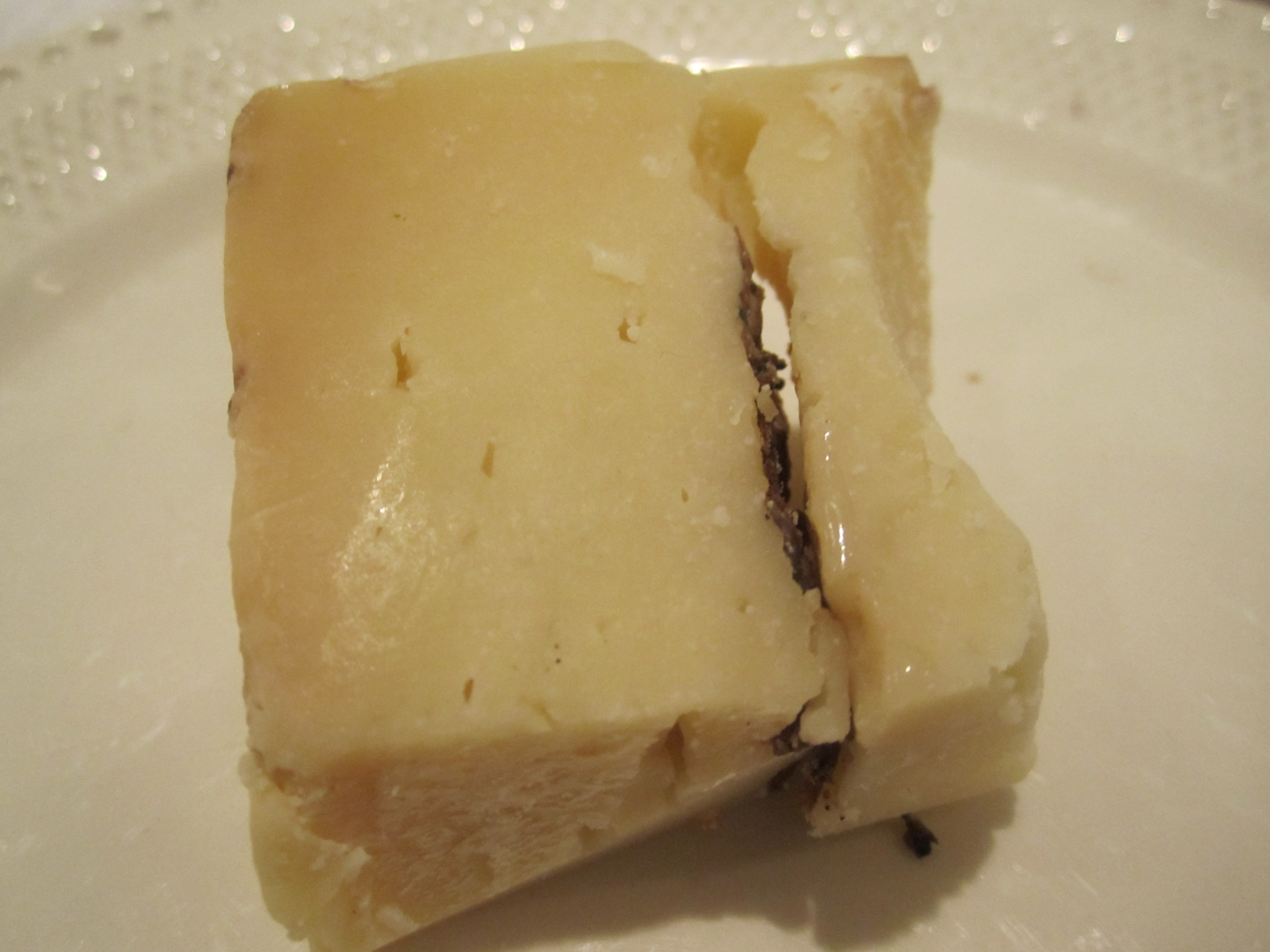
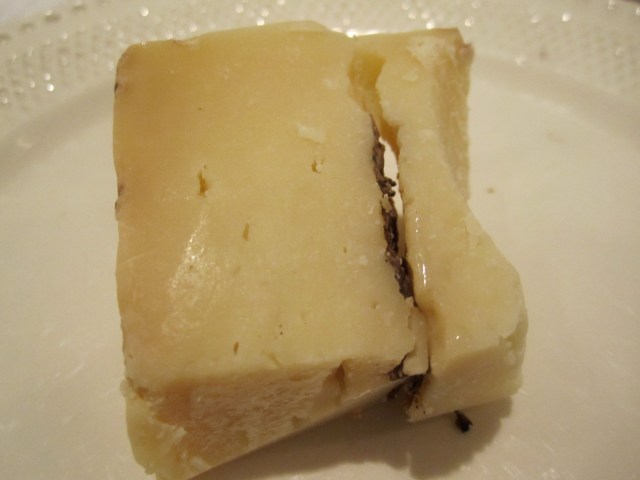
In addition, I served a fourth cheese, below.  This cows’ milk cheese, infused with black truffles, looked (and smelled) irresistable.
I picked all of these cheeses with leftovers in mind, knowing that only a fraction would be eaten by my dinner guests, whereas, I’d enjoy creating dishes with the leftovers all week long.

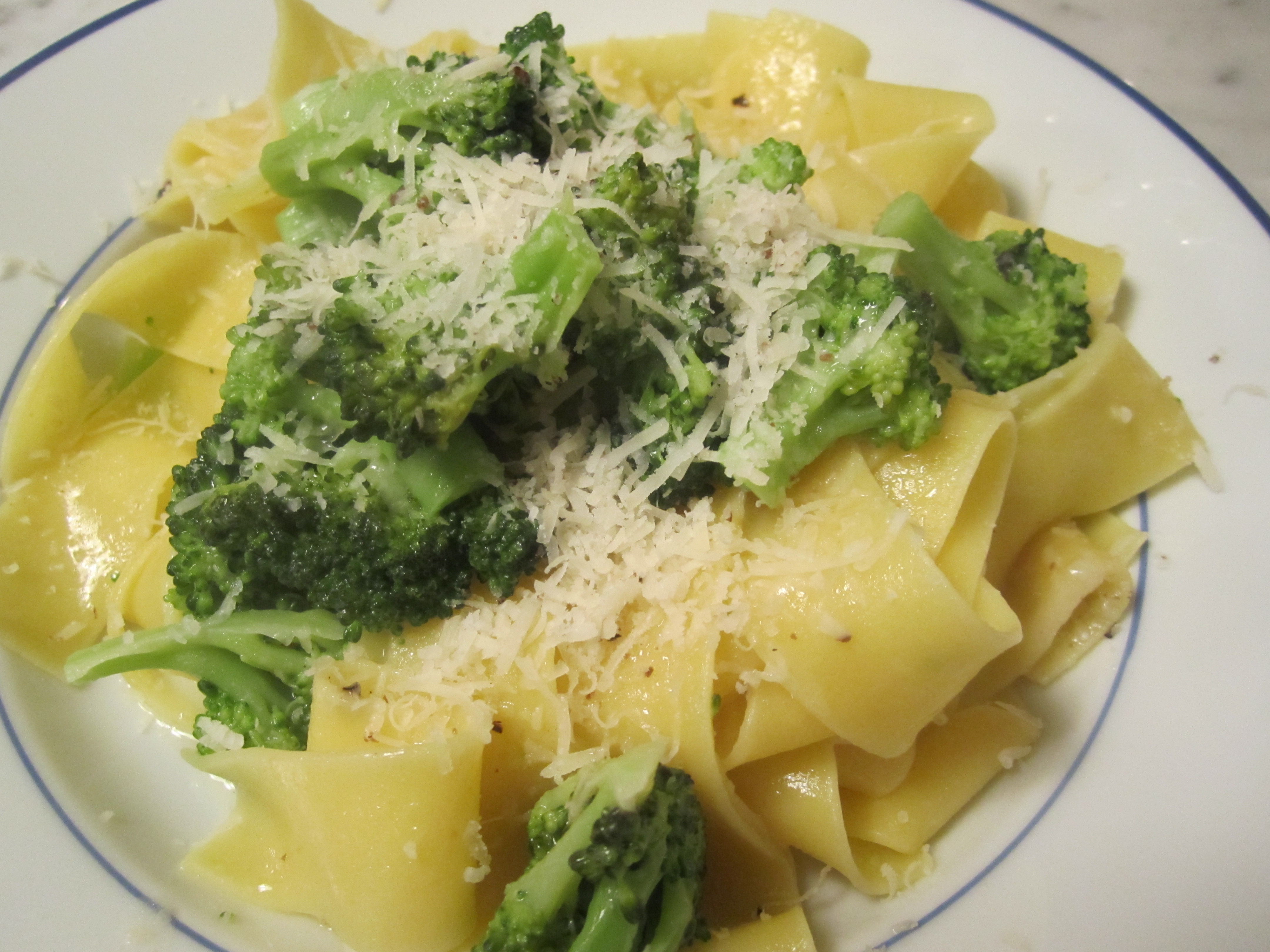
PASTA WITH BROCCOLI AND TRUFFLE CHEESE

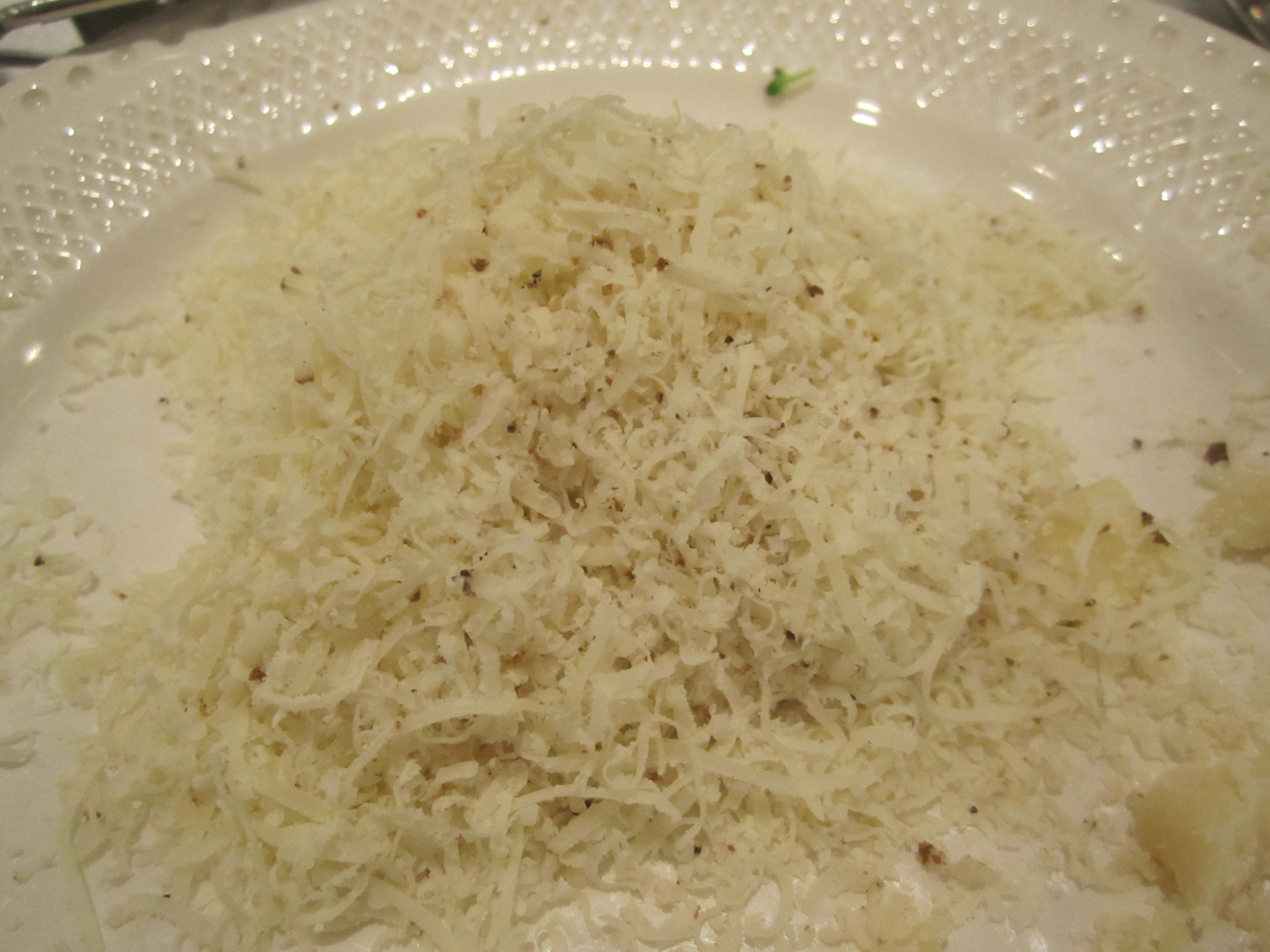
The first of the week’s meals featured that luscious truffle cheese.  Ever since I took one bite of it, I knew I had to have it grated over pasta.  In its grated form, the tiny flecks of black truffle became even more diffused and subtle.
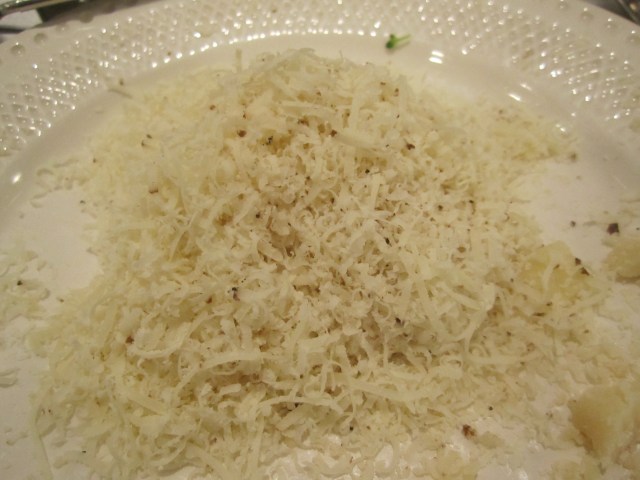
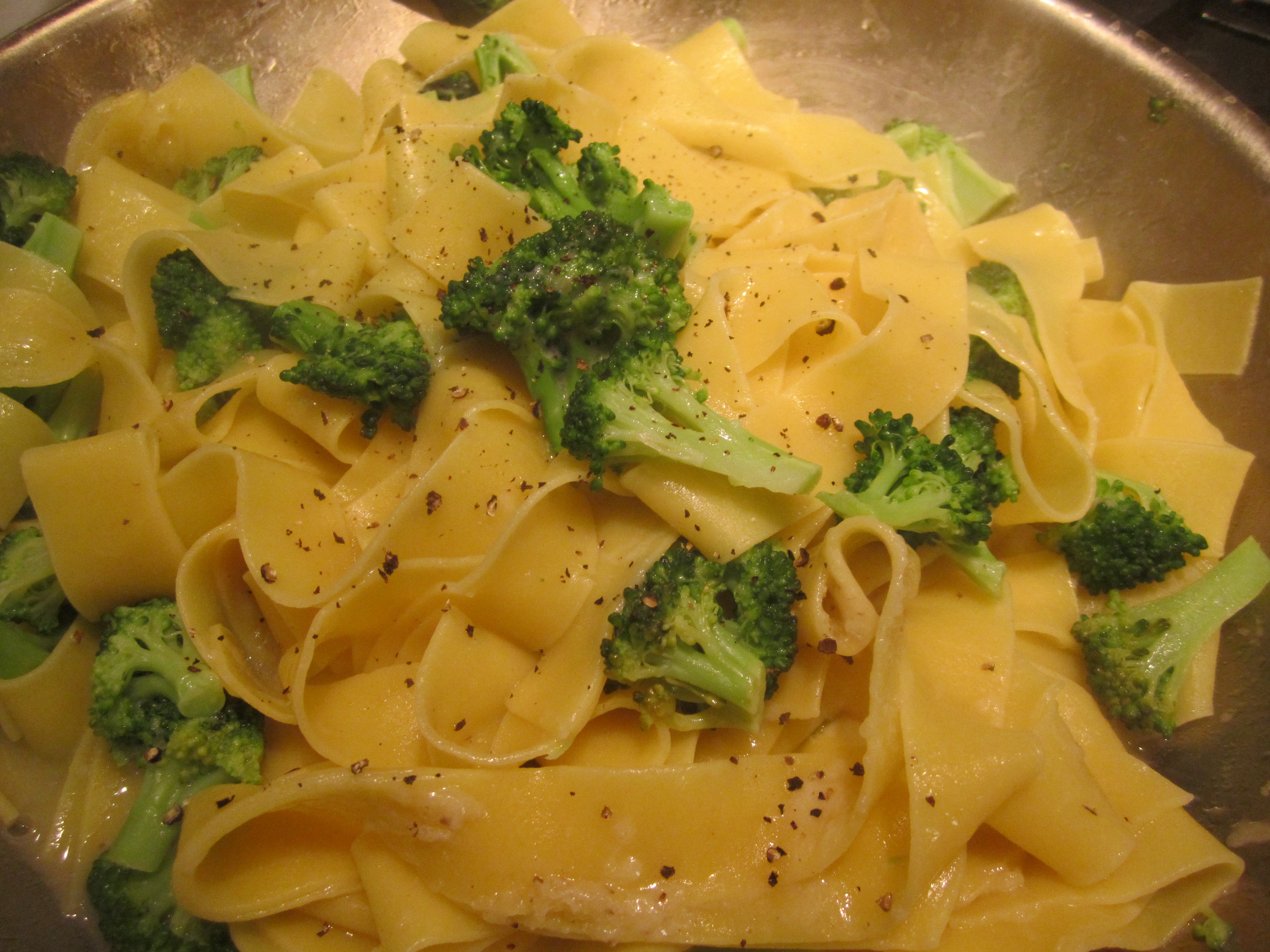
I knew that some egg pasta and butter would do this cheese justice. To lighten the dish, I added some sweet, local broccoli, blanched and chopped.
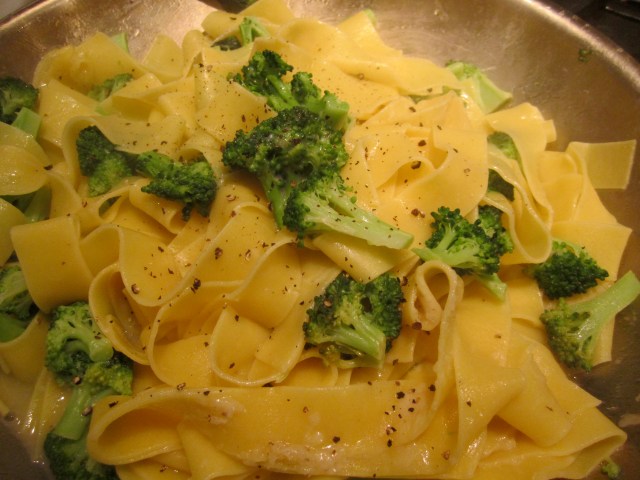
The ingredients were simply tossed in a skillet with cooked pasta, some pasta cooking water and grated truffle cheese.   More grated truffle cheese was sprinkled on at the table.

STEAK SALAD WITH HUMBOLDT FOG GOAT CHEESE

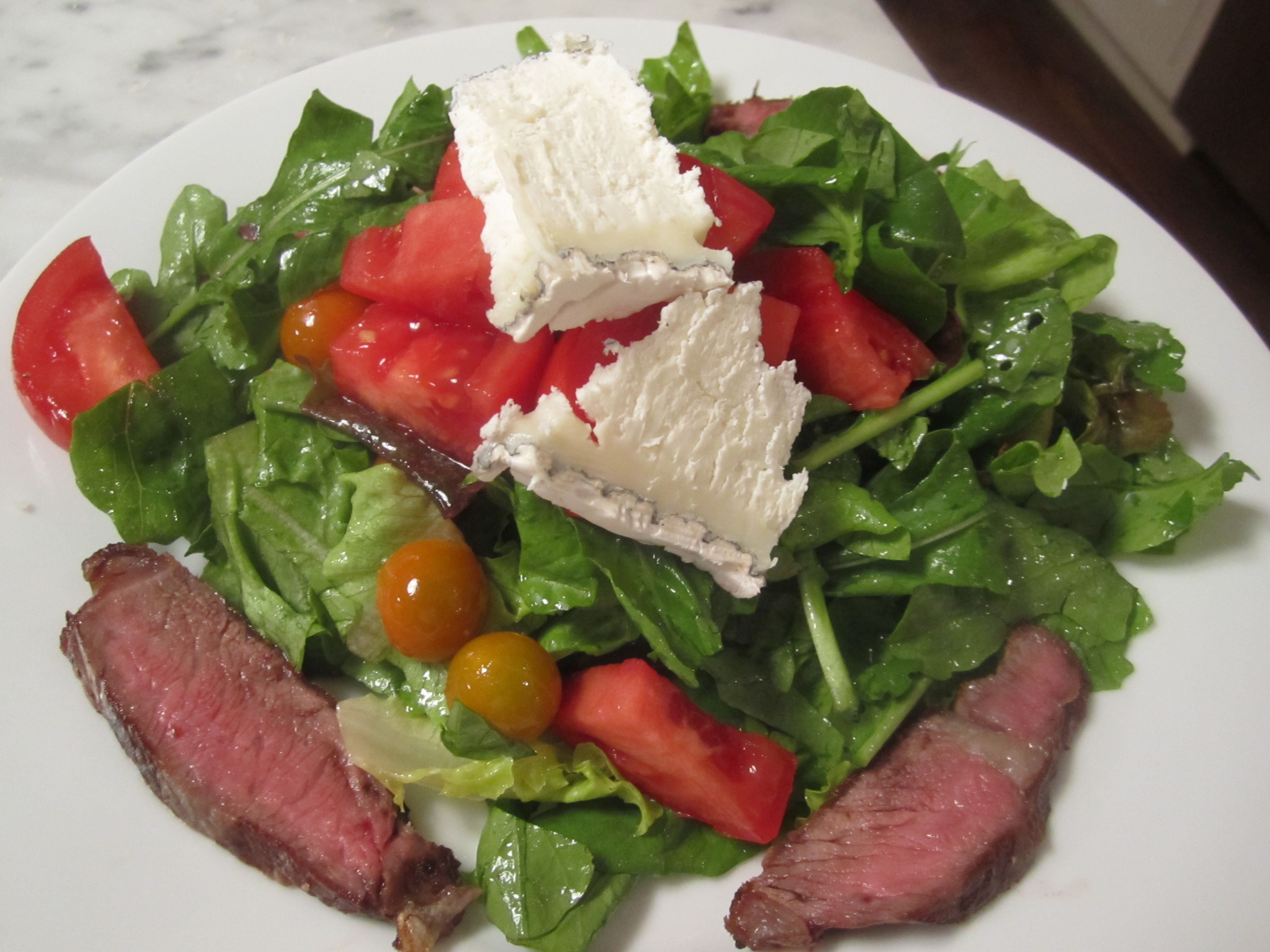
The following night’s meal consisted of a light salad with arugula, tomatoes, and beautifully grilled porterhouse steak, all topped with the Humboldt Fog goat cheese.
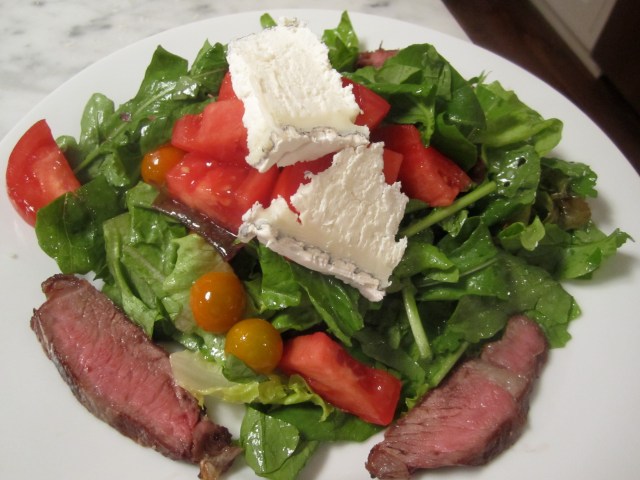
I’m not a huge steak eater, therefore, this is my preferred way to eat steak–grilled, thinly sliced and served around a pile of salad.  The real star of this salad, however was the cheese.

SALMON WITH SAVOY CABBAGE AND BACON

followed by

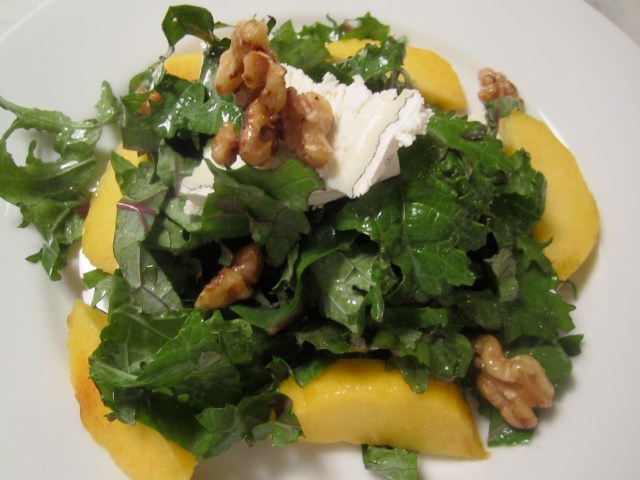
SALAD OF RUSSIAN KALE, PEACHES AND HUMBOLDT FOG GOAT CHEESE

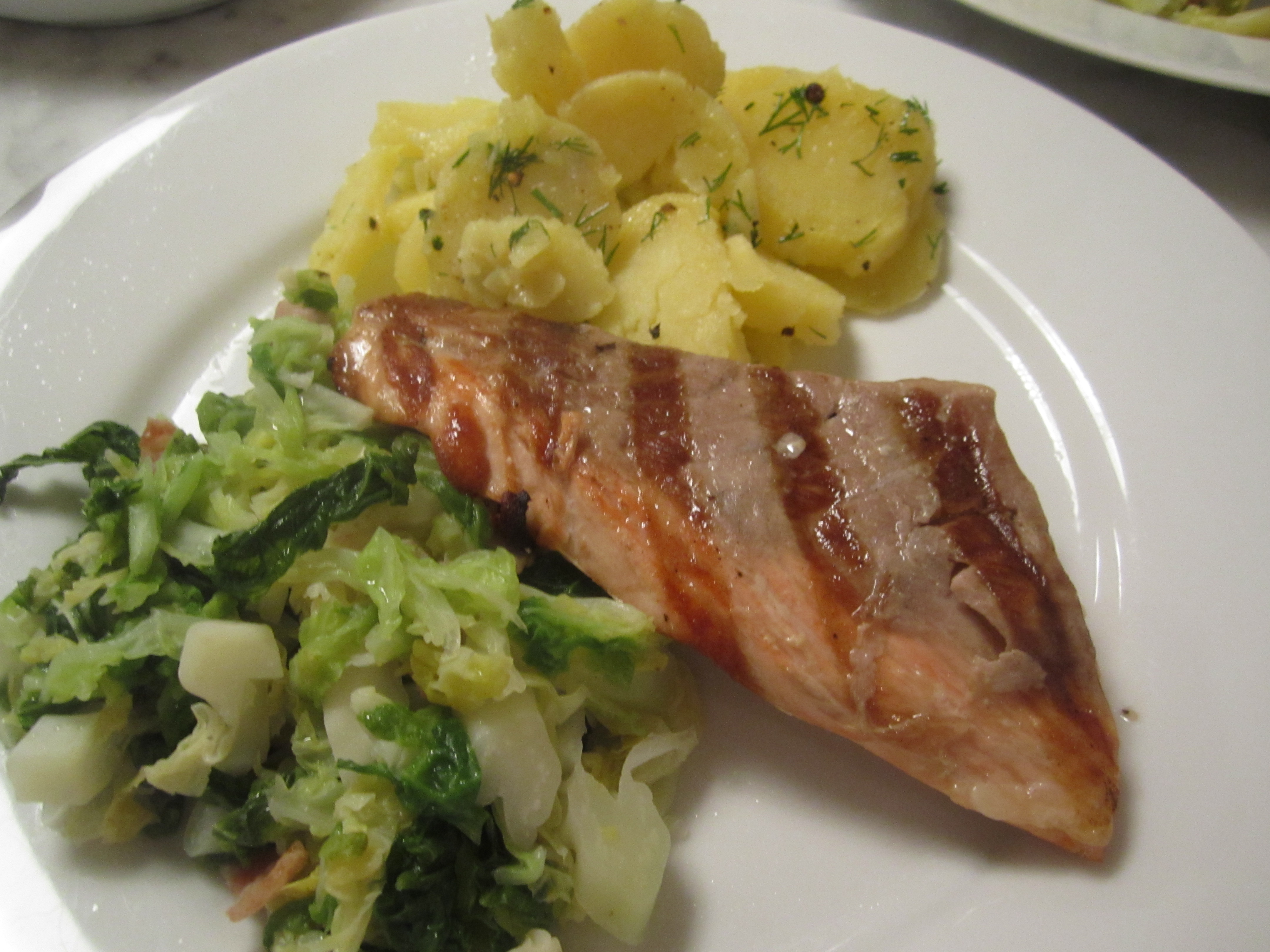
The following evening, we had some grilled wild salmon, with boiled potatoes and savoy cabbage.
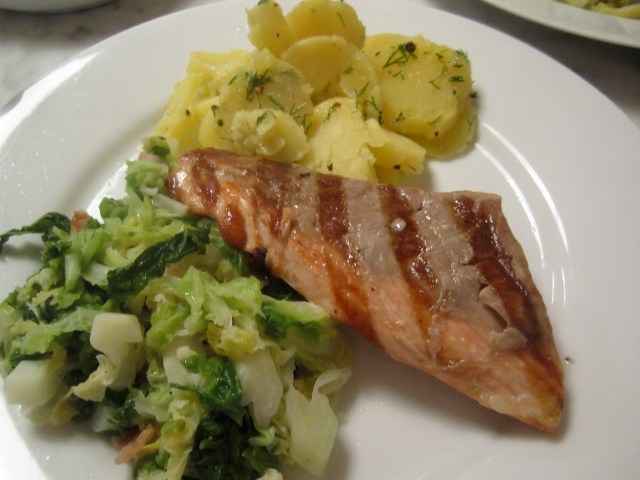
The potatoes were local new potatoes, boiled with their skins on, then peeled with a paper towel, sliced into rounds and dressed in layers, with salt, pepper, fresh chopped dill and olive oil.

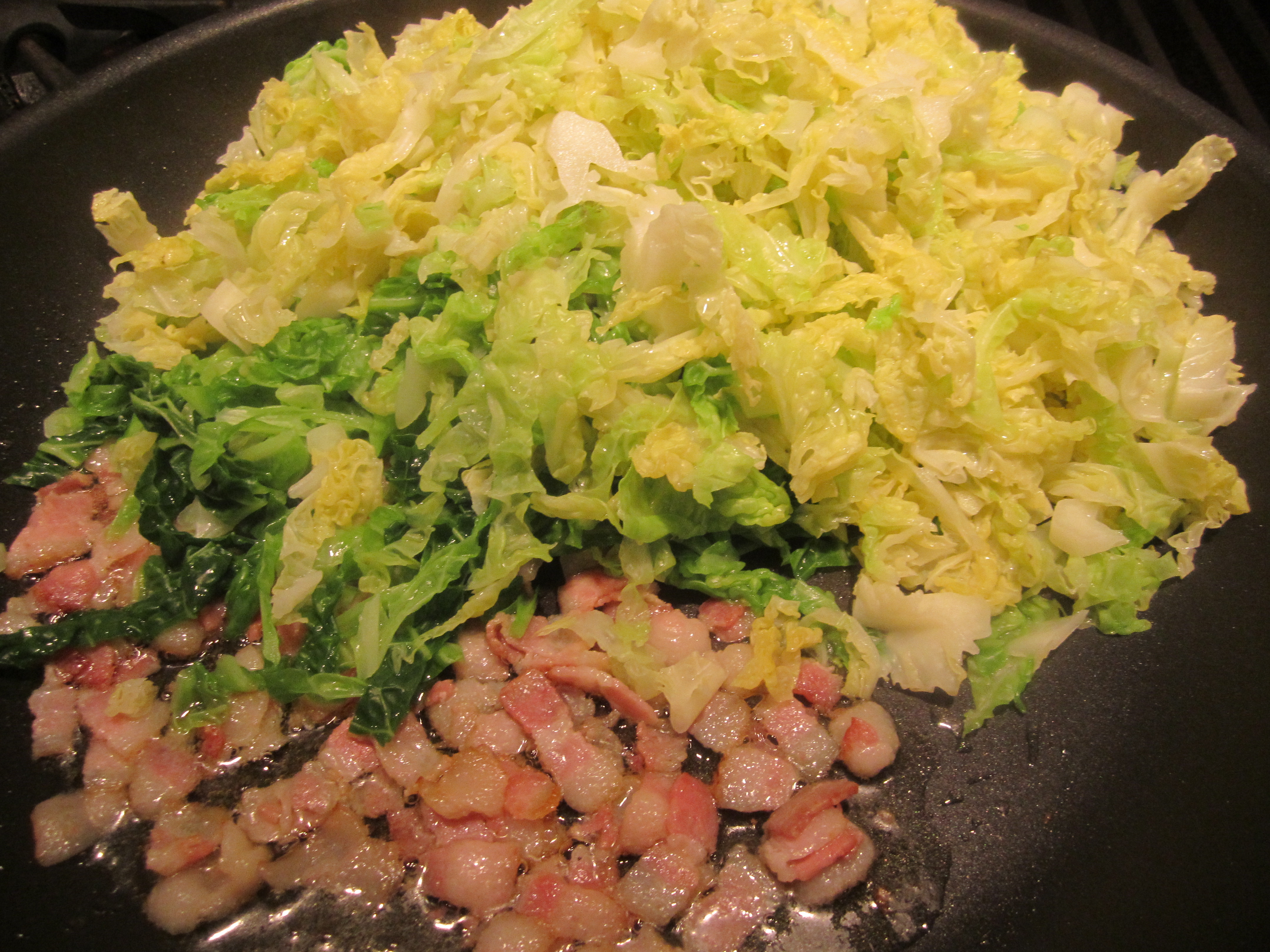
The cabbage was blanched, then sauteed with bacon.

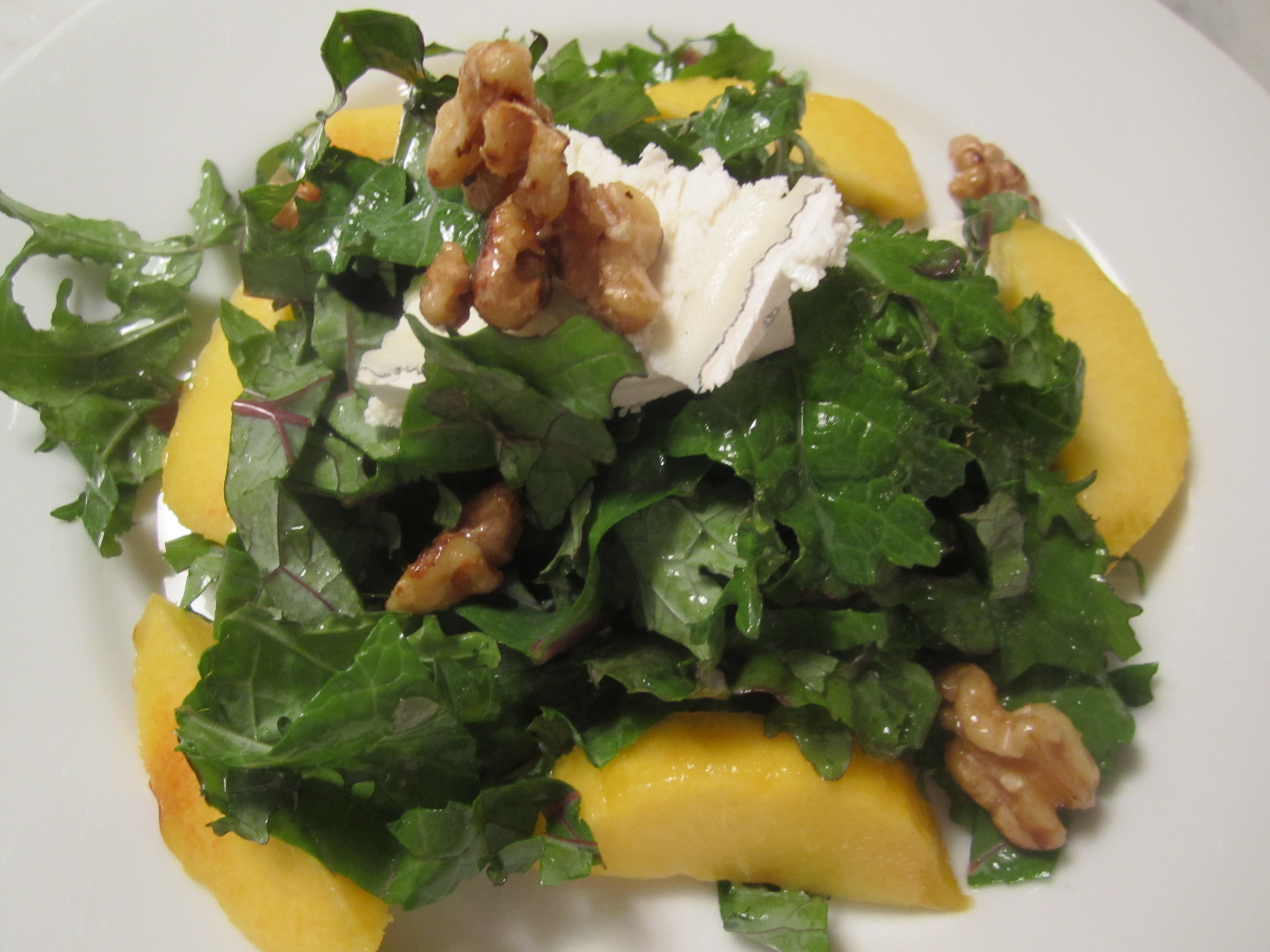
The main course was followed by a beautiful salad, featuring chopped russian kale (crunchy, firm and mustardy) with beautifully ripe, sweet local peaches, dressed with red wine vinegar, agave and olive oil.  This was topped with (once again) the Humboldt Fog goat cheese–a clean and luscious palette cleanser.
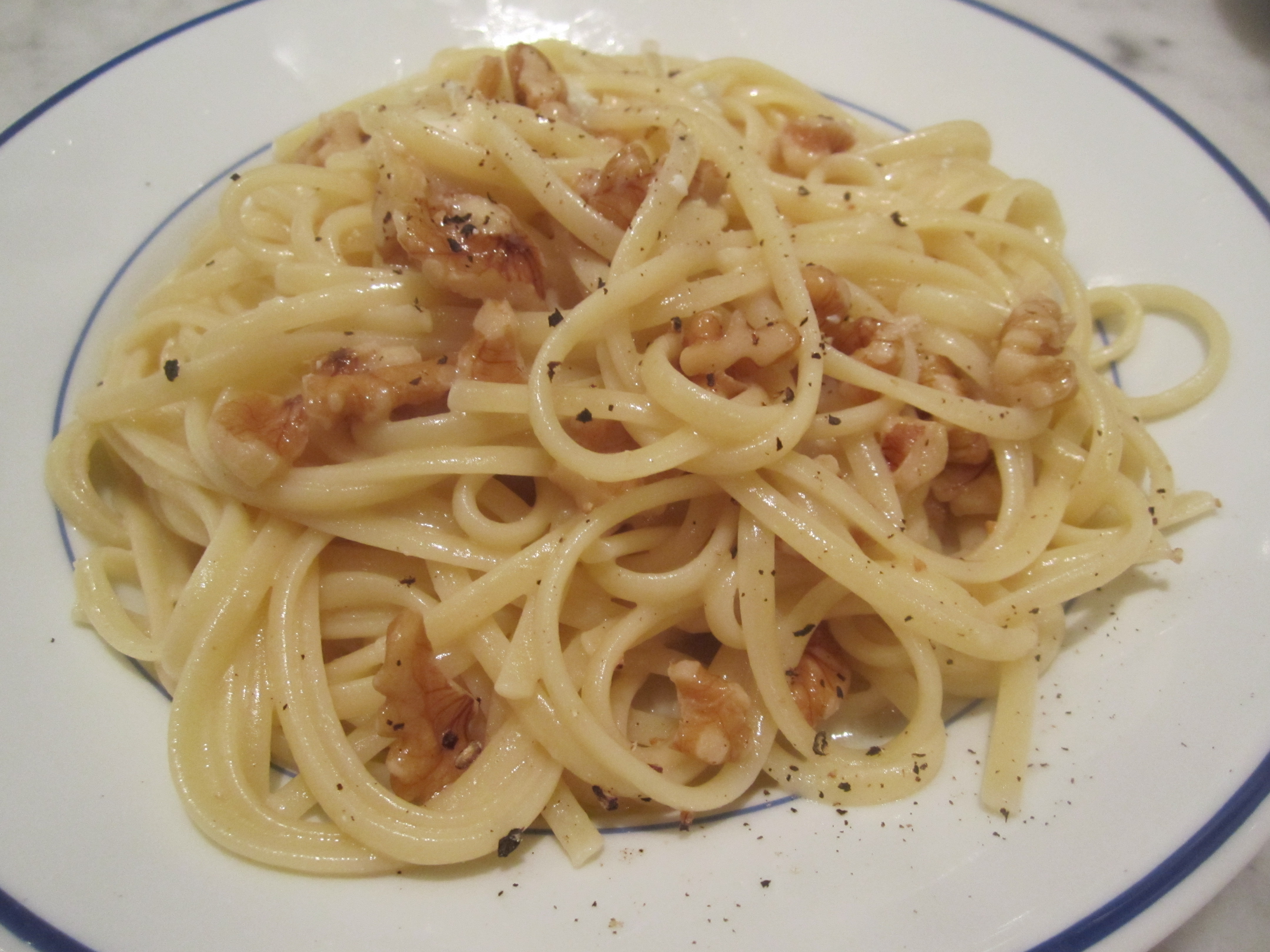
PASTA WITH SWEET GORGONZOLA AND WALNUTS

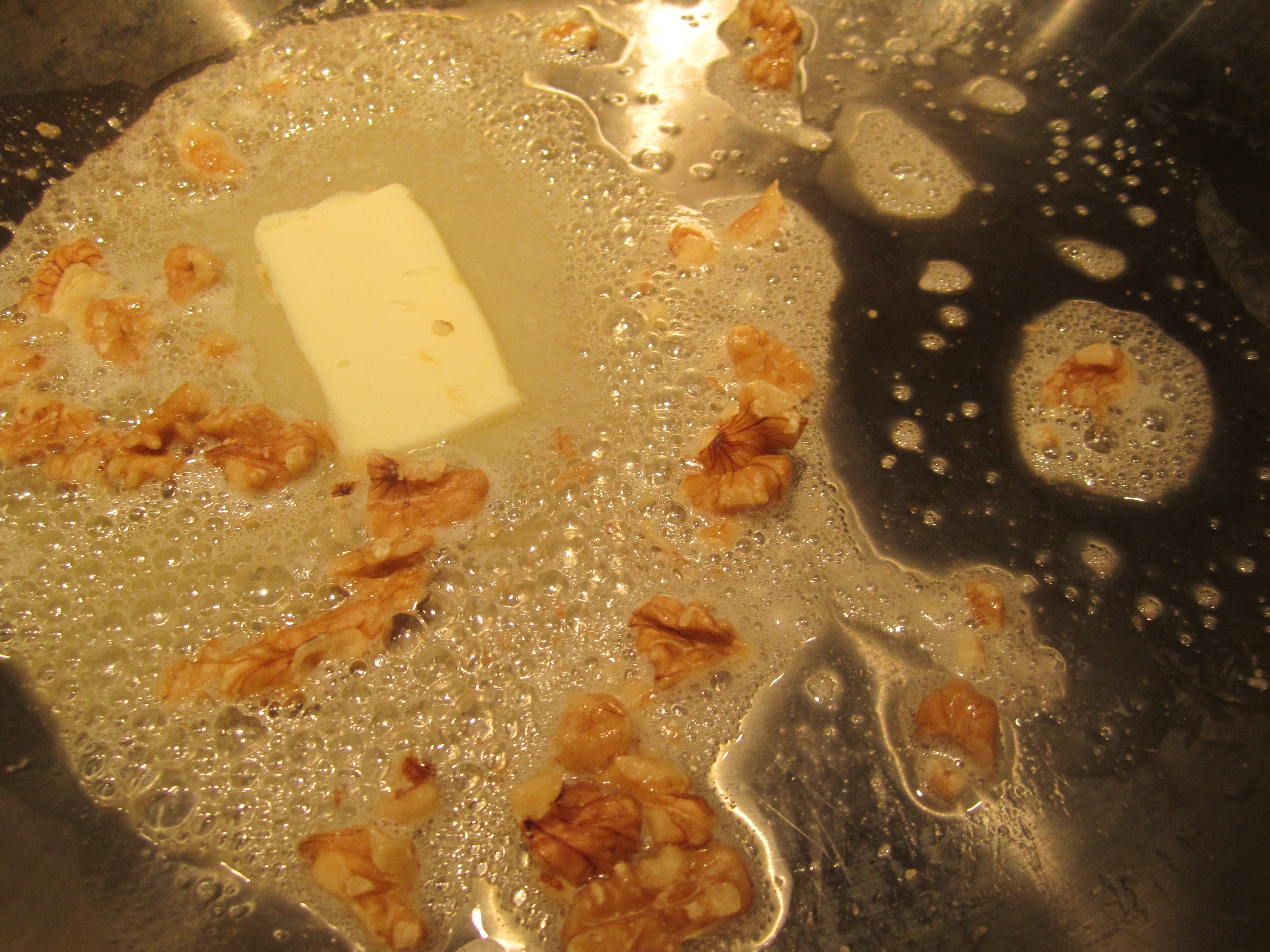
The following evening, our meal featured the sweet gorgonzola.  This cheese is a wonderful foundation for a decadent pasta sauce, along with butter and walnuts.  The butter diffuses the cheese, and the walnuts add a bit of crunch, texture, and of course, nuttiness.

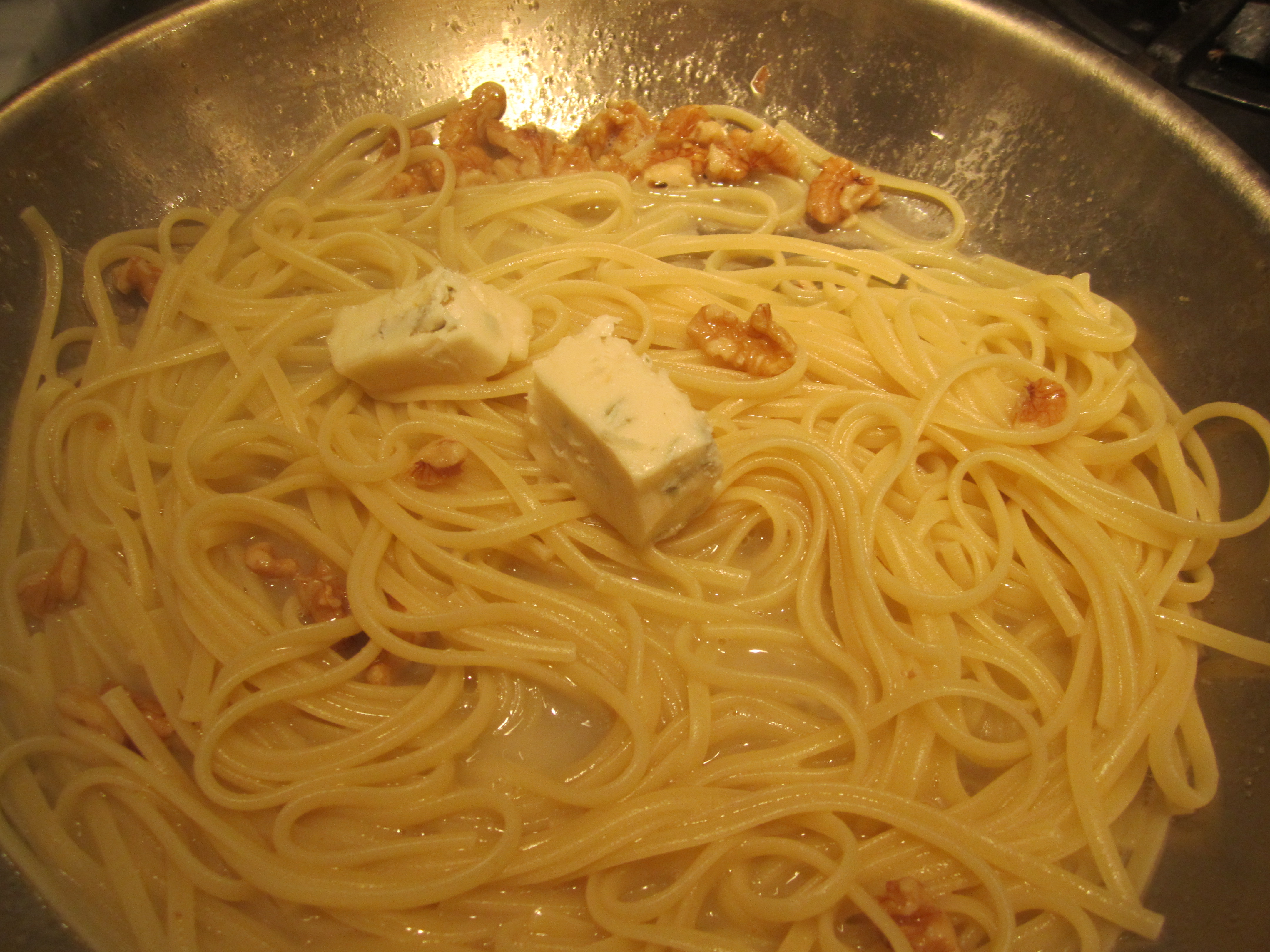
The dish is as simple as pasta gets.  While the pasta boils (I prefer linguini), in a skillet, melt some sweet butter, and add walnuts.

Saute the nuts just for a minute or two (no need to toast them).  At the last moment, add the pasta, along with some cooking liquid, and a couple of ounces of the gorgonzola (to taste).
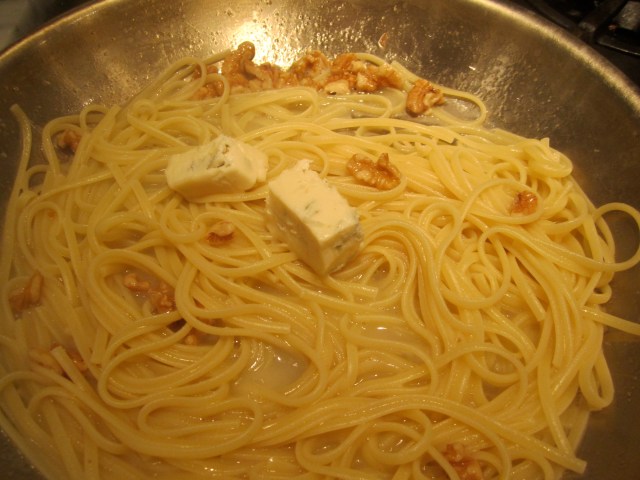
Toss and stir until the sauce is the consistency of reduced heavy cream.
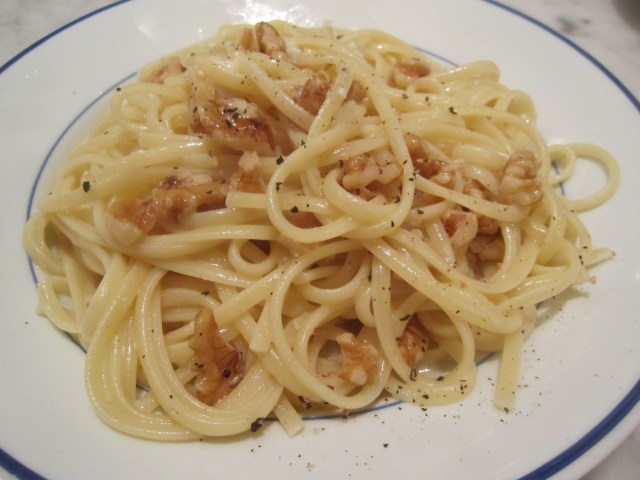
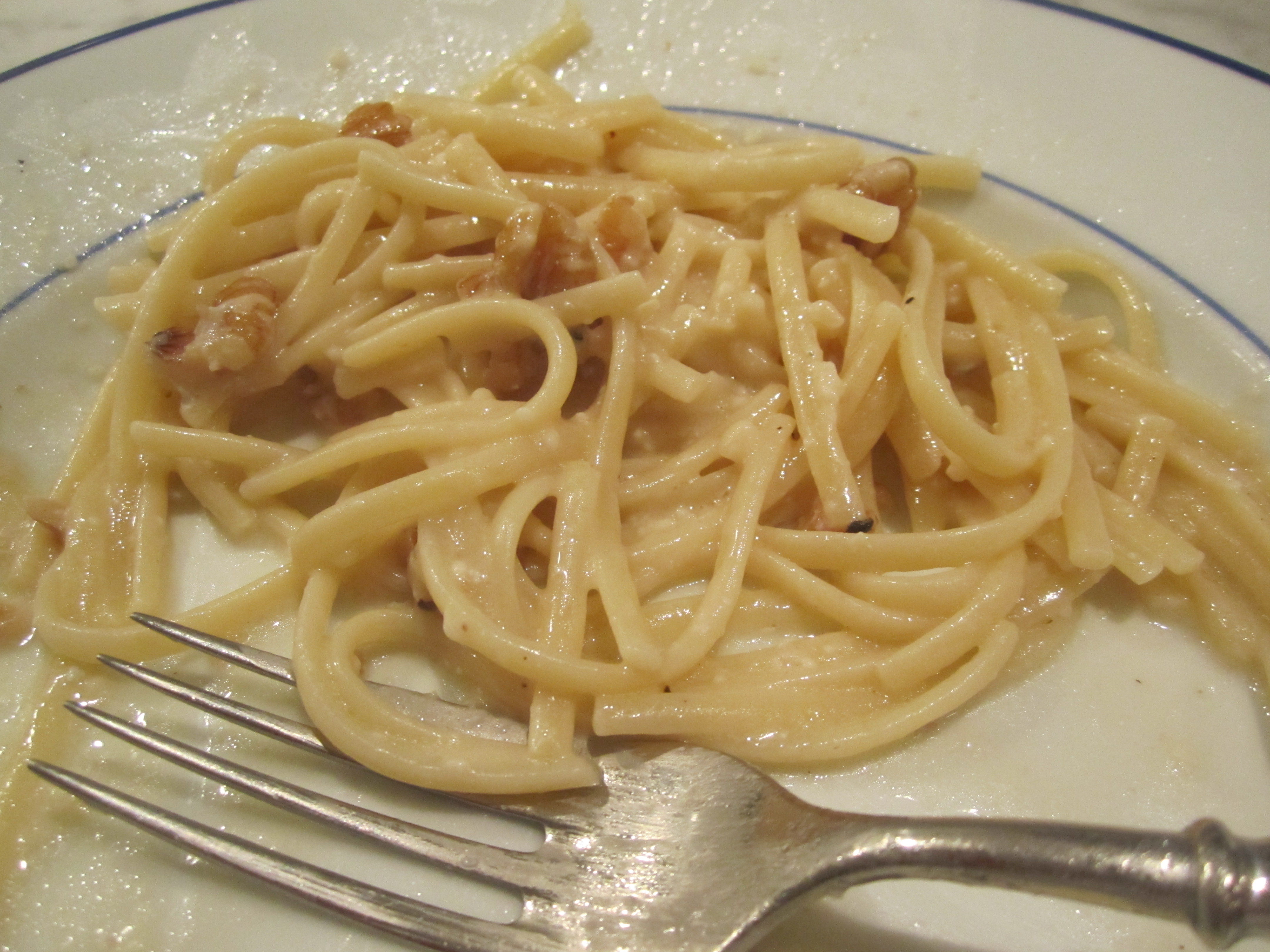
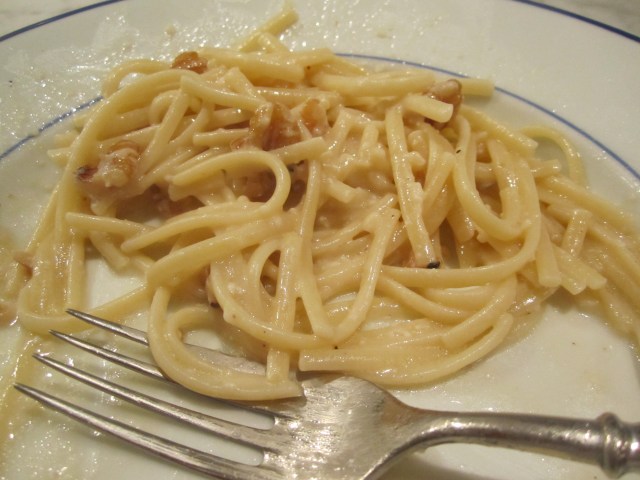
You may want a touch of grated parmigiano on top, or you may decide the dish is rich enough on its own.  It’s a dish that will stay in your sense memory, due to its unique and luxurious flavors.
FRICO

Finally–Friday night–time for the star of this post–Frico.  Frico is a cheese crisp, from the region of Friuli, featuring montasio cheese (although some people make it with parmigiano or other cheeses).

The frico can be an appetizer, or a meal on its own.  It can be made using only cheese, or with added ingredients, like potatoes, etc., to add some texture and interest.

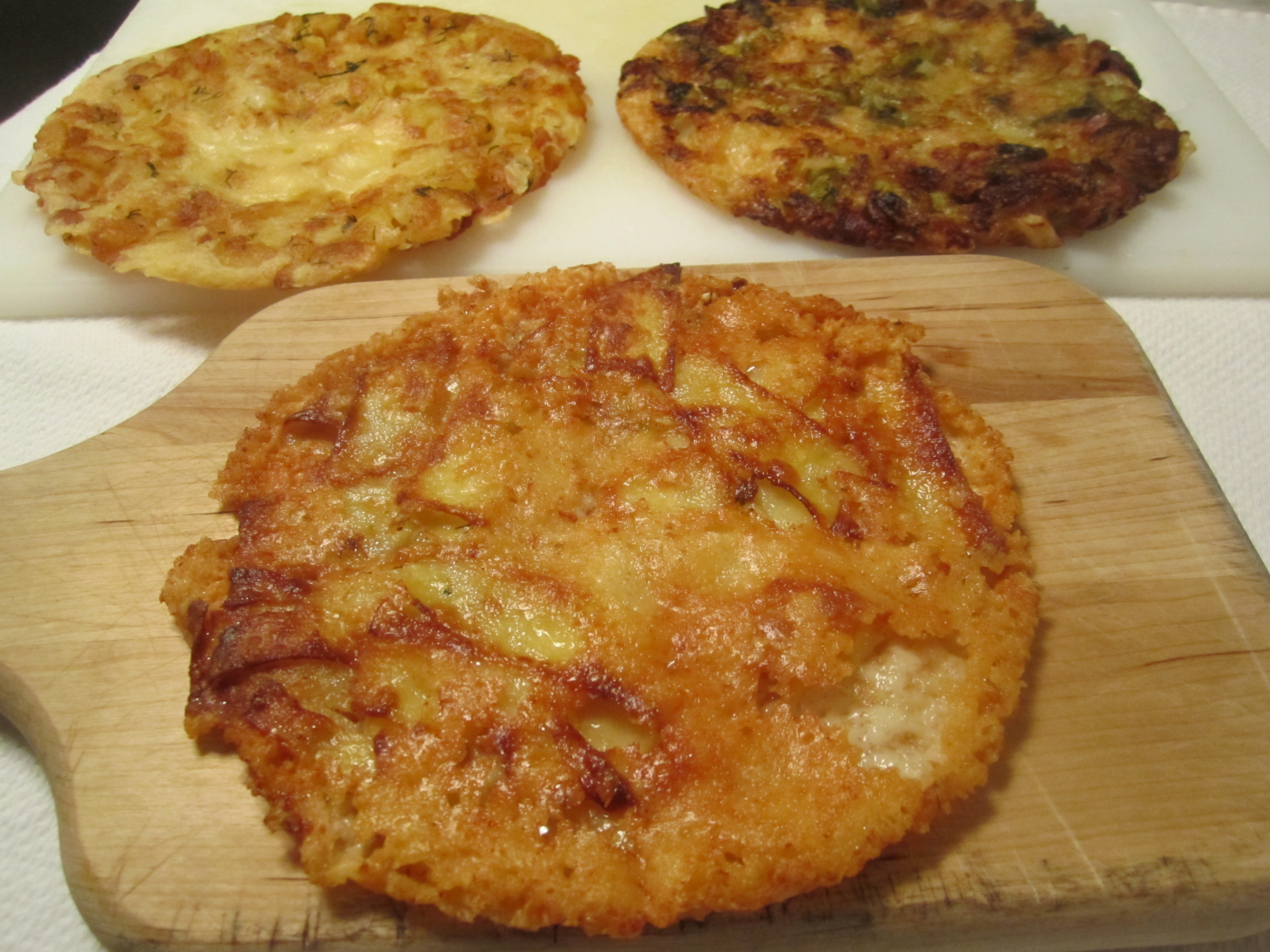
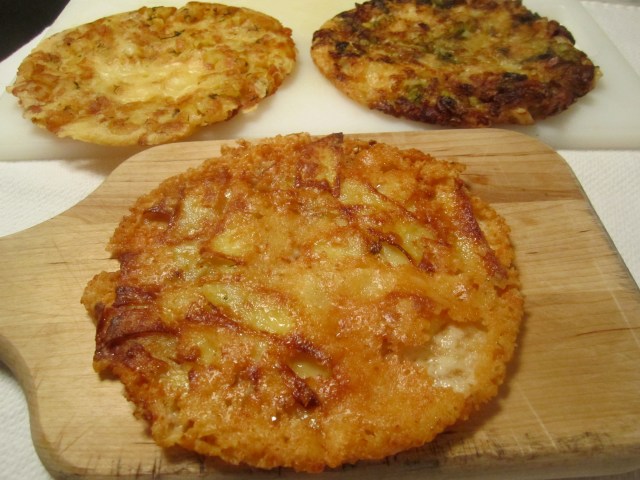
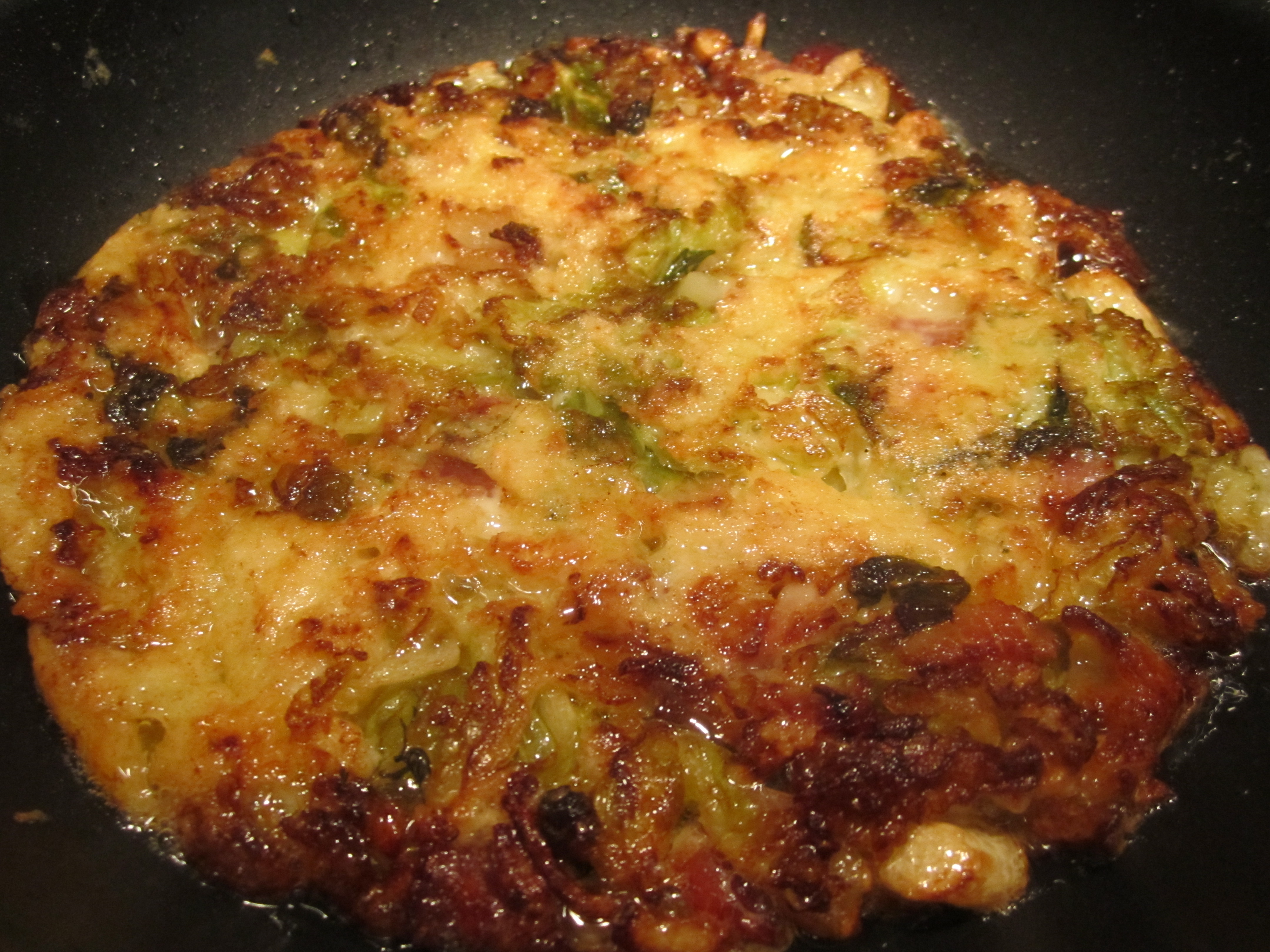
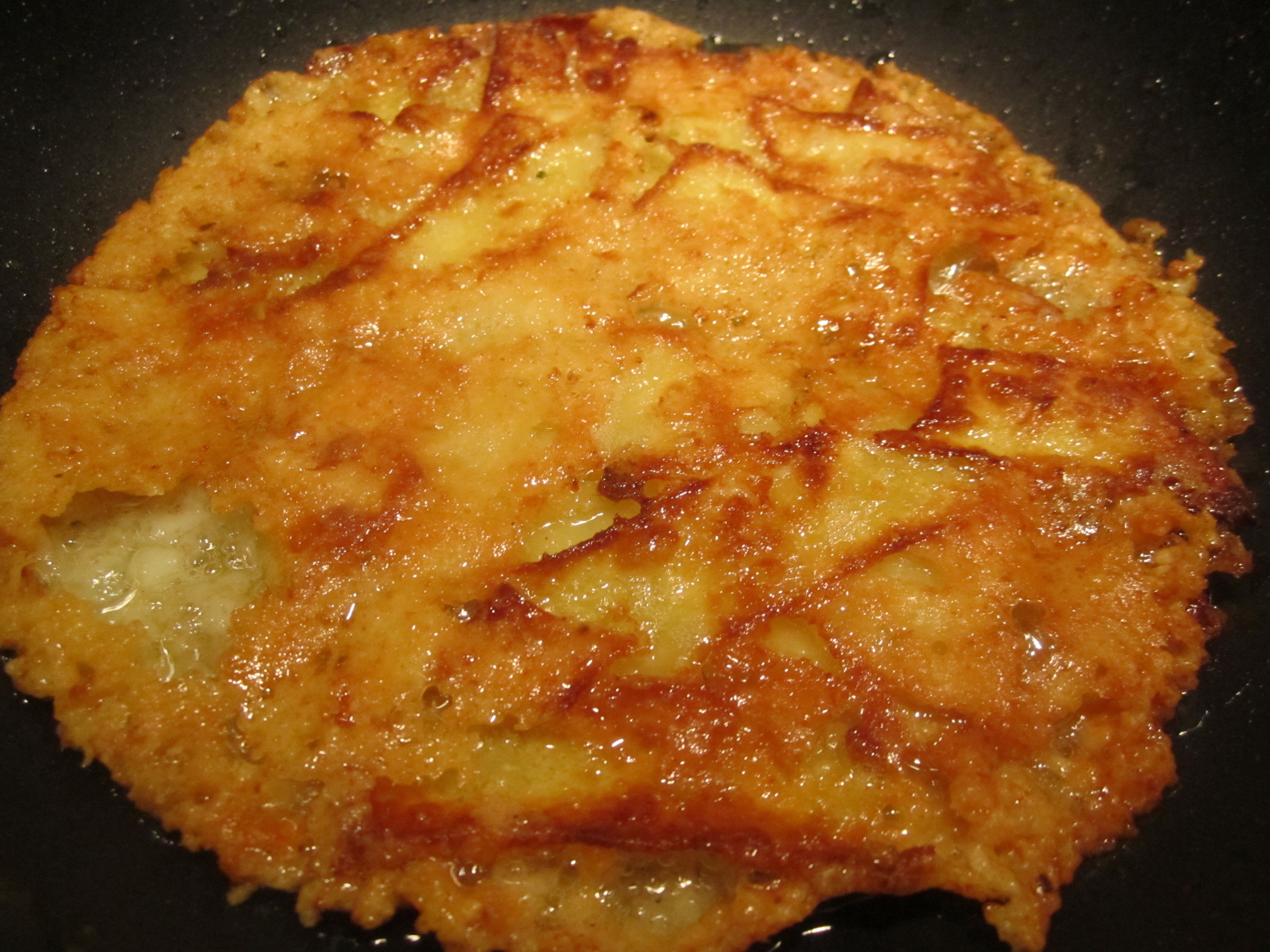
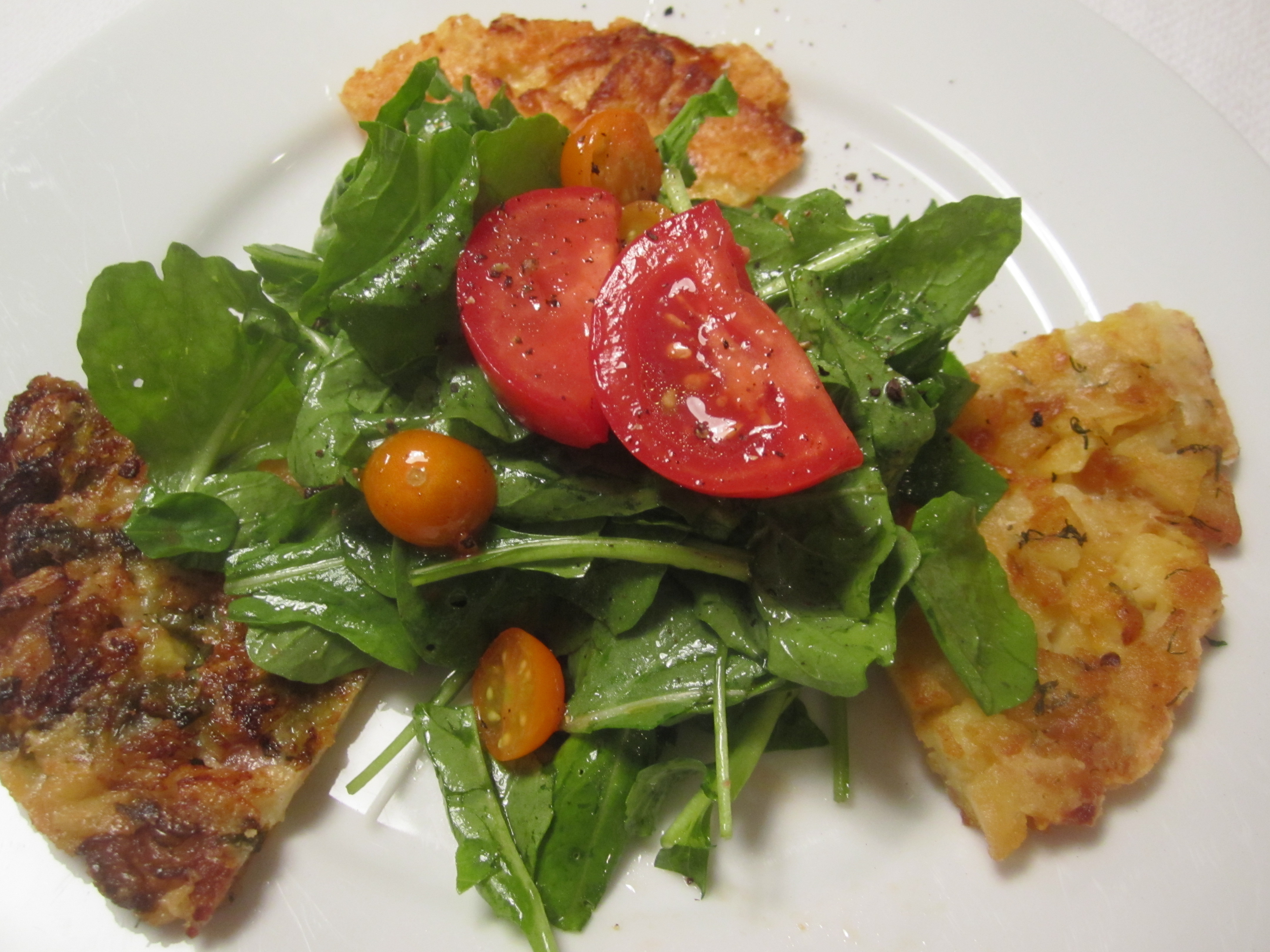
By the time Friday came, I had the perfect leftovers with which to make three varieties of frico:  cooked potatoes with dill; savoy cabbage with bacon, and cooked pasta.

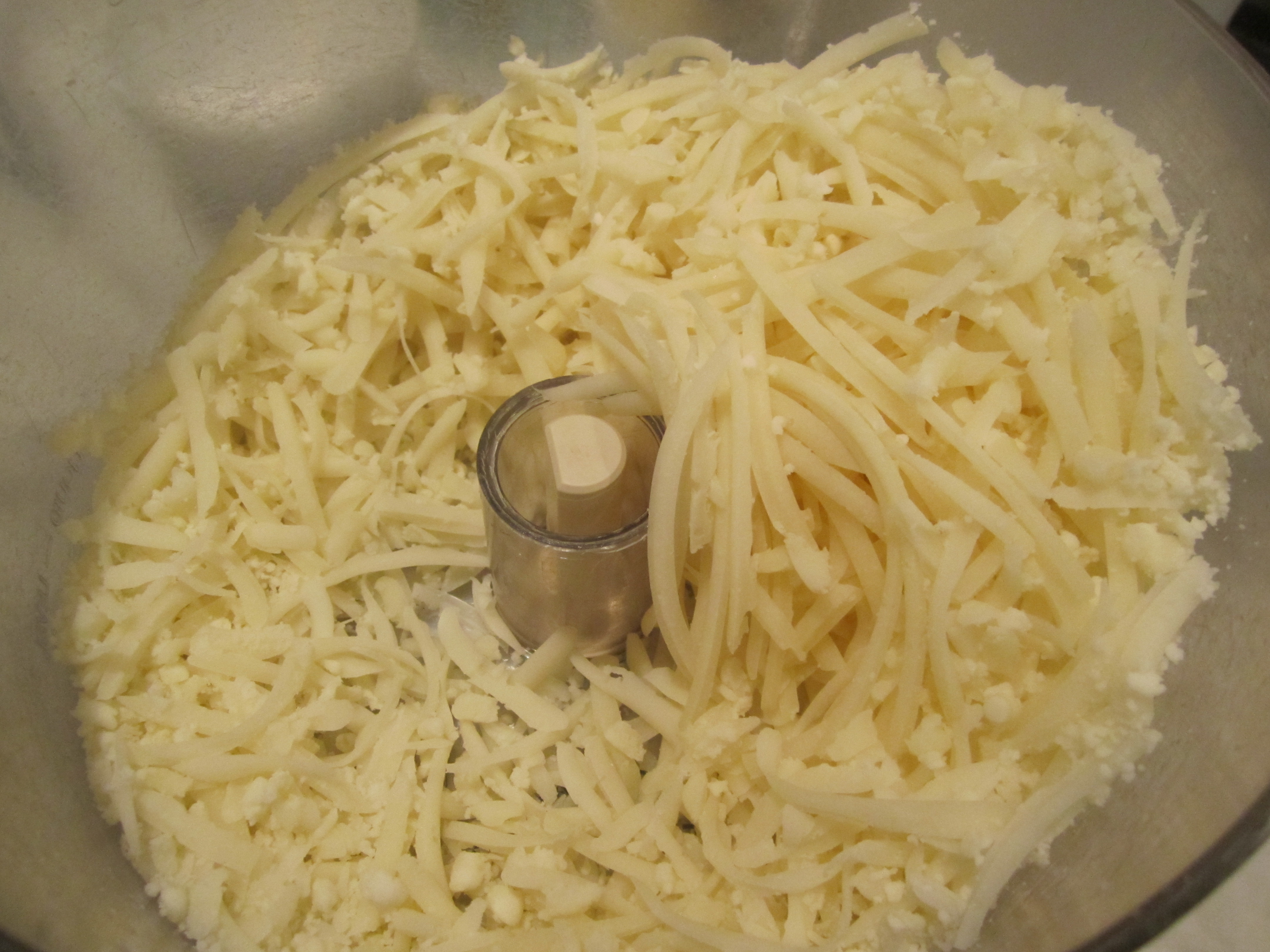
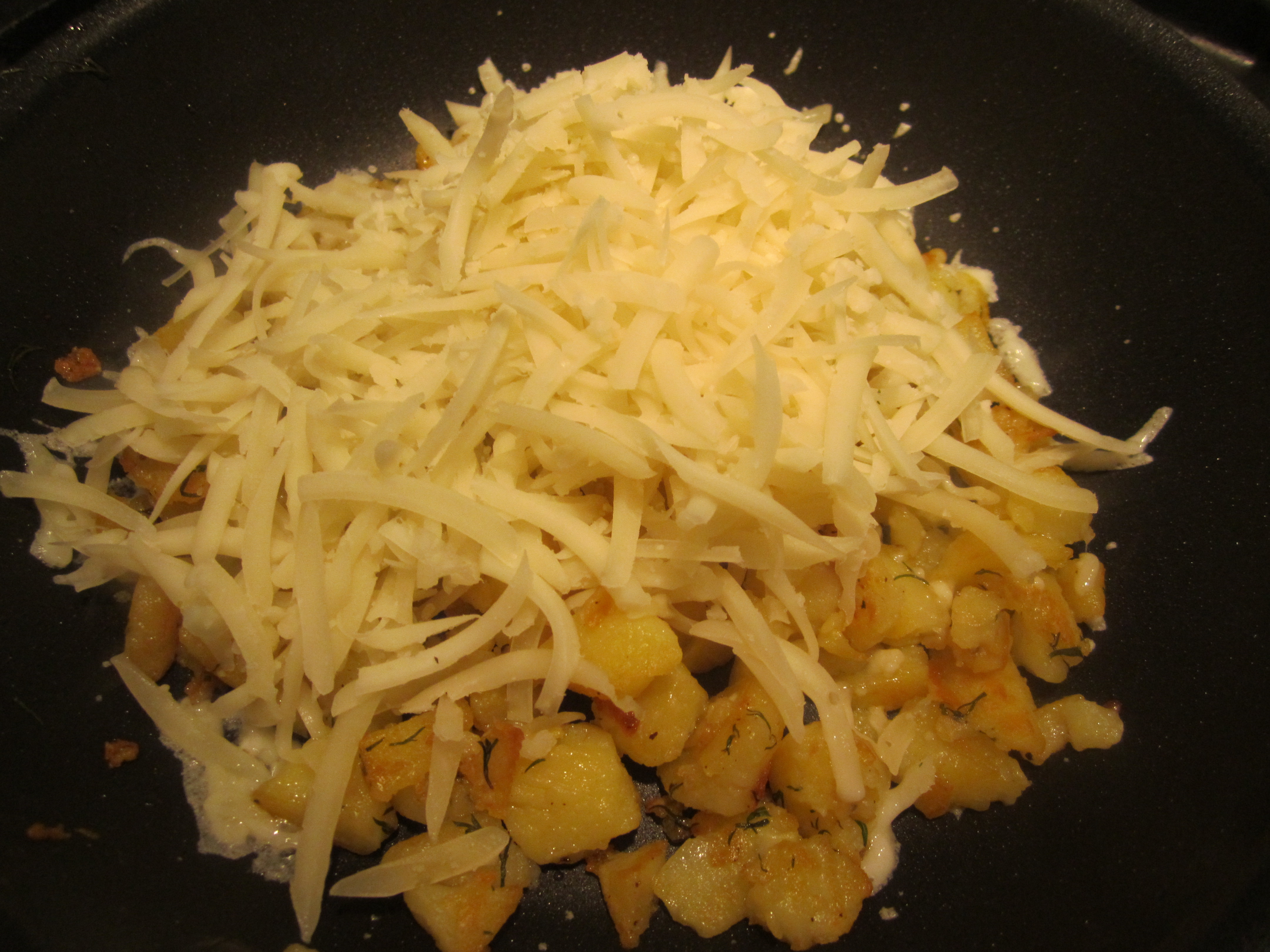
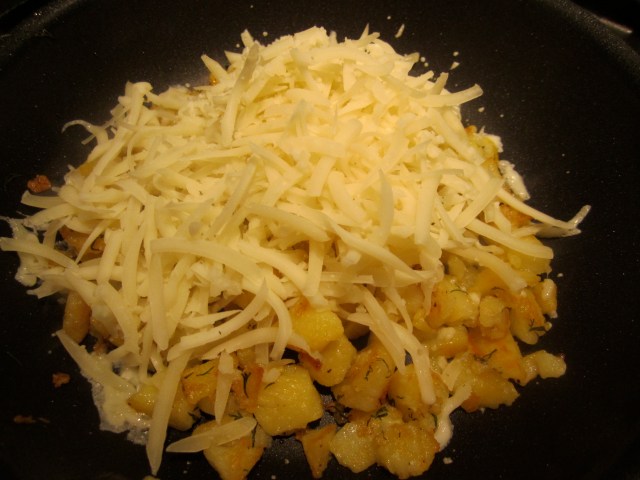
The frico begins with a mass of grated montasio.
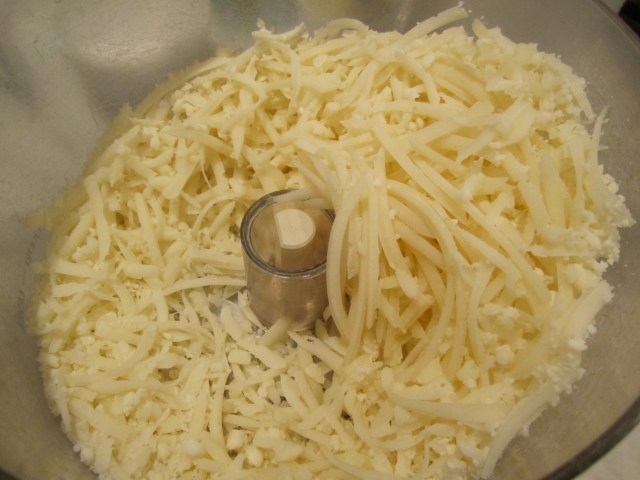
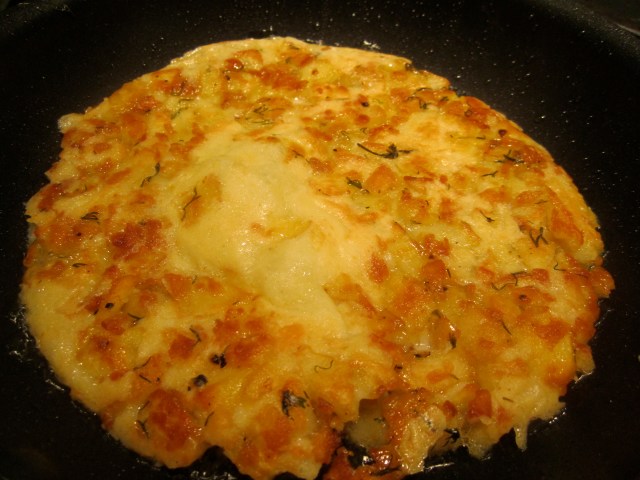
The technique for the frico is very simple:  place a handful of the cooked ingredient in a nonstick skillet with a teaspoon or so of olive oil.  Saute the ingredient until fully cooked and slightly golden, then toss in some grated montasio (about a third of a cup) and toss briefly.  Allow the mass to melt and slowly turn golden for about 5 minutes, while shaking the pan to make sure the cheese is not sticking.  Flip and repeat on the second side.

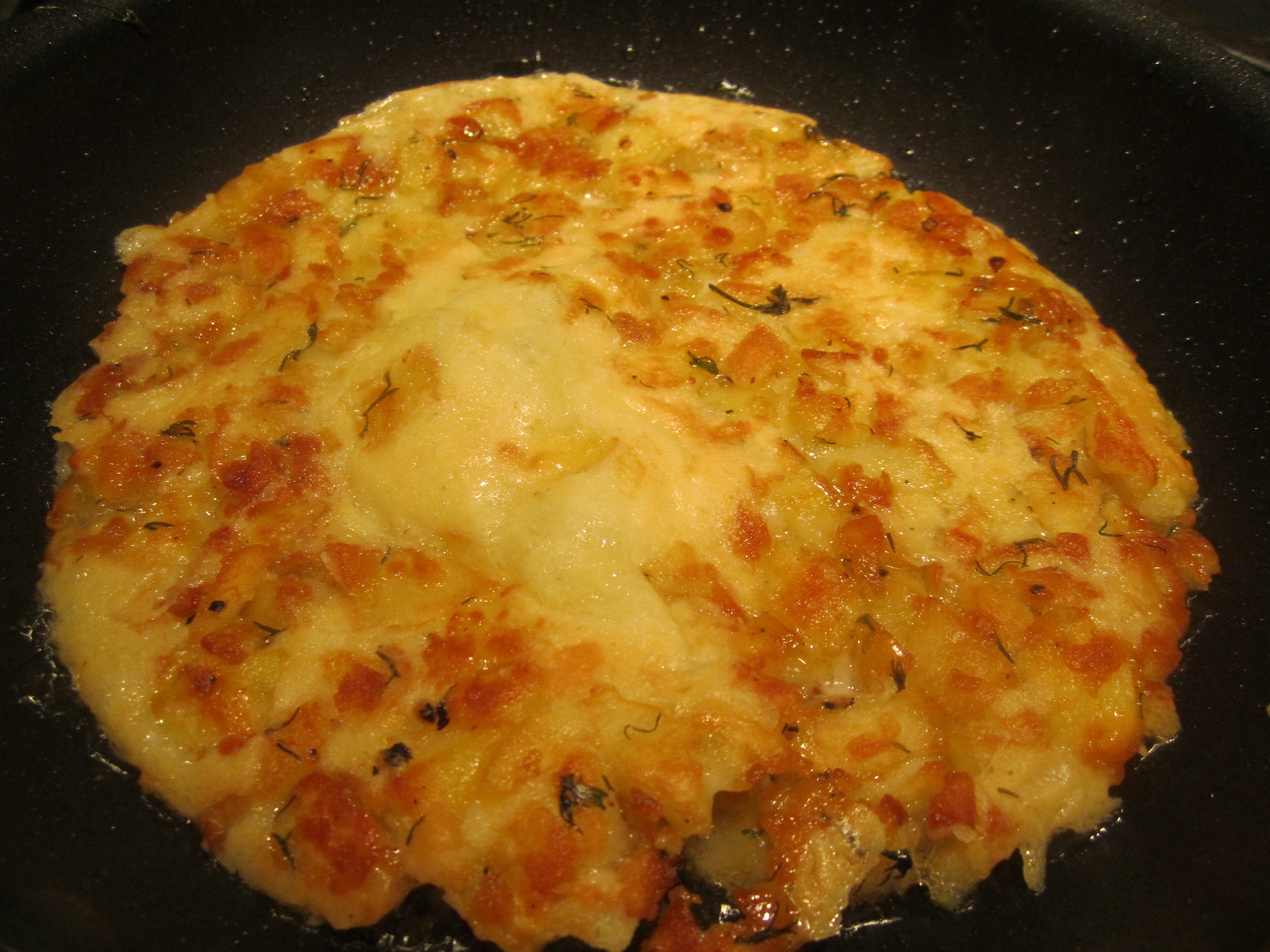
My potatoes with dill from the salmon meal were fully cooked and nicely seasoned.  I placed them in an 8″ skillet with no added oil, since they were dressed with plenty of oil.  After browning them slightly, the cheese was added.
After 5 minutes, the frico was flipped and allowed to brown on the other side.
The cabbage and bacon received the same treatment, and the cabbage is especially good when it begins to caramelize.

The pappardelle with the truffle cheese were the foundation for the final frico.
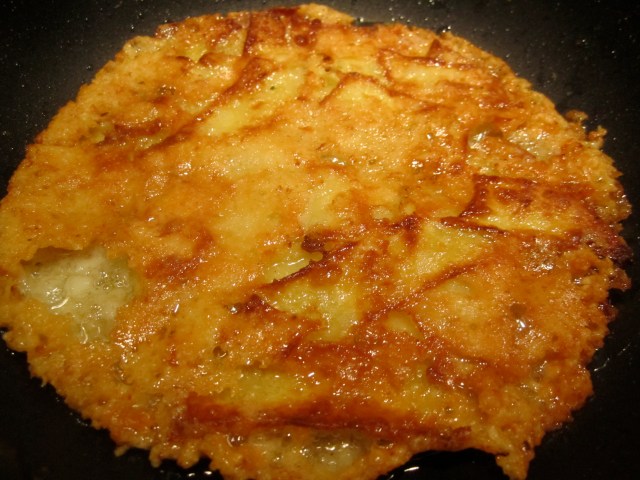
This combination of fried pasta made an unexpected and extremely crisp and golden frico.

The only thing to serve with frico is a crisp, refreshing salad.
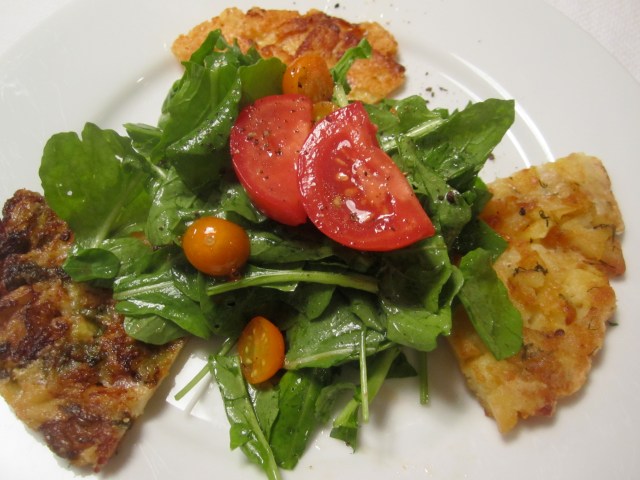
Just because I may not post for a week, doesn’t mean I’m not cooking!

Posted in Uncategorized | Leave a comment

Pasta alla Norma, Italian-Ate Style

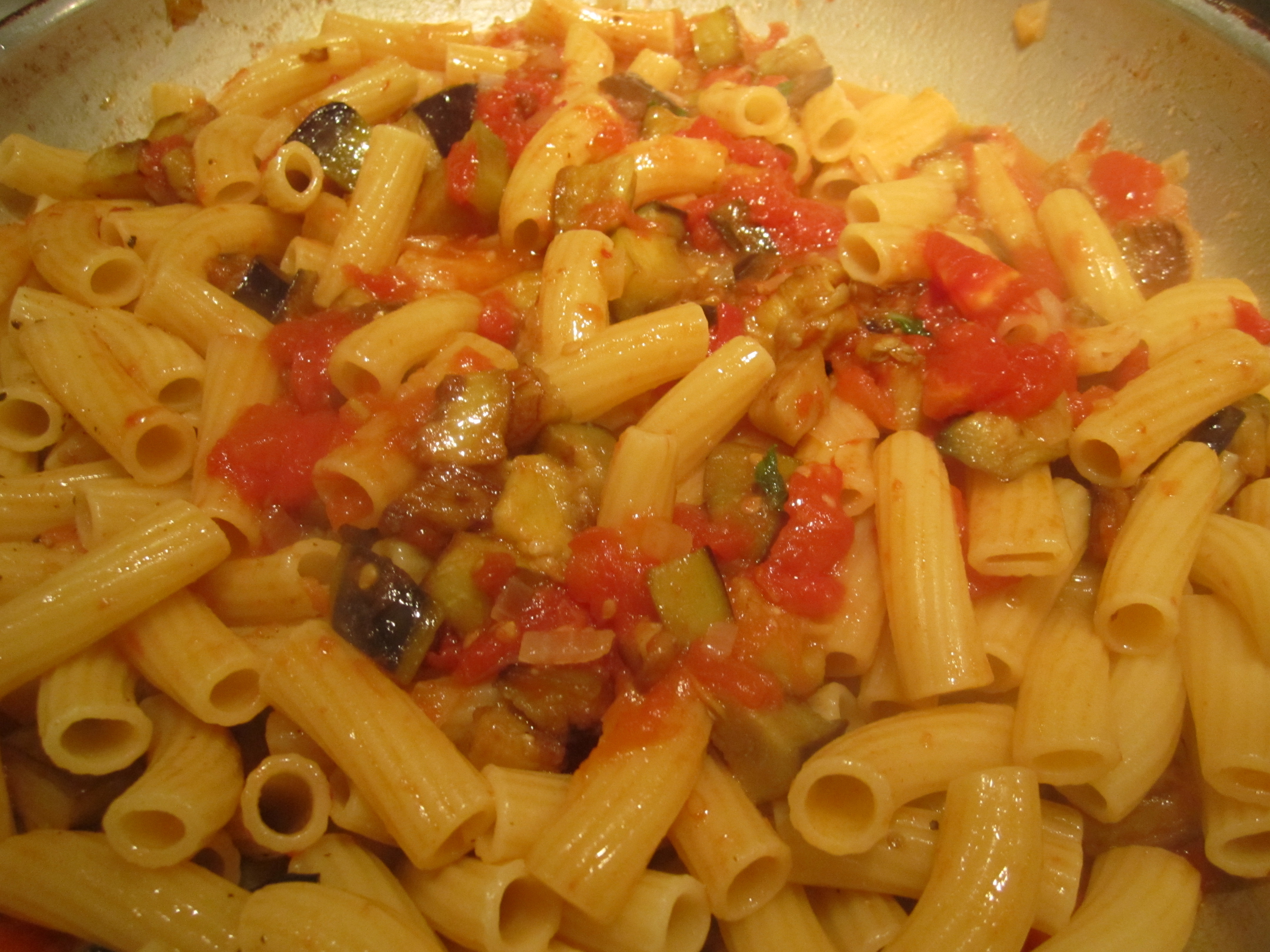
This time of year, eggplant is at the front and center of many of my meals.  This is my version of a classic pasta dish with fried eggplant, tomato and ricotta salata.

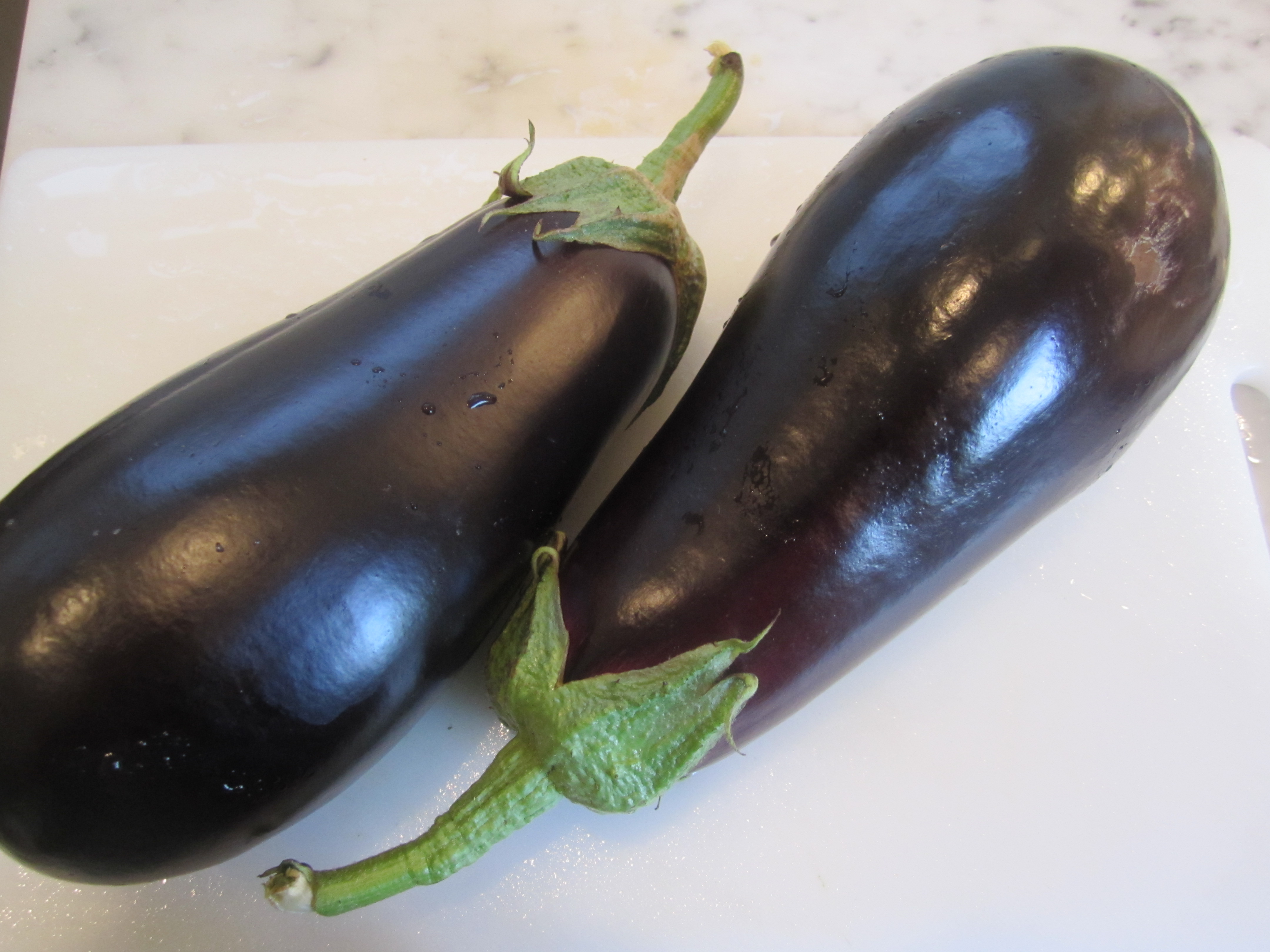
The eggplants at my local farm stand today were flawless–shiny and firm to the touch, without any bruises or puckering.

To prepare eggplant to maximum effect, usually requires time and work.  In traditional eggplant preparations, Italians often begin with peeling, dicing and salting the eggplant.  After an hour or so, it is squeezed, rinsed and dried.  This, it is said, eliminates any bitterness that might be present in the eggplant.  In addition, the salting and squeezing inhibits the amount of oil the eggplant will absorb when frying.

In my experience, the salting and squeezing is unnecessary when using freshly picked eggplants.  I have yet to experience any bitterness in my eggplants when buying them in their just-picked state.   As for their tendency to absorb oil, although they do absorb a good amount of it when they first hit the skillet, they later release some of that oil as they brown and caramelize.  The main reason, however, that I don’t salt my eggplant is that salting and squeezing changes the texture of the eggplant.  I’ve prepared fried eggplant both ways and I prefer the texture of eggplant that is fried in its just-diced, unsalted state.

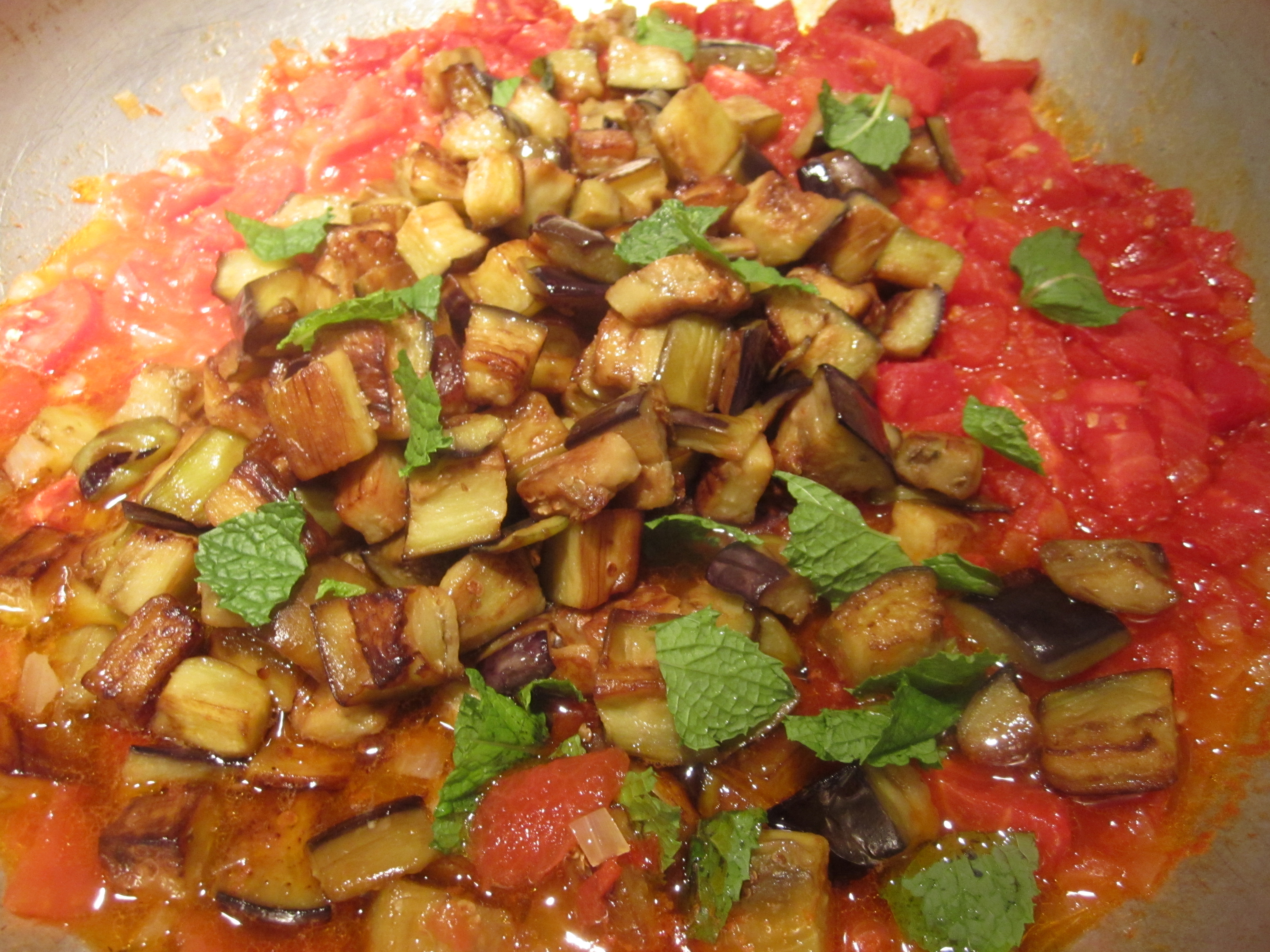
One of the main features of this dish is that the eggplant is fried on its own until meltingly tender and caramelized.  The tomato sauce is made on its own, using fresh, peeled, diced tomatoes, a bit of red onion and olive oil.  The eggplant and tomato sauce are combined only at the last minute, so as to allow their flavors and textures to remain separate.

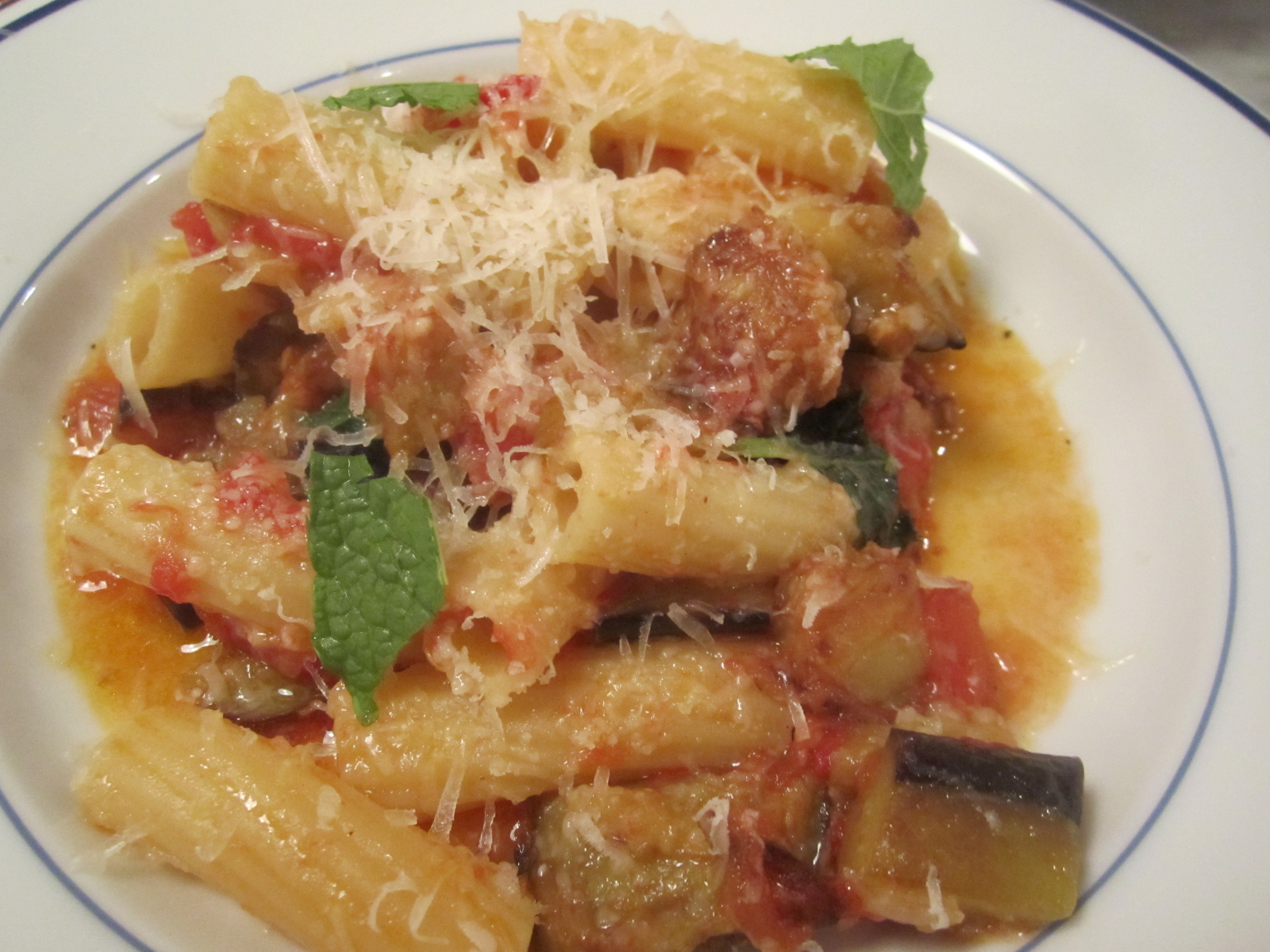
When the pasta is ready, the eggplant cubes and sauce are combined, along with a handful of mint leaves, and the pasta is tossed into the sauce.  The finished dish is showered with grated pecorino toscano.

In the traditional recipe for pasta alla Norma, the finished dish is sprinkled with grated ricotta salata.  In my opinion, pecorino toscano (if you can find it) is more interesting and flavorful than ricotta salata, but if you can’t find it, ricotta salata is absolutely fine.

Pasta alla Norma, Italian-Ate Style

serves 4 as a main course or 6 as a first course

2 medium eggplants (approximately 8″ long)

1 1/2 c + 2 tbls extra-virgin olive oil

2 lbs fresh tomatoes (any variety, as long as they’re red, ripe and juicy)

1/2 red onion, peeled and finely diced

1 lb rigatoni or ziti

12 mint leaves

pecorino toscano for grating

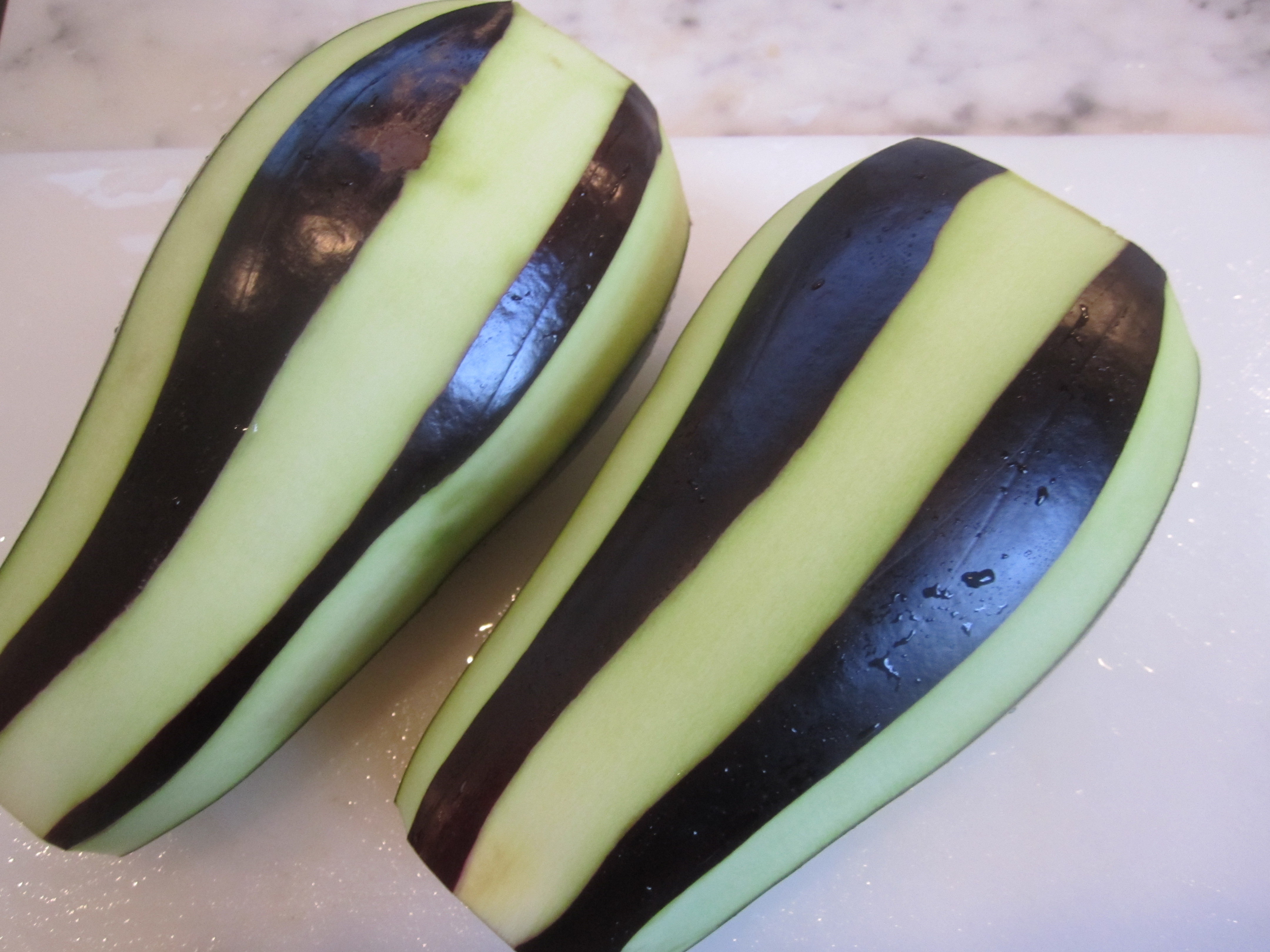
Peel eggplant, leaving some strips of skin on.  I like to leave a bit of skin on, since the skin has flavor.  If too much skin is left on, however, the pieces become leathery and tough.

Dice into 3/4″ cubes.

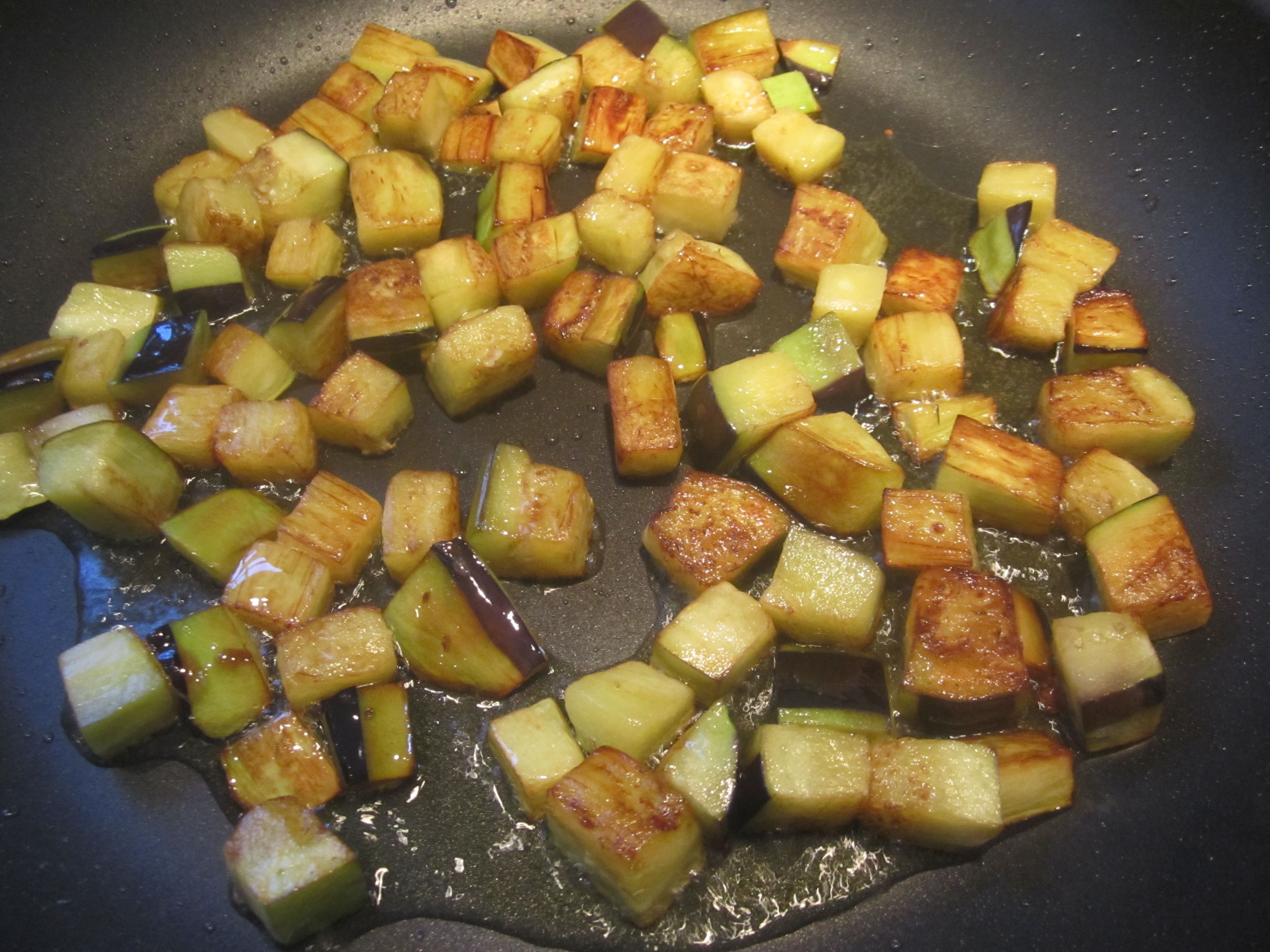
In a broad, nonstick skillet on high heat, place 1/2 cup olive oil.   When oil is shimmering and beginning to smoke, add half the eggplant and reduce heat to medium-high.

Saute, shaking and turning pieces until uniformly brown on all sides–approximately 7 – 10 minutes.

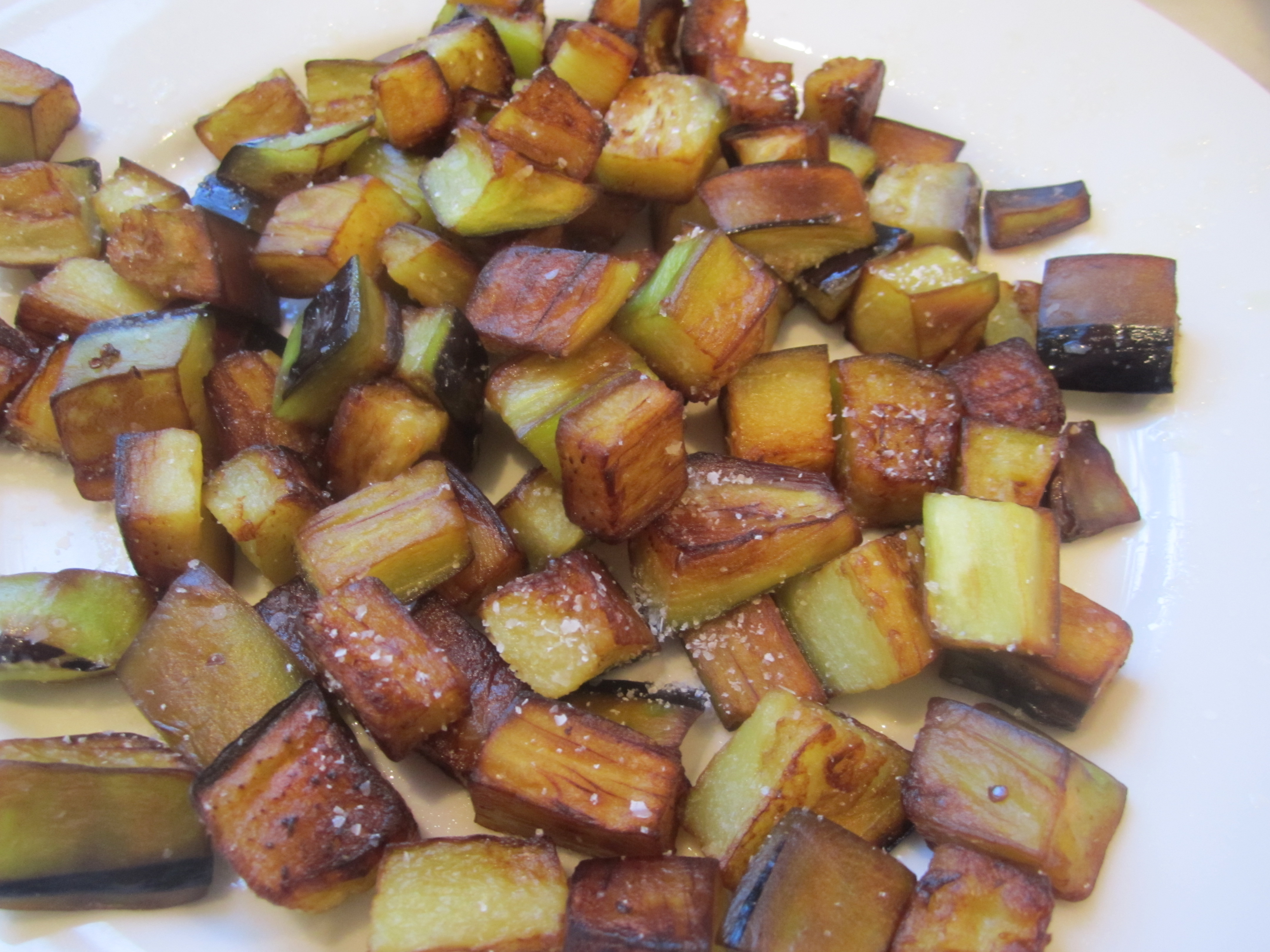
Repeat the process with another 1/2 cup of oil and the remaining eggplant.  When all is brown and soft, add a liberal amount of salt to taste.  It will take more salt than you think to make the eggplant taste well-seasoned.  Set aside.

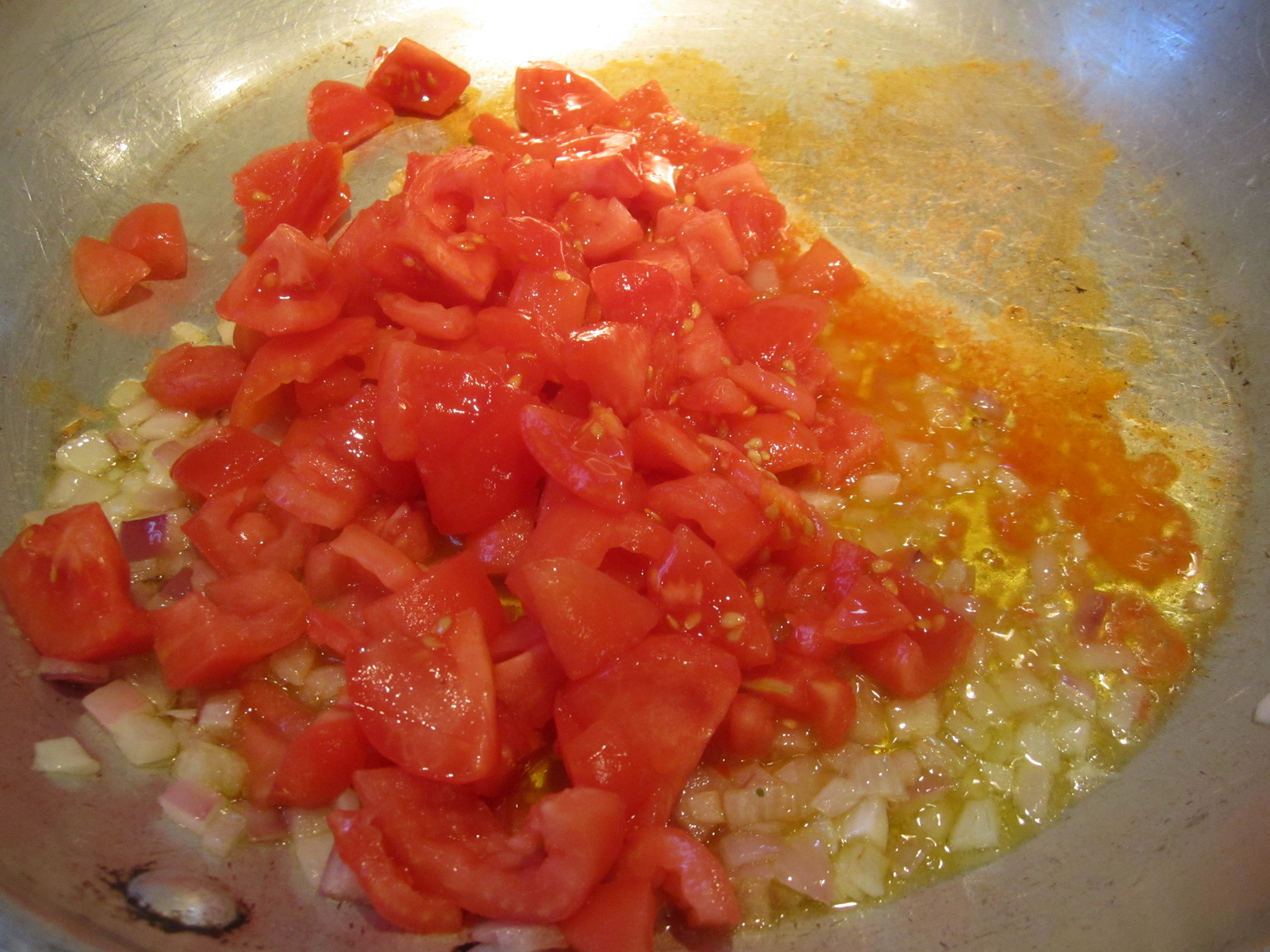
Peel tomatoes by dipping in boiling water for approximately 10 – 20 seconds.  The peel should blister slightly and slip off easily with your hands.  Dice tomatoes into roughly 3/4″ pieces.   In a skillet large enough to hold the entire finished dish, on low heat, saute onion in remaining quarter cup of oil until translucent and soft–approximately 10 minutes.  Sprinkle with a bit of salt, then add tomatoes.

Bring to a simmer and cook for approximatly 15  minutes, or until tomatoes begin to break down and liquid begins to dissipate.   Add salt to taste.

Remove from heat until pasta is ready.

Boil pasta in salted water until a minute shy of done.  Add eggplant to skillet with tomato sauce.  Top with mint.

Toss in pasta.  Remove from heat and drizzle with 2 more tablespoons of olive oil.

Sprinkle and serve with a liberal amount of grated pecorino.

Posted in Pasta | 2 Comments

Fregula with Corn and Morels

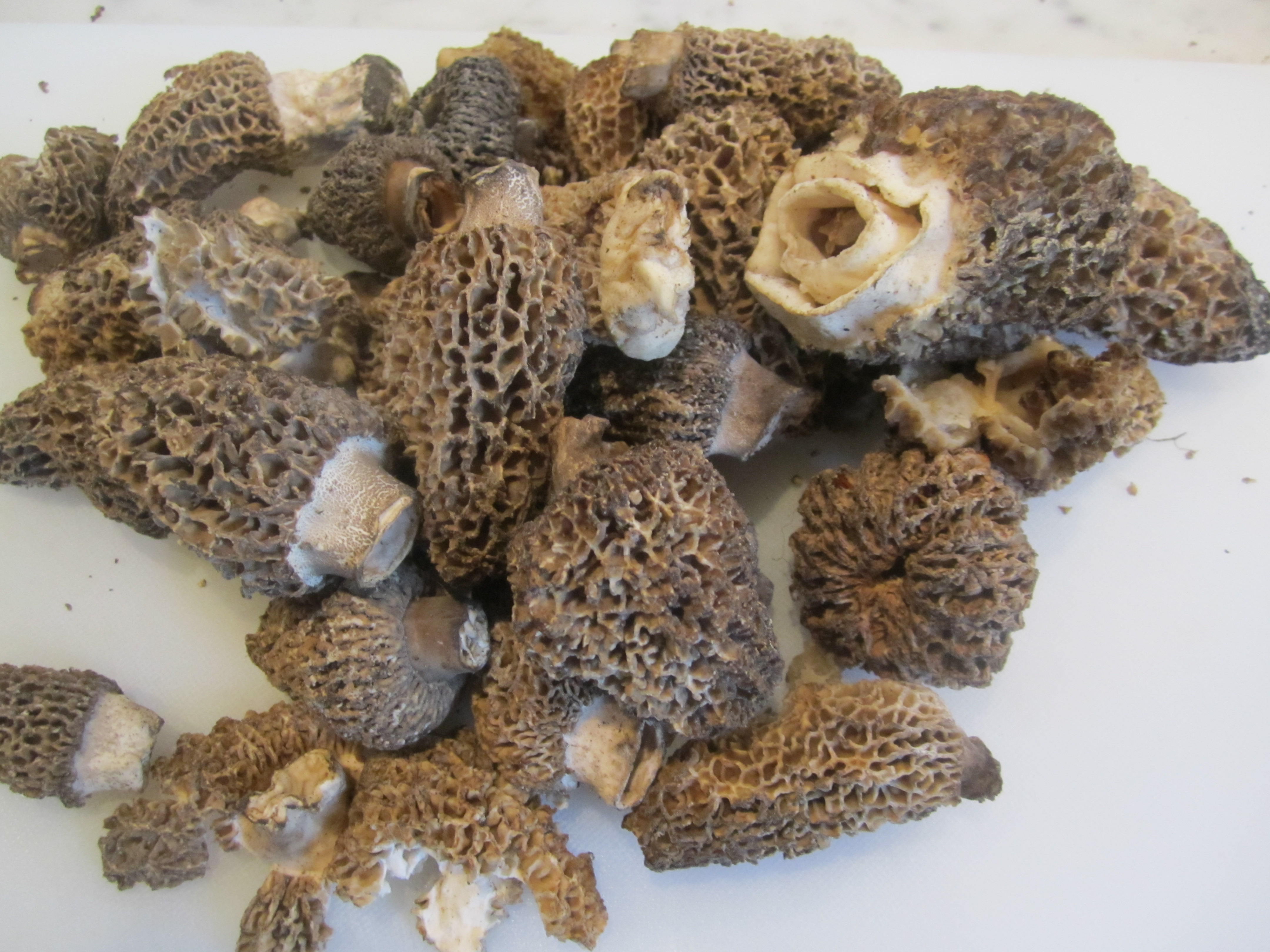
The other day, a box of beautiful, fresh morels arrived at my doorstep, sent to me by my friends, Bob and Carolyn, from a wonderful source for wild mushrooms based in Wisconsin (www.morelmasters.com).

Morels are a rare treat and are typically associated with spring, but there are actually harvests of morels across the country at various times of year, including late summer.  These mushrooms came (most likely) from the Pacific northwest and were truly cause for celebration.

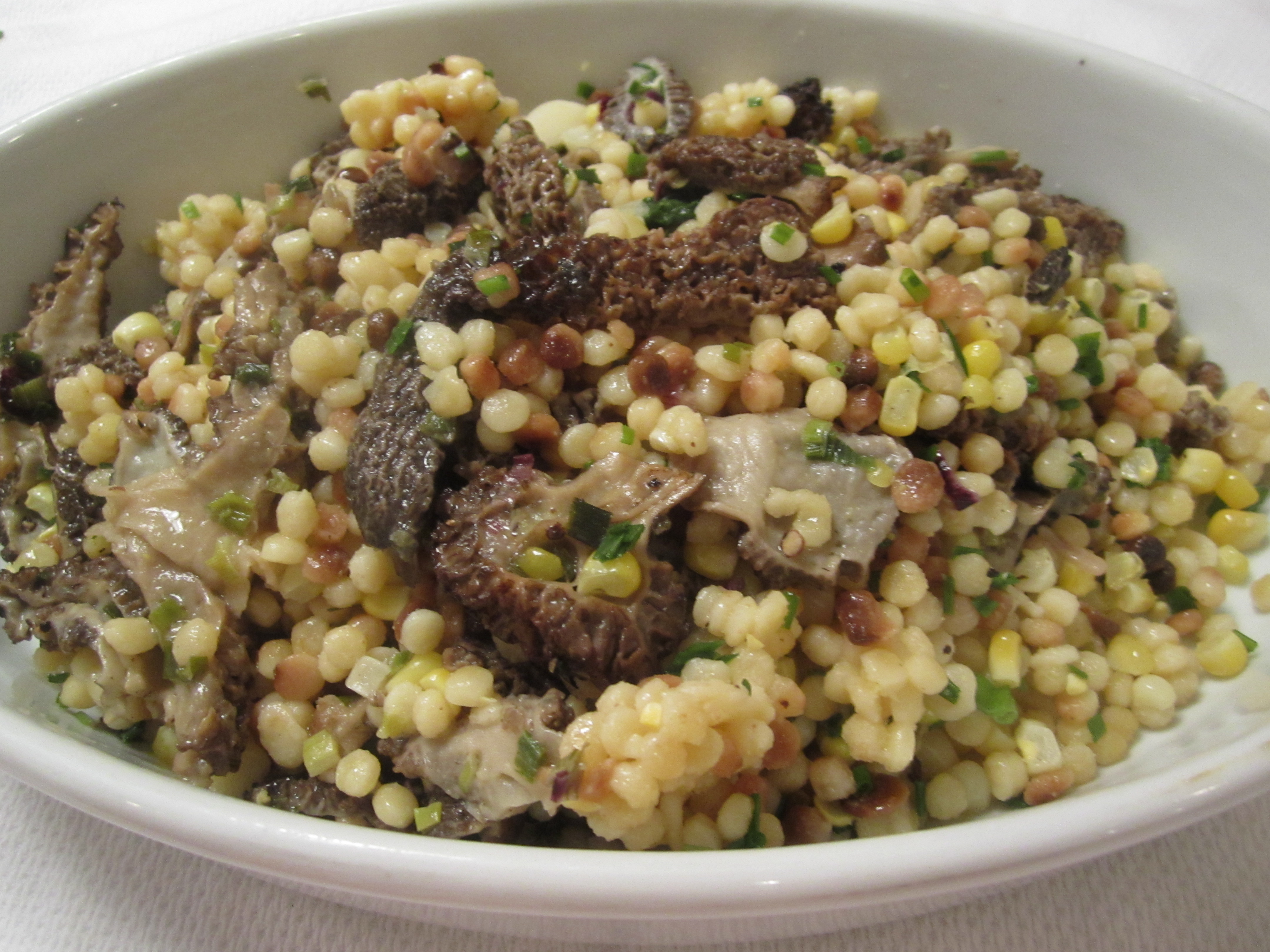
Since it’s a fabulous season for corn here on the East End of Long Island, I knew exactly what I’d do with these mushrooms.   Corn and morels have a natural affinity for each other, the earthiness of the mushrooms adding a deep, nutty dimension to the sunny sweetness of the corn.  This sweet/earthy side dish was, not surprisingly, the show stopper of the evening.

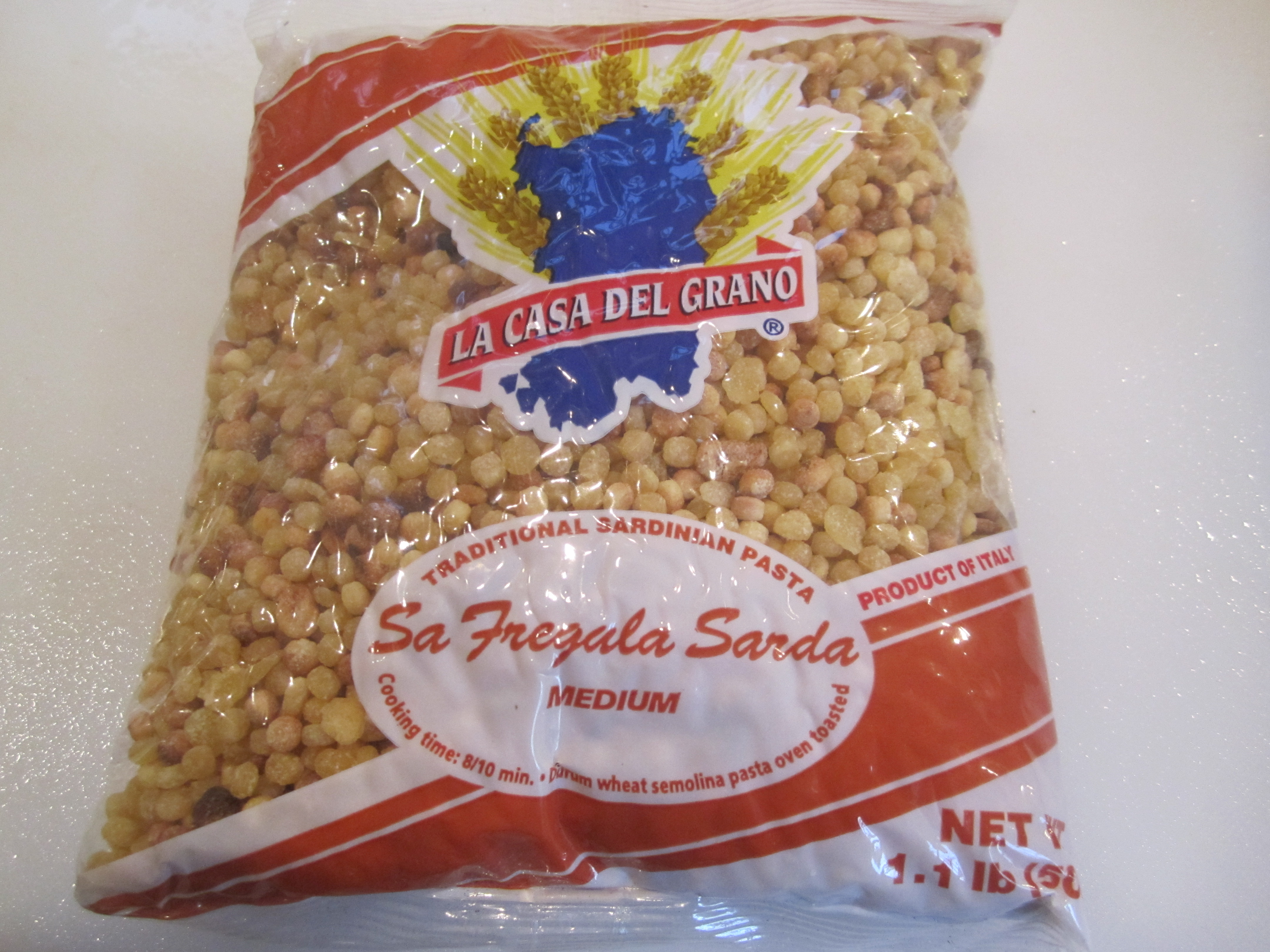
The other component to the dish was fregula, a Sardinian pasta.  Fregula is similar to Israeli couscous, only toasted and rougher in texture.

I often combine fregula with corn, and I knew the morels would take this dish to new heights.

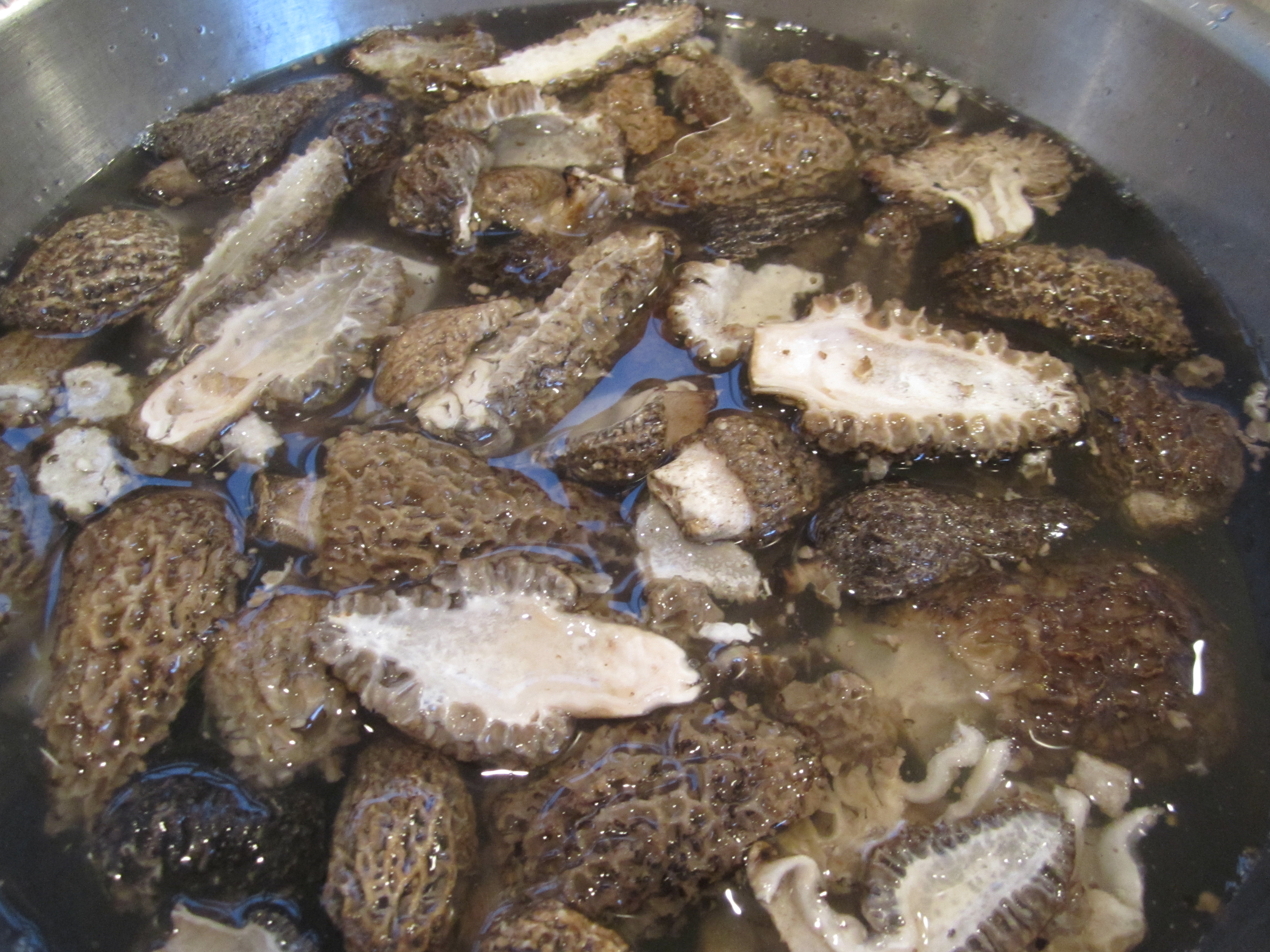
This preparation begins with cleaning the morels.  Although I’ve prepared morels before, I’ve always only given them a brief rinse under running water right before cooking.  This has sometimes resulted in a gritty finish.

I asked my friend Bob how he cleaned his.  He confirmed that morels benefit from a soaking in a deep bowl of salted water, much like leafy greens.   Their honeycomb texture promotes the retention of large amounts of soil and grit.  I took his advice, and,  based on the amount of black soil left at the bottom of my soaking water, I was glad I did.  They are definitely an exception to the rule that water should touch mushrooms as little as possible prior to cooking.

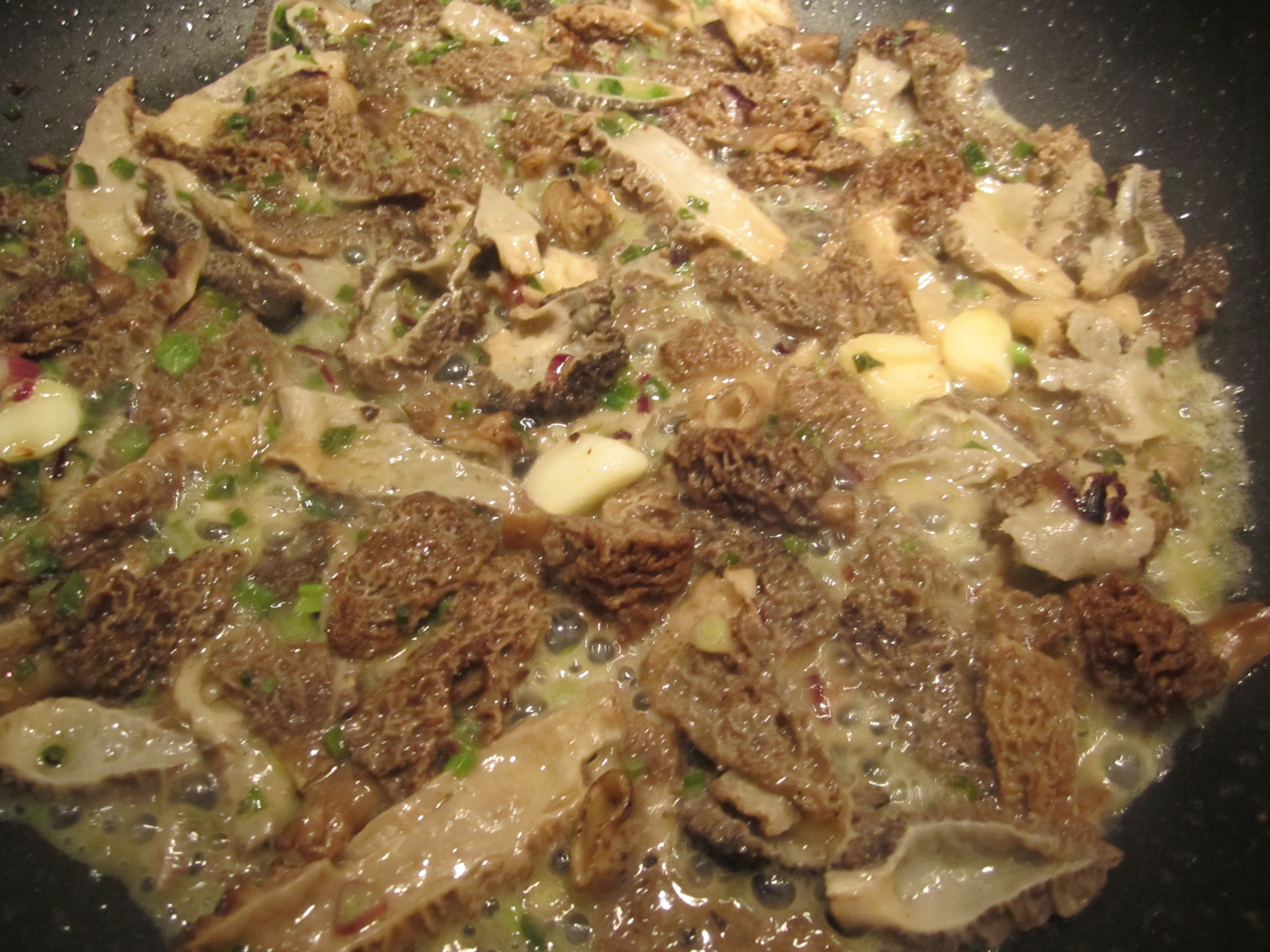
To give the morels maximum flavor, I  cooked them alone first, in a combination of scallions, butter, olive oil and white wine.  Then, I gently folded the corn and cooked fregula into them.  The preliminary step of cooking the mushrooms separately is a worthwhile exercise in extracting maximum flavor from them.

As a main course, I served roasted chicken marinated with sage and lemon, along with sauteed swiss chard from my neighbor Beppi’s garden.  This was summer at its finest– truly a memorable meal.

Fregula with Corn and Morels

serves 6 – 8

1 lb fresh morels

6 ears corn, shucked

2 bunches scallions

2 cloves of garlic, split

4 tbls butter

4 tbls olive oil

1/2 c white wine

1 c chicken broth

1/4 c fresh chopped chives

1 lb fregula sarda

Slice morels lengthwise in half and place in a deep bowl of water with a couple of tablespoons of salt added.

Allow them to soak at least 20 minutes, then drain and repeat.  Dry on paper towels and set aside.

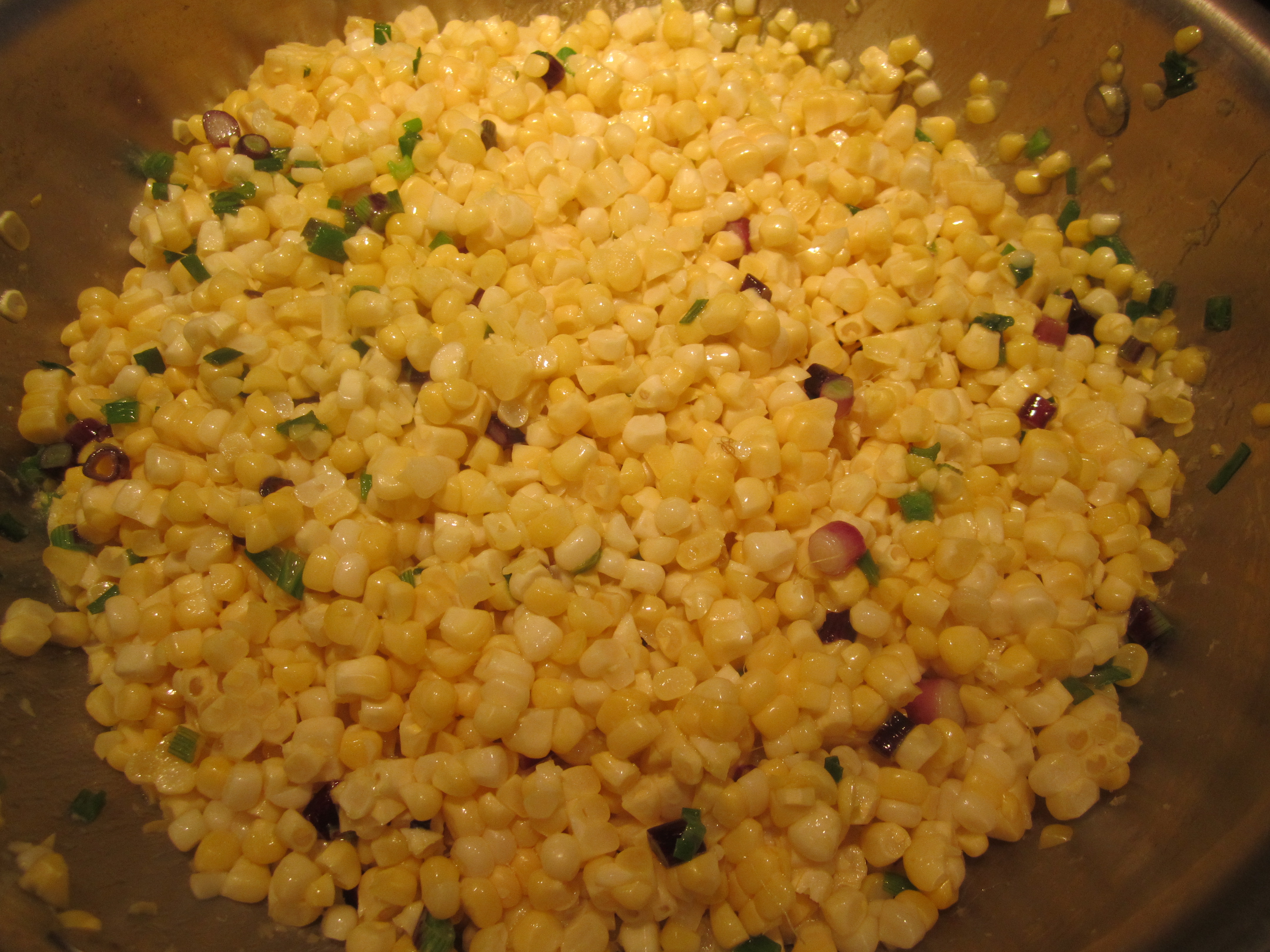
In a large, broad mixing bowl, with a large sharp knife, slice corn kernels off the cob and set aside.

Remove the roots and outer papery layers from the scallions and slice into tiny rings, discarding all but about an inch of the greens.  These scallions were purple at the base, rather than white.

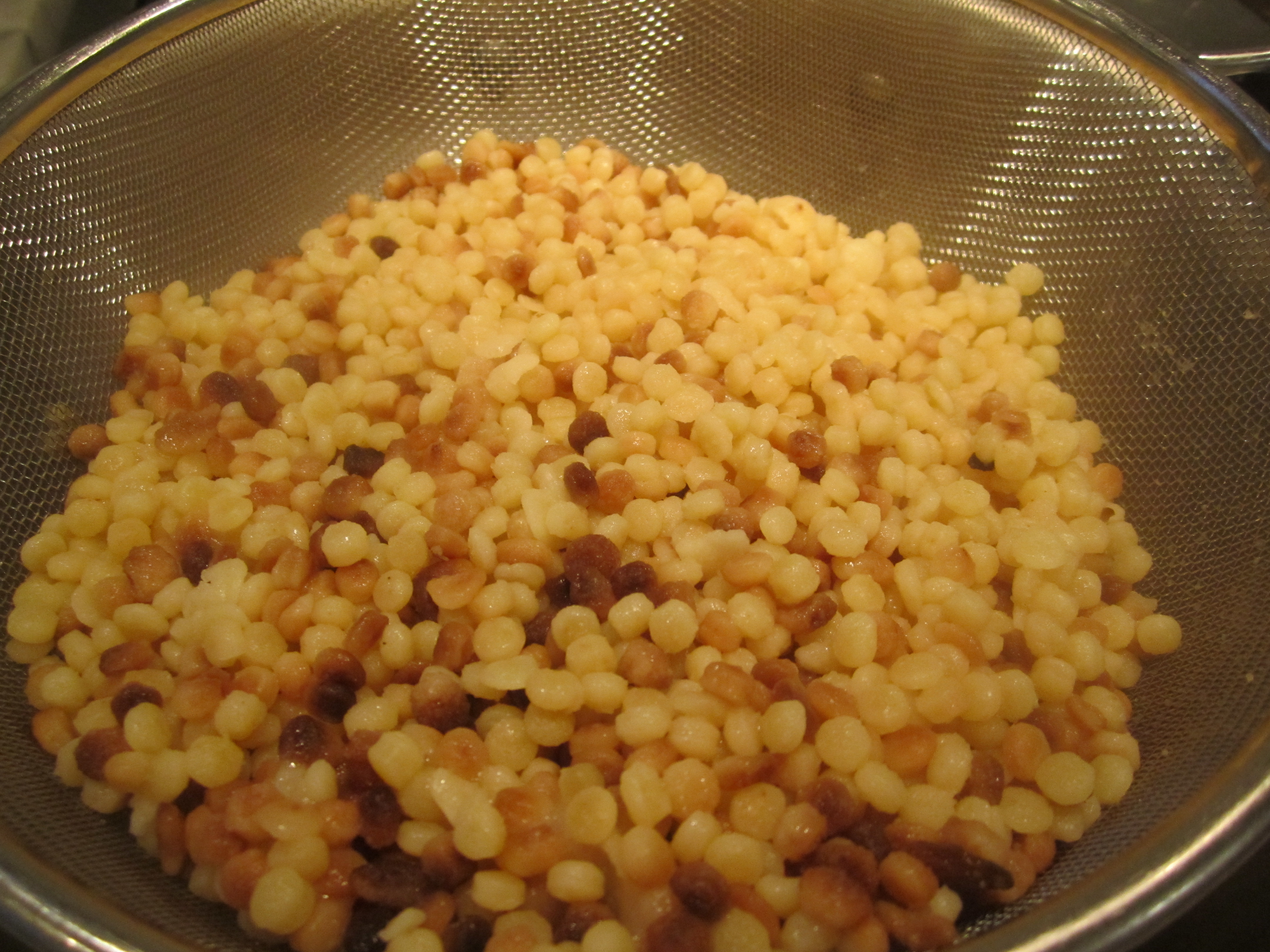
While morels are soaking, drop fregula into boiling salted water and cook, uncovered,  for approximately 15 minutes, or until al dente.

Drain and set aside.

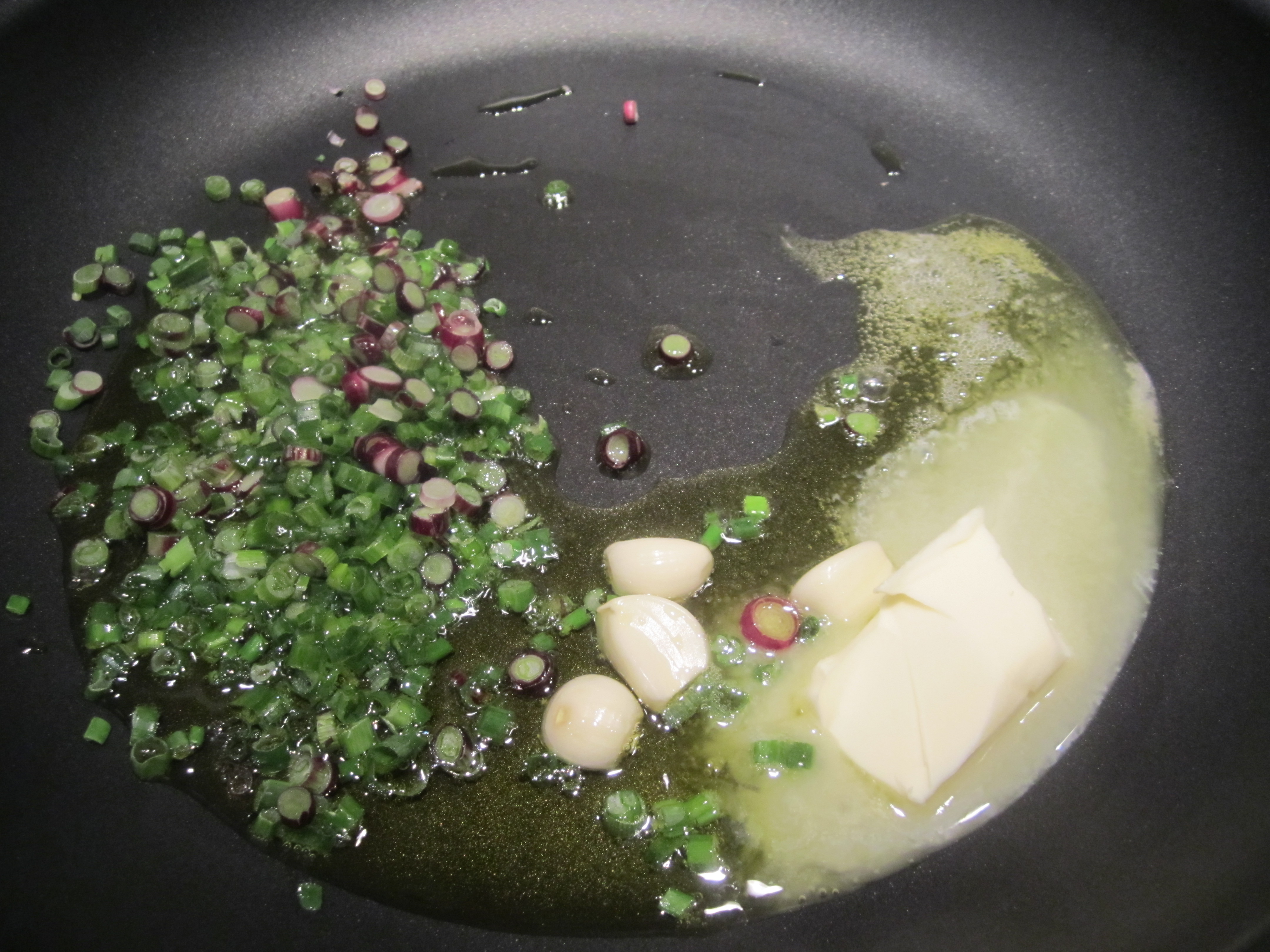
In a broad skillet, place half of the chopped scallions, garlic, and butter plus 1 tablespoon of olive oil.

Bring to a sizzle and add the morels.  Saute on high heat to evaporate the water from the morels and begin caramelizing them.

After about 3 minutes, add white wine.    Continue sauteing and reduce wine for about a minute.  Set aside.  Add broth and chives and cook for another minute or so.

Remove garlic cloves, taste for salt and pepper, and set aside.

In a saucepot, place remaining scallions and oil and bring to a sizzle.  Add corn and reduce heat to medium.

Sprinkle with salt and black pepper and cover.  Simmer for about 5 to 7 minutes, stirring occasionally, until corn is crisp-tender.  Taste and add more salt, if necessary.
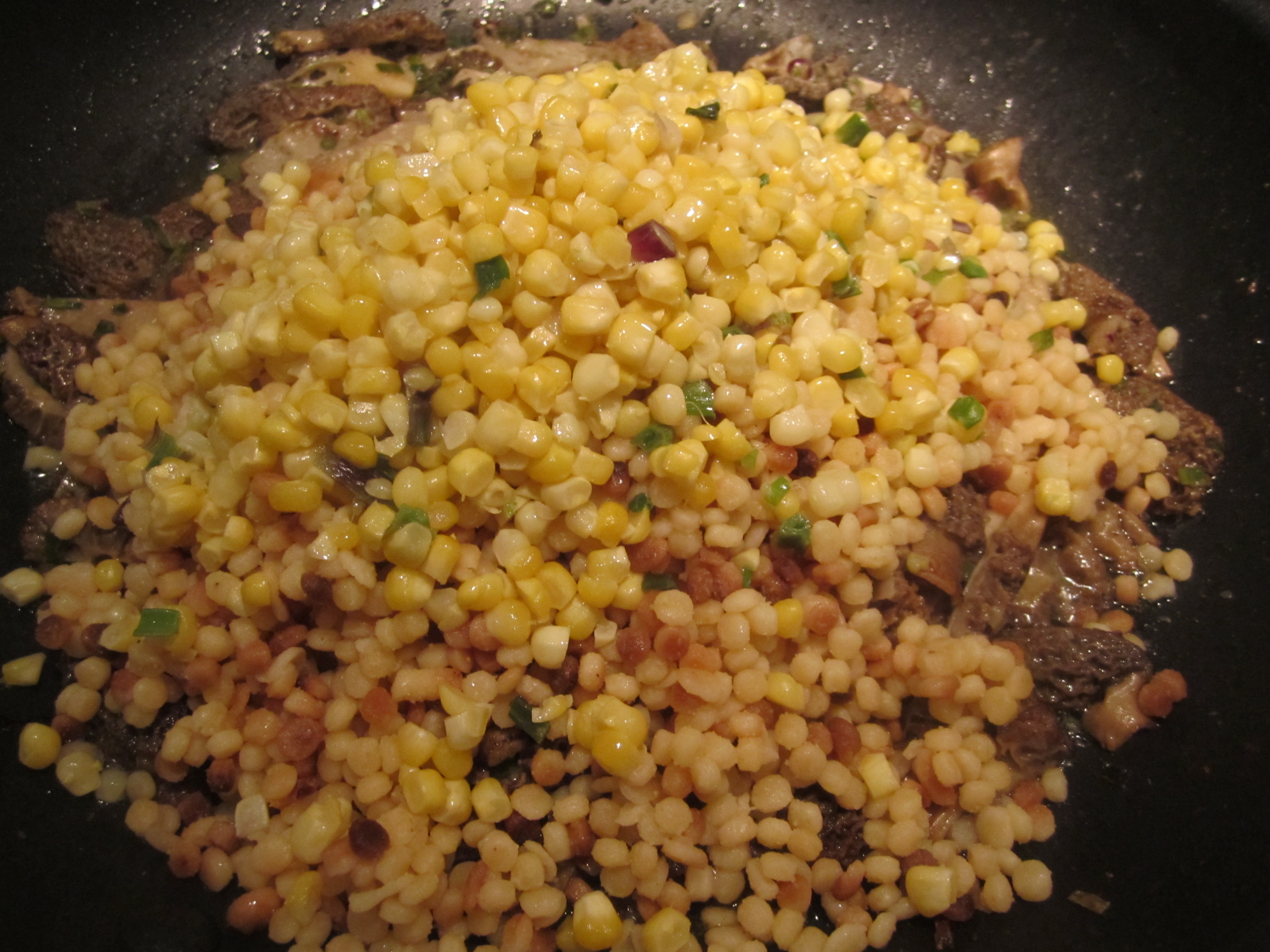
Add corn and fregula to skillet with morels and gently stir to combine.  Sprinkle with remaining chives and perhaps a bit more raw olive oil.

May be served hot or at room temperature

Posted in Vegetables | Leave a comment

Cucumber Mango Salsa

These days, my kitchen is overflowing with cucumbers from my neighbor Beppi’s garden.  I use at least one in every meal, slicing them thin to throw into green salads, or dressing them with oil and vinegar on their own for cucumber salad.

Last night, I was inspired by a meal I had at the home of a friend who is a magnificent cook.  As a young woman, she learned to cook Indian food from a beloved family friend, and last night, she had a group of us over for homemade curry.
I’ve always loved curry, but seldom eaten it, let alone attempted to make it.  Good curry requires an array of spices, many of them freshly milled, that are blended to achieve a perfect balance.  The spice blend is then sauteed with aromatic vegetables, like shallots, chili peppers and tomato, then the main ingredient is  added (chicken, fish, etc.)  The mixture is simmered, then showered with fresh cilantro.

Upon our arrival, I watched my friend make a beautiful shrimp dish with mango, ginger, jalapeno, shallot, sweet pepper and turmeric.  The resulting dish was so intoxicatingly bright, sweet and fresh, that I found myself craving this combination the next day.
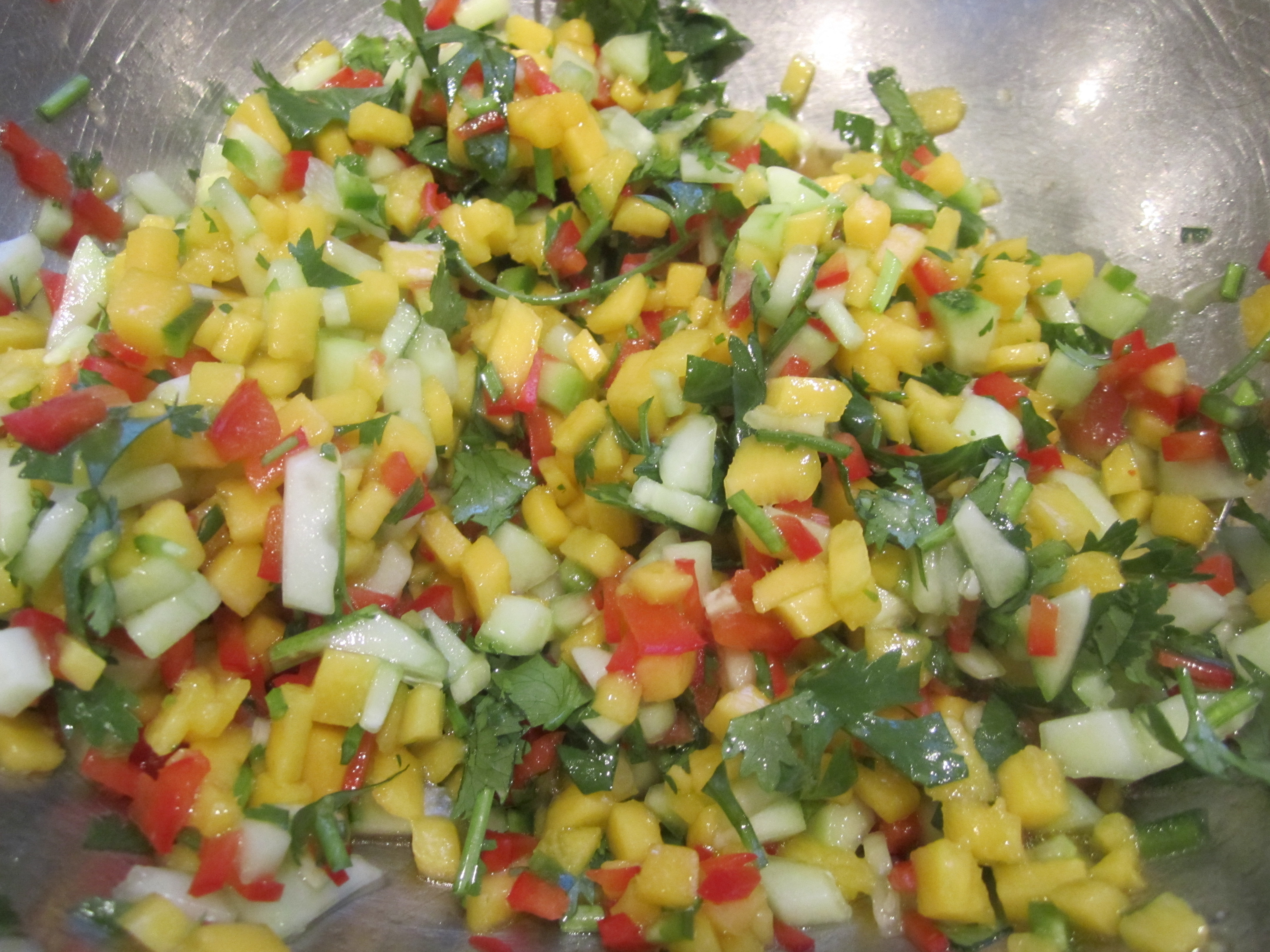
Although I don’t keep turmeric in my cupboard, I decided to approximate the bright flavor sensation of my friend’s dish, by making a raw salsa with cucumber, mango, red pepper, jalapeno, cilantro and rice wine vinegar.   This would be the perfect topping for grilled salmon.  As an accompaniment to the salmon, I served my red cabbage with pine nuts and raisins (see post below).
The salsa is very simple and merely requires a little patience with the chopping knife.  All ingredients must be chopped to uniform fineness, then dressed with the proper balance of oil, rice wine vinegar (and/or lime juice), and sugar (I used agave).

You’ll end up eating half this mixture with a spoon before it even hits the dinner plates, and in fact, this would make an equally good dip with tortilla chips (if you like that sort of thing).

Cucumber and Mango Salsa

serves 4 as a sauce for grilled fish or shellfish

1 cucumber, peeled and seeded

1 ripe mango

a quarter of a red pepper

half a jalapeno pepper, ribs and seeds removed

juice of a lime or 2 tbls rice wine vinegar

1 tbls olive oil

1 tbls agave or sugar

salt to taste

1/4 c fresh cilantro

Remove core from mango by standing vertically and slicing around the fibrous core.

Chop all ingredients into 1/4″ dice.

Combine and taste for salt.

Serve or refrigerate for later.

Posted in Sauces, Seafood | Leave a comment

Red Cabbage with Pine Nuts and Raisins

Red cabbage lends itself to sweet/sour preparations because of its inherently pungent, mustardy quality.  It’s a good side dish to prepare for guests, since it can be cooked, then reheated at the last minute.

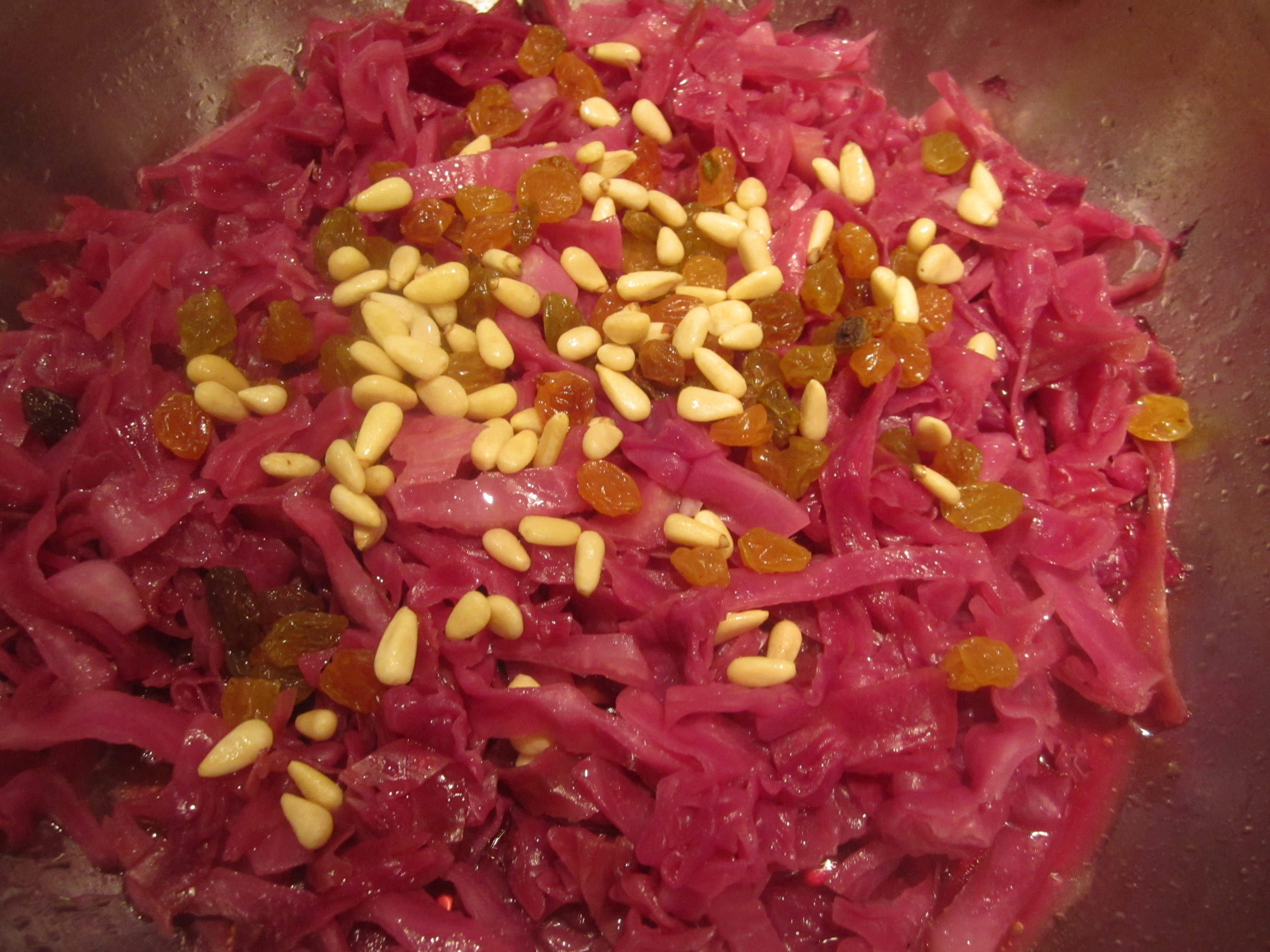
It can be sauteed to crisp-tenderness or simmered for an hour to melting softness.  I tend to like it somewhere in between.  For this dish, I blanch the cabbage for about 5 minutes, then drain.  Then I saute it in olive oil, add agave (or sugar), red wine vinegar, pine nuts and raisins, and simmer for a half-hour.  The flavor becomes sweeter and more complex the longer you simmer it.

It’s a great accompaniment to grilled or cured meats, especially pork.  I also like it with grilled salmon, since its sweet/sour flavor is a good balance for the rich, fatty salmon.

Red Cabbage with Pine Nuts and Raisins

serves 4

1 head red cabbage

3 tbls olive oil

2 tbls agave (or 1/4 c sugar)

2 tbls red wine vinegar

1/4 c golden raisins

2 tbls pine nuts

salt to taste

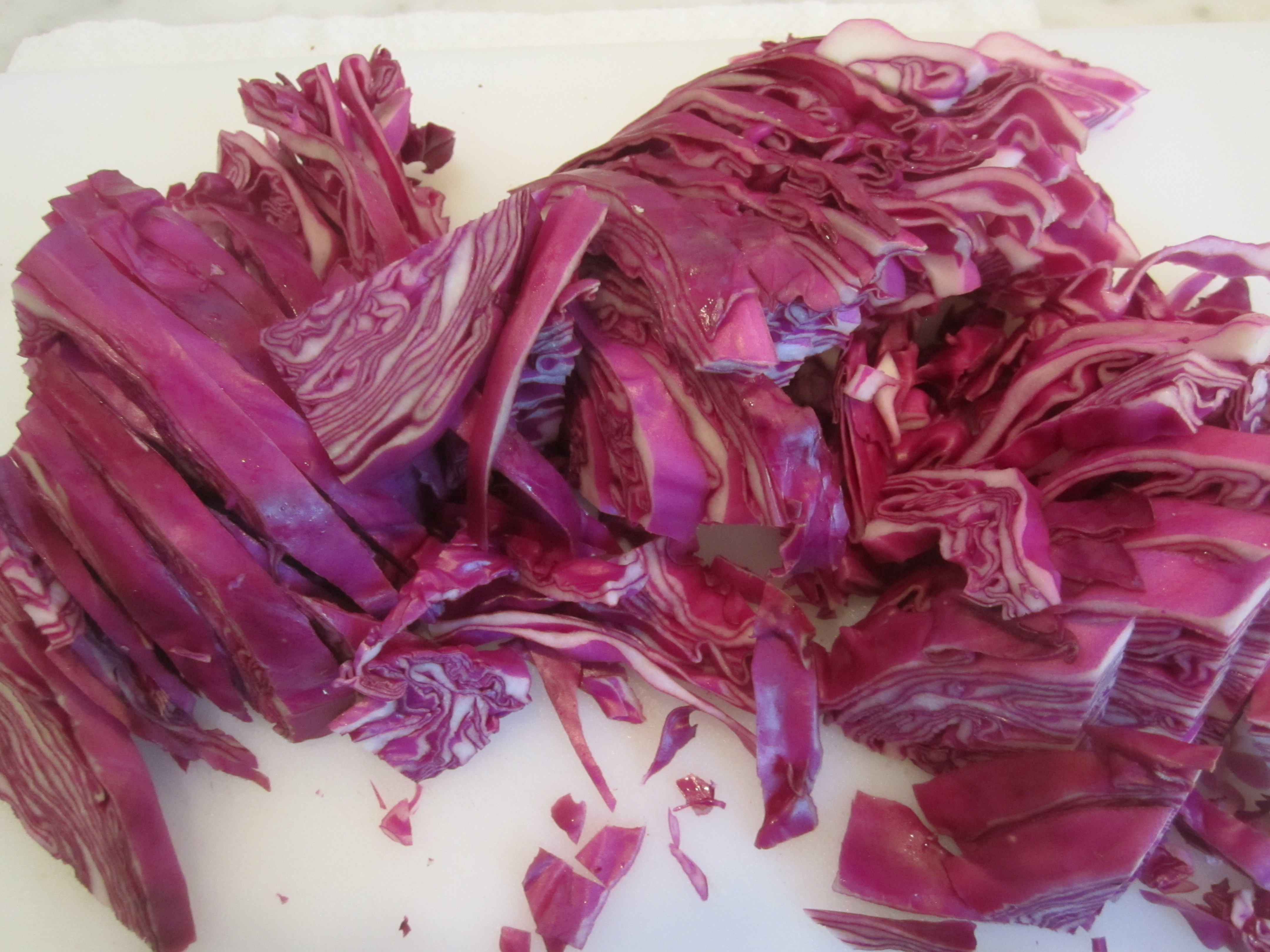
Slice head of cabbage lengthwise into quarters, retaining a bit of the core in each quarter.  Remove core from each quarter and slice crosswise into 1/2″ ribbons.

Drop cabbage into salted boiling water and blanch for 5 minutes after water returns to boil.  Drain and set aside.

In a heavy-bottomed skillet or saucepan, heat oil and add cabbage.  Saute for about 5 minutes, until cabbage begins to caramelize.  Add the remaining ingredients and cover.

Simmer on low heat for about a half-hour, uncovering and stirring occasionally.

Taste and add salt.  Serve hot or warm.

Posted in Vegetables | Leave a comment

More Pizza Variations

This past weekend, we entertained a group of twenty-somethings for dinner and the suggestion of pizza seemed to meet with everyone’s approval.  I looked back on my prior two pizza posts (Mom’s Pizza, and Zucchini and Ricotta Pizza) and decided to make some new variations, which I’ll share with you here.

Tonight, I made four varieties:

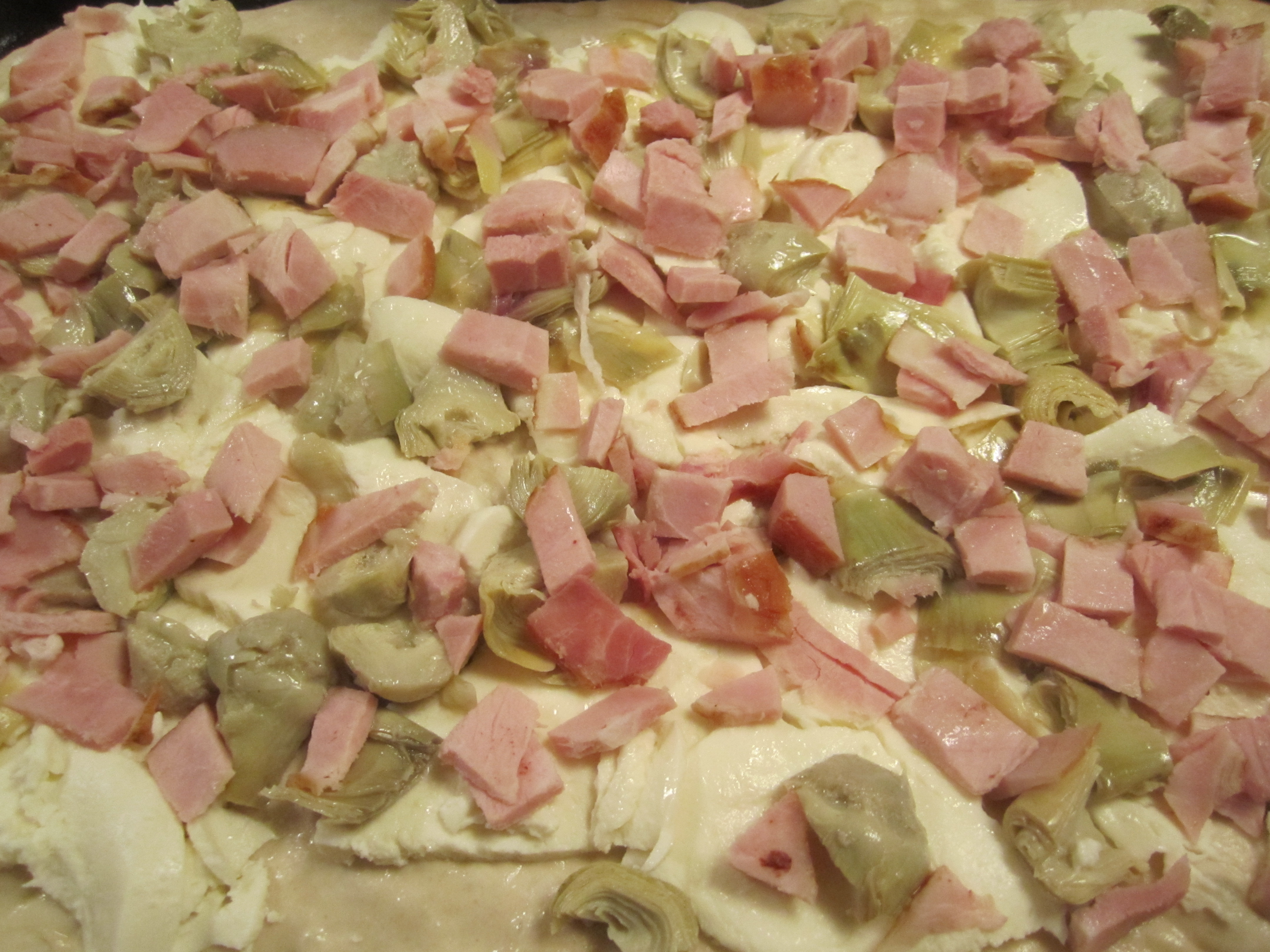
Ham and artichoke + tomato and mozzarella (sauce added after snapping the photo):

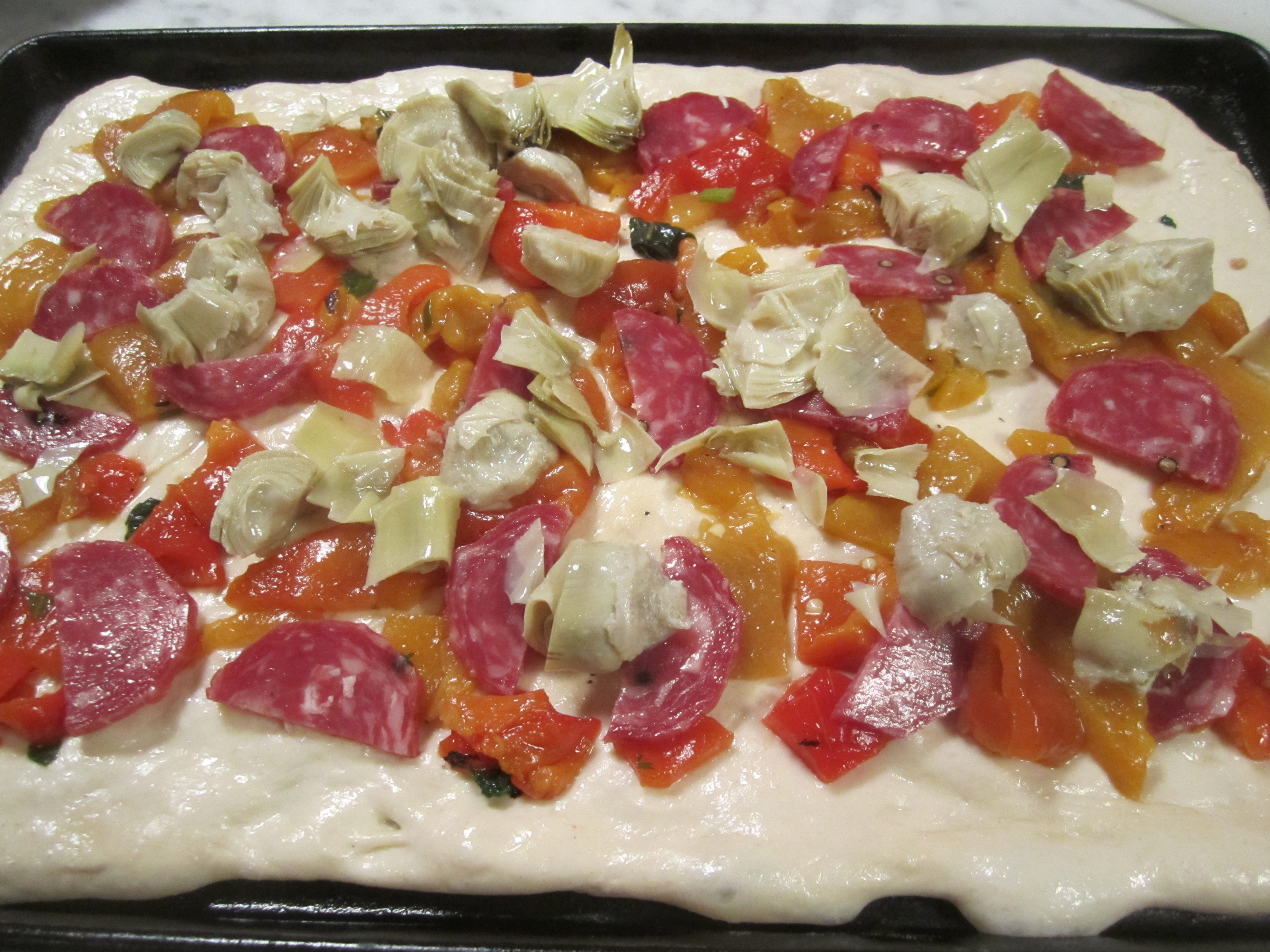
Roasted pepper, soppressata and mozzarrella (sauce added after snapping the photo)

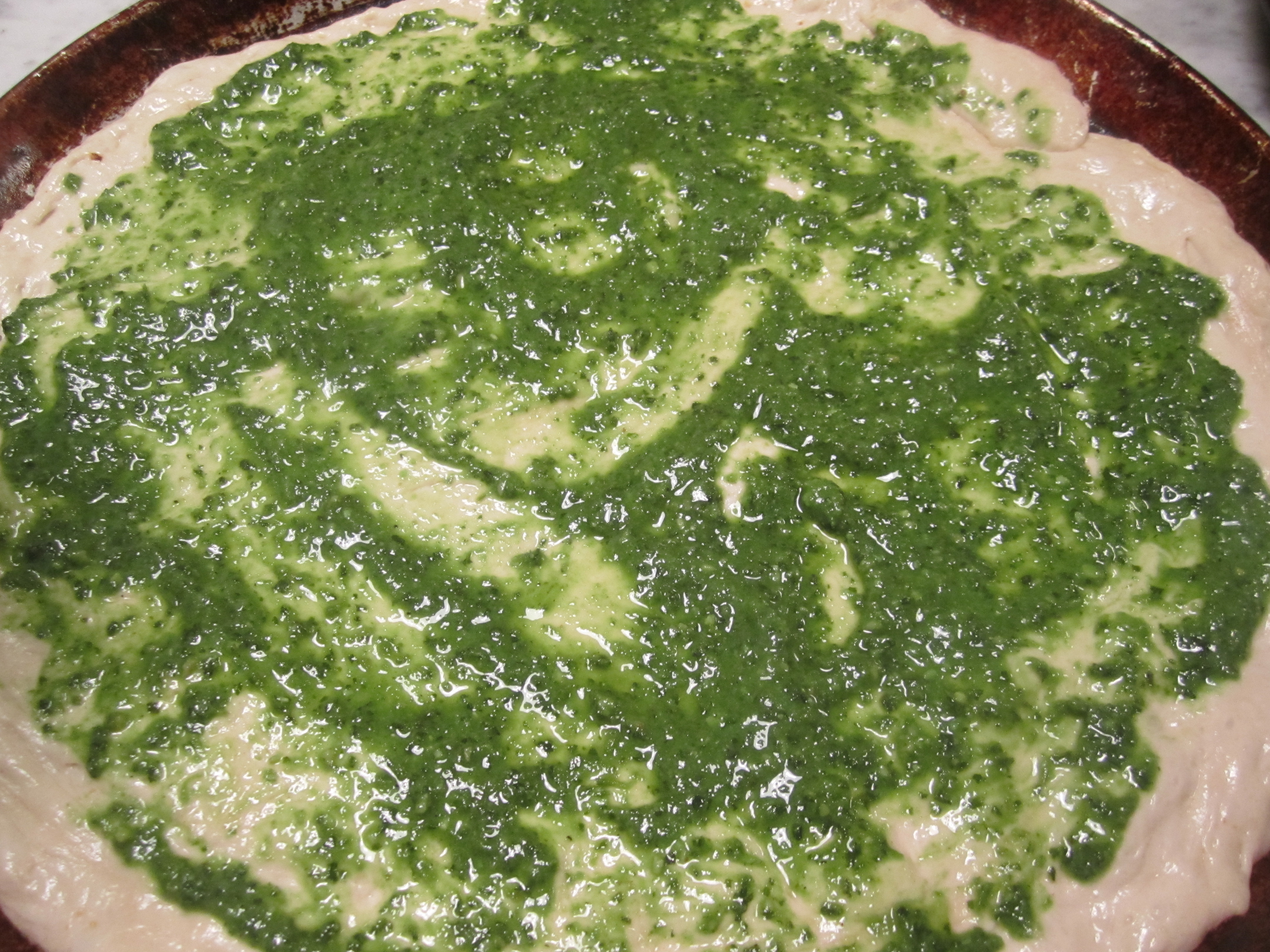
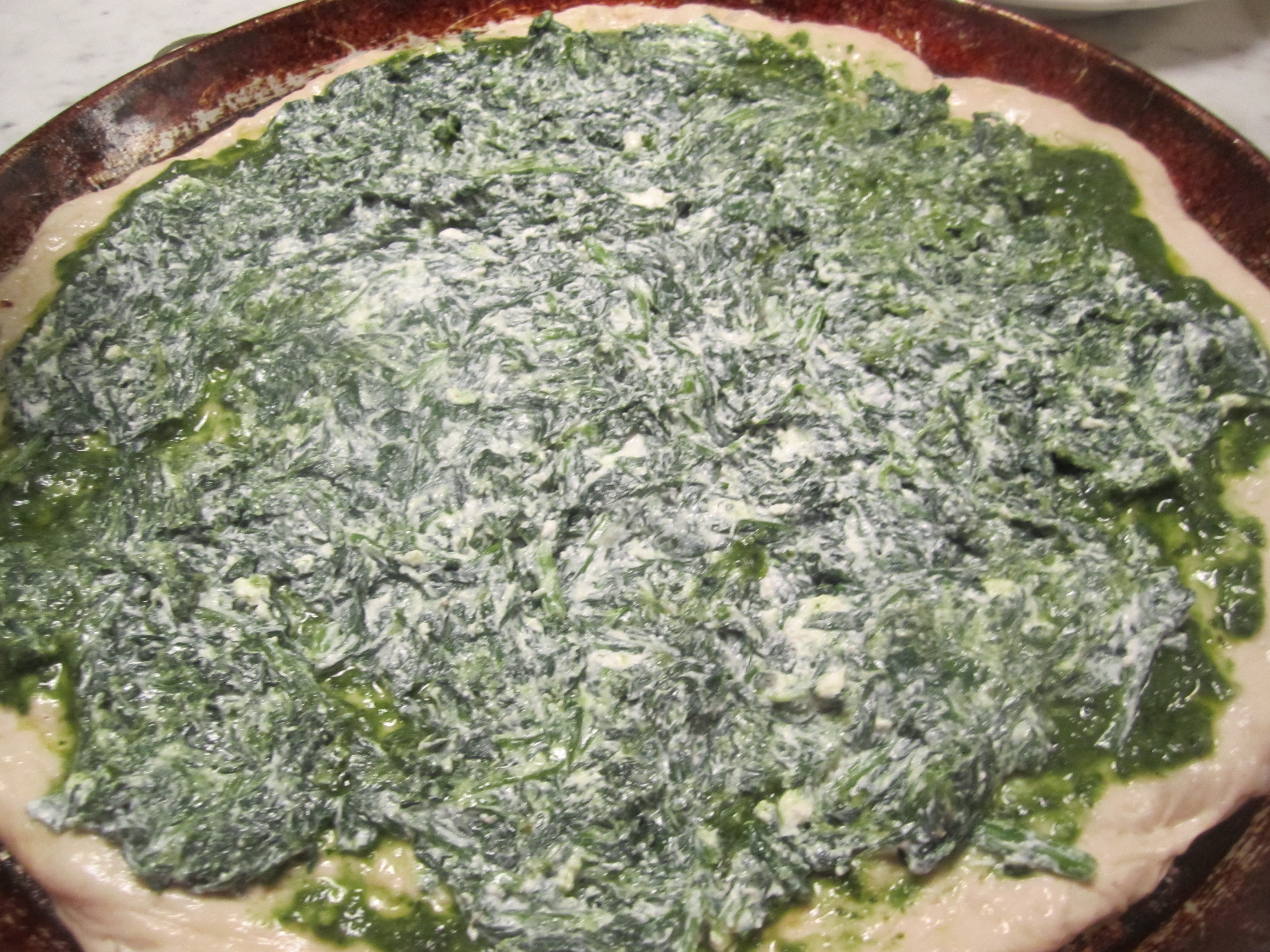
Pesto (spread on first), then chopped cooked spinach and ricotta.

The last variation was by special request (no dairy), so I combined soppressata, roasted peppers, artichokes, and tomato sauce (added after photo was shot) to get as much moisture on the pizza as possible.

The technique was the same for each of these pizzas:  store-bought dough was brought to room temperature, then stretched on an oiled sheet pan.  I used one-and-a-half rounds of dough for each of my half-sheet pans and large round pizza pans.  Simply divide the dough rounds in half and add a half-round to each of the whole rounds.  Press and shape them together in the pan until they adhere to one another.  The total thickness of the dough should be around a half-inch.

Unlike pizzeria-style pizza, which is cooked briefly in a very hot oven, my pizza is cooked in a medium oven (350 degrees) for about an hour.  If you have convection, use it here.

The tomato sauce consists of whole peeled tomatoes, processed in the blender with plenty of olive oil ( a third cup of oil to a 28-oz. can of tomatoes) and a couple of basil leaves.  It requires no further cooking.

Also unlike pizzeria-style pizza, the cheese goes on first and the sauce goes on last.  Since the pizzas will bake for an hour, the sauce will act as a blanket of moisture, keeping the cheese and all the toppings from drying out.  In the case of a pizza without any tomato sauce, the last ingredient to go on top is a good drizzle of olive oil.

Tonight, I made use of my local gourmet market (Citarella) for my toppings:  spiral cut ham, roasted peppers, marinated baby artichokes and pre-sliced soppressata.  The ricotta was house-made, as was the pesto.

The surprise favorite was the ham and artichoke pizza.  It was reminiscent of a quatro-stagioni pizza, and was devoured within a matter of minutes.

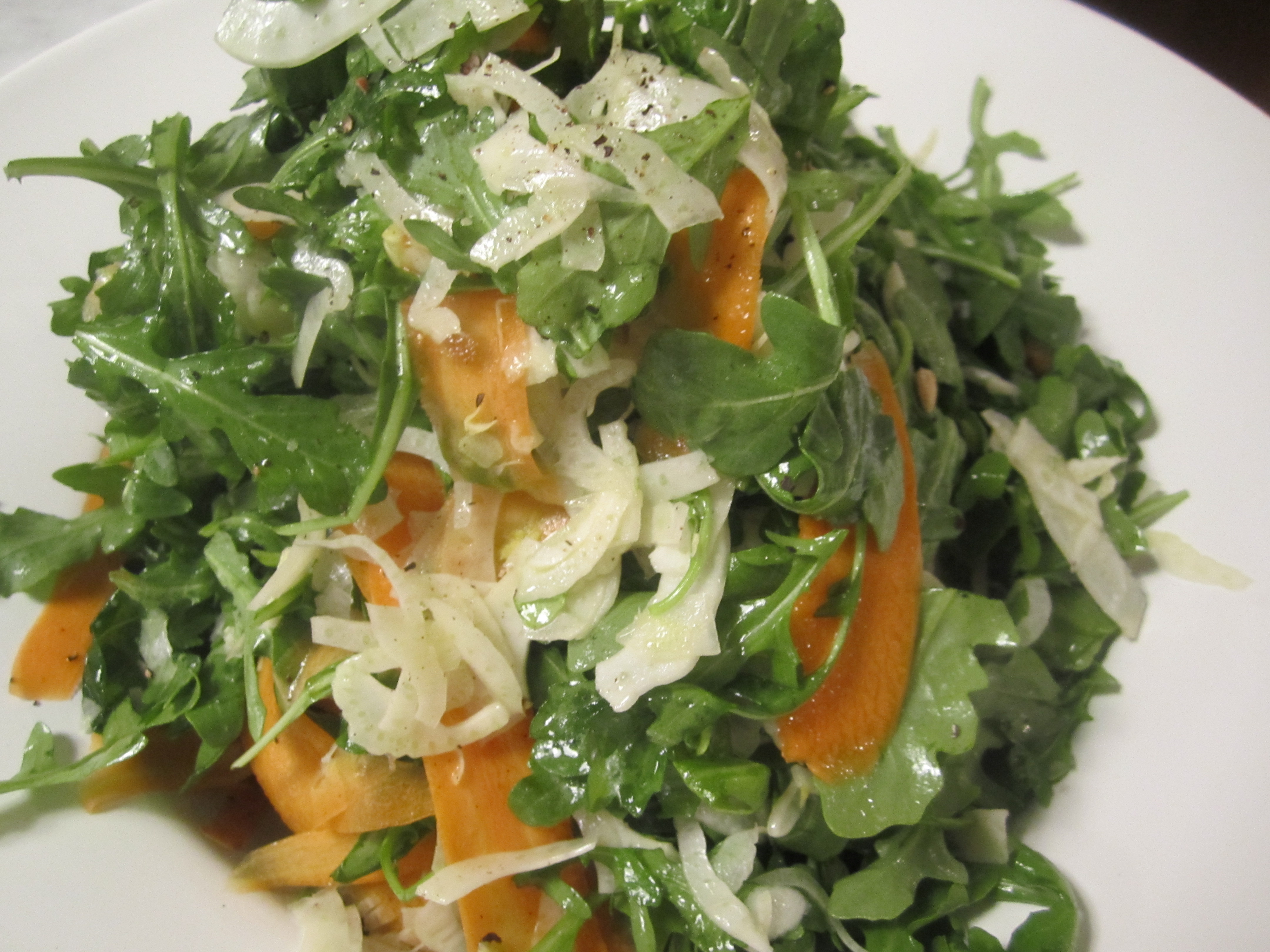
The only accompaniment necessary was a large salad of baby arugula, shaved fennel and carrots, dressed with olive oil, red wine vinegar, salt and pepper.

I’m not exaggerating when I say that these pizzas fed everyone into the night and the following morning as well!

Posted in Uncategorized | 1 Comment

Easy Dinner for Eight–Gnocchi al Pesto and Grilled Shrimp

This is a weeknight dinner I made for an impromptu gathering of out-of-town guests.  This meal can be pulled together with no advance preparation in as little as an hour-and-a-half.

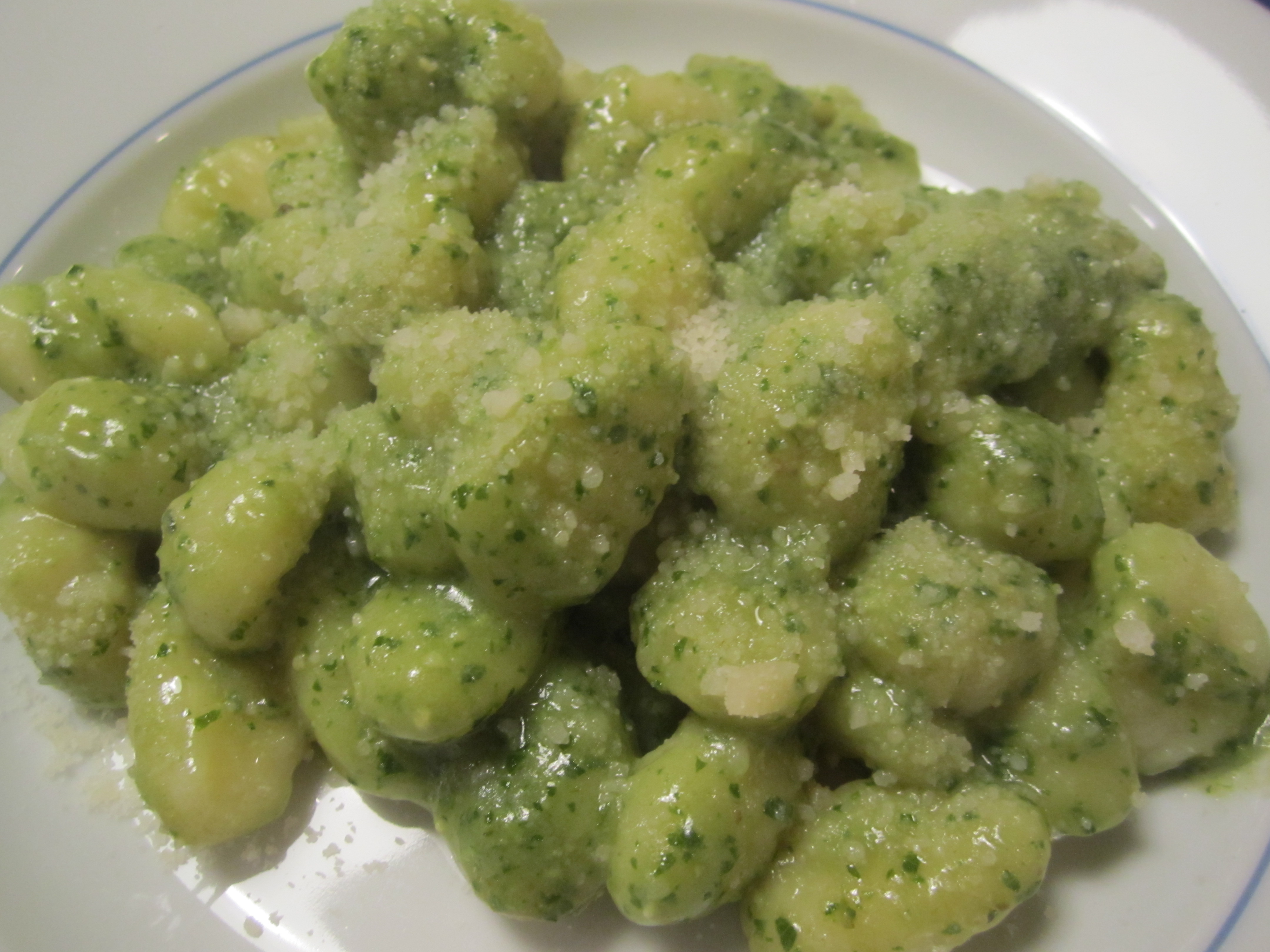
The first course was basic gnocchi al pesto.  The gnocchi were store-bought, but the pesto was made with basil from my neighbor Beppi’s garden.

Its strong, verdant flavor can be used not only on pasta, but as a condiment for so many dishes–pasta, soups, stews.  Tonight I’m serving pesto because it’s flavor is emblematic of summertime, but also because it’s quick and easy to make.  For the pesto  recipe, visit my prior post (pasta with shrimp and pesto).

For eight persons, I used the following proportions–4 packages vacuum-packed gnocchi, a cup of pesto, and 4 tablespoons butter.  At the last moment, just as the gnocchi are finishing (and not a moment before), the pesto and butter get blended in a large mixing bowl (the heat of the pasta melts the butter), along with a half-cup of the pasta cooking liquid.  Toss in hot gnocchi and gently fold and stir with wooden spoon.  Immediately spoon into heated individual pasta bowls.   The pesto is not cooked, therefore the pasta loses some heat in the saucing process.  Once exposed to the air, the pesto will begin browning within minutes, so be sure your guests are seated and ready when the pasta is served.  Sprinkle with plenty of grated cheese.

The main course presented a challenge, since I wanted something that needed little or no advance marinating, roasting or braising.  Something from the grill would be perfect, but most grilled meats or fish could require at least 10 minutes or more on the grill, with constant vigilance and attention to flareups and even browning.  I wanted something that I could truly cook in an instant, as soon as the pasta plates were cleared.

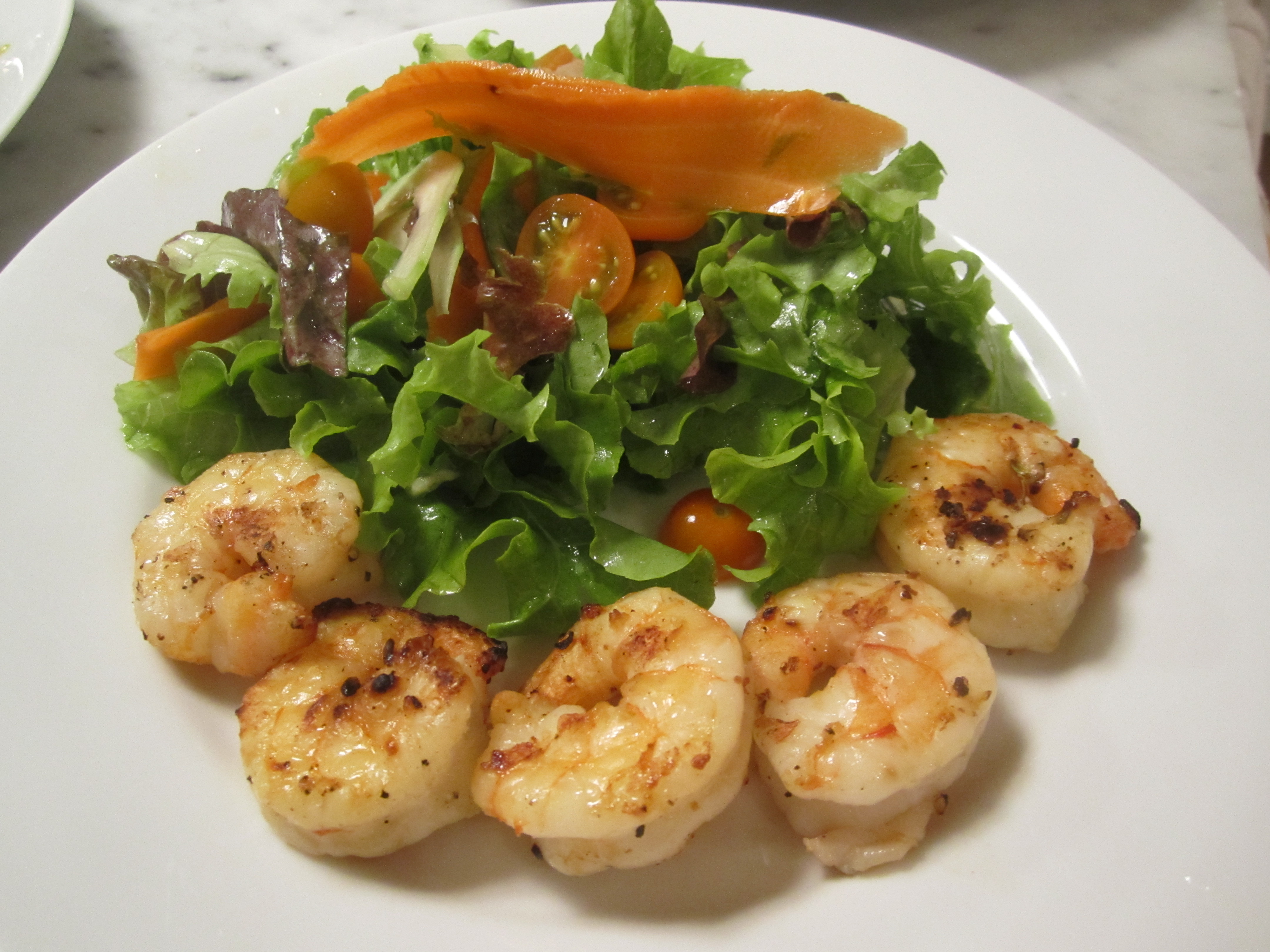
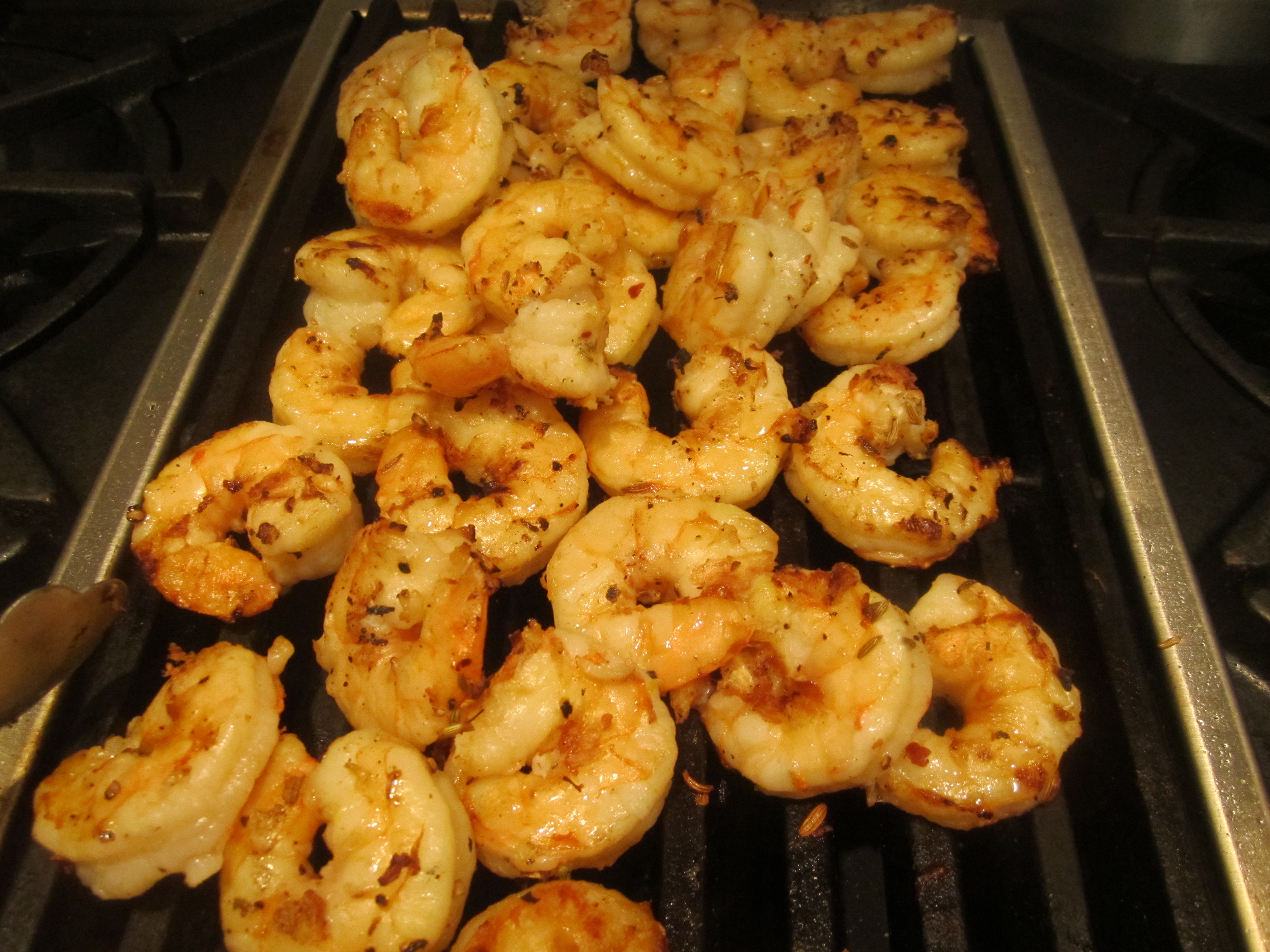
Shrimp fit the bill perfectly.  They can be grilled for 2 minutes or so per side with little or no flareups.  An hour before dinner, I prepared a little rub, using a about a half-teaspoon each of salt, black pepper, red chili flakes, fennel seeds and lemon zest.  I coated the shrimp with the rub and sprinkled with a drizzle of olive oil and let them rest, while we ate our pasta.

After the pasta plates were cleared, I tossed the shrimp on the hot grill.  While the shrimp grilled, I tossed the salad, which consisted of a combination of fresh red and green lettuces, cherry tomatoes, shaved carrots and cucumbers.  The dressing was my usual red wine vinegar, olive oil, salt and pepper.

In fact, washing the basil for the pesto and washing the lettuces for the salad were the most time-consuming part of the preparation for this meal.  Since all the vegetables were freshly picked, they required a triple wash and spin-dry.  If you were using pre-packaged triple-washed greens, your prep time would be even less.

Posted in Uncategorized | 2 Comments